Hodu-gwaja, meaning “walnut cake,” originated in Cheonan, South Korea. This baked walnut-shaped confection consists of a red bean paste filling encased in a dough made from skinned and pounded walnuts mixed with wheat flour. Popularised outside Cheonan in the 1970s, they were often sold at train stations and on trains via catering trolleys. We first tried them after exiting Euljiro 1(il)-ga Station, drawn to a shop called Hodu Boom.
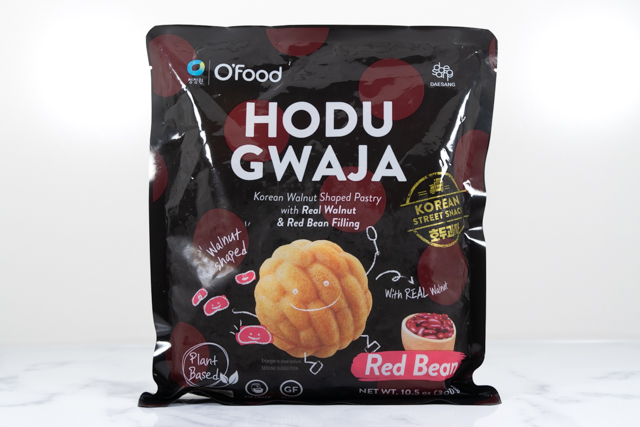
This is the O’Food Hodu Gwaja Red Bean.
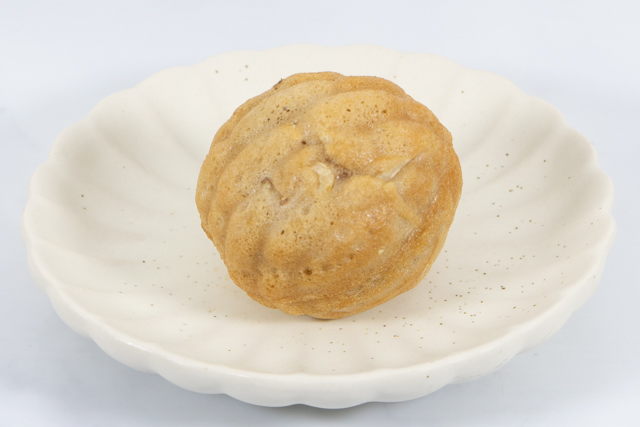
The bag contained 9 pieces, each about 4 cm in diameter, featuring a rice flour dough filled with red bean paste and walnuts. The best preparation involved baking them in the oven at 180ºC for 8-10 minutes.

Once baked, the pieces developed a golden-brown exterior and a sweet, Earl Grey-like tea aroma. The pastry had a crisp bite, leading to a chewy mochi-like dough that enclosed the smooth red bean filling. The bean paste provided its characteristic earthy sweetness, complemented by the soft crunch of the walnut, which had been peeled to prevent bitterness.
When reheated in the microwave for 25 seconds (in a 1100W microwave), they lacked the same crispness, becoming chewier and more gummy due to the rice flour. Heating them for any longer dried out the interior.
Though this version was not ‘traditional’ due to its rice flour base, we found the chewy texture quite appealing. The use of rice flour, instead of the traditional wheat flour, created a mochi-like texture, reminiscent of Chinese jiandui (sesame balls), which also combine a crisp and chewy exterior with a red bean paste filling. Baked in the oven, these were delightful snacks, making them worth repurchasing.
This O’Food Hodu Gwaja Red Bean contained 300 g (9 pieces). It was produced in South Korea and purchased in Sydney, Australia in 2024.