
This is Yeodongsik, a specialist Korean eatery known for its focus on regional pork-based soups and homestyle dishes.
The meal sat firmly in the realm of comfort dining, built around warmth, substance, and a quiet sense of familiarity. The structure of the menu reinforced this, with soups forming the core and a smaller selection of jeon and rice dishes providing contrast and variation. The inclusion of table condiments was not incidental but central, shaping how each dish developed across the meal.
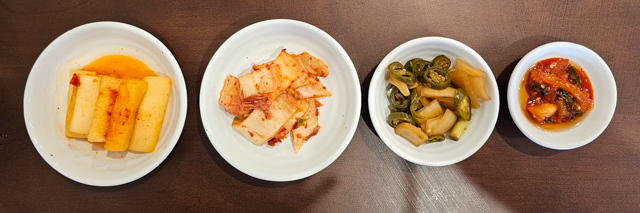
A small set of banchan was provided to support the main dishes:
- Daikon kimchi presented with a firm, crisp structure, delivering clean acidity with restrained heat.
- Cabbage kimchi was slightly softer, with a milder fermentation and reduced pungency.
- Pickled chilli and onion delivered sharp acidity and direct heat, functioning more as contrast than support.
- Fermented squid (ojingeojeot) carried a dense, chewy texture with high salinity, layered with garlic and ginger, and a sustained but controlled chilli heat.
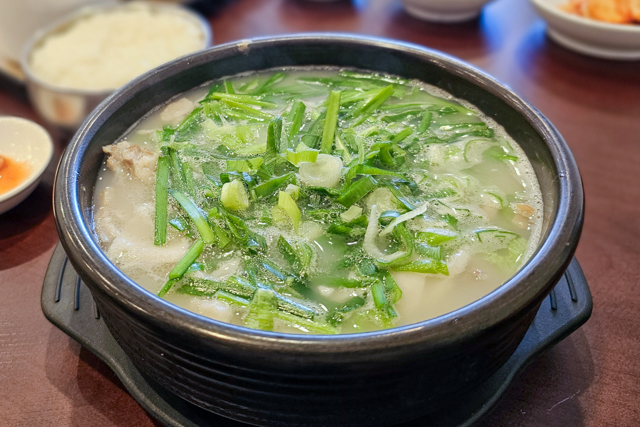
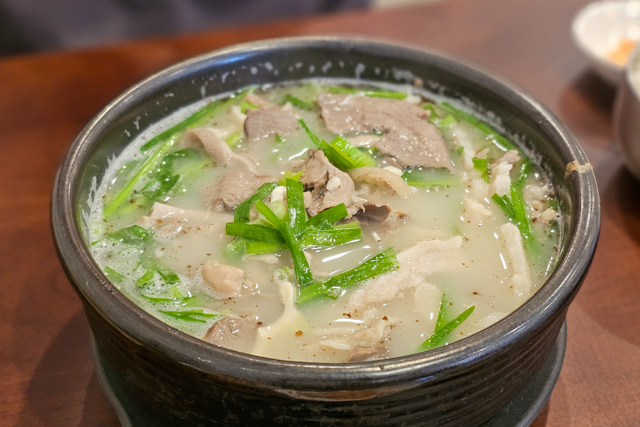

Pork Soup with Rice (Dwaeji-gukbap) ($21.00) — Beef bone broth with pork belly, pork ear, pork maw, pork heart
The broth carried a deep pork flavour, but arrived intentionally under-seasoned, requiring adjustment. With the addition of salted krill, the savoury depth expanded and gained weight, while perilla powder introduced an earthy, slightly grounding note. Garlic chives lifted the profile with a gentle herbaceous edge. The rice absorbed the broth readily, softening into it and creating a cohesive bowl, while the variety of pork cuts—belly, ear, maw, and heart—introduced a range of textures that moved between soft, yielding, and lightly elastic.
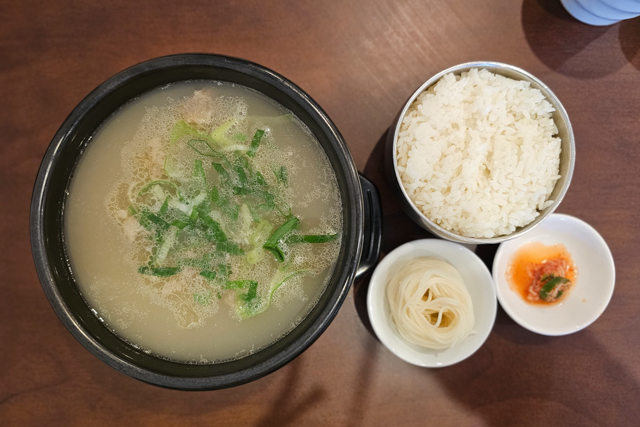
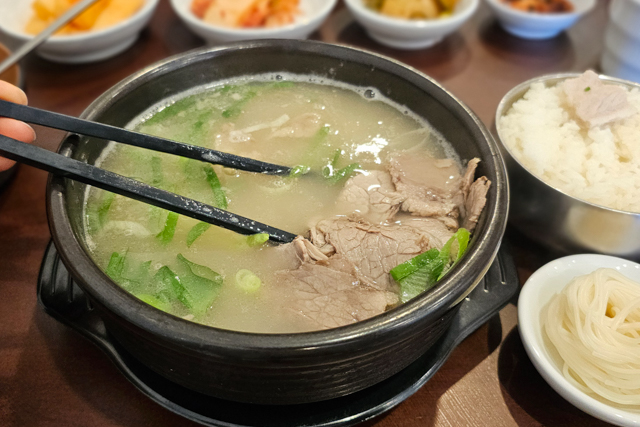
Thick Beef Bone Soup with Rice (Gomtang) ($24.00) — Beef bone broth with brisket and white noodles
The broth was clean and mild, opening up only with seasoning. Once adjusted, it developed a steady, rounded beefiness. The rice integrated smoothly, while the white noodles retained a firmer structure, creating contrast within the same bowl. The brisket, sliced thin, remained tender and neutral, contributing texture without shifting the overall balance.
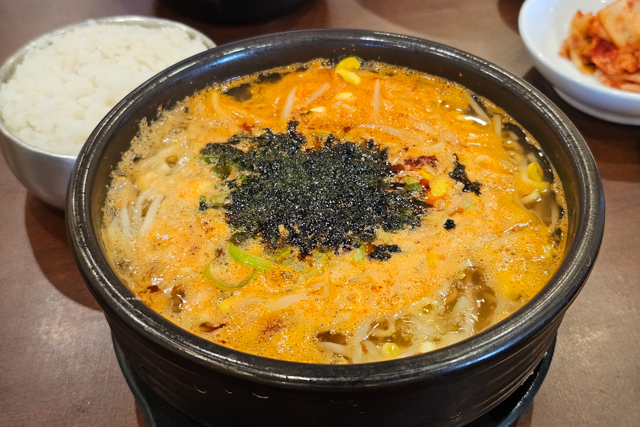
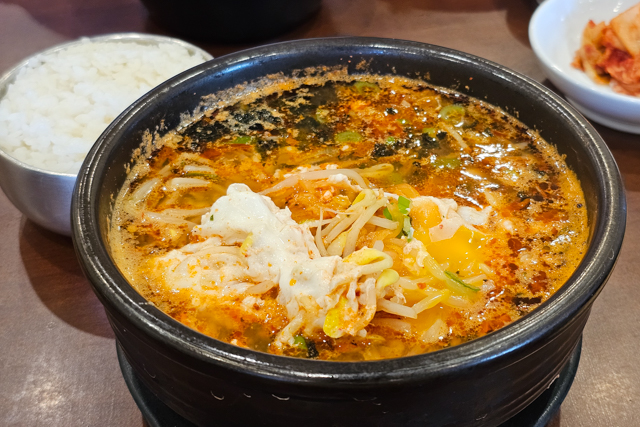
Bean Sprout Soup with Rice (kongnamul-haejangguk) ($23.00) — Anchovy and prawn broth with bean sprouts, squid and egg
The broth carried a rich seafood profile, delivering savoury anchovy and prawn depth without excessive salinity. Bean sprouts were abundant throughout the bowl, contributing a gentle crunch that contrasted with the softer elements. The egg arrived with a partially liquid centre before gradually cooking through in the hot broth, adding richness and body.
Squid was present in limited quantity, consisting mainly of tentacles that provided chew without becoming rubbery. A gentle chilli seasoning ran through the soup, adding warmth and complexity rather than outright heat. The rice integrated readily into the broth, creating a more substantial texture, though the relatively sparse amount of squid left the bowl feeling somewhat light in terms of protein. Enjoyable and comforting, though lacking the substance that would encourage a repeat order.
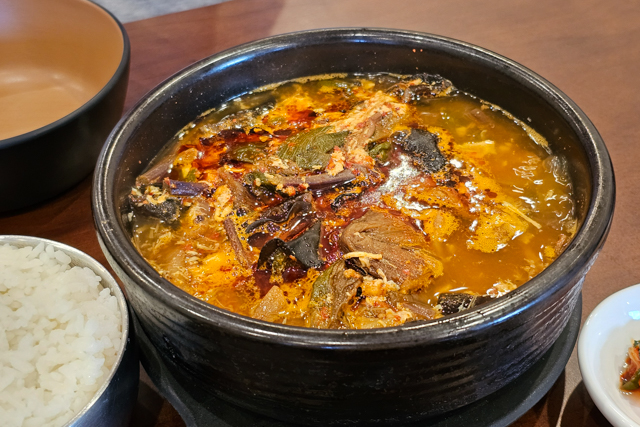
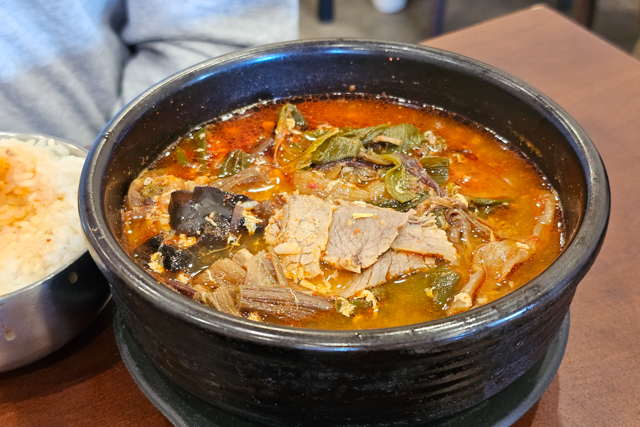
Spicy beef & leek soup with rice (Yukgaejang) ($24.00) — beef bone broth with brisket, black mushroom, vegetables and egg
The broth delivered a well-developed beef flavour, supported by a generous amount of vegetables and black mushroom that added both texture and earthy depth. As with the kongnamul-haejangguk, the egg arrived with a partially liquid centre and continued cooking in the broth during the meal.
Despite its appearance, the spice level remained moderate. The chilli provided warmth and savoury depth without slowing consumption or leaving a lingering burn. Black mushroom contributed a pleasant crunch, while the vegetables softened into the broth and reinforced its hearty character.
The principal limitation was the amount of brisket. Only a few slices were present, leaving the vegetables to dominate the bowl and reducing overall satiety. While the broth itself was satisfying and flavourful, the limited protein prevented the dish from feeling as complete as its price point suggested.
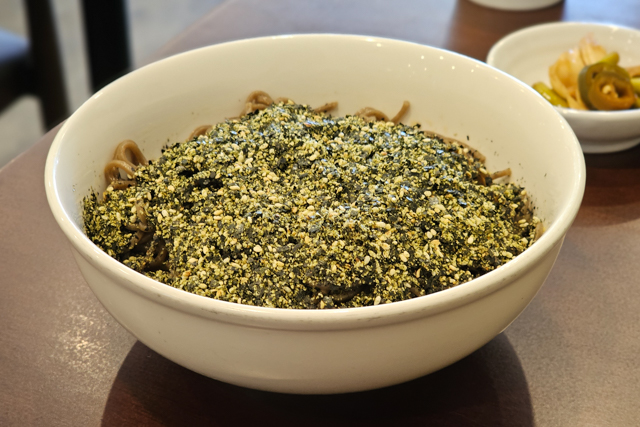
Buckwheat Noodles with Perilla Oil (Deulgireum Makgusu) ($22.00)
Served cold, the noodles carried a distinct perilla aroma, herbal and nutty with a slightly tea-like quality. The seasoning was light, with restrained sweetness and a gentle soy base. The noodles were firm with a faint coarseness, maintaining separation, while the seaweed and sesame added a light crunch and extended the aromatic profile.
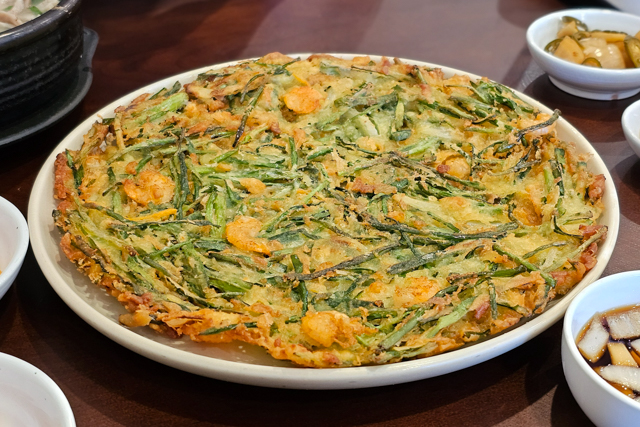
Pan-fried with Chives and Prawns (Saewoobuchu-jeon) ($24.00)
The pancake was thin and evenly crisp, with minimal batter allowing the garlic chives to come through clearly. The prawns were distributed throughout, adding intermittent firmness and mild sweetness. The overall balance remained controlled, with no excess oil or heaviness. In comparison to Park Bong Sook, the structure here was less aggressively crisp but more even, avoiding the brittle edges that can form with heavier frying.
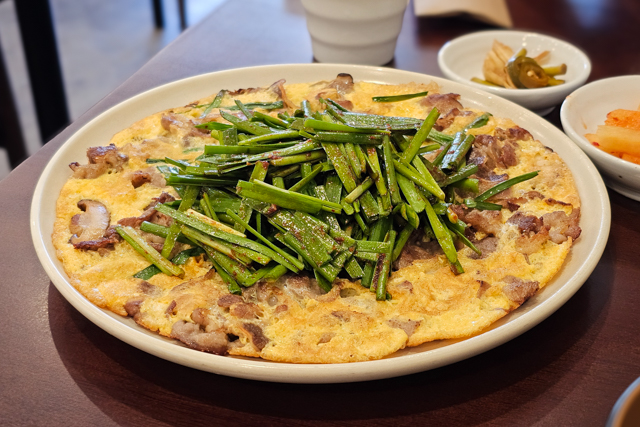
Pan-fried Beef (Yuk-jeon) ($29.00)
The egg coating formed a uniform layer around the beef and shiitake, creating an omelette-like texture. While not crisp, it maintained cohesion, with the beef tender and the mushrooms adding slight resistance. The chilli garlic chives provided a fresh edge without becoming sharp. This stood in clear contrast to Busan Jip, where the structure had previously skewed soft to the point of breakdown; here, the balance remained intact.
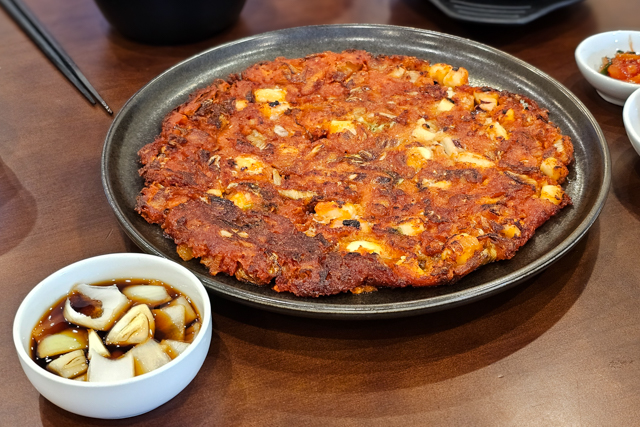
Kimchi pancake (Kimchi-jeon) ($22.00, +$4.00 for squid)
Despite its soft appearance, the pancake retained a crisp surface and well-developed edges. The kimchi contributed gentle sweetness, mild acidity, and restrained chilli warmth, delivering flavour without aggressive fermentation or lingering heat. The interior remained tender while maintaining enough structure to avoid becoming dense or doughy.
The additional squid was generous, introducing frequent bursts of soft crunch and light chew throughout the pancake. The accompanying sandlance dipping sauce added savoury depth and enhanced the seafood elements without overwhelming the kimchi.
The balance between crisp exterior, tender interior, and generous squid made this one of the stronger dishes of the meal. While the version at Miryang remained preferable for its perilla and shrimp combination, this was an easy dish to revisit.
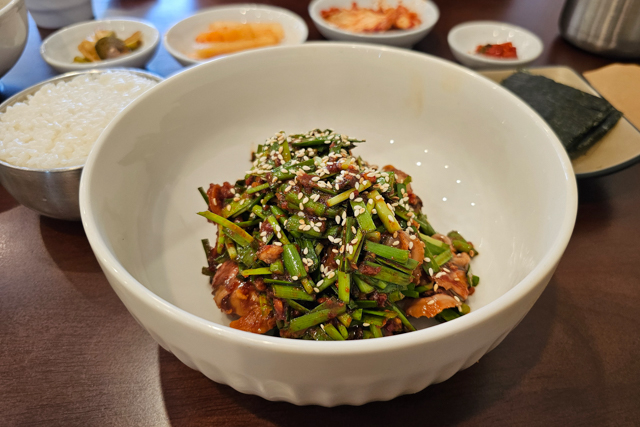
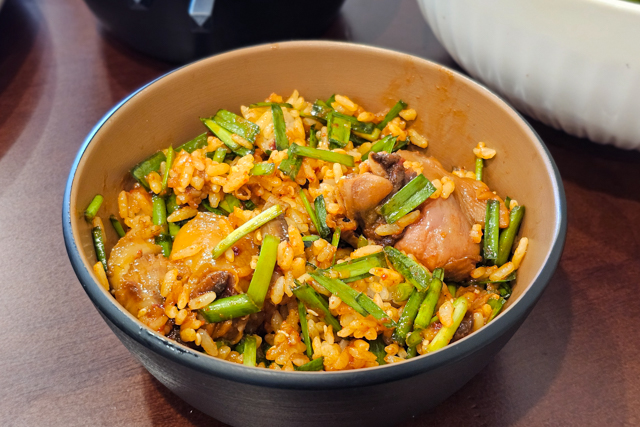
Seasoned Cockles Bibimbap (Komak Bibimbap) ($29.00; limited availability)
Presented in separate components, the dish allowed for gradual integration. The cockles were generous, plump and clean, releasing a clear marine salinity without grit. The seasoning balanced soy and chilli, with a moderate, steady heat. Rice acted as a base, absorbing and distributing flavour, while the garlic chives and spring onion added freshness and structure. The roasted seaweed introduced a dry, crisp layer when used to wrap, shifting both texture and delivery.
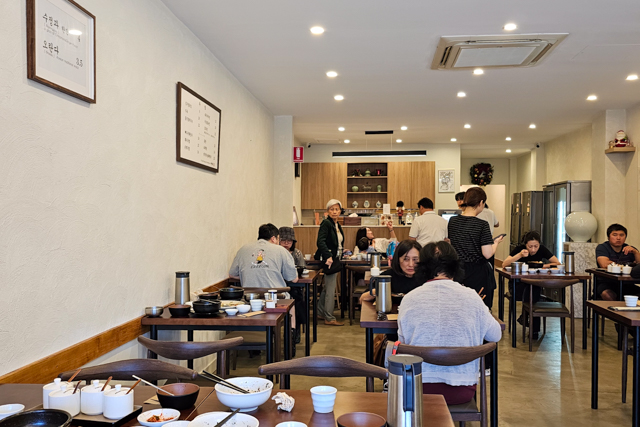
Across the meal, the dishes followed a consistent pattern: a restrained starting point, then gradual development through seasoning and interaction. Texture remained varied but controlled, moving between soft broths, crisp pancakes, and elastic or yielding proteins. The overall effect was cohesive rather than overtly assertive, with each element reinforcing a steady, comfort-focused direction.
Overall, a comfort-driven meal defined by restrained broths that develop through seasoning, supported by controlled jeon execution and steady textural variation.
Yeodongsik is located at 15 Railway Parade, Eastwood NSW 2122.