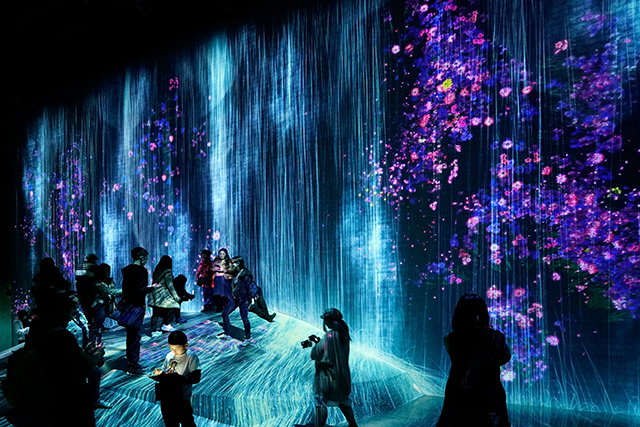
Recounting our trip to Japan in November 2019 has taken an embarrassingly long time. COVID-19 took off around the world and then took root in Australia shortly after we returned, throwing everything into disarray, including my motivation to finish writing up our trip before subsequent (postponed) trips elsewhere.
One way or another, though, this is the final day of our Japan 2019 trip, which we spent enjoying the teamLAB Borderless exhibit in Odaiba before catching our flight in the evening.
Tōkyō
Yoshinoya
吉野家 田原町店, 1 Chome-7-20 Nishiasakusa, Taitō City, Tōkyō 111-0035, Japan
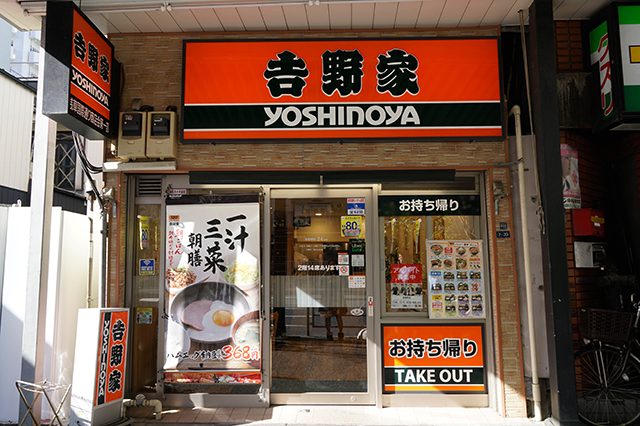
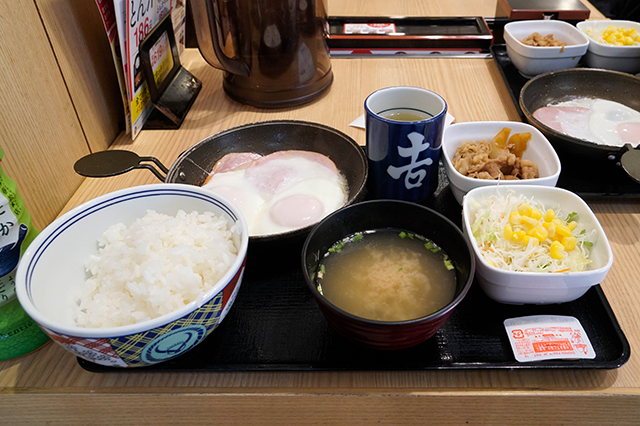
Yoshinoya is our first stop after checking out of our hotel and leaving our bags with reception. Gyudon were a staple of our previous trips to Japan, so it only felt right that we ticked it off this trip after enjoying the more varied fare in Kyūshū. We enjoy the Ham & Double Egg Meal (¥350, +¥100 for an extra egg) once again.
Asakusa > Odaiba
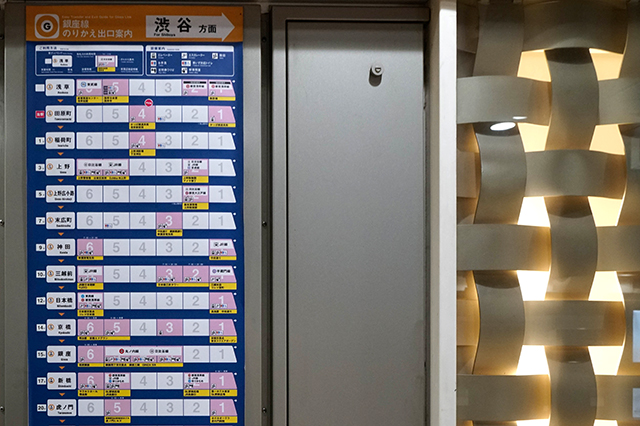
We were happy to see the upgrade at Asakusa Station that was still underway during our 2018 trip completed by our current trip, and we’re constantly impressed by the level of detail for each train carriage available.
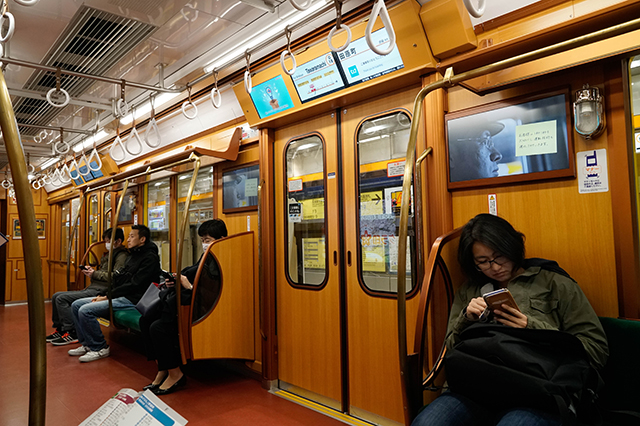
To our surprise, we manage to hop onto set 39 of the 1000 series, which is a special nostalgic train on the Ginza Line. The interior is inspired by the first Japanese subway train that was built in 1927 for the opening of the Ginza Line, the oldest route in Japan. The design featured wood-grain look interiors as well as stylised lamp fixtures and brass-like handles
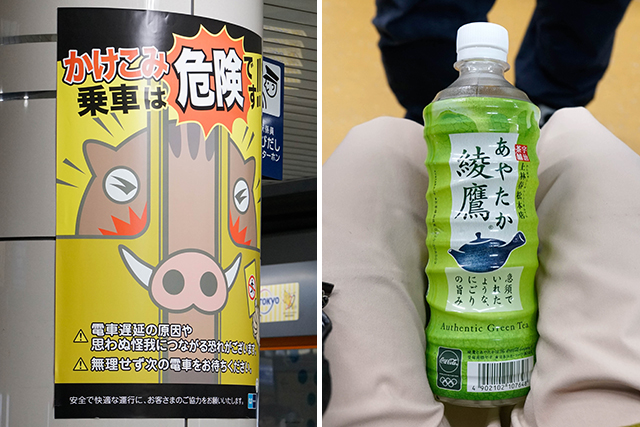
This poster cautioning customers amuses us and I’m once again, impressed by the unsweetened flavour of bottled Japanese green teas. This one captured the flavour of tea brewed in a kyusu.
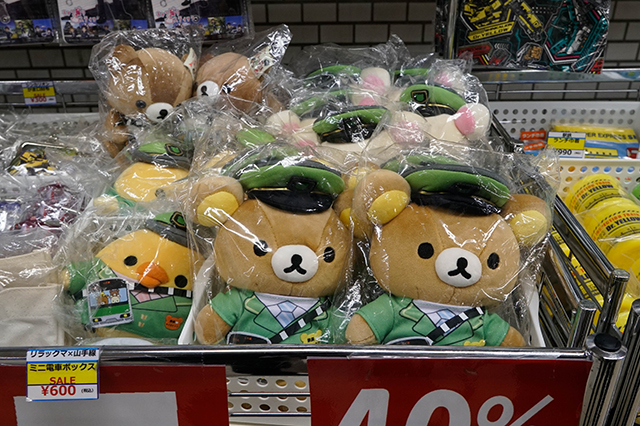
Getting off at Shimbashi Station, we spot these cute Rilakkuma dolls on sale.
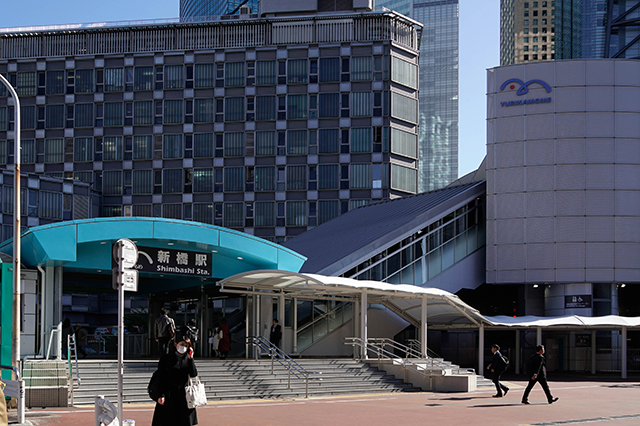
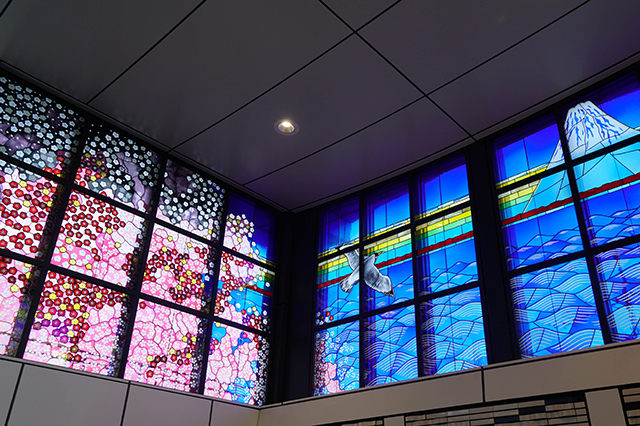
We hop onto the Yurikamome line, a driverless operated loop around Odaiba.
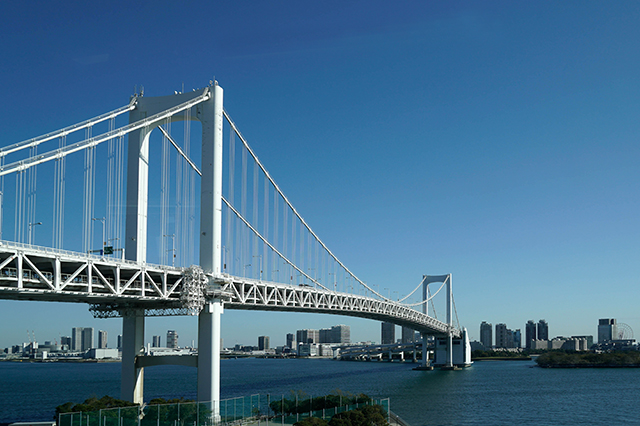
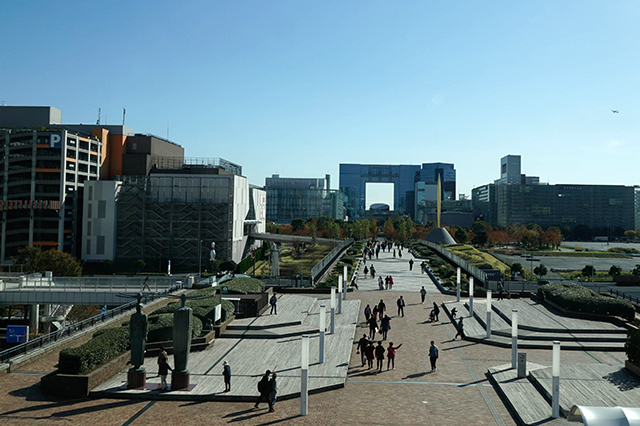
We’d previously hopped on this route for a scenic tour around the area on an earlier trip where it poured rain all day.
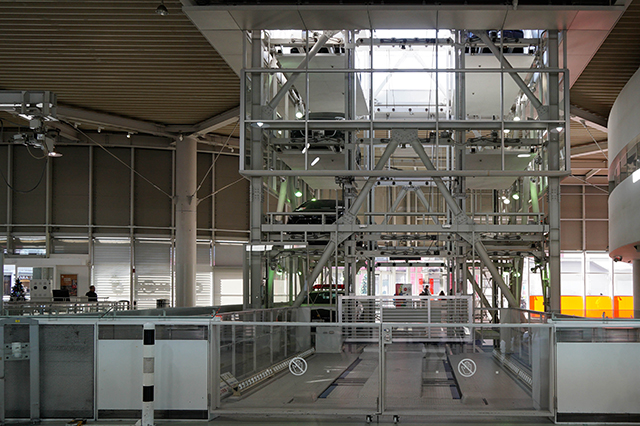
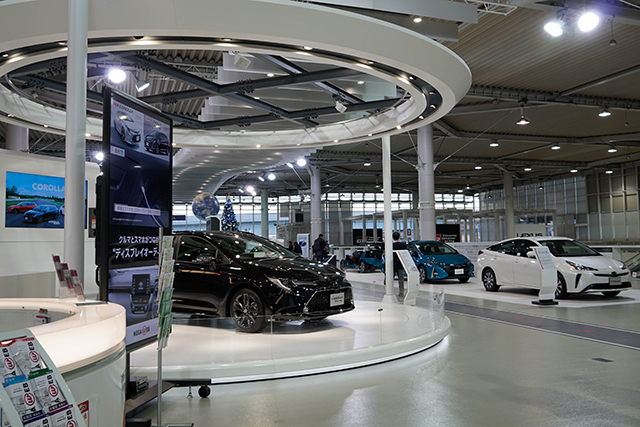
To get to the MORI Building Digital Art Museum where the EPSON teamLab Borderless is housed, we walked through the Megaweb Toyota City Showcase.
EPSON teamLab Borderless
teamLab Borderless, Odaiba Palette Town, 1 Chome-3-8, Aomi, Kōtō City, Tōkyō, 135-0064, Japan
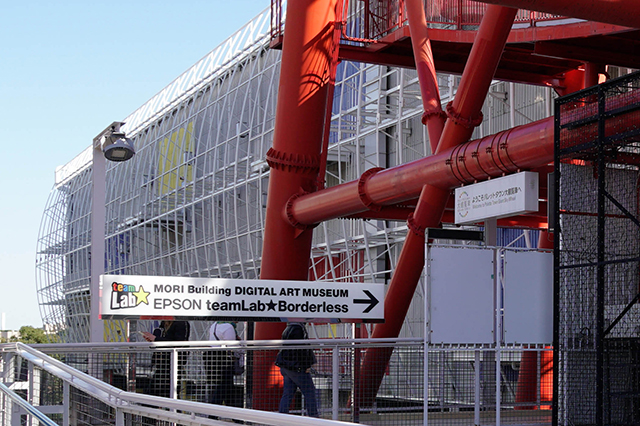
During my years at university when I indulged my artistic side by studying for an art theory degree, I thoroughly enjoyed studying my favourite artists who created immersive installations that drew on human phenomenological experience. teamLab Borderless lacked the more fascinating phenomenological aspect, but its interactive light sculptures were an accessible way for the general public to consider the interaction between art, science and technology that I could hardly pass up. Admission was ¥3,200 and we purchased tickets online ahead of time for a specific date to bypass the long queues for (and uncertainty of ) securing a ticket on the day.
Starting out temporary, teamLab Borderless is now a permanent museum and consisted of five ‘series’ of artworks, the specific iteration of which varies by the season (we visited in autumn).
- Borderless World
- Athletics Forest
- Future Park
- Forest of Lumps
- En Tea House
Works within the museum rely on visitor interaction:
The artwork is not a pre-recorded image that is played back: it is created by a computer program that continuously renders the work in real time. The interaction between people and the installation causes continuous change in the artwork: previous visual states can never be replicated, and will never reoccur. The picture at this moment can never be seen again.
As such, photos or videos will never do justice to the artworks on display. The photos and descriptions that follow are more for posterity.
Borderless World
People understand and recognize the world through their bodies, moving freely and forming connections and relationships with others. As a consequence, the body has its own sense of time. In the mind, the boundaries between different thoughts are ambiguous, causing them to influence and sometimes intermingle with each other.
teamLab Borderless is a group of artworks that form one continuous, borderless world. Artworks move out of the rooms freely, form connections and relationships with people, communicate with other works, influence and sometimes intermingle with each other, and have the same concept of time as the human body.
People wander through the world, exploring with intention, creating and discovering a new world with others.
The borderless world transforms according to our presence, and as we immerse and meld ourselves into this unified world, we explore a continuity among people, as well as a new understanding of the continuity between ourselves and the world.
Forest of Flowers and People: Lost, Immersed and Reborn
花と人の森、埋もれ失いそして生まれる, teamLab, 2018, Interactive Digital Installation, Endless, Sound: Hideaki Takahashi
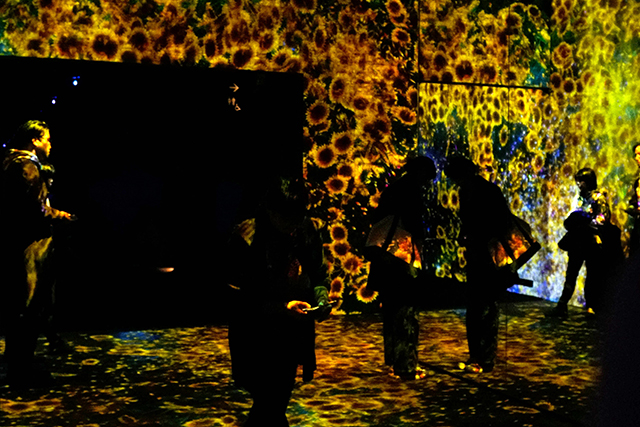
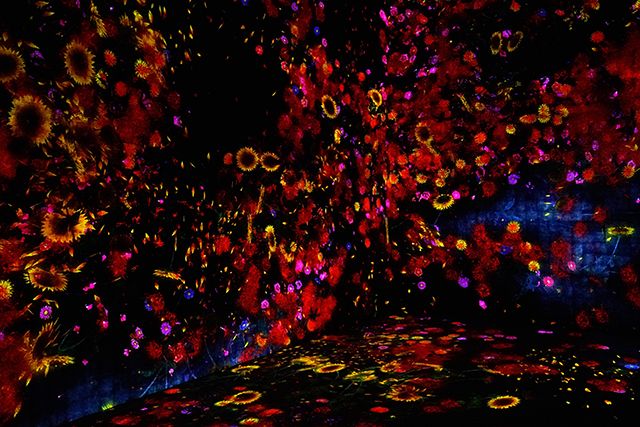
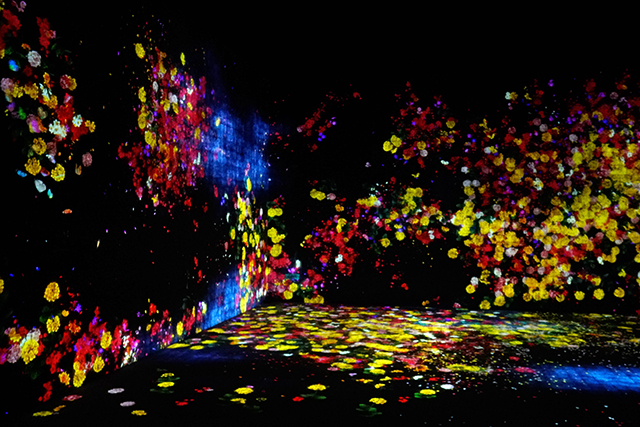
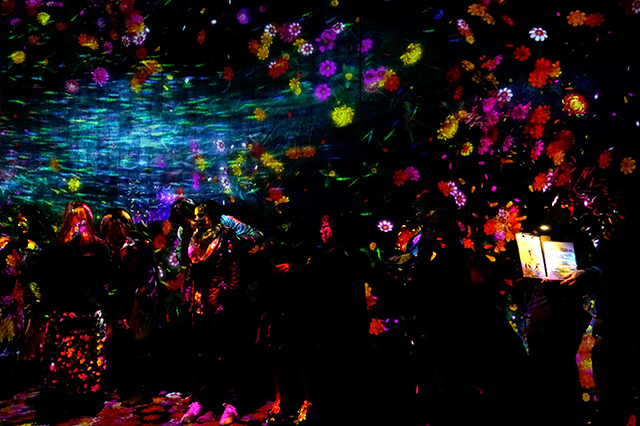
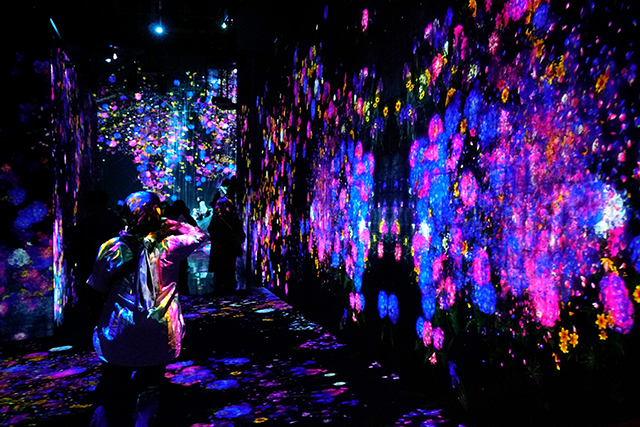
The Forest of Flowers and People: Lost, Immersed and Reborn considers our relationship with nature:
The flowers bud, grow, and blossom before their petals begin to wither and eventually fade away. The cycle of growth and decay repeats itself in perpetuity. If a person stays still, the flowers surrounding them grow and bloom more abundantly. If viewers touch or step on the flowers, they shed their petals, wither, and die all at once.
The flowers of Flower Forest are influenced by other works causing them to scatter. For example, butterflies gather in places where flowers are blooming, the flowers scatter when crows enter the forest or when the waterfall swells.
In spring in the Kunisaki Peninsula, there are many cherry blossoms in the mountains and rapeseed blossoms at their base. This experience of nature caused teamLab to wonder how many of these flowers were planted by people and how many were native to the environment. It is a place of great serenity and contentment, but the expansive body of flowers is an ecosystem influenced by human intervention, and the boundary between the work of nature and the work of humans is unclear. Rather than nature and humans being in conflict, a healthy ecosystem is one that includes people. In the past, people understood that they could not grasp nature in its entirety, and that it is not possible to control nature. People lived more closely aligned to the rules of nature that created a comfortable natural environment. Before the modern era, civilization prospered by the sea. Since then, it has moved inland, leaving isolated pockets of people in the solitary valleys. We believe that these valleys hold faint traces of this premodern relationship with nature that once existed.
Animals of Flowers Born in the Flower Forest, Symbiotic Lives
花の森で生まれ、花と共に生きる動物たち, teamLab, 2018, Interactive Digital Installation, Sound: Hideaki Takahashi
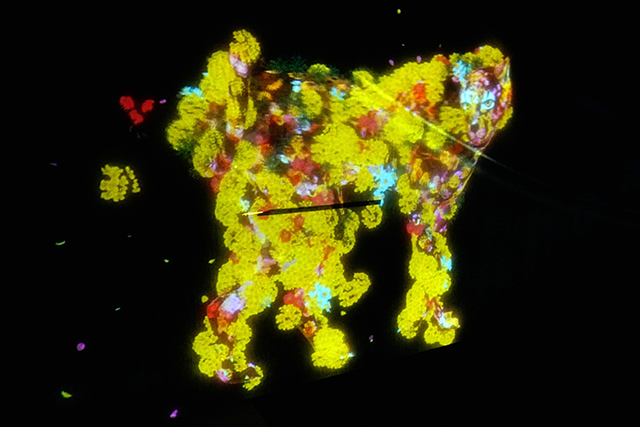
Animals that are born in the ‘Flower Forest’ are made of the Flowers of the Forest.
The flowers grow from the body of the animals, bloom, and in time there petals scatter, they wither and die. The cycle of life and death continues for eternity. When people touch the animals the flower petals scatter. If people touch the animals too much all the flowers will scatter, and the animals will die and fade away.
Flutter of Butterflies Beyond Borders, Ephemeral Life Born from People
境界のない群蝶、人から生まれる儚い命, teamLab, 2018, Interactive Digital Installation, Endless
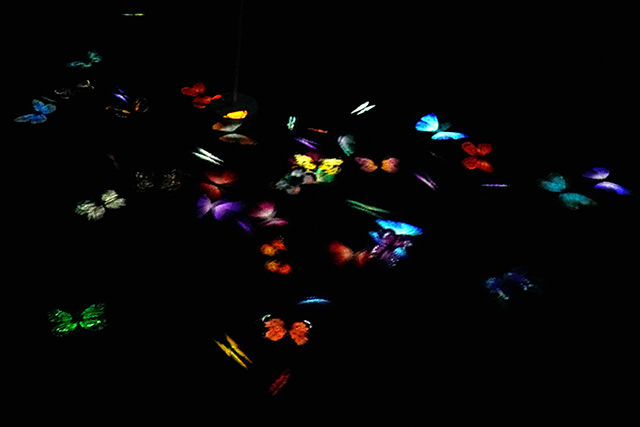
This work consisted of a flutter of butterflies projected as countless semi-transparent images
The butterflies in Flutter of Butterflies are born from people, they dance in the space, but if people touch them they die.
If there are no people in the Butterfly House it is dark space with nothing existing in it. When people enter the space and stand still a butterfly chrysalis appears on their body, the butterfly emerged and flies from their feet.
The artwork is born from a person, but they themselves may not realize, instead they will notice the butterflies being born on other people before realizing that they too are creating the artwork.
The butterflies transcend the boundary of the display and leave the space, transcending the boundaries of artworks, enter and fly around in other works. By seamlessly flying into other works they break the concept of the artwork frame, and make the boundaries ambiguous. The butterflies are affected by the conditions in other artworks.
Outside this space the the butterflies gather with those drawn by people in Graffiti Nature, and released from characters in Born From the Darkness a Loving, and Beautiful World, to make a Flutter of Butterflies.
In the Borderless World there are only the butterflies that are born in the Butterfly House, Graffiti Nature, and Born From the Darkness a Loving, and Beautiful World. If people touch and kill too many butterflies then the work will cease to exist.
Memory of Topography
地形の記憶, teamLab, 2018, Interactive Digital Installation, Sound: Hideaki Takahashi
This work changes with the season.
This artwork installation depicts a rural mountain landscape of varying elevations. The scenery instills in the viewer a feeling of eternal permanence, however with the flow of real time the scenery is continuously changing. In the spring, the rice fields are still small and lush. In summer, they begin to mature, and in fall, they turn a golden color. And with the flow of time, the insects and flowers that make an appearance also change. The movement of insects is influenced by the movement and actions of people. And as people move around, the flow of air changes and blows the rice plants or scatters flower petals in different directions.
The overall appearance of this work will hardly change with each year. However, as in nature, the scenery is actually changing and you will never see the same scenery twice. This moment will never be repeated and can never be seen again. Seemingly unchanging landscapes, go on year after year for eternity.
The work and the canvas that mediates it are separated – the canvas has become transformative. The visual illusion produced by continuous dynamic change causes the viewer to become bodily immersed in the work, and the border between the viewer and artwork dissolves. As the unified world changes, viewers may feel a sense of melting into the world, becoming one with it and with each other.
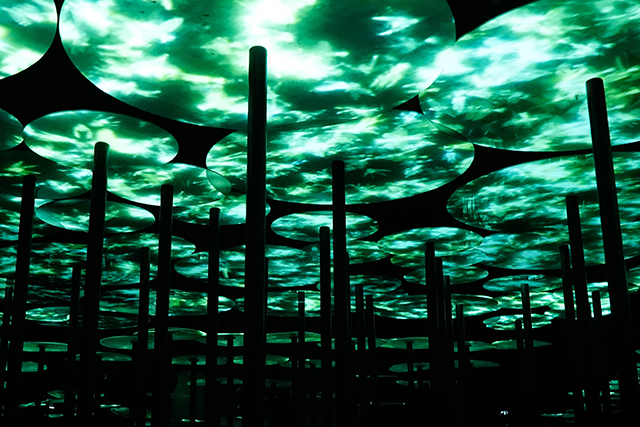
This is ‘Grey Starling’ for autumn.
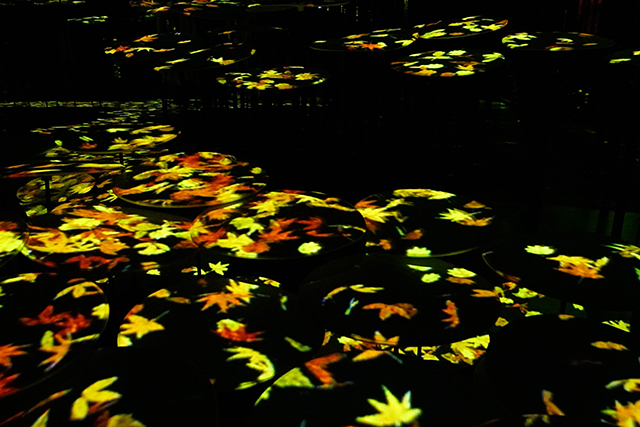
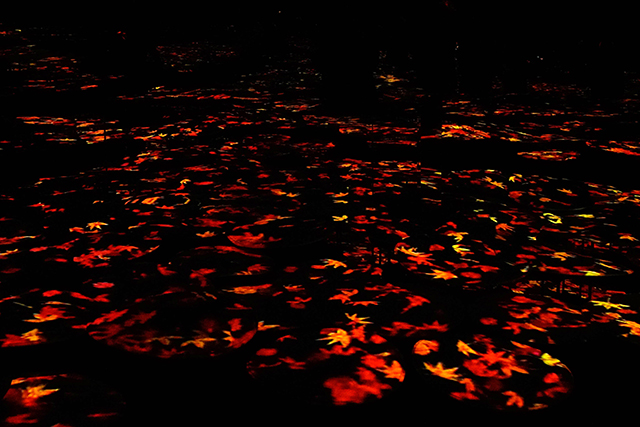
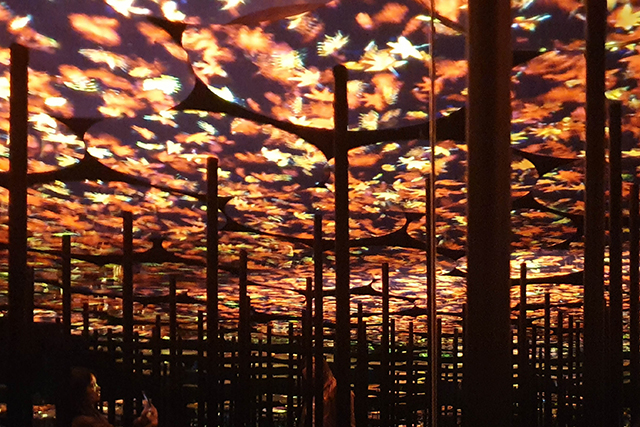
This is ‘Autumn Leaves’ for autumn.
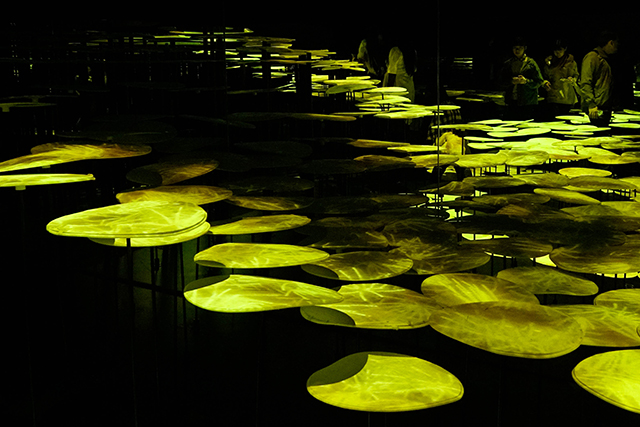
This is the ‘Rice Terrace’ for autumn.
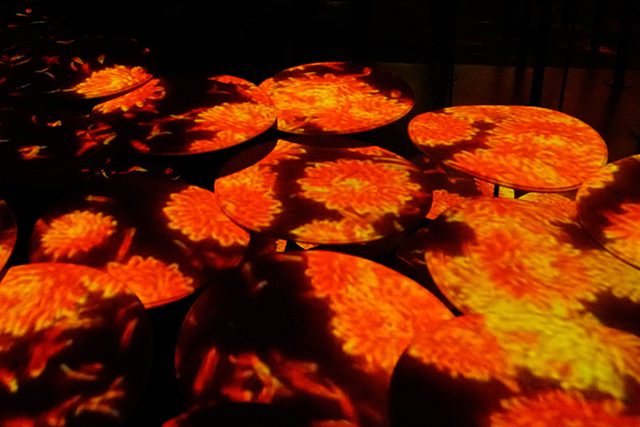
This is the ‘Chrysanthemum’ for autumn.
And this is the ‘Sweet Olive’ for autumn.
The Way of the Sea, Flying Beyond Borders – Colors of Life
teamLab, 2018, Interactive Digital Installation, Endless, Sound: Hideaki Takahashi
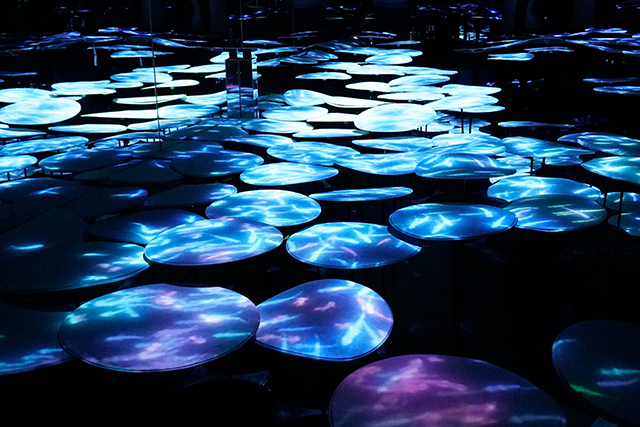
This work begins when a shoal of fish, The Way of the Sea, leaves a room and crosses the boundaries of other works, sometimes influencing the works, and moves around freely. We catch it in Memory of Typography.
The school of fish illuminated by the light move freely through spaces, and their trails of light become spatial calligraphy. The fish sense people in the space and try to avoid colliding with them.
“The way of the bird” is a saying in Zen which refers to the fact that unlike a human road the road of the bird is not fixed. It means freedom and leaving no trace. Here the birds are replaced with fish.
The movement of thousands or tens of thousands of fish is beautiful and mysterious, like a single giant life form. The school of fish has neither a leader nor mutual consensus, but just moves on the simple basis of; if my neighbor moves, then I move, too. However, the biological mechanism that causes hundreds of fish to move at the same time is still enigmatic. It seems there is a universal principle that human beings do not yet understand. The group of trails of light drawn in the space have no meaning as a whole, while being influenced by the existence of people, the lines are drawn by the movement of each fish that seems to obey some kind of primitive rule.
Aurora Lights II – Light Sculpture – Fog series
teamLab, 2018, Light Sculpture – Fog, Sound: Hideaki Takahashi
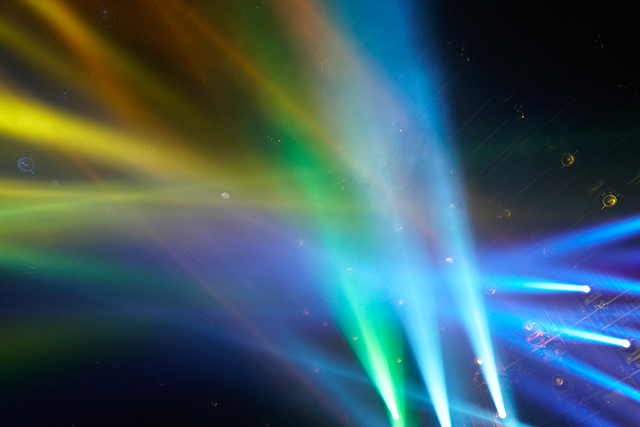

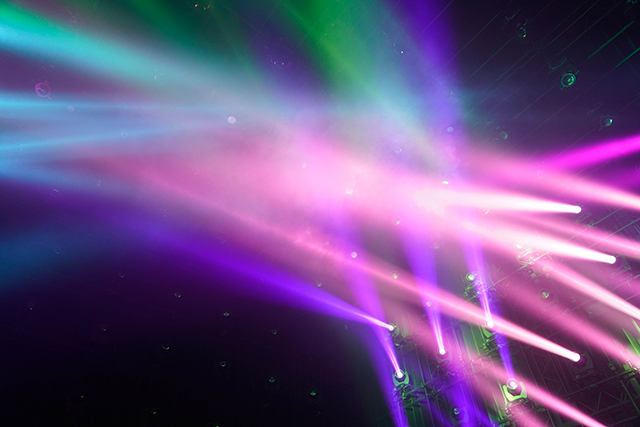
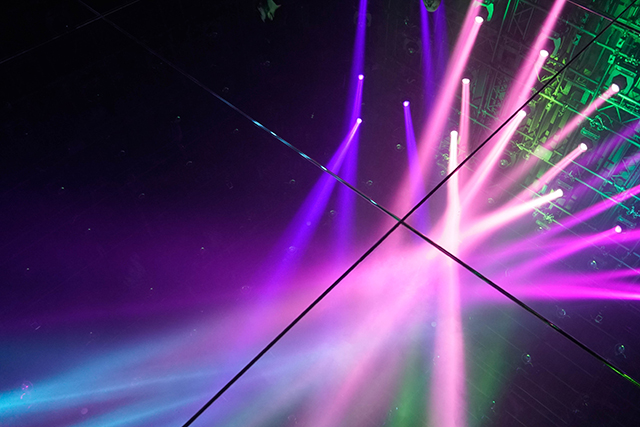
This is the most colourful of the works in the Light Sculpture room. The work is part of the Light Sculpture – Fog series, which constructs ambiguous space with fog and light. Ambiguous space and three-dimensional objects move, wrapping around the body of people in the space, and immersing the body. At the centre of the space, colours mix to create a mass of light.
The Haze – Light Sculpture – Fog series
靄の彫刻, teamLab, 2018, Light Sculpture – Fog, Sound: Hideaki Takahashi
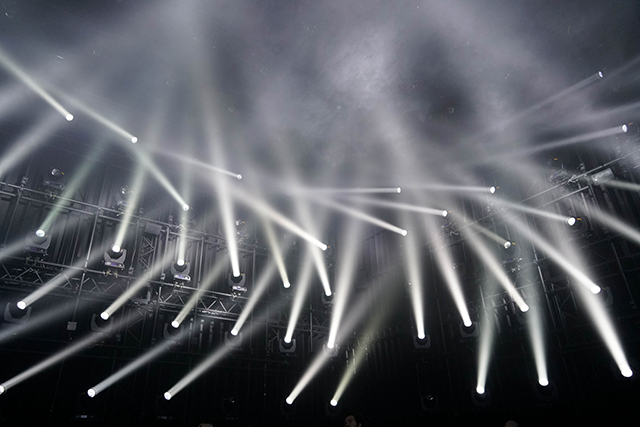
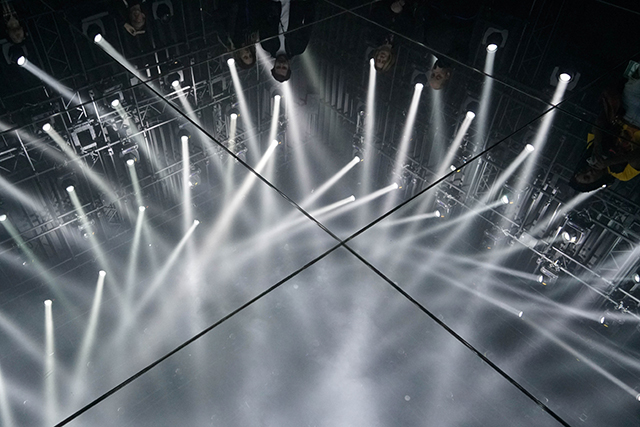
In the centre of the space, a three-dimensional object is created from the haze.
Red People in the Blue – Light Sculpture – Line series
teamLab, 2018, Light Sculpture – Line, Sound: Hideaki Takahashi
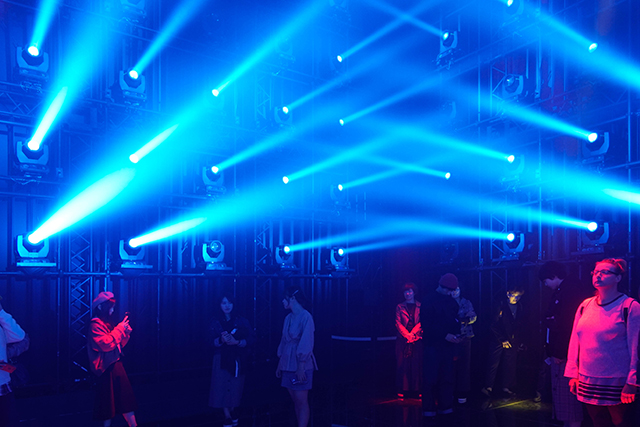
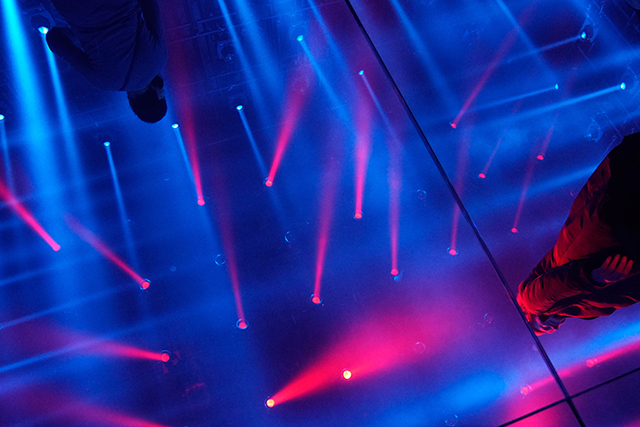
This work is part of the Line series, which constructs space and three-dimensional objects with light lines.
Light Vortex II – Light Sculpture – Line series
teamLab, 2018, Digital Installation, Sound: Hideaki Takahashi
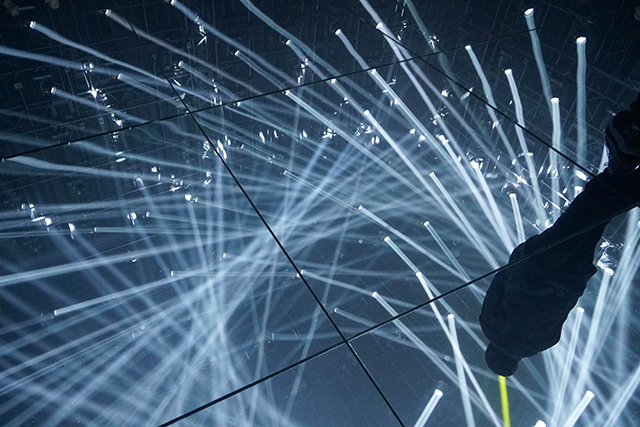
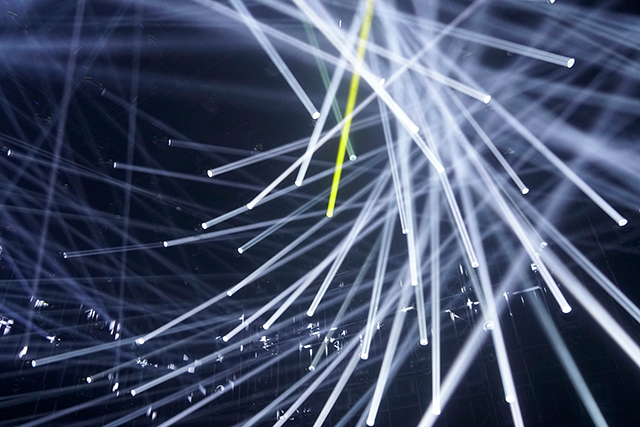
Space and three-dimensional objects created by the lights move, wrapping around the body of people in the space and immersing the body.
Light Evaporating with People- Light Sculpture – Line series
人々と共に蒸発する光, teamLab, 2018, Light Sculpture – Line, Sound: Hideaki Takahashi
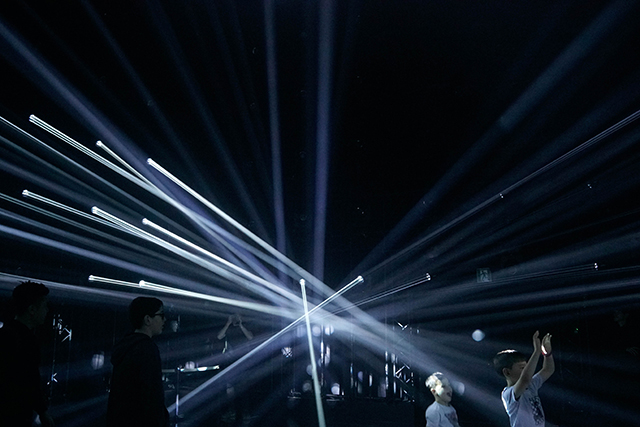
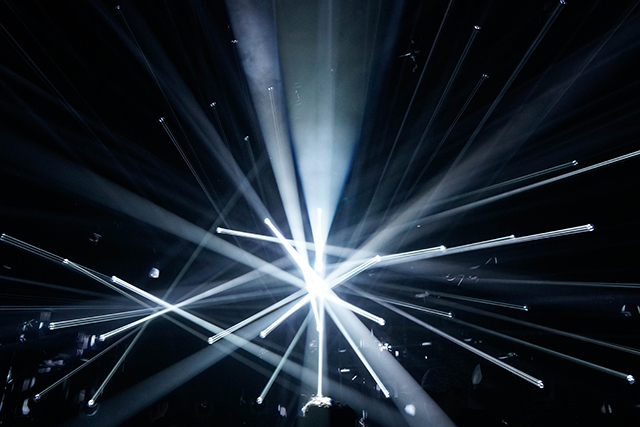
In this final work in the Line series, when people touch the focal point where floating lines meet, the points evaporate and disappear.
Flutter of Butterflies Beyond Borders, Intersections Create Life – 1 Butterfly where 64 Light Rays Cross – Light Sculpture – Line series
境界のない群蝶、交わりが生命を生む, teamLab, 2018, Light Sculpture – Line, Sound: Hideaki Takahashi
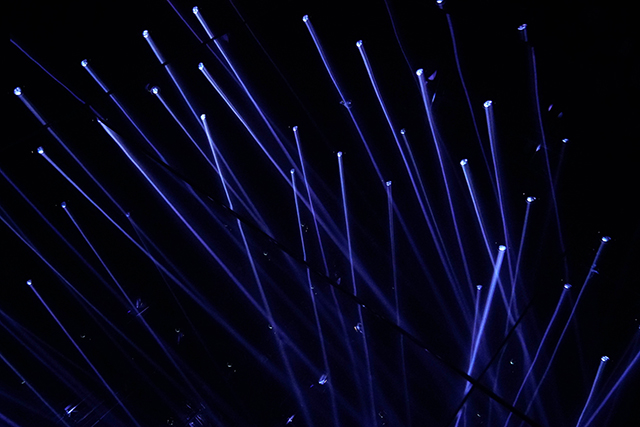
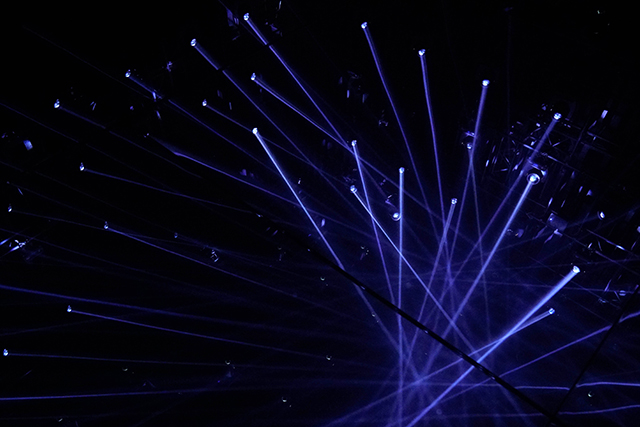
This artwork starts when the butterflies from Flutter of Butterflies Beyond Borders enter this Light Sculpture Space.
The group of butterflies that come into this space are those from the Flutter of Butterflies Beyond Borders (a group of butterflies born from other artworks, such as the butterflies born from people’s bodies in the Butterfly House). These butterflies release art from the concept of the frame, removing boundaries from the artwork space, the butterflies seamlessly fly inside other artworks.
Butterflies are expressed at the convergence of light lines and fly around the space in three-dimensions. If people touch the butterflies they disappear.
The artwork ends when the butterflies leave the space and fly again in the space outside. The artwork ends when all the butterflies leave the space and disappear.
Wander through the Crystal World
teamLab, 2018, Interactive Installation of Light Sculpture, LED, Endless, Sound: Hideaki Takahashi
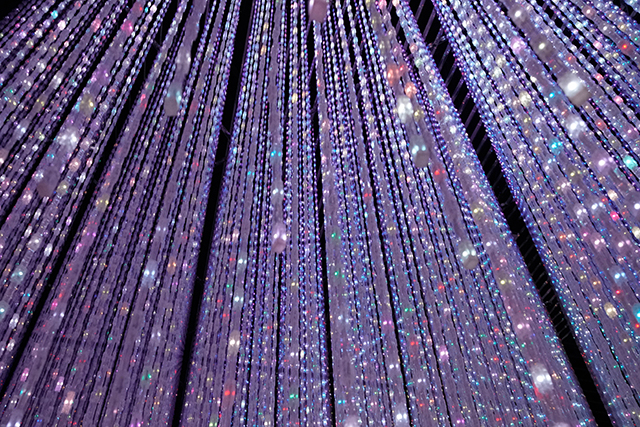
Back outside of Light Sculpture Space, we visit Wander Through the Crystal World which asks visitors to install an app on their smartphone to interact with the room:
This interactive installation artwork uses an accumulation of light points to create a sculptural body, similar to the way distinct dots of color form an image in a pointillist painting. The accumulation of lights in the three-dimensional space express elements of the natural world in this interactive installation.
The Crystal World is created when people use their smartphones to send elements of the natural world into it. Each of these elements influence one another, and are influenced by the presence of people.
Other teamLab Borderless artworks can make their way into this world, transformed into 3D creations comprised of points of light.
This artwork is forever evolving, changing moment to moment due to the people in the space.
Flutter of Butterflies Beyond Borders in the Crystal World
クリスタルワールドに舞い込んだ境界のない群蝶, teamLab, 2018, Installation of Light Sculpture, LED, Endless, Sound: Hideaki Takahashi
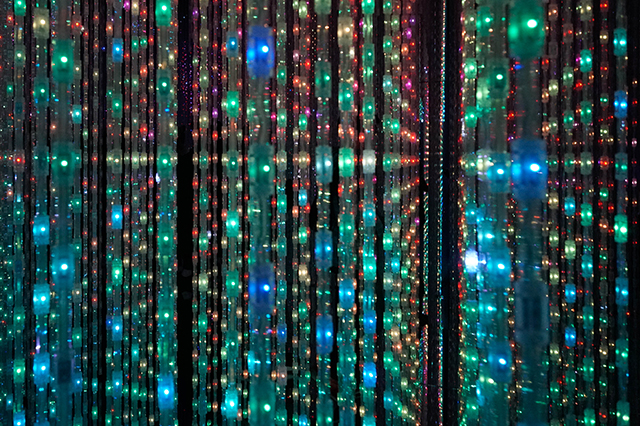
We catch the Flutter of Butterflies Beyond Borders entering the Crystal World, which also meant our interaction with the work using our smartphones was limited. The work ends when the butterflies leave the space and disappear.
The group of butterflies that come into this space are those from the Flutter of Butterflies Beyond Borders (a group of butterflies born from other artworks, such as the butterflies born from people’s bodies in the Butterfly House). These butterflies release art from the concept of the frame, removing boundaries from the artwork space, the butterflies seamlessly fly inside other artworks.
Pointillism uses an accumulation of distinct dots of color to create a picture, here light points are used to create three-dimensional objects. The butterflies that are drawn by light points fly freely around the space. A visual illusion due to continuous dynamic behavior, causes the body of people in the space to be immersed in the flock of butterflies. The boundary between the body and the artwork world dissolve. As the shared world of the artwork changes, due to your existence and that of others in the work, people dissolve into the artwork and perhaps feel a sense of unity with others.
Walk, Walk, Walk: Search, Deviate, Reunite
Walk, Walk, Walk: 探し、遠ざかり、また 出会う, teamLab, 2018, Interactive Digital Installation, Endless, Sound: Hideaki Takahashi, Voices: Yutaka Fukuoka, Yumiko Tanaka
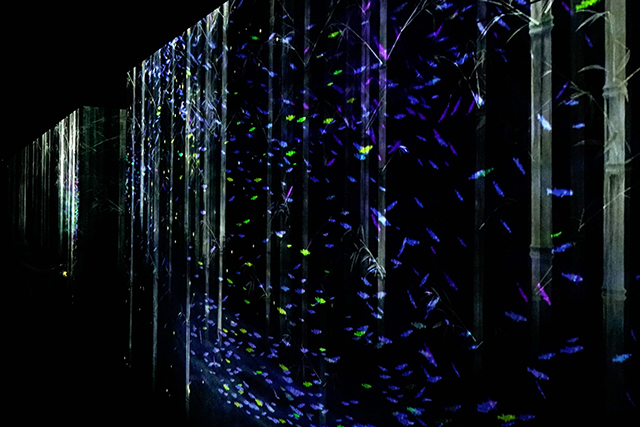
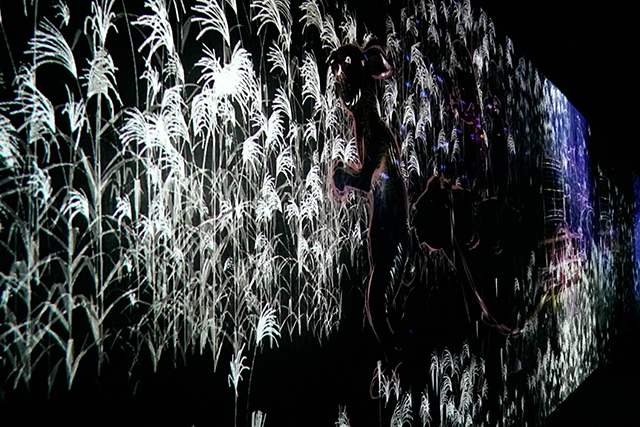
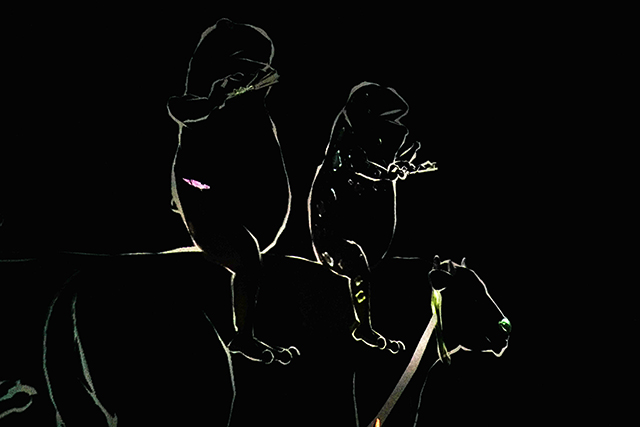
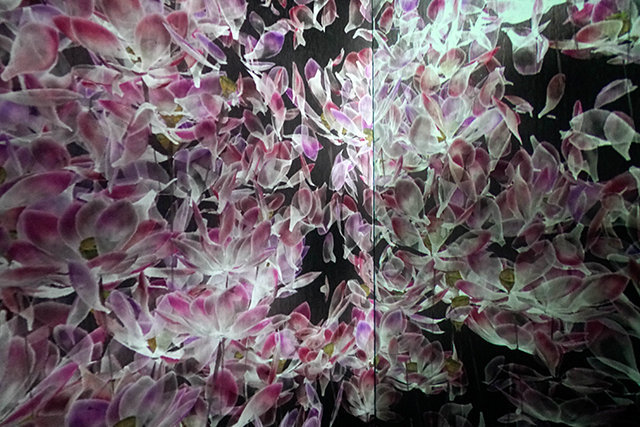
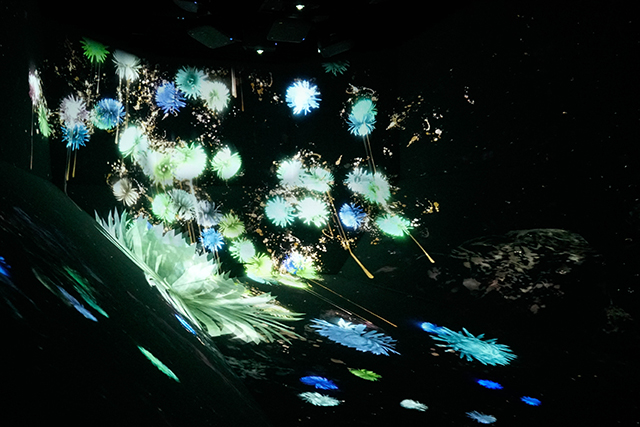
The artwork starts when ‘Peace can be Realized Even without Order’ leaves its exhibition space, transcends the boundaries between artworks, sometimes influences other works, and continues walking.
This space is made of a group of anonymous and diverse figures. The figures keep walking and as they do the artwork moves. When visitors touch the figures, they react, sometimes stop, sometimes change the direction and choose a different path.
As visitors keep walking they make decisions and choices, sometimes abandoning things along the way.
The Zen expression “Hoho kore dojo” says every step is the place to learn. The figures of the work continue walking endlessly while confronting new situations. Walking after the figures or confronting new figures one after another the visitors also make choices along their own path.
Walk, Walk, Walk: Free Infinity
Walk, Walk, Walk: 自由無碍, teamLab, 2018, Interactive Digital Installation, Endless, Sound: Hideaki Takahashi, Voices: Yutaka Fukuoka, Yumiko Tanaka
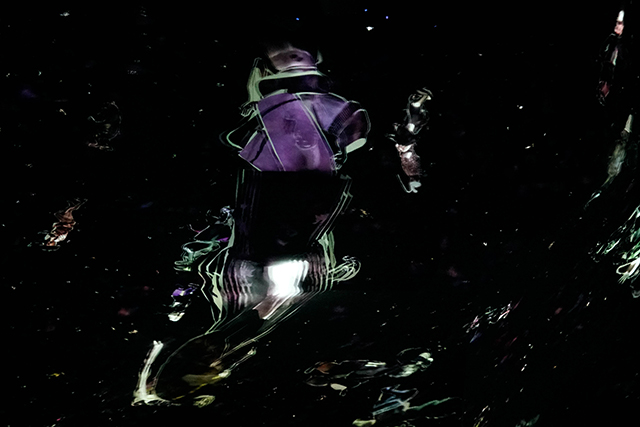
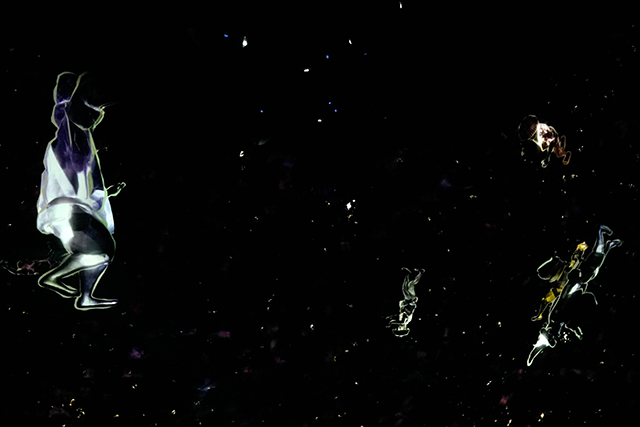
Anonymous and diverse figures walk freely in space. They sing, and when they walk near visitors, they sing more. Just as the figures in the artwork move freely singing and dancing in any direction, people in real life are free to dance anywhere and walk in any direction.
This work is to be viewed from a position close to the entrance.
The work begins when the figures of ‘Walk, Walk, Walk’ enter into the Cave Universe in the middle of the aisle. When the work ends, the figures leave the space and disappear.
If you stand at a position close to the entrance the boundary between the wall and the floor disappears, the real space dissolves and the body becomes immersed in the artwork.
Flowers – Layered Ultrasubjective Space
teamLab, 2018, Digital Installation, Endless, Sound: Hideaki Takahashi, Voices: Yutaka Fukuoka, Yumiko Tanaka
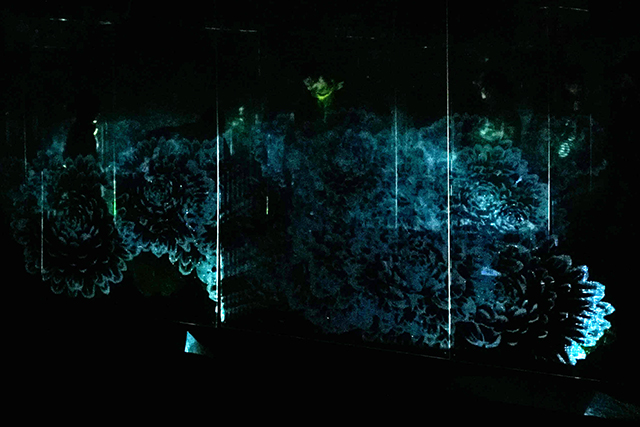
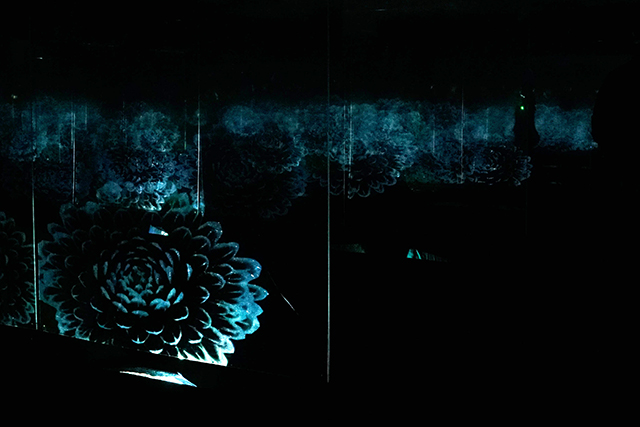
This work featured countless semi-transparent images of flowers. It’s also the space for ‘Peace can be Realized Even without Order’, whose characters had just left as we entered the room.
A seasonal year of flowers blooms and changes over time. However when lotus flowers bloom in the passageway outside, they also flower within the space .
The flowers are born, they grow, bud, blossom and in time the petals scatter and they die and fade away. The flowers repeat the process of birth and death endlessly.
A large number of screens are positioned in the exhibition space. The position of the screens is reproduced on a computer in a virtual three dimensional space, and then the space is “flattened” from multiple viewpoints into ultrasubjective space. The flattened multiple viewpoints are then positioned onto the screens. Ultrasubjective space allows for the area around the viewpoints to be cut out and the artwork to be exhibited layered within the exhibition space.
When a visitor passes between screens, they become layered in flowers, and from another person’s perspective, they exist in the artwork world. In other words, when visitors are seen through the screens by others, they become a part of the work not only in the exhibition space but also in the artwork world.
Universe of Water Particles on a Rock where People Gather
人々のための岩に憑依する滝, teamLab, 2018, Interactive Digital Installation
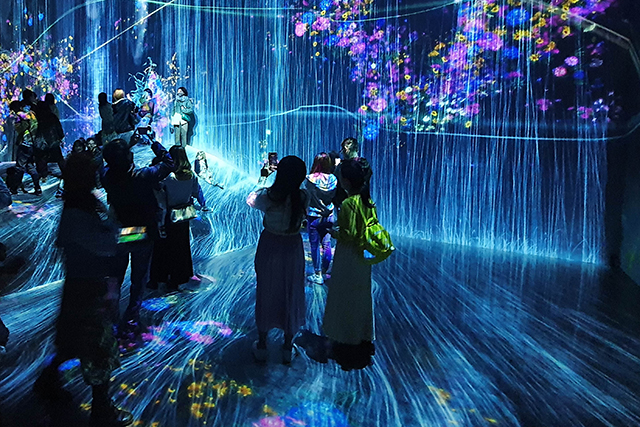
This is probably the work most recognised as teamLab Borderless as it featured on almost everything advertising the exhibition:
Crossing the boundaries of other works, sometimes influencing other works, water flows from the Athletics Forest, Graffiti Nature – High Mountains and Deep Valleys, and accumulates into the waterfall of the Universe of Water Particles on a Rock where People Gather.
The Rock where People Gather is reproduced in a virtual three-dimensional space. Water is simulated to fall onto the rock, and the flow of the water draws the shape of the waterfall. The water is represented by a continuum of numerous water particles and the interaction between the particles is then calculated. Lines are drawn in relation to the behavior of the water particles. The lines are then “flattened” using what teamLab considers to be ultrasubjective space.
When a person stands on the rock or touches the waterfall, they too become like a rock that changes the flow of water. The flow of water continues to transform in real time due to the interaction of people. Previous visual states can never be replicated, and will never reoccur.
Crows are Chased and the Chasing Crows are Destined to be Chased as well, Flying Beyond Borders
追われるカラス、追うカラスも追われるカラス、そして境界を越えて飛ぶ, teamLab, 2018, Interactive Digital Installation, Endless, Sound: Hideaki Takahashi
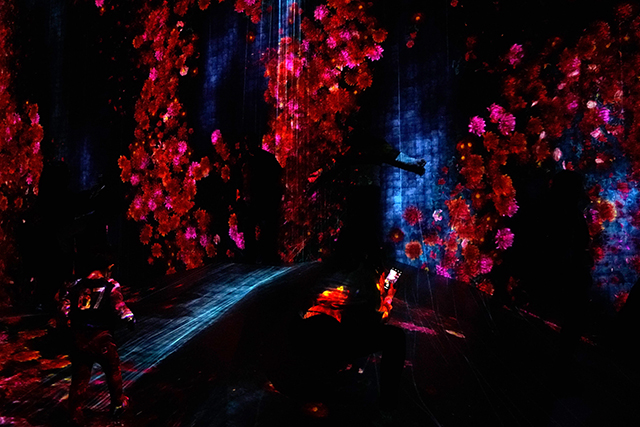
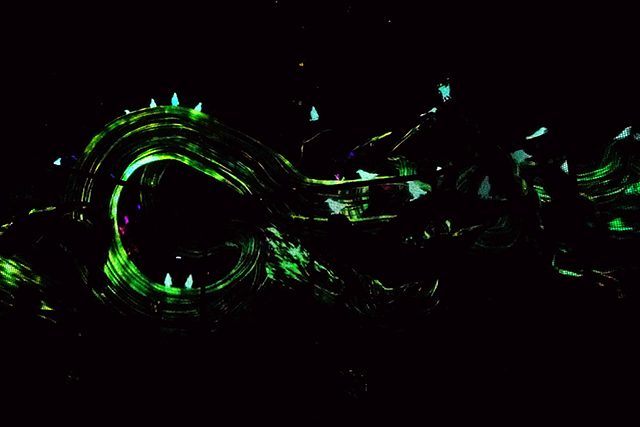
In the same space as the previous work, this work can appear.
Crows are rendered in light as they fly around the space, leaving trails of light in their paths and creating spatial calligraphy. The crows chase one another and in turn become chased themselves. When the chased crows crash into one another, they scatter, turning into flowers. The crows attempt to fly around people in the space, but when they crash into a viewer, they scatter, turning into flowers in the same way.
When you stand near a certain designated space within the artwork the boundary between the wall and the floor disappears, the real space dissolves, eventually we become immersed in the artwork world and the lines drawn by the trails of the crows appears to be drawn in three dimensions in the space.
Born From the Darkness a Loving, and Beautiful World
世界は暗闇から生まれるが、それでもやさしくうつくしい, Sisyu + teamLab, 2018, Interactive Digital Installation, Endless, Calligraphy: Sisyu, Sound: Hideaki Takahashi
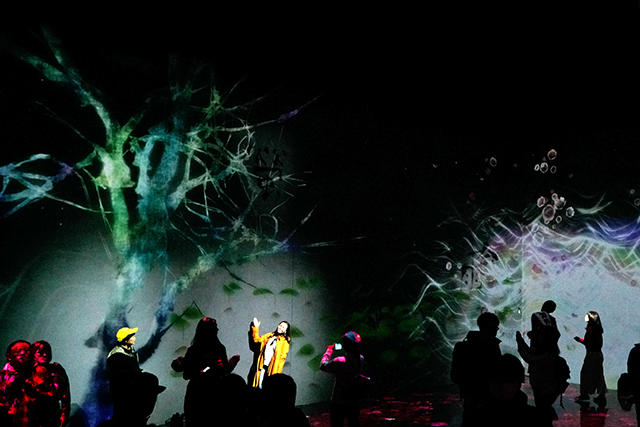
When people touch the characters, the worlds that the characters embody will appear, influencing one another to create a single world.
This artwork is also influenced by other works. For example, when the crows from ‘Crows are Chased and the Chasing Crows are Destined by be Chased as well, Flying Beyond Borders’ touch the characters, the worlds contained within the characters appear.
The elements that are born from the characters are placed at various positions within the artwork space, and the various physical effects and interactions between them produce a single world. For example, when the wind blows, flowers and snow physically fly away. Birds alight in trees, and butterflies are attracted to flowers. Just as in nature, what you see at this moment can never be seen again.
Impermanent Life, at the Confluence of Spacetime New Space and Time is Born
Impermanent Life, 時空が交差する場所には新たな時空が生まれる, teamLab, 2018, Digital Work, 4 channels, Continuous Loop
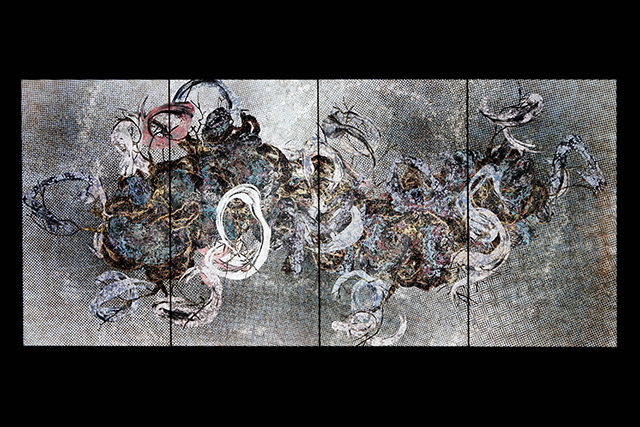
In the background, cherry blossoms bloom and scatter, the cycle of life and death repeats itself.
From the countless background points, at a certain rhythm and interval, a circle is born that grows and spreads out radially. The circle born transforms only the light and darkness of the background world.
Reversible Rotation – Continuous, Black in White
反転無分別, teamLab, 2018, Digital Work, 9 channels, Continuous Loops
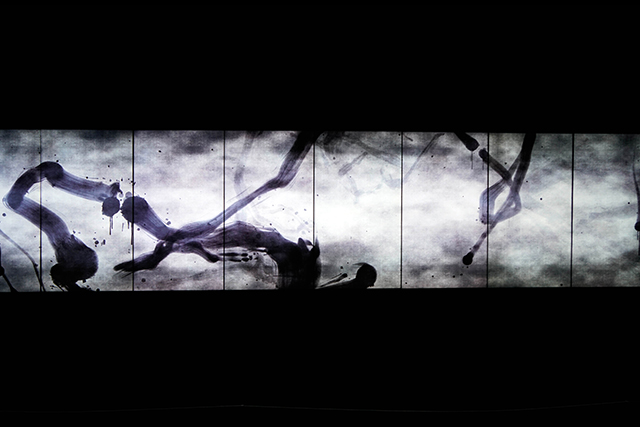
This work forms a continuous whole, it has neither end nor center and surrounds the exhibition space. The Spatial Calligraphy rotates in the artwork space, every aspect rotating in the same direction. But because of the special characteristics of Ultrasubjective Space, it can appear to be rotating clockwise or counterclockwise.
Spatial Calligraphy is calligraphy drawn in space, a form of calligraphy that teamLab has been exploring since it was founded. The artwork reconstructs calligraphy in three dimensional space to express the depth, speed and power of the brush stroke, and that calligraphy is then flattened using the logical structure teamLab calls Ultrasubjective Space. The calligraphy shifts between two and three dimensions.
Fleeting Flower Series
teamLab, 2017, Digital Work, single channel, Randomized video loop, 3 sequences, 5 min 20 sec each
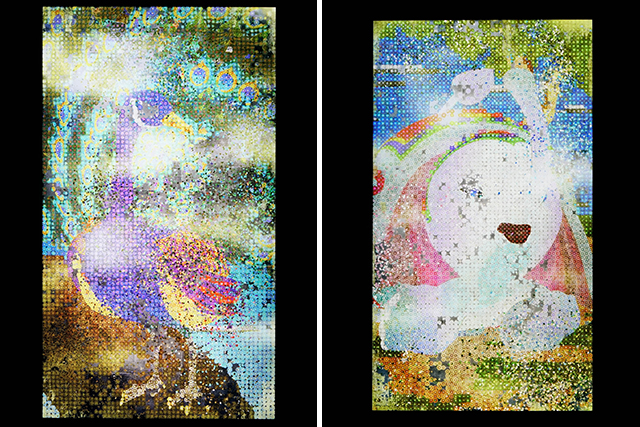
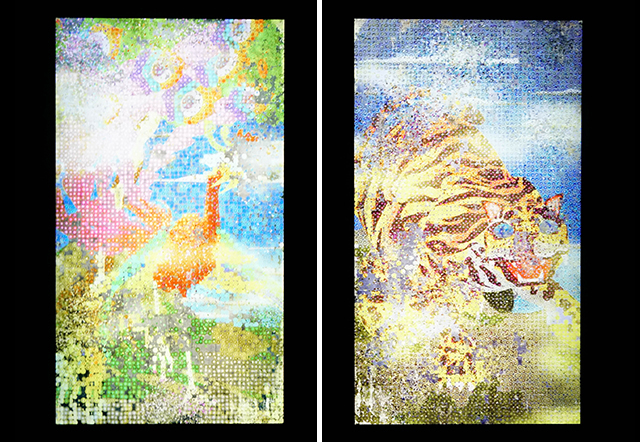
Peony Peacock (牡丹孔雀, top, left), Lotus Elephant (蓮象, top, right), Sunflower Phoenix (向日葵鳳凰, bottom, left) and Chrysanthemum Tiger (菊虎, bottom, right)
Fleeting Flower Series. Everything exists on a fragile continuity of life that knows no boundaries and has continued for a long, long time. The image of a peacock appears in [the] flowers that are born and blossom. In time the flowers scatter. At the moment each flower scatters that part of the [animal] scatters.
Crows are Chased and the Chasing Crows are Destined to be Chased as well, Transcending Space – Floating Nest
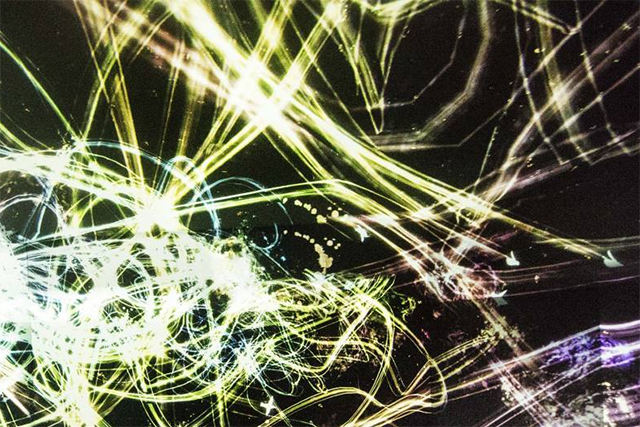
Finishing up in the Borderless World, we queue over half an hour to see Floating Nest and catch Crows are Chased and the Chasing Crows are Destined to be Chased as well entering the work, which involves something of a huge mesh nest (like a trampoline but not so bouncy) that visitors slide down a short ramp to enter. If we were more short on time, I’m not sure the 5 minutes within the work is worth the wait, though.
A large nest floats in the centre of the space. The work is viewed by lying down or sitting in the Floating Nest.
This work begins when the crows of ‘Crows are Chased and the Chasing Crows are Destined to be Chased as well’, cross the F’lower Forest’ and enter the ‘Floating Nest’. The work ends when the crows leave the space and disappear.
Lie down in the Floating Nest and eventually the lines drawn by the traces of crows appears to be drawn in three dimensions in the space. The body becomes immersed into the work, and the boundary between people and the work dissolves.
Crows are rendered in light as they fly around the space, leaving trails of light in their paths and creating spatial calligraphy. The crows chase one another and in turn are chased themselves. When the chased crows crash into one another, they scatter, turning into flowers. The crows attempt to fly around people in the space, but when they crash into a viewer, they scatter, turning into flowers in the same way.
Athletics Forest / 運動の森
teamLab Athletics Forest is a new “creative physical space” that trains spatial recognition ability by promoting the growth of the hippocampus of the brain. It is based on the concept of understanding the world through the body and thinking of the world three-dimensionally. In a complex, physically challenging, three-dimensional space, immerse your body in an interactive world.
Graffiti Nature – High Mountains and Deep Valleys, Red List
グラフィティネイチャー 山山と深い谷 、レッドリスト, teamLab, 2016-, Interactive Digital Installation, Sound: Hideaki Takahashi
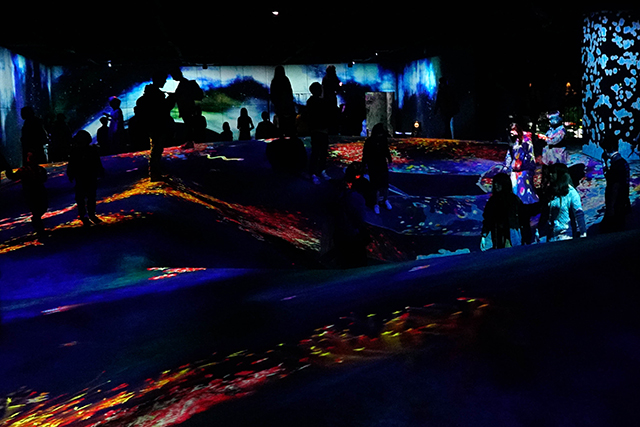
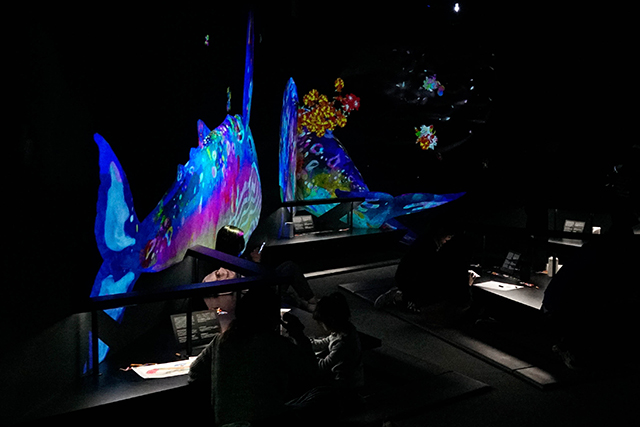
This is a world where various creatures drawn by everyone live in a large, three-dimensional space consisting of slopes with different elevations. There are high mountains and deep valleys in the world, living things cross the mountains and valleys and spread out. The creatures you draw are somewhere in this place. Try looking for them.
Living things eat each other and are eaten by each other to create one ecosystem. When salamanders are stepped on too much they die. Flowers will bloom if you stand still, but will disperse if you walk around. The butterflies you and others draw will fly through the other artworks of the Borderless World, crossing the boundaries of works, descending the stairs, and crossing the floor. The Flutter of Butterflies Beyond Borders is created from these butterflies and those that are born from people in the Butterfly House.
This work is based on the Red List and depicts local endangered wildlife. More than 10 million living species are said to exist on Earth. Each and every one of these species lives while interacting with the others. Plants create nutrition from rain, soil, and the sunlight (photosynthesis). Animals eat those plants. These animals, in turn, are eaten by other animals. When animals die bacteria decompose their bodies, allowing plants to use them for nutrition. All these living things and the habitat they live in is known as an “ecosystem”. Inside an ecosystem, everyone plays a specific role. Therefore, when an animal or plant greatly changes in number due to climate change or human intervention, the ecosystem’s balance is destroyed, thus affecting all that live inside it.
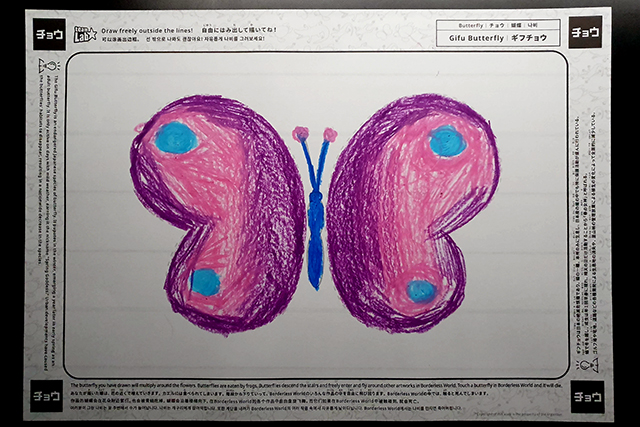
This is my Gifu Butterfly, an endangered Japanese species of butterfly.
It pupates in the winter, emerging a year later in early spring as an adult butterfly. It is only active on days with mild weather, earning it the nickname ‘Spring Goddess’. Urban developments have caused the butterflies’ habitats to disappear, resulting in a nationwide decrease in the species.
The butterfly you have drawn will multiple around the flowers. Butterflies are eaten by frogs. Butterflies descend the stairs and freely enter and fly around other artworks in Borderless World. Touch a butterfly in Borderless World and it will die.
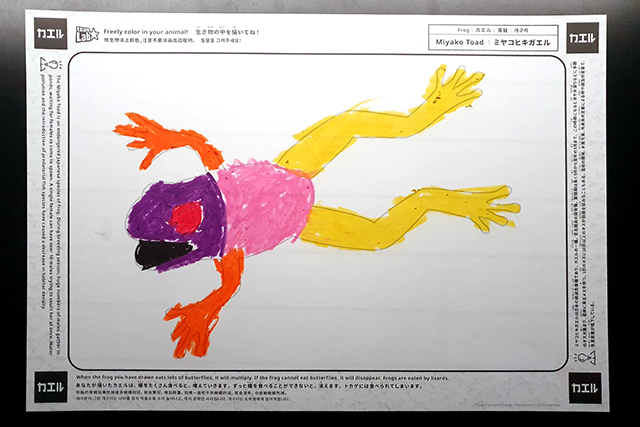
This is D’s Miyako Toad, an endangered Japanese species of frog.
During breeding season, huge numbners of males gather in ponds, waiting for females to come to spawn. A single female can have over 10 males trying to court her at once. Water pollution and the introduction of predatorial fish species have caused a decrease in habitat density.
When the frog you ahve drawn eats lots of butterflies, it will multiple. If the frog cannot eat butterflies, it will disappear. Frogs are eaten by lizards.
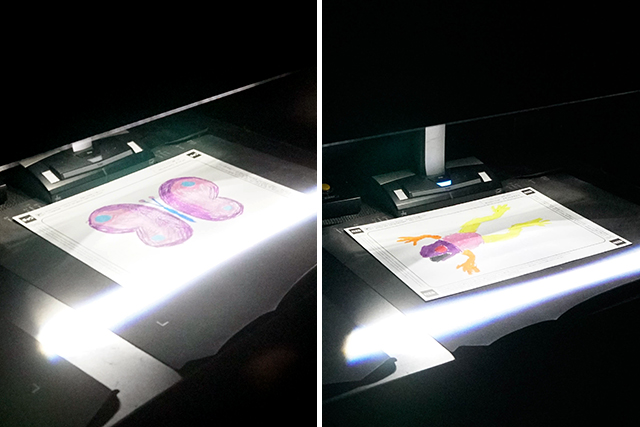
The drawings are scanned in by staff…
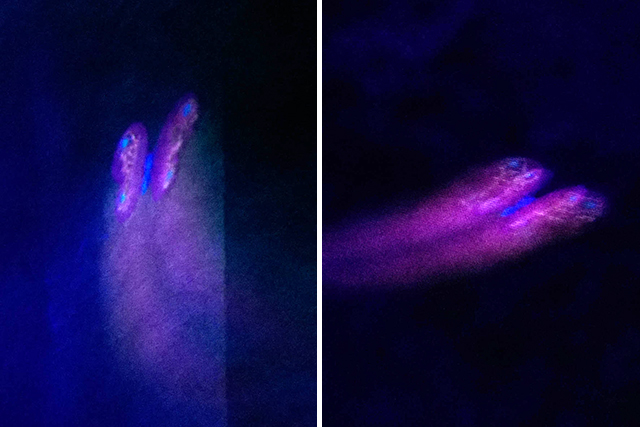
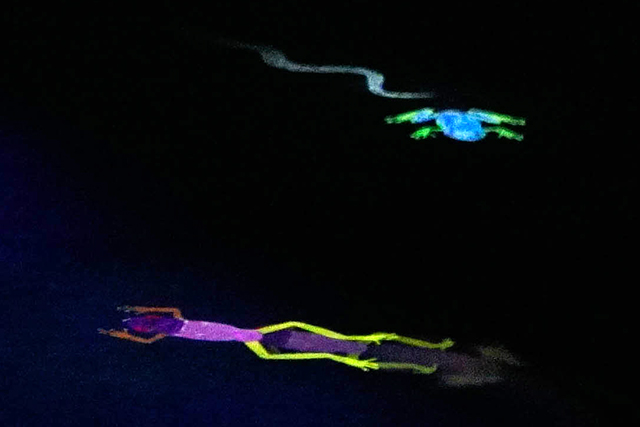
… and almost immediately appear in the ecosystem.
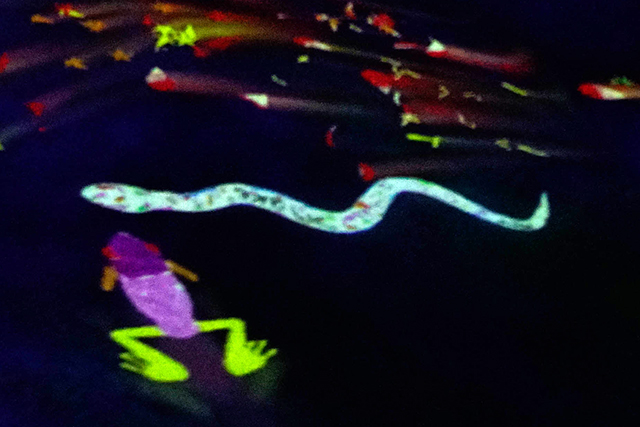
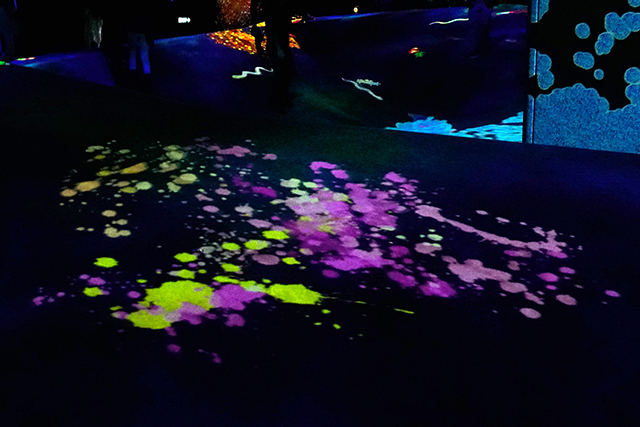
I lose track of my butterfly but D’s frog becomes food for a lizard (or snake?).
Waterfall Droplets, Little Drops Cause Large Movement
teamLab, 2018-, Interactive Digital Installation, Sound: Hideaki Takahashi
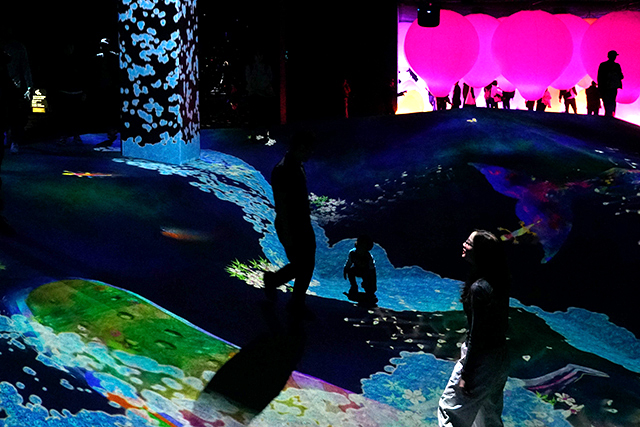
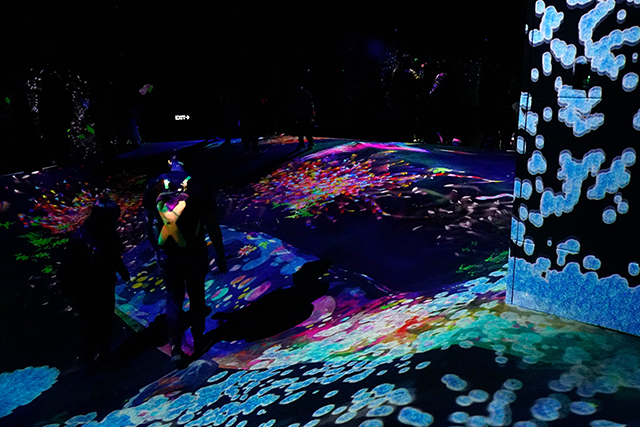
Many water droplets fall, flowing down the terrain of ‘raffiti Nature – High Mountains and Deep Valleys, Red List’. Then, those water droplets fall into the world below, flowing into the ‘Universe of Water Particles on a Rock where People Gather’.
When just one water droplet splashes, it bounces like a ball.
When the water droplets gather into a single body, they flow together and act like liquid water.
When water droplets separate from the body, they begin to behave like individual balls again.
Each one of the droplets, whether on its own or gathered with others, moves under the same simple rules of physics. However, when many droplets are gathered together, they behave in a way that could never have been guessed when dealing with individual droplets.
Weightless Forest of Resonating Life
重力にあらがう呼応する生命の森 , teamLab, 2018, Interactive Digital Installation, Sound: Hideaki Takahashi
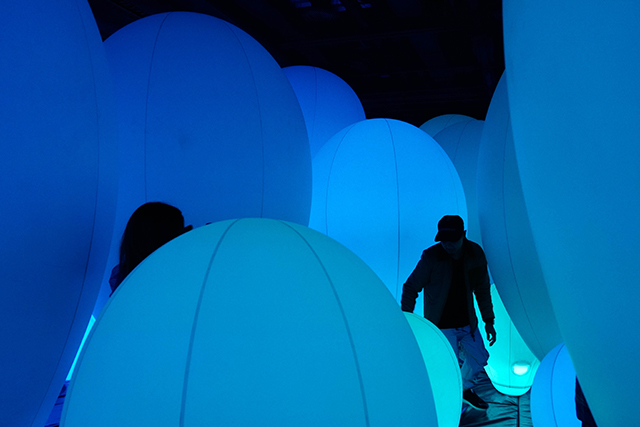
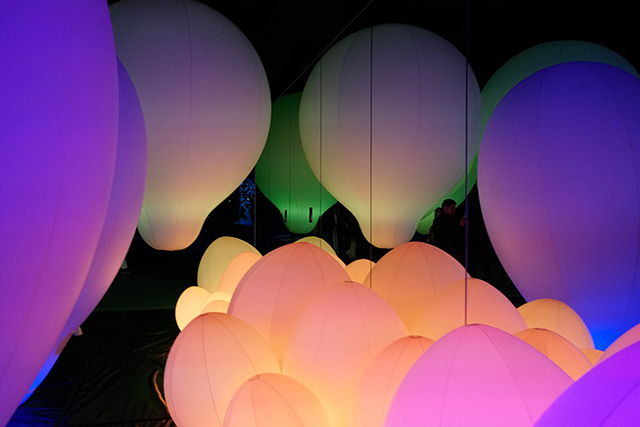
This is a space where you can be three dimensionally immersed by various objects of light that move as though they’re defying gravity. The items on the ground will continue to stand as if they are defying gravity, while the objects floating freely in mid-air will stick to the ceiling as if also defying the laws of physics.
These objects of light are each independent and shine brightly and go dim as if they are slowly breathing. The cactus-like object in the middle of the space and the objects floating through the air can be moved around freely.
When the objects of light are pushed or pushed over by visitors, their color will change and a tone specific to that color will ring out. Then all the nearby objects will react and change into the same color and make the same tone. The objects will continue to react to each other gradually in a chain. If a color of light comes from the distance, that means that a person is there. This will make people feel more aware of the presence of others sharing the same space.
Light Forest Three-dimensional Bouldering
光の森の3Dボルダリング, teamLab, 2018-, Interactive Digital Installation, Sound: DAISHI DANCE
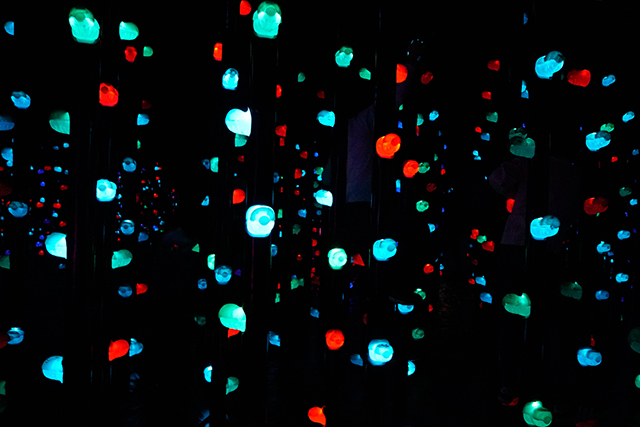
A space developed by teamLab with sparkling jewels arranged three-dimensionally in the air. The jewels (boulders) are to be climbed as a three-dimensional bouldering course.
Hold the sparkling jewels and using both hands and legs to progress in three-dimensions through the air.
People experience the space wearing a white glowing badge. As you hold a jewel it shines brilliantly with a particular color and produces a sound tone. The badge also shines the same color.
If you proceed with both hands and feet on a path of the same color, the surrounding jewels and badges will respond, and a sound tone will resonate out. The more you proceed on a path of one color only a wider area of jewels will respond and the sound tone will resonate out further.
Aerial Climbing through a Flock of Colored Birds
色取る鳥の群れの中のエアリアルクライミング, teamLab, 2018-, Interactive Digital Installation, Sound: DAISHI DANCE
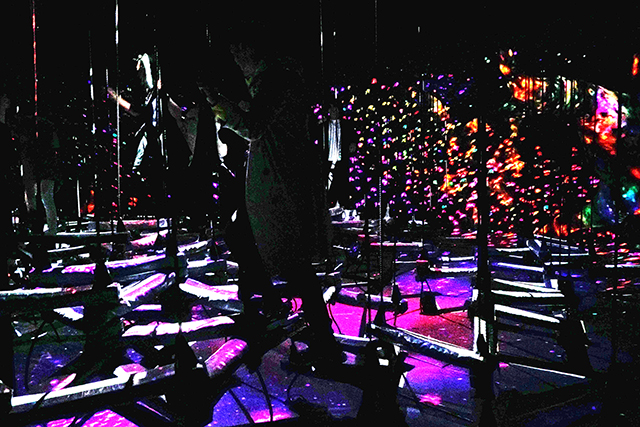
Nearby, we have a go at balancing on these boards on ropes. I can envision parents enjoying these exhibits as these would engage children endlessly.
Aerial Climbing was developed by teamLab, it featured connected boards hanging in mid-air on ropes, creating a floating three dimensional space. Visitors use these boards to navigate the space in mid-air through three dimensions, trying not to fall. As the boards are linked, the movement caused by one person on a board will have an effect on boards further down the line. The arrangement of boards will differ depending on the selected route and visitors will get a different experience depending on the various ways the boards are linked.
Flocks of birds fly around freely in this space. They fly trying to avoid the people standing on the boards. Each visitor has a badge of a certain color and when the birds fly close by, they take that color and turn into that color.
The movement of thousands of birds is beautiful and mysterious, like a single giant life form. The flock has neither a leader nor mutual consensus, but moves on the simple basis of; if my neighbour moves, then I move too. The biological mechanism that causes flocks of hundreds of birds to move at the same time is enigmatic. It seems there is a universal principle that humans do not understand. Likewise, the coloring of the space by the flock is not predetermined. Influenced by the presence of people, the space becomes a complex and beautiful coloration. This coloration is created by the movement of each bird obeying some kind of primitive rule.
Inverted Globe, Giant Connecting Block Town
裏返った世界の、巨大!つながるブロックのまち, teamLab, 2018-, Interactive Digital Installation, Sound: Hideaki Takahashi
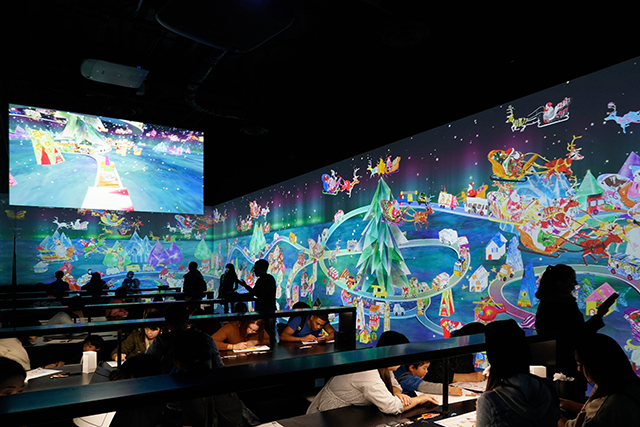
By this point, we were over halfway through our time at teamLab Borderless, and together with the huge amounts of children screaming in the nearby Future Park, we passed on participating after having a quick look.
A space that feels as if the world has been turned inside out.
Make the city come to life by placing giant building blocks of houses and stations, running various vehicles such as cars and trains, and developing transport systems.
When blocks of the same kind are placed nearby, they are connected to let the vehicles move along the routes created. Connect the blocks, and the vehicles will evolve more and more. Helicopters fly from the building and the world seen from the helicopter is projected on the screen in the sky.
The world has a river running through it. When it rains, the river floods and the water runs into the city. However, building a waterway with pond blocks and connecting the waterway to the sea will prevent flooding.
Background of Artwork Waterways and Transportation: The creation of cities and flood control .The creation of cities and countries is deeply related to the history of construction done by humans to prevent the overflowing of rivers. Firstly, civilization started by cultivating crops using river floods. Because of crop cultivation, cities were made, but rivers overflow when rain falls. In order to maintain the cities, there was a need to construct something that would prevent flooding. It is thought that countries were formed to gather many people to work. Preventing flood disasters is called “flood control.”
City development and transport: Transporting crops and goods from town to town was extremely important for human progress. In the past, roads were built and transport was carried out by people and horses. However, rivers started being used by ships with more transporting power than horses to transport goods. Through the linking of towns by the river, each town developed. In more modern times, humans desired a newer transportation method, which is why they built railways for trains, and roads for cars to be driven on, connecting towns.
Multi Jumping Universe
マルチジャンピング宇宙, teamLab, 2018-, Interactive Digital Installation, Sound: DAISHI DANCE
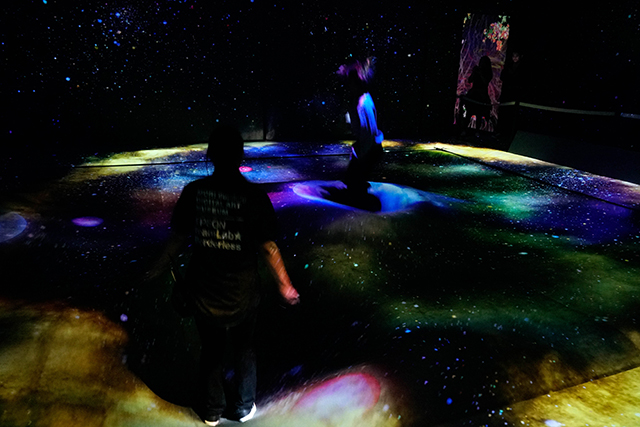
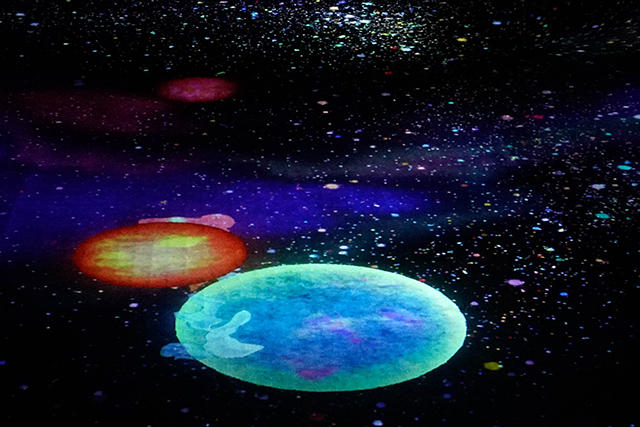
Multi Jumping featured a flexible surface that allows multiple participants at the same time. D managed to create a black hole. Jumping is tiring work!
This installation is created around the theme of the life cycle of the stars of the universe. In this space, people create a warp in space and time. This distortion will attract stardust and gas from the universe, birthing new stars, and making them grow. When the life of the star ends, it will return to the stardust and nebulas that float through the universe, becoming the building blocks of new stars. The size and mass of the star is determined by how much stardust and gases are gathered. A gigantic and heavy star will eventually becomes a black hole that swallows up everything around them.
Lifecycle of a Star
Like the sun and the twinkling stars in the night sky, stars which generate their own light are called “fixed stars”. There are various types of stars in the universe; “planets” like the Earth we live on, and “natural satellites” such as moons which revolve around them, but here we are going to talk about the “fixed stars”.
A large factor in the life of a fixed star is “gravity.” According to Einstein’s theory, in space, objects with mass cause a distortion in space-time. The force that causes surrounding objects to be pulled toward this distortion in space-time is called “gravity.”
Birth of a Star
There is numerous interstellar dust and gas drifting in space, and these gather through gravity to form baby stars. This condition right before the formation of a star is called a “protostar”.
Evolution of a Star
A “protostar” gathers surrounding interstellar dust and gas through gravity and evolves into a self-shining fixed star. Fixed stars in this stage are called “main sequence stars”. Fixed stars spend most of their lives as “main sequence stars.” The sun we see is currently at this stage. As they continue to evolve, they begin to expand and turn into red, large stars called “red giant stars”.
Death and Rebirth of a Star
Smaller stars with less than 8 times the sun’s mass finish their lives by releasing gas. Stars with greater mass end their lives by causing a “supernova explosion”. The star is blown apart in the “supernova explosion” and turns once more into interstellar dust and gas, becoming ingredients for the next star formation.
Forest of Lamps / ランプの森
Forest of Resonating Lamps – One Stroke, Fire
呼応するランプの森 – ワンストローク, Fire, teamLab, 2016, Interactive Installation, Murano Glass, LED, Endless, Sound: Hideaki Takahashi
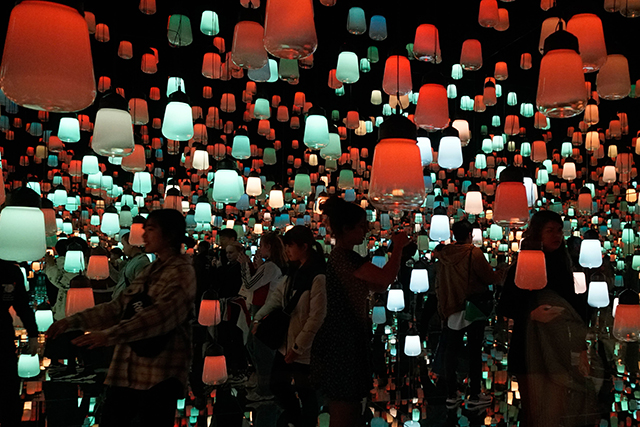
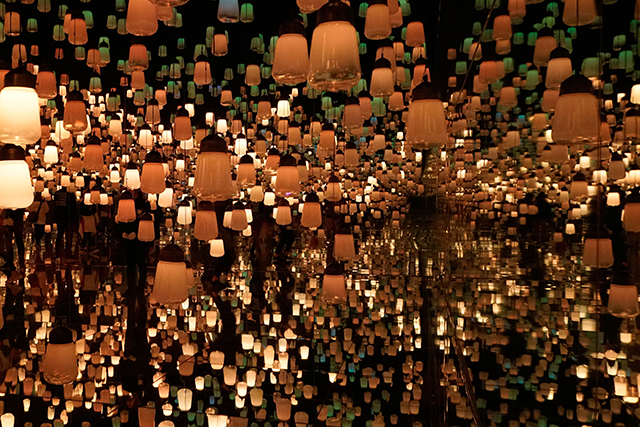
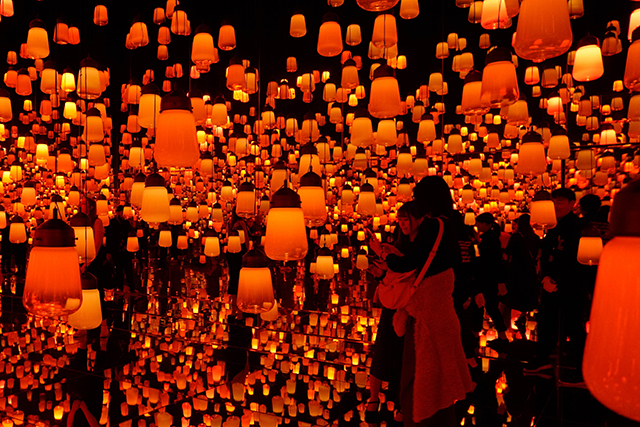
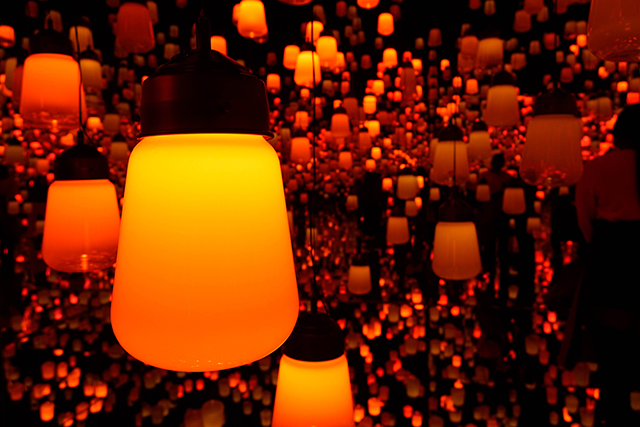
For our last work, we visit the second iconic image from teamLab Borderless: Forest of Resonating Lamps. The work feels very much inspired by Yayoi Kusama’s Infinity Mirror Rooms series recreated on a massive scale and additional interactive component, with the floor of water replaced by mirrors and the relatively personal experience replaced multiplied about 20 fold.
When a person stands still close to a lamp, it shines brightly and emits a color that resonates out. The light becomes the starting point, and it spreads to the two nearest lamps. The light from the two nearest lamps transmits the same color to other lamps, spreading out continuously. The light transmitted always resonates out as a bright light once, passing to close lamps, until all lamps have shone brightly once, and then returns to the first lamp. The light of the lamp in response to human interaction, divides in two, becomes one optical line through all lamps respectively, finally, meeting at the first lamp that became the starting point.
All of the lamps, seemingly scattered randomly, have a single connecting line (unicursal) that can be drawn. When drawing a line, the stroke (the same starting and ending points) is drawn from a lamp to a lamp that is closest in distance in three-dimensions. By arranging the lamps in this way, the light of the lamp corresponding to the person is always propagated to the nearest lamp, and must always pass through all the lamps of the stroke without fail, and will finally got back to the first lamp that became the starting point.
The arrangement of the lamps is mathematically determined. A large number of solutions were evaluated that take into account the variation and distribution in the height, direction of the lamp, and the smoothness of the three-dimensional path (light trajectory).
The arrangement of the lamps born from such a process seems to be random at first sight, but the light continues to the lamp physically closest to it, which gave a natural feeling. And since the light trajectory of the lamp is connected by a single line, the light born from any particular lamp and the light born from any other lamp, will always cross each other. The arrangement of the lamps is not only beautiful in a static way, but also in a dynamic way when activated by people in the space, and in a continuous way. It demonstrates the space of a new era that adapts and changes due to the movement of people in it.
※ The lamp is made of Murano glass (Venetian glass).
En Tea House / 幻花亭
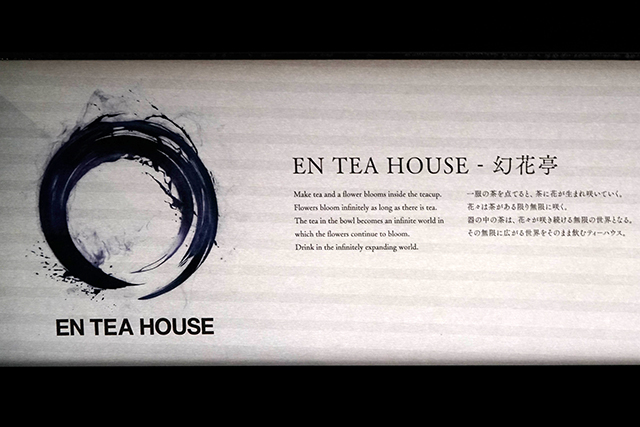
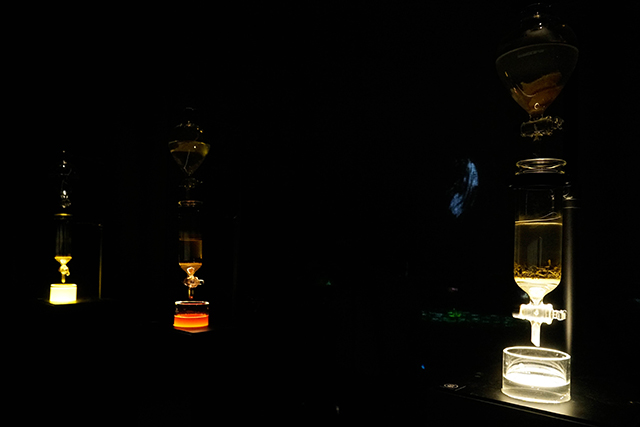
The En Tea House is an additional cost on top of the admission fee, but well worth it for its unique experience.
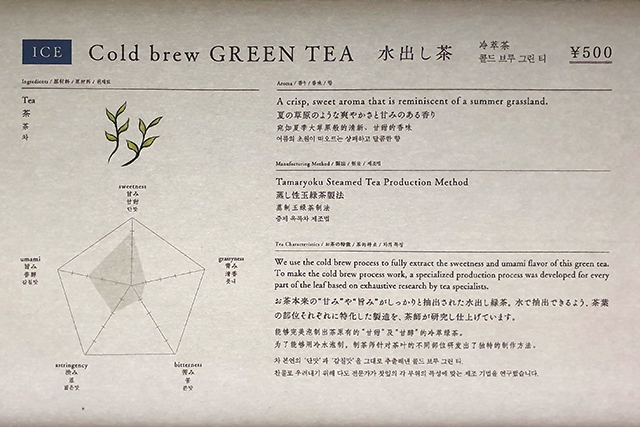
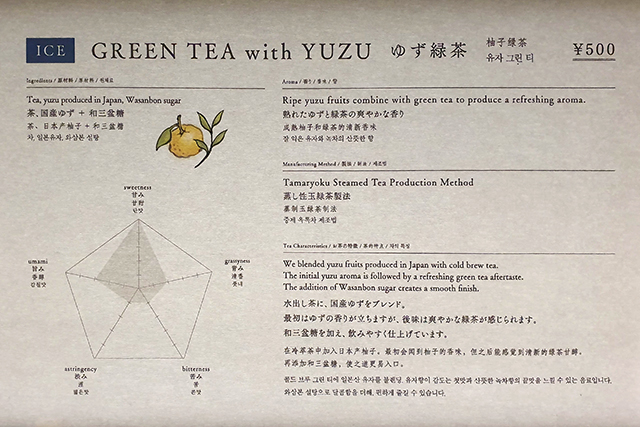
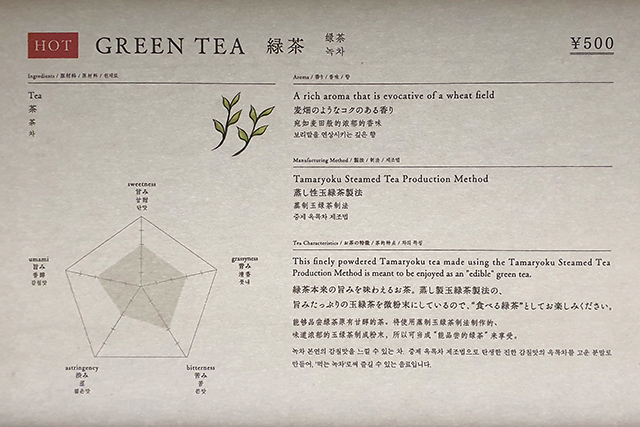
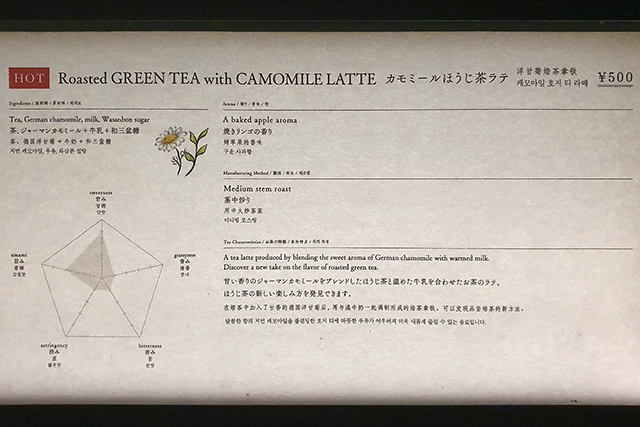
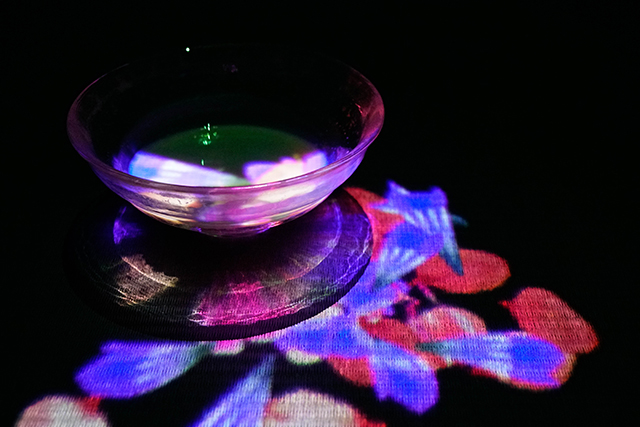
There are four kinds of tea available as well as ice cream. D and I try the Green Tea with Yuzu and the Roasted Green Tea with Camomile Latte.
Flowers Bloom in an Infinite Universe inside a Teacup
小さきものの中にある無限の宇宙に咲く花々, teamLab, 2016, Interactive Digital Installation, Endless, Sound: Hideaki Takahashi
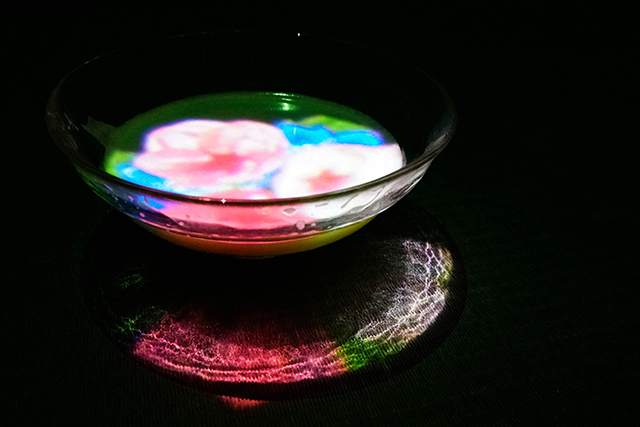
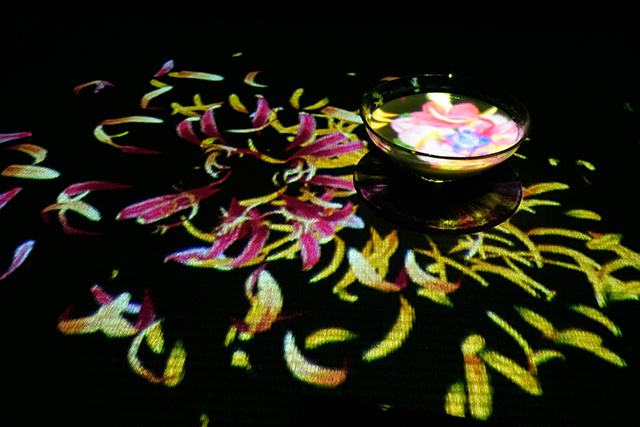
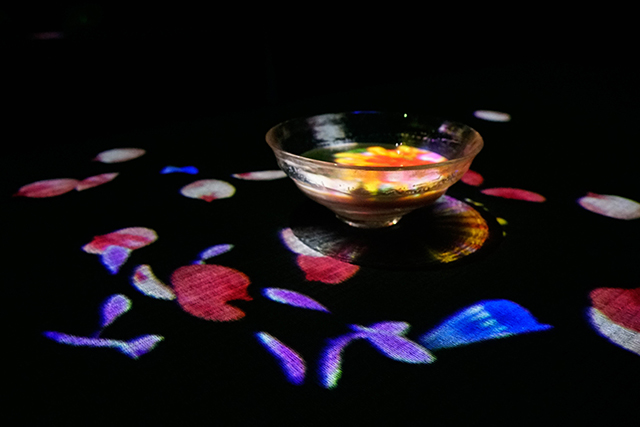
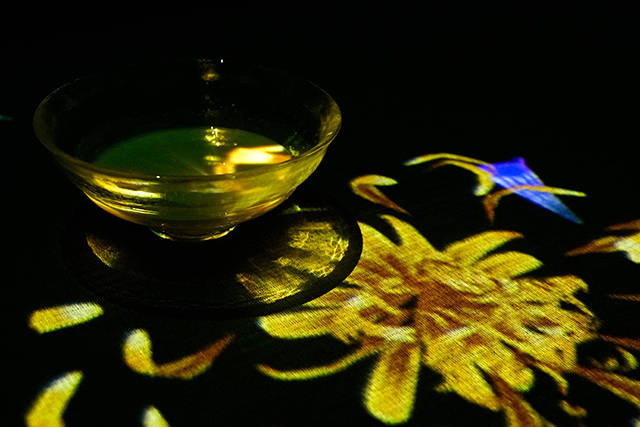
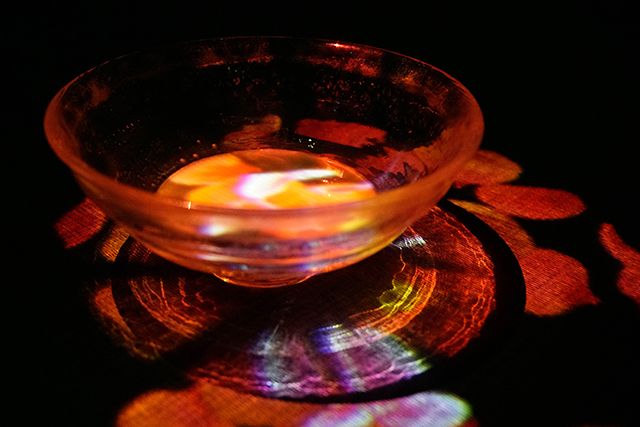
The artwork forms within our own bowls, giving us the unique chance to engage our sense of taste in enjoying an artwork. The tea is enjoyable and the unpredictability of the flowers blooming and dispersing were a mesmerizing novelty.
Make tea, and flowers bloom inside the teacup. If you pick up the teacup, the flowers scatter and spread outside of the cup. Flowers bloom infinitely as long as there is tea. The tea in the teacup becomes an infinite world in which the flowers continue to bloom. Drink in the infinitely expanding world.
The artwork appears for the first time when there is tea in the cup; when the tea was gone, the artwork disappears with it. Tea is a transformative liquid, and the amount of tea in the cup will change the size of the tea’s surface. Accordingly, it will also change the size of the flower. If tea is spilled from the cup, flowers will also bloom in the spilt liquid.
Throughout the year, each month’s seasonal flowers will bloom.
Enso – Gold Light
円相 – Gold Light, teamLab, 2019, Digital Work, Single channel, Continuous Loop
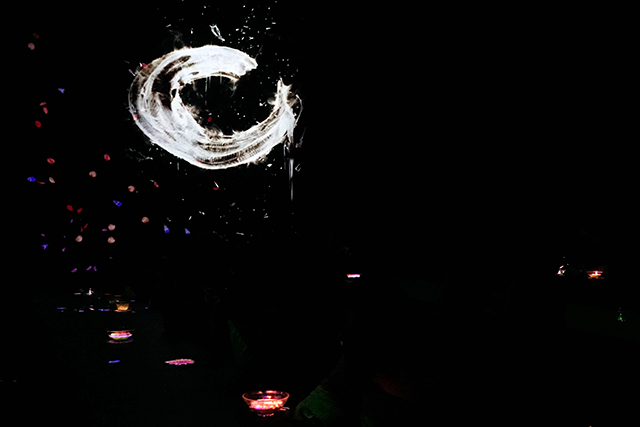
Finally, the logo for the En Tea House is a work of itself:
Enso is the Zen practice of drawing a circle with a single brush stroke. This artwork depicts an Enso drawn as Spatial Calligraphy. The brush stroke is suspended in space but the viewpoint changes to reveal the circle Enso. teamLab has been working on Spatial Calligraphy since the collective formed. A new interpretation of traditional calligraphy, Spatial Calligraphy reconstructs calligraphy in three-dimensional space and expresses the depth, speed and power of the brush stroke.
In Zen, enso is a circle that has since ancient times been written with canes or sticks in midair. It is said to represent enlightenment, truth, the entirety of the universe, and equality. The circle also reflects the hearts and minds of those who view it, with its interpretation left to the individual.
And that concludes our time spent at teamLab Borderless. We arrived at 11 am and left at around 4 pm, but felt we could’ve spent longer if it weren’t that we needed to catch our flight!
Tōkyō International Air Terminal
Haneda Tōkyō International Airport, Ota City, Tōkyō 144-0041, Japan
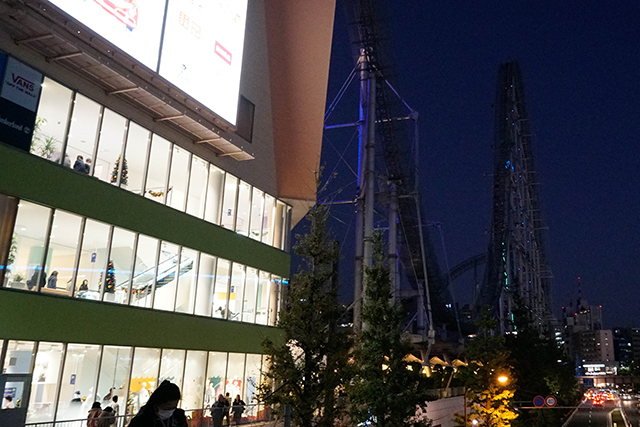
We make the quickest of pit stops at Tōkyō Dome City to visit the tutuanna and unknowingly bump into ridiculously huge crowds of women in their early 20s to 30s visiting the venue for the closing night of TVXQ’s concert. We managed to get in and out fine, though, given Japan’s penchant for orderliness.
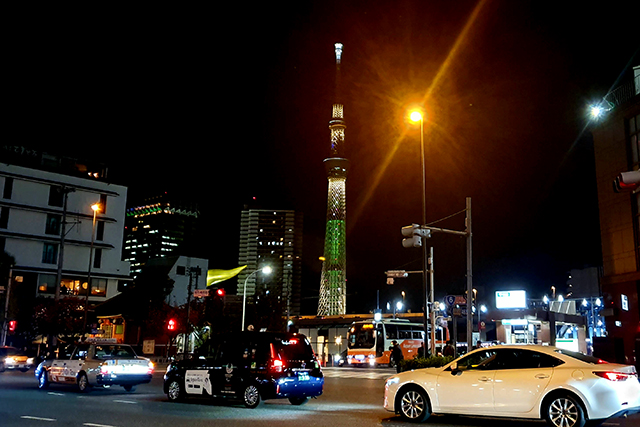
Back at Asakusa we quickly pick up our bags from the hotel, before heading to the airport. We blindly get on the first train, which was bound for Yokohama rather than the airport, but thankfully realise soon enough to still arrive at the airport with plenty of time. Phew!
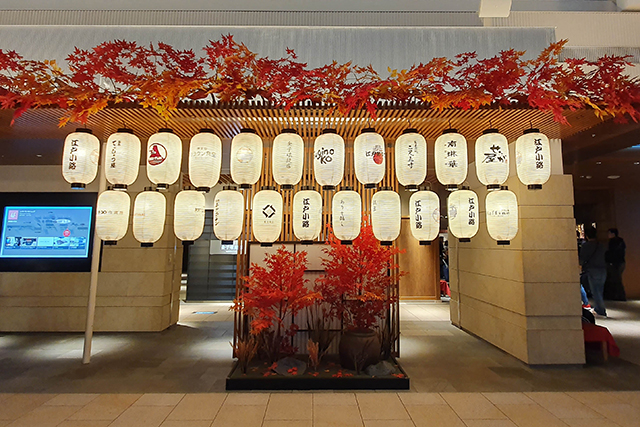
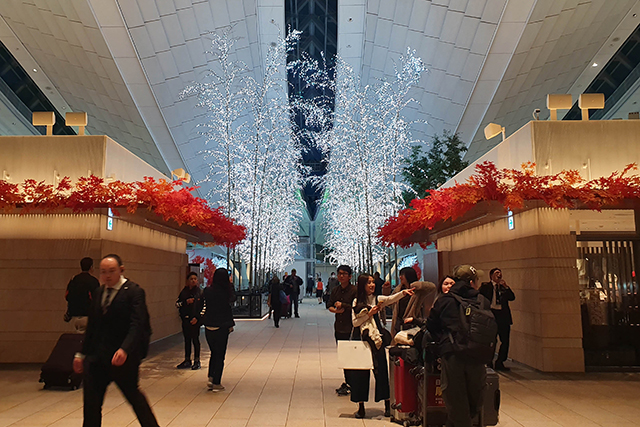
Edo Koji
Terminal 3, Haneda Tōkyō International Airport, Ota City, Tōkyō 144-0041, Japan
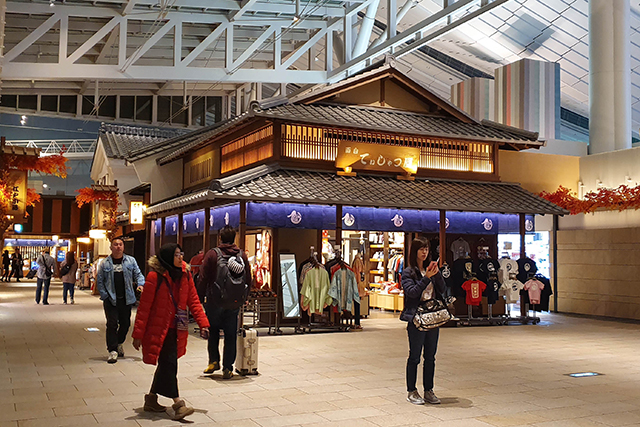
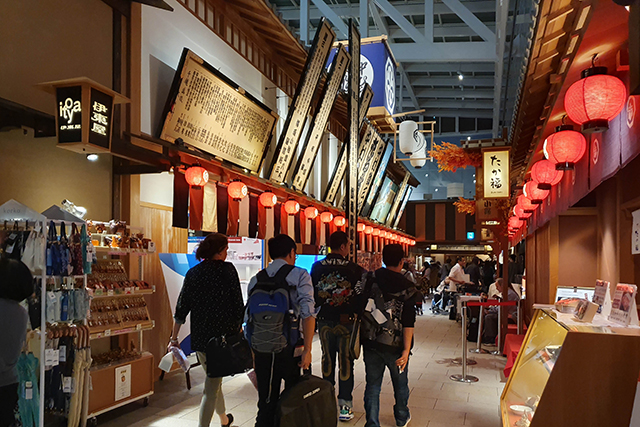
Edo Koji is modelled after a typical street of old Japan from the 17th century recreating the unique ambience of the Edo period. Its Edo architecture was designed and built by Nakamura Sotoji, a company comprised of master architects who specialize in the traditional construction of tea ceremony structures made with natural wood.
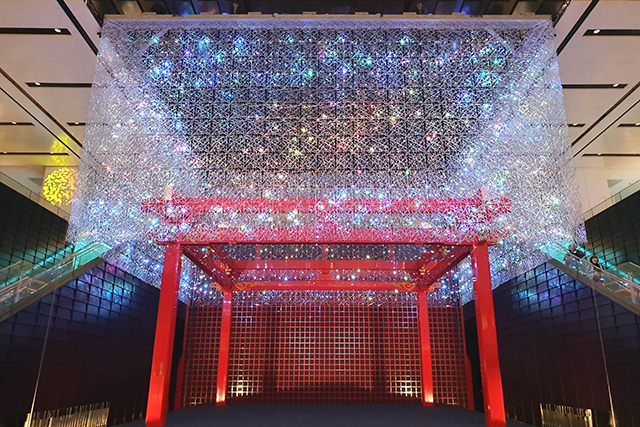
The area also featured a mock Edo-style theatre, constructed using traditional methods under the supervision of Kabuki actor, Kanzaburo Nakamura XVⅢ. The black plaster walls are known as Edo Guro, literally Edo Black.
Tempura Takahashi
天ぷら たかはし, 9 江戸小路, 4F, Terminal 3, Haneda Tōkyō International Airport, Ota City, Tōkyō 144-0041, Japan
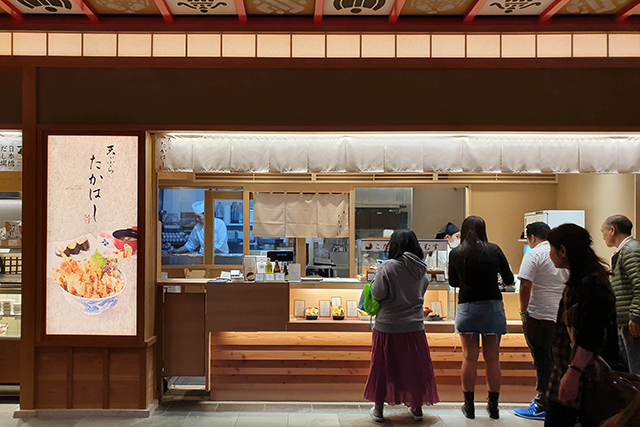
On the Okonomi Yokocho side street, we pick up a quick dinner at Tempura Takahashi. This is the first store in Japan to specialise in tengu and tenmusu, which originated in the Mie prefecture of Japan but is now more commonly regarded as a specialty dish of Nagoya.
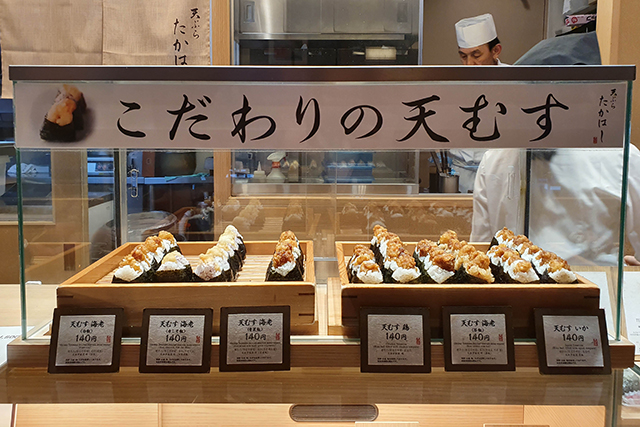
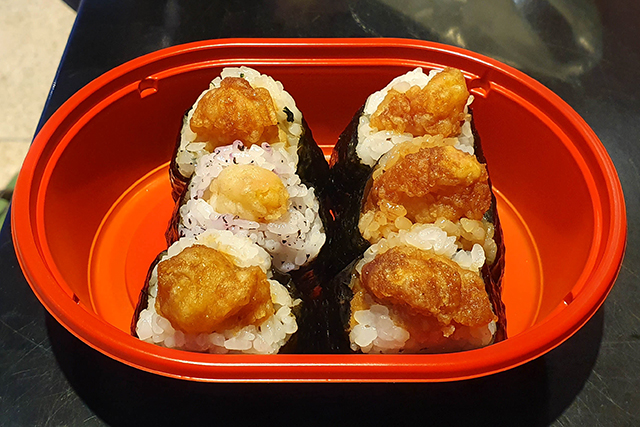
Tenmusu consisted of a rice ball wrapped with nori that is filled with deep-fried tempura shrimp.
- Left, top: Shrimp tenmusu with plain rice
- Left, middle: Shrimp tenmusu with rice seasoned with red shiso
- Left, bottom: Shrimp tenmusu with rice seasoned with leafy green vegetables
- Right, top: Chicken tenmusu with plain rice
- Right, middle: Shrimp tenmusu with rice cooked with tea
- Right, bottom: Squid tenmusu with plain rice
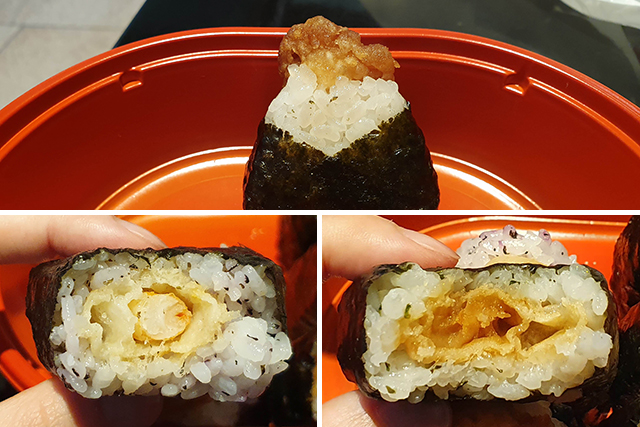
I enjoyed the bite-size of the tenmusu as well as their varied flavours and textures but found the batter was no longer crisp as a result of being in the rice and that gave an overly dense mouthfeel.
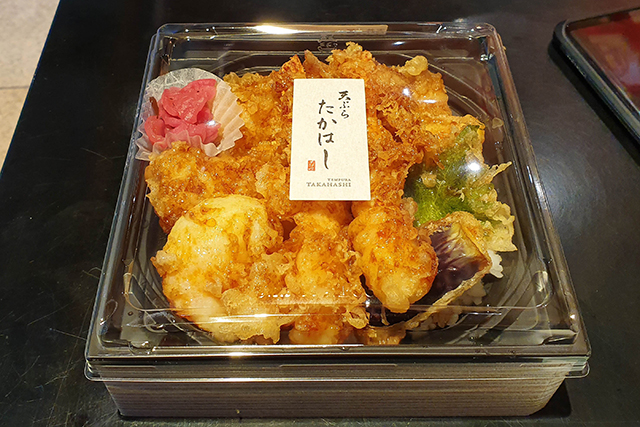
This is D’s Tendon Hana (¥750), described as ‘a rice lunch box with a variety of tempura, including prawn, chicken, squid, a soft boiled egg, and 2 types of vegetables, with pickles on the side. The bento was made to order and an enjoyable hot meal before our flight. That said, D also found the batter was not quite as crispy as we’d come to expect from tempura.
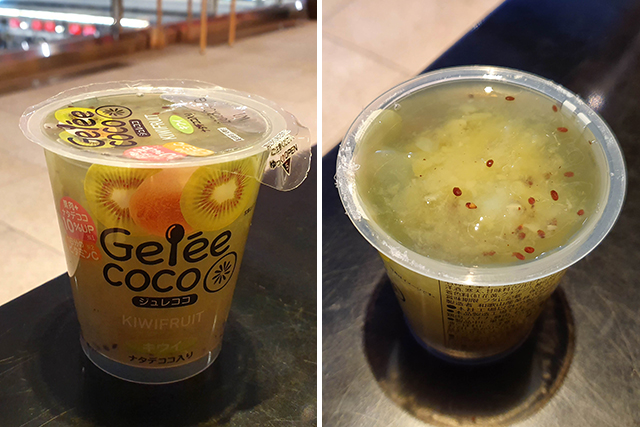
We finish off with some kiwifruit jelly that we’d picked up from the supermarket a few days ago. To our surprise, there’s numerous chunks of kiwifruit flesh hidden inside as well as chewy chunks of nata de coco. Yum!
Nihonbashi Bridge
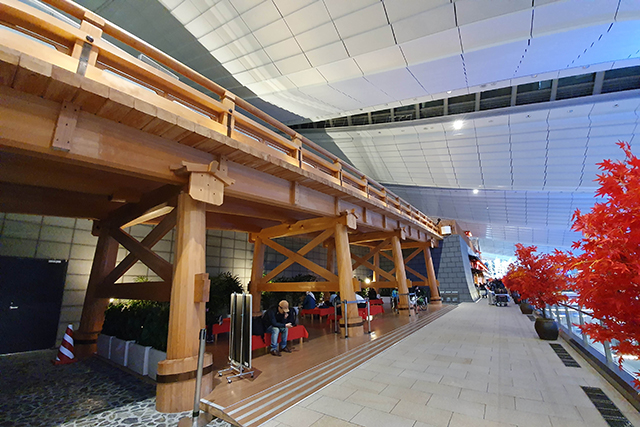
Having filled our bellies for the first time since breakfast, we head over to the Nihonbashi Bridge. Historically, the Nihonbashi Bridge in central Edo has symbolized the first step in one’s journey, and this one here is a scaled-down replica built from Yoshino cypress.
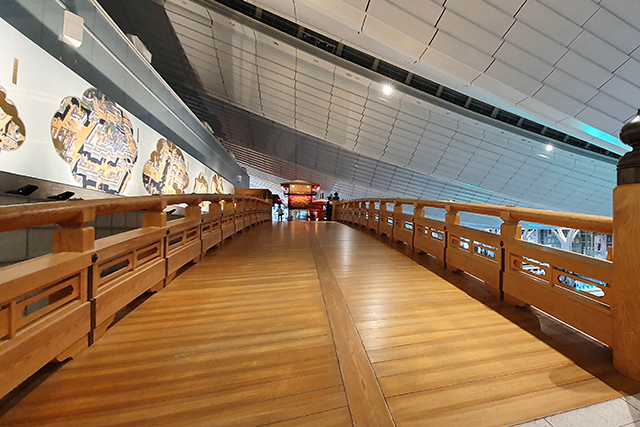
The wall next to the bridge is decorated with Edo period folding screens depicting various famous Edo areas, showing the bustling activity in the city through murals of porcelain panels.
The pair of 6-panel folding screen s depicts the scenery of the urban and suburban areas of Edo in the early Edo period, highlighting the achievements of Tokugawa Iemitsu, Third shogun of the Tokugawa shogunate.
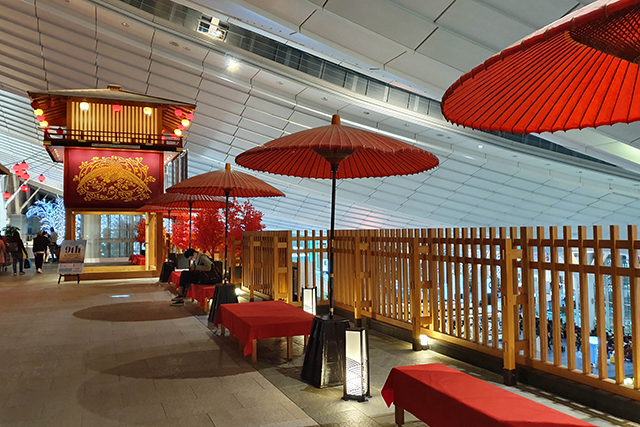
At the end of the bridge, various seating areas create a festive mood, while the elevator is camouflaged within the traditional architecture.
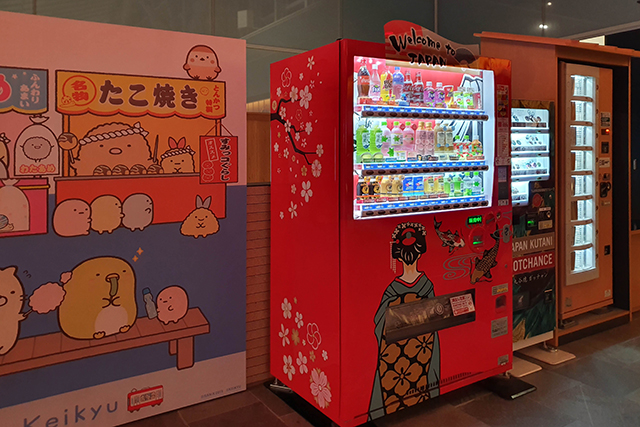
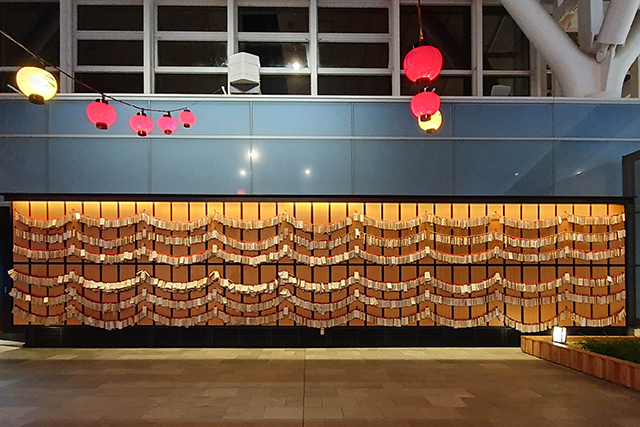
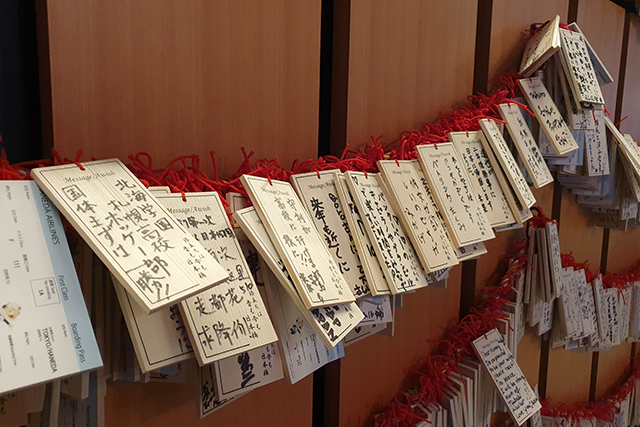
There’s a vending machine dispense ema that can be purchased and attached to the wall.
Observation Deck
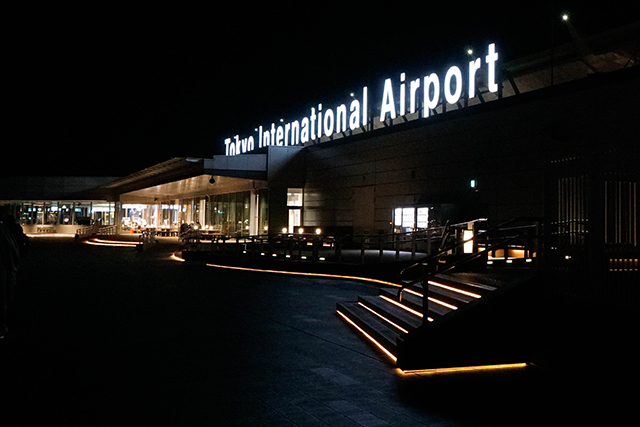
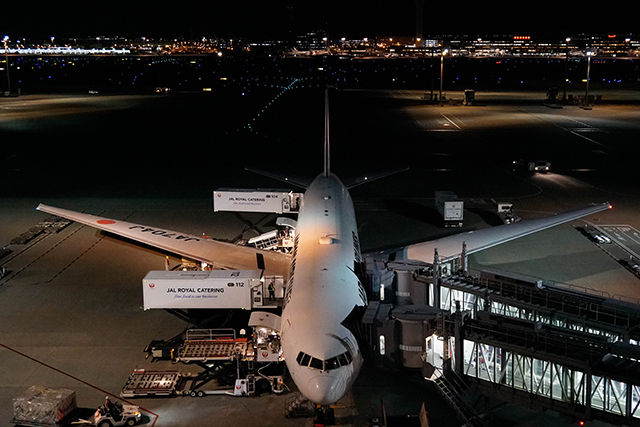
Almost every scene in an anime featuring someone leaving the country involves this iconic observation deck, which offers a panoramic view of the airport and a close view of planes landing and taking off from 4 different runways.
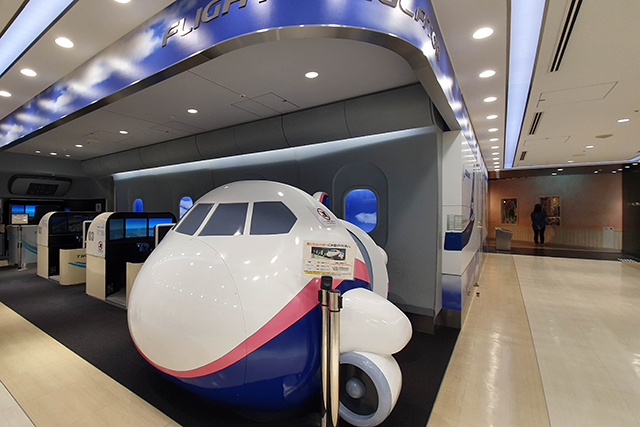
Back inside, there’s an area for visitors to enjoy a flight simulation (for a price).
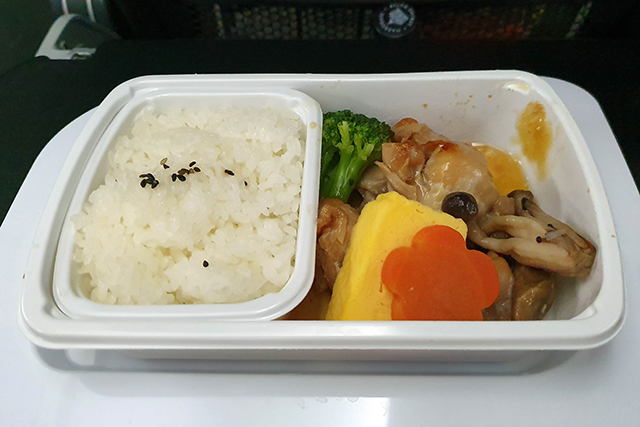
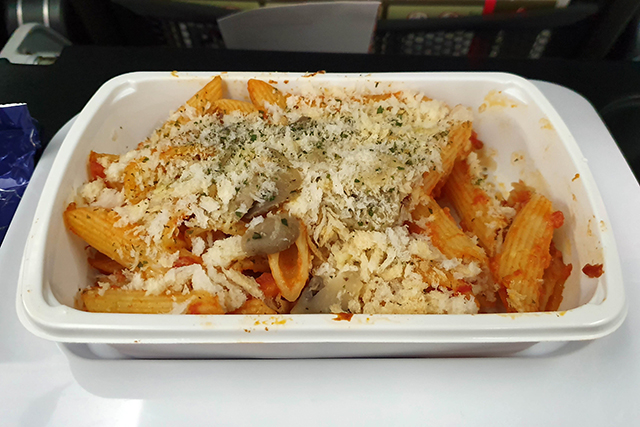
D’s choice in supper was the grilled chicken (top) with shimeji mushrooms, broccoli, plum sauce and steamed rice with black sesame, while mine was the penne with tomato cream sauce, sauteed mushrooms and pangrattato. It came as no surprise that D’s was the better choice of the two!
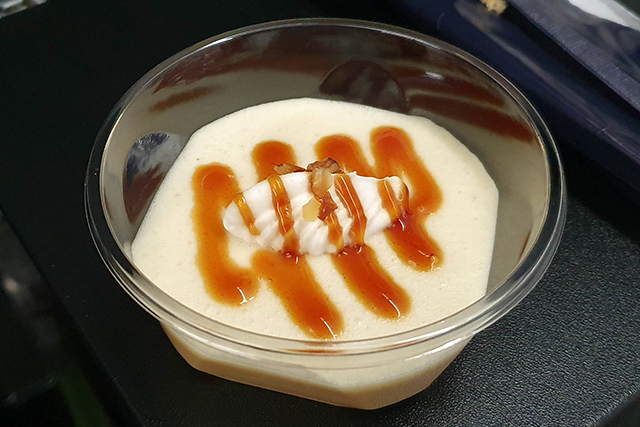
The accompanying creme brulee with poached pears and cream was also not worth the calories — it was gluggy and thick and just unpleasant.
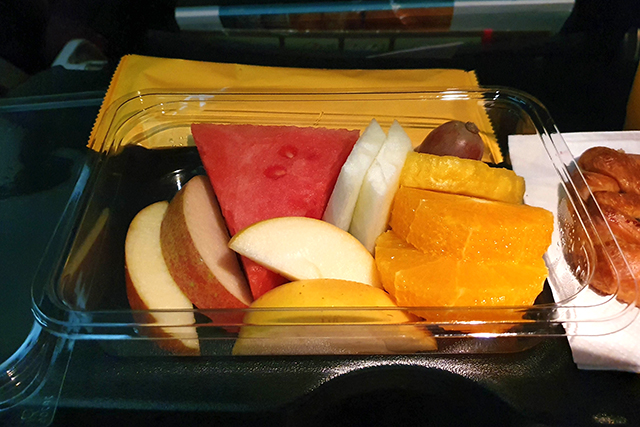
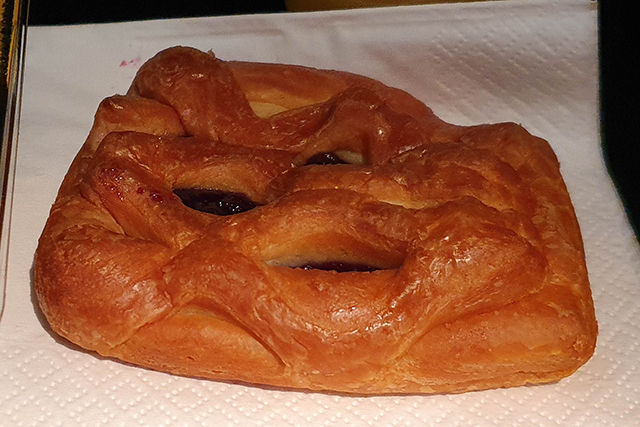
Thankfully, breakfast always seemed to fare better and we enjoy the fresh seasonable fruit plate and warmed blueberry danish.
With this post, the recount of our Japan 2019 trip is complete! I lost steam mid-way through, but now that I’ve reached this point, I can only be so thankful that D and I were so fortunate to have subdued our inner travel bug and completed our trip before COVID-19 took off. Getting off that plane, we would never have dreamed that there would come a time when we wouldn’t be able to just hop on a plane back whenever we felt the urge, but life always has a way of surprising, right?
Tōkyō was Day 15 of 15 in this Japan 2019 trip around Kyūshū.