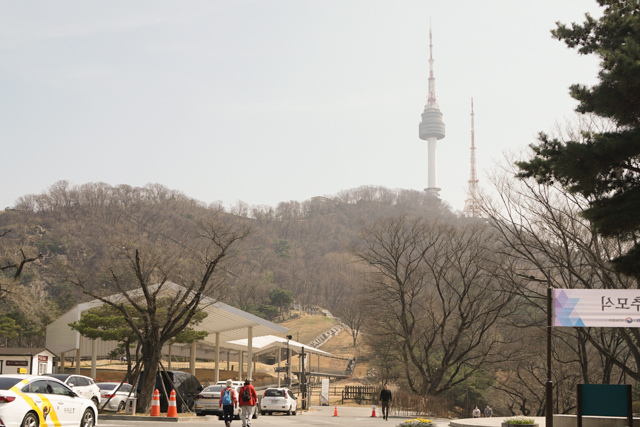
Our first full day in Seoul Korea saw us exploring the areas around central Seoul: Myeongdong, Namdaemun, Namsam Park and Seoul Station.
Jung-gu
Hotel Skypark Myeongdong II
호텔스카이파크 명동2호점, 22 Myeongdong 9-gil, Euljiro 2(i)-ga, Jung-gu, Seoul, South Korea
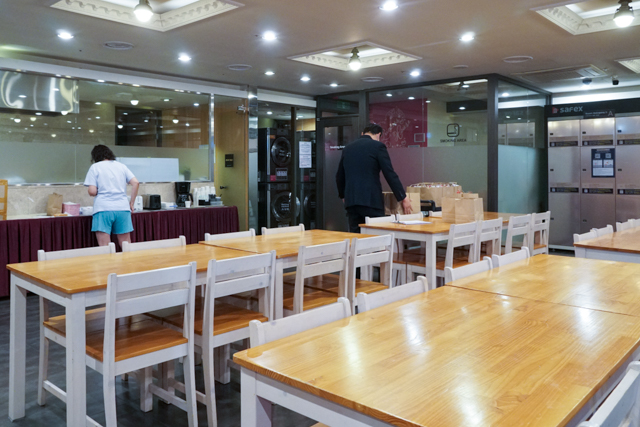
The hotel offered complementary breakfast that could be collected from the basement in a paper bag.
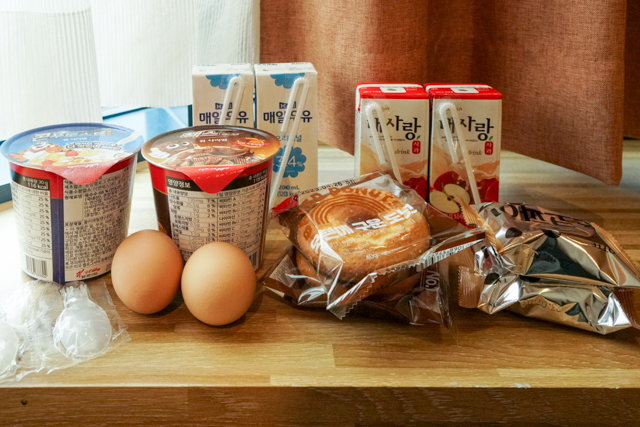
The bag consisted of a carton of milk, a carton of apple juice, a tub of cereal, a hard-boiled egg, a baked doughnut and a choco pie for each guest in each room.
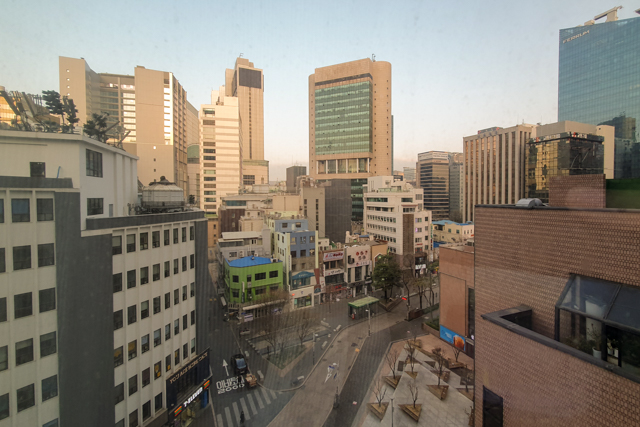
The view from our corner room looked down onto the start of Myeongdong Walking Street.
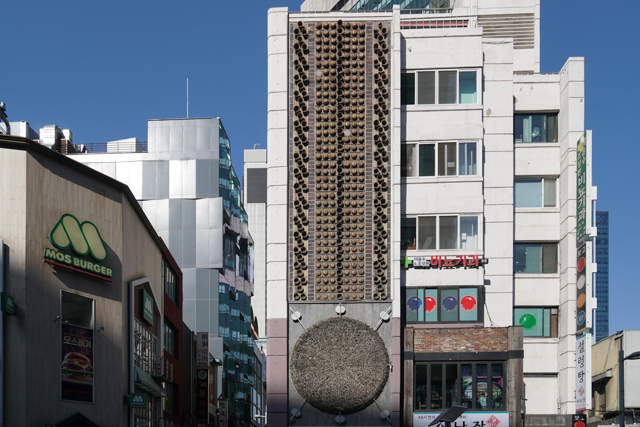
A shopfront near our hotel featured an aerial view of numerous traditional pots.
Hadongkwan
12 Myeongdong 9-gil, Myeong-dong, Jung-gu, Seoul, South Korea
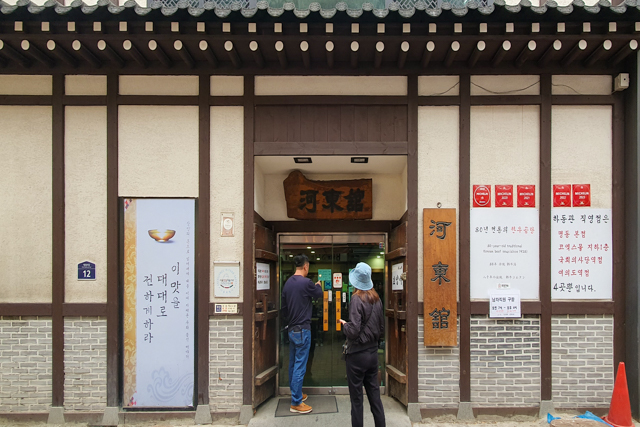
A stone throw’s away from a hotel (a 1-minute walk) was Hadongkwan, a gomtang restaurant that appeared on the Michelin Guide’s Bib Gourmand. Gomtang is a Korean traditional beef soup with rice. The soup is made by boiling various parts of beef along with radish and then served with sliced meat and rice.
The Michelin Guide’s Bib Gourmand had this to say:
This beloved family-owned culinary landmark, located on a busy side street in Myeong-dong, has been serving rustic bowls of beef bone soup since 1939. The version here is served in traditional brass bowls with rice already submerged in the hot soup. The broth is pure and rich with an unmistakable sweetness that can only result from boiling large amounts of beef for a long period of time. This old-fashioned, no-fuss eatery opens early in the morning and closes when its soup vats run dry.
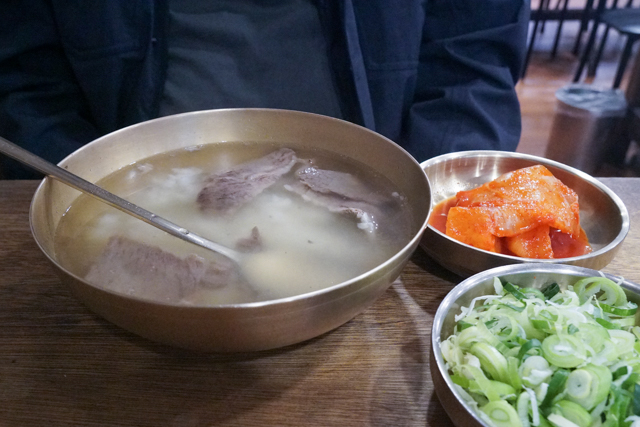
Normal Beef Soup (15,000 won).
The broth had a bright clarity where you could taste the richness of the beef and the freshness of the radish. By itself, it was underseasoned, so the addition of salt, spring onions or the kimchi gravy was much needed to adjust the broth to our liking. We thoroughly enjoyed the cool crispness of the radish kimchi.
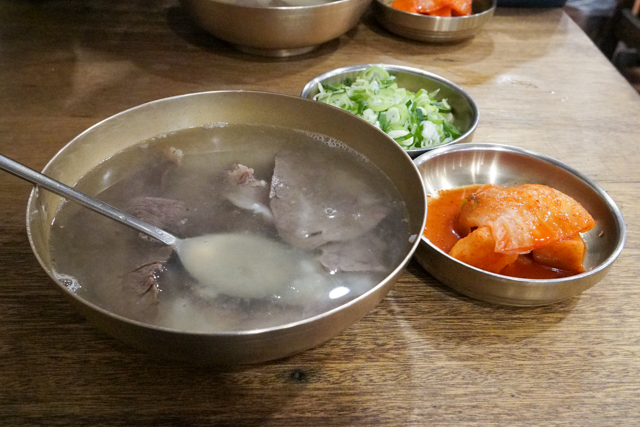
Special Beef Soup (18,000 won). This one typically came with entrails, but it took up the offer to change it to regular meat.
The broth in the special beef soup was slightly darker and a touch richer in flavour with black specks at the bottom. However, we’re not sure that the difference between the two bowls involved taste in addition to the meat, so perhaps the additional meat added more flavour to the broth. We enjoyed the complementary barley tea to finish the meal.
Reflecting on our meals in Korea, we were surprised that the pricing of this bowl of noodles was on par with Sydney, making it relatively expensive in Korea where food is generally more accessible.
Coffee Nine
15 Myeongdong 9-gil, Myeong-dong 1(il)-ga, Jung-gu, Seoul, South Korea
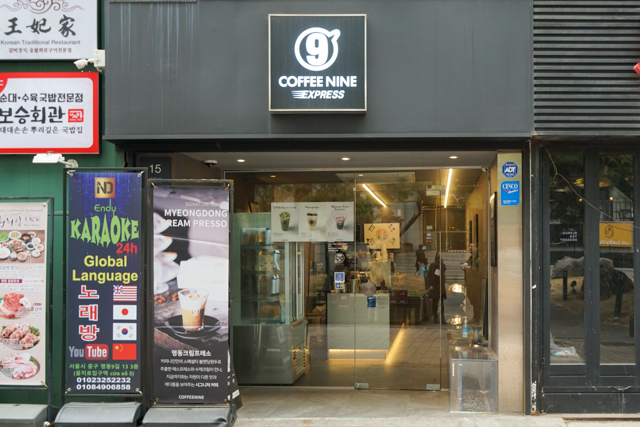
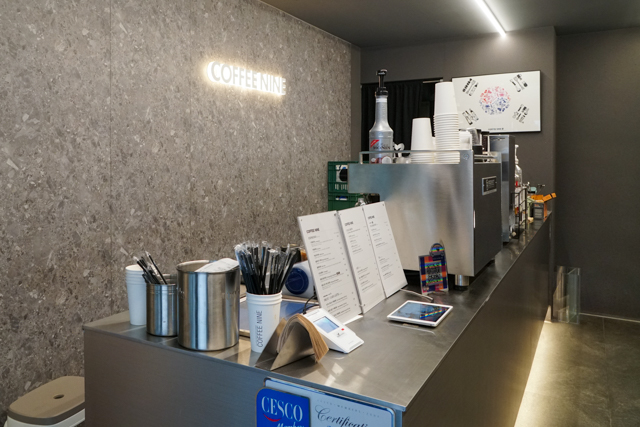
Opposite Hadongkwan was Coffee Nine.
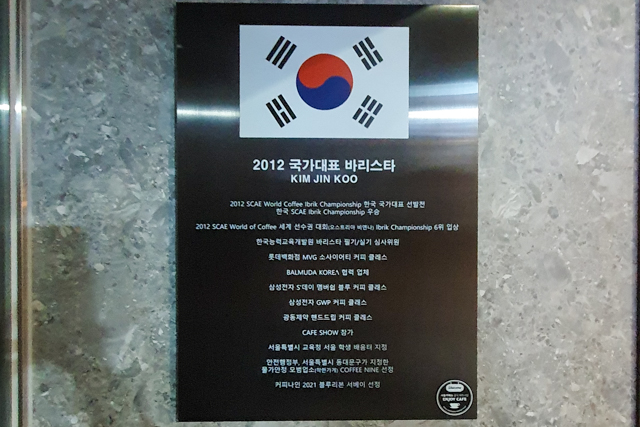
Coffee Nine was founded and run by Kim Jin Koo, the Korean national representative barista in 2012.
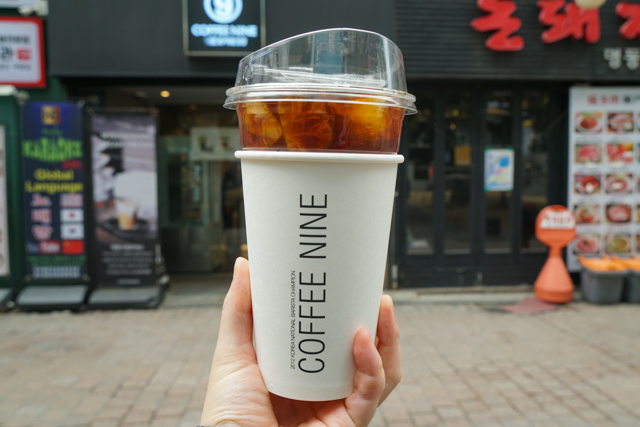
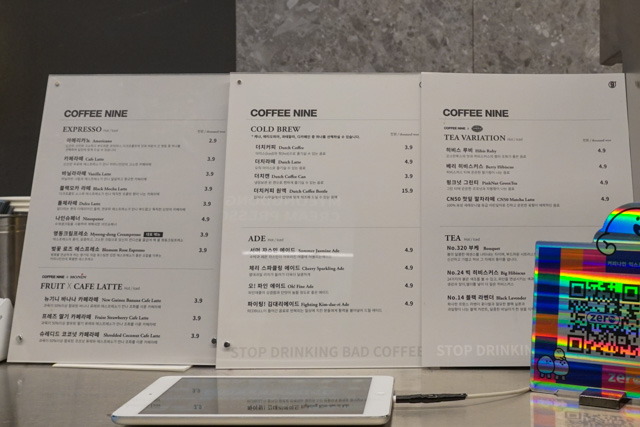
Cold Brew Dutch Coffee (Ethiopia beans, iced, 3,900 won). The coffee had a vibrant fruitiness with subtle flowery notes with a light-medium body, yet without overt acidity.
D ordered a Cafe Latte (hot, 3,900 won, no photo). This used the ‘Myeong-dong blend’ which contained 45% Guatemala, 30% Columbia and 25% Kenyan beans. D enjoyed the balanced flavours of this coffee, which was robust and full-bodied with a lingering sweetness.
Café Swith SOL
43 Myeongdong-gil, Jung-gu, Seoul, South Korea
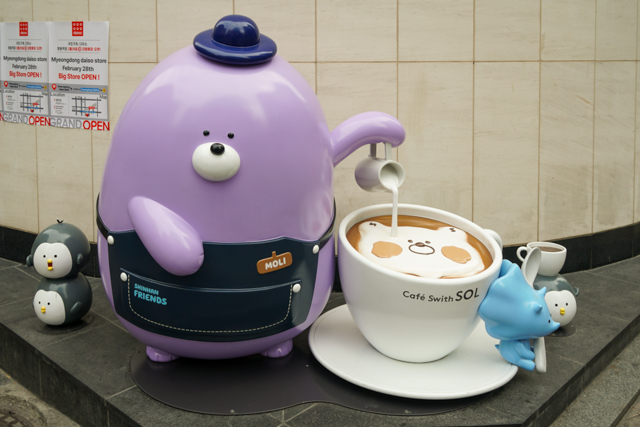
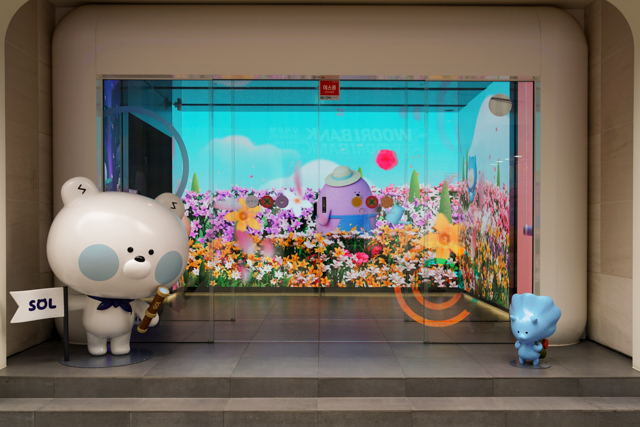
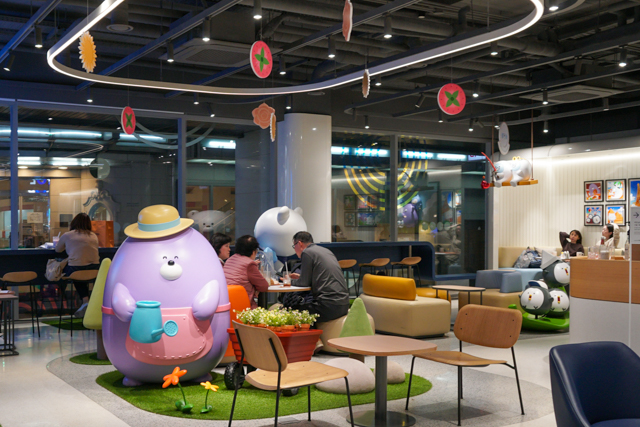
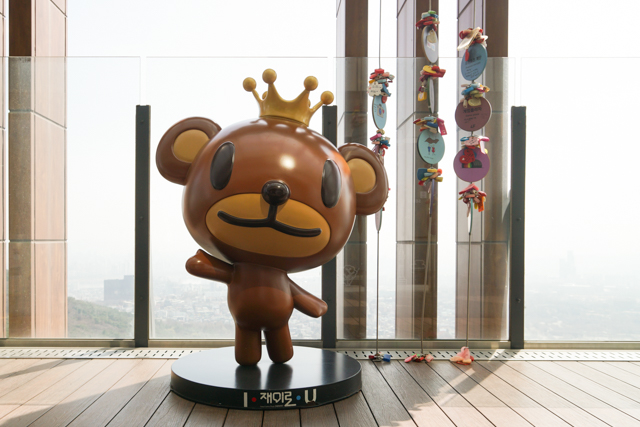
We walked by Café Swith SOL with its adorable mascots. The cafe is run by hearing-impaired staff, so all orders must be made using the kiosk or writing on the board.
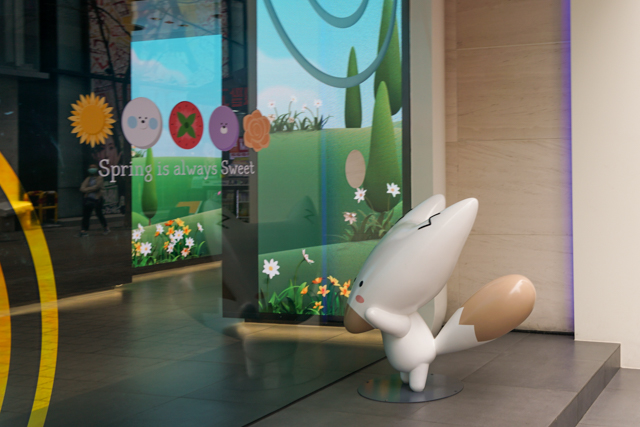
tto
8 Myeongdong 10-gil, Myeongdong 2-ga, Jung-gu, Seoul
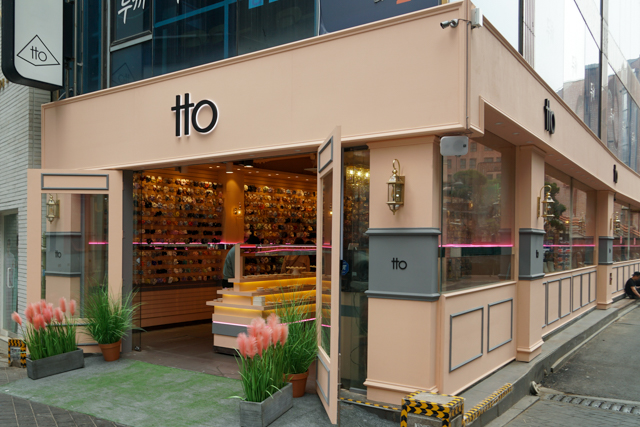
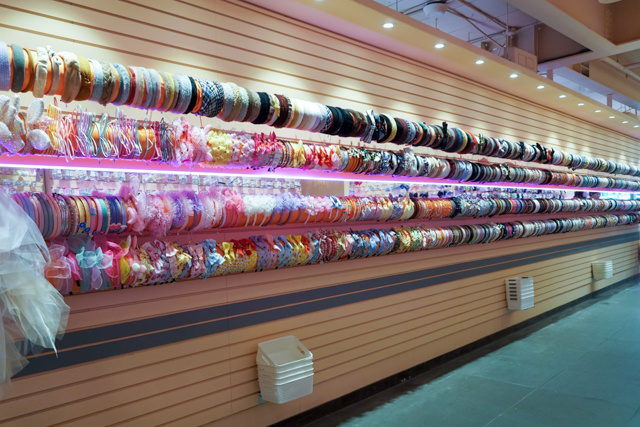
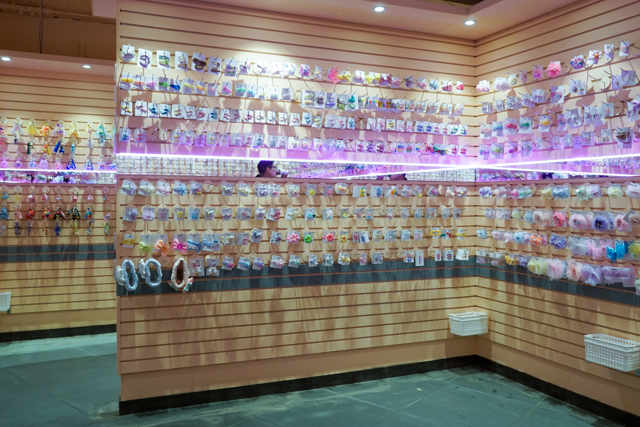
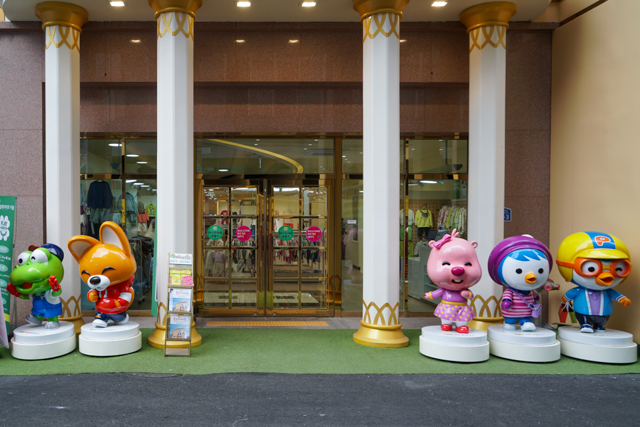
The ground floor of this building was an IKEA-esque maze filled wall-to-wall with accessories.
Toegye-ro
Toegye-ro, Jung-gu, Seoul, South Korea
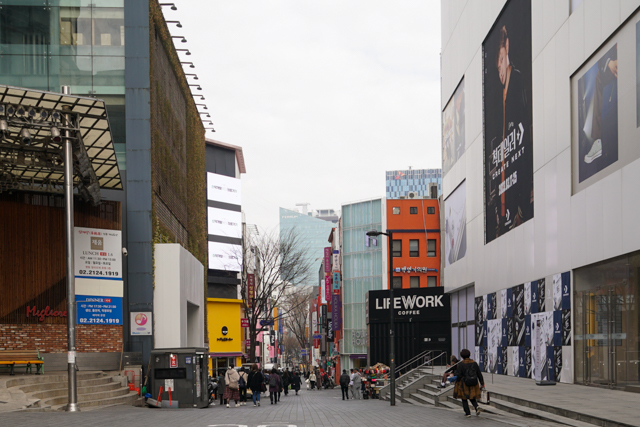
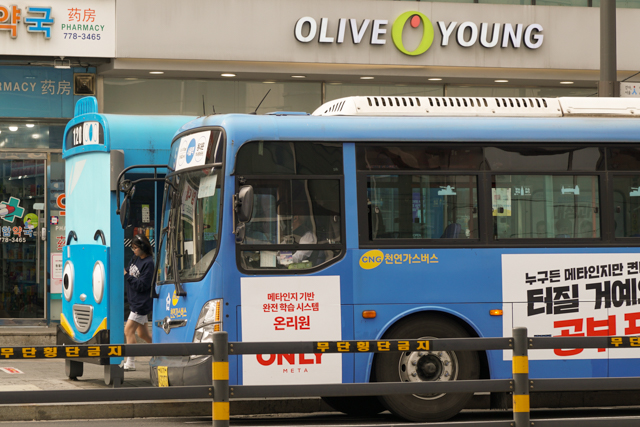
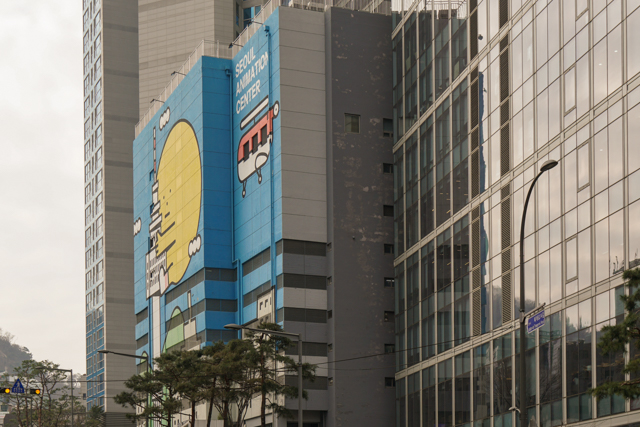
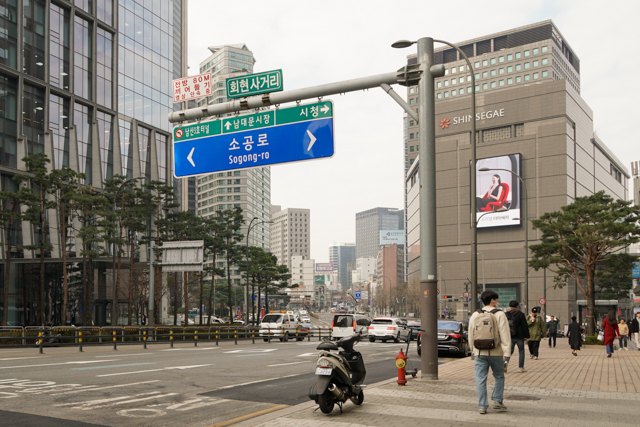
Walking down the length of Myeondong from our hotel, we reached Toegye-ro, which is also where Myeongdong Metro Station was located.
Namdaemun Market, Seoul
남대문시장, 21, Namdaemunsijang 4-gil, Jung-gu, Seoul
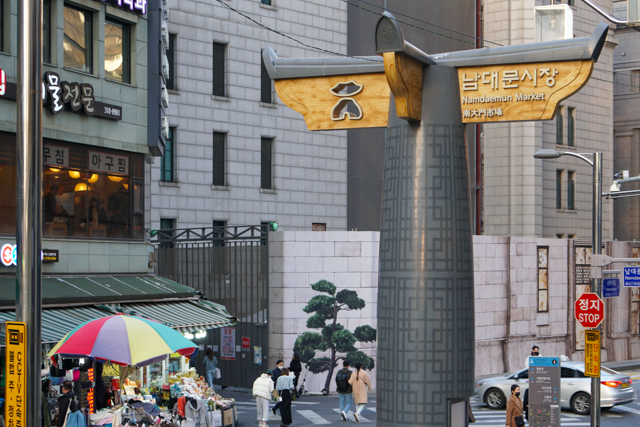
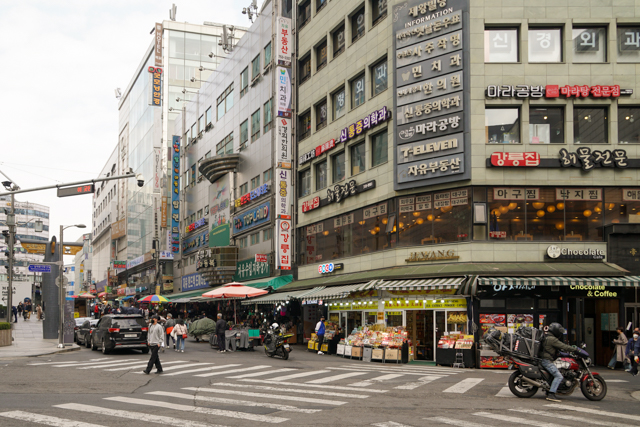
After a short walk to the west, we reached Namdaemun Market.
Opened in 1964, Namdaemun Market is the largest traditional market in Korea with shops selling various goods. All products are sold at affordable prices and the stores in this area also function as wholesale markets.
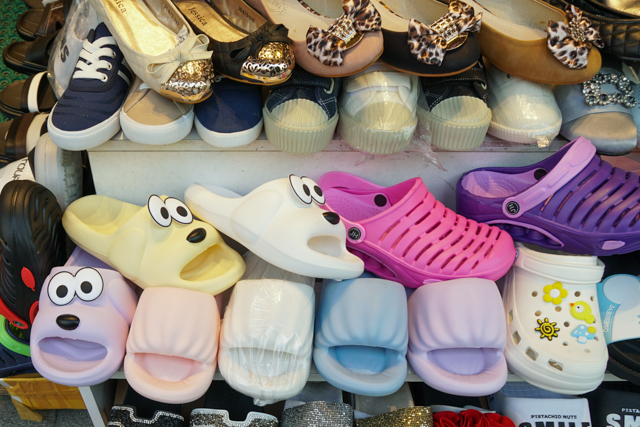
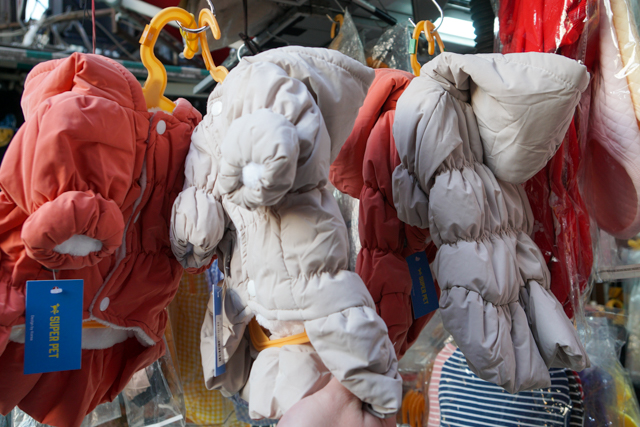
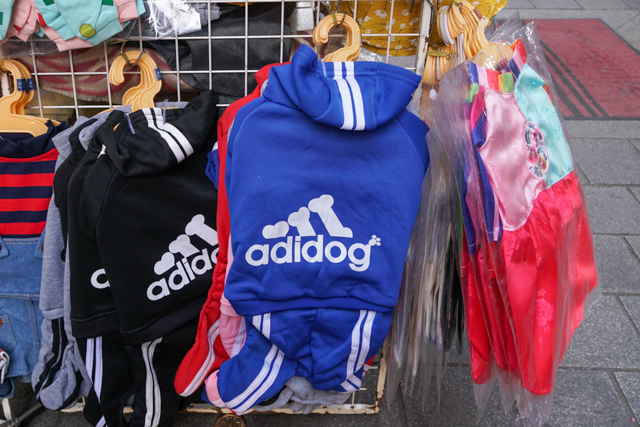
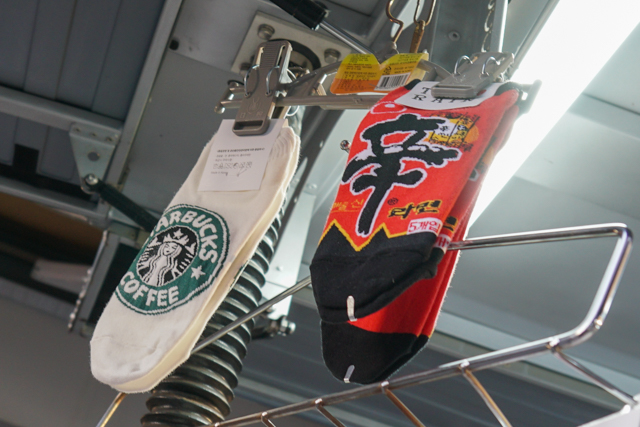
Most of the goods are made directly by the storeowners. Namdaemun Market sells a variety of clothes, glasses, kitchenware, toys, mountain gear, fishing equipment, stationery, fine arts, accessories, hats, carpets, flowers, ginseng, and imported goods.
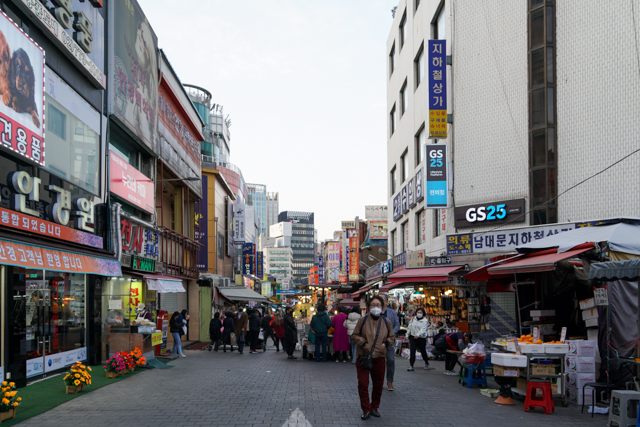
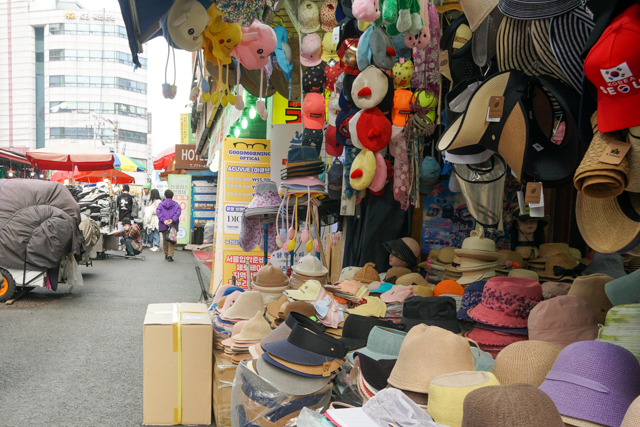
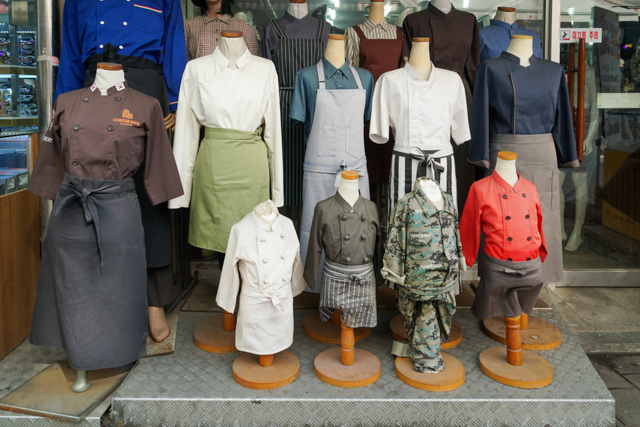
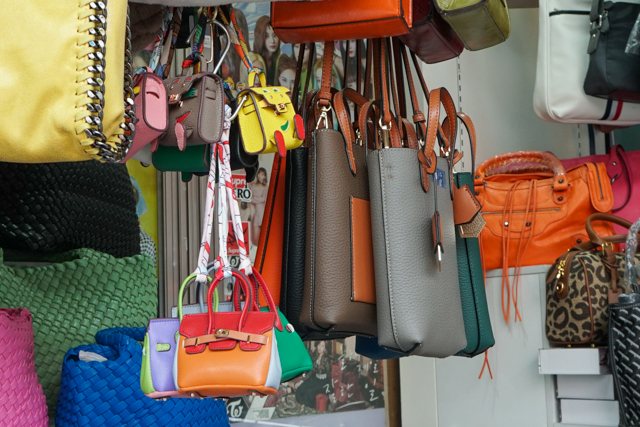
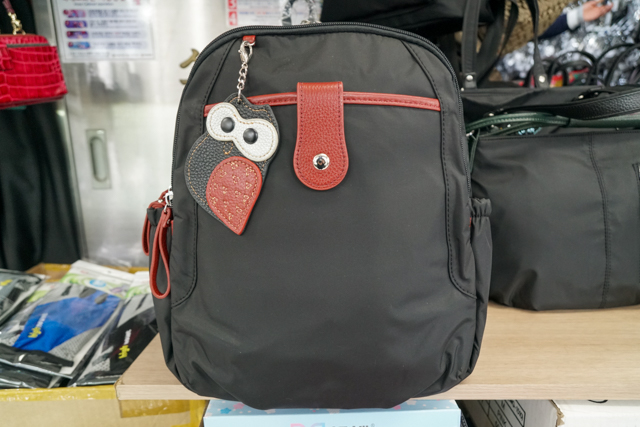
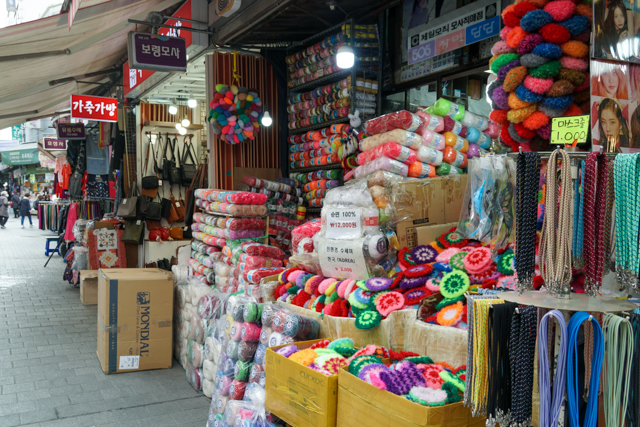
Bags, hats, yarn, clothing stores
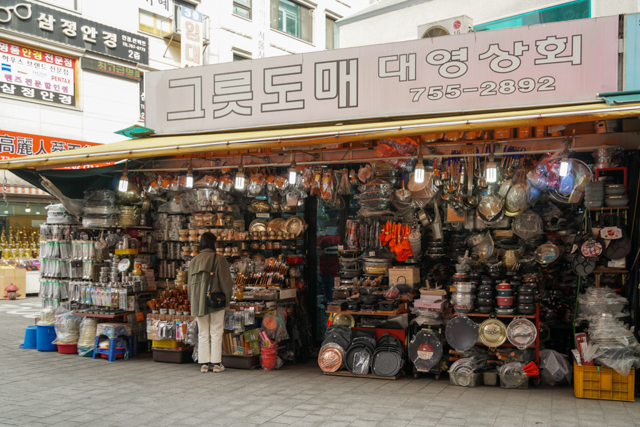
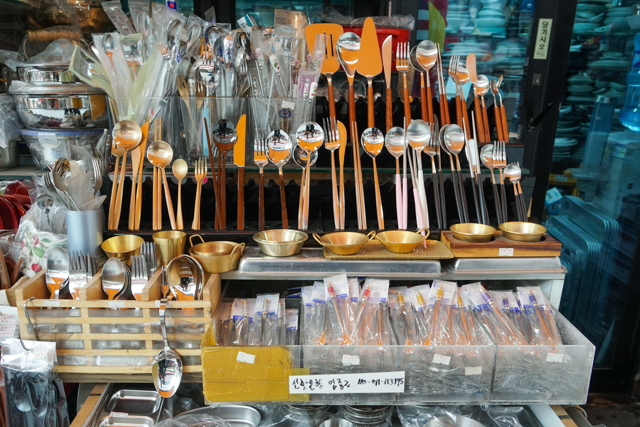
Kitchenware stores
Papercraft and packaging stores
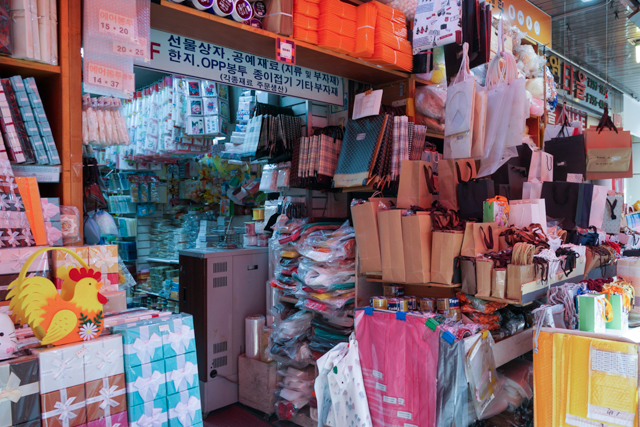
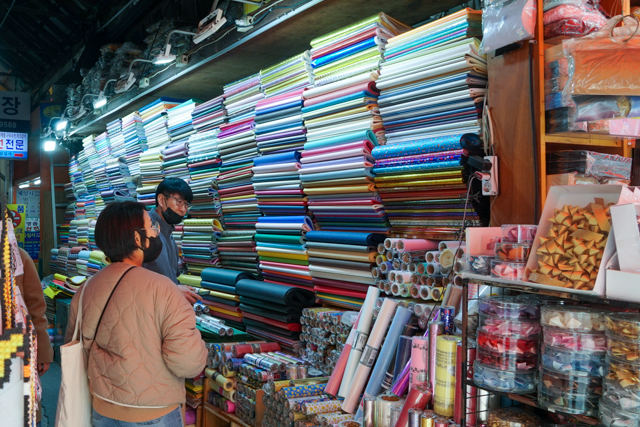
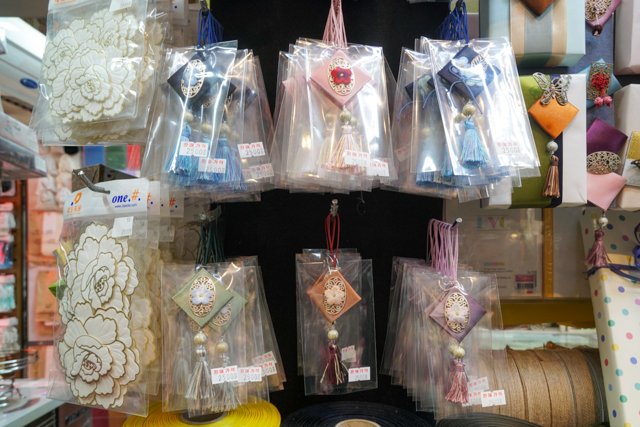
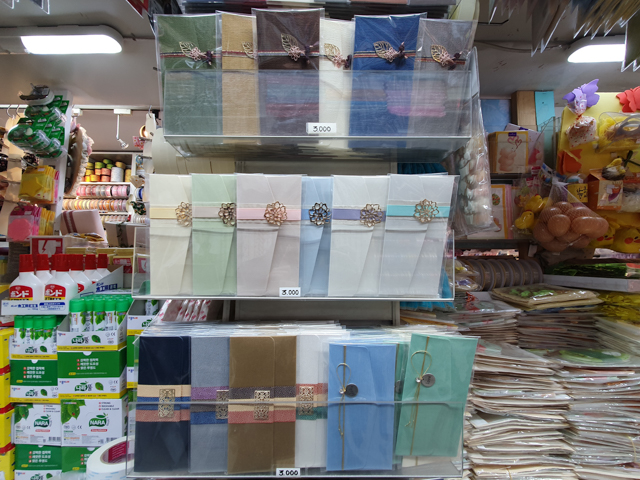
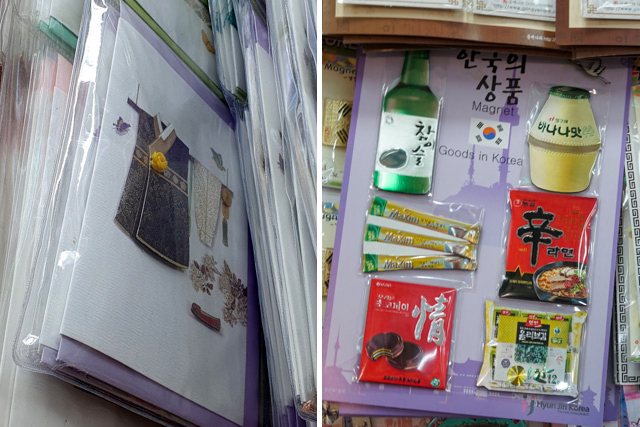
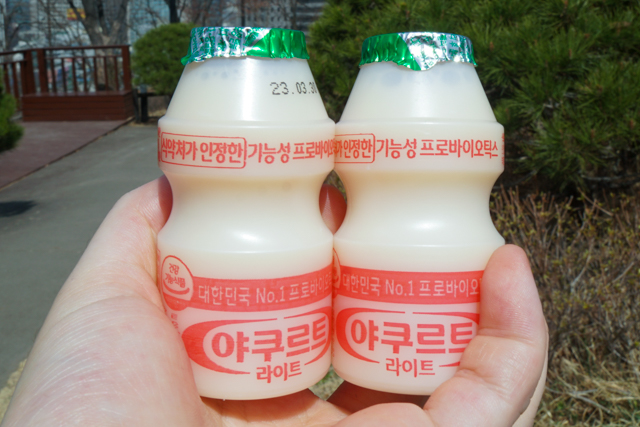
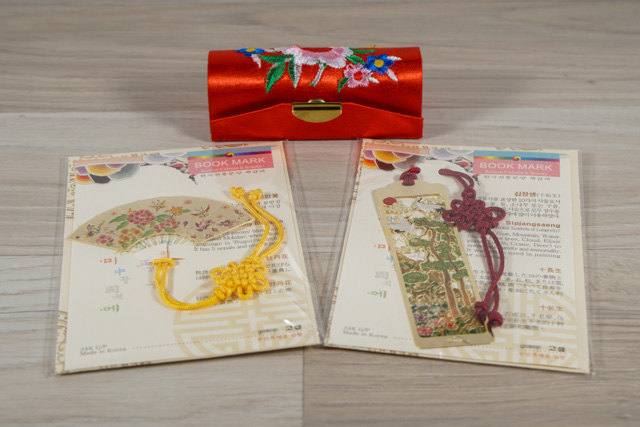
We spent about 15,000 won at one store and received two bottles of Yakult and a lipstick case as ‘service’.
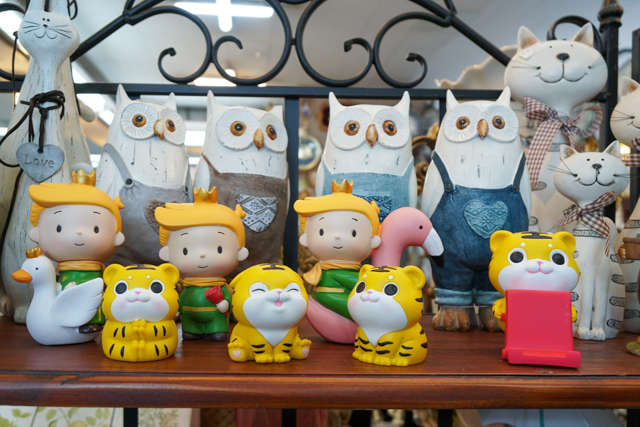
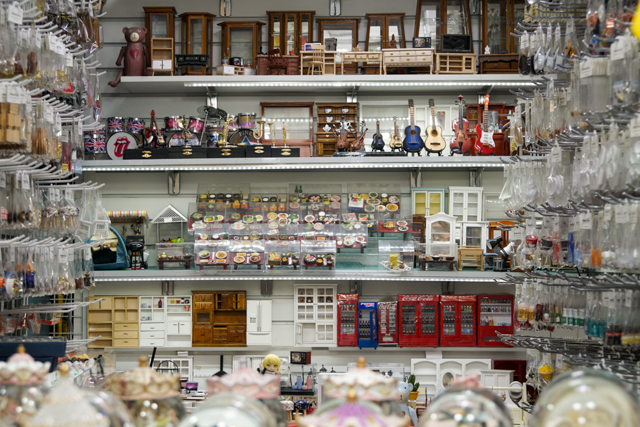
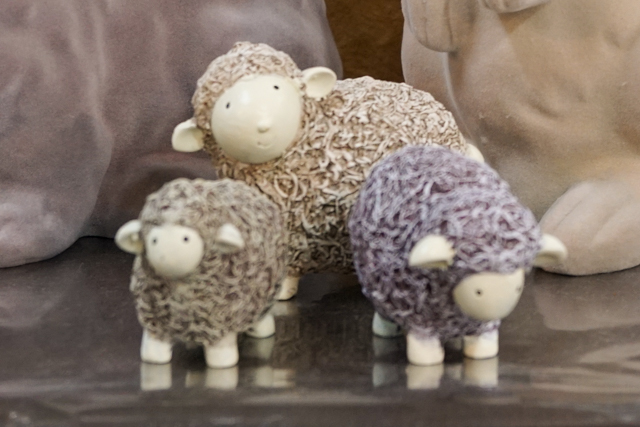
Trinkets and miniatures
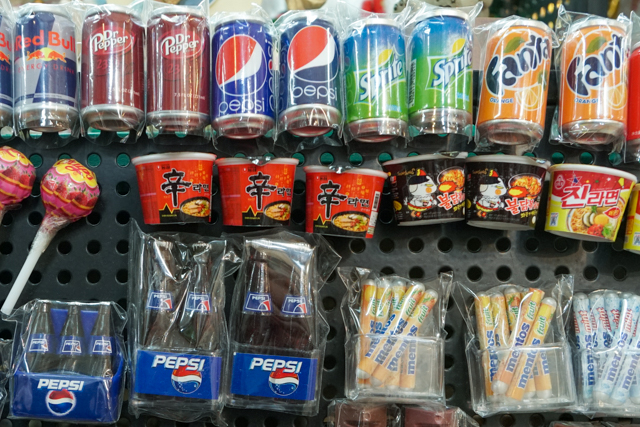
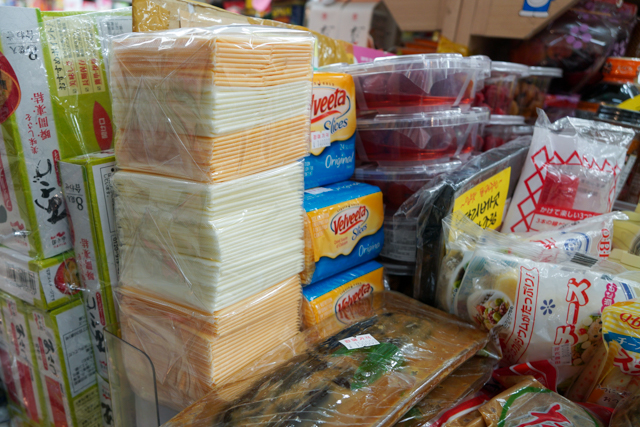
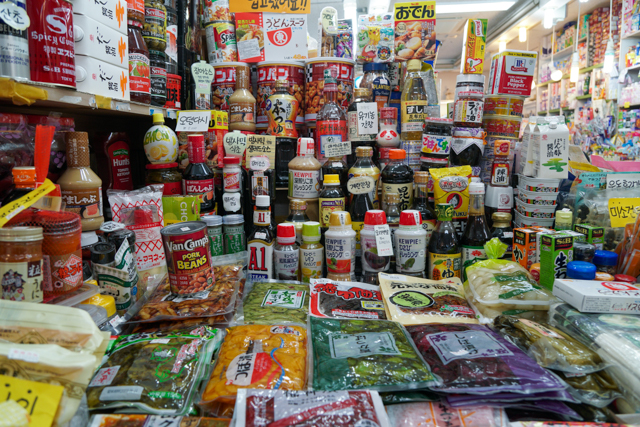
Imported foods
Diningware and Flowers
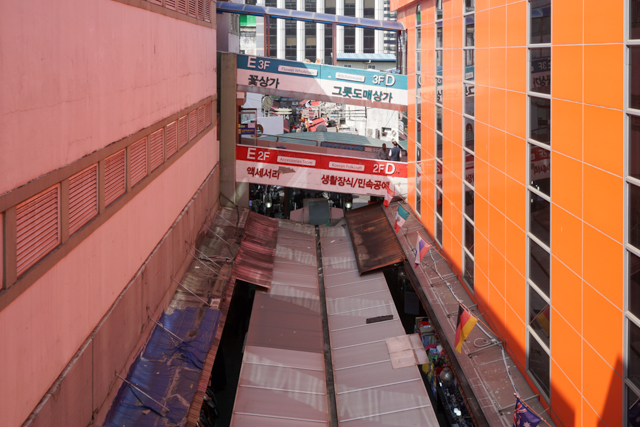
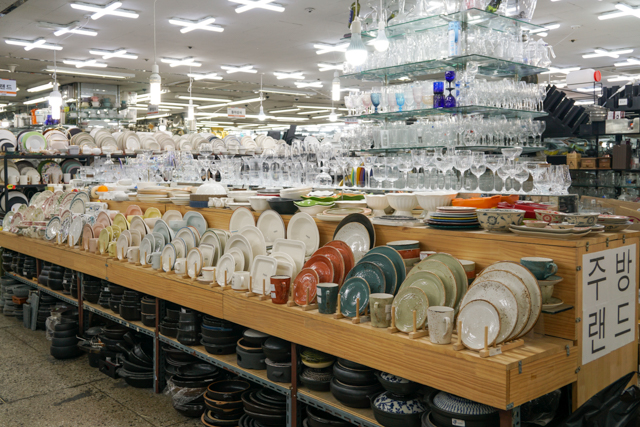
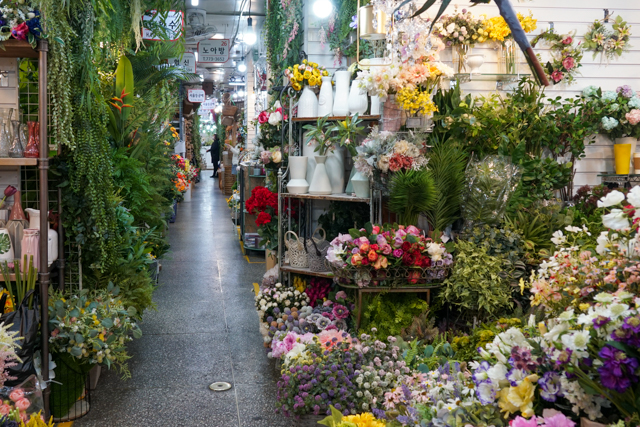
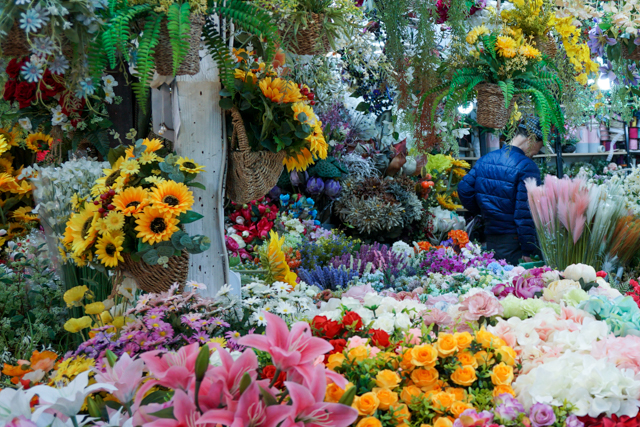
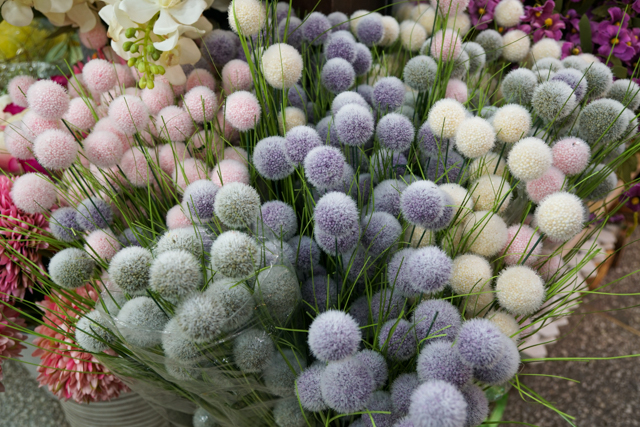
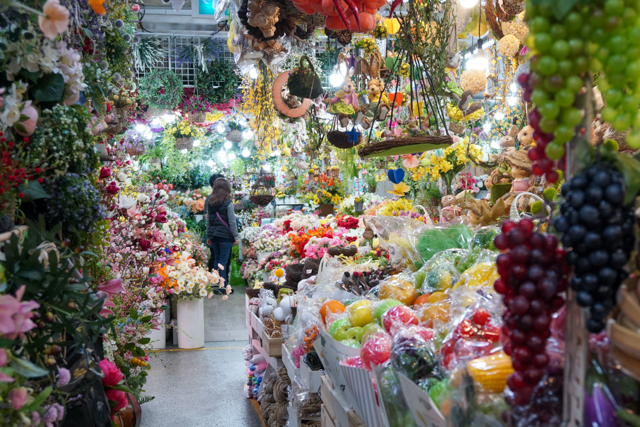
We cross the bridge to the other building where we found fresh and fake flowers, as well as fake food; all manner of dining and kitchenware, as well as a wholesale section for jewellery.
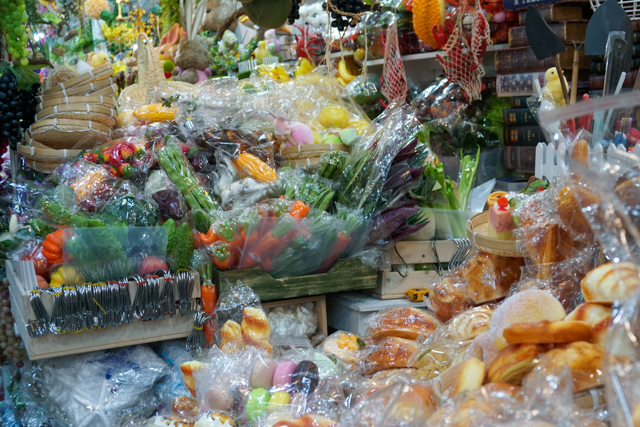
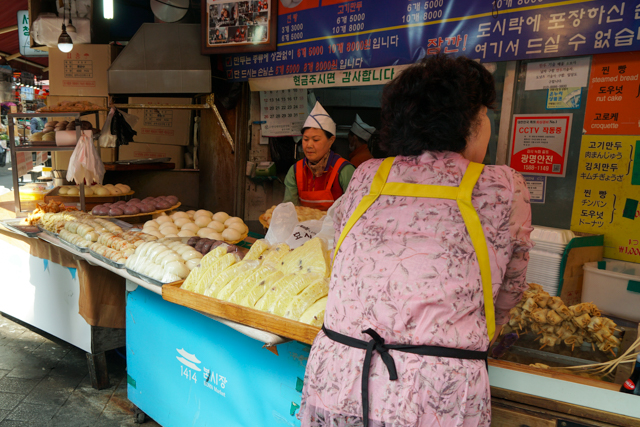
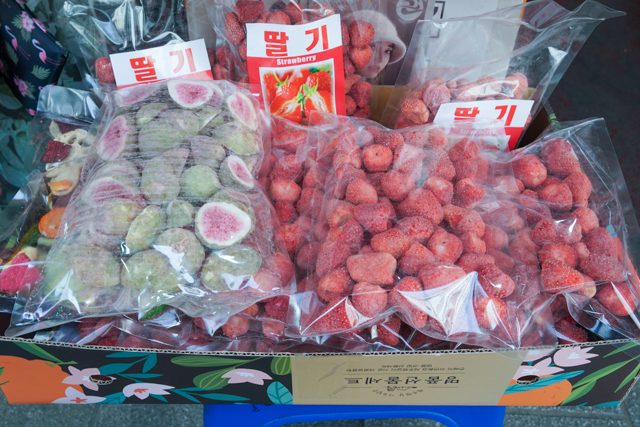
Food stores
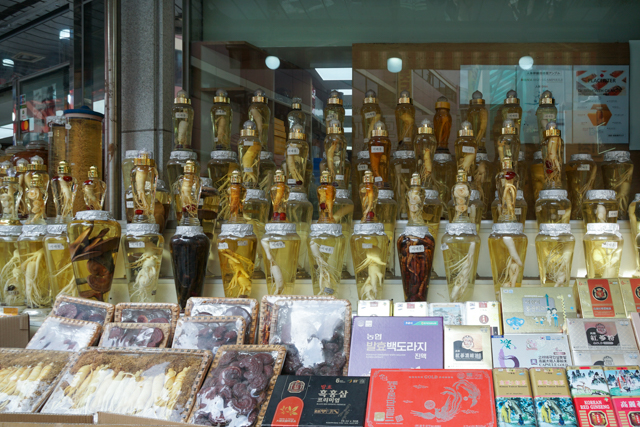
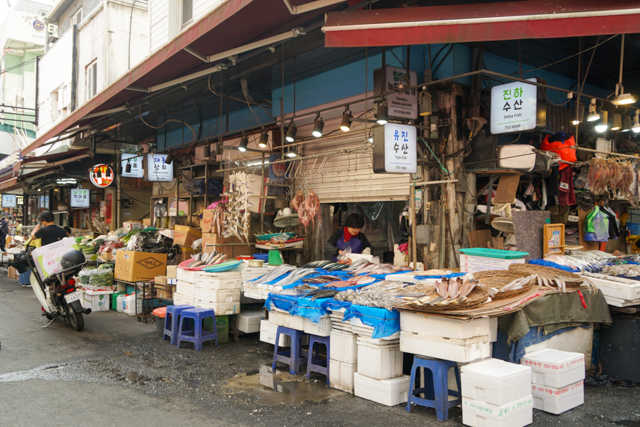
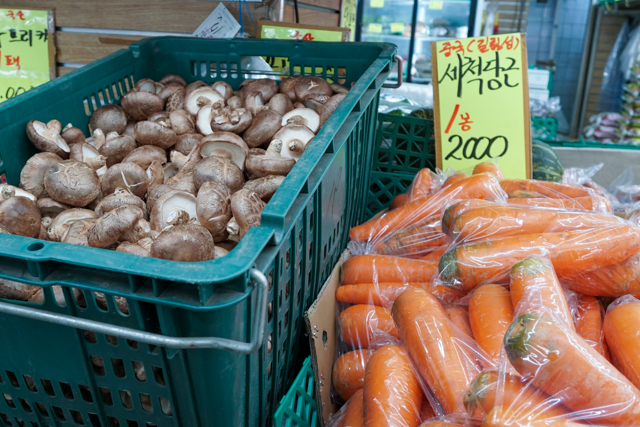
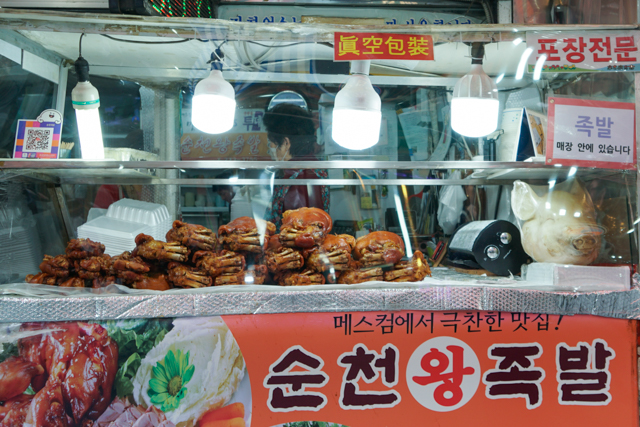
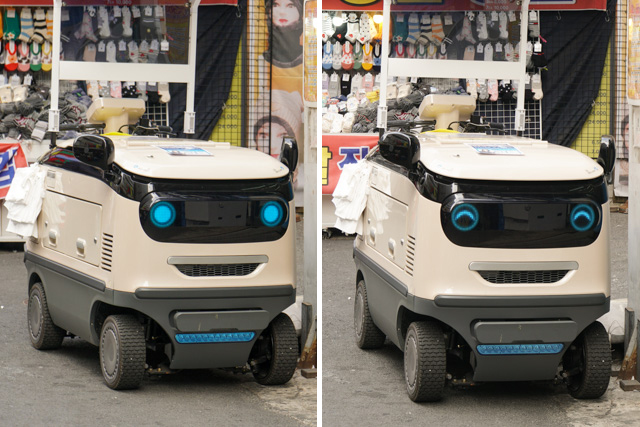
We spotted a Yoghurt Ladies’ vehicle parked outside with its cute facial expressions.
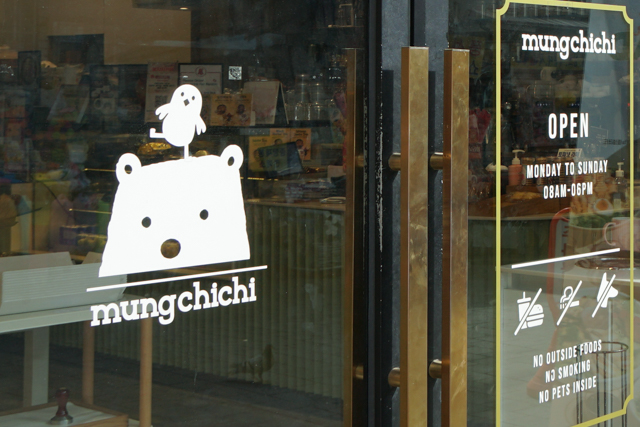
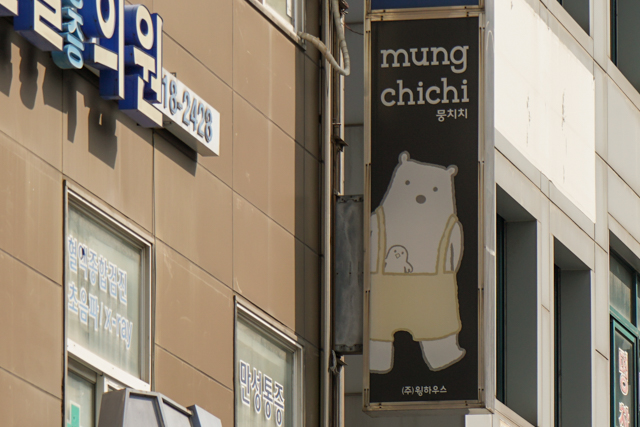
There was also the odd cafe. This one had cute signage.
Sungnyemun Gate
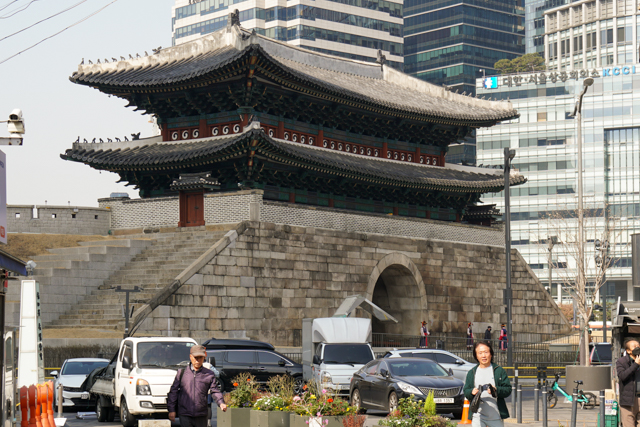
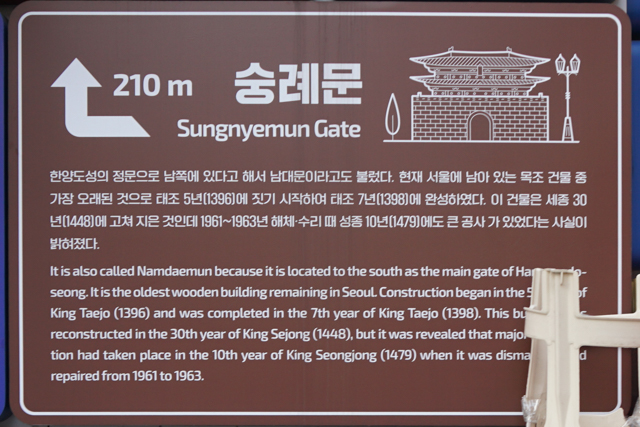
The Sungnyemun Gate was near Namdaemun. It was one of many gates on the Seoul City Wall.
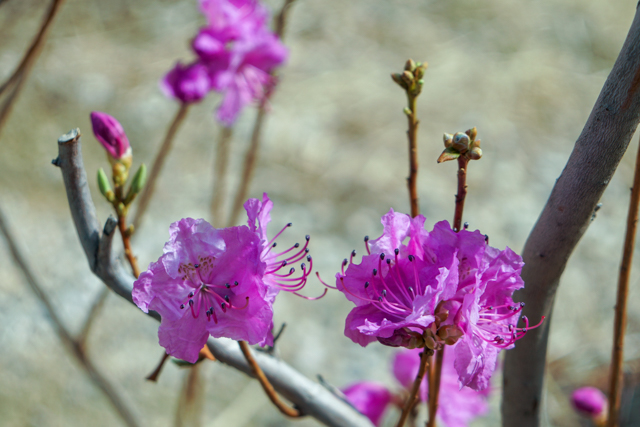
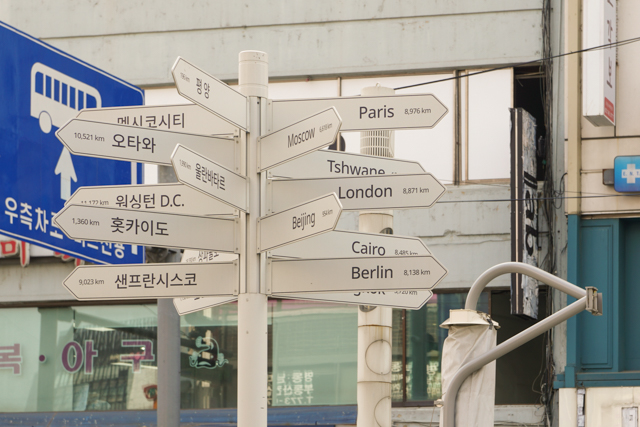
Namsan Park, Seoul
남산공원, 231, Samil-daero, Jung-gu, Seoul
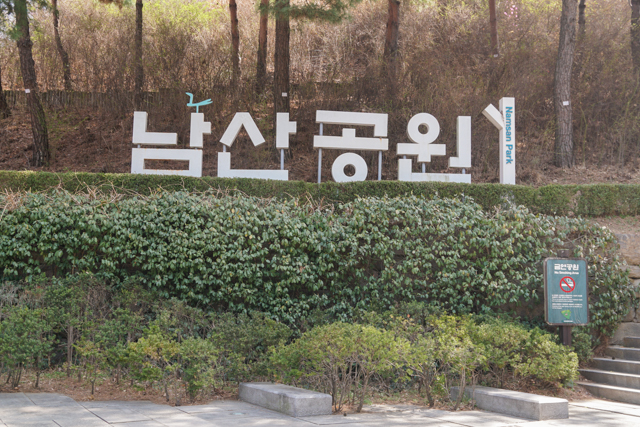
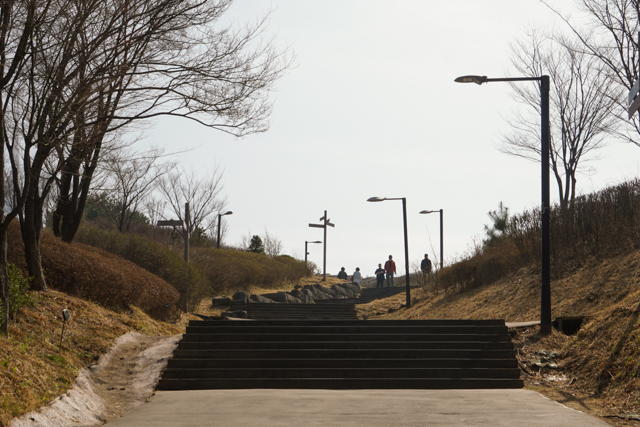
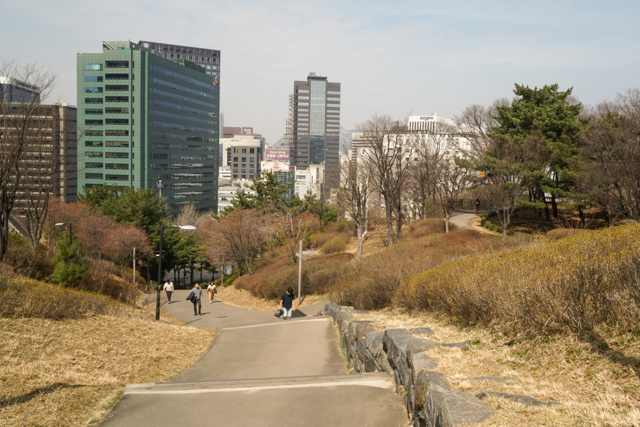
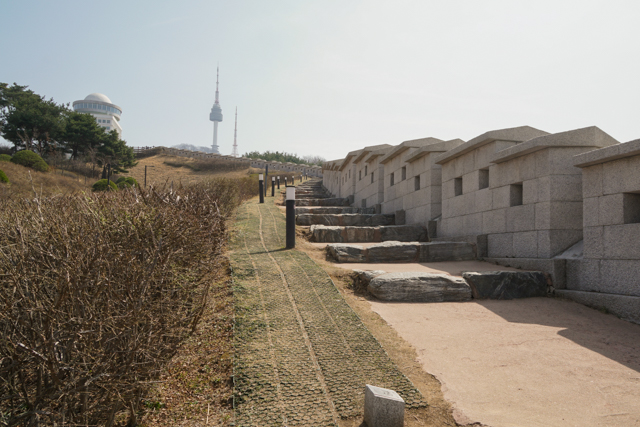
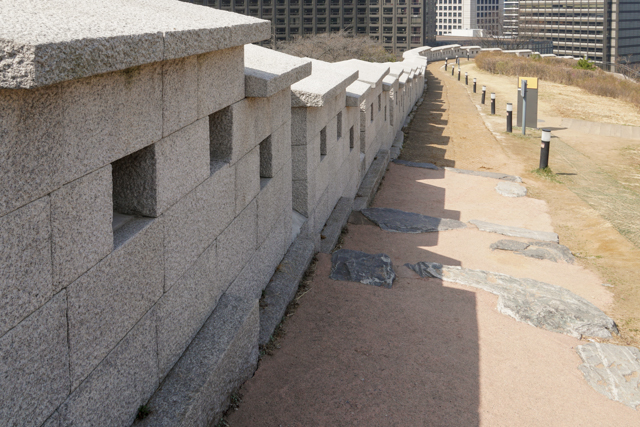
Seoul Namsan Park opened in 1968 as a public park and went through a renovation in 1991 to better serve the public as a nature-friendly rest area in the middle of the city. The areas surrounding the park such as Jung-gu, Yejang-dong, Hoehyeon-dong, Yongsan-gu, and Hannam-dong were renovated along with the park for a cleaner and refreshing atmosphere.
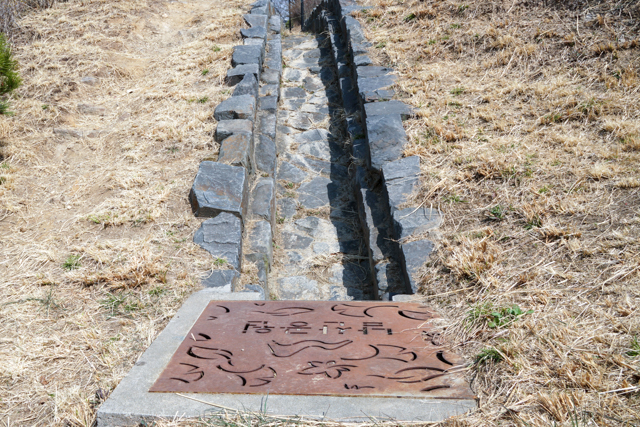
Baekbeom Square
100-115, Hoehyeon-dong 1-ga, Jung-gu, Seoul, South Korea
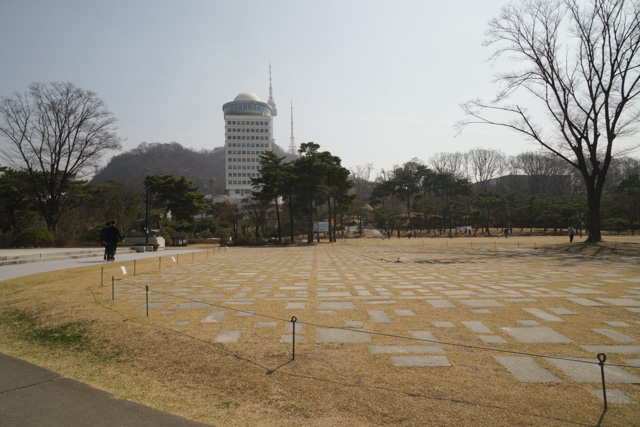
Walking up the mountain path from Hoehyeon-dong led to Baekbeom Square Park in Namsan Park.
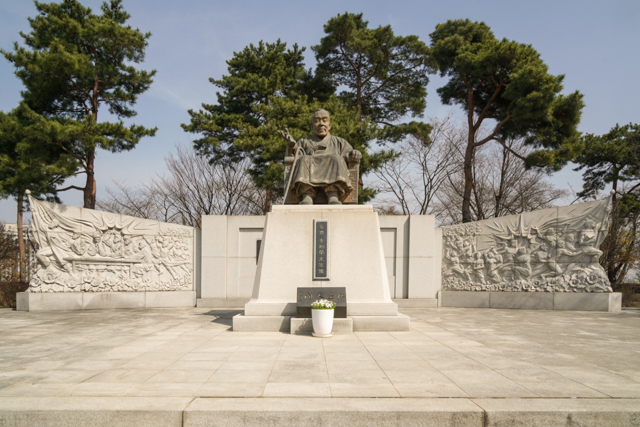
This was a statue of Lee Si-Yeong, the First Vice President of the Republic of Korea (December 9, 1869 – April 17, 1958).
Born at 18 Jeo-dong, Seoul, as a tenth-generation descendant of Lee Hang-bok, an eminent Neo-Confucian scholar and statesman of the mid-Joseon period, Lee Si-Yeong served the short-lived Korean Empire (1887-1910) through several important posts such as the director of the Diplomatic Negotiations Bureau, the chief of the Hanseong Court, and the Governor of Pyeongannam-do before being elected the first Vice-President of the Republic of Korea
His career in the government sector began when he was seventeen years old, but the forced annexation of Korea by Imperial Japan in 1920 led him to move to Manchuria with about 40 family members and close relatives. It was here that he founded two important organizations to fight against aggressive Japanese Imperialism, the Gyeonghaksa and Sinheung Military School. These organizations played a crucial role in promoting education among Korean exiles and raised many independence fighters who won a great victory over Japan at the historic Cheongsalli Battle.
In 1919, he played a leading role in the establishment of the Provisional Government of the Republic of Korea in Shanghai and continued to serve it as, among others, Minister of Justice and Minister of Finance until the 1945 Liberation. He returned home that year and two years later founded Seongjae Sinheung College (today’s Kyung Hee University) in an effort to live up to the mission of Sinheung Military School and raise young talents for the new Korean society.
On July 20, 1948, he was elected to the Constituent National Assembly as the first Vice President of the Republic of Korea from which he resigned on May 9, 1951, with a statement titled ‘To the Korean Nation’, where he strongly denounced Rhee Syngman’s dictatorship, and an old-four character proverb ‘Siwosochan (Eating All, Doing Nothing)’.
He died at the age of 85 on April 17, 1953, in Dongnae, Busan, where he found shelter during the Korean War (1950-1953), and the National Assembly decided on a nine-day People’s Funeral by unanimous vote. He was buried in Jeongneung Cemetery in 1953 and then reburied in the Patriots’ Cemetery in Suyu-dong in 1964.
His lifelong patriotic achievements led the Korean government to award him the Republic of Korea Medal, the Order of Merit for National Foundation, in 1949.
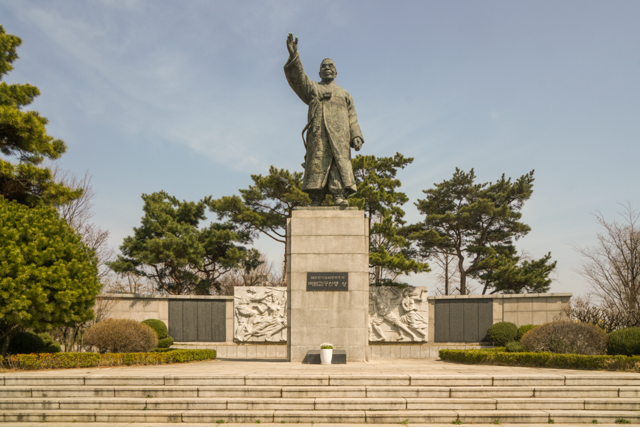
This was a statue of Paikbum Kim Koo.
Kim Koo was born in 1876 in Haeju, Hwanghae-do. He was the only child of Kim Sun-Yeong, father, and Gwak Nak-Won, mother. From an early age he joined with Donghak. In Sep, 1894, as a leder of the Donghak peasant army, he attafcked Haeju Fortress with a motto of Anti-West, Anti-Japanese, and Anti-corruption.
He was sentenced to death for the death of a Japanese first lieutenant in Mar 1896, but fortunately he was able to save his life due to the Gwangmu Emperor’s special order.
In 1907, he joined Shinminhoe, a secret independence organization of independence activitise. As japanese oppression became harder because of Samil Independence Movement, he went to Shanghai as an exile and organized the Korean Patriotic Society. He was a key person behind the heroic deeds of Lee Bong-Chang, Yun Bong-Gil, etc.
He was the president of the Korean Provisional Government. After the restoration of independence, he returned to Kroea with key staff of the Korean Provisional Government. He then activiely drove movements against the trusteeship over Korea which were resolved at the Moscow Conference of Three Foreign Minister.
On April 19 1948, he visited Pyeongyang. He tried everything he could do to achieve the unification of our nationa. On Jun 26 1949, however, Ahn Du-hui, a perpetrator of Geyonggyojang shot him to death.
On 5 July, his remains were buried in Hyochang Park under people’s funeral. To pay tribute for his great achievement, the Republic of Korea Medal in the Order of Merit for National Foundation was conferred in 1962.
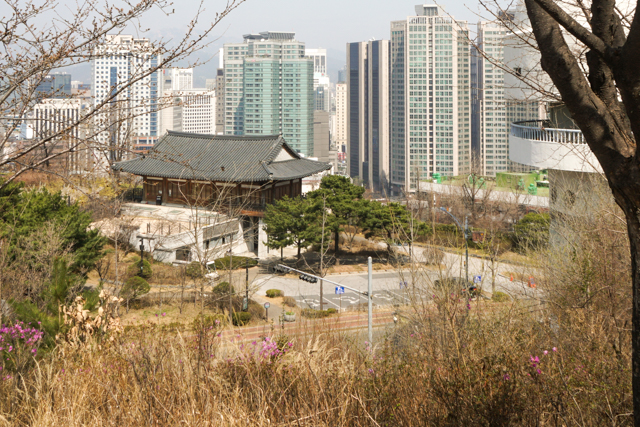
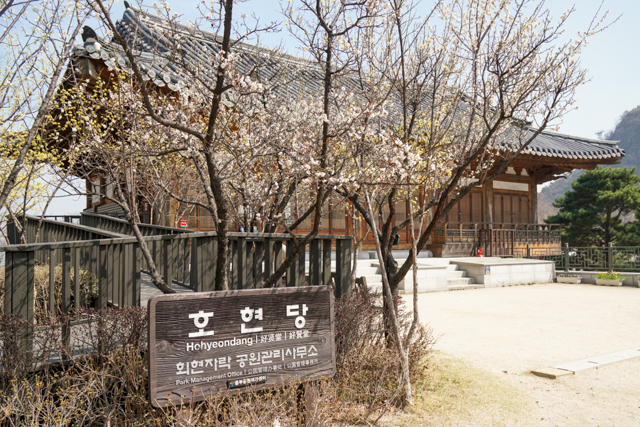
Hoehyondong
호현당, 1-44, Hoehyondong, Jung-gu, Seoul, South Korea
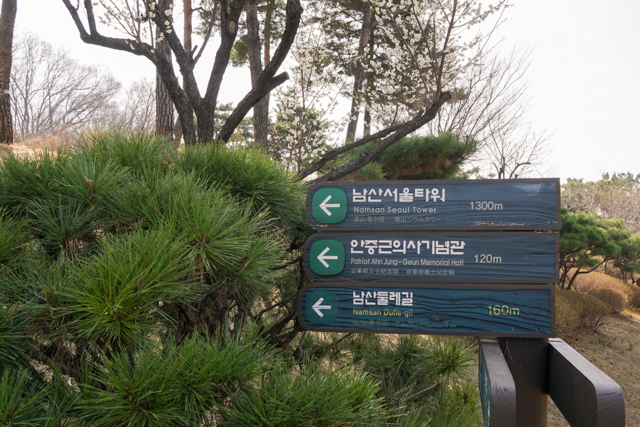
Ahn Jung-geun Memorial Museum
안중근의사기념관, 91, Sowol-ro, Jung-gu, Seoul
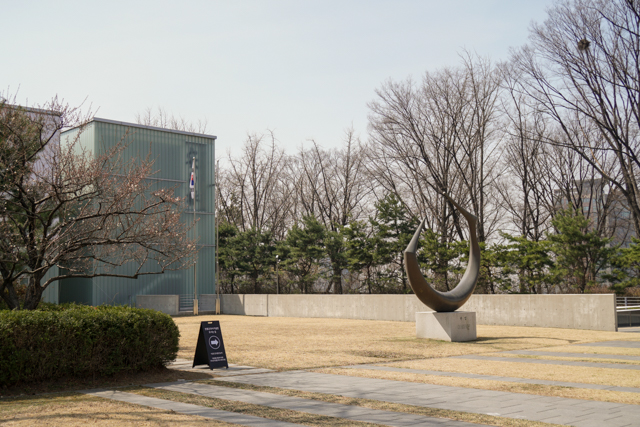
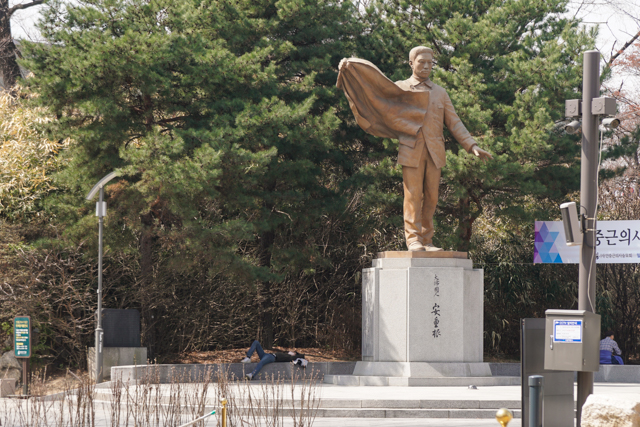
We walked past the Ahn Jung-Geun Memorial Museum, a historical museum about the independence activist.
An Jung-geun is one of Korea’s greatest independence movement activists who had assassinated Ito Hirobumi, a council to the Japanese emperor and former resident-general of Korea. Ahn Junggeun Memorial Museum was established in 1970 to commemorate Ahn Jung-geun’s passionate patriotism. The museum was reconstructed with a new design in 2010, consisting of twelve glass-wall buildings connected to each other to symbolize alliance. The exhibition halls showcase the timeline of the patriot’s from his birth to his death through a collection of records, relics, and An’s personal belongings. The memorial hall serves to remind people of An Jung-geun’s love for the country as well the sacrifice to win the country’s independence.
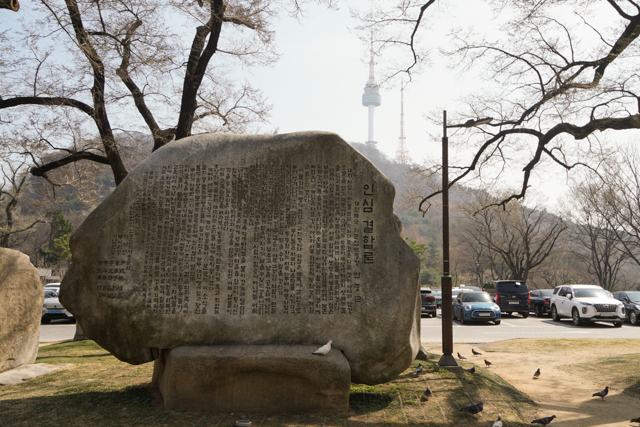
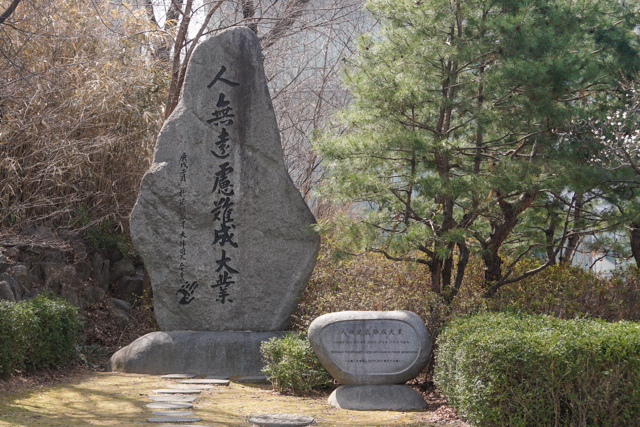
Hanyangdoseong Historic Site Museum
한양도성 유적전시관, 100-267 Sowol-ro, Yongsan-gu, Seoul, South Korea
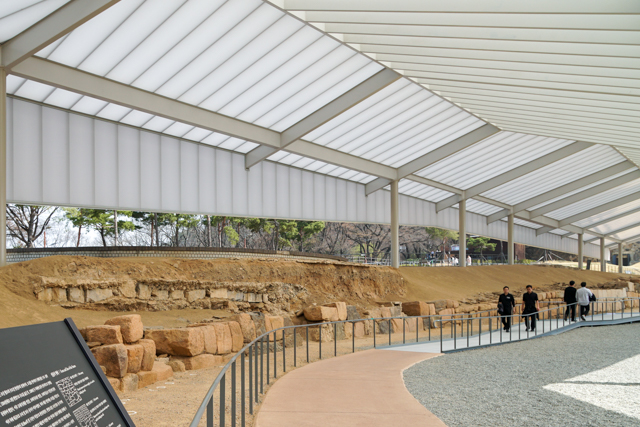
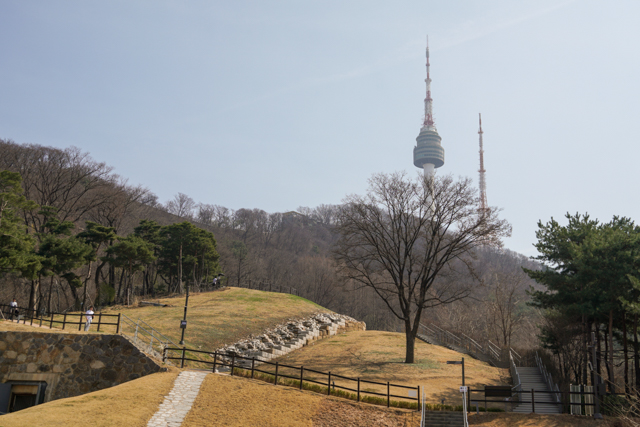
Past the memorial hall was the Hanyangdoseong (Seoul City Wall) Historic Site Museum.
At ‘Hanyangdoseong Historic Site Museum,’ visitors can see the city wall of Hanyangdoseong that was revealed through the excavation survey of 2013-2014. Hanyangdoseong is a city wall that surrounded die capital of the Joseon Dynasty built in 1396. This is the southwestern section of the wall.
The intact city wall was excavated and preserved for exhibition. Visitors also can find an emergency bunker and the site of Joseon Shinto Shrine that was built during Japanese colonial period, as well as a fountain created in 1969. The areas at Namsan Mountain are historical places containing the 500-year history of the Joseon Dynasty, traces of damage during Japanese colonial period, and coundess incidents experienced by modern Seoul.
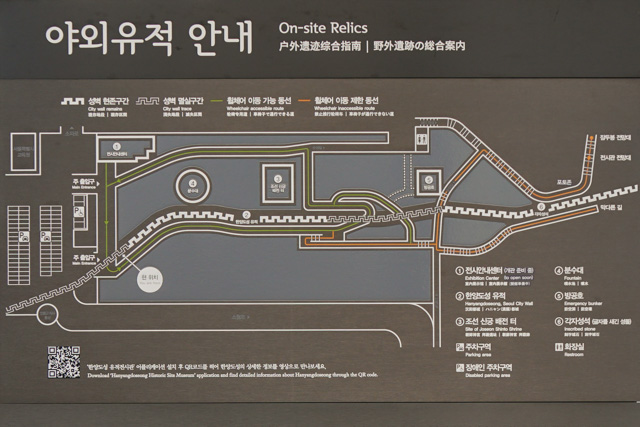
This timeline shows what structure occupied the space through the years:
- 1396: Hanyandoseong, Seoul City Wall
- 1925-1945: Joseon Shinto Shrine
- 1930-1940: Emergency bunker
- 1968-2008: Namsan Botanical Garden
- 1969: Fountain
- 2009-2014: Excavation survey in Namsan Mountain
- 2020-: Hanyandoseong Historic Site Museum
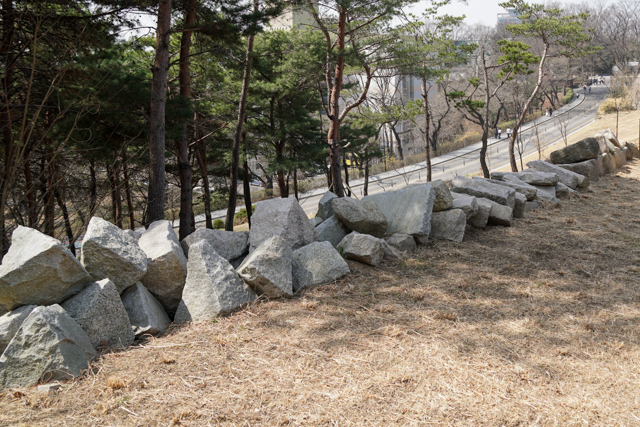
Hanyangdoseong was the boundary of Hanseongbu, the capital of the Joseon Dynasty, as the city wall built to protect the capital city. Built in the 14th century, the wall experienced massive repairs and mends in the 15th, 18th, and 19th centuries. Especially in the early 15th century, the earthen wall was replaced by a stone wall and the entire 18.6-kilometer section became a stone wall. The stone blocks of Hanyangdoseong remaining at the foot of Namsan Mountain today show dynamic diversity in size and form. This demonstrates how Hanyangdoseong continued to be managed with various construction techniques of the Joseon Dynasty.
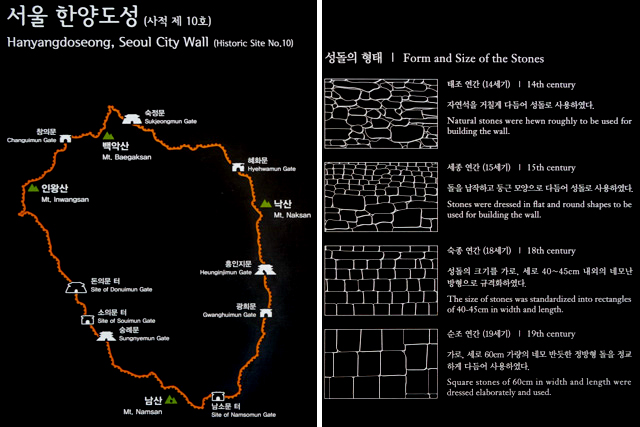
Changes in Stones of Hanyangdoseong by period
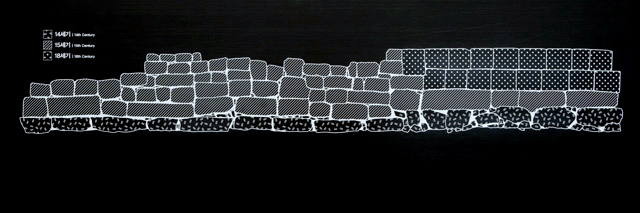
We can look into the changes in construction techniques used to build Hanyangdoseong and see the wall stone blocks that vary in shape. At the very bottom are horizontally long foundation stones, which are wall stone blocks from the 14th century. On top of these are small, flat stone blocks (left) used in the 15th century and square-shaped wall stone blocks (right) piled in the 18th century. At a glance, visitors can see how construction techniques in the Joseon Dynasty developed over time period.
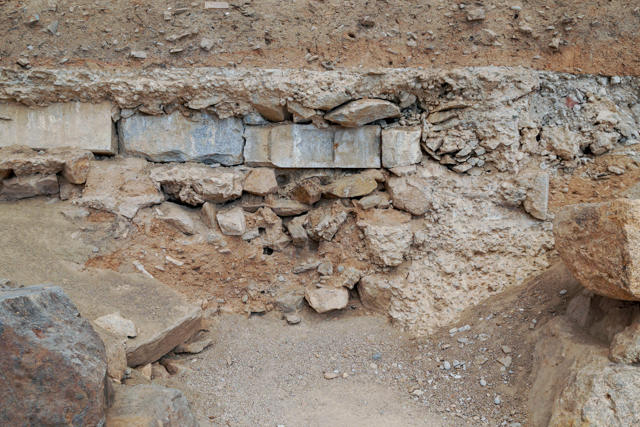
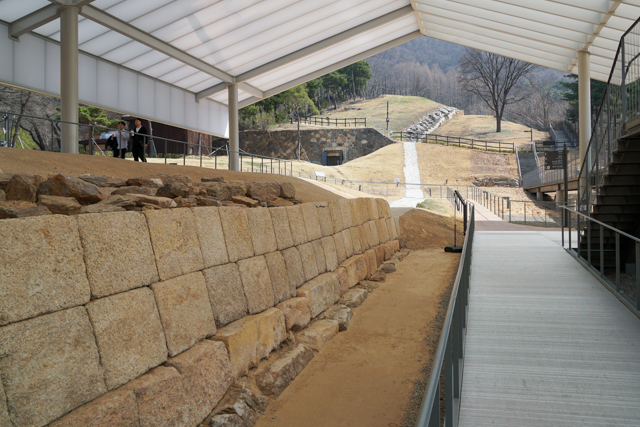
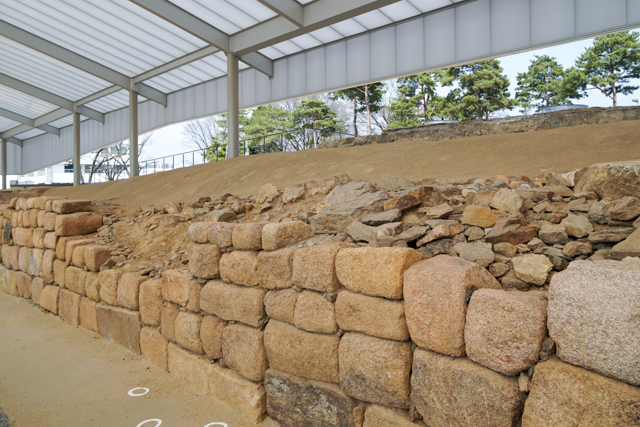
Structure of Hanyangdoseong
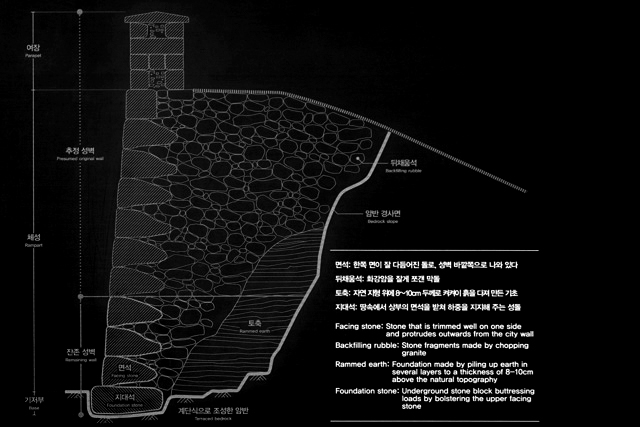
The city wall at the foot of Namsan Mountain was built piling stone blocks only on one side based on a slope, which is called a one-sided piling wall. Facing stones were used to constitute the exterior form. The space between the inner side of the wall and the natural topography or rammed earth were backfilled with earth and rubble.
The city wall consists of an underground base part buttressing the upper facing stones; the rampart comprised of piles of wall stone blocks above ground; and fence-shaped parapets on top. What we can see today is the foundation stones on the first layer and three layers of facing stones above them.
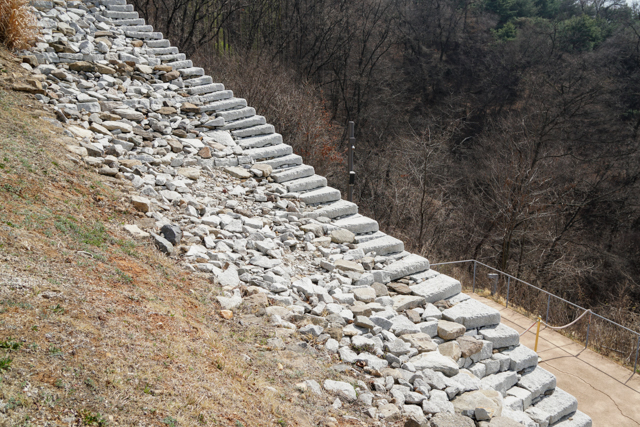
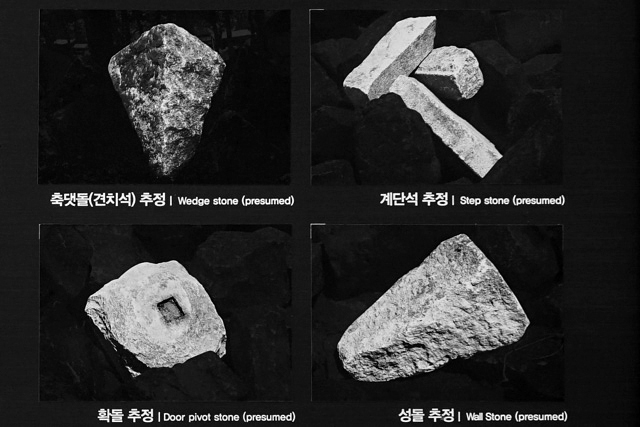
Types of stones discovered during excavation
These stones were discovered during the excavations in 2013-14. The ones on the far left are presumed to have been used as wedge stones to build the Joseon Shinto Shrine. Stones in the middle are believed to be the step stones and door pivot stones, and the ones with uncertain uses and orgin. Stones on the far right are presumed to be wall stone blocks from the Joseon Dynasty.
Door pivot stone: Stone placed at the bottom of the door frame which holds the pivot for the door Wedge stone: Stone which is cut into triangular shapes and mostly used in retaining walls
Emergency Bunker
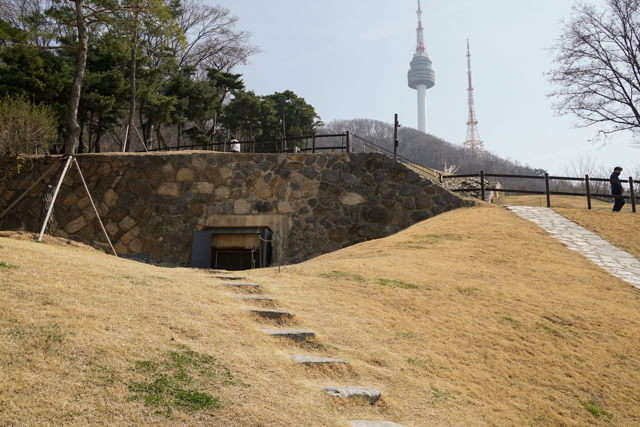
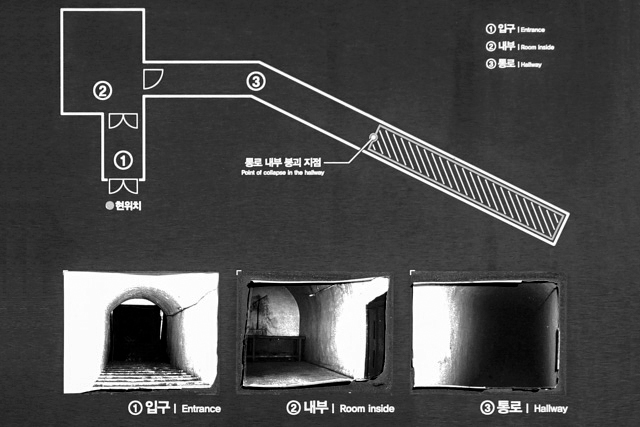
This is the entrance to an emergency bunker believed to have been made during the Japanese colonial period. Emergency bunkers were built to avoid air raids sent by the enemy. They were built all over Seoul in accordance with the Enforcement Ordinance of Japan’s Air Defense Law. Inside of the emergency bunker, there is a 33m² room that can be reached by walking down the stairs. From the room, there a long hallway stretching in the other direction that has collapsed starting from the hallway point.
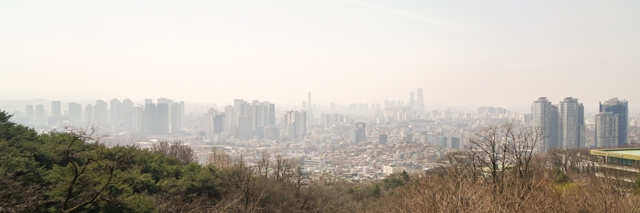
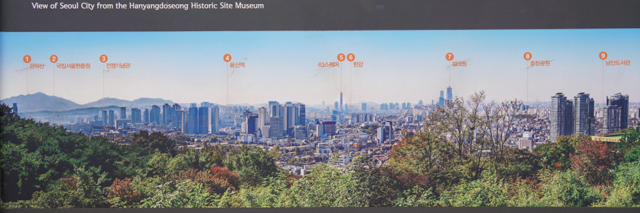
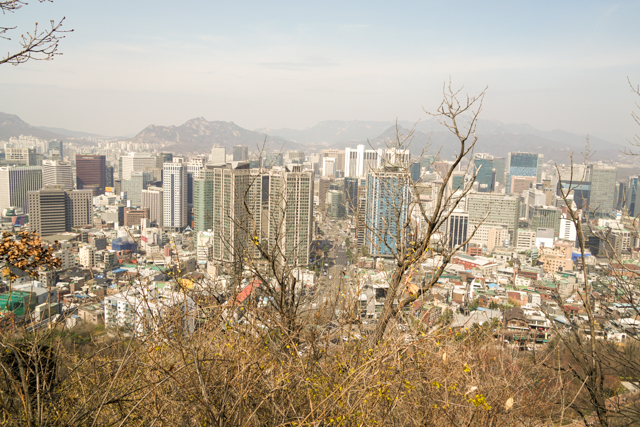
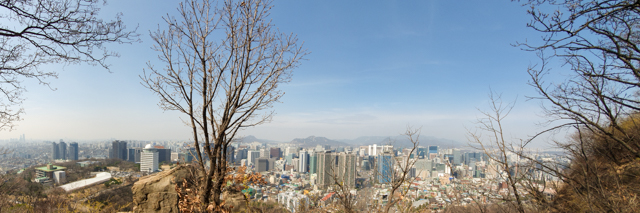
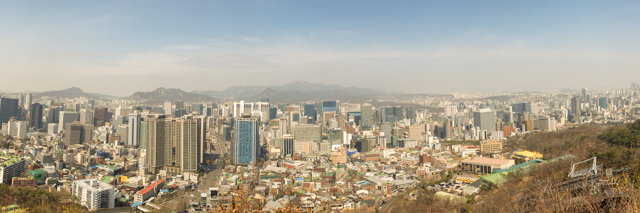
View of Seoul City from the Hangangdoseong Historic Site Museum
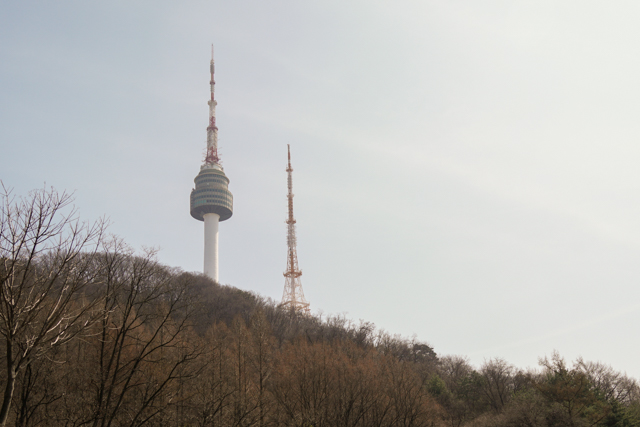
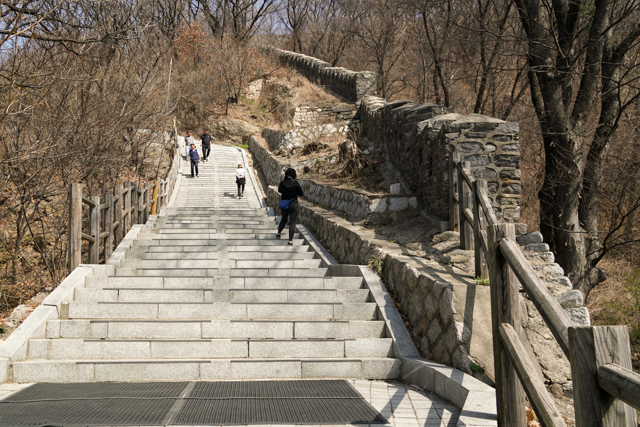
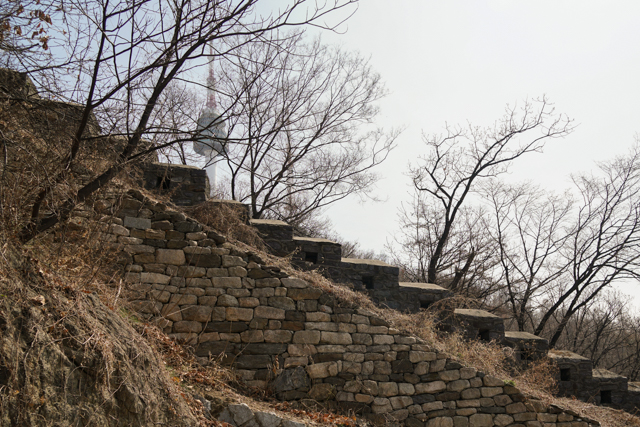
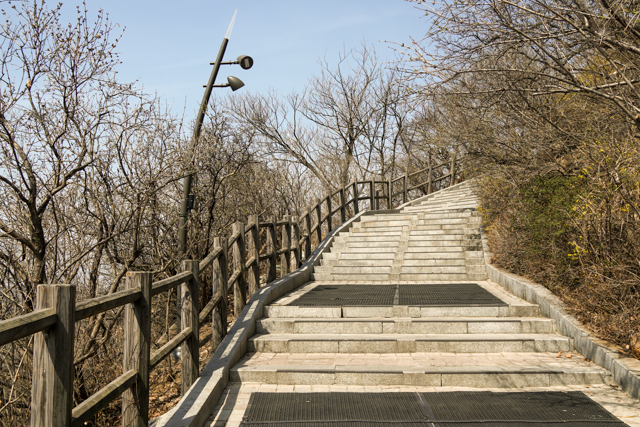
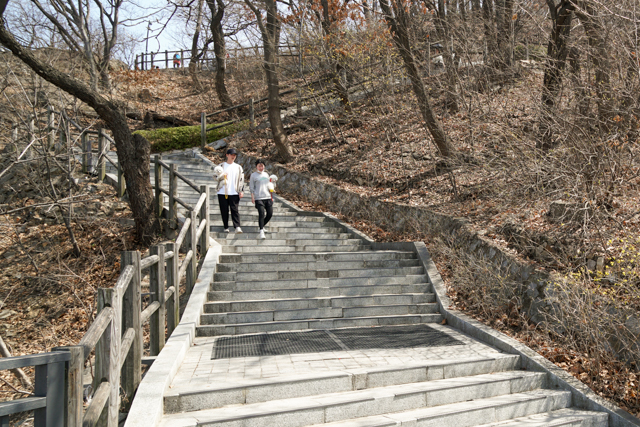
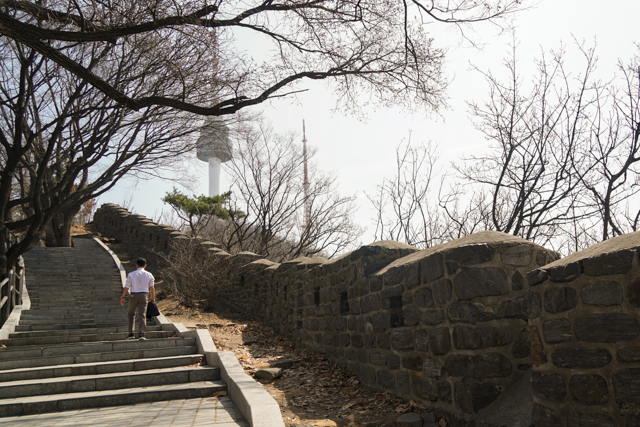
Namsan Dulle-gil – southern route
Love Padlocks
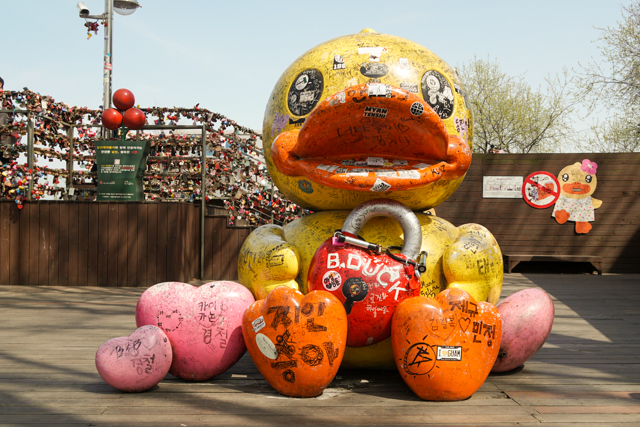
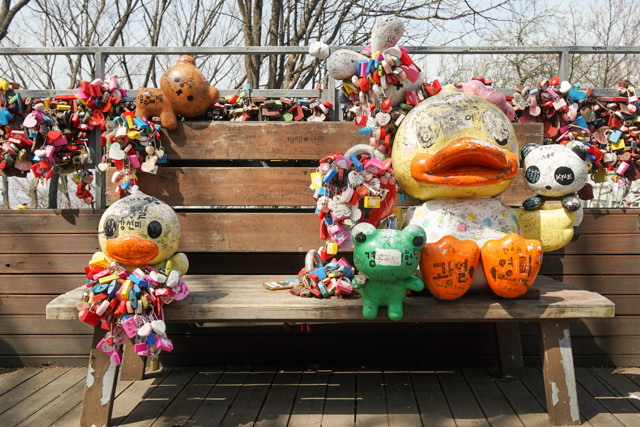
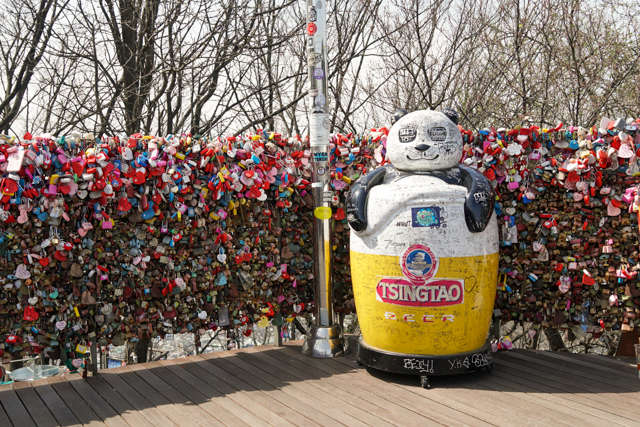
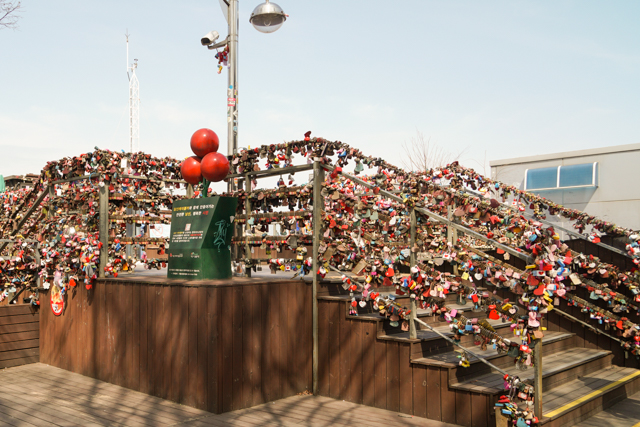
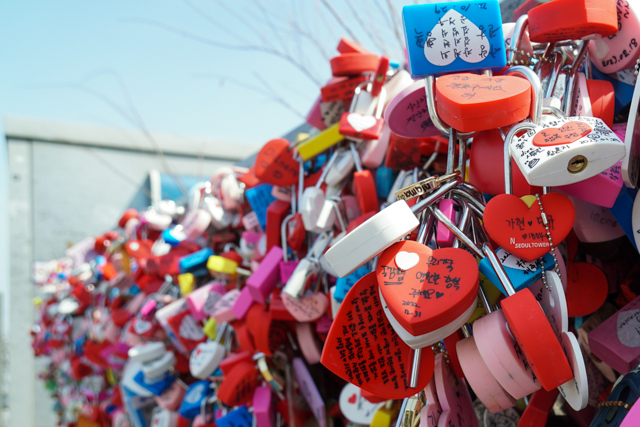
Namsan Seoul Tower is a popular date spot for couples who head to the tower to lock their ‘padlock of love’ onto the railing.
Mongmyeoksan Beacon Hill Site
목멱산 봉수대, 8-1, Yejang-dong, Jung-gu, Seoul, South Korea
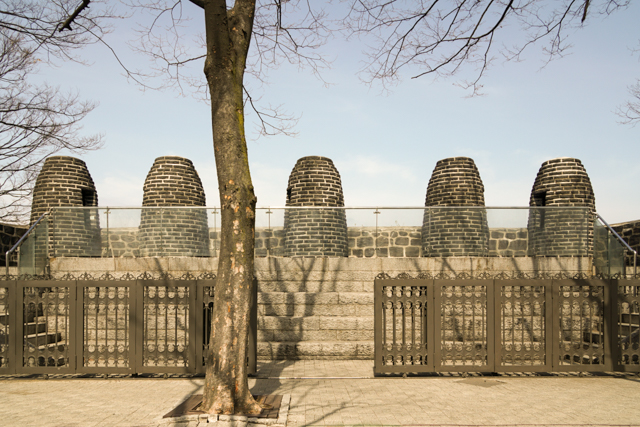
The beacon hill site in Mongmyeoksan (Mt.) (today’s Namsan (Mt.)) was also known as Gyeongbongsu – literally “beacon hill in the capital” – as it is located in Seoul, which was the final destination of all the beacon fires lit to warn of an enemy invasion approaching the border areas. The beacon system of Joseon was a form of long-distance communications system by which fires were lit and the smoke emitted on hills and mountain tops warned local people of an enemy raid and alerted the military defense; it also served to transmit news of an emergency in the border area to the government in the capital. Fire signals were used during the night and smoke signals during the day. The beacon signals from border areas were transmitted to the capital via one of the five beacon hills in Namsan. The first beacon hill received a signal that came from the northeastern province of Hamgyeong-do via the stations in Gangwon-do and in Achasan (Mt) in Yangju; the second station received its signal from the southeastern province of Gyeongsang-do via the stations in Chungcheong-do and Cheollimsan (Mt) in Gwangju; the third station’s signal traveled from Ganggye, in the northwest province of Pyeongan-do, through Hwanghae-do and the East Peak of Muaksan (Mt) in the capital; the fourth signal traveled from Uiju of Pyeongan-do through Haean of Hwanghae-do and the West Peak of Muaksan; and, finally, the fifth signal was transmitted from the southwestern province of Jeolla-do through the stations in Chungcheong-do and the one on Gaehwasan (Mt) in Yangcheon.
The beacon hill standing here is one of the five stations that originally stood in Namsan and was built in 1993 according to the related reference materials, such as Cheonggudo (“Map of Blue Hills”), by a great Joseon cartographer Kim Jeong-ho.
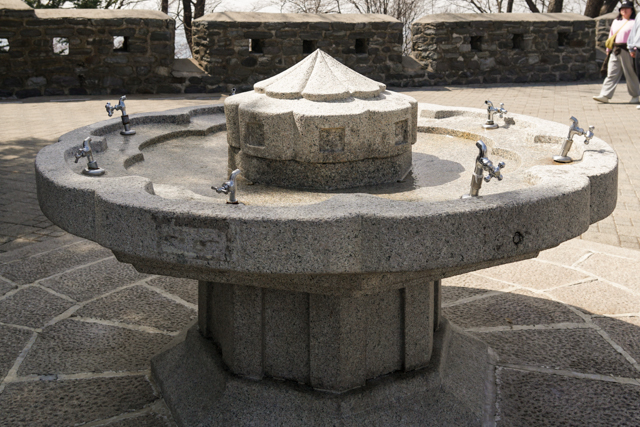
We’re glad for the water fountains dispensing ice-cold water because the hike up Namsan was not nearly as ‘easy’ as a tourism website suggested.
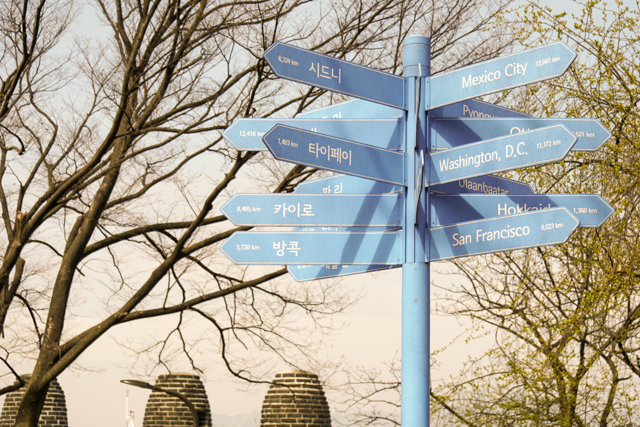
Palgakjeong Pavilion
남산팔각정, 1-3 Yejang-dong, Jung-gu, Seoul, South Korea
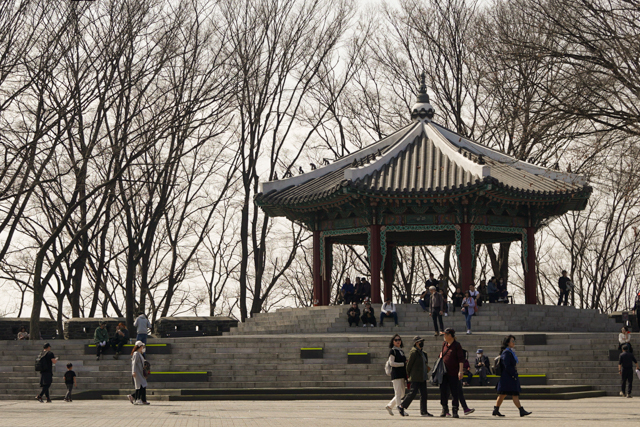
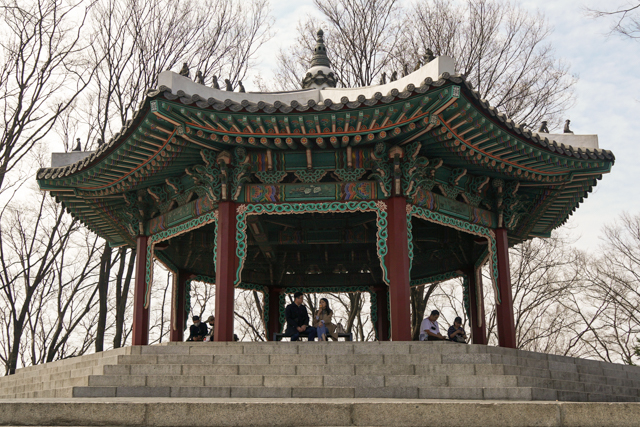
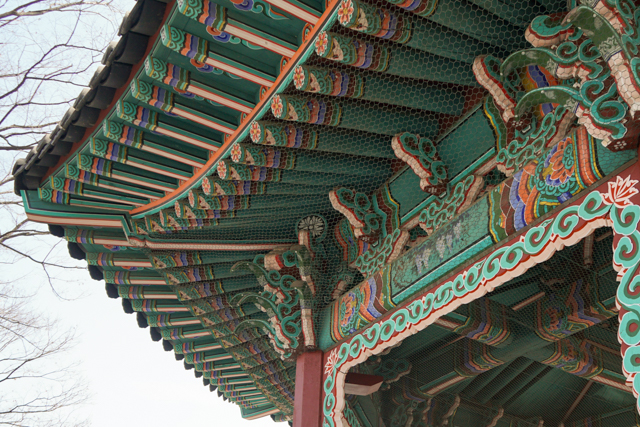
The Palgakjeong was originally known as Unamjeong Pavilion. It was built in 1959 to commemorate Rhee Syngman and demolished by the 4.19 movement in 1960 before being rebuilt on November 11, 1968. This pavilion now sits atop Namsan Mountain, with views covering the entirety of Seoul below.
Namsan Seoul Tower
N서울타워, 105 Namsangongwon-gil, Yongsan-gu, Seoul, South Korea
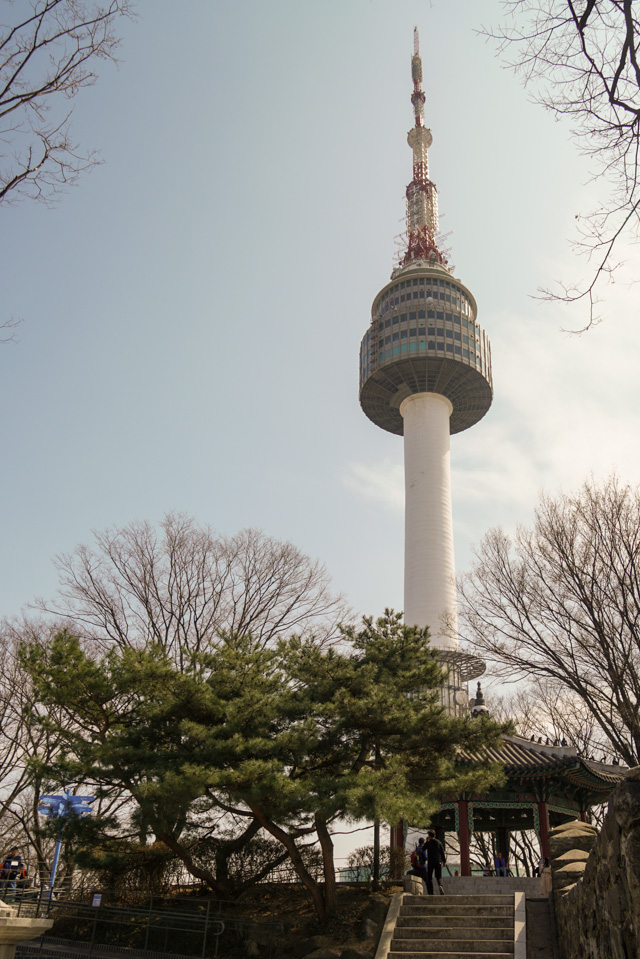
Namsan Seoul Tower was the first multipurpose tower to be established in Korea, incorporating a sightseeing observatory into a broadcasting tower.
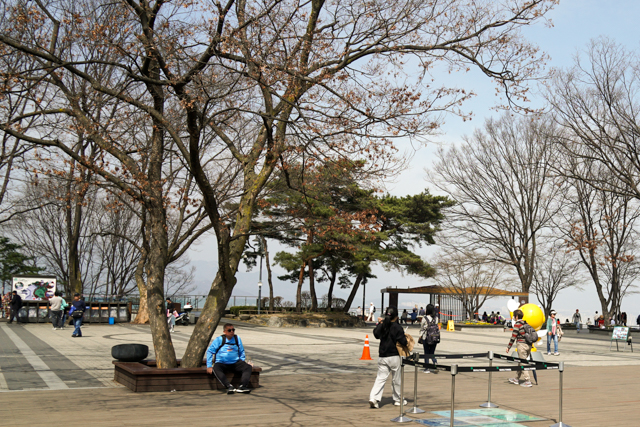
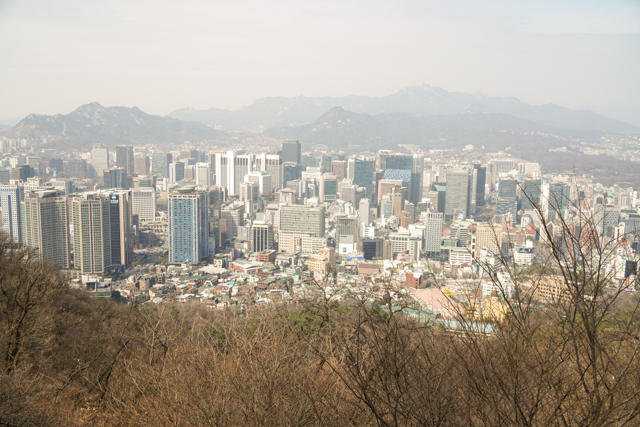
The forecourt offered expansive views of Seoul even without accessing the observatory.
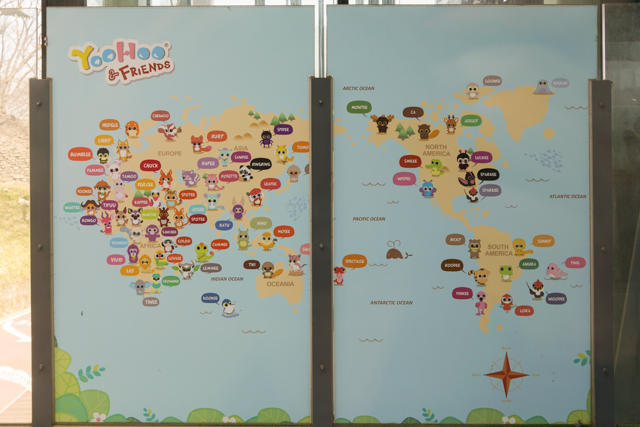
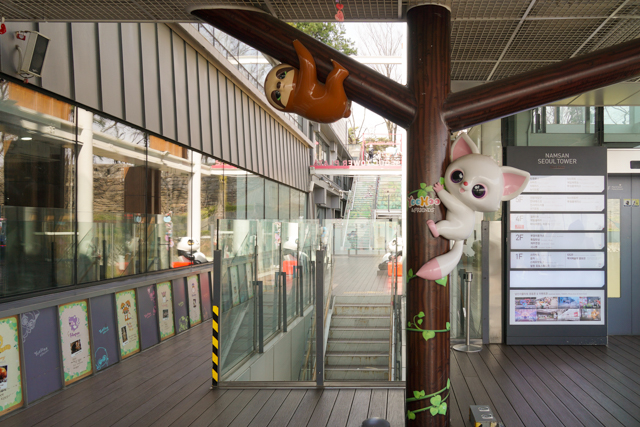
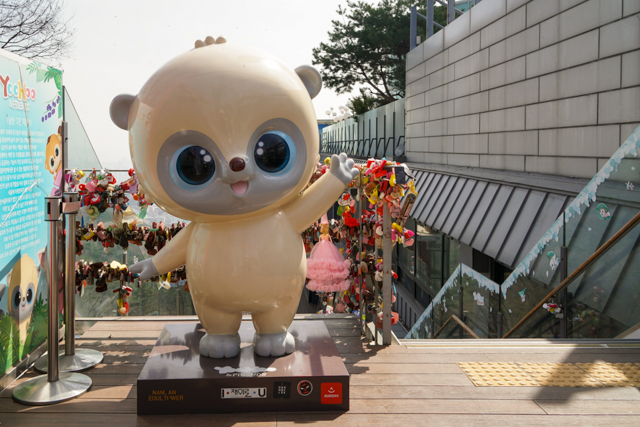
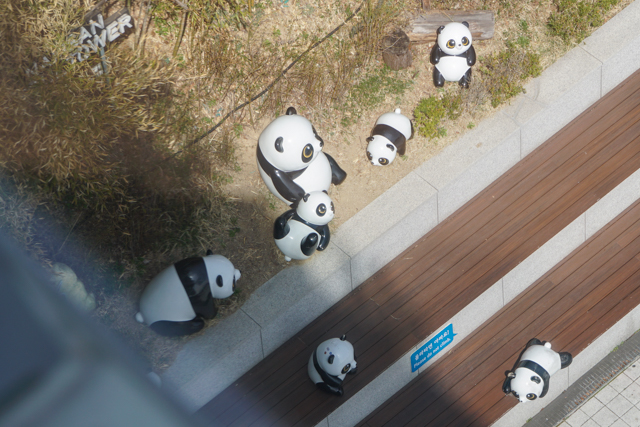
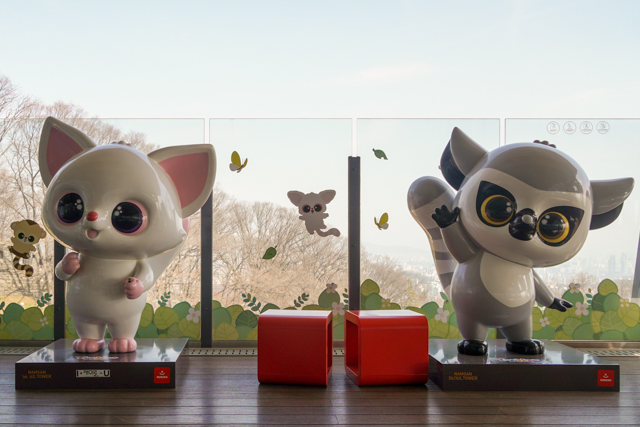
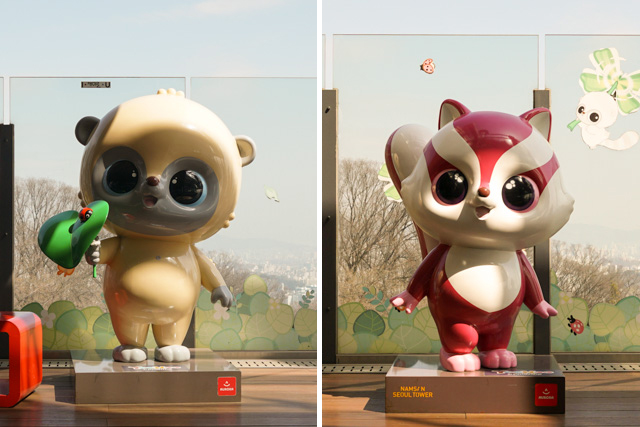
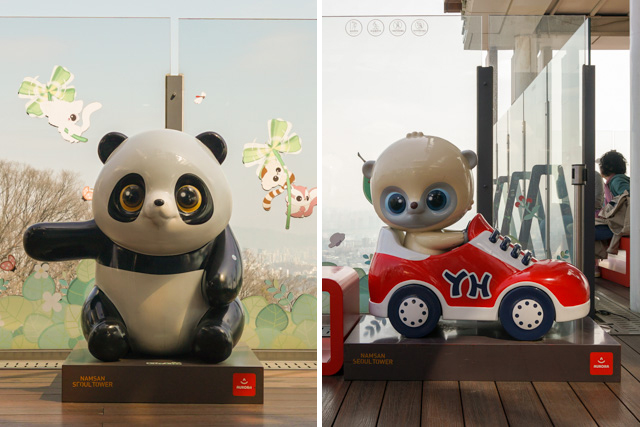
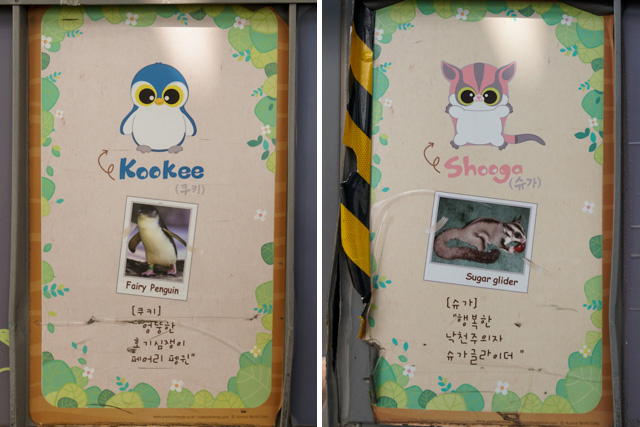
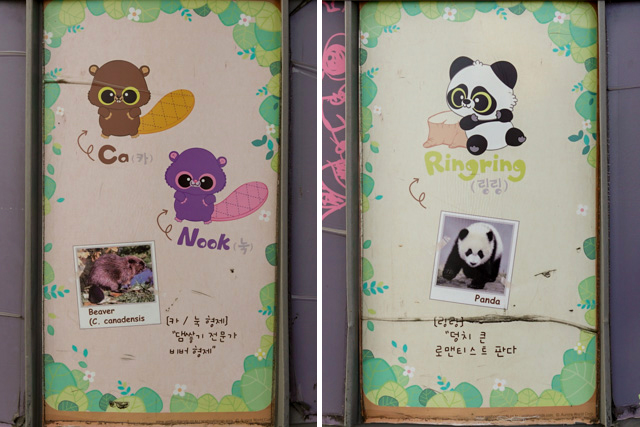
On levels 1 and 4 of Namsan Seoul tower, are Yoohoo & Friends, several endangered animals around the world who are unofficial mascots for the place.
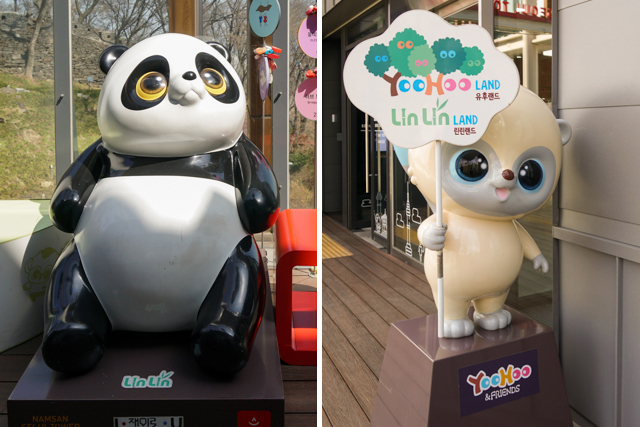
Linlin
Giant Panda The giant panda lives in a few mountain ranges in central China, mainly in Sichuan province, but also in neighbouring Shaanxi and Gansu. The giant panda is among the world’s most adored and protected rare animals, and is one of the few in the world whose natural inhabitant status was able to gain a UNESCO World Heritage Site designation. the giant panda’s diet is over 99% bamboo.Giant pandas in the wild will occasionally eat other grasses, wild tubers, or even meat in the form of birds, rodents or carrion.
Yoohoo
Bush Baby : A little night monkey Bush babies are one of the smallest primates in the world. Bush babies are found around East Africa and woodlands and bush lands in sub-Saharan Africa. Bush babies eat small insects, leaves and vegetables. Bush babies can see really well in the dark. Bush babies are great jumpers and use a powerful long tail.
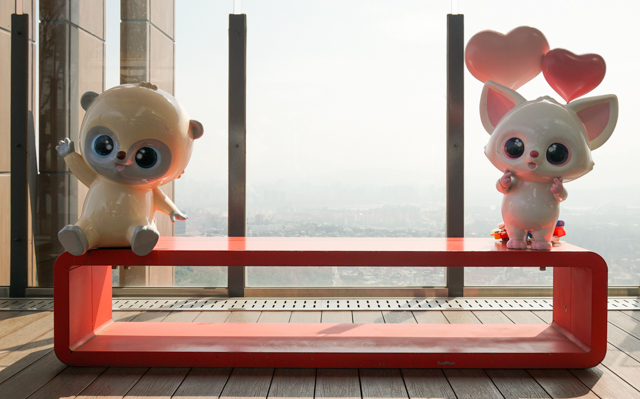
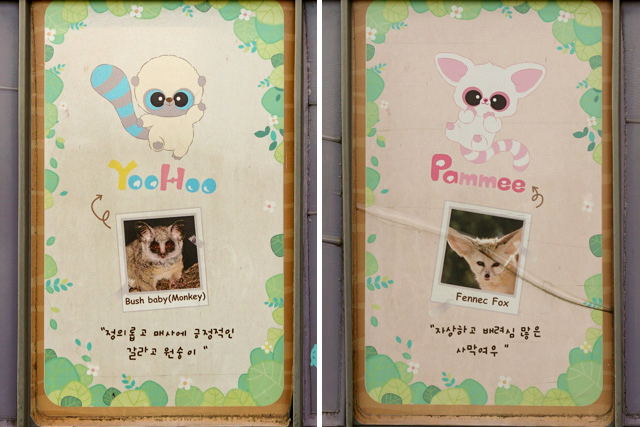
Pammee
Fennec fox : Precious princess of a desert Fennec foxes are the smallest foxes in the world. Fennec foxes are found in Sahara Desert and in North Africa. Fennec foxes eat small animals living in desert. People really love them because of their adorable and lively characteristics Fennec foxes are protected by CITES as rare animals.
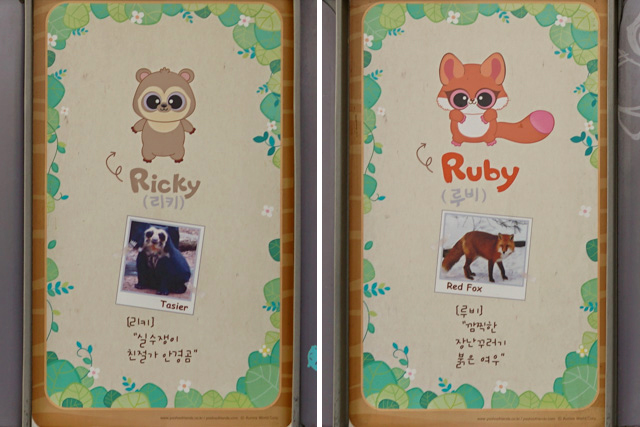
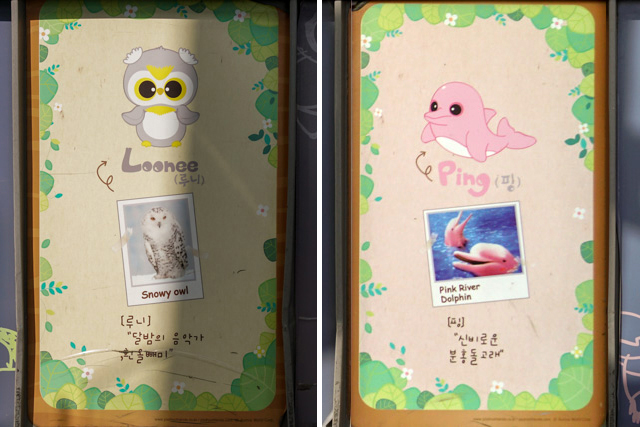
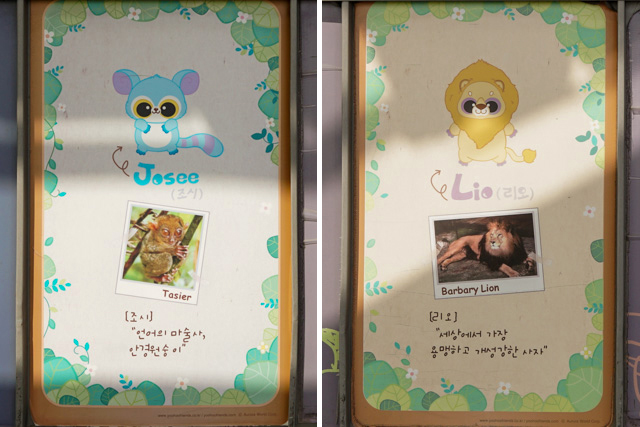
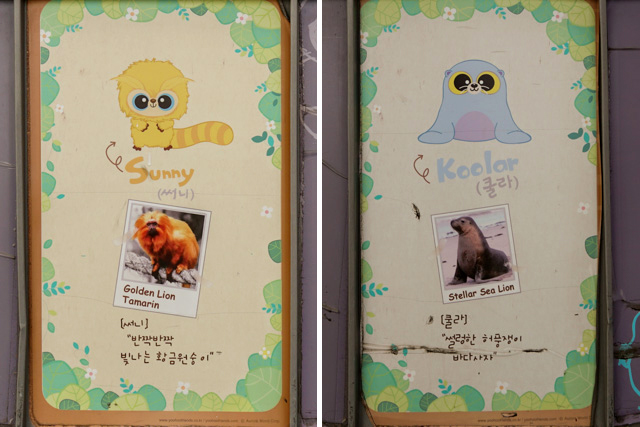
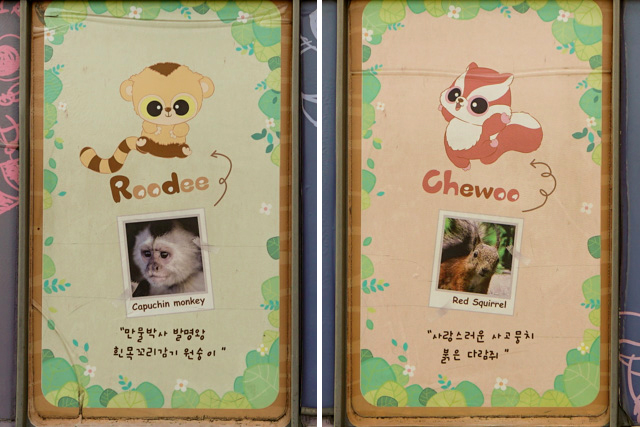
Roodee
Capuchin Monkey : A Brainy monkey Capuchin monkeys are famous for their high intelligence Capuchin monkeys are found in Central America and middle South America. Capuchin monkeys eat small insects, leaves and vegetables. Capuchin monkeys have really long tails. Their tails are as long as their body length. People breed them as pets and they are very popular in the circus as well.
Chewoo
Red Squirrel : A Friendly rodent Squirrels are rodents. Squirrels are found largely free on trees or on parks. Squirrels eat a wide variety of plant food. Squirrels chew on various objects to prevent their teeth from over-growth. Squirrels are friends of children being shown in many children’s books.
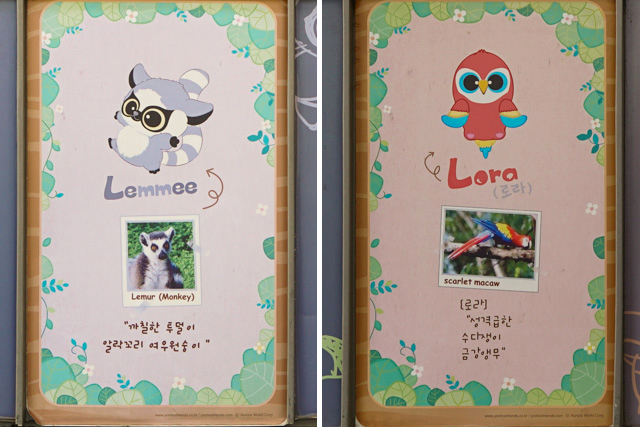
Lemmee
Lemur : A Lonely spirit of the nightLemurs are a kind of Primates. Lemurs only live in the island of Madagascar. Lemurs eat small insects, leaves and vegetables. There are many different kinds of Lemurs, but most of them have already been extinct. Lemurs are protected by CITES as rare animals.
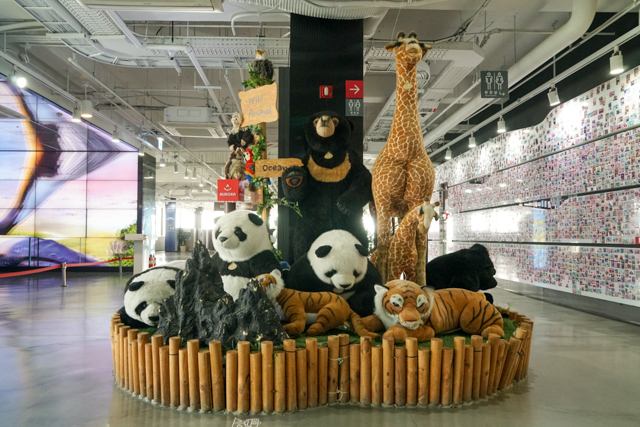
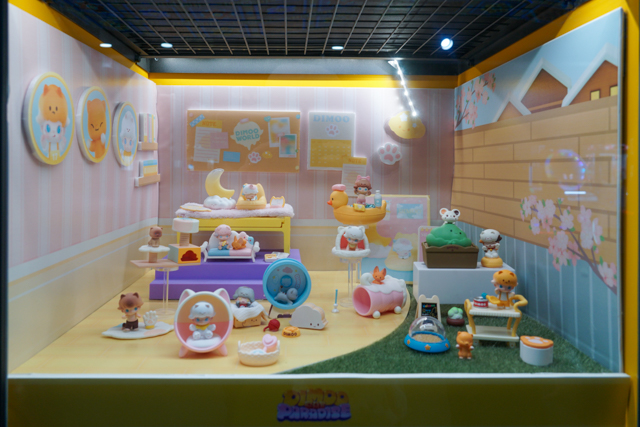
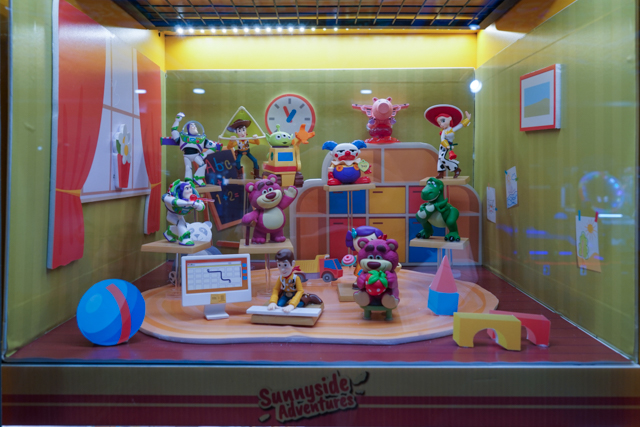
Inside the base of the tower was a Game Plaza and 3DWorld as well as a ‘Pledge of Love’ photo booth where you can ‘promise your love’ by taking a photo (for a fee) and sticking it to the wall.
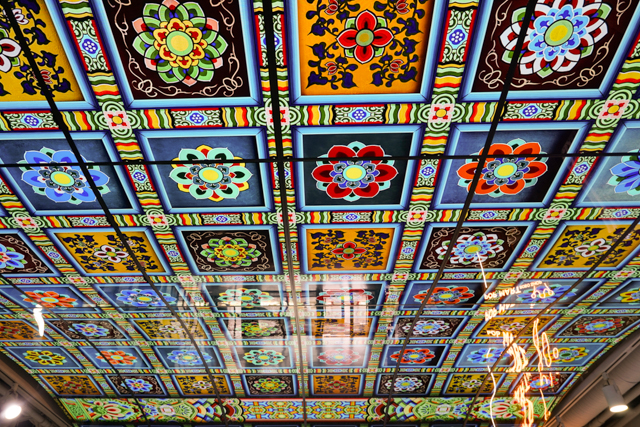
Gallery K
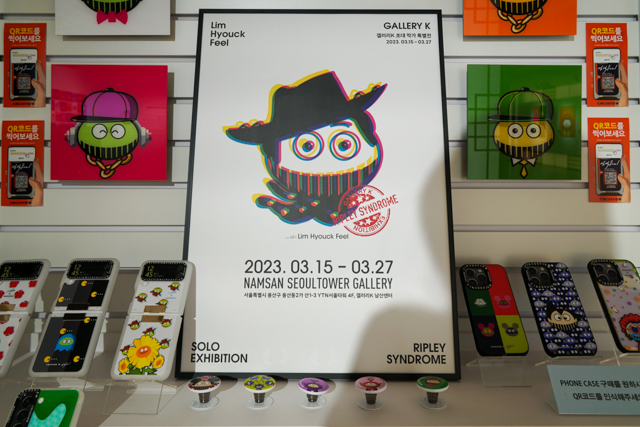
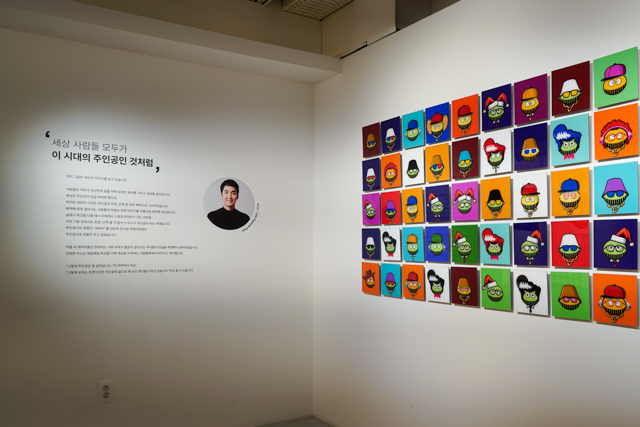
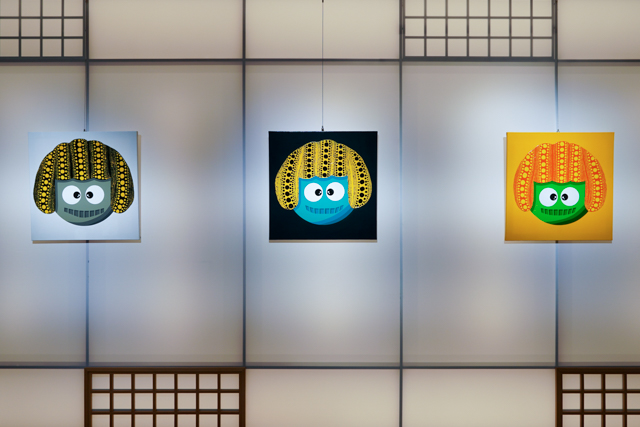
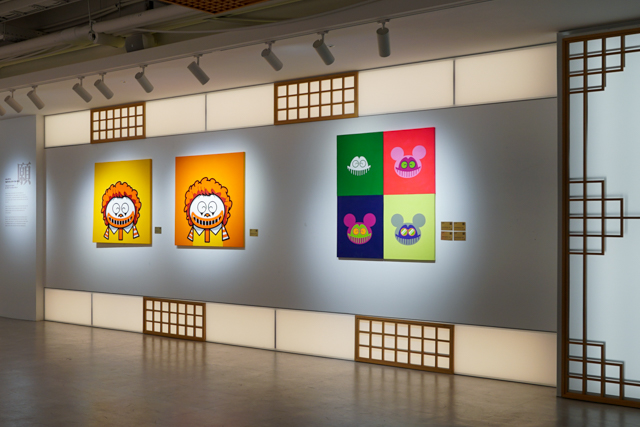
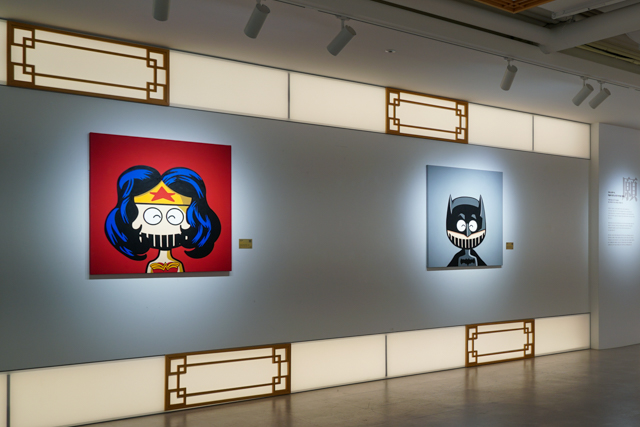
There was a solo exhibition called ‘Ripley Syndrome’ on display inside the tower.
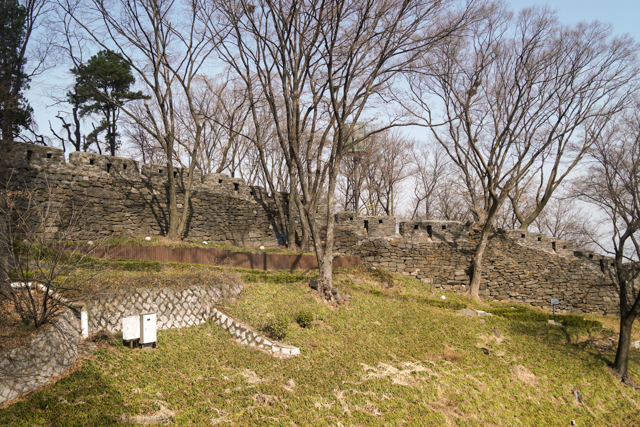
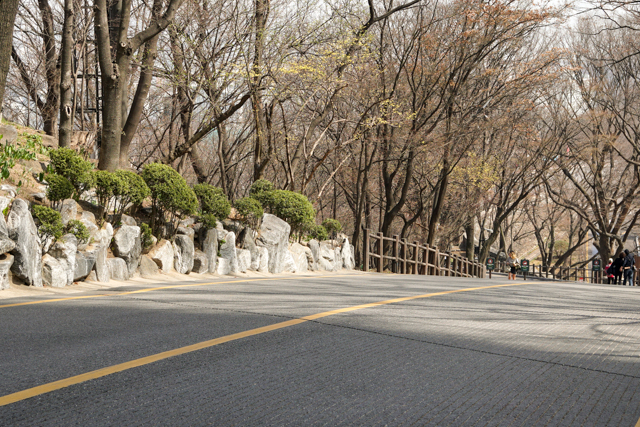
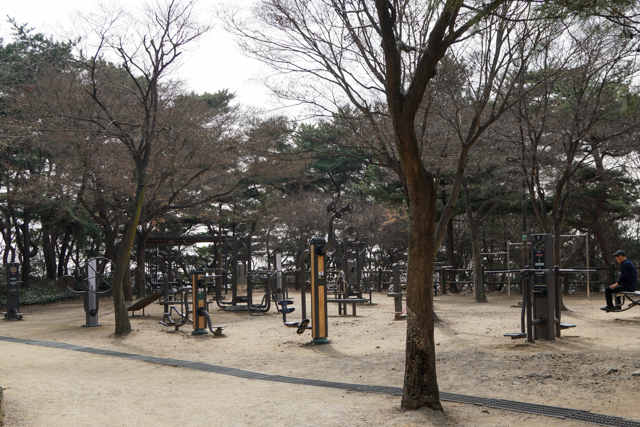
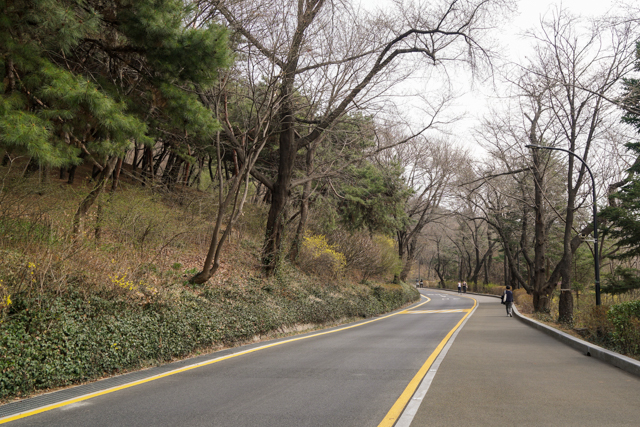
Namsan dul-gil, northern route
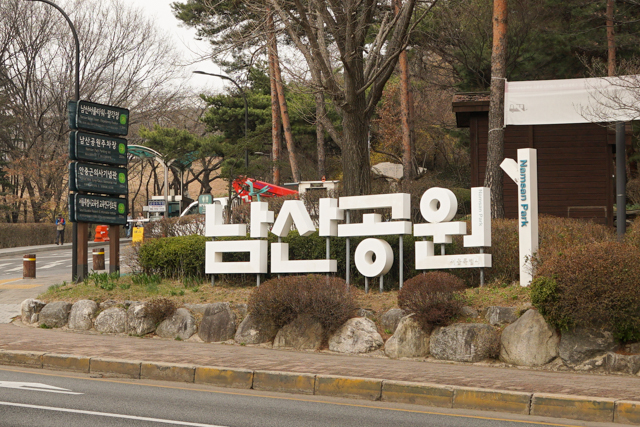
Yongsan-gu
Namsan Park to Seoul Station
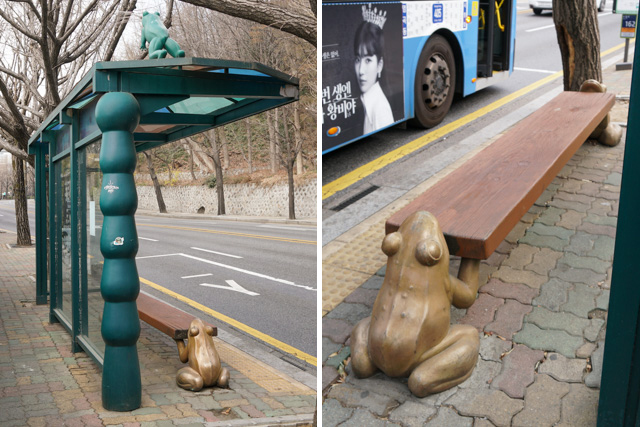
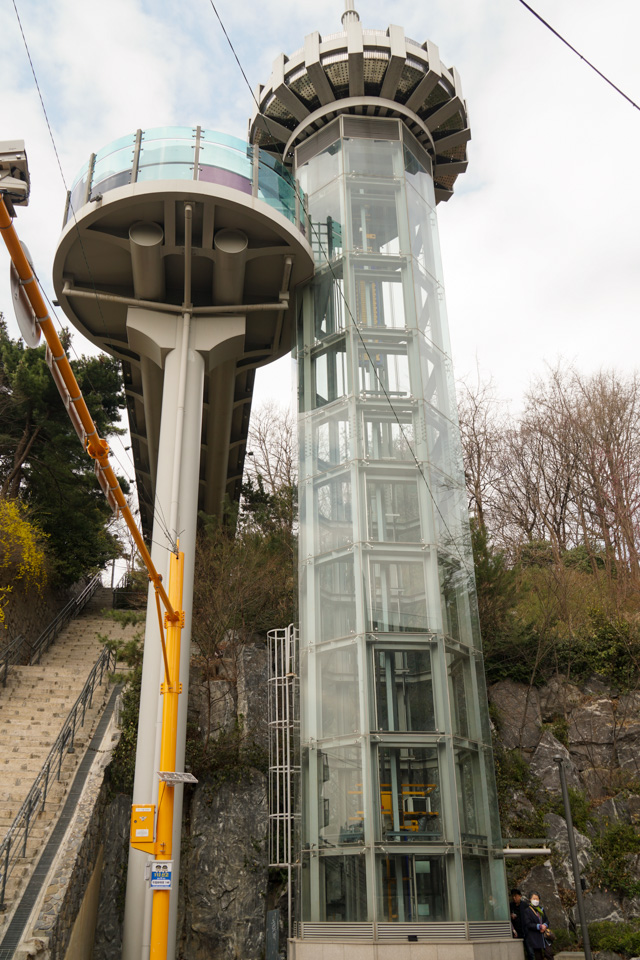
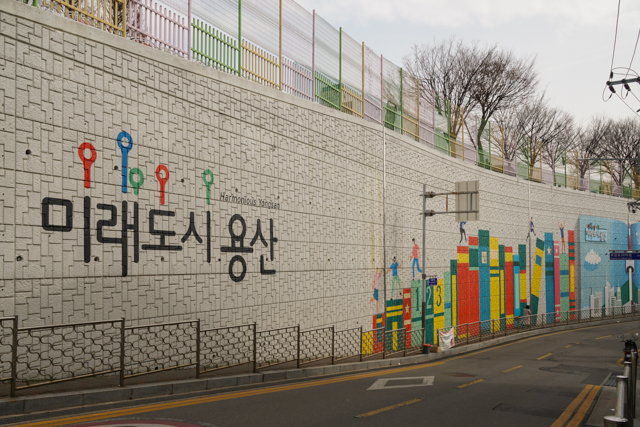
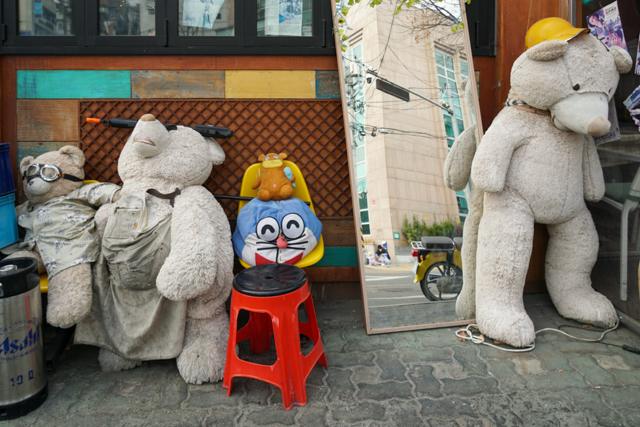
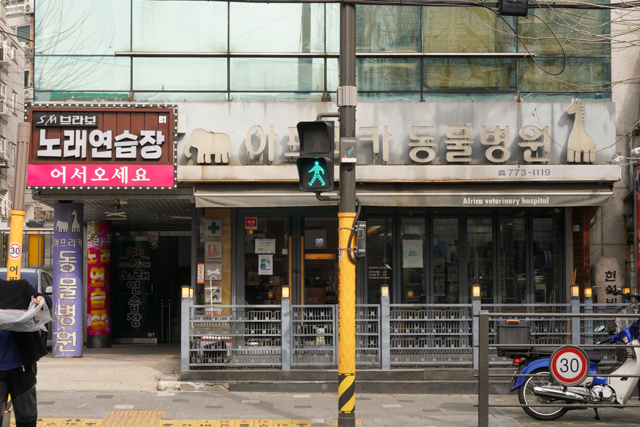
We got a bit lost walking back to Seoul Station, having underestimated the hilly topography of Seoul. We made it back eventually.
Seoul Station
서울역, 405, Hangang-daero, Yongsan-gu, Seoul
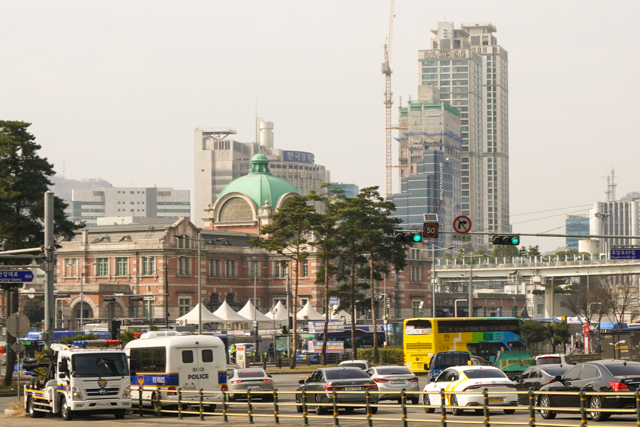
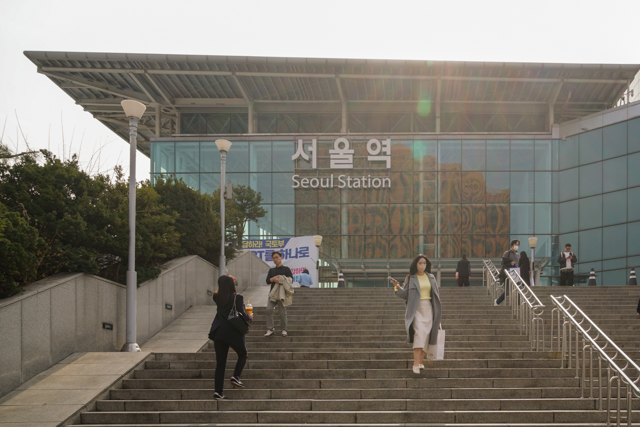
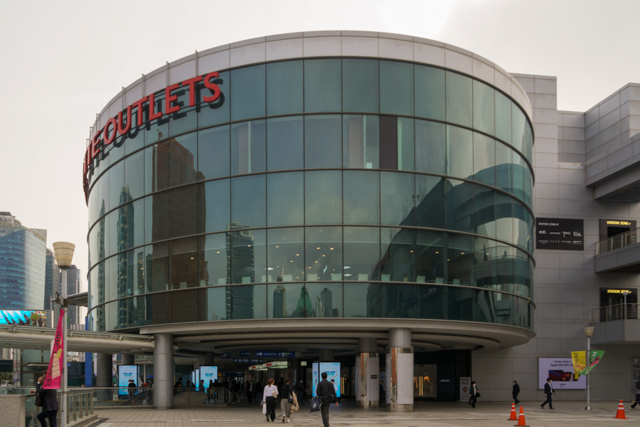
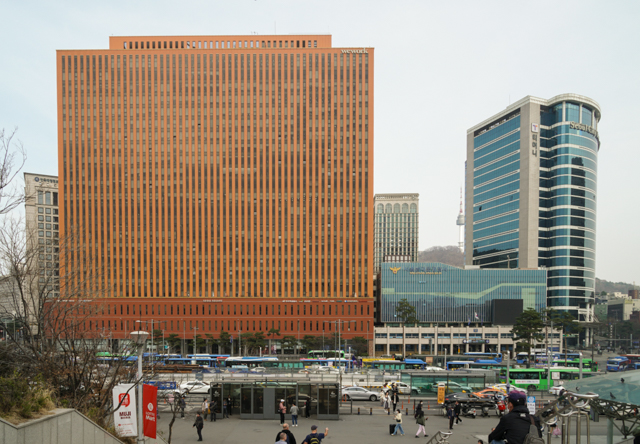
Seoul Station is the busiest train station in Korea, but there was not nearly enough signage for us.
Bricksand
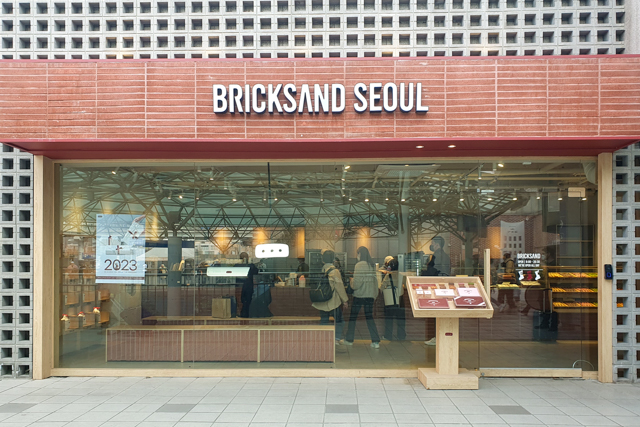
1F M02, 405 Hangang-daero, Yongsan-gu, Seoul, South Korea
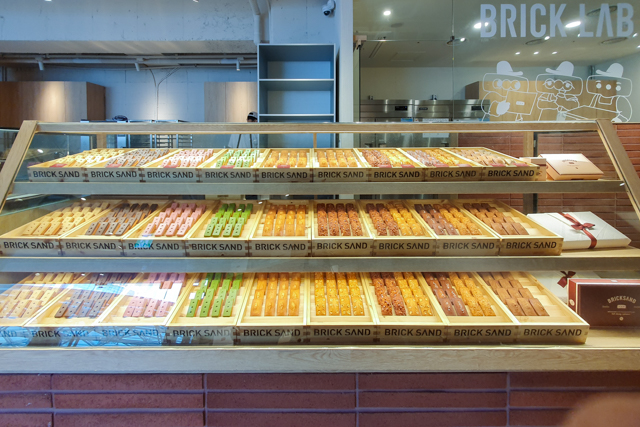
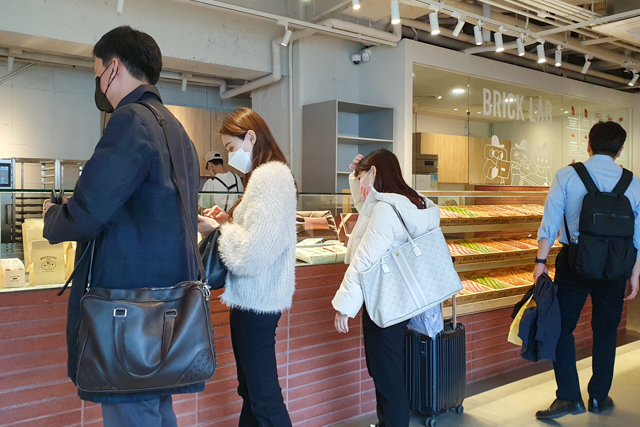
Financiers in a variety of flavours are Bricksand’s speciality.
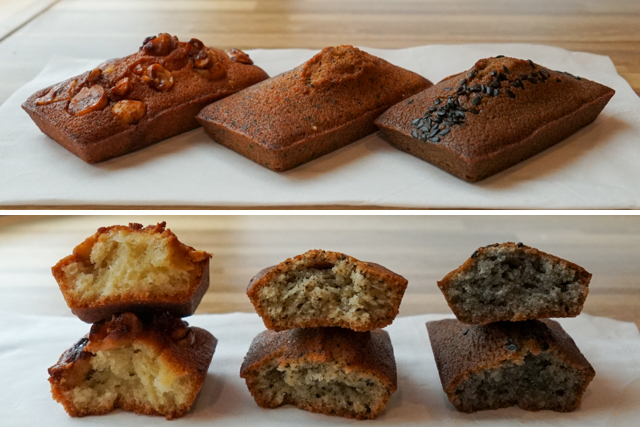
We picked up three (left to right):
- Hazelnut: This was the least dense of the three with the crunch of the caramelised hazelnuts being a winner.
- Earl Grey: This had a notable citrus brightness of the tea itself with tiny specks of the tea adding to a subtly grainy mouthfeel.
- Hazelnut: This had a rich buttery and nutty black sesame flavour with sizeable crumb.
Overall, these were enjoyable financiers but we prefer our pastries slightly less dense (or like bricks of sand).
Yeonnam Bangagan
연남방앗간, 1 Tongil-ro, Jung-gu, Seoul (2-minute walk from Seoul Station Line 1 Exit 2)
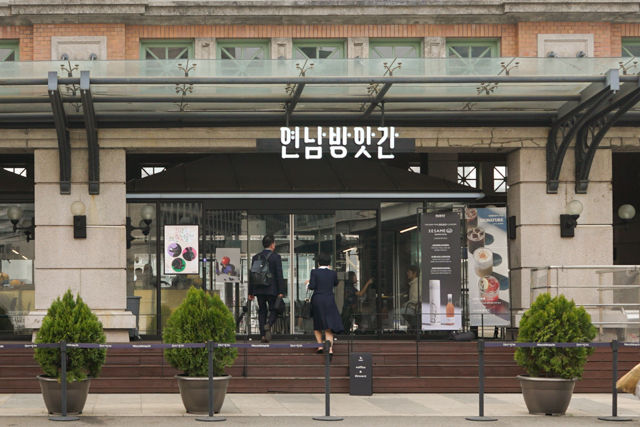
Yeonnam Bangagan is a cafe from a company that specialises in sesame products.
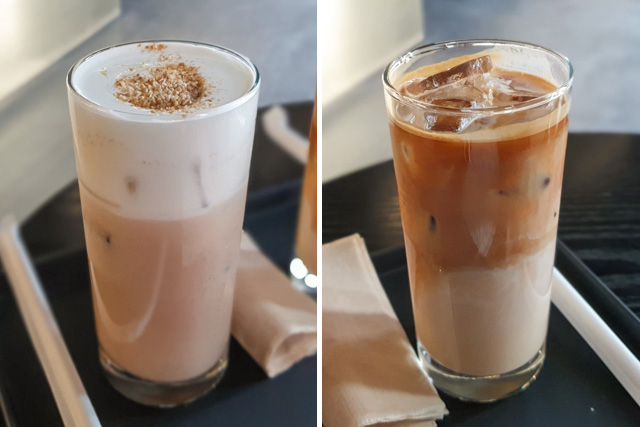
Bangangan Latte (left) (6,500 won). A sesame latte made from sesame powder topped with handmade sesame cream and sprinkled with toasted sesame seeds. Drinking it with a straw first was recommended to savour the soft flavour of the cream before mixing it.
This was the best sesame latte we’ve ever had, and likely will ever have. The sesame here was deeply rich, with the different components adding layers of impeccable texture and flavour. The overall flavour had a balanced sweetness and depth that recalled the richness found in ground sesame dressing in Japanese cuisine (but without the acidity of course).
Latte (right) (6,000). Not one for trying new things that he’s not sure about, this was D’s regular latte. This was enjoyable, but he preferred the flavour of the coffee from Coffee Nine. Next time we’ll try the Bangangan Coffee, which replaces the sesame latte base with a long black.
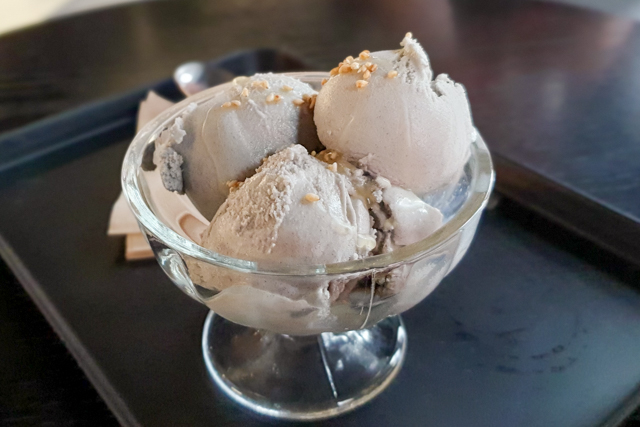
Bangangan Icecream (6,500 won).
The latte was the perfect sesame latte, and the ice cream followed suit by being the best black sesame ice cream, even though they were out of regular sesame ice cream at the time. The black sesame was incredibly nutty and creamy, rich with the flavour of sesame oils without being oily.
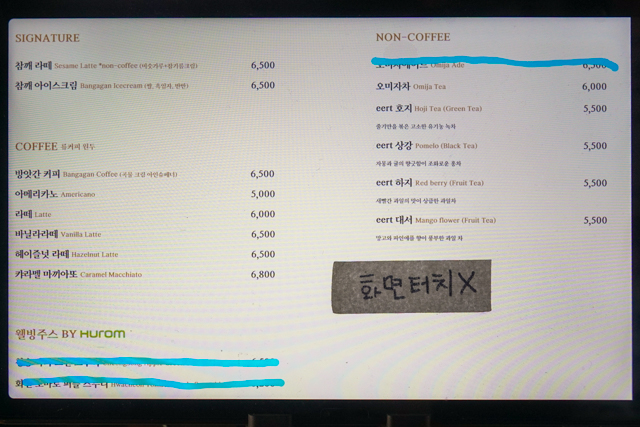
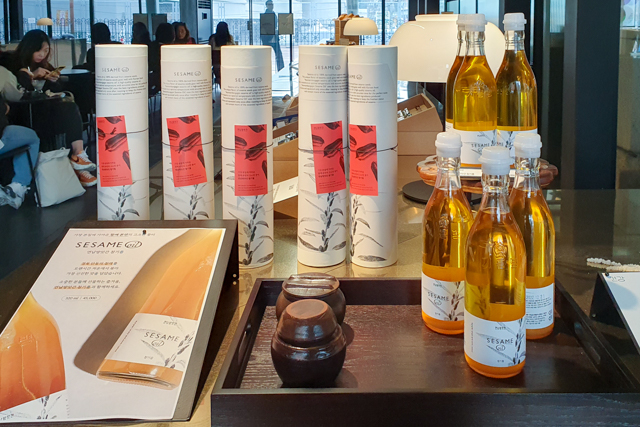
Perhaps the reason the sesame products were so impeccable at Yeonnam Banganan was due to their main business being in sesame production. A vast array of their products was available for purchase in the other half of the store.
Ojeje
오제제, 363-2 Hangang-daero, Yongsan-gu, Seoul, South Korea
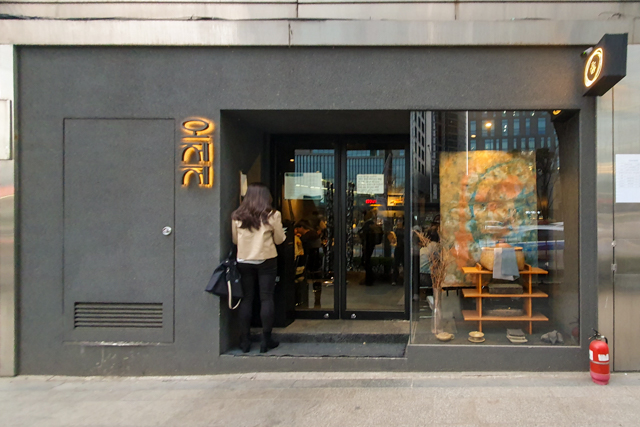
Ojeje is a pork cutlet restaurant that uses pork from Jeju Island.
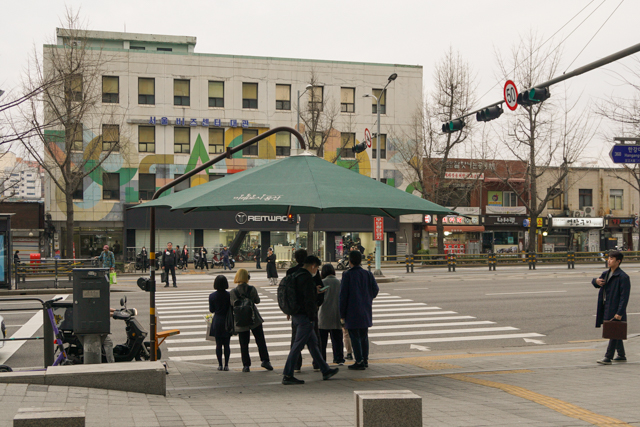
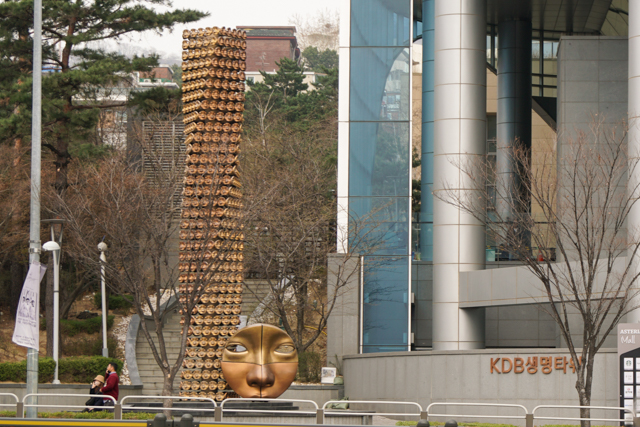
We’d arrived just after their first seating but were lucky enough to get a seat after about 20 minutes of waiting. The waiter was incredibly accommodating, using his own phone number to secure us a booking on their online reservation system. We waited across the road in front of a business tower, along with another couple who seemed to be there for an after-work date.
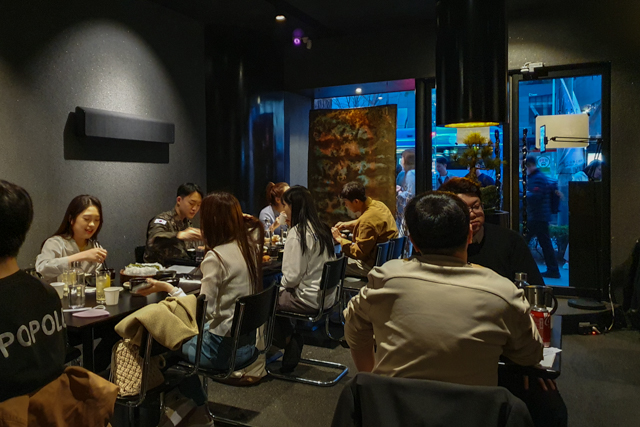
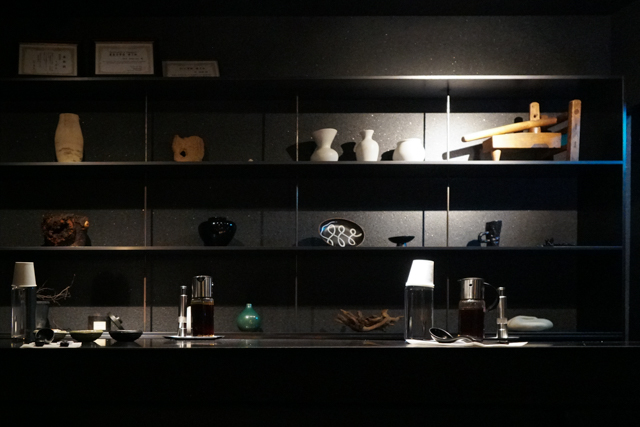
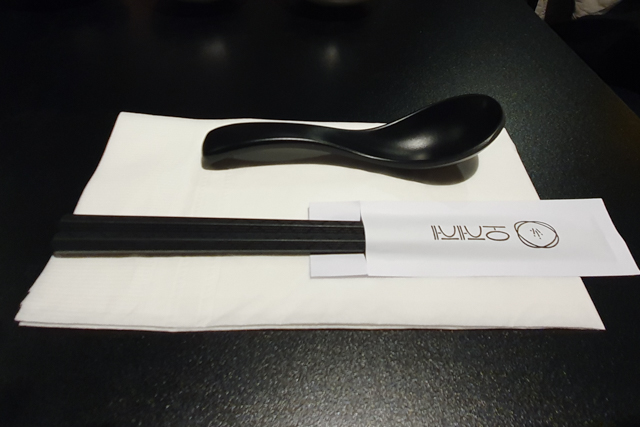
Ojeje had a very chic black exterior and interior, a reference to the volcanic environment of Jeju Island.
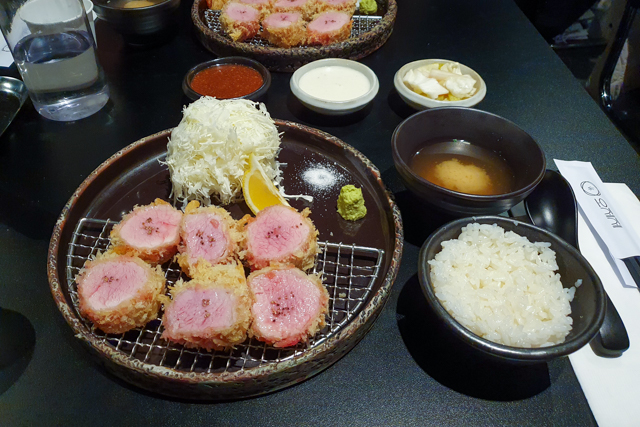
Special loin pork cutlet (16,000 won).
The pork was deliciously soft with a light and crisp batter and paired incredibly well with the freshly ground wasabi. The pickled cabbage whisked anyway any risk of oiliness from the fried food, as did the white tartare sauce. We were not a fan of the fermented flavour from the ssamjang.
The sides were also stars in their own right. The miso soup had a deeply rich flavour of the sea, while the sesame ponzu (one with real sesame seeds floating in it and needing to be shaken before pouring) was a delight with the cabbage.
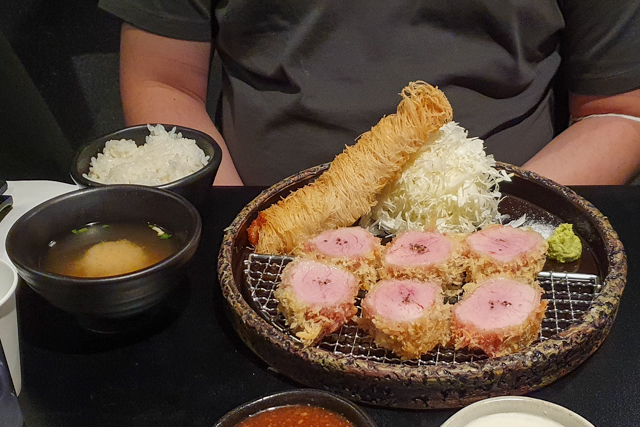
Special loin + fried shrimp (23,000 won).
We thought the pork was amazing, but the shrimp was a whole other level. It was huge, crisp and juicy with a bright sweetness and freshness.
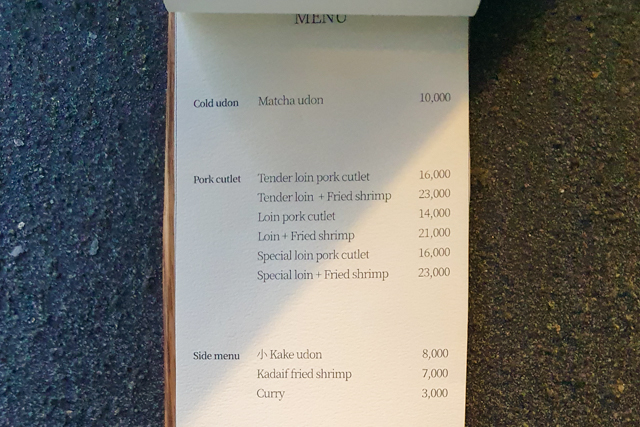
The meal was, quite simply, impeccable, and would be one of the best meals we’d have on this trip to South Korea. And Ojeje was definitely worth the wait.
Lotte Mart
롯데마트, 426, Cheongpa-ro, Jung-gu, Seoul, South Korea
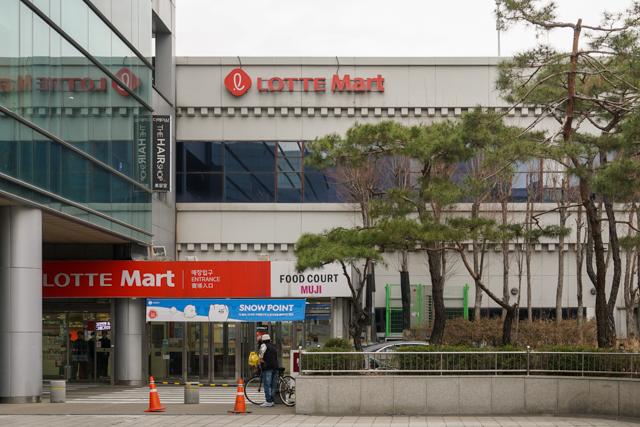
Lotte Mart can be found all over Korea, but the one at Seoul Station is the most convenient for tourists visiting Seoul. There’s a Citibank ATM by the entrance, as well as lockers available free of charge for up to 3 hours. Larger bags can be stored without the locker with the help of an employee free of charge for up to 2 hours.
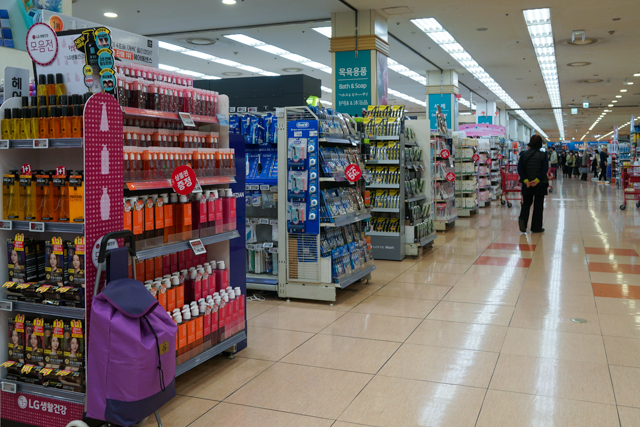
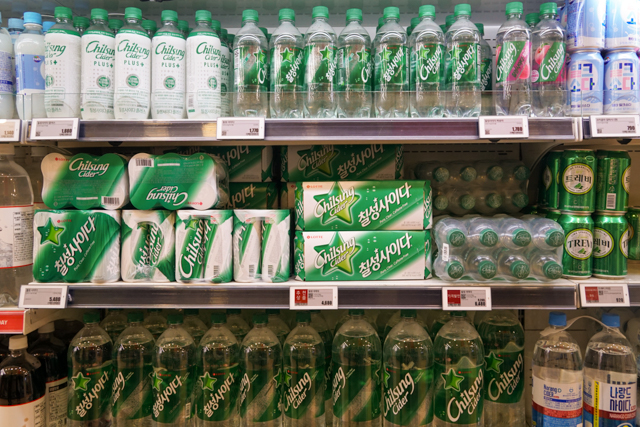
Chilsung Cider tasted like Korea’s equivalent of Japan’s Mitsuya Cider.
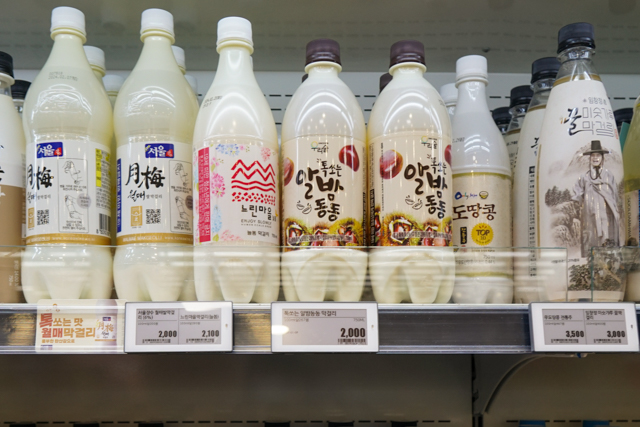
There was less variety in the makgeolli selection than we expected.
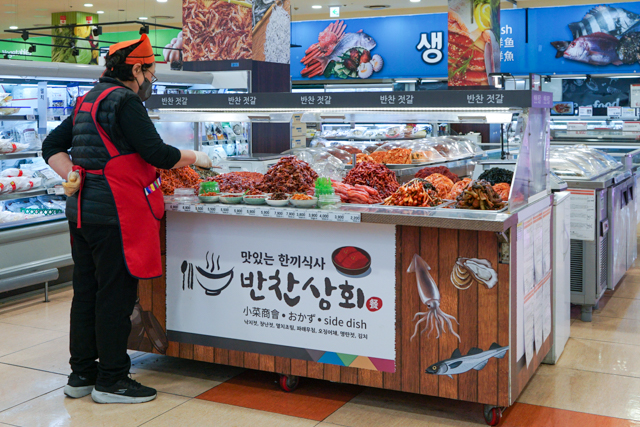
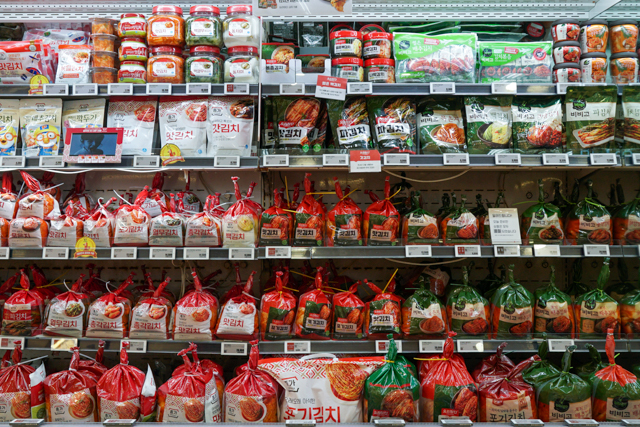
The kimchi selection did not disappoint, though…
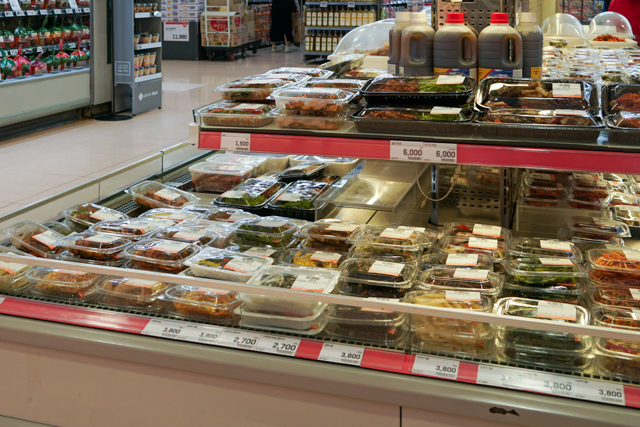
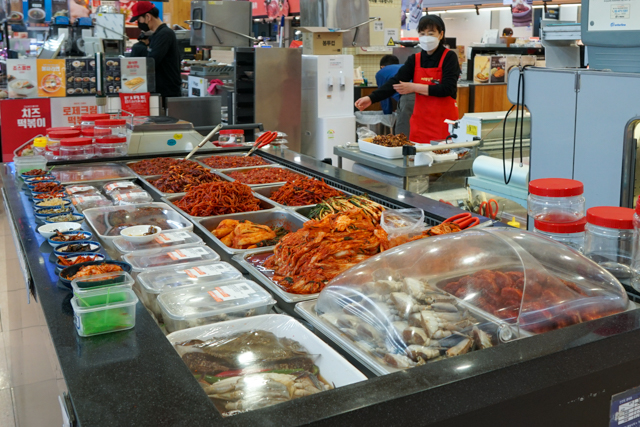
…and neither did the Banchan selection.
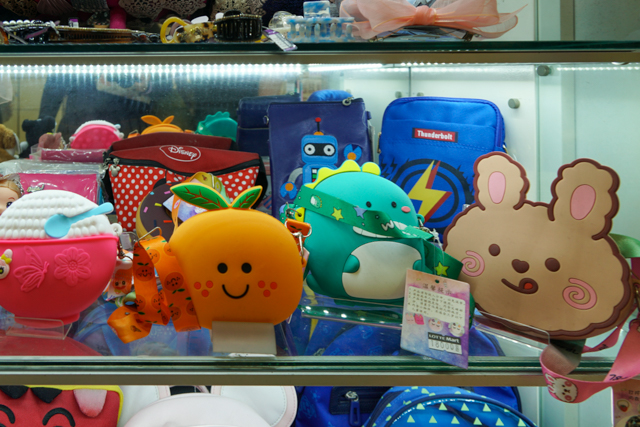
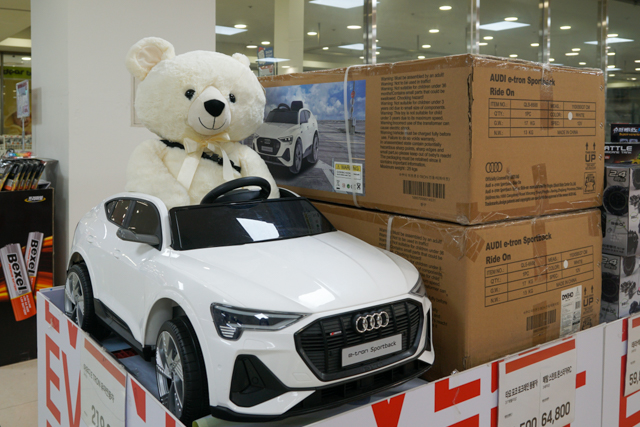
Upstairs, we spotted various toys.
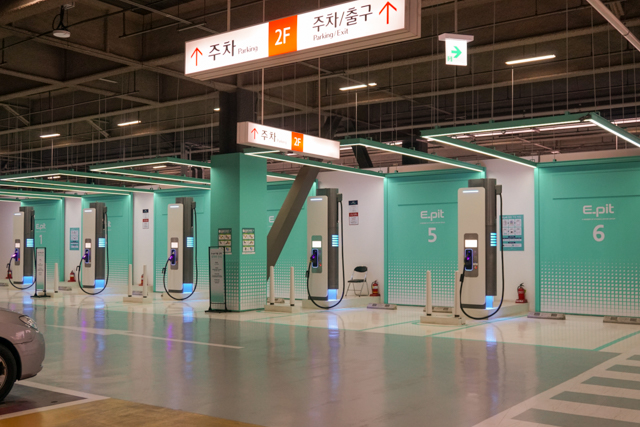
I’d been fascinated by the polished concrete of car parks in Korean drama. Turned out, it’s not a rarity. Neither were the super clean spots for charging EVs.
We headed back to the hotel, to try a few of the snacks we picked up at the Lotte Supermarket.
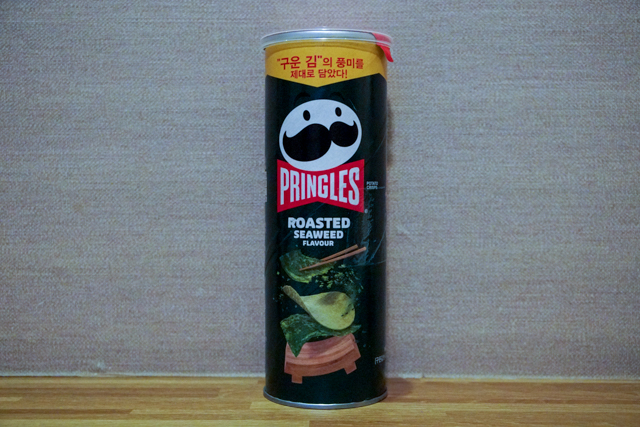
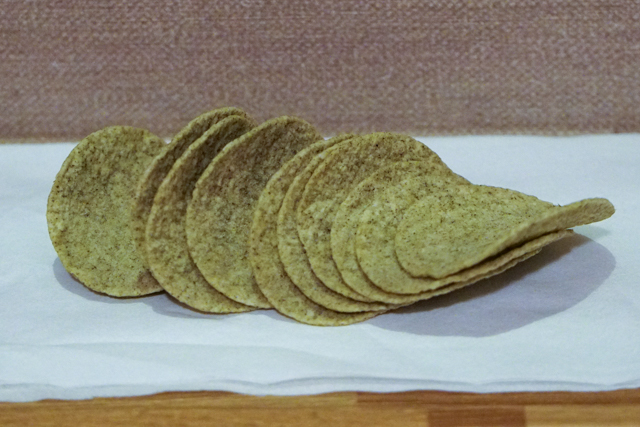
These Pringles Roasted Seaweed Flavour had seaweed embedded into the dough, which delivered a rich umami, sweet and savoury quality that simply made it our favourite flavour of Pringles to date.
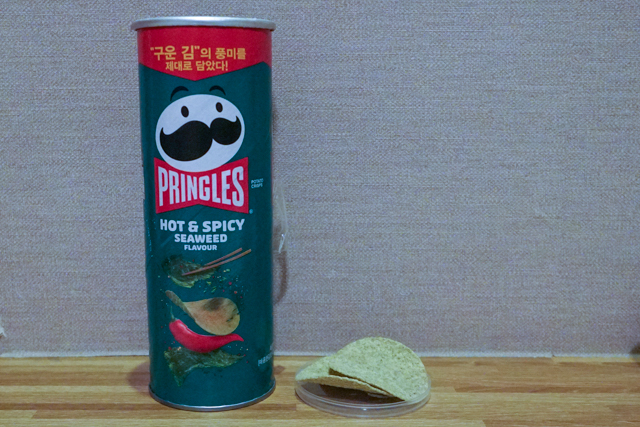
These Pringles Hot & Spicy Seaweed Flavour had the same great seaweed flavour as the previous one with the added buildable heat. While I preferred the roasted flavour, D preferred this one.
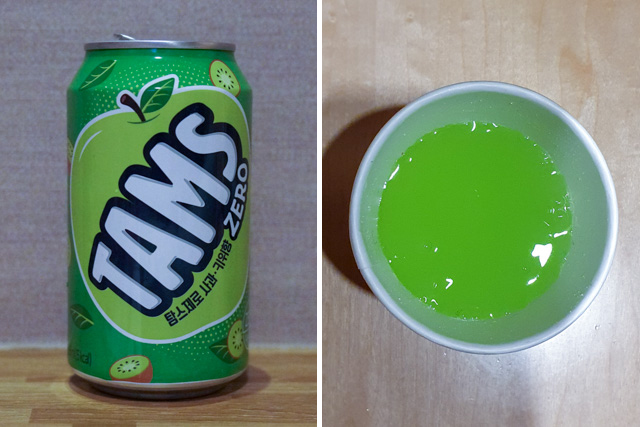
This Tams Zero Kiwi was artificially flavoured and artificially sweetened. The artificiality was evident on tasting, but we enjoyed the kiwi flavour although weren’t a fan of the notable presence of the artificial sweetener in the taste.
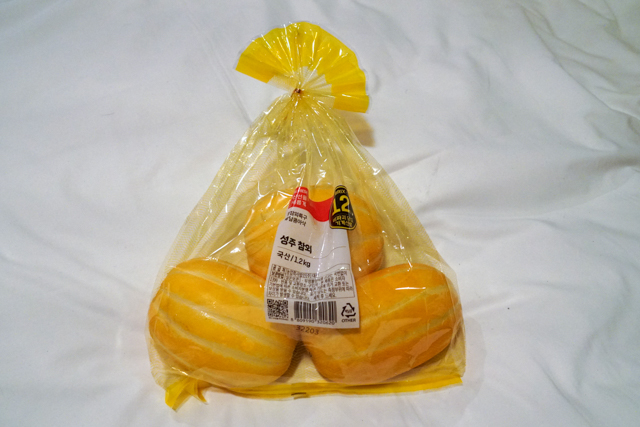
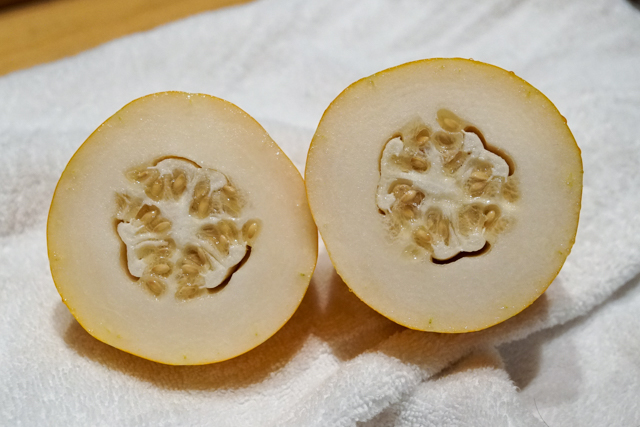
Chamoe is considered the representative fruit of summer in Korea. We first encountered chamoe when seeing someone in a Korean drama eat the whole melon as one would an apple, skin and all, so we picked up a few to try for ourselves.
These had a brix level of 12, yet tasted much like crunchy cucumbers with a restrained sweetness, while the skin was rather fibrous and more enjoyable peeled. We later discovered that Koreans often pickle these fruits, which made more sense to us than eating them as a fruit.
Seoul – Myeongdong, Namdaemun, Namsan Park, Seoul Station was Day 1 of 6 in the South Korea 2023 trip. Day 2 saw us exploring more of Seoul – Dongdaemun; the markets of Jungbu Dried Seafoods, Bangsang and Gwangjang; and Myeongdong.