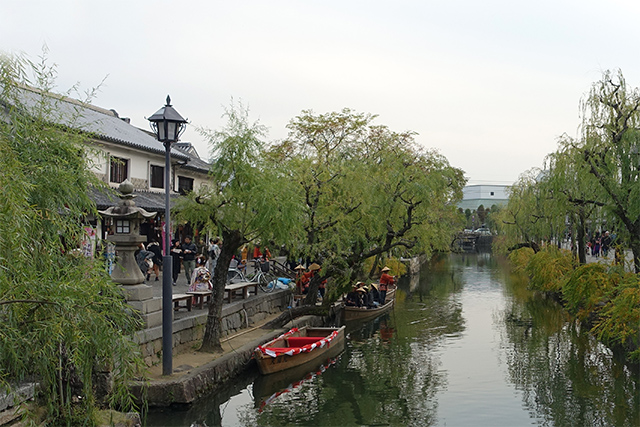
I love Japan with the riot of multicolored neon lights illuminating its major city centres – after all, it’s hard to love Ōsaka, without loving the neon lights – but the parts of Japan that really stand out after visiting are the historic areas. They’re the places preserved to resemble the look of a previous era. So places like Takayama, Kawagoe, Kanazawa, Shirakawa and now Kurashiki stick in my mind. Kurashiki is a historic city located in western Okayama Prefecture, sitting on the Takahashi River.
But before we make the 20 minute train trip west to Kurashiki, we head north-east for a tour of the Kirin Brewery in Mantomi, Okayama.
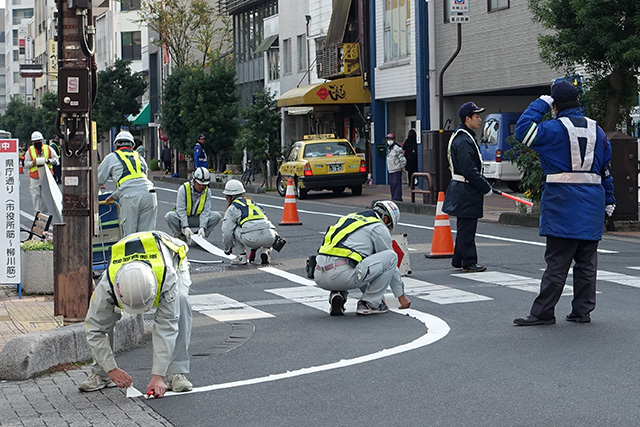
Stepping out, we see workers covering the existing white lines of the two lane street with black tape, and then ‘drawing’ new lines using white tape to make it a one lane street. By the time we return at night and the event’s over, the tape has disappeared. The Japanese are meticulous.
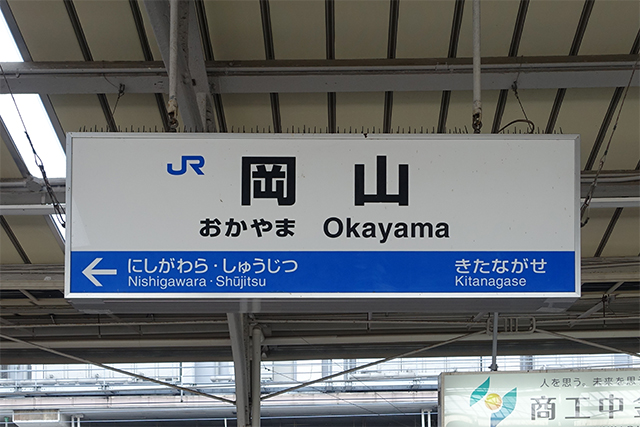
Okayama Station is a short 6 minute walk from our hotel.
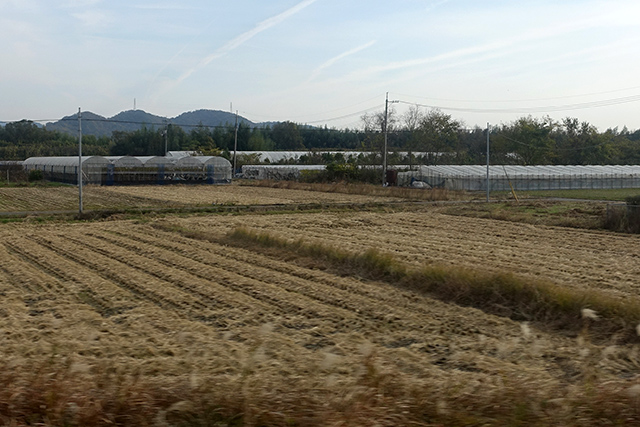
We spot some fields en route to Mantomi.
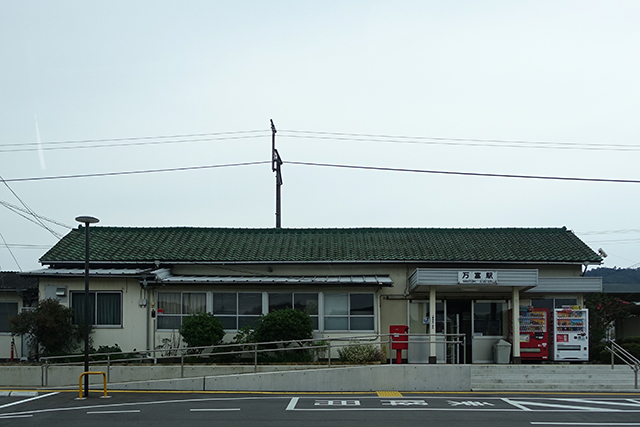
Mantomi Station is a very small station.
Kirin Brewery

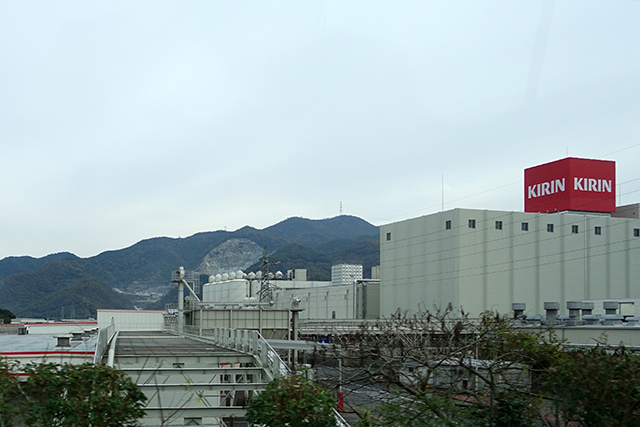
We’re picked up in a Kirin brewery company car by a driver at the station, which is absolutely amazing. They usually have a shuttle bus service, but we were the only ones wanting a lift at the time, so it was much like a personal chauffeur service (the driver opens the door for us and everything). It’s made more amazing by the fact that the Kirin Brewery is actually not too far from the station – a good five minute drive, but infinitely closer to the station than the Toyota factory was to the closest train station and we had to walk there.
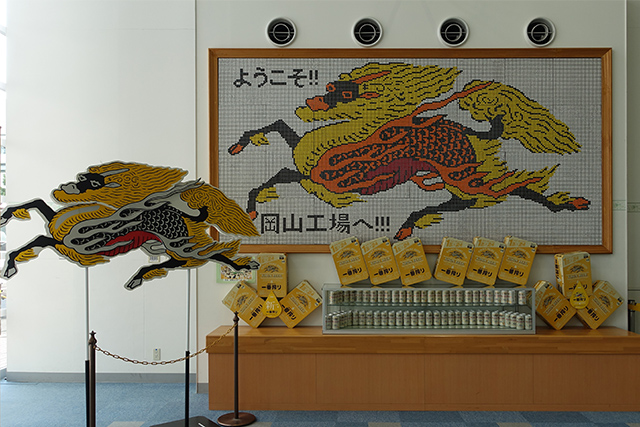
There is a purpose built hall for visitors, replete with a cafeteria, a gift store, a cabinet showcasing their current products, and various paraphenalia like this tiled work welcoming you to the brewery with their signature lion. The characters for Kirin (ã‚リン) can be found in the lion’s mane.
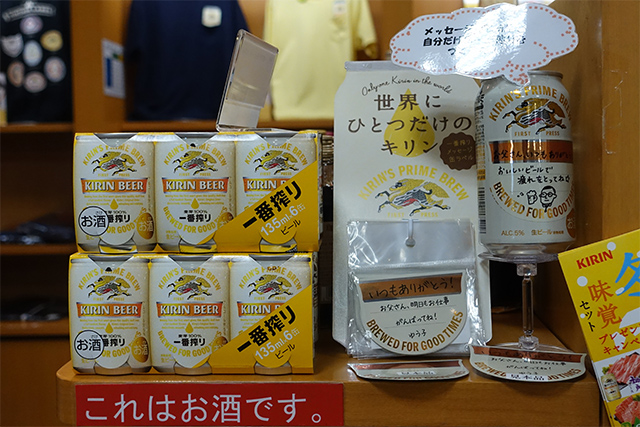
We have some time before the tour starts, so we check out the gift store. They sell mini six packs of their Kirin Ichiban beer…
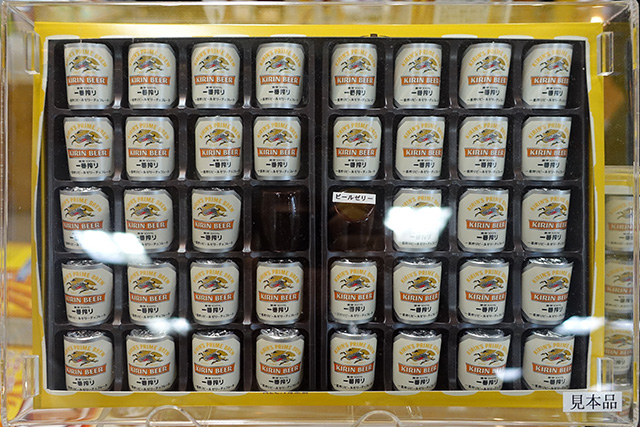
…and mini Kirin Ichiban beer chocolates. Aren’t they cute?
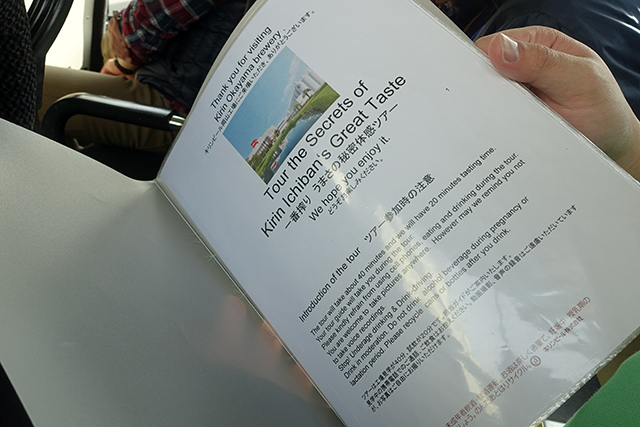
The first part of the tour takes place in their auditorium where we meet our tour guide and view a short film introducing us to the Kirin brand. The tour is conducted entirely in Japanese and we’re given an English brochure to follow. The brochure is detailed yet easy to understand, and there’s English signage of almost all the factory facilities. Coupled with our super rudimentary knowledge of Japanese, the experience was very enjoyable and informative.
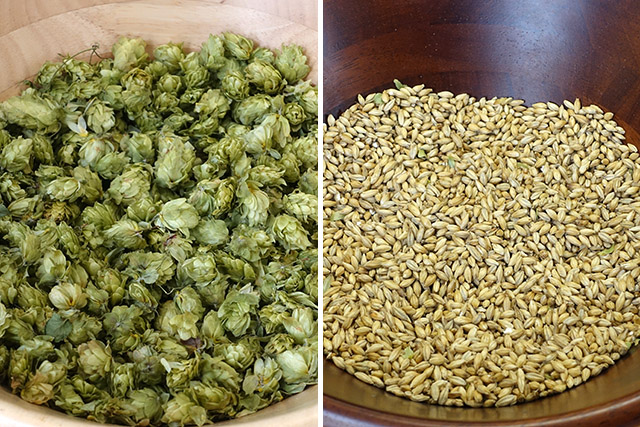
After the film, we’re taken upstairs to a room to engage hands on with the fundamental raw ingredients of Kirin Ichiban beer. On the left are the hops (flowers of the hop plant that give a bitter and tangy flavour to beer) and on the right are the barley grains.
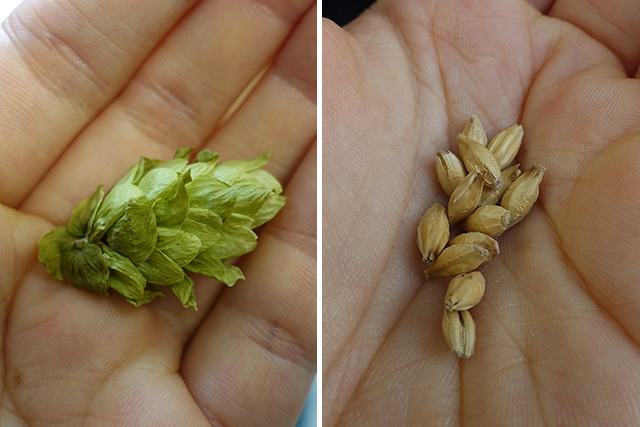
We’re encouraged to touch, smell and eat the hops, which are rather grassy in flavour, as well as touch and smell the barley. Amusingly, we thought we could also taste the barley grains in the bowls in front of us, until the tour guide gave us some fresh grains from an airtight container. But it’s not that eating those grains would’ve done us any harm – they were just stale – and I’m not sure being able to understand Japanese would’ve helped as all the Japanese were doing the same!
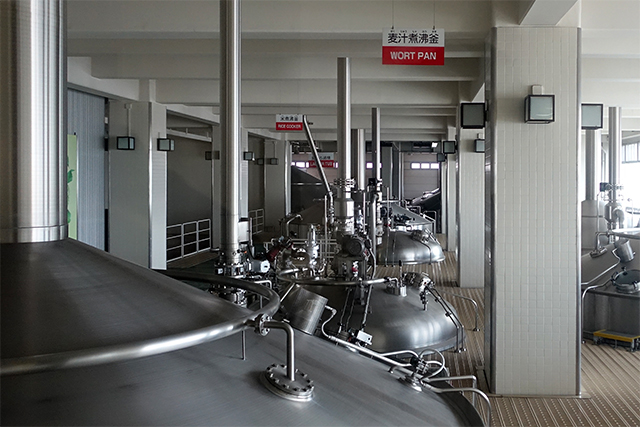
Walking through a corridor, we reach the pans used in various stages of the brewing process, including the wort pan and rice cooker.
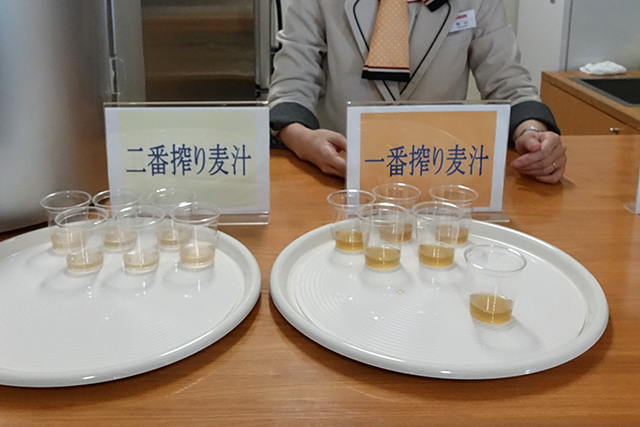
After watching a video about the extraction of wort, we’re offered tastings of the first press (right) and second press (left) of the sweet wort. Kirin Ichiban beer is made with a single wort (or first press) brewing process that extracts only the purest, most flavourful portion of barley. The first press has a darker colour and a more delicate and less sweet malt flavour taste than the second. The hops are added to the sweet wort, which is then called ‘bitter wort’.
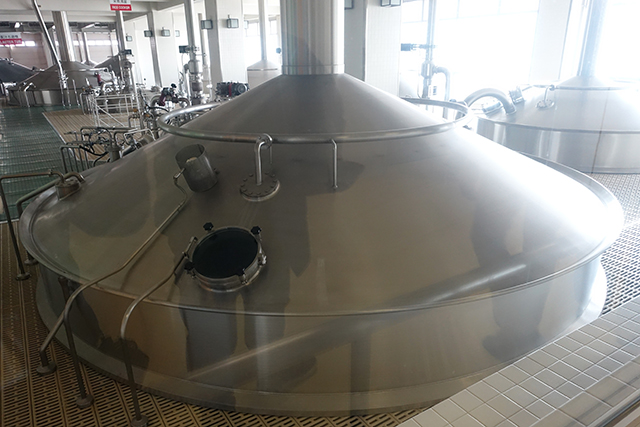
These pans are quite huge…
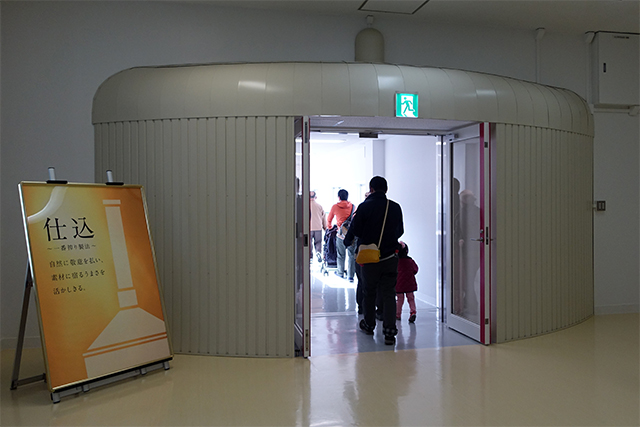
…as we discover the doorway we walked through is in the shape of one of these pans.
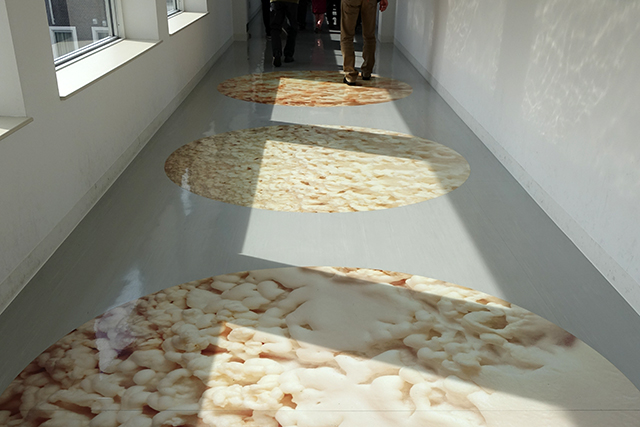
Walking back through the corridor, we see photographs of the wort and added yeast at various stages of fermentation before becoming beer.
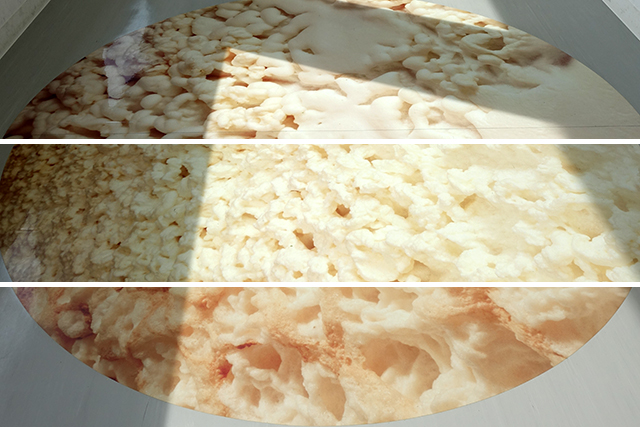
The top is the first stage while the bottom is the last stage.
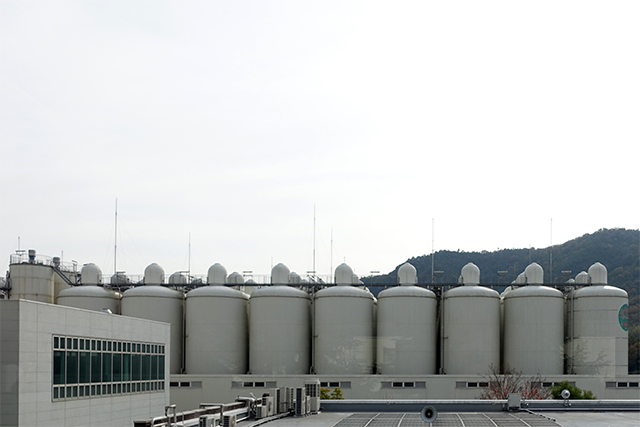
Looking out from the windows along the corridor, we see the fermentation tanks.
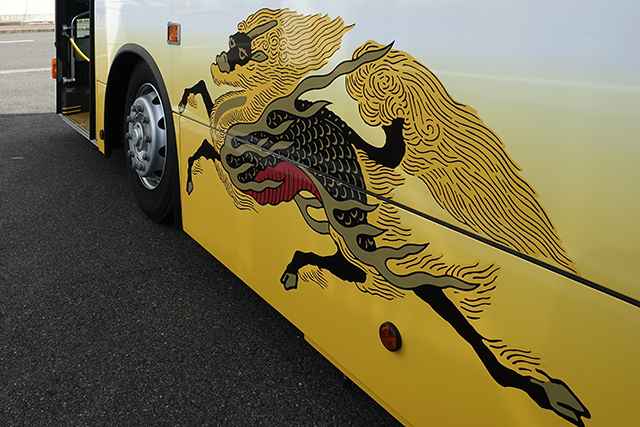
We hop onto the Kirin bus, which takes us around the factory to the bottling facility.
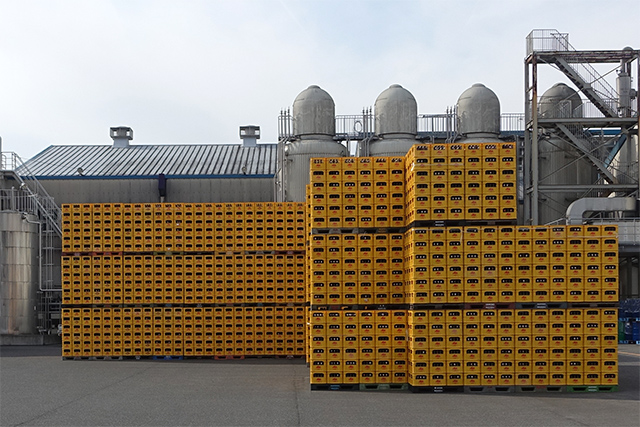
I’m pretty sure these were pallets of empty bottles waiting to be filled.
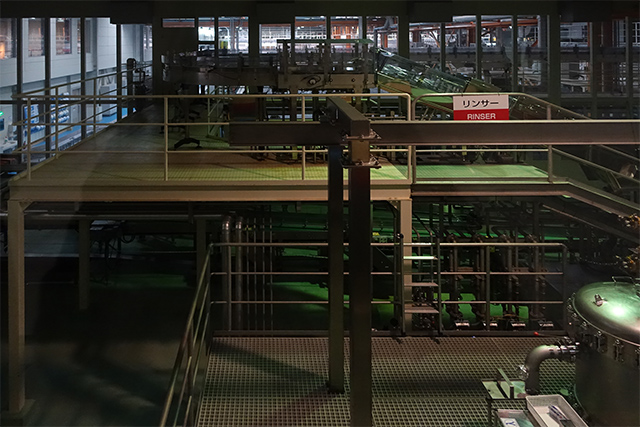
We head upstairs to the viewing area. This is the rinser. It’s a weekend, so it’s not running.
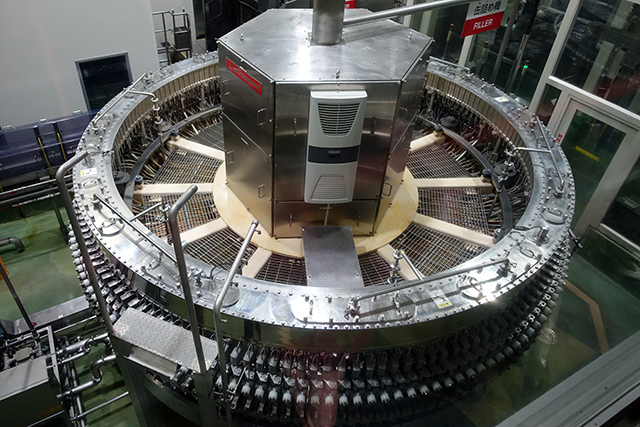
And this is where beer gets filled into those bottles.
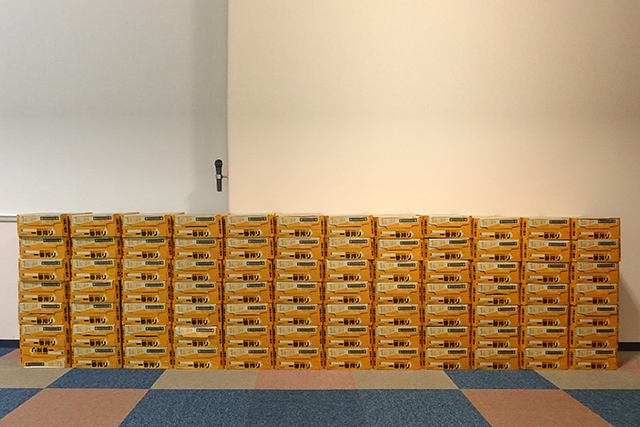
The above assemblage of cartons is a physical illustration of how many bottles the filler can pump out in one minute. The answer? 2,016 cans!
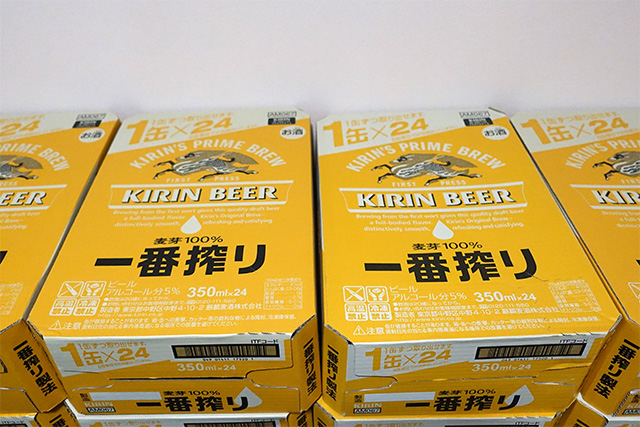
2,016 cans is 84 cartons filled with 24 cans of beer.
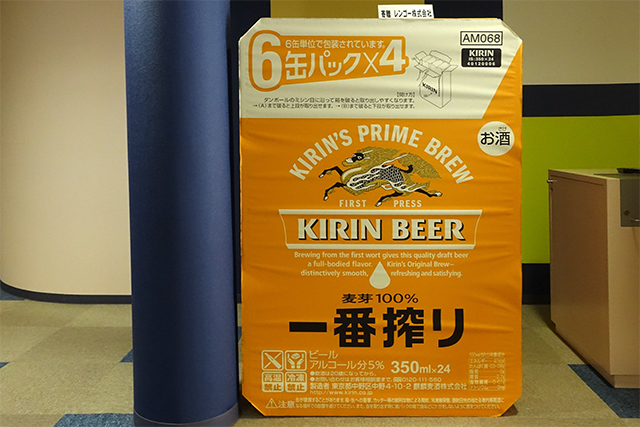
We see a supersized carton (about 1.8 m high).
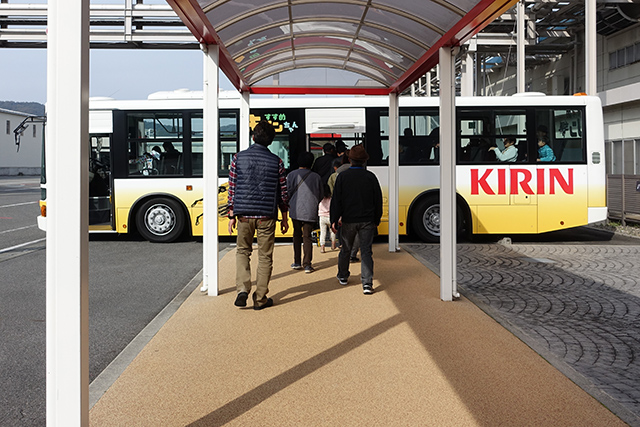
Returning to the bus, the driver’s reversed the bus so that we can walk from the path straight onto the bus. It helps him drive back to the visitor’s centre too. That concludes the formal part of the tour.
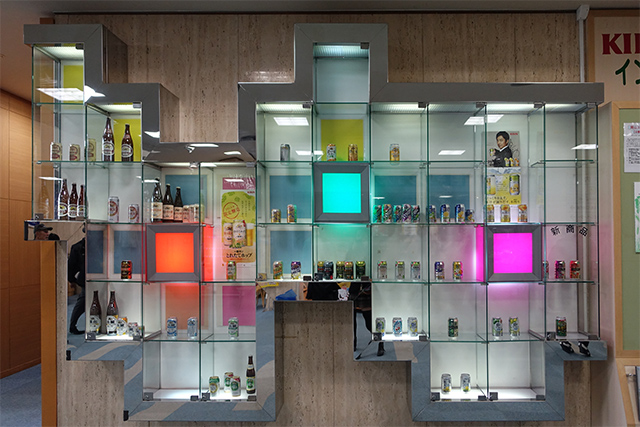
Back at the visitor’s centre, we take a look at the cabinet full of the current alcoholic/pseudo-alcoholic drinks they manufacture.
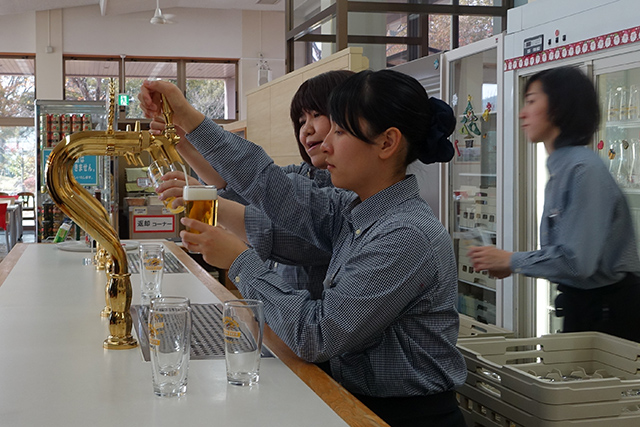
All tour participants are offered to sample up to three Kirin drinks at the cafeteria area.
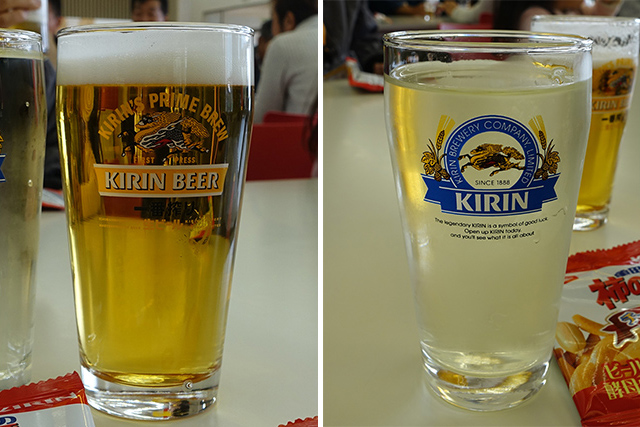
We’re strongly encouraged to sample their Kirin Ichiban beer – after all, it’s their signature product that we just learnt all about. D and I aren’t big beer drinks, so he gets one to share between us while I get a sparkling apple chu hi. We find the beer more palatable than we expected – it had a very dry flavour that’s drinkable, but still not enjoyable. We much prefer my apple chu hi, which tastes like alcoholic apple juice – that’s our sort of alcohol!
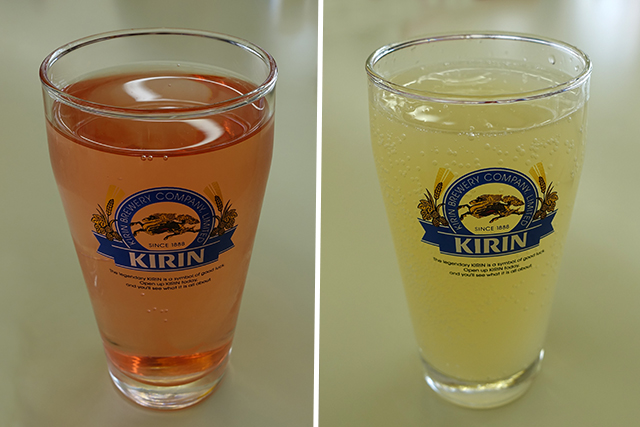
D follows his beer up with an sparkling red grape and berry (left) and a strong lemon chu hi (right). The sparkling red grape and berry is our favourite of the five drinks we try. It’s fruity, sweet and pleasant, without a strong alcoholic flavour. The lemon flavour in the strong lemon chu hi accentuates the bitterness of the alcohol, which explains why D and I usually avoid them.
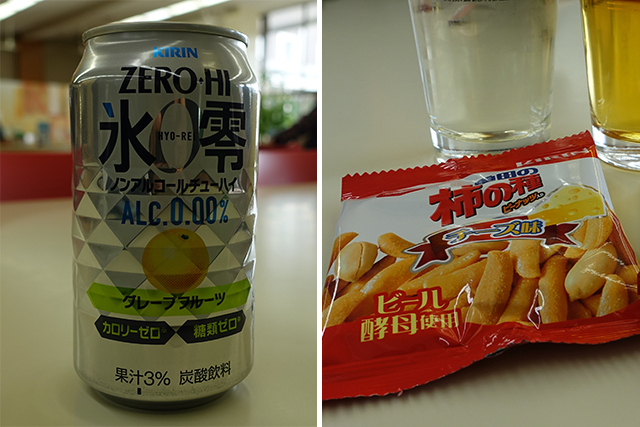
As my second and last drink, I try the grapefruit zero hi. When it comes to alcohol other than sake, I’m ridiculously light weight, and between my chu hi and sips of D’s drinks I’m really quite tipsy at this point (past the point of giddy and getting a bit dizzy). Not tipsy enough to know I should stop drinking, though! The natural bitterness of grapefruit lends itself well to masquerading as a non-alcoholic drink.
Everyone is given some tasty beer snacks to go with their beverages.
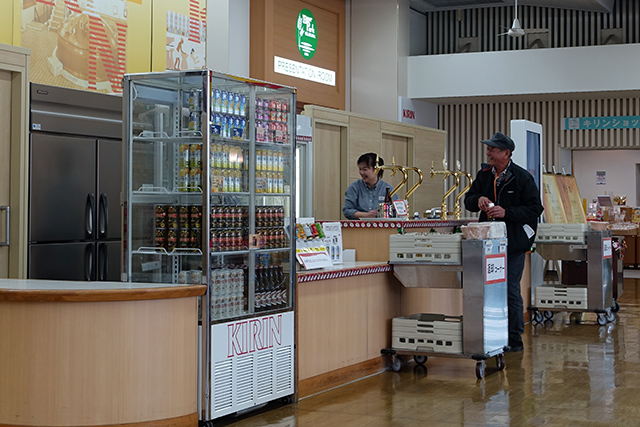
The group of ojisans on our tour diligently go back for their three free beers.
Towards the end of our time, our tour guide shows us how to pour a beer from a can to get foam stiff it enough that it rises from the lip of the glass.
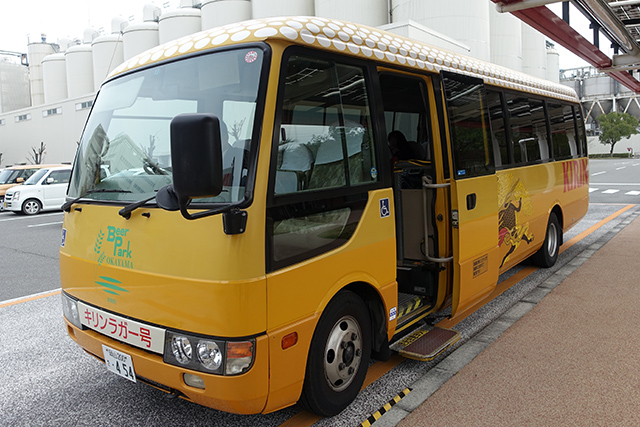
Kirin sends us (and a handful of other visitors) back to the station on their courtesy bus.
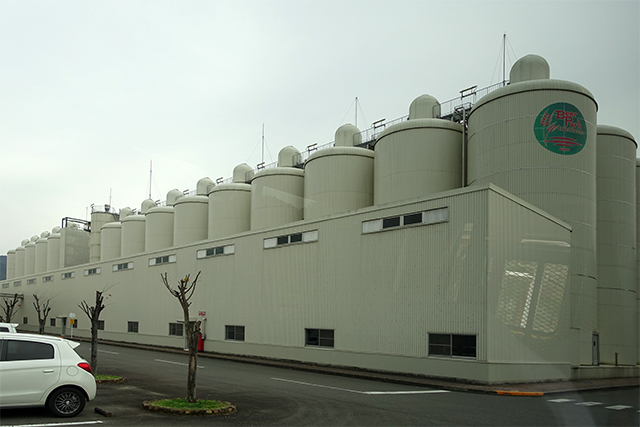
See what I mean about the huge number of fermentation plants on site?
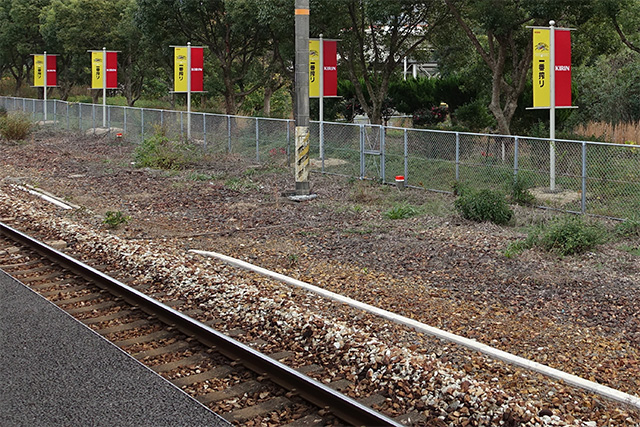
Kirin branding is visible from the station. There’s no mistaking what station to get alight from.
Kurashiki
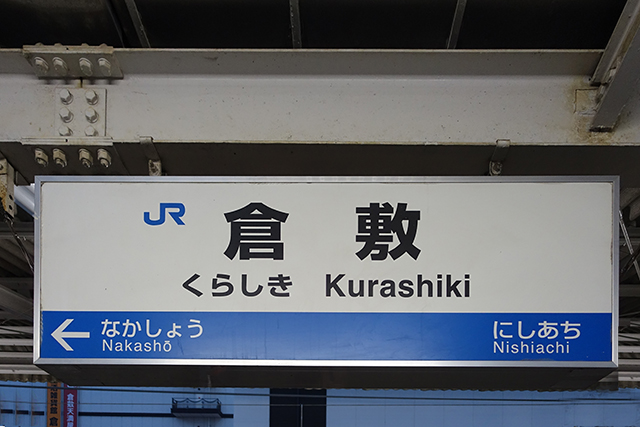
Being tipsy isn’t all that fun. Thankfully, we feel better after the forty minute train trip to Kurashiki.
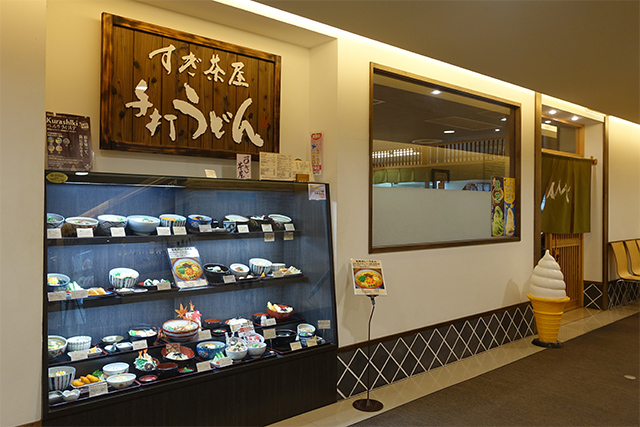
First thing we do before we head to the Bikan (Merchant) district, is to find food and drink to help us recover some more. We head into Tenmaya, a department store next to the train station and find Sugi Chaya.
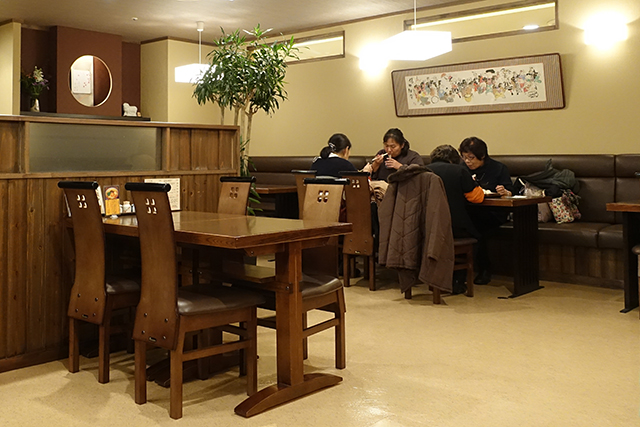
Sugi Chaya is a restaurant serving in bukkake udon, a specialty to Kurashiki. Bukkake udon is udon served in thick dashi broth and can be served hot or cold. We’re heading towards the end of our trip and we’ve yet to eat udon, which we love!
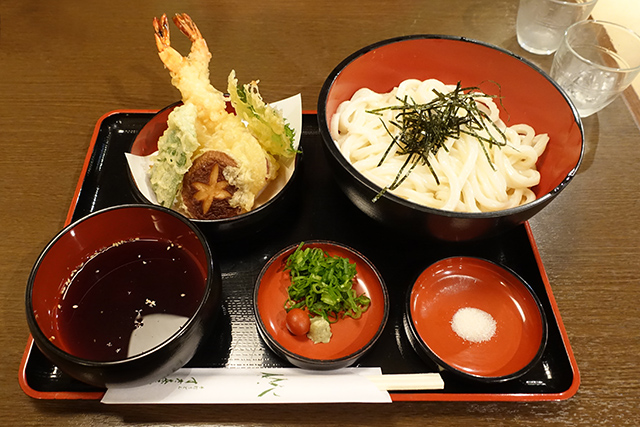
I try the tenzaru (heavenly) udon set. I love the addictive chewiness and refreshing slurp of cold udon. The thick dashi broth for dipping the udon is flavourful, and the tempura – isn’t it pretty? The shiso leaf was surprisingly tasty – sort of like baked kale chips – and the batter was beautifully thin and crispy.
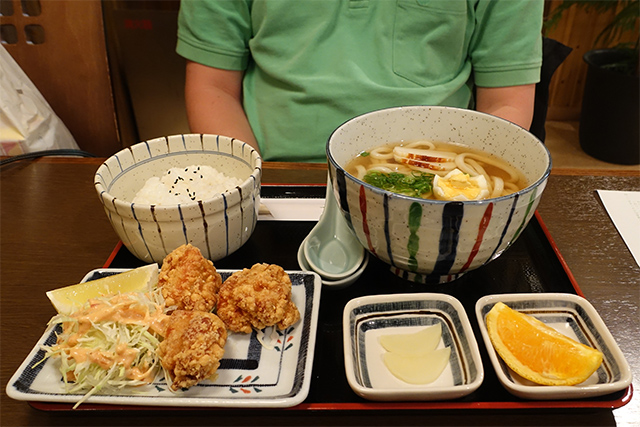
D can never resist karage (and I can never resist stealing pieces of it!), so gets the fried chicken set. The chicken is super juicy and tender on the inside and crispy on the outside, and his bowl of udon comes with slices of fish cake and half an egg. The orange slice was particularly refreshing.
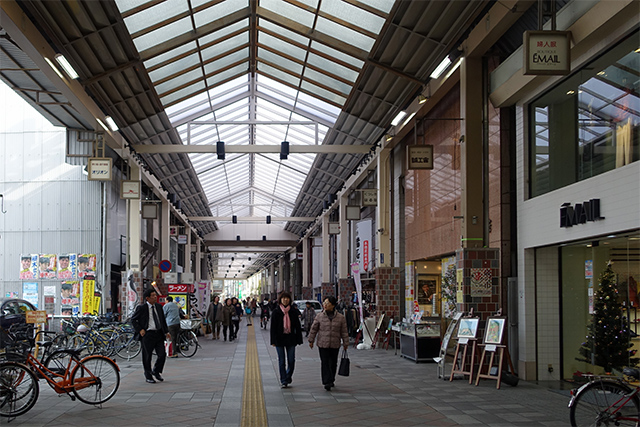
Having eaten, we’re completely recovered from drinking too early in the day, and on our way through the covered shopping streets towards the Bikan area.
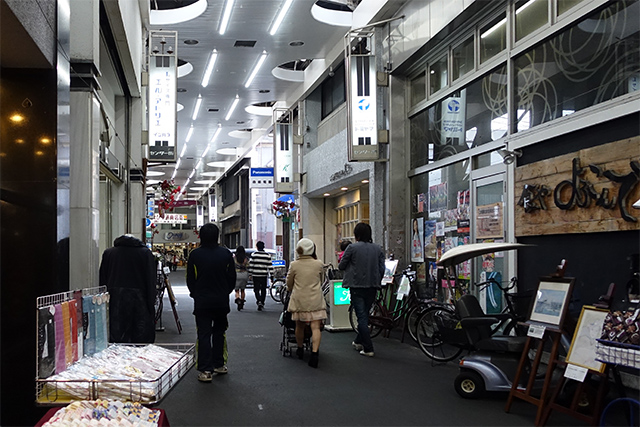
The shops aren’t too interesting, although we notice an inordinate number of hairdressers.
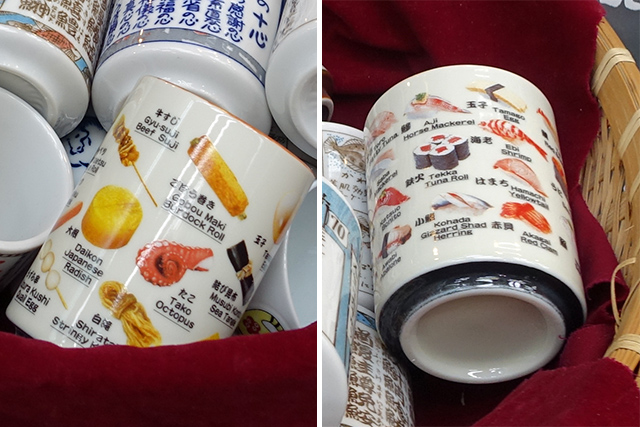
One of the stores did sell cup similar than the ones we saw in Loft, but we decide to buy the Loft ones instead as these were less well made and designed.
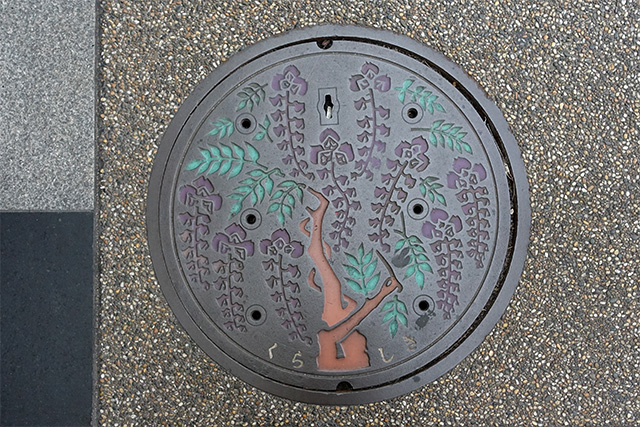
Kurashiki are covered in weeping willows, which line the bank of the canal.
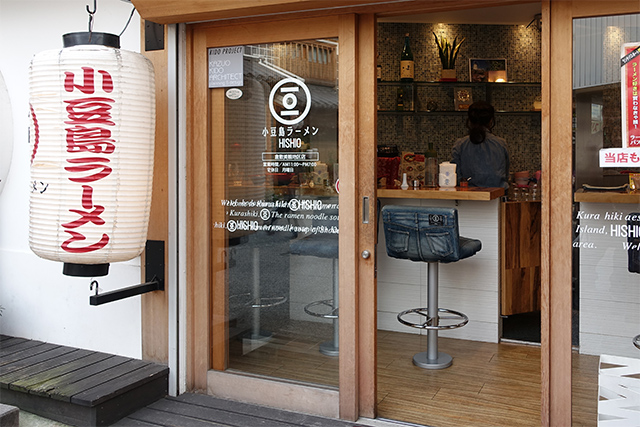
Just outside the shopping district, we come across the first ramen store that actually makes us want to eat ramen. Ordinarily, we don’t crave ramen and there are always so many other food options to choose from. But apart from their jeans converted seats, what makes us want to eat here?
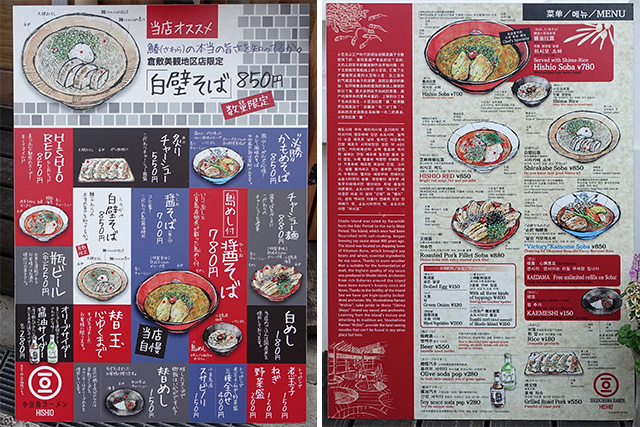
Because of their amazingly beautiful menu!
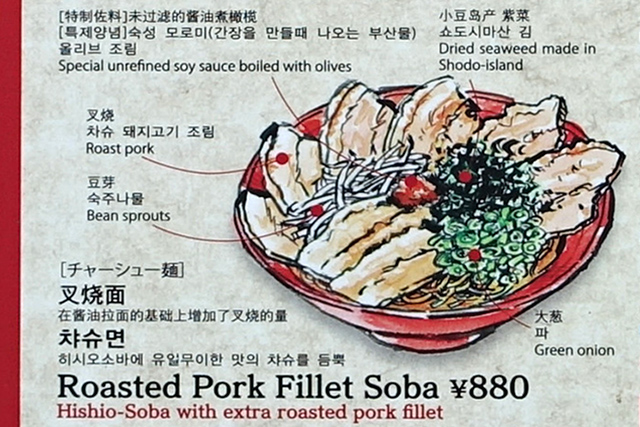
The illustrations deconstruct all the components of the dish. Unfortunately, we’re still full from our tasty udon lunch so we end up only admiring their menu.
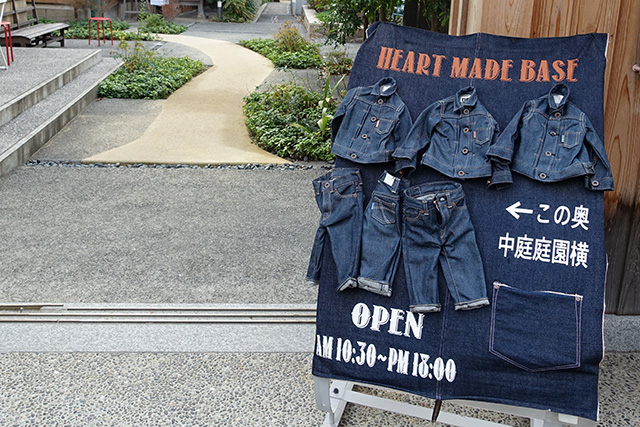
Jeans and bags and toys and clothes made from the fabric feature regularly in the town.
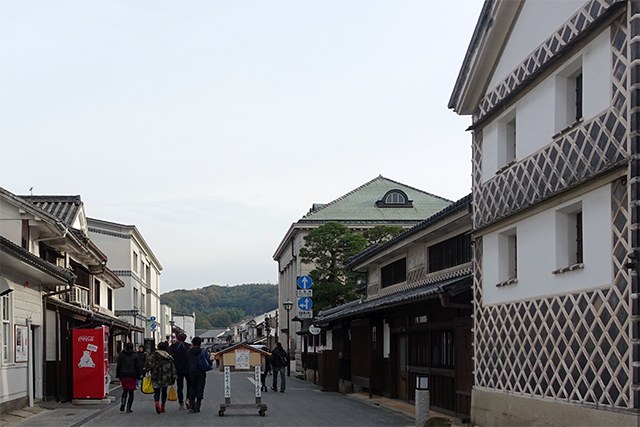
Finally, we reach the Bikan Historical area, which is the old merchant quarter of the city and contained many well preserved examples of 17th century wooden warehouses (kura).
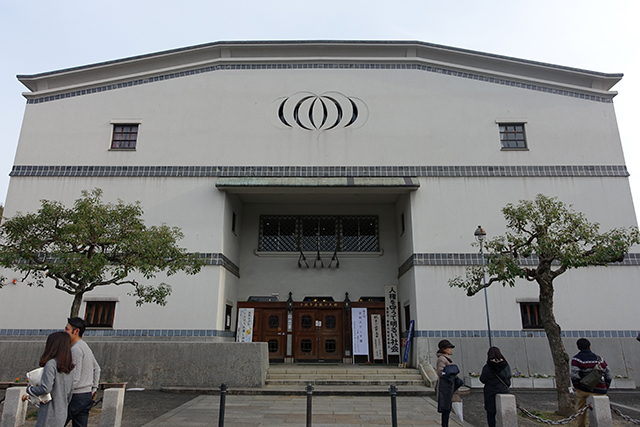
This is one of Kurashiki’s former town halls, a European style building constructed in 1917.
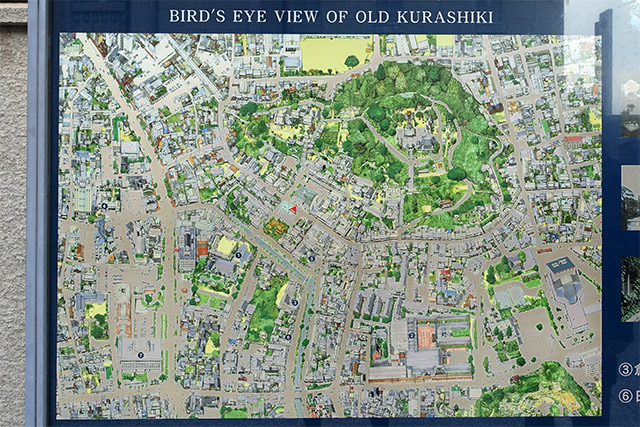
A map shows what Kurashiki used to look like during the Meiji era.
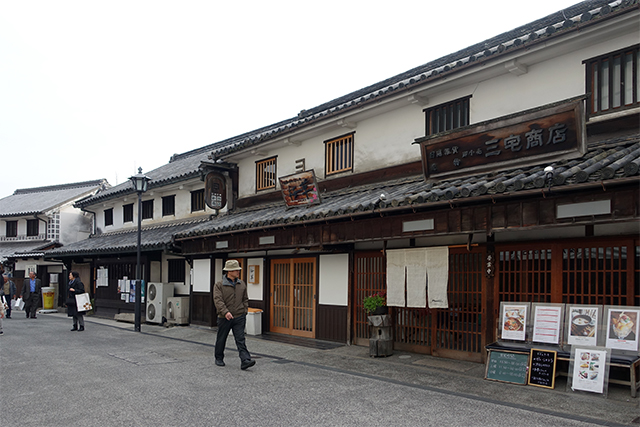
The warehouses are painted white with traditional black tiles.
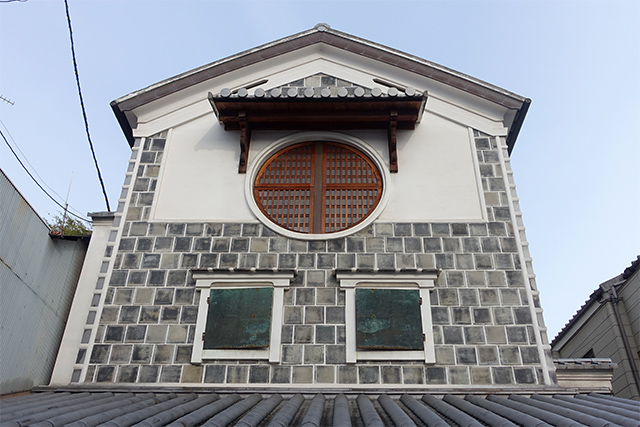
Some of the warehouses have more interesting frontages than others.
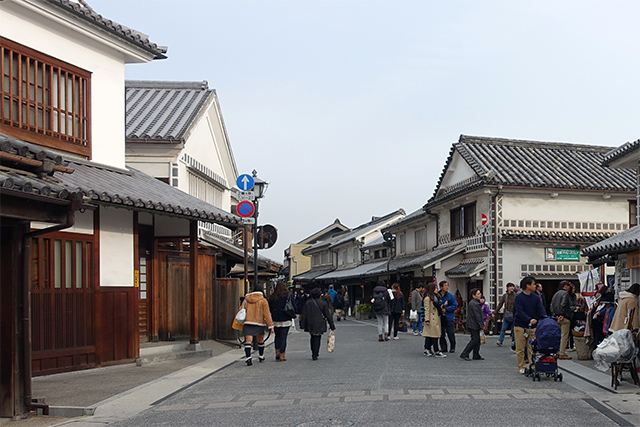
There are no electric poles in the Bikan area to preserve the appearance of the quarter during the Meiji era.
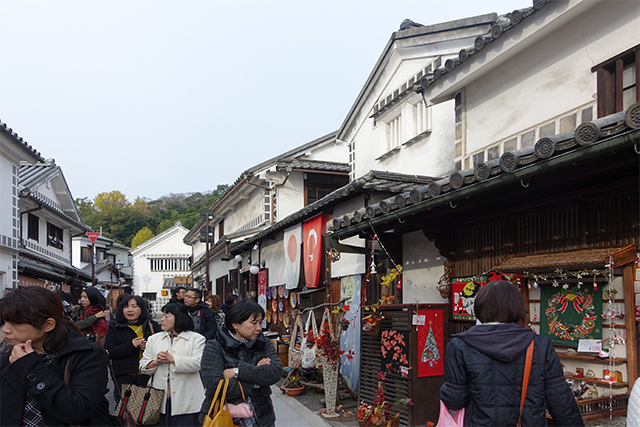
The street leading to the Ivy Square is busy with tourists checking out the souvenir and food stops lining either side…
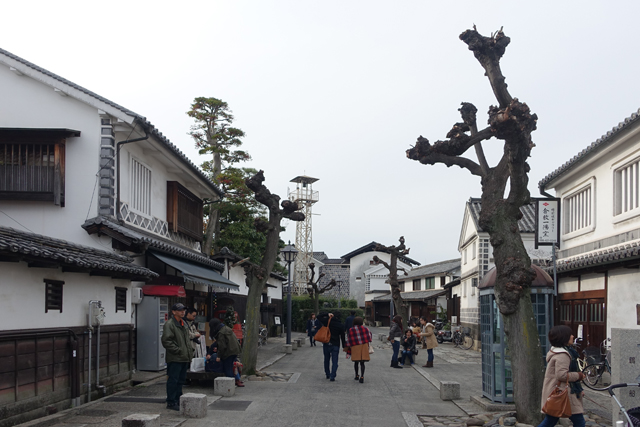
…while other side streets are rather empty.
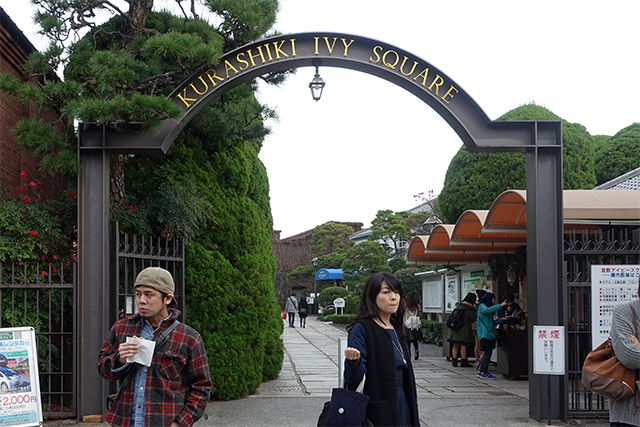
Ivy Square is an area filled with art galleries and museums.
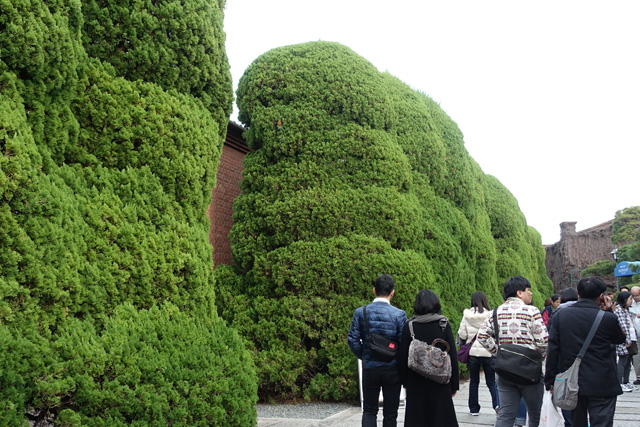
These giant hedges line the length left side of the wall from the entrance to Ivy Square.
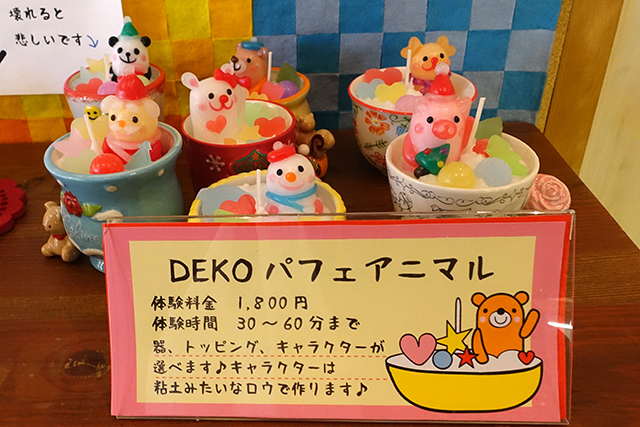
The first shop behind the gate specialises in using wax to create candles. You can pay Y1,800 for a 30-60 minute course to make your own parfait animals like the ones shown.
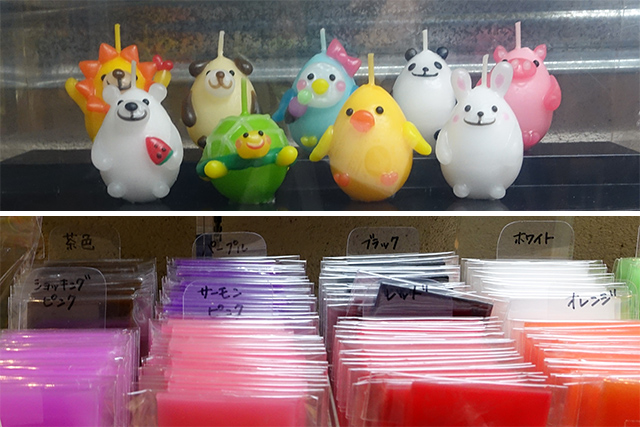
Or you can buy a coloured wax egg, and then buy the coloured wax sheets to create eyes and mouths and various other body parts for your animal candle.
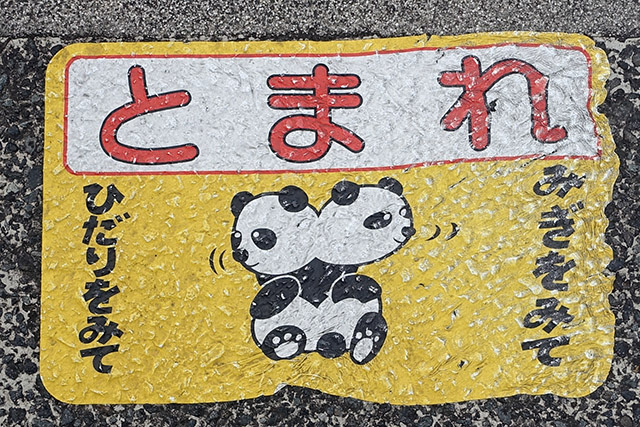
This cute panda sign on the bitumen tells you to look both ways when crossing the road.
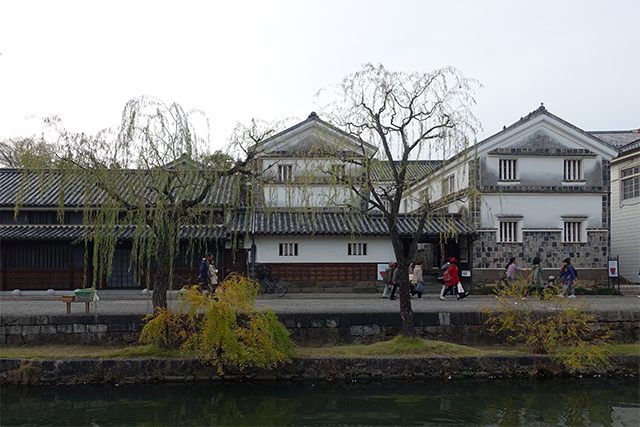
Various museums exhibiting things like traditional toys occupy some of the bigger buildings along the canal.
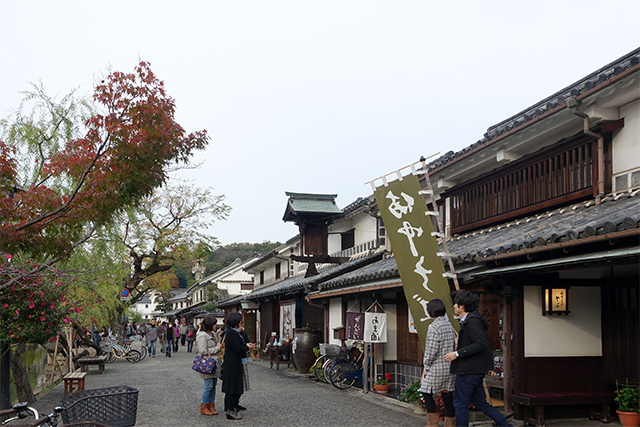
But mostly, they’re full of shops, which are what D and I are interested in.
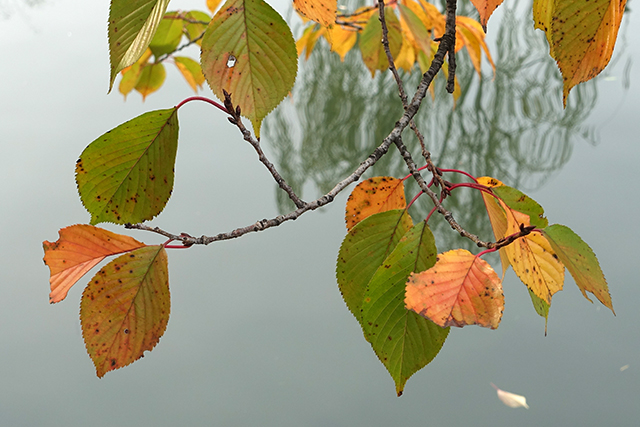
Sometimes it’s nice to see autumnal foliage that isn’t from a maple tree.
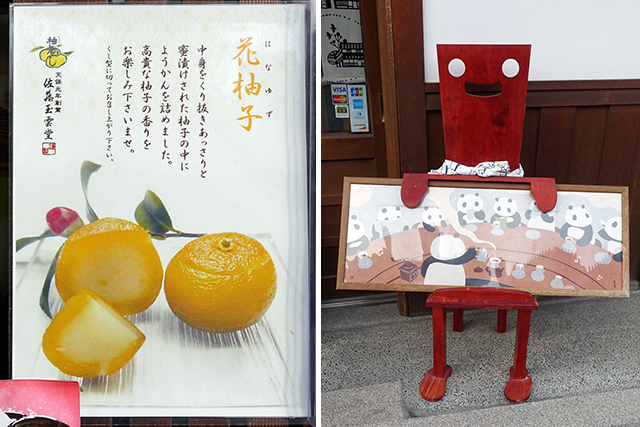
We find mochi that resembles a yuzu, and a lively chair holding a cute panda illustration.
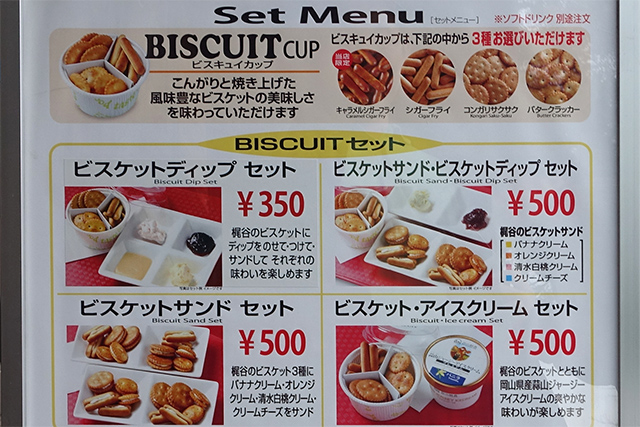
Along the bank of the river, there’s a cafe that serves biscuits. And not fancy biscuits either! But biscuits one Jatz with dips and jams!
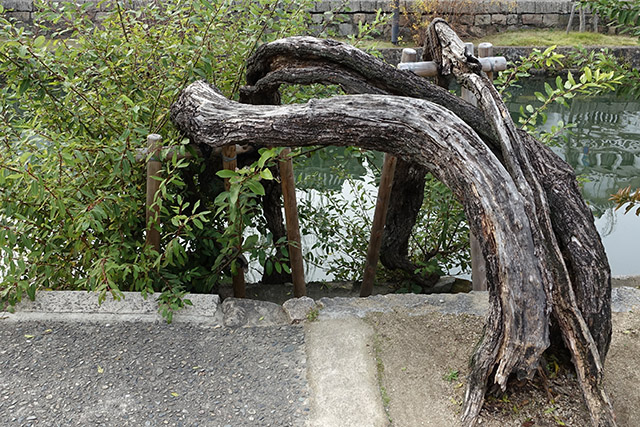
This tree is bent over backwards trying to get a dip in the canal.
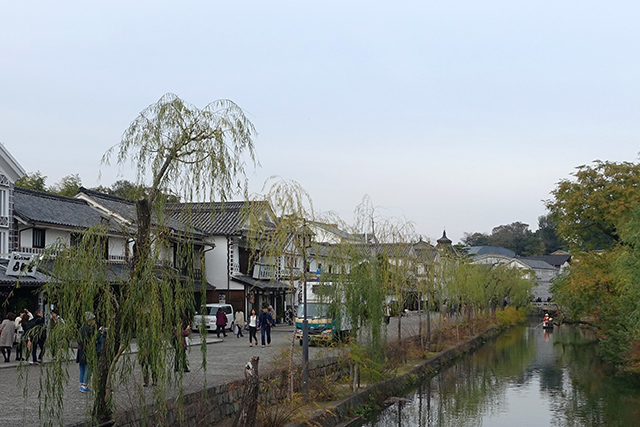
The canal is filled with koi and weeping willows line the banks.
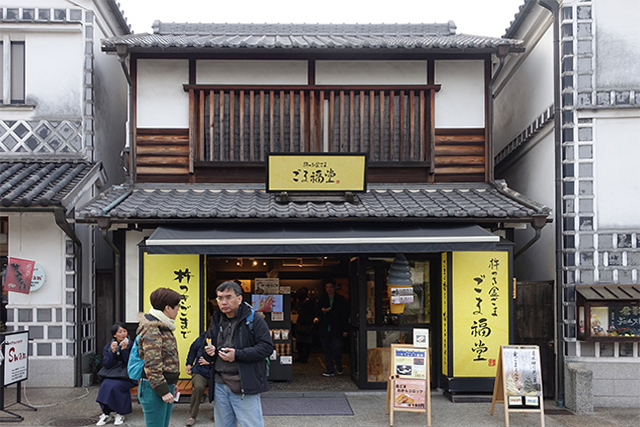
On the other side of the canal, we find a shop we’ve been wanting to exist among all the red bean desserts: Gomafuku-do, a shop that specialises in sesame foods!
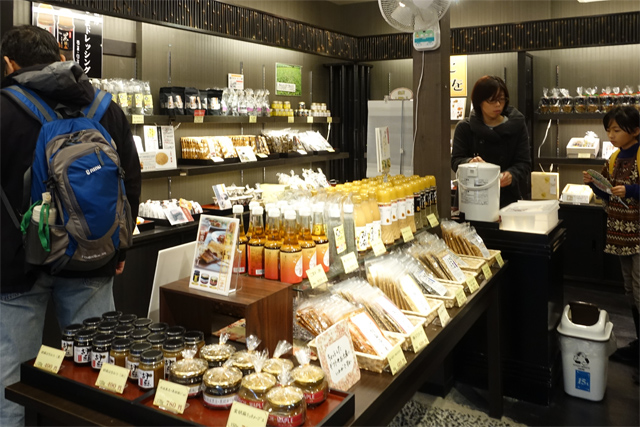
They sell everything from black and white sesame jellies, to salad dressings, sauces, biscuits.
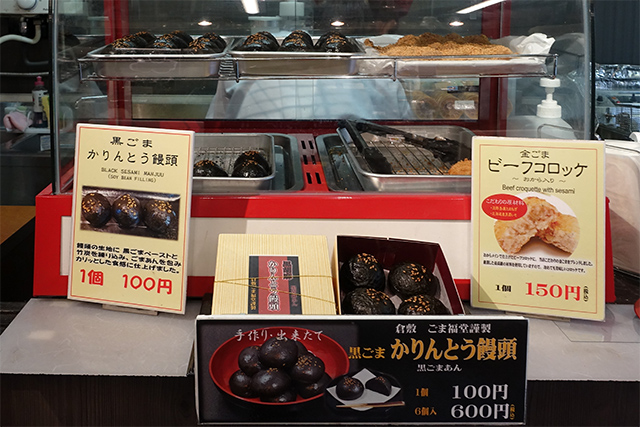
But one thing captured out attention: black sesame manjū. The Japanese don’t seem to understand the concept of buy more, save more. The unit pricing does not decrease if you buy 6 instead of 1.
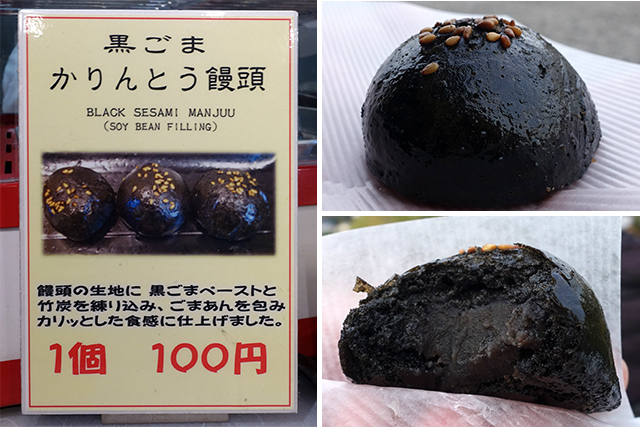
But these black sesame manjū? They are delicious! They’re unexpectedly crispy on the outside from being baked not steamed and filled with black soy bean filling. We buy one, but go back for another because they’re just so tasty.
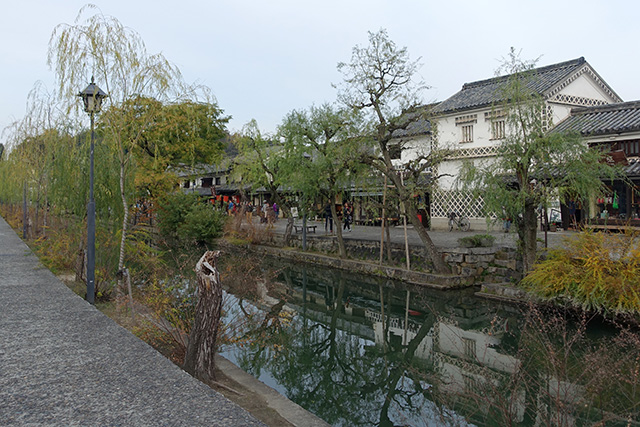
Reflections in the clear water are always so pretty.
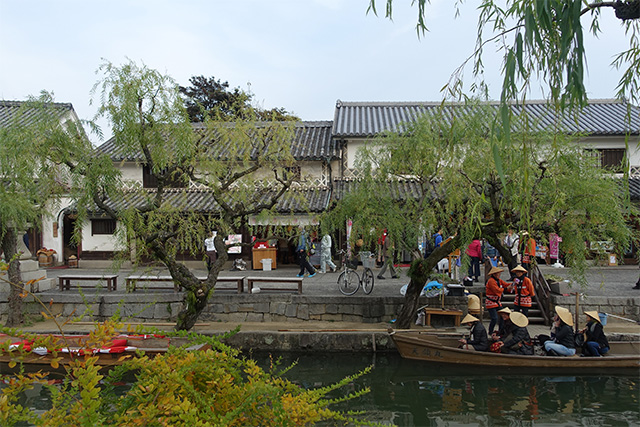
We see people offering tourists rides on their rowing boats down the canal.
Along with rickshaws, some tourists are quite taken with a canal ride.
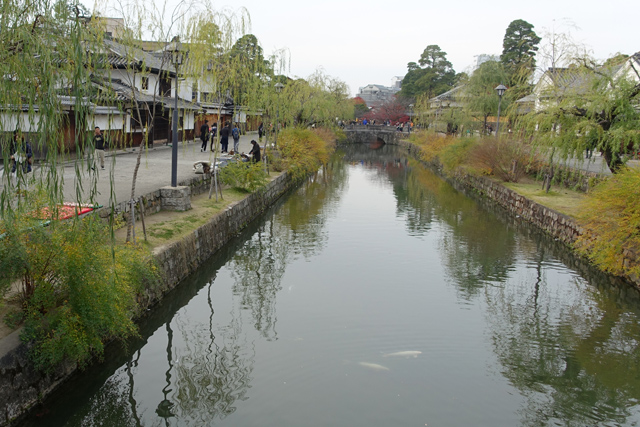
This is view of the other side of the canal from the bridge at the centre of Kurashiki.
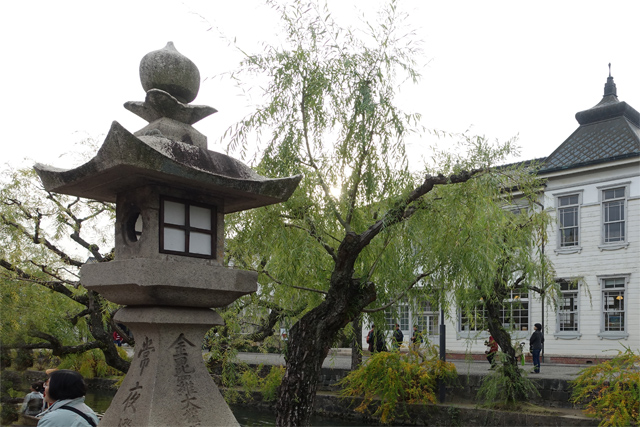
Stone lanterns, weeping willows and traditional merchant houses are a great combination.
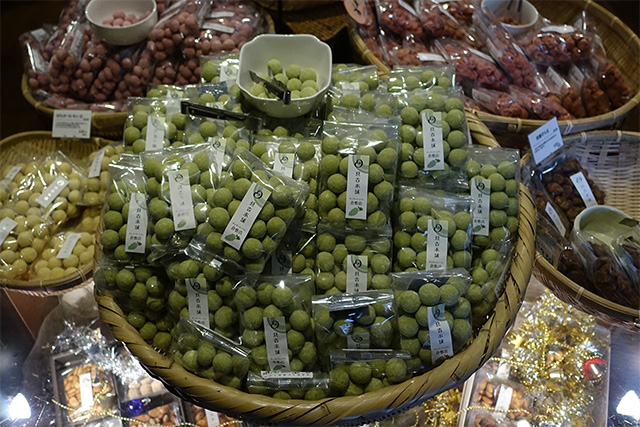
At a shop near the bridge, we try these mouth-puckering grape flavoured nuts.
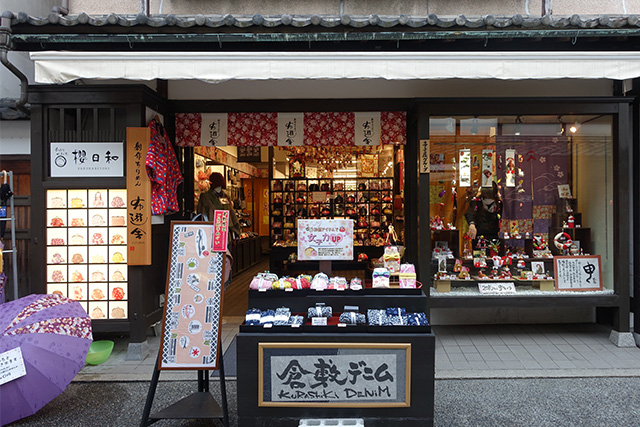
We double back so that I can buy the umbrella on the left and a green scarf. It’s so pretty!
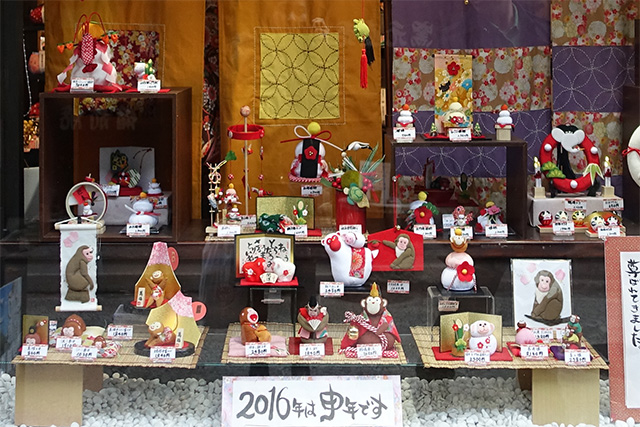
The store has all sorts of monkey themed chirimen goods; 2016 is the Year of the Monkey.
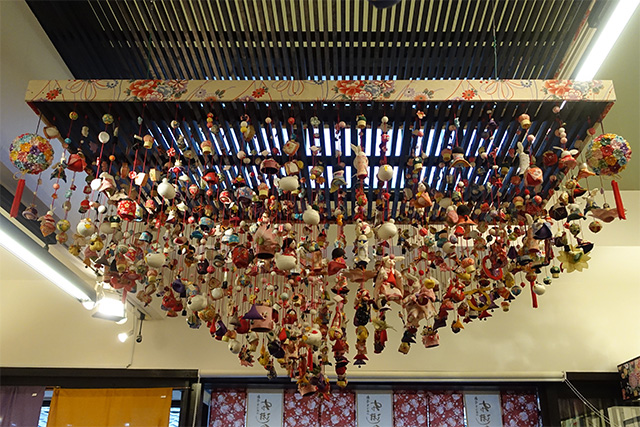
A tsurushi-bina (hanging hina dolls) display hangs from the ceiling.
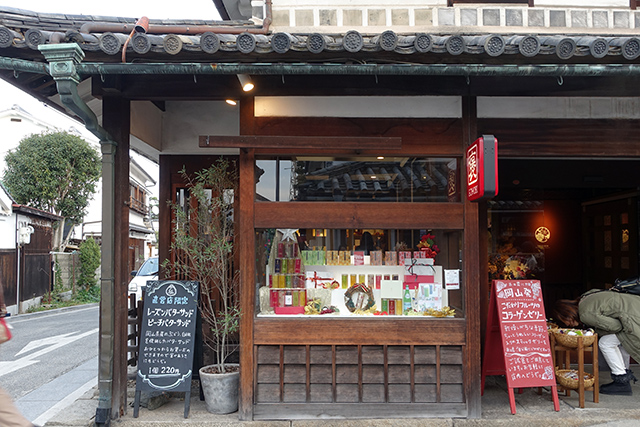
D and I love shops that sell fruit-flavoured syrups for drinks. This is Gohobi.
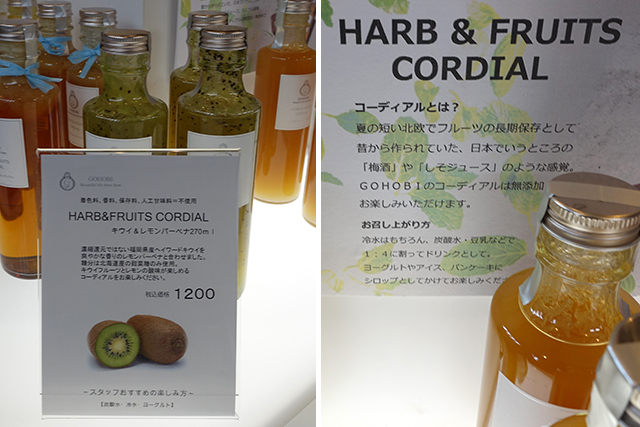
We leave with kiwifruit cordial (1 part cordial to 4 parts water)…
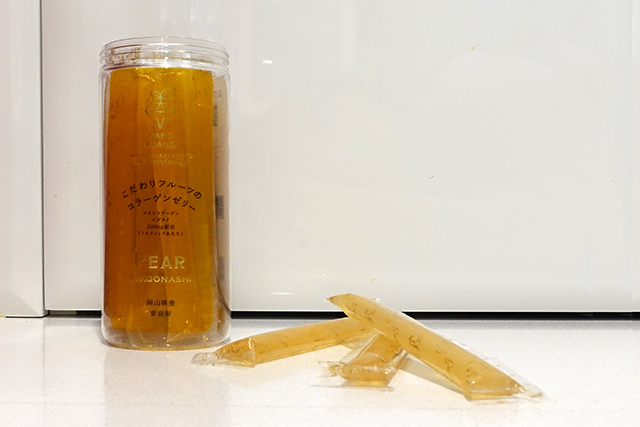
…and nash pear jelly sticks that you put in the freezer before eating. The shop assistant lured us with samples of the peach ones, and we love nashi pear.
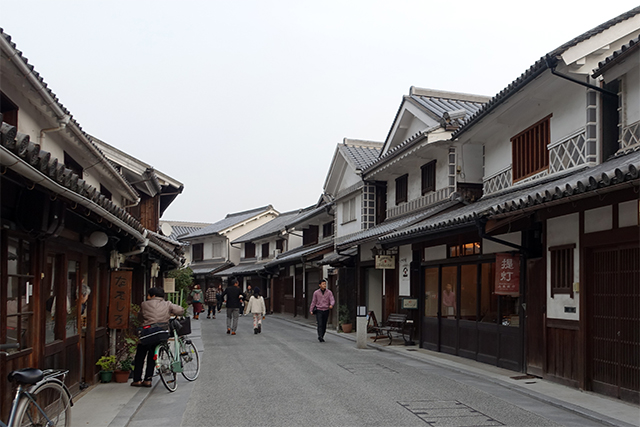
At the edge of the Bikan area, we find very few shops so we head back.
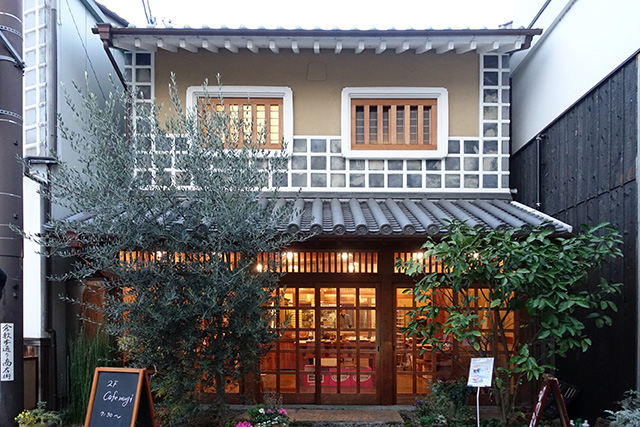
We’d read good reviews of the Cafe Mugi, so on the way back to the train station we check it out.
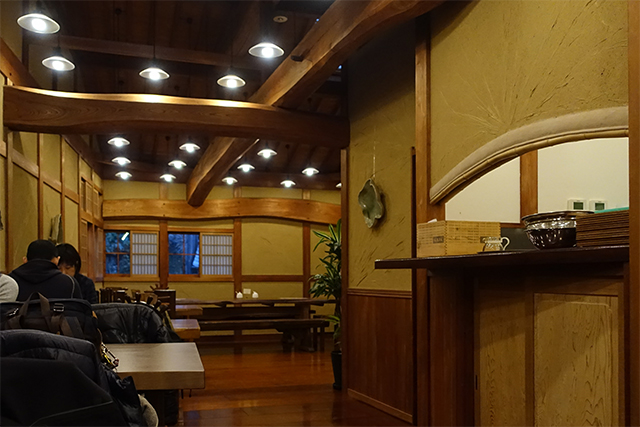
It’s a bakery on the bottom floor with the cafe occupying the second storey. You leave your shoes at the bottom floor and wear the provided slippers upstairs. Both floors are beautifully fitted out with wood.
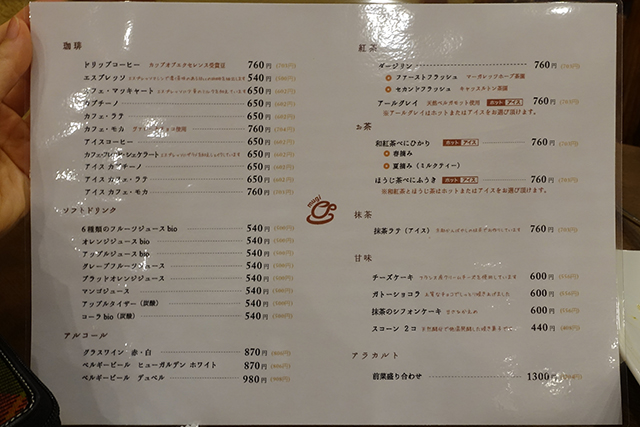
The menu’s all in Japanese, so we do our best to translate the katakana. We manage!
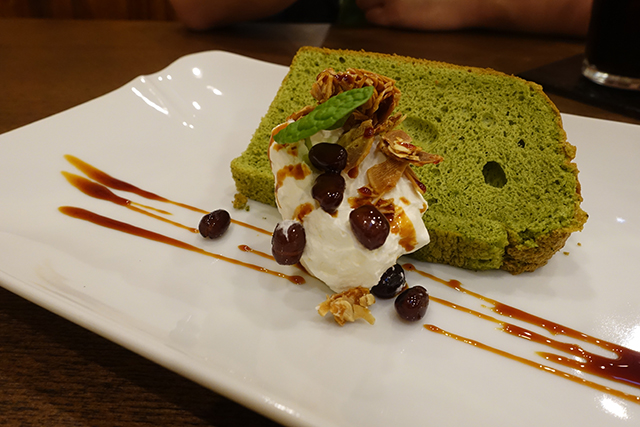
We get the green tea chiffon cake, with whipped cream, red beans, almond brittle and caramel sauce. You can never have a green tea dessert without red bean, and that’s because they go so well together, while the almond brittle gave a deliciously contrasting crunch. I usually prefer my chiffon cakes to be more light and airy, but I’m wondering if the matcha weighs the batter down?
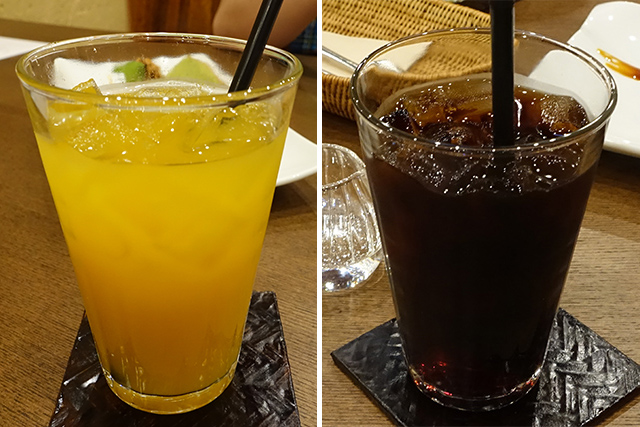
I go for the mango juice and D goes for his usual iced coffee. The mango juice is very ordinary, but D’s coffee is as good as the reviews claim, although he opts to add the gum syrup. Generally, while we liked the food, we thought they weren’t worth their prices, and the usual Japanese customer service was lacking at a quiet time (there was one other couple) from the single gentleman who managed the entire cafe.
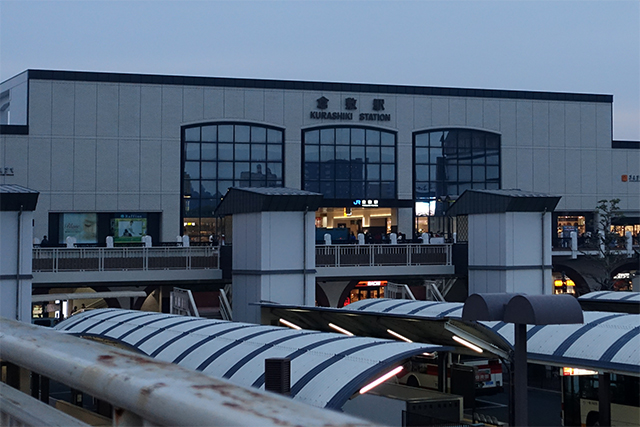
It’s quite dark by the time we head back to Kurashiki Station.
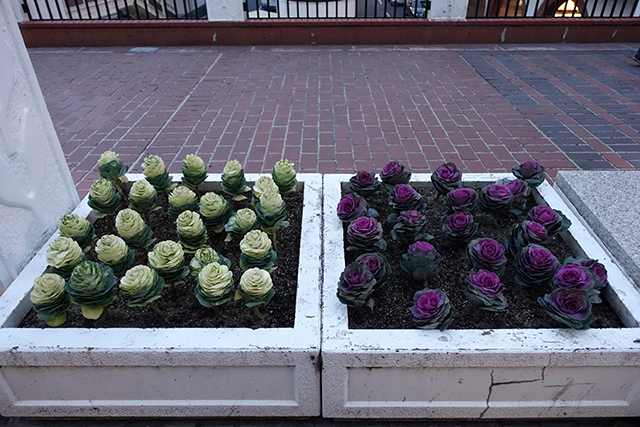
These colorful cabbage-like plants fill flower bed outside the station.
Okayama
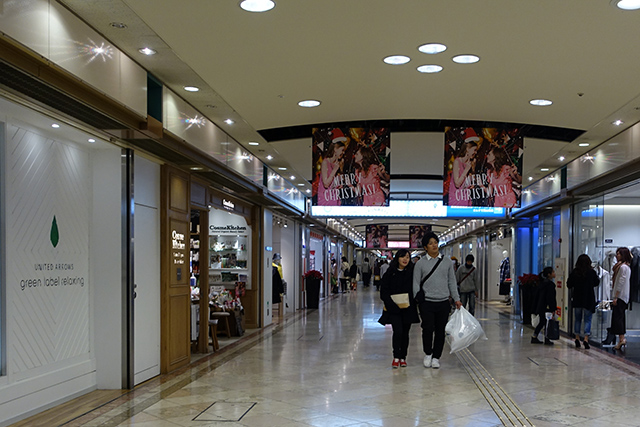
Back in Okayama we have about 90 minutes before our shinkansen to Ōsaka, so we take our time.
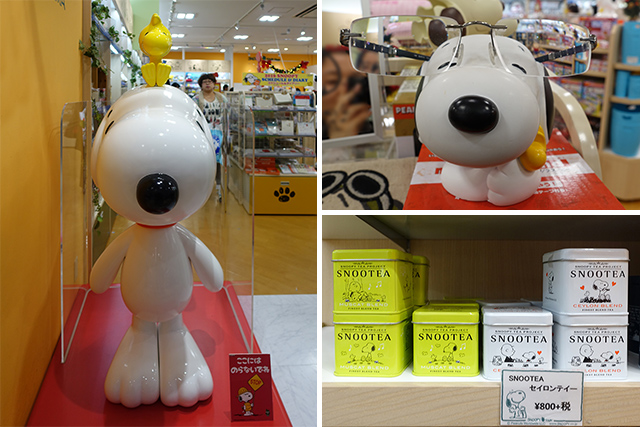
So we stop by the Snoopy store in Aeon Mall. They have a glasses rack, which we try out with D’s glasses, and some SnooTea.
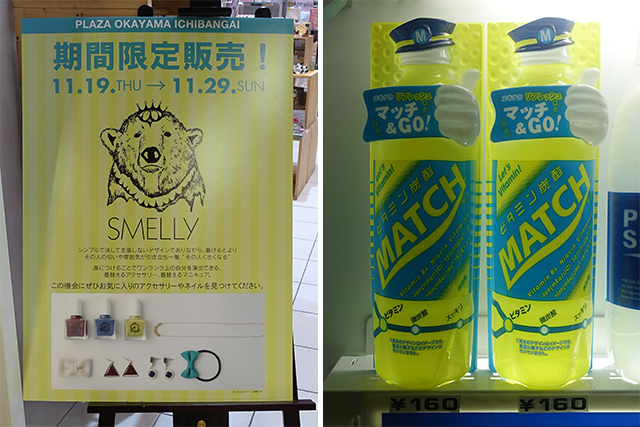
We find a brand of fashion accessories called Smelly. Later at the train station we find this train-themed vitamin laden fluro yellow drink.
Ōsaka
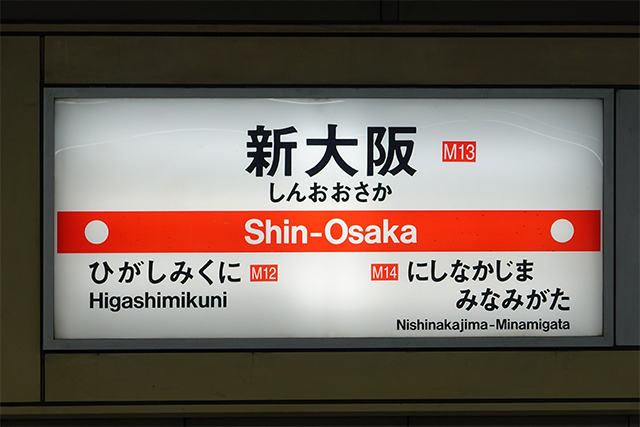
At Shin-Ōsaka, we change to the subway for Nippombashi. This time, we disregard the closest exit to our accommodation and instead find one with a lift, so we don’t have to lug a heavy suitcase up and down 3 flights of stairs. It’s much easier to move on flat ground!
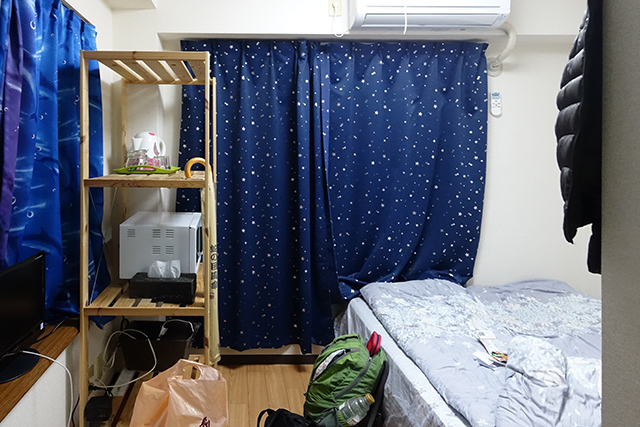
This time, our airbnb accommodation (booked through the same host as the earlier one) is much more manageable – there’s a double bed with floor space, a storage rack, and even space on the window sill. After dropping off our luggage, we head back out for dinner.
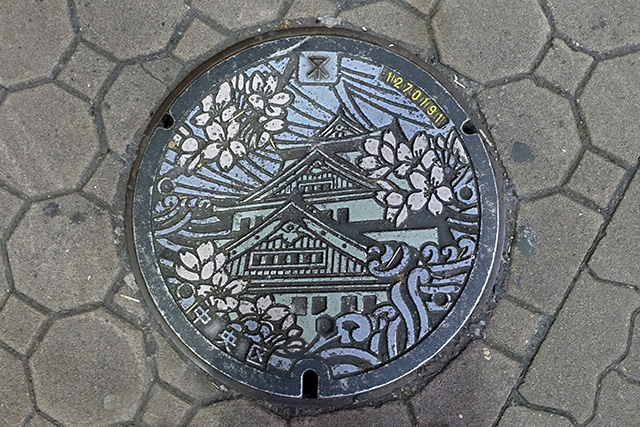
The manhole covers in Ōsaka feature Ōsaka Castle during spring.
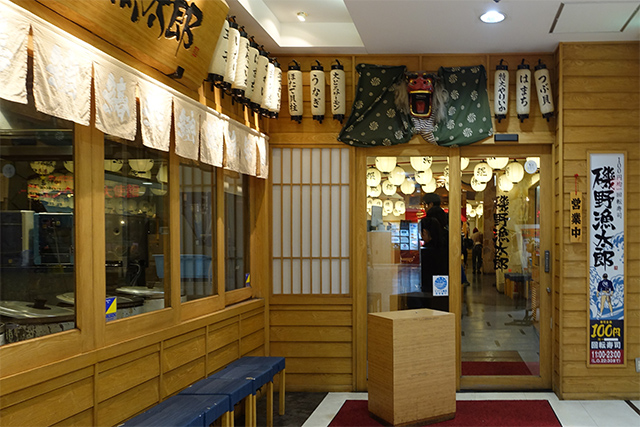
We hadn’t had sushi since the start of our trip, so we head back to Isono Ryoutarou, the kaitenzushi where all the plates are ¥100. The plates are cheap and tasty.
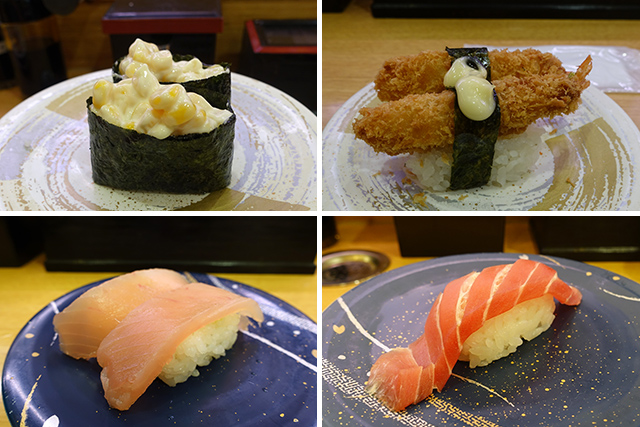
Clockwise from top left, the corn mayonnaise is sweet and juicy; the panko crumbed prawns are crispy tender; the extra tuna (I managed to take a photo before eating it this time) is fresh as is the kingfish.
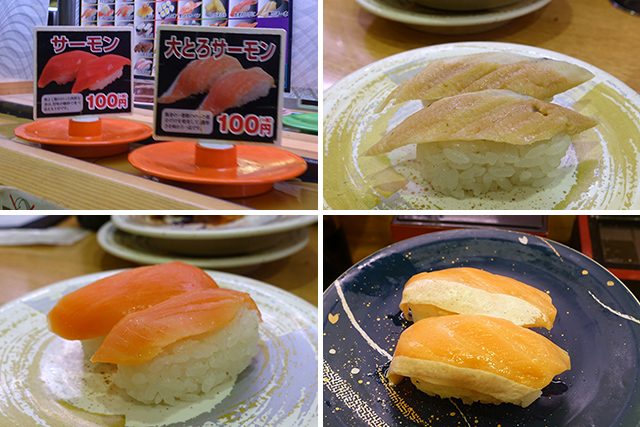
We try some salmon that’s so deliciously melt-in-your-mouth that we want more. We end up trying the normal salmon (bottom left), only to find the mouthfeel not replicated, before we try the big toro salmon (bottom right). Once we find it, D orders plates of it! And then, having tried baked conger eel on Miyajima, we try it in nigiri form (top right) – this one lacked the tastiness from the glaze.
And with that, we’re back where we started – quite literally, we began the first leg of our trip in Ōsaka with Isono Ryoutarou and we’re beginning the last leg of our trip here.