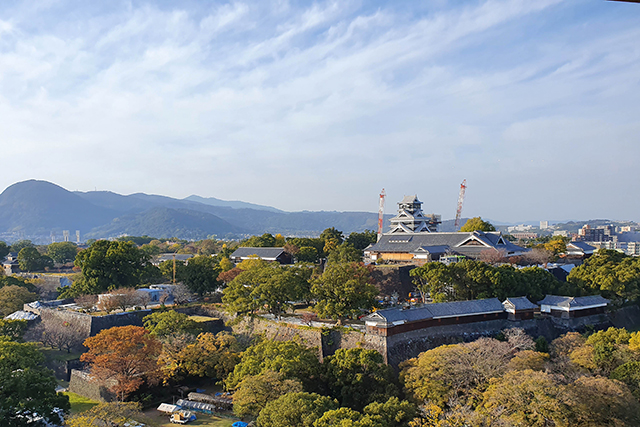
It feels surreal to continue recounting our trip to Japan in 2019 when just a few months after our return, the world has reached such a state of chaos that leaving the house, let alone travel, is strictly discouraged. That said, writing about the trip has been a much-needed form of escapism.
Kumamoto inspired this trip to Kyūshū in 2019. More specifically, it was Kumamon, the mascot created by the government of Kumamoto Prefecture to encourage tourists to the region after the Kyūshū Shinkansen line opened in 2010, that saw this trip many years in the planning long before our 2018 Hokkaidō trip and even the 2016 Kumamoto earthquakes. What can I say? Their government’s strategy worked.
Kyūshū Shinkansen
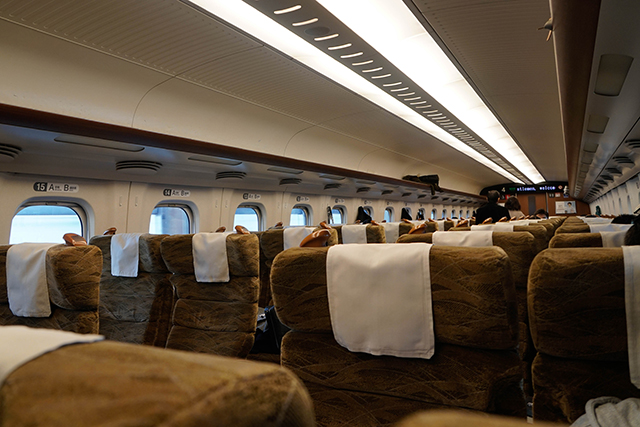
Kagoshima and Kumamoto are connected via the Kyūshū Shinkansen in a little under an hour. As a shinkansen route, it’s significantly more expensive than the limited express trains we’d been using along the east coast of Kyūshū. However, this route is covered by the JR Kyūshū South pass, so we used paid tickets for the trip between Beppu and Nobeoka to cover the days between our activated North and South passes.
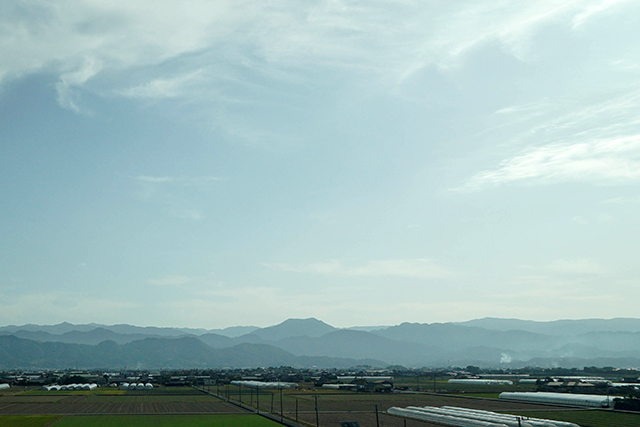
The scenery between Kagoshima and Kumamoto in the early morning is truly beautiful.
Kumamoto
JR Kumamoto Station
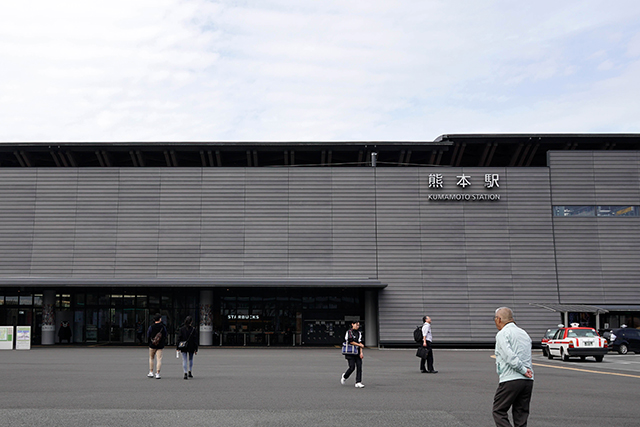
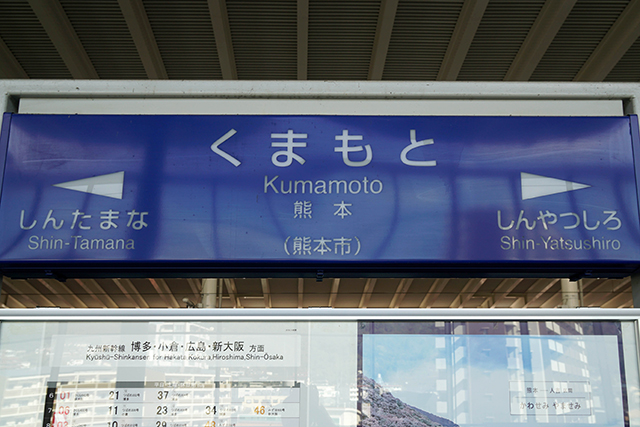
A little under an hour later, we’re at JR Kumamoto Station, which finished renovations in 2018 that saw all the platforms elevated from ground level.
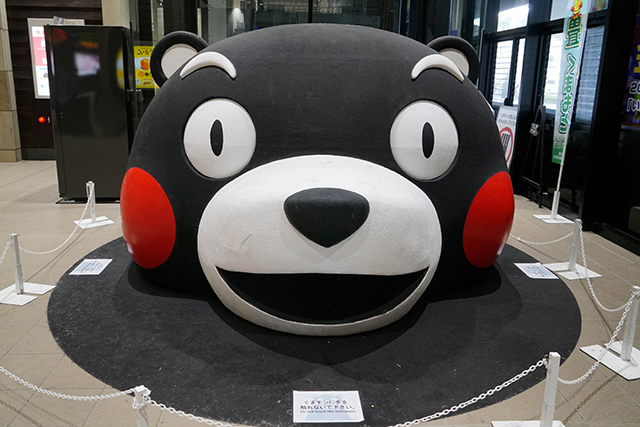
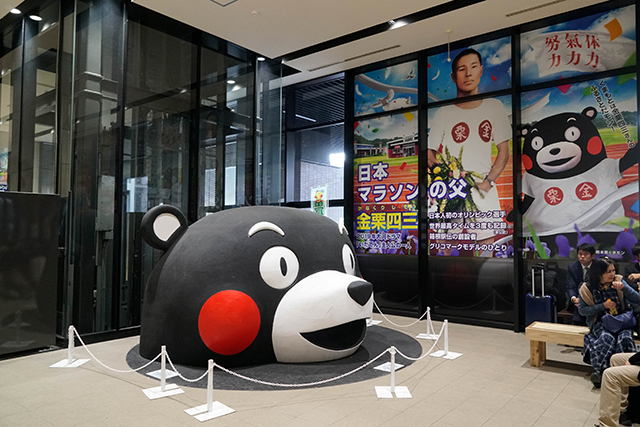
A giant head of Kumamon greets visitors at the base of the escalator coming down from the platforms. This is what I imagine a Kumamon birthday cake would look like.
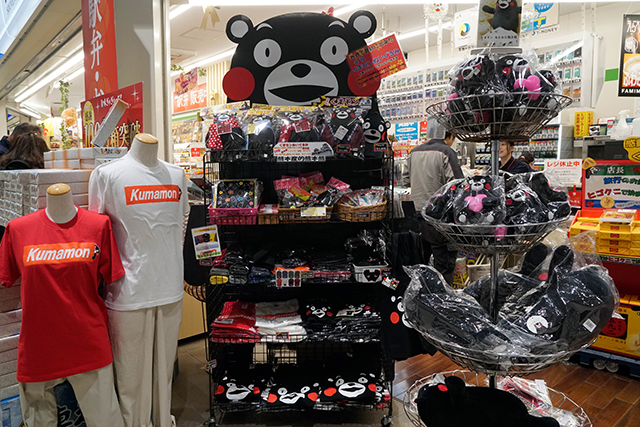
There’s an omiyage store inside the gates with ample Kumamon merchandise.
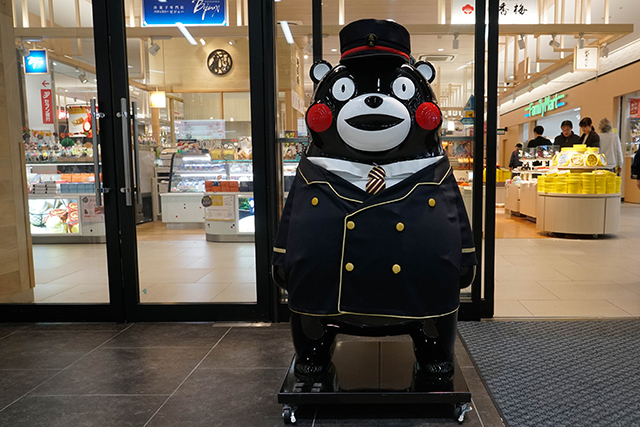
The lower level was completely redeveloped with new retail space. At the entrance, Kumamon welcomes visitors in his train guard uniform.
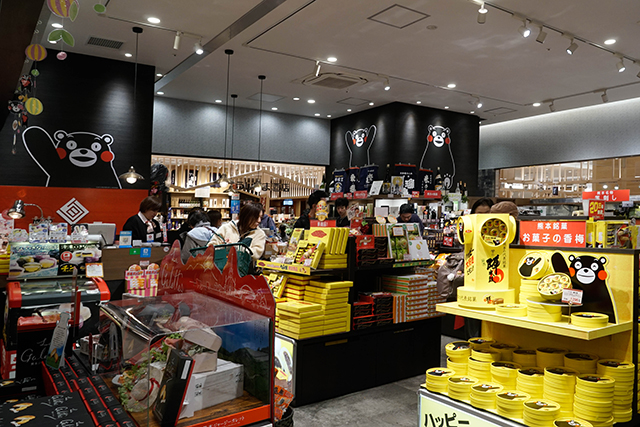
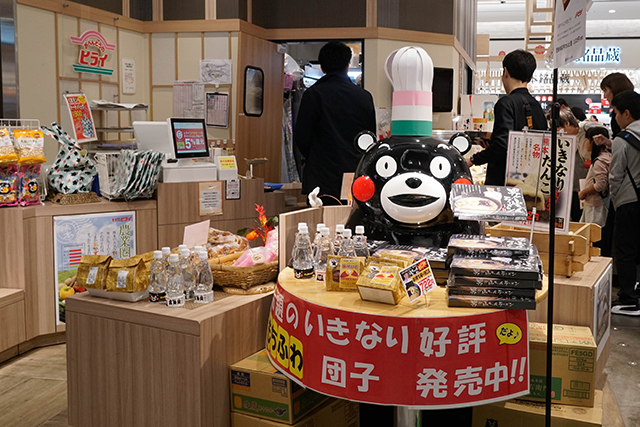
The retail space sells every kind of Kumamoto specialty, from the numerous sweets to horse meat. Kumamon’s face is everywhere.
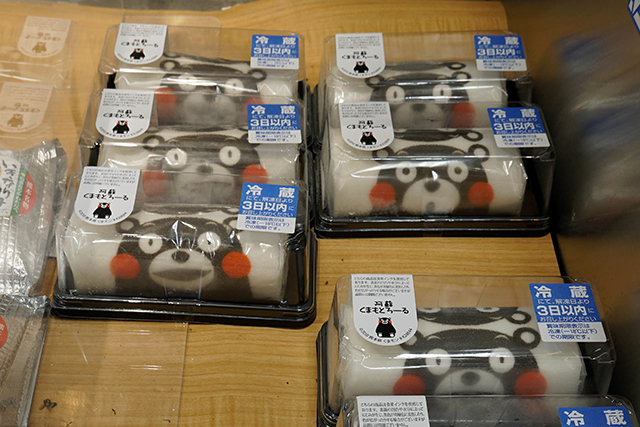
At the Family Mart, we spot roll cake featuring Kumamon.
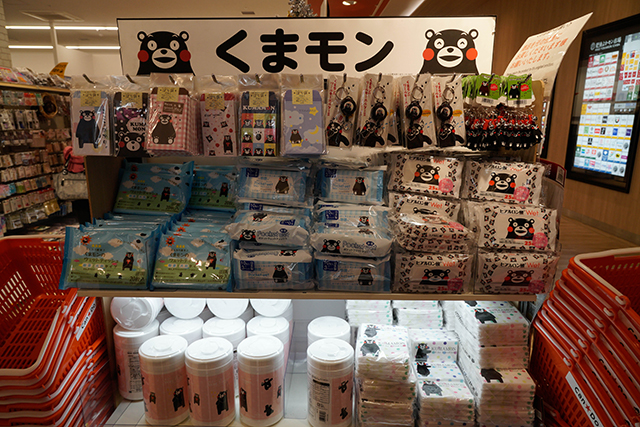
There’s a dedicated Kumamon section at the local Daiso.
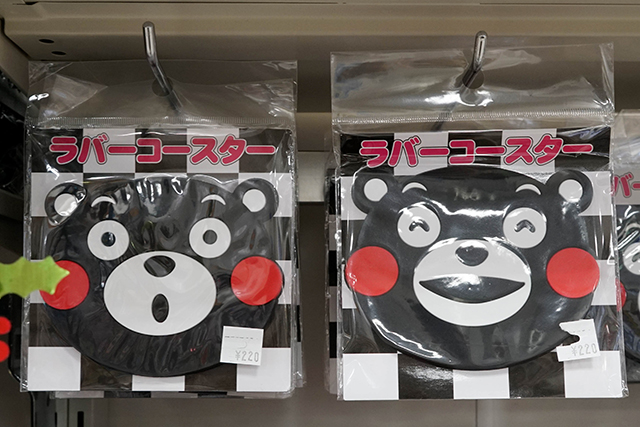
We find affordable coasters…
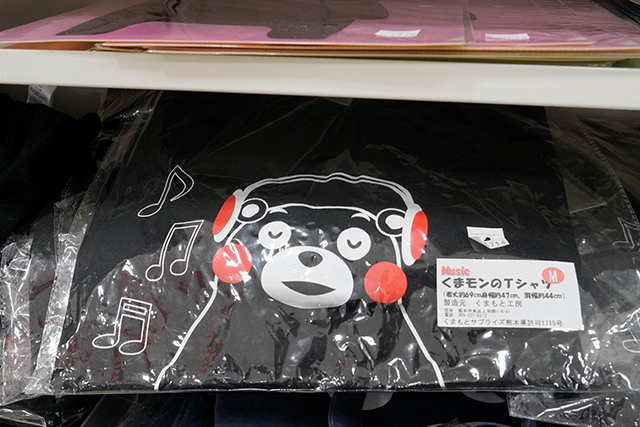
… shirts with Kumamon enjoying some tunes…
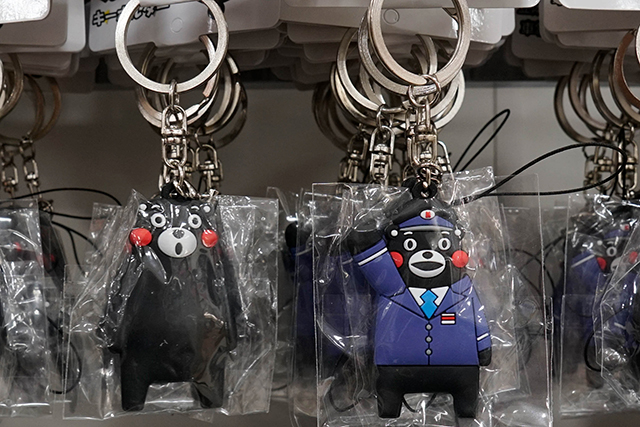
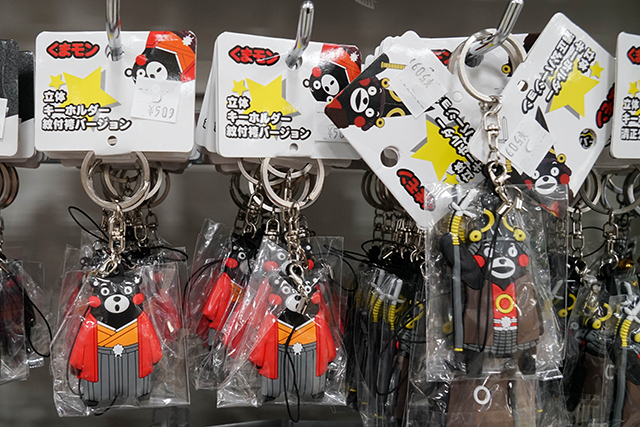
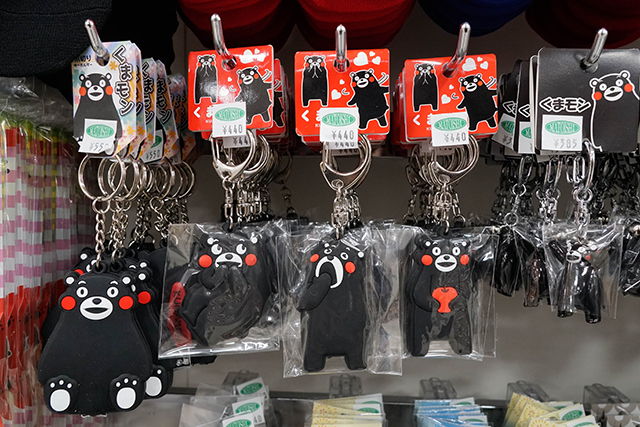
…as well as an endless selection of keyrings.
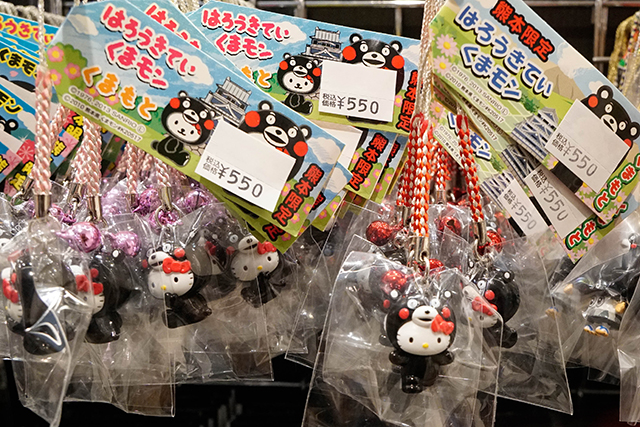
There’s even a Kumamon collaboration with Hello Kitty…
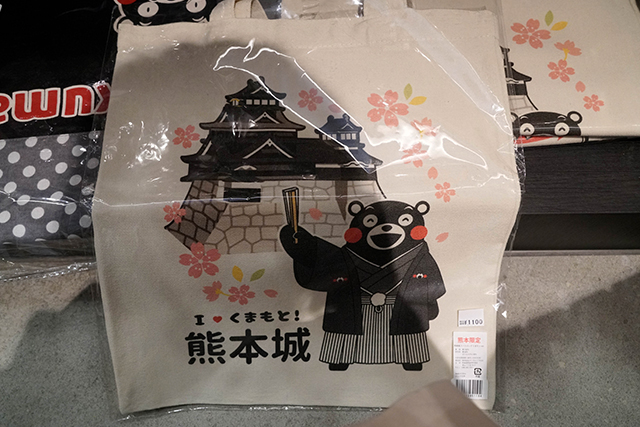
…cute tote bags…
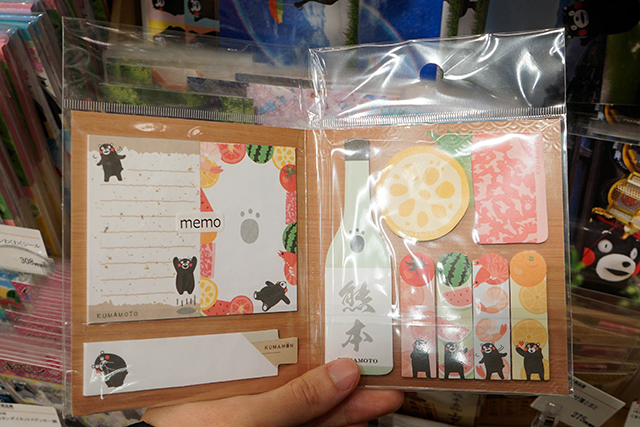
…notepaper…
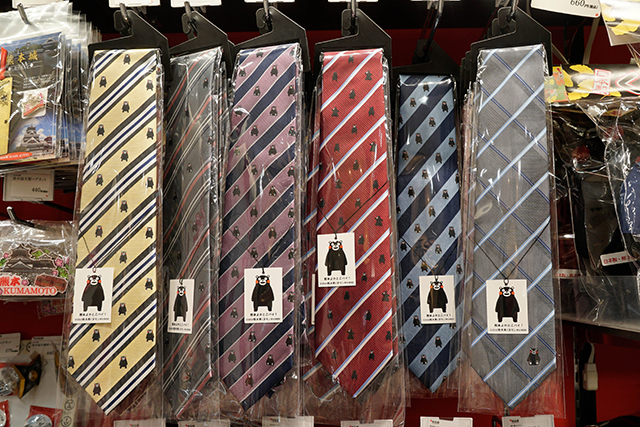
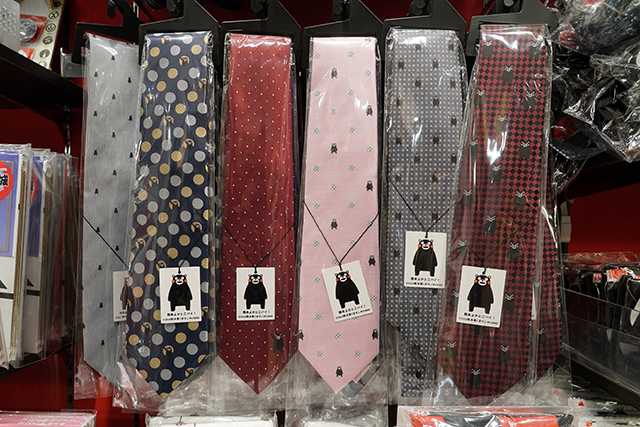
… and a dizzying selection of ties.
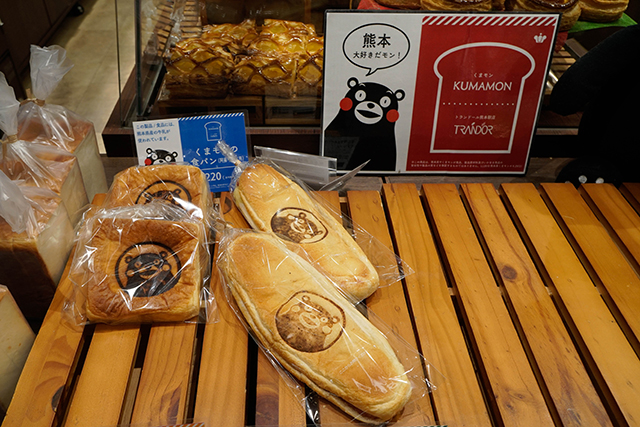
And finally, there’s Kumamon branded pan at Kumamoto Station’s Trandor.
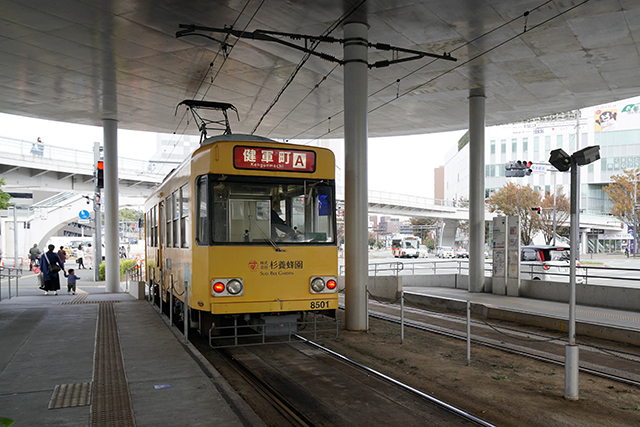
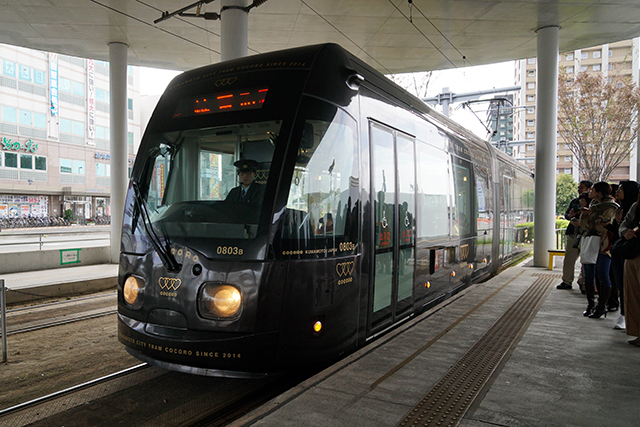
Having whetted our appetite for Kumamon goods, we head out to the JR station to the Kumamoto-Ekimae Station for the tram line to take us to our hotel.
Sakuramachi
SAKURA MACHI Kumamoto, 3-10 Sakuramachi, Chuo Ward, Kumamoto, 860-0805, Japan
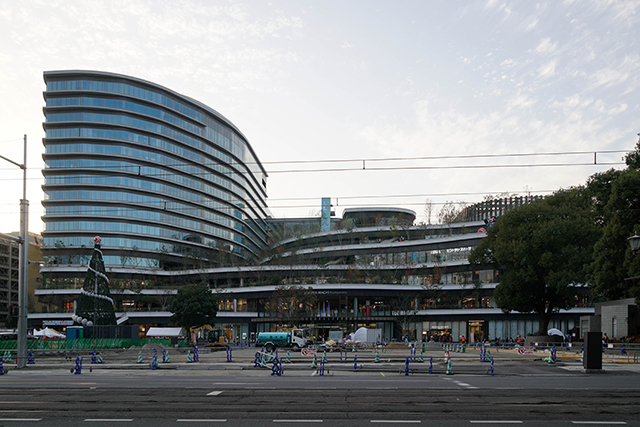
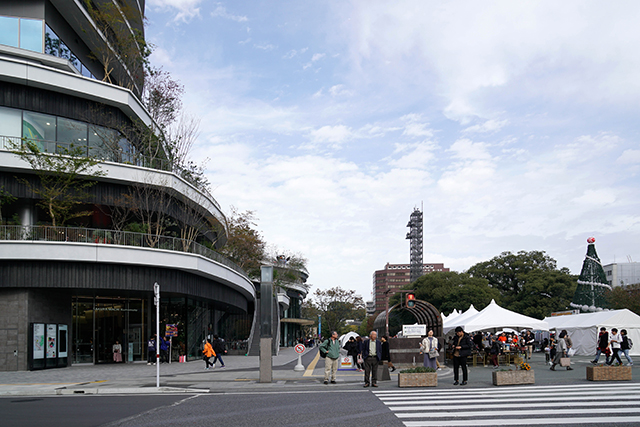
SAKURA MACHI Kumamoto is a mixed-use shopping mall complex with a bus terminal that opened in September 2019. We had no idea it was even under construction, but we’re delighted it opened just two months before our visit.
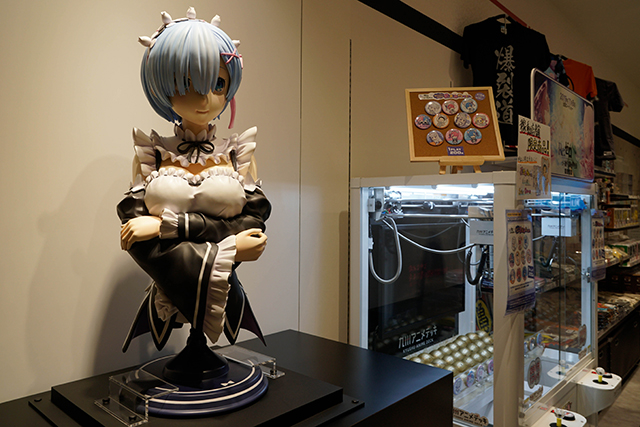
There’s a huge variety of shops in SAKURA MACHI Kumamoto, including stores selling anime goods. This figure of a Rem from Re:Zero is not for sale, though.
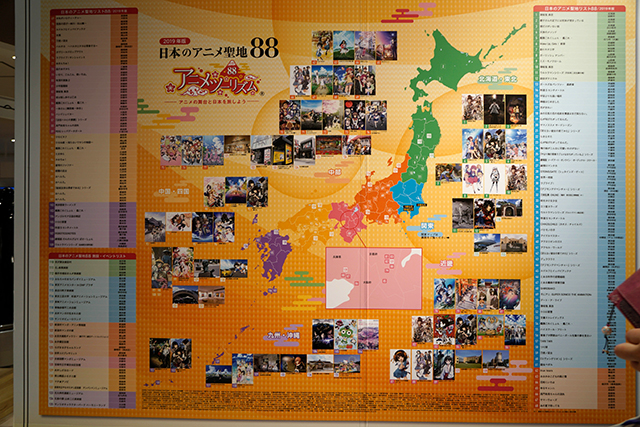
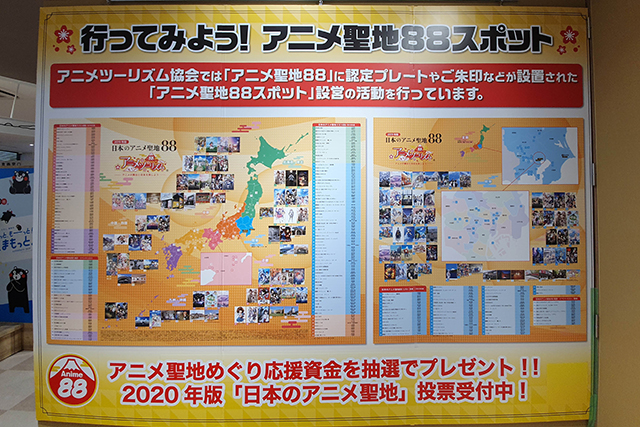
For anime fans, there’s a map and pamphlet from the Anime Tourism Association detailing the real-life locations around Japan in which 88 iconic anime series are set.
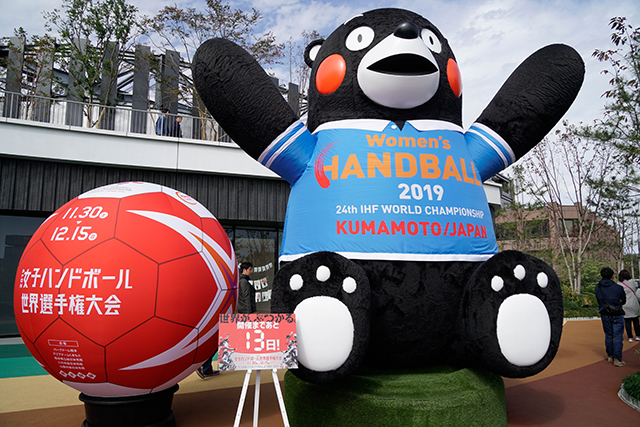
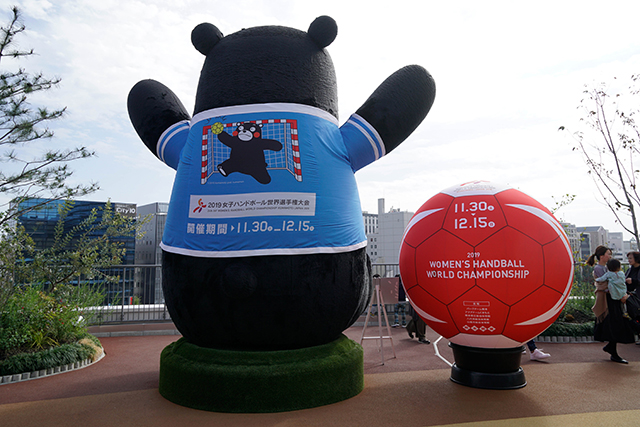
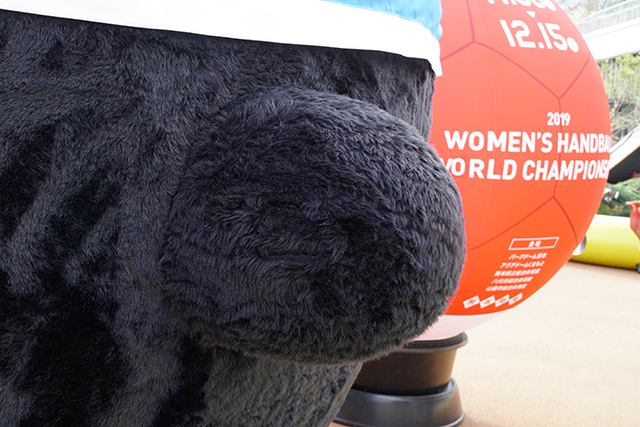
On the terrace on the fifth floor and viewable from ground level is a giant inflatable Kumamon promoting the 24th IHF World Championships for Women’s Handball that were being held in Kumamoto between 30 November and 15 December 2019. The Kumamon is covered in cuddly fur.
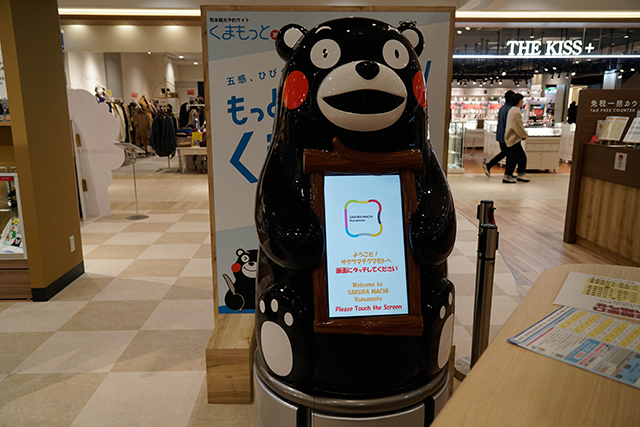
He also holds one of the touch screens for the centre directory.
Kumamon Village
くまモンビレッジ, 2F SAKURA MACHI Kumamoto, 3-10 Sakuramachi, Chuo Ward, Kumamoto, 860-0805, Japan
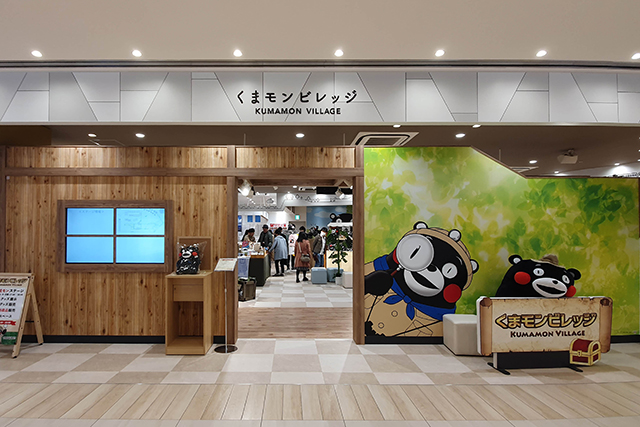
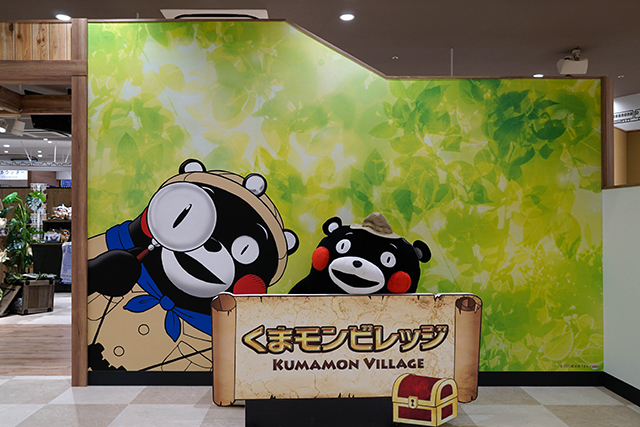
Kumamon Village is one of two dedicated Kumamon spaces (the other being Kumamon Square). The ‘village’ follows the concept of ‘Find Your Treasure’, with the live shows with Kumamon as well as the merchandise and decor following that theme.
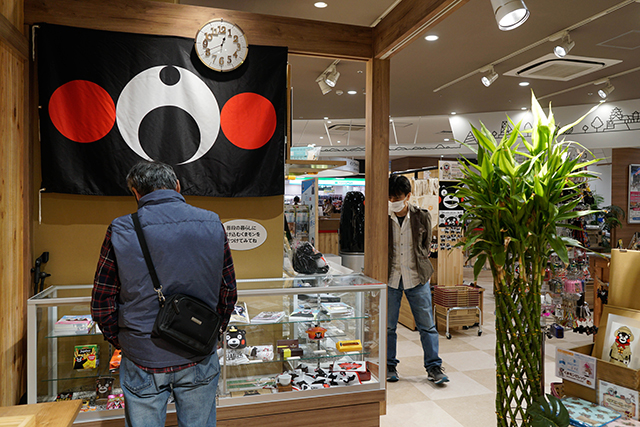
A section of the space is reserved for exhibition of goods that are not for sale, like the Kumamon flag. There are three further sections: the stage where Kumamon performs three days a week (admittance to the 17:30-18:00 show is via a lottery system run at 15:00 on the same day, such is the demand), the cafe and the shop.
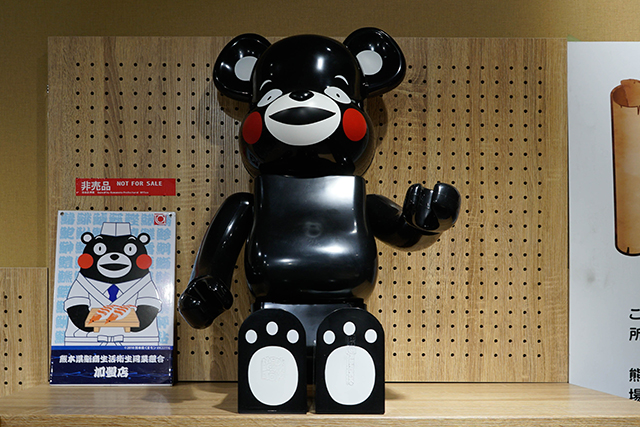
There’s a collectible Kumamon BE@RBRICK as well as a drawing of Kumamon as a sushi chef.
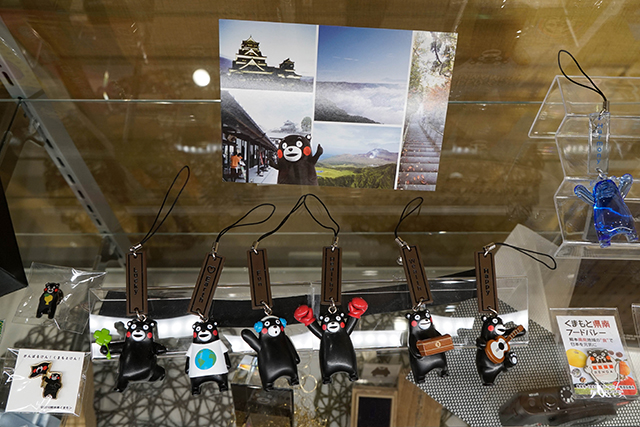
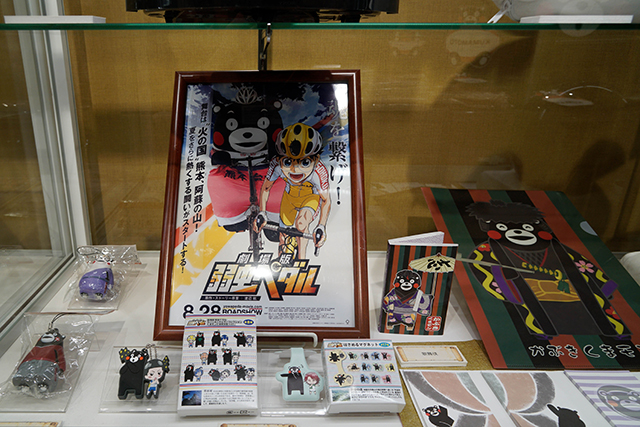
Such cute limited edition pins and charms!
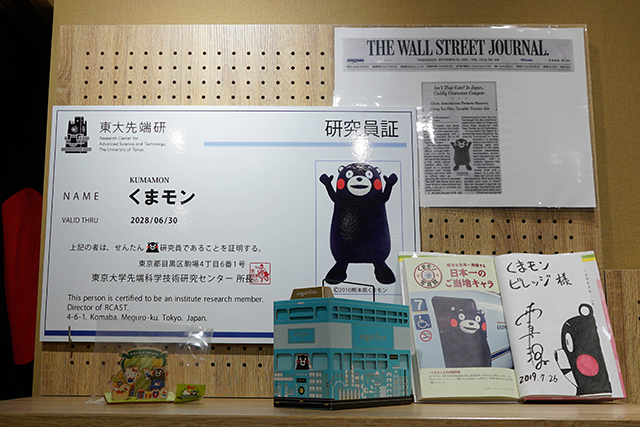
Kumamon has appeared in The Wall Street Journal and is a certified member of the Research Center for Advanced Society and Technology at the University of Tōkyō to promote a collaborative research relationship with Kumamoto Prefecture.
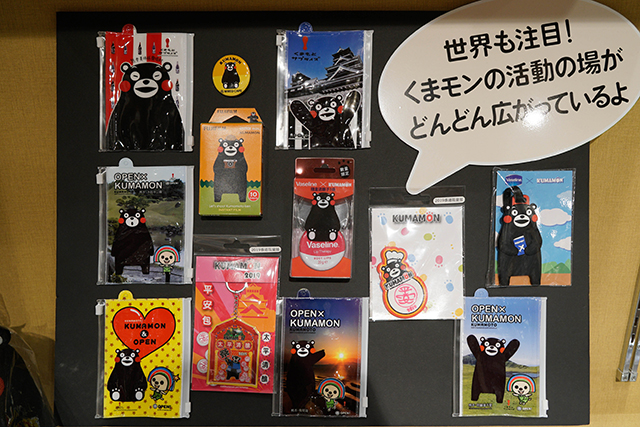
Various products feature Kumamon including a limited edition Vaseline lip balm including a Kumamon mirror as well as zip pouches and polaroid film.
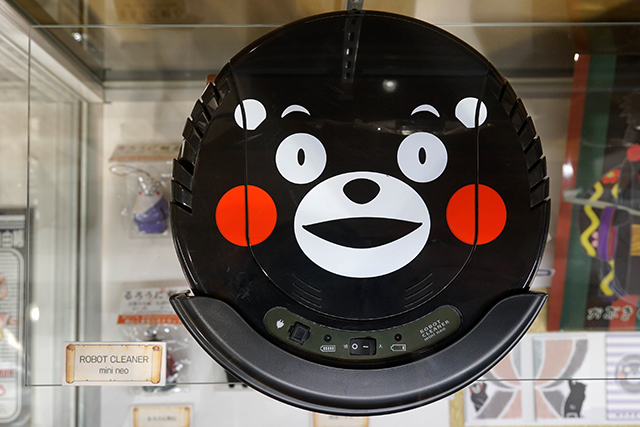
And appealing to our love for robot vacuum cleaners, this is a Tuskamoto Aim Mini Neo with Kumamon decal.
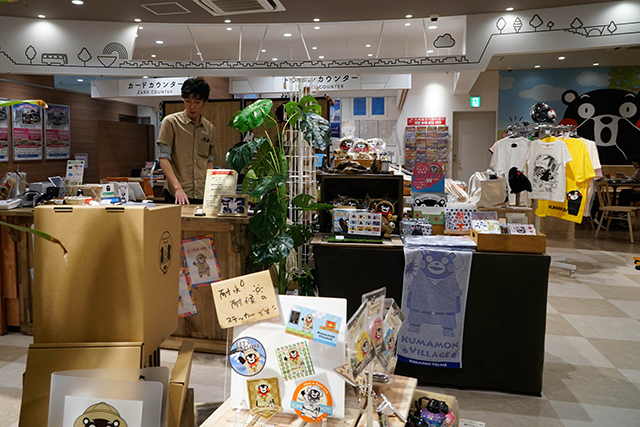
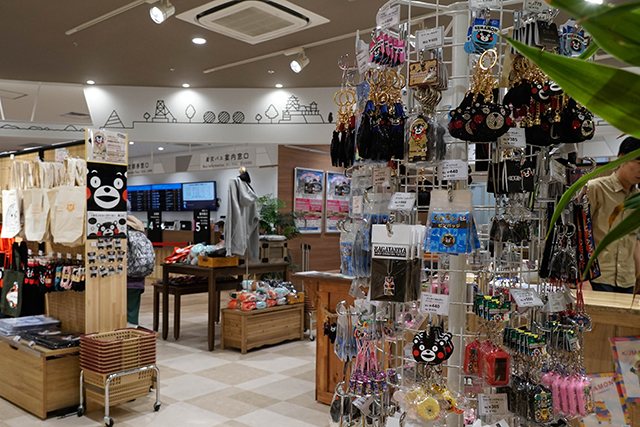
In the shop area of Kumamon Village, there’s a large variety of goods that are not available for purchase elsewhere.
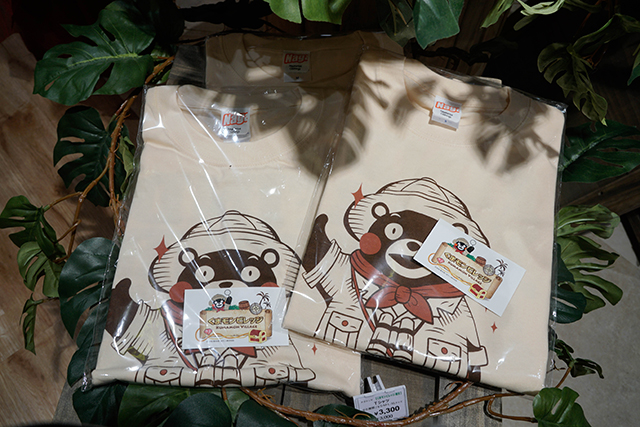
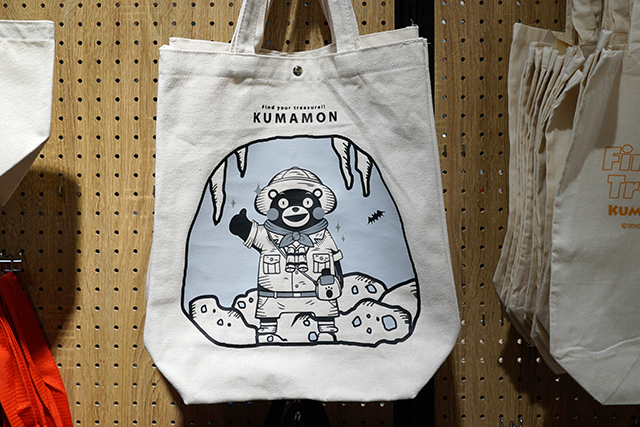
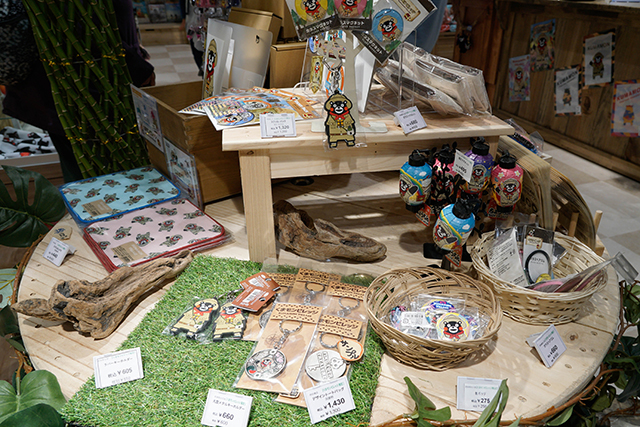
Those limited goods are around the ‘Find Your Treasure!’ theme.
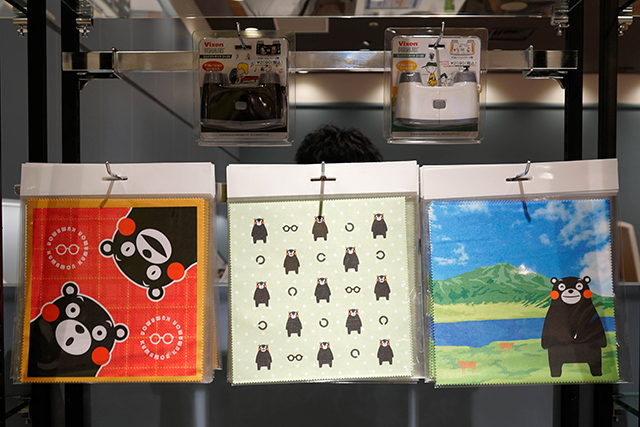
There’s also Kumamon handkerchief…
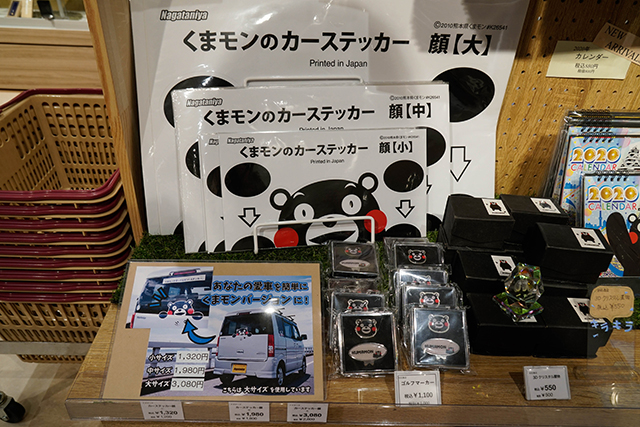
… as well as various Kumamon-themed stickers for your car.
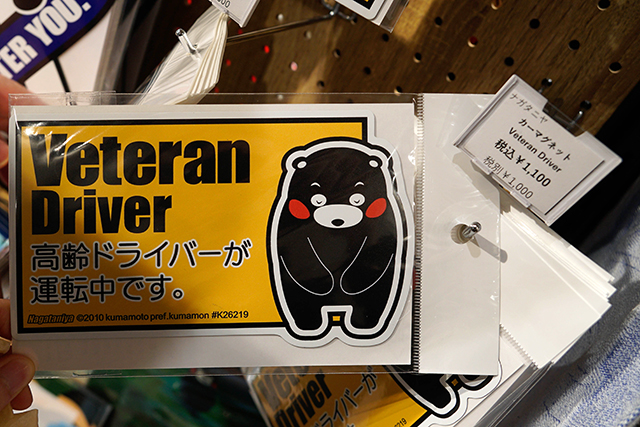
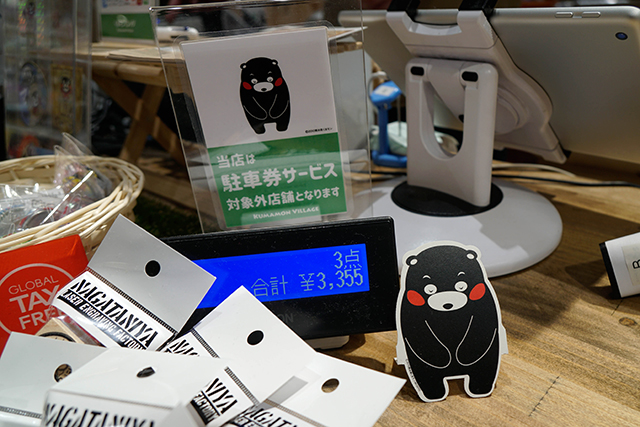
We were huge fans of the bowing Kumamon but could not justify the ‘Veteran Driver’ message. We spotted it again while paying at the register, and after commenting to the salesperson how cute we found the propped up Kumamon cut out and ready to pay a few hundred yen just for our own, to our complete surprise, he gave us a complimentary one after finalising our sale! Japanese hospitality is unmatched.
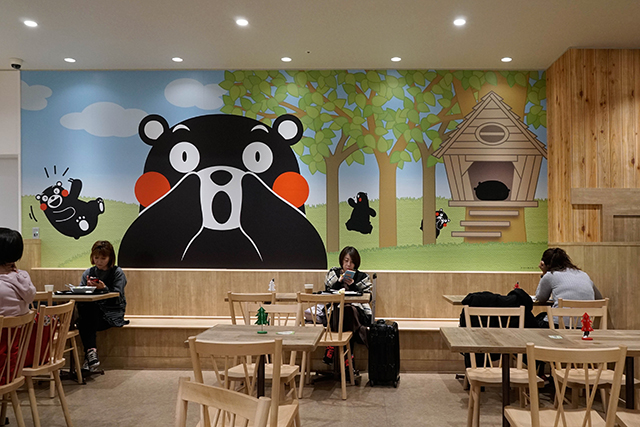
Attached to the Village is a cafe. We stop by for a quick meal because I love Kumamon. Also, there are plenty of adults, but I’m not sure it’d have stopped me even if it were overrun with kids.
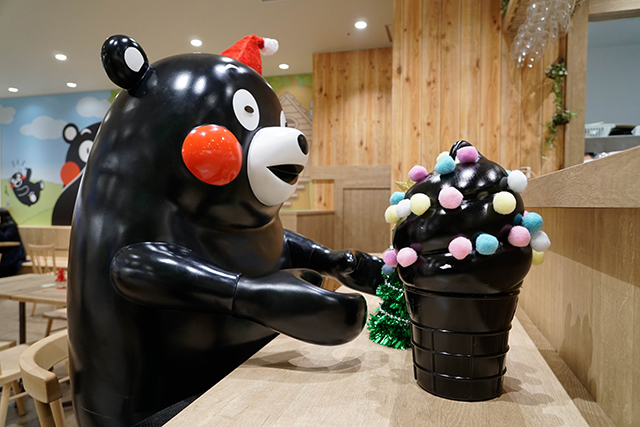
After placing our order, we manage to score the seat next to Kumamon at the bar. The cafe also serves a human-sized version of the black soft serve in front of him.
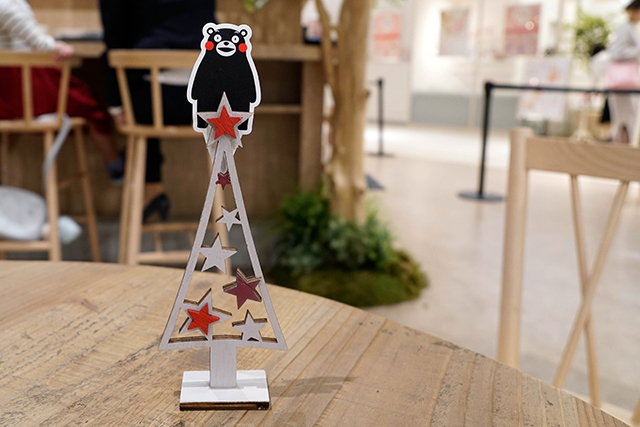
In anticipation for upcoming Christmas celebrations, the table numbers feature Kumamon on a Christmas tree.
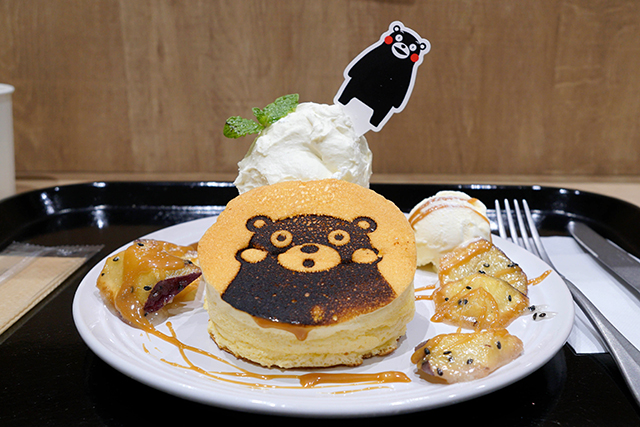
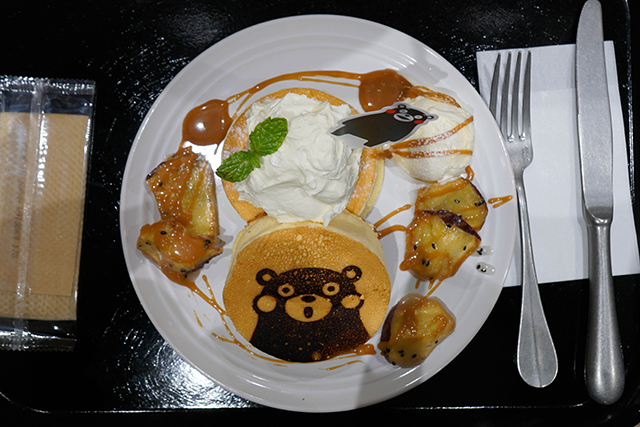
I order these Kumamoto Fruit Pancakes (¥1,280 +tax). The fruit is seasonal and it’s candied sweet potatoes from Kumamoto for late autumn. The pancakes were thick and used Pancake Shop batter. They weren’t as fluffy as I expected, but the candied sweet potato was tasty — crispy on the outside — and the sweet potato cream was enjoyable being not quite as heavy as whipped cream, while the vanilla ice cream added a contrasting temperature and flavour.
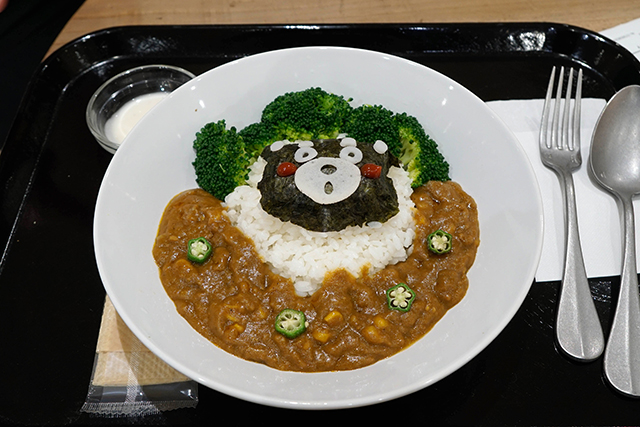
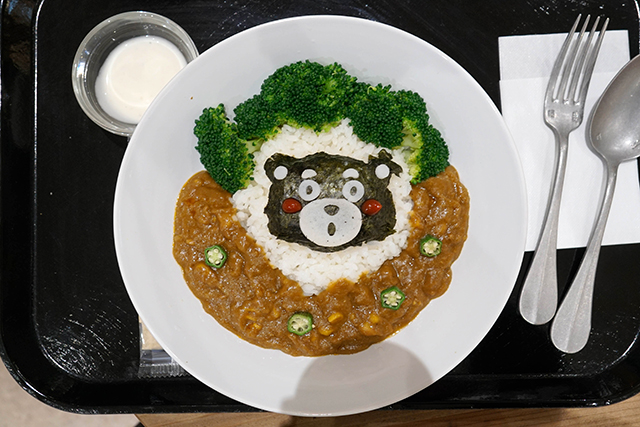
D goes for the Curry Kumamon Rice (¥780 +tax). It’s a vegetable curry with corn and okra, and a side of steamed broccoli. Kumamon’s face is made from seaweed and fish cake and dollops of tomato sauce. It tasted as much like a decent curry with an extra dose of cuteness.
Sekaiichi!? no Kingyosukui Fesu
世界一!?の金魚すくいフェス, 7-10 Hanahatacho, Chuo Ward, Kumamoto, 860-0806 Japan; 16-17 November 2019
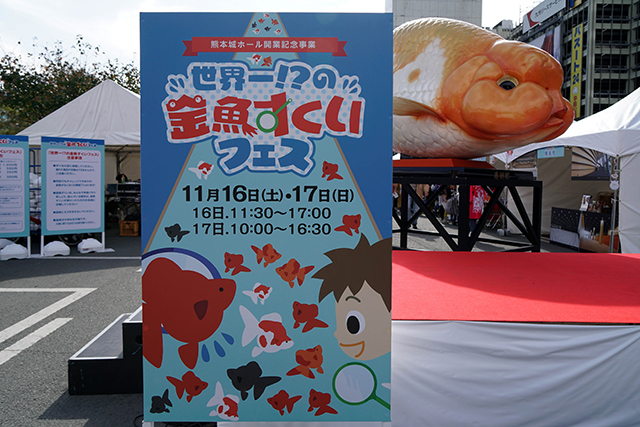
We were lucky enough to catch the Sekaiichi!? no Kingyosukui Fesu, a goldfish scooping festival, that ran on the weekend of 16-17 November directly outside SAKURA MACHI.
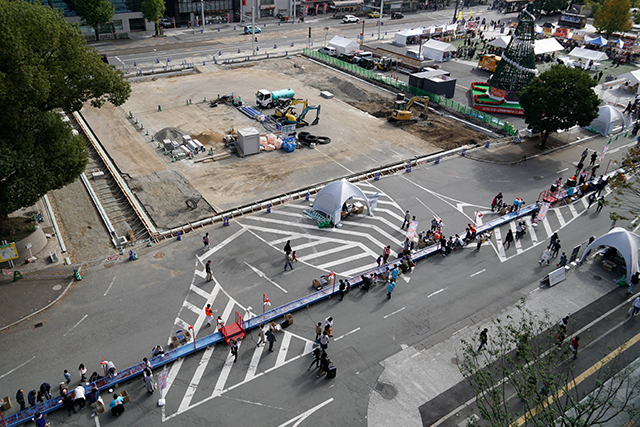
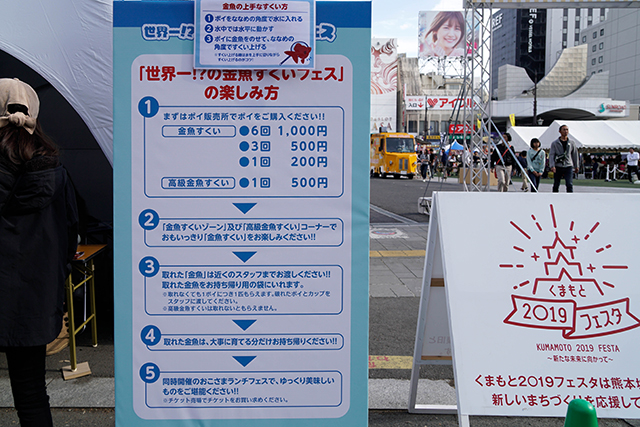
The festival was part of the Kumamoto Castle Hall Opening Commemorative Project and revolved around a 130 m long pool where visitors pay to scoop goldfish from the water with a paper scooper (called a poi) into a bowl. The 130 m length was a reference to the 130th anniversary of the Kumamoto Municipal Assembly
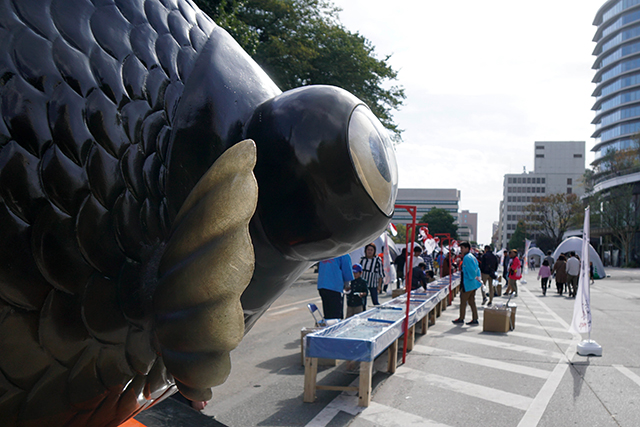
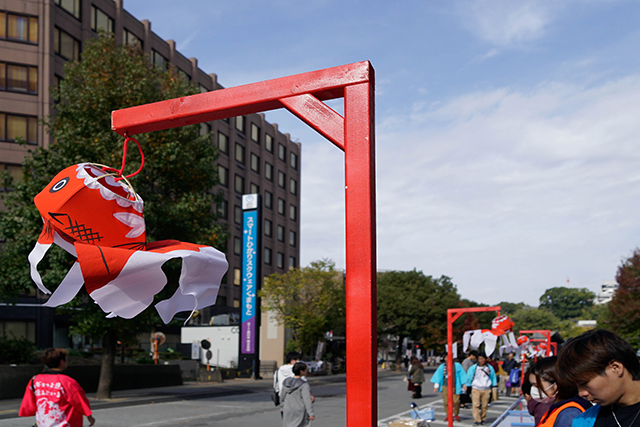
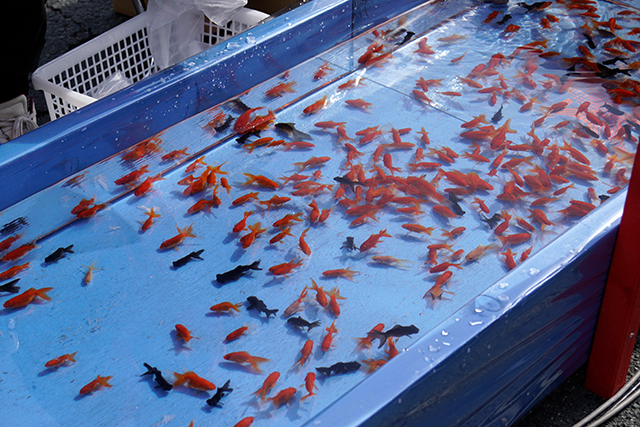
There were some 50,000 goldfish in the pool. The town of Nagasu in Kumamoto Prefecture is well-known in Japan for producing goldfish.
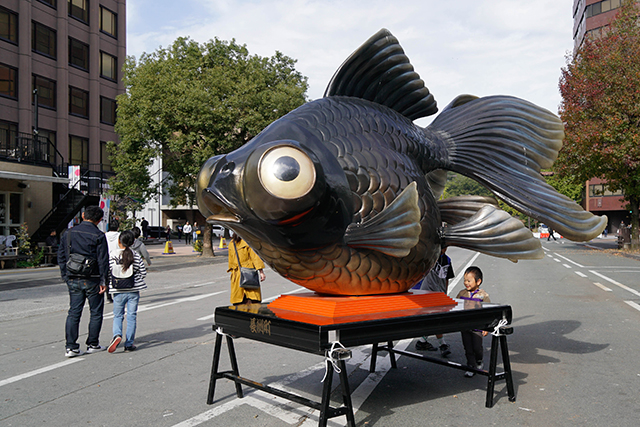
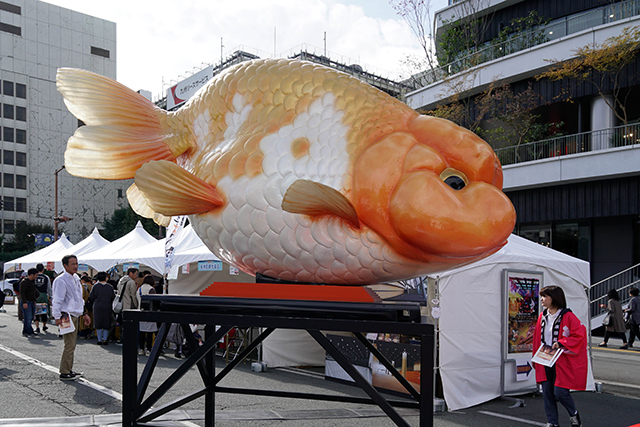
The ends of the 130 m long pool are flanked by huge sculptures of two of the types of goldfish also found in the pool.
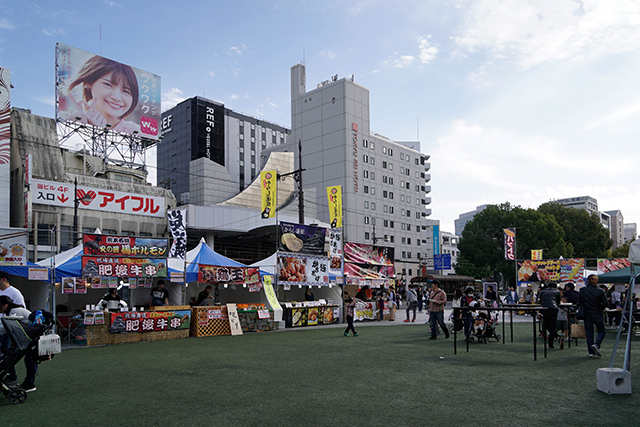
Of course, there’s a food section right next to it because no Japanese festival is complete without one.
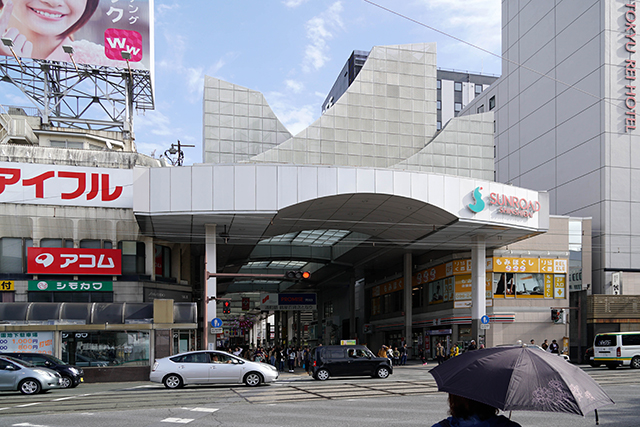
The festival is a stone’s throw from Sunroad Shopping Street.
Kumamoto Prefectural Product Center
熊本県物産館, 3-1 Sakuramachi, Chuo Ward, Kumamoto, 860-0805, Japan
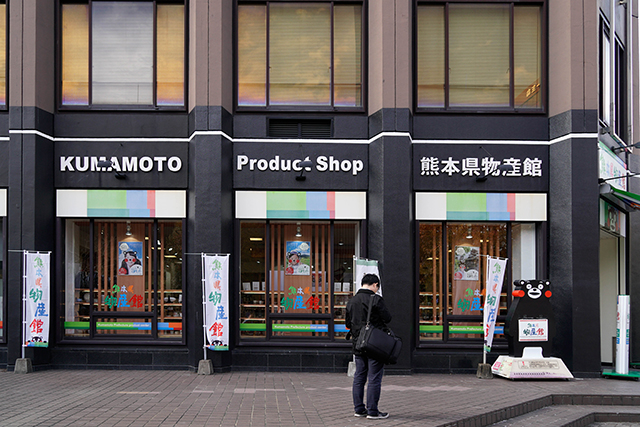
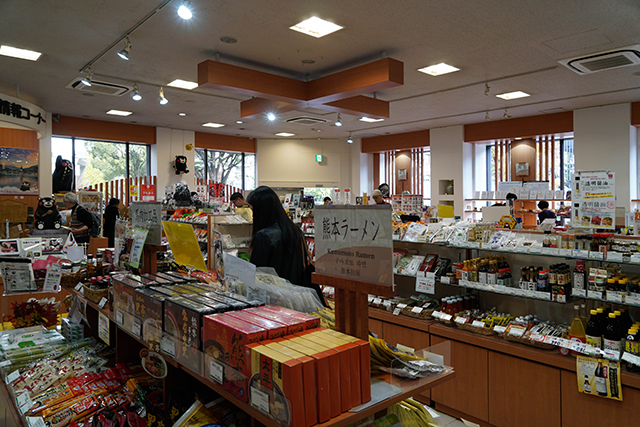
Further north of SAKURA MACHI and in the direction of Kumamoto Castle is the Kumamoto Product Shop. It’s stocked with a generous selection of local products.
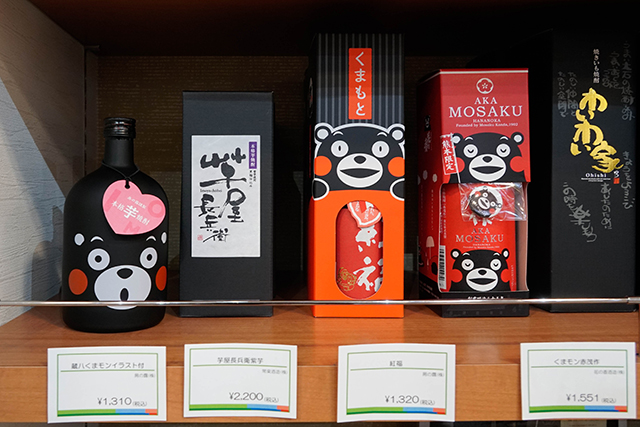
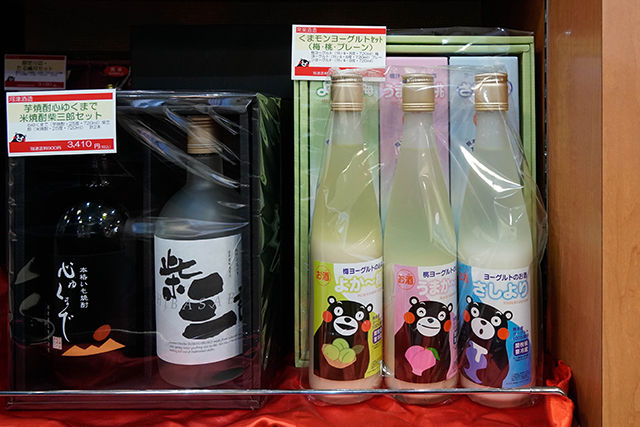
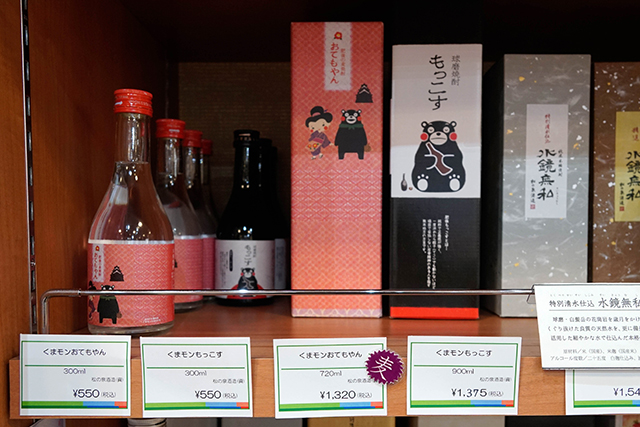
As well as one of the most complete collections of Kumamon themed alcohol we’ve seen.
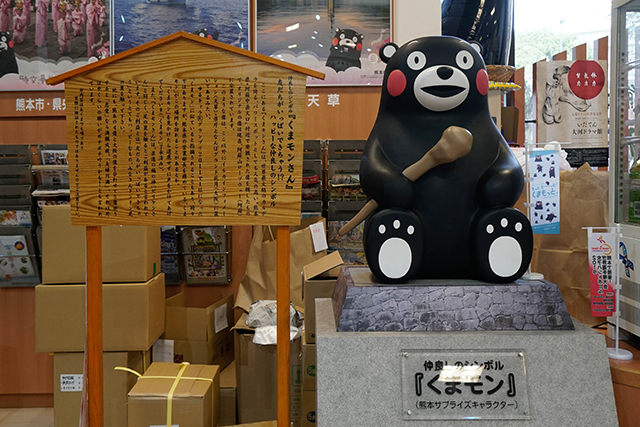
At the front of the store is Kumamon seated on a pedestal and accompanied with a plaque — similar to ones explaining the merits of various tourist destinations around Japan — explaining Kumamon’s significance.
Sakuranobaba Josaien
桜の馬場 城彩苑, 1-1-1 Ninomaru, Chuo Ward, Kumamoto, 860-0008, Japan
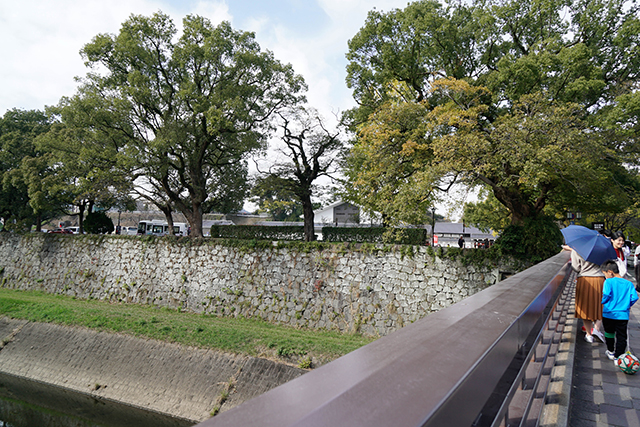
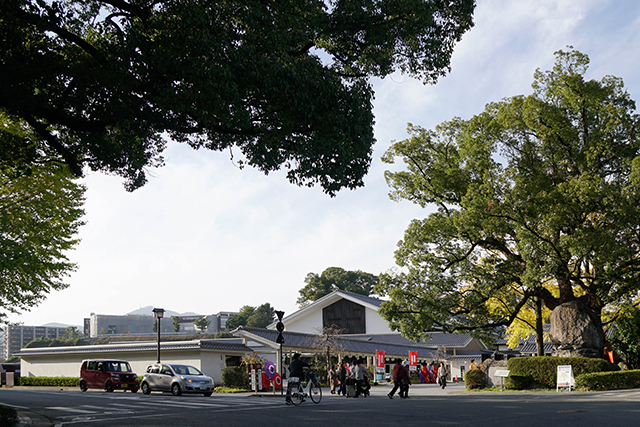
Another short walk further north, we cross Tsuboi River to reach Sakuranobaba Josaien.
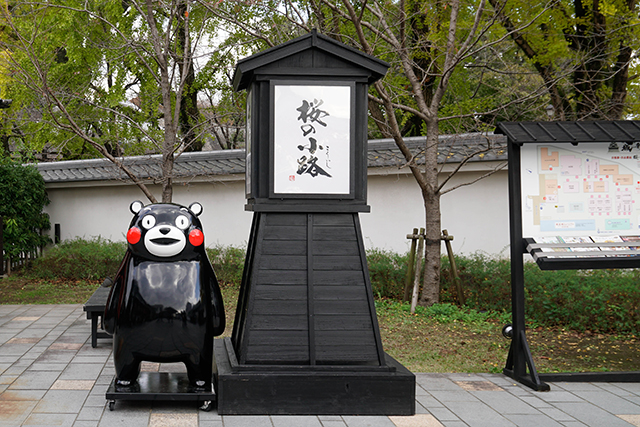
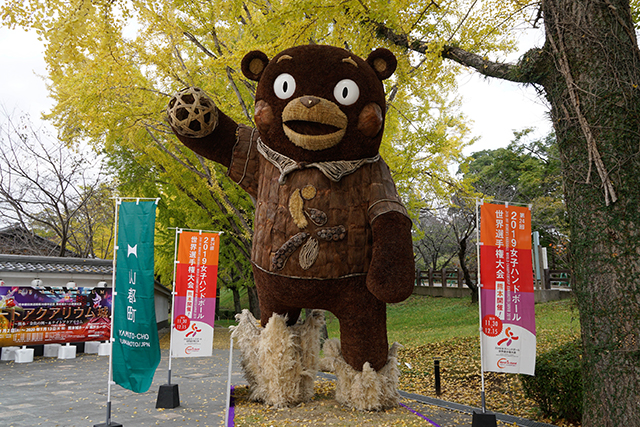
At the entrance, there’s a Kumamon constructed in a similar style to a sugidama or a cedar ball typically found outside a sake brewery.
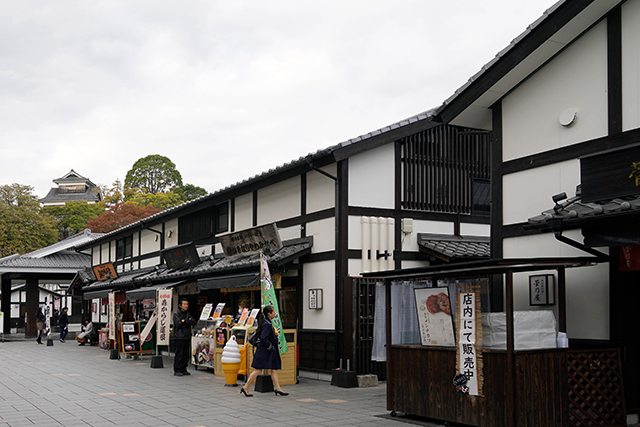
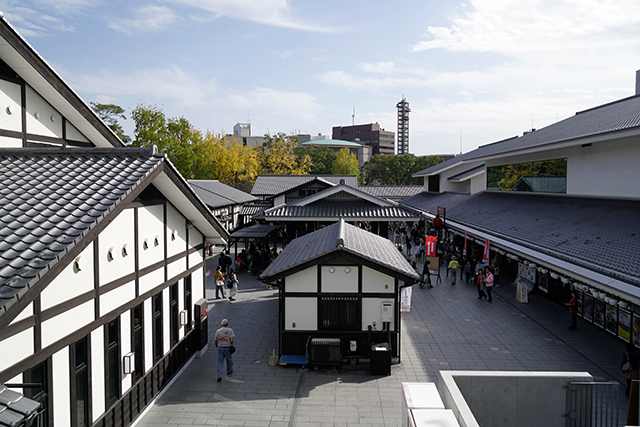
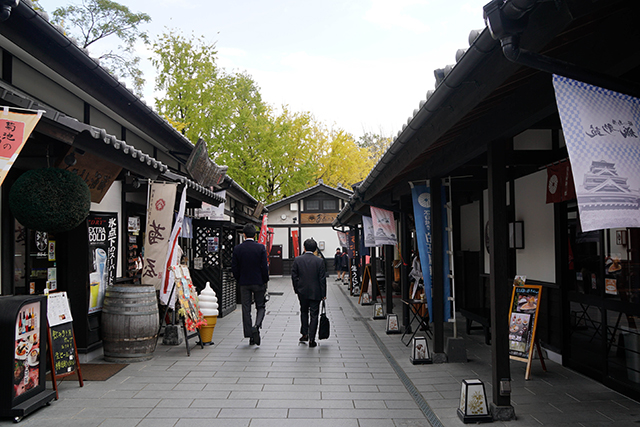
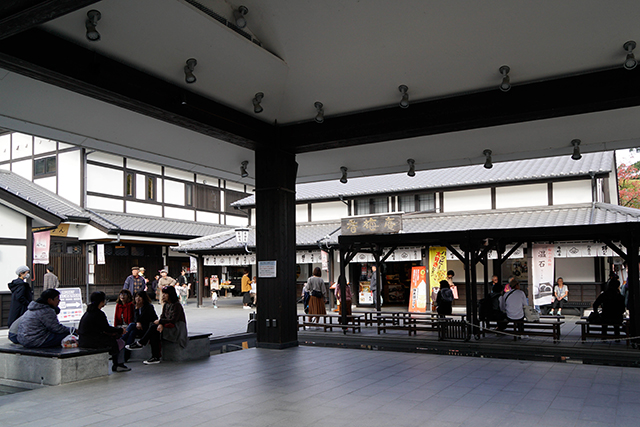
Sakuranobaba Johsaien is a Japanese tourism facility located next to Kumamoto Castle in Kumamoto City, Kumamoto Prefecture. The facility is composed of three areas: Johsaien Kumamoto Castle Shops (a collection of 23 shops and restaurants offering food and products from Kumamoto), Wakuwakuza (a facility with exhibits on the history and culture of Kumamoto), and a tourism information office.
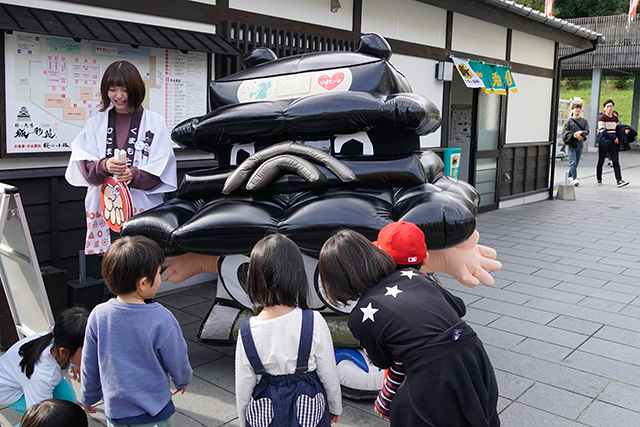
We run into Higomaru, the official mascot of Kumamoto Castle.
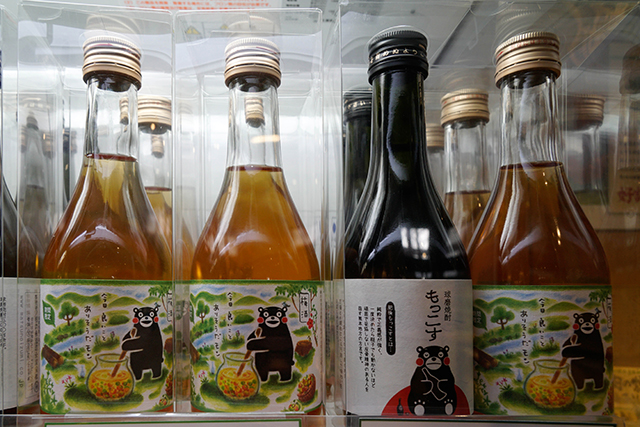
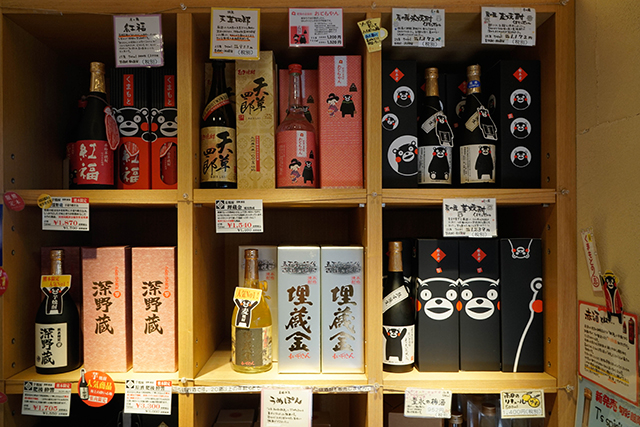
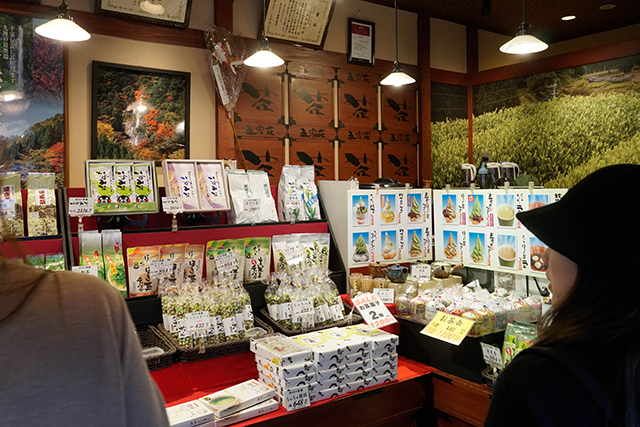
There are various stores selling alcohol, honey and tea produced in Kumamoto…
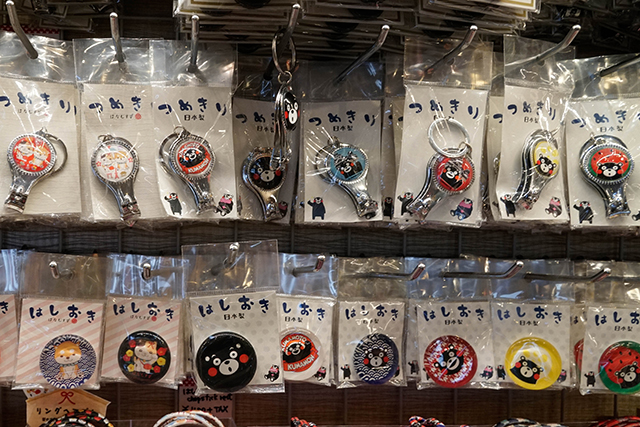
…as well as nail clippers attached to keyrings featuring Kumamon.
Kobai
熊本城香梅庵, 1-1-1-2 Ninomaru, Chuo Ward, Kumamoto, 860-0008, Japan
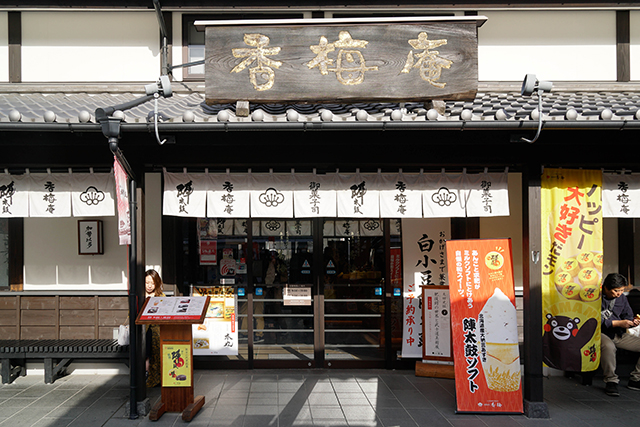
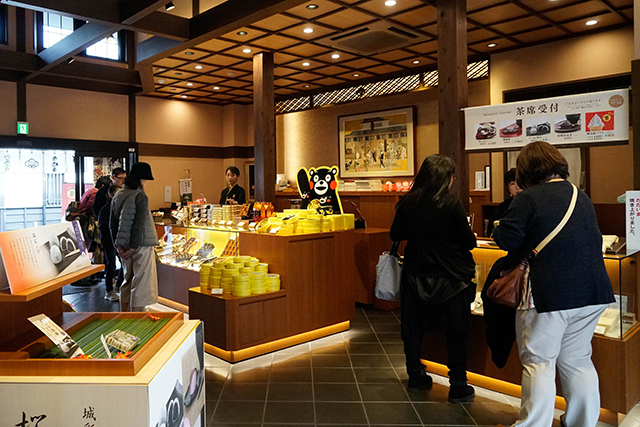
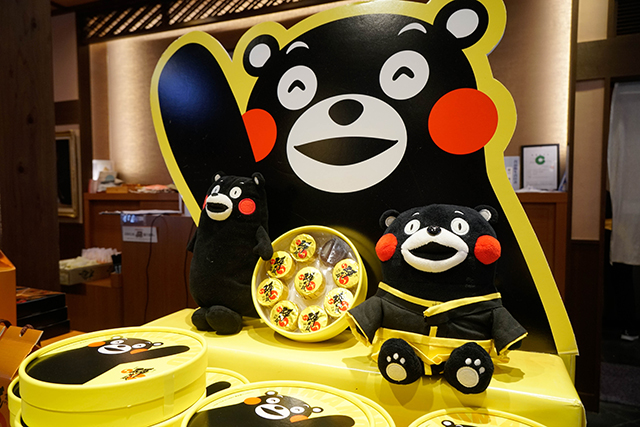
Kobai has a selection of popular confections that tell the history and culture of Japan. They’re most famous for their jindaiko (above), which they sell blended into soft serve at this store.
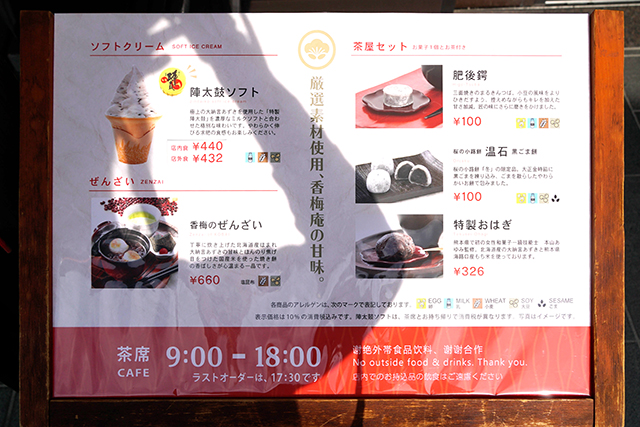
At this store, there’s also a short menu of tea sets for enjoying instore.
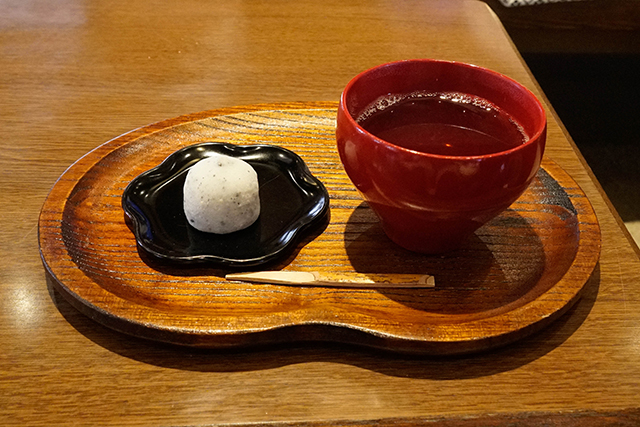
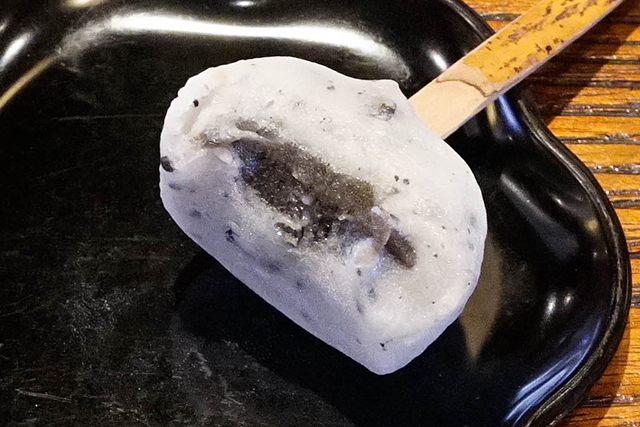
This is the Onjaku Tea Set (¥100 +tax), consisting of a black sesame mochi made by kneading black sesame with milk and wrapped in mochi that’s also scattered with black sesame. This snack was delicious with a bold black sesame flavour that we go back for seconds — a steal for the price.
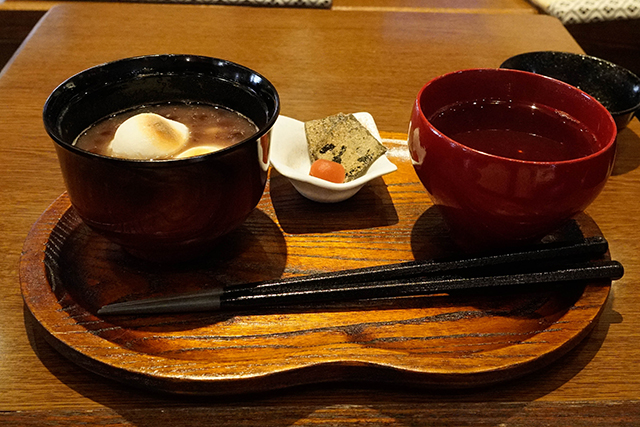
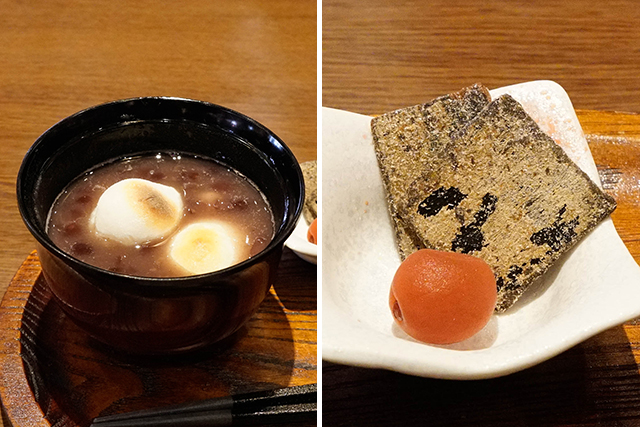
This is the Kobai no Zenzai (¥660 +tax), which uses azuki beans from Hokkaidō for the red bean soup and Kumamoto grown rice for the slightly savoury toasted mochi. There’s a side of umeboshi (very sour) as well as an umeboshi and kelp sheets (very sour and salty). We’re not fans of umeboshi but the zenzai was very enjoyable.
Antagata Dokosa
あんたがたどこさ, 1-1-2 Ninomaru, Chuo Ward, Kumamoto, 860-0008, Japan
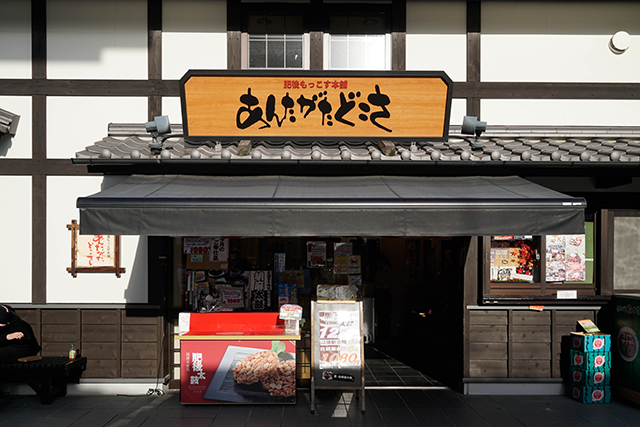
Anatagata Dokosa is the direct sales store for Iwata, which makes one of our favourite sesame snacks. We pick up some as souvenirs…
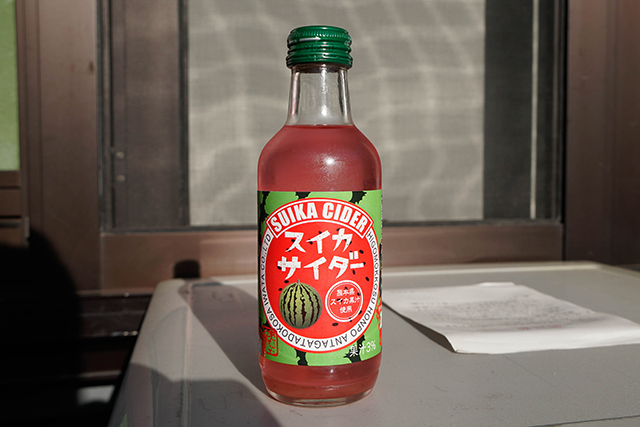
… as pick up their Suika Cider, which contained 3% watermelon juice, for ¥100 +tax. The drink a clear pink colour with a moderate carbonation, while the flavour of the watermelon is natural, much like the fruit itself without being concentrated to give it an artificial quality.
Fukuda Farm
福田農場, 1-1-1-2 Ninomaru, Chuo Ward, Kumamoto, 860-0008, Japan
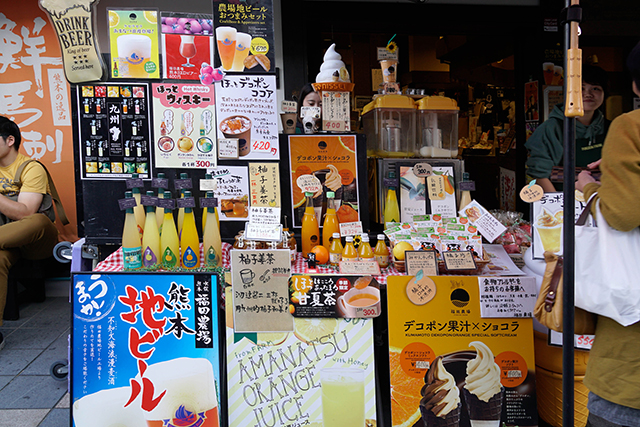
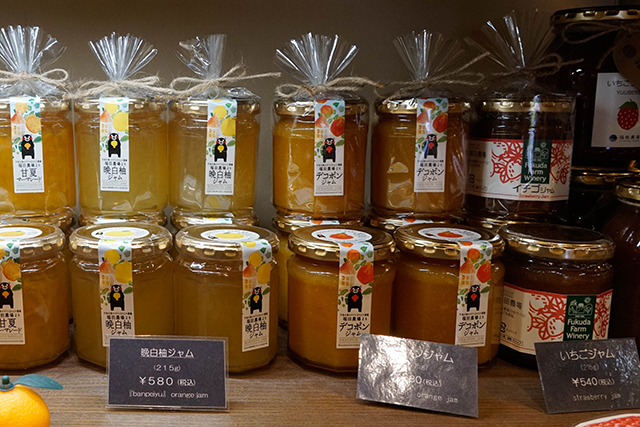
Fukuda Farm sells a whole array of products using fruit grown in Kumamoto, most with cute Kumamon packaging. How does one resist?
Takada Kamaboko
高田蒲鉾, 1-1-2 Ninomaru, Chuo Ward, Kumamoto, 860-0008, Japan
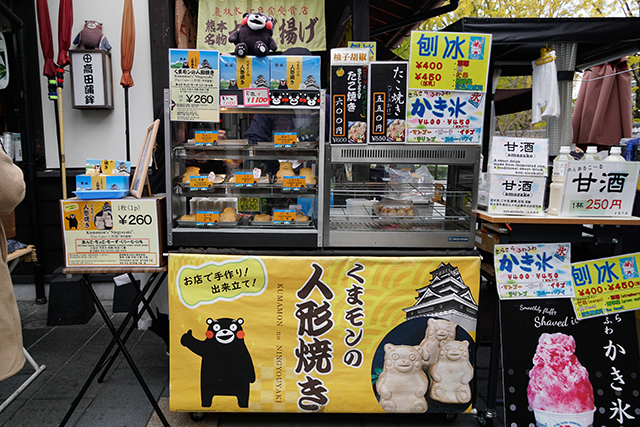
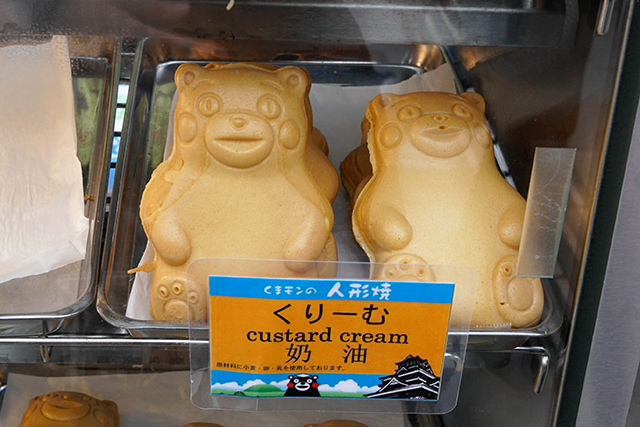
Next door at Takada Kamboko, which sells fish products, there’s a stand selling ningyo-yaki (literally, ‘baked dolls’) in the form of Kumamon (¥260, including tax) with various fillings. Our first choice of anko was sold out, but we did enjoy a custard cream version.
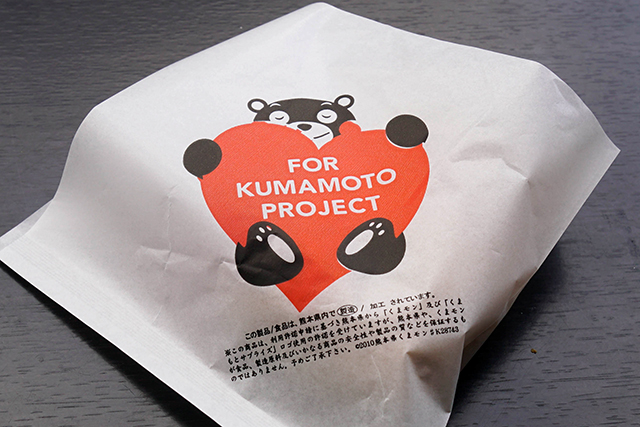
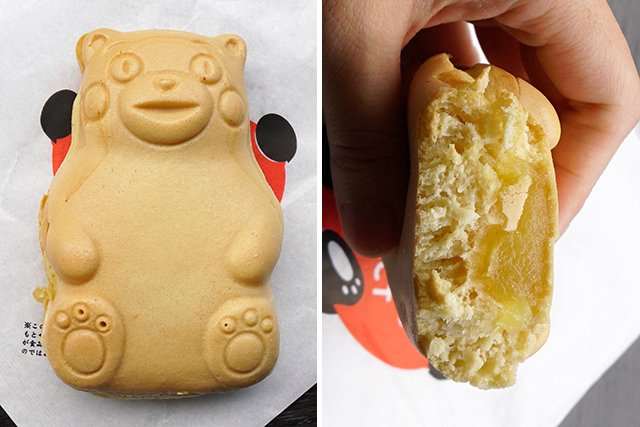
We enjoy his cuteness and the sweetness of the custard flavour but would’ve liked a less doughy cake – a few more minutes in the mould would’ve done it.
Kumamoto Castle, First-Special Opening
熊本城, 1-1 Honmaru, Chuo Ward, Kumamoto, 860-0002, Japan
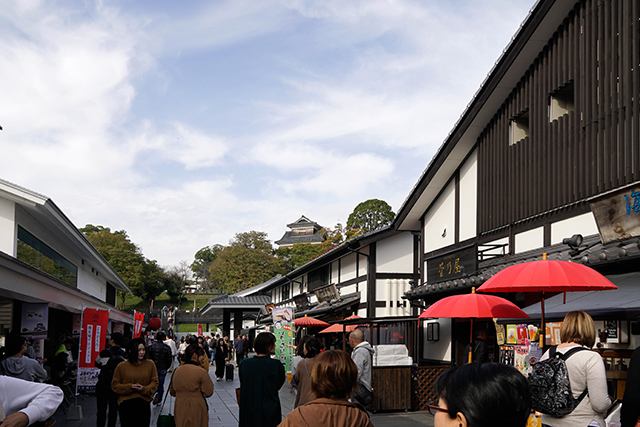
From Sakuranobaba no Josaien, we can see the Hitsujisaru Yagura Turret of Kumamoto Castle in the distance.
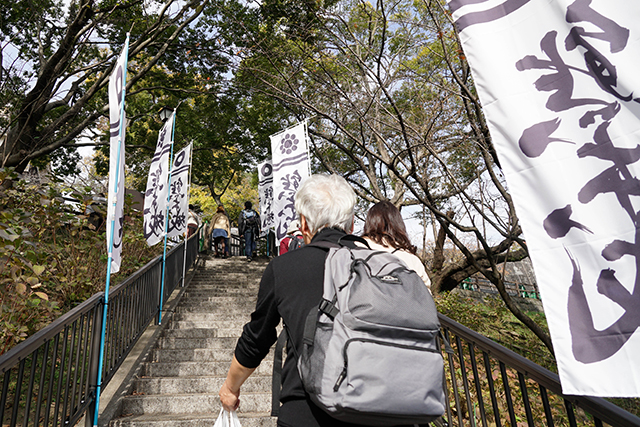
A flight of stairs at the back of Josaien takes us up towards the castle.
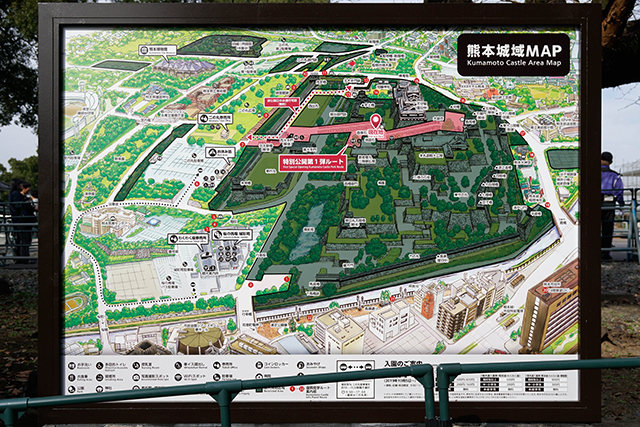
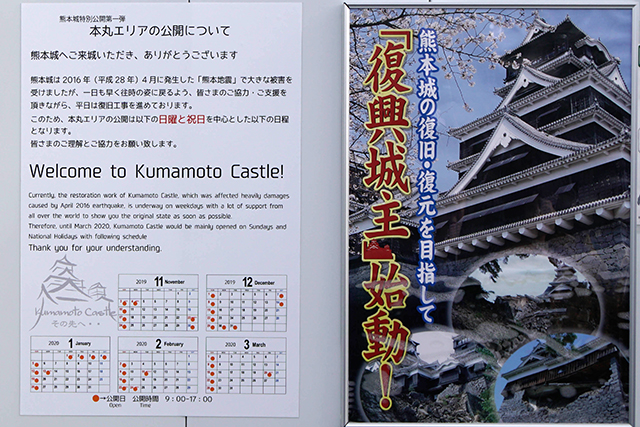
Kumamoto Castle suffered serious damage in the earthquakes of April 2016. Built in 1607, the castle was extensive with a circumference of 5.3 km, containing 49 turrets, 18 turret gates and 29 castle gates. Due to the 2016 earthquake, the stone walls collapsed in 50 places and 13 National Important Cultural Property buildings were damaged.
Many roof tiles fell, foundations were damaged, walls crumbled and entire structures collapsed. A walkway to the main keep (highlighted in red on the map above) opened to the public on Sundays and national holidays from October 5, 2019, and allowed for close up views of the keep. This is the ‘first special opening’ to commemorate the restoration of the Dai-Tenshu facade.
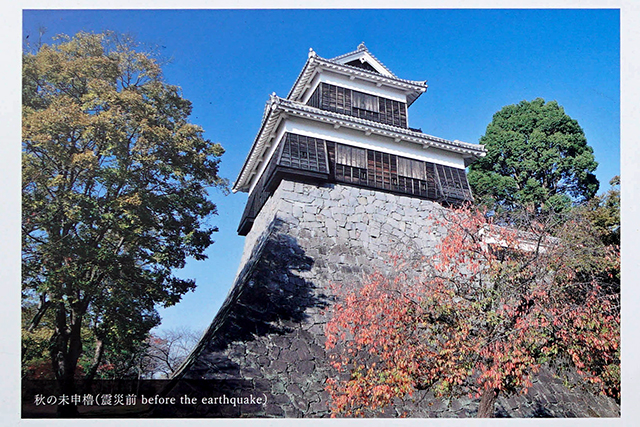
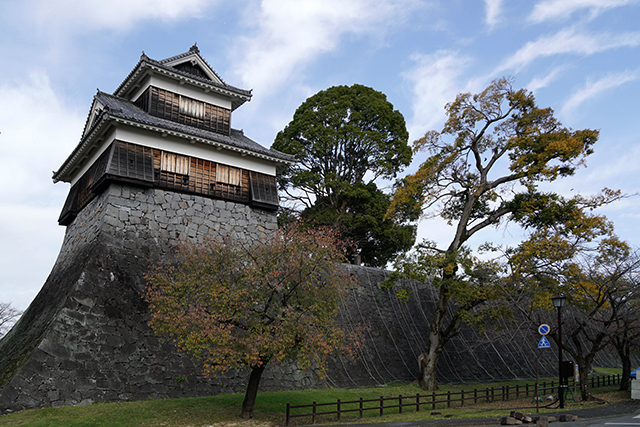
At the top of the stairs, we get a better view of the Hitsujisaru Yagura Turret.
Hitsujisau-yagua is a three-storey turret at the southwest corner of Nishedmaru. During the Edo Period, directions were indicated by the twelve animal signs of the Chiense zodiac and the name ‘Hitsujisaru’, indicating southwest, became common. The turret was dismantled during the Meiji Period, but it was reconstructed with wood in 2003. Government offices were concentrated in a corner surrounded by fences and were collectively known as Bugyomaru.
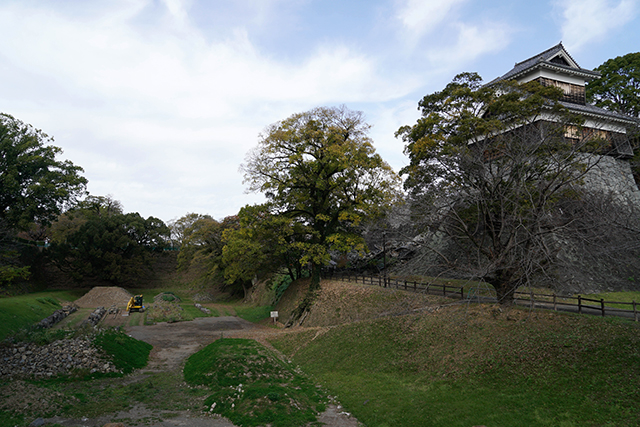
As a result of the earthquake in 2016, the stone walls and fences collapsed at various points. In the open areas, there are mounts of rubble organised into various piles.
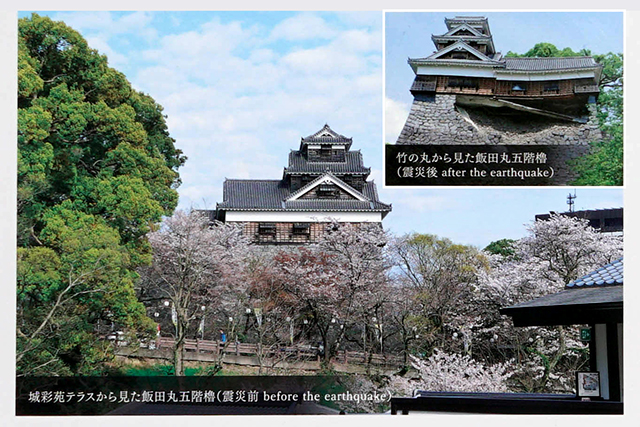
Another important turret is the Iidamaru-Gokai Yagura, which was disassembled following the earthquake following extensive damage.
The Iidamaru area was said to have been constructed by Kakubei Ida, a vassal of the master castle builder, Kiyomasa Kato. Idamaru-Gokai Yagura Turret, a five-story turret, was then built at the southwest comer of the Iidamaru area. This turret was eventually removed by the military during the Meiji Period, but was later reconstructed out of wood in 2005. Much of the lower sections of the stone walls collapsed during the earthquake in 2016; however, the turret remained supported by its corner stones and, as such, became a symbol of hope to the people who suffered from the earthquake. Currently the turret and its stone walls have been dismantled, but, in the process, remnants of the original stone walls were discovered underneath.
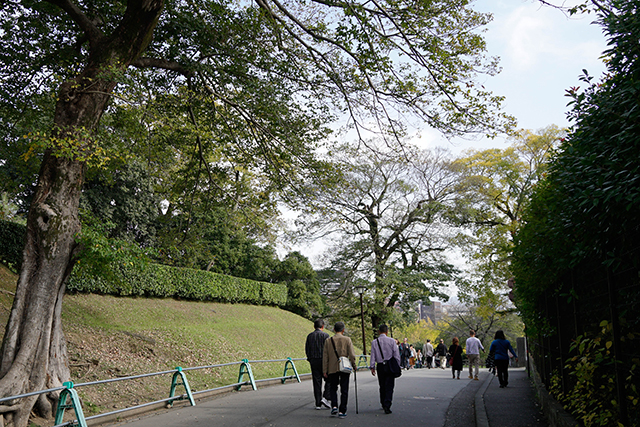
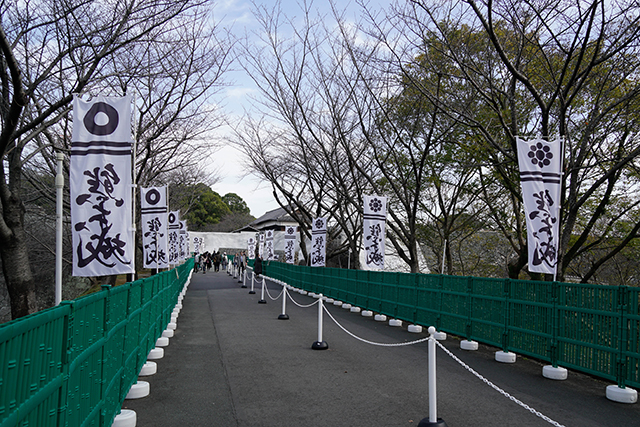
It’s a short 3-5 minute walk to the castle grounds.
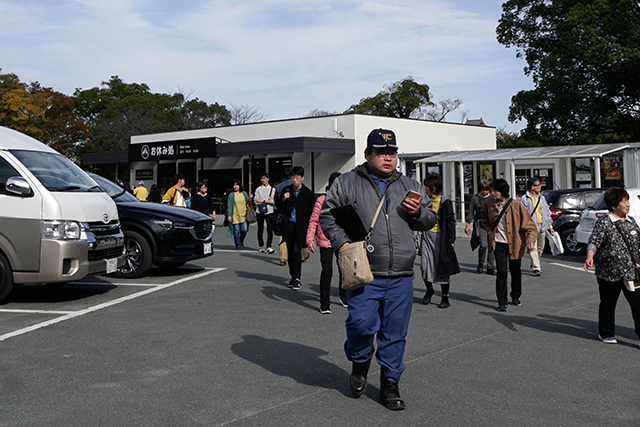
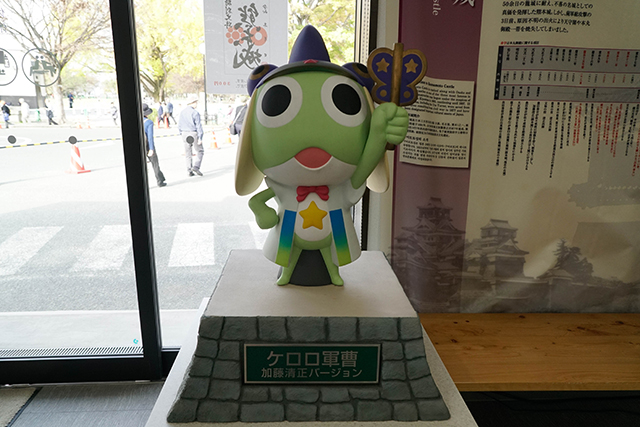
Access to the walkway to the main keep is via the Ninomaru Parking Lot. The white building houses a resting area, inside of which is a short explanation of Kumamoto Castle’s history as well as a small omiyage stall.
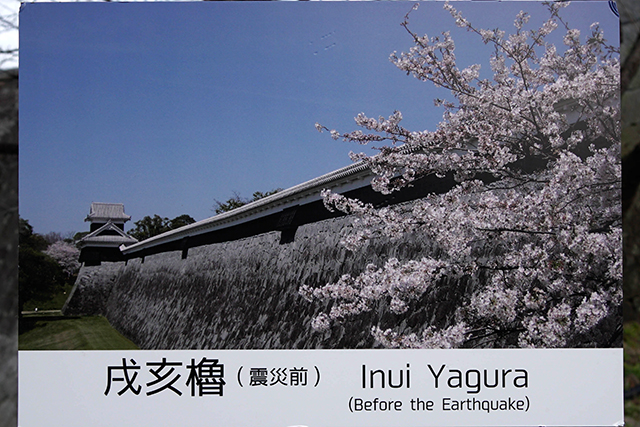
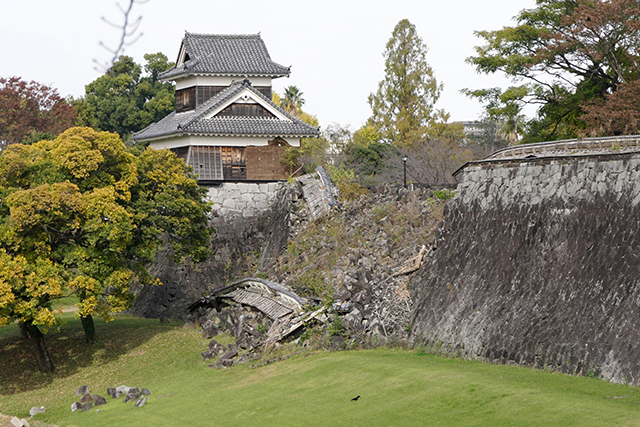
Inui Yagura is a three-story turret located in the northwest corner of Nishidemaru and was named for “Inui”, indicating northwest.
The turret had been dismantled during the Meiji Period and was reconstructed with wood in 2003. As a result of the earthquake in 2016, the stone walls under the turret largely collapsed and the turret was supported only by its corner stones. In addition, most of the stone walls extending to the east also collapsed.
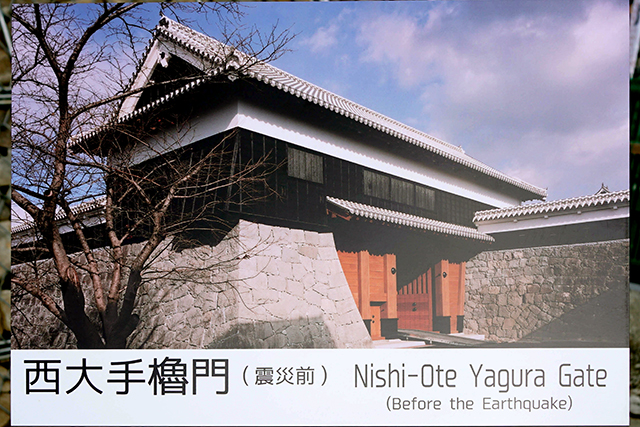
Among the three main gates in the Nishidermaru area, this Nishi-otemon Gate, leading into the central Honmaru area, served as a main gate of the castle. It was pulled apart in the Meiji Era but was reconstructed from wood in 2003.
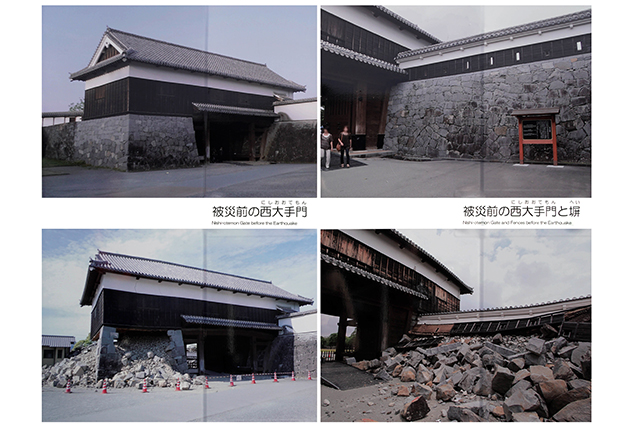
There was extensive damage to the structure during the 2016 earthquake, with almost all of the stone structure in the gate and fence collapsing.
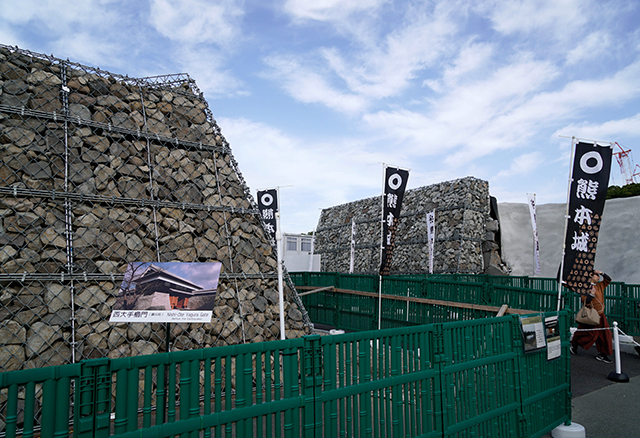
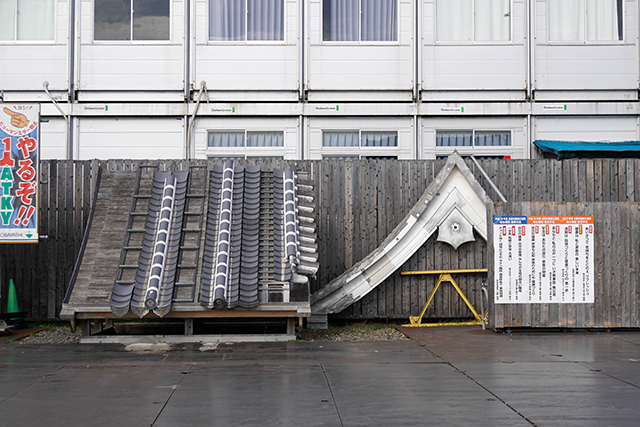
As a result of the large-scale damage, the gate was disassembled and stored.
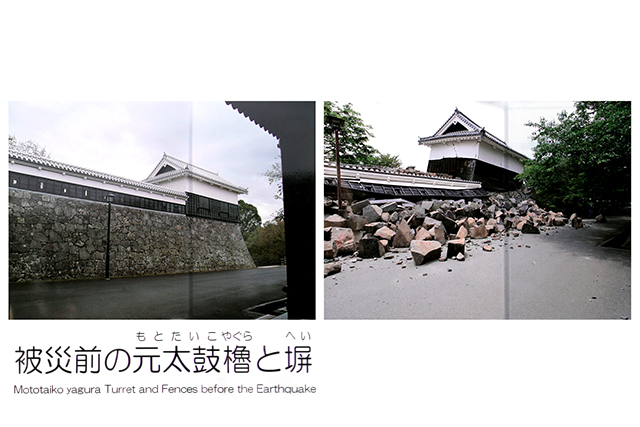
Nearby, the Mototaiko Yagura turret and fences also sustained similar large scale damage.
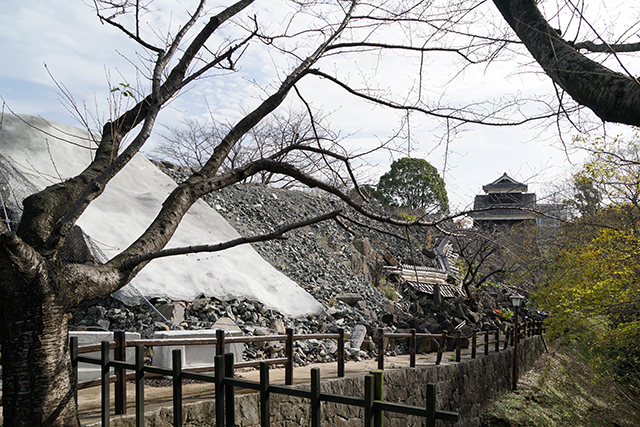
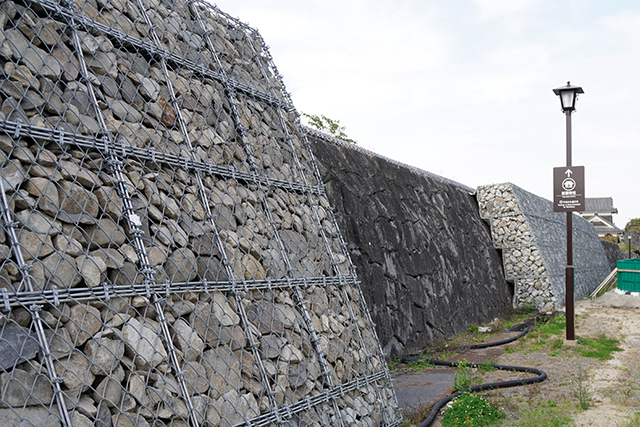
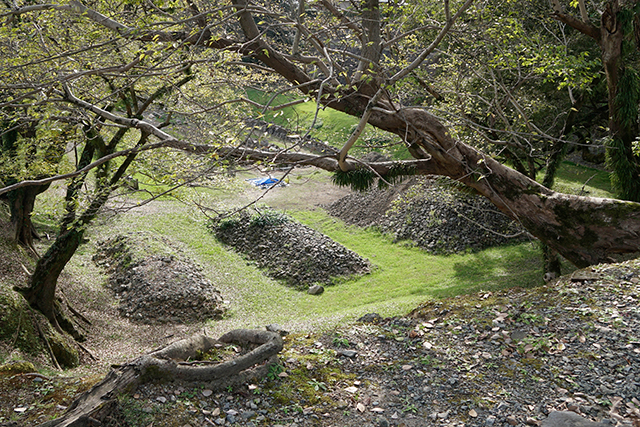
The stones that collapsed were recovered and stored in open areas on the castle grounds, while safety measures in the form of nets and bags filled with cobblestones were put in place in front of the stone walls.
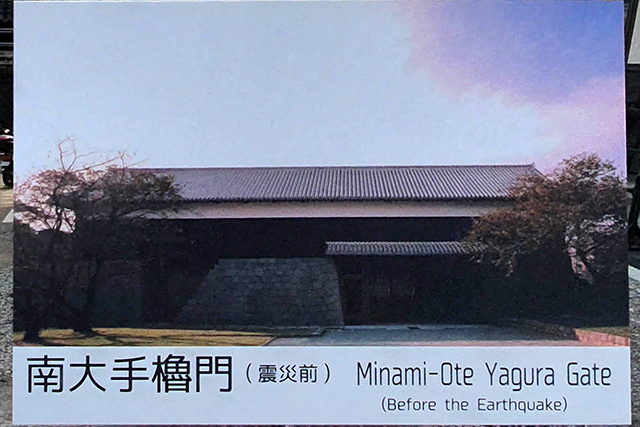
The structure of the Minami Ote Yagura Gate, the gate that at the head of the Miyukizaka Slope approach to the castle was badly damaged in the earthquake.
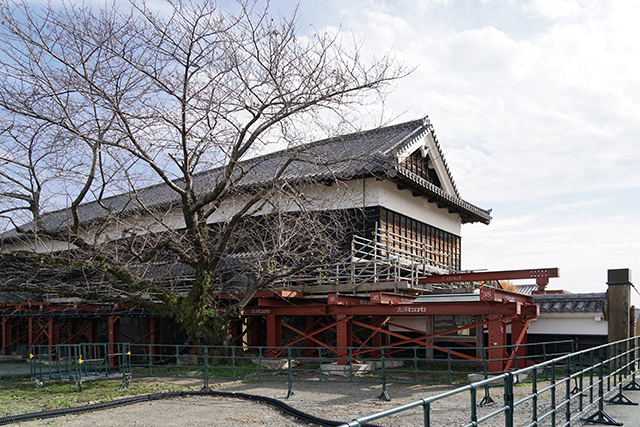
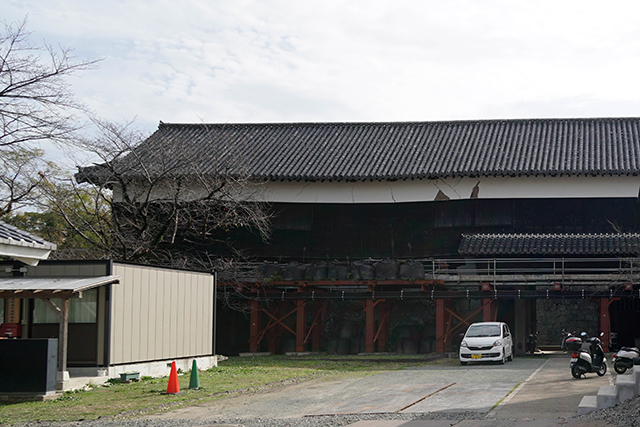
Steel structures were brought in the hold up the structure while repair works commenced.
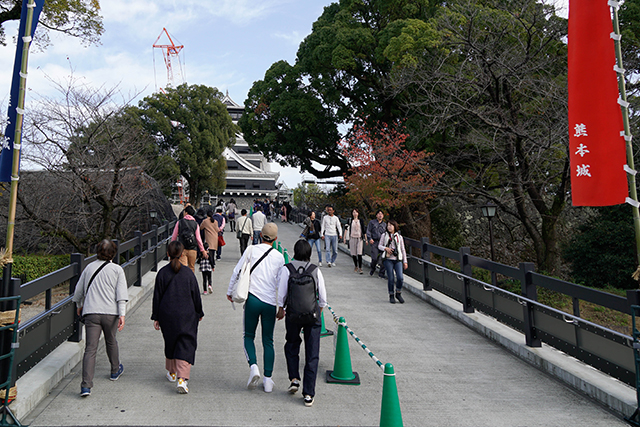
Restoration of the castle towers went into full swing in April 2017 with the construction of two slopes to repair the area between Hohoate-gomon Gate (destroyed by 2016 earthquake) and the plaza in front of the castle towers.
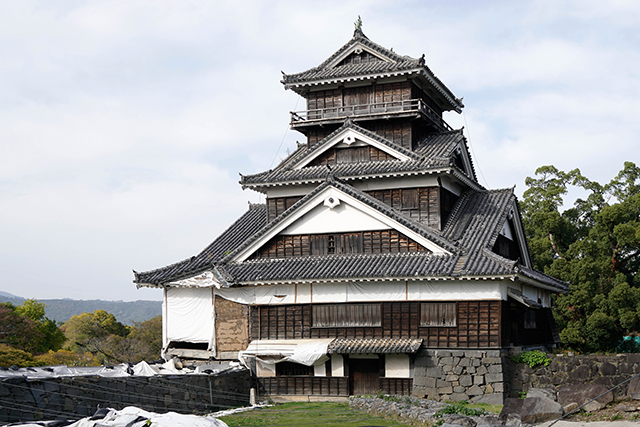
Alongside the Hohoate-gomon Gate, the Tsuzuki-yagura turret buildings linked to Uto Yagura Turret also collapsed but this five-storey turret remains standing despite the serious damage to its floors and plaster walls.
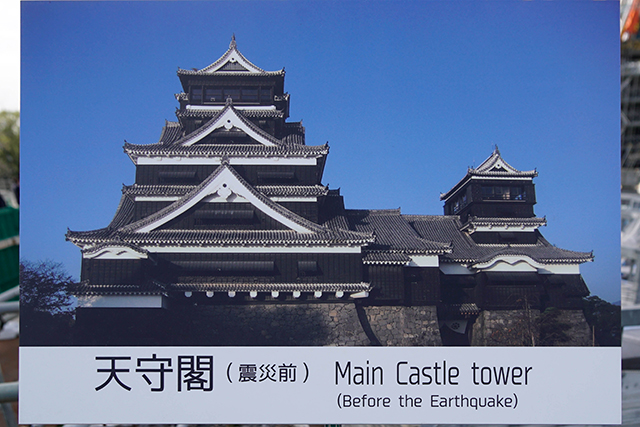
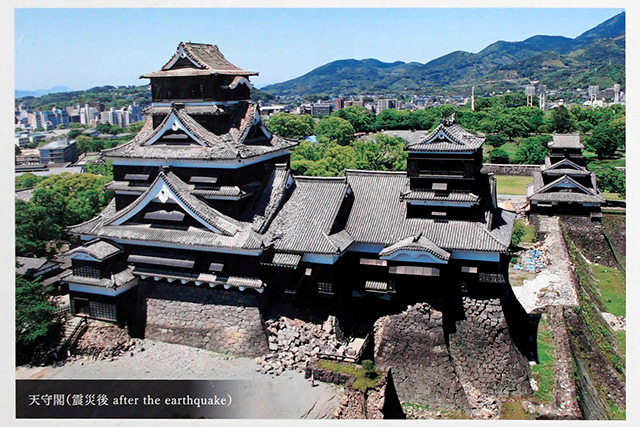
Dai-Tenshu (on the left) and Sho-Tenshu (on the right) make up the main castle tower and are connected via a corridor. Dai-Tenshu and Sho-Tenshu burned down just before the Satsuma Rebellion in 1877 and were rebuilt with a reinforced concrete structure in 1960.
The Daitenshu Main Castle Tower’s roof tiles and Shachihoko, the dolphin-like ornaments that adorn the top of Japanese castles, fell off the tower as a result of the earthquake in 2016.
Besides the pillars on the sixth floor of Dai-Tenshu that were damaged and the sunken first floor of Sho-Tenshu Castle Tower, many cracks and fractures appeared on the walls and concrete floors throughout the two towers. Moreover, Sho-Tenshu’s interior stone walls almost completely collapsed in addition to the significant wall collapse and resulting deformity on the tower’s surface. On the other hand, while the stone walls on the inside of Dai-Tenshu’s collapsed and deformed, there were very few changes to the tower’s exterior.
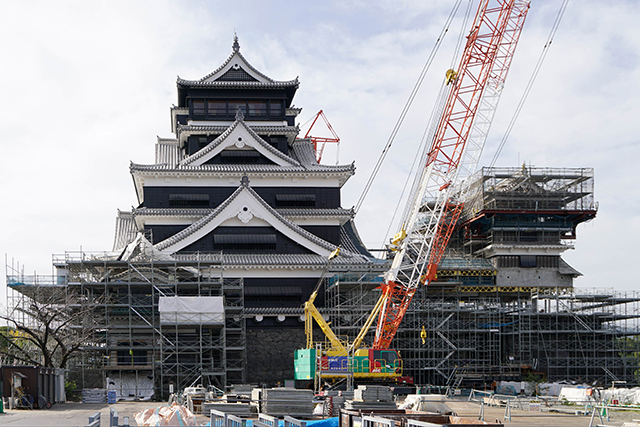
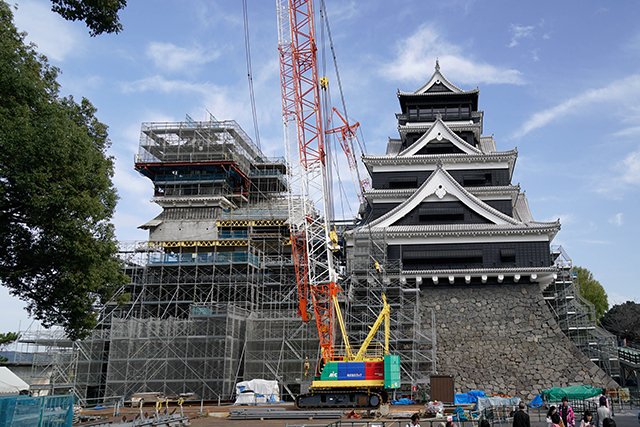
This ‘first special opening’ from October 19, 2019, celebrated the completion of the restoration for the Dai-Tenshu.
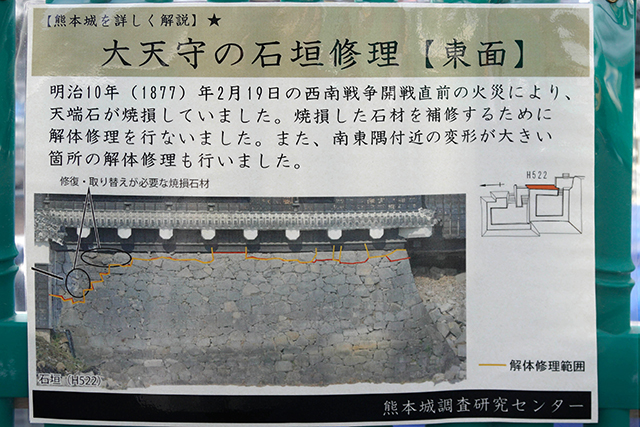
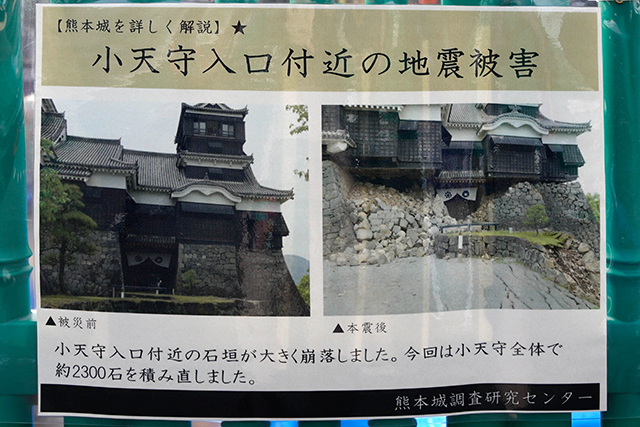
By April 2018. the roof of Dai-Tenshu Main Castle Tower had been rethatched with tile, and the Shachihoko. dolphin-like ornaments that adorn the top of Japanese castles, were placed back on top. In July of the same year, reconstruction on the stone walls began with the re-stacking of 791 stones and 2500 stones in Dai-Tenshu Main Castle Tower and Sho-Tenshu Castle Tower, respectively. Currently, the Dai-Tenshu Main Castle Tower’s Facade has been restored to its former appearance, and various seismic reinforcements are being installed in the interior.
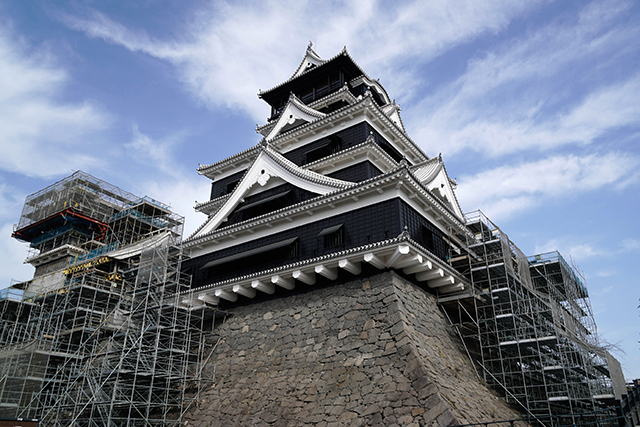
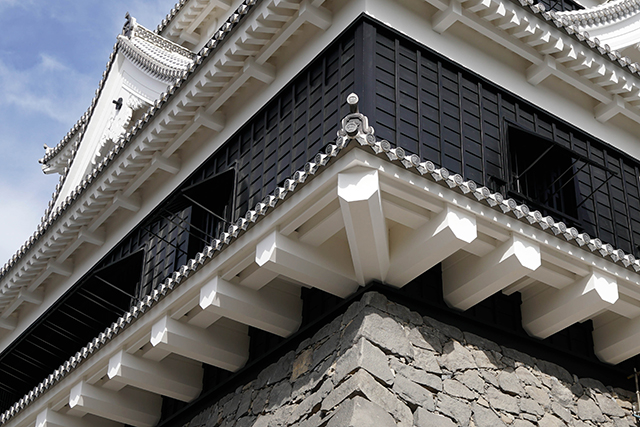
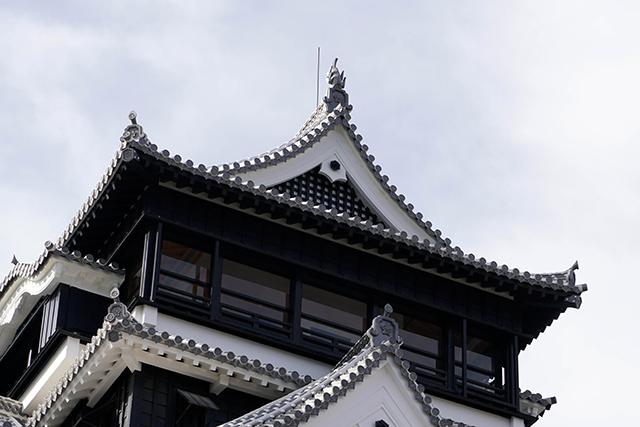
The roof tiles that were severely damaged by the earthquakes were replaced, with the white plaster covering the tile joints and gables forming a beautiful contrast to the black siding.
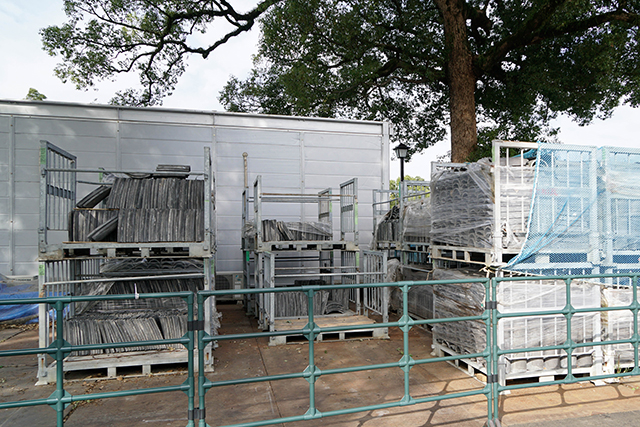
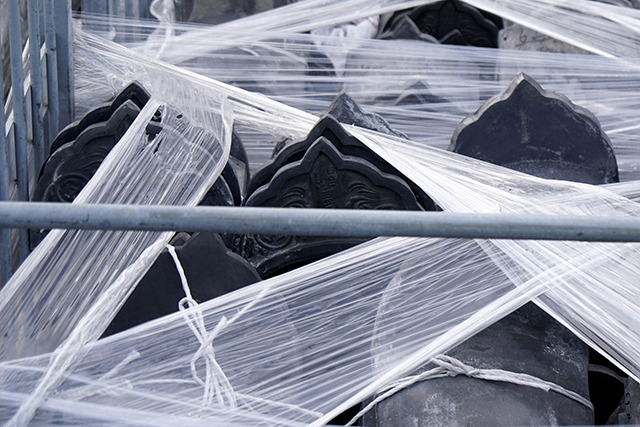
Nearby are cages filled with the new tiles used to replace the numerous that were destroyed.
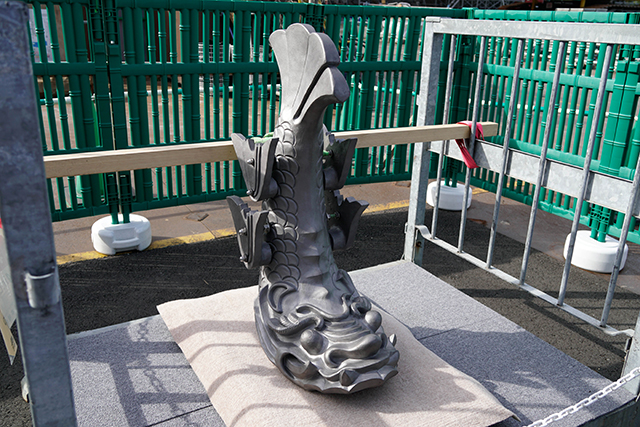
We visited just a week before the shachi were due to be placed onto Sho-Tenshu, so had the unique experience of being able to touch the ornament itself before it became out of reach on the roof.
At both ends of the main ridge at the very top of a donkon were large tiles in the shape of imaginary machine creatures called shachi. A shachi is a mythical creature with the head of a tiger and the body of a fish. Because shachi were said to be able to shoot water [from] their mouths, statues shaped liked these creatures are often placed on tiled rooves to prevent fires. The Shachigawara, a type of shachi statue, on display here will be placed on the roof of Kumamoto Castle’s Shotenshu Castle Tower on November 23rd, and therefore can only be seen and touched up close for a limited time.
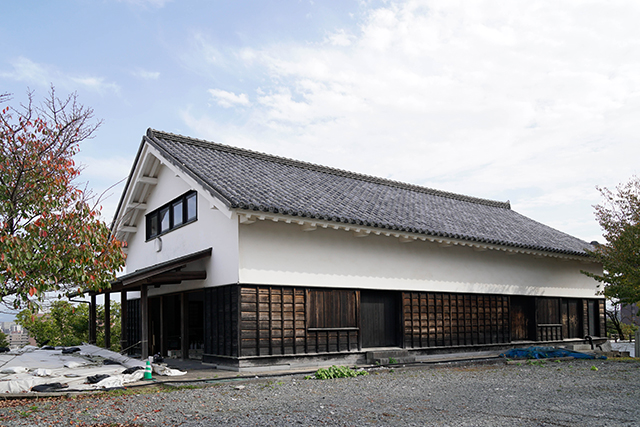
This is the Nagatsubone-yagura Turret, which looked mostly intact, although the Akazu-no-mon Gate next to it had been disassembled following damage from the earthquake.
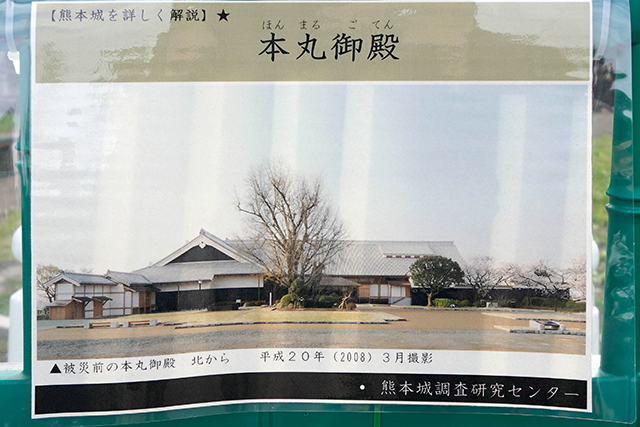
This is the Honmaru-goten Palace, which was the residence for daimyo lords and their families. Inside are a series of rooms decorated with impressive wall paintings within the great hall, including the impressive Shokun-no-ma reception room. The palace (seen above) was restored in 2008 and also has an underground passage, which is rare in Japan, called the ‘Passage of Darkness’.
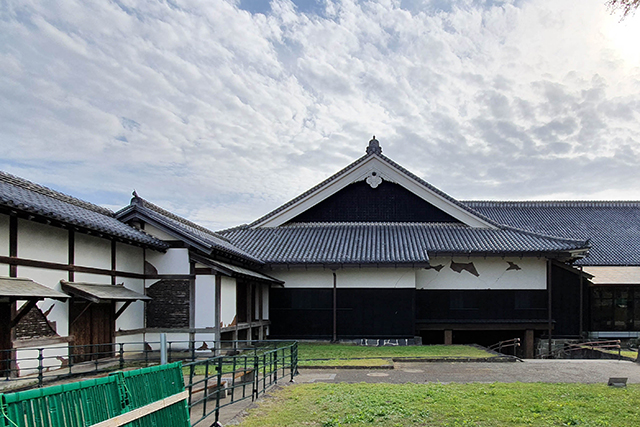
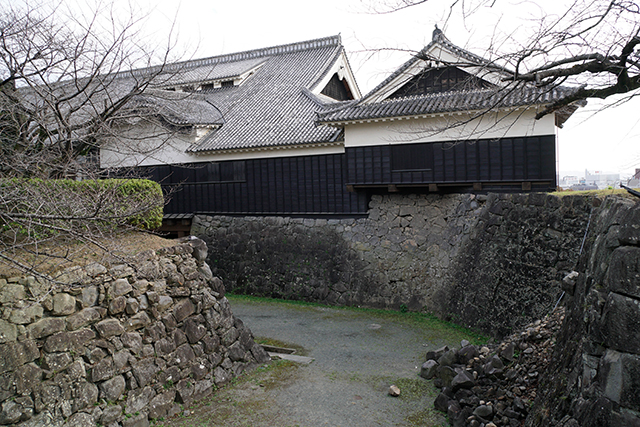
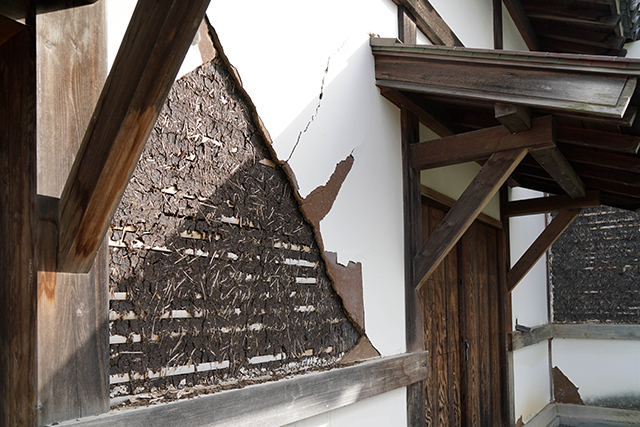
The palace sustained considerable damage during the 2016 earthquake, with the inside currently closed to the public.
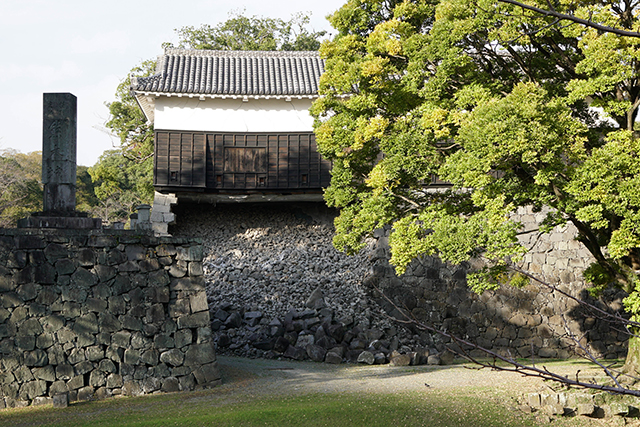
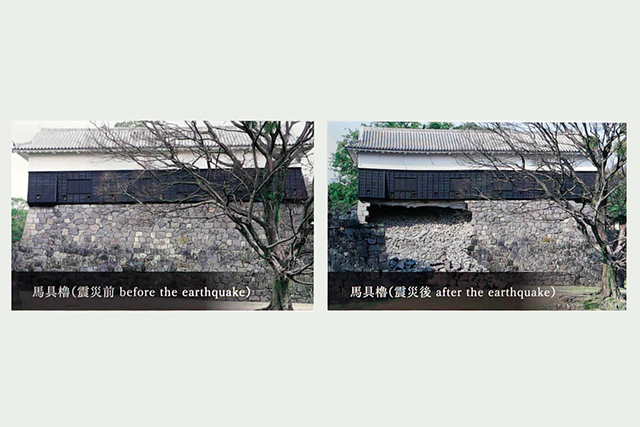
Located back near Josaien, Bagu Yagura Turret once guarded the southern entrance to Kumamoto Castle.
Harneses were likely once carried in but no records have been found. During the Edo Period, Geba Bridge was located in front of the turret. The turret was dismantled before the Satsuma Rebellion and the stone walls were used as artillery batteries. The current turret was reconstructed with wood in 2014. The stone walls that had buckled as a result of the mainshock of the earthquake on April 16, 2016 and its repeated aftershocks collapsed on May 10, 2016.
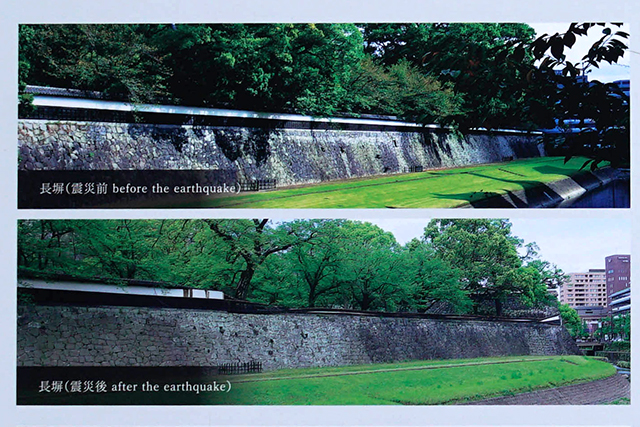
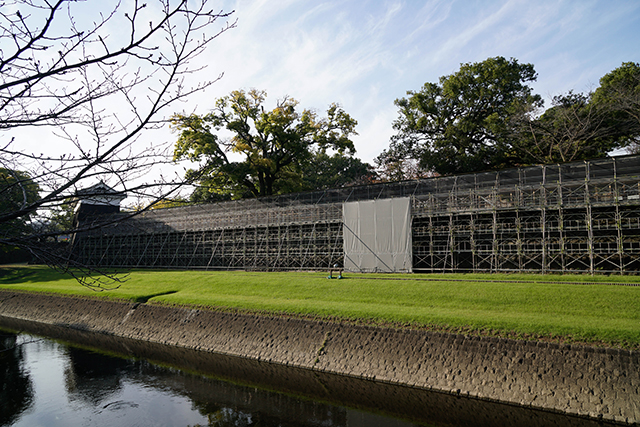
Along Tsuboi River is Nagabei Wall, the longest of existing castle walls.
This is a long fence spanning a total length of 242 m which was built along the current Tsuboi River. Under the reign of Kiyomasa Kato, a bridge and entrance were located near the centre of the fence for passage between the Hanabata Residence and Kumamoto Castle. However, during the reign of Hosokawa. the entrance was sealed off and it became the long, straight fence it is today. As a result of the earthquake in 2016, approximately 80 m of the eastern portion collapsed, and a number of stone bracing struts were also damaged. The stone walls under the Long Fence had largely collapsed as a result of the earthquake in 1889, but there was little change this time.
Kumamoto City Hall
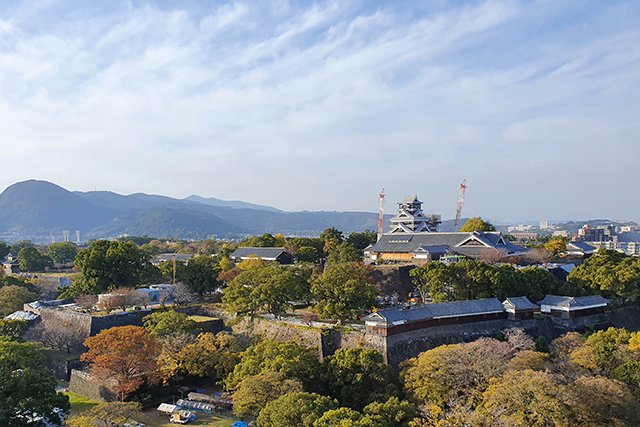
Viewing something from above is a good way to get a sense of its size, and the view from the 14th floor of Kumamoto City Hall is not only free but incomparable. Despite the crowds around the castle itself on a Sunday, we were the only ones there when we visited in the late afternoon.
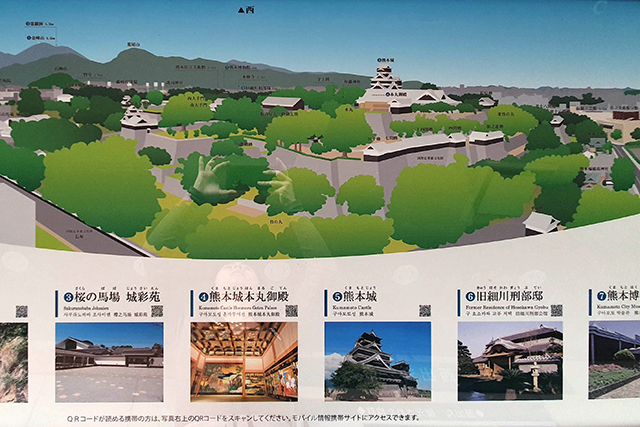
As with most scenic spots in Japan, there’s a guide to explain the monuments in the scape.
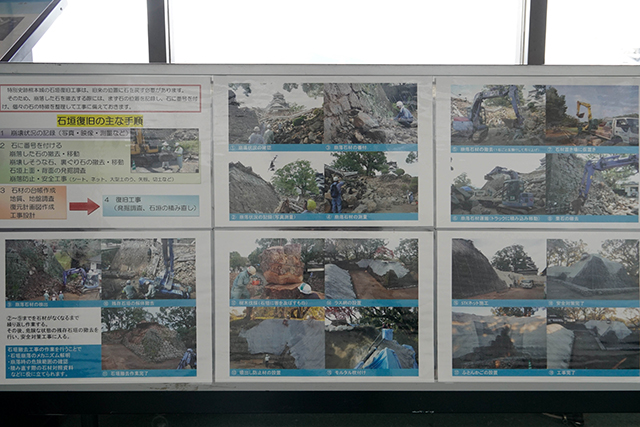
There’s also detailed explanations of the effect of the 2016 earthquake and restoration progress.
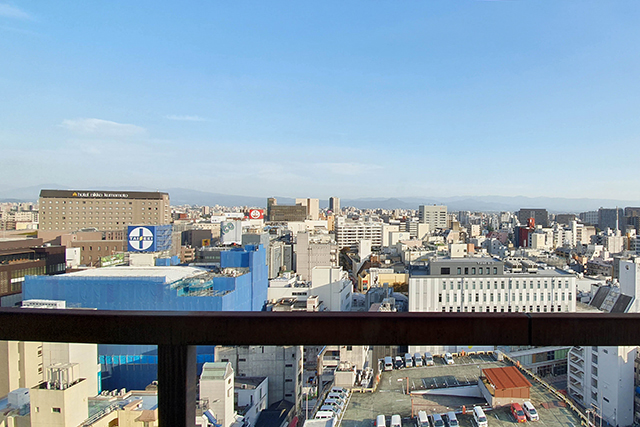
There’s an expansive view of the city centre on the opposite side of the building.
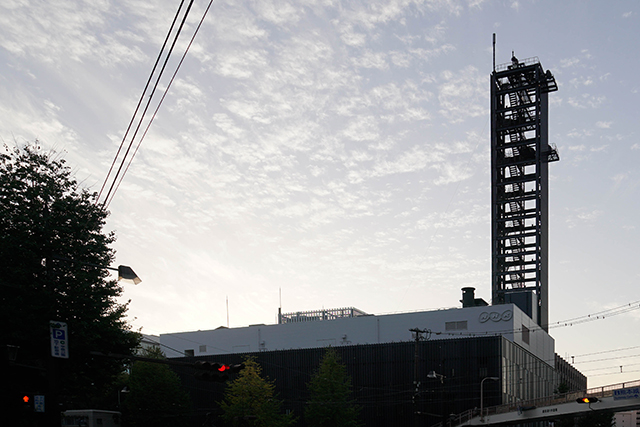
After taking in the view of Kumamoto Castle, we made our way back to our hotel for a rest before dinner. This is the headquarters for NHK Kumamoto.
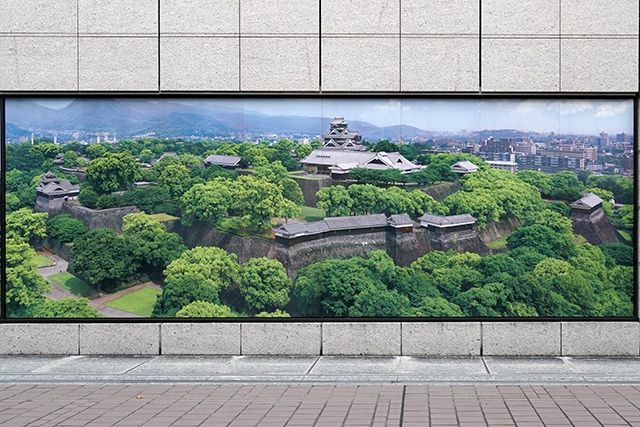
Less than a block from our hotel is the headquarters for Higo Bank, which includes a gallery featuring various historical items, like swords, as well as photographs of Kumamoto on the outside of its building. This one shows Kumamoto Castle before the 2016 earthquakes.
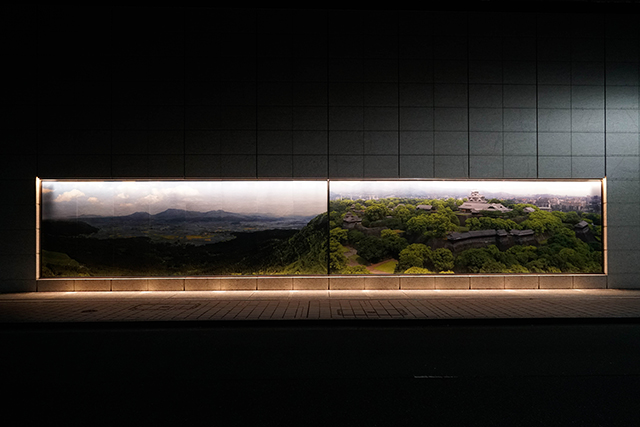
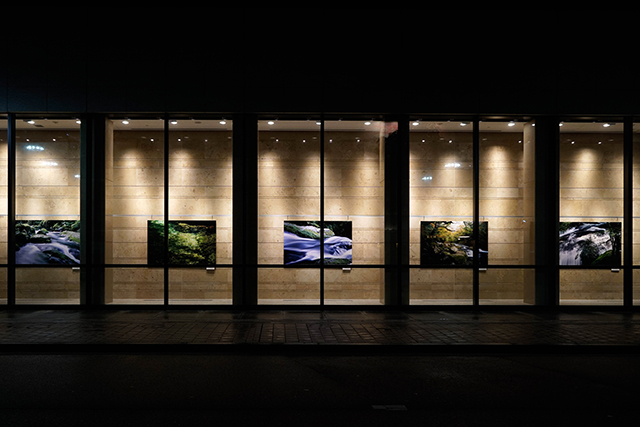
Next to it, is an expansive view of Mt Aso. Both are illuminated at night.
Sakuramachi
SAKURA MACHI Kumamoto, 3-10 Sakuramachi, Chuo Ward, Kumamoto, 860-0805, Japan
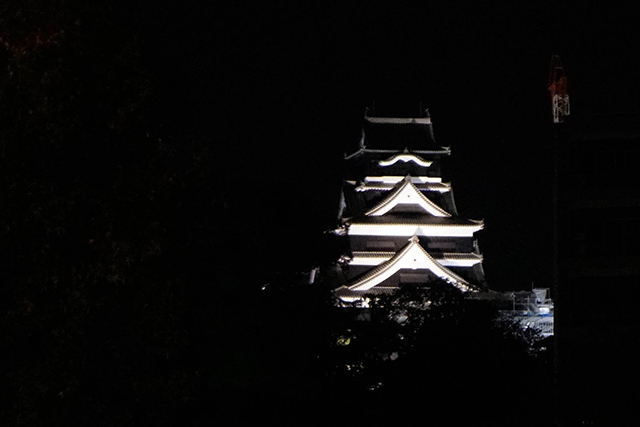
After a quick rest, we head back to Sakuramachi for dinner, but not before taking in the view of Kumamoto Castle lit up at night.
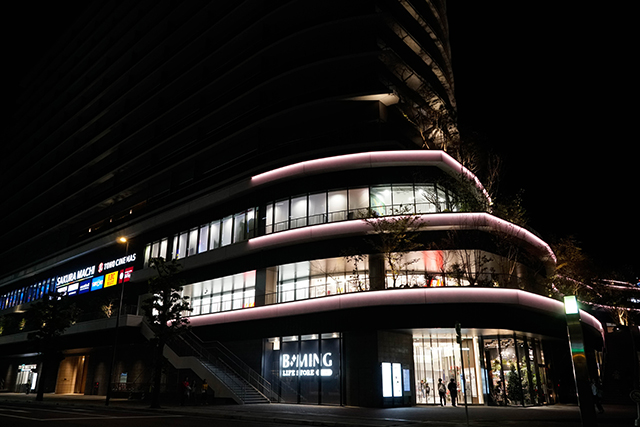
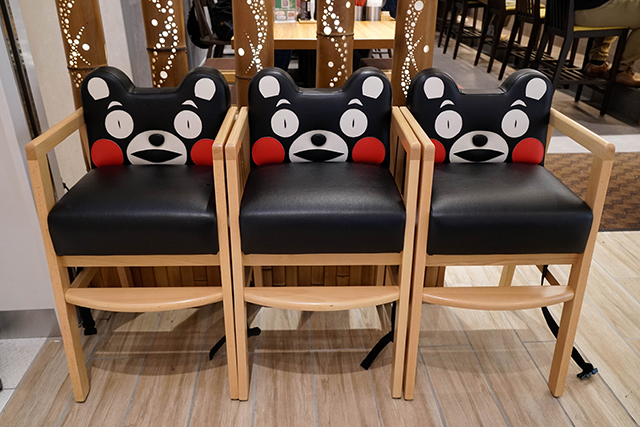
Shunsaikan Sakura Liquor Kuma Bar
旬彩館 さくら LIQUOR くまBAR, B1F SAKURA MACHI, 3-10 桜町, Kumamoto City, Kumamoto Prefecture, 860-0805, Japan
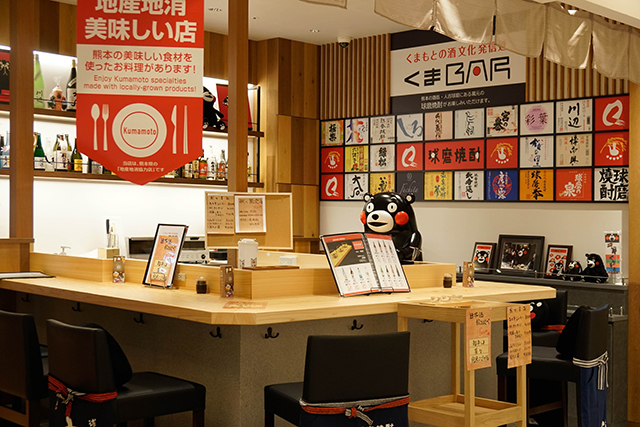
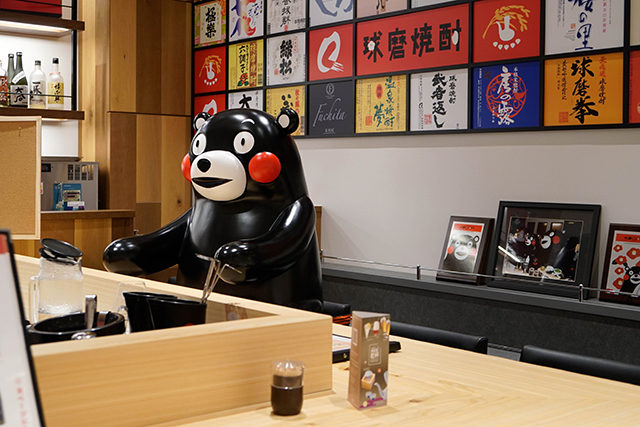
Located on the lower ground floor of Sakura Machi is the Kuma Bar attached to Sunsaikan Sakura Liquor where people can enjoy a quick drink — including all the local liqueurs involving tomatoes and banpeiyu — in a casual environment sitting next to Kumamon. These photos were taken first thing in the morning just after the stores opened, but when we visited the previous evening, all the seats were filled.
Zenkoku Goto Gourmet Yatai
全国ご当地グルメ屋台, B1F SAKURA MACHI, 3-10 桜町, Kumamoto City, Kumamoto Prefecture, 860-0805, Japan
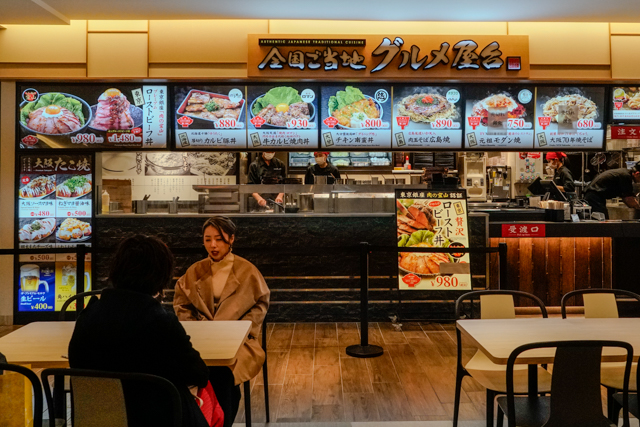
After a quick round of the restaurants in the basement, we choose Zenkoku Goto Gourmet Yatai, a restaurant inspired by the ‘food stall’ concept that sees it bringing dishes from various restaurants around Japan onto its menu.
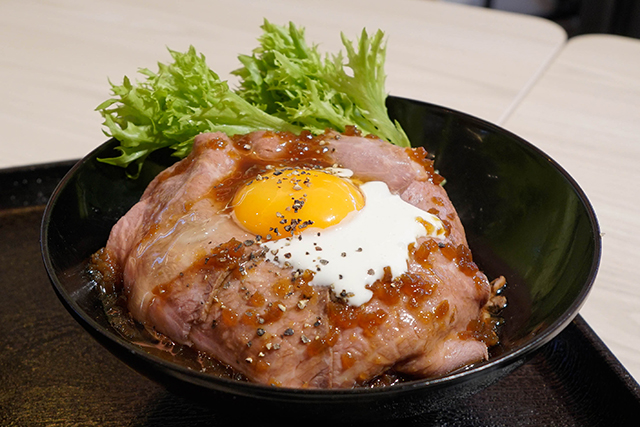
This is my Premium Roast Beef Rice Bowl (¥980) from Hireniku no Hozan (a yakiniku restaurant in Ginza, Tōkyō, for high quality kuroge wagyu beef). I thoroughly enjoy the tender roast beef, which went beautifully with the egg yolk.
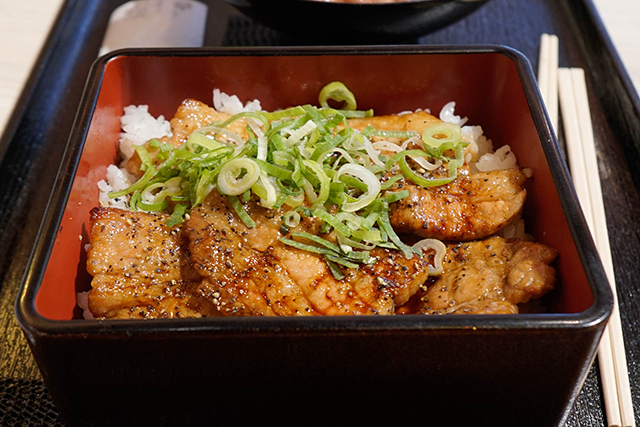
And this is D’s Grilled Tokachi Pork Rice Bowl (¥980) from Yuutaku (a pork restaurant in Shinjuku Subnade). He enjoyed the peppery flavour and smoky flavour of the pork.
We enjoyed our meals at Zenkoku Goto Gourmet Yatai. We were impressed by the thoughtfulness of placing small sheets of rubber underneath the bowls to stop them from sliding around the tray when carried from the shop to our table in the food court.
Chasen Cafe
京都お抹茶スイーツ専門店【CHASENカフェ】, 3F SAKURA MACHI, 3-10 桜町, Kumamoto City, Kumamoto Prefecture, 860-0805, Japan
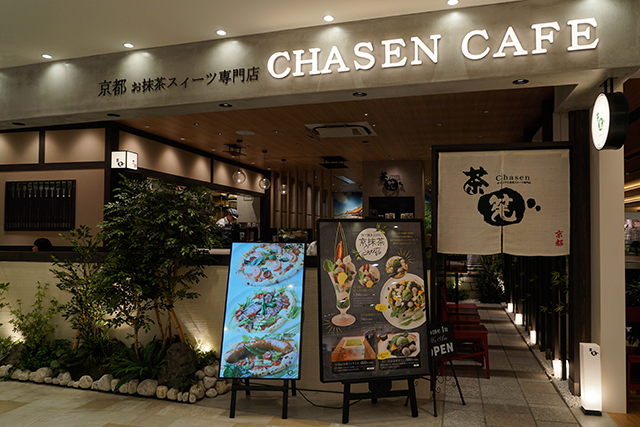
After dinner, we stop by Chasen Cafe, for some tea-inspired desserts.
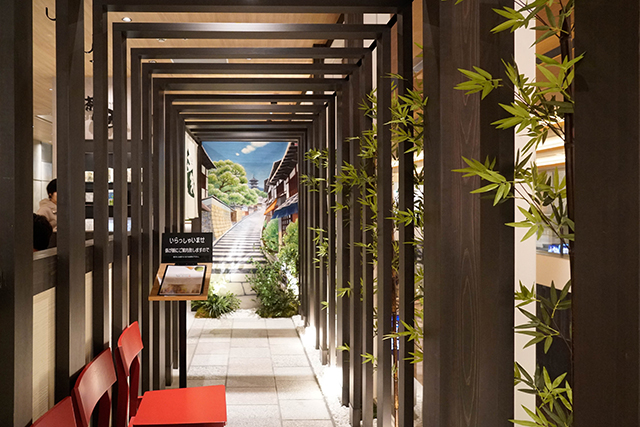
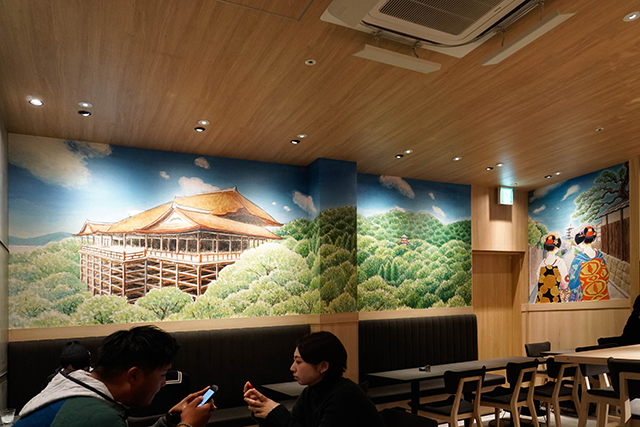
The interior of the cafe is painted in murals depicting the side streets of Kyōto as well as an expansive wall of the famous Kiyomizudera.
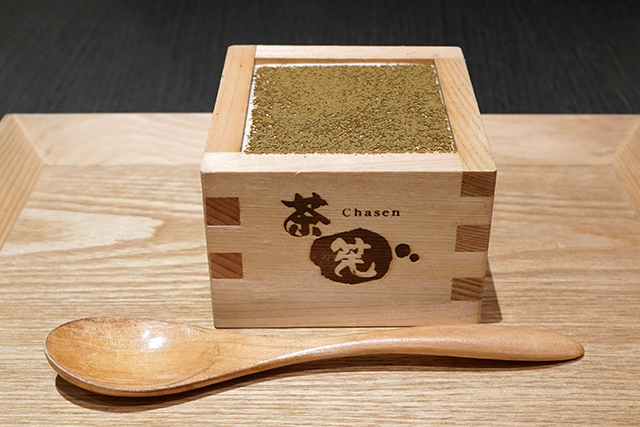
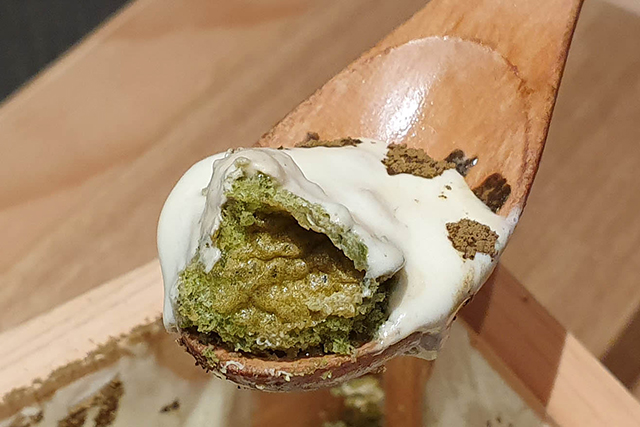
This is the Uji Hōjicha Tiramisu (¥600 +tax). We’re very disappointed by the overwhelming amount of unflavored cream cheese, mascarpone and fresh cream sitting atop a thin layer of matcha sponge, with the only hōjicha component being the powder dusted on top. The sponge was enjoyably light but would’ve benefited from being soaked in a hōjicha syrup.
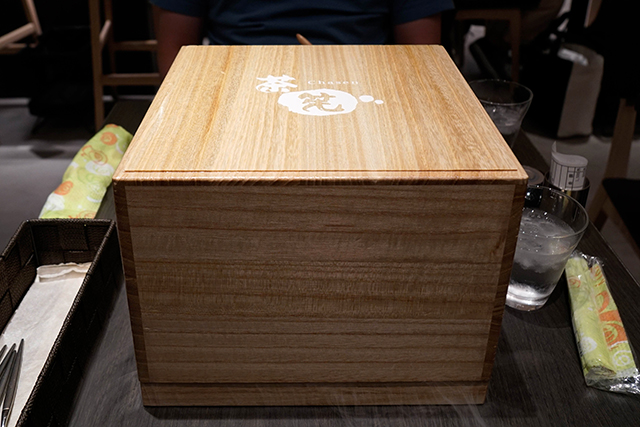
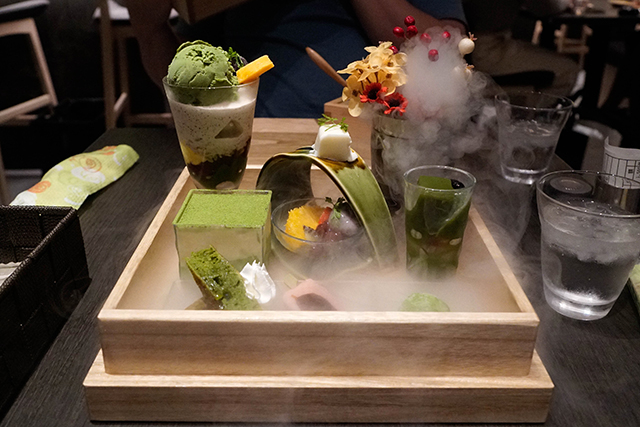
But our initial disappointments were redeemed by this Omatcha Tamatebako Sweets (¥1,500 +tax), which consisted of assorted matcha sweets that represent the treasures in the tamatebako that Urashima Tarō received from Otohime in the Japanese folktale. The sweets are made using matcha from the Uji teahouse, Yoshida Meicha-en, which provided the hassun (second course in a kaiseki) for the G7 Summit at Ise-shima in 2016.
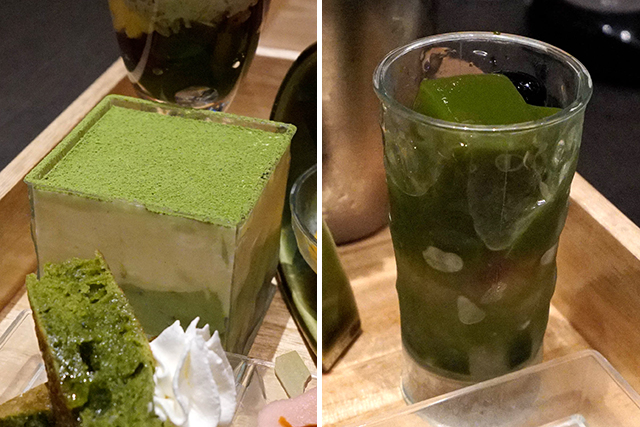
The first item in the box was a mini matcha tiramisu. Here, the ratio of sponge to cream was more evenly balanced, but again, the unflavored mix of cream cheese, fresh cream and mascarpone with the unsoaked sponge was wanting.
The second item was matcha jelly with black soybean. The jelly was immensely enjoyable with a crisp sweetness that balanced the vegetal notes of the matcha. It had the crumbliness typical of agar-based jellies, while the black soybean added a sweet nuttiness.
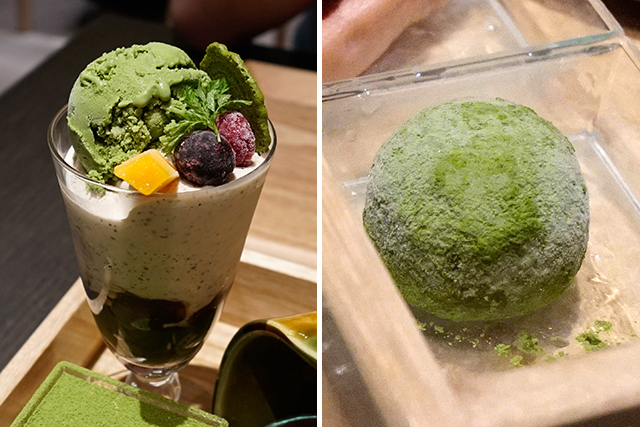
The third item was a mini parfait with a mix of matcha jelly and azuki, then a dollop of black sesame cream, before topped with frozen fruit (raspberry, blueberry and mango), a scoop of matcha ice cream and a matcha wafer. I quite enjoyed the black sesame cream, which held its own against the bolder matcha flavours in the ice cream and jellies.
The fourth item was a matcha white chocolate truffle, which had a prominent bitterness from the matcha powder dusted on the outside before being countered by the sweetness of the white chocolate centre.
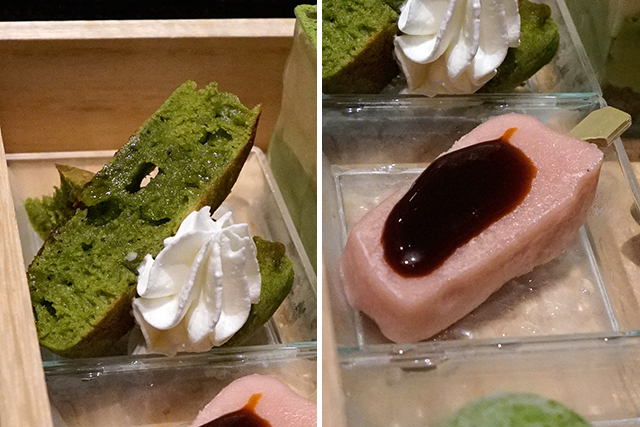
The fifth item was a matcha cake, which was sweeter and bolder than the sponge in the tiramisu. While denser, it was still tender and moist.
The sixth item was a pink mochi recalling the top layer of hishi mochi (which derives its colour from the fruits of gardenia jasminoides), but here has little flavour of its own that isn’t overwhelming by the sweet soy sauce slathered on top, which was not enjoyable.
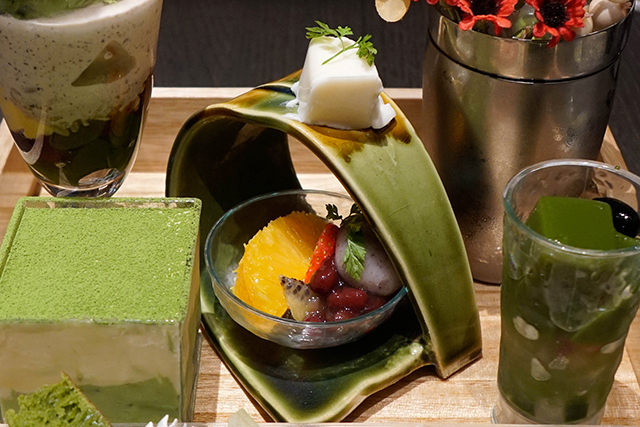
Finally, at the centre is a mini anmitsu with segments of orange, kiwifruit and strawberry as well as azuki beans and shiratama, and a cube of almond tofu on top. The freshness and acidity of the fruit and the neutral almond jelly cleansed the palate between the other desserts, while the mochi texture of the black sesame speckled shiratama was a moreish highlight.
Overall, the box was a very affordable way to enjoy a large variety of matcha desserts. At ¥1,500 (+tax), it was affordable especially considering something similar on such a scale is near impossible to find in Australia.
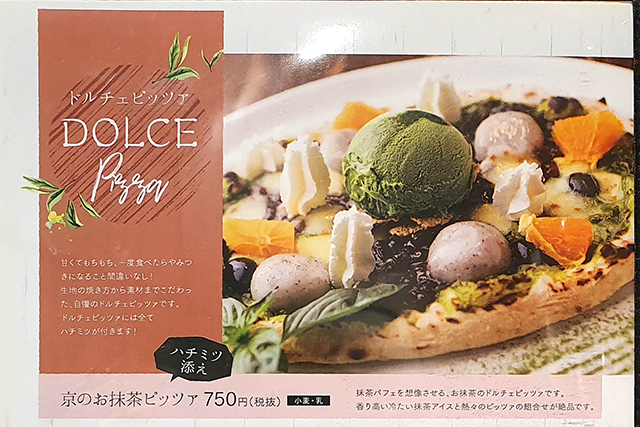
Also on the menu are matcha inspired Western desserts like this dolce pizza for ¥750, which we would love to return to try!
APA Hotel Kumamoto Kotsu Center Minami
アパホテル 熊本交通センター南, 1 Renpeicho, Chuo Ward, Kumamoto, 860-0017, Japan
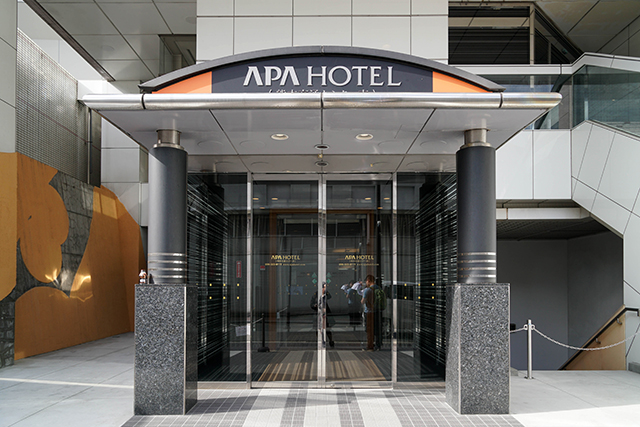
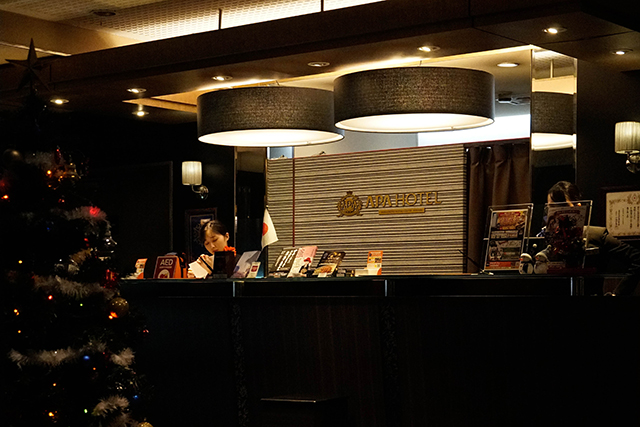
We stayed at APA Hotel Kumamoto Kotsu Center Minami for our three nights in Kumamoto. In terms of location, it’s located in a quiet area, a mere 5-minute walk from SAKURA MACHI and a further 3-5 minute walk to the main shopping street and Kumamoto Castle. There are more central hotels but we felt this one was decently located for the more affordable price.
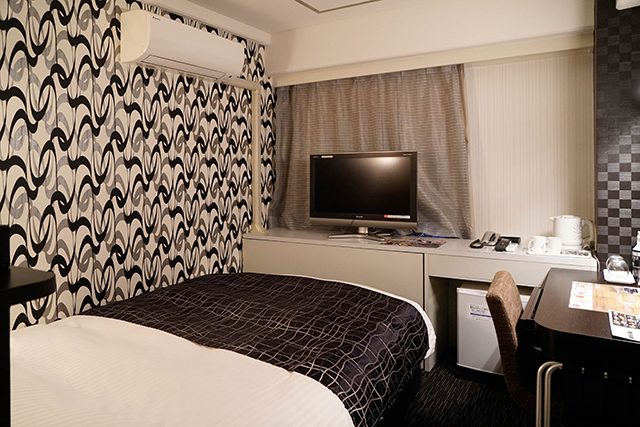
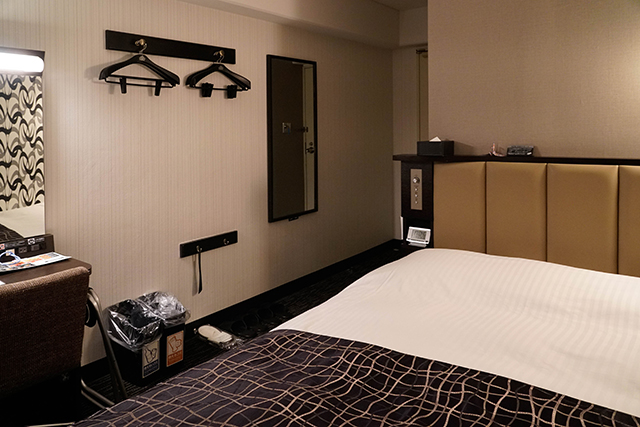
The interior of the room is decorated in a contemporary style and clean. Again, we enjoyed the split system AC that allowed us to adjust the temperature of the room ourselves. While the mattress has seen firmer days, it was decent and the bedding sufficiently plush. Access to wireless internet has gone a long way in terms of availability, stability and speed in the years since our first visit to Japan a decade ago.
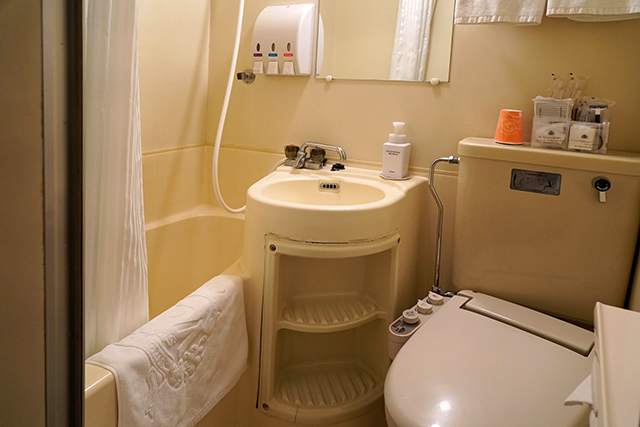
The cramped, prefabricated bathroom shows the age of the hotel, alas.
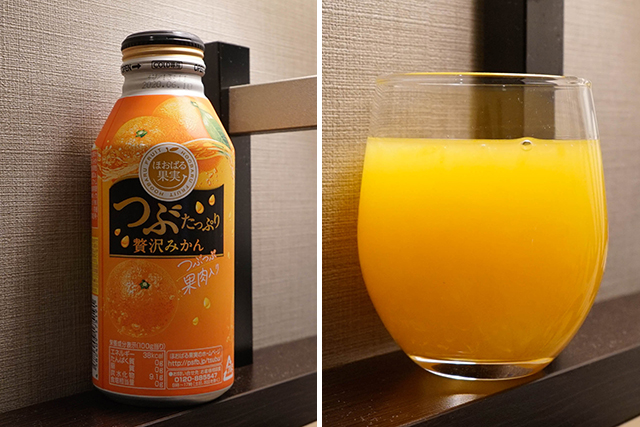
To finish the evening we enjoy this Pokka Sapporo Hoobaru Fruits Tsubu Tappuri Zeitaku Mikan. We thoroughly enjoy this drink, which contained 40% mikan juice along with mikan. It had an enjoyable sweetness with gentle acidity, while the pulp retained the Tsubu Tsubu mikan. Enjoyable sweetness with gentle acidity. The pulp retains the flesh globules for pops of flavour that are different from orange juice with pulp.
Kumamoto was Day 11 of 15 in this Japan 2019 trip around Kyūshū. Day 12 saw us staying in Kumamoto.