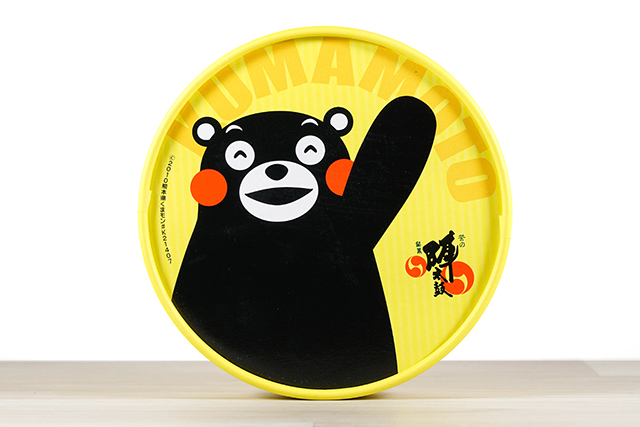
KobaiHomare no Jindaiko is one of the most popular tokusanhin (specialty food product) associated with Kumamoto and the Kyūshū region generally. And as Kumamoto’s beloved mascot, Kumamon’s face also graces one edition of the gift boxes (there are options with just the company’s logo as well as Kumamoto Castle).
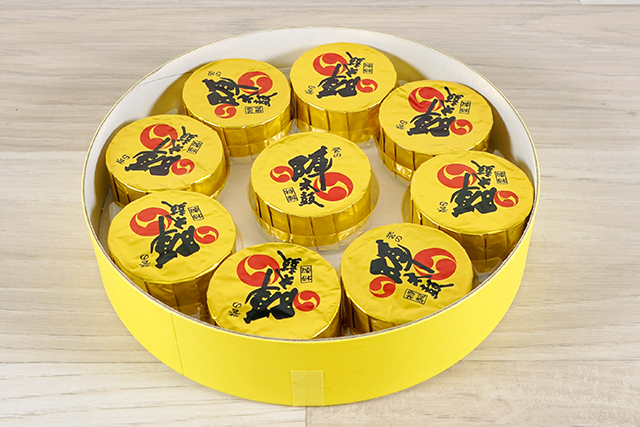
Each box contained 9 jindaiko, which are a type of wagashi consisting of soft mochi coated with anko. It is made using 7 ingredients: sugar, large azuki beans, maltose, starch, starch syrup, agar and salt.
The azuki beans are from Hokkaidō and known for their sweet taste and tender texture as a result of the temperature fluctuations between day and night in the rich volcanic soil of the region that increases the carbohydrate content of the beans. Only water sourced locally from the Aso area in Kumamoto, which is known for its crystal clear water, is used in the jindaiko.
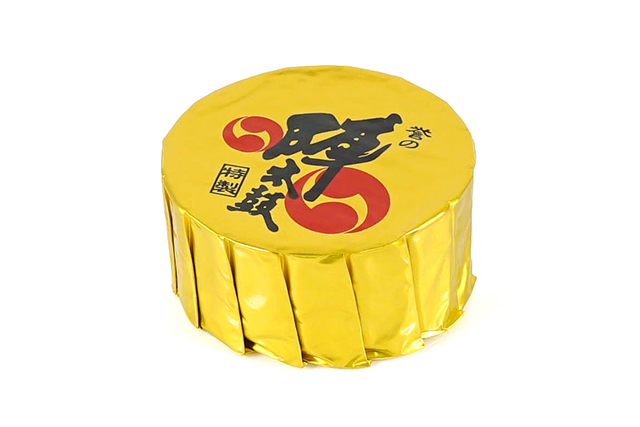
Each jindaiko is sealed in gold foil and a cylindrical shape about 4 cm in diameter and 2 cm in height.
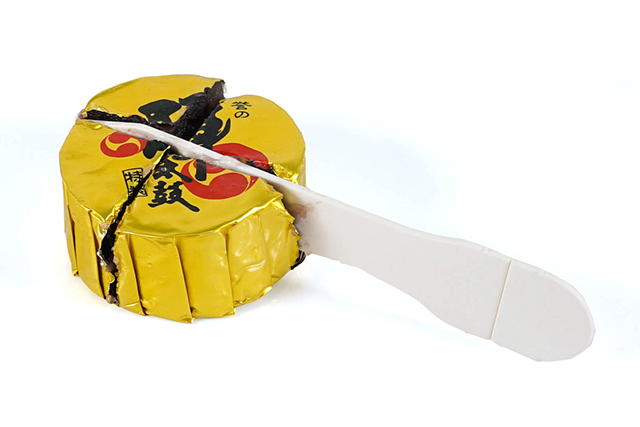
Each box comes with 9 paper knives, which claim to be Japan’s first paper-knife. The knives are included to help consumers cut the jindaiko into quarters for easier eating. And true to Japanese innovation and craftsmanship, the knife works remarkably well at cutting through both the foil and the wagashi. Indeed, the knife holds up to being cleaned under water, making it not only environmentally friendly but also reusable.
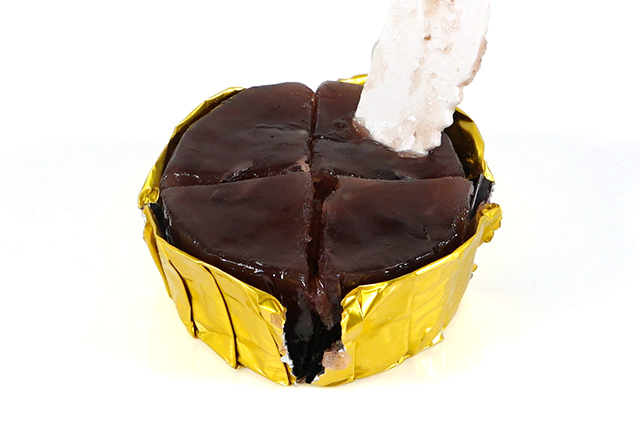
Once cut, the quarters of foil on the circular surface can be folded into the sides to expose the jindaiko itself. The quarters of the jindaiko are then eaten with the paper-knife all while keeping one’s hands clean. The packaging design is a testament to the thoughtfulness of the Japanese.
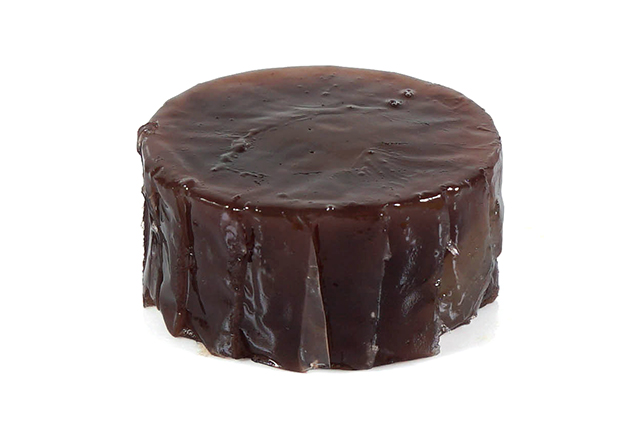
The foil cuts more easily than it tears and reveals the jindaiko with an almost opaque deep red-brown colour characteristic of anko.
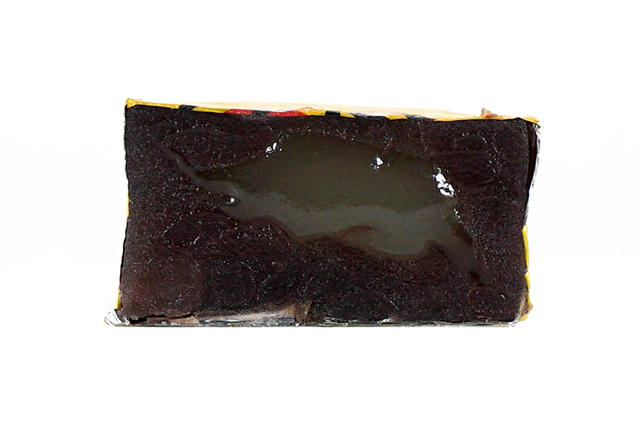
The jindaiko has a mellow aroma of sweet azuki. Eaten at room temperature, the azuki has a deep yet balanced sweetness and a firm and crumbly texture from the use of agar that — despite our preference for the bouncier texture of konjac — contrasts well with the incredibly soft and stretchy mochi centre.
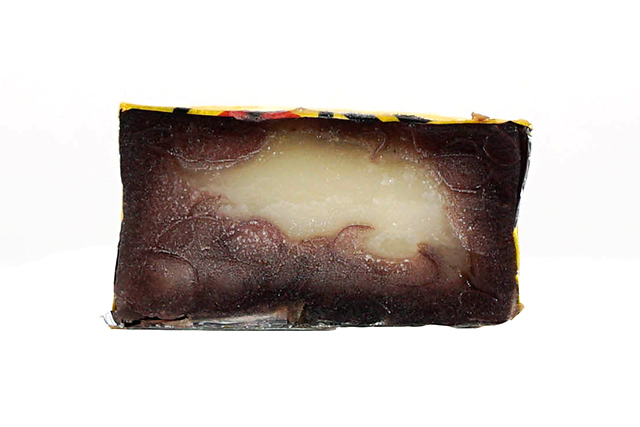
Eaten frozen, the jindaiko does not become rock hard. Rather, the texture of the red bean is firmer, less crumbly, and chewier, while the mochi takes on its more characteristic white colour also with a firmer and chewier texture. Overall, we enjoy the texture of the jindaiko at room temperature but prefer the firmer texture when frozen especially during the warmer months.
This Kobai Homare no Jindaiko contained 9 pieces. It was produced in Japan and purchased in Kumamoto, Japan in 2019.