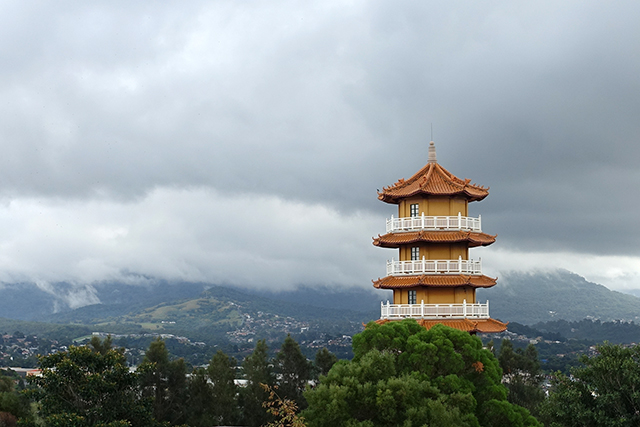
The Easter long weekend saw a return more to the norm of a wetter March after our recent spell of 21 days of no rain. While previous days cleared up, our last morning saw a downpour the previous night reduced only to a persistent drizzle for our visit to the Nan Tien Temple. Nan Tien (meaning ‘southern paradise’ in Chinese) is a branch temple of the Taiwanese Fo Guang Shan Buddhist order, and one of the largest Buddhist temples in the southern hemisphere.
< !-more->
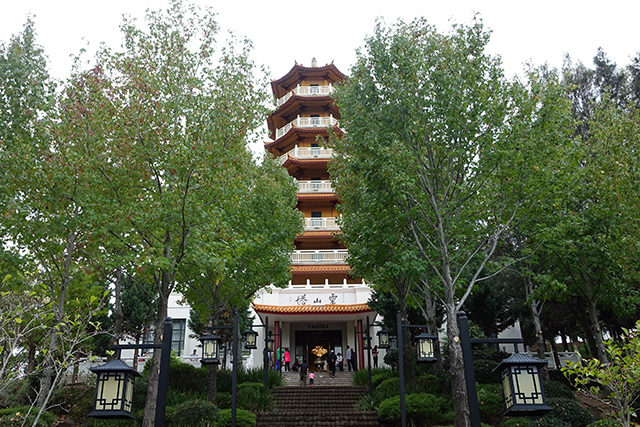
Having checked out of our hotel by 10am, we arrived serendipitously at Nan Tien Temple to plenty of parking spots. In stark contrast, there were none left by the time we left and cars were resorting to double parking illegally and parking on the grass all the way out to beyond the entrance gates.
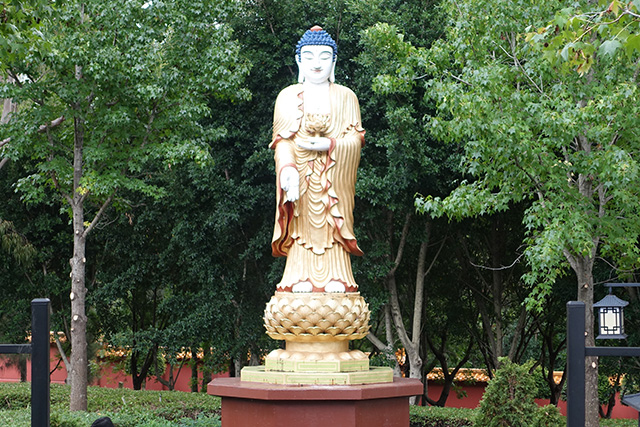
This golden statue of Buddha is situated at the base of the carpark and faces the pagoda at the top of a long flight of stairs.
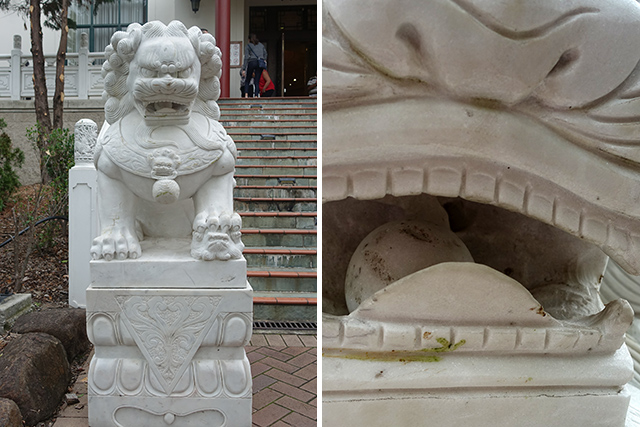
After trekking up the large number of steps, we reach the pagoda guarded by two marble lions. N sticks her hand inside the lion’s mouth the satiate her curiosity about the sphere inside: it’s free moving and probably carved within the space of the lion’s mouth!
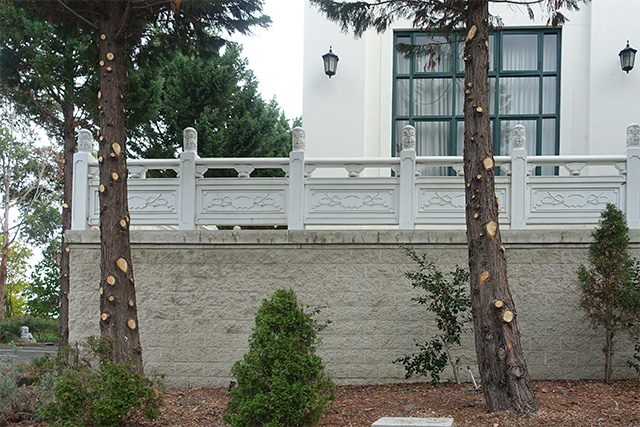
Most of the trees on the temple grounds have their lower branches removed. This ground floor of the pagoda, which is a rectangular base for the pagoda itself, houses a shrine dedicated to Ksitigarbha Bodhisattva. It’s open free to the public with numerous entry conditions including no photography, low cut clothing, or footwear.
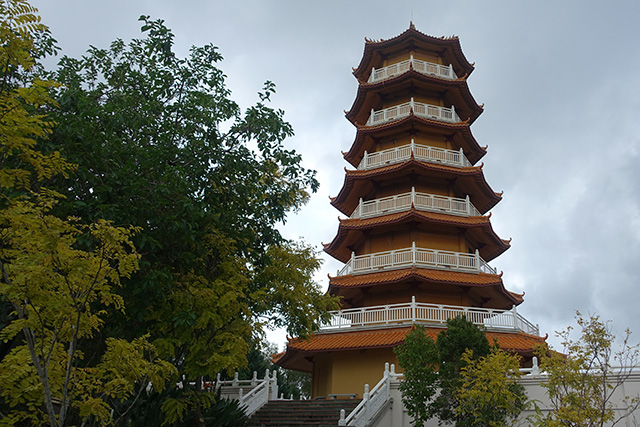
None of the eight storeys of the pagoda are open to the public, probably because it’s the resting place for the cremated ashes of devotees and their relatives, accommodating up to 7,000 people. Unlike many of pagodas we’ve seen in Japan, which received the pagoda from China via Korea, the pagoda here is distinctly Chinese, with flying eaves and an angular profile.
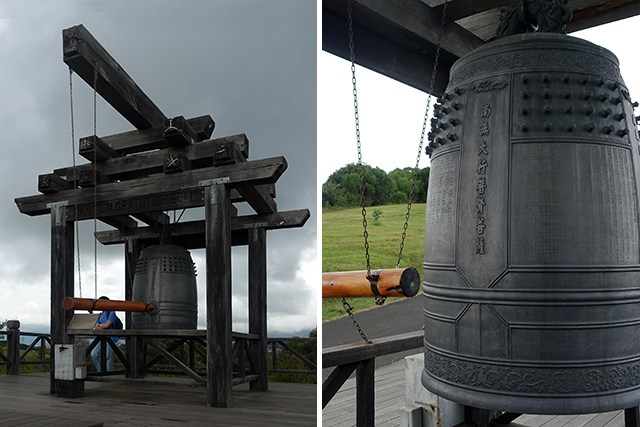
We walk up the steep hill behind the pagoda to ring the Gratitude Bell.
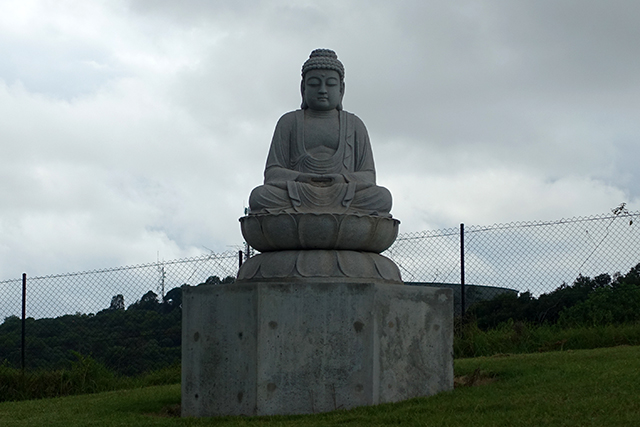
Sitting directly opposite the Gratitude Bell is a statue of Buddha.
From the Gratitude Bell platform we get expansive views out towards Mount Kembla (hidden amongst the clouds) and the Illawarra Escarpment.
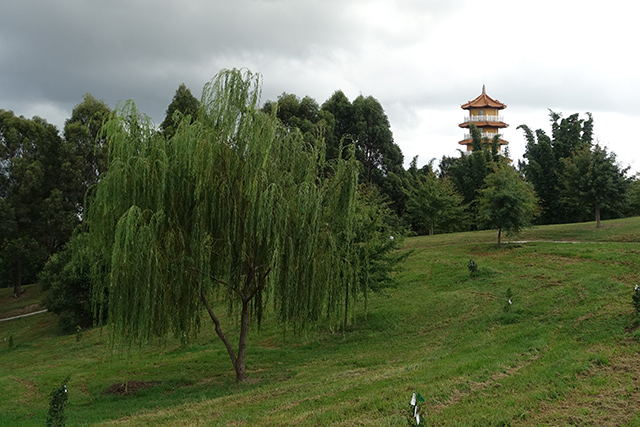
The Nan Tien Temple complex occupies a semi-rural hillside site several square kilometres in size. I’m curious whether it’s claims to being ‘one of the largest Buddhist temples in the southern hemisphere’ considers the size of the temple context only, or includes also the ample land surrounding it.
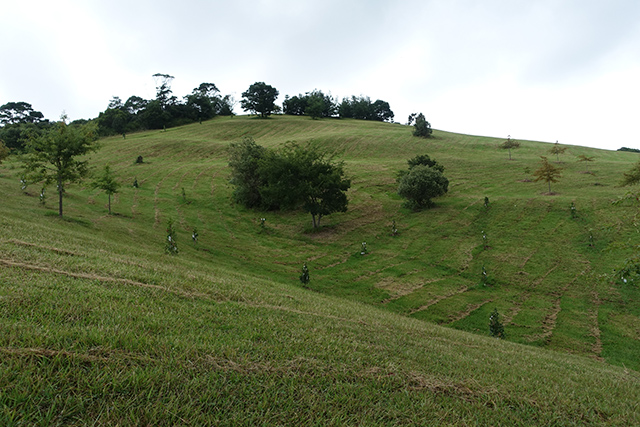
As you can see, there are vast areas of undeveloped land.
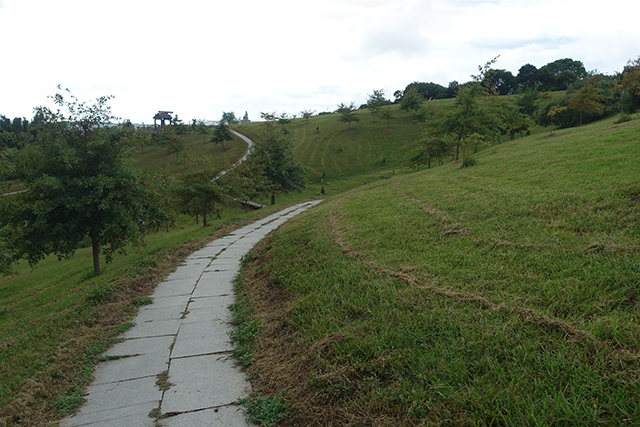
Rolling hills are a pretty view, though. The path leads from the Gratitude Bell to the Main Temple.
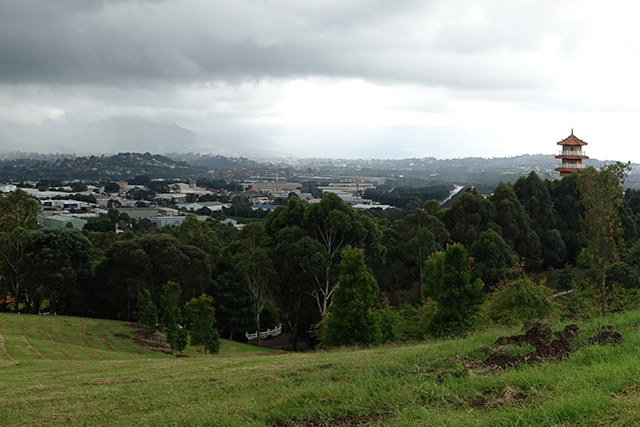
But not before a panoramic view of all of Wollongong from the pagoda in the north…
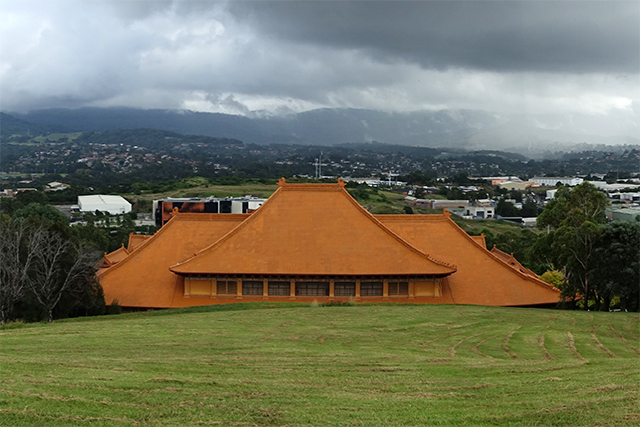
… to the back of the Main Shrine…
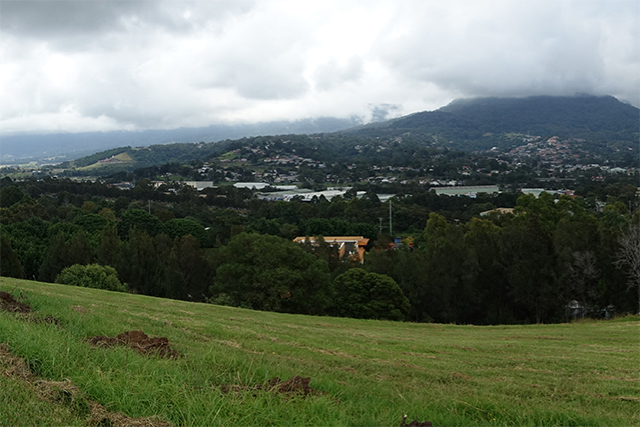
…and south of Wollongong. The orange building in the middle being the Pilgrim Lodge.
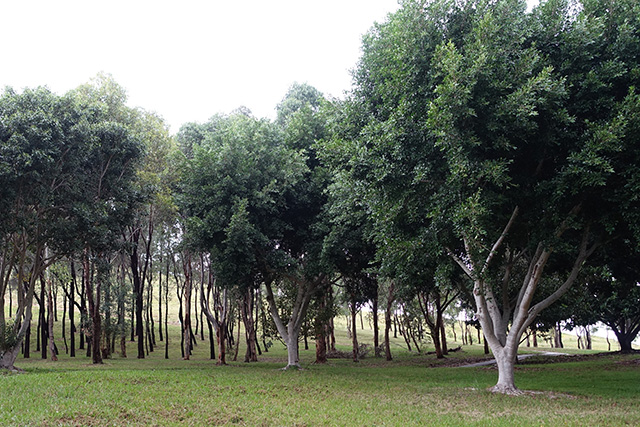
Down the hill, we pass through some trees just outside Pilgrim Lodge.
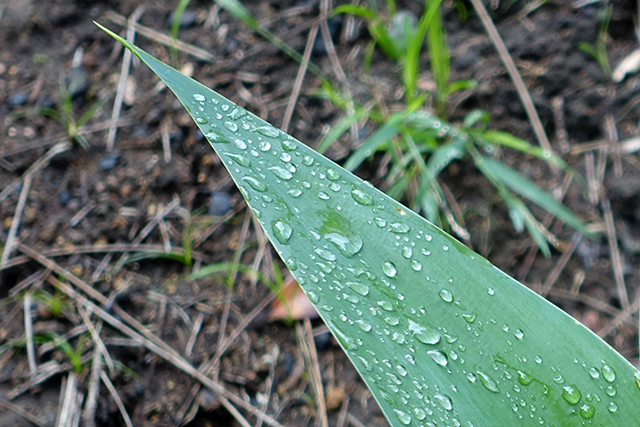
By now it’s started to drizzle quite persistently.
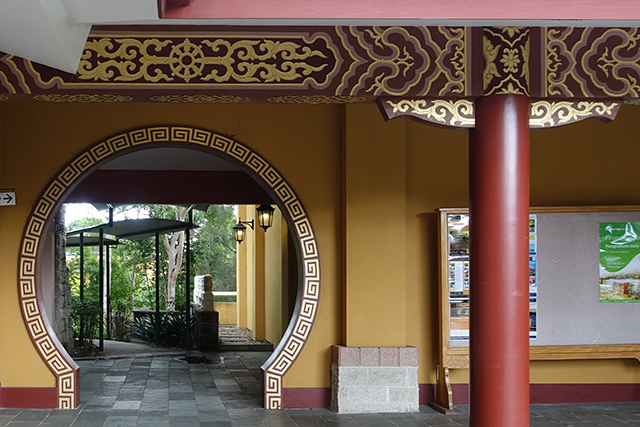
But we make it to the Main Shrine just in time through this rounded doorway.
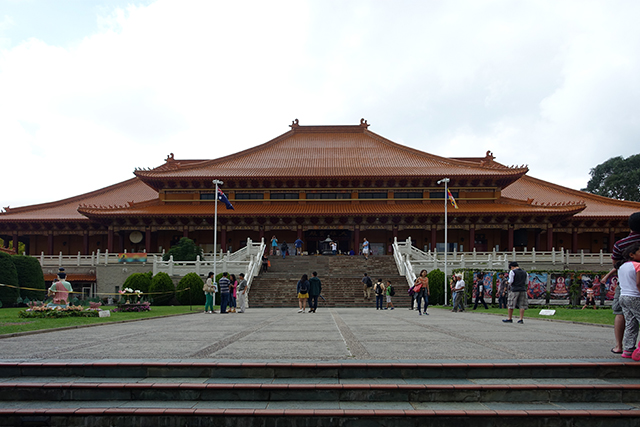
This is the Main Shrine, the most important building in the complex. Supposedly, ‘when we see the steps before the shrine, it reminds us of our aim to gain enlightenment’. Photography and footwear is prohibited in the interior, which holds the five Buddhas of Confidence, Longevity, Wisdom, Inner Beauty and Peace, along with 10,000 smaller Buddha’s, showing that ‘everyone can achieve Buddhahood’.
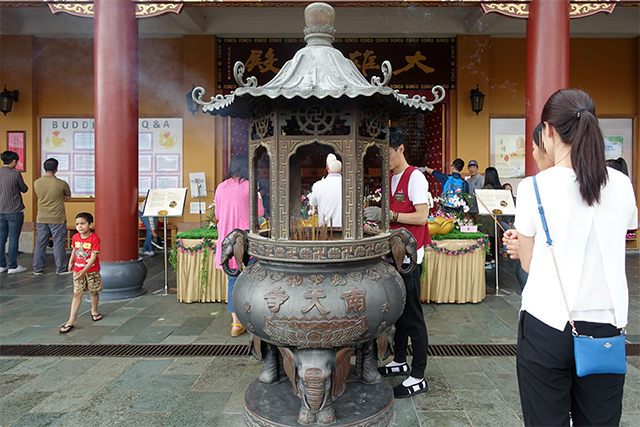
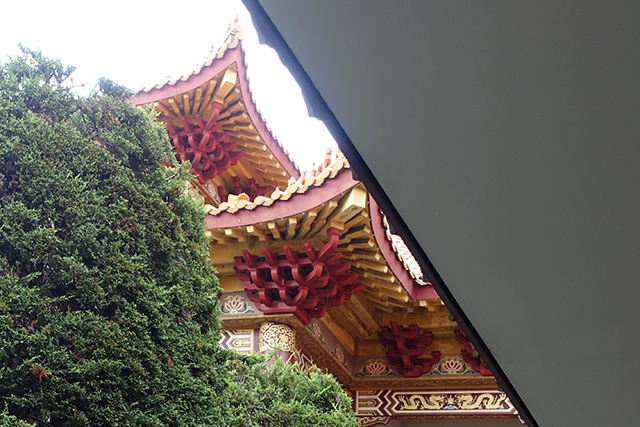
These main temples incorporate featured of Tibetan monastic architecture, with multi-storey painted temple buildings set atop high stone platforms.
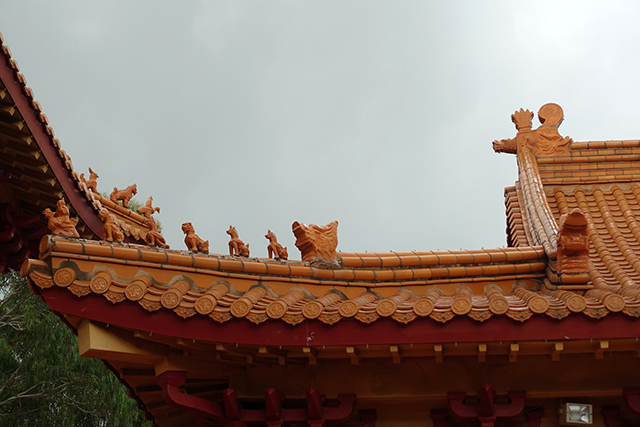
The detailing on the eaves are particularly impressive.
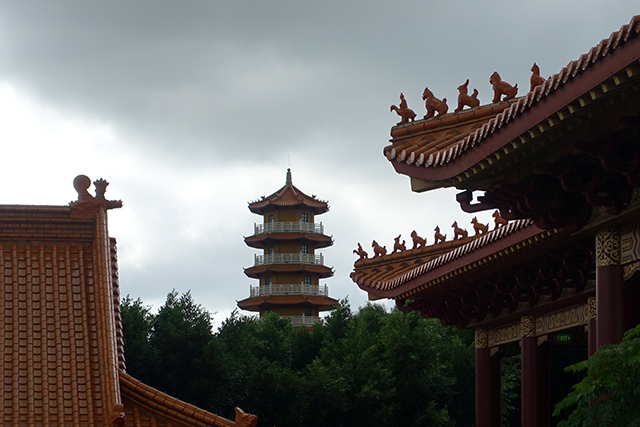
From the Main Shrine, we can see the pagoda in the distance.
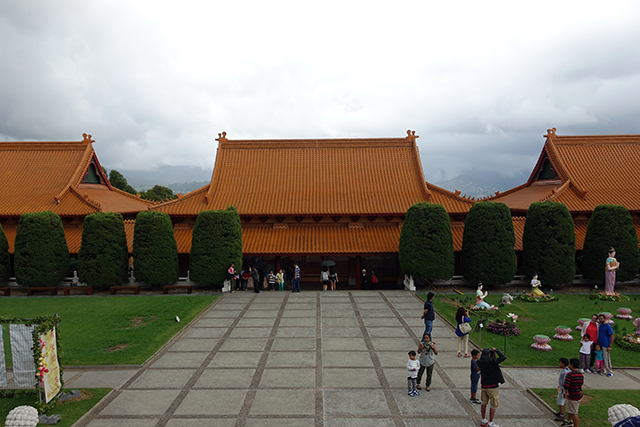
A large spacious courtyard is situated at the centre of the temple complex.
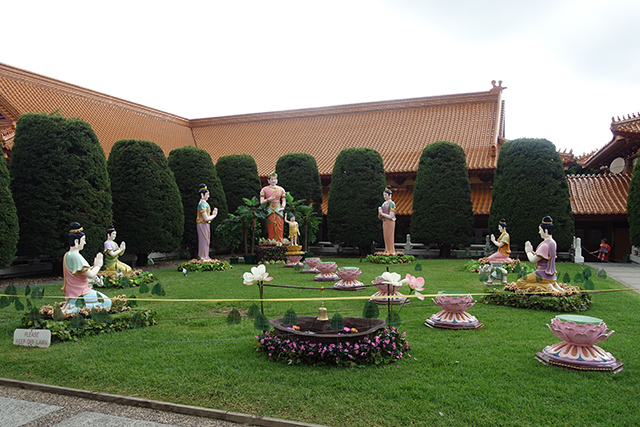
One corner of the courtyard is a sculpture piece called the ‘Lumbini Garden’. The Lumbini is a garden located in the foothills of the Himalaya in Nepal where Queen Mayadevi took her ritual bath before Buddha’s birth and where he was first bathed.
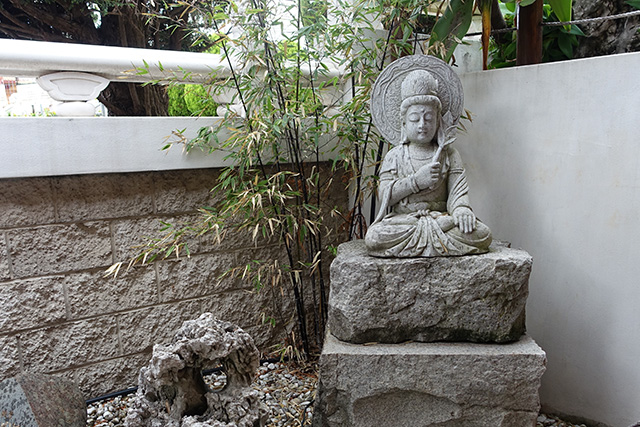
Stone sculptures abound in the Japanese style gardens in the courtyard.
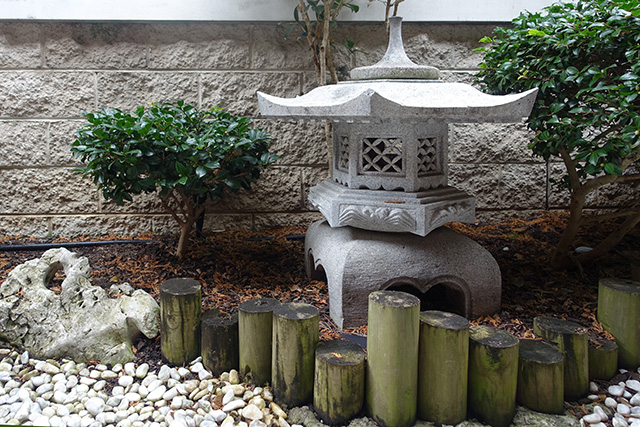
Stone lanterns make a fair appearance too.
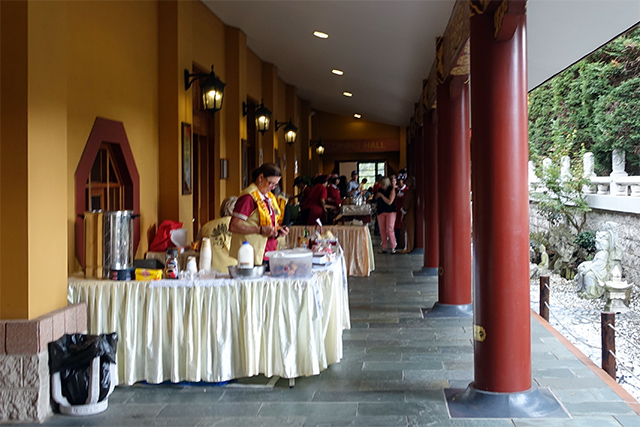
At one corner of the courtyard is the Dining Hall where you can purchase plates of vegetarian food containing 1 pancake and two buns for $10.00.
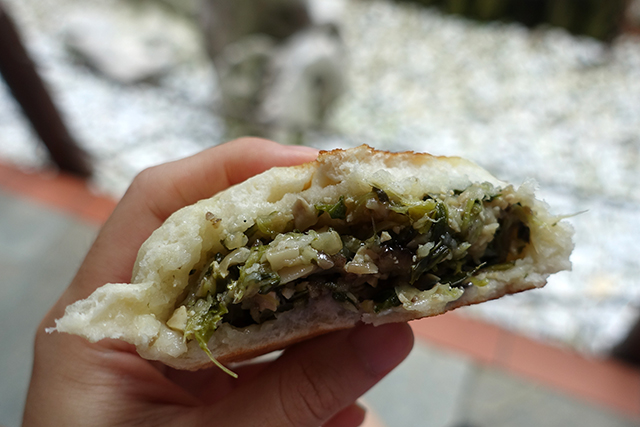
The buns contain a filling of mushroom and watercress that’s quite delicious.
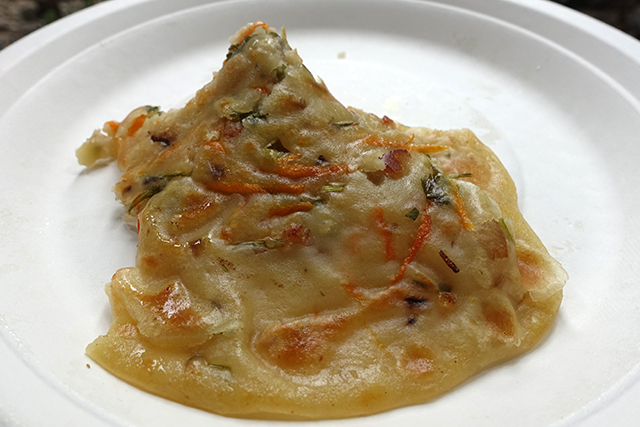
The fried pancake is much like a Chinese shallot pancake, but tastes a bit like raw dough.
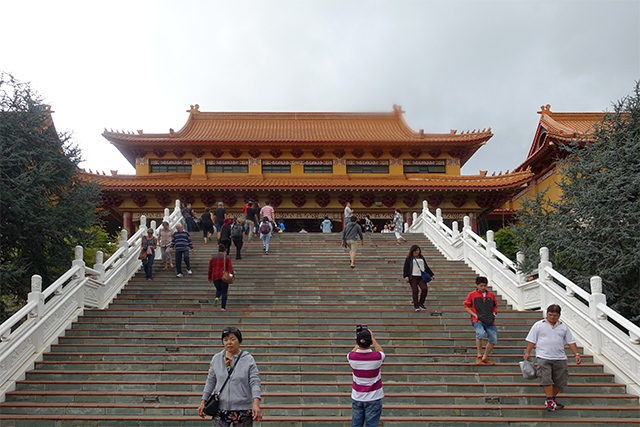
After finding a tea house within the temple grounds, we make our way past the Front Shrine (also called the Great Compassion Shrine). Inside is a prominent statue of Avalokitesvara Bodhisattva, or Buddha with a thousand helping hands.
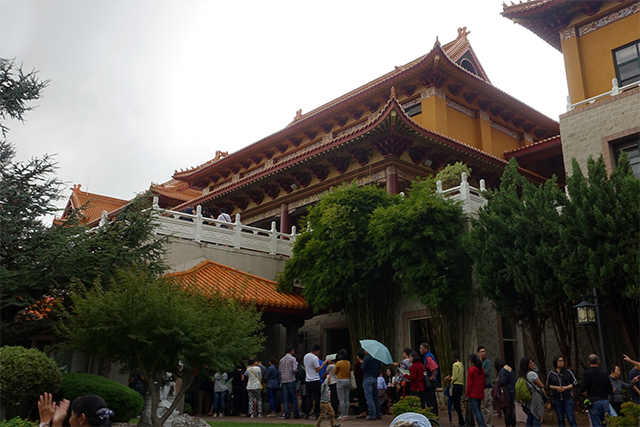
The Water Drop Teahouse is located directly beneath the Front Shrine. The queues are all the way through the door and onto the road by the time we leave.
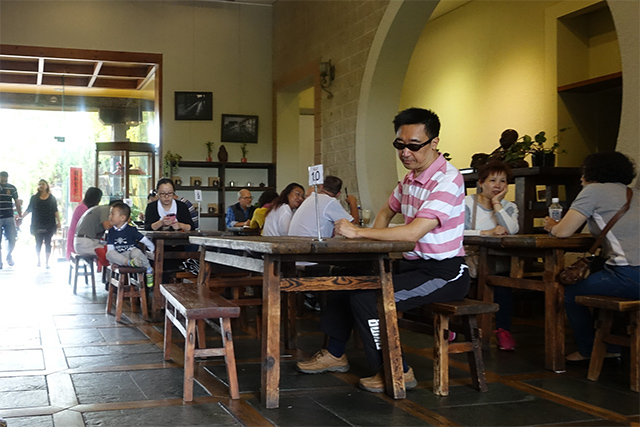
The interior is fitted out with wood and stone. You come in, grab a menu, find an empty table, take note of the assigned number on the table, then tell the gentleman at the cash register table number before ordering your items from the menu.
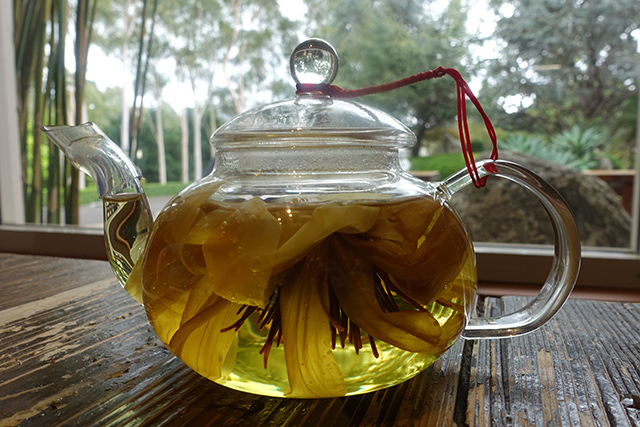
D and I try the lotus tea ($6.50/pot) a beautiful blooming tea. Describing this tea is quite a hoot. It smells, as T noted candidly, like a hot chlorinated pool. It’s not the most pleasant of smells, but it’s also not overpowering. So if you can get past that, you’re in for a golden liquor that tastes earthy with a nutty walnut-like taste.
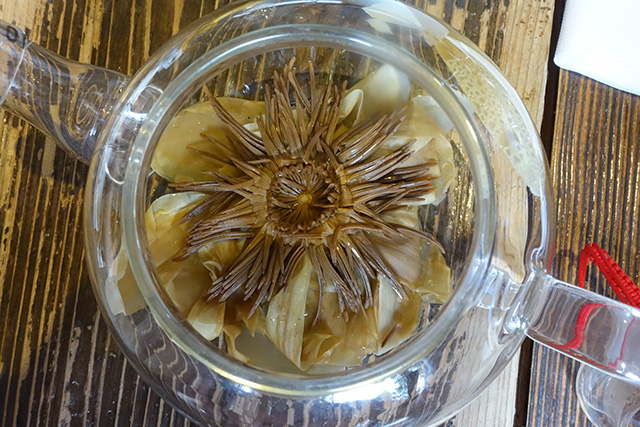
T has great fun flipping the lotus flower upside down after I’ve drained the tea.
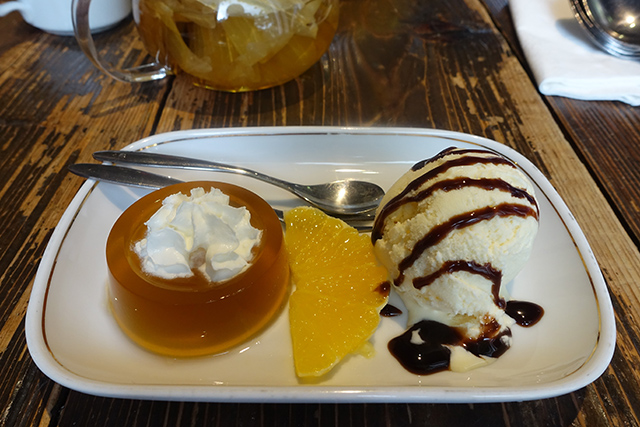
To go with the lotus D and I try the jasmine jelly and ice cream ($6.50). I was only interested in the jasmine jelly, honestly. And that was tasty! It sweet enough with a fragrant jasmine taste throughout. It was firmer than jelly made with agar agar, but it seems unlikely gelatin (being an animal product) was involved. I might try adding gelatin to sweetened jasmine tea at home!
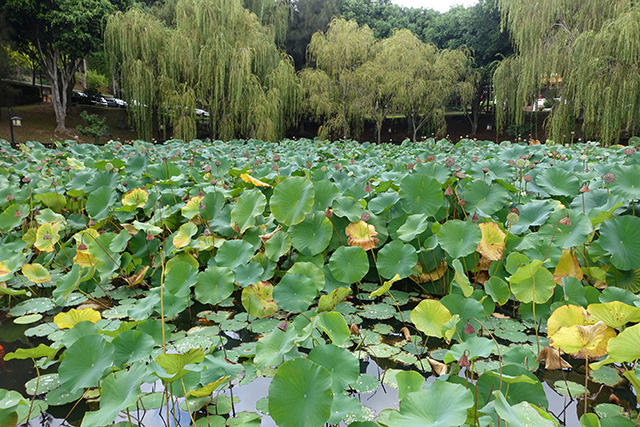
Near the Front Shrine is the Lotus Pond.
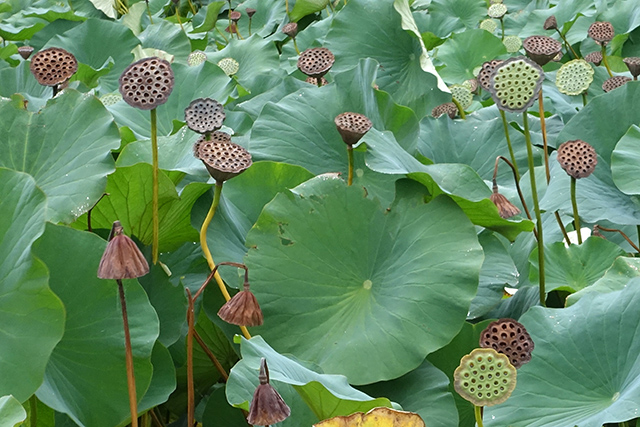
Lotus seed heads are enough to trigger mild trypophobia for me.
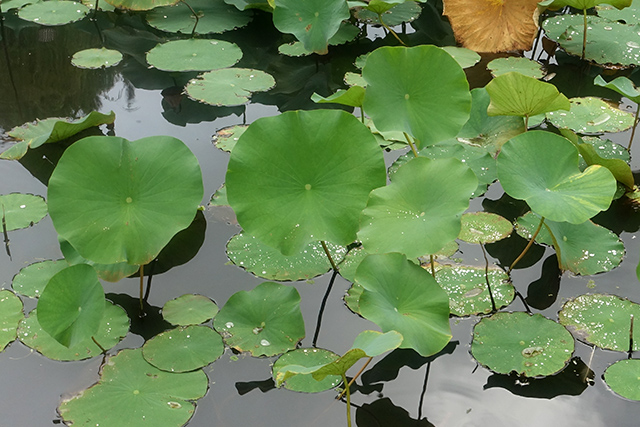
I prefer to focus on their giant umbrella like leaves.
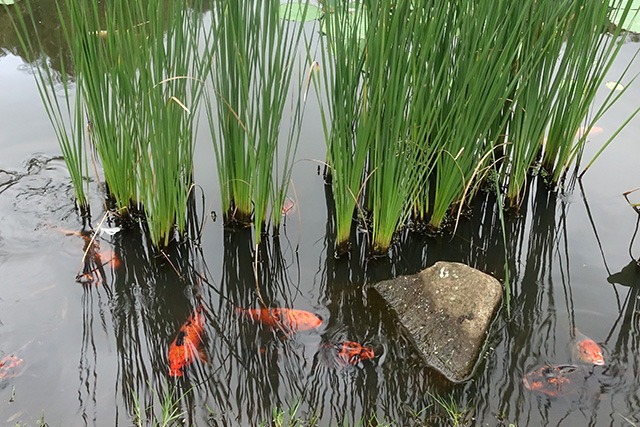
A large number of koi occupy the pond. They’re not particularly pretty, though.
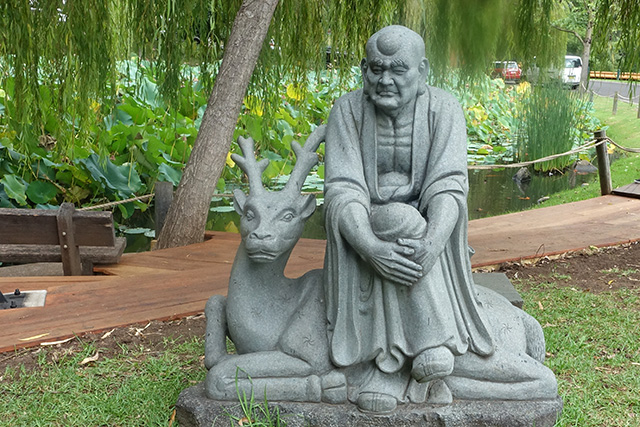
This sculpture minds me of our Nara experience, which is also home to Todaiji, the head temple of all provincial Buddhist temples of Japan.
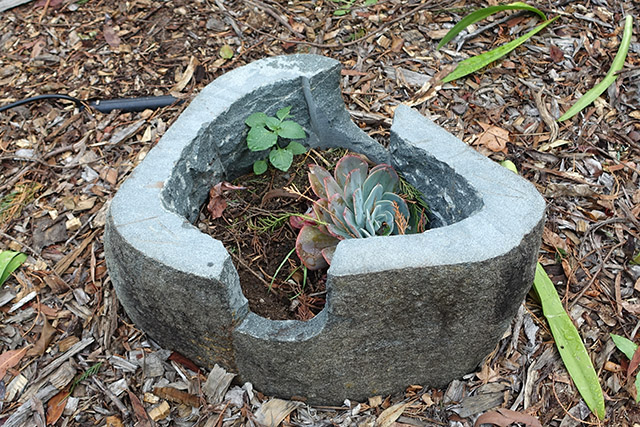
Many of these cast concrete plant pots are dotted around the grounds.
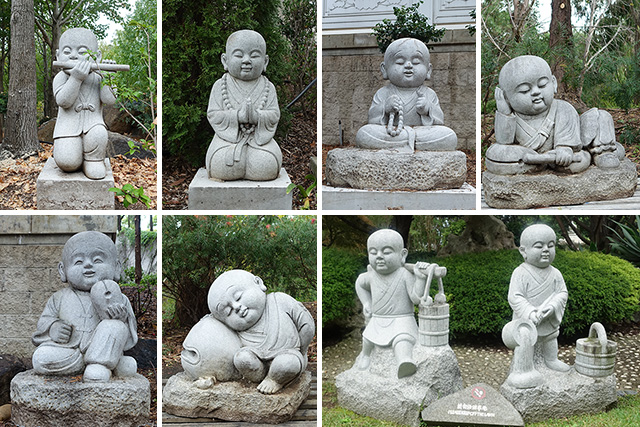
As are these sculptures in countless poses. One could make it an exercise to photograph each one!
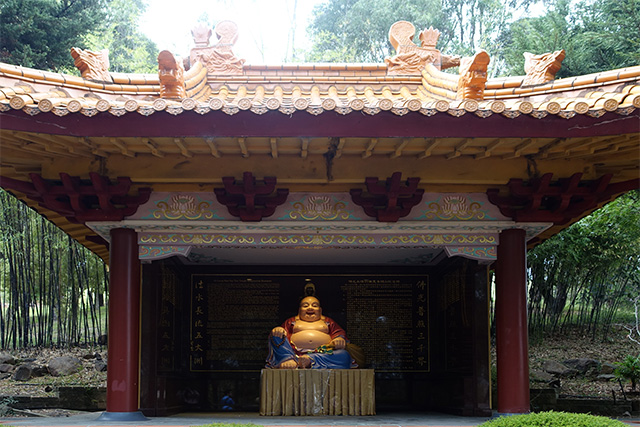
Between the Main Shrine and the Pagoda sits this sculpture, with the text on the wall the temple’s origins. Mainly that 1) it was founded in 1995 and constructed under the auspices of the Mahayana Buddhist sect known as Fo Guang Shan, 2) its site was chosen due to its proximity to Mount Kembla, which is said to have auspicious resemblance to a recumbent lion, and 3) that the land was donated by the Australian government.
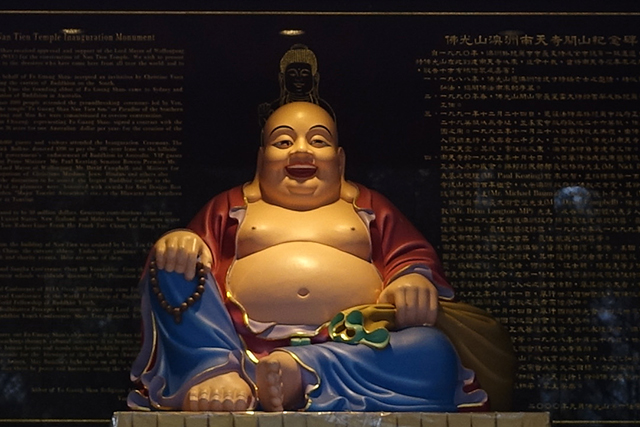
Does he look fat and happy?
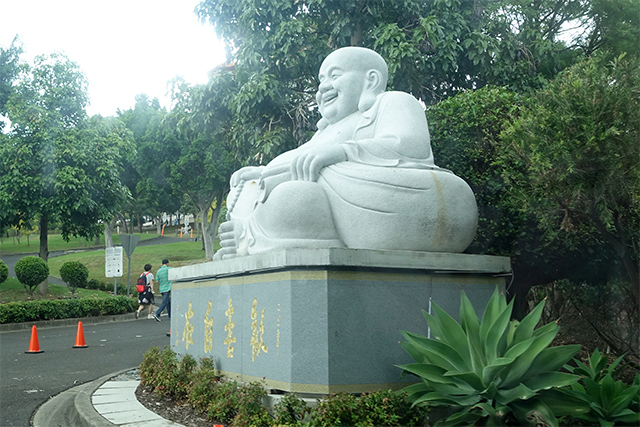
Much like the stone version that greets you right after driving through the gates. And with that, we’re headed back to Sydney…
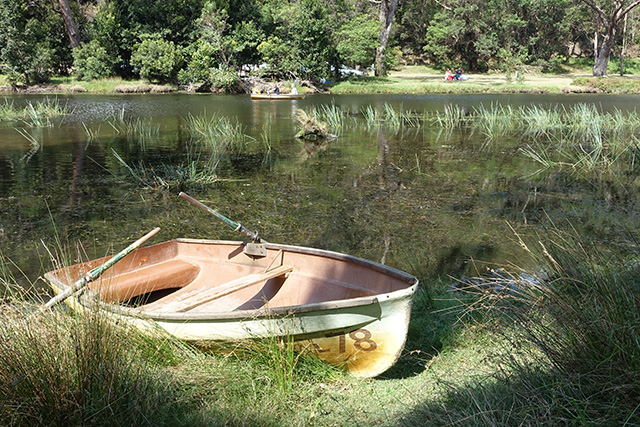
…but not before making an unplanned pit stop at the Royal National Park (we found it on our way to the Grand Pacific Drive) where we enjoyed the scenery with a few rounds of Mr Squiggle.