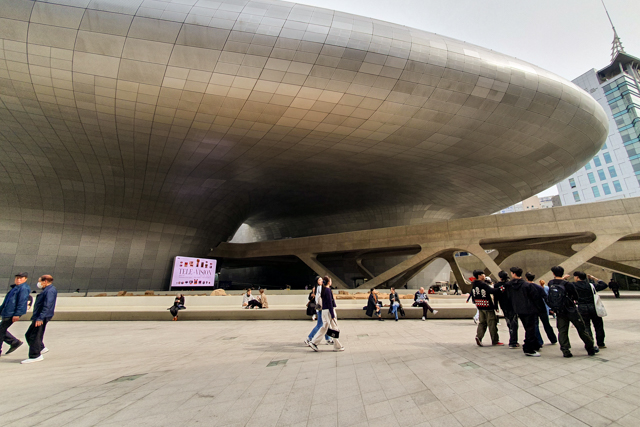
Our second day in South Korea saw us exploring more of central Seoul, specifically the Seoul City Wall Museum and Dongdaemun, as well as visiting a few markets.
Jung-gu
Metcha
17 Myeongdong 9-gil, Myeong-dong 1(il)-ga, Jung-gu, Seoul, South Korea
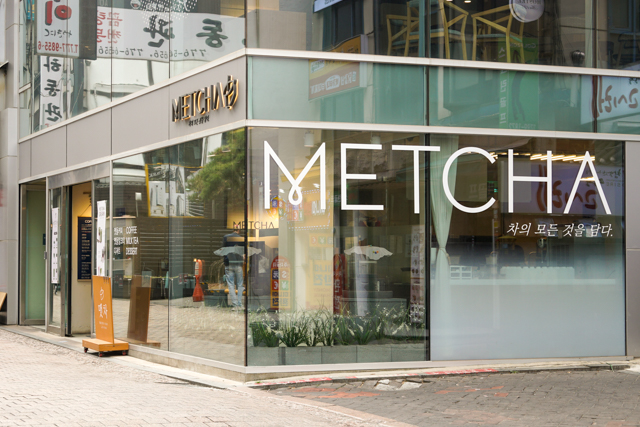
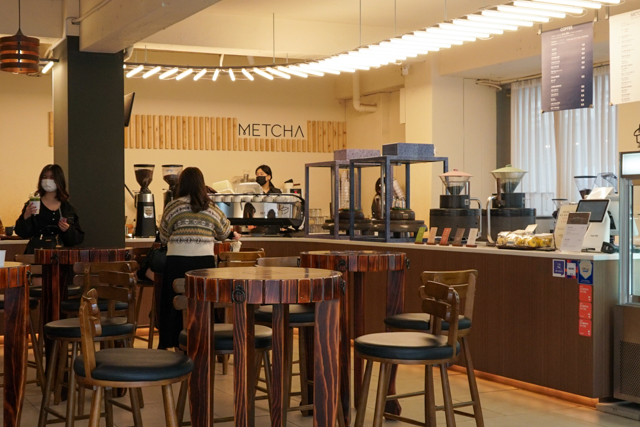
Metcha was a matcha cafe situated directly opposite our hotel with 5 storeys of seating.
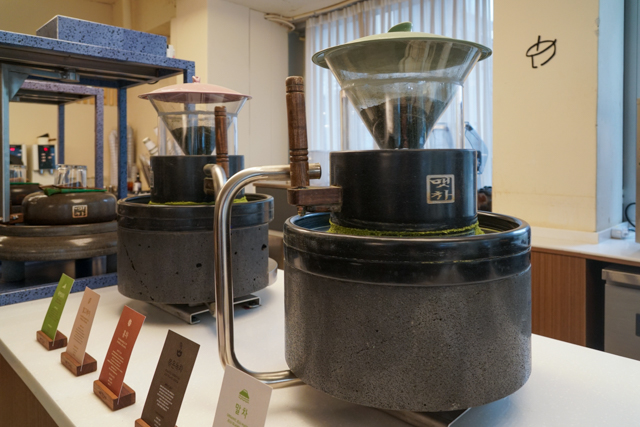
They have machines to mill their matcha on-site.
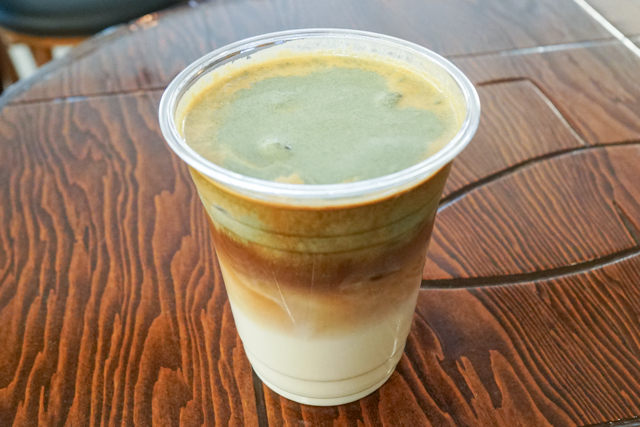
Mugwort Cream Latte (6,500 won). We’ve tried drinks mixing matcha and espresso (1, 2), and this one put on a twist by mixing mugwort and espresso. The latte was creamy and smooth with the mugwort giving the latte a herbaceous grassy flavour, in contrast to the more vegetal grassy notes of matcha. The roasted notes of the coffee were evident in equal measure but the latte overall was a touch too sweet for me (for someone who usually drinks unsweetened black coffee).
Coffee Nine
15 Myeongdong 9-gil, Myeong-dong 1(il)-ga, Jung-gu, Seoul, South Korea
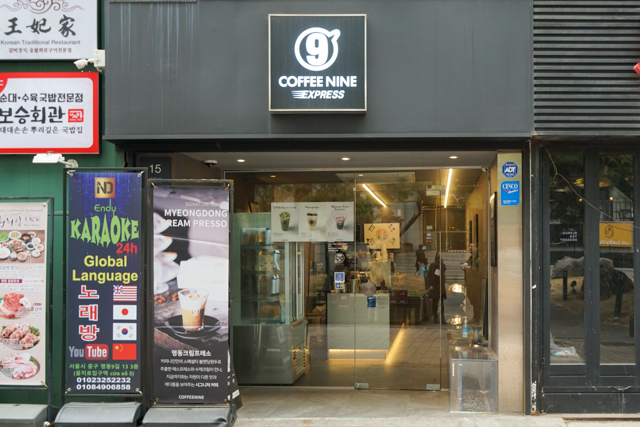
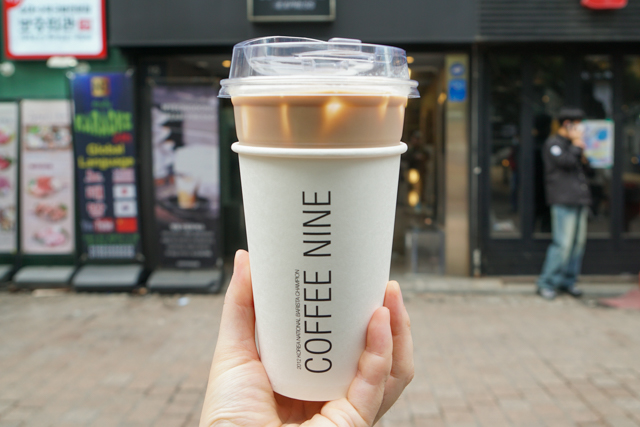
To power his morning, D returned to Coffee Nine (just a few steps away from Metcha) for an Iced Black Mocha. He preferred the richer, more balanced flavour of the hot latte from the previous morning.
Jongno-gu
Heunginjimun Gate Park
흥인지문공원, 70 Jongno 6(yuk)-ga, Jongno-gu, Seoul, South Korea
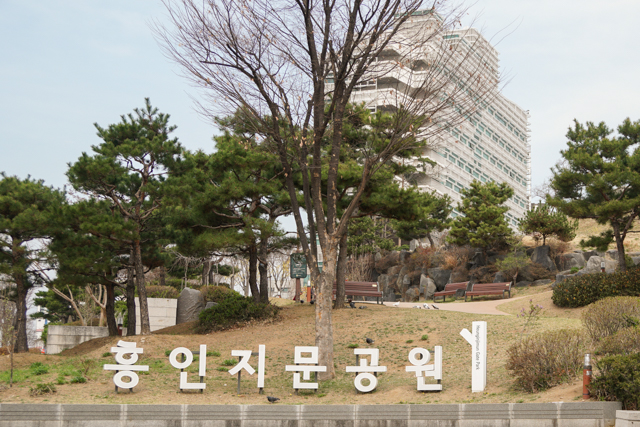
The Heunginjimun Gate Park was a short walk from Dongdaemun Station.
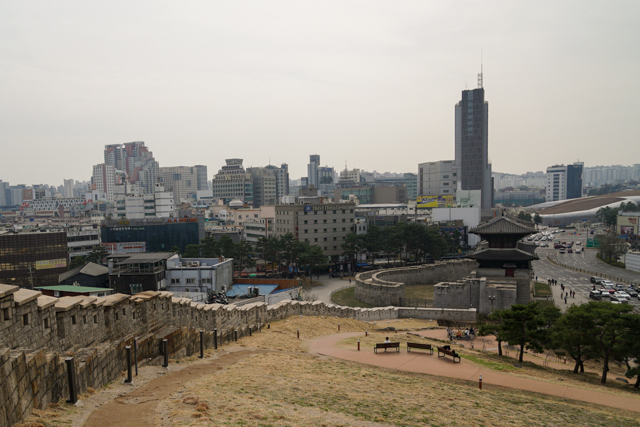
The park offered expansive views of the Dongdaemun area.
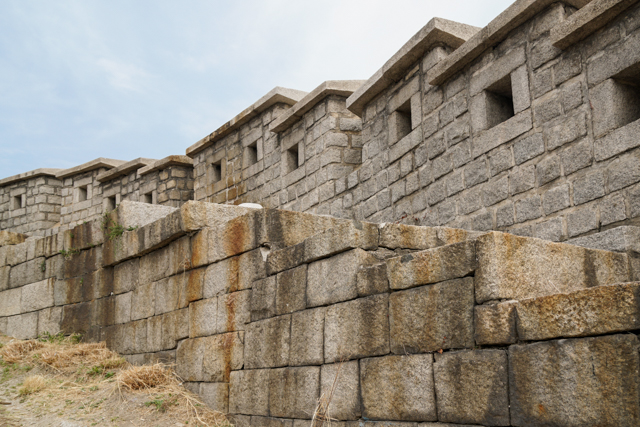
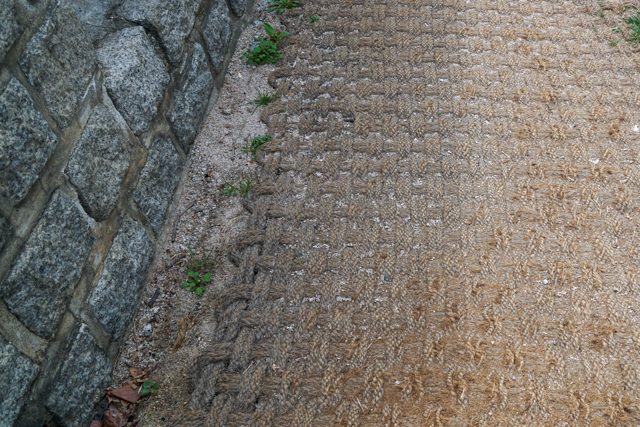
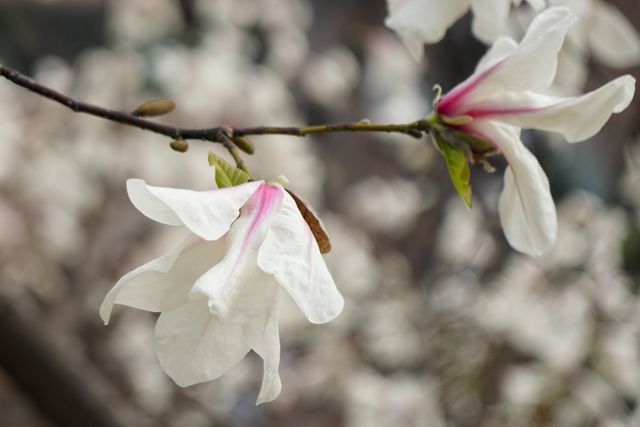
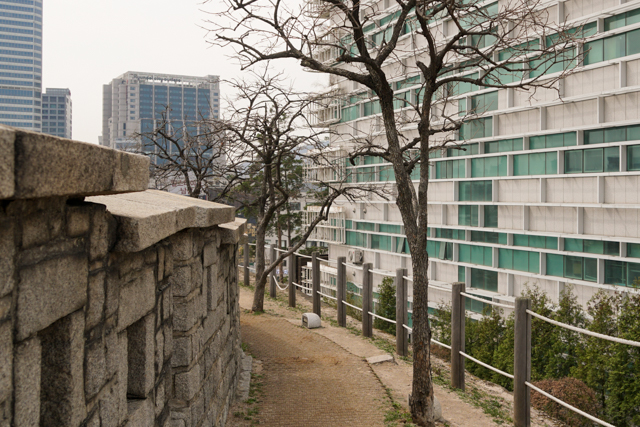
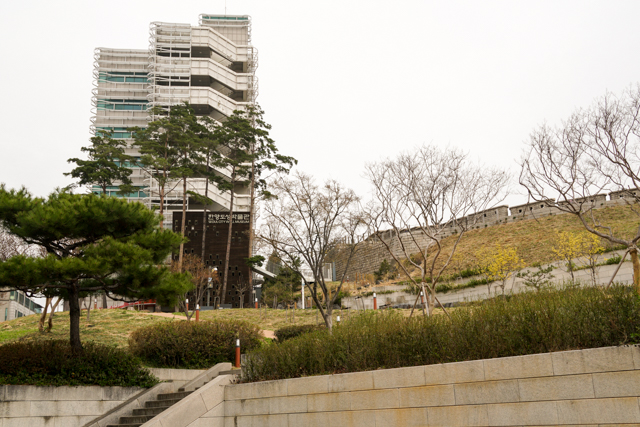
It was a small and very hilly park at the top of which was our intended destination: Seoul City Wall Museum.
Seoul City Wall Museum
한양도성 박물관, 283 Yulgok-ro, Jongno-gu, Seoul, South Korea
The Seoul City Wall Museum exhibits the history and culture of the Seoul City Wall, spanning from the Joseon Dynasty to the present time
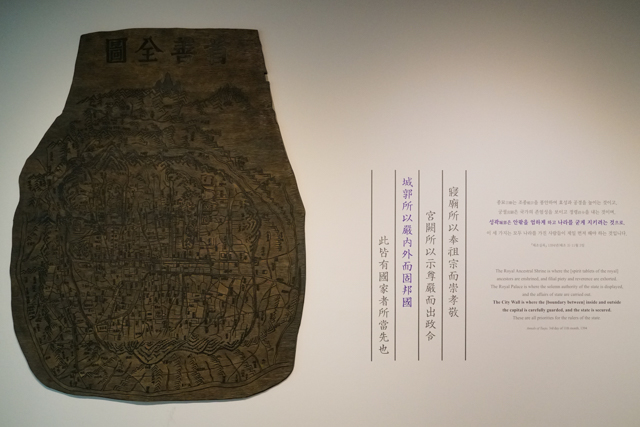
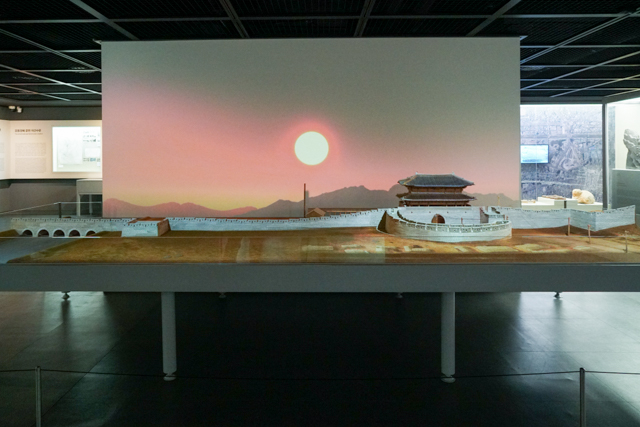
Seoul, Hanyangdoseong — Seoul today is a major metropolis with a population of ten million and an area of 605km². This is a historical city with a rich legacy that goes back more than six centuries and the Hanyangdoseong (Seoul City Wall), a treasure trove of city history, stands as proof of this. The original purpose of the city wall vanished in the process of modernization. It grew distant from people’s lives but remained m the heart of the city. Through excavation and reconstruction, the wall has been revived in recent times, its appearance ever changing with the seasons and time of day. Today the city wall stands tall, embracing the residents of the capital.
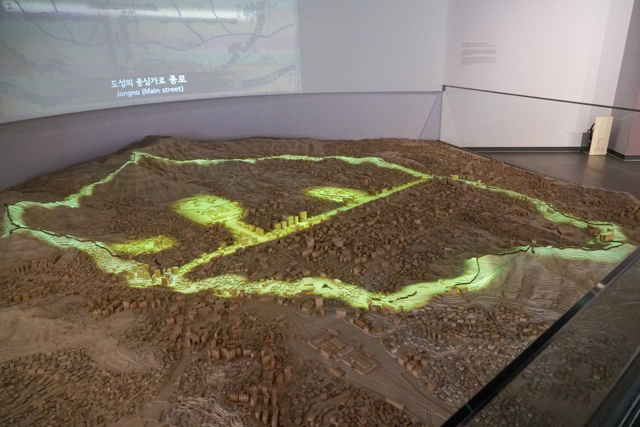
This was a 1:1,500 scale model of Hanyandoseong (Seoul City Wall).
The wall has remained a landmark from the time Hanyang was established as the Joseon capital in the 1390s down to the present day […]
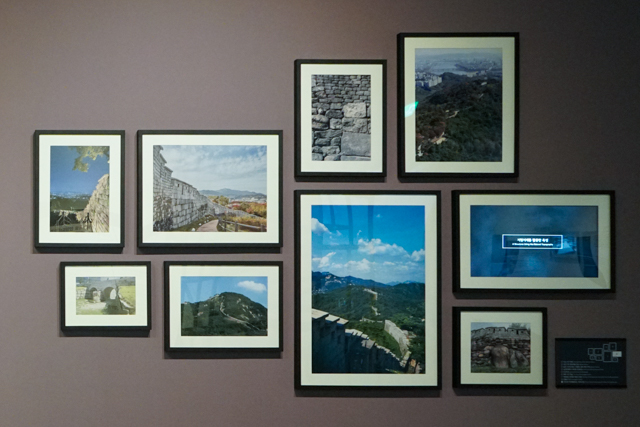
Doseong is Seoul
The world’s preindustrial cities typically were surrounded by walls. For thousands of years, people would mark out specific sites on the earth’s surface by building walls around them. The walls indicated that a domain with special functions and symbolism was inside, and they stood to protect that domain from external attack. Doseong refers to the walled city in which the ruler once resided. It was the foremost among all the walled cities in the country, the capital, where all the major state functions are concentrated. The native Korean word for “doseong” is “Seoul”. Hence, the Korean capital is now called Seoul, a modern metropolis that has expanded beyond the confines of the old city walls. The Hanyangdoseong today is a cultural heritage that attests to the history of Seoul, a major international city.
The Value of the Hanyangdoseong
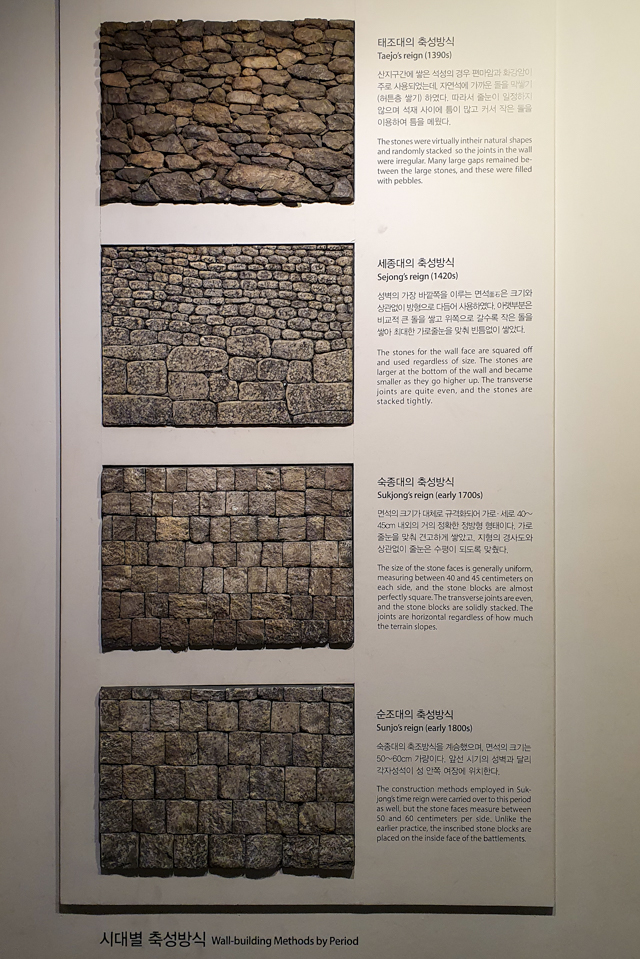
Since ancient times, Koreans have developed a tradition of building city walls along mountain ridges. The Hanyangdoseong is a continuation of this tradition, which minimizes the disturbance of the natural surroundings and maximizes the stateliness and effectiveness of the structure. The contour of the city wall followed the lay of the land, and so the street system and urban layout inside the wall also was in harmony with the natural forms. This clearly differed from most other Asian cities of that period. The Hanyangdoseong was built using a variety of methods, depending on geographical features. Each time a collapsed section was repaired, more advanced techniques were employed, so the Hanyangdoseong stands as a cultural heritage that traces the development of Korean wall building technology.
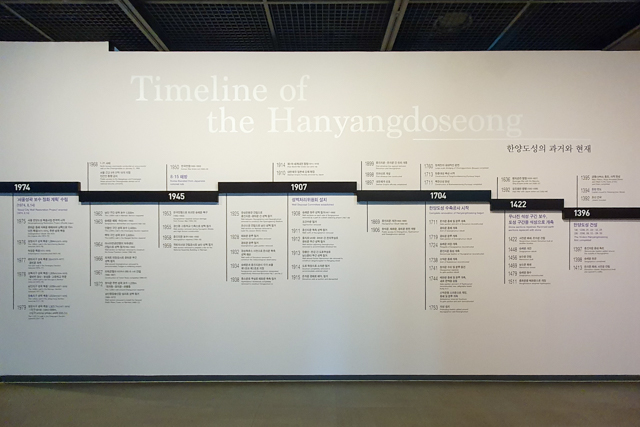
Construction of the original wall was completed in 1396.
The Hanyangdoseong is a landmark cultural heritage that is the epitome of Korea’s 2,000-year-old wall-building tradition. The capital wall is imbued with the Korean philosophy with regard to building cities that blend human creation with the natural landscape. Here is a record in stone of the masonry skills and wall-building techniques employed to create a structure that has endured for more than 500 years. The wall was integrated into the natural landscape, allowing it to survive even after Seoul broke out of its traditional boundaries and expanded into a modern metropolis with a population of more than ten million. Despite Seoul’s tremendous growth, the street network inside the wall retains the arteries that once passed through the main city gates. The Hanyangdoseong is a unique cultural heritage that shows the modernization process of a historic East Asian city.
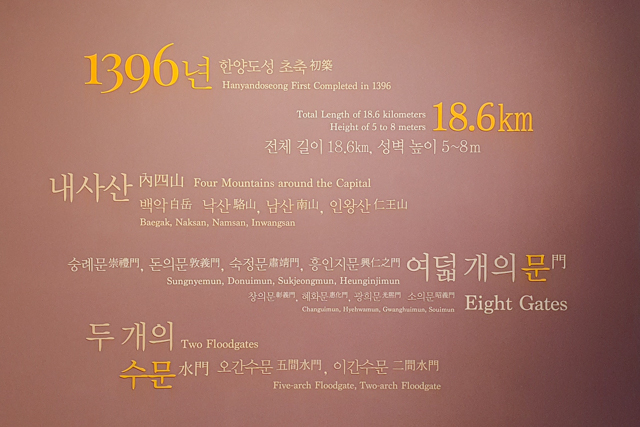
It was 18.6 km, built to a height of 5-8 m, encompassed 4 mountains around the capital and comprised of 8 gates as well as 2 flood gates.
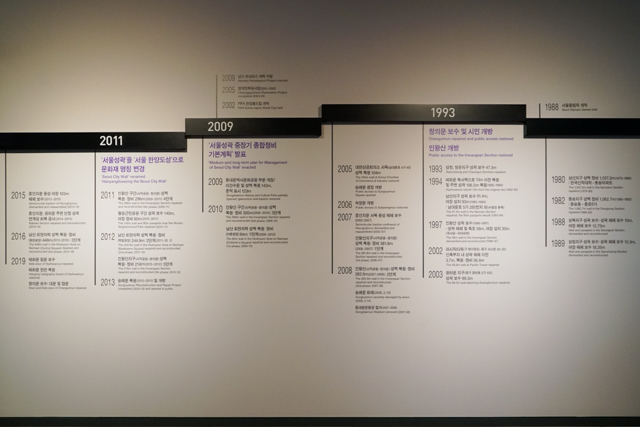
Reconstruction and restoration work began in earnest in the 1980s.
Hanyandoseong Trails
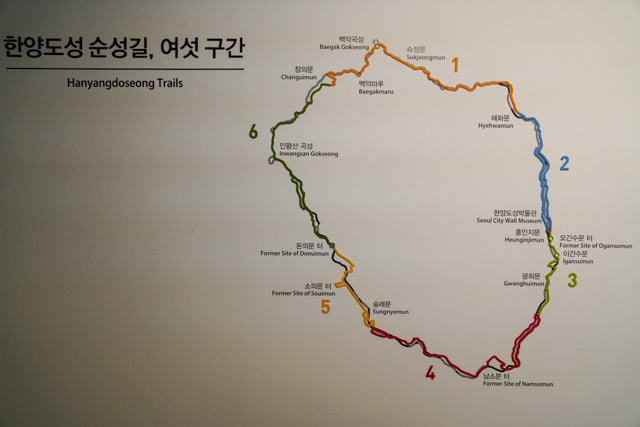
There are six ‘trails’ or sections to the Hanyandoseong.
1. 백악 구간, Baegak Section (Changuimun to Hyehwamun)
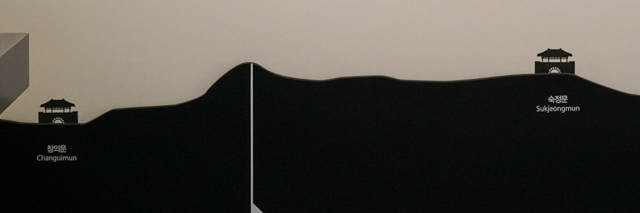
This section starts at Changuimun (Gate), crosses over Baegaksan (Mountain) and extends to Hyehwamun (Gate). In geomantic terms, this is the “master mountain” for the capital. It is the tallest (342.5m) of the four inner mountains that surround the capital, and its beautiful shape has been compared to “a peony in half bloom.” This was the starting point for the construction of the Hanyangdoseong. The section was put off limits in the wake of a North Korean command raid on the Cheongwadae (Presidential Mansion) in 1968 but was reopened to the public in 2007 after almost 40 years.
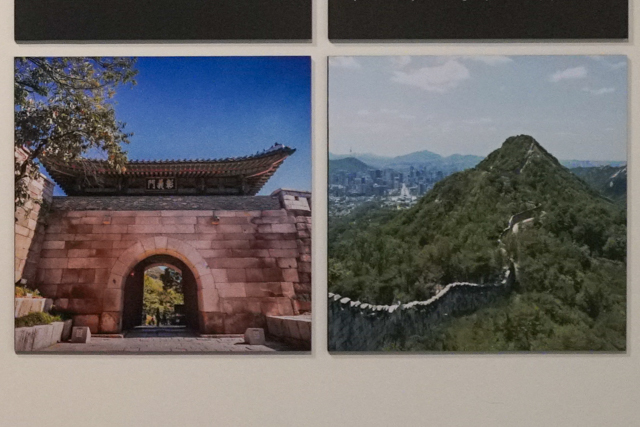
Changuimun [above, left] is a gate in the northwest part of the Hanyangdoseong. Sukjeongmun (Gate), due north of the capital, was usually closed, so Changuimun served as the main way in and out of the city’s north side, earning it the name “north gate”. The original gate pavilion was destroyed during the Imjin War with Japan in the 1590s, and the present one was built in 1741, making it the oldest surviving gate pavilion on the entire wall.
Sukcheongmun [above, right] was the original name for the north gate in the Hanyangdoseong. It originally had no gate pavilion, and the gate was normally kept closed; it was only opened in times of severe drought. The gate was renamed Sukjeongmun in the mid-16th century. A gate pavilion was only added during a major restoration project in 1976.
2. 낙산 구간, Naksan Section (Hyehwamun to Heunginjimun)
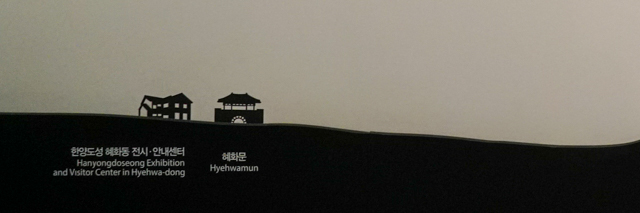
This section begins at Hyehwamun (Gate), crosses over Naksan (Mountain) and ends at Heunginjimun (Gate). Naksan stood on the eastern side of the capital, thus it represented the guardian spirit of the eastern quadrant. It is the lowest (124.4m) of the four inner mountains. The wall-side hiking trail outside the Catholic University campus passes by various types of wall construction employed over the years, providing hikers with an opportunity to compare. In addition, the Jangsu and Ihwa communities maintain the atmosphere of the old “wall-side community” that once thrived here.
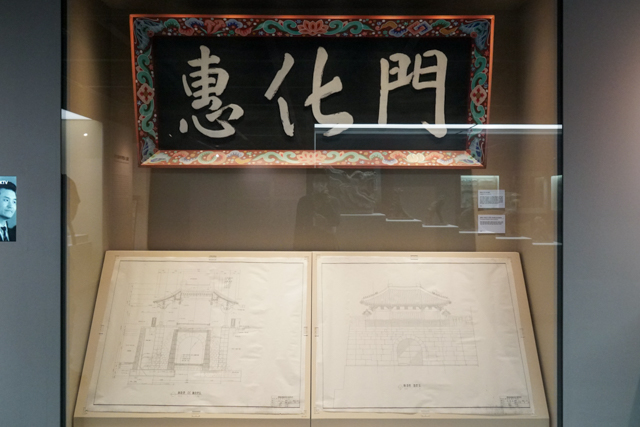
Hyehwamun (Gate), which is located between Heunginjimun (Gate) and Sukjeongmun (Gate), is also known as Dongsomun. The original name was Honghwamun, but then the main gate (on the east side) to Changgyeonggung (Palace) was given the same name in 1483, Thus, this gate was renamed Hyehwamun to avoid confusion. The arch and gate pavilion were rebuilt in 1744, The gate pavilion was dismantled in 1928, followed by the complete removal of the stonework and arch ten years later. The project to rebuild the gate was completed in 1994.
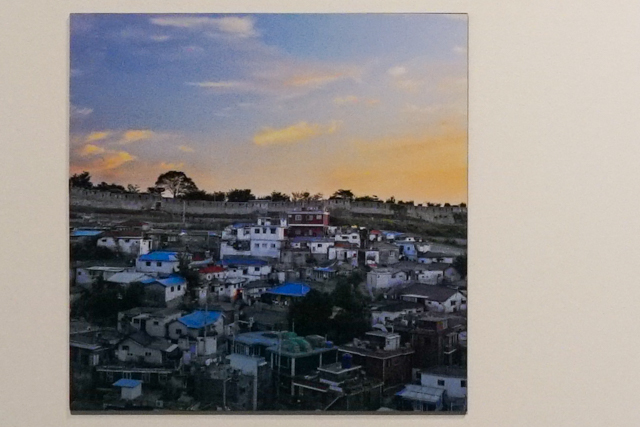
3. 흥인지문 구간, Heungjinmun Section (Heungjinmun to Janchung Arena)
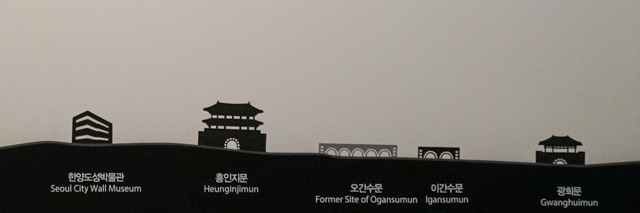
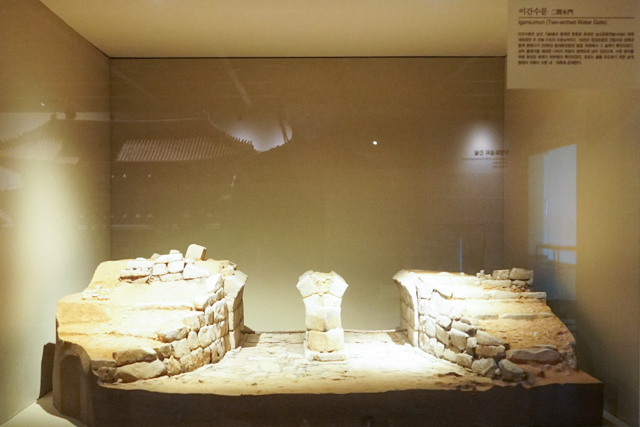
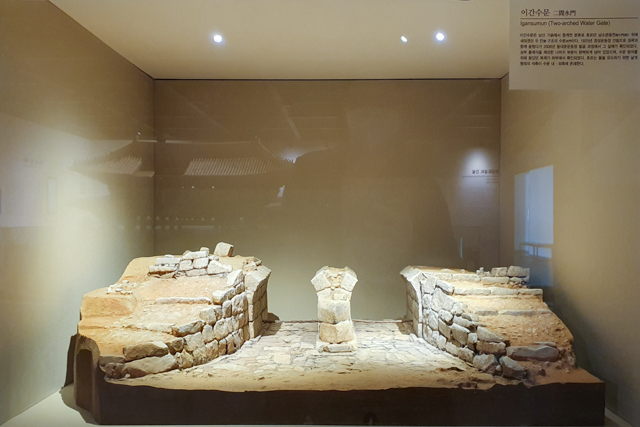
This Section, which starts at Heunginjimun (Gate), runs through Gwanghuimun (Gate) and ends at Jangchung Arena, was built entirely on the flat-land east of the capital. As such it is the lowest of all the Hanyangdoseong sections. The site of the former Ogansumun (five-arch floodgate) and Igansumun (two-arch floodgate, uncovered in 2009), are located between Heunginjimun and Gwanghuimun. Follow the wall from Gwanghuimun into the residential area of Jangchung-dong and traces of the Hanyangdoseong disappear, because the wall was removed in the 1930s to make way for a housing complex.
Heunginjimun is the east gate of the Hanyangdoseong. The gate pavilion is double-stoned to elevate the stature of the gate, for the king often entered and left the capital through Heunginjimun, commonly known as Dongdaemun. A semicircular bastion was built around the outside entrance to repel invaders more effectively. The gate was first completed in 1396, and the semicircular bastion was completed the following year. In 1869, the entire structure was dismantled and a larger gate was built.
Ogansumun is a five-arch floodgate that was built under the Hanyangdoseong between Heunginjiinun and Gwanghurmun to allow the water of Cheonggyecheong (Stream) to flow out of the city. An iron grate was originally installed to prevent people from coming in, but it was removed in 1907 to let the water flow more freely. The following year the wall section above the floodgate was demolished.
Igansumun is a two-arch floodgate built in the same style as Ogansumun. It was built to carry the water draining off Namsan (Mountain) in the feeder stream to Cheongqyecheon Stream. The stone material from the gate was used to build some of the stands inside the new Gyeongseong Stadium in 1925. In 2008 the facility was demolished and much of the floodgate base was found in good condition. The lower part of Igansumun was restored, and the upper part was rebuilt.
Gwanghuimun (Gate) is located southeast of Hanyangdoseong, between Sungnyemun (Gate) and Heunginjimun (Gate). It was also known as ‘sluice gate” because it was near Ogansumun and Igansumun. In the old days the dead bodies were carried through this gate. Thus Gwanghuimun was called ‘corpse portal’ as well. The archway of Gwanghuimun was torn down in 1928. The gate was moved 15 neters to the south of its original position and the gate pavilion was rebuilt when the street was widened from 1974 to 1975.
4. 남산(목멱산) 구간, Namsan (Mongmyeoksan) Section (Jangchung Arena to Baekbeom Square)
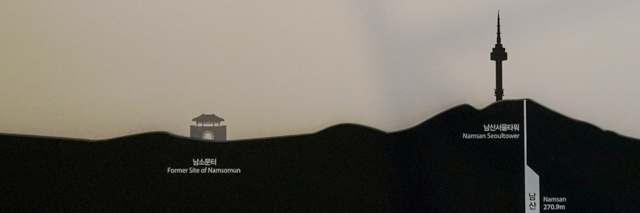
The Namsan Section extends from the street behind Jangchung Arena to Baekbeom Square. Namsan (Mountain) was also known as Mongmyeoksan (270.9m). In geomantic terms, this was the “table mountain” for the capital, and a state shrine was maintained on its slopes from early to pray for peace for the state and security for the people. In addition, beacon platforms were built on top as part of early warning system for border incursions or uprisings around the country. A stretch of the wall along wooden stairway that follows ridgeline east of Namsan now appears the way it did when it was built during King Taejo’s reign (r. 1392-98).
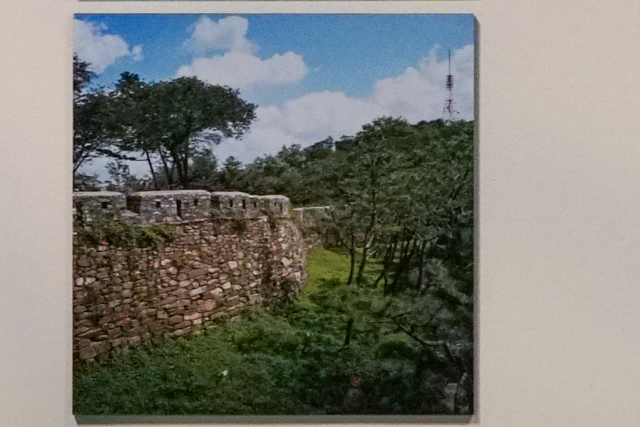
Former Site of Namsomun – Namsomun (Gate) was once located south of Gwanghuimun (Gate). It was first completed in 1456 and then closed in 1469. The gate demolished sometime around 1914 to widen the street The current height of the hill is about five meters lower than it was orig inally, so all traces of the gate are gone.
5. 숭례문 구간, Sungnyemun Section (Baekbeom Square to Former Donuimun Site)
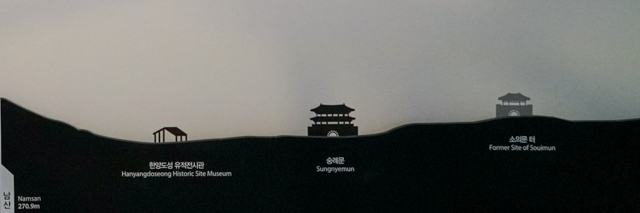
This section was built on flat ground, so most of it has been lost, but there are still two places where traces of the Hanyangdo-seong can be found. The lower part of the original wall remains as walls for properties from the Korea Chamber of Commerce Building to the Pacific Tower, and the lower part of the 50m wall for Changdeok Girls’ Middle School consists of perfectly square stone blocks that were once part of the Hanyangdo-seong.
The Confucian classic states that the ruler must face south, and accordingly Sungnyemun was the main entrance to the Joseon capital. This was the gate through which soldiers would leave the capital on assignments, and it was the gate with the highest ceremonial protocol, used for such events as welcoming the Chinese envoy. Construction of the original structure began in 1396 and was completed two yean later. Much of the gate pavtton was destroyed in a 2006 arson attack, but reconstruction work began soon after and was completed in 2013.
Former Site of Souimun — Souimun, also known as Seosomun, was a minor gate between Sungnyemun (Gate) and Dontamun (Gate), to orignal name was Sodeokmun. The arch was repaired in 1738, and a new gate pattern was built in 1744. when the name was changed from ‘Sodeok’ to ‘Seoi”. This was one of the portals through which funeral processions left the city, the other being Gwanghuimun (Gate) in the southeast. The gate and its adjoining wall sections were completely removed in 1914.
6. 인왕산 구간, Inwangsan Section (Former Donuimun Site to the Hill of Poet Yun Dong-ju)
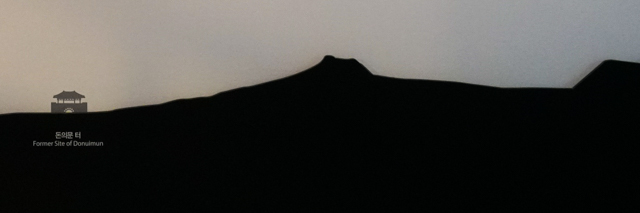
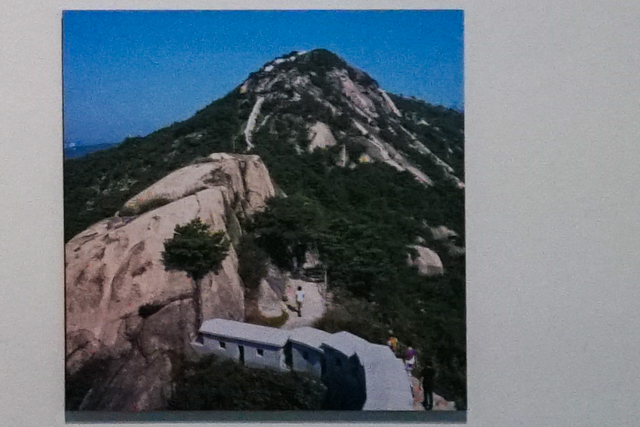
The Inwangsan Section begins at the former site of Donuimun (Gate), crosses over Inwangsan (Mountain) and continues as far as the Hill of Poet Yun Dong-ju. Inwangsan (339.9m), stands to the west of the city and corresponds to the guardian of the western quadrant. The area was declared off limits after the North Korean commando attack in January 1968 but was reopened to the public in 1993. A stretch of the Hanyangdo-seong, running from Skirt Rock at the top of Inwangsan to the fork that leads to Tangchundaeseong (Fortress), clearly contrasts the different wall-building techniques employed during different time periods of Joseon.
Former Site of Donuimun – Donuimun was the west gate of the Hanyangdoseong. first buflt In 1396. The gate was dosed In 1413 and a new gate, called Seojeon-mun, was built and used as the west gate. However in 142Z Sepfeoo-mun was taken down and Donuimun was repaired and again put to use. It was nicknamed *new gate* at that time, and that name continued to be used into modem times. The arch and gate pavtton were rebuilt in 1711, and the gate was removed without a trace m 1915.
The History of Hanyangdoseong Recorded in the Wall Itself
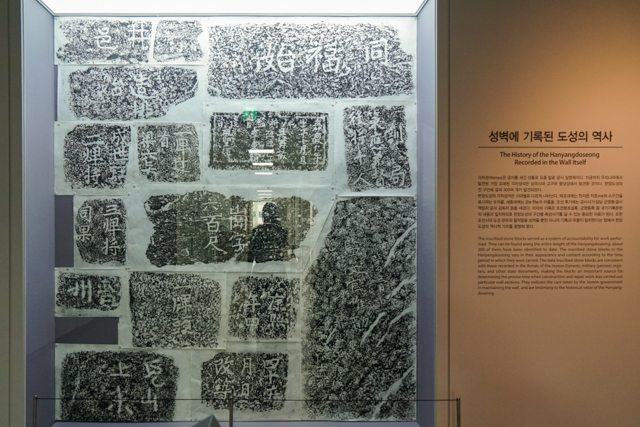
The inscribed stone blocks served as a system of accountability for work performed. They can be found along the entire length of the Hanyangdoseong, about 300 of them have been identified to date. The inscribed stone blocks in the Hanyangdoseong vary in their appearance and content according to the time period in which they were carved. The data inscribed stone blocks are consistent with those recorded in the Annals of the Joseon Dynasty, military garrison registers, and other state documents, making the blocks an important source for determining the precise time when construction and repair work was carried out particular wall sections. They indicate the care taken by the Joseon government in maintaining the wall, and are testimony to the historical value of the Hanyangdoseong.
Construction of the Hanyandoseong
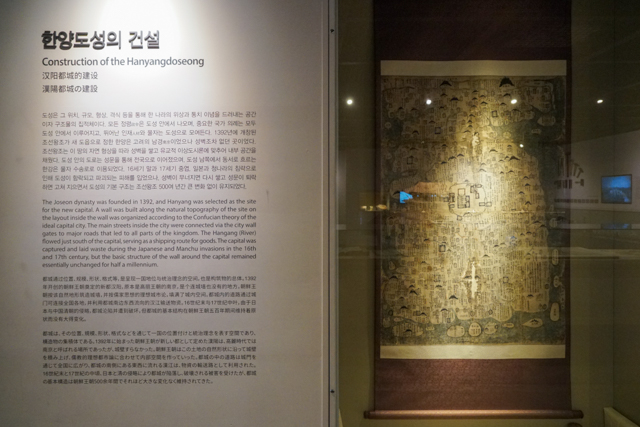
The Joseon dynasty was founded in 1392, and Hanyang was selected as the site for the new capital. A wall was built along the natural topography of the site on the layout inside the wall was organized according to the Confucian theory of the ideal capital city. The main streets inside the city were connected via the city wall gates to major roads that led to all parts of the kingdom. The Hangang (River) flowed just south of the capital, serving as a shipping route for goods. The capital was captured and laid waste during the Japanese and Manchu invasions in the 16th and 17th century, but the basic structure of the wall around the capital remained essentially unchanged for half a millennium.
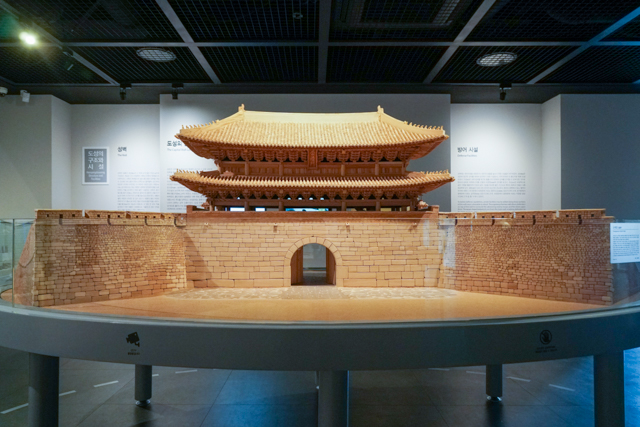
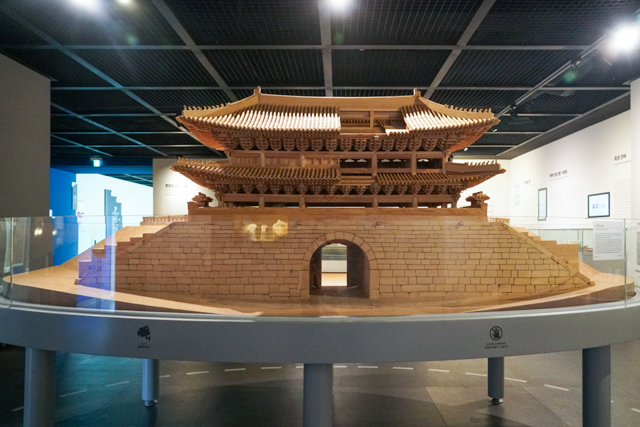
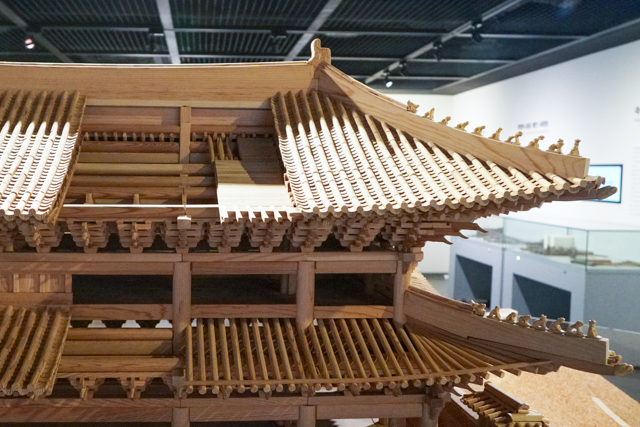
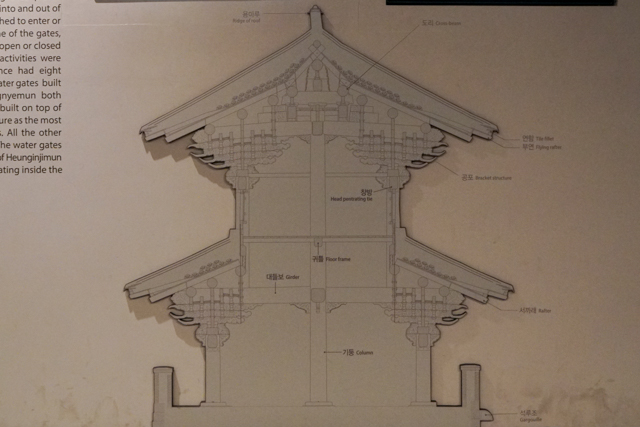
Gates are located at specially designated places along the city wall to control access into and out of the city. In the past, anyone who wished to enter or exit the city had to pass through one of the gates, and the times when the gates were open or closed determined when all most public activities were possible. The Hanyangdoseong once had eight gates built into it as well as two water gates built under it. Heunginjimun and Sungnyemun both have double-storied gate pavilions built on top of their stonework, reflecting their stature as the most important of all the city wall gates. All the other gate pavilions have just one story. The water gates are both under the wall section south of Heunginjimun to let the water from streams originating inside the city wall to flow out of the capital.
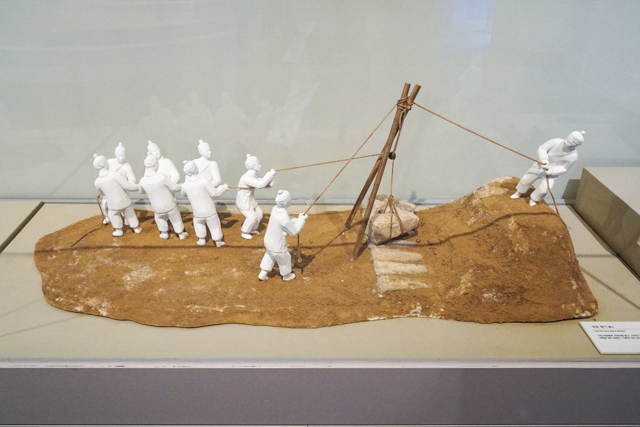
Capital Wall Maintenance
The capital wall not only helped to defend the city but also projected royal dignity and state authority; therefore it had to look the part. Guards walked patrol routes on both sides of the wall every day, and if they detected any sign of problems with the wall’s condition, they would report it to the unit in charge and repairs would be made. The city wall gates were open during the day and closed during emergencies and curfew hours, which strictly regimented the everyday lives of capital residents and influenced the lives of everyone else in the country in both symbolic and real ways. Thus, the people inside the capital were constantly aware of status of the wall and its gates, while people traveling up from the countryside would recognize the wall and its gates as the capital.
Inside and Outside the Capital Wall
Hanseong Prefecture had jurisdiction over both the inner area and outer perimeter of the capital, but they were totally different worlds. Members of the royal family and elite clans who were essential for the survival of the state all lived within the capital wall. The capital residents were exempt from the duties of paying taxes, providing tribute and performing conscript labor; instead, they were responsible for keeping the capital interior clean, and their daily lives were organized by the directives of the state. On the other hand, the people living just outside the wall were only able to go inside when sitting for government examinations, performing craftwork on demand, or supplying everyday products needed by the capital residents. The privilege of residing in the capital was a source of great pride even long after the capital wall lost its function as a borderline.
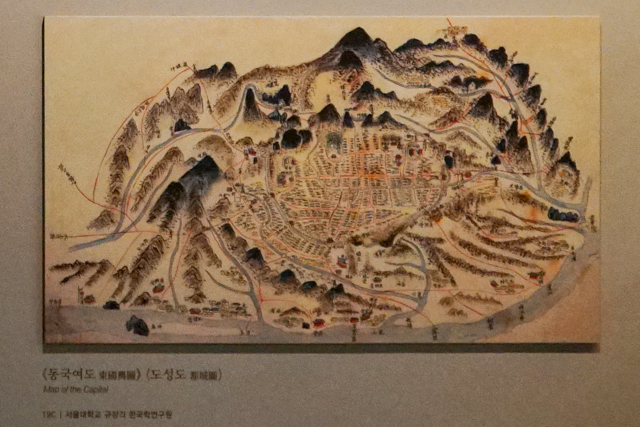
Capital Wall Management Organization
Capital Wall Management by the Hanseong Prefecture
Once the capital wall was built, the Joseon dynasty named the area inside Hanseong Prefecture. This name referred both to the administrative area of the new capital as well as the government organization in charge of it. Hanseong Prefecture was tasked with inspecting the Hanyangdoseong and managing the forestland on the four inner mountains surrounding the city. The office was also responsible for striking gongs at the designated times to alert the public that the gates were being closed for the night or opened for the day, and for assigning work details to capital residents when the wall needed repair.
Organizations Managing the Capital Wall
The Office of Wall Maintenance was established in 1422, after the massive project to rebuild and repair the capital wall had been completed. This agency was responsible for inspecting the wall for signs of problems and to oversee the reconstruction of collapsed sections. In 1426, Office of Wall Maintenance was merged with the Office of Fire Prevention, which was then renamed the Office of Wall Maintenance and Fire Prevention. After the Imjin War with Japan in the 1590s, the Three Army Commands were put in charge of all duties pertaining to the capital wall, to include patrolling, protection, repair and reconstruction.
Capital Wall Defense Decree
Moreover, I have long sympathized with the several hundred thousand people in the capital, both commoner and elite. How could I abandon them and go away alone? Thinking these thoughts allows me to join with the hearts of the people. Now, this decree is truly meant for the people. Now, although my vitality may be exhausted and my spirit weak, my firm intention to defend the walls allows me to pledge to the blue sky up there. Should there ever be such an emergency, I will be first to gather my strength, ascend the parapets and comfort the people.
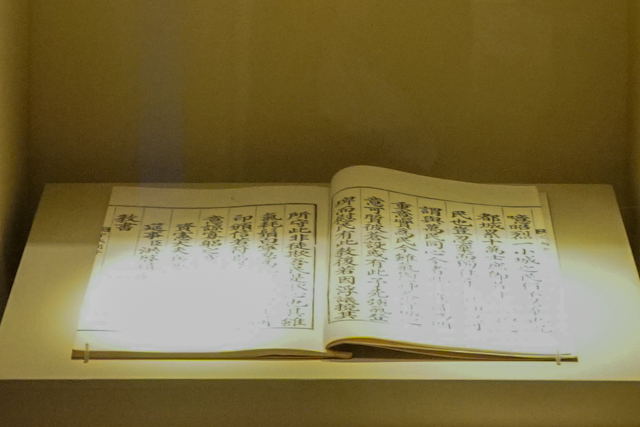
Patrolling the Capital Wall
In early Joseon, the Office of Patrolling Inspector was established and soldiers from the Five Military Commands in the capital at that time were sent out on patrol. After the Imjin War with Japan in the 1590s, the Three Military Commands in the capital were put exclusively in charge of guarding the capital wall, while responsibility for the patrolling was shared between the Three Military Commands and the Police Bureau. The patrol squads consisted of six to twelve soldiers, headed by a squad leader. The watchmen all received passwords prior to going on patrol, and when others were spotted while making the rounds they would ask foi the password. If the response was incorrect, the person or persons would be apprehended and punished for curfew violation.
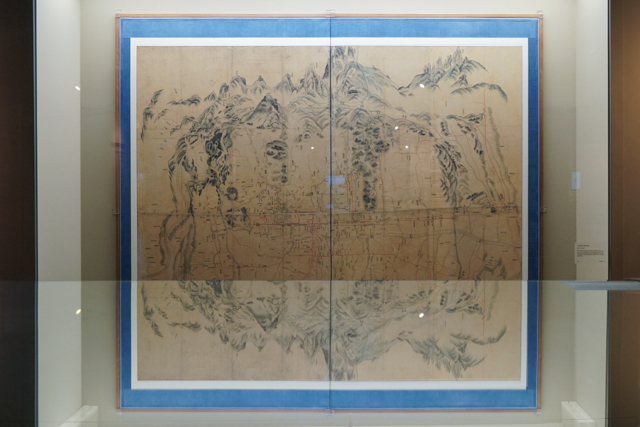
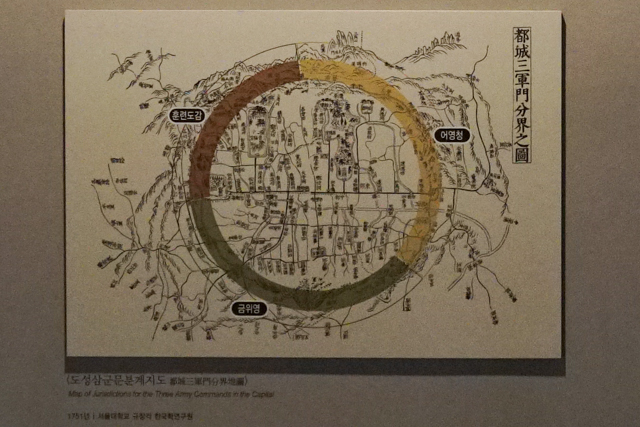
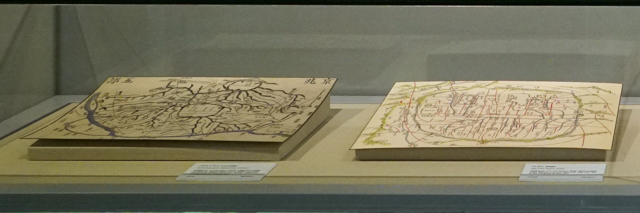
[Above] shows a map of the jurisdictions of the three army commands in the capital.
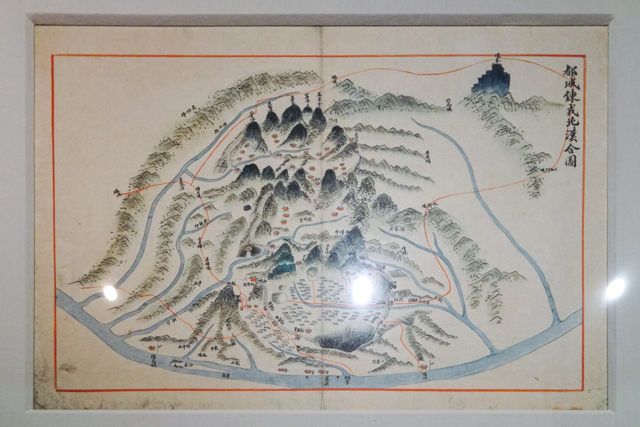
[Above] shows a map of Bukanseong.
Repairing the Capital Wall
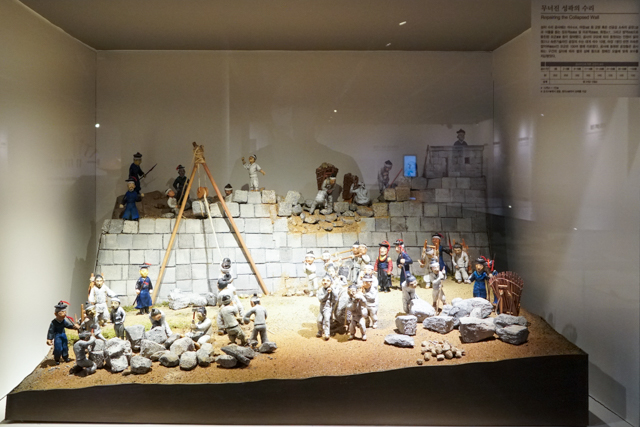
Whenever soldiers from the army command detected collapsed portions of the wall while on patrol, they would submit a report it to the throne according to an established set of procedures Having read the report, the king would first order to set up ladders beside the collapsed section, then instructions would be delivered from the throne to the respective army command in charge concerning the deployment of guards and stonemasons. That army command would dispatch soldiers to the site to keep watch until the repairs were completed on the one hand, while summoning the craftsmen and assigning the work details on the other.
Opening and Closing the Capital Wall Gates
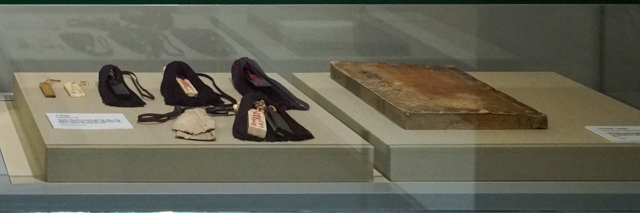
The Office for Observance of Natural Phenomena operated the water-clock that kept official time and would relay the signals to the central bell-pavilion. The start of curfew was announced by tolling the bell twenty-eight times, while it would ring thirty-three times to mark the lifting of the curfew. After the gates were closed for curfew, men were not allowed to be out on the streets inside the capital. A special gate pass had to be presented to delay gate opening or closure or to open one of the gates during curfew hours. Designated gatekeepers were responsible for opening and closing the gates.
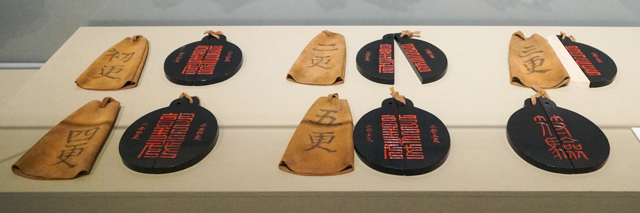
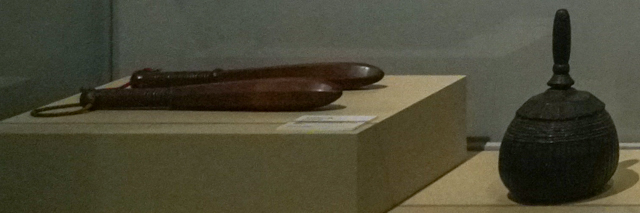
[Above, top] shows capital gate pass tallies. [Above, bottom] shows the bell used.
Gate Entry and Exit
The king most often traveled outside the capital to conduct ceremonies at royal ancestral tombs, and he would use the gate that was in the direction of the particular tomb he was to visit. The Joseon kings would use Donuimun or Sungnyemun when going out to meet the Chinese envoy. The king would go through Changuimun on his way to the northern suburb to conduct the supplication rite to the Rain God during times of drought. The Chinese envoys would pass through Sungnyemun and Donuimun, while the Manchu envoys would use Hyehwamun. The funeral biers for ordinary officials and commoners were only allowed to leave the capital through Souimun or Gwanghuimun.
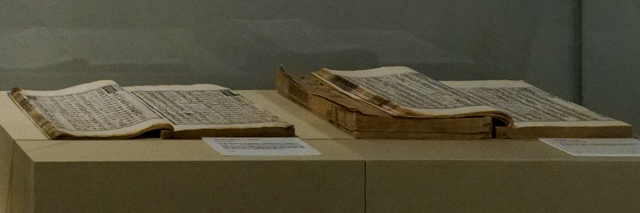
Scaling the Wall
An extract from Corea or Cho-Sen: The Land of the Morning Calm (1895) by A Henry Savage Landor —
In due course I reached the East Gate, but only to find it dosed, for it was new long after sunset…. I had learned that there was, at no great distance away, a spot where, at the risk only of breaking one’s neck, it was possible to scale the city wall; wherefore, having consulted a chtld as to the exact locality, besides tempting him with as string of cash, I proceeded to find it and soon, under his guidance, reached it. The wall at this spot was, I may mention, about twenty feet high. Having, then, fastened my paint-box and sketches to my back by means of a strap, and slinging the paper lantern to my arm, I proceeded, hampered through I was, to make trial of may cat-like qualities in me matter of wall climbing. Making a special effort, however, I got a few feet hrgher, when I heard a mysterious voice below murmur: “You have nearly reached the top”. I received the news with such delight that, in consequence of the fresh vigour which it imparted to me and which made me try to hurry up, one of my feet slipped, and I found myself clinging to a stone, with the very ends of my fingers. Oh what a sensation! and what moments of anxiety, until, quickly searching with my toes, I got a footing again. That slip was fatal for, owing to the jerk it gave me, the unsteady candle inside the paper lantern fell out of its perpendicular position and produced a conflagration. Then, indeed, was l placed in the most perplexing position, for, here was I, holding on to the wall I do not know how, with the lantern and my sleeve on fire and my arm getting unpleasantly warm, and yet utterly unable to do anything to lessen the castastrophe. Only one thing could be done; and I can assure you, the few remaining feet which had to be climed were got over with almost the agility of a monkey. Thus, at least, I was on top.
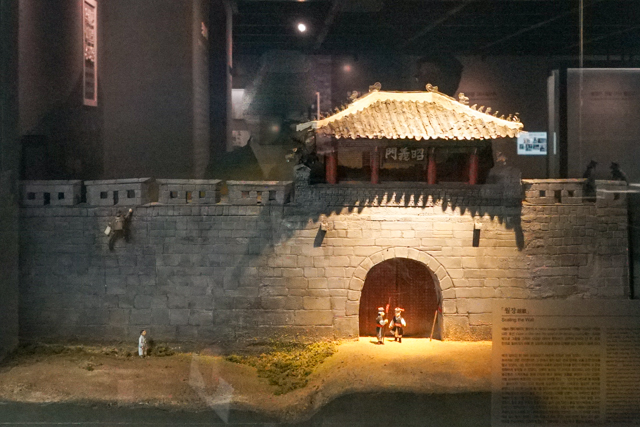
The Capital Wall in the Lives of the Capital Residents
Amusements and Art
The Hanyangdoseong was an integral part of the scenic four inner mountains, and so it was used as a place for amusement as well as for literary and artistic activities. A popular activity for capital residents in the spring and summer was to walk around the wall that would take an entire day to complete. Poetry clubs would frequently organize gatherings to admire the places near the wall where the landscape was particularly beautiful. Archery contests were a form of exercise and amusement for the Joseon yangban (elite) class, and two archery platforms were set up on Inwangsan (Mountain) and Namsan (Mountain).
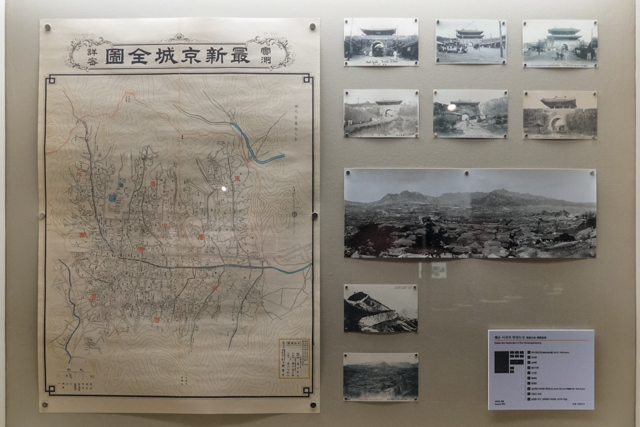
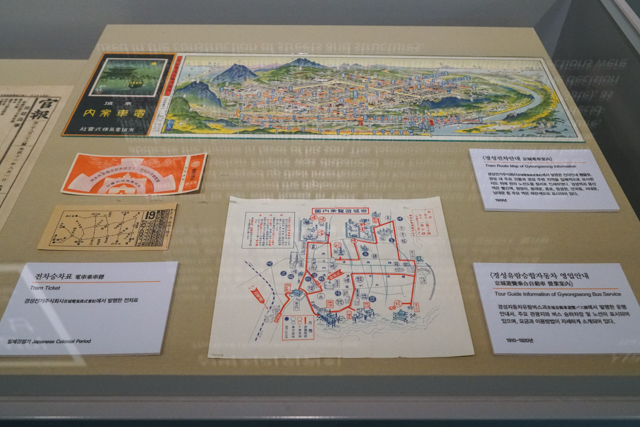
The Process of Establishing Hanyang as the Capital
Founding the Joseon Dynasty and Establishing the Capital at Hanyang
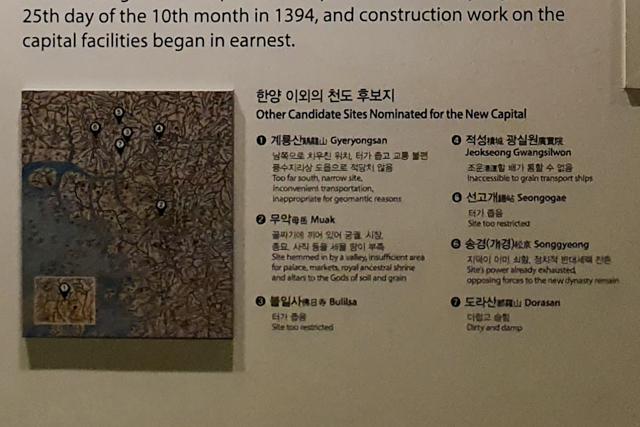
In the 7th month of 1392, King Taejo founded a new dynasty. Various candidate sites for the new capital were nominated over the next two-plus years, but in the end none were deemed to be better than Hanyang. In geomantic terms, Hanyang was the most ideal propitious site. Moreover, Hanyang was located about halfway down the Korean Peninsula, near the mouth of the Hangang (River). Thus accessibility to all parts of the country was well balanced, and shipping cargo via the Hangang was convenient. The Joseon founder-king had the capital officially relocated to Hanyang on the 25th day of the 10th month in 1394, and construction work on the capital facilities began in earnest.
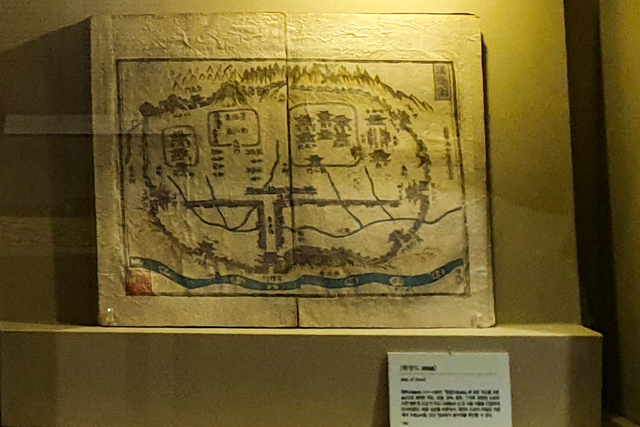
Principles for Building a Capital
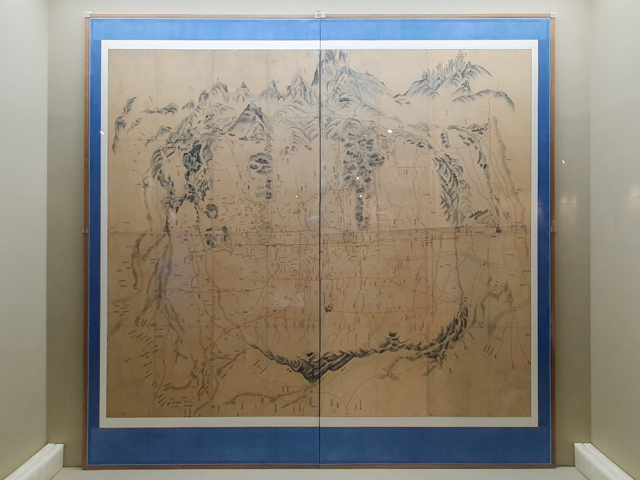
Hanyang is situated between Bukhansan (Mountain) and the Han-gang (River), and according to geomantic theory, the site is the most propitious on the Korean Peninsula. Baegaksan (Mountain) is connected to Inwangsan (Mountain) to the west and Naksan (Mountain) to the east while facing Mongmyeoksan (Namsan Mountain) to the south. A broad plain is thus surrounded by mountains and has a stream (Cheonggyecheon) flowing across it, from west to east. South of Mongmyeoksan, the Hangang flows east to west. The Joseon dynasty founders had a wall built along the ridgelines of these four inner mountains that surrounded the Hanyang site. The wall defined the configuration and size of the capital city, while the internal layout corresponded with the principles stipulated in the Rites of Zhou, a Confucian classic
Wall Construction Chronicle
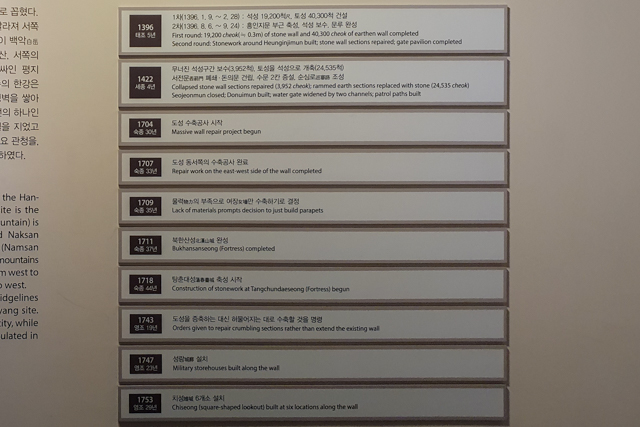
Constructing the Wall and Managing the Workforce
Directorates and Army Commands
The Office of Capital City Wall Construction was established in the 9th intercalary month of 1395. The directorate dispatched supervisory officials who were each responsible for overseeing two of the 97 sections into which the capital wall was divided. It was abolished after the Sungnyemun construction project was completed in 1398. The Office of Capital City Wall Repair was then formed in the 10th month of 1421 to oversee wall construction and repair work undertaken during the reign of King Sejong (r.1418-50). Separate directorates were not organized for wall-related projects in the time of King Sukjong (r.l674-1720). Instead, the Three Army Commands in the capital were each assigned their own section of the city wall to guard and they were also responsible for overseeing any construction or repair work performed in their respective sections.
The Laborers Who Built the Hanyangdoseong
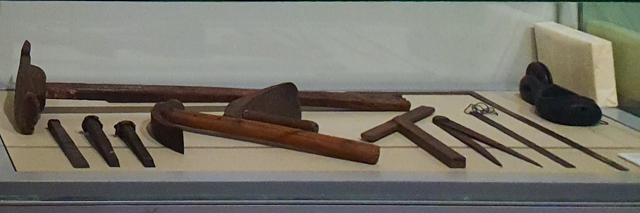
In medieval Korean society, the commoners were regularly required to pay taxes, offer tribute and provide conscript labor to the state. The conscript labor was mainly provided in the form of military service, but conscripts also were used on large-scale construction projects to improve roads, build walls, and so on.The construction of the Hanyang-doseong served as an opportunity for the central government to ascertain the degree of its control over the common people.The central government mobilized 197,470 commoners from around the country in 1396. A total of 322,460 commoners and 2,211 craftsmen were mobilized in 1422. From 1704 on however, soldiers from the army commands in the capital vicinity as well as paid laborers were responsible for wall construction and repair work.
Defense Facilities
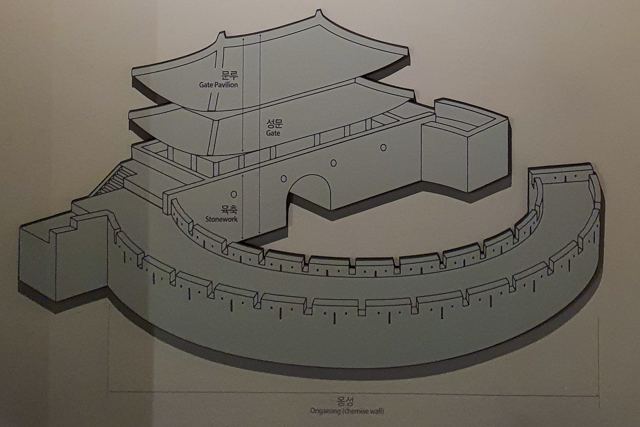
To bolster defense capabilities, certain facilities may be added along those sections of the wall most vulnerable to attack. Theongseong (chemise wall) allows defenders on top of the wall to surround the advancing enemy troops and fire down upon them.The square-shaped lookoutjuts out from the main wall, enabling defenders to fire from multiple angles. Six of these were added to the wall section north of Gwanghuimun (Gate) during Yeongjo’s reign (18th century).The elongated lookout is built onto the main wall in areas where the topography curves outward, providing the defenders with additional angles of fire. Military supply storehouses or as a combination of guardhouse and sleeping quarters for guards were built five paces away from the top of the wall in the 18th century.
Preparations for Wall-building
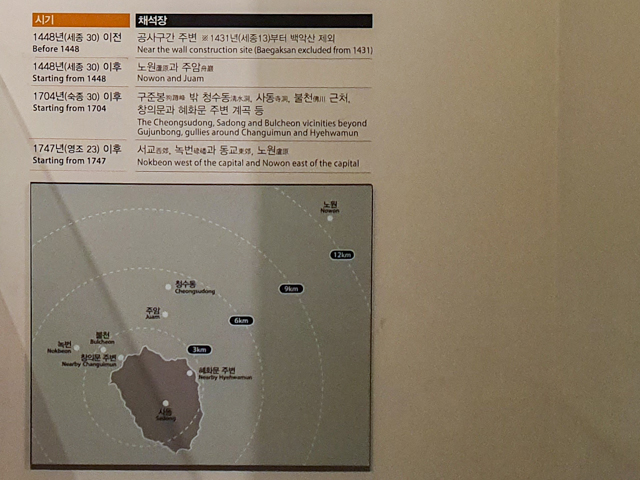
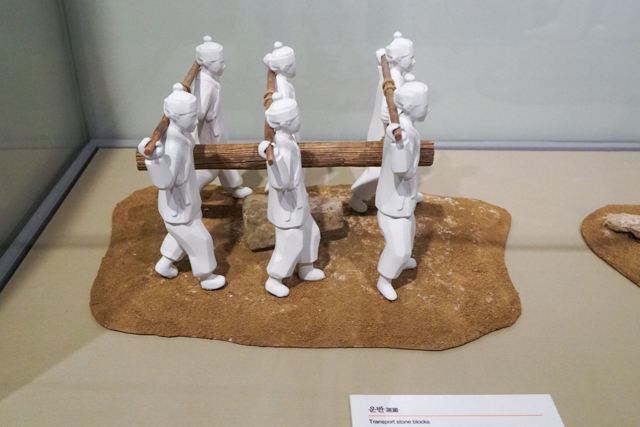
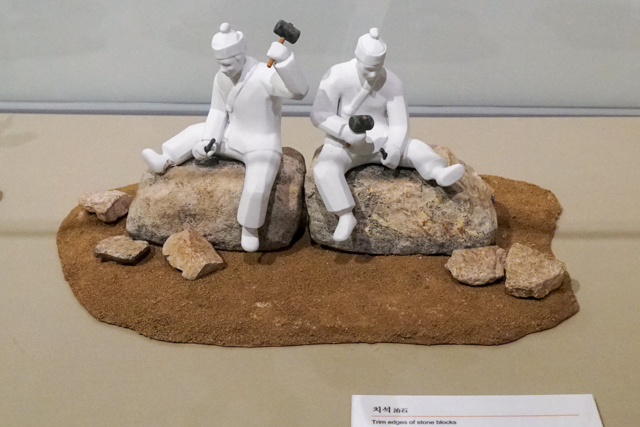
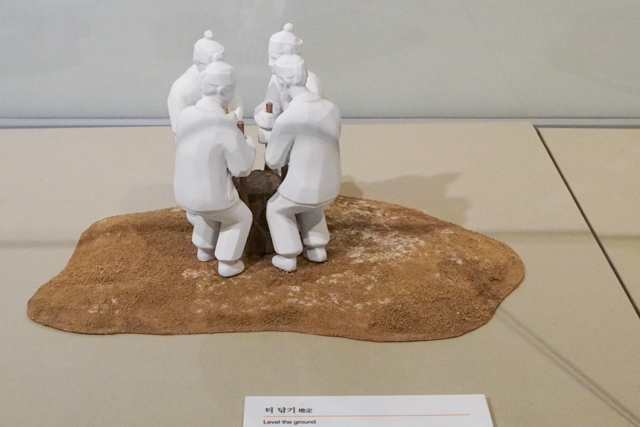
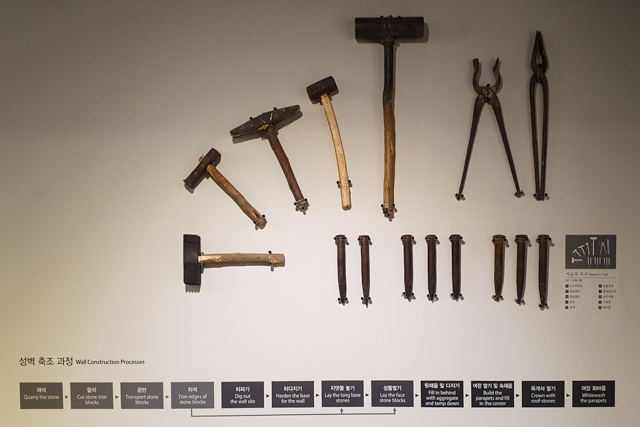
The government would have officials in the provinces select workers and send them to Hanyang. Food, firewood and shelter for hundreds of thousands of people would have to be prepared in advance of a large-scale construction project. In Sejong’s reign, medical treatment facilities were also set up in four locations.The necessary earth, stone and wood for the project were gathered in the vicinity of the construction sites for early projects, but quarrying rock from the hillsides inside or immediately outside the capital was banned in 1448. A major wall repair and restoration project was carried out in the early 18th century, and the needed materials were initially quarried at Nowon and Juam, which were distant from the capital. However, this caused work delays and caused many workers to be injured or even killed while transporting the stone. Therefore, the quarry sites were expanded to include areas closer to the city wall.
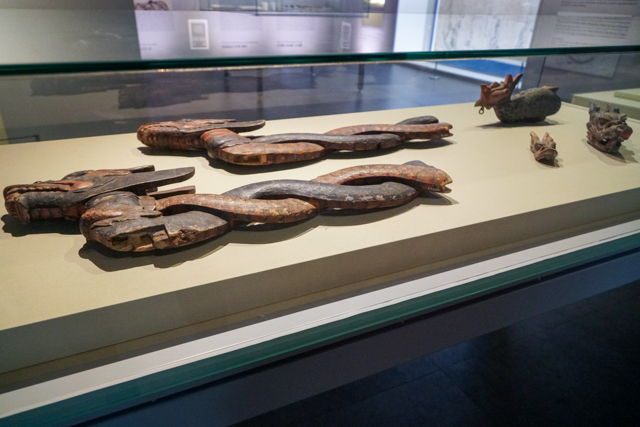
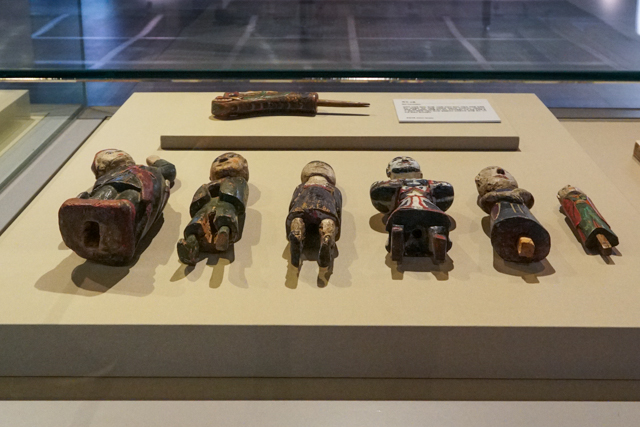
Decorative Tiles of Heunginjimun
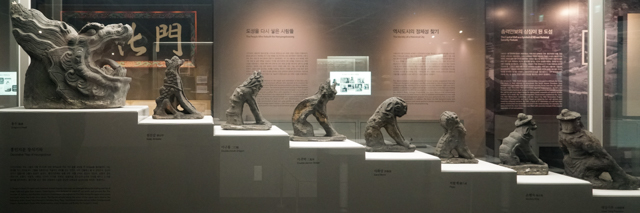
The Dragon’s Head and Assorted Animal Figures are arranged along the sloping roof hip of major halls and gates from Joseon. These figures were believed to ward off evil spirits and prevent fire. The number of [figures] signified the structure’s importance. Heunginjimun has nine along the upper story eaves and eight along the lower storey eaves. The figures arrayed along the eaves of the upper story were arranged in the following order Great Tang Preceptor, Monkey King, Pigsy, Sand Monk, Double-demon Striker, Double-mouth Dragon, H[?] Monk, Triple-[?] Bodhisattva, Scaly Anteater, and finally the Dragon’s Head.
Residential District Development and Capital Wall Destruction
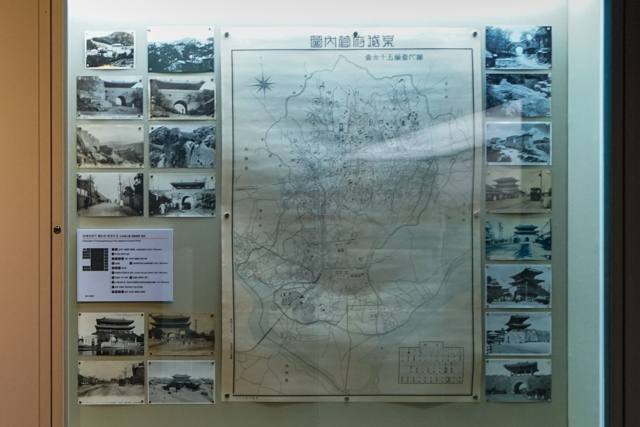
The exploitative agricultural policy of the Japanese Empire drove large numbers of hard-pressed farming families from the countryside and into the capital. As a result, the population in the capital grew constantly from the 1920s. The poor people built adobe huts along the streams and at the base of mountains inside the capital walls as well as at the edges of public cemeteries. In 1936, the Government-General of Korea greatly expanded the area of Gyeongseong in order to address the population increase in the capital. Around this time, the cemeteries outside the walls and their vicinities were developed into new residential districts and the streets along near the city wall were widened. Stone blocks from the city wall were often treated as building materials.
The Onslaught Continues Post-Liberation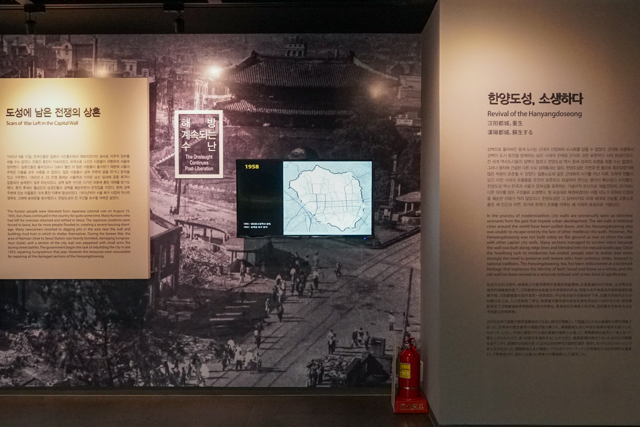
Scars of War Left in the Capital Wall
The Korean people were liberated from Japanese colonial rule on August 15. 1945. but chaos continued in the country for quite some time. Many Koreans who had left for overseas returned and settled in Seoul. The Japanese residents were forced to leave, but far more people flooded in, creating a severe housing shortage. Many newcomers resorted to digging pits in the area near the wall and building mud huts in which to shelter themselves. During the Korean War, the area of Namsan close to Seoul Station was heavily bombed, damaging Sungnye-mun (Gate), and a section of the city wall was peppered with small arms fire during street battles. The government began the task of rebuilding the city in late 1953, repairing Sungnyemun that year However the resources were unavailable for repairing all the damaged sections of the Hanyangdoseong.
Revival of the Hanyandoseong
In the process of modernization, city walls are universally seen as obsolete remnants from the past that impede urban development. The old walls in historical cities around the world have been pulled down, and the Hanyangdoseong also was unable to escape entirely the fate of other medieval city walls. However, rhe Hanyangdoseong was not built solely on flat ground as was so often the case with other capital city walls. Many sections managed to survive intact because the wall was built along ridge lines and blended into the natural landscape Once the headlong rush to modernize has ended, people start to realize ever more strongly the need to preserve and restore relics from previous times, steeped in national traditions. The Hanyangdoseong, too. has been rediscovered as a landmark heritage that expresses the identity of both Seoul and Korea as a whole, and the old wall has been revived as a structure imbued with a new kind of significance.
City Wall as Retaining Wall
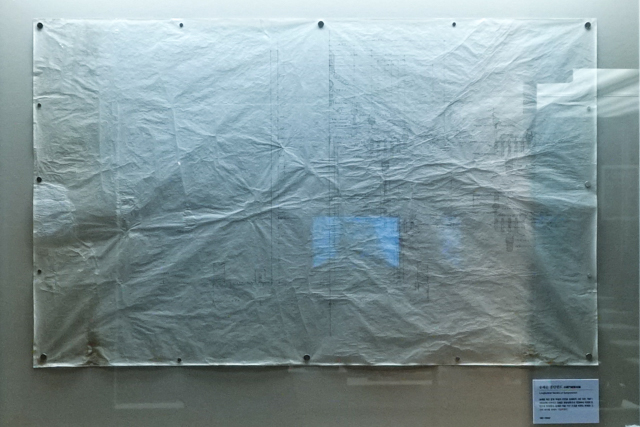
The social and political chaos immediately after Liberation and the subsequent war devastated peoples lives and changed their priorities. The public devalued traditional culture and was not open to the ideal of preserving the capital wall. Private citizens who built homes next to the city wall would regularly use It as a retaining wall. The government schools and even religious organizations would damage the city wall in the process of building new structures or streets. The wall next to Hyehwamun (Gate) became a retaining wall for a high school. Large-scale projects such as the Freedom Center. Tower Hotel and apartment complex for foreign residents were all carried out on sites in the vicinity of the Namsan Section of the city wall. Many stone blocks were taken from the wall and used as foundation materials for these projects. The site of Namsomun (Gate) was leveled during a street construction project, and Gwanghuimun had to be rebuilt 15 meters south of its original location.
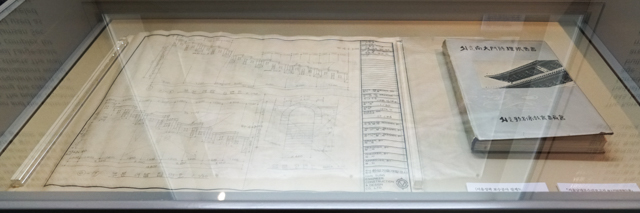
Excavating in Search of the Capital Wall Origins
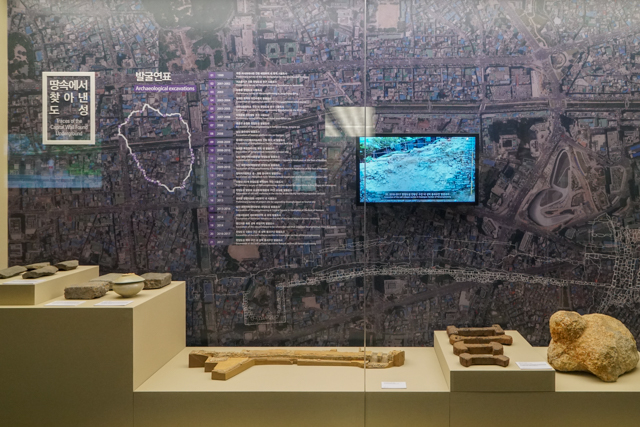
Serious efforts have been underway in the 21st century to verify the original appearance of the Hanyangdoseong in every detail. This process started in 1999 with a preliminary survey on the site that had been designated for the new Russian Embassy. Subsequently, preliminary surveys and full-fledged excavations were conducted around Sungnyemun, in parts of Jeong-dong and Jangchung-dong, and at Baek-beom Square on Namsan (Mountain). These archeological digs uncovered the actual foundations that supported the capital wall underground for centuries, revealing differences in wall building techniques depending on the site topography and geological features. They also relocated the original line in which the wall had been laid at these locations, although the part above ground had been lost without a trace.
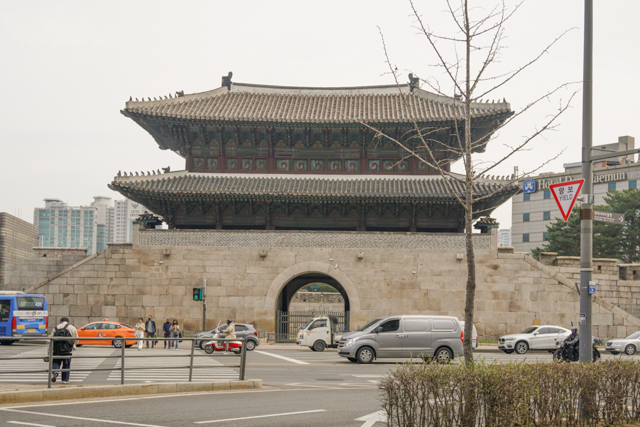
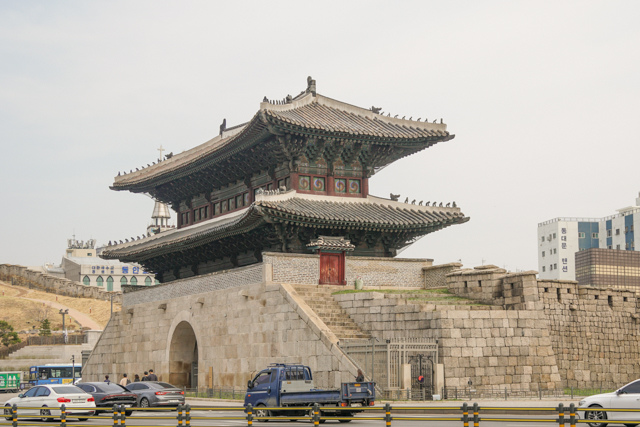
Heunginjimun Gate
동대문, 288 Jong-ro, Jongno-gu, Seoul, South Korea
As we learned in the museum, Heunginjimun, literally ‘Gate of Rising Benevolence’ or more commonly known as Dongdaemun, was one of The Eight Gates of Seoul in the Fortress Wall of Seoul. The gate is a short walk down the hill from the museum and en route to Dongdaemun Shopping Street.
Jung-gu
Dongdaemun Market
동대문종합시장, 272 Jong-ro, Jung-gu, Seoul, South Korea
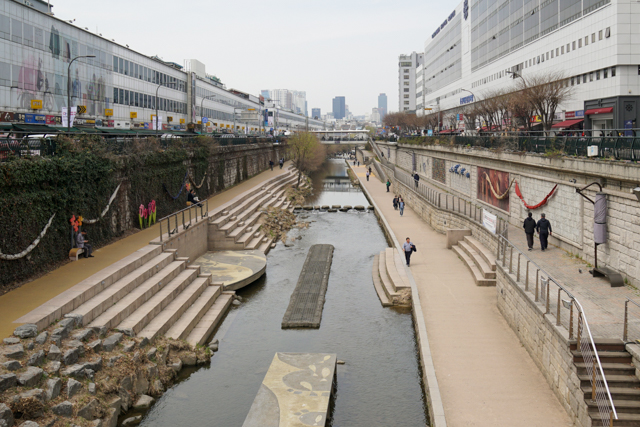
We crossed over Cheonggyecheon to get to Dongdaemun Market, which is said to be Korea’s largest wholesale and retail shopping district. While the shopping malls in Doosan Tower Building and Hyundai City Outlets were modern and bustling with retail activity, many of the other shopping malls recommended (Migliore, Sunmine, Hello apM, Goodmoning City) were very cramped and very tired with many empty storefronts and even empty floors. Looking back, the shopping at Hongdae was much more satisfying.
Doosan Tower Building
두산타워빌딩, 275, Jangchungdan-ro, Jung-gu, Seoul
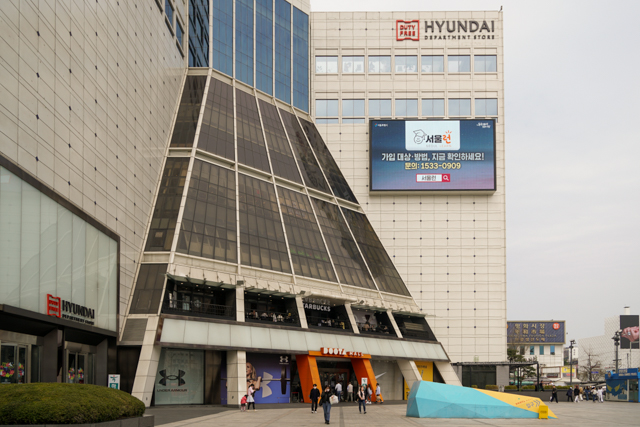
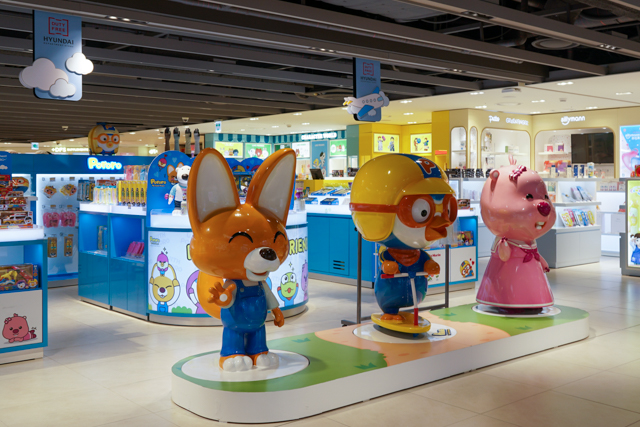
The Hyundai Department Store was very upmarket, but we did spot a Line Friends store inside.
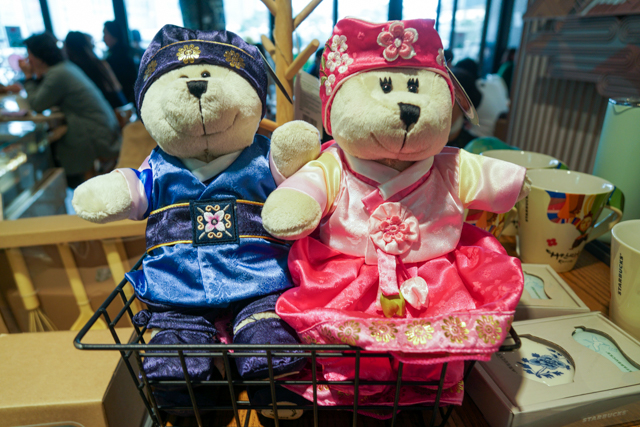
Doota Mall was more our pace. We discovered Starbucks in Korea had their own version of the bearistas dressed in hanbok.
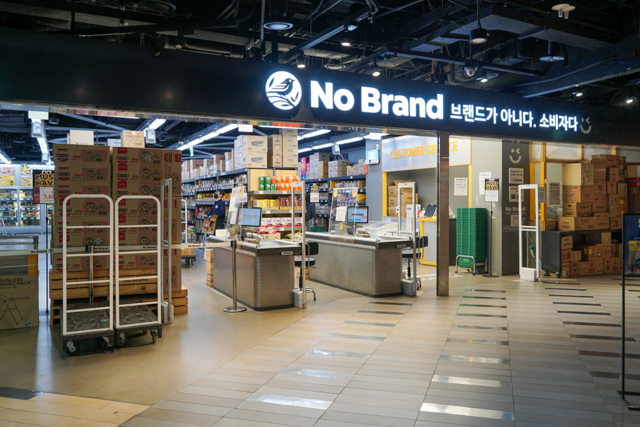
We took a walk through No Brand, after hearing about a whole lot of fuss about it. To us, it seemed like an Asian version of Aldi.
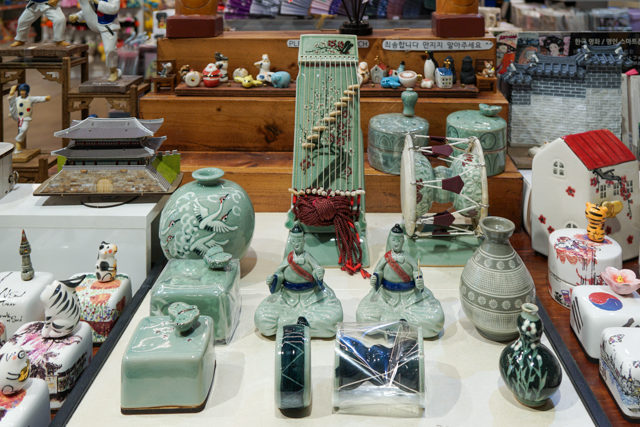
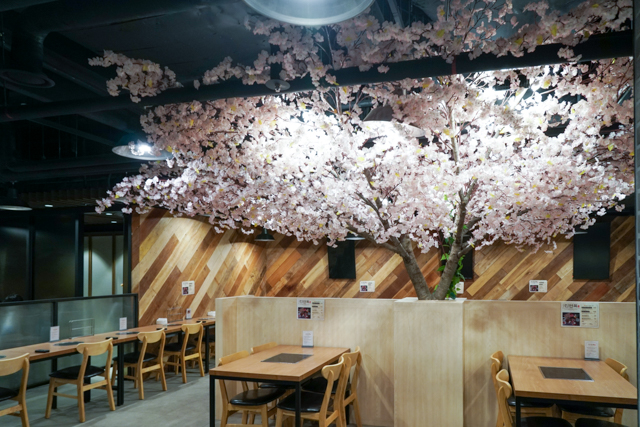
Heading to the food court, we spot this beautiful (artificial) cherry blossom tree inside a restaurant.
Abiko Curry
아비꼬 동대문두산타워점, B1 275 Jangchungdan-ro, Jung-gu, Seoul, South Korea
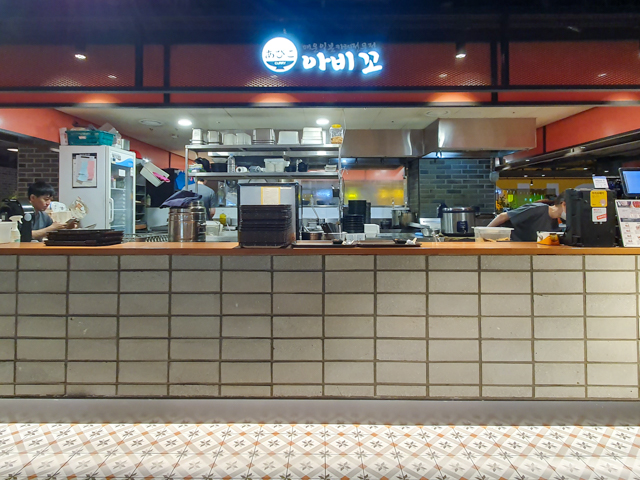
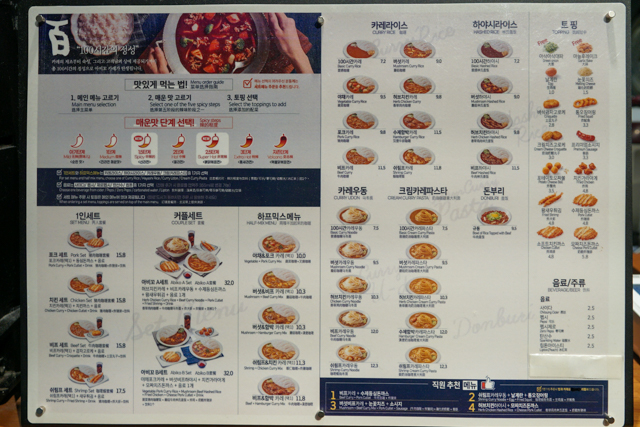
After our exhaustion from the previous day, we were after comforting Japanese-style food at Abiko Curry.
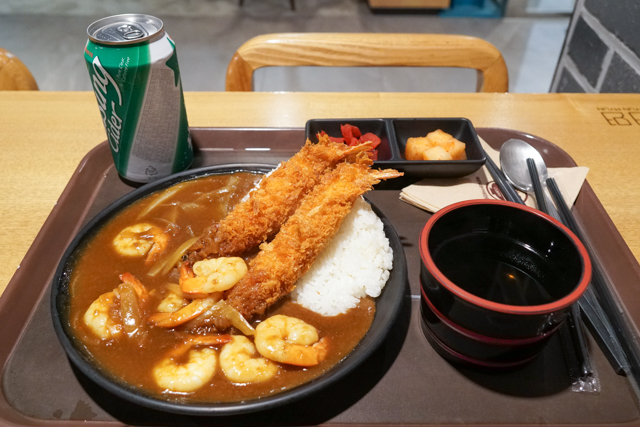
Shrimp Set (17,500 won, medium spicy) with shrimp curry, fried shrimp, soup, sides and drink.
D enjoyed the level of spice in his curry, which had a generous amount of prawns as well as two sizeable fried prawns. The fermented chilli favour in the otherwise clear broth was odd to us, though.
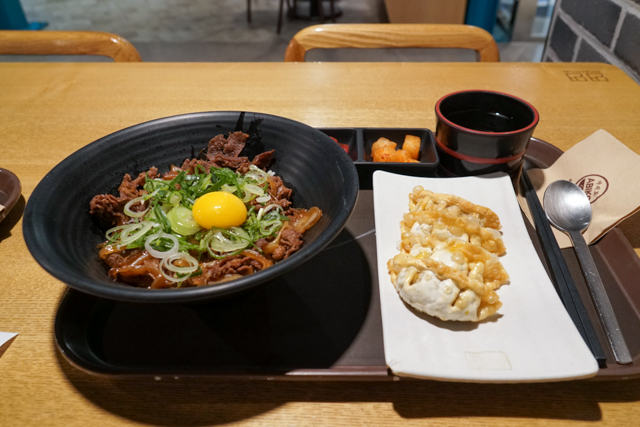
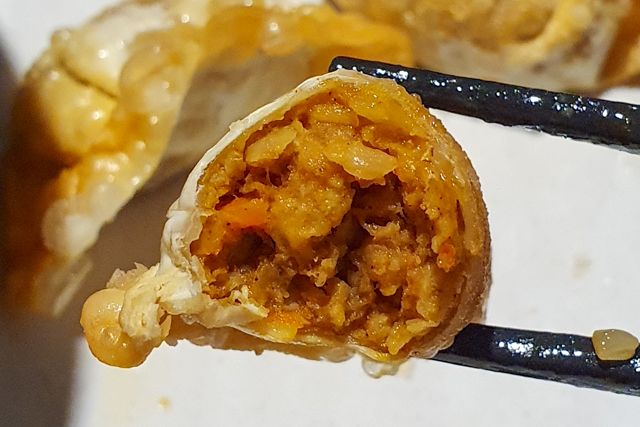
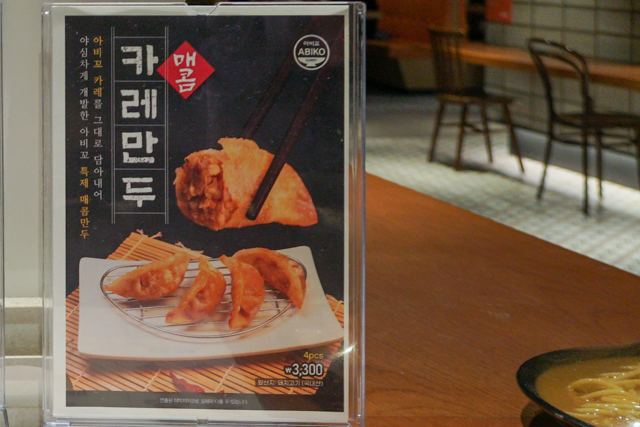
Donburi with Beef (9,500 won) with soup and pickles and mandu (3,300 won, 4 pieces). I’d mistaken the beef from the photograph to be raw beef (ala yukhoe style) due to the redness in the picture. Initial disappointment aside, the donburi was enjoyable: the beef was tender the egg yolk created an enjoyable ‘sauce’ that complemented the rice with the beef.
The mandu were a hit with a very prominent spiciness in the pork and vegetable filling, while the wrapper was fried to an audible crispness.
Hyundai City Outlets
20 Jangchungdan-ro 13-gil, Jung-gu, Seoul, South Korea
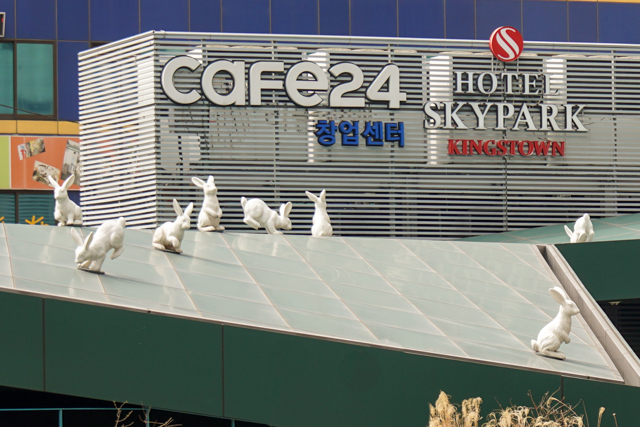
At our hotel, Hotel Skypark Myeongdong II, we picked up a coupon for free baked goods at Hyundai City Outlets, above which the Kingstown branch of the hotel was situated. So we took the chance to explore the area while looking for the store.
Wonder Twist
일젤라또, B2 Hyundai City Outlet, 20 Jangchungdan-ro 13-gil, Jung-gu, Seoul, South Korea
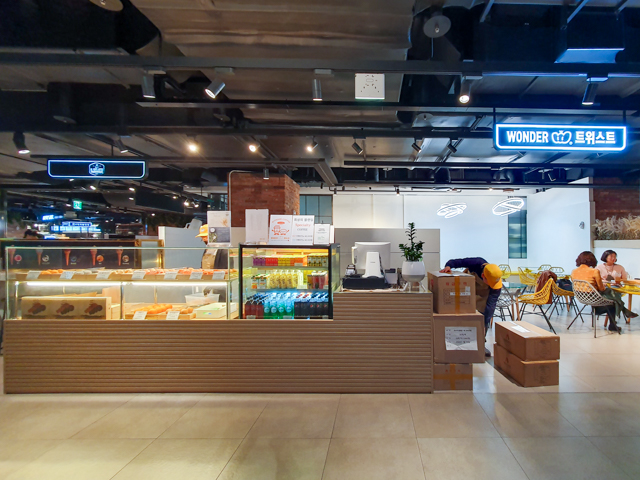
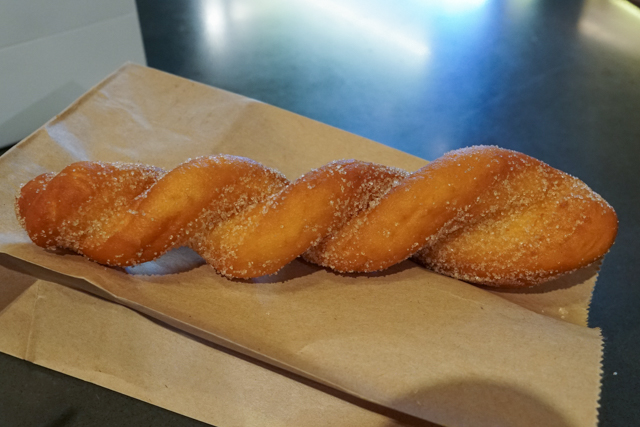
This was the kkwabaegi we exchanged. The dough was light and fluffy with a subtle bouncy quality, almost like a mochi doughnut. It was not at all dense as we expected.
Il Gelato
일젤라또, B2 Hyundai City Outlet, 20 Jangchungdan-ro 13-gil, Jung-gu, Seoul, South Korea
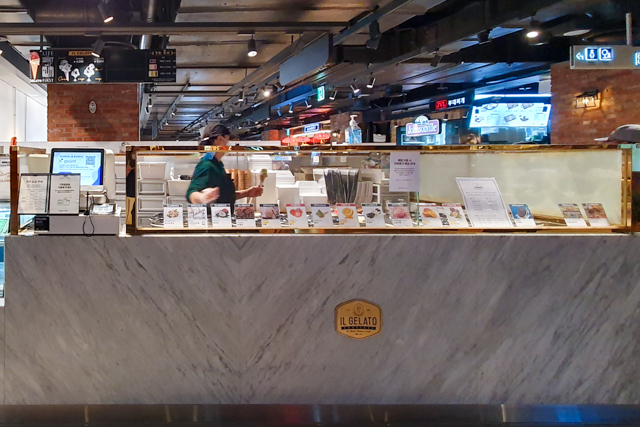
Il Gelato is a popular gelateria in Korea, opened by business partners who met at a gelato school in Italy.
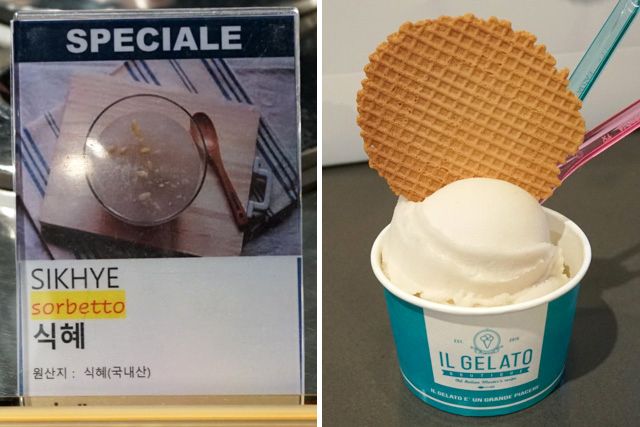
We picked up a scoop of the sikhye sorbet (4,500 won). Sikhye is a traditional sweet Korean drink made of fermented malt and rice. Here, it came through as a sweet rice flavour with a subtle texture from the rice.
Other stores
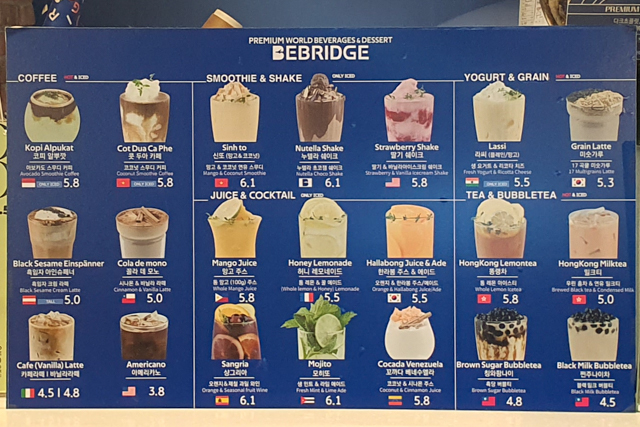
The Be:Bridge store had an interesting concept, offering various drinks originating from various regions.
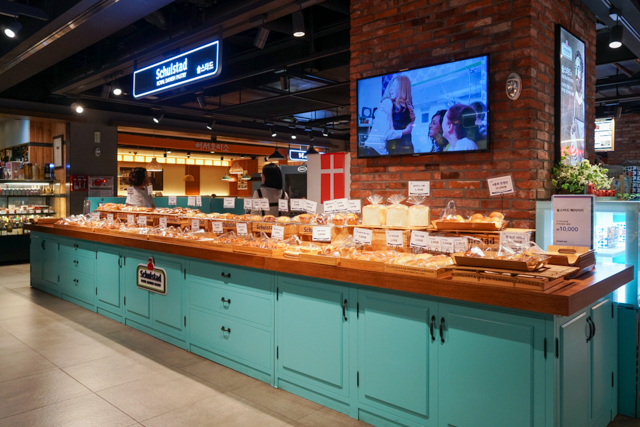
There was a Schulstad store selling Danish pastries.
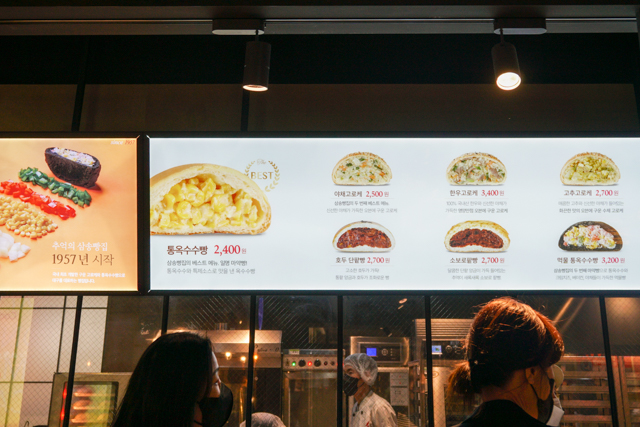
At Samsong Bakery, they offered various types of breads with savoury fillings.
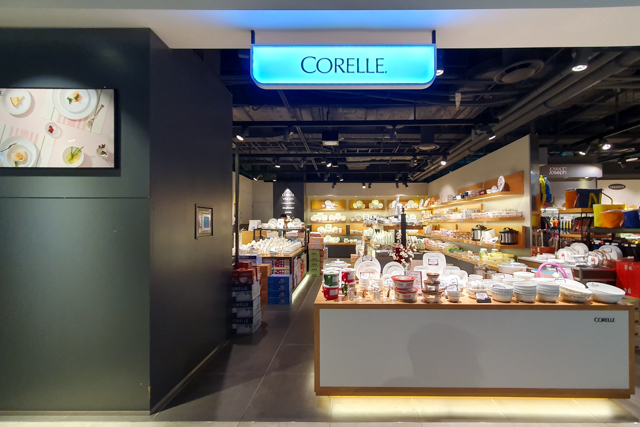
Upstairs, we found a Corelle store.
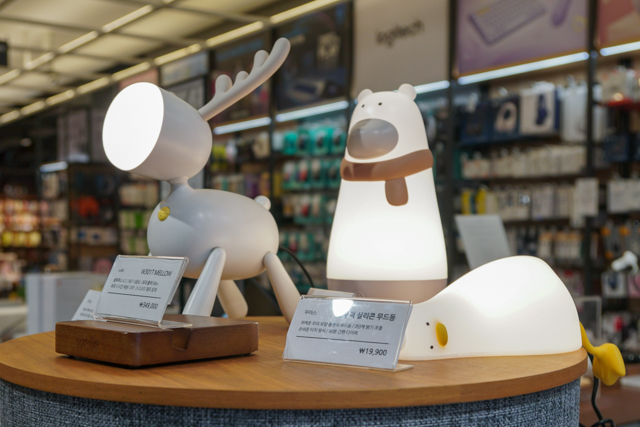
And some cute lights at the bookstore.
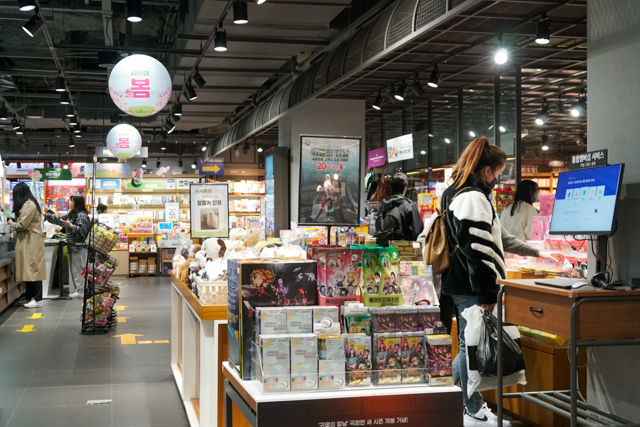
Dongdaemun Design Plaza
동대문디자인플라자, 281 Eulji-ro, Jung-gu, Seoul, South Korea
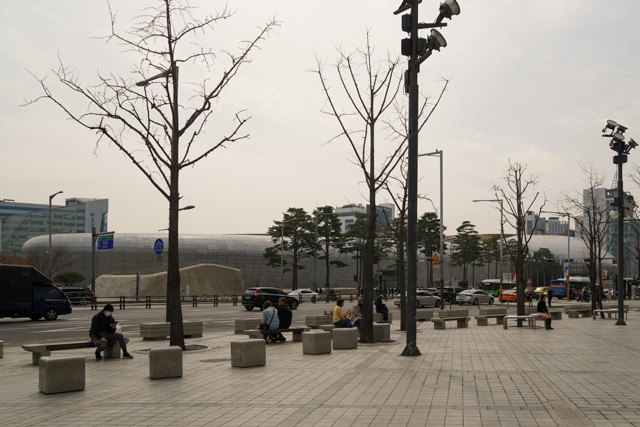
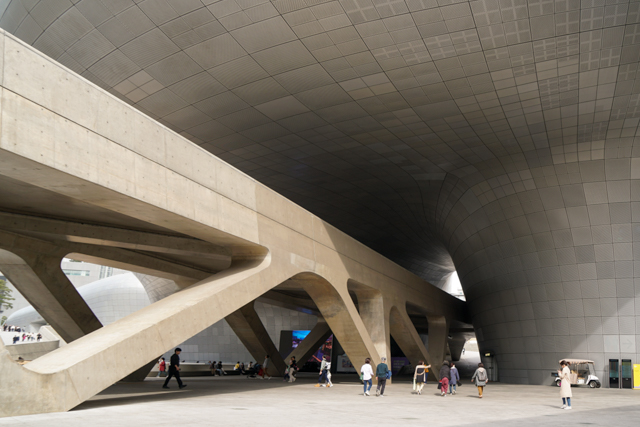
Across the road, was Dongdaemun Design Plaza, a major urban development landmark designed by Zaha Hadid. Construction started in 2009 to renovate what used to be Dongdaemun Stadium (an amateur baseball park) before it was opened in 2014.
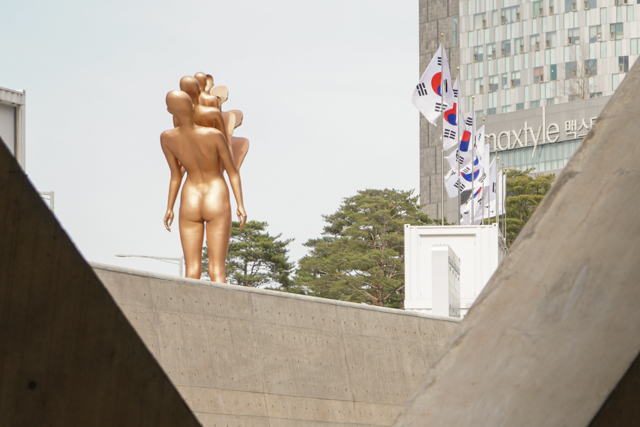
Remains of Dongdaemun Stadium
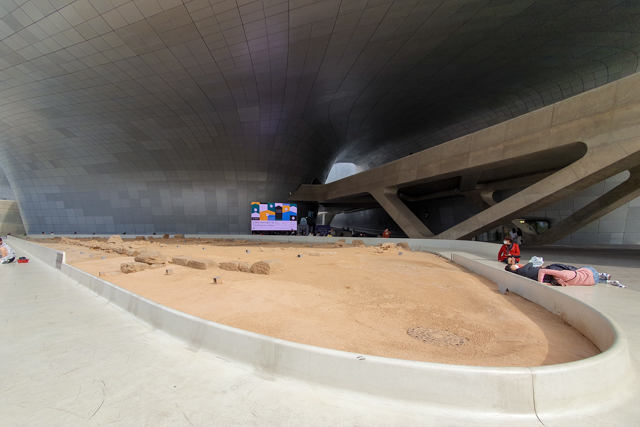
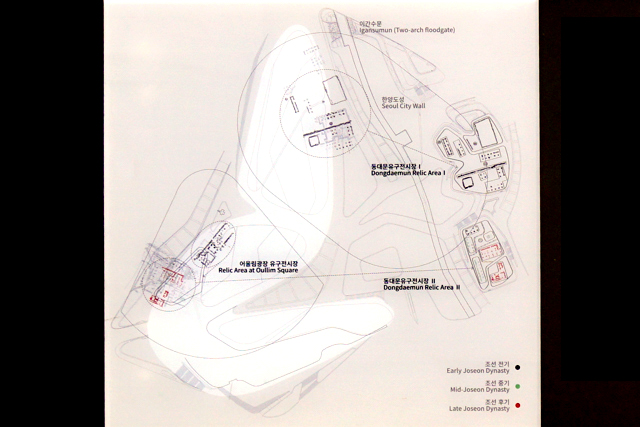
This place is the site of Hadogam (Lower Military Directorate), one of the outposts of the Hullyeondogam (Military Training Command) during the Joseon dynasty. During the Japanese colonial period, the area was initially turned into Hullyeonwon Park before the construction of Gyeongseong Stadium in 1925. After Korea’s liberation from Japanese rule, the stadium was renamed Seoul Stadium and later Dongdaemun Stadium. In addition to parts of Seoul City Wall and Igansumun (two-arch floodgate) that had been torn down under Japanese colonial rule, the foundations of former government offices were also discovered under the Dongdaemun football field, while the site of Hadogam was found under the baseball field. The remains were transferred to three locations in the Dongdaemun History and Culture Park and have been restored there. The remains discovered In this location, Oullim Square, were the foundations of Hadogam from underneath the baseball field. They are believed to be from buildings dating back to the early Joseon period. Four of the buildings and attached facilities discovered in excavation surveys with comparatively well-preserved structure and shape were moved and restored.
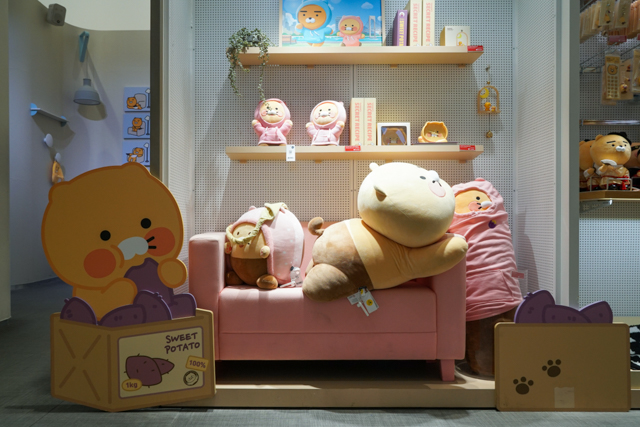
Kakao Friends Store DDP
카카오 프렌즈 DDP점, 143 Euljiro 7(chil)-ga, Jung-gu, Seoul, South Korea
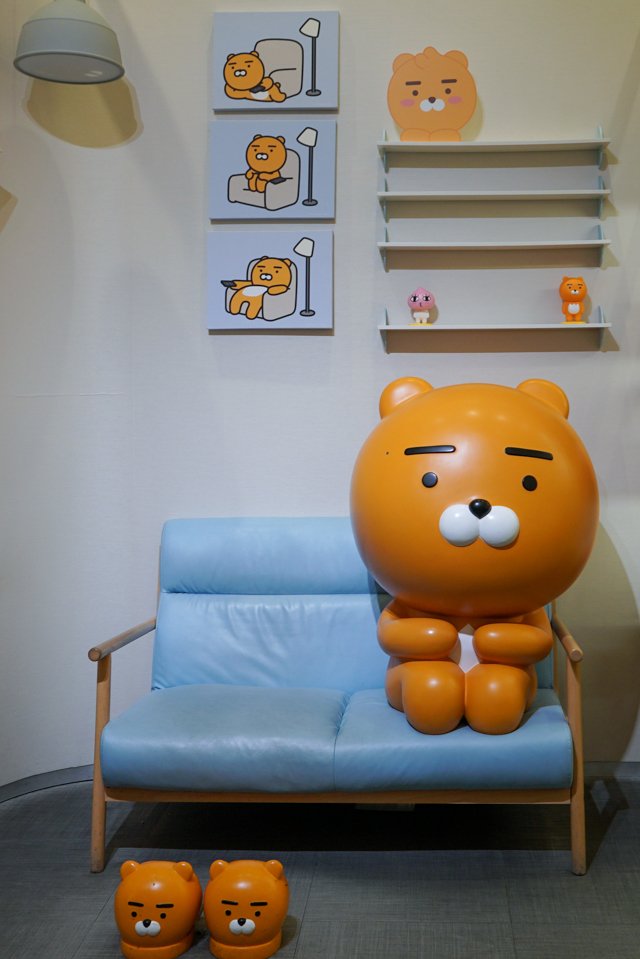
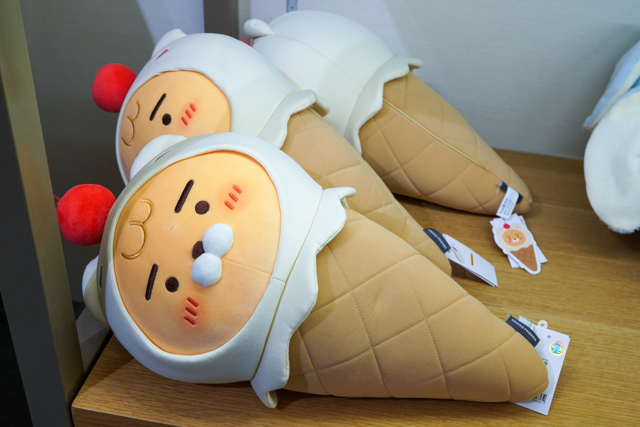
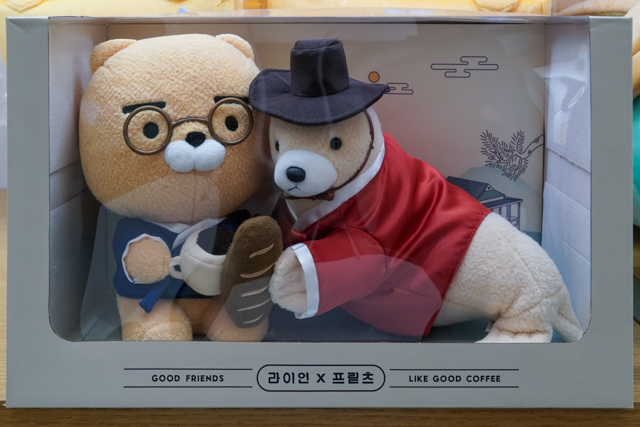
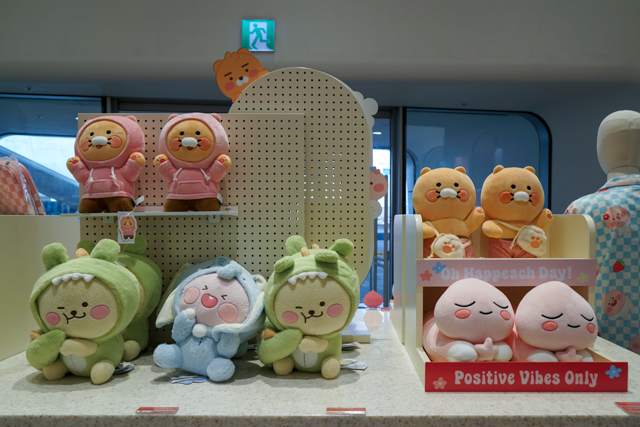
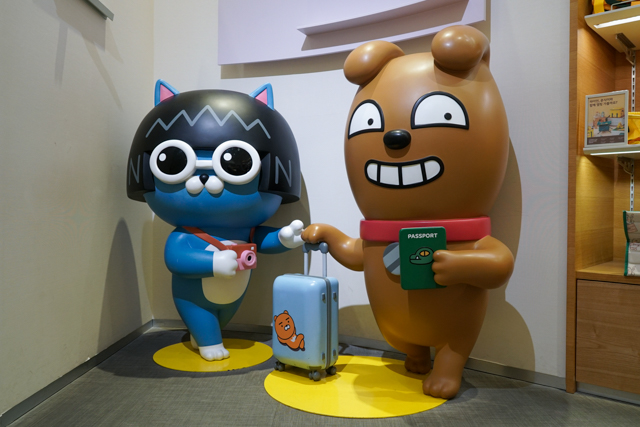
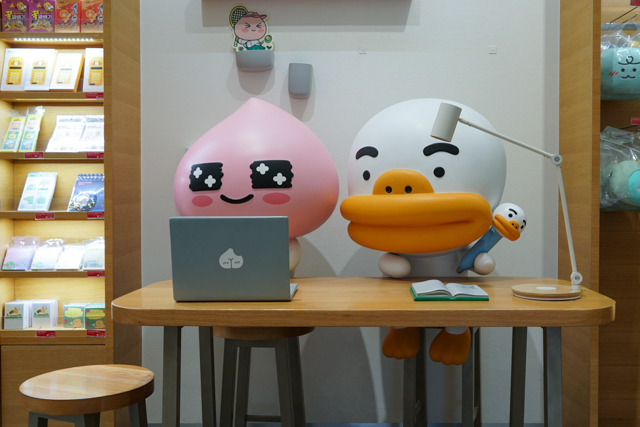
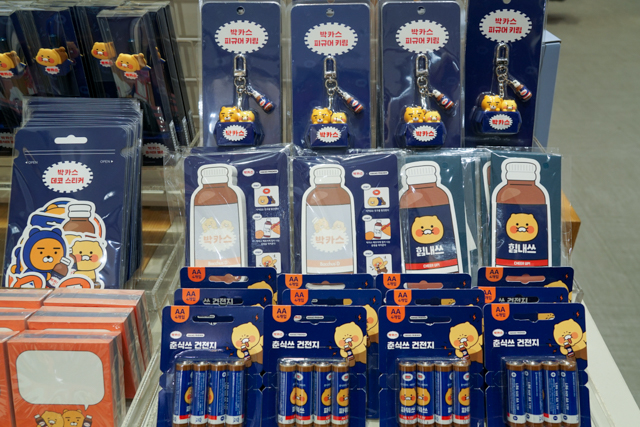
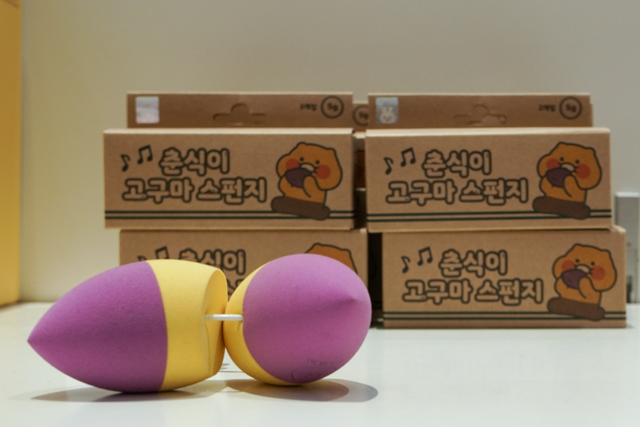
Alice Martha
DDP점, 143 Euljiro 7(chil)-ga, Jung-gu, Seoul, South Korea
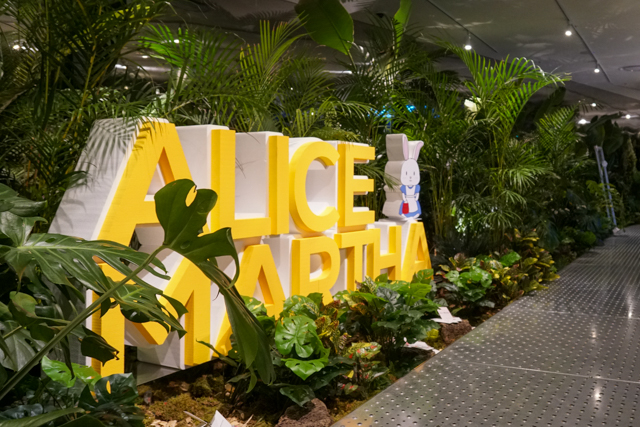
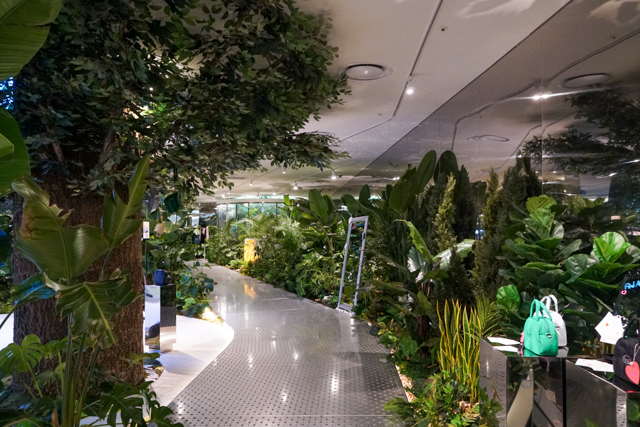
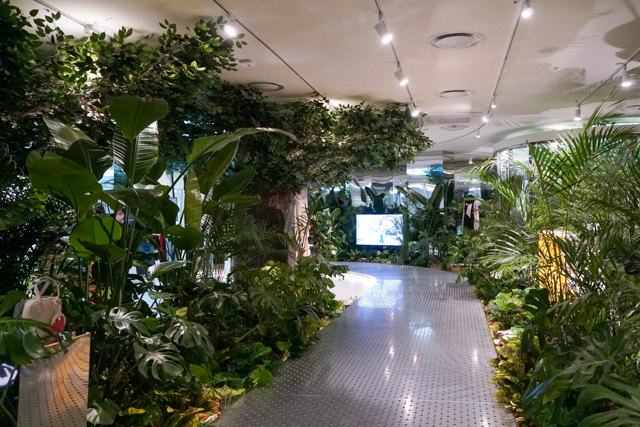
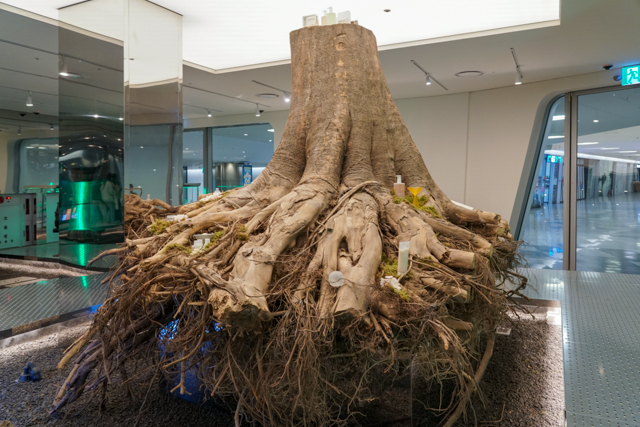
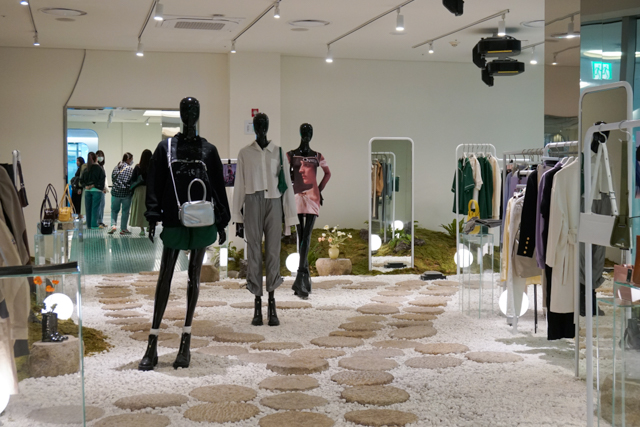
Alice Martha, a Korean brand for leather handbags, occupied a space that showcased its products in the setting of an indoor forest.
Dongdaemun Shopping Street was disappointing. Cutting our losses, we headed towards a couple of markets on the way back to our hotel.
Jungbu Dried Seafoods Market
중부건어물시장, 35 Eulji-ro 36-gil, Jung-gu, Seoul, South Korea
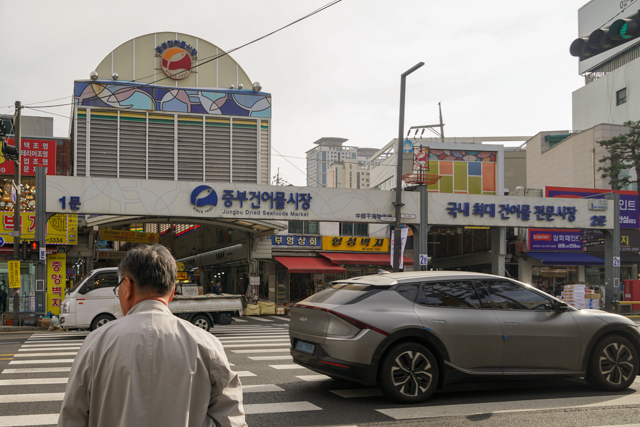
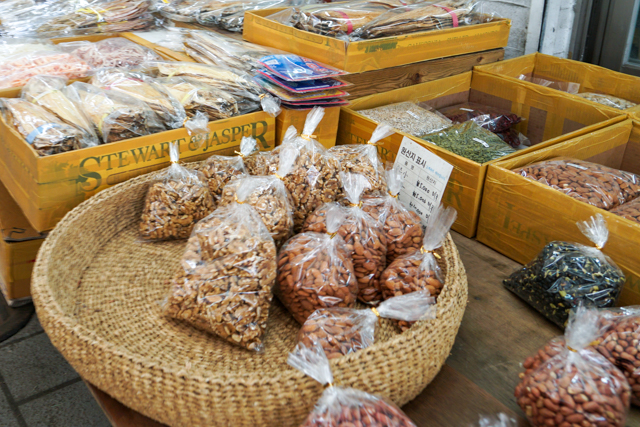
Jungbu Dried Seafoods Market is a wonderland for all assortments of dried seafood, including laver (seaweed), anchovies, squid, and pollack.
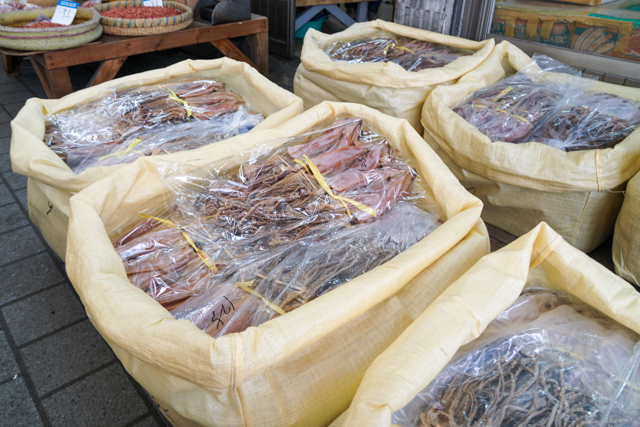
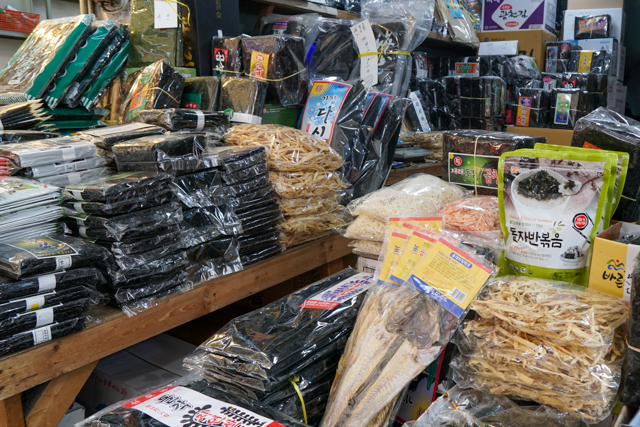
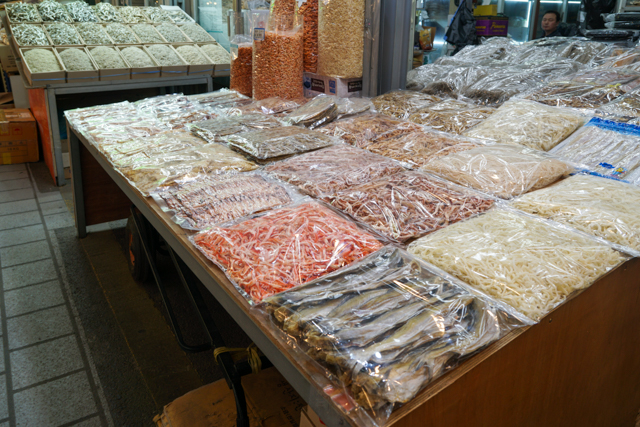
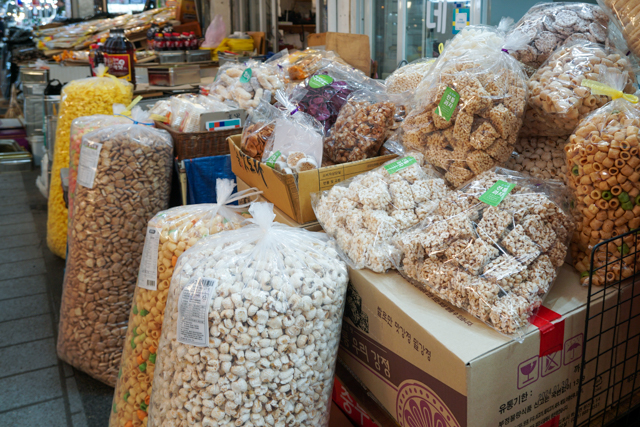
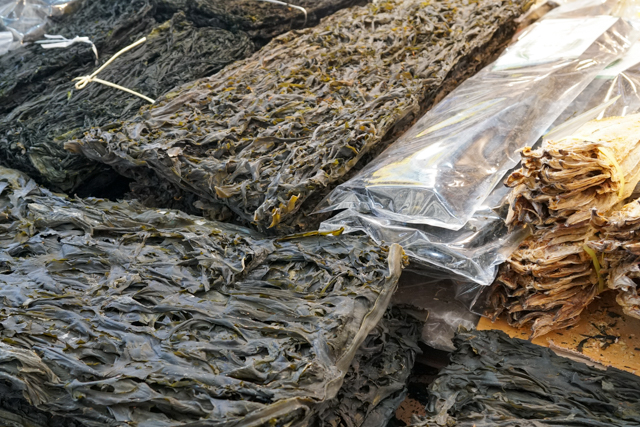
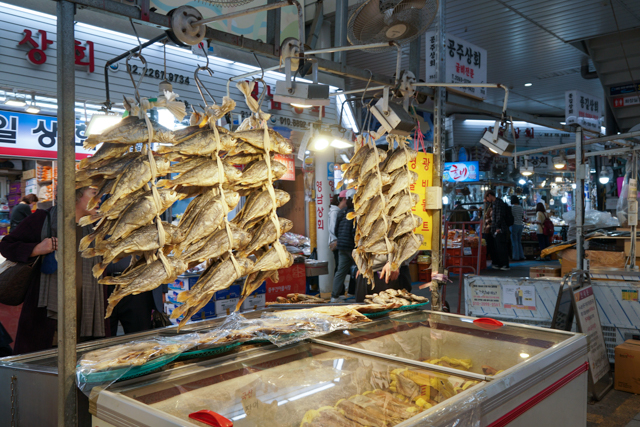
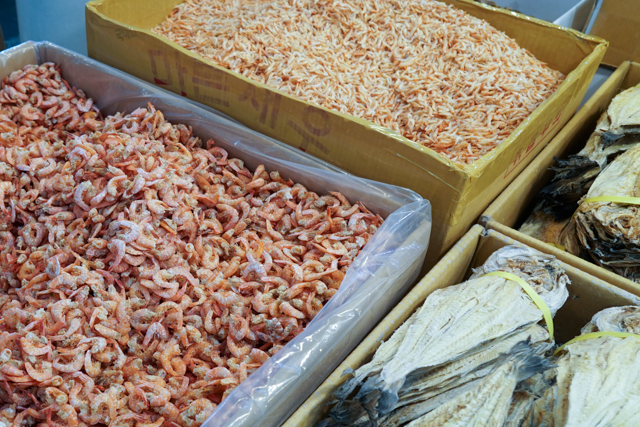
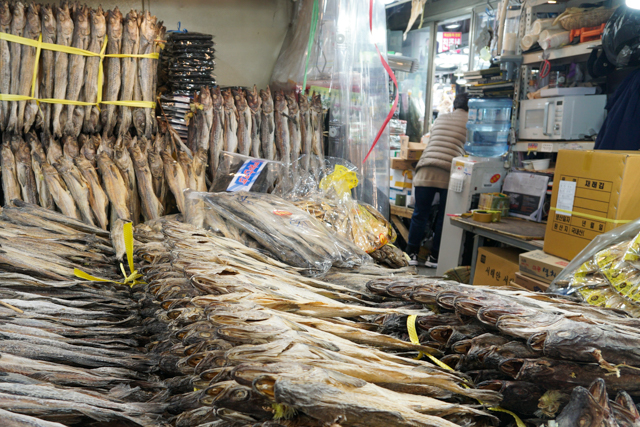
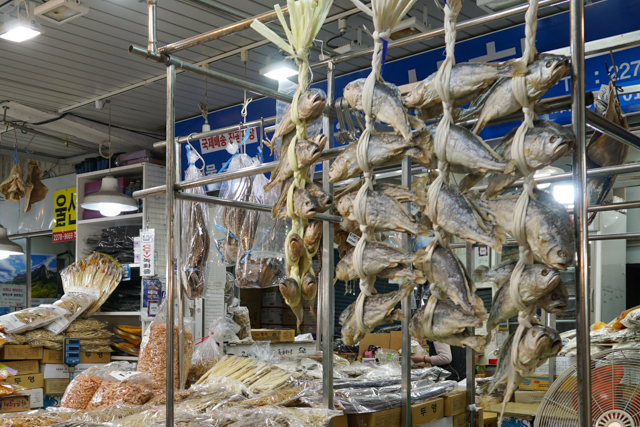
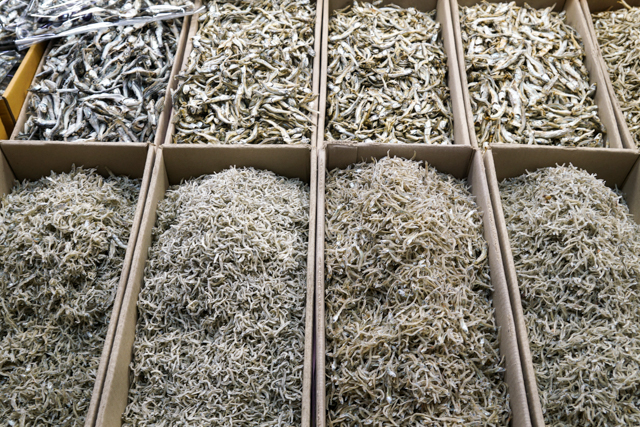
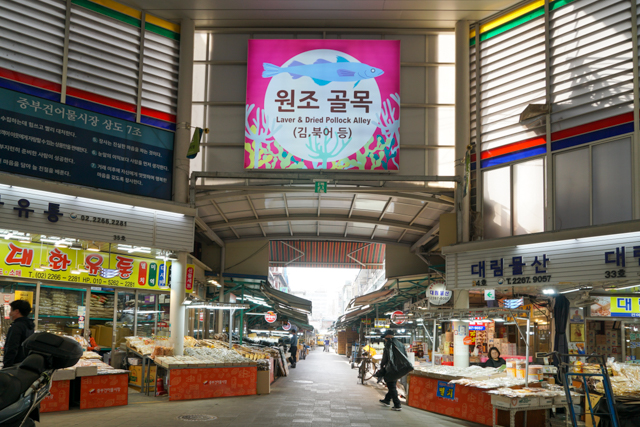
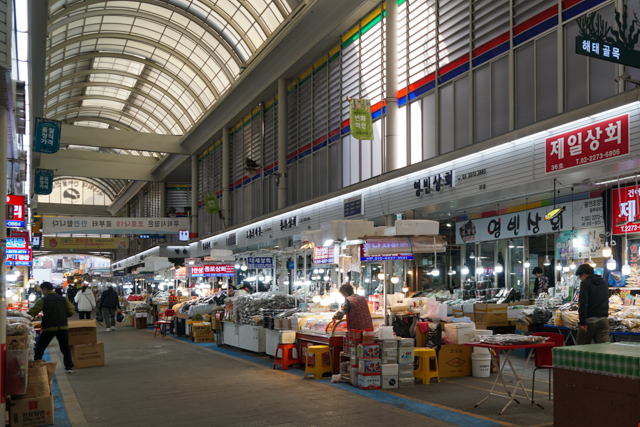
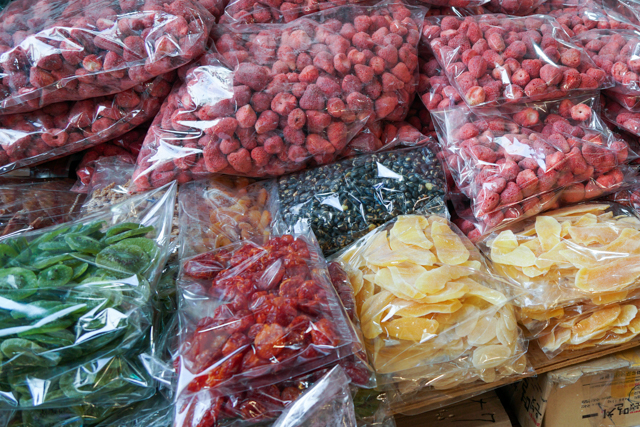
A few of the storekeepers enticed us with their dried fruits, including mango, strawberry, kiwifruit, and durian(!).
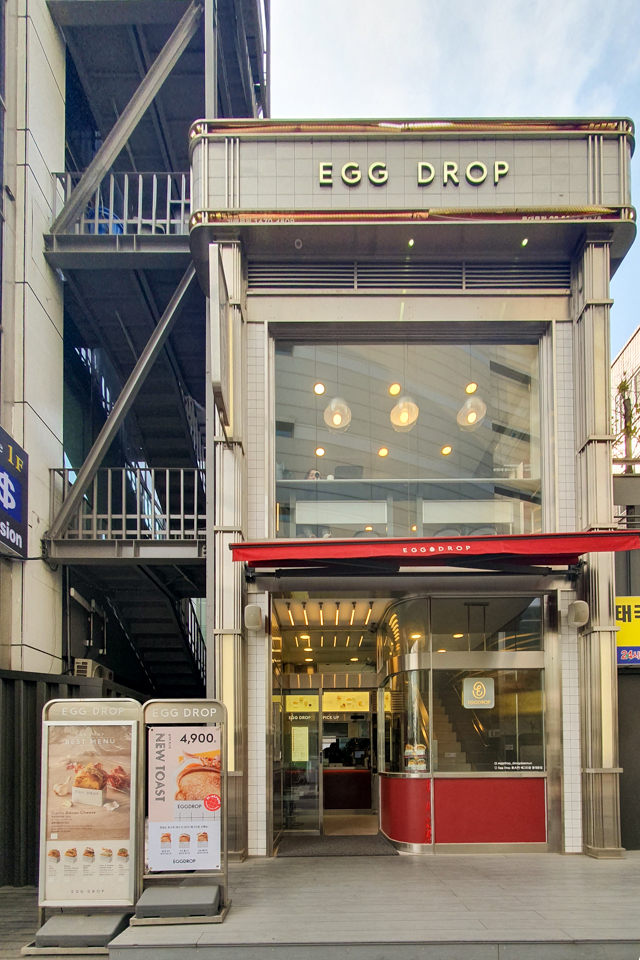
Nearby was an Eggdrop for fancy egg sandwiches.
Bansang Market
방산시장, 20 Dongho-ro 37-gil, Jung-gu, Seoul, South Korea
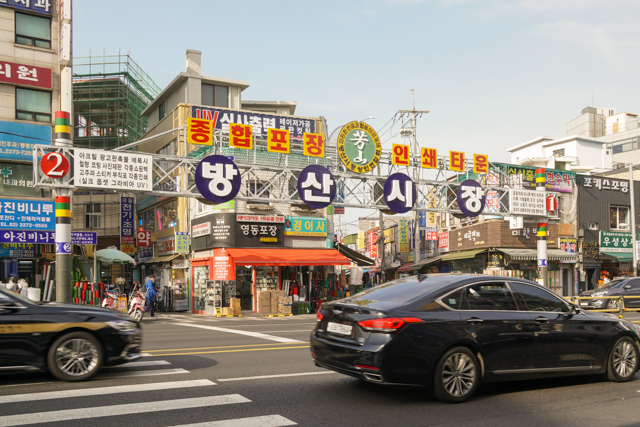
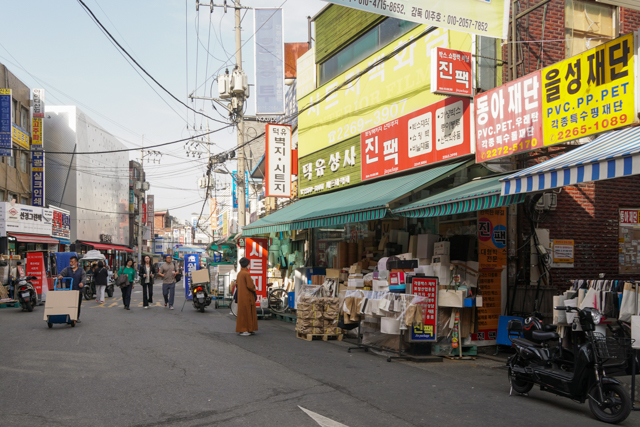
Across the road was Bangsang Market, a traditional market known for its paper, packaging and baking products. It was similar to Kappabashi Street in Asakusa, Tōkyō, yet interesting in its own right for its focus on the Korean market.
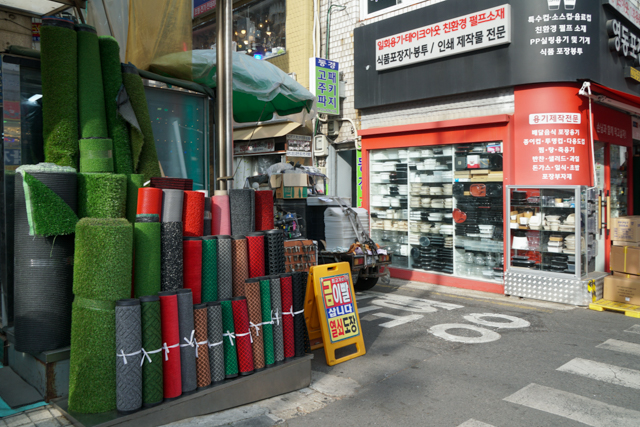
A store at the front specialised in outdoor matting.
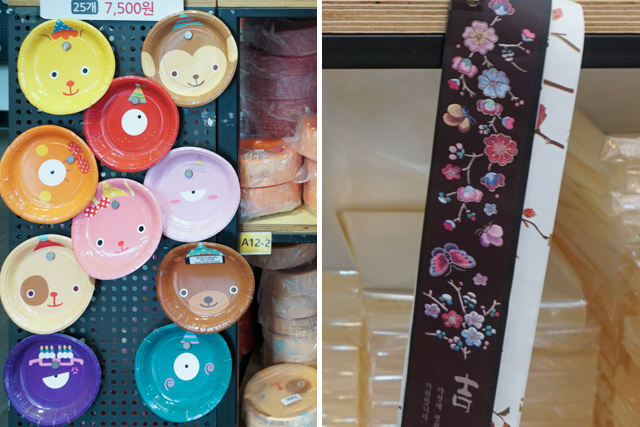
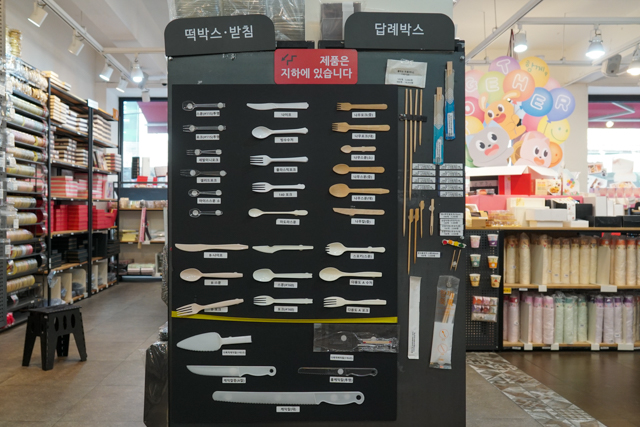
This store sold plastic and bamboo cutlery for every occasion, including a plastic bread knife.
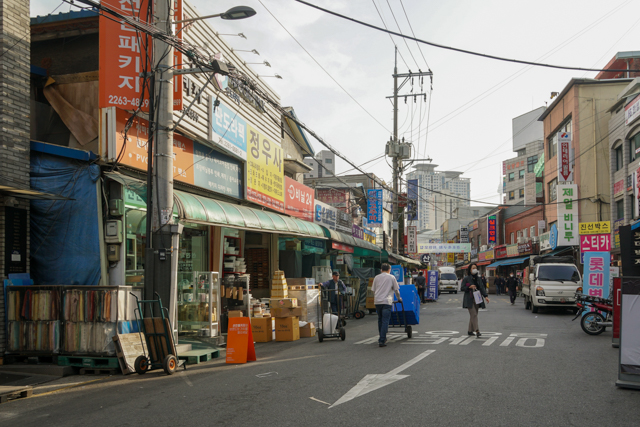
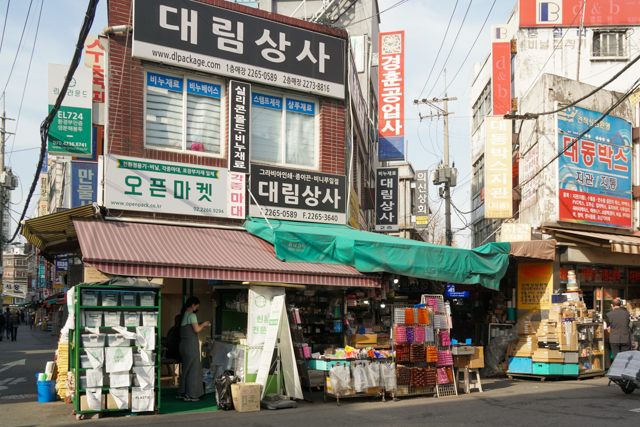
Next to a store selling cardboard boxes in all sizes and shapes was a store selling plastic bags in all sizes and colours.
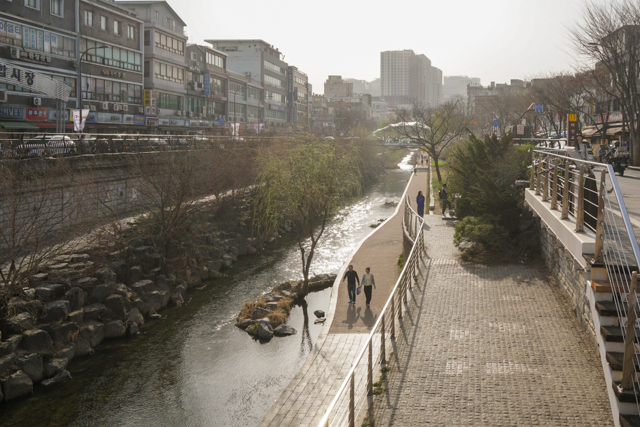
We crossed over Cheonggyecheon for the second time today to get to Gwangjang Market.
Jongno-gu
Onion Cafe
어니언 광장시장, 1F, 215 Cheonggyecheon-ro, Jongno-gu, Seoul, South Korea.
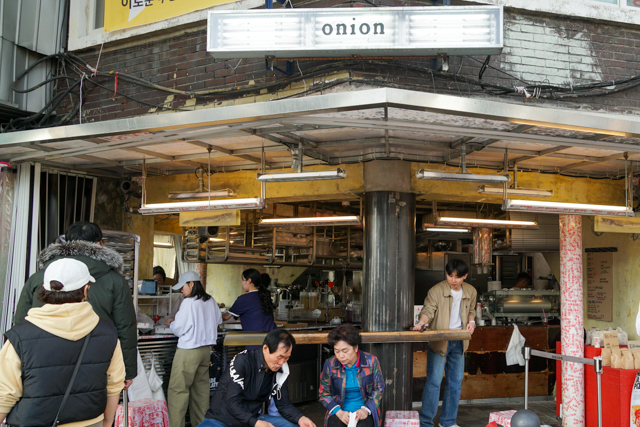
Just outside Gwangjang Market was an outlet for Onion Cafe, a popular themed cafe in Korea.
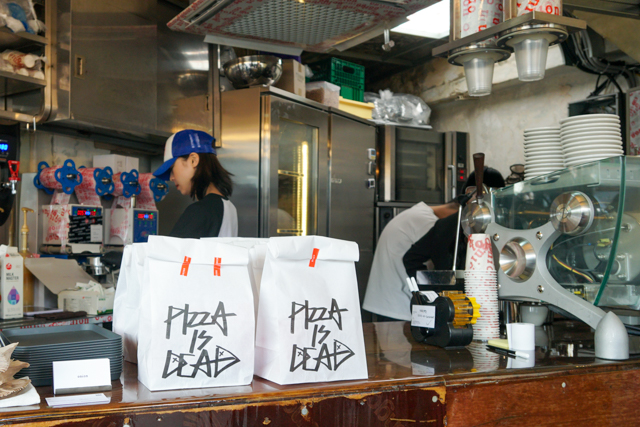
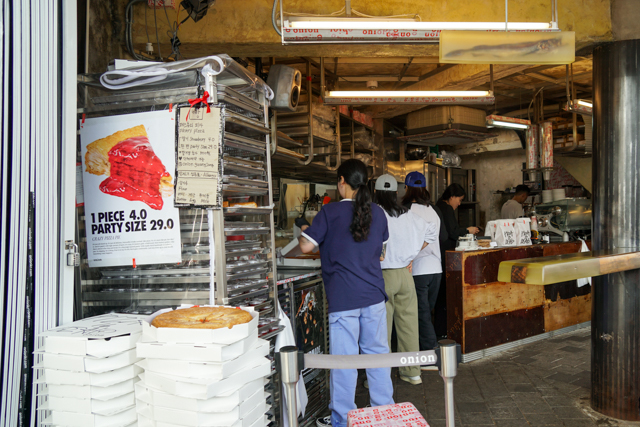
Whereas their cafe in Anguk is located within a traditional hanok, this one took on a market-like vibe that complemented its location outside Gwangjang Market. It featured bold red and white branding with a few number of plastic seats and low tables suitable to a ‘street food’ vibe.
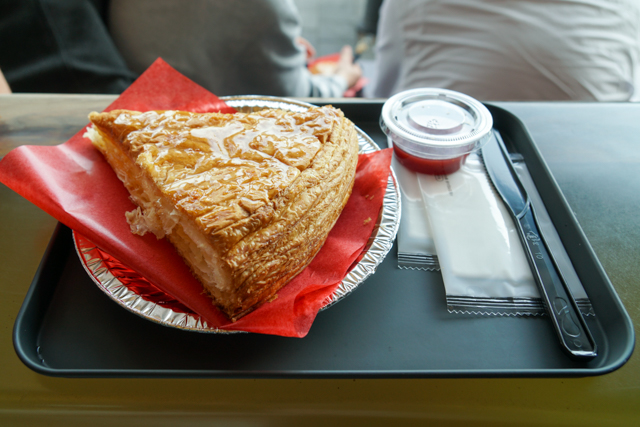
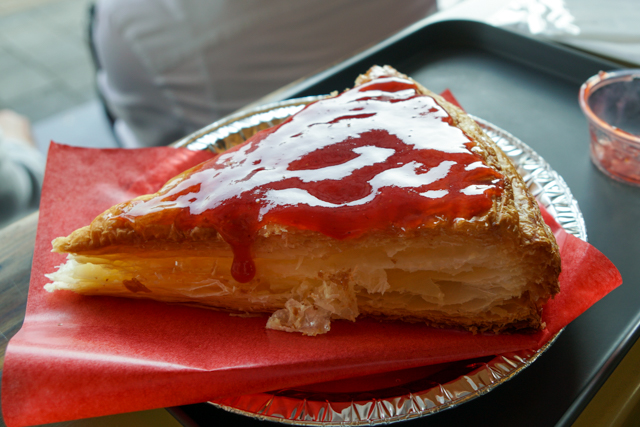
This Cafe Onion outlet had only one item on its menu: the Pastry Pizza (4,000 won for a slice). It’s essentially a slice of puffed pastry served with a small tub of strawberry jam that’s poured over the pastry. It was simple and enjoyable, but also unremarkable and we’re not convinced it was worth the queueing or cramped seating.
Gwangjang Market
광장시장, 88 Changgyeonggung-ro, Jongno-gu, Seoul, South Korea
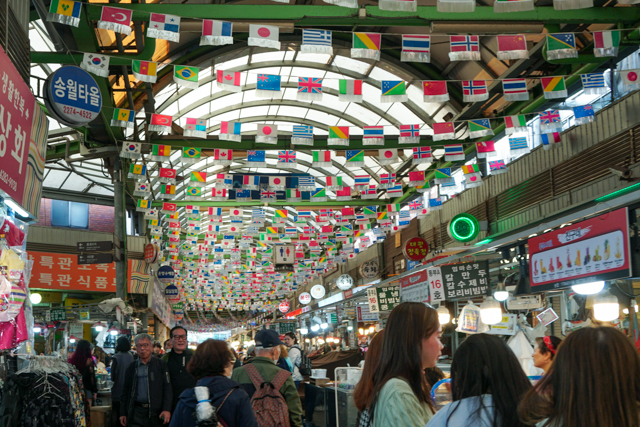
Gwangjang Market, previously Dongdaemun Market, is one of the oldest and largest traditional markets in South Korea. The main street was extremely crowded as we’d expected with people ordering various foods and drinks.
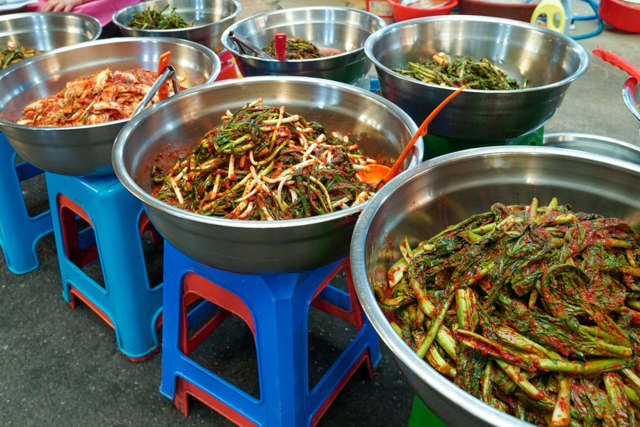
Venturing down some side streets, we found various types of kimchi for sale.
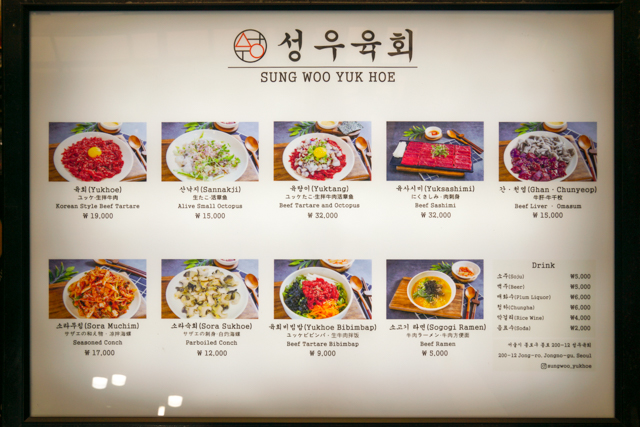
There was also an enticing yukhoe restaurant.
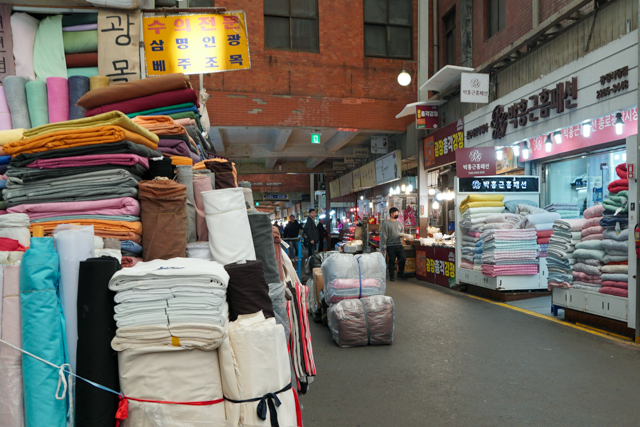
It wasn’t all food, though, as there were plenty of stores selling fabric, linen, and doonas.
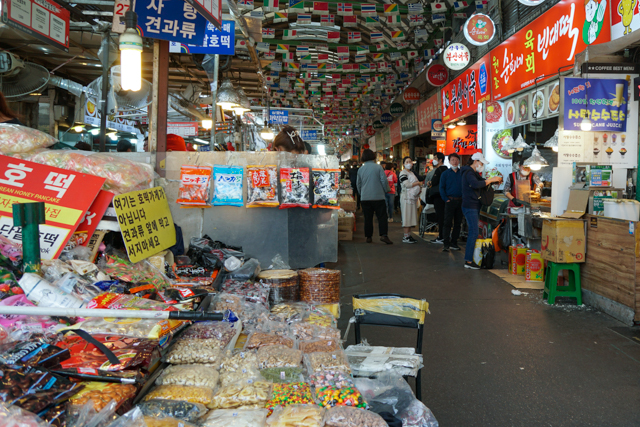
Others sold prepackaged snacks.
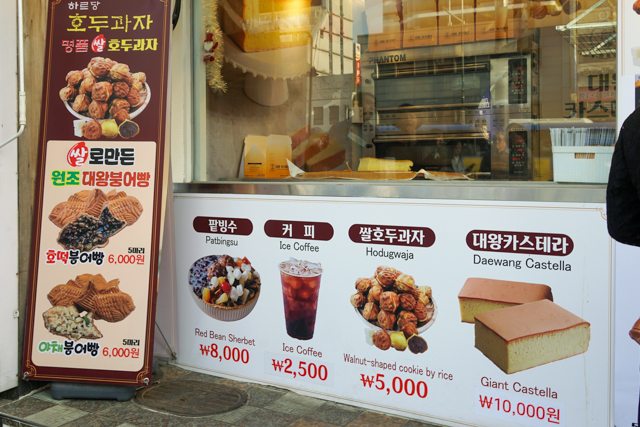
At one of the entrances was a store selling various sweets.
Jonggak Station Solar Garden
종각역 태양의정원, Jongno 1(il)-ga, Jongno-gu, Seoul, South Korea
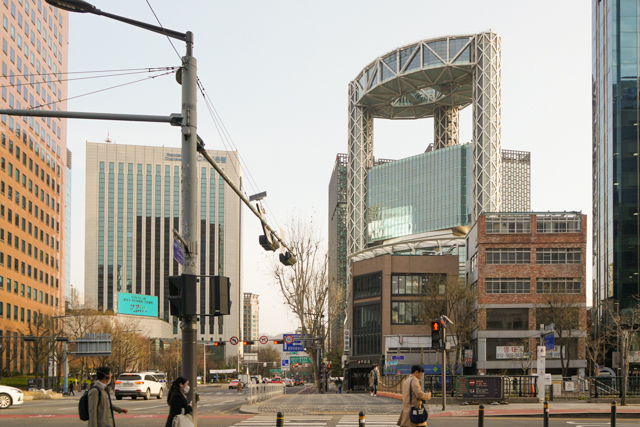
On the way back to our, we stopped at Jonggak Station and stumbled on the station’s solar garden.
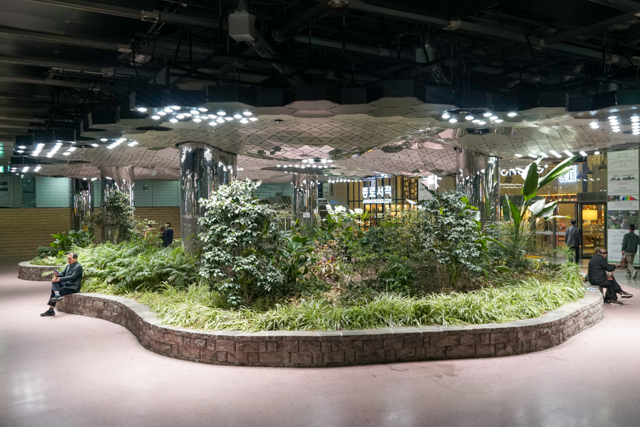
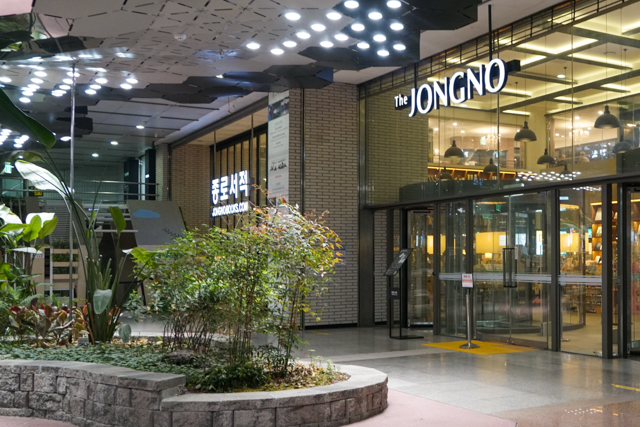
Jonggak Station Solar Garden is a new underground small park that opened in December 2019 and is said to be the world’s ‘first’ solar-generated garden located in a subterranean environment on a small scale. The park is provided natural sunlight by solar collectors located above the surface outside Jongno Tower. The collected light is then dispersed in the garden below.
Bosingak Pavilion
보신각, 54 Jong-ro, Jongno-gu, Seoul, South Korea
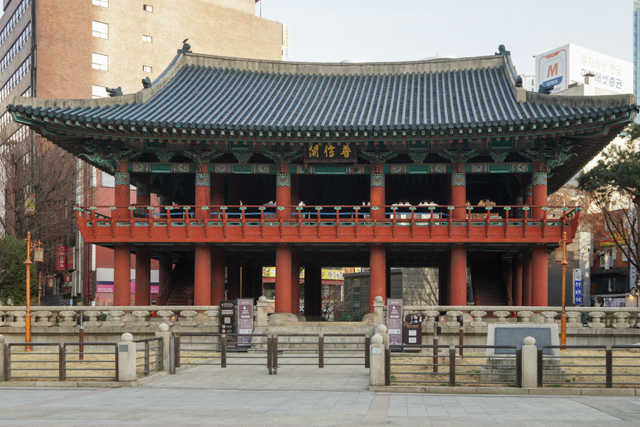
Opposite Jongno Tower is Bosingak, a large bell pavilion. The bell in Bosingak gives Jongno its name, which literally means ‘bell street’.
It was originally constructed in 1396 but was destroyed many times by both war and fire. In the Joseon Dynasty, this bell was at the centre of the castle town. The bell was struck to announce the opening and closing of the four gates around Seoul. At 4 am and 10 pm the bell was struck 33 times and gates were opened and closed. It was used as a fire alarm as well. In modern times, the bell is rung only at midnight on New Year’s Eve.
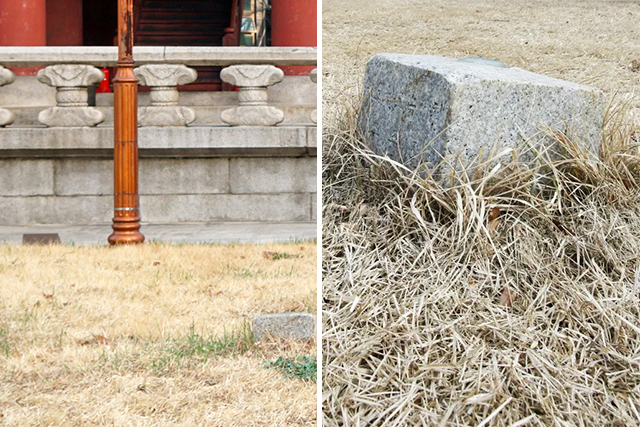
In front of the pavilion is the subway benchmark for Seoul.
Th[e] square granite stone, located in front of Bosingak Pavilion, was used as the reference marker for elevation measurements during the construction of the Seoul Metropolitan Subway. It served as the benchmark for all measurements taken during the first years of the subway’s construction, including the depth of the tracks, the height of the tunnels, and the height of the station buildings.
In the 1960s, Seoul’s transportation infrastructure was challenged by an increasingly dense population and a growing number of vehicles. In response, a headquarters to oversee the construction of a subway system was established in June 1970. This benchmark was installed on October 30,1970, as the first step in preparation for the construction of Seoul Subway Line 1. Measurements based on this benchmark were taken by the end of November 1970, and Line 1 was opened for public use in 1974, spanning from Seoul Station to Cheongnyangni Station. In 1979, however, the benchmark had to be moved slightly backward due to the expansion of the adjacent road, and thus lost its original function.
The stone measures 20 cm in height and 25 cm in width. In the center, there is a brass benchmark rod measuring 7 cm in diameter and 12 cm in length. On one of the sides, there is an inscription that reads, “Benchmark of the Metropolitan Highspeed Subway, October 30, 1970.”
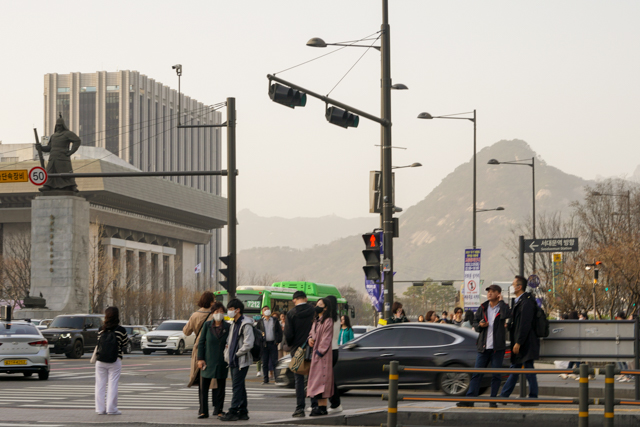
We walked past the statue of Admiral Yi Sun-sin in Gwanghwamun Plaza. He was a 16th-century Korean war hero. Behind him is the Sejong Museum of Art and Inwangsan Mountain. A short walk further in that direction would be the Gwanghwamun (main) entrance to Gyeongbokgung Palace.
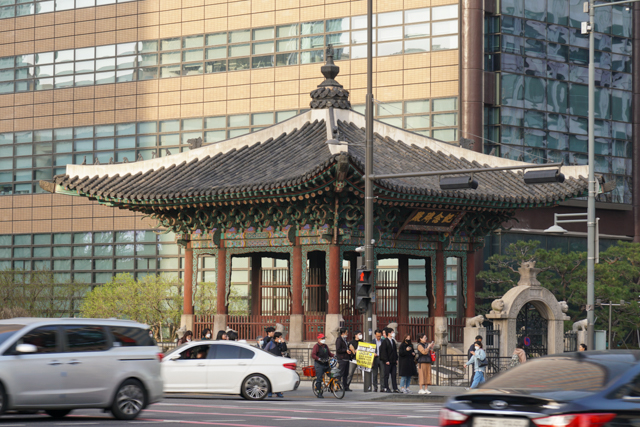
We walked past the ’40th Anniversary Monument of Gojong’s Enthronement’.
This monument was erected on September 2, 1903 to celebrate the 40th anniversary of the Emperor (formerly King) Gojong’s enthronement. There is, on the front face of the monument, a laudatory inscription handwritten by his son, Emporor Sunjong, which reads: “Imperial Korea, His Majesty the Emperor, in Commemoration of the Forty-Year Reign, and to Pray for Sixty Additional Years of His Majesty’s Life’.
The pavilion-style building set up to protect the monument is widely praised for the characteristic beauty of the traditional Korean architecture and regarded as a valuable piece of Korean artistic and cultural heritage. The arched gate and some sections of the railings had been robbed by a Japanese during the colonial period (1910-1945) but were recovered in 1954. The entire building was completely restored in 1979.
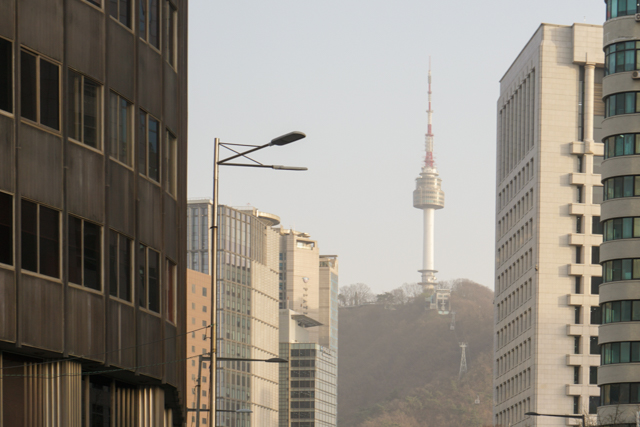
We took a wrong turn from Jonggak, so ended up taking the long way back to our hotel.
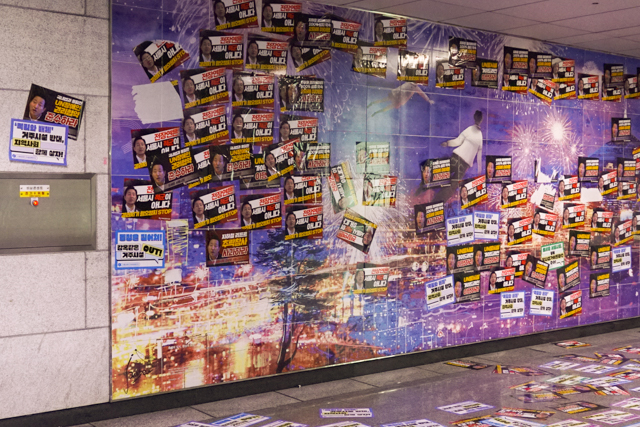
We were caught up in a massive police presence set up in response to the Solidarity Against Disability Discrimination group which called for protests on subway trains in Seoul from March 23 2023. This photo (from the following day) showed the stickers that plastered many of the walls and floors of the stations in subsequent days.
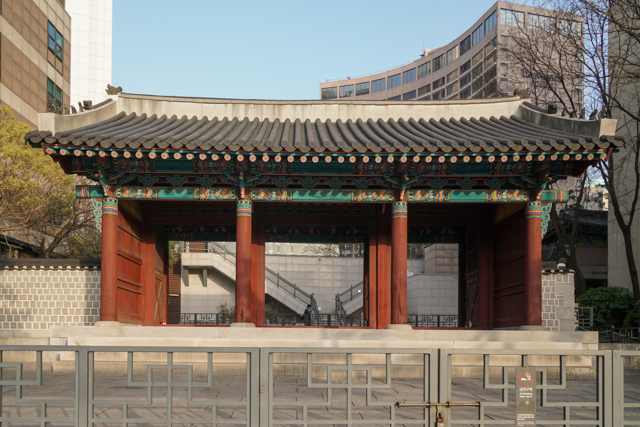
So taking a long way back, we walked past the ‘Main Entrance to the Wongudan Altar’.
The structure was built as the main gate to the Wongudan Altar in the early period of the Korean Empire. The gate measuring 3 kan* in facade by 2 kan on sides is composed of three parts with the roof of the center part being as high as the other two parts, but the center part was repositioned to be wider than the other two parts. Double eaves supporters were used on the columns. Plum blossom and phoenix-shaped patterns, which depict the Royal coat of arms of the Korean Empire, were used for decorations of the gate. (*kan a unit of measurement referring to the distance between two columns.)
Jung-gu
Lotte Department Store Main Store
롯데백화점 본점, 81 Namdaemun-ro, Jung-gu, Seoul, South Korea
Food Avenue
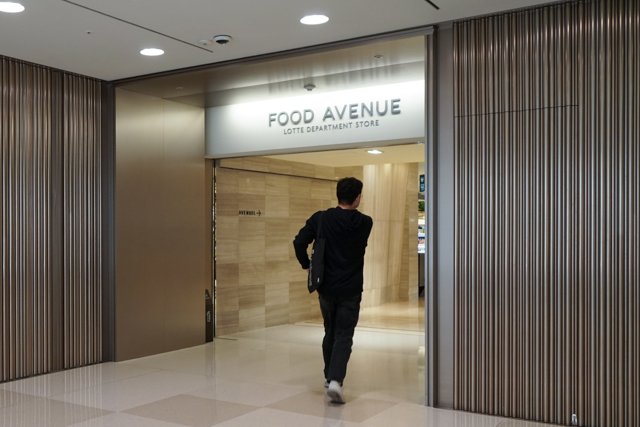
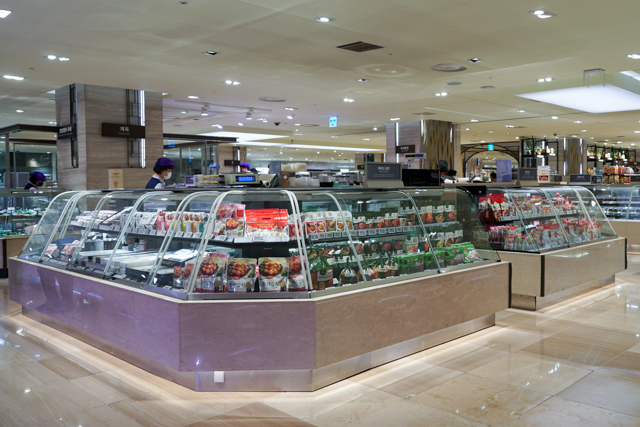
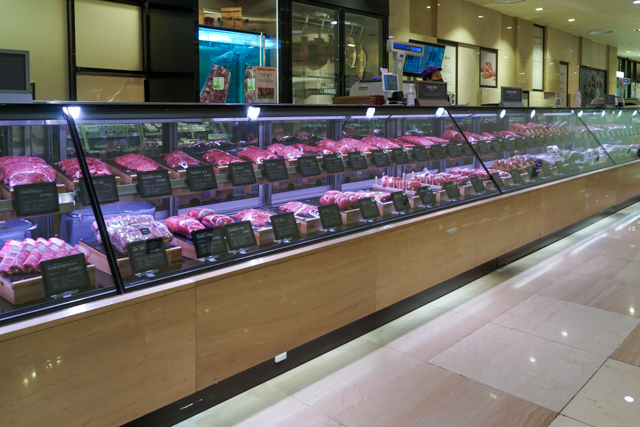
There was an endless display of hanwoo.
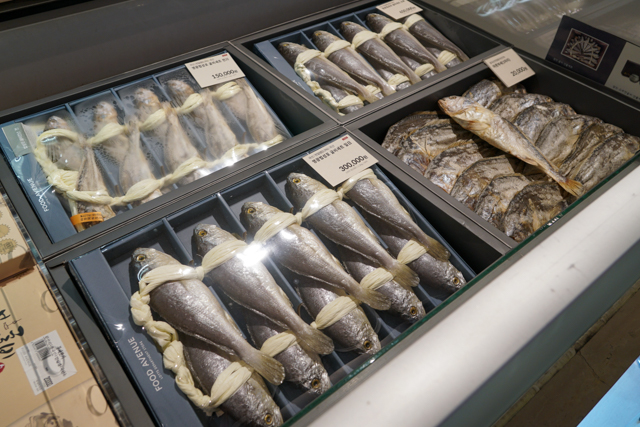
Some expensive dried fish was available as well, at a premium compared to the ones we saw at the Jungbu Dried Seafoods Market earlier.
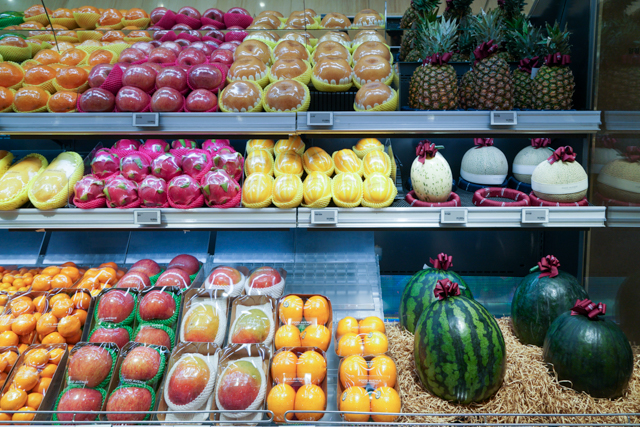
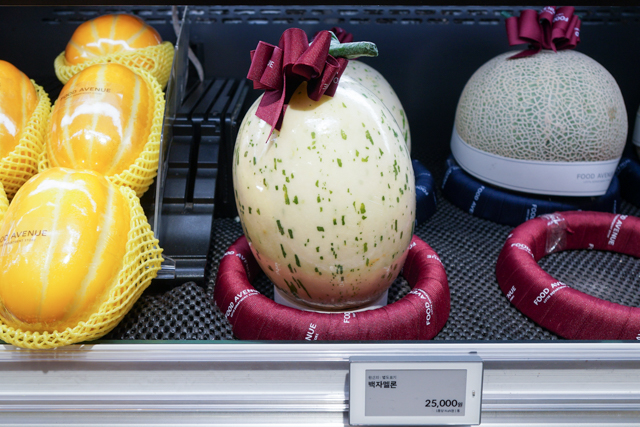
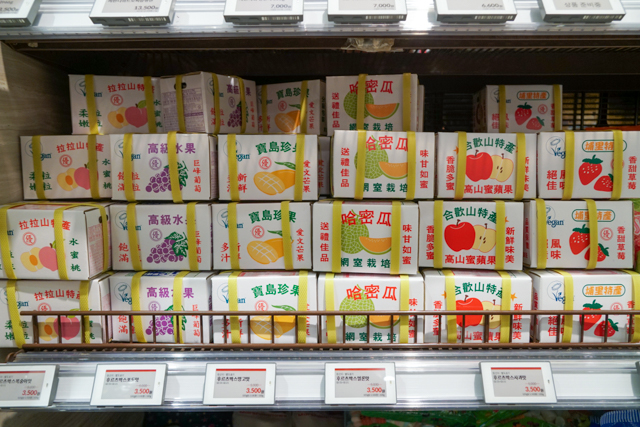
There were fruits for gifting as well.
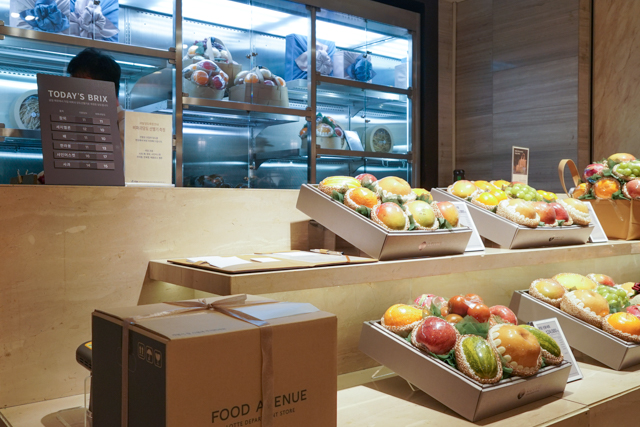
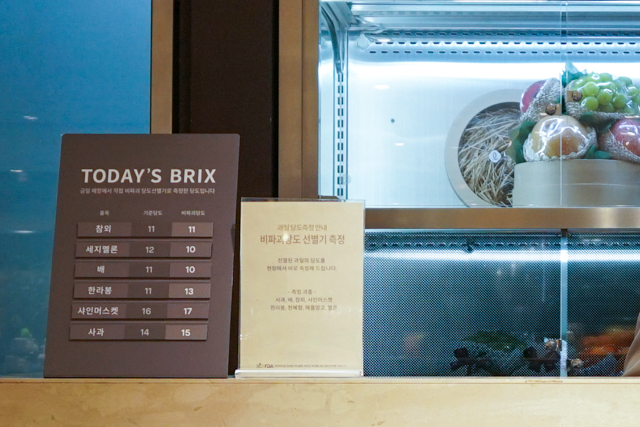
The brix measurement for the fruits available that day fascinated us.
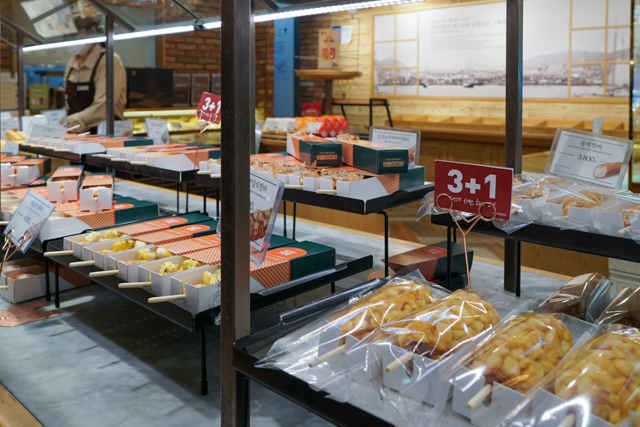
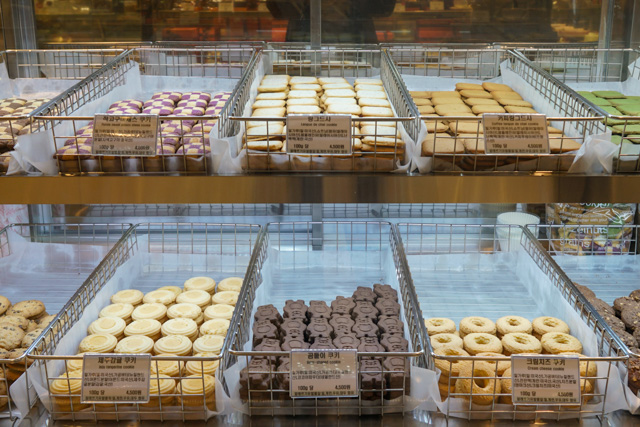
Fancy corndogs and cookies could be had too.
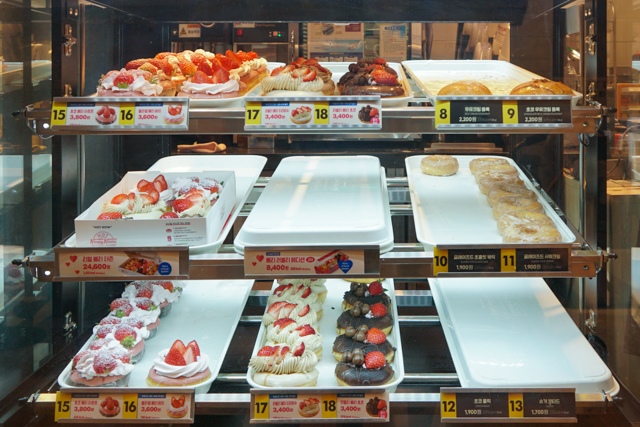
Krispy Kreme doughnuts in Korea had a fresher focus than the ones in Australia it seemed.
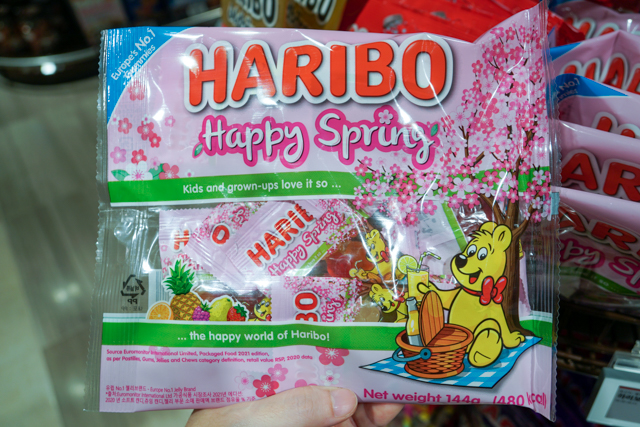
It was much like the basement of a Japanese department store, with many imported goods.
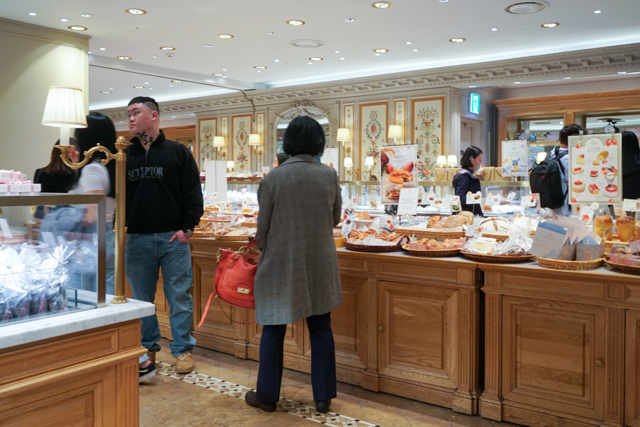
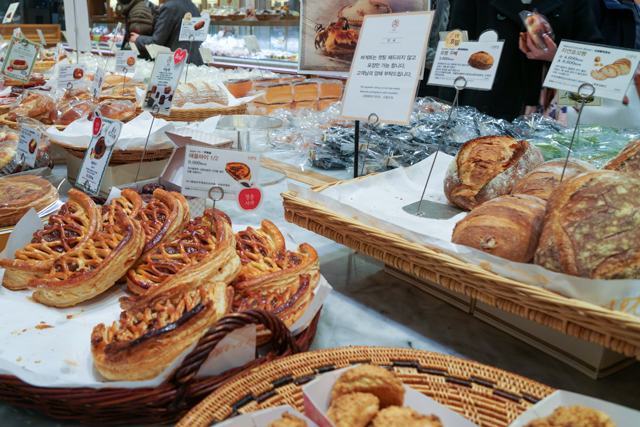
A French bakery had a long queue.
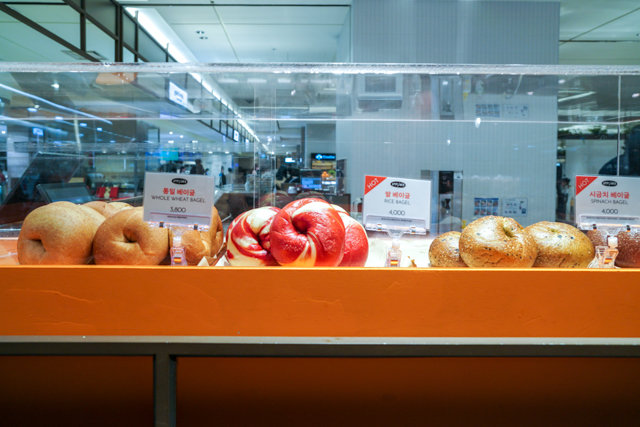
Another store had fat bagels for sale.
Osulloc
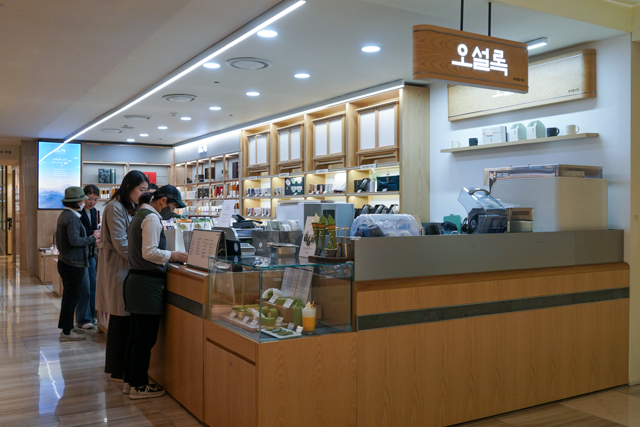
Osulloc is a quintessentially Korean tea brand, with tea grown on Jeju Island.
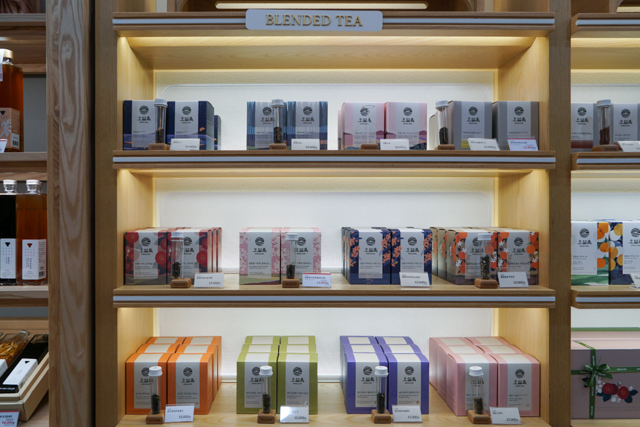
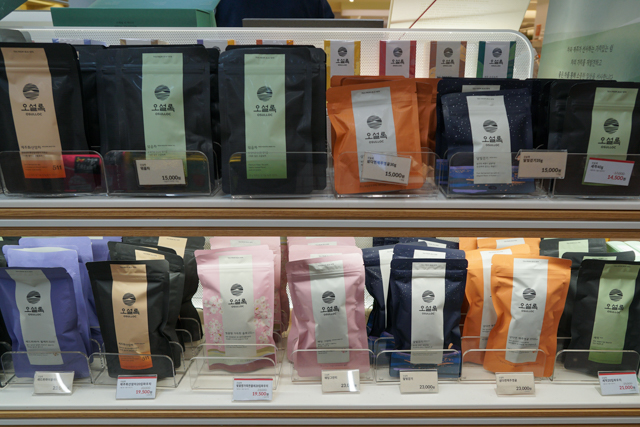
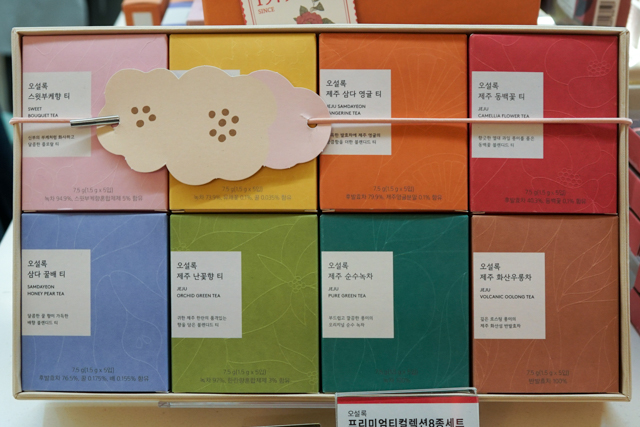
With its numerous unique blended tea flavours, of course, we had to pick up a selection to try!
Lotte Young Plaza
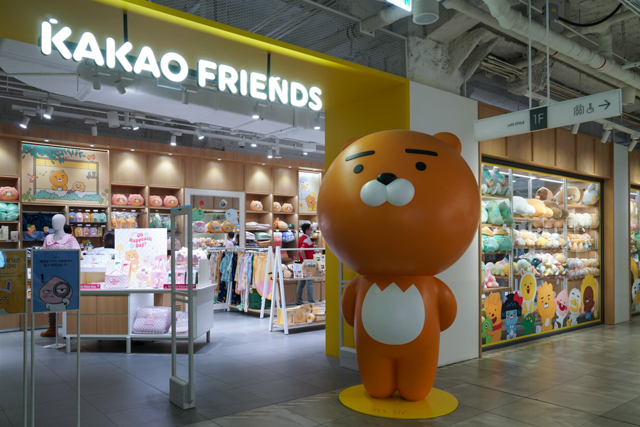
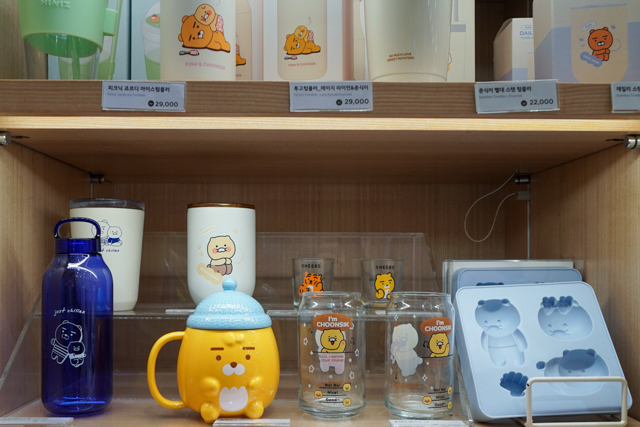
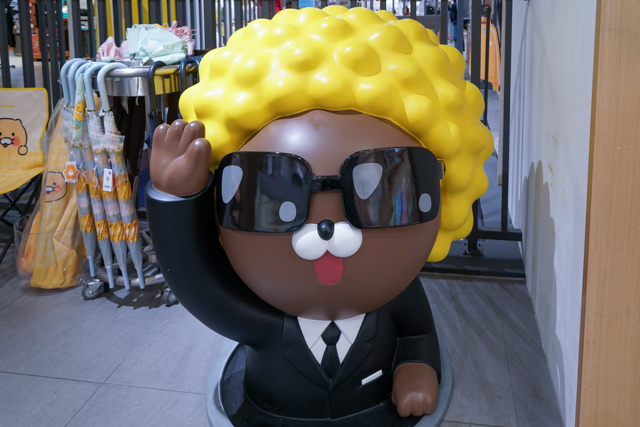
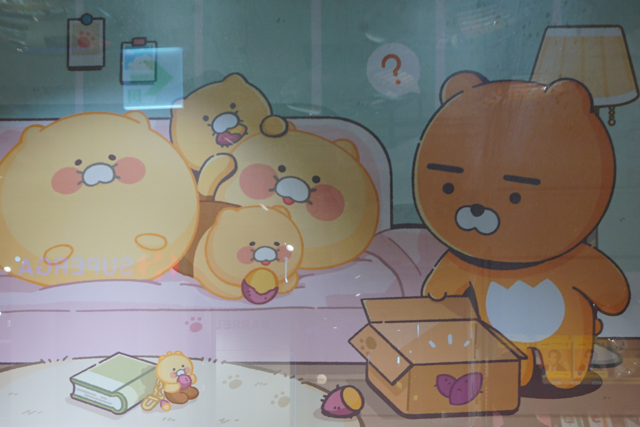
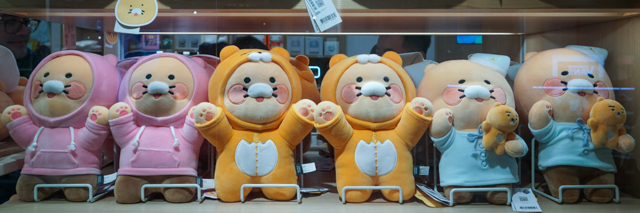
Kakao Friends
카카오프렌즈, 67 Namdaemun-ro, Jung-gu, Seoul, South Korea
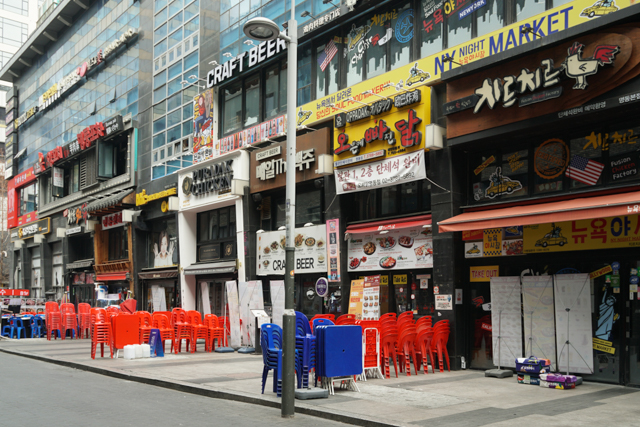
Myeongdong Shopping Street
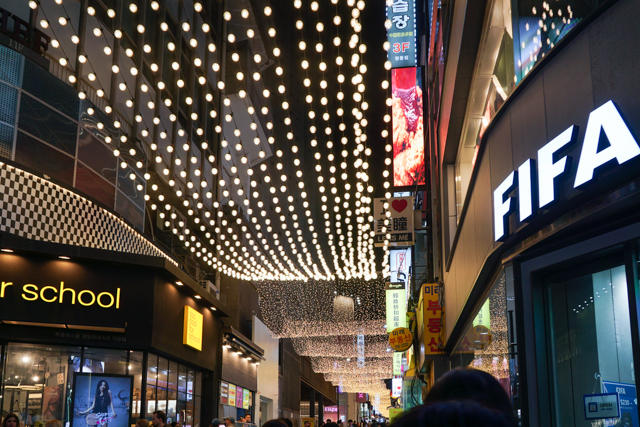
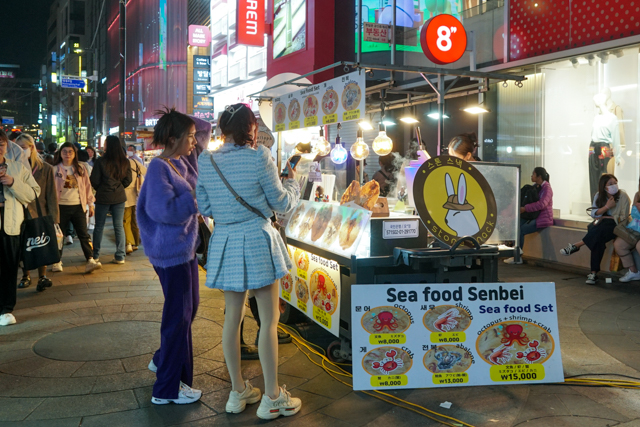
명동거리, Myeongdong, Jung-gu, Seoul, South Korea
Myeondong Kyoja
명동교자 본점, 29 Myeongdong 10-gil, Jung-gu, Seoul, South Korea
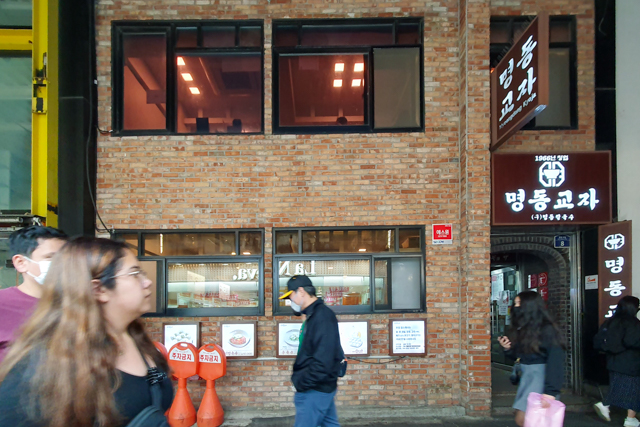
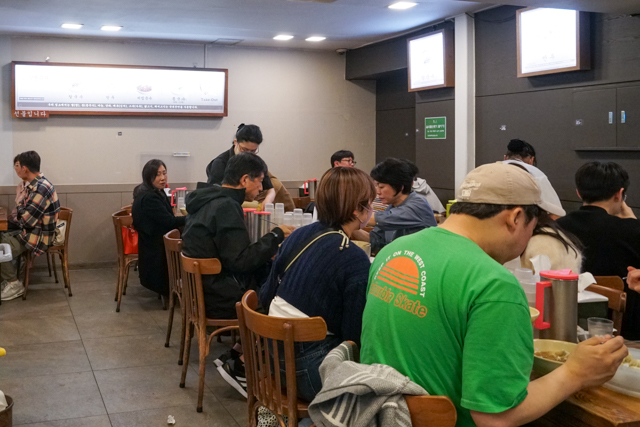
Myeongdong Kyoja is a family-owned place in operation since 1966. The restaurant, which offers only four items on the menu, specializes in dumplings and noodle soup. An impressive number of patrons flock here daily, largely because all the dishes, including its signature garlic-laden kimchi, are made in-house. Simple décor and service come with hefty portions at affordable prices. It has a sister operation in the same area of Myeong-dong.
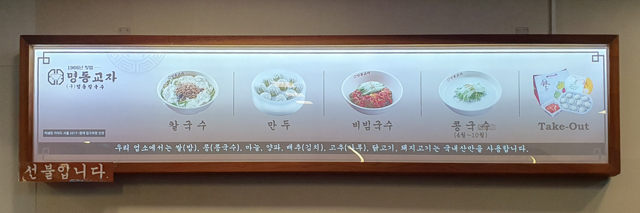
Between November and March, the store only has 3 items on the menu. A soy milk chilled noodle features between April and October.
The digital ordering system was down on the day we visited, so ordering was a bit haphazard. The service was brusque with the ladies confusing the orders that came in or not caring what you wanted to order and instead giving you what they thought you should order. Essentially, it was much like you’d expect at a Chinese restaurant.
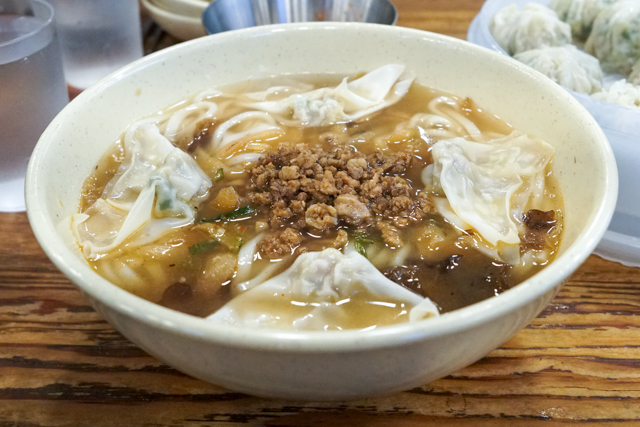
Kalguksu (10,000 won), ‘chopped noodles’, described as ‘a korea traditional noodle dish made by Myeongdong Kyoja own recipe, harmonized with thick and plain chicken broth boiled down for hours’.
We ordered two of these but received only one. That said, it was beautifully hearty with a flavourful, savoury depth. The dumplings were thin-skinned and tasty with pork and ear fungus, while the noodles were the perfect softness. We later discovered you could request a bowl of rice to add to the remaining broth after finishing the noodles.
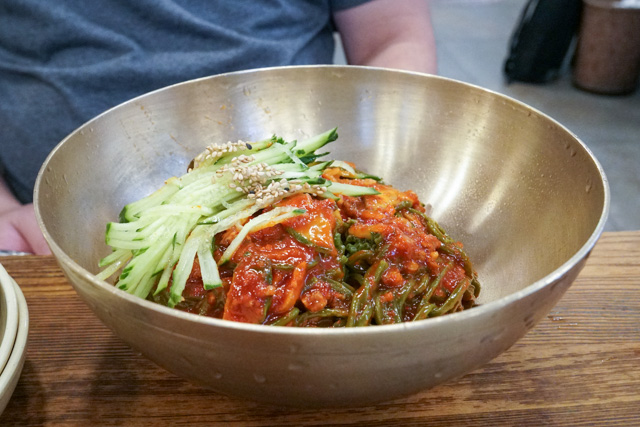
Bibimguksu (1,000 won), ‘spicy noodles’, described as ‘noodles mixed with the aromatic blend of our own freshly made sesame oil and spicy pepper taste, topped with refreshing slices of cucumber’.
We received this as our second dish and took the chance to try something unexpected. The noodles were green as the wheat was mixed with chlorella, which didn’t alter the taste of the noodles. The noodles had an enjoyable al dente texture and the gochujang sauce was enjoyable with notable hints of garlic and nutty sesame flavour.
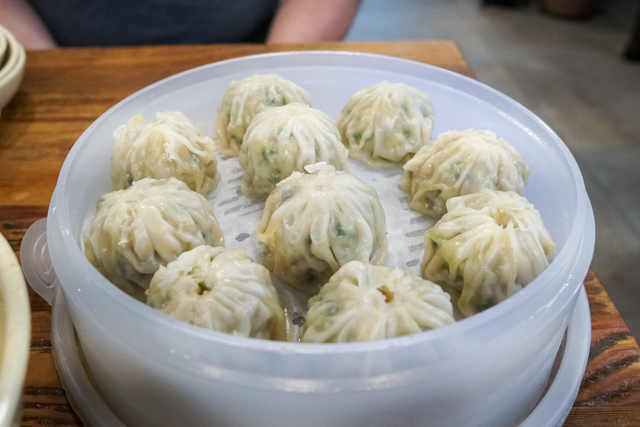
Mandu (11,000 won for 10), ‘dumplings’, described as ‘Myeongdong Kyoja traditional steamed dumplings made from top-grade well-minced Korean pork, transparent dumpling shells and stuffing composed of fragrant Chinese leeks, fresh vegetables and homemade sesame oil’.
We thoroughly enjoyed these thin-skinned dumplings, which were plump and juicy with plenty of pork inside.
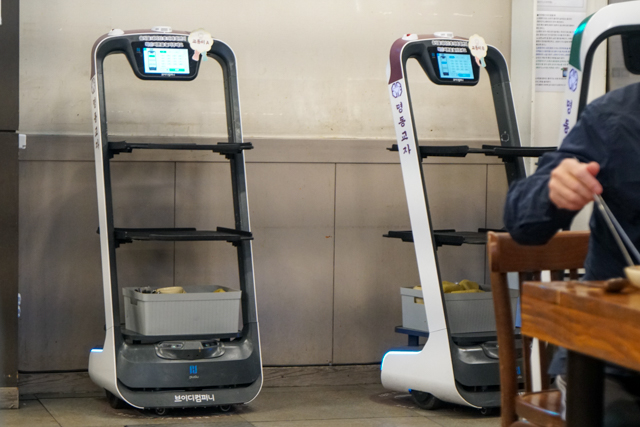
Overall, while the service was remarkably poor, the food was so delicious and affordable that we’d return without a second thought.
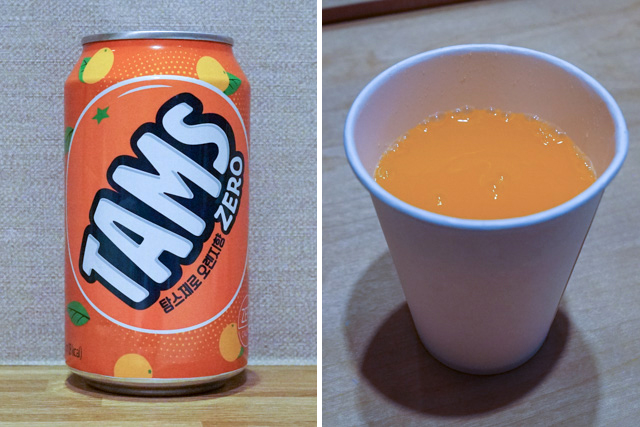
Back in the hotel, we tried a few drinks. This Tams Zero Orange tasted like a less sweet version of Fanta Orange.
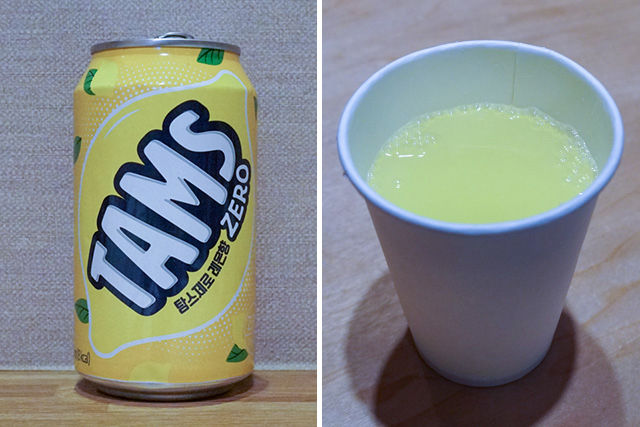
This Tams Zero Lemon was like a weak lemon squash, but the presence of the artificial sweetener was very notable in both the drinks to not make them worth repurchasing.
Seoul – Dongdaemun and Markets was Day 2 of 6 in the South Korea 2023 trip. Day 3 saw us going on a day trip to the Jeonju Hanok Village.