Our eighth and last day in Japan saw us spending the morning at TeamLabPlanets in Toyosu before visiting Daiso’s flagship store in Ikebukuro.
Shinbashi, Minato City, Tōkyō
Buta Daigaku
豚大学, 1F New Shinbashi Building, 2 Chome-16-1, Shinbashi, Minato City, 105-0004 Tōkyō, Japan
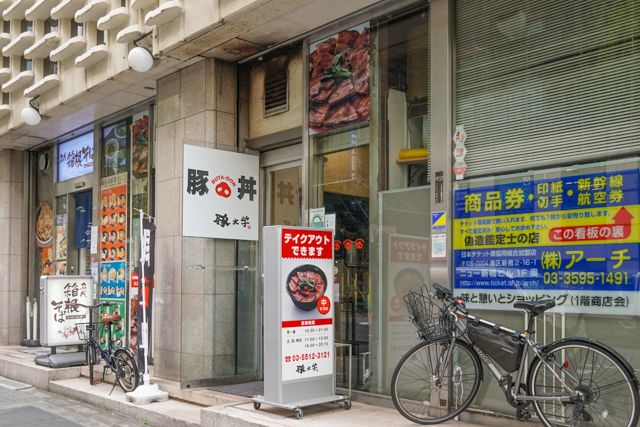
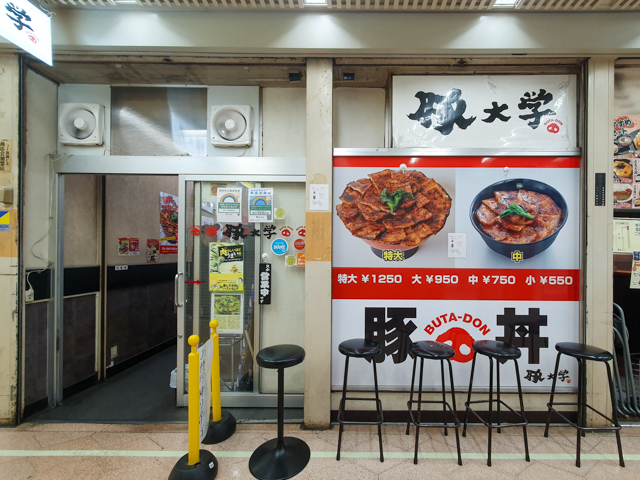
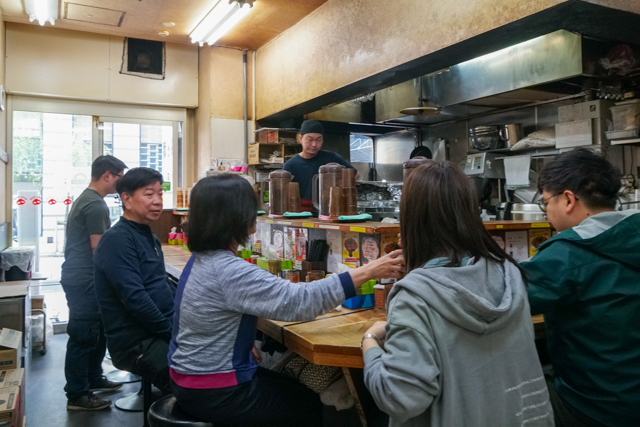
Buta Daigaku (or Pork University) is a no-frills establishment that specialises in the classic butadon. It was a stone’s throw away from Shimbashi Station.
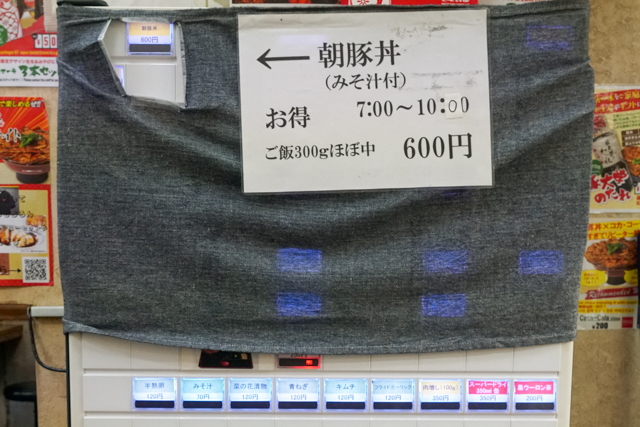
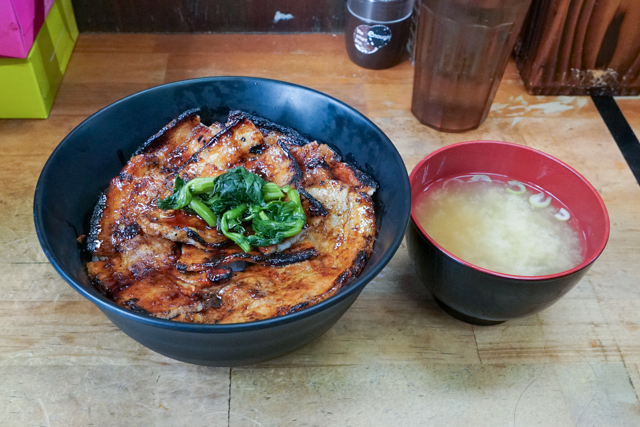
There was only one menu item available from 7-10 AM: Asa Buta Don (¥600), or morning pork bowl, which included 300 g rice and miso soup for an additional ¥50 on the regular price for the small size.
We thoroughly enjoyed this meal, with the smoky and piping hot meat grilled to order. The spinach added enjoyable freshness, while the additional soup was a hearty and warming start to the day.
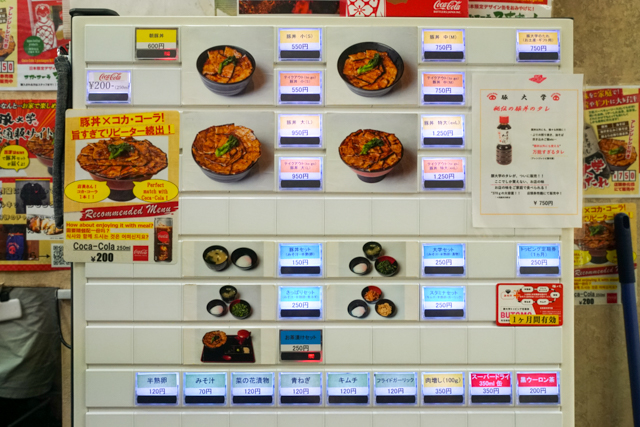
The regular menu was available for order on the vending machine by the time we finished our meal.
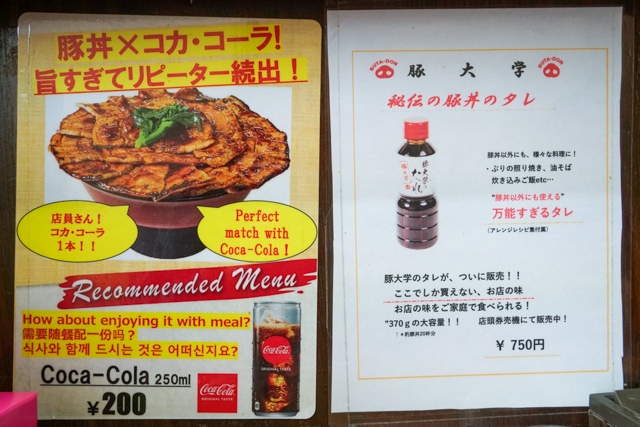
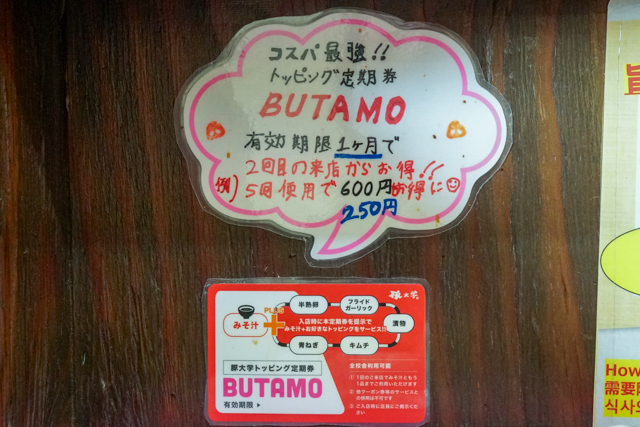
The loyalty card for Buta Daigaku was modelled on the Pasmo IC card, which was neat.
Yurikamome
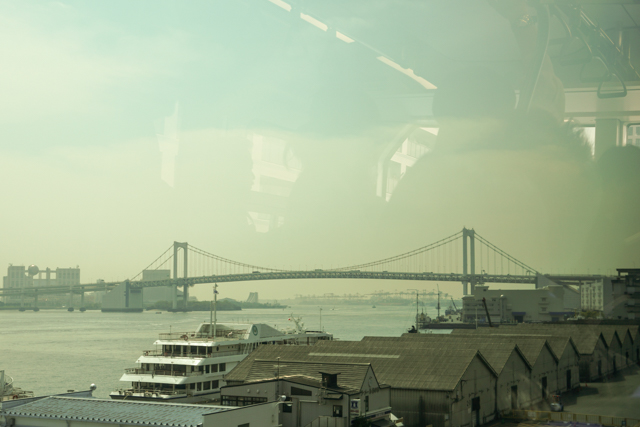
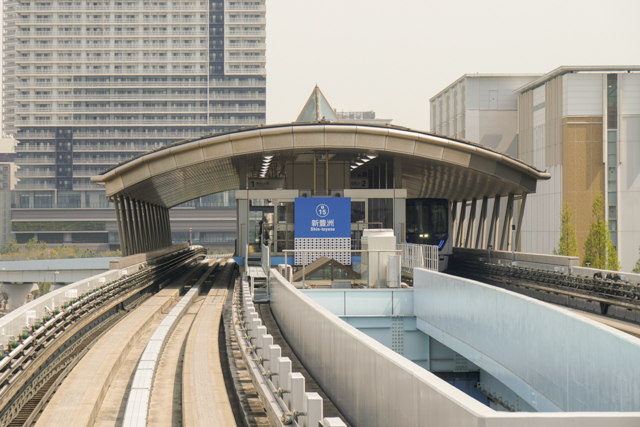
After breakfast, we headed to Shimbashi Station to take the driverless, automated Yurikamome to teamLab Planets Tōkyō at Toyosu.
Toyosu, Kōtō City, Tōkyō
teamLab Planets Tōkyō
teamLab Planets Tōkyō, 6 Chome-1-16 Toyosu, Kōtō City, Tōkyō 135-0061, Japan
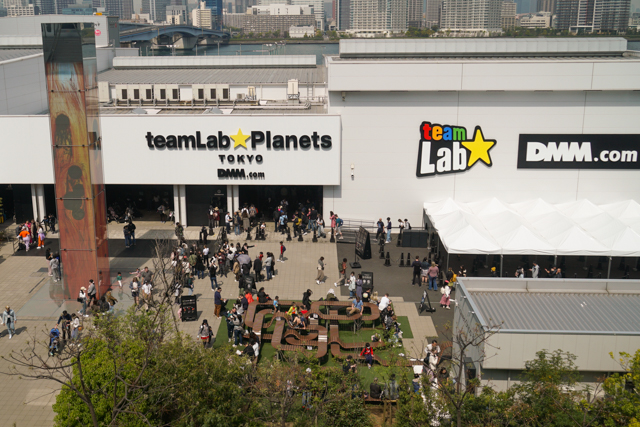


Unlike other teamLab exhibits, teamLab Planets was enjoyed barefoot. So, shortly after the entrance was a room with hundreds, if not thousands, of lockers for visitors to store their socks, shoes and bags. Some artworks featured water, which was checked every hour for its chlorine level. Sanitised towels were also provided after every work involving water.
Waterfall of Light Particles at the Top of an Incline
teamLab, 2018, Digital Installation
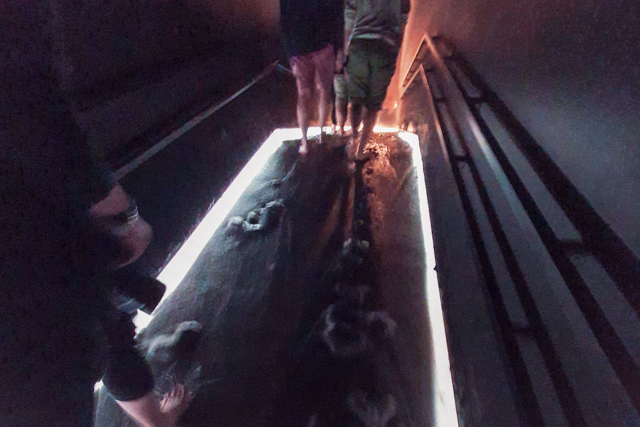
This artwork is based on an earlier work on a natural waterfall in the mountains of Shikoku, Waterfall of Light Particles – Deep in the Mountains of Shikoku (2016-2017).
Light only reflects off the particles of water that make up the waterfall. The shining particles cascade down creating a waterfall of light particles. The light of the shining waterfall illuminates the surrounding area. In the darkness, the shining particles leave a light trail afterimage that appears to draw lines in space. From the combination of these afterimage light traces, the waterfall of light is born.
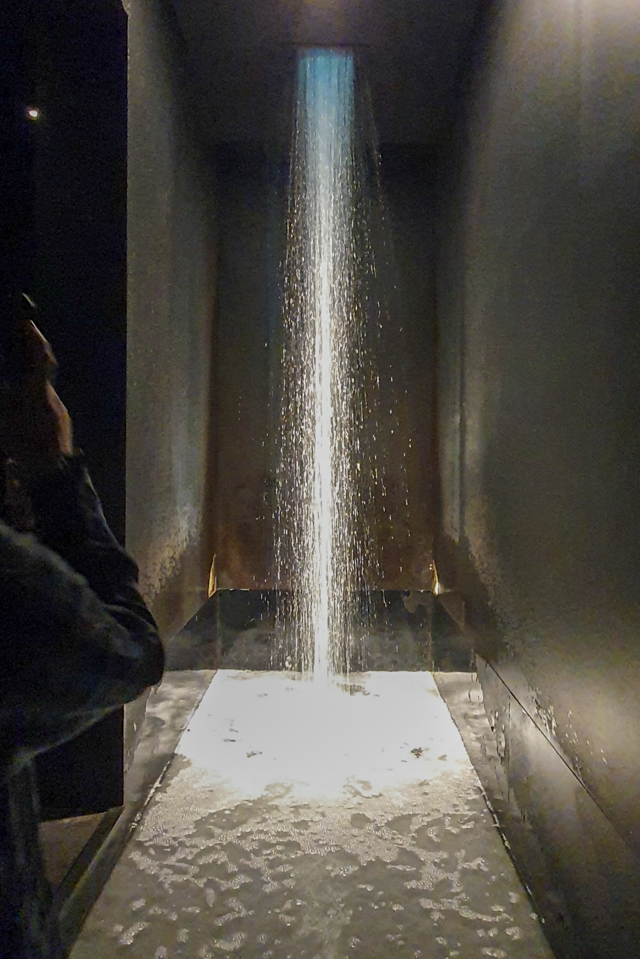
Soft Black Hole – Your Body Becomes a Space that Influences Another Body
teamLab, 2016-2018, Sound: Hideaki Takahashi
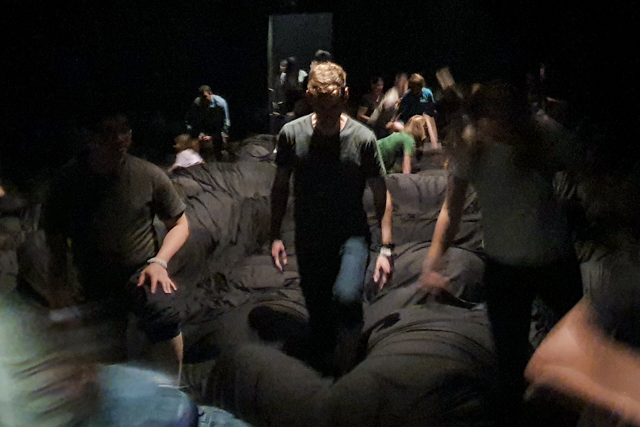
Trying to walk, the foot sinks. The space itself is affected and changed by the weight of people’s bodies. And the people’s bodies are affected by the changing space. People interact with each other through space. Your body changes the space, and that space changes the body of others.
In modern life we are surrounded by flat hard surfaces, so that in our daily lives we have lost consciousness of our bodies, we have forgotten them. In natural forests flat ground does not exist. This installation is a space to remind us of the body that we have forgotten in everyday life, and to make us more conscious of our body mass.
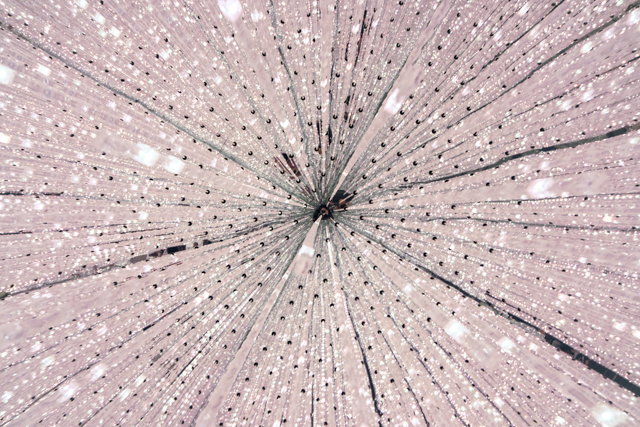
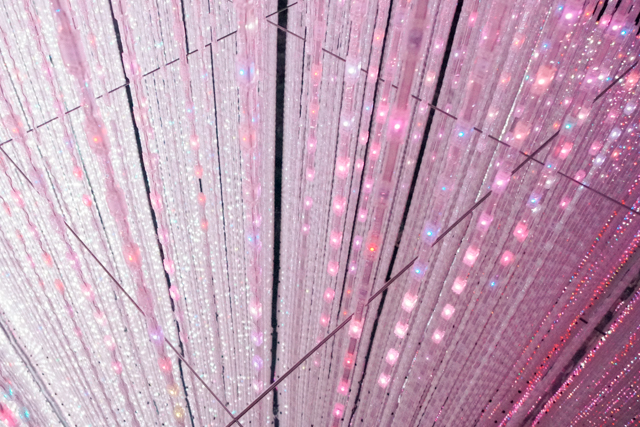
The Infinite Crystal Universe
teamLab, 2018, Interactive Light Sculpture, LED, Endless, Sound: teamLab
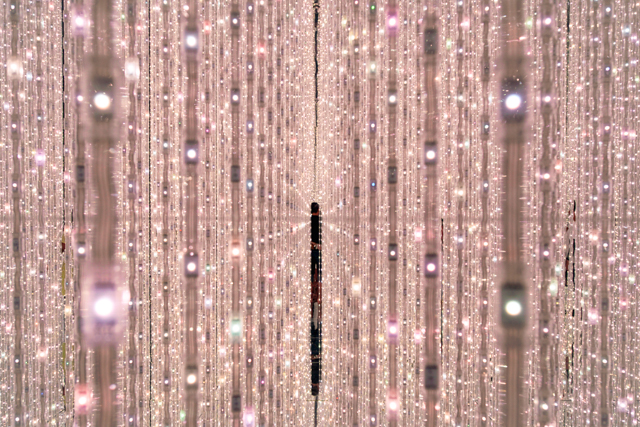
Pointillism uses an accumulation of distinct dots of color to create a picture. Here, light points are used to create three-dimensional objects. The light sculpture extends infinitely in all directions.
People use their smartphones to select stars to throw into The Infinite Crystal Universe. These stars are reborn in three dimensions, creating the artwork. The presence of people and their location within the work affect these three-dimensional stars, which in turn influence and are influenced by other stars in the space.
This artwork is forever evolving, changing from moment to moment due to the people in the space.
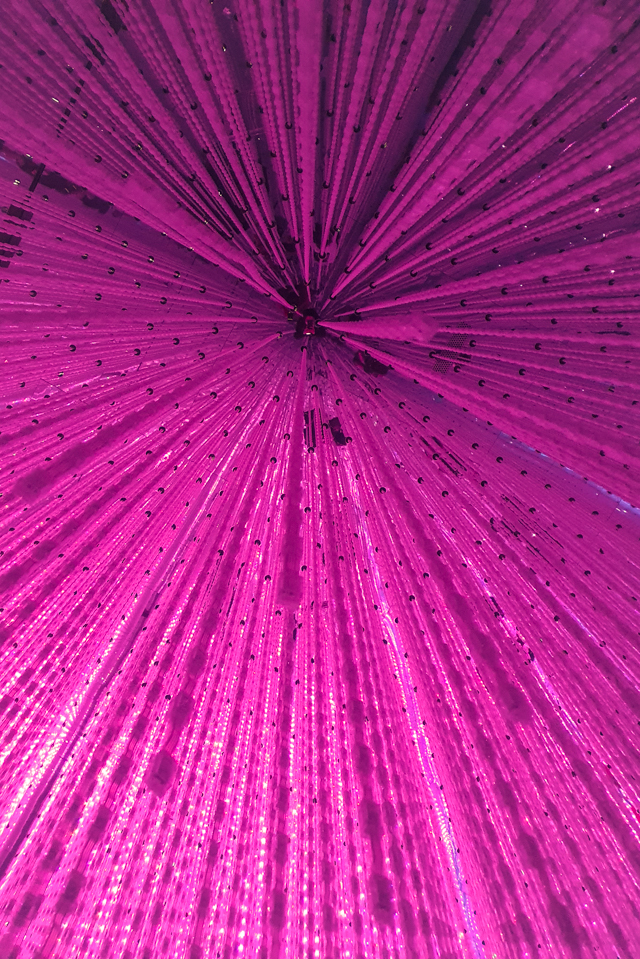
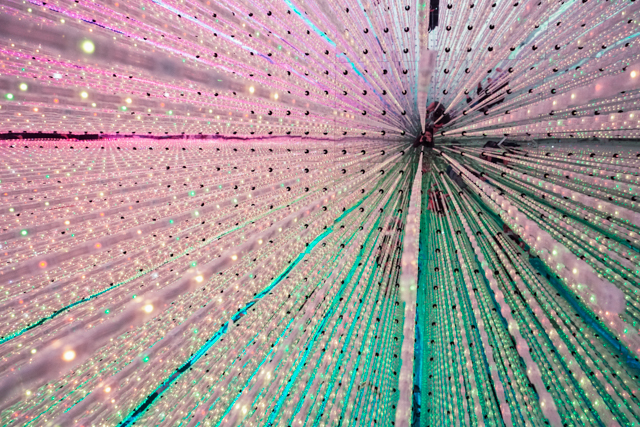
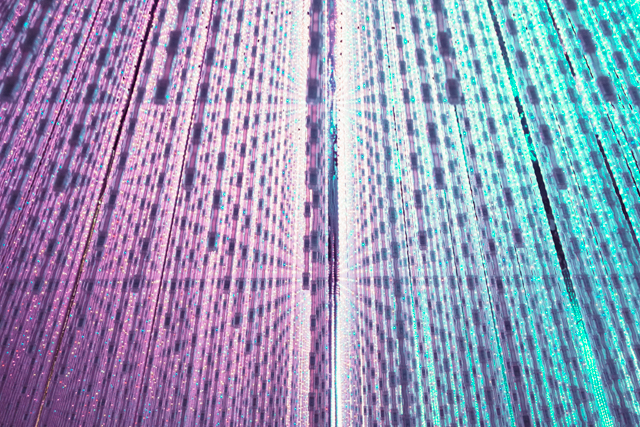
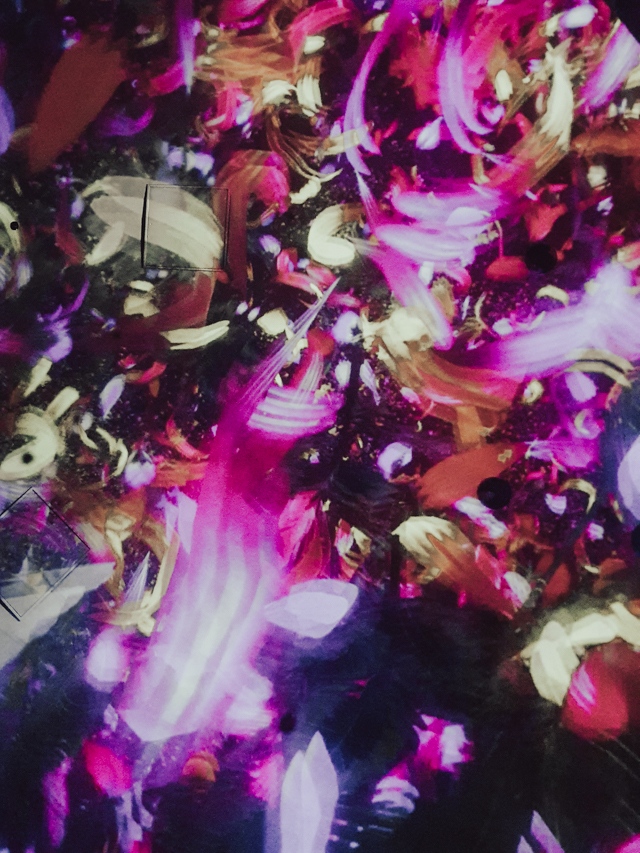
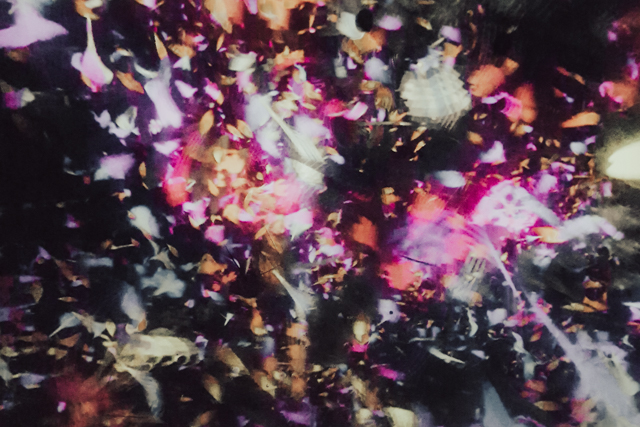
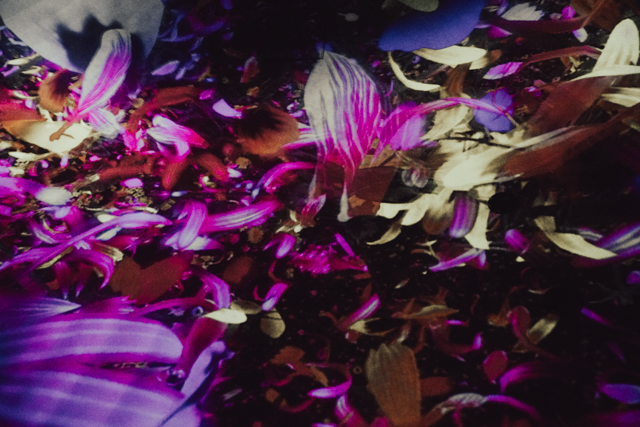
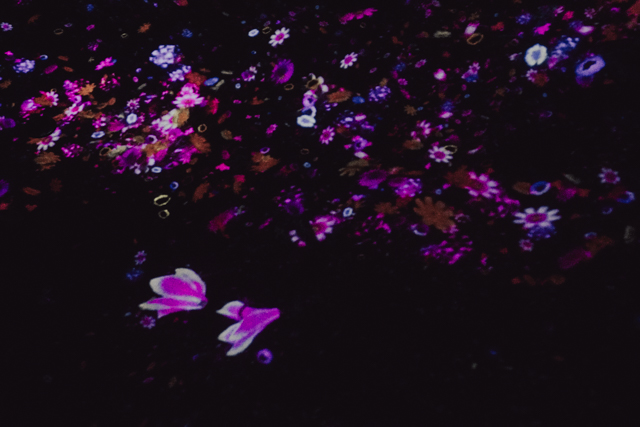
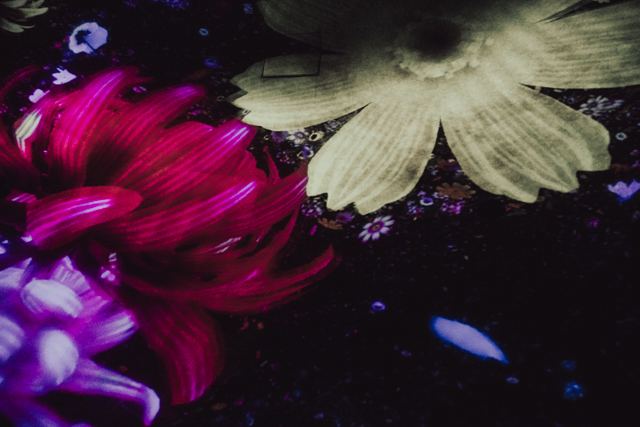
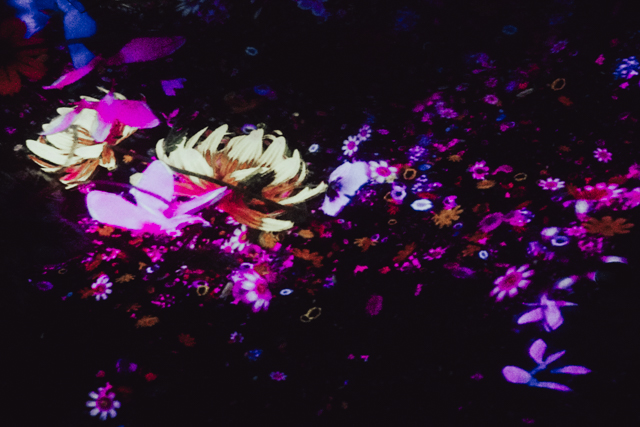
Floating in the Falling Universe of Flowers
teamLab, 2016-2018, Digital Installation, Endless, Sound: Hideaki Takahashi
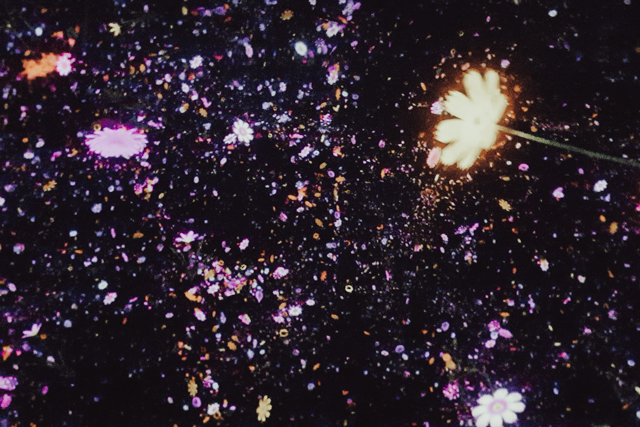
A seasonal year of flowers bloom and change with time, life spreads out into the universe. Lie down or sit still in the space and eventually your body floats and you dissolve into the artwork world.
Flowers grow, bud, bloom, and in time, the petals fall, and the flowers wither and die. The cycle of birth and death continues for perpetuity. The artwork is not a pre-recorded image that is played back; it is created by a computer program that continuously renders the artwork in real time. As a whole, it is continuously changing, and previous visual states are never replicated. The universe at this moment in time can never be seen again.
Drawing on the Water Surface Created by the Dance of Koi and People – Infinity
teamLab, 2016-2018, Interactive Digital Installation, Endless, Sound: Hideaki Takahashi
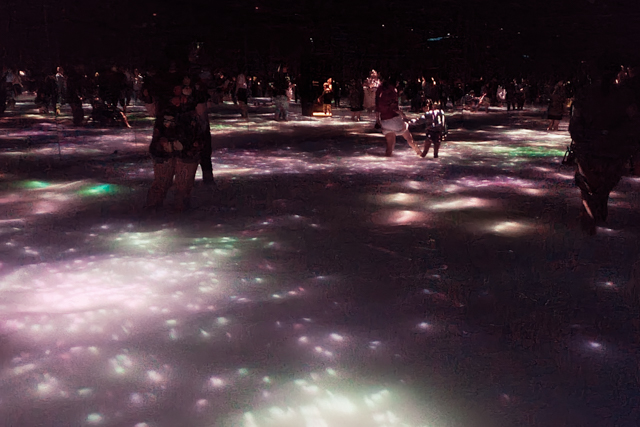
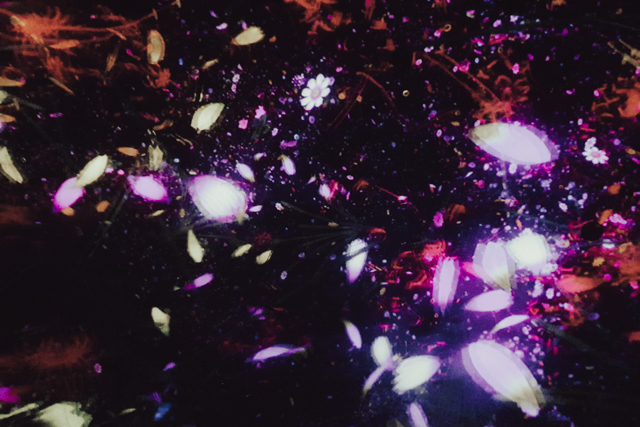
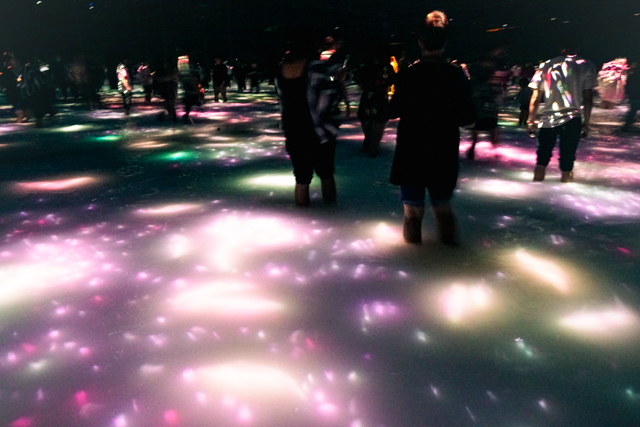
Koi swim on the surface of water that stretches out into infinity. People can walk into the water.
The movement of the koi is influenced by the presence of people in the water and also other koi. When the fish collide with people they turn into flowers and scatter. Throughout a year, the flowers that bloom will change along with the seasons.
The trajectory of the koi is determined by the presence of people and these trajectories trace lines on the surface of the water.
The work is rendered in real time by a computer program. It is neither prerecorded nor on loop. The interaction between the viewer and the installation causes continuous change in the artwork. Previous visual states can never be replicated, and will never reoccur.
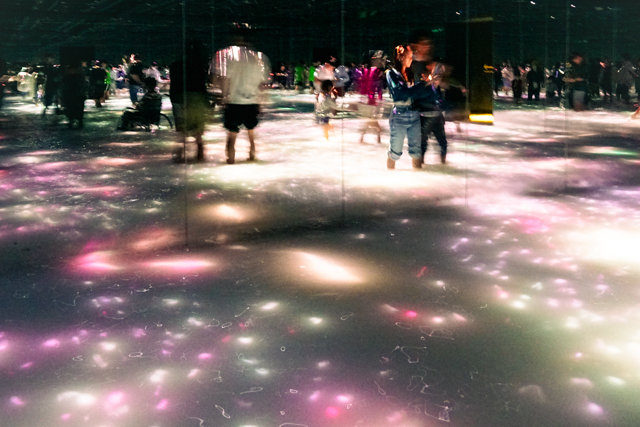
Matter is Void – Fire
teamLab, 2022, Digital Work, Endless
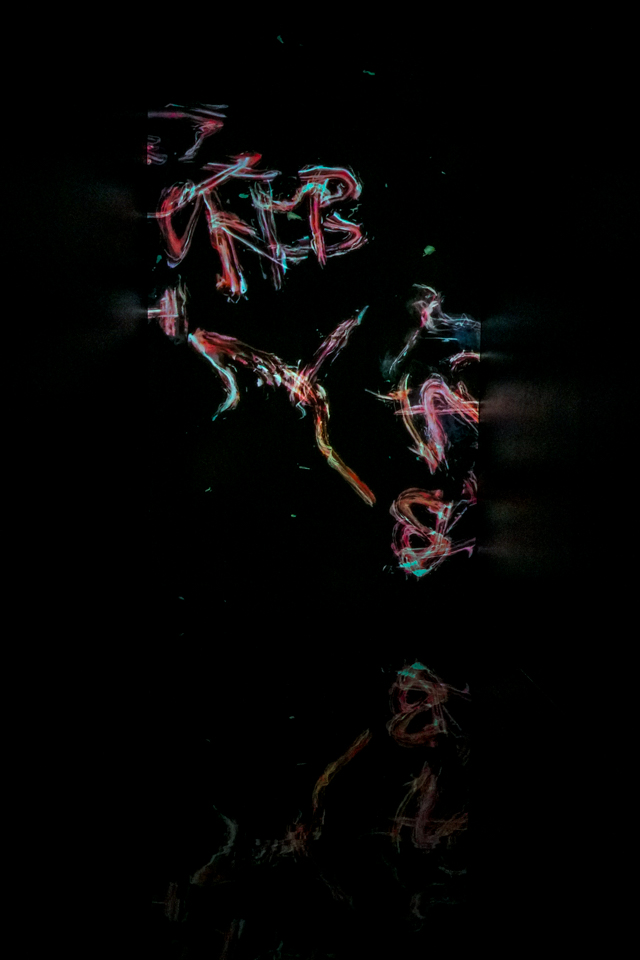
Through the artwork, Matter is Void, teamLab explores the notion of ownership.
This is an NFT artwork. There is only one NFT of this work, but it does not make it exclusive. Anyone and any number of people can download and own the artwork itself. In other words, whether or not someone owns the NFT of the work, the downloaded artworks cannot be distinguished from each other and they are all authentic.
The artwork displays the words chosen by teamLab, “Matter is Void”. Only the NFT owner can modify these words, and those same words will be reflected in all of the artworks downloaded by people around the world.
Depending on the words chosen by the owner of the NFT, the value of the artwork will change. If the words rewritten by the owner of the NFT possess value, more people may choose to own the artwork; and if the words do not possess value, people may no longer choose to display the work. There may be great value in rewriting the words of an artwork that many people look at, and conversely little value in rewriting the words of an artwork that is not displayed anywhere. Depending on the words chosen by the owner of the NFT, the value of the NFT will also likely change.
Once the original words are modified, even if the owner of the NFT decides to change them back to “Matter is Void”, the words will appear differently from the original; the initial “Matter is Void”, once modified, will not be able to be seen in its original state ever again.
The letters of the words in this artwork continuously revolve and rotate. Depending on the angle we may be able to recognize the letters as they continue to rotate, and there will be moments when we can recognize the meaning of the letters as a whole, but once again, they will become indiscernible and the words lose meaning. The way in which the words revolve is visually perceived as moving simultaneously clockwise and counterclockwise, and depending on which movement is consciously followed, the words can appear to be moving in either direction.
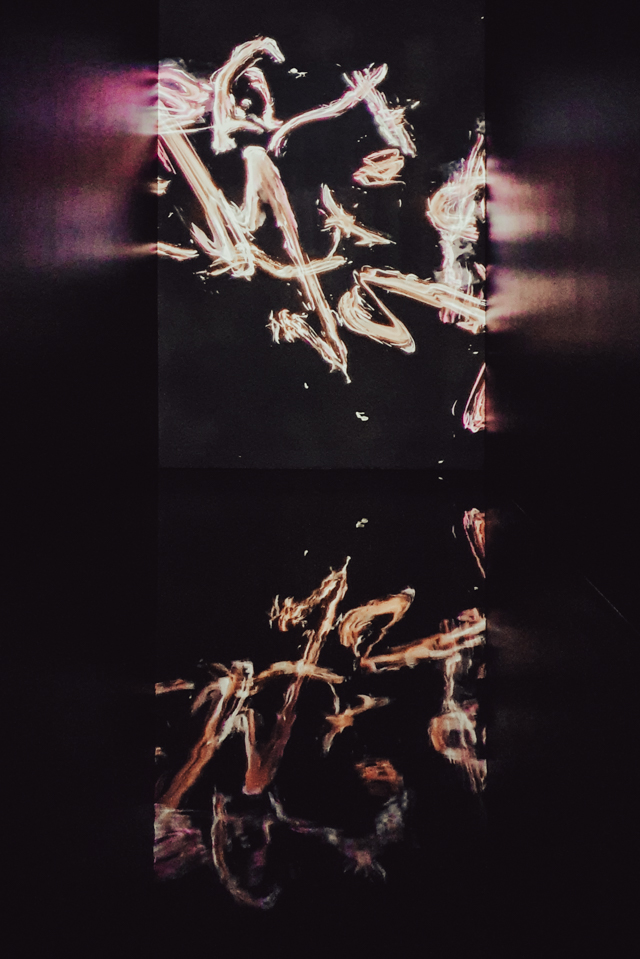
Expanding Three-Dimensional Existence in Transforming Space – Flattening 3 Colors and 9 Blurred Colors, Free Floating
teamLab, 2018, Interactive Installation, Endless, Sound: Hideaki Takahashi
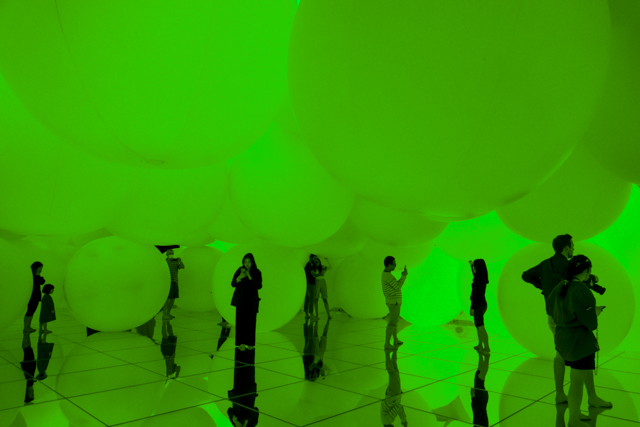
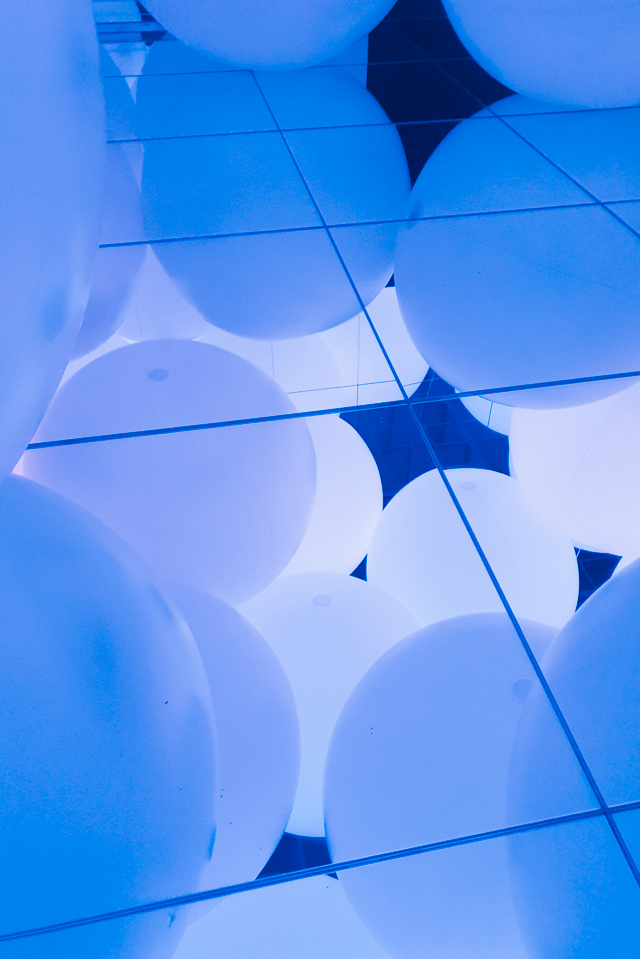
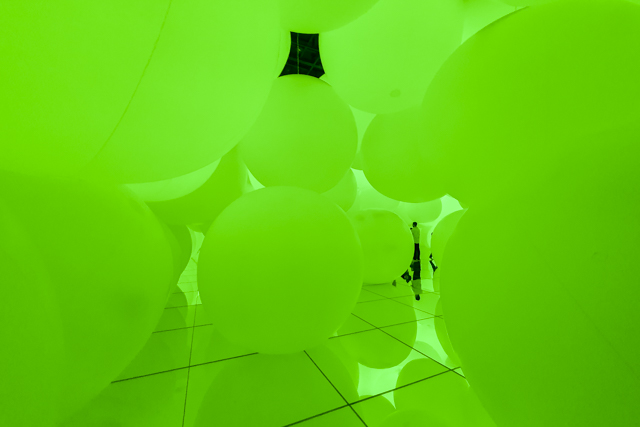
The space is filled with spheres of free floating light. People move through the spheres and enter the space. When the spheres change color, the space itself shifts between a collection of spheres forming a three-dimensional space and a flat color wall.
When people move through or strike them, the spheres change color, and that color resonates out. The spheres around that sphere change color tone and in turn resonate out the color in three-dimensions to nearby spheres.
Even if each sphere moves freely on its own, the behavior of light is maintained across the whole of the space (a three-dimensional image in which one sphere is regarded as one dot). Therefore, the light behaves as a group and can be thought of as one three-dimensional existing space. At this time, the light spreads spherically around the impacted sphere.
Since each sphere is free floating within the collection of sphere elements that make up the three-dimensional space, people recognize it as existing three-dimensionally and part the spheres entering into the three-dimensional existing space.
The shape of the space is determined by the collection of floating spheres and changes according to people’s actions (pushing or colliding). Depending on the degree of entanglement of the spheres, and wind and pressure changes, the shape of the space itself will change, empty spaces becoming high density, and spheres rising to the ceiling all at once.
Before the modern era in Japan, Kasane no Irome were seasonal colors created in silk. The colors were the result of a combination of front and back colors, (silk at the time was so thin that the liner was transparent, creating complex colors), overlapping color gradations, complex weave colors, and combinations of warp and weft. Since the sphere colors are produced by light, it is possible to create nine blurred colors, (light in water, sunlight on water plants, morning glow, morning sky, sky at twilight, peach, plum, iris, spring maple), as well as three colors that flatten the space (blue, red, and green), producing a total of twelve colors.
Floating Flower Garden: Flowers and I are of the Same Root, the Garden and I are One
teamLab, 2015, Interactive Kinetic Installation, Endless, Sound: Hideaki Takahashi
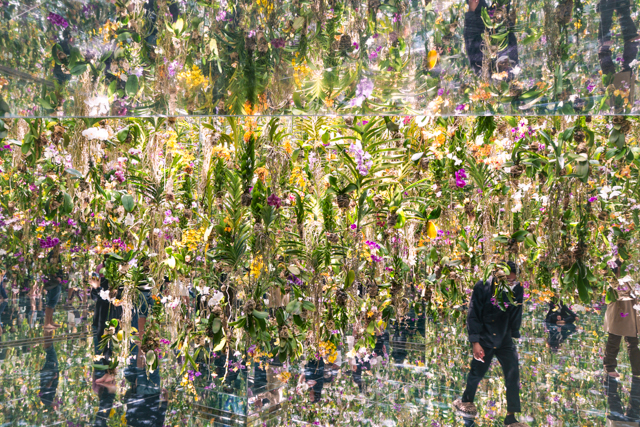
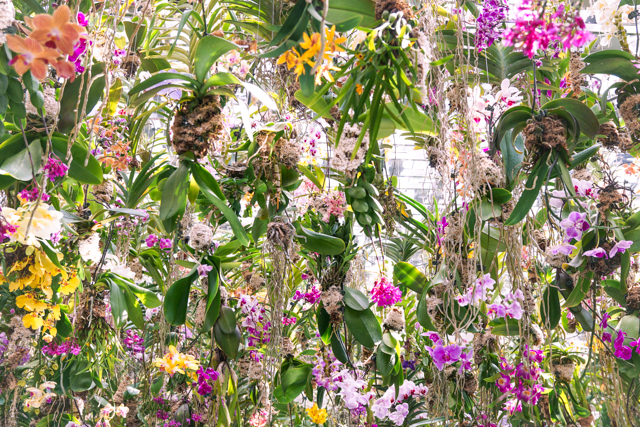
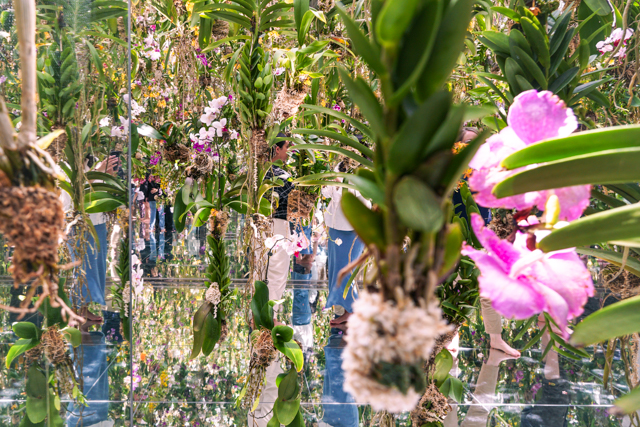
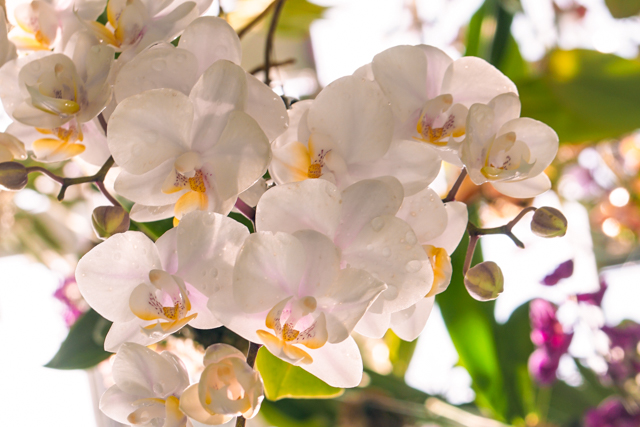
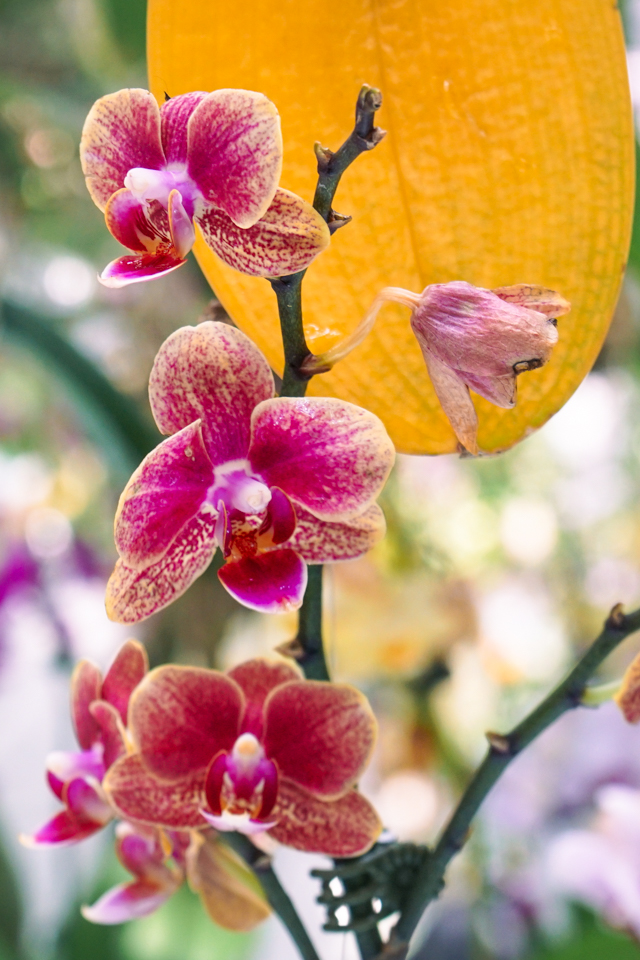
This floating flower garden consists of a three-dimensional mass of flowers.
The artwork space is completely filled with flowers, but as the flowers float up above people, open spaces are created. Because of this, people are able to freely wander around the flower mass space. If you encounter other people within the artwork, your space will connect with theirs and become one single space.
Zen gardens are said to have been created as a place for groups of Zen priests to carry out training in order to become one with nature.
There is a Zen kōan (a question or story that is part of Zen priests’ theological training) called “Nansen’s Flower”. Someone asked the monk Nansen about the famous saying, “Heaven and I are of the same root. All things and I are of the same substance”, remarking on how wonderful it was. Nansen, pointing to a flower in the garden, said, “People these days see this flower as if they were in a dream”.
In this work, people immerse themselves in flowers, becoming one with the garden. When someone continues to look at a flower closely, the flower looks back. At that moment, they become one with the flower and may truly see flowers for the first time.
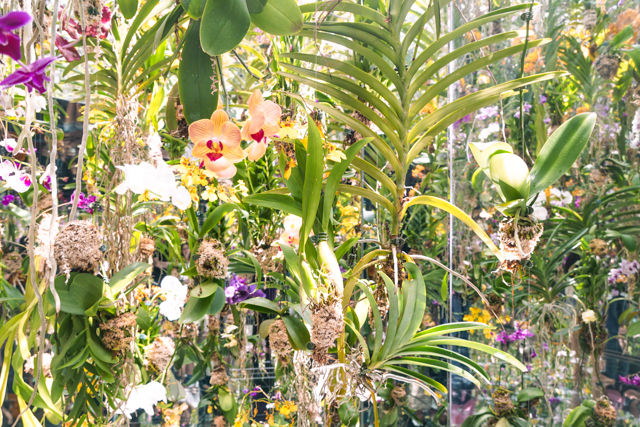
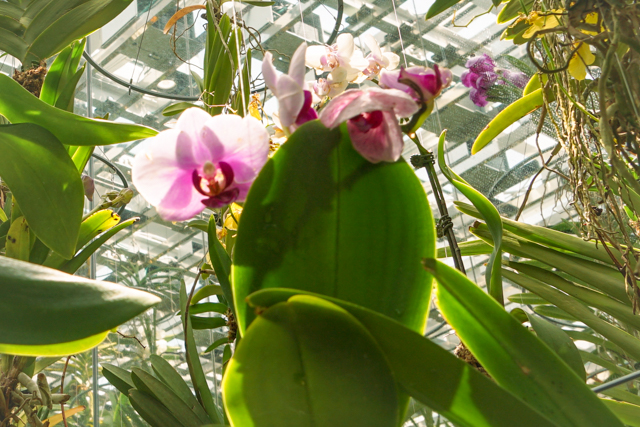
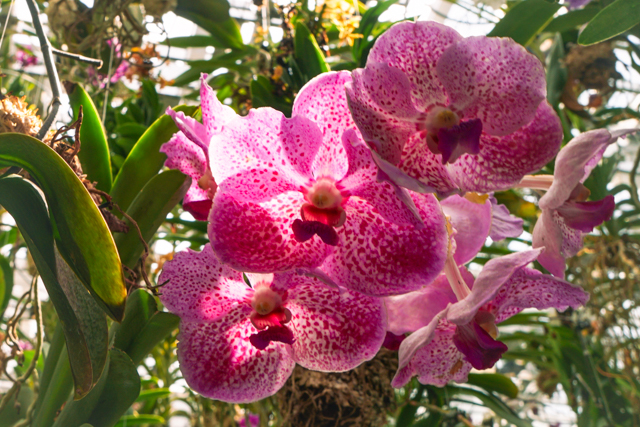
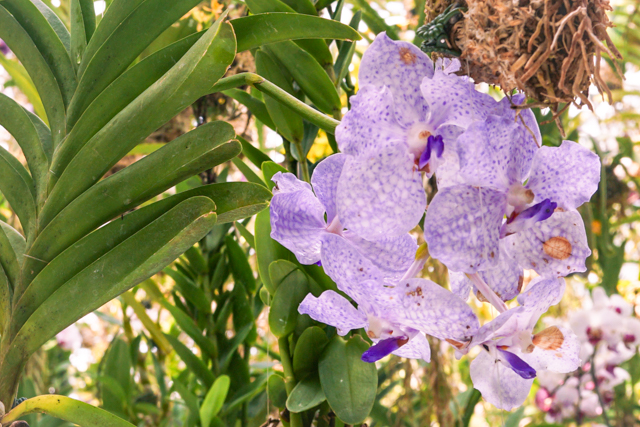
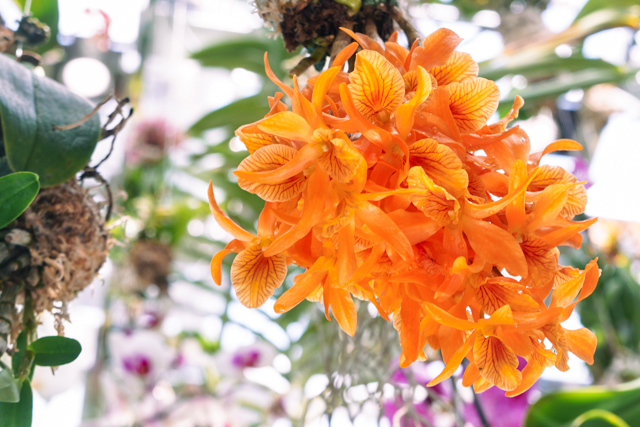
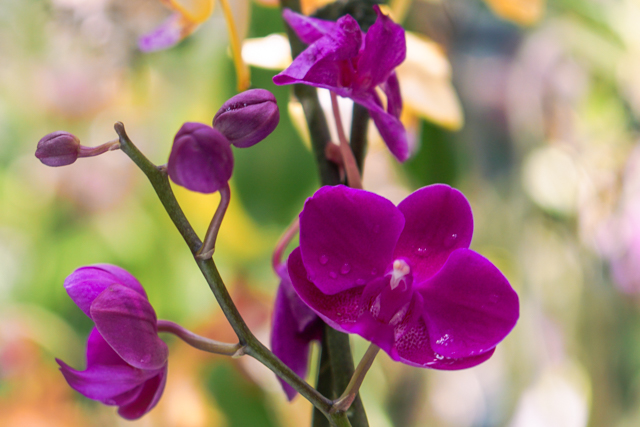
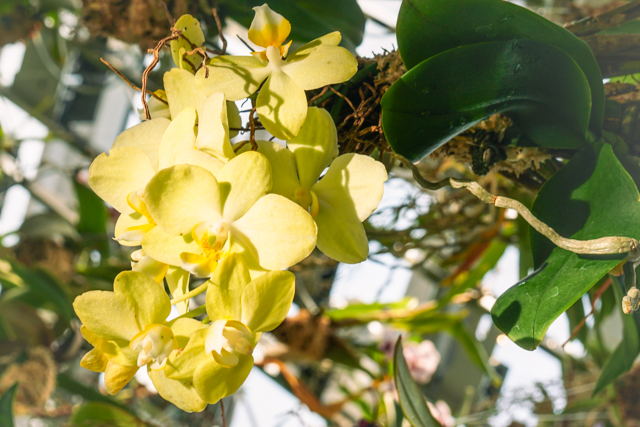
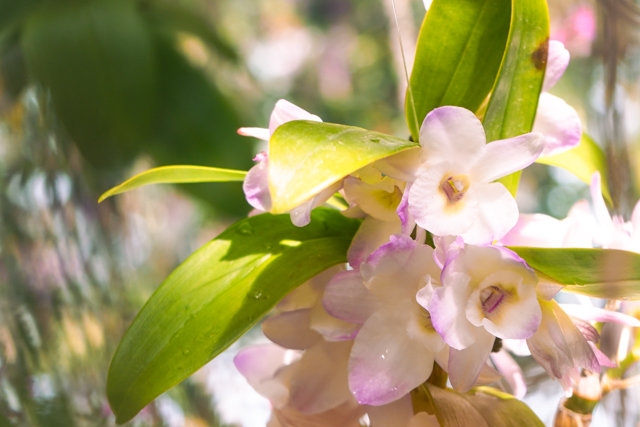
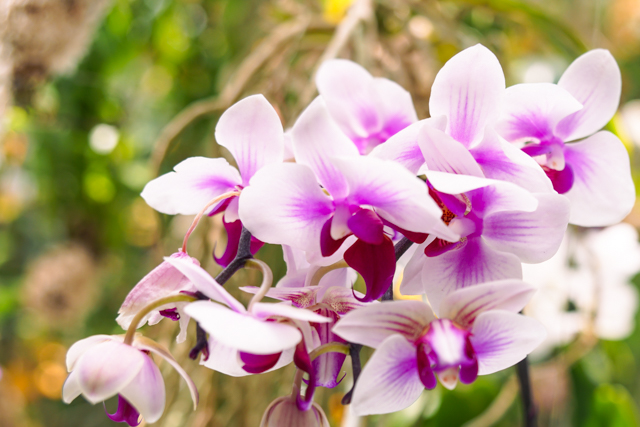
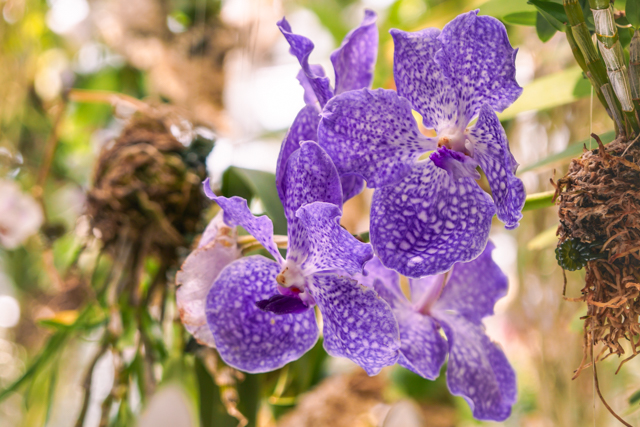
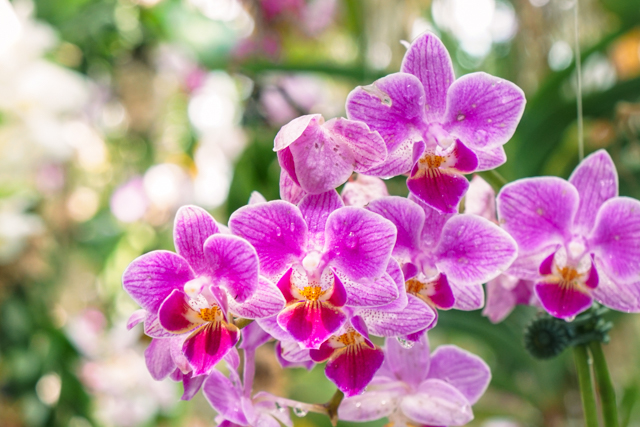
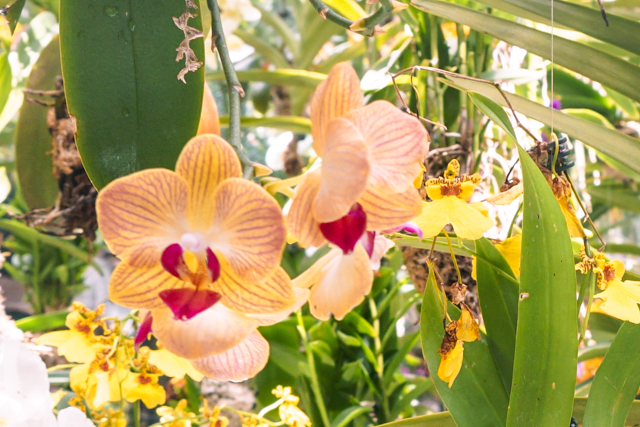
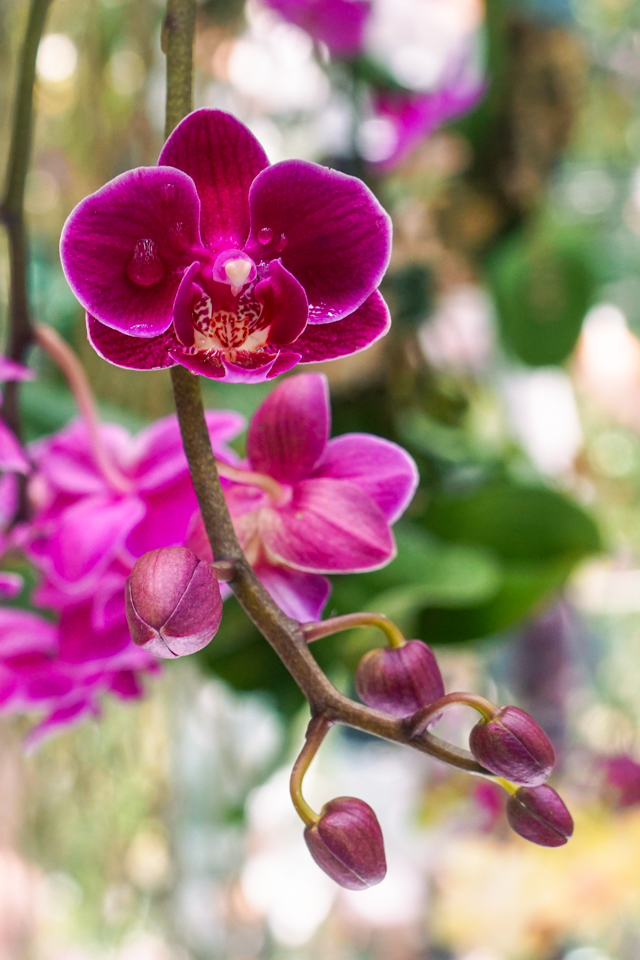
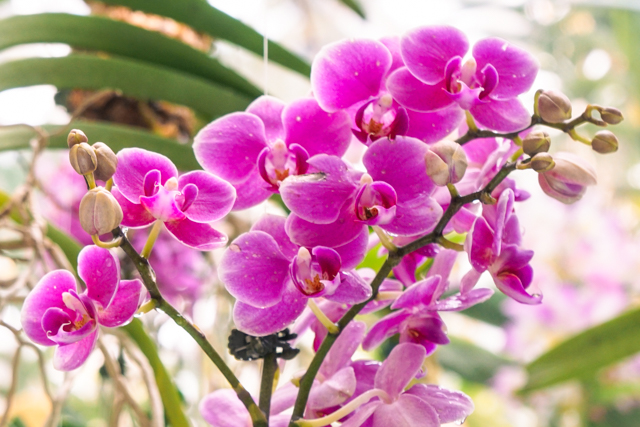
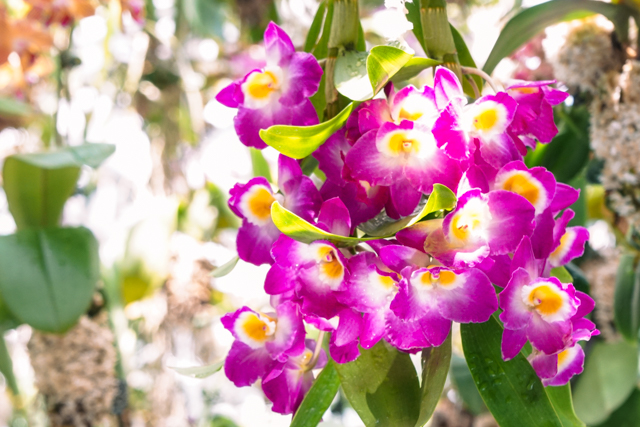
The flowers in this artwork are orchids. Most orchids are able to grow without soil by absorbing water from the air. The flowers in this artwork are alive, growing, and blooming with each passing day. It could be said that they are growing in mid-air.
Although flowering plants were the last of the plant species to appear on earth, at least 220,000 of the 250,000 terrestrial plant species are flowering plants. Evolution has favored diversity, and it can be said that flowers were born to produce diversity. Orchids were flowering plants that most enjoyed diversity, and it is said that approximately 10% of all plant species belong to the orchid family. Because of their diversity, many orchids evolved to become most adapted to live on rocks and trees instead of land with soil where other plants grew abundantly. In an area without soil, in other words, traditionally a least favorable environment for plants, orchids evolved to be most adapted for a world without competition. They are thought to have appeared at a later stage of evolution compared to other plants, and continue to diversify to this day, making us wonder what evolution chose to favor.
Orchids are known to have co-evolved with certain pollen-carrying insects. The flowers’ aromas become stronger at the time of day when the partner insects are active. Because of this, the scent of the artwork space changes each moment between morning, day, evening, and night. Since many of the orchids in this work are partnered with nocturnal insects, the tightly-packed orchids produce a powerful fragrance at night.
Moss Garden of Resonating Microcosms – Solidified Light Color, Sunrise and Sunset
teamLab, 2021, Interactive Digital Installation, Endless, Sound: Hideaki Takahashi
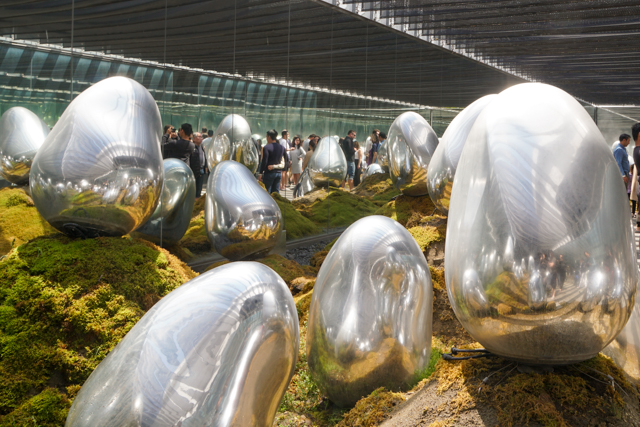
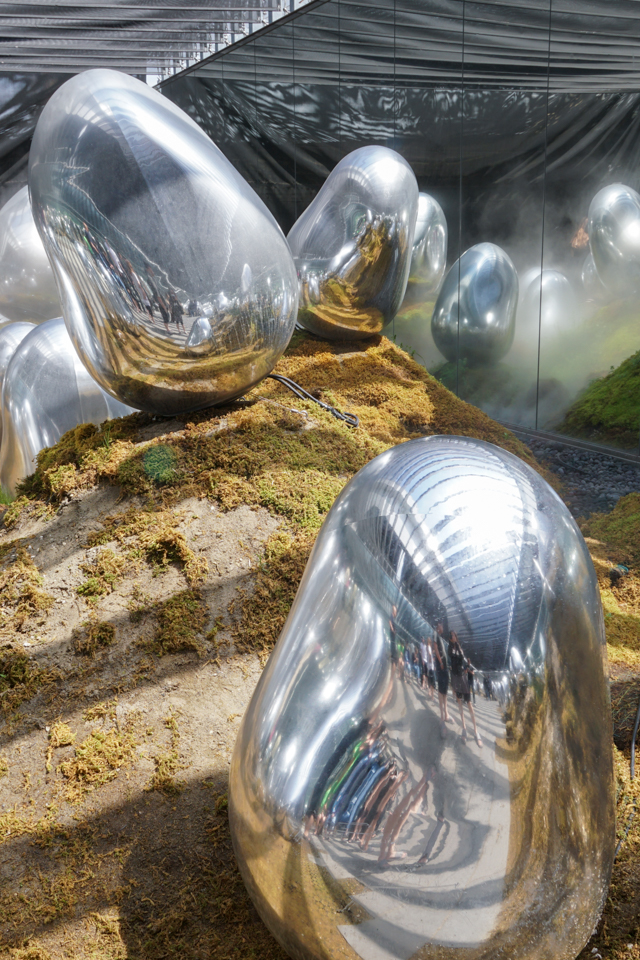
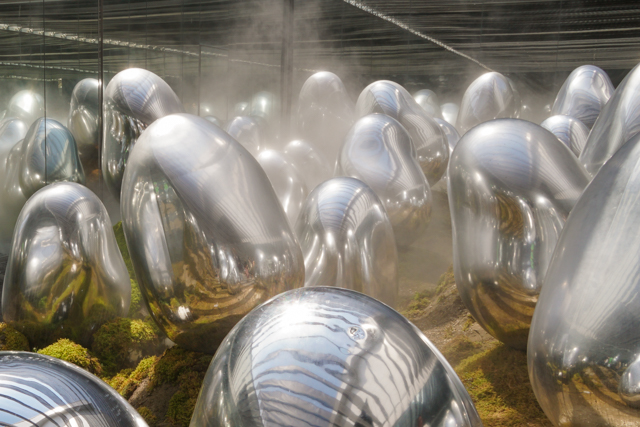
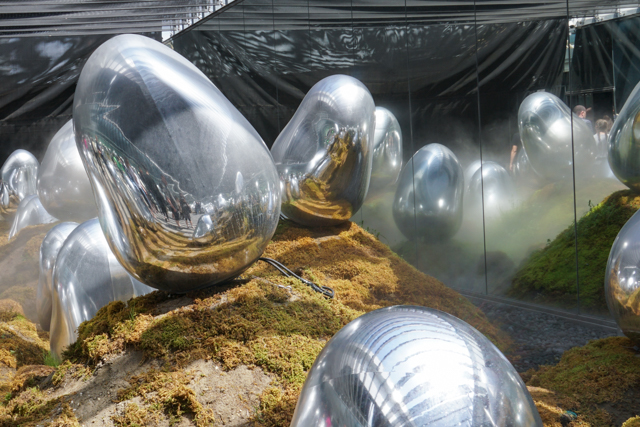
Ovoids that change appearance with the sunrise and sunset are laid out in the moss garden.
With sunrise, the ovoids begin to reflect the world around them. When pushed down by a person or blown by the wind, the ovoid falls back and then rises, releasing a resonating tone. The ovoids around it also respond one after another, continuing to resonate with the same tone.
As the sun sets, the ovoids shine by themselves. When an ovoid is pushed by a person or blown by the wind, it shines brightly and emits a sound tone, as it rights itself. The ovoids around it also respond one after another, emitting the same light color and sound tone that continues to resonate out.
The space of the work is interactively transformed under the influence of the wind, rain, and the behavior of the people in the space, making the environment and the people a part of the work. When the wind is quiet and people are still, the ovoids begin to flicker slowly.
teamLab is experimenting with the concept of color. The ovoids can change into a total of 61 newly-defined Solidified Light Colors.
It is said that mosses were the first terrestrial organisms to appear in a world of rocks and sand, where there was no life on land yet. As mosses and ferns appeared and forests were created, a variety of animals became able to live on land. Since water inside cells is essential for living things, if the body lacks water, it will die. Mosses, on the other hand, are poikilohydric, meaning the water content in the cells change according to surrounding humidity levels. So moss will not die during long dry periods, and they come back to life when given water. Because mosses are poikilohydric, their color and shape change dramatically when the air is dry versus when it is wet, such as when there is rain or fog. Tardigrades, which live in moss, also go into a non-metabolic state of dormancy when the surrounding environment becomes dry, but they revive and become active when there is water. The state that tardigrades enter, when they are neither living nor dead, is called cryptobiosis. This may cause us to consider what it means to be alive.
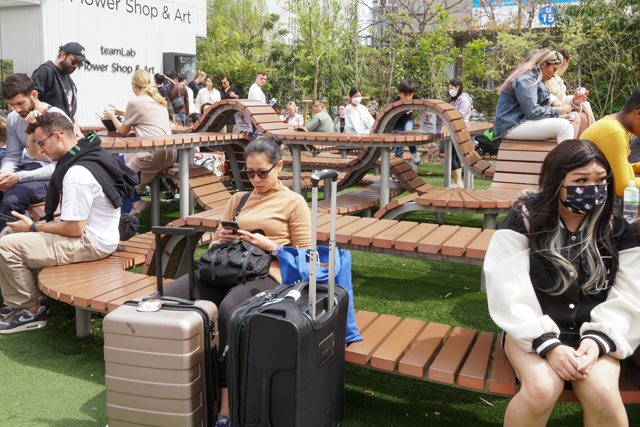
One Stroke Bench
teamLab Architects, 2018
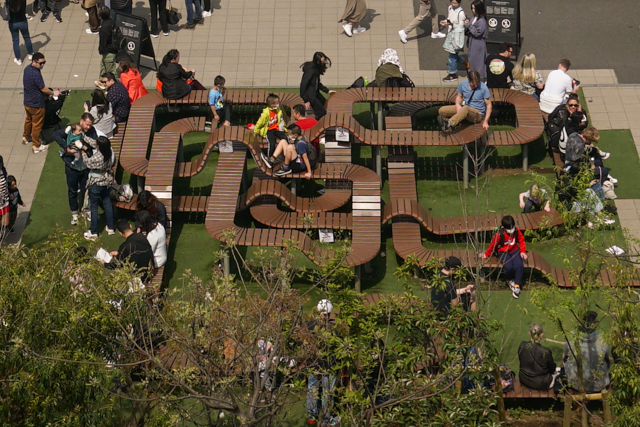
Like the stroke of a brush, this is a single, connected bench.
The intricately overlapping planes and continuous curved surfaces have freely-changing functions, such as a chair for sitting, a table for eating and a lounger for resting. The three-dimensionally intersecting parts look like a solid block or a sculpture. The sequential bench wraps around the building and becomes a counter for the building, seamlessly connecting the building and the bench, creating a landscape with organic continuity.
Universe of Fire Particles Falling from the Sky
teamLab, 2021, Interactive Digital Installation, W6000mm D6000mm H15000mm, Sound: Hideaki Takahashi
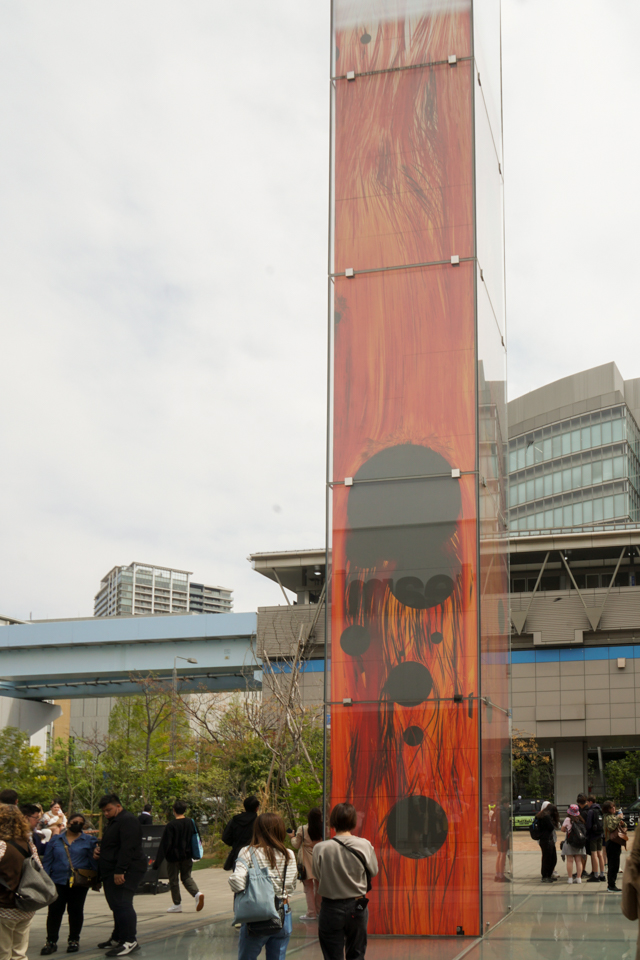
When people stand on the work, a black absolute presence is created, and the shape of the flames change. The work is affected by people, and is in a state of perpetual, continuous change.
Flames are a phenomenon of light and heat generated by combustion; it is a vaporized substance in a flow, a decomposed substance. It is our sensory experience of seeing what is in between phenomenon and substance.
Lines are drawn in relation to the flow of combusting gas, and the flames are created by the accumulation of those lines in three-dimensions. The lines are then “flattened” using what teamLab considers to be Ultrasubjective Space to represent the flames.
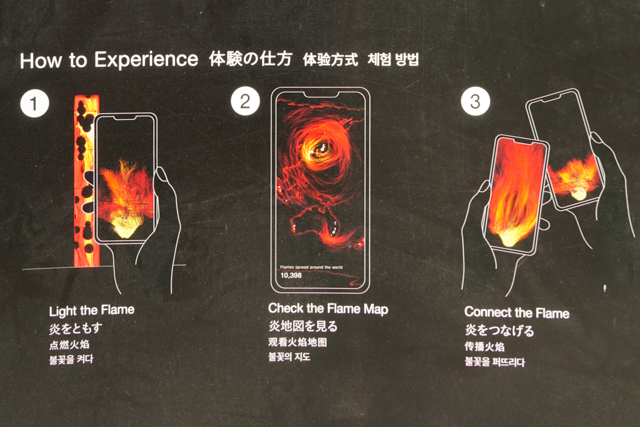
teamLab is exploring the concept of Distributed Art. If you launch the Distributed Fire smartphone application and approach this artwork, the flame will ignite and you can take the artwork home with you. When you bring that flame close to another person’s smartphone, a flame will alight. As you connect the flame, and they connect that flame with someone else, the flame will spread all over the world. The flames that are spread are displayed on the Map of The Flame.
Distributed Art duplicates itself, or a part of an artwork is distributed among people. Then, once in the hands of the people, the artwork is further actively distributed, and also makes copies of itself. The artworks will be distributed and exist on people’s networks and become decentralized. When the artwork exists on the network, it continues to exist even if the original disappears.
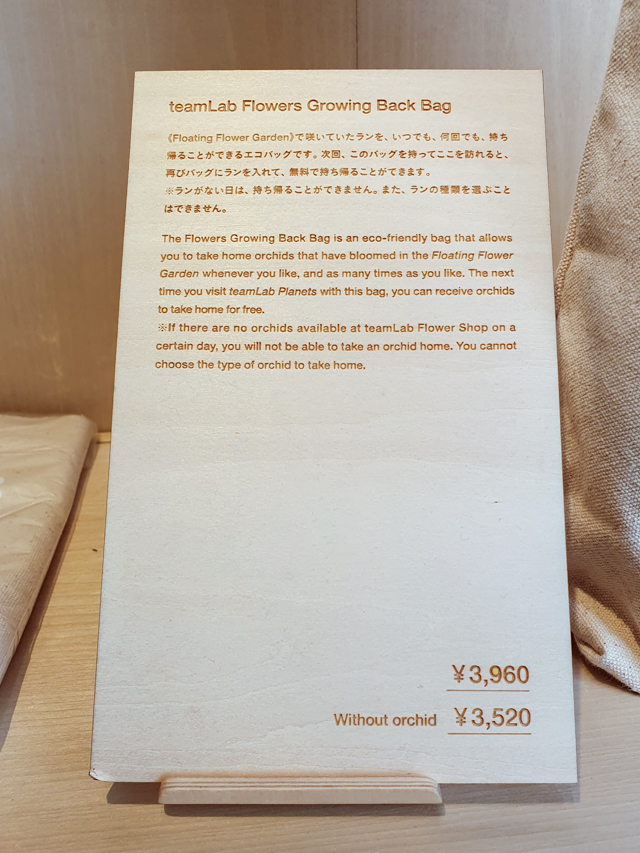
teamLab Flowers Growing Back Bag
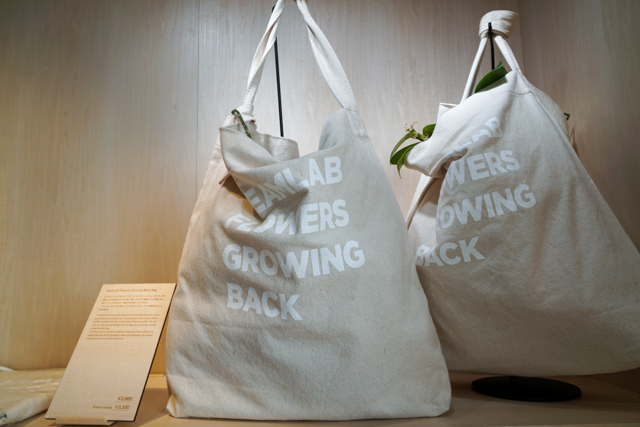
The Flowers Growing Back Bag is an eco-friendly bag that allows you to take home orchids that have bloomed in the Floating Flower Garden whenever you like, and as many times as you like. The next time you visit teamLab Planets with this bag, you can receive orchids to take home for free.
If there are no orchids available at teamLab Flower Shop on a certain day, you will not be able to take an orchid home. You cannot choose the type of orchid to take home.
One of the Floating Flower Garden
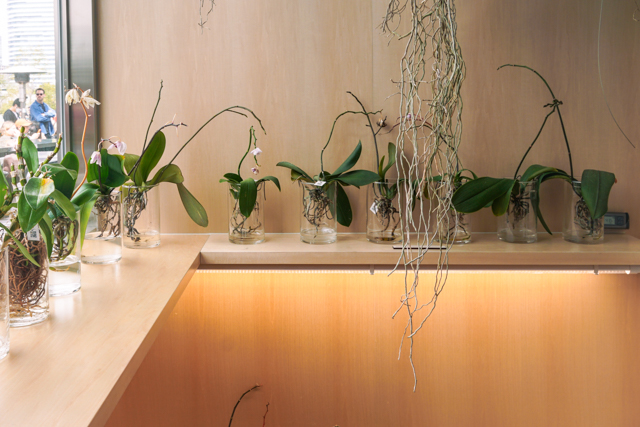
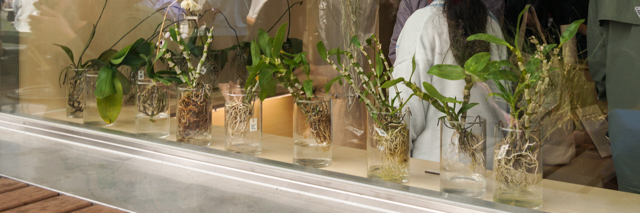
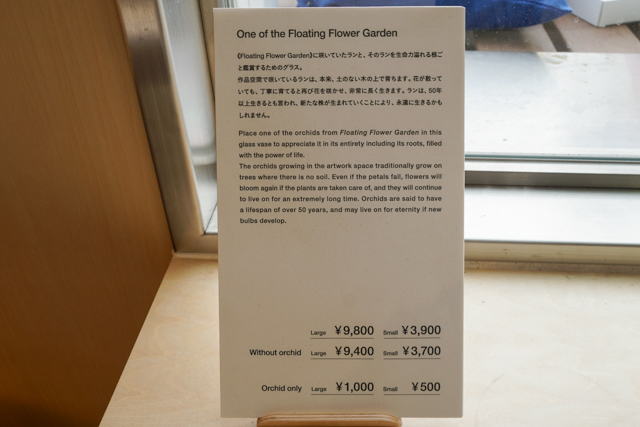
Place one of the orchids from Floating Flower Gordon in this glass vase to appreciate it in its entirety including its roots, filled with the power of life.
The orchids growing in the artwork’s space traditionally grow on trees where there is no soil. Even if the petals fall, flowers will bloom again if the plants are taken care of, and they will continue to live for an extremely long time. Orchids are said to have a lifespan of over 50 years, and may live on for eternity if new buds develop.
Marunouchi, Chiyoda City, Tōkyō
Tōkyō Station
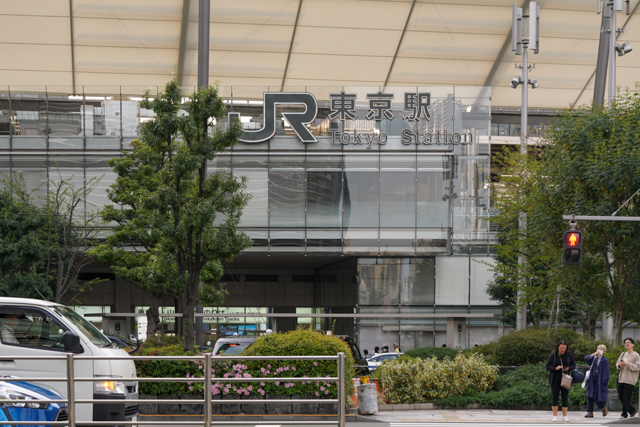
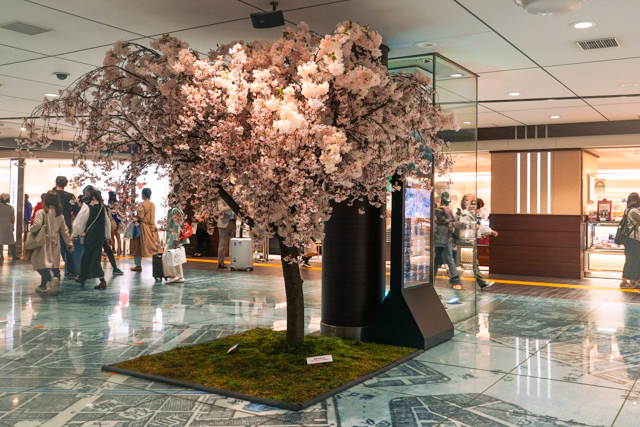
After returning from teamLab Planets, we stopped by Tōkyō Station.
Tōkyō Banana’s Tōkyō Banana
東京ばな奈s トーキョーバナナーズ, B1 First Avenue, JR Tōkyō Station, Right after exiting Yaesu Underground Central Ticket Gate, 1 Chome-9-1 Marunouchi, Chiyoda City, 100-0005 Tōkyō, Japan
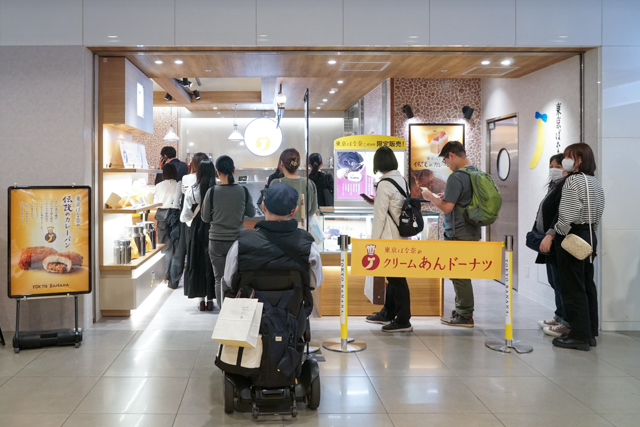
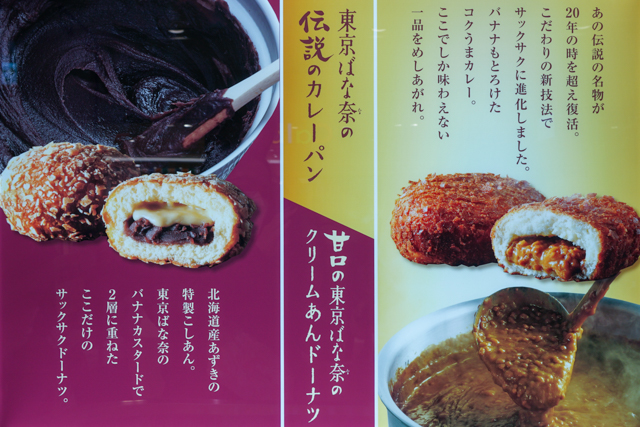
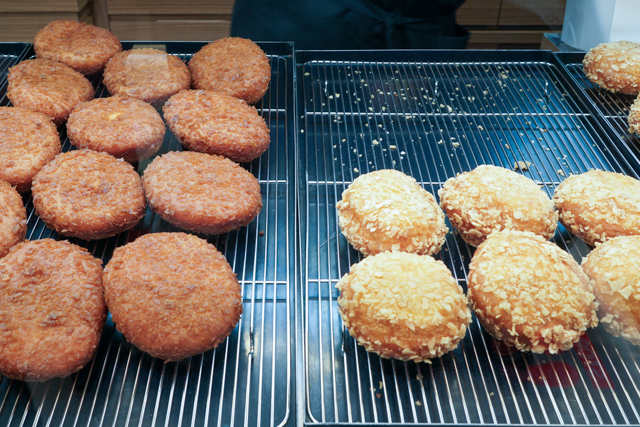
Tōkyō Banana opened its flagship store called Tōkyō Banana’s inside Tōkyō Station in December 2022, with two products available exclusively at the store: the Densetsu Curry Pan (‘Legendary Curry Pan’) and the Amakuchi Cream and Red Bean Doughnut (‘Sweet Red Bean Doughnut’), both of which use banana as the hidden ingredient and made fresh in batches throughout the day.
The bananas used in the curry bread are from Dole’s Mottainai Banana project, which reduces waste by using bananas that have been bruised during the distribution process.
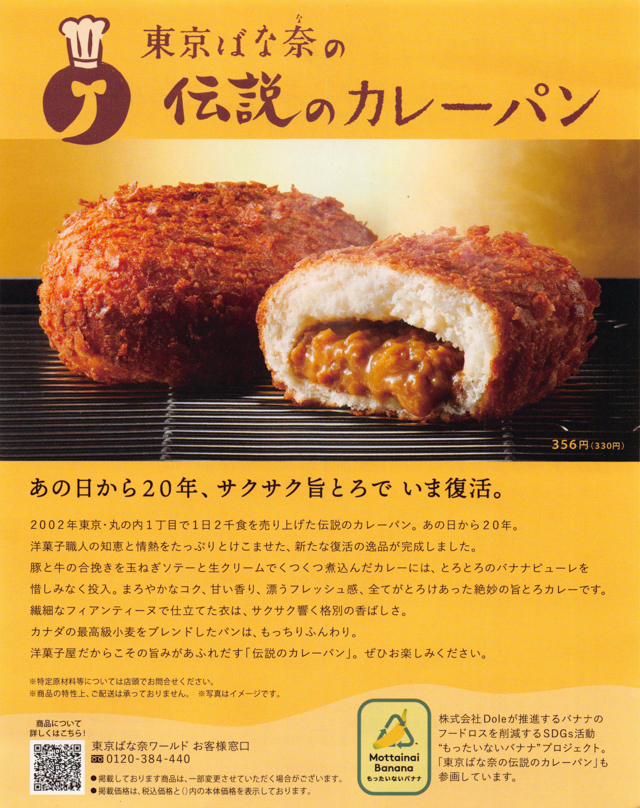
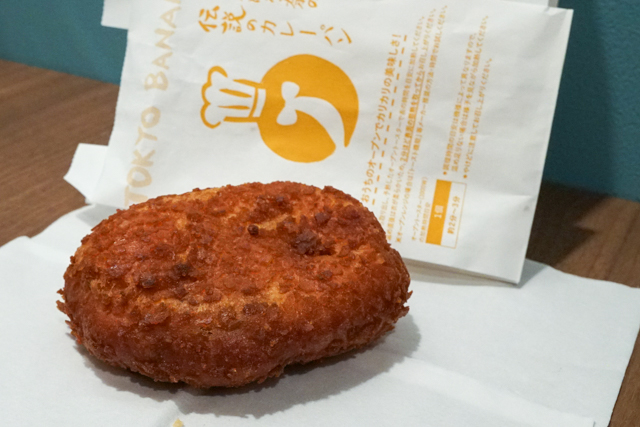
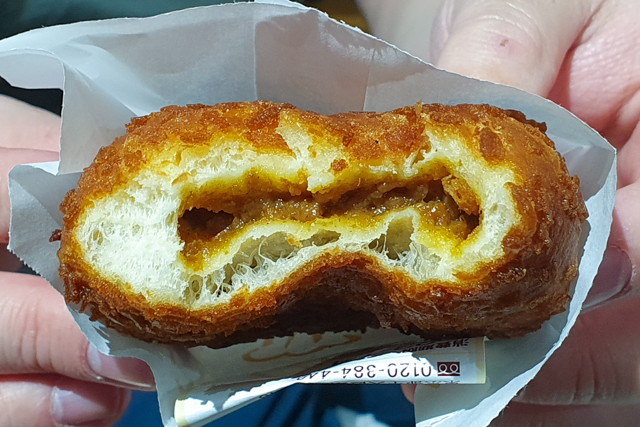
Densetsu no Curry Pan ( ¥356 inc tax). The curry pan was initially released in 2002 for a limited time. The deep-fried bread was made with premium Canadian flour and had a filling of pork and beef simmered with onions, heavy cream and banana purée. Upon tasting, it had a rich and slightly sweet flavour from the banana. We would’ve liked just a touch more meaty bite to the filling.
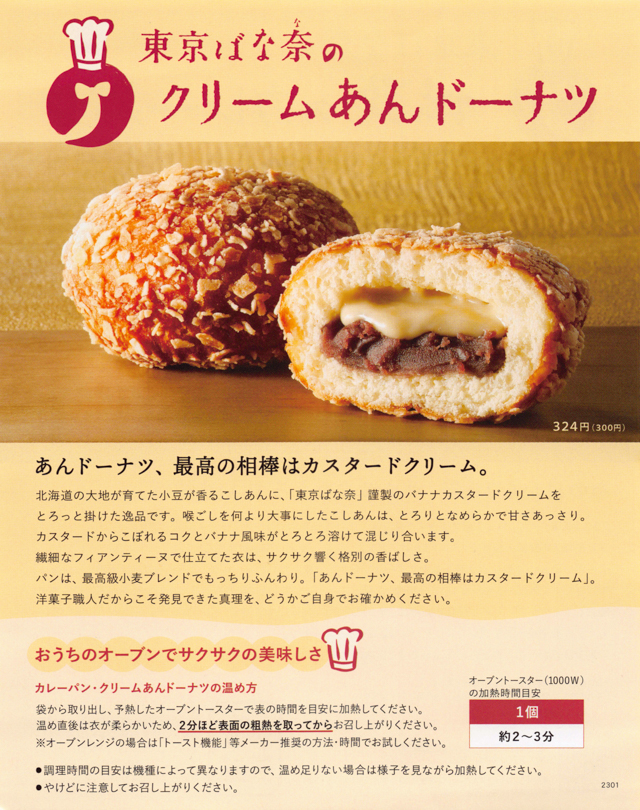
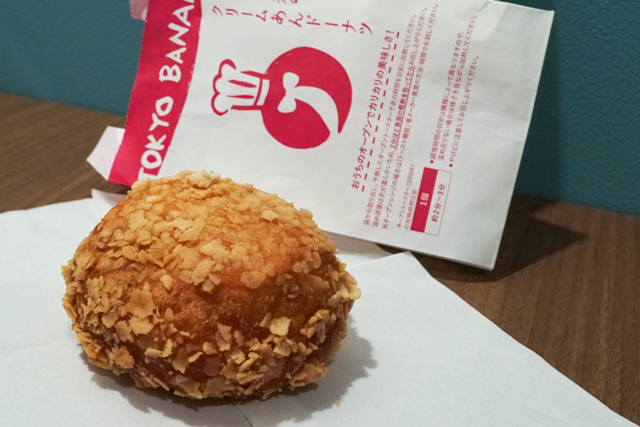
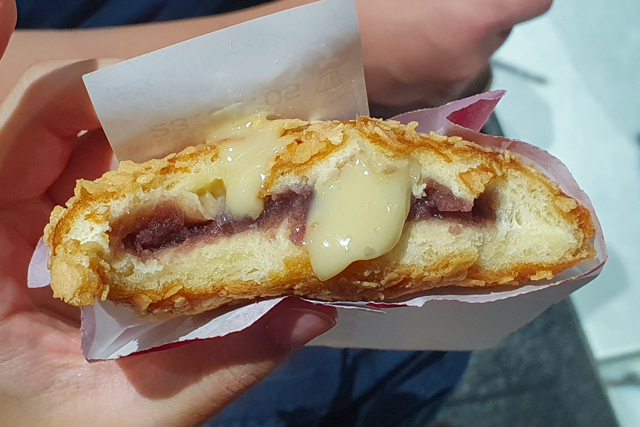
Amakuchi no Cream & Red Bean Doughnut (¥324 inc tax). It had a filling of sweet Hokkaidō red bean paste and Tōkyō Banana’s banana custard cream, inside the same crispy deep-fried bread. The chunky red bean gave us the more substantial bite that was missing in the curry pan. It complemented the gentle, fresh sweetness of the banana custard cream delectably. This was our preferred doughnut of the two.

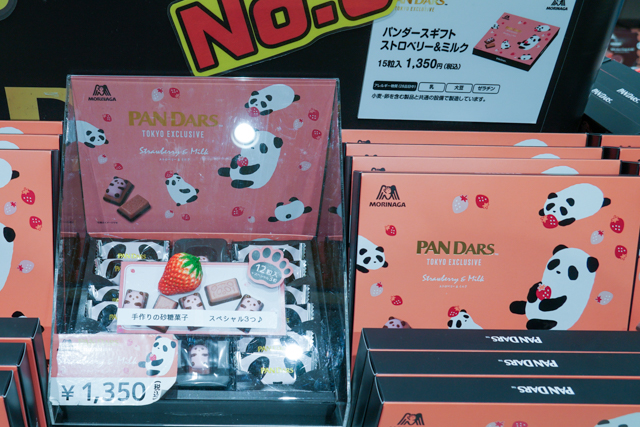
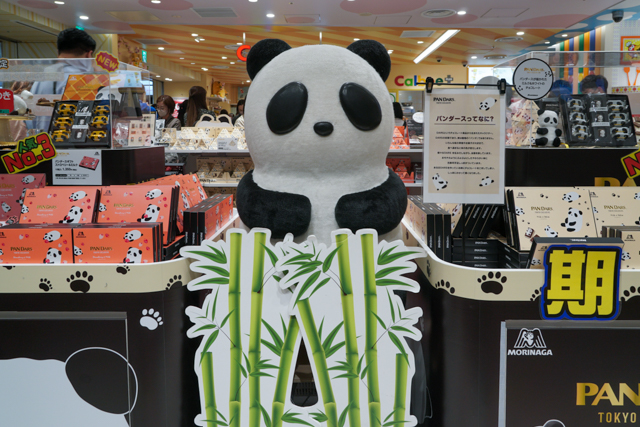
Ikebukuro, Toshima City, Japan
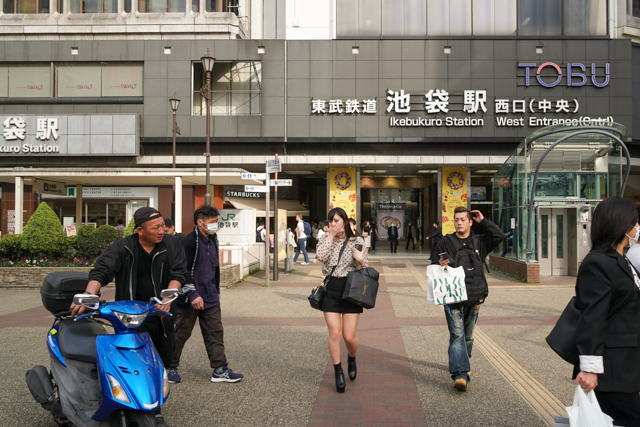
Ikebukuro Station (West Entrance)
1 Chome Minami-Ikebukuro, Toshima City, Tōkyō 171-0022, Japan
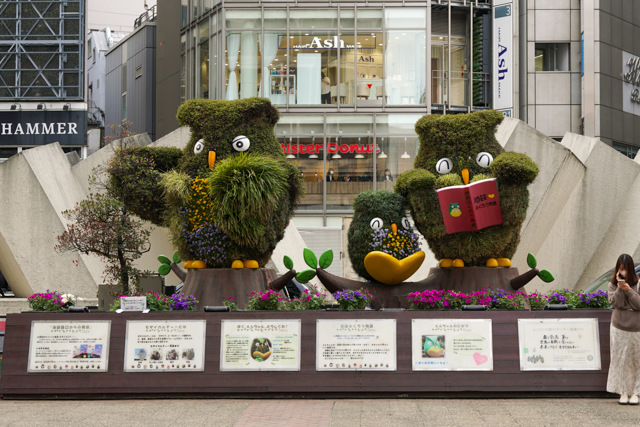
DAISO, Standard Products, THREEPPY
6F TOBU Department Store Ikebukuro, 1 Chome-1-25 Nishi-Ikebukuro, Toshima City, 171-8512 Tōkyō, Japan
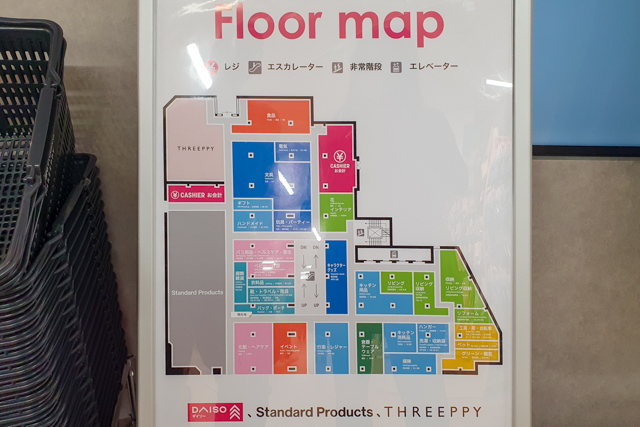
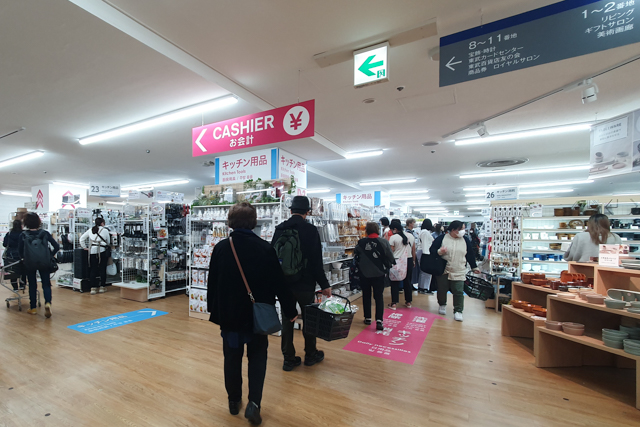
In March 2023, Daiso opened a new flagship 100-yen store in the Ikebukuro Tobu department store. With a few things left to tick off on our shopping list, we headed over to that side of Tōkyō before our flight.
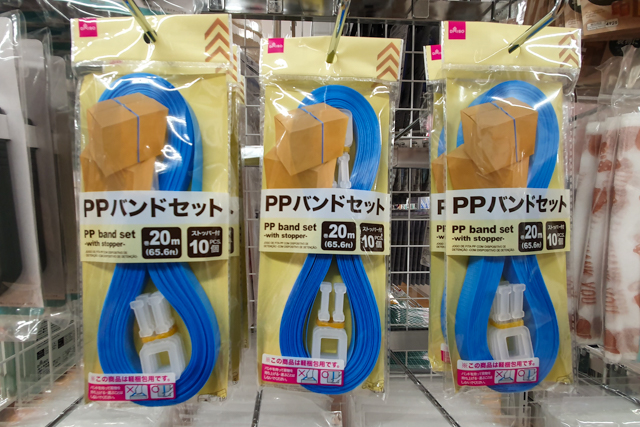
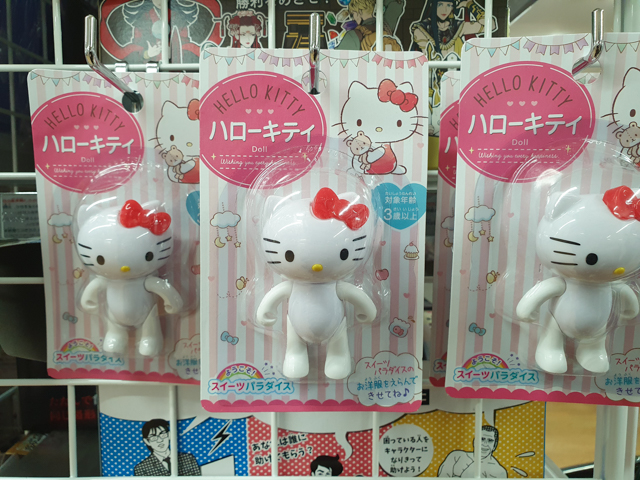
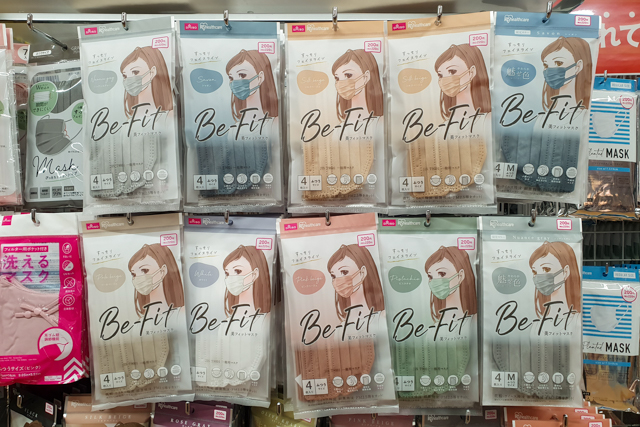
The range was extensive, and we managed to tick almost everything off our list (and then some).

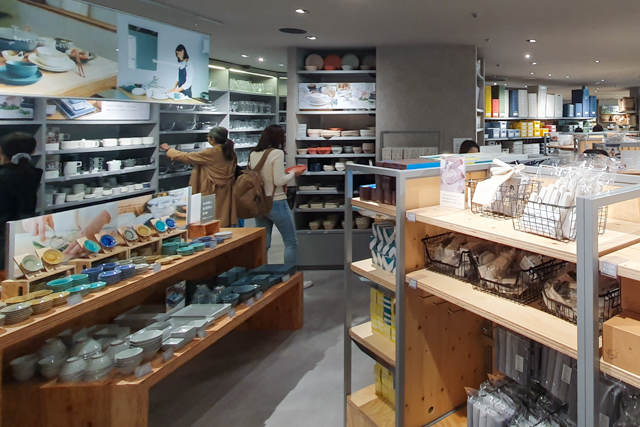
The flagship space included the store’s sub-brands Standard Products and THREEPPY. All three stores shared the same cashier counters.
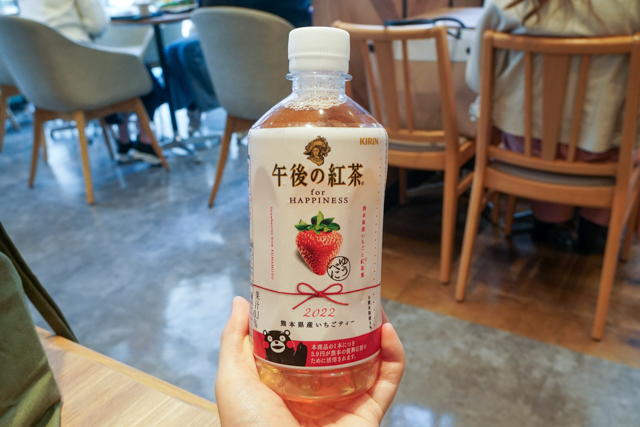
We picked up the Kirin Gogo no Koucha for Happiness Kumamoto Strawberry Tea. Containing 0.1% strawberry juice, it combined black tea from Kumamoto Prefecture with the Yubeni strawberries also from Kumamoto. For every bottle sold, 3.9 yen (‘san kyuu’ or ‘thank you’) was donated to support Kumamoto Prefecture in its reconstruction efforts following the 2016 earthquake. We enjoyed the vibrant strawberry flavour with the elegant sweetness of the strawberries.
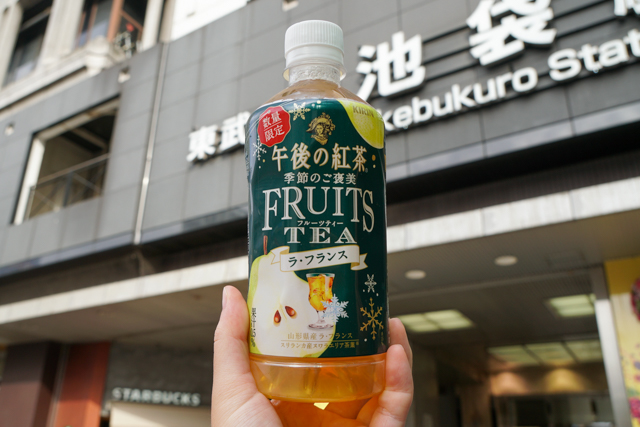
This is the Kirin Gogo no Koucha Fruits Tea La France. It was a winter limited edition flavour that contained 0.5% fruit juice from Yamagata Prefecture’s La France pears. The black tea paired with the pear was Ceylon Nuwara Eliya from Sri Lanka, which is known as the ‘champagne’ of teas. We enjoyed the aromatic fruitiness of the black tea paired with the refined sweetness of the bright pear flavour.
Mister Donut
Mister Donut, 1 Chome-20-1 Nishiikebukuro, Toshima City, Tōkyō 171-0021, Japan
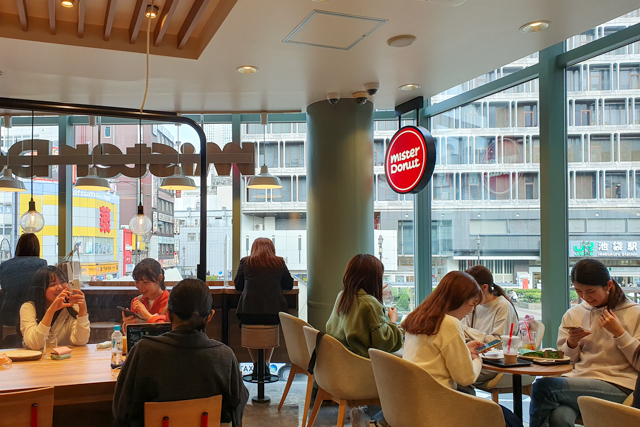
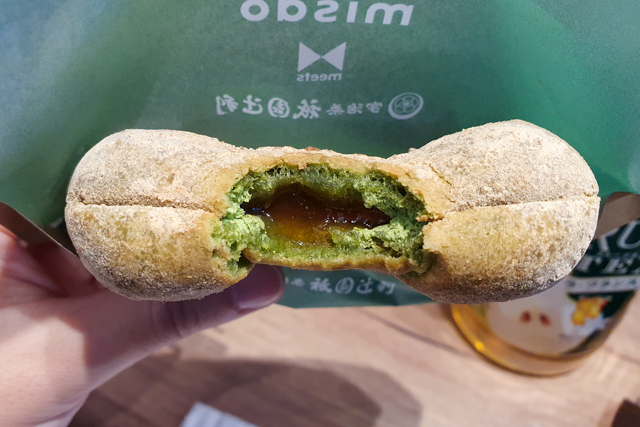
Before heading back, we stopped by Mister Donut for one last doughnut from their collaboration with Kyōto-based tea house Tsujiri. This was our favourite of the five, the Pon de Koi Matcha Whip Warabi Mochi (¥216, takeout). It consisted of a matcha-flavoured pon-de-ring mochi doughnut filled with matcha whipped cream and warabi mochi and dusted in kinako.
Shinbashi, Minato City, Tōkyō
Unatoto
名代 宇奈とと 新橋店, 3 Chome-16-19 Shinbashi, Minato City, Tōkyō 105-0004, Japan
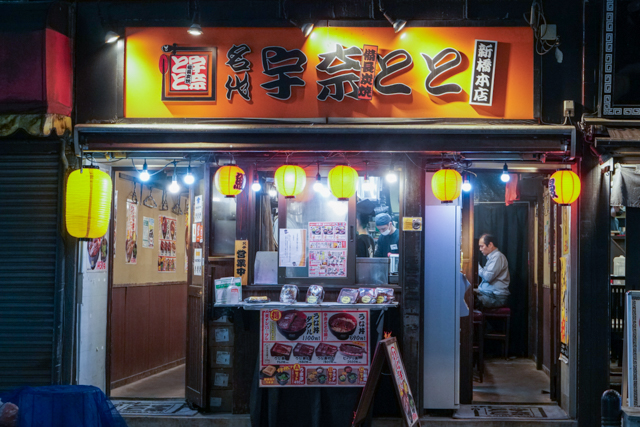
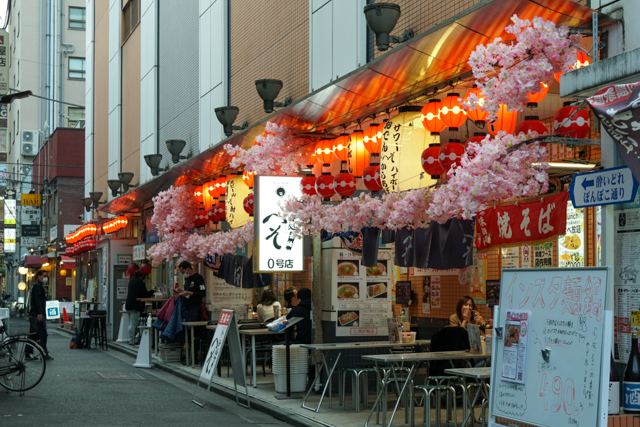
Arriving at Shimbashi Station, we visited Unatoto for the second time this trip to guarantee ourselves a satisfying dinner.
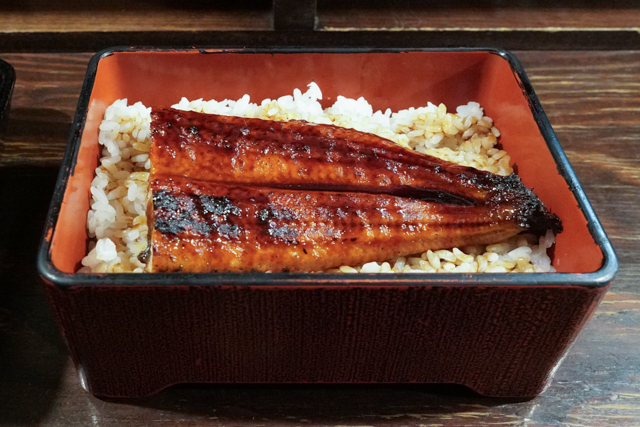
Unagi Bento (¥960 inc tax). This was the regular bento with the tail of the eel.
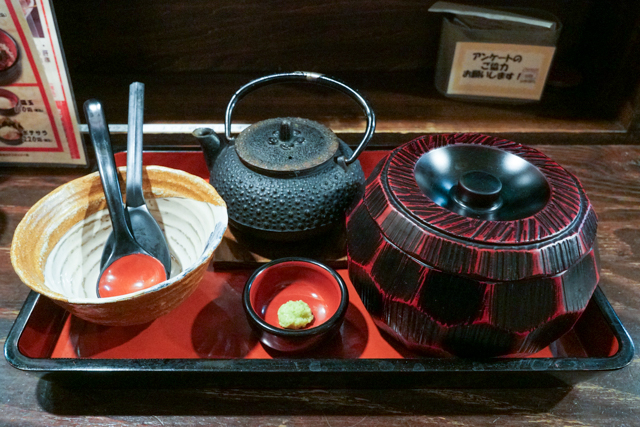
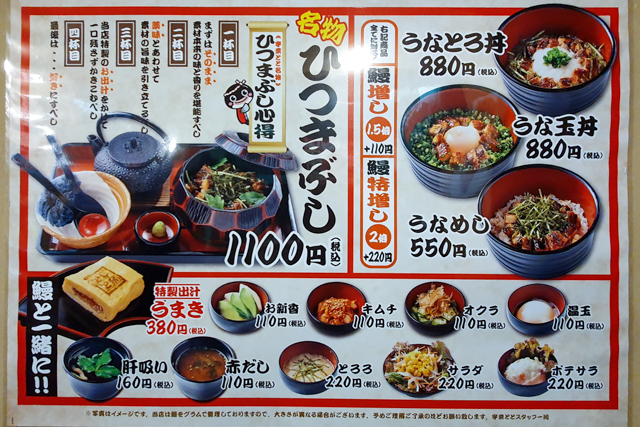
Hitsumabushi (¥1,100 inc tax), or Nagoya-style grilled eel. Unlike the grilled eel sitting atop rice in unadon, histumabushi consists of chopped grilled eel mixed with rice and eaten three ways:
- As it is.
- With condiments (kizami nori and wasahi).
- As ochazuke
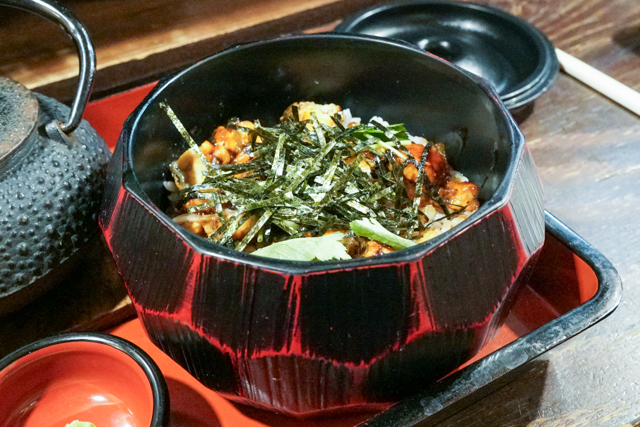
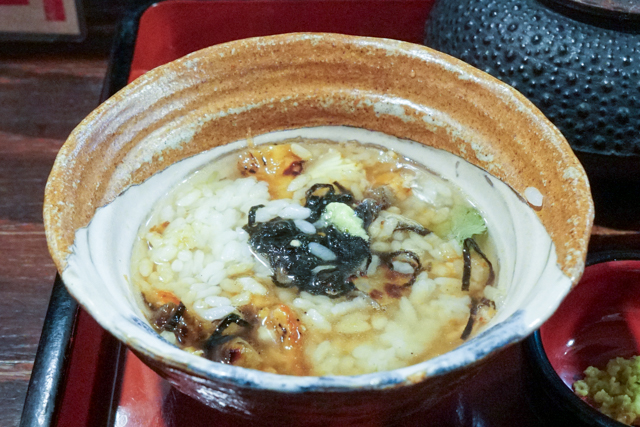
There was no better meal to bookend our trip. We were already fans of the eel, and pairing with the condiments and eating it as ochazuke with the savoury dashi broth was immensely comforting and satisfying.
After dinner, we picked up our luggage from the hotel and made our way to Haneda International Airport.
Haneda International Airport
東京国際空港, Ōta City, Tōkyō 144-0041, Japan
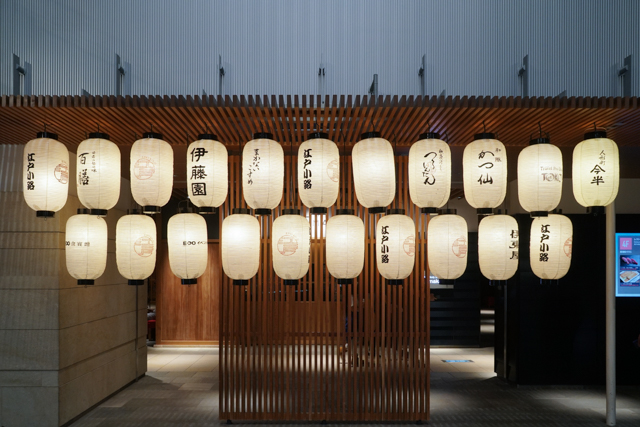
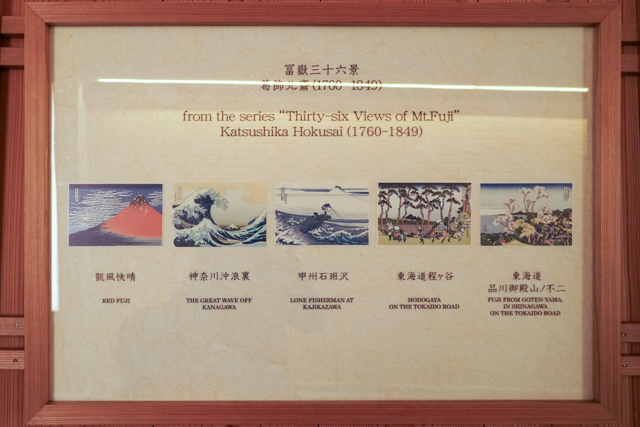
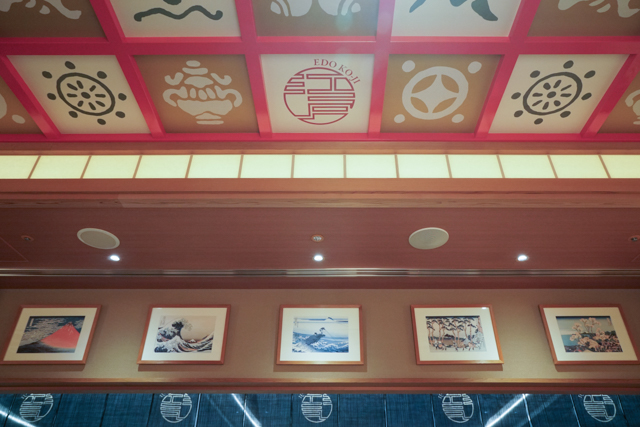
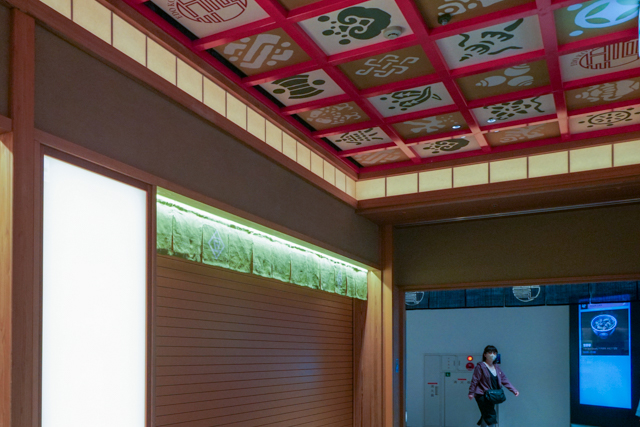
Our decision to have dinner before heading to the airport paid off because almost all the restaurants either closed early or remained closed as tourism in Japan had yet to return to full capacity in April 2023.
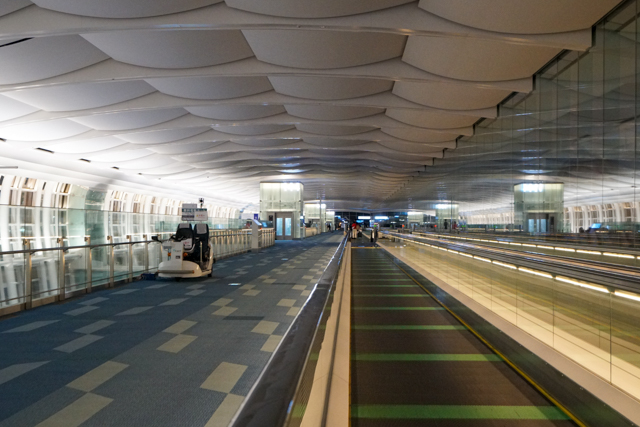

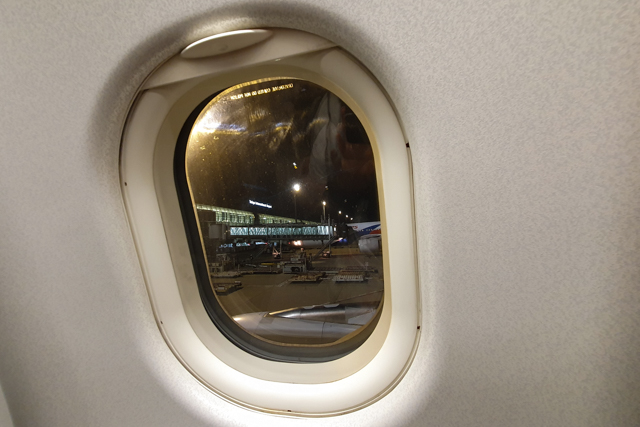

We taxied past a plane in Star Wars livery.
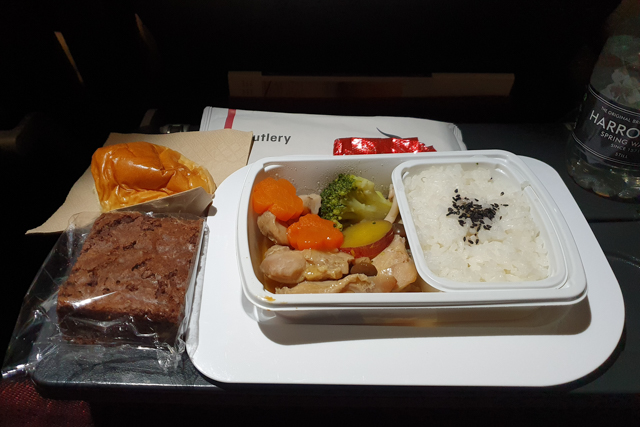
For dinner, we had ‘grilled chicken with shimeji mushrooms, broccoli, plum sauce and steamed rice with black sesame’. We enjoyed the hot food, but gave the warm bread roll and chocolate brownie a pass.
Bananas were offered mid-flight.
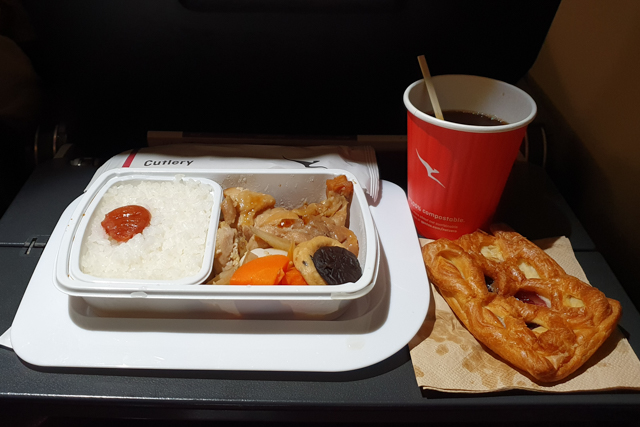
For breakfast, we had ‘teriyaki chicken with Japanese egg, tofu, shiitake mushroom, teriyaki sauce and steamed rice with pickle’. Again, we enjoyed the hot food but passed on the limp blueberry danish.
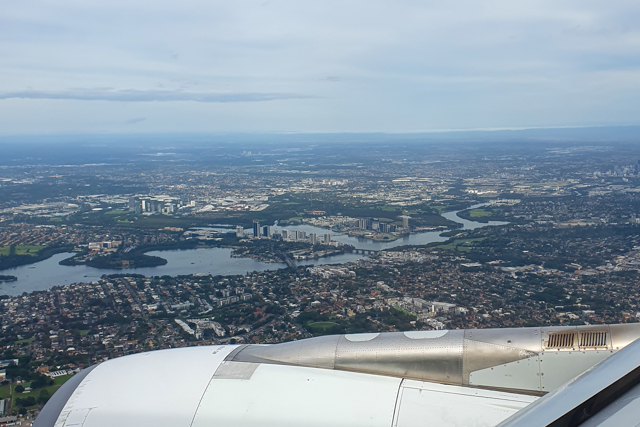
With that, we were back in Sydney.
Final thoughts on Japan 2023
On this sixth trip to Japan, we ticked off a dream to view the cherry blossoms during mankai as well as our 26th prefecture (Wakayama). We’ve yet to tire of visiting Japan, returning from every trip confident that we will be back to explore a new region as well as revisit old favourites. This trip was no exception.
Tōkyō – TeamLabPlanets & Ikebukuro was Day 8 of the Japan 2023 trip.