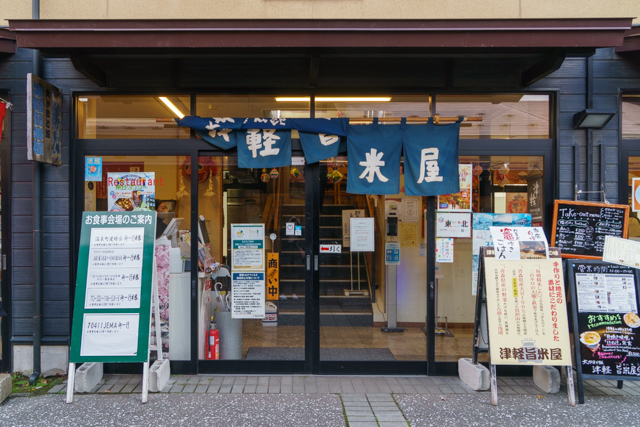
Tsugaru Umaiya is a restaurant dedicated to preserving Tsugaru Food Heritage—traditional home-style dishes that have sustained locals in their daily lives.
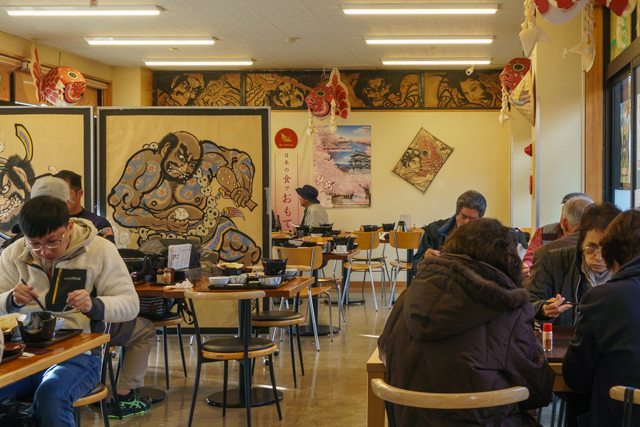
In December 2008, Tsugaru Umaiya was selected as one of 34 establishments in Aomori Prefecture to be officially recognised as a Tsugaru Food Heritage Traditional Shop. The menu features a range of heritage dishes, carefully prepared and paired with the fundamentals of Japanese cuisine: miso soup, rice, and pickled vegetables.
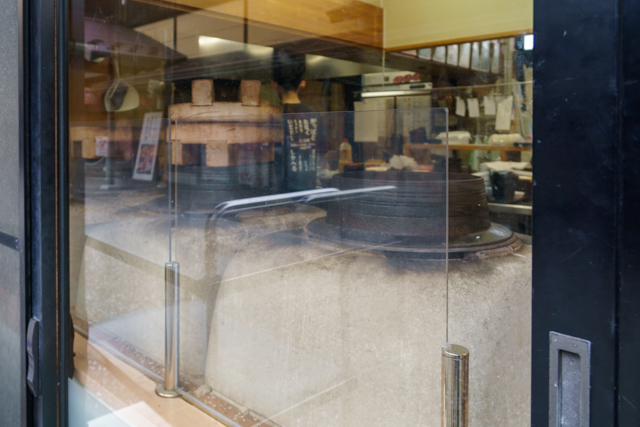
Each of their kamado (traditional rice cookers) can prepare up to 200 kg of Tsugaru Roman rice, a variety developed in Aomori Prefecture known for its delicate flavour.
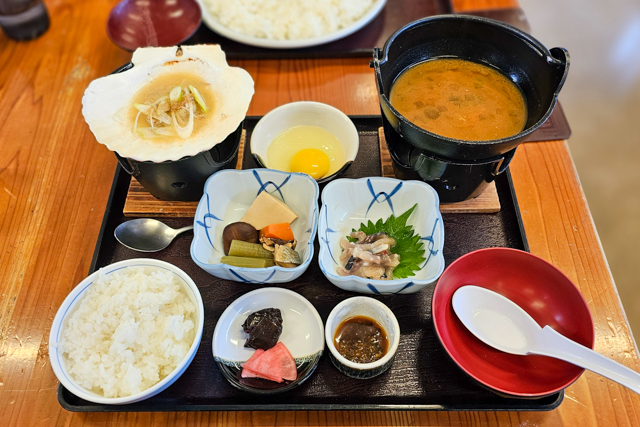
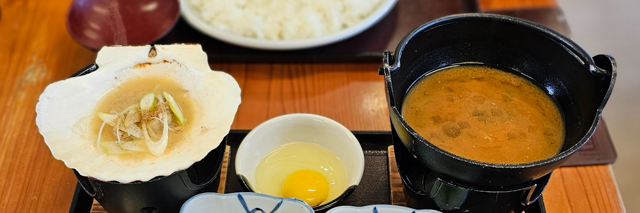
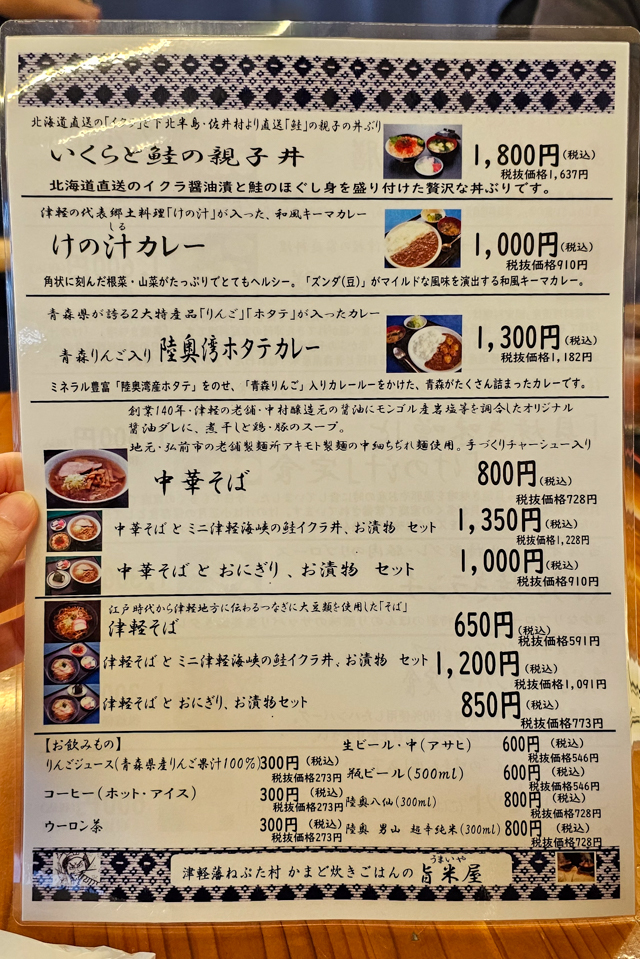
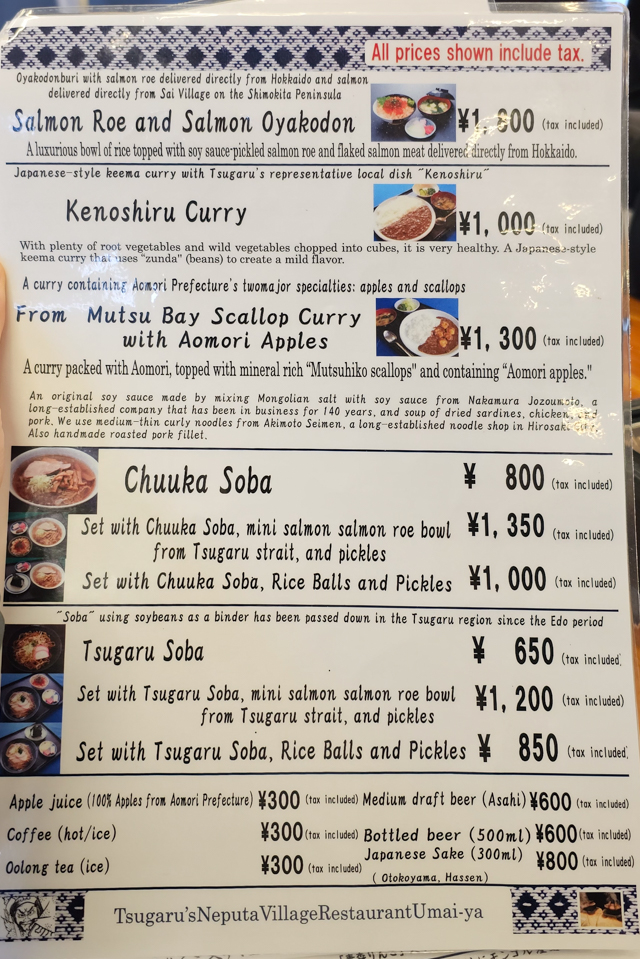
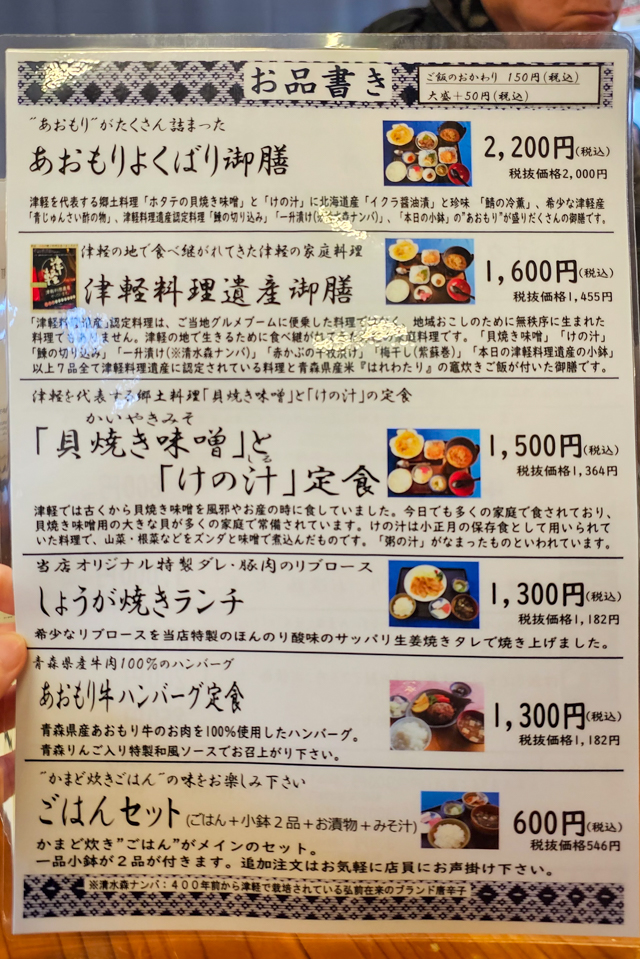
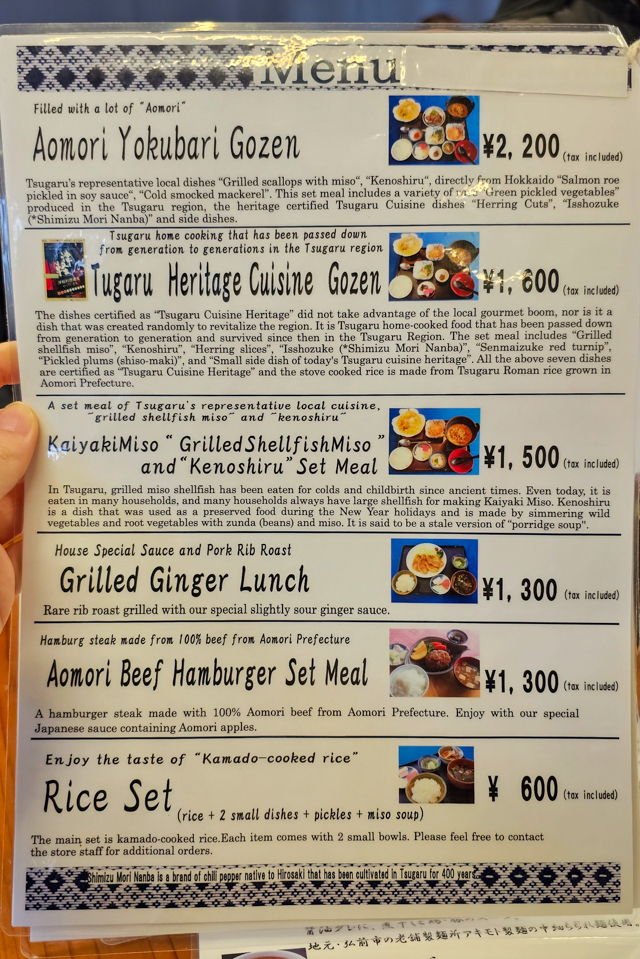
Tsugaru Heritage Cuisine Gozen (¥1,600)
This set meal included miso kaiyaki, kenoshiru, local seasonal vegetables, nishin zuke, isshozuke (featuring shimizu mori nanba), shiso maki, and akakabu zuke. All seven dishes are certified as part of Tsugaru Cuisine Heritage. The rice was prepared using Tsugaru Roman rice, a leading Aomori-developed variety.
-
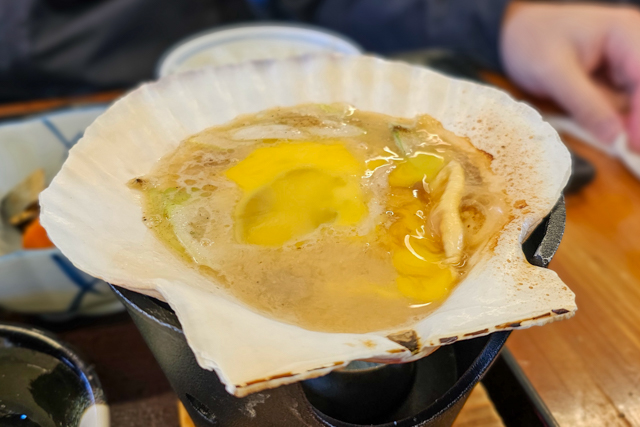
Miso Kaiyaki – The scallop broth was rich in umami, deeply infused with seafood flavour. Whisked egg was poured over the scallop, forming a savoury, scrambled texture that paired well with rice.
-
Kenoshiru – The finely chopped cubes of boiled mountain vegetables (warabi, zenmai, fuki, carrots and daikon) were fresh and full of flavour, complemented by a savoury miso base and dried tofu.
-
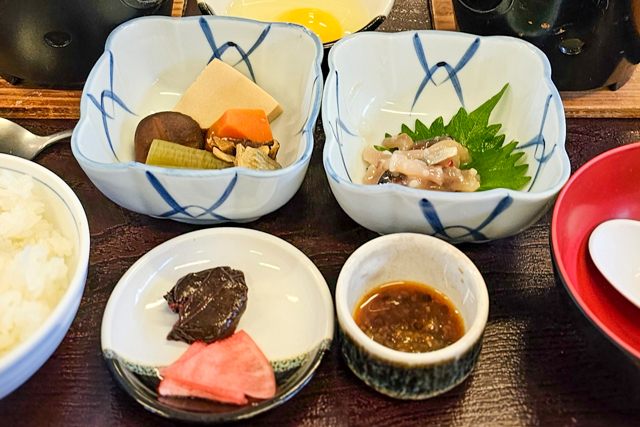
Steamed Local Seasonal Vegetables – Included maitake mushrooms, carrots, tofu, green stems, and a small portion of fish. Each ingredient retained its natural flavour.
-
Nishin Zuke – Herring pickled in koji malt and salt. The fish had a clean, distinctive flavour, refined without being overly strong. A hint of chilli provided a gentle warmth, making it a fitting preserved food for Tōhoku’s long winters.
-
Shiso Maki (Umeboshi) – The umeboshi inside contributed a pronounced sweet acidity, while the shiso leaf added a subtle herbal depth, making it a refreshing palate cleanser.
-
Akakabu Zuke – Thin slices of red turnip pickled in sweet vinegar. These had a delicate crunch and a mild sweetness.
-
Isshozuke – Made by fermenting shimizu mori banba, a chilli pepper native to the Shimizu Mori district of Hirosaki City, with soy sauce. The resulting condiment had a deep umami flavour with a balanced level of warmth and spice.
This set offered a well-curated spread of traditional Tsugaru cuisine, presenting a variety of textures and flavours at a very reasonable price.
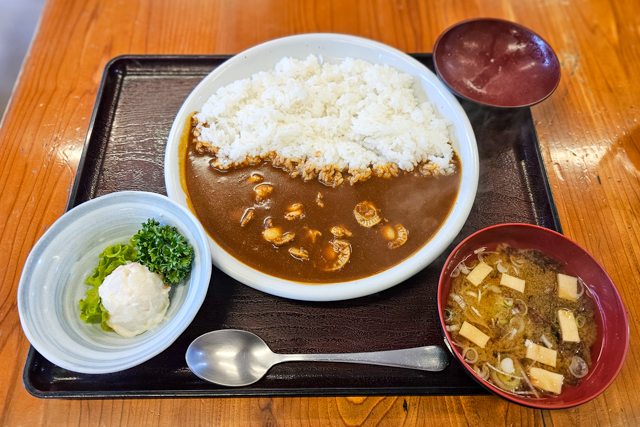
Mutsu Bay Scallop Curry with Aomori Apples (¥1,300)
This curry highlighted two of Aomori Prefecture’s major specialties: apples and scallops from Mutsu Bay. The scallops were soft and tender, completely free of grit. The curry had a distinct apple presence, most noticeable in the finish, and was well-spiced with a mild heat. Compared to the apple curry from Taishō Roman Tea Room, this version had better depth of flavour.
The accompanying potato salad provided a cool, chunky sweetness that contrasted with the warmth of the curry. The miso soup was made with miso fermented using the stable heat of hot springs, using soybeans sourced from Aomori Prefecture. Its broth was made solely from Oma kelp and dried shark from Aomori, resulting in a deeply umami-rich base. The Tsugaru Roman rice retained its distinct grains, making it an ideal pairing for the curry.
Tsugaru Umaiya delivered an excellent showcase of Tsugaru’s culinary heritage, with each dish offering a well-balanced representation of regional flavours. The carefully prepared rice and umami-forward accompaniments highlighted the depth of traditional Aomori cuisine. The affordability of these set meals, given their quality and variety, made the experience even more impressive.
Tsugaru Umaiya is located in Tsugaru-han Neputa-mura Village, Kamenoko-cho 61, Hirosaki City, Aomori Prefecture 036-8332, Japan.