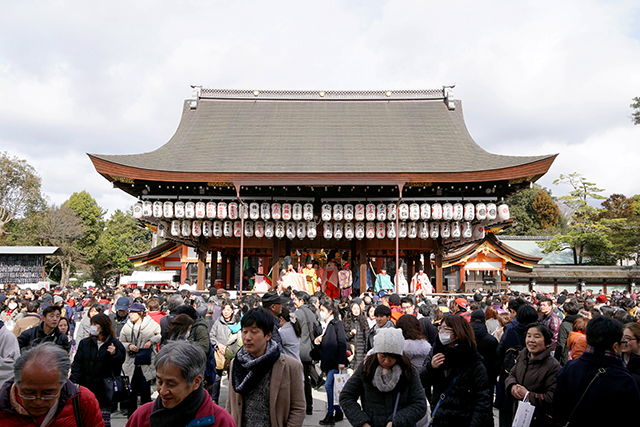
Setsubun is the day before the beginning of spring in Japan and a cause for celebration on 3 February every year. There are celebrations all around the country, but we choose to make a trip to central Kyōto to experience mamemaki, the special been scattering ritual associated with setsubun.
Ōsaka – Nakanoshima
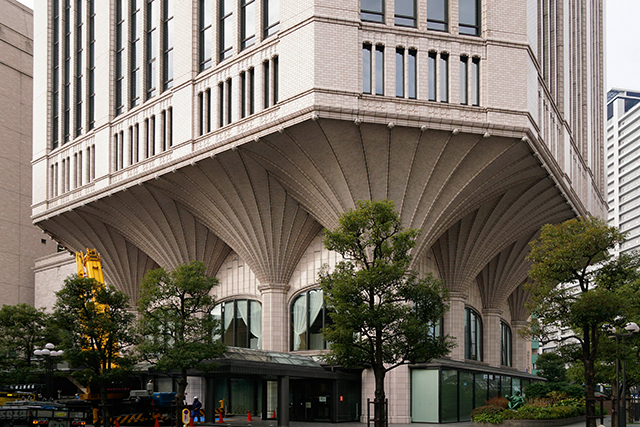
Opposite our hotel is the Daido Life Insurance Head Office with its vaulted roof.
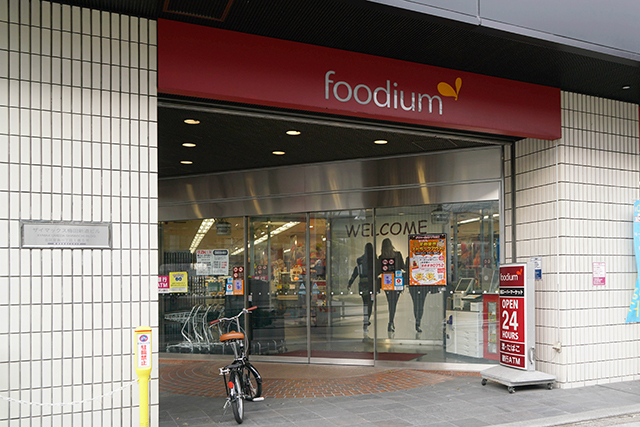
Enroute to the train station we visit Foodium, a supermarket, to pick up some drinks and snacks.
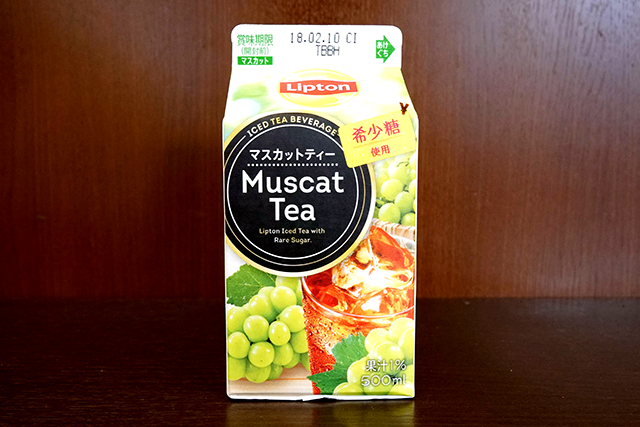
This is the Lipton Muscat Tea, a limited edition for winter. It tastes much like grape candy with a hint of bitterness from the black tea.
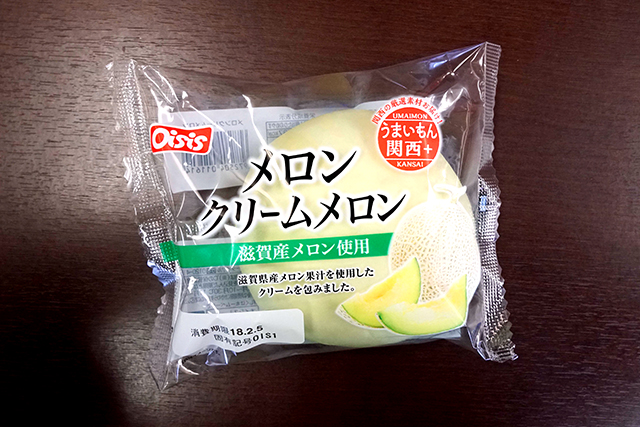
And I pick up a melon cream bun for later. D’s still not feeling well, so we weren’t anticipating proper meals during the day.
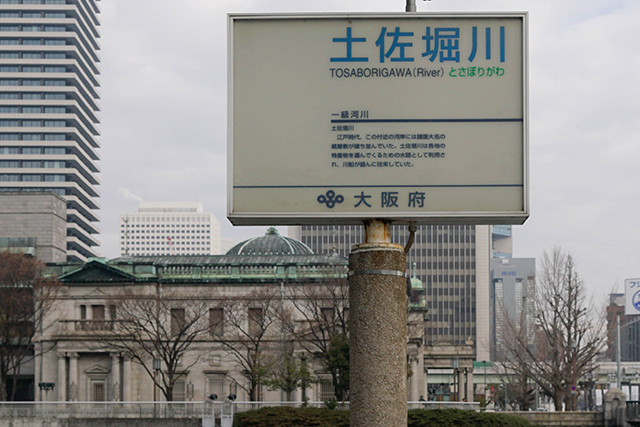
A short walk from the supermarket is Tosaborigawa.
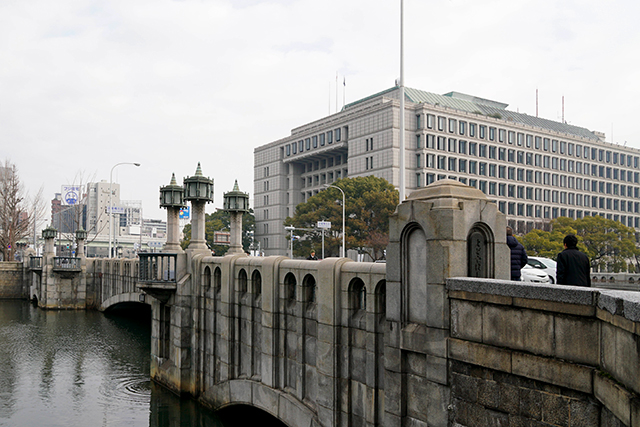
We walk across the bridge enroute to the train station on Nakanoshima.
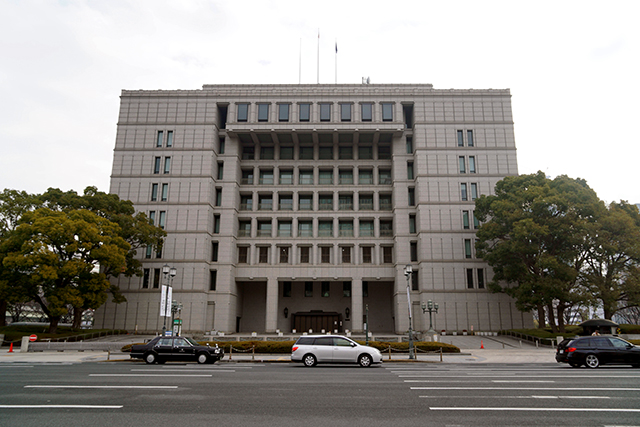
This is City Hall on Nakanoshima.
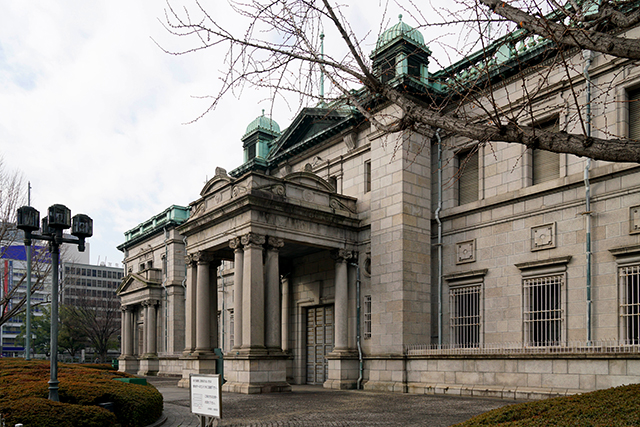
Opposite is the Ōsaka branch of the Bank of Japan.
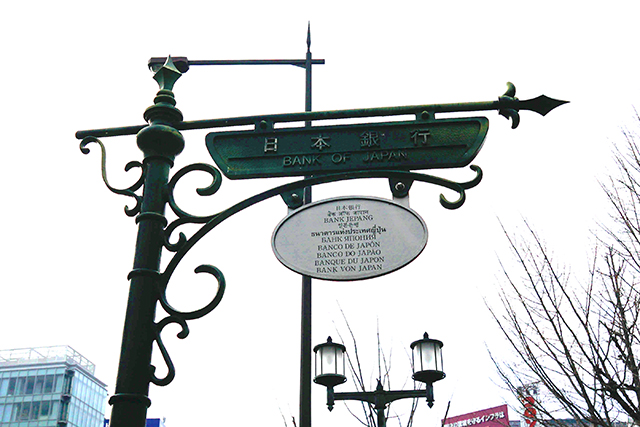
There’s a sign designating it as such in ten languages.
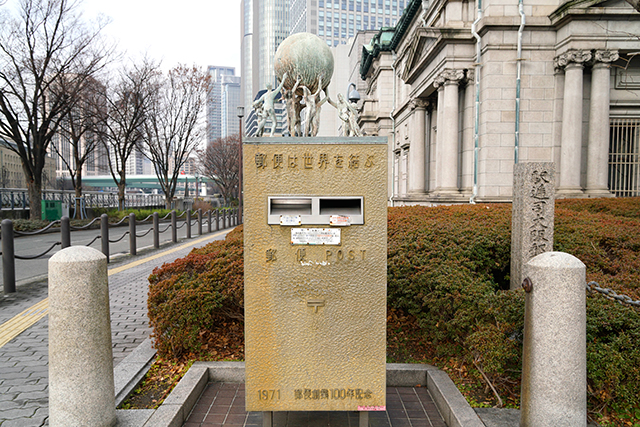
The Bank of Japan has its own specially designed post box outside.
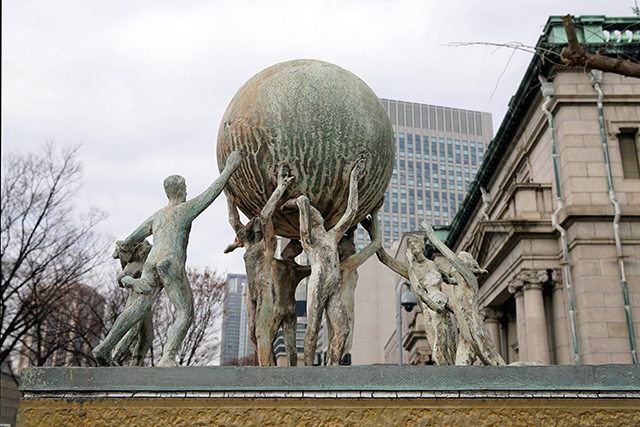
It’s a group of people, male and female, young and old, lifting up the world.
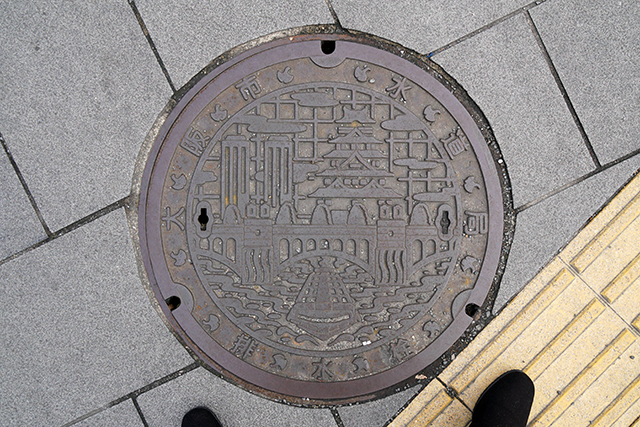
Nakanoshima has its own manhole covers depicting the river, the bridge, the twin Nakanoshima Festival Towers and Ōsaka Castle that are nearby.
Kyōto – Gion
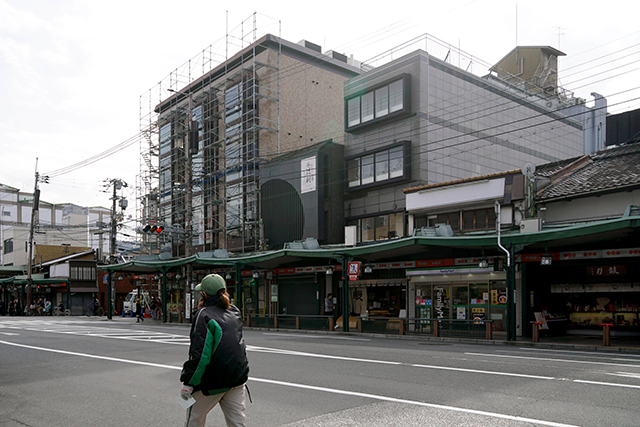
After our first trip to Kyōto in 2011 where we’d templed ourselves out with all the main pilgrimages, we’ve always visited Kyōto as day trips from Ōsaka rather than staying in the city. The main reason is that we’re no longer interested in the temples in Kyōto, which typically requires lengthier stays in the city, but also because we’re not fans of moving our luggage when downtown Kyōto is a mere ¥400 and 40-minute train ride from Ōsaka (Temmbashi in Ōsaka to Gion Shijo in Kyōto) where there are more affordable accommodation and food options.
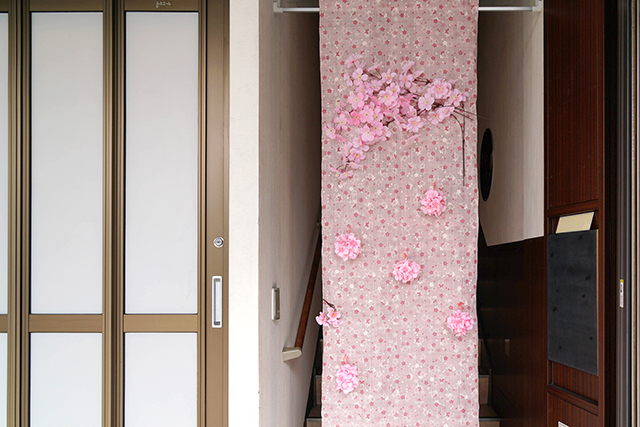
February marks the start of plum blossom season. We see this pretty noren panel along Shijo Avenue near Gion.
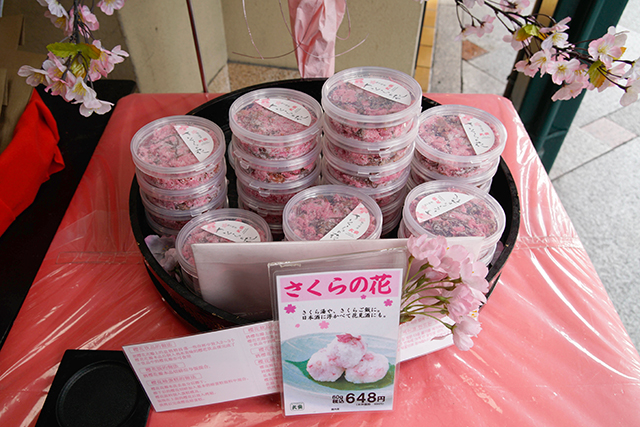
The shop is selling tubs of plum blossoms preserved in salt.
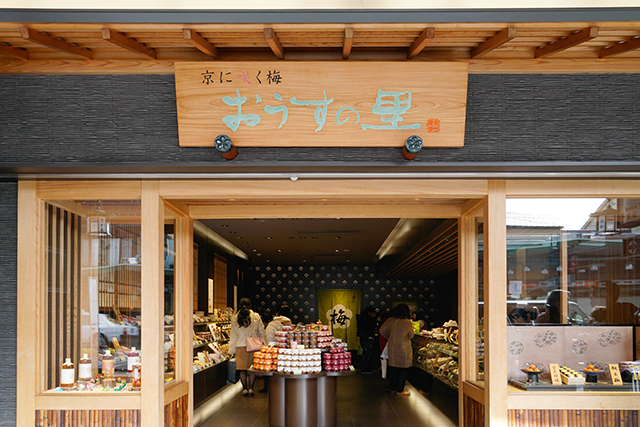
Ousu no Sato, a specialty store for all things plum.
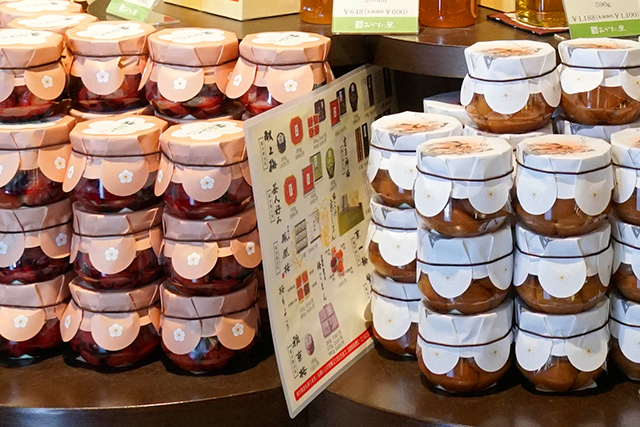
We see jars of umeboshi. The shopkeeper encourages me to try a few types, and I’m surprised that the ones preserved in honey are rather palatable despite my general dislike for them.
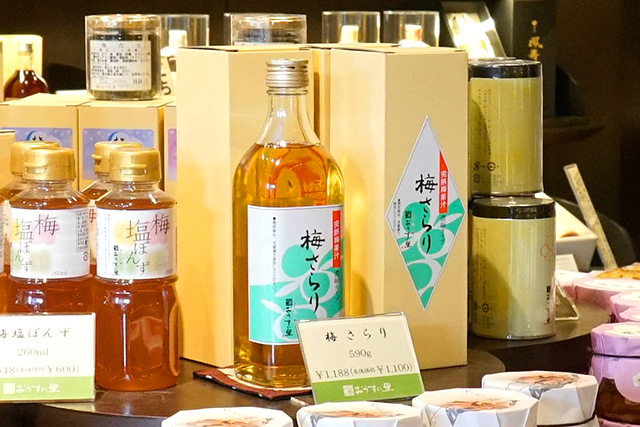
We’re enticed by samples of plum juice concentrate (1:4) and end up bringing one home with us.
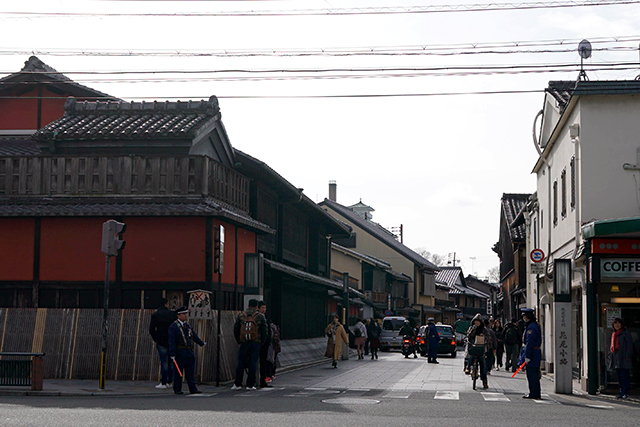
The police are already guiding traffic through the Gion district.
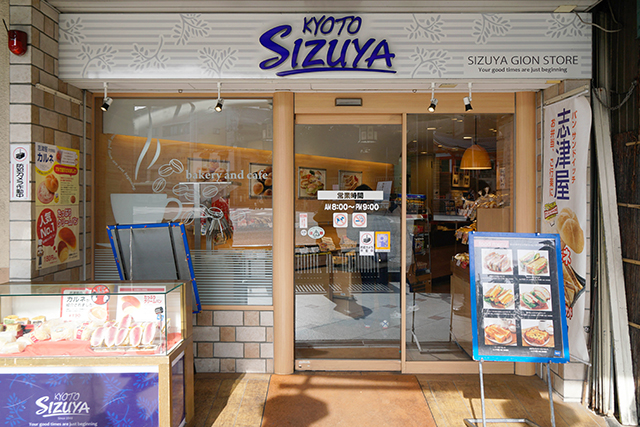
Near the intersection outside Yasaka Shrine, we pop into Kyōto Sizuya for a quick squiz.
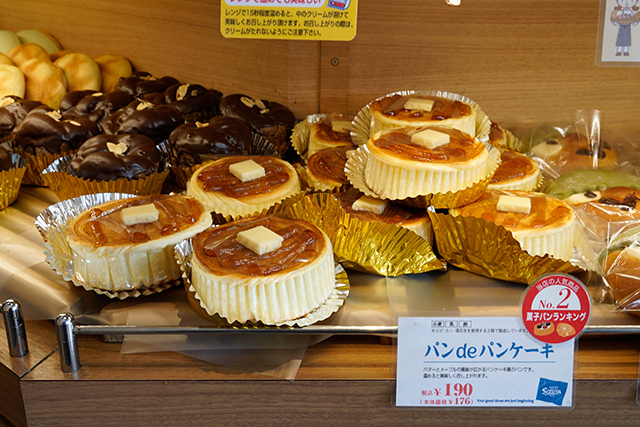
Nothing really catches our fancy for breakfast, but these pan de pancake with knobs of butter look decadent.
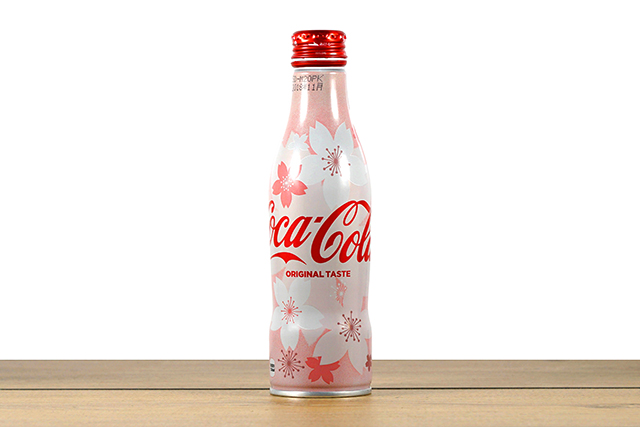
We pick up a Kyōto limited bottle of Coca-Cola before heading to the shrine.
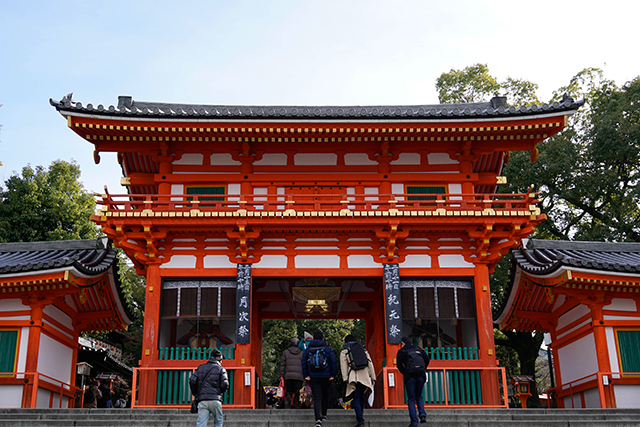
…and this is looking up at the main gate.
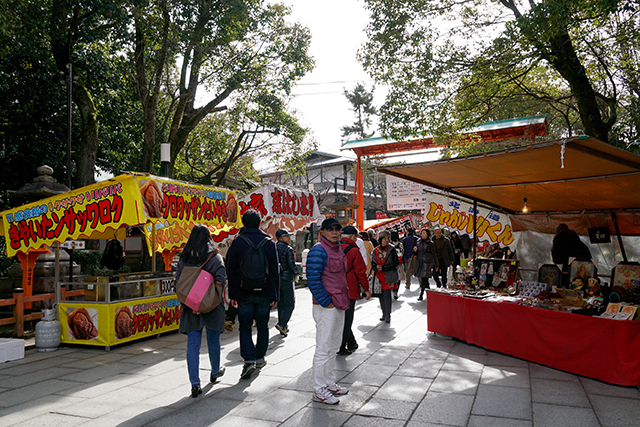
Being setsubun there are food stalls set up selling all kinds of street food…
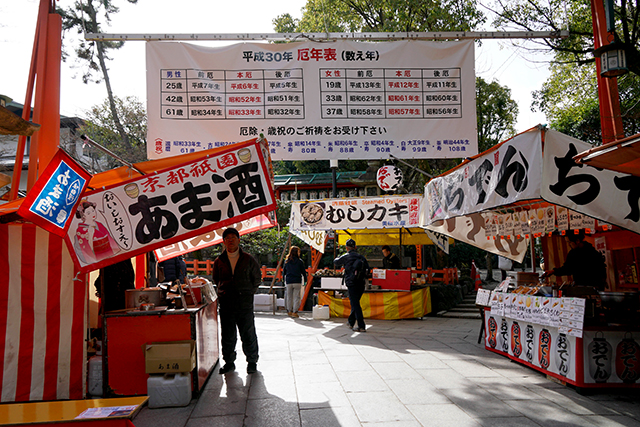
…including oden, mushikaki and amazake.
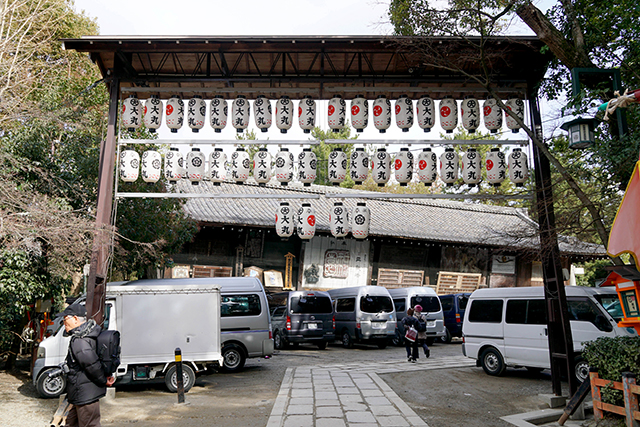
The owners of the food stalls have their vans parked in a designated area behind a gate with numerous lanterns.
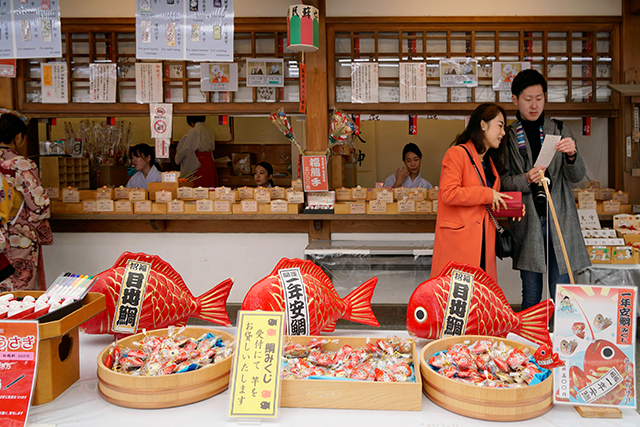
A walk further into the temple grounds, we spot numerous people buying fortunes. A sign explains:
Since long ago, the 2nd and 3rd days of February have been called ‘Setsubun’ and the ‘mamemaki’ (bean scattering) ritual has been performed to drive away the ogres that bring misfortune.
The beans are said to elimiante misfortune and bring happiness.
Prayers have been offered to the Japanese deities that these beans will eliminate mistortune and bring happiness and they also come with a lottery that has a free gift for all participants.
The beans are 300 yen per bag and we hope that you will eat them and live in happiness.
Use the lottery ticket with the beans to take one triangle lottery ticket. Show the number inside your triangle lottery ticket to the staff at the gift stand to claim your prize.
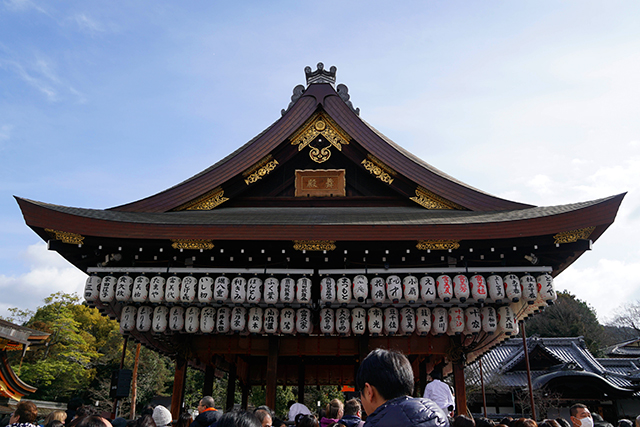
This is the central stage where all the festivities take place.
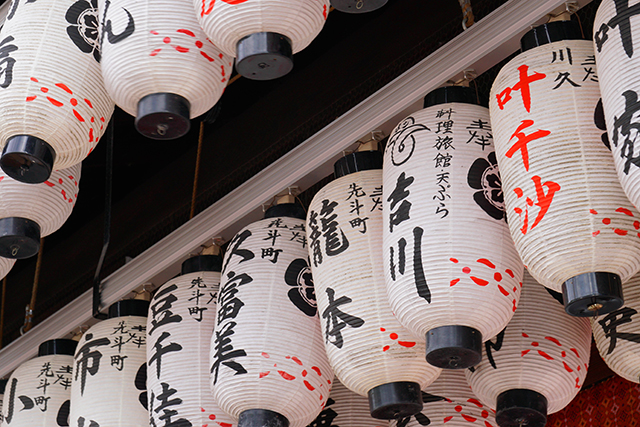
A double row of lanterns hangs from the ceiling on each side.
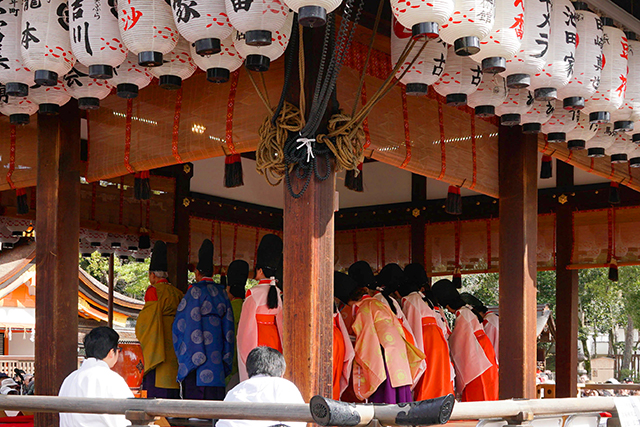
We arrive in time for the 11 am imayo performance. Whereas the other 4 performances during setsubun feature dances by maiko from each geisha district in Kyōto, this performance featured shirabyoshi. The performance begins with prayers for health and happiness.
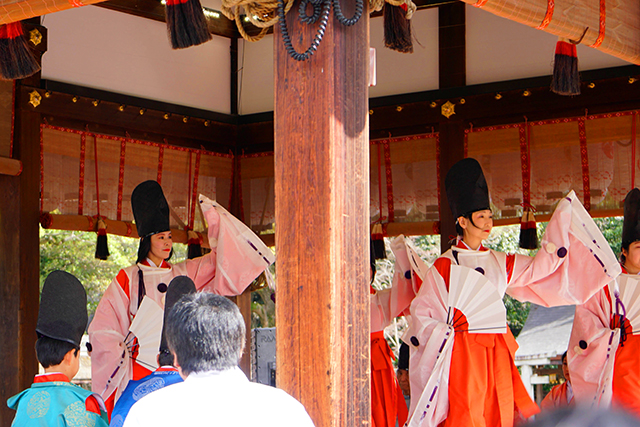
Shirabyoshi are females dancers who performed traditional Japanese dances most popularly in the Japanese Imperial Court during the 12th century. The music to which shirabyoshi perform is called imayo, which are poems using ‘images of nature to convey meanings of circumstances in their lives’, here, for health and happiness.
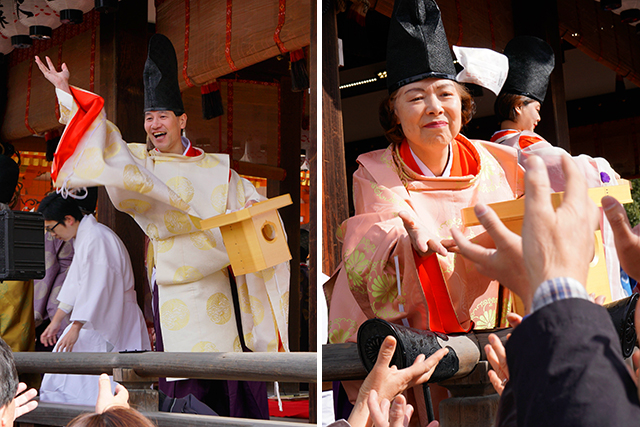
After the performance, the custom of mamemaki takes place. Bags of roasted soybeans, much like those available for sale at the shop, are thrown into the crowd, while chanting ‘Oni wa soto! Fuku wa uchi!’, or ‘Demons out! Luck in!’.
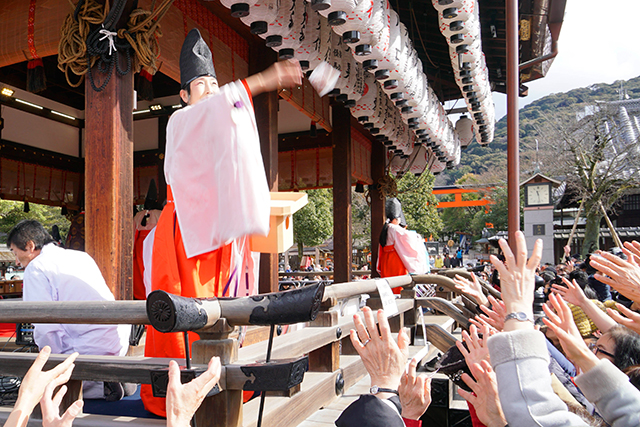
The beans are thought to drive away the evil spirits that bring misfortune and bad health with them. Then, as part of bringing luck in, the eat roasted soybeans are eaten, one for each year of one’s life, and in some areas, one for each year of one’s life plus one more for bringing good luck for the year to come.
With the performance at an end, we make our way towards Ninenzaka for a one of a kind Starbucks experience.
Kyōto – Higashiyama
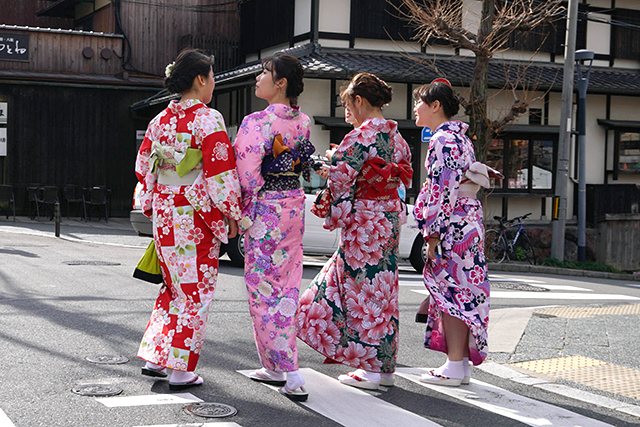
Many girls dress up in kimono for Setsubun. We pass by these four near a crossing on Shimogawara-dori.
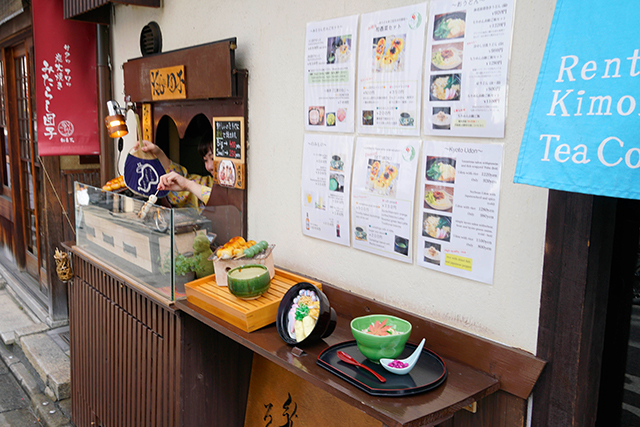
A lady is selling dango out of a hole in the hole.
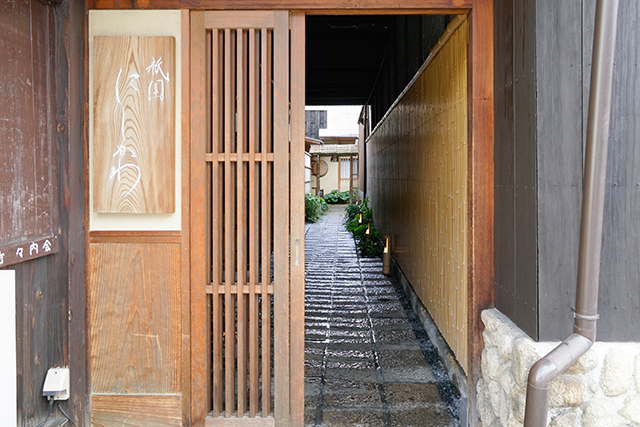
The wooden fronts of many Japanese residences are charming.
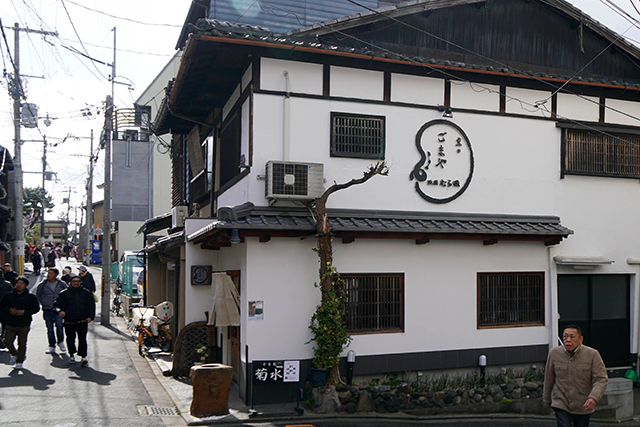
This store sells beans, but it’s doors are closed so everyone passes it by.
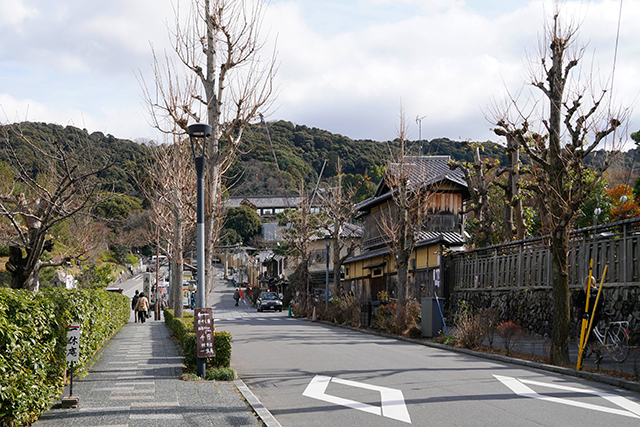
The mountainous backdrop to the wooden houses makes for a picturesque scene.
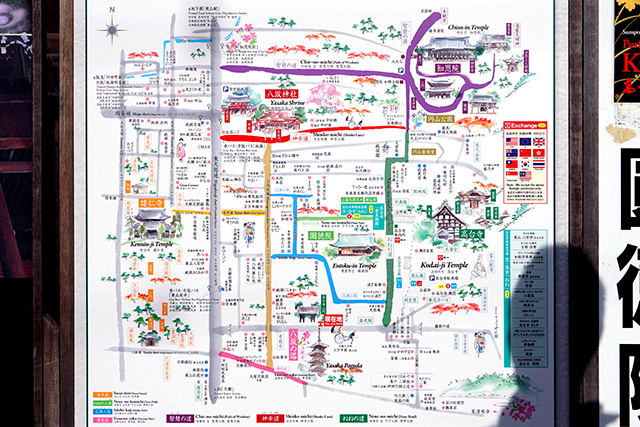
On the side of the road is a beautifully illustrated map.
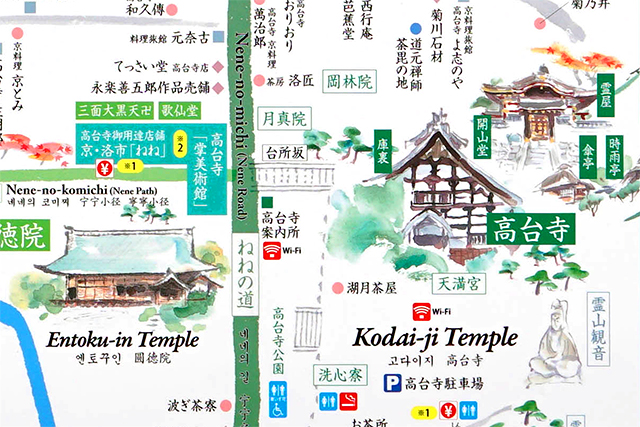
Each section is colour coded and illustrated with watercolour drawings.
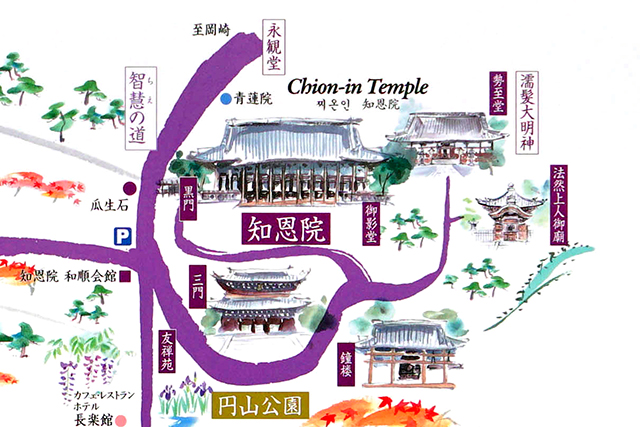
The illustrations of the trees even give an indication of where to view momoji or autumnal foliage…
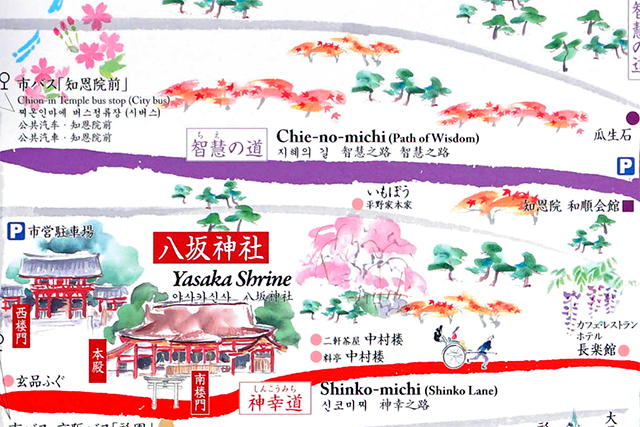
…as well as cherry blossoms.
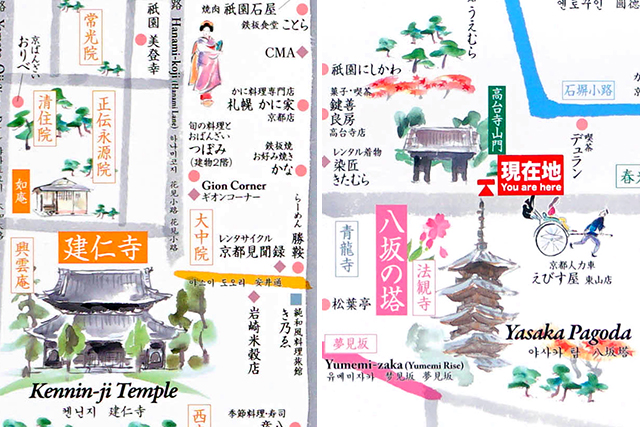
And of course, as with any useful map, it tells you where you are currently. The map is in Japanese, English, Korean and Chinese.
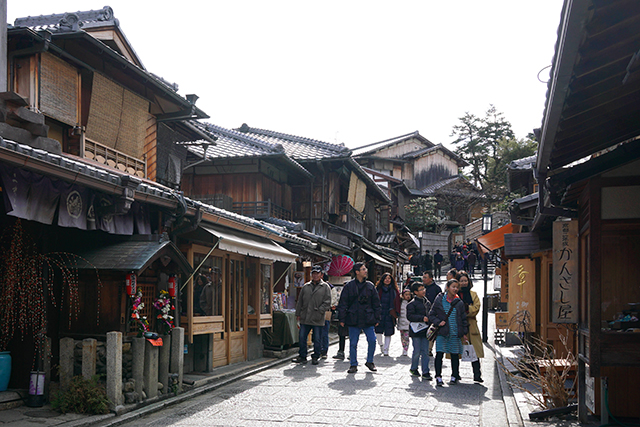
Before long, we arrive at Ninenzaka, an attractive street that keeps the atmosphere of traditional old Kyōto.
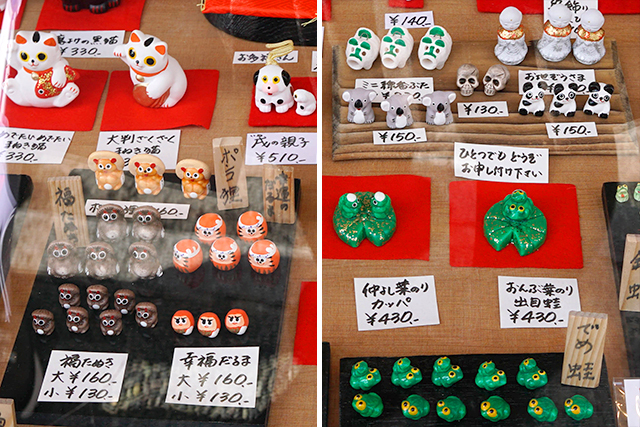
We pass by a shop selling ceramic ornaments of daruma, tanuki and frogs, as well as koalas!
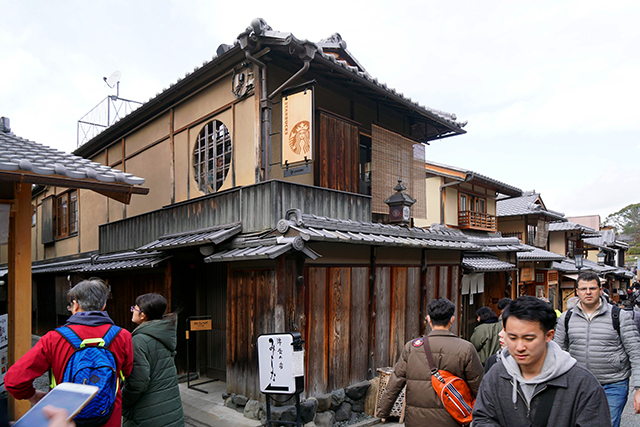
But this, Starbucks on Ninenzaka is the reason we’re here, a 100-year old traditional Japanese townhouse. This is the world’s first tatami-style Starbucks that opened on 30 June 2017.
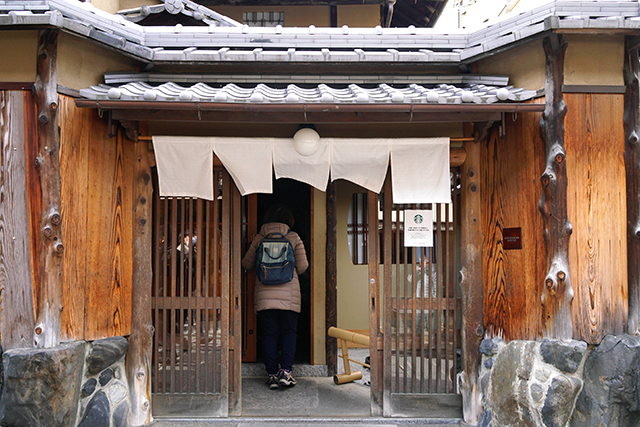
From the noren at the entrance and extending into the 1st and 2nd floors, Starbucks has made every effort to retain the charm of the historic structure. Indeed, it’s the only one on Ninenzaka that retains its original daibei walled-fence.
Having read reports of the popularity of this Starbucks – Ninenzaka leads directly to Kiyomizudera, one of Kyōto’s most popular temples – and noting that they do not allow customers to queue outside its doors – to do so would interrupt the charm of the historic district – we were worried that seeing it from the outside would be the most we’d get to do.
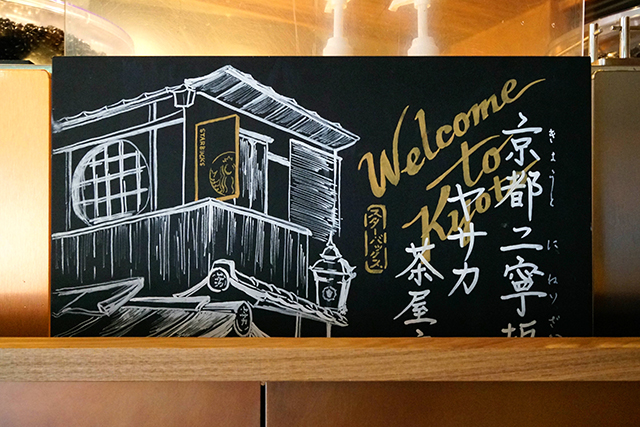
Lucky for us, though, the crowds seemed to be occupied by the setsubun activities around Kyōto and there was no queue here at all!
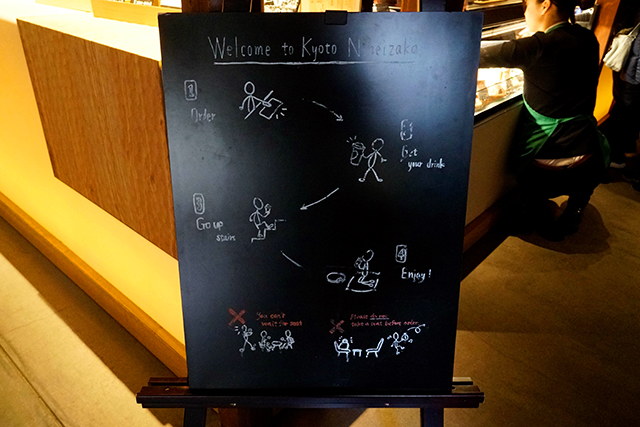
A sign inside the entrance welcomes you to Kyōto Ninenzaka and explains the one-way flow of the establishment: 1) order at the counter, then 2) proceed to the back of the establishment to pick up drinks, then 3) go up the stairs and 4) find a tatami room or a Western-style room to enjoy your food. Reserving your seat prior to picking up your drink is frowned upon, as is standing around waiting for a seat.
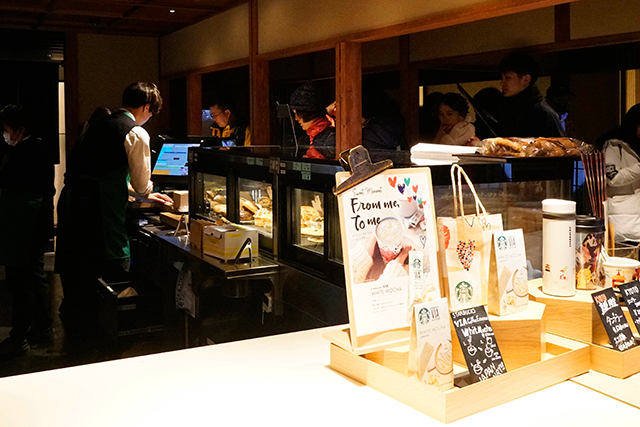
This is the area for ordering your drinks. It’s much like any other Starbucks with a similar menu.
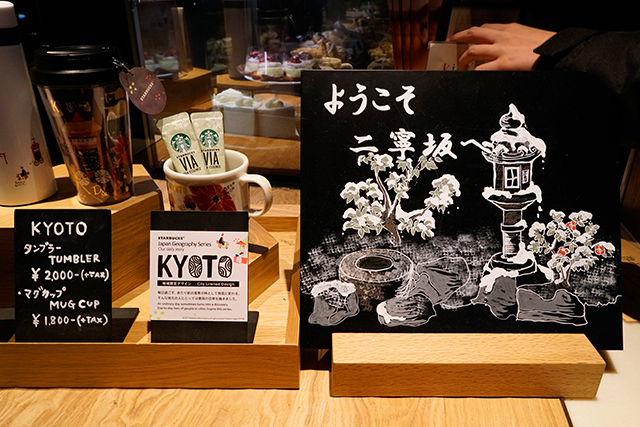
It’s warmly lit with a cosy atmosphere.
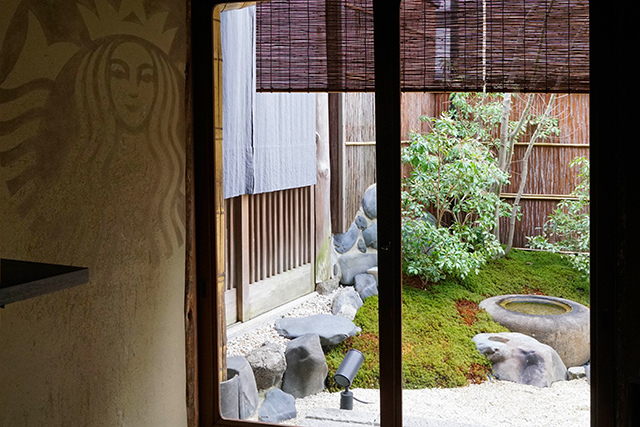
The ground floor has three courtyards, each with gardens and unique stone water basins, known as tsukubai. This is the one near the bar counter where drinks are made and picked up.
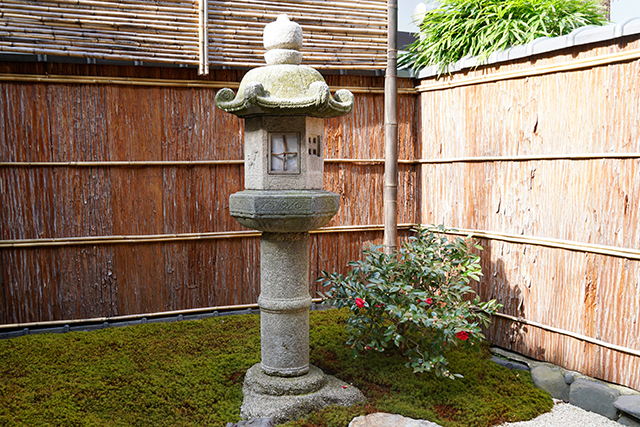
A stone lantern occupies the other side of the courtyard.
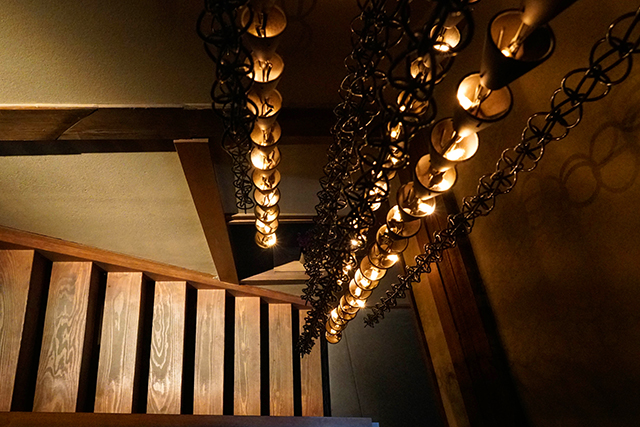
While there’s a small seating area downstairs, the vast majority of the seating area is upstairs where there are three tatami-style rooms.
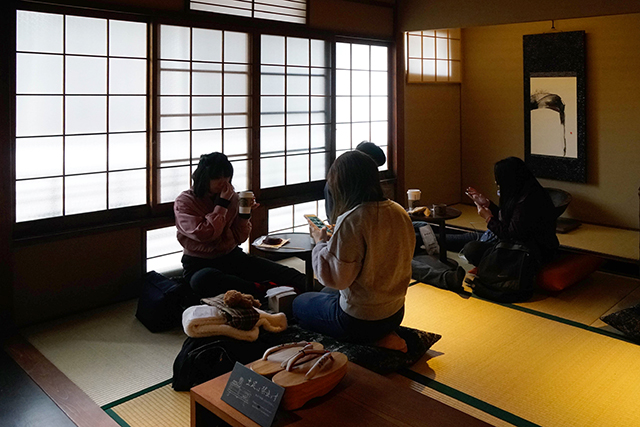
This is the one located at the back of the establishment.
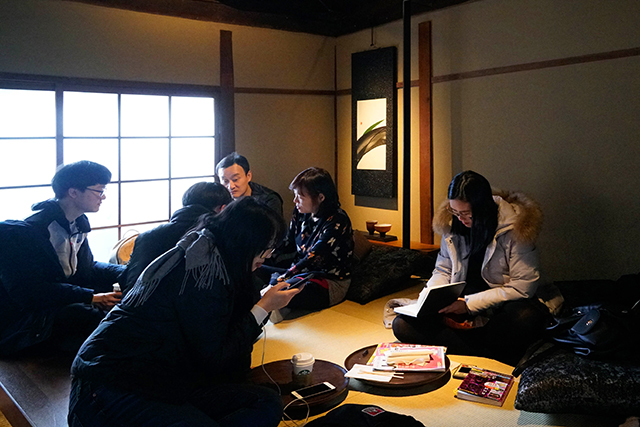
This is the one located towards the front of the establishment near the stairs to go downstairs.
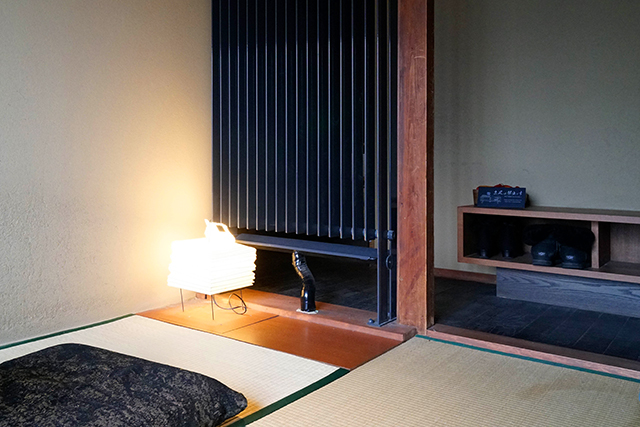
The third is small and located between the former two, but tucked away in a nook, so people tend to walk past it. We’re in here for a good while before two girls dressed in kimono come in.
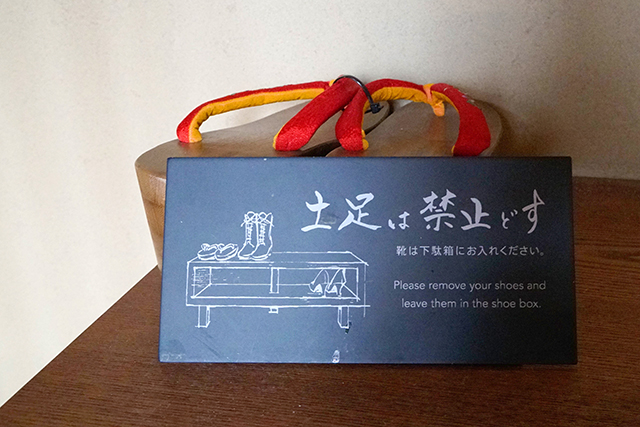
Customers must remove their shoes when using the tatami-style rooms.
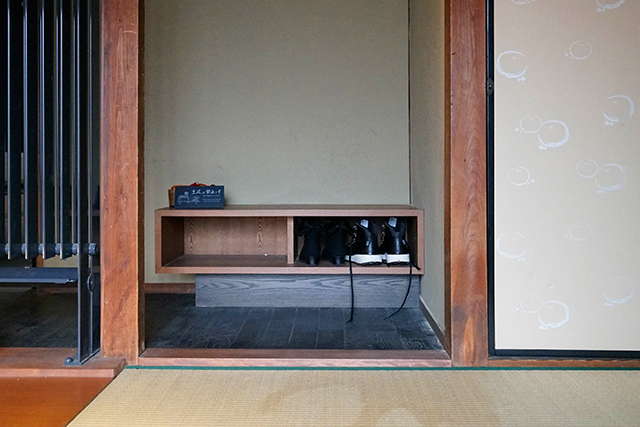
A shoe box is provided to store your shoes.
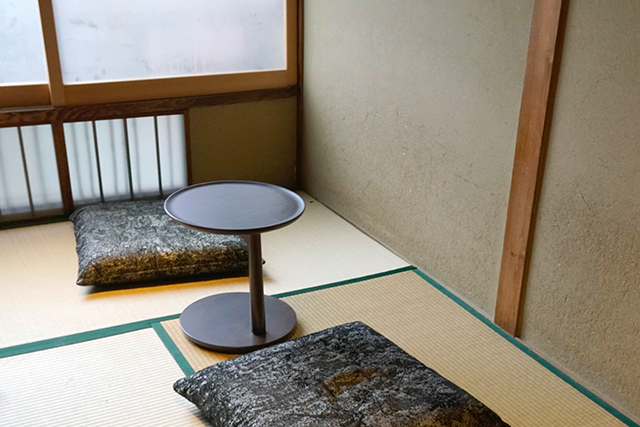
Each tatami-style room has zabuton for you to relax on while enjoying your food.
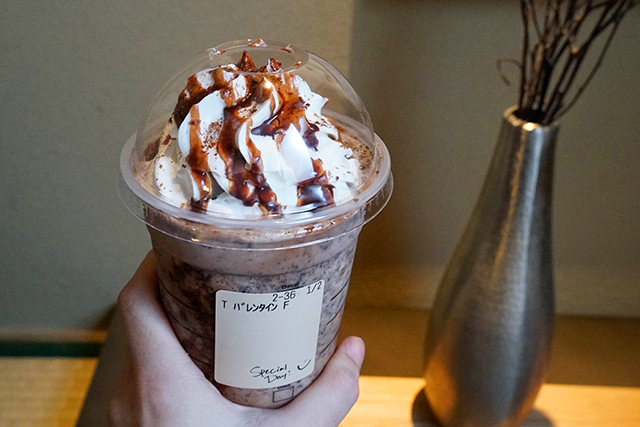
D goes for his indulgent Valentine’s Day special, a Valentine Chocoholic Frappucino. It has an enjoyablly rich chocolate flavour with crispy chocolate bits.
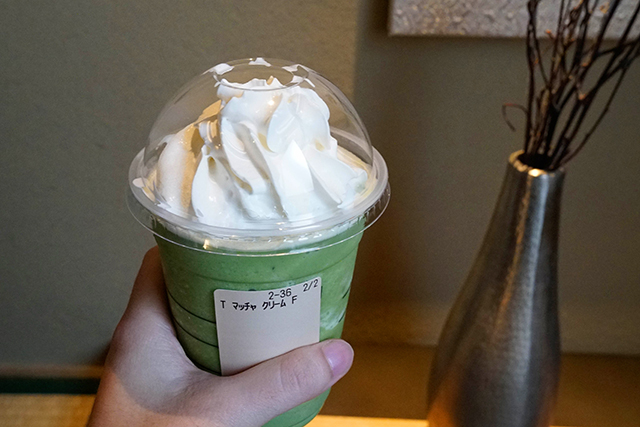
My drink of choice is a Matcha Cream Frappe. It has a prominent matcha flavour with a sweetness that masks any hint of bitterness.
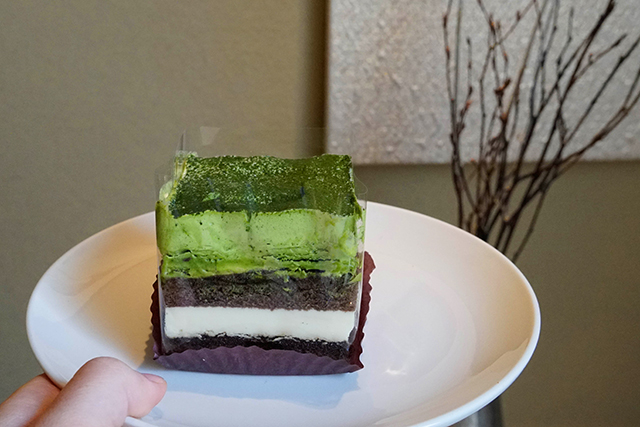
To pair, I have a Matcha Tiramisu, which has a pleasantly balanced matcha and chocolate flavour with restrained sweetness although, the cream becomes overwhelming by the end.
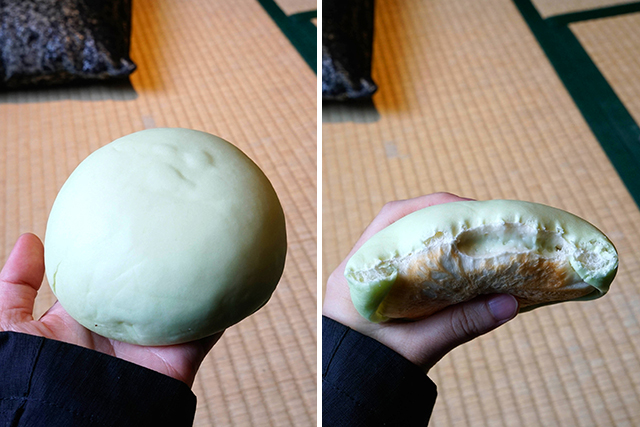
The Starbucks is uncharacteristically quiet, and with D not feeling too well, we spend a while enjoying the atmosphere. Having skipped breakfast, I slip in bites of my melon bread from the supermarket earlier between sips of my drink.
The bread is a pale green colour with a fragrant honeydew aroma, while the honeydew flavoured cream filling is light with good flavour without being too sweet.
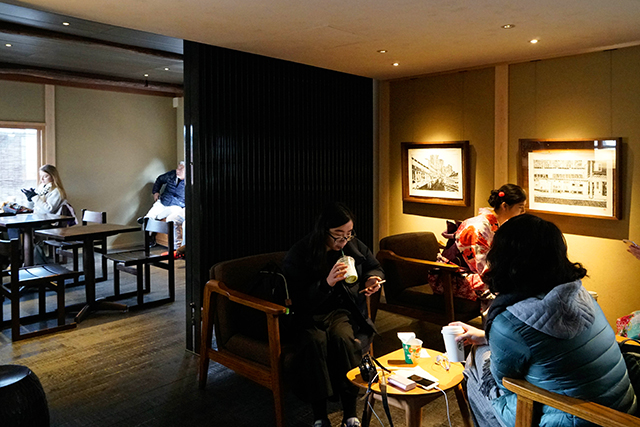
For those not wanting to take their shoes off, there are also two areas with tables and chairs provided towards the front of the establishment.
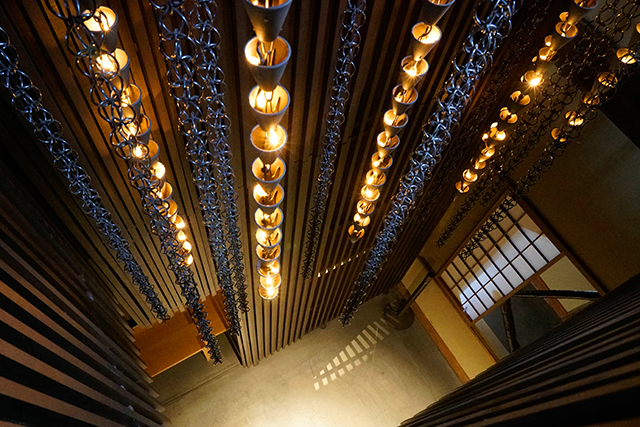
The void looking down into the bottom floor is elegantly decorated.
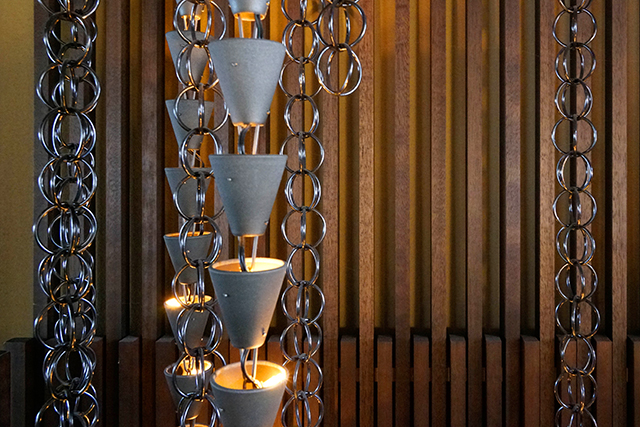
The warmth of the tiny lights makes them look like candles.
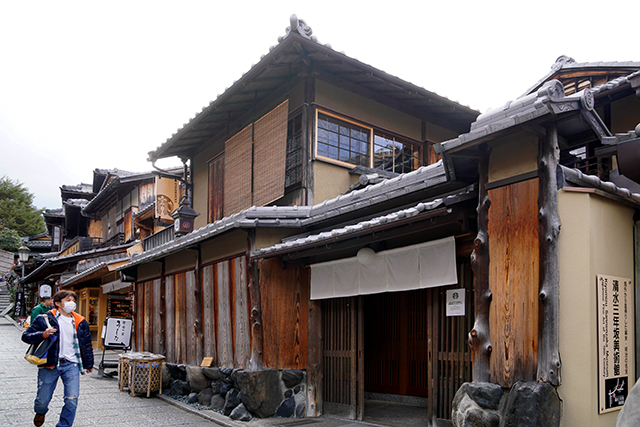
A good 90 minutes later, we head back to Ninenzaka to explore the shops.
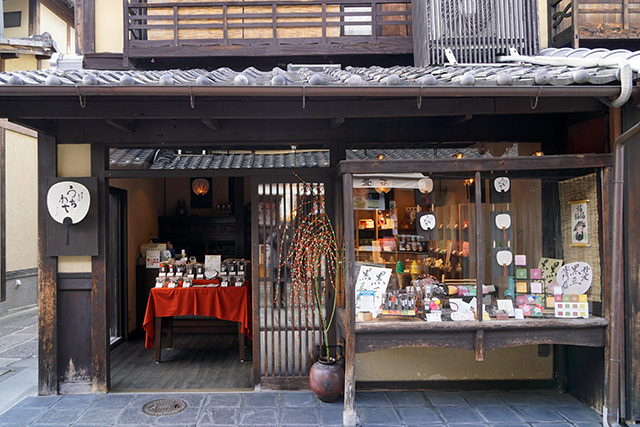
This is Uchiwaya, a shop selling Japanese sweets using Tanba black soybeans, which are famous for being the biggest in Japan.
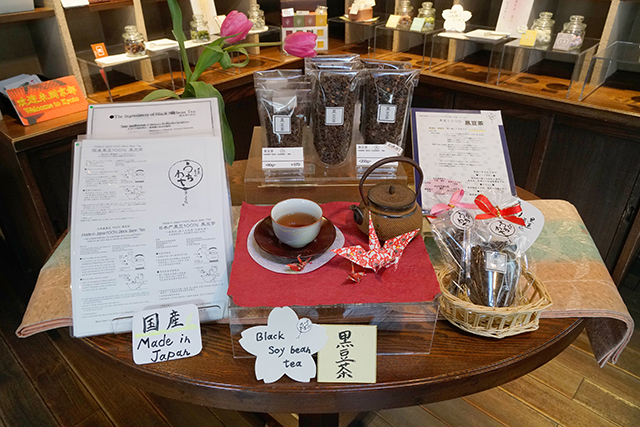
We enjoy black soybean tea. The sample we tried at this store had a particularly sweet nutty flavour that we don’t usually see in other stores, so we pick some up.
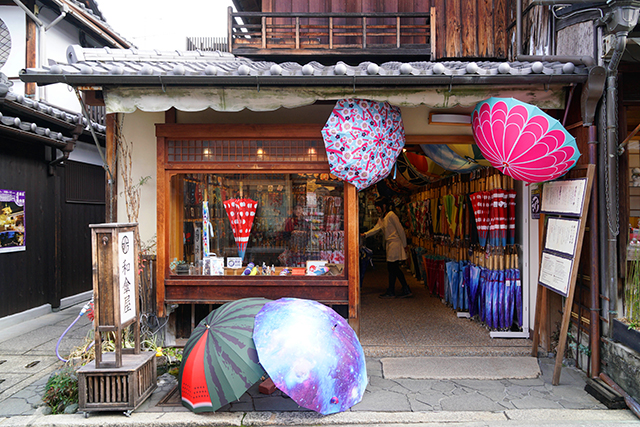
Across the road is an umbrella shop. The shopkeepers try to entice me with their various umbrellas, including the watermelon one out front. I’m not a fan of the designs, though, or the straight handles which make carrying it around inconvenient.
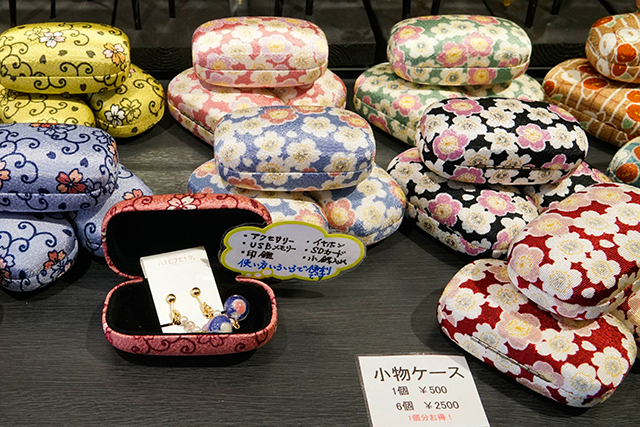
There’s a shop selling pretty cases for earrings…
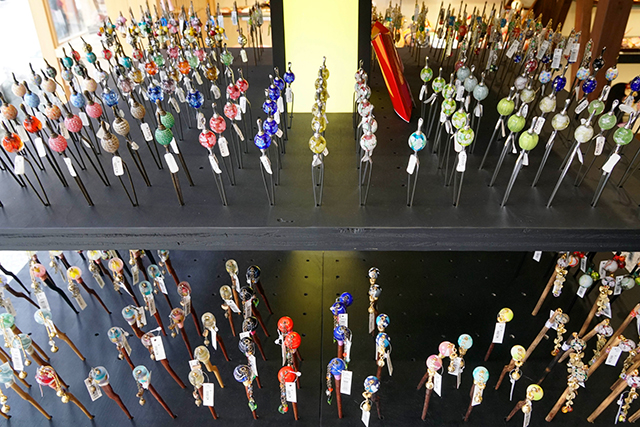
…and elaborate hairsticks with designs drawing upon decorative kanzashi.
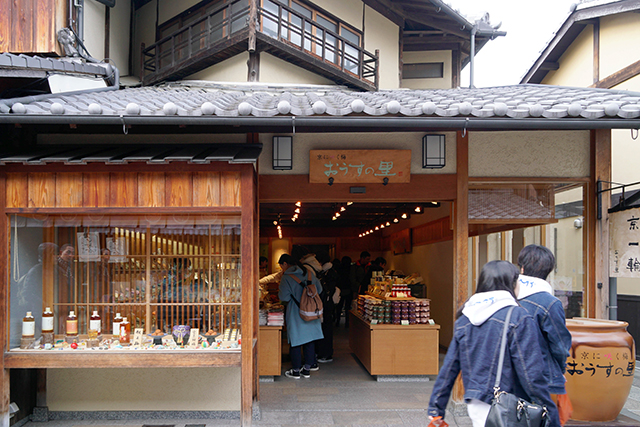
There’s another branch of Ousu no Sato, the plum specialty shop we visited on Shijo Avenue.
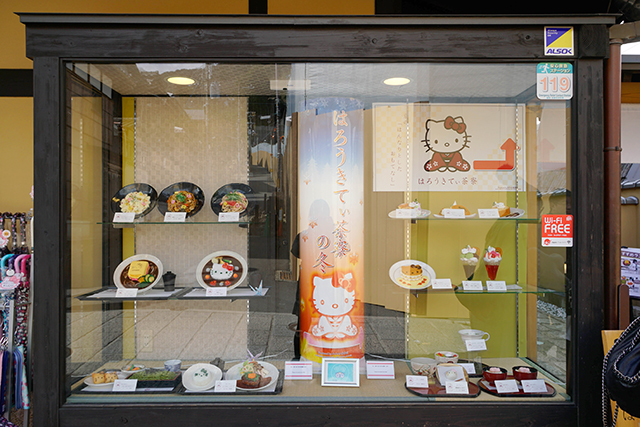
A Hello Kitty Cafe is tucked behind a gift shop selling Hello Kitty merchandise.
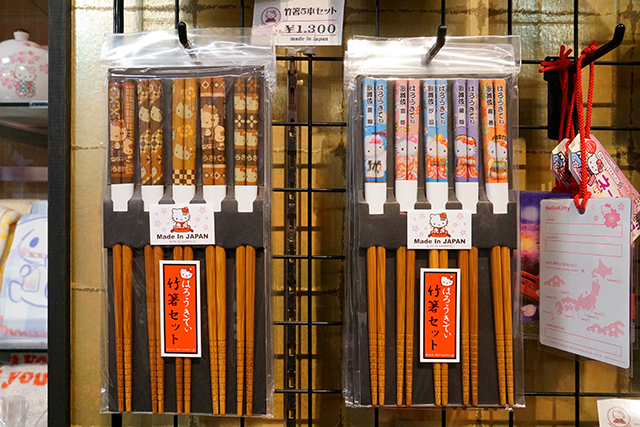
The wooden chopsticks on the left are particularly stylish for character goods.
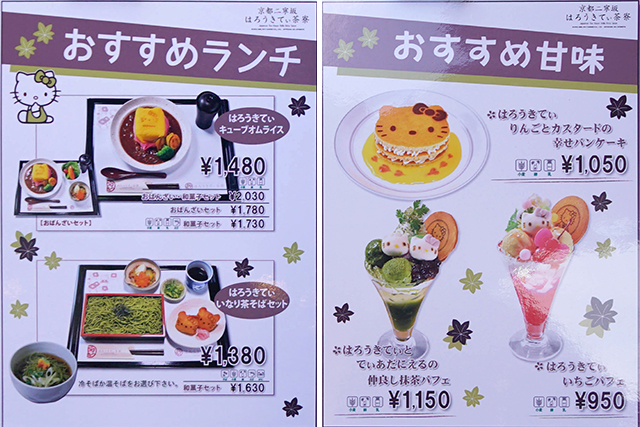
The cafe sells all sorts of Hello Kitty themed foods, including omurice, matcha soba, pancakes and parfaits.
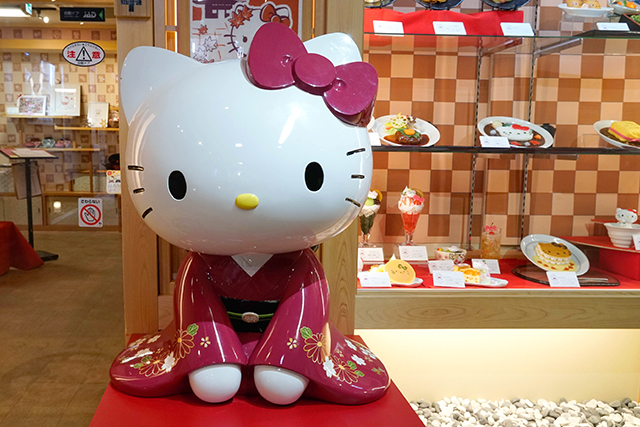
Hello Kitty greets you in a kimono.
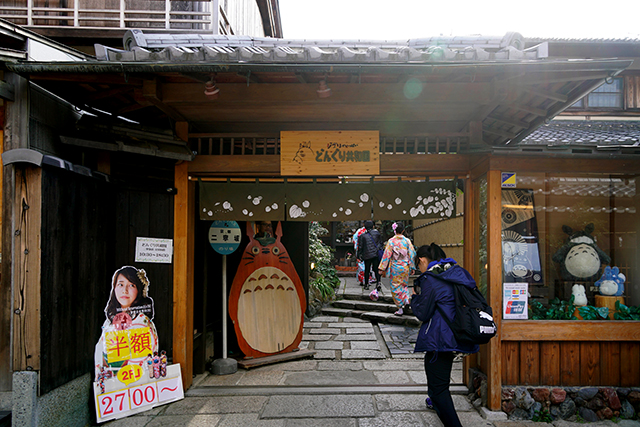
Next door is a Donguri, an official Ghibli shop.
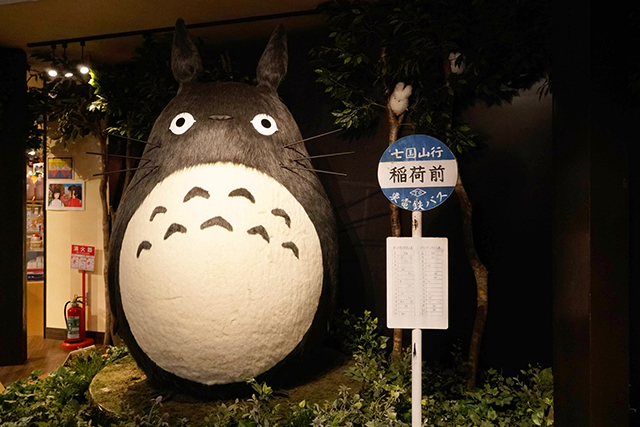
A giant Totoro greets you at the entrance.
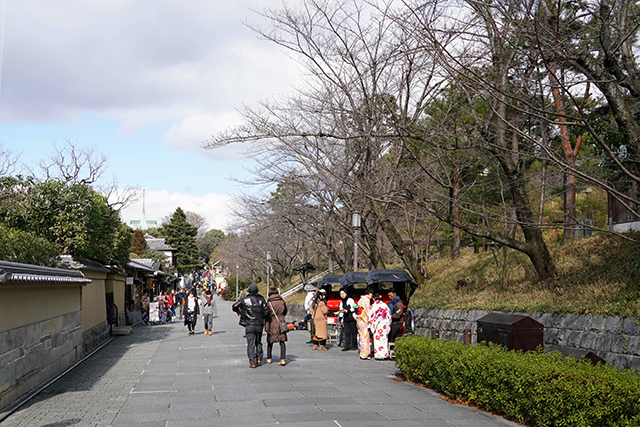
Having explored the shops, we make out way back to Yasaka Shrine via Nene-no-Michi.
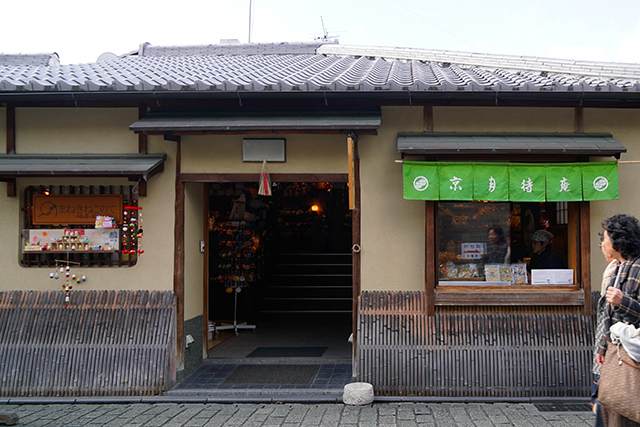
This is Kyo Tsukimachian, a shop known for their bean rice crackers that are characteristic of Kyōto. The store makes them fresh behind the green noren.
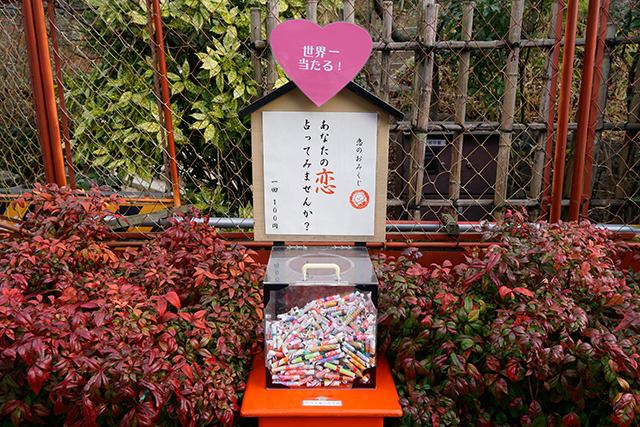
Opposite, there are love fortunes for ¥100.
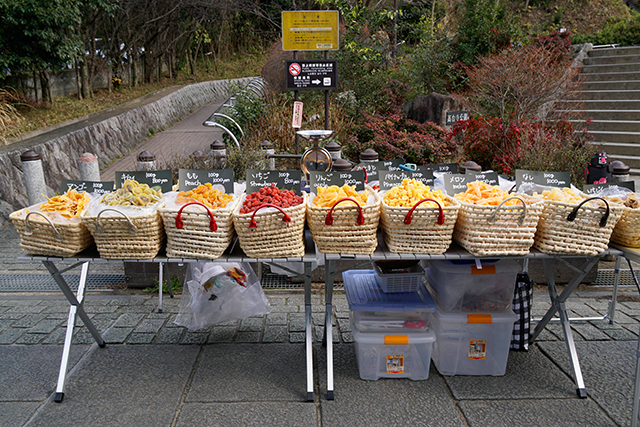
There’s also a stall selling all kinds of sun-dried fruits, including mango, kiwifruit, peach, strawberry, apple, pineapple, melon, tomato, figs and pear.
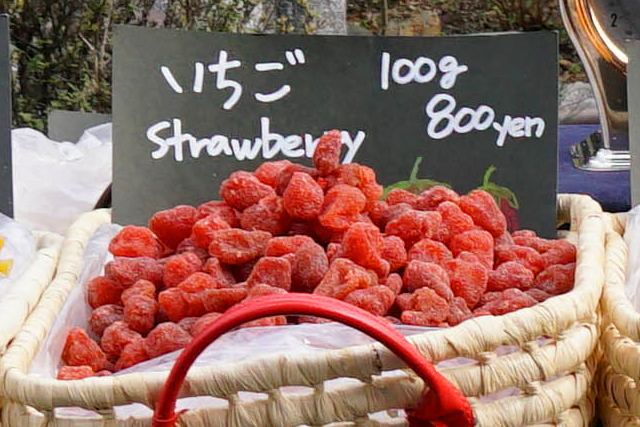
The strawberries look particularly red and plump.
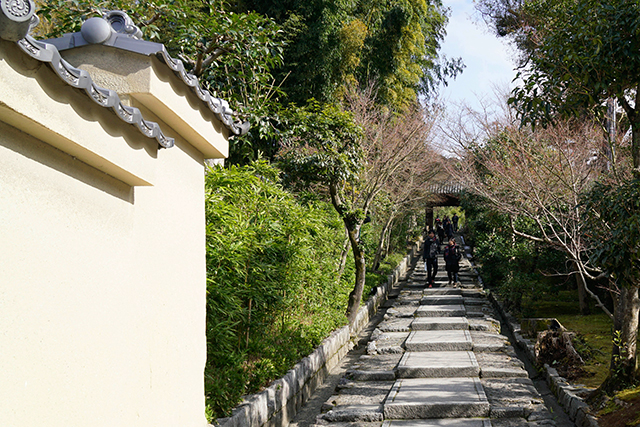
This is the approach to Kodai-ji Temple. We visited in 2011.
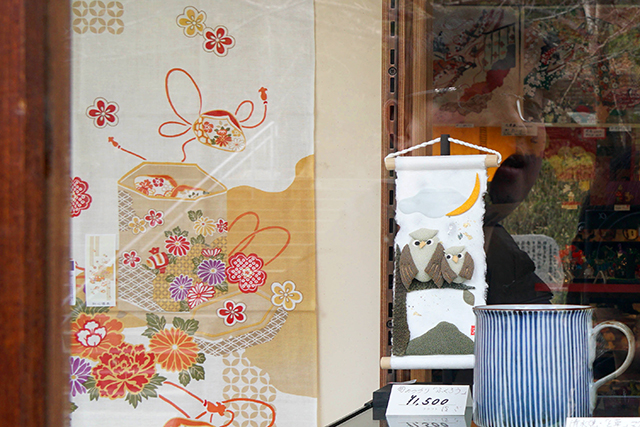
Opposite the approach is a store selling a cute owl scroll…
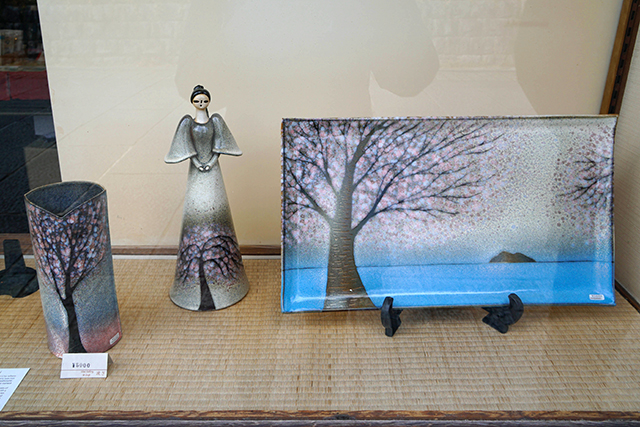
…, as well as beautiful cherry blossom-themed items. The plate is ¥54,000, while the vase is ¥5400. I’m not sure if the angel is for sale.
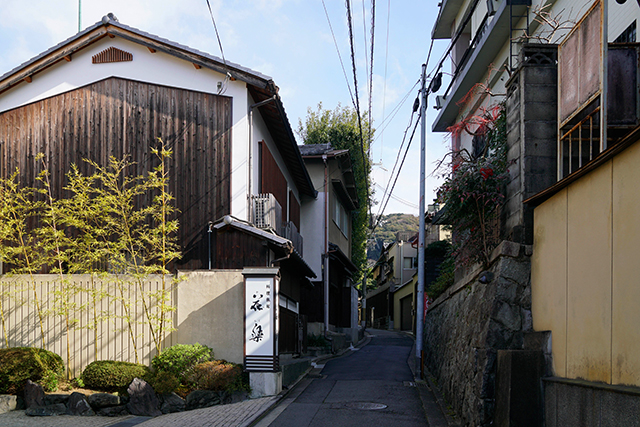
We cut through a narrow road to make it back onto Shimogarawa-dori.
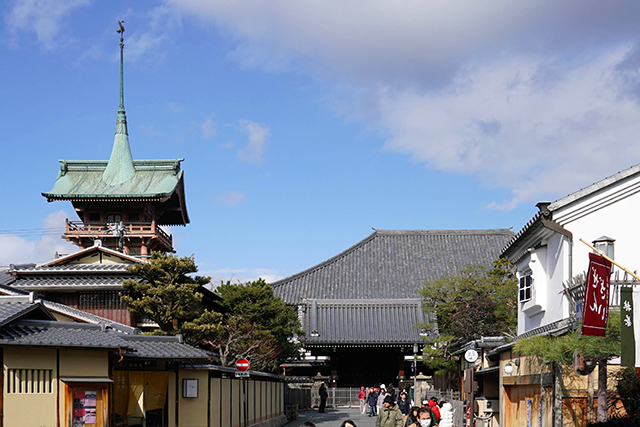
At the end of Nene-no-michi is Daiunin Temple.
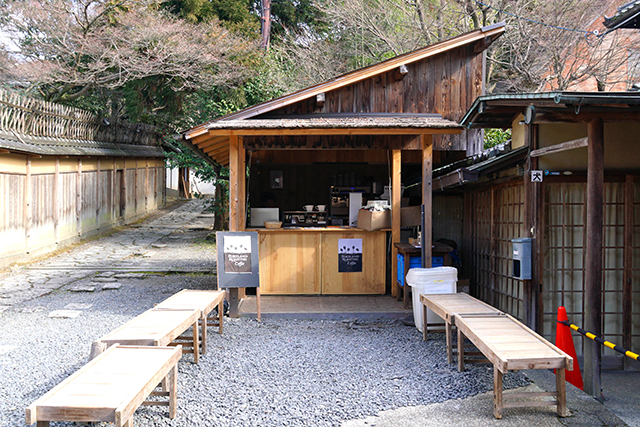
There’s a quaint wooden cafe near its approach.
Kyōto – Gion
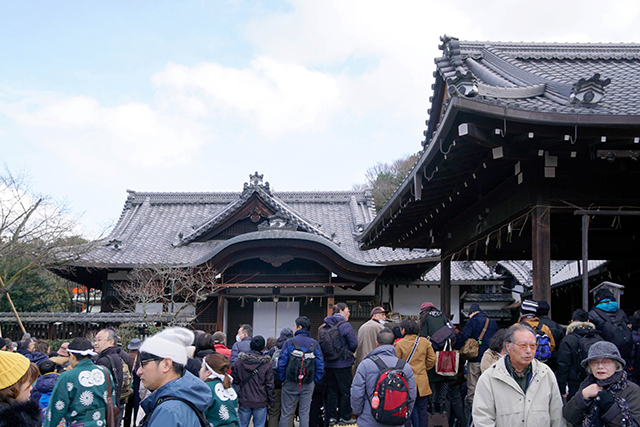
We’ve arrived at Yasaka Shrine just after the performance by the maiko and geiko from Gion Kobu, but the crowd is still lingering around for another glimpse of the maiko.
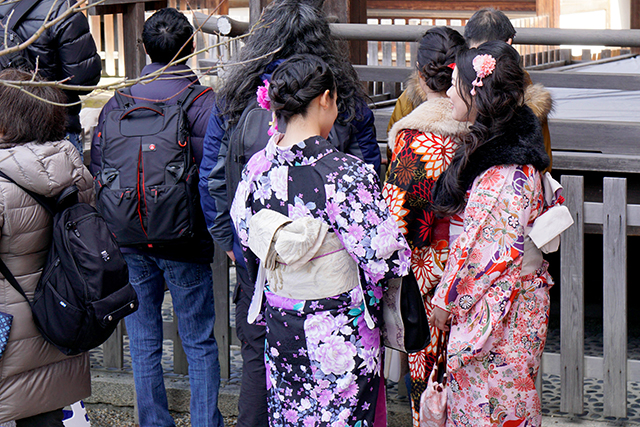
We spot more girls dressed in kimono for the event.
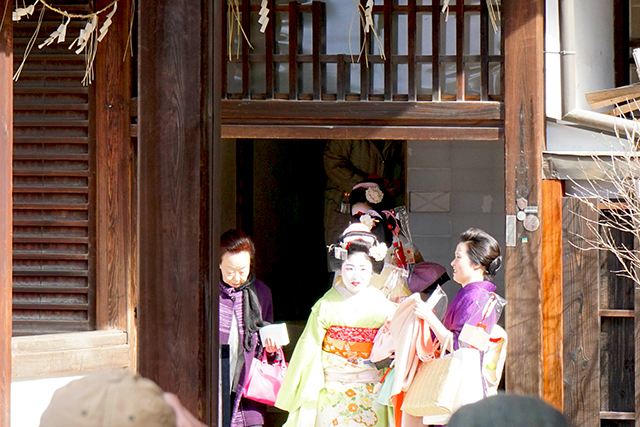
And sure enough, we spot the maiko and geiko leaving the grounds.
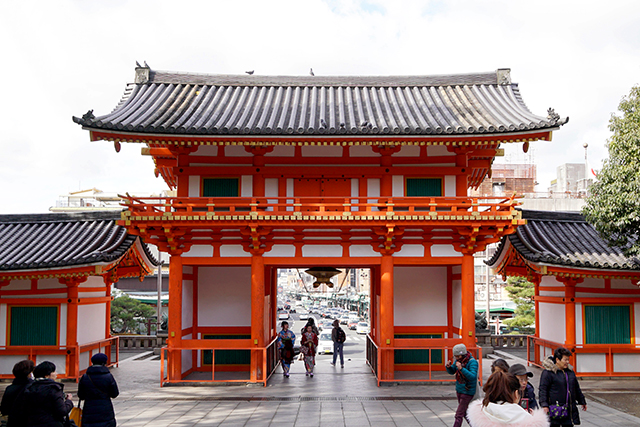
The crowds are amazing at Yasaka Shrine so we head back towards downtown Kyōto.
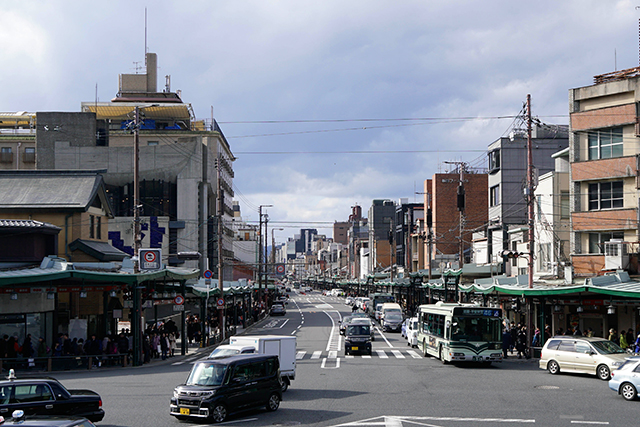
This is looking down Shijo Avenue from the steps outside Yasaka Shrine.
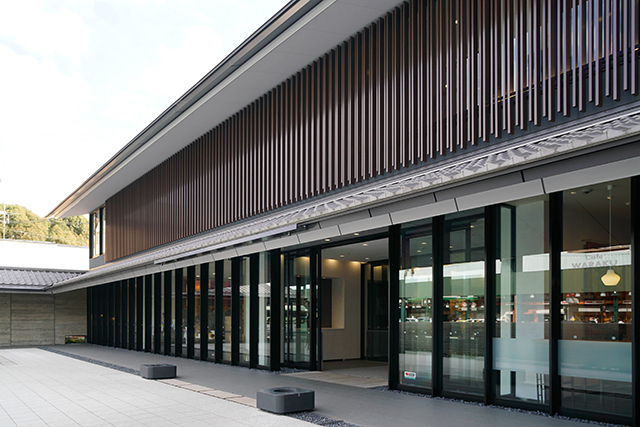
This is the Kanji Museum which opened in June 2016. It’s a museum dedicated to the history of kanji.
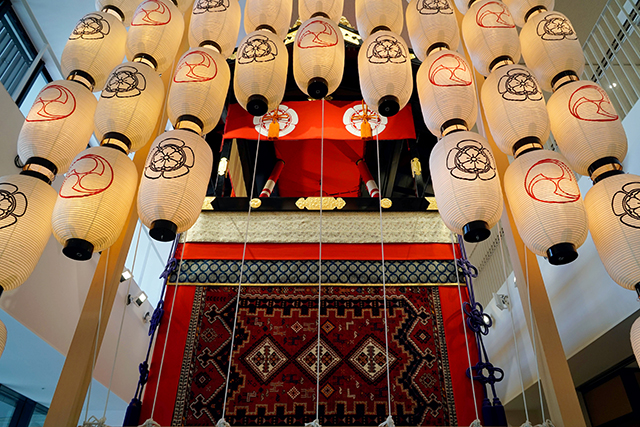
We’re terrible at kanji so we’re not interested in the exhibits but the gift shop out front has a palanquin on display.
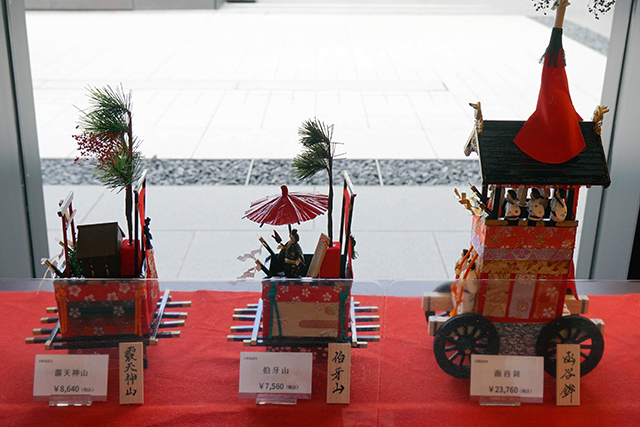
Miniature palanquins are available for sale. The one on the left is a mikoshi, or a portable Shinto shrine used to transport a deity in Japan while moving between shrines or during a festival.
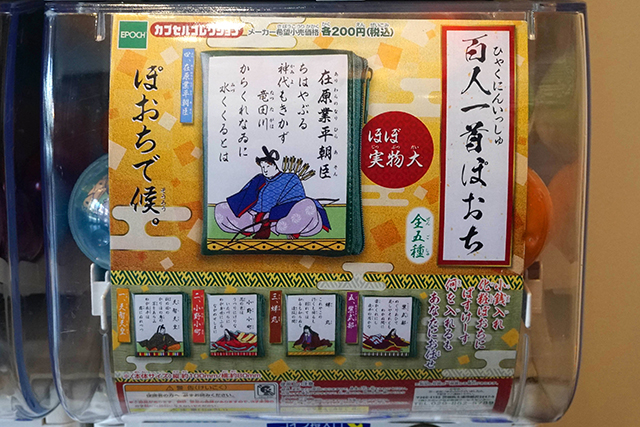
There’s a gachapon corner and this one dispensing pouches printed with cards from uta-garuta, a card game using a deck composed of cards based on the Ogura Haykunin Isshu catches my eye – we’d not seen this one before.
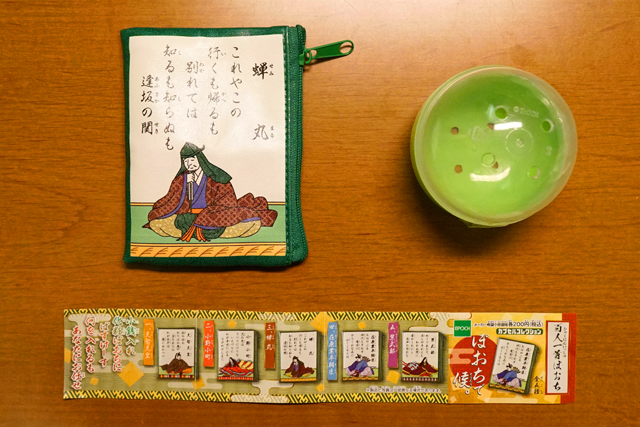
I was pinning my hopes on the chihayaburu card – poem number 17 by Ariwara no Narihira, the signature card for the main character in the anime, Chihayafuru – but I receive poem number 10 by Seimaru:
Kore ya kono Yuku mo kaeru mo Wakarete wa Shiru mo shiranu mo Ōsaka no seki
This translates to:
Truly, this is where Travelers who go or come Over parting ways- Friends or strangers-all must meet: The gate of ‘Meeting Hill’
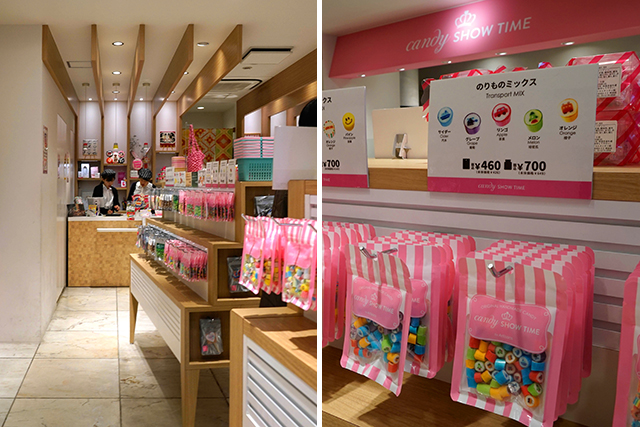
Further down the road, we visit Candy Show Time. When we’d last visited in 2015, they’d only just opened for a few days.
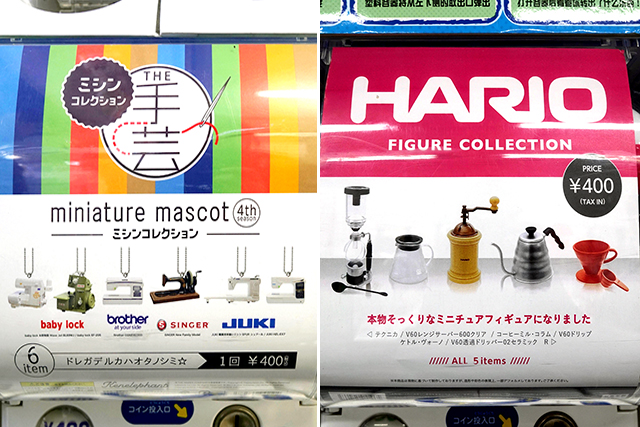
There’s a shop filled with gachapon. We suspect it’s aimed largely at tourists judging by the crowds inside and they instructions posted in numerous languages. These ones for miniature sewing machines and coffee equipment tickle our fancy.
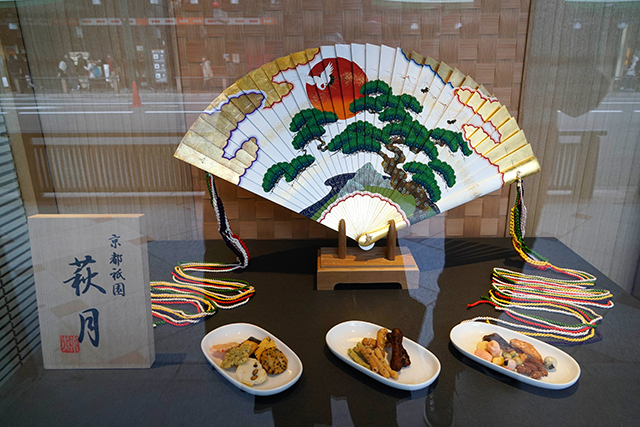
A shop selling all kinds of crackers has a beautiful fan displayed out front.
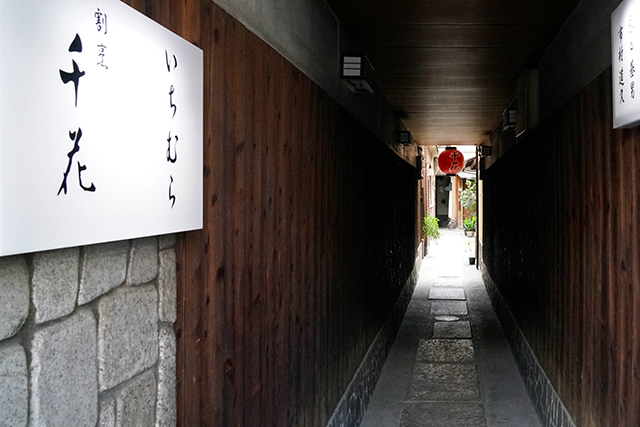
I was admiring the entryway to this space only to later discover its the entrance to Chihana, a 3 Michelin star restaurant established in 1946 that serves mainly a 5 set-course menu starting from 13,000yen.
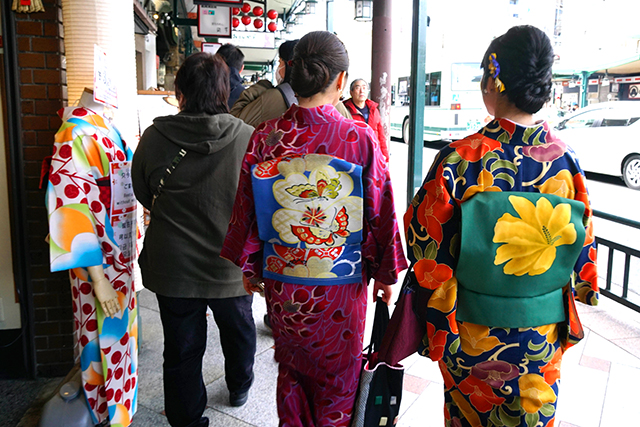
A few shops down is a costume rental service, where you can hire a kimono for a day.
Kyōto – Downtown
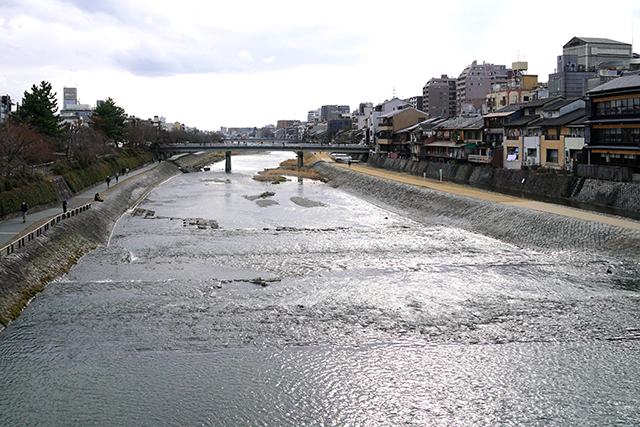
We cross the Kamogawa to head into Downtown Kyōto.
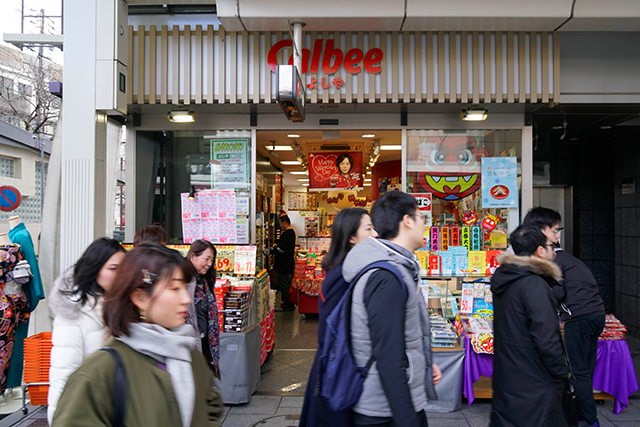
Next to exit 1B of Kawaramachi Station is a Calbee x Yoshiya collab store (Okashi no depato Yoshiya) that we end up visiting on every visit to Kyōto. It sells all sorts of snacks as its name suggests.
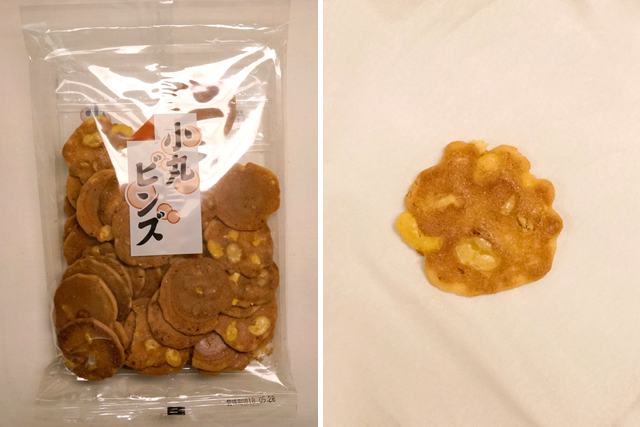
D picks up some bean rice crackers for his still irritable stomach.
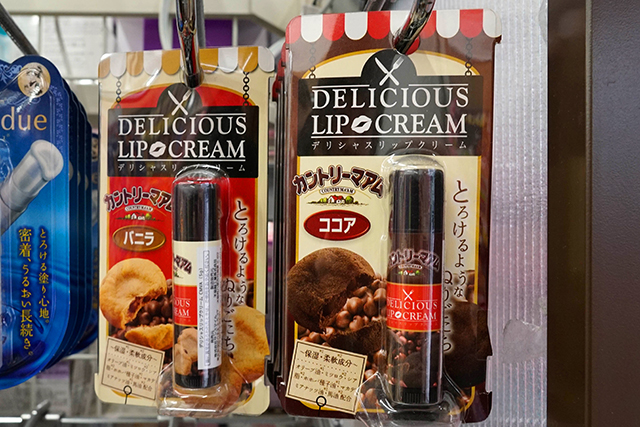
I spot these sweets-inspired lip balms that smell like chocolate and vanilla choc chip cookies.
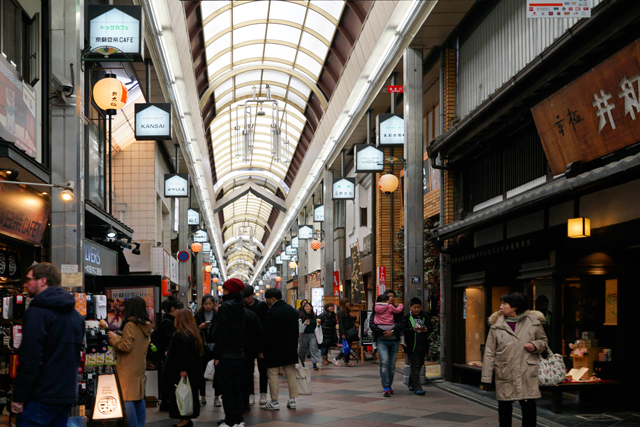
This is Teramachi Dori.
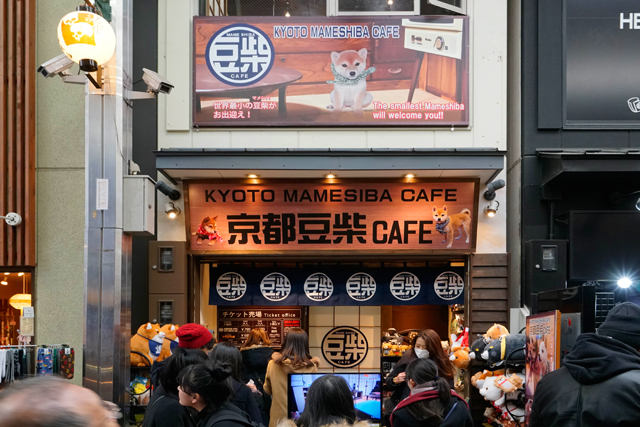
There’s a huge crowd outside the Kyōto Mameshiba Cafe, which opened in mid-2016. The cafe where you can enjoy your coffee with mame shiba inus (a smaller variety than the bigger (and cuter) shiba inus).
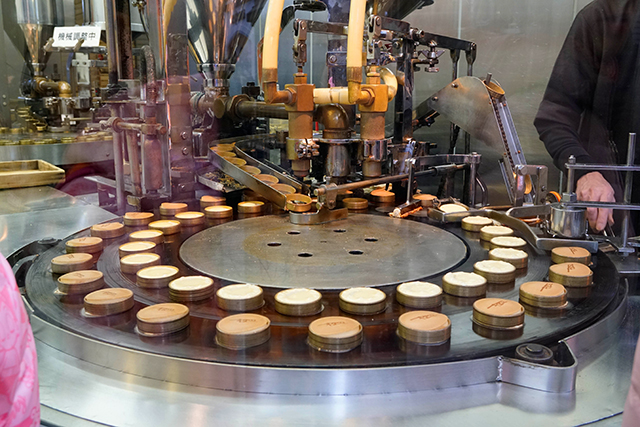
Across the way is a machine churning out fresh dorayaki.
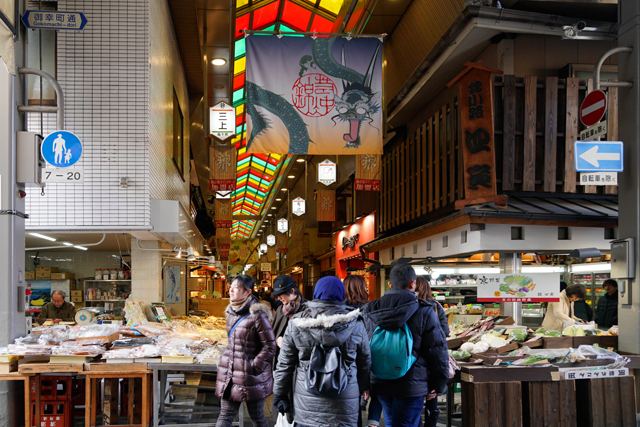
With D feeling under the weather, we make a beeline for our favourite black sesame store located in Nishiki Market.
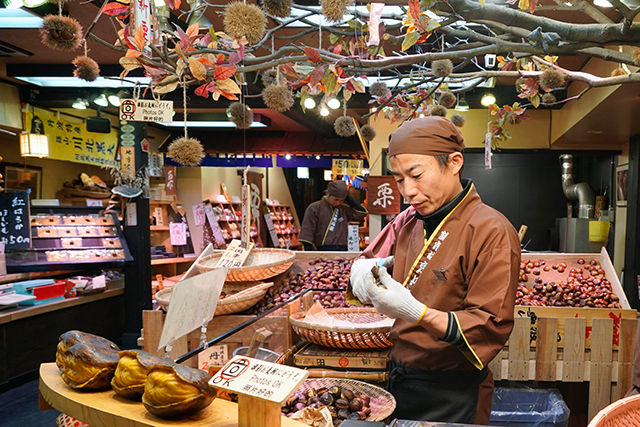
We get distracted by a lady offering black soybean tea samples at this store selling freshly roasted chestnuts. We’re glad we purchased the black soybean tea from Ninenzaka, though, as this one lacked the sweetness and nuttiness.
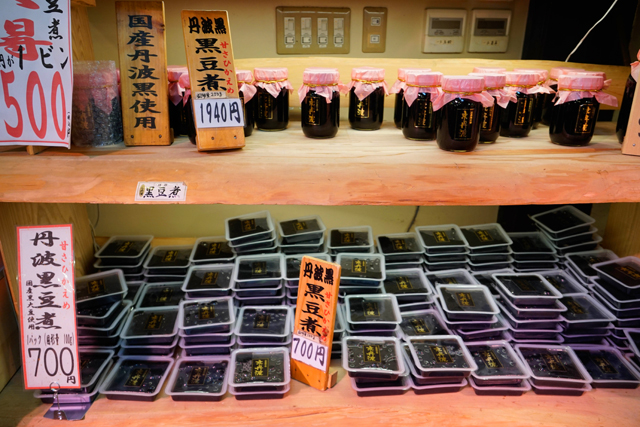
There are jars and plates of black soybeans available…
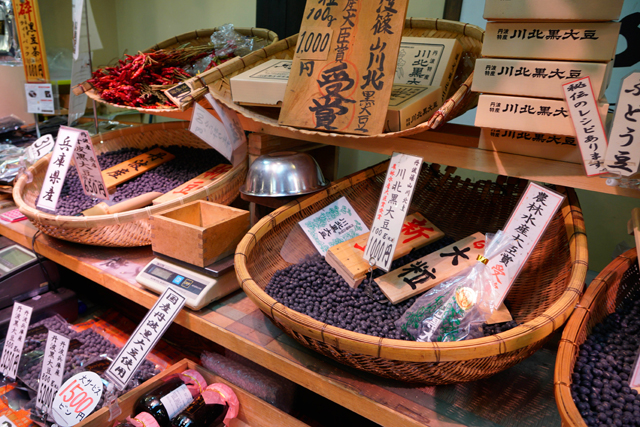
…as well as loose black soybeans in various grades.
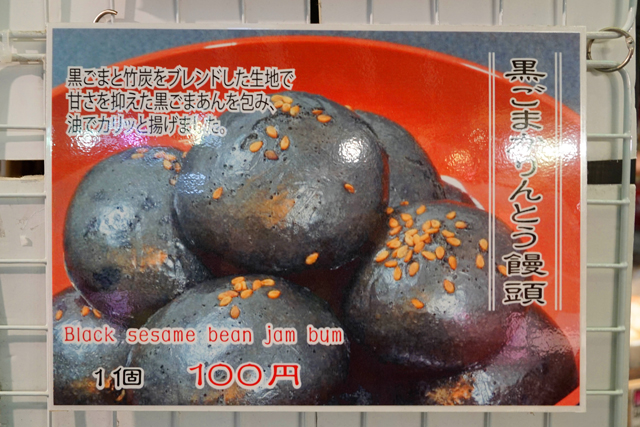
Gomafuku-do is the name of the shop that sells these delicious black sesame bean jam buns. We first encountered them in Kurashiki in 2015, then found this store in Kyōto, only to find they were sold out for the day.
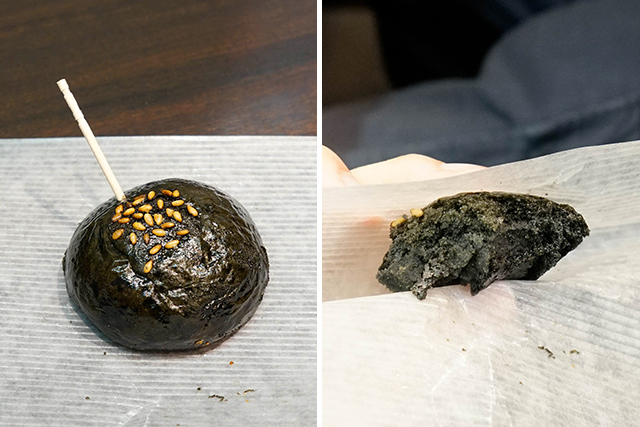
They are every bit as good as I remember, deep fried until crispy on the outside with soft black sesame paste inside. Yum! I know D loves these, but he ate only the tiniest morsel, and that was the surest indication of how unwell he felt – it was high time we made it back to the hotel for some rest as we’d be back in Kyōto at the end of our trip.
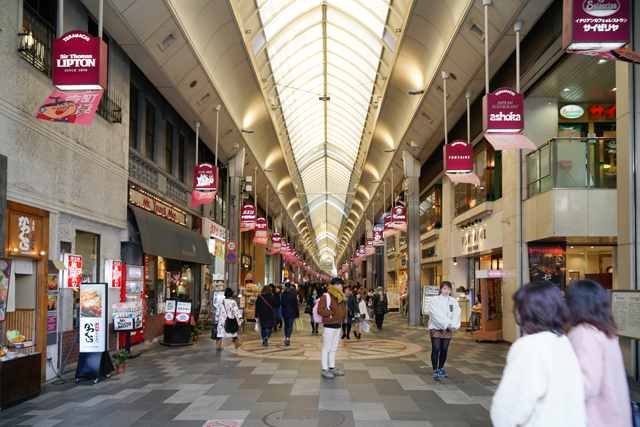
On the way out, I spot a store called Sir Thomas Lipton. It’s a tea house that serves a variety of yoshoku, or Western-influenced Japanese cooking.
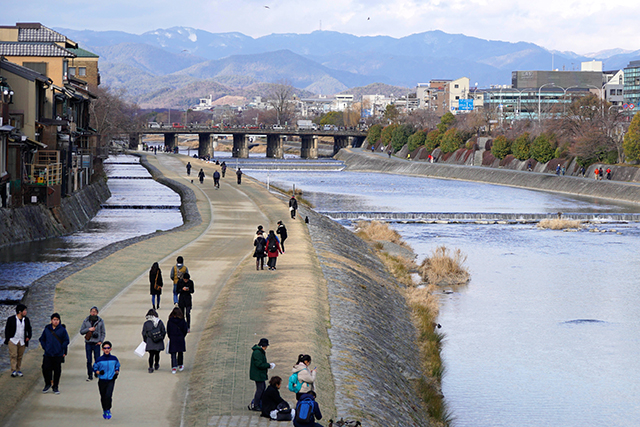
We walk back across the Kamogawa to Gion Shijo Station…
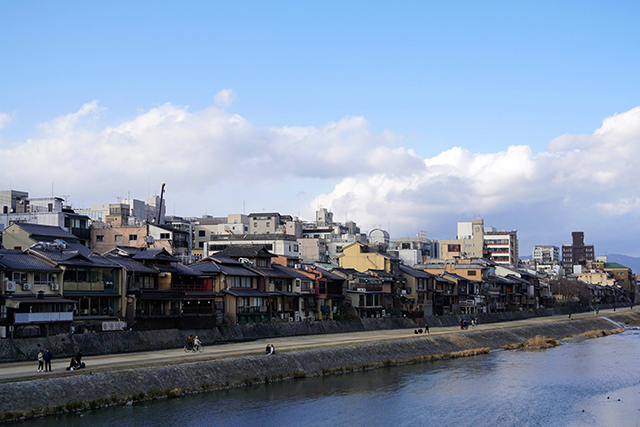
The various houses along the Gion district, Pontocho, face onto the river.
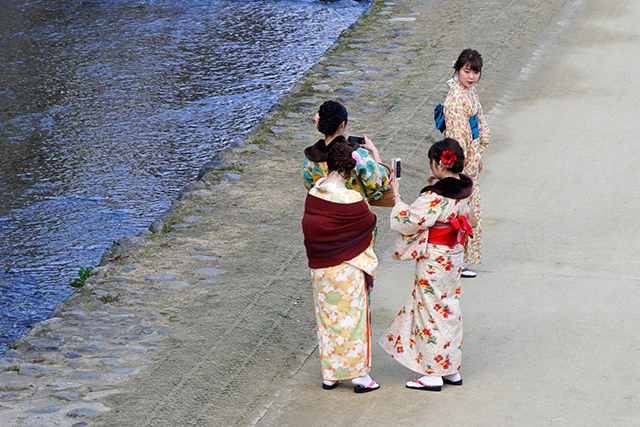
We spot girls dressed in kimono enjoying the river.
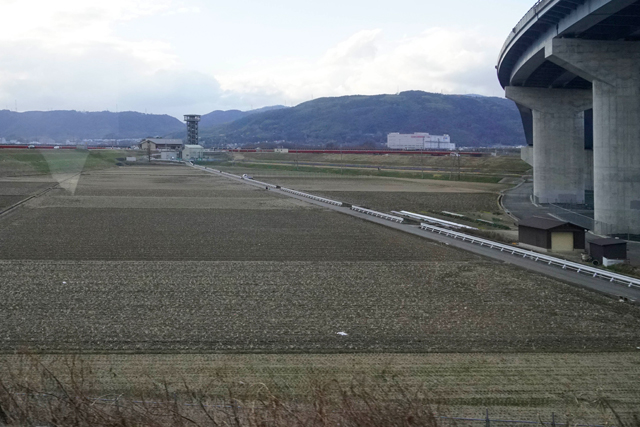
Much of the distance on the train between Temmabashi Station in Ōsaka and Gion-Shijo in Kyōto is farmland.
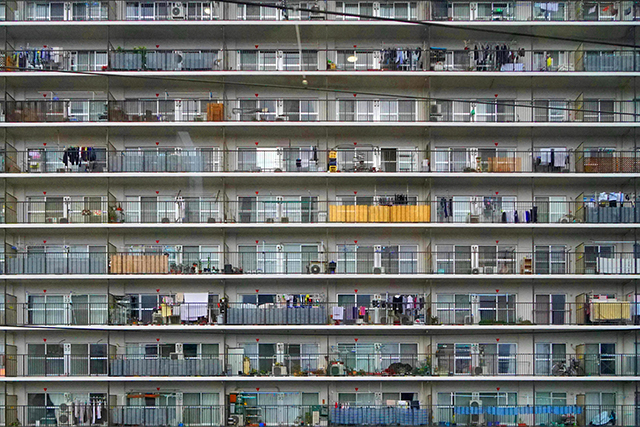
We do pass by this large wall of apartments, though.
Ōsaka
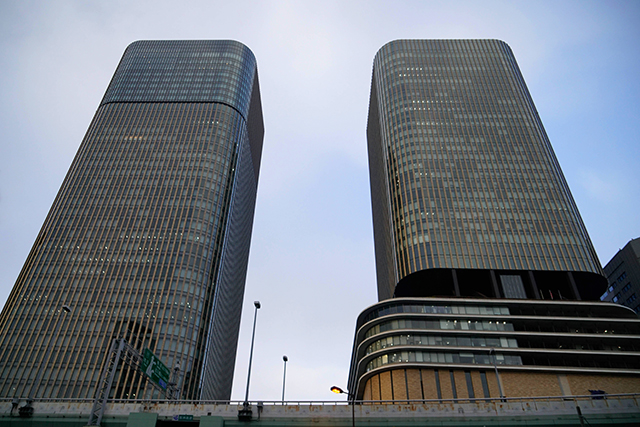
Back in Ōsaka, we pass by the twin Festival Towers on Nakanoshima.
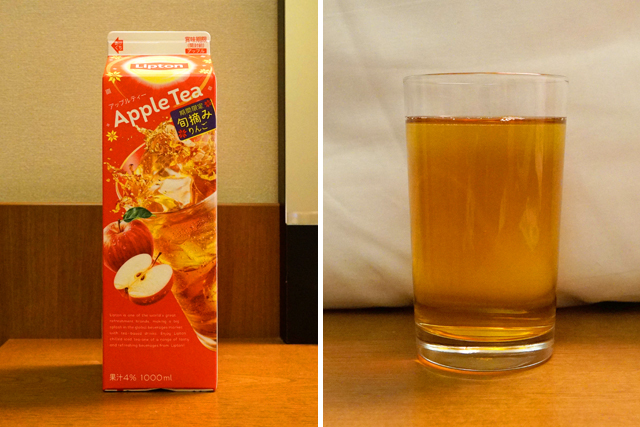
We stop by the 7-Eleven underneath our hotel for some supplies. Lipton Apple Tea is refreshing.
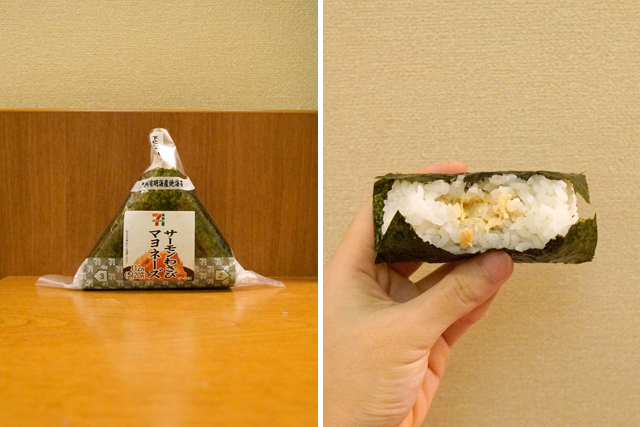
Without much of an appetite, I pick up this salmon, wasabi and mayonnaise onigiri. The wasabi really helps to cut through the squeakiness of cooked fish.
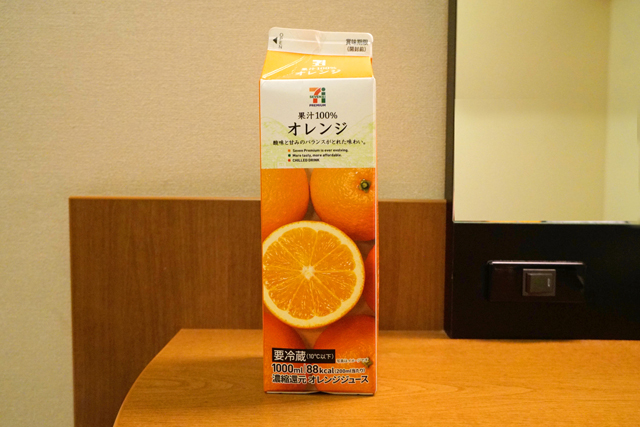
D picks up some 7-Eleven Orange Juice for a vitamin C boost.
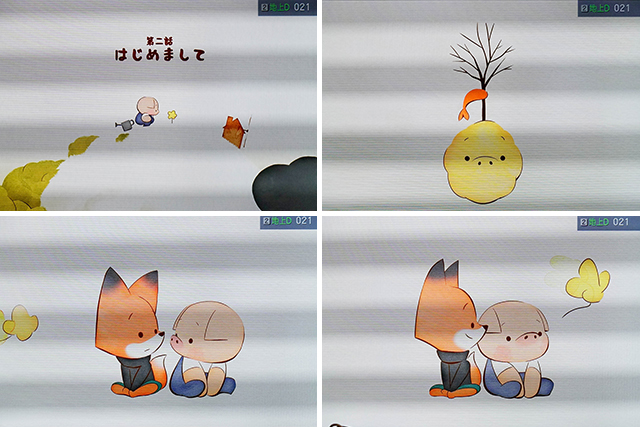


With D zonked out with a fever in bed, I spend the rest of the late afternoon and evening watching random segments on television. This is an animated short (with no conversation) called Pig: The Dam Keeper Poems, an animation by Tonko House produced in Berkeley and Tōkyō, that explores ‘universal themes, such as family, grief, responsibility, and growing up’.
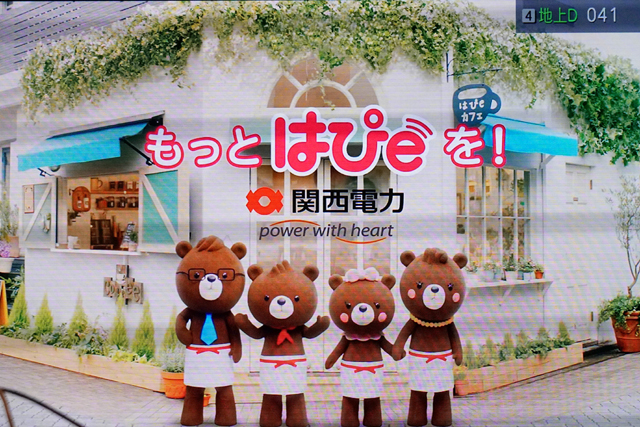
These bears are part of an ad for Amazon Japan that aired…
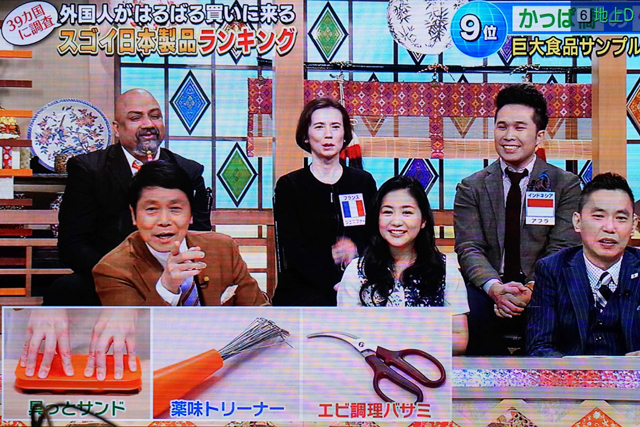
in between segments of this show that featured people from different countries living in Japan (and fluent in Japanese) making commentary about interviews with gaijin on the street about the unique types of products they buy that are made in Japan. Essentially, it’s a show telling the Japanese of the greatness of their products.
Next up, we make a visit to the city centre of Kōbe.