Nichinan is a city in Miyazaki Prefecture, with its coastline well known for its beautiful views and laid back atmosphere. On Day 9 of our Japan 2019 trip, we make our way down from the city of Nobeoka (in the north of Miyazaki Prefecture) to explore the old castle town that is Obi in Nichinan city before returning to Miyazaki city to visit the island shrine of Aoshima.
Nobeoka
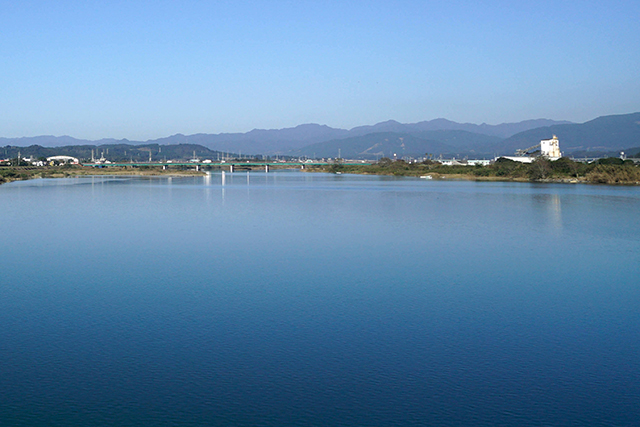
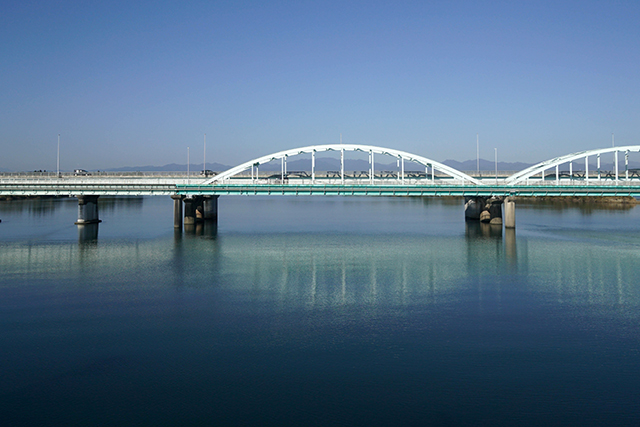
Bright and early, we make use of our JR Southern Kyūshū pass (that we exchanged a few days earlier at Ōita Station) to Miyazaki Station. It’s a 90-minute train ride from Nobeoka Station on the Nippou Main Line.
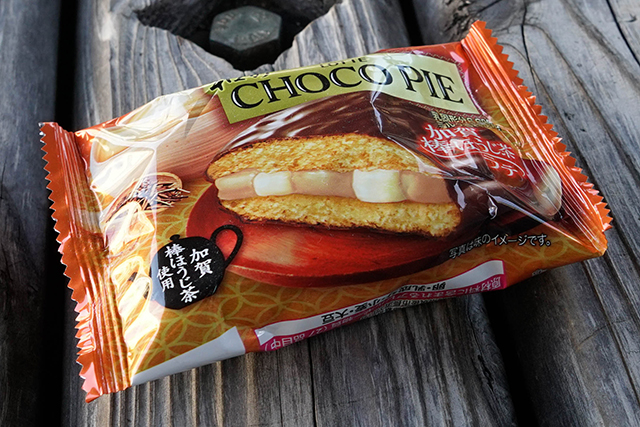
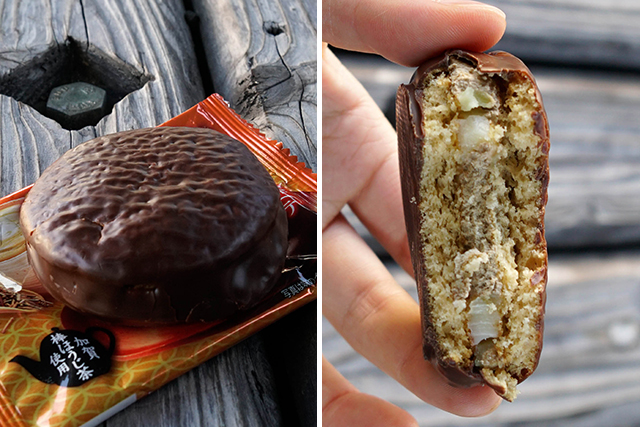
I have a Lotte Choco Pie in kagabou hōjicha latte flavour. The texture is light and fluffy, but the houjicha was muddled by the bolder chocolate flavour leaving it barely detectable on tasting and came through only in the aftertaste.
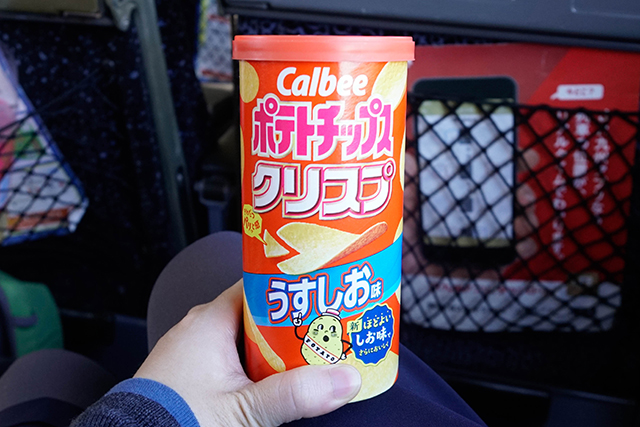
While I’m a fan of sweets, D prefers his Calbee Potato Chips in light salt as a quick snack to tide us over until breakfast.
Miyazaki
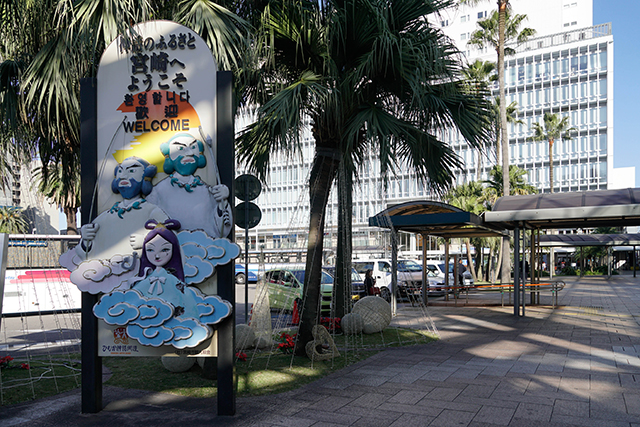
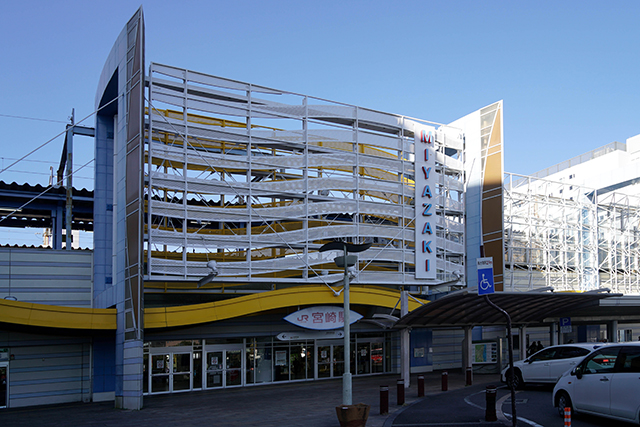 The architecture of Miyazaki Station gave us immediately beach vibes.
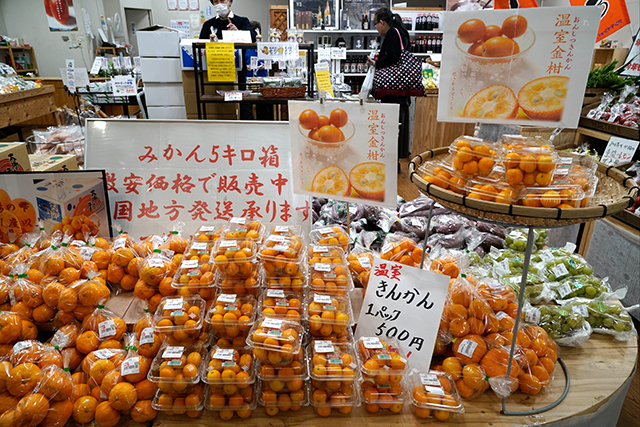
Inside the station complex, stores are selling all sorts of citrus at very affordable prices.
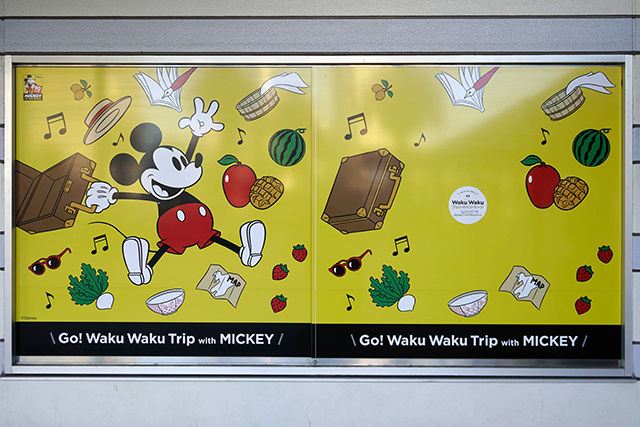
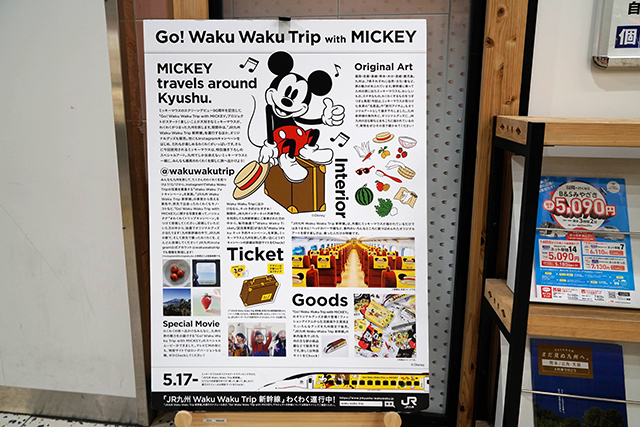
There’s also a poster advertising a Waku Waku Trip with Mickey on a specially fitted out JR Kyūshū train in May.
Toyokiti Udon
三角茶屋 豊吉うどん JR宮崎店, 1-8 Nishikimachi, Miyazaki, 880-0811, Japan
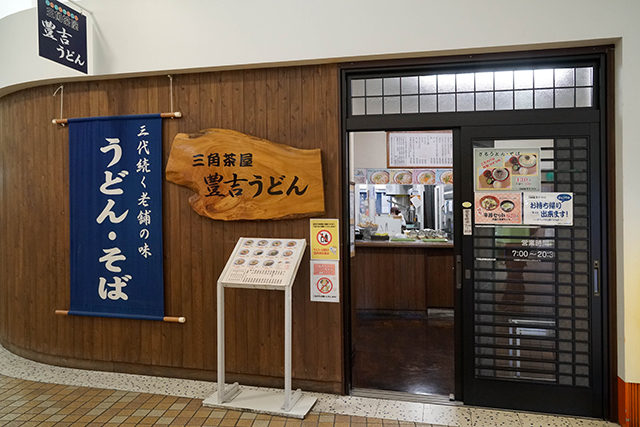
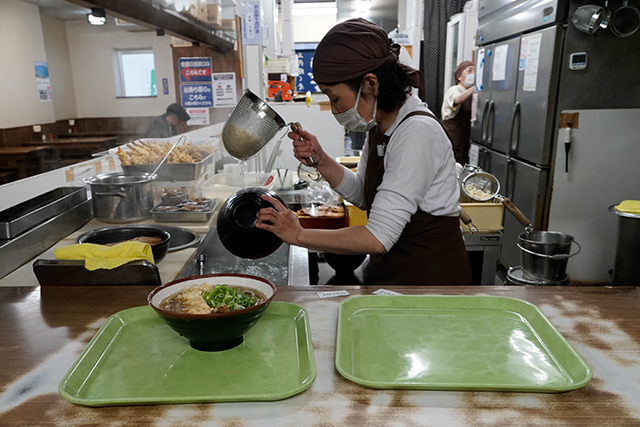
We pop into Toyokiti Udon for a quick meal of noodles and tempura.
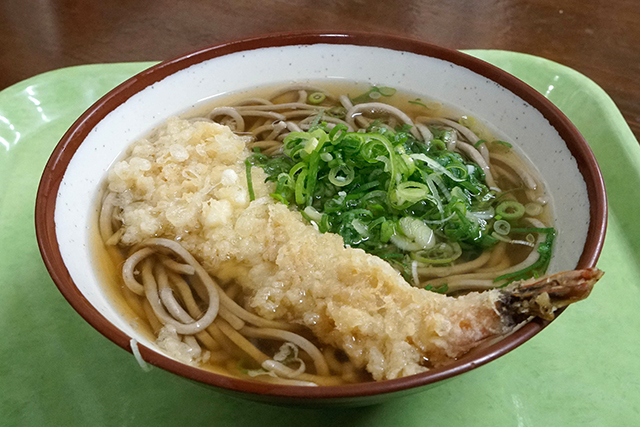
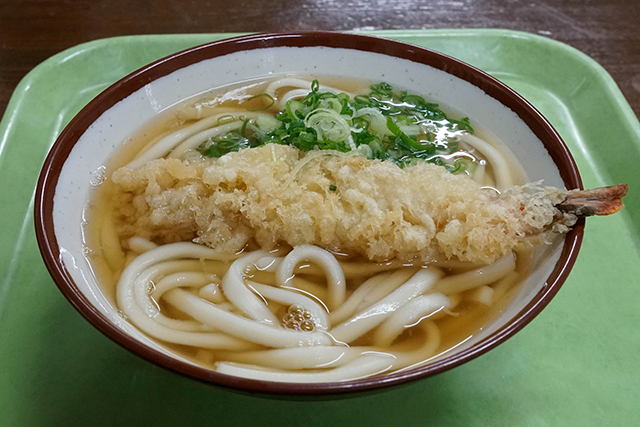
It’s a vending machine restaurant and D orders the Ebi Soba while I have the same with Udon (both ¥450 including tax). We’re impressed by the sheer size of the prawn and the generous amount of noodles in our bowls. The texture of the udon, though, lacked bite and the tempura became soggy very quickly despite our best efforts to eat it quickly. I guess that’s what we pay for when we visit restaurants that serve the tempura on the side. Nonetheless, it was a cheap, tasty and filling meal.
Obi, Nichinan
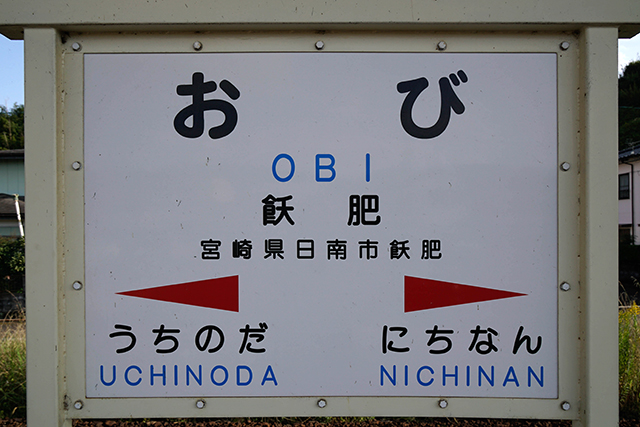
Obi Station
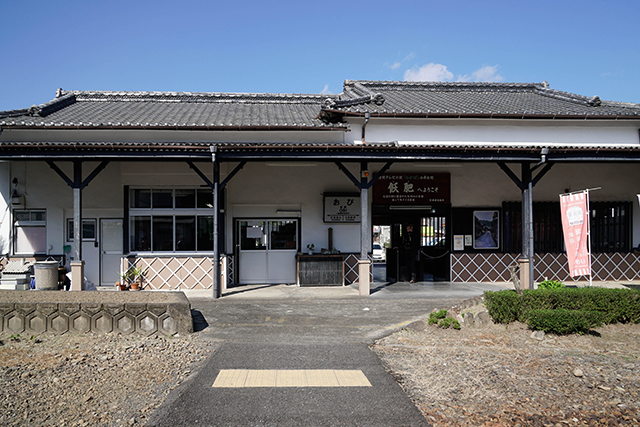
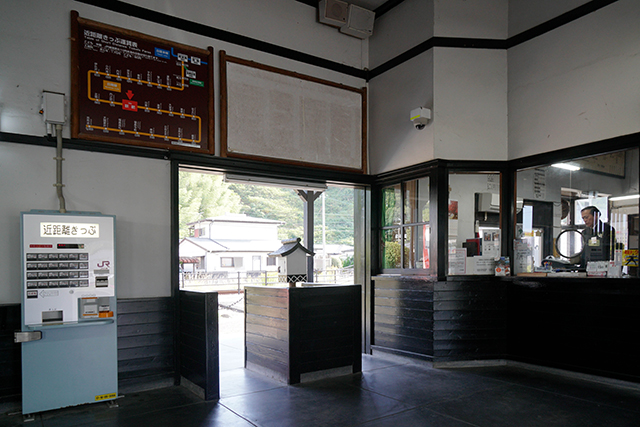
The Castle town of Obi is known as Kyūshū’s Kyōto and located between Nichinan and the southern Miyazaki city area. The two areas are connected via a 70-minute trip on the JR Nichinan Line.
The train servicing the line is a single carriage (except for during the morning and evening peak where it becomes a two-carriage train), runs around once an hour and requires paper tickets (or a JR pass) as IC cards do not work at the stations along the way. Passengers leaving the train at the rural stations are required to disembark from the front of the train only.
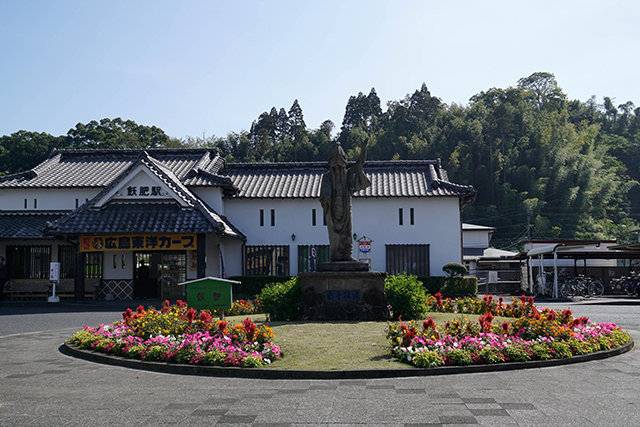
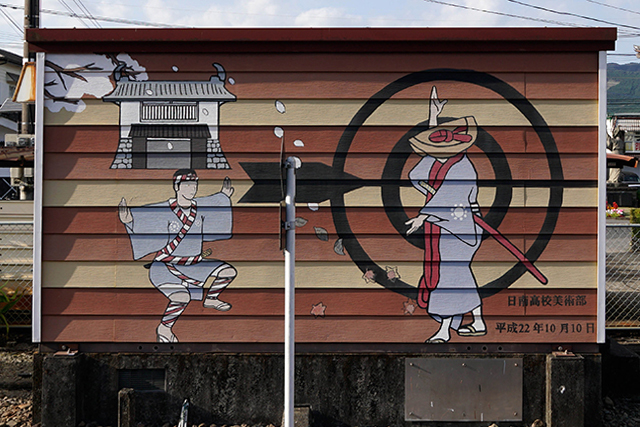
Throughout the station, we see motifs for the Taihei Odori, a peace-dance originating from Obi and dating back to the 18th century. The town of Obi used to be under the control of the Obi-han, which was in direct competition with the neighbouring Kagoshima-han until the early 18th century when the Tokugawa shogunate finally awarded the area to the Obi-han. To celebrate this achievement and to pray for lasting peace with the Kagoshima-han after this settlement, the whole town jubilated and danced together. And so the Taihei Odori was born.
The dance is performed every year at the Obi Jouka Matsuri with the dancers wearing colourful kimono, the outfits split up in commoner’s garments and samurai garments, and big straw hats with red strings attached.
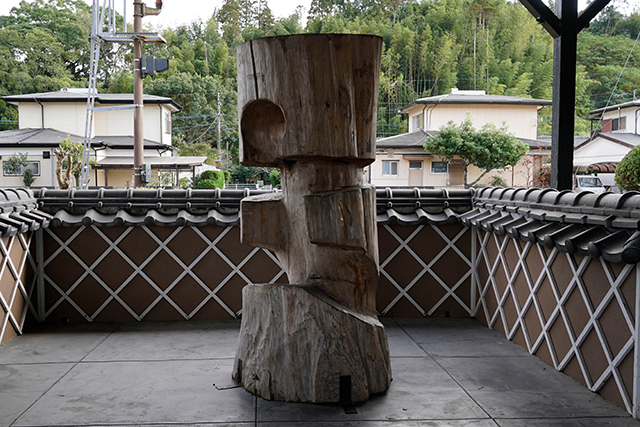
There’s a wooden sculpture carved from a tree stump in the station…
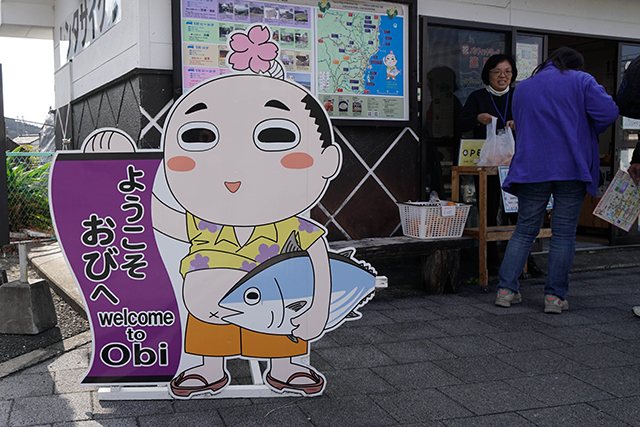
And directly outside the station is a small shop selling local specialties, including mikan.
Sakatani River
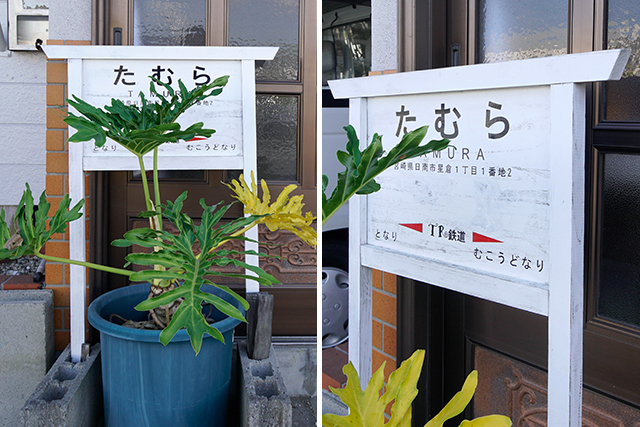
We see the cutest nameplate fashion in the style of a train station sign. It has the family’s name in hiragana and romaji above their address and on the bottom of the nameplate are the names of the neighbours on either side.
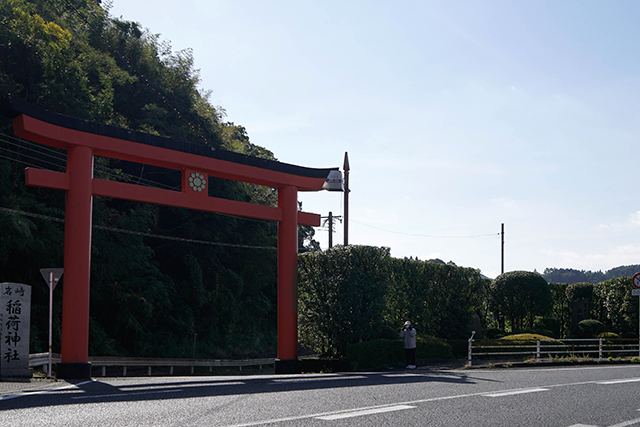
Approaching Sakatani River, there’s a torii.
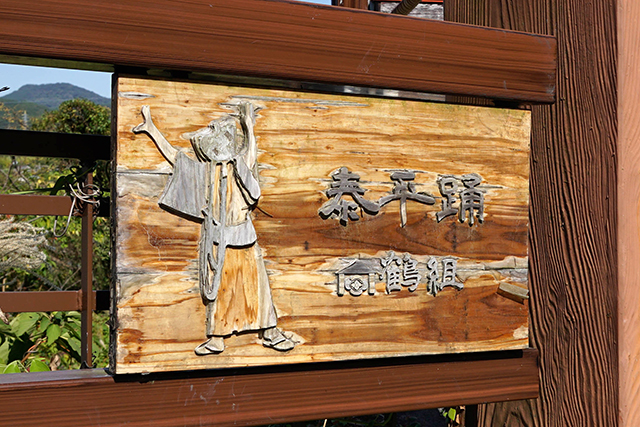
We see more references to the Taihei Odori on the bridge.
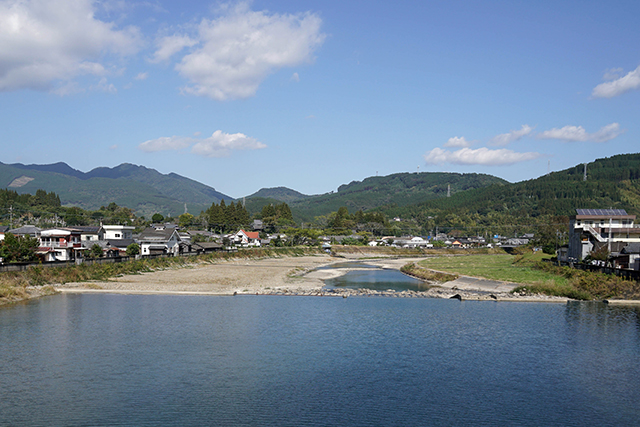
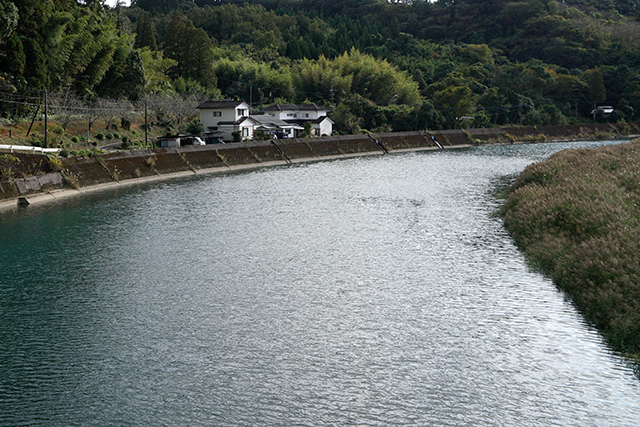
The castle town of Obi is surrounded on three sides by the Sakatani River.
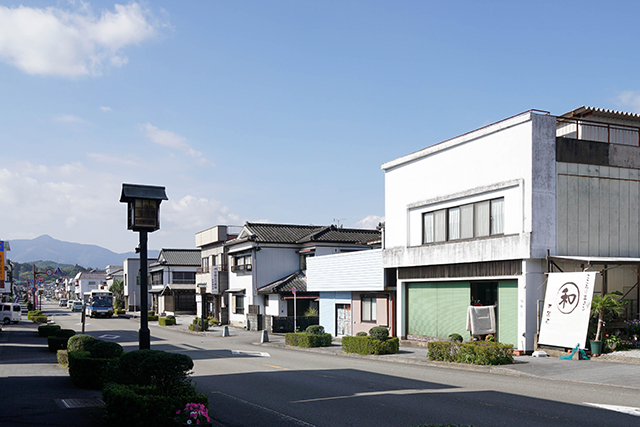
We walk along Obi Highway (yes, this two-lane road is a highway with a speed limit of 40 km/h) to reach the castle town.
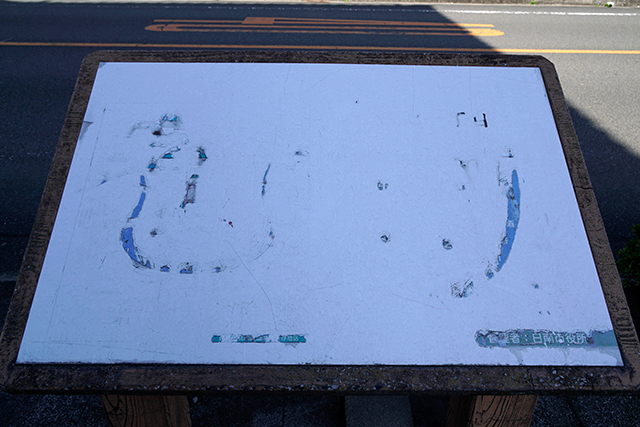
The signage around the town leaves a lot to be desired. Every other map we encountered was degraded to some extent with some losing all practical purpose.
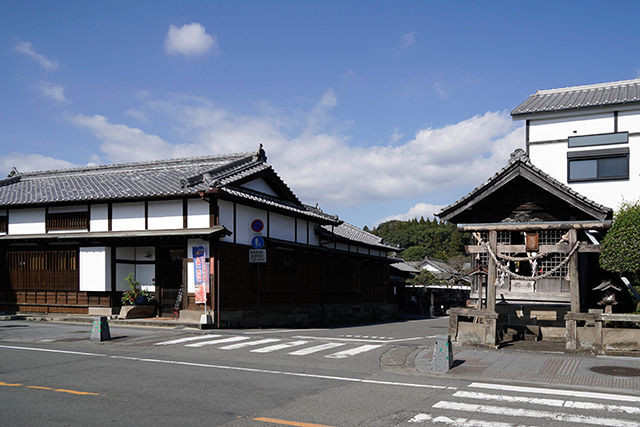
Honestly, this first impression along with the dearth of tourists did not bode well for the 1-hour train ride it took to arrive here. Nonetheless, we pressed on with our maps from Google and turned into this street hoping to find the tourist information office somewhere.
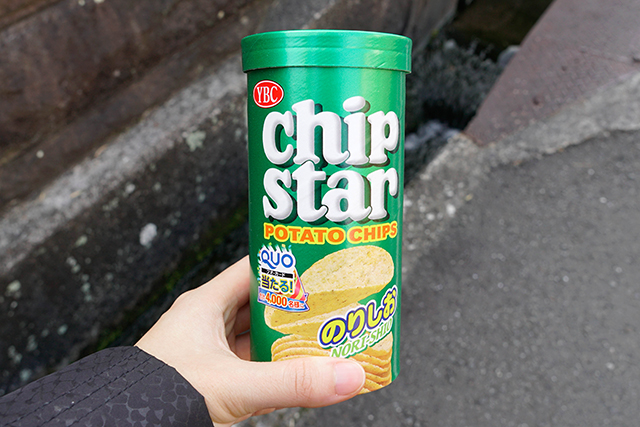
We have some YBC Chip Star Potato Chips in nori shio to relieve our disappointment.
Koi no Yūeichi
鯉の遊泳地, 5 Chome-2-35 Obi, Nichinan, Miyazaki 889-2535, Japan
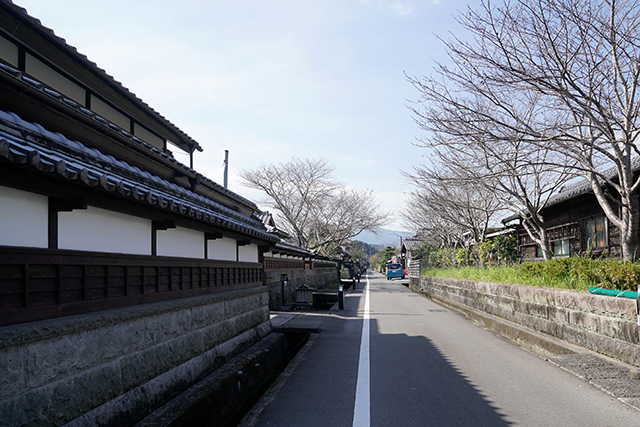
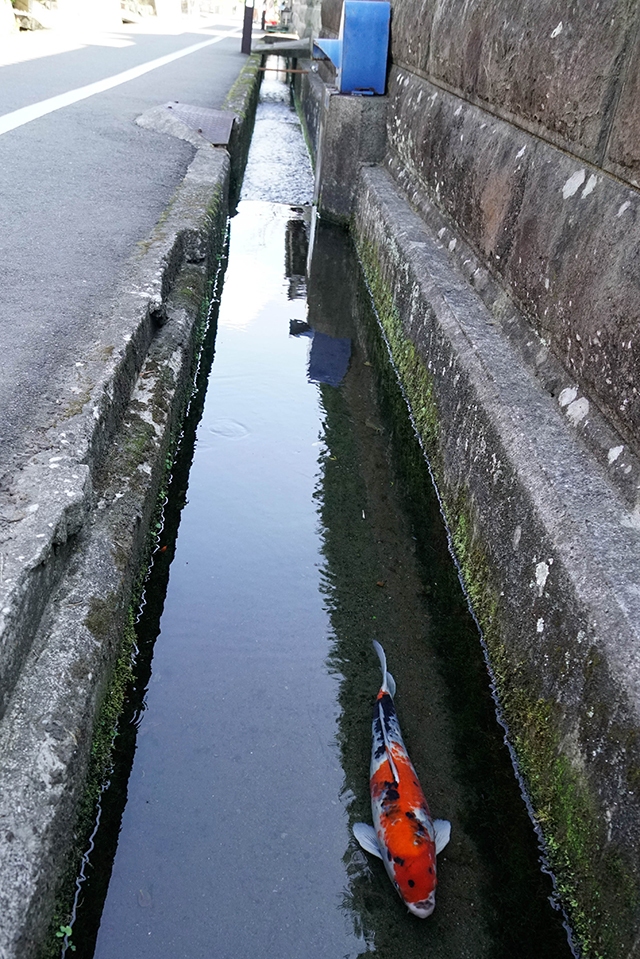
We stumble onto a koi swimming area on Ushiromachi Street.
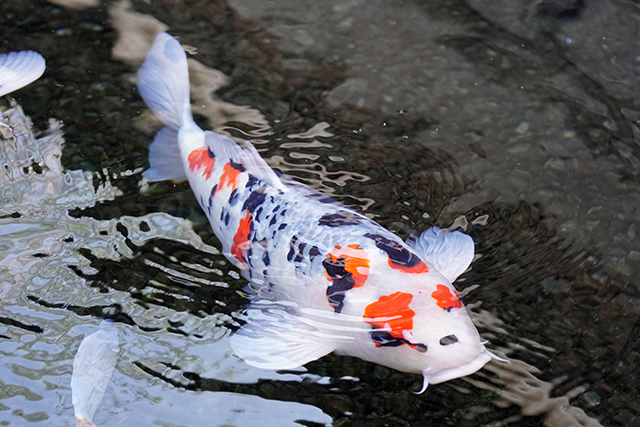
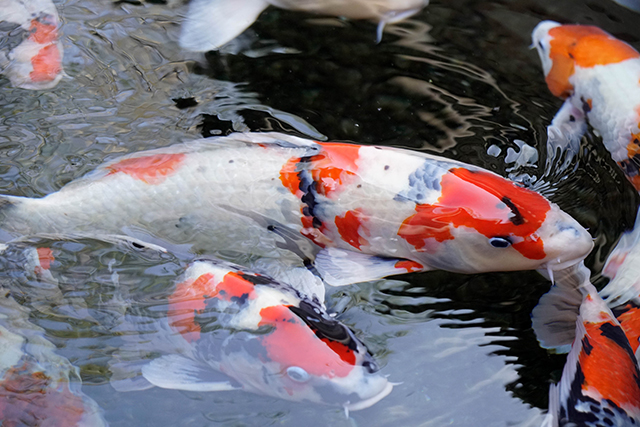
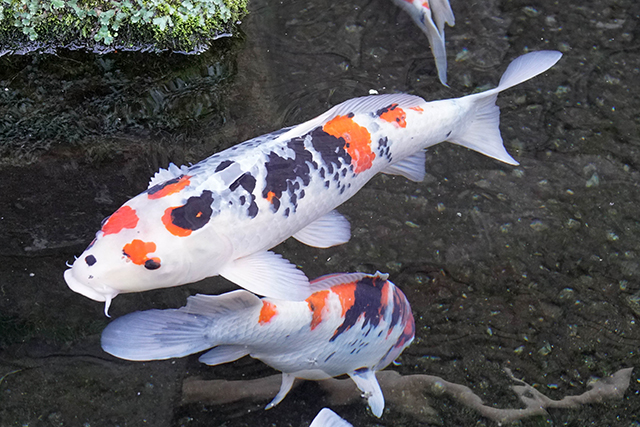
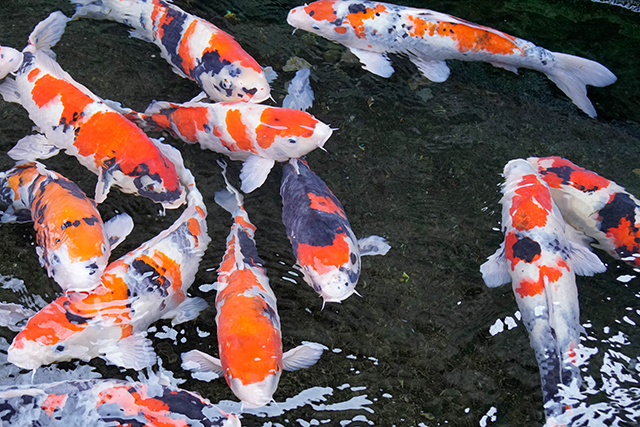
We wonder as to why there were only a few koi at the start of the road, only to discover a group of school kids were drawing the attention of the rest with some feed further down the street.
Obi Castle Town Information Office
飫肥城下町 案内処, 9 Chome-1-14 Obi, Nichinan, Miyazaki 889-2535, Japan
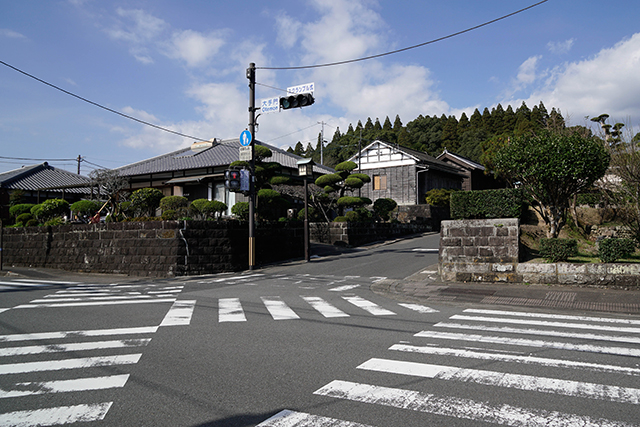
We keep walking up the hill as we see the castle ruins in the distance.
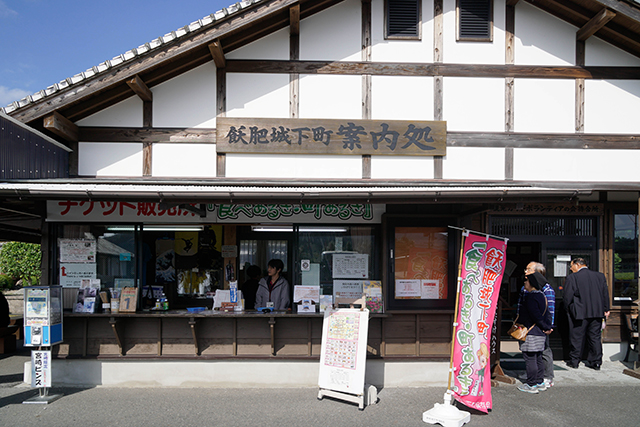
Through no help from the (lack of) signs around the town, we stumble across the Obi Castle Town Information Office, which runs a food stamp program called ‘Ayumi-chan Map’. For ¥800, we receive entries to 3 paid attractions and 5 food stamps to trade at one of the 40 different locations around the town, which are indicated on both the map and by corresponding numbers signposted at the front of the shop.
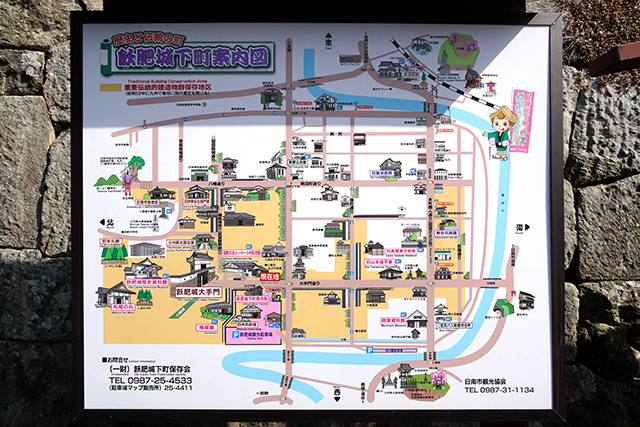
The maps look more promising! We find out that Obi’s history dates back to the early Edo period when it was one of the eight districts of Hyūga, an old province in eastern Japan, which was ruled by the Itō clan based at Obi Castle.
Obi Castle has a long history, dating back to the 15th century. It is believed that the high ranking samurai Hideyoshi Toyotomi handed ownership of the Obi Castle domain to Suketake Ito, the Ito Clan s feudal lord, in the early Edo period. After receiving ownership, Suketake Ito began development of the future Obi town area, increasing its size and defences. Obi prospered with the leadership of the Ito family.
The streets of Obi remain the same since their first original design dating back to the early Edo Period.
The castle town of Obi is surrounded on three sides by the Sakatani River. Measuring at around 850m from East of West, and around 900m from North to South, the river forms the town’s circular shape. The seven streets from East to West and the three streets from North to South also help contribute to the unique shape of the town.
The Historical Preservation District is 19.8 hectares. Obi town includes Yokobaba Street, Ushiromaclii Street and Maezuru Street.
Obiten
おび天 蔵, 9 Chome-1-8 Obi, Nichinan, Miyazaki 889-2535, Japan
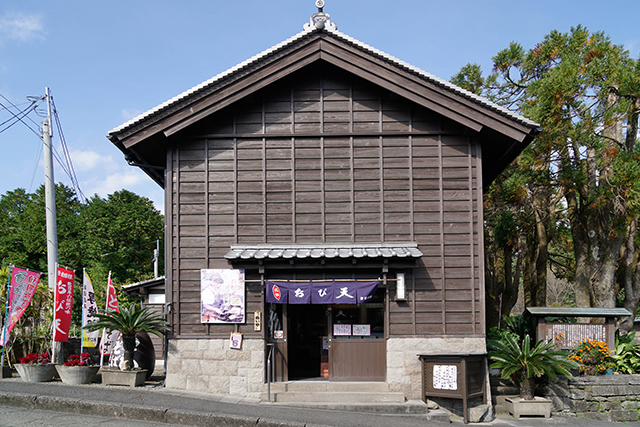
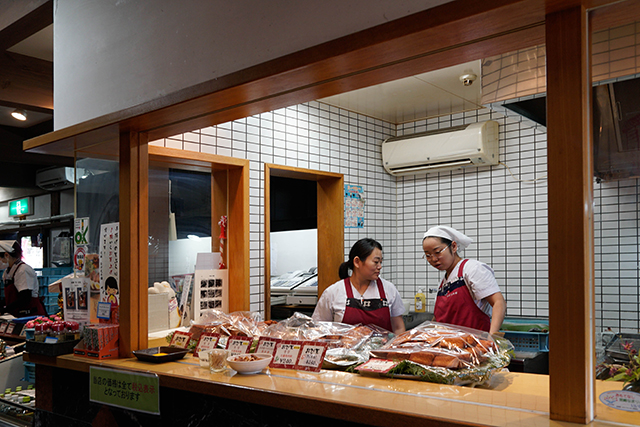
Obiten is located a few steps from the Information Office and we stop by for some obiten, which is a local food of Obi Castle Town made by deep-frying fish paste with soybean paste, brown sugar, and tofu.
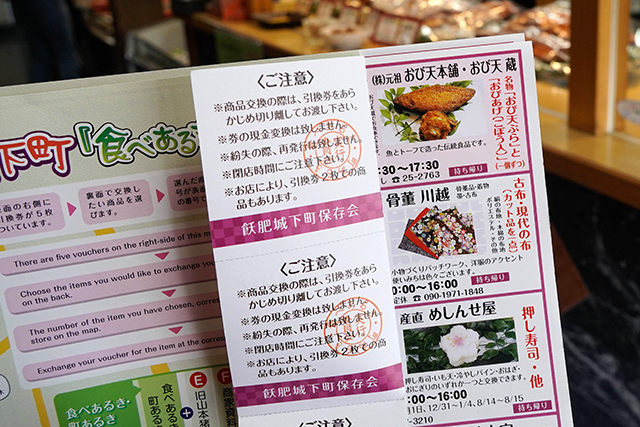
The perforated squares in the middle of the photo are an example of the food stamps we used to exchange for the items.
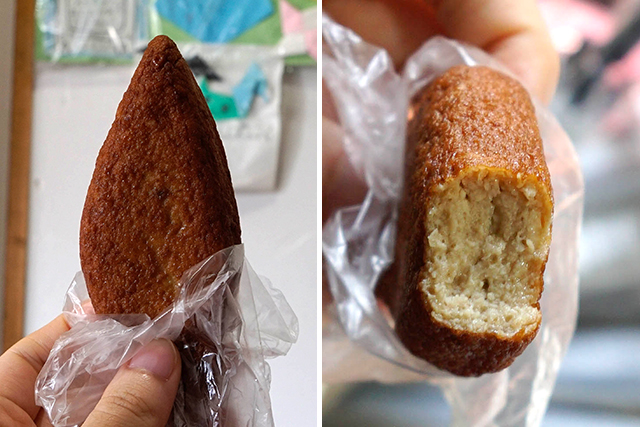
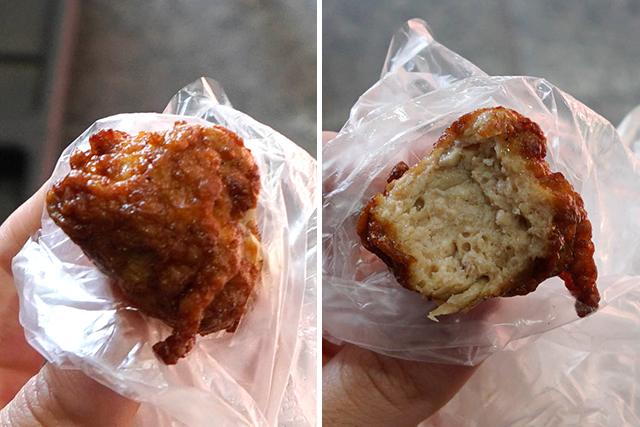
One food stamp got us two pieces of obiten. They’re different shapes (with the bottom one getting our hopes up by resembling karaage) but they both tasted like fried tofu with a slightly firmer texture. We’re not fans of tofu but the obiten was also stonecold and sweet, which made it even less appealing.
Komura Memorial Hall
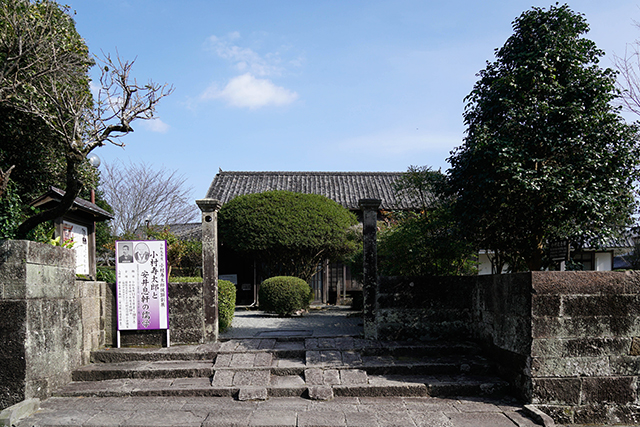
We continue towards the castle ruins and pass by the Komura Memorial Hall (entry fee additional). It’s an International Exchange Centre that opened in 1993 to honour Baron Jutaro Komura, a diplomat of the Meiji Period who built the foundation of diplomacy for modern Japan in the West and instrumental in signing the Japanese-Russia Peace treaty.
Yoshokan
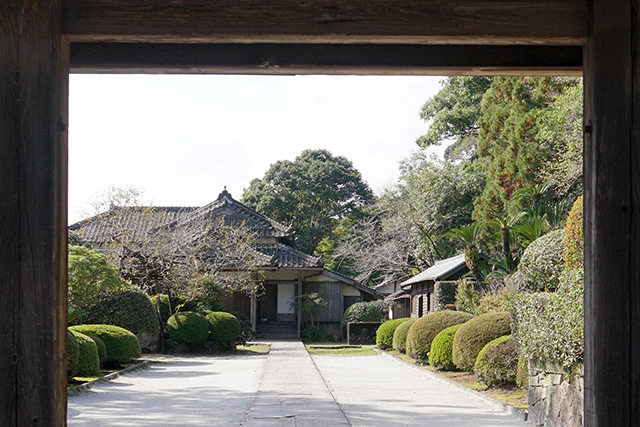
Opposite the hall is the Yoshokan (entry fee additional), which was the home of the head of the Ito Clan.
It was built in 1869 and has an entrance ccalled ‘Yakuimon’. The garden facing south is said to have been made by Bugakuryu. The style of the garden is known as ‘karesansui’, in whcih decorative stones, lanterns carved from stone and trees are skillfully arranged within the spacious confines of the garden. Mount Atago provides a beautiful backdrop to this gracious garden.
In Obi town, the residences of the highest-ranking retainers were located closet to the castle, followed by the middle-ranking retainers’ houses and the merchants’ houses. The residences of the lowest ranking samurai were located furthest from the castle. Each retainer’s estate was surrounded by stone walls and hedges, and a gate was designed by the rank of the house. The size of a retainer’s estate ranged from 8,580 m for the smaller ones, to over 66,000 m for the largest and more lavish estates.
Obi Castle Ruins
飫肥城跡, 10 Chome-1 Obi, Nichinan, Miyazaki 889-2535, Japan
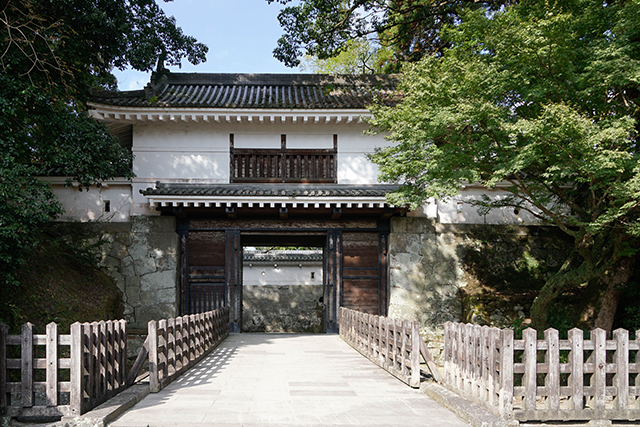
At the top of the hill is the main gate of the castle, of which the samurai’s mansion, the storehouse, and the white-walled merchant building remain.
The main gate of Obi Castle, called Otemon, was destroyed at the beginning of the Meiji era. It was rebuilt for the second session of the restoration work in 1978. […] It measures 12.3 meters high and is a wooden structure of 2 levels that links the stone walls. The work was made possible thanks to the Forestry Protection Office for Scientific Advice of Mitsuiwa (office of the Forestry Department) who offered 4 centenary Obi cedar trees in order to construct the gate.
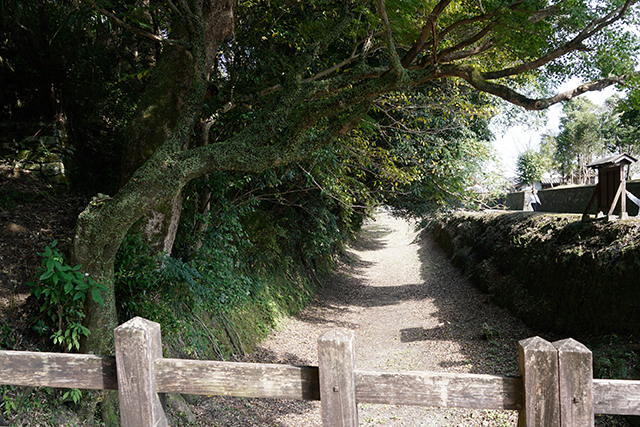
The moat surrounding the castle remains, albeit dry.
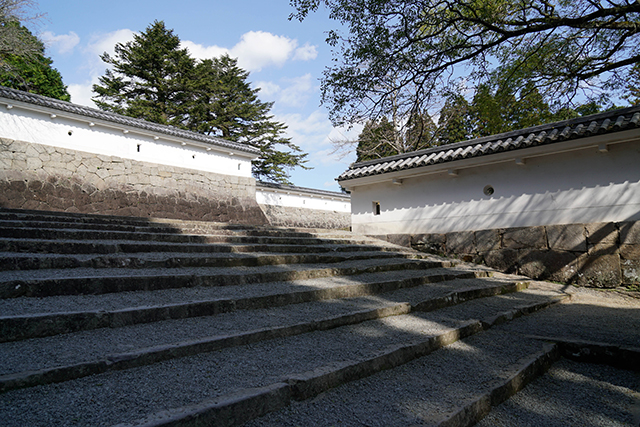
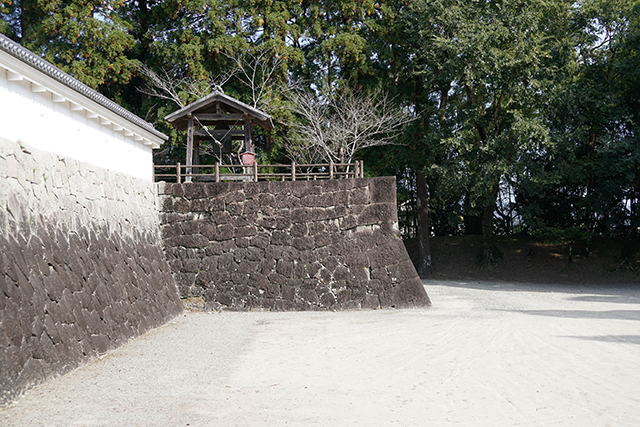
Obi Castle was quite a large castle as reflected in the remaining grounds.
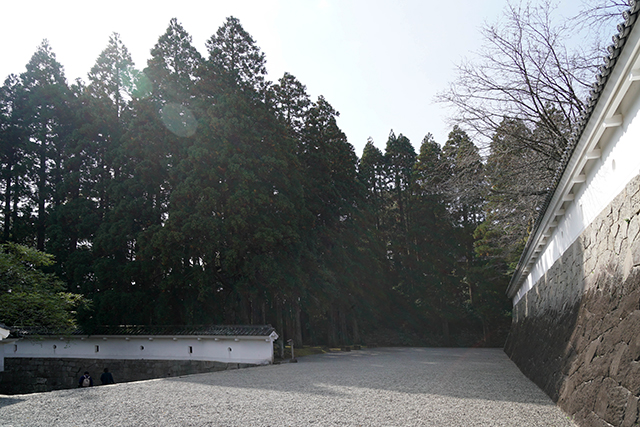
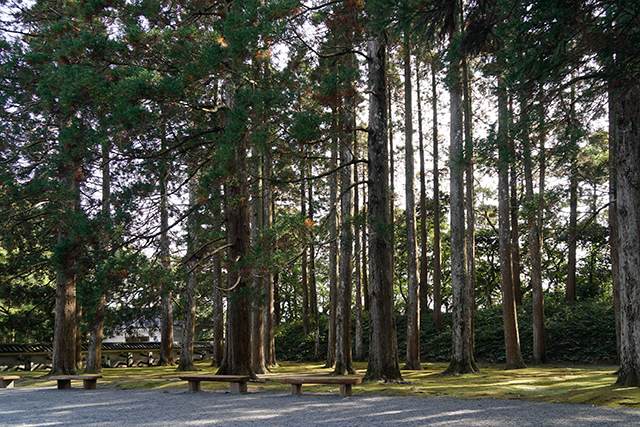
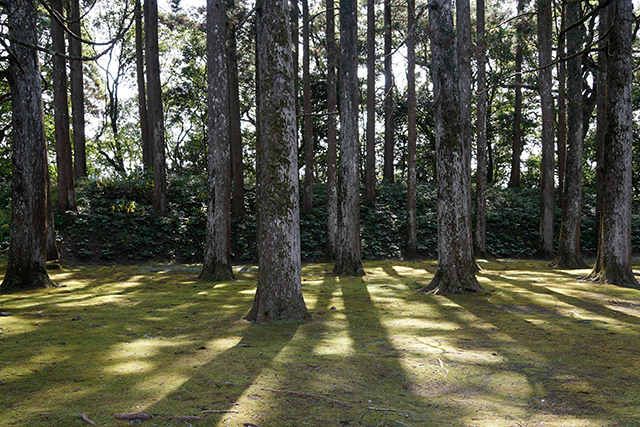
There’s a beautiful cedar forest within the grounds of the castle.
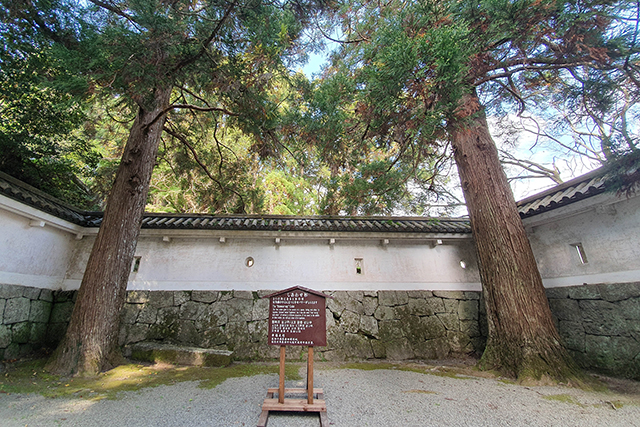
This pair of trees is part of four cedar trees making up the Shiawase-sugi Cedar —
The four cedars grow in the corners of a square, facing each other. In Japanese, ‘shiawase’ means ‘happiness’, but it can also mean ‘four facing each other’, if written in different characters. if you stand in the middle of these cedars, you will get a share of its happiness.
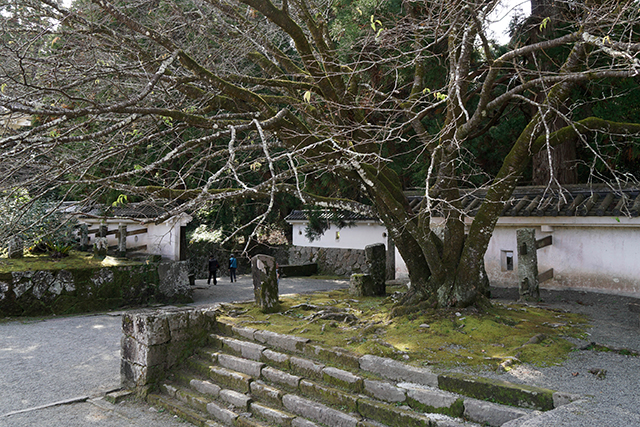
During spring, the early warmer weather in Miyazaki brought out the earlier sakura.
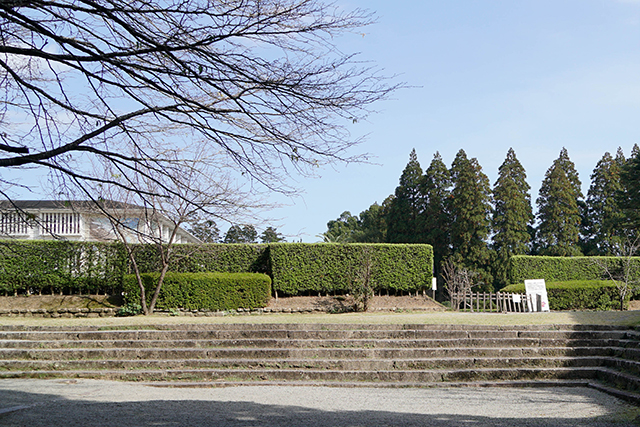
There is a large elementary school found on the edge of the ruins.
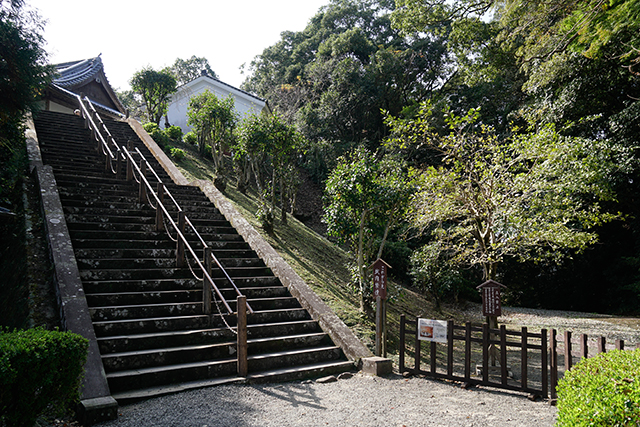
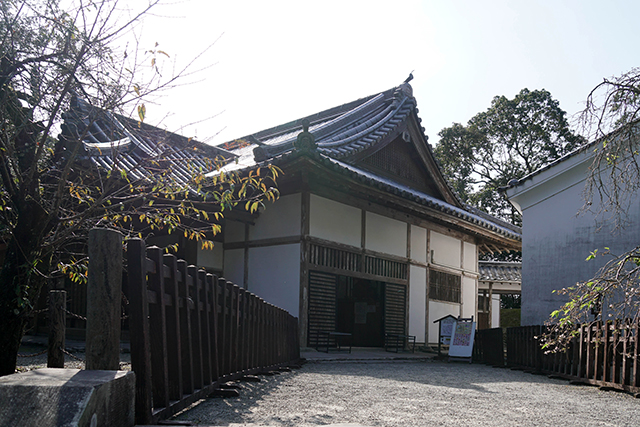
This flight of stairs takes on up to Matsuo no Maru, a noblemen’s private residence that was rebuilt during the renovation work of Obi Castle in 1979.
The main building was rebuilt in the Shoinzukuri style at the beginning of the Showa period. This is a commonly used architectural style used in modem Japanese houses. The circumference of the floor is 80,002 m² and divided into 20 rooms including gozanoma (large parlor room), goshinsho (bedroom), tea room and suzumi yagura. The suzumi yagura is a room used for cooling down after a bath, it was recreated according to the bathroom that Hideyoshi Toyotomi was using in the Shurakutai in Kyōto. Plans and supervision of the work was executed by the late Professor Michio Fujioka based on the design of the Takeda Castle of Bungo (Ōita Prefecture) and the Nijo Castle of Kyōto.
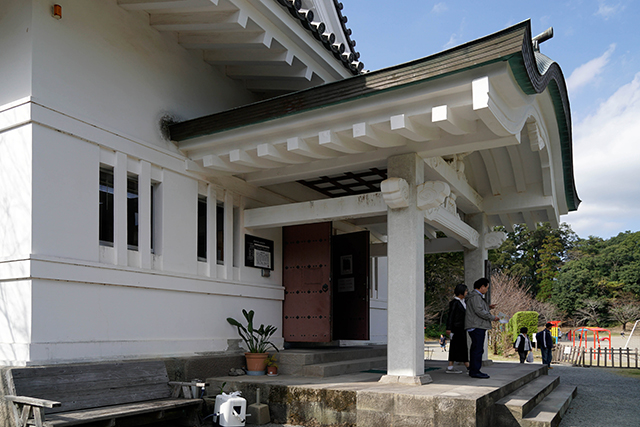
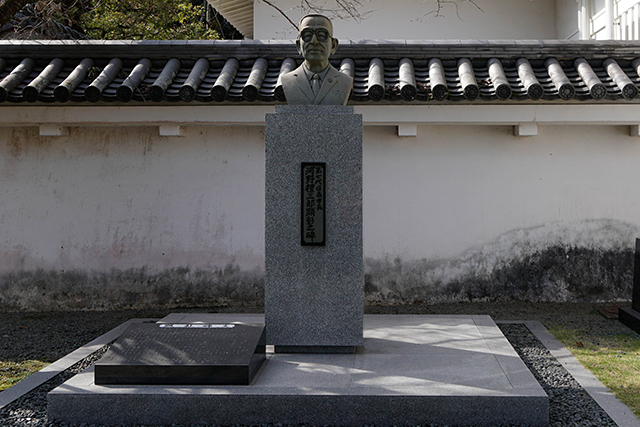
This building houses the Obi Clan Historical Museum (paid attraction).
Otemon Dori and Yokobaba Street
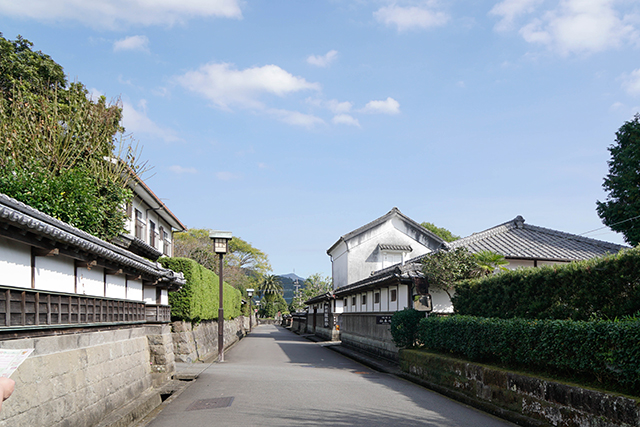
Returning to the main gate, we walk along Otemon Dori, which becomes Yokobaba Street.
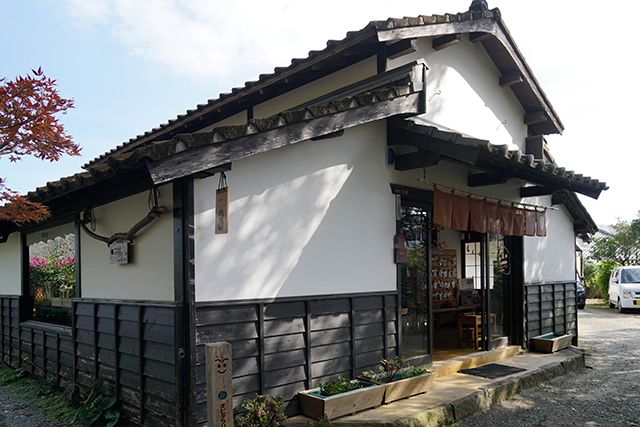
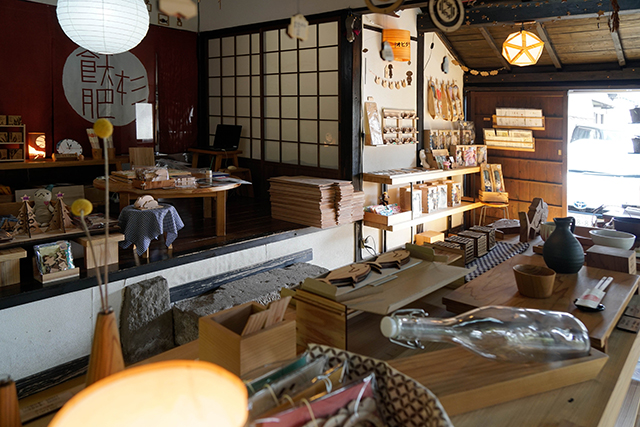
This shop, Obidararī, specialises in products made from Obi cedar.
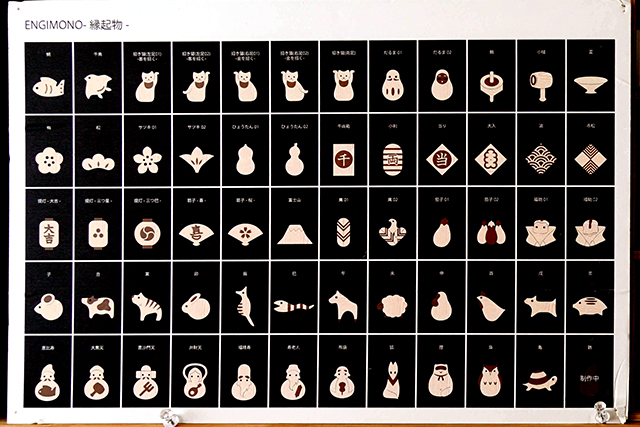
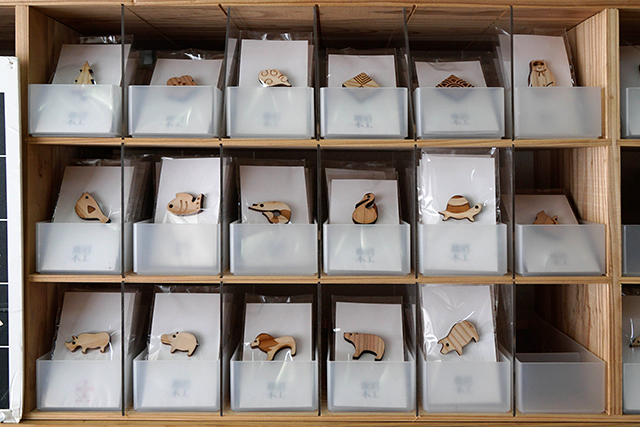
There are numerous laser cut figures. A ‘stamp’ can also be exchanged for a pair of Obi cedar chopsticks at this location.
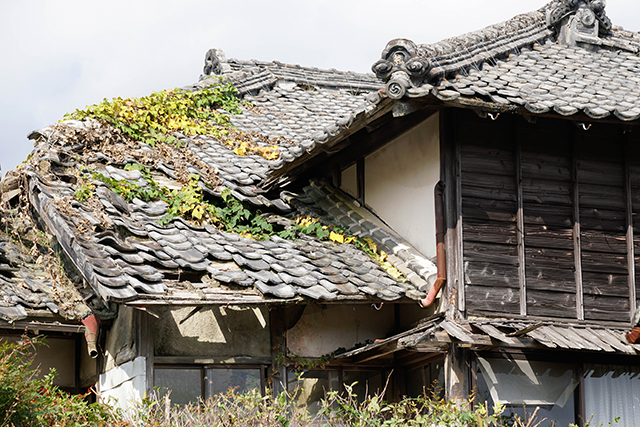
While some houses along Yokobaba Street are restored to excellent condition, others are in severe disrepair.
Kimura Shokudō
木村食堂, 5 Chome-4-7 Obi, Nichinan, Miyazaki 889-2535, Japan
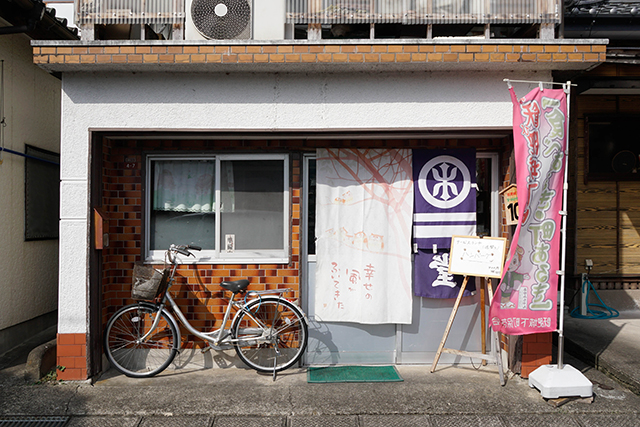
For our first stamp, we visit Kimura Shokudō for some fried doughnuts. Like almost all the other shops in Obi, this one is run by an elderly couple who live on the same premises.
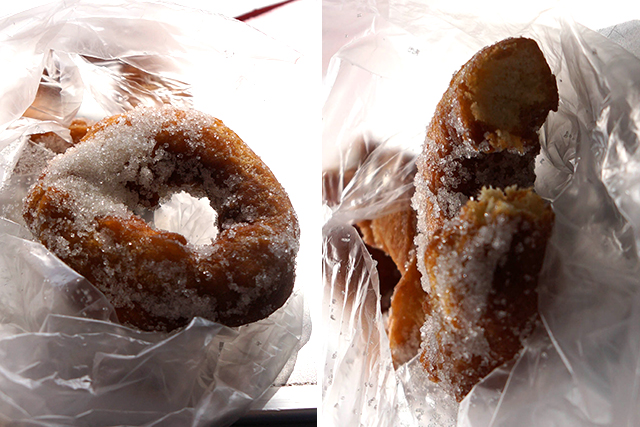
The lady retrieves the pre-bagged doughnuts from a larger bag at the back. We find the doughnuts dense and lavishly coated in sugar but not oily.
Super Tomura
スーパーとむら 飫肥店, 5 Chome-2-6 Obi, Nichinan, Miyazaki 889-2535, Japan
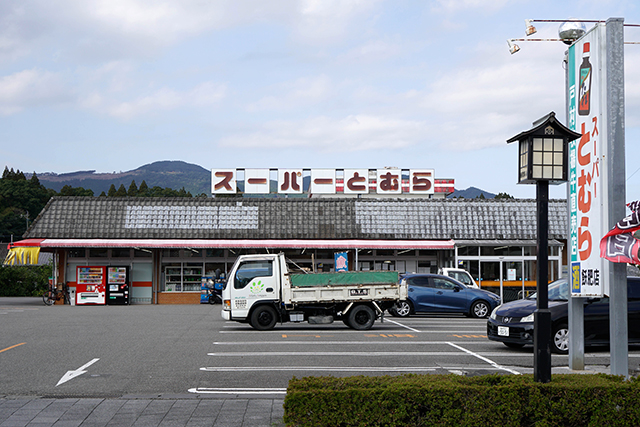
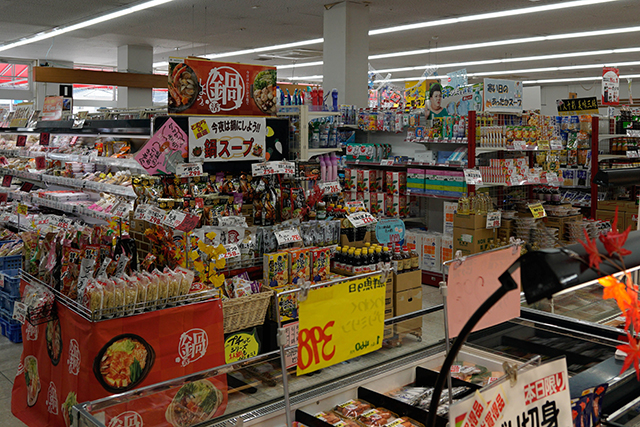
Hoping for something tastier, we visit the local supermarket, Super Tomura.
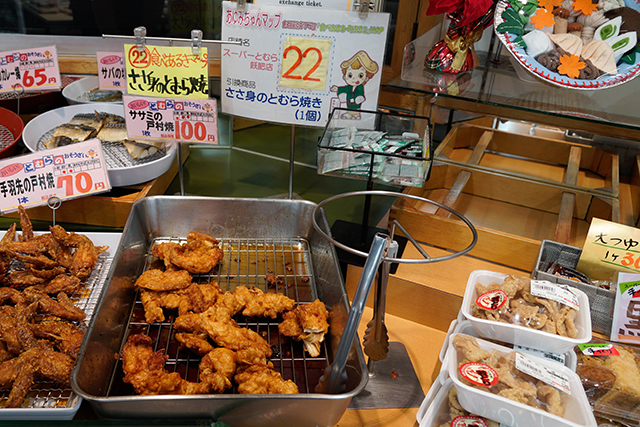
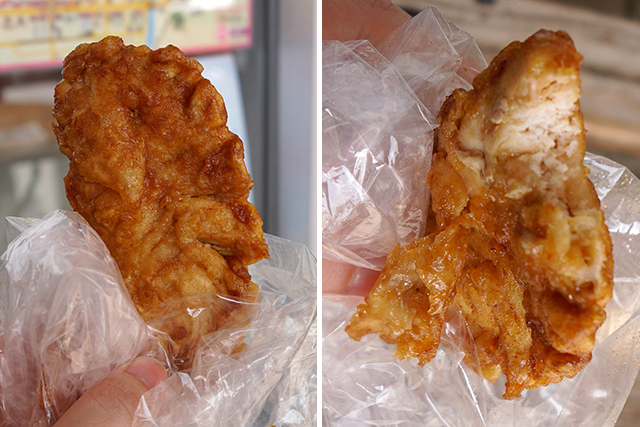
Here, we exchange a stamp for a piece of fried chicken. It’s a substantial piece of chicken, but it was cold (and there’s no microwave at the store) and the batter was soggy from the vinegary savoury sauce.
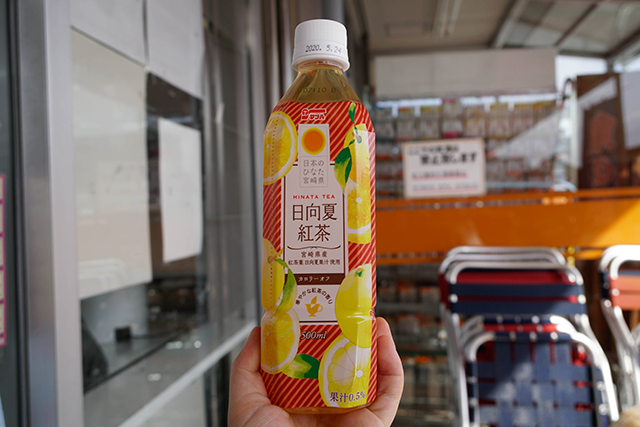
We hydrate ourselves with some San A Hinata Tea with hyūganatsu and black tea grown in Miyazaki Prefecture. The drink tastes like a more refined lemon tea, with the hyūganatsu bringing a fresh flavour with an enjoyable black tea base.
Residence of Genjiro Takahashi
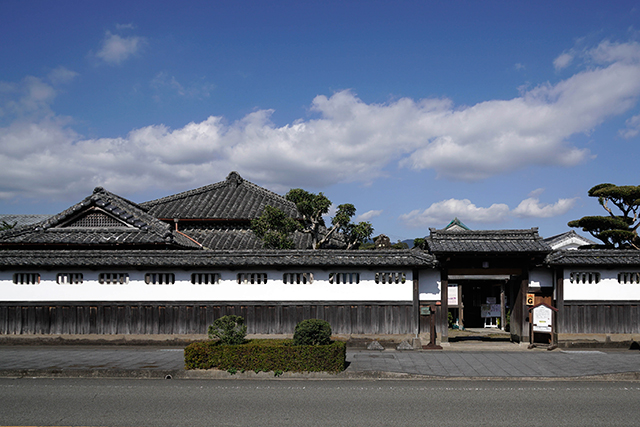
We make a stop inside the residence of Genjiro Takahashi, a local politician and businessman. It is one of three buildings included with the stamps. and located in the centre of the residential street of the district.
A small section was lost from the property due to road widening works carried out in the late 70s and early 80s, but before the loss, the property measured 20 meters by 45 meters, which encompassed the main house, a flat, a shrine, two storehouses, an out house, a kitchen house, and the toilets. There also was a two storey store on the south-east side of the main house facing the road.
The main house was built in the middle of the Meiji period, and renovated early in the Taisho Period. It faces the main town, with a roofed wall surrounding the property. The flat, outhouse, and the storehouses are all built in a line, but the roofed wall prevents them from being seen from the main house, showing the care taken to ensure the guests are provided with the best view. The roofs on the main house are tiled, and are highly valued as they are one of the first to change from t hatched roofs in the Obi area.
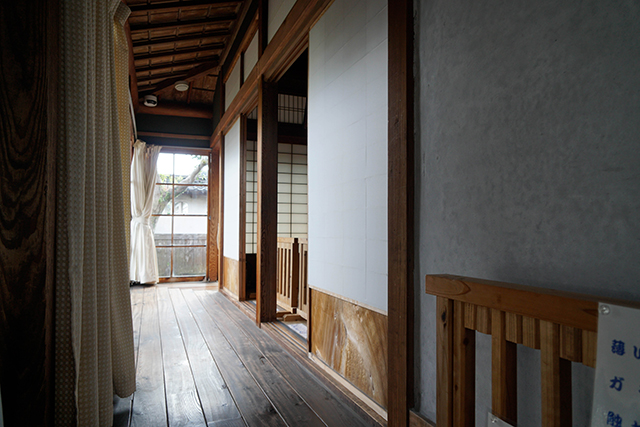
There are three adjoining rooms from the entrance of the main house.
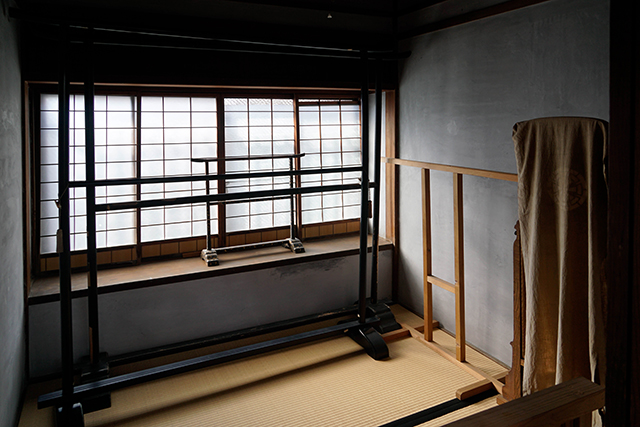
This room houses racks for kimono.
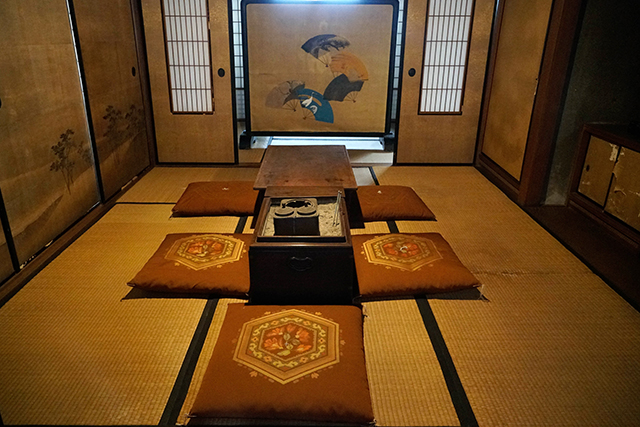
This room has a seating area around a hearth.
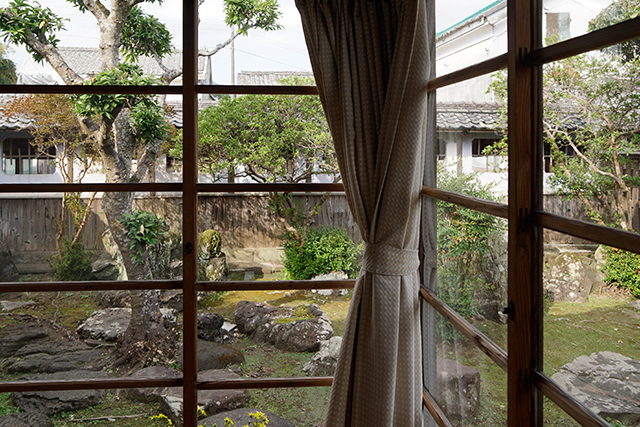
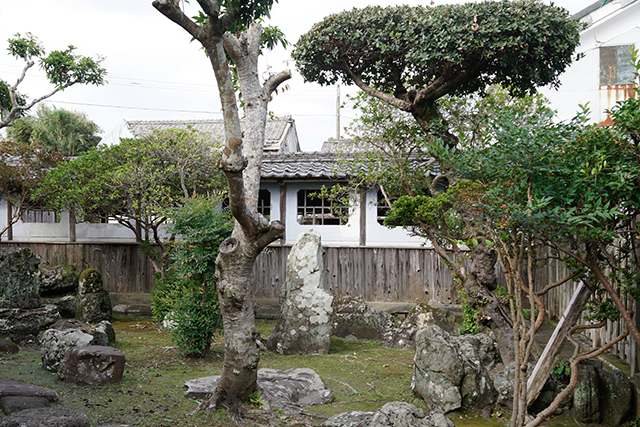
The main house has a courtyard.
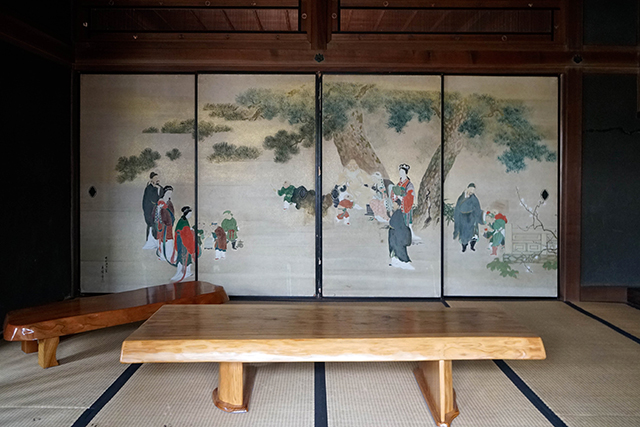
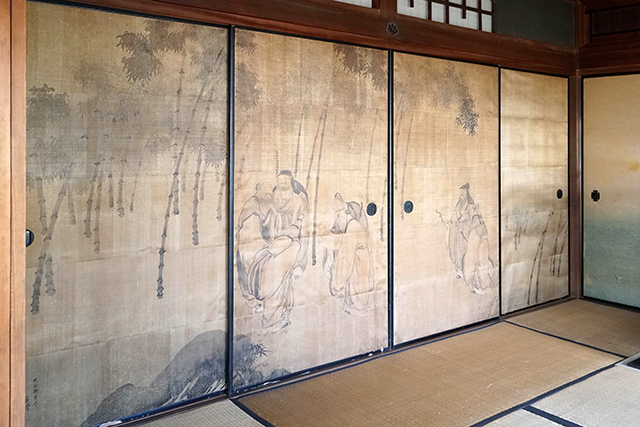
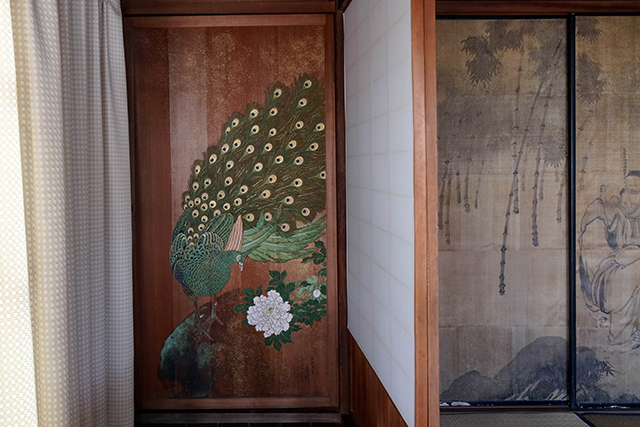
The sliding doors in all the rooms have Japanese art painted on them.
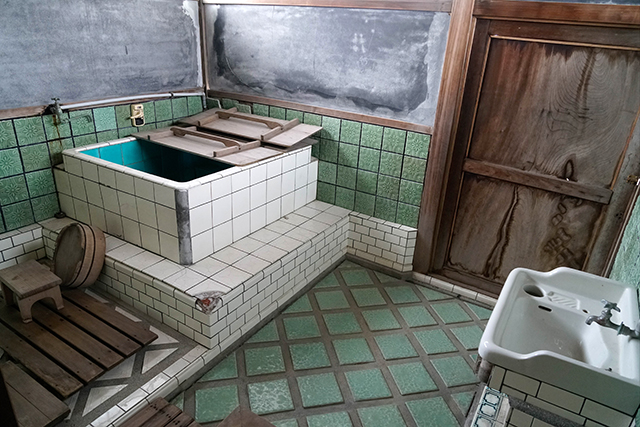
This shows the modern addition housing the more modern toilets.
By now, it’s around 2 pm, and having walked around most of the castle town we decide to focus on exchanging the remainder of our stamps rather than explore the other two buildings.
Kashi Kōbō Wakaba
菓子工房わかば, 5 Chome-2 Obi, Nichinan, Miyazaki 889-2535, Japan
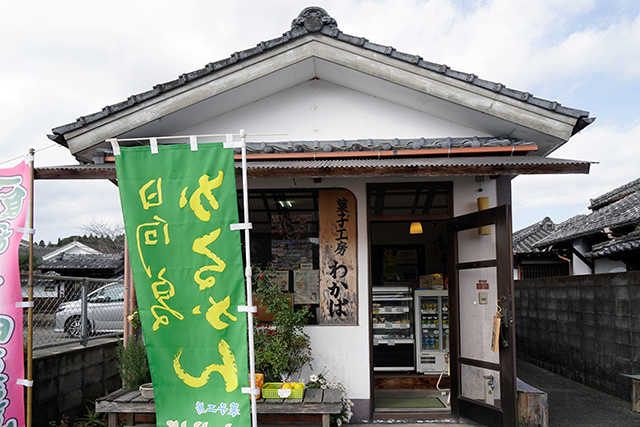
We stop by Kashi Kōbō Wakaba for their hyūganatsu madeleine.
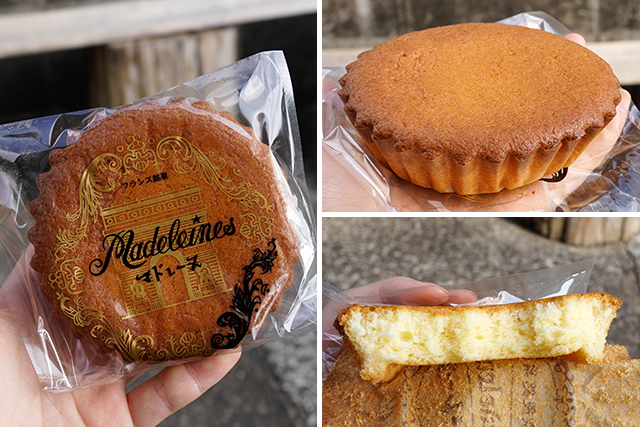
The madeleine has mellow citrus in a buttery base that’s dense but light with a fine crumb.
Kino Kazeya
和雑貨 紀風屋小町, 5 Chome-2 Obi, Nichinan, Miyazaki 889-2535, Japan
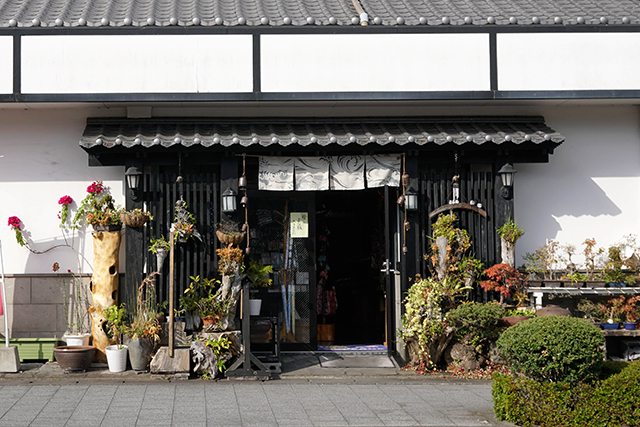
Kino Kazeya sells all sorts of typical omiyage from umbrellas to hair combs to charms.
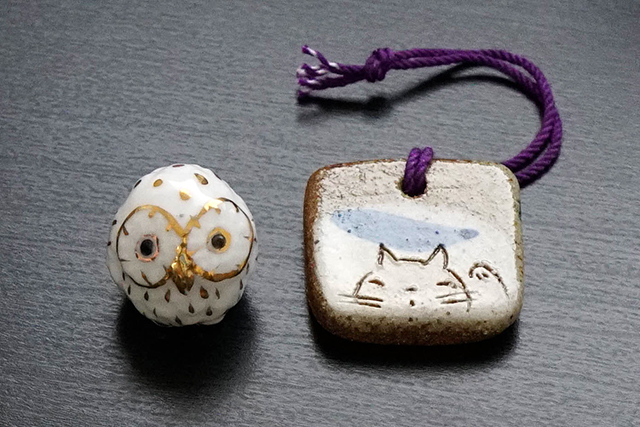
We exchange two of our coupons for these cute charms — an owl and a cat.
Spice Cafe Hitotsubu
スパイスカフェ ヒトツブ, 6 Chome-7-1 Obi, Nichinan, Miyazaki 889-2535, Japan
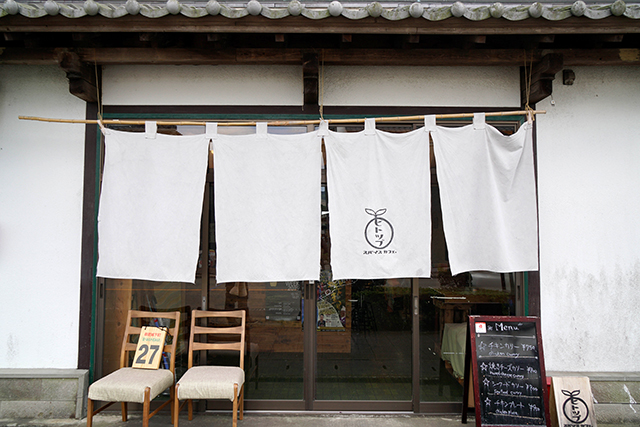
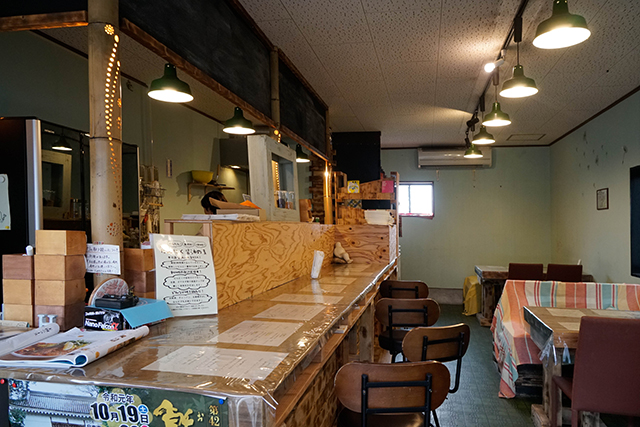
We’re a little intrigued by the offering of a spicy mango tea from Spice Cafe Hitotsubu, so we make a stop there. All the restaurants we visited were empty…
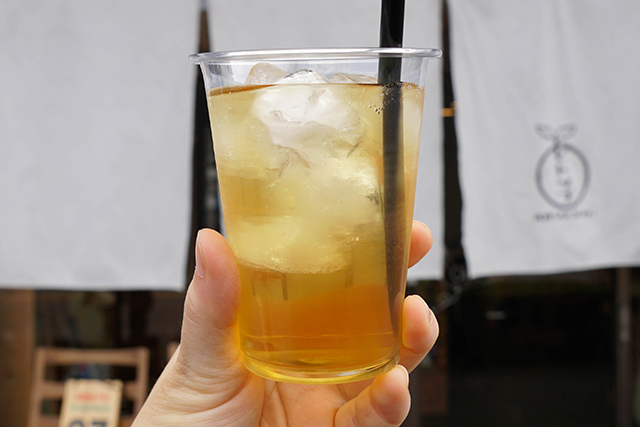
And this is the spicy mango tea. It is, quite frankly, odd. The drink had the fragrant flavour of curry but without the spiciness or heat and any sweetness or fruitiness of mango.
Matsuman Shokudō
松万食堂, 1 Chome-4-1 Obi, Nichinan, Miyazaki 889-2535, Japan
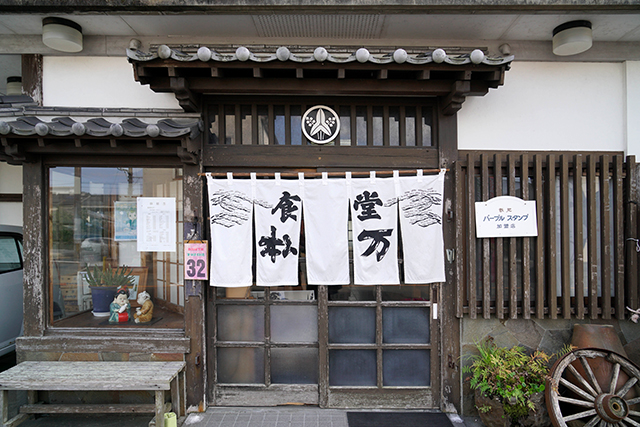
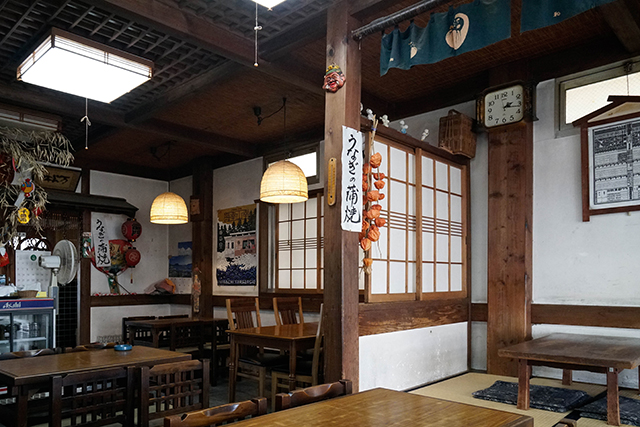
The supermarket fried chicken didn’t satisfy D’s craving so we stopped by Matsuman Shokudō for a second go. This store fries the chicken fresh to order, with the lady asking us to wait 5 minutes (really, 10 minutes).
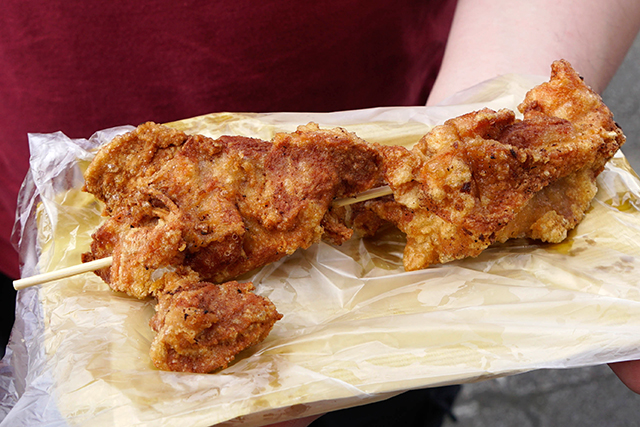
The fried chicken here was well worth the wait, though. It was deliciously crispy and juicy with a hint of spice.
Iwai Donichi
祝土日, 1 Chome-1-40 Obi, Nichinan, Miyazaki 889-2535, Japan
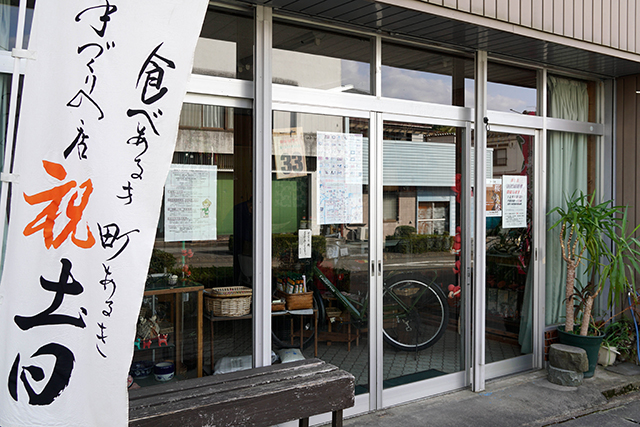
Just before crossing the bridge over Sakatani River, we stop Iwai Donichi, which sells handmade accessories made from repurposed used cloth.
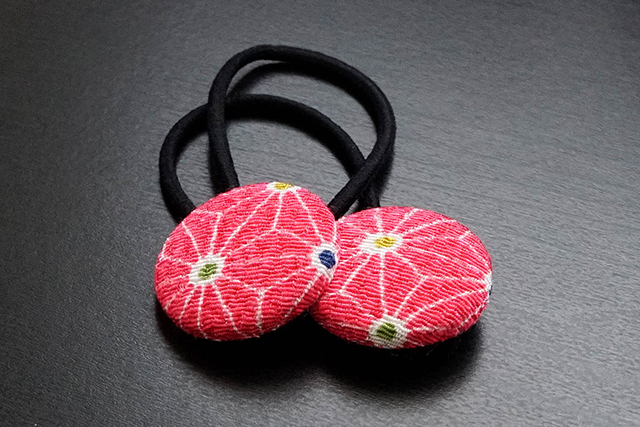
I swap our last stamp for a pair of hair ties.
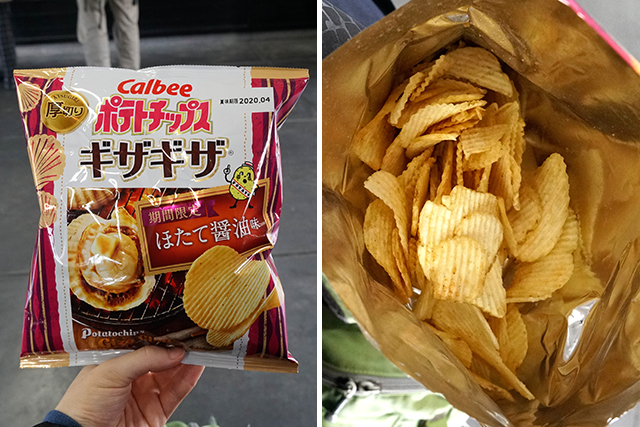
Back at Obi Station, we rest in the waiting room before the station master checks tickets 5 minutes before the train arrives to allow people onto the platform. For a quick snack, we have some Calbee Potato Chips Giza Giza Hotate Shou, which were crinkle cut and scallop flavoured. These chips do indeed taste like scallops, with an initial sweetness of the shellfish followed by a prominent butter flavour.
Frankly, Obi did not live up to the effort required to get there, with much of the town giving off the impression that it wasn’t prepared to accommodate tourists — local, but especially foreign, tourists — with the stamp program, ‘Ayumi-chan Map’, feeling more like a last-ditch resort to get people walking around the town. But once we reached those places, there wasn’t much further to see or do after exchanging the stamp. That said, I do not doubt that Obi would be much more interesting if we managed to visit during the Obi Jouka Matsuri.
Aoshima, Miyazaki
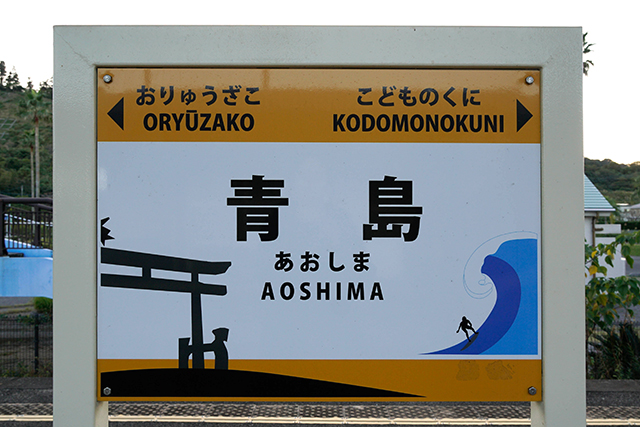
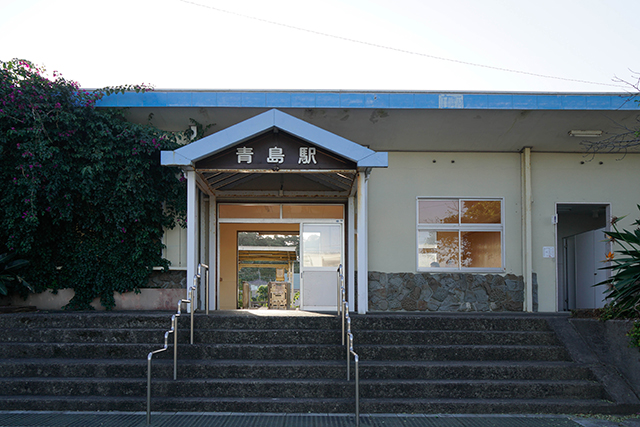
We made the most of what was left of the day by visiting Aoshima Shrine. Aoshima Station is situated 40 minutes from Obi Station back towards Miyazaki city on the Nichinan Line.
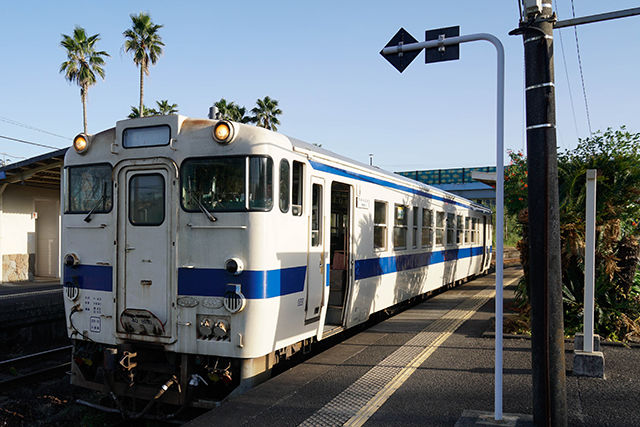
This is the same line we caught from Miyazaki to Obi.
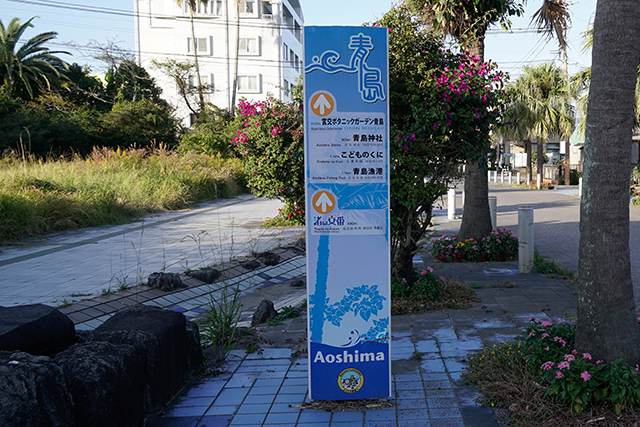
The island is about a five-minute walk from the station. There’s plenty of signage around here!
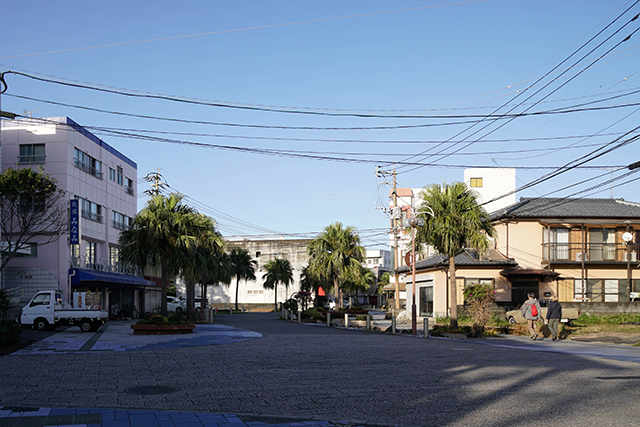
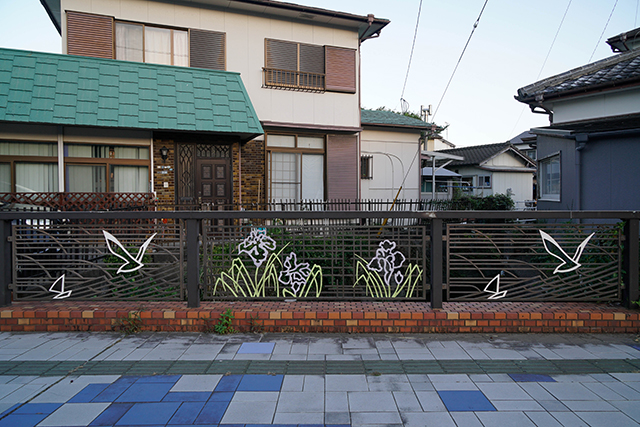
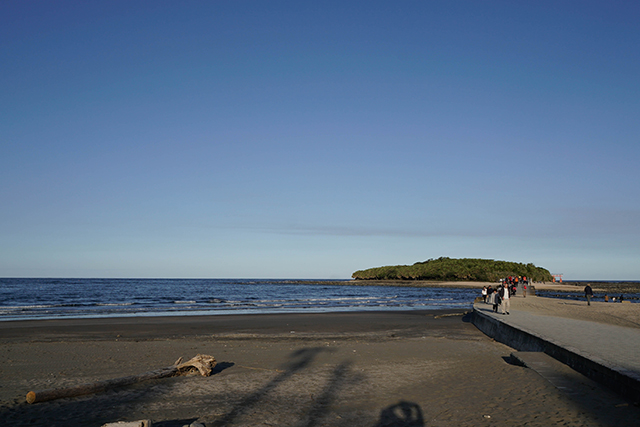
Aoshima has a very laid back, beachy vibe — even more so than Miyazaki Station.
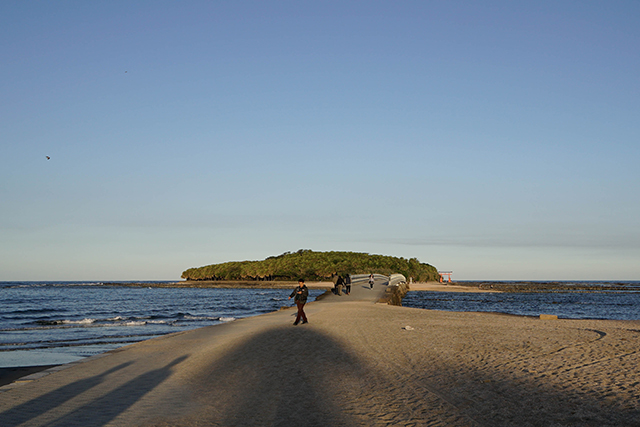
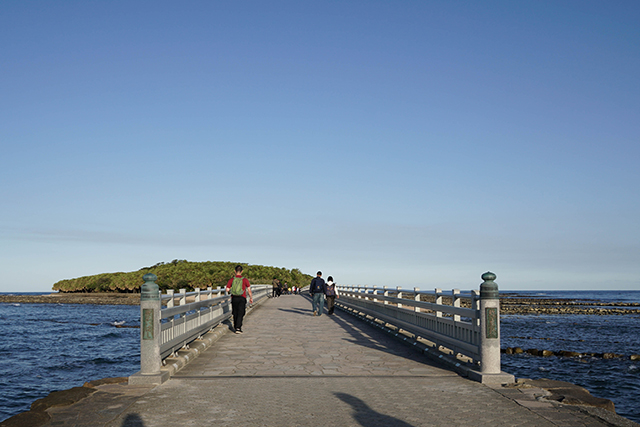
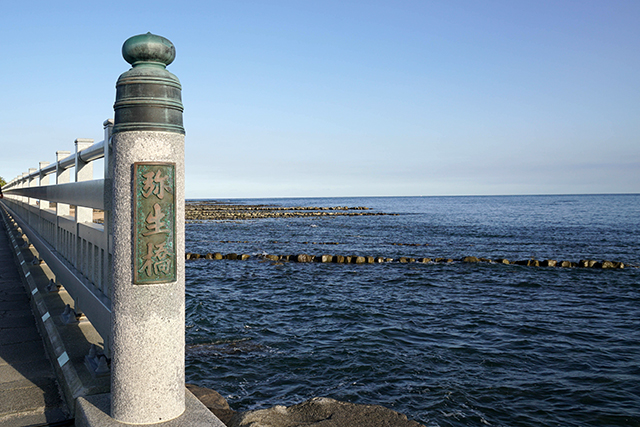
The island is connected to the main island by a bridge and located just offshore in Hyu-Ganada or the ‘Sea of Hyuga’.
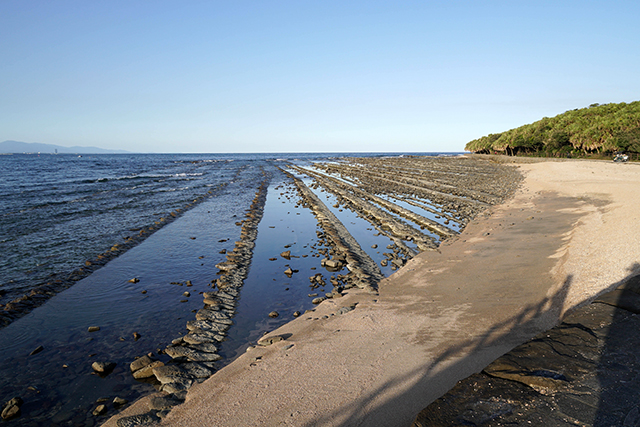
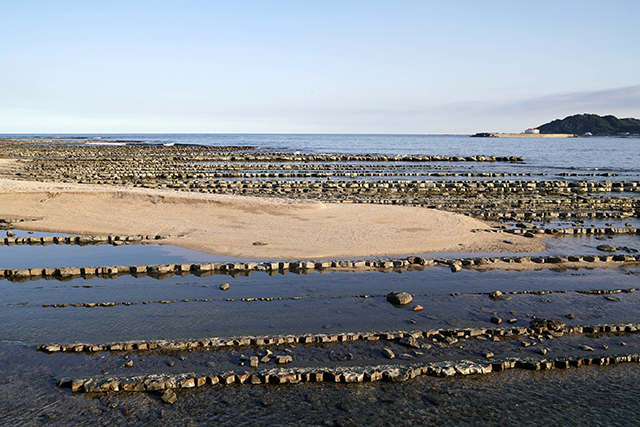
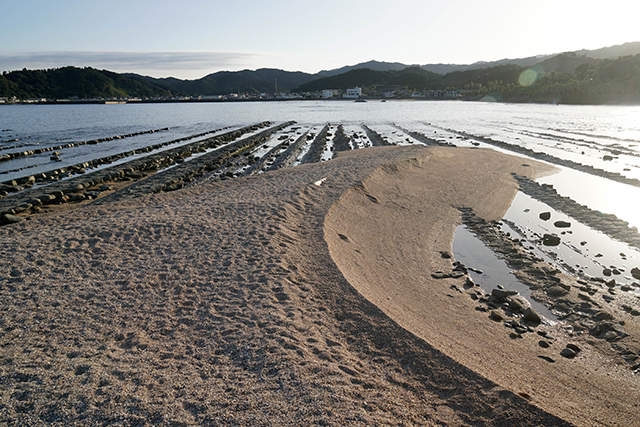
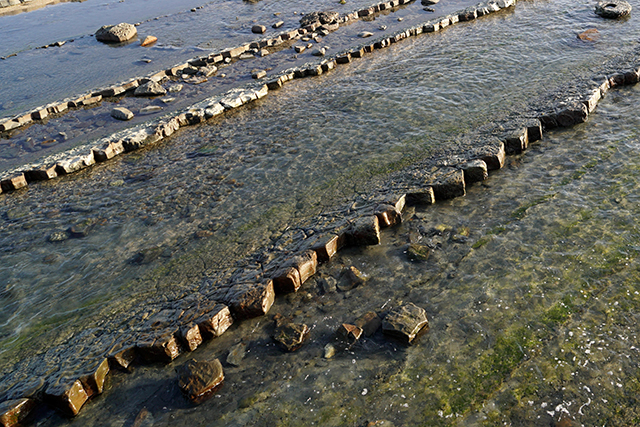
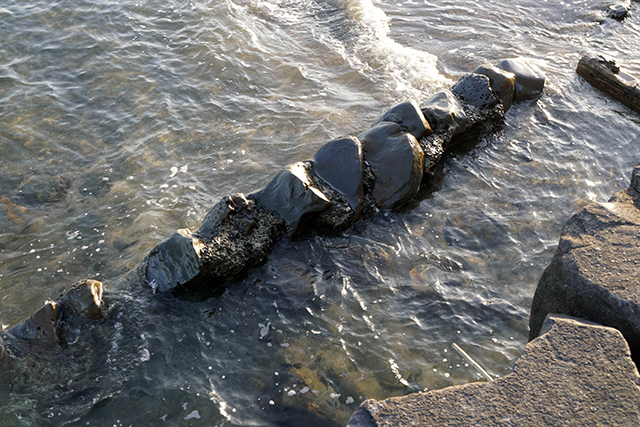
The island is surrounded by unique rock formations referred to as the Oni no Sentakuita or Ogre’s Washboard and designated as a ‘National Monument to Nature’.
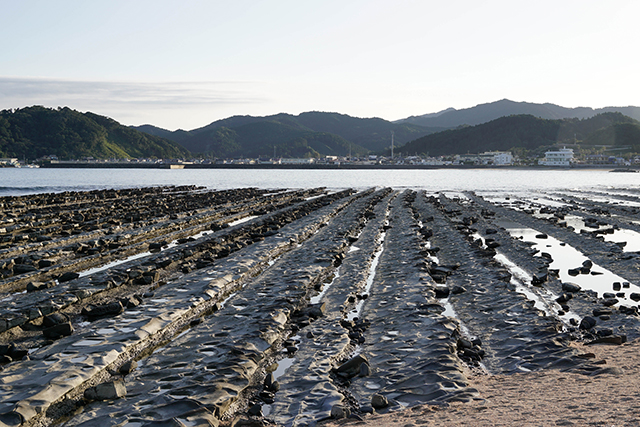
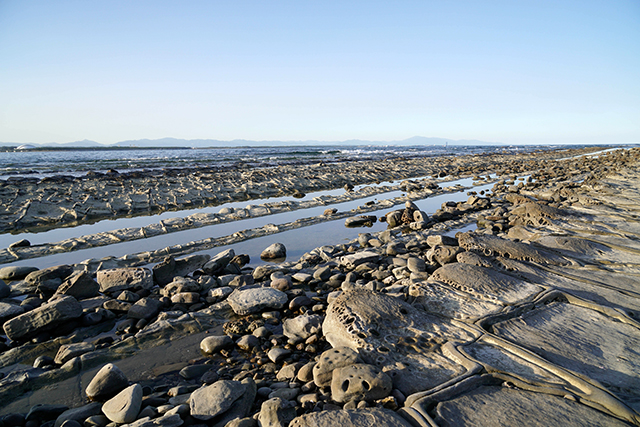
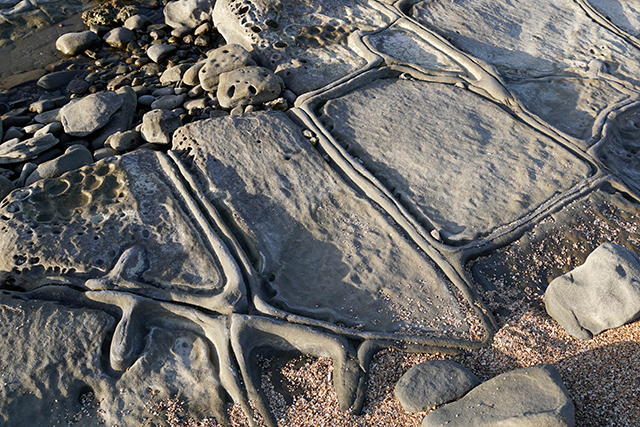
The uneven rock surrounding Aoshima Island was formed by sand rock and mudrock that accumulated in regular alternation on the seafloor some 24,000,000 years ago to 2,000,000 years ago, inclined, rose from the sea. It has been eroded by waves and formed by the difference in density of these two kinds of rock. The rock can be seen around Aoshima Island and from the Tosakibana Cape up to Kinchakujima Island.
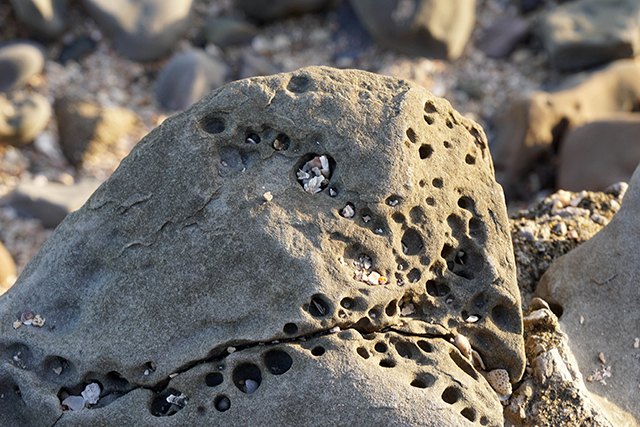
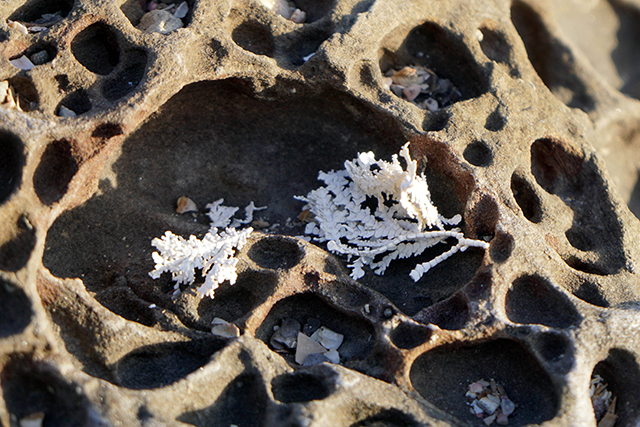
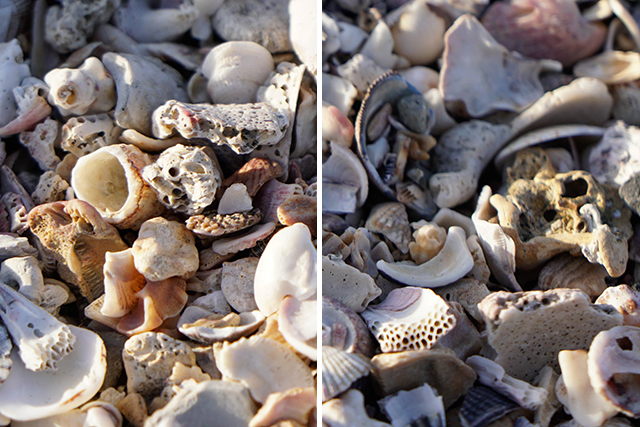
The rocks are visible only at low tide and form perfectly straight rows that look as if they’re manmade.
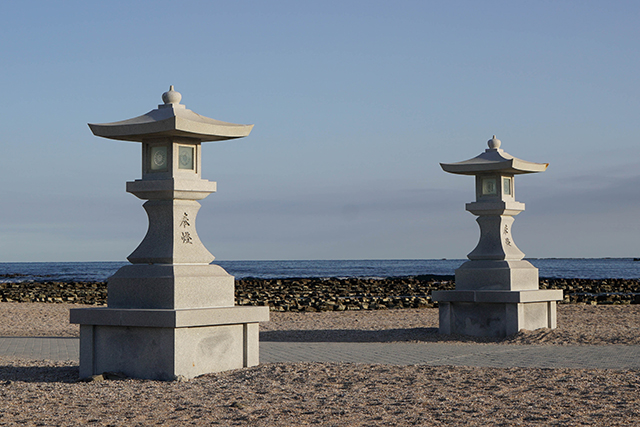
These two stone lanterns welcome visitors on the Aoshima side of the bridge.
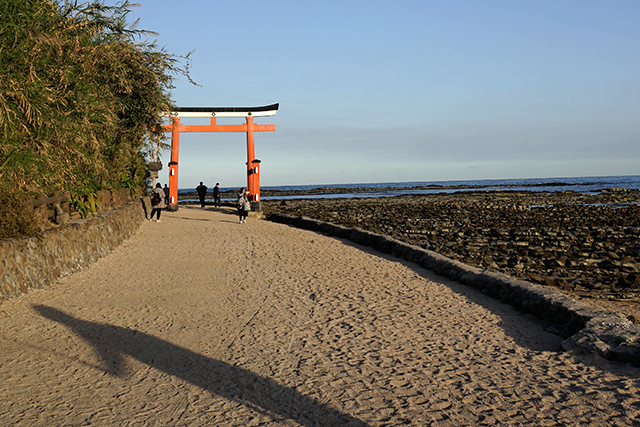
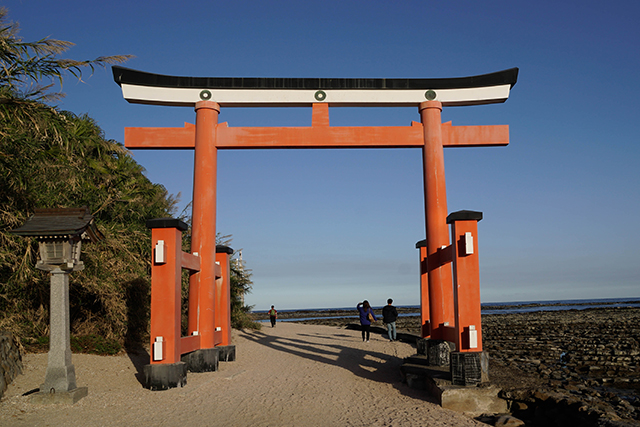
This is the torii on the beach.
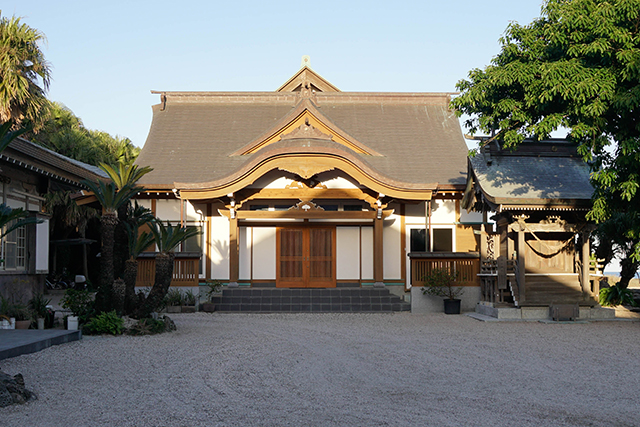
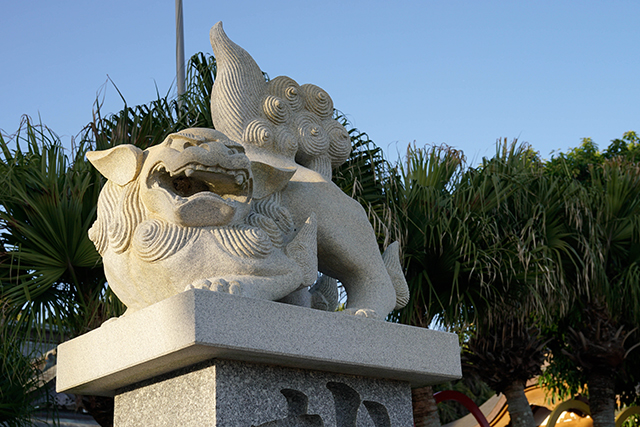
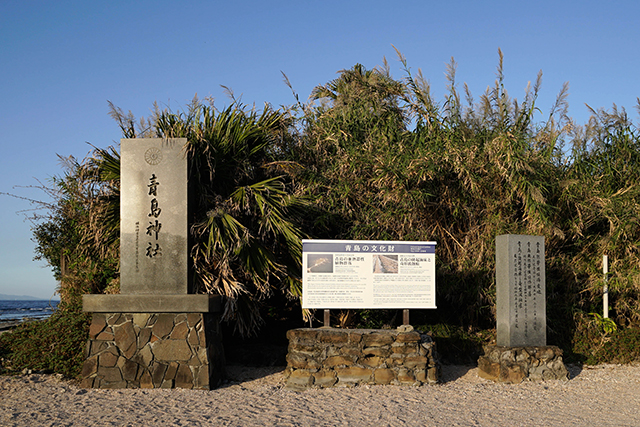
A short walk around from the torii is Aoshima Jinja.
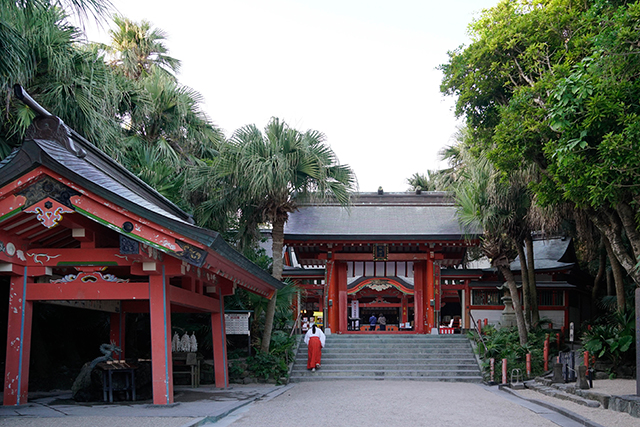
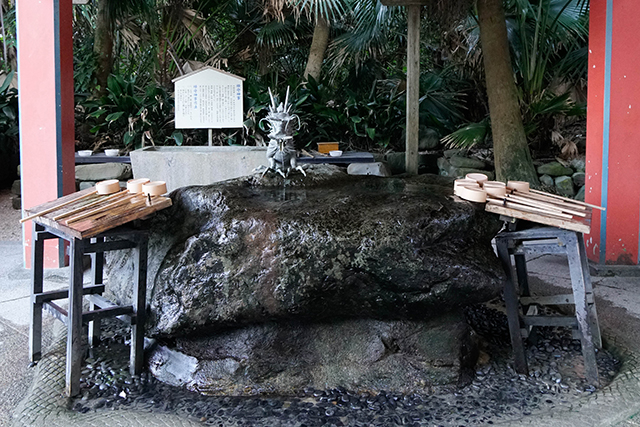
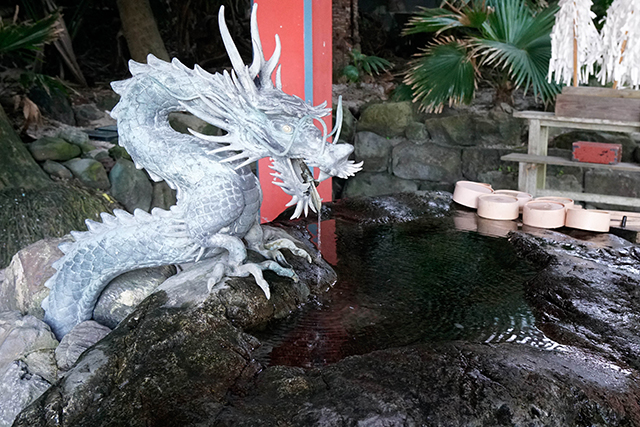
Before entering the main shrine, we pass by the chōzuyai, the Shinto water ablution pavilion for ceremonial purification rite known as temizu. This one has a dragon.
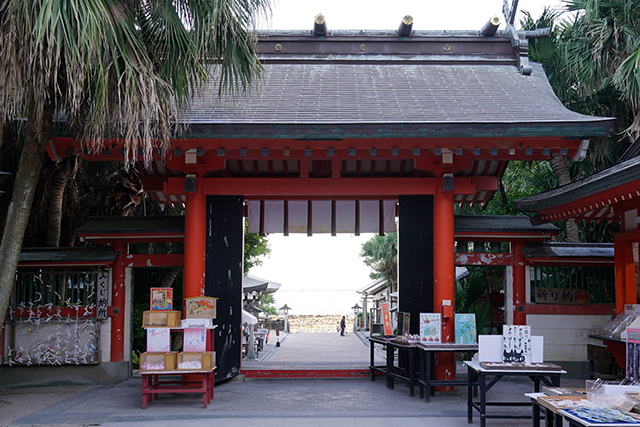
Inside the gate to the main shrine, there are numerous tables set up selling various charms and fortunes.
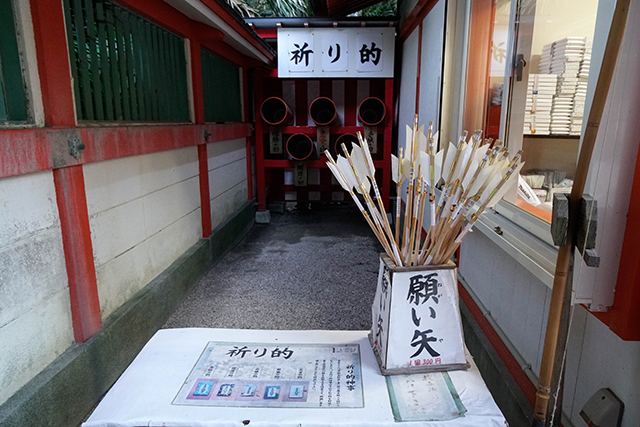
This shrine is said to bring you luck in ten different areas, including matchmaking.
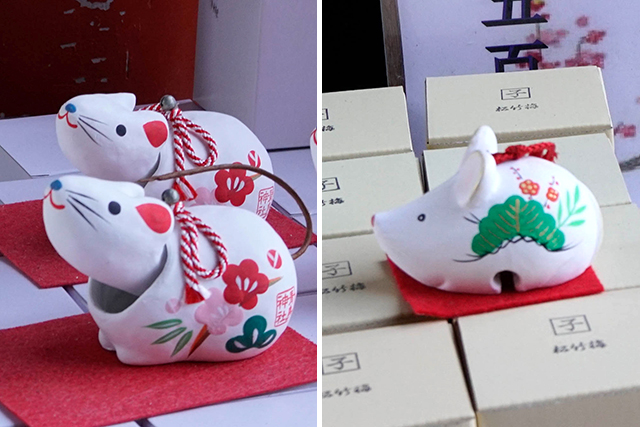
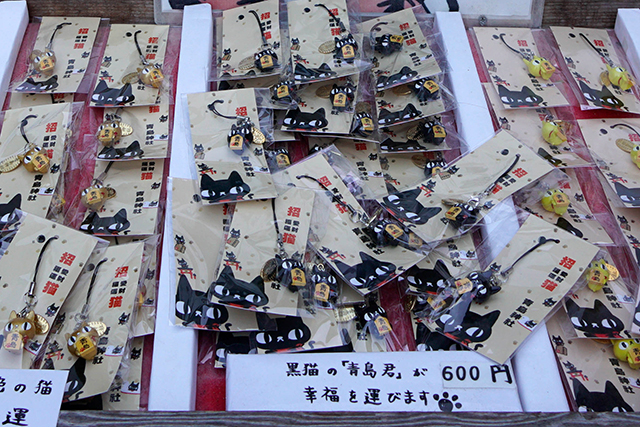
These feature a pair of cute mice, a pig and some cats.
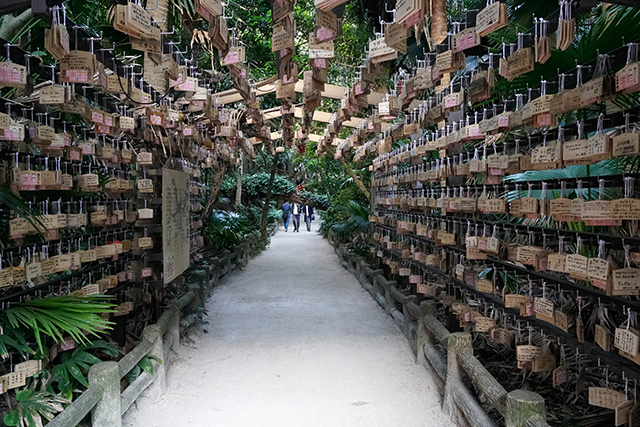
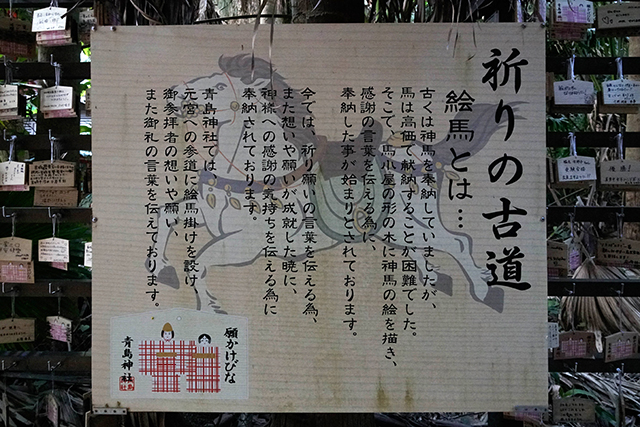
To the right of the shrine’s main building is a short path, with the entry lined with ema. Aoshima Shrine is a top destination for lovers and those looking for love. It became a popular domestic tourist attraction after Emperor Akihito (then Crown Prince) visited with Empress Michiko.
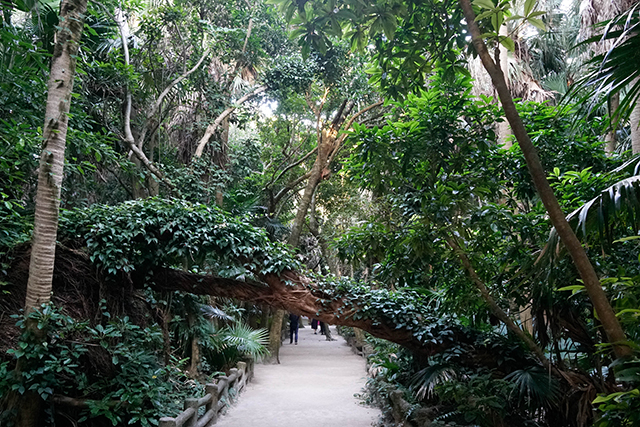
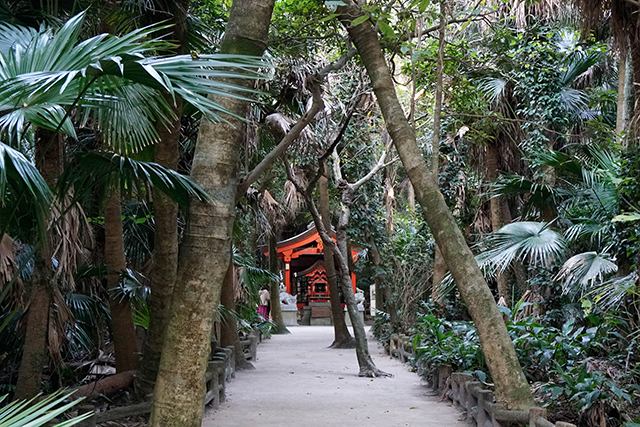
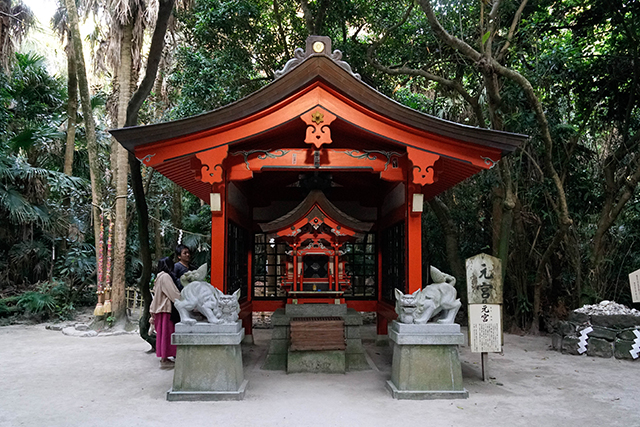
Past the ema is a short walk through a jungle to a smaller outlying shrine. These sub-tropical plants are designated as a special national monument to nature.
The Japan Current flows around Aoshima Island with mild weather and much rain fall. Many kinds of sub-tropical plants flourish under these climatic conditions. Particularly noteworthy are the 5,000 Biro Palm trees some of which are 350 years old.
About 27 kinds of tropical and sub-tropical plants and 197 kinds of nontropical plants native to Aoshima flourish on this island.
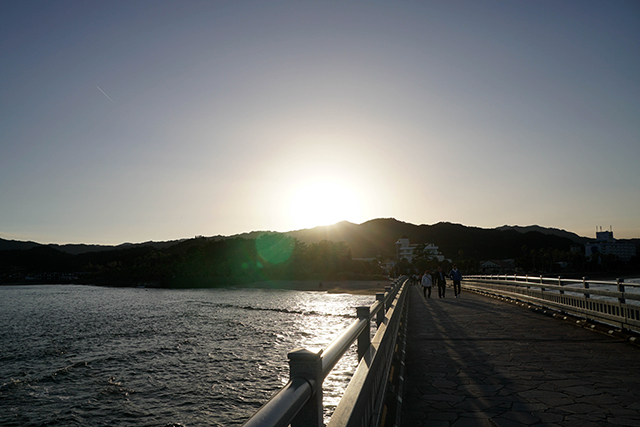
It’s a 1.5 km walk around Aoshima’s beach, but not wanting to miss the last train before sundown, we turn back.
Aoshima Subtropical Botanical Garden
青島亜熱帯植物園, 2 Chome-12-1 Aoshima, Miyazaki, 889-2162, Japan
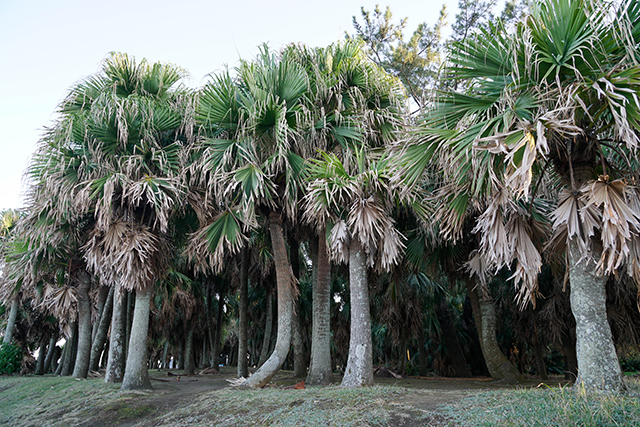
Aoshima extends to the coastal strip on Kyūshū, where the Aoshima Subtropical Botanical Garden is located.
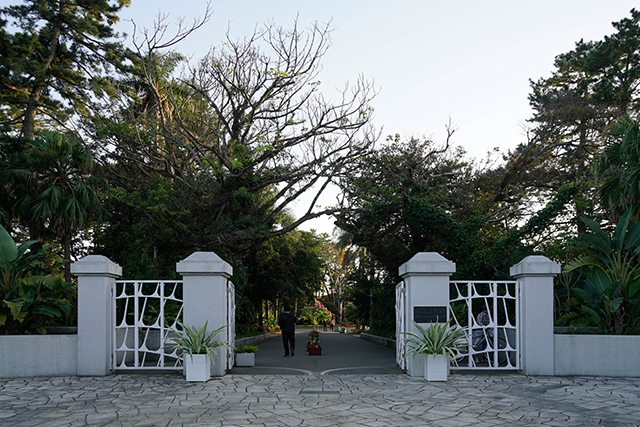
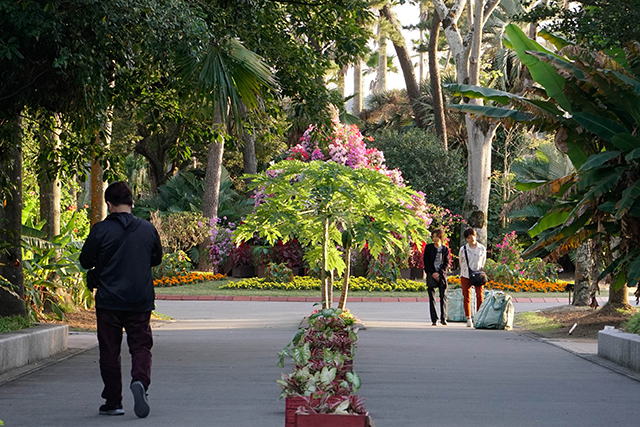
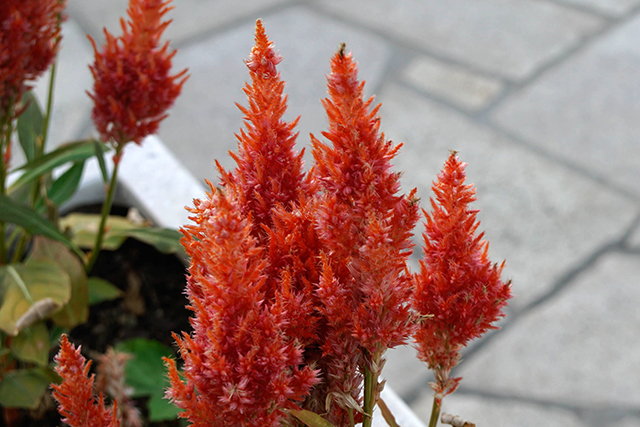
There are 400 species of subtropical plants in the garden. We’d be keen to return to Aoshima Island for a more thorough exploration of the area.
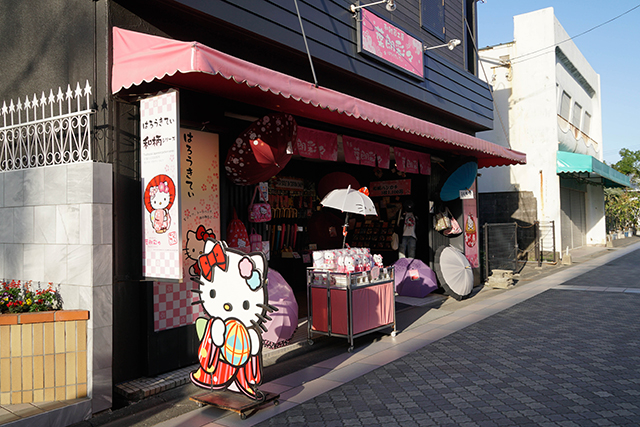
On the approach to the island is a Hello Kitty store.
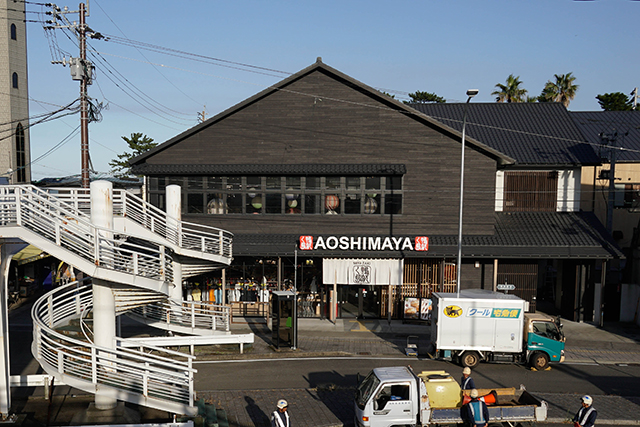
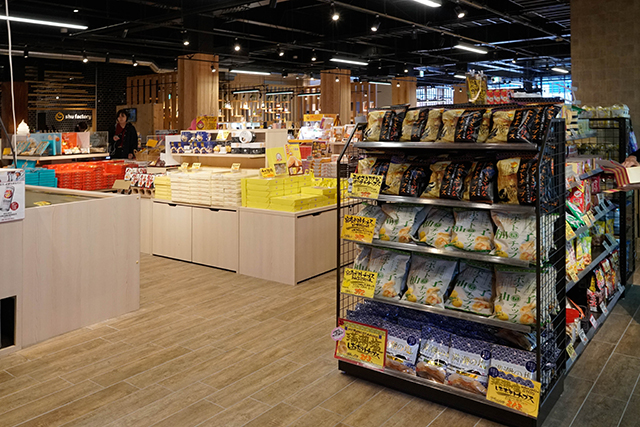
…as well as a huge omiyage store selling all sorts of specialty goods from Miyazaki Prefecture.
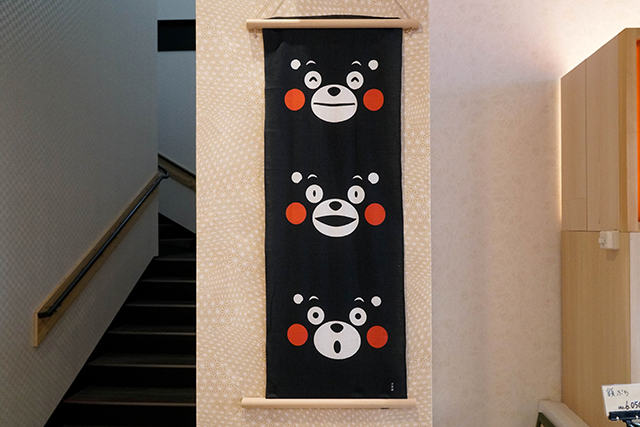
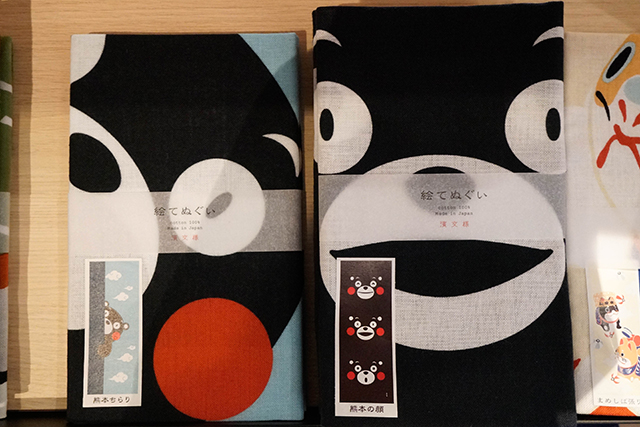
There was a wide selection of tenugui on sale, including these Kumamon ones which we’d not seen elsewhere previously or since. Unfortunately, the store didn’t do tax-free so we picked up only one.
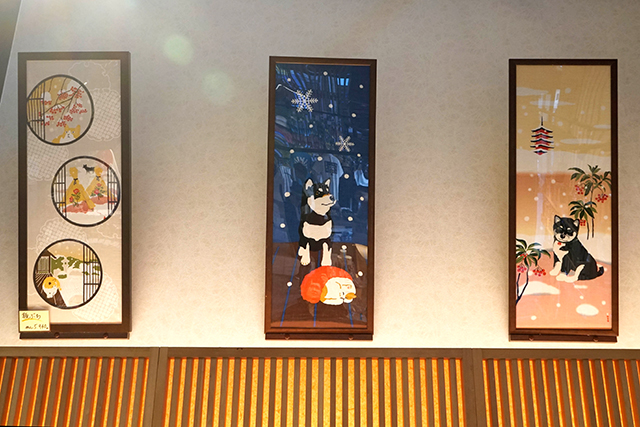
For those not into Kumamon, there’s no end to the stylish variety available.
Miyazaki
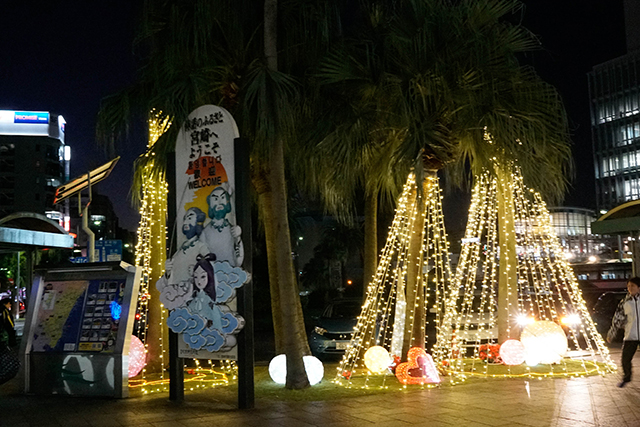
Back at Miyazaki, we take a quick break at our hotel before heading back down towards the downtown area for some dinner.
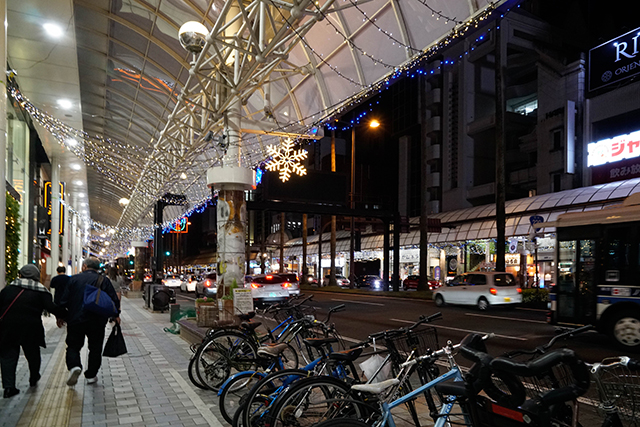
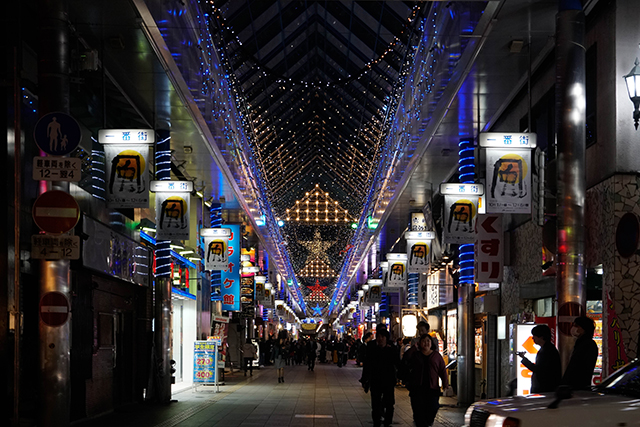
Having left Fukuoka for a few days, we were itching for some more lively activity in the city centre. We were too late into the evening, though, as the majority of shops were closed.
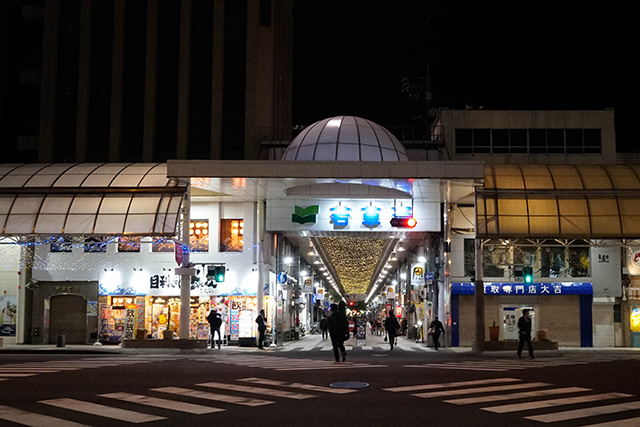
We pop into a shop selling eyewear in the hopes of finding a replacement nose piece for D’s glasses. The gentleman in the shop was very helpful and friendly all the Japanese people we encountered in Kyūshū, but alas, could not help us.
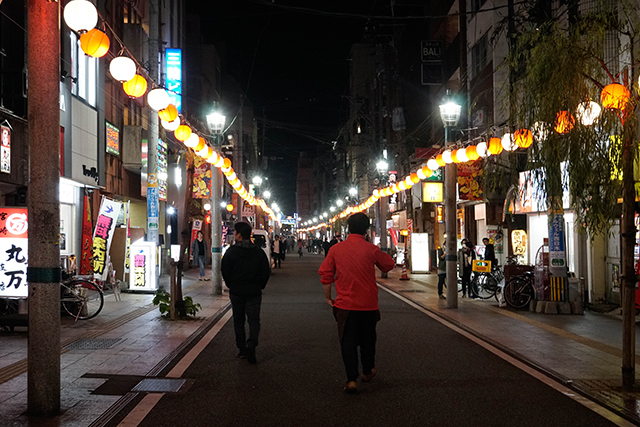
We were left with restaurants, hostess/host bars and various drinking venues that didn’t tickle our fancy.
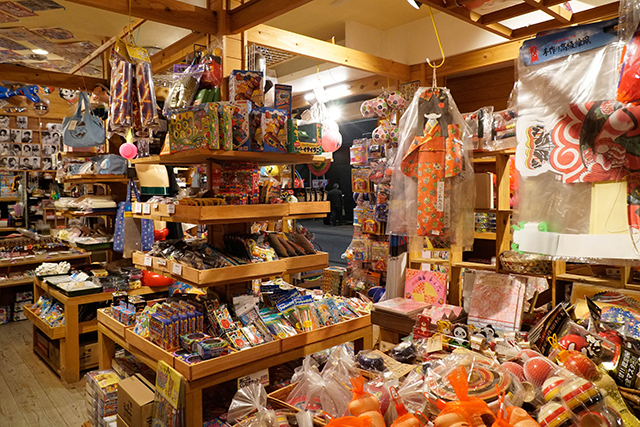
The exception was a snack shop.
Ogura Honten
おぐら 本店, 3 Chome-4-24 Tachibanadorihigashi, Miyazaki, 880-0805, Japan
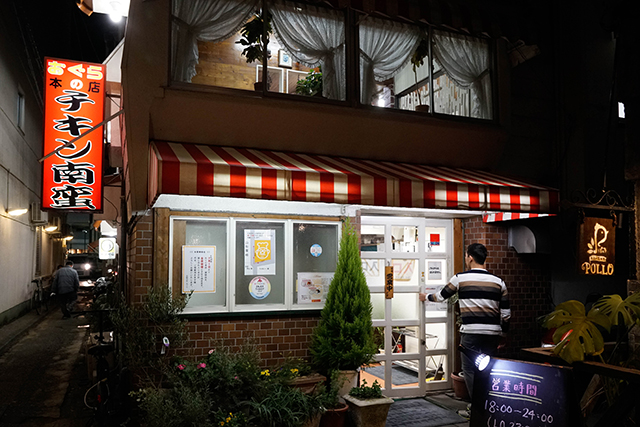
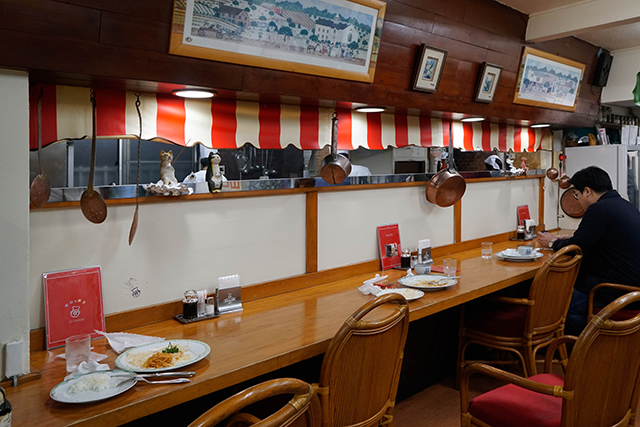
Having exhausted our attempts to browse the shops, we head to Ogura Honten, which is home to the second version of the famous local Miyazaki dish, chicken namban.
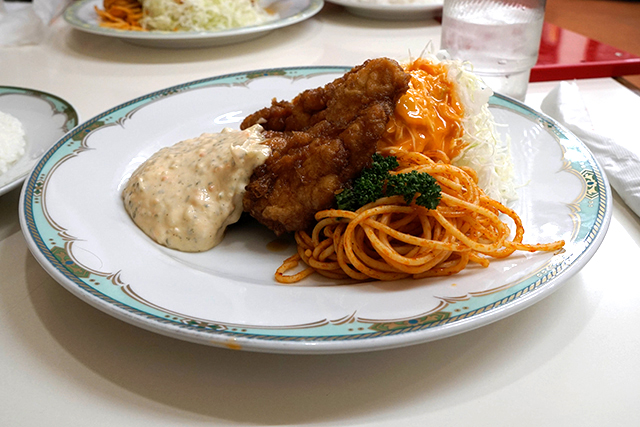
This version of chicken namban (¥1,050 +tax) featured a deep-fried and battered Miyazaki grown chicken breast, which is seasoned with housemade namban vinegar and tartar sauce made with various spices and herbs along with pickled vegetables in housemade mayonnaise.
The use of the vinegar here removed the crispiness of the fried chicken, although the tartar sauce has an enjoyable tanginess that cut through the heaviness of the chicken breast. The side of cold spaghetti confused us as there was already a generous plate of rice. Overall, we found the balance of flavours in the version from Nao chan more enjoyable.
JR Kyūshū Hotel Miyazaki
JR九州ホテル 宮崎, 1-10 Nishikimachi, Miyazaki, 880-0811, Japan
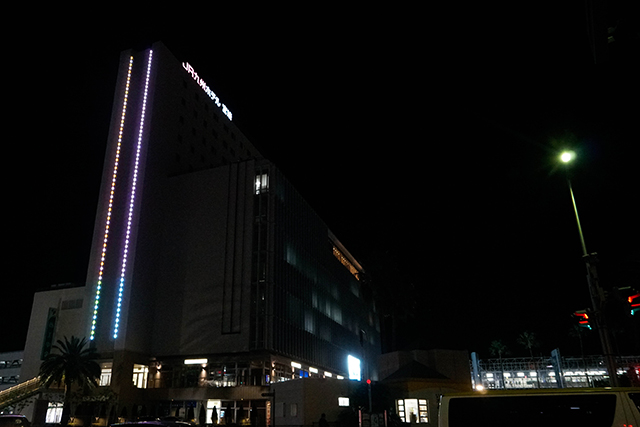
JR Kyūshū Hotel Miyazaki was the hotel we stayed at in Miyazaki. It’s located less than a minute walk from the West Exit of JR Miyazaki Station and its level of modernity and comfort surpassed all previous sub $170.00/night hotels in which we’ve stayed in Japan.
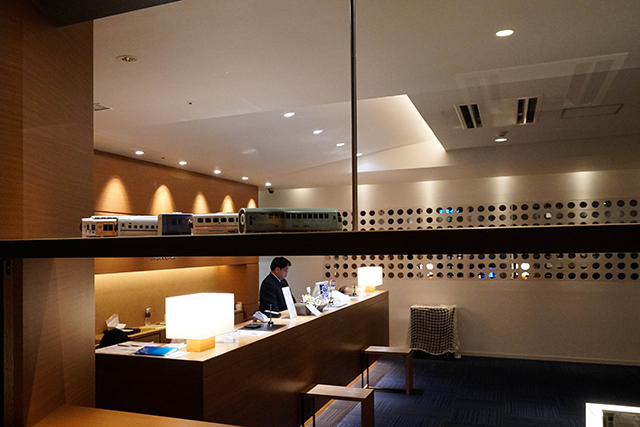
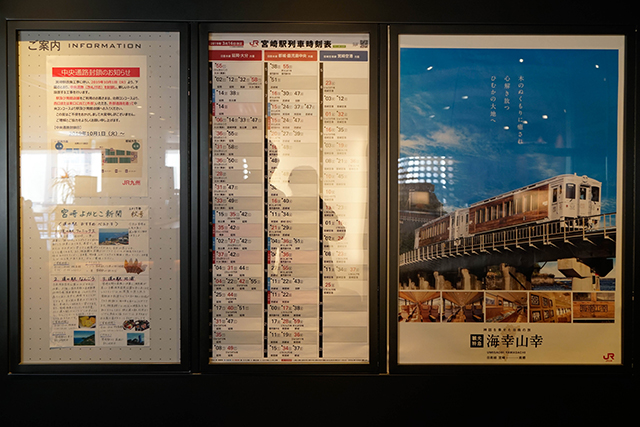
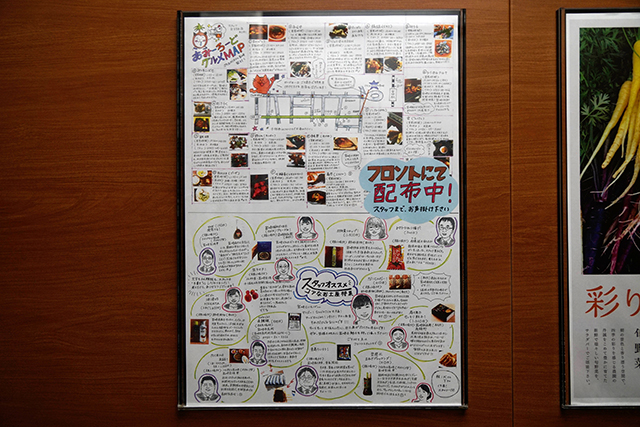
It is associated with JR West, meaning there are many train associations within, from miniature trains to a train timetable next to the elevator for your convenience.
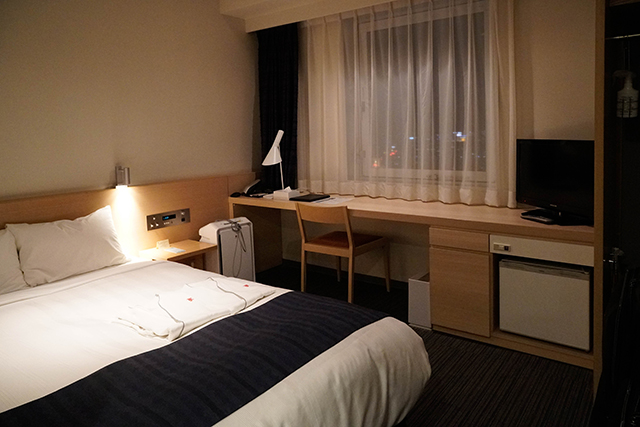
Here, the room is spacious with a firm Queen mattress topped with a fluffy doona and a proper pillow. The furniture was contemporary with plenty of surface area for placing our things. There was simply no need to climb over each other or over suitcases to get to the other side of the room. The luggage that we’d left with the staff earlier in the morning was also waiting for us in our room.
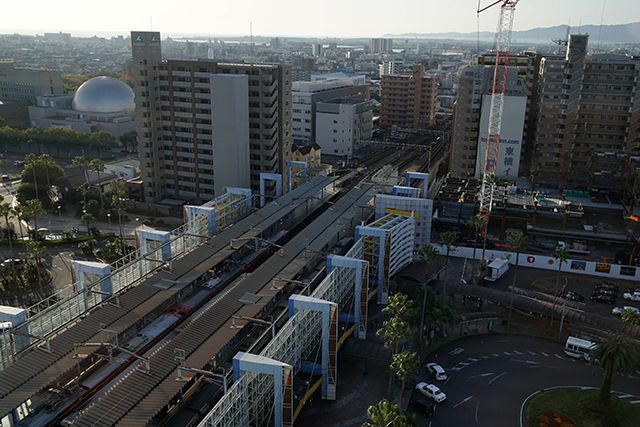
On Level 14, we have a good view of the train station and skyline with horizon.
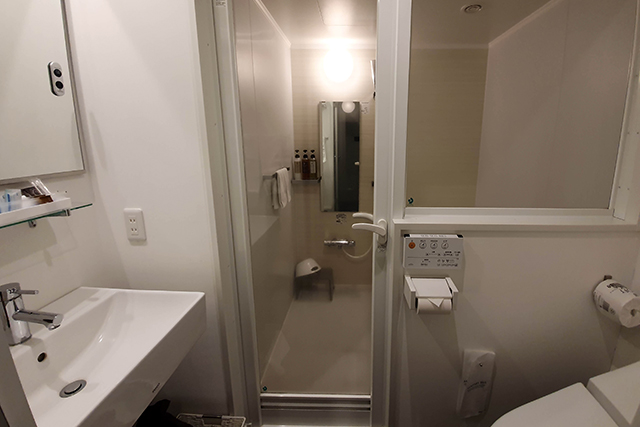
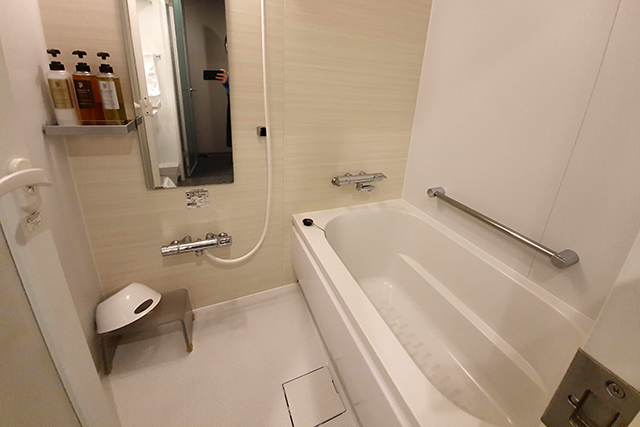
The clincher, though, was the bathroom with its generous proper shower/bathtub room — a luxury when we’d been showering with a shower curtain in a bathtub that we could not move without hitting something for the past few days — and its separate toilet and basin. The colour scheme was contemporary without the tired beige colour scheme of the old prefabricated bathrooms in most hotels in Japan. It was so comfortable, we didn’t want to leave!
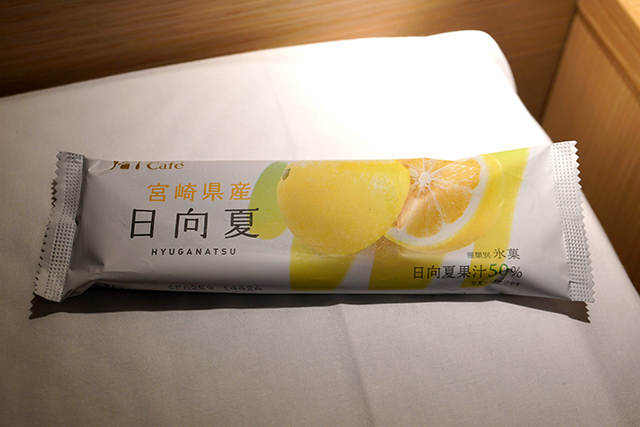
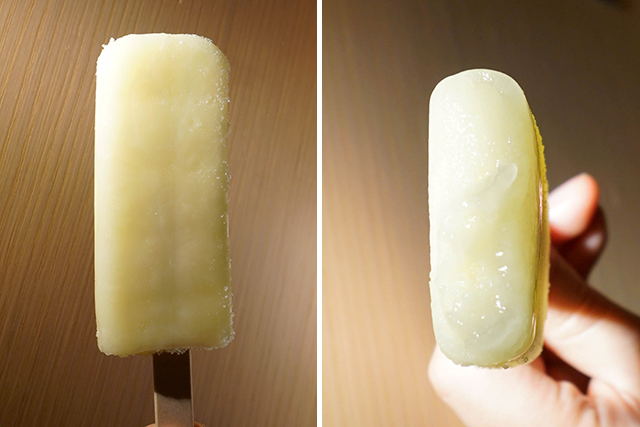
After dinner, we’d stopped by the 24/7 Lawson situated underneath our hotel. This is the Lawson Uchi Cafe Hyūganatsu Ice Bar. It contained 50% fruit and tasted like a refined Peters Frosty Fruit with a crisp outer shell and a softer gelato-like centre, both of which had a punchy hyūganatsu flavour that was sweet and citrusy.
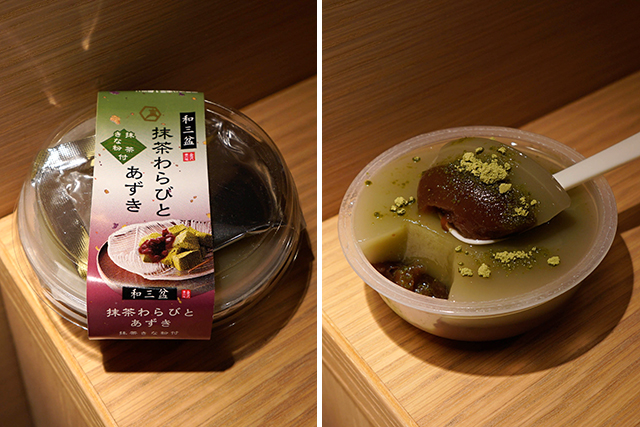
This is the Tokushima Sangyo Matcha Warabi and Azuki, which consisted of an azuki base topped with matcha warabi and a sachet of matcha kinako for dusting on top. The warabi has is plump and bouncy with a mellow matcha flavour, while the azuki retaining the texture of the beans for a gentle sweetness that complements the hint of bitterness from the matcha kinako and brightens the matcha in the warabi.
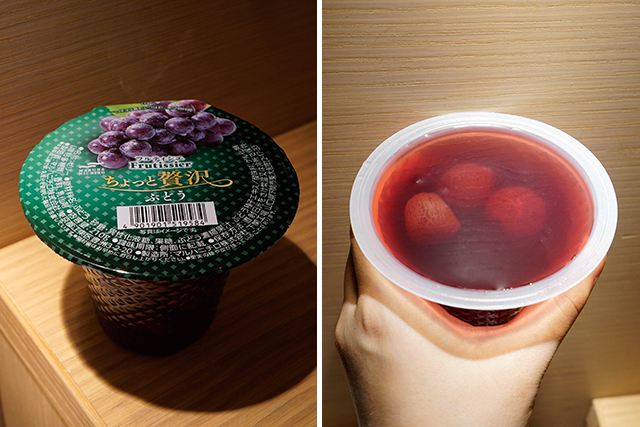
We finish this Maruhanichiro Fruitissier Fruit Grape, the last of our jellies from Beppu. The jelly has a bright, natural flavour of purple grapes, while the three peeled grapes added extra pops of juicy freshness.
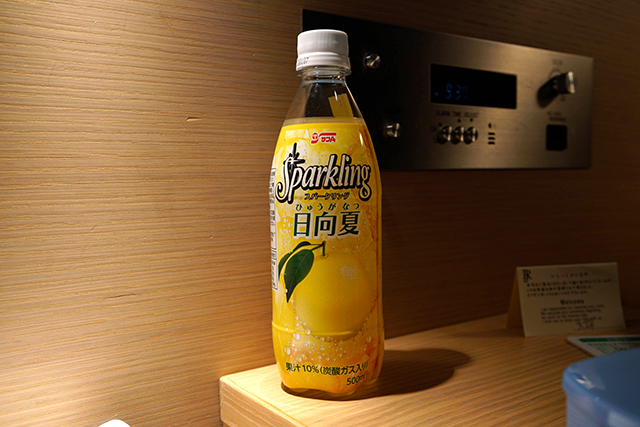
And finally, we wrap up our time in Miyazaki Prefecture with our last hyūganatsu food item for a while, the San A Sparkling Hyūganatsu Fruit Drink. The drink contained 10% hyūganatsu and had an opaque pale yellow colour with a zesty aroma, while it tasted like a sweet lemon drink without the sharp zestiness or tartness, much like a toned-down mikan.
Nichinan and Miyazaki were Day 9 of 15 in this Japan 2019 trip around Kyūshū. Day 10 saw us visiting Kagoshima.