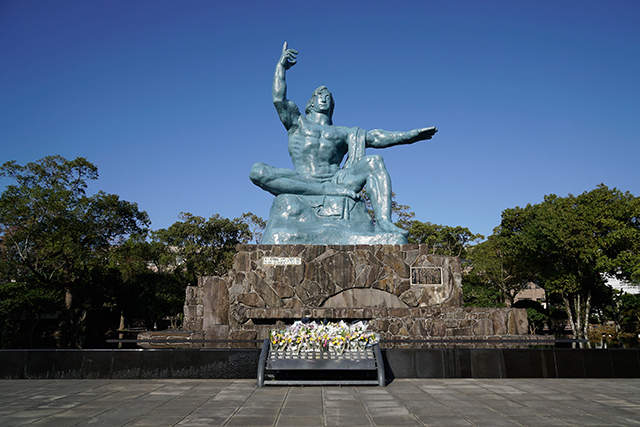
Nagasaki is the capital and the largest city of Nagasaki Prefecture, which is situated on the northwest coast of Kyūshū. The city was the sole port used for trade with the Portuguese and Dutch during the 16-19th centuries. During World War II, it became the second and, to date, the last city in the world to experience a nuclear attack. On day 2 of our Japan 2019 trip, we explore this post-World War II aspect of Nagasaki.
Nagasaki is connected to Fukuoka by train via the JR Kamome Line, with the commute between JR Hakata Station and JR Nagasaki Station taking around 2 hours.
Fukuoka
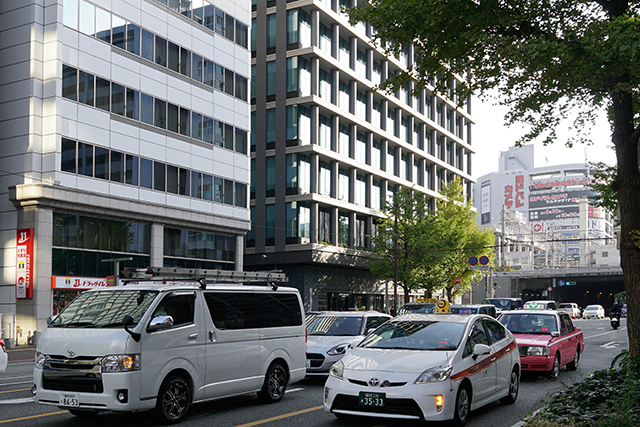
At around 8 am, we made our way to Hakata Station for a limited express intercity train to Nagasaki. In the background of the photo was a Yodobashi Camera that we visited late the previous night to pick up a travel power adaptor after having left ours in Australia. Surprisingly, it’d also be the only store of its kind we would visit the entire trip. They’re much the same inside across Japan, but there also just aren’t that many of them around Kyūshū.
Trandor
トランドール博多駅店, 1-1 Hakataekichuogai, Hakata Ward, Fukuoka, 812-0012, Japan
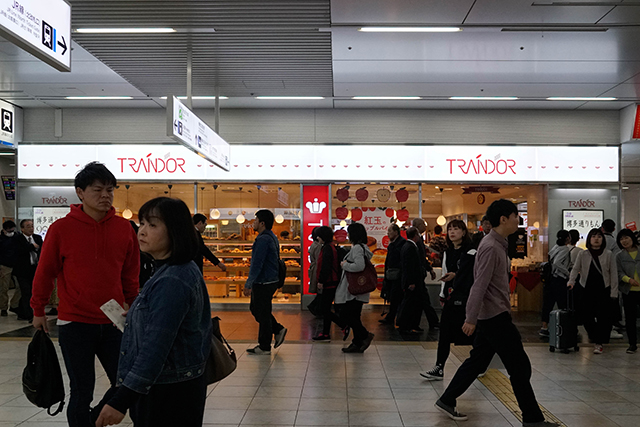
Trandor was a mainstay of the major JR stations across Kyūshū, selling a large selection of baked goods for enjoying on your journey.
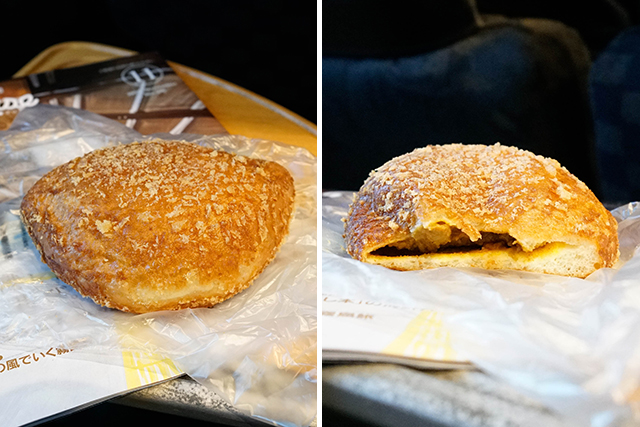
This is the curry pan (¥162 +tax). The pastry was crispy, while the innards were tasty and much as we’d expect of a typical curry pan: beef mince and onion.
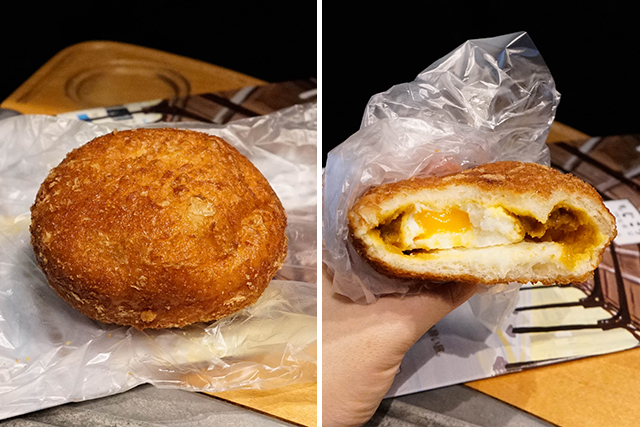
Onto the variations, this was the curry pan with soft boiled egg (¥237 +tax). Oozy eggs are a direct line to my heart and this one was perfect, with the runny yolk adding an extra depth to the curry.
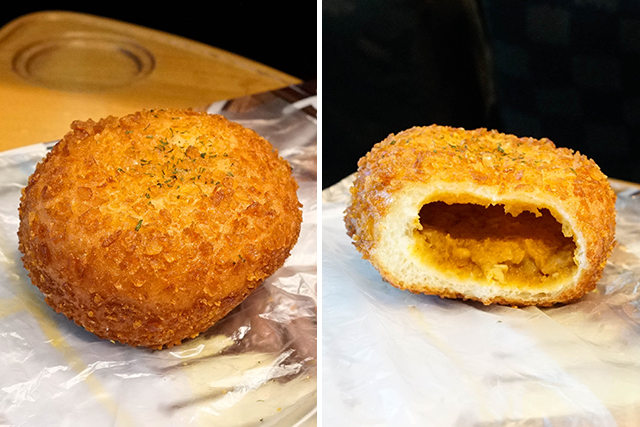
And finally, this was the butter chicken pan, which tasted like chicken curry but there wasn’t quite the same tomato sweetness as in the butter chicken we’ve had in Australia. That aside, it did look and taste different from the standard curry pan, being more orange and it was tasty and enjoyable.
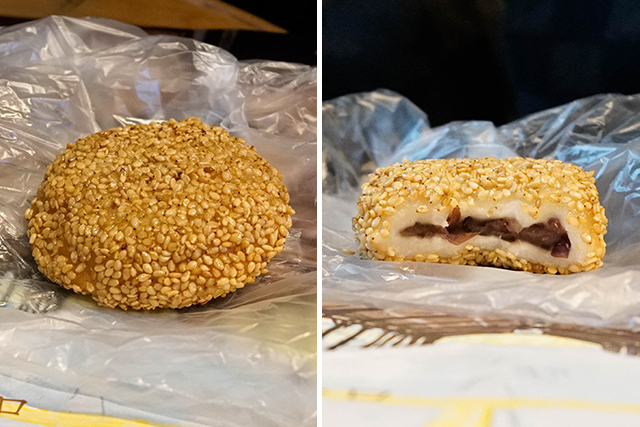
For my sweet tooth, this was a red sesame bean jam dango. I enjoyed the good balance between the anko, mochi and sesame coating, which delivered just the right amount of sweetness, bounciness and crunchiness.
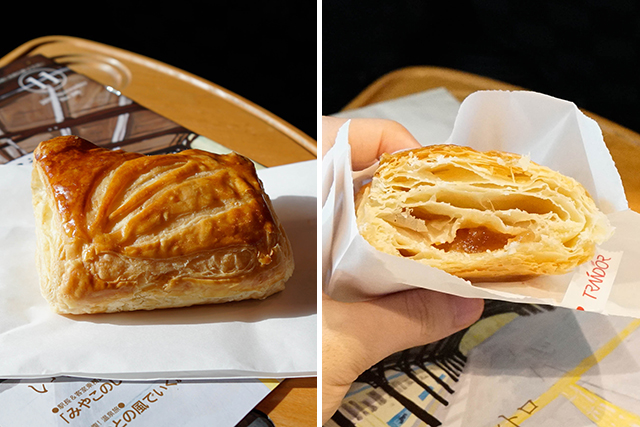
This is the apple danish, which had a buttery and crisp pastry with a pureed apple filling. We like a bit more bite to our apple but this was otherwise tasty.
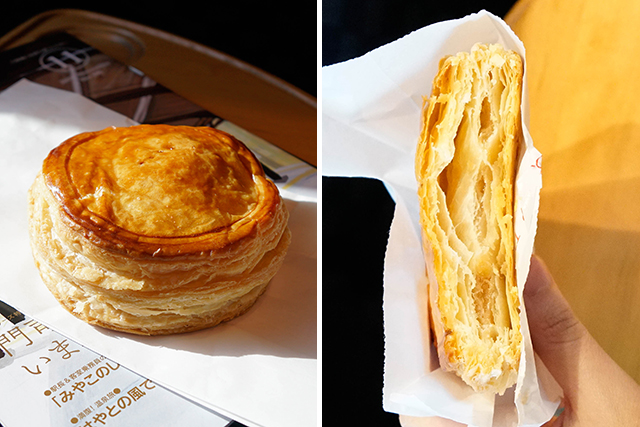
Last but not least, this was the kougyoku apple pie (¥313 +tax), which had a flakier pastry with a more complex flavour than the previous one. We enjoyed the caramelised top and would’ve enjoyed more apple inside.
Limited Express Intercity Train
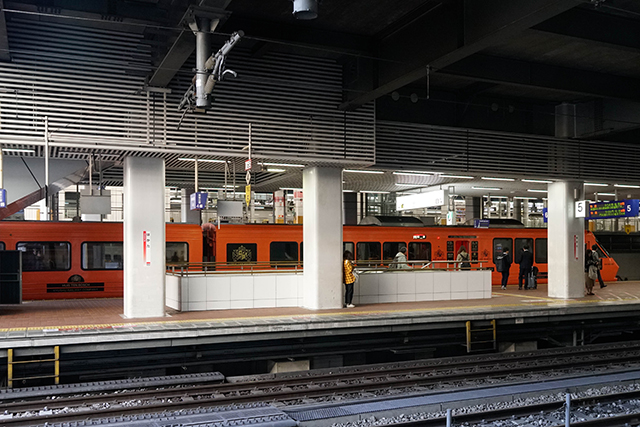
While waiting for our intercity train to Nagasaki, we spotted the iconic bright orange train to Huis Ten Bosch.
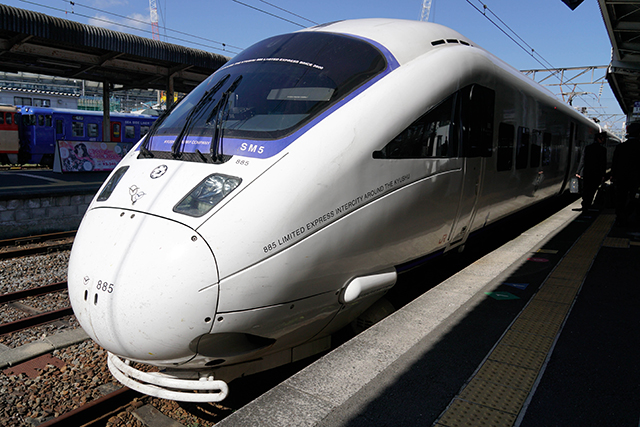
Intercity trains around Kyūshū had a similar appearance to shinkansen without the elongated nose.
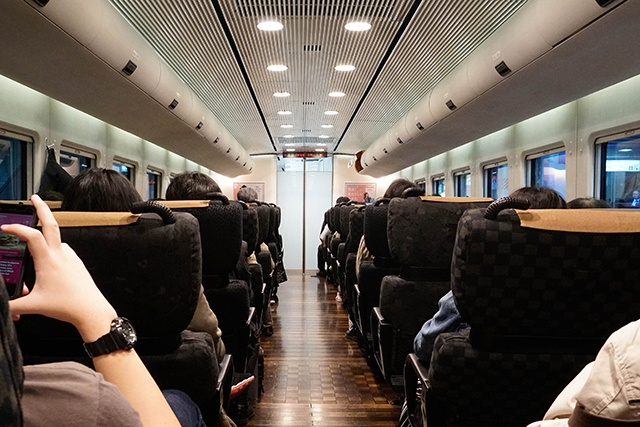
The interior was very comfortable with plush seats, wooden floors, generous seat pitch (1 m+), dedicated luggage racks as well as overhead storage compartments. Essentially everything about these trains put our trains in Australia to shame.
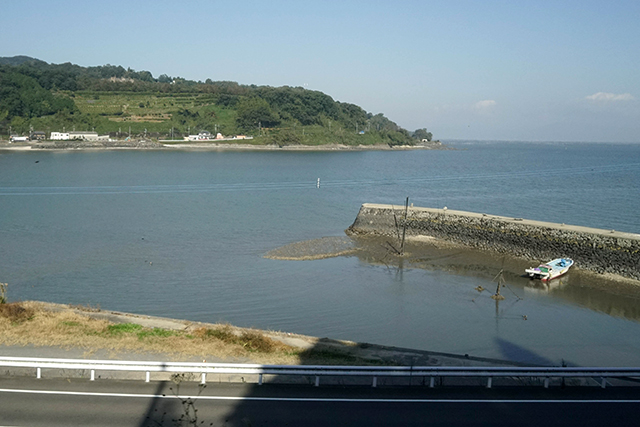
The train passed by a scenic stretch of the coast alongside the Ariake Sea en route to Nagasaki.
Nagasaki
Nagasaki Station
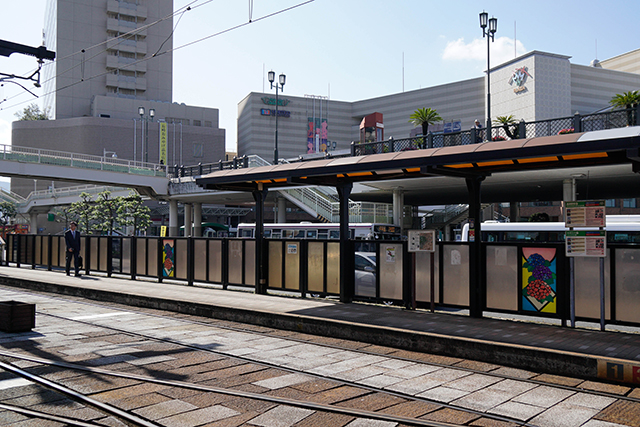
About 2 hours later, we arrived at Nagasaki Station. We headed to the tram stop out the front to drop off our luggage at the hotel.
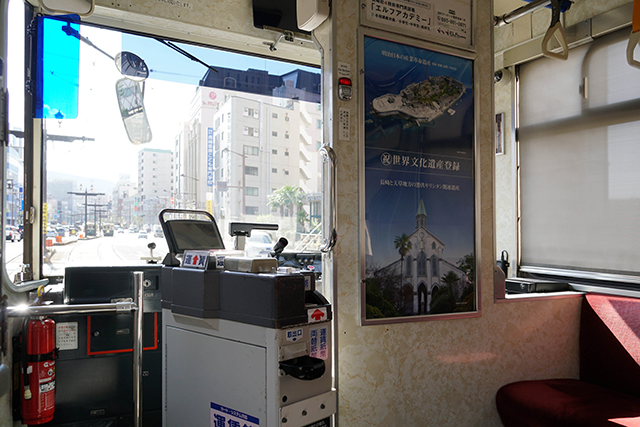
IC cards issued outside of Nagasaki did not work on non-JR transportation within Nagasaki, so D enjoyed the novelty of using the change machine on the tram.
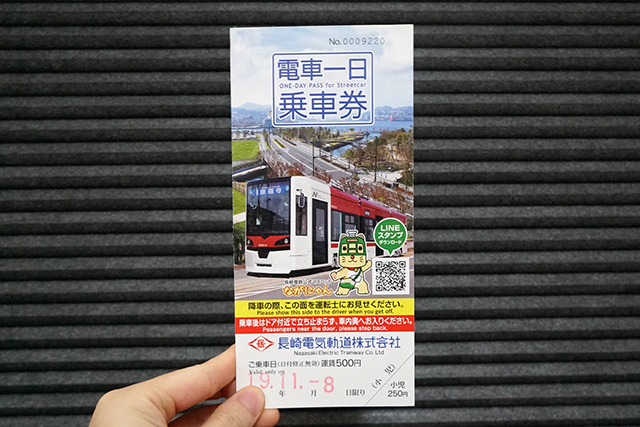
Trams in Nagasaki had a flat fare of ¥130, and a one-day pass with unlimited trips was available for ¥500.
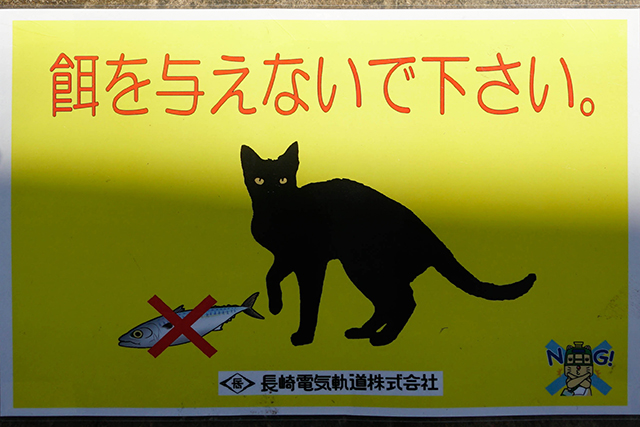
Feeding stray cats whole fish (or food generally) was frowned upon.
Belleview Nagasaki Dejima
ホテルベルビュー 長崎出島, 1-20 Edomachi, Nagasaki, 850-0861, Japan
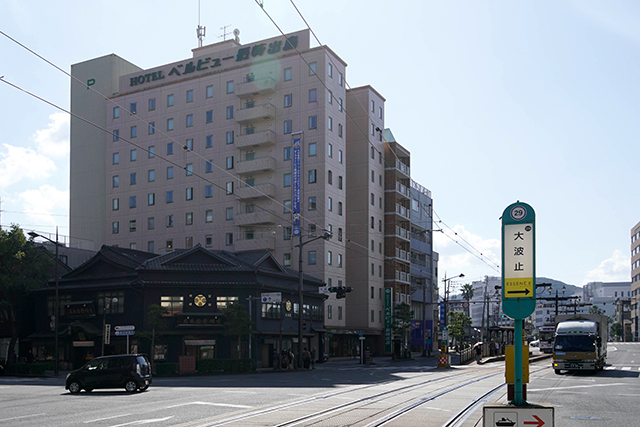
We made our way to Belleview Nagasaki Dejima to drop off our bags. Luckily for us, our room was ready on arrival due to the previous occupants checking out early.
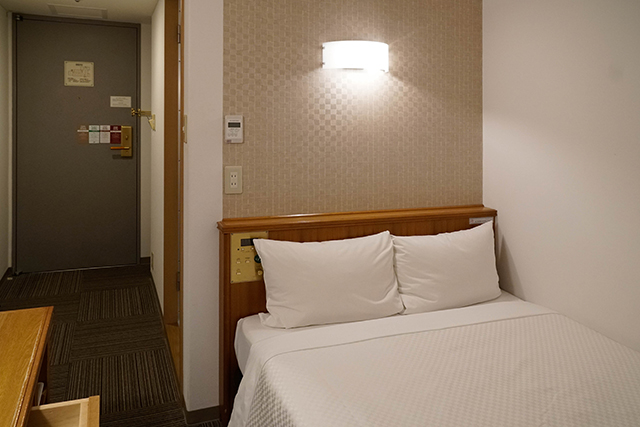
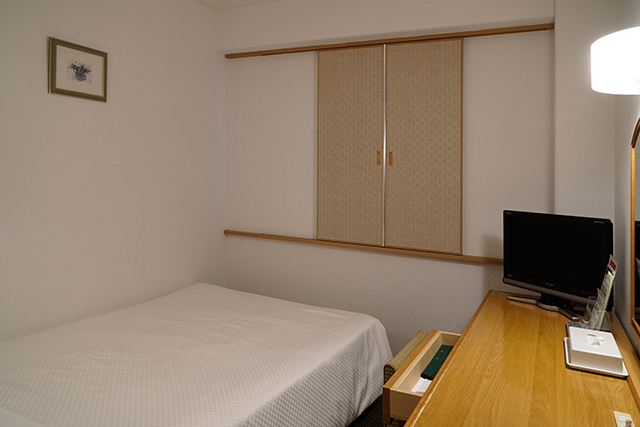
The room was a typical small size — old, tired, but clean and neat. The semi-double bed had seen better days, and one could feel the springs when lying down. The room also had a small TV and a desk.
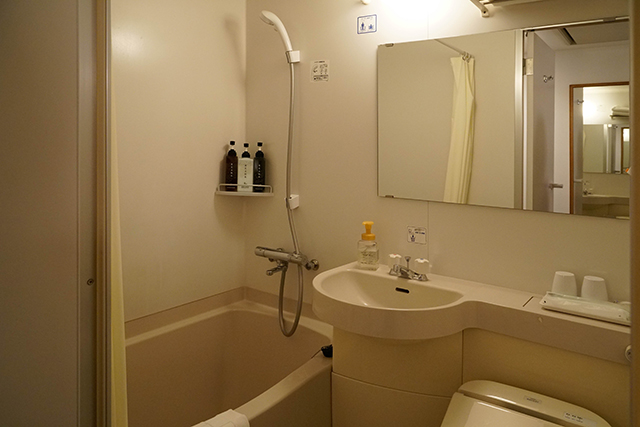
The bathroom was a typical cramped prefabricated bathroom, but it did feature separate taps for the sink and shower, as well as a washlet. There was a coin laundry in the hotel.
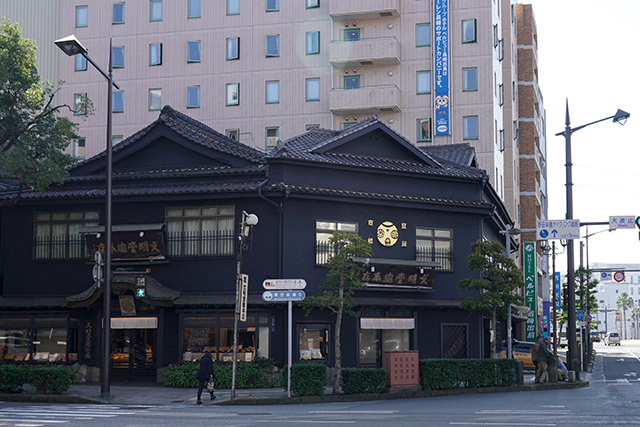
The AC in the hotel could be controlled within the room during daylight hours, but during the evening and overnight, was centrally controlled heating, so we had to rely on opening the window for ventilation. Our room was situated above Bunmeido so the mouthwatering aroma of freshly baked castella wafted into the room overnight. Not a bad trade, right?
Nagasaki Atomic Bomb Museum
長崎原爆資料館, 7-8 Hiranomachi, Nagasaki, Nagasaki, 852-8117, Japan
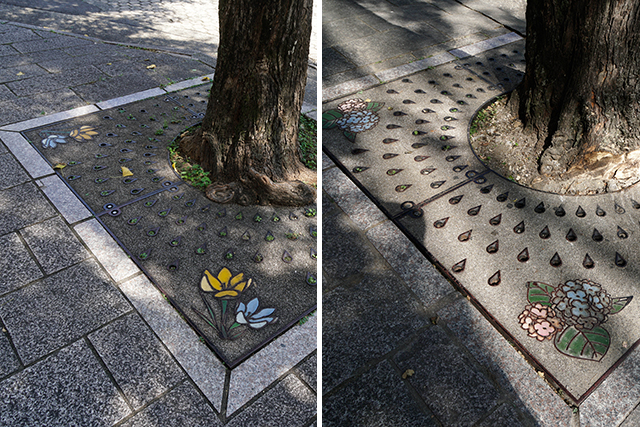
We made our way back onto the tram to visit the Nagasaki Atomic Bomb Museum. The pavement around the trees featured pretty flower illustrations with raindrop shaped holes for drainage.
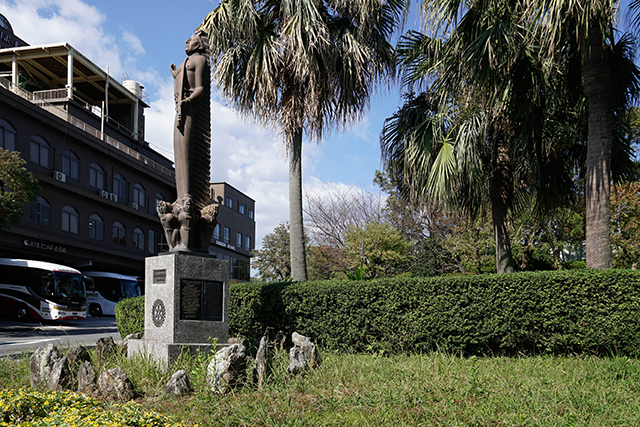
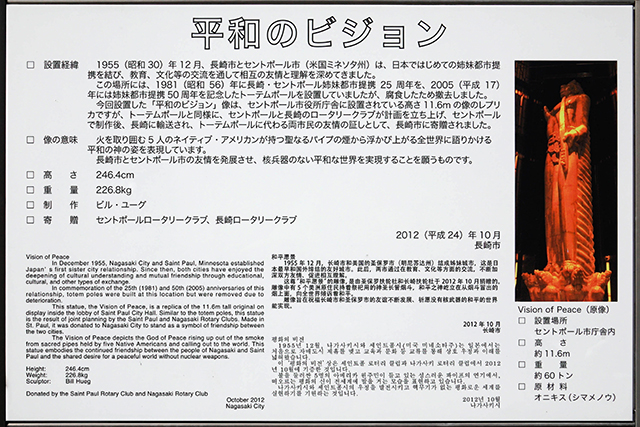
This sculpture was called Vision of Peace —
In December 1955. Nagasaki City and Saint Paul. Minnesota established Japan’s first sister city relationship. Since then, both cities have enjoyed the deepening of cultural understanding and mutual friendship through educational, cultural, and other types of exchange.
In commemoration of the 25th (1981) and 50th (2005) anniversaries of this relationship, totem poles were built at this location but were removed due to deterioration.
This statue, the Vision of Peace, is a replica of the 11.6 m tall original on display inside the lobby of Saint Paul City Hall Similar to the totem poles, this statue is the result of Saint planning by the Saint Paul and Nagasaki Rotary Clubs Made in St Paul, it was donated to Nagasaki City to stand as a symbol of friendship between the two cities.
The Vision of Peace depicts the God of Peace rising up out of the smoko from sacred pipes held by five Native Americans and calling out to the world This statue embodies the continued friendship between the people of Nagasaki and Saint Paul and the shared desire tor a peaceful world without nuclear weapons.
Height: 246.4 cm; Weight 226.8 kg; Sculptor: Bill Hueg
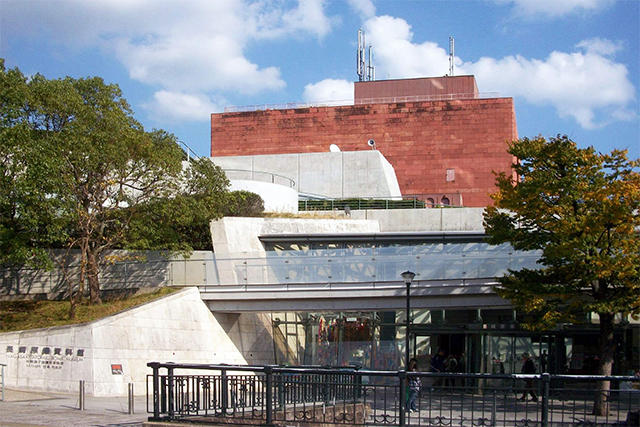
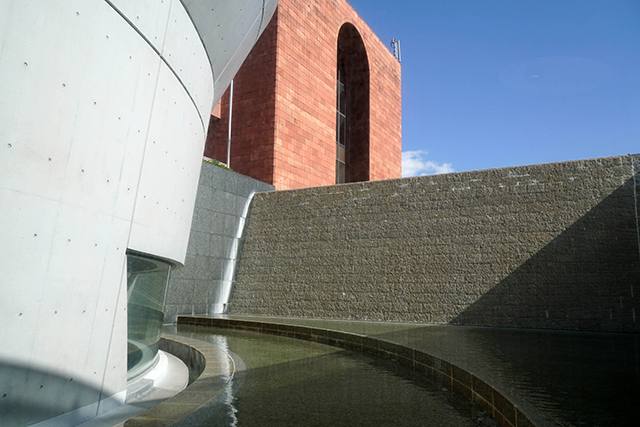
The current Nagasaki Atomic Bomb Museum was completed in 1996 and replaced the Nagasaki International Culture Hall that was established in 1955. In addition to the artifacts related to the bombing of Nagasaki in the International Culture Hall, the Atomic Bomb Museum supplements these artifacts with photographs depicting daily life in Nagasaki before the atomic bomb was dropped, the devastation produced by the bomb, and the history of nuclear arms development.
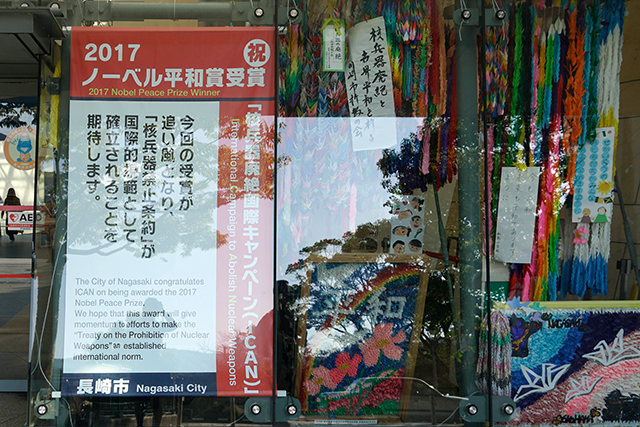
A banner at the front of the Museum explained that the International Campaign to Abolish Nuclear Weapons, a global civil society coalition working to promote adherence to and full implementation of the UN Treaty on the Prohibition of Nuclear Weapons, was awarded the Nobel Peace Prize in 2017.
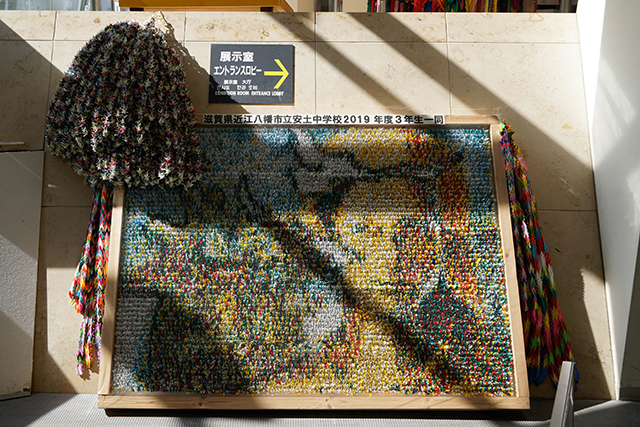
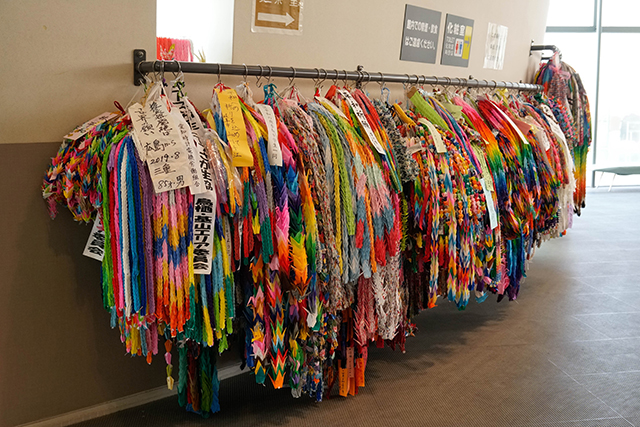
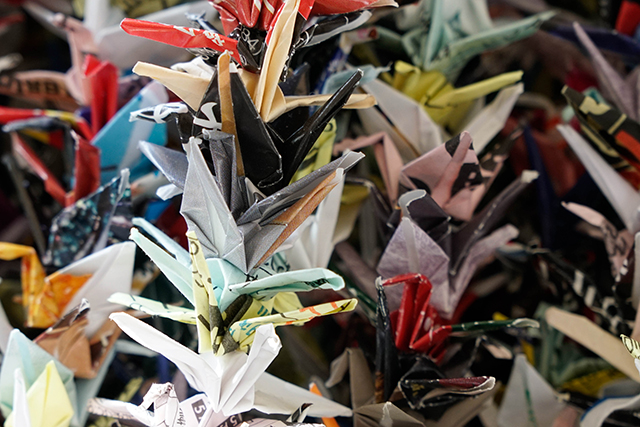
Inside the entrance, was numerous artworks using the motif of the crane, a symbol of peace. Most were folded using paper.
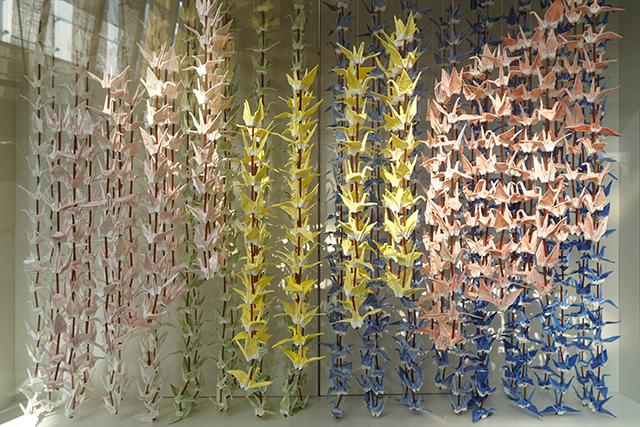
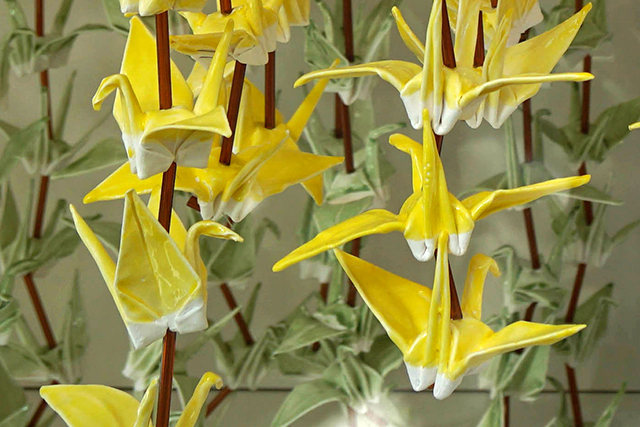
These look like they were coated in ceramic.
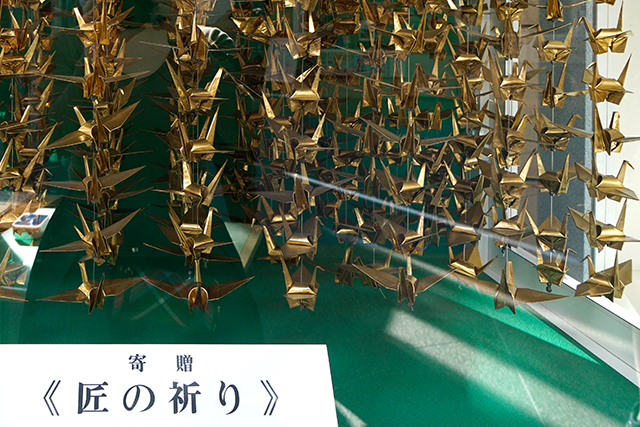
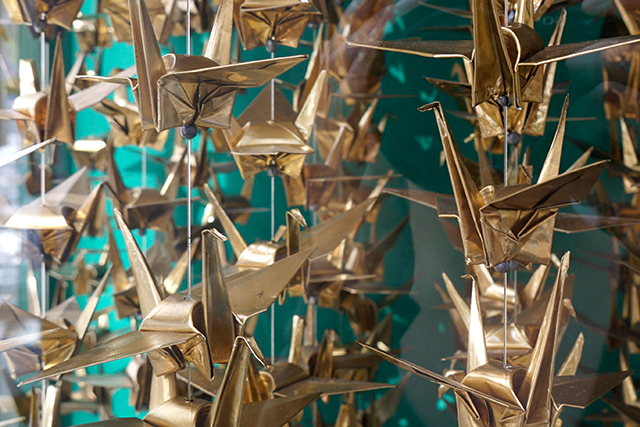
While these were folded from sheets of metal.
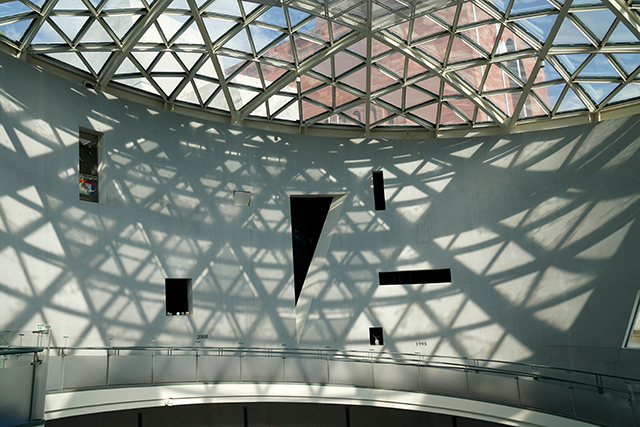
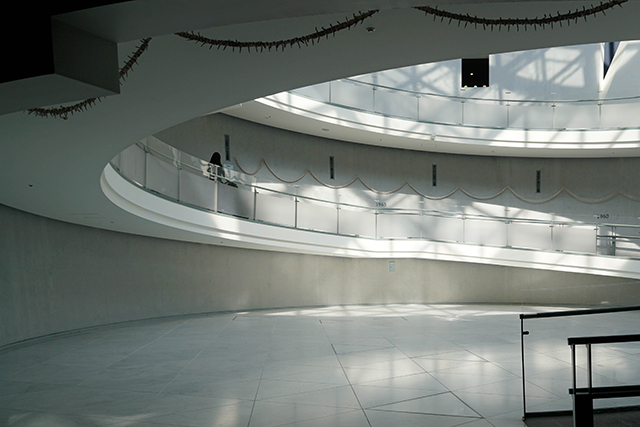
The entrance to the museum exhibition was located down a spiral ramp…
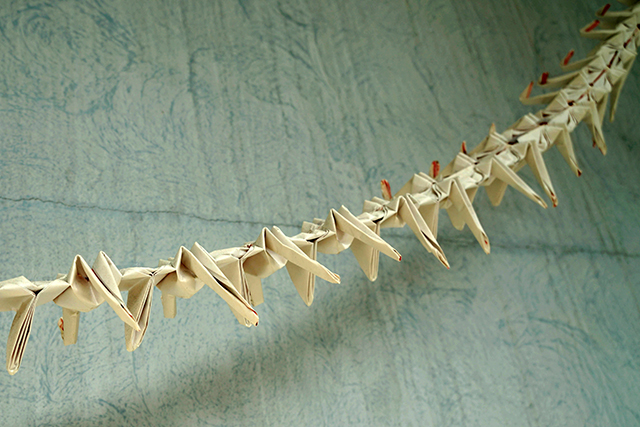
A String of Thousand Cranes was hung around the lower level of the approach to the museum. The artwork was donated by Mr Manna Ori, a Dutch paper folding-artist on August 10, 2010, and created by using a piece of paper of 15 cm wide and 150 m long.
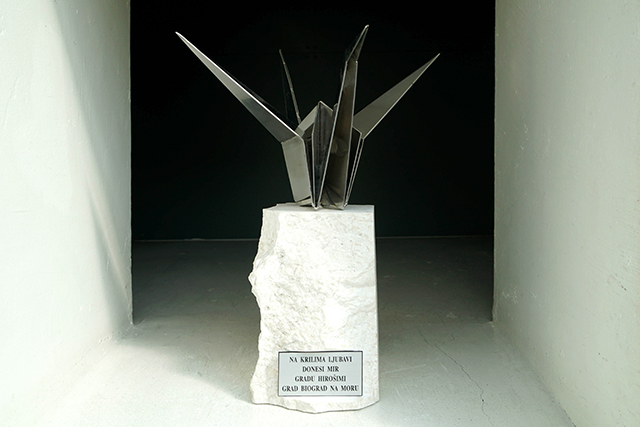
In one of the nooks was a large ‘paper’ crane made from metal and gifted from the city of Biograd na Moru in Croatia. Funnily enough, the plaque referred to bringing peace to the city of Hiroshima, not Nagasaki.
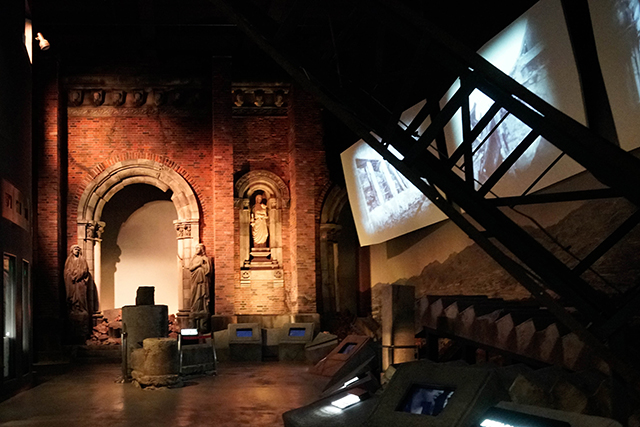
Upon entering the museum, visitors entered a room dedicated to the city as it was just before the bomb decimated Nagasaki at 11:02 am on August 9 1945. This photo was a room in the second section, which shows Nagasaki just after the bombings, including a water tank with contort legs located approximately 800 m from the hypocenter (right). At the back was a replica of a sidewall of the Urakami Cathedral that was hit by the bomb.
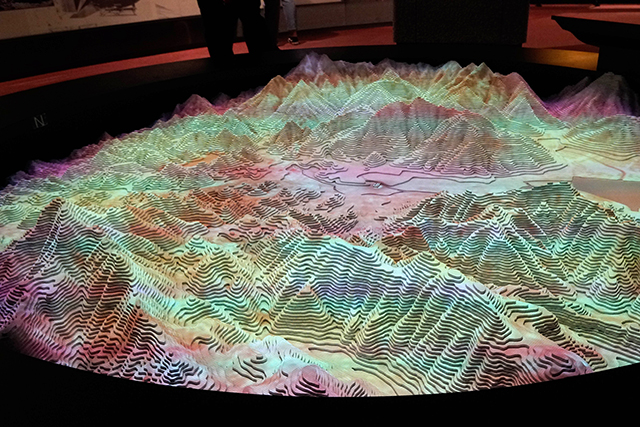
A projection onto this replica of the Nagasaki geography took us through the progression of events on that fateful day.
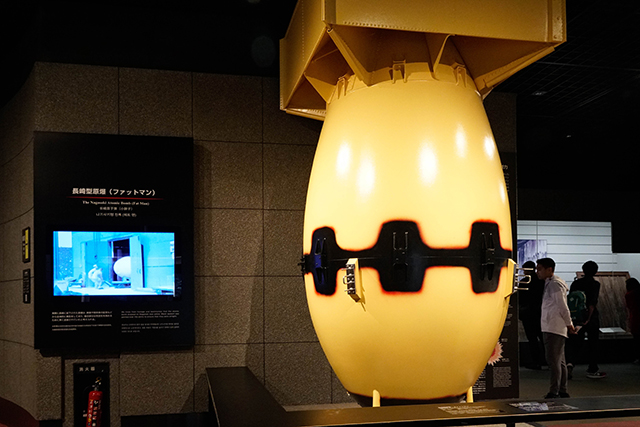
This was a replica of the Fatman, the atomic bomb dropped on Nagasaki.
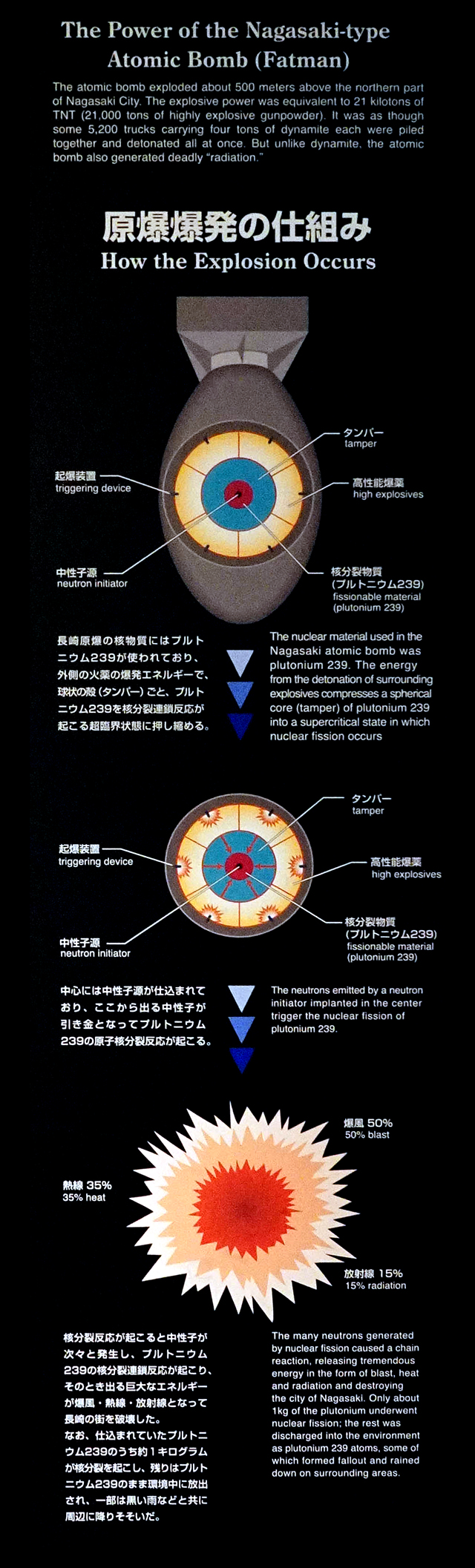
We appreciated the objective explanation of how an atomic explosion occurs.
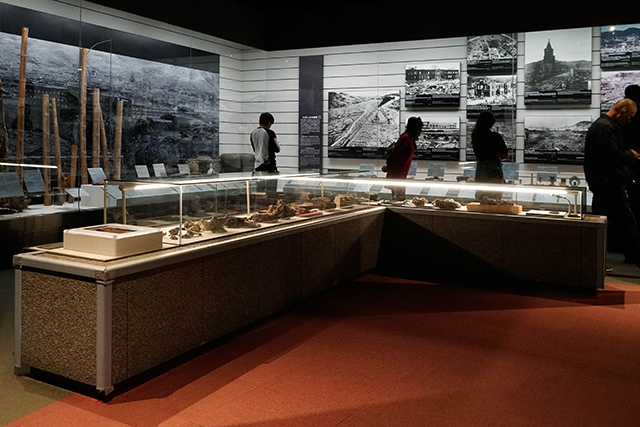
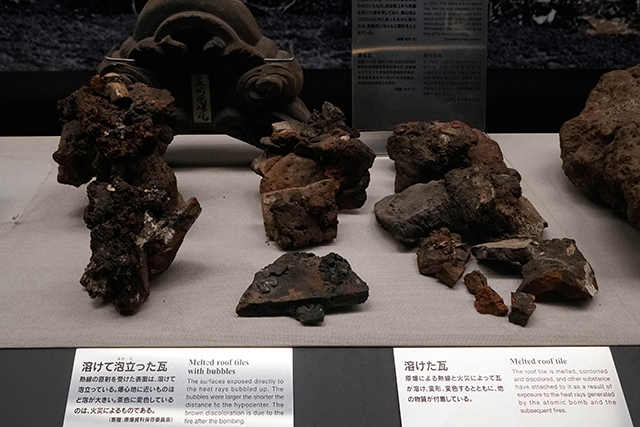
The rest of the room showed everyday artefacts in the aftermath of the destructive power of the atomic bombing. These were melted roof tiles with bubbles. The surfaces exposed directly to the heat rays bubbled up. The bubbles were larger the shorter distance to the hypocenter. The brown discolouration was due to the fire after the bombing.
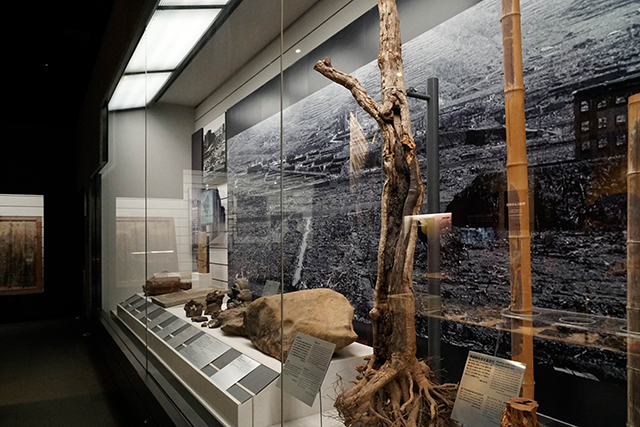
This maple tree was exposed to the atomic bombing about 800 meters from the hypocenter in Shiroyama-machi. Mr Ikeda received it from a friend and donated it to Nagasaki City in October 1985. The tree was then planted in the garden in front of Peace Hall as a living reminder of the horror of the atomic bombing, but it withered the following year and was moved into the museum. The tree was thought to have been about 70 years old at the time of the bombing.
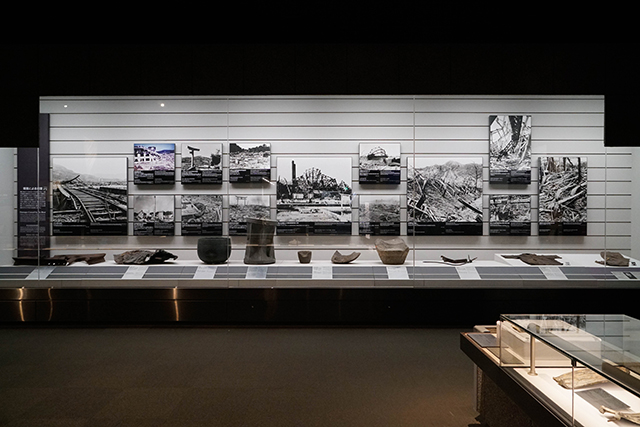
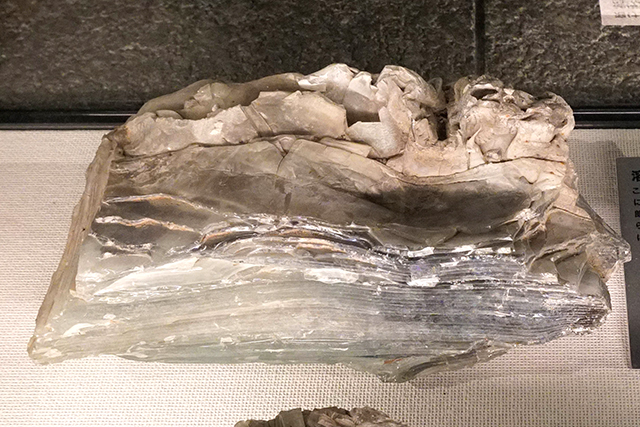
These approximately 60 glass panes melted together when exposed to heat rays at the time of the atomic bombing. They were found in 1955 while picking up litter from Mezame River, about one kilometre from the hypocentre.
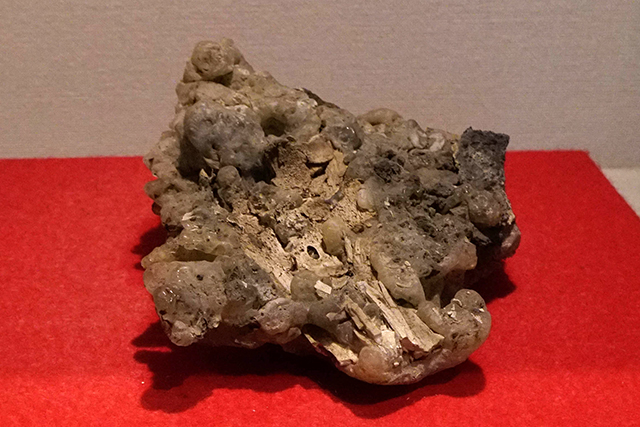
Also found near the hypocentre, these were the bones of a human hand stuck to a clump of glass that melted as a result of exposure to the extreme heat.
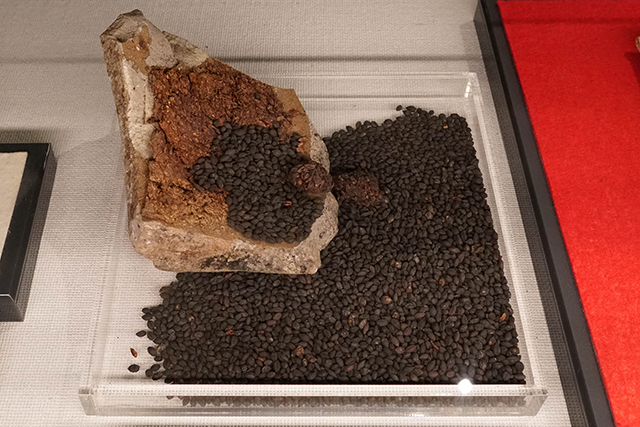
This charred barley was unearthed on July 9, 1991, during sewer construction work in Oka-machi about 400 meters from the hypocenter.
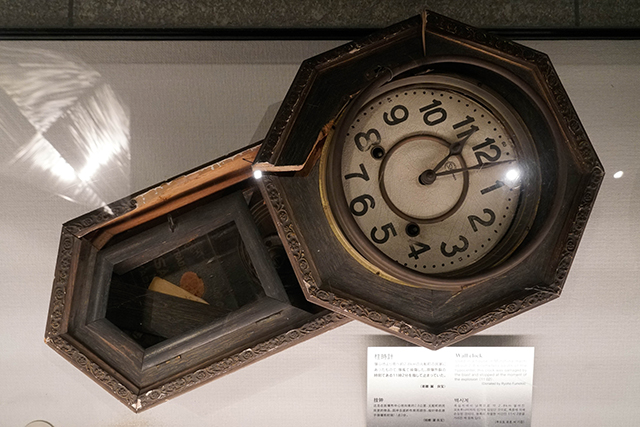
This wall clock was used in a house in Motofuna-machi about 2.8 kilometres south of the hypocenter and was damaged by the blast and stopped at the moment of the explosion (11:02).
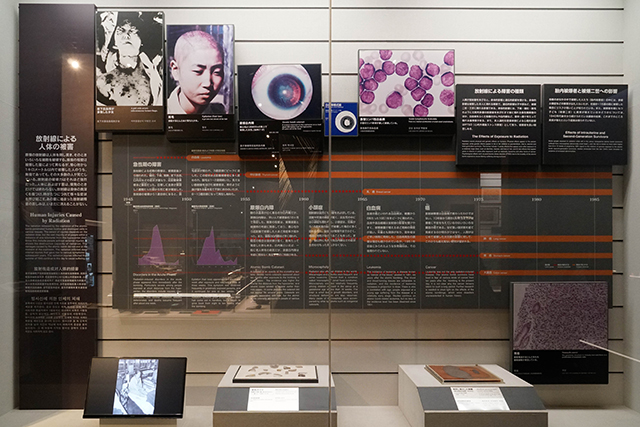
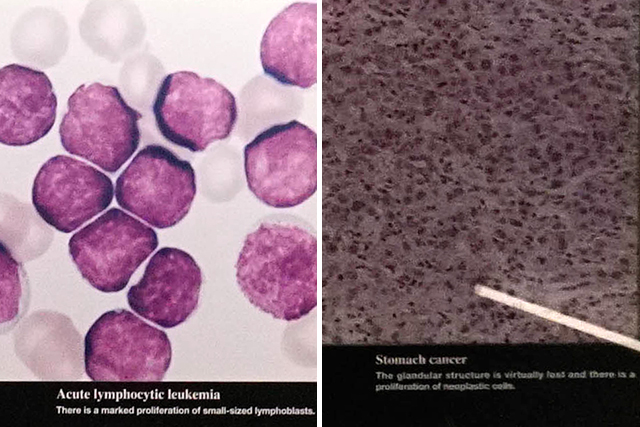
The health-related consequences aren’t detailed in an informative manner, which annoyed D particularly. Most displays were described as unhealthy without identifying the specific areas or comparing to a scan from a healthy person, which meant they’re essentially useless displays to the layperson.
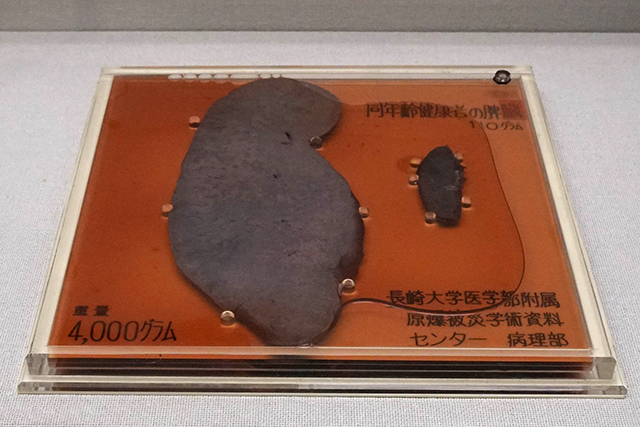
This one showing ‘marked splenomegaly’ was perhaps the most information display in this section, showing a swollen spleen as a result of chronic myelogenous leukemia weighing 4,000 g on the left compared to a normal spleen from someone of the same age weighing 110 g on the right.
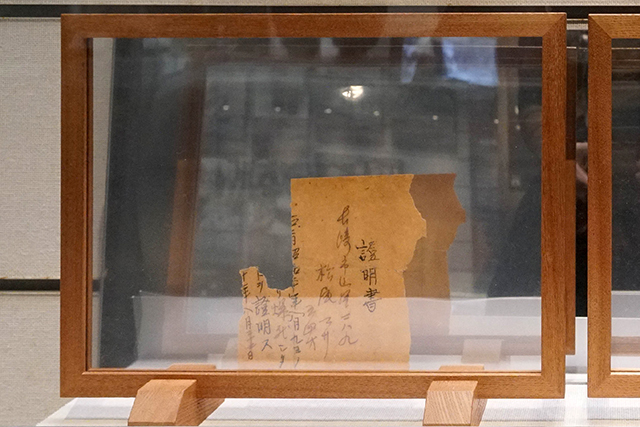
This was a certificate confirming the death by bombing.
Many people died in the atomic bombing, and so it was necessary to issue a large number of certificates quickly. This is why the papers marked ‘Due to the bombing of August 9’ were issued with handwritten names and addresses. The fact that certificates were printed on the back of other documents attests to the disruption of society at that time.
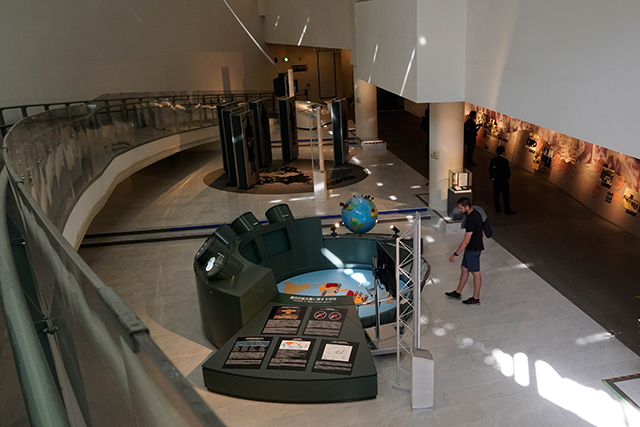
The third section of the exhibition presented information related to the war, nuclear weapons and peace to get visitors to move towards a world free from nuclear weapons.
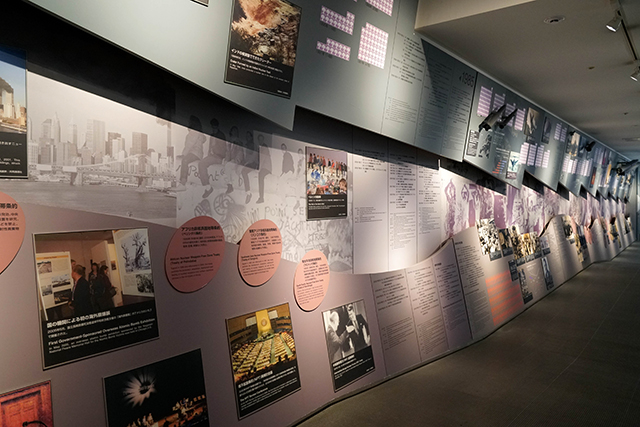
A timeline detailed the progression of nuclear testing around the world since the atomic bombs.
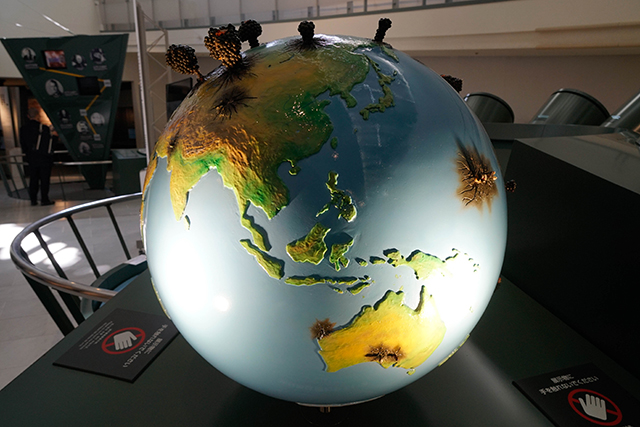
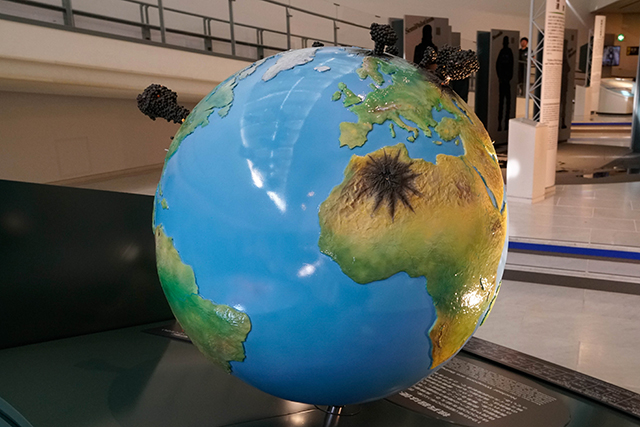
This globe illustrated the scales and locations of where nuclear weapons are still being used. The chief countries (in descending order) are the USA, USSR/Russia, UK, France, China, India, Pakistan, and DPRK. The text warns:
More than 2,000 nuclear tests have been conducted since 1945, and these have led to the problem of damages to ecosystems near the test sites and injuries to soldiers and local residents. All nuclear weapons are deployed on the assumption that they may be used, and the risk of their use emerged every time a conflict breaks out in the world. Moreover, nuclear weapons are not exempt from the accidents inevitable in complex technological systems. A variety of accidents, from mishaps in factories to mistaken launchings, have in fact already occurred.
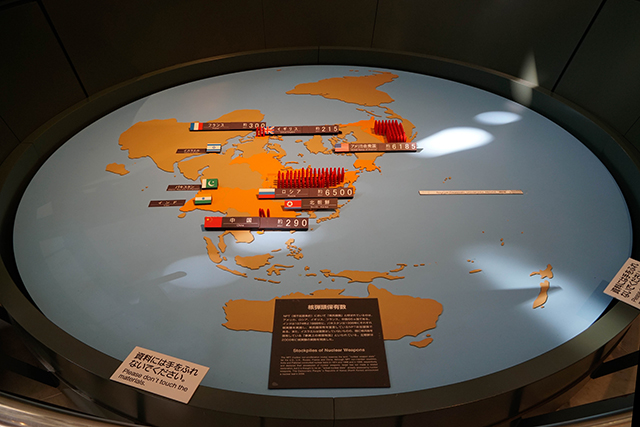
This map illustrated the stockpiles of nuclear weapons held by countries around the world.
The NPT (nuclear non-proliferation treaty) reserves the term ‘nuclear weapon state’ for the US, UK, Russia, France and China. Although NPT non-member countries, India and Pakistan conducted nuclear tests in 1974 and 1998 and in 1998, respectively, and declared their possession of nuclear weapons. Israel has not made a related declaration, but it is thought to be an ‘actual nuclear state’ already possessing nuclear weapons. The Democratic People’s Republic of Korea (North Korea) announced a nuclear test in 2006.
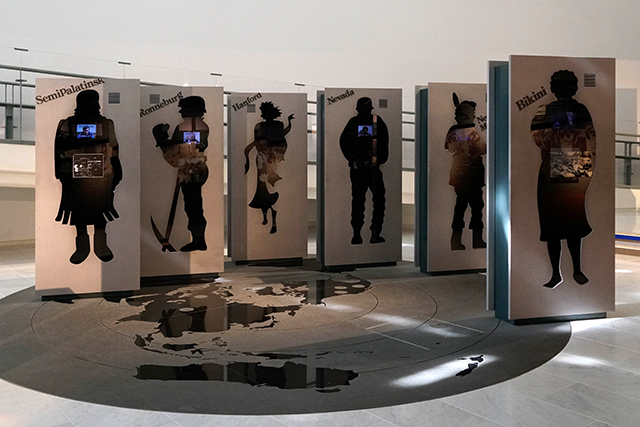
This display introduced people around the world whose lives have been affected by nuclear bombs.
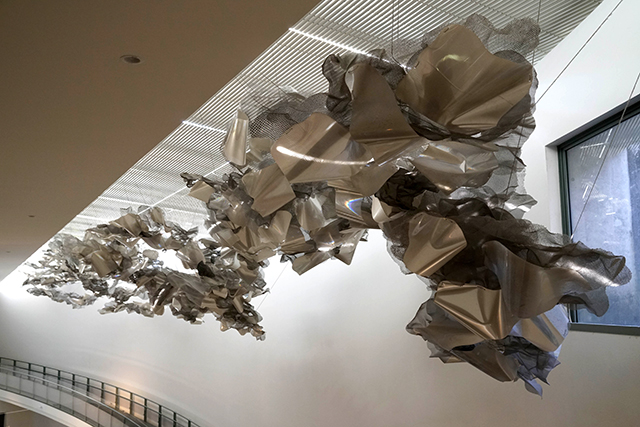
Nagasaki National Peace Memorial Hall for the Atomic Bomb Victims
国立長崎原爆死没者追悼平和祈念館, 7-8 Hiranomachi, Nagasaki, Nagasaki, 852-8117, Japan
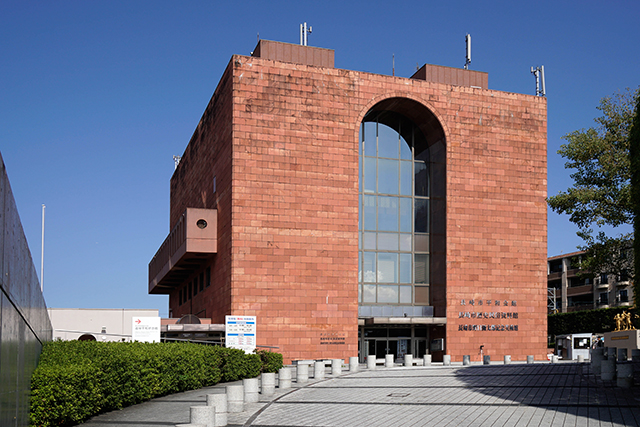
Next to the Atomic Bomb Museum was the commemorative Nagasaki National Peace Memorial Hall for the Atomic Bomb Victims, which was completed in 2003.
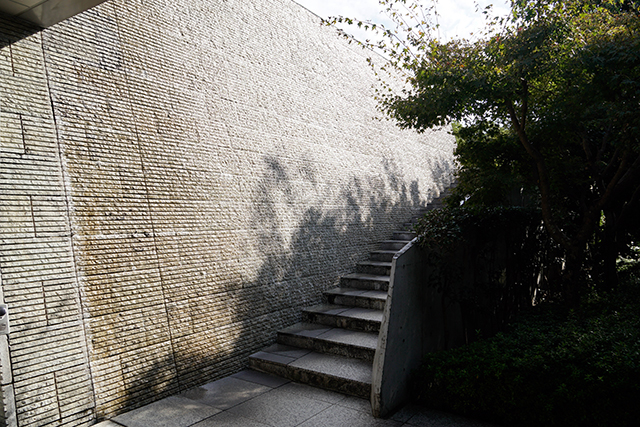
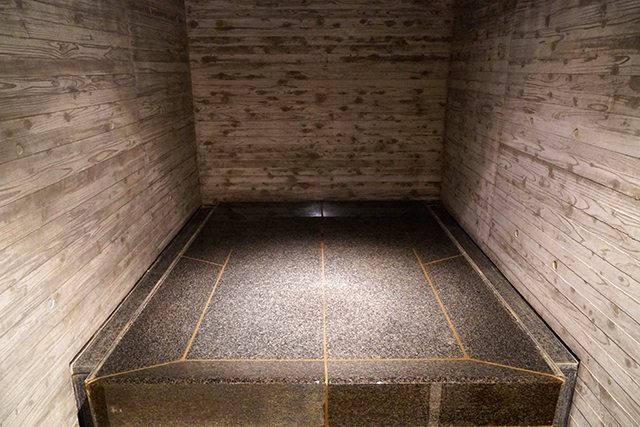
Water, and the sound of running water, featured prominently in the building, which was designed by Akira Kuryu.
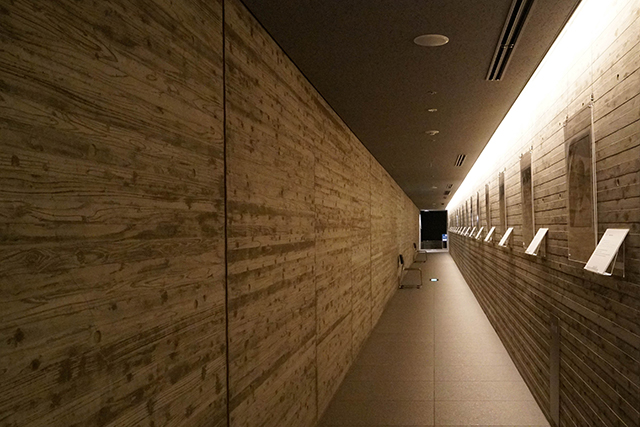
The building had a subterranean interior
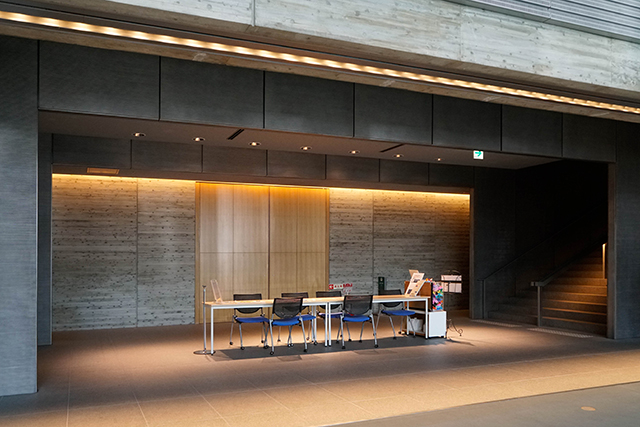
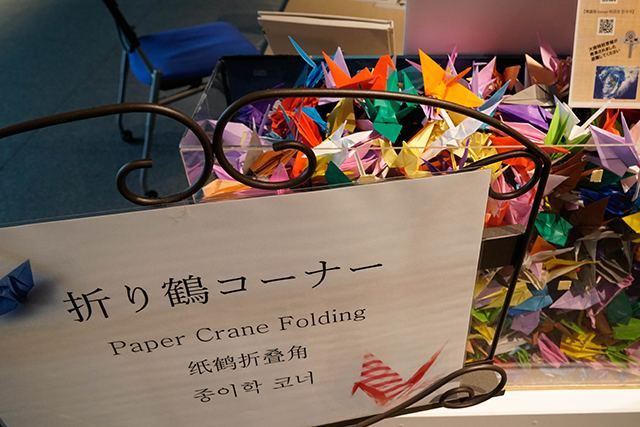
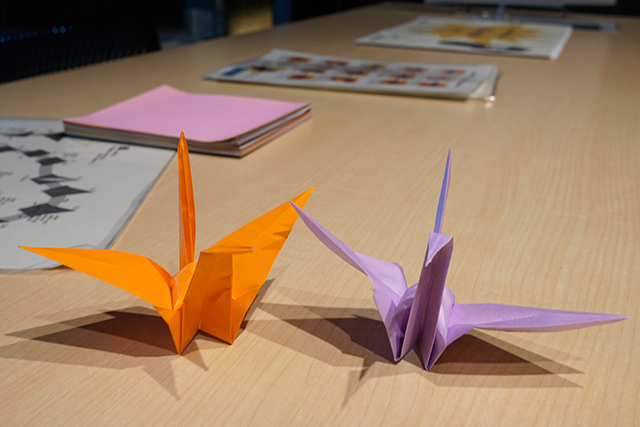
Along with a reference area, a large conference room, an anteroom with a bank of monitors showing photographs of the victims, there was a long table inviting visitors to fold their old paper cranes.
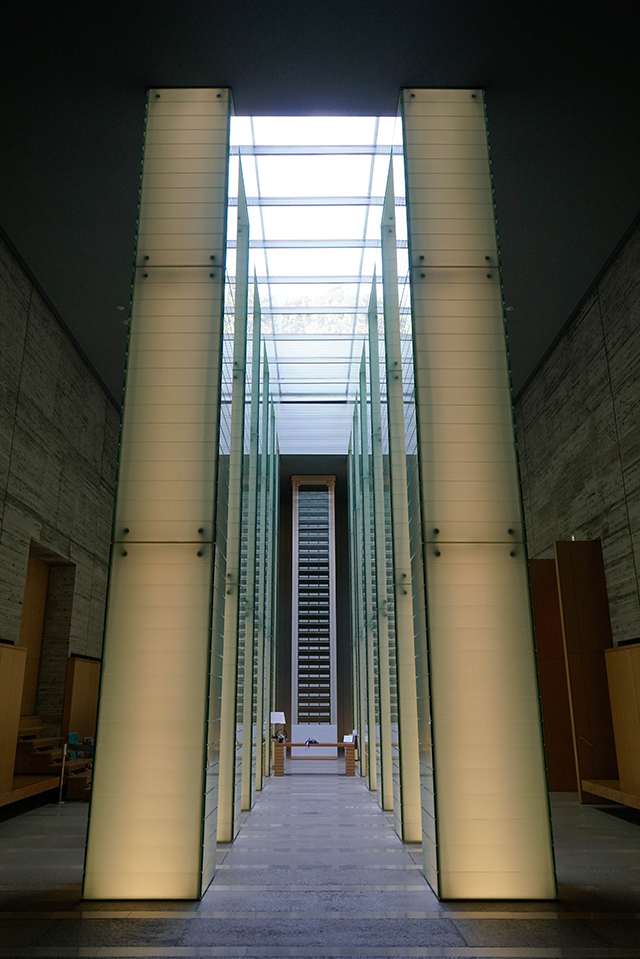
Centre stage, though, was a stylised remembrance hall in which 12 pillars of light symbolise hope for peace. There were twelve illuminated glass pillars, along with a registry shelf at the far end that held the names of all the victims of the atomic bombing.
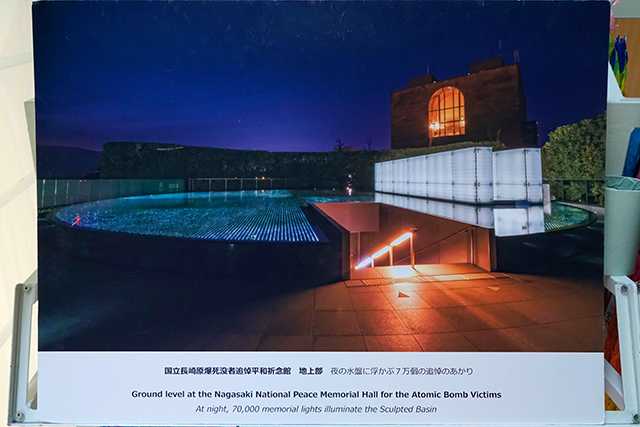
The upper sections of these pillars formed the outside walls of a skylight and were positioned so that they form a line pointing toward the hypocentre of the atomic bomb. With the centre portion of the pillars able to be opened, their illuminated forms symbolise calls for peace going out to the skies of the world.
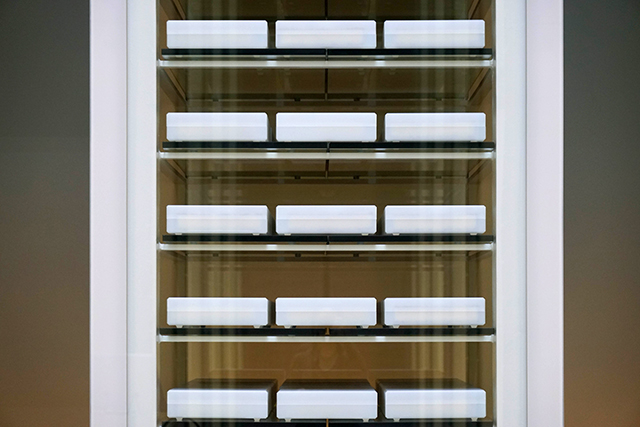
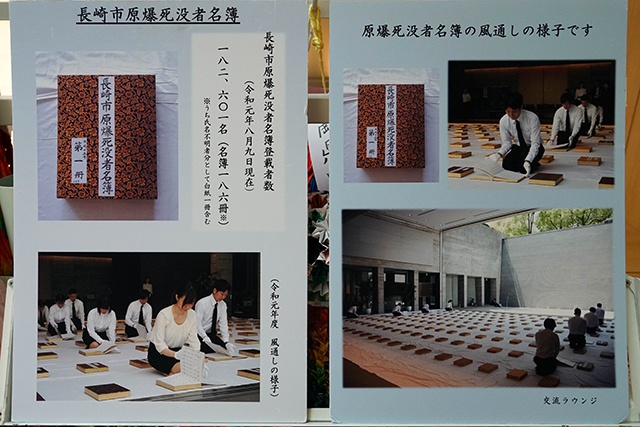
The registry shelf for the names of atomic bombing victims was 9 metres with 27 shelves that each fit 9 volumes. The outer structure was made of glass and the steel-framed inner shelves opened semi-automatically. The registry volumes were stored in boxes which maintain their pristine condition by keeping out ultraviolet light and moisture. The names are written in these volumes by hand as the victim passes away, and as of August 9 2019, the names of 182, 601 atomic bomb victims were recorded in 186 volumes.
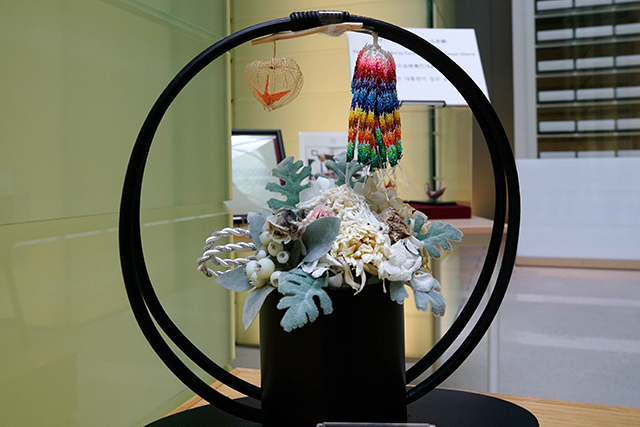
In front of the shelf was a low table where people may law flower arrangements or paper cranes in tribute to those who passed away.
We spent some time sitting on the wooden benches lining the sides of the hall enjoying the silent peacefulness in the hall before heading outside to the convenience store for some drinks. There was a large selection of ready-made boba drinks in Japan in convenience stores.
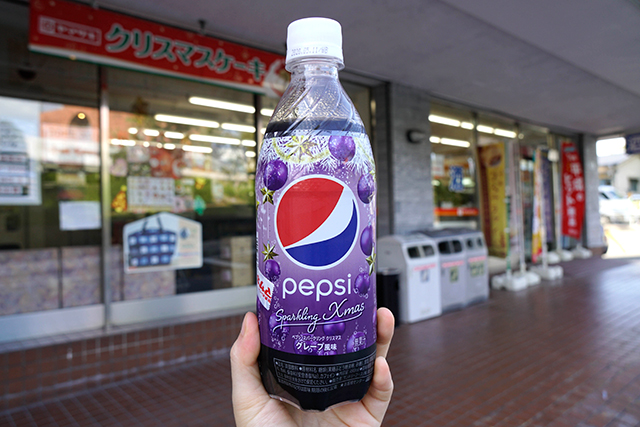
But having read rather negative reviews of these instant boba drinks, we opted instead for fun flavoured soft drinks. This is the Pepsi Sparkling Xmas Grape, which tasted exactly as we expected of a grape flavoured Pepsi. Essentially, it was regular Pepsi with the bright Japanese budō grape flavour. It was enjoyable.
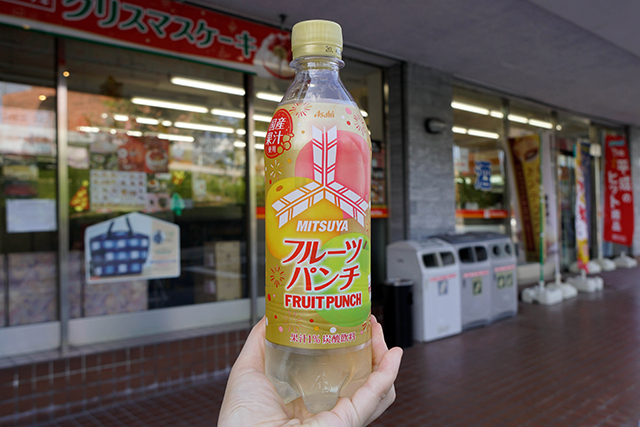
This is the Mitsuya Cider Fruit Punch, which was a mix of Aomori green apple, Fukushima peach and Miyazaki citrus. The overall flavour recalled cough medicine to me, but D enjoyed the fruitiness.
Hypocenter Area
9 Matsuyamamachi, Nagasaki, 852-8118, Japan
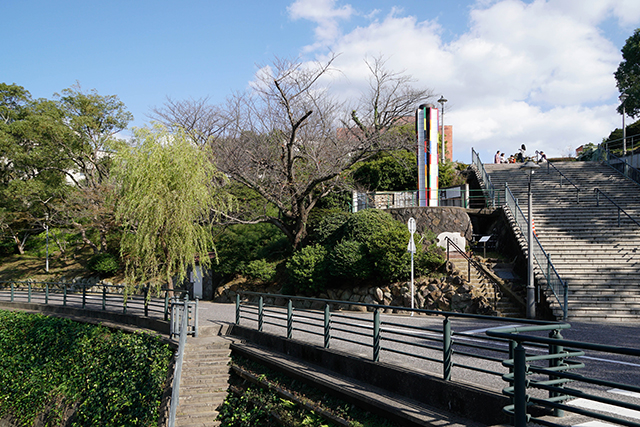
The multicoloured structure next to the staircase on the right was the Monument for the Nagasaki Flame of Commitment (erected 1987).
Received by the City of Nagasaki from Greece in 1983, the Flame of Commitment burns to symbolize the pledge that Nagasaki shall remain the last city on Earth to experience nuclear devastation, that nuclear war shall never again be waged, and that there shall be no more bomb victims. The construction of the monument was undertaken to promote this pledge and commitment, and the flame of peace continues to burn.
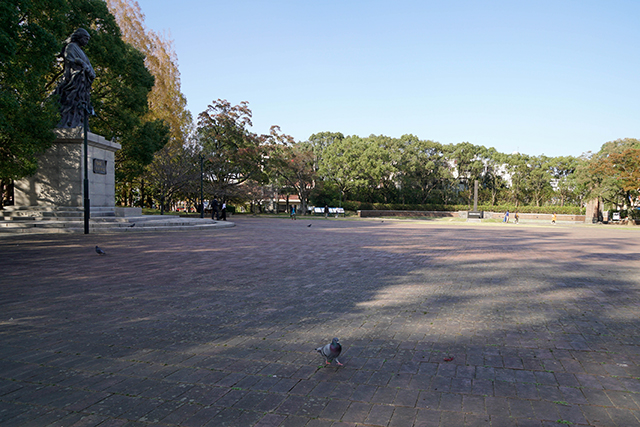
If the museum was the ‘zone of study’, then the hypocentre area was the ‘zone of prayers’, with an expansive open area for quiet contemplation.
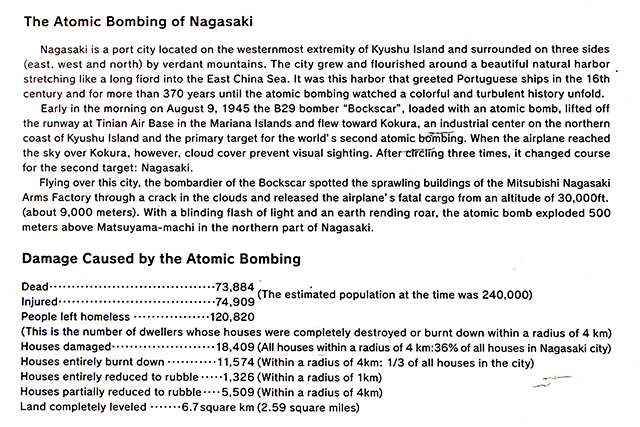
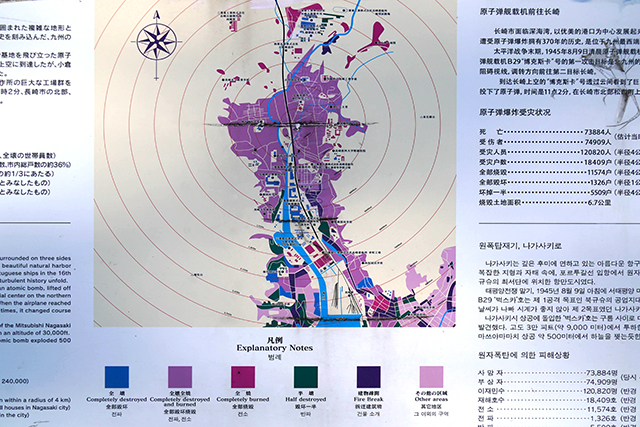
A plaque at the nearby hypocenter gave the following account and statistics of the damage caused that day.
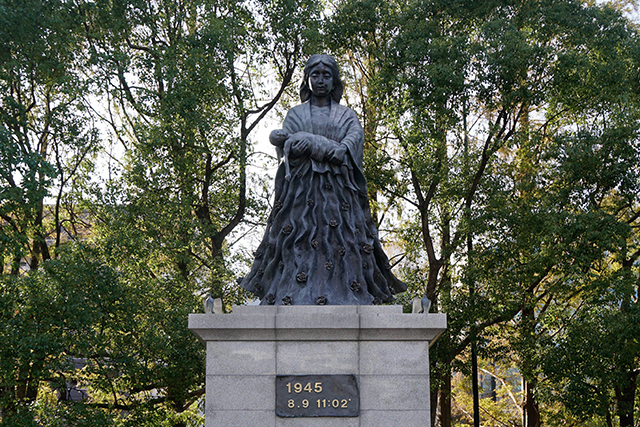
This is the Atomic Bombing 50th Anniversary Commemorative Projects Monument.
When considering the present prosperity and peace of Japan and the development of Nagasaki, we must never forget the fact that about 70% of the victims of the Nagasaki atomic bomb, which exploded over this city at 11:02 am, August 9, 1945, were children, women and senior citizens.
Created by Nagasaki-born sculptor Naoki Tominaga, this monument expresses the horror of the atomic bombing, prays for the repose of the souls of the victims from whose noble sacrifice the buds of peace grew, and – through the form of a stricken child sleeping in her mother’s warm embrace – reaches with great motherly compassion and pleas for eternal peace toward a prosperous Japan of the 21st century.
Embodied in the monument is the sculptor’s reminder that the child is like Japan on the day of the atomic bombing, while the mother represents the support provided by the countries of the world in Japan’s efforts to build the peaceful nation that it has become today.
On the occasion of the 50th anniversary of the atomic bombing, the hypocenter area was refurbished and designated as a “prayer zone” a place to pray for the repose of the atomic bomb victims, to inform the world about the horror of the atomic bombing and to appeal for the abolition of nuclear weapons and for the realization of lasting world peace.
This monument was erected here as the ‘Atomic Bombing 50th Anniversary Commemorative Projects Monument’ to enhance and strengthen the hypocenter area’s role as a ‘prayer zone’ and a hub for world peace.
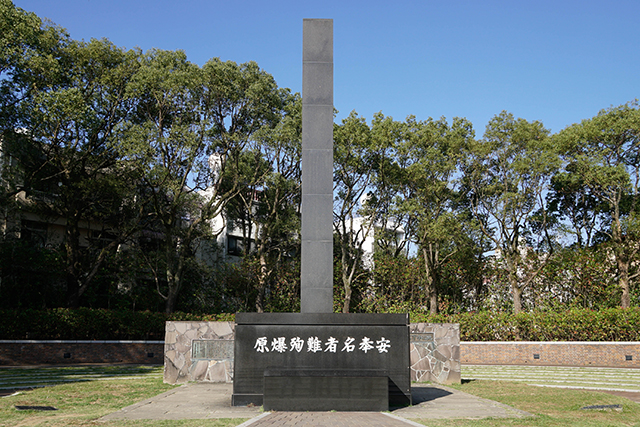
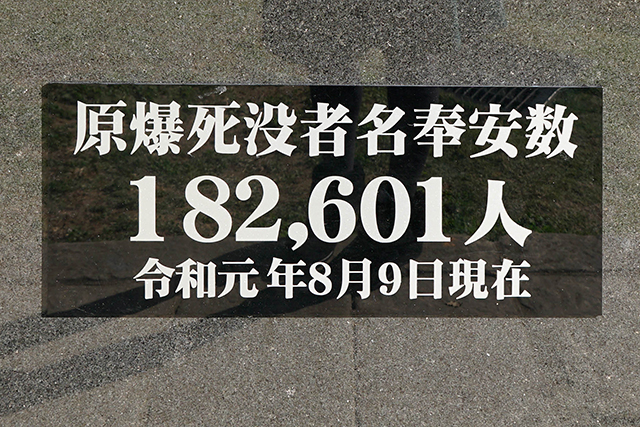
This is the Hypocenter Cenotaph (erected March 1956)
On August 9, 1945 an atomic bomb exploded in the sky about 500 meters above the point where this monument now stands. By the end of December, some 74,000 people had died and some 75,000 suffered from various injuries. The area within a 2.5 kilometer radius of the hypocenter was utterly devastated, and the rest of the city was left in ruins.
182,601 was the number of atomic bomb victims who had passed away as of August 9, 2019. I imagine they’d need to update the plaque every year.
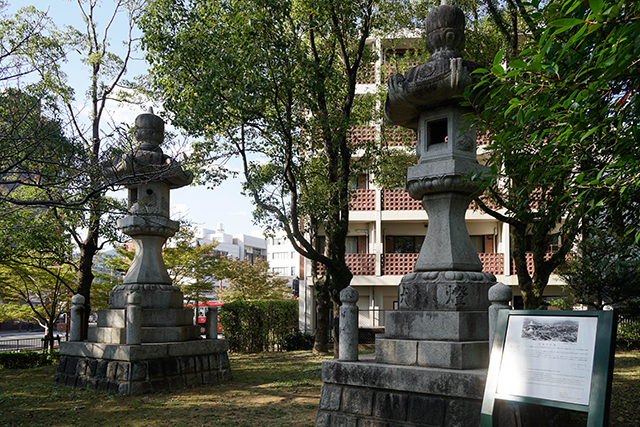
These were the Stone Lanterns at Shotokuji Temple.
Located about 1. 5 km south-southeast of the hypocenter, Tennozan Honnin Shotokuji Temple was founded in the year 1626 and this pair of stone lanterns was later donated by faithful parishioners.
The atomic bomb explosion at 11:02 am August 9 1945 crushed the grand main hall (made totally of fine keyaki wood) and toppled almost all of the statues and gravestones in the temple compound. Only these stone lanterns remained standing.
Donated to Nagasaki City as reminders of the devastation caused by the atomic bombing, these lanterns were erected on the present spot in February 1949.
Nagasaki City installs this plaque to pray for the repose of the souls of the people who died here and to ensure that this tragedy is never repeated.
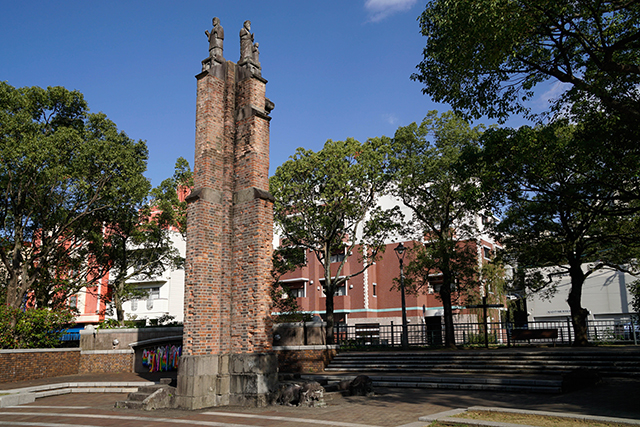
Urakami Cathedral (completed in 1914) was situated approximately 500 m northeast of the hypocentre and destroyed in the bombing. This was a section of the southern wall of the cathedral that was brought to this location to make way for the construction of a new church building in 1958.
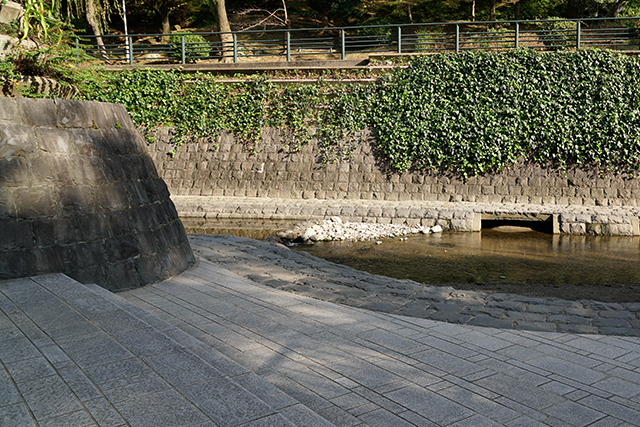
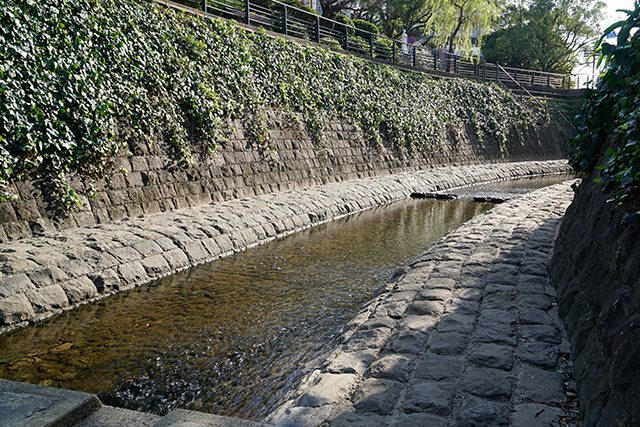
This was Shimonokawa, a stream flowing through the eastern part of Matsuyama-machi, the neighbourhood directly above which the atomic bomb exploded. In the aftermath, the stream was filled with corpses of victims who died groping for water or collapsed and died on their way there.
A survivor who witnessed the scene the next day described it as follows: ‘I crossed the half-destroyed Matsuyama Bridge over Shimonokawa. There were so many human corpses under it that they formed a dam in the stream! It was like a vision of the Apocalypse, a living hell on earth. Not a speck of cloud tainted the sky above, but the earth below was a panorama of carnage and destruction.’
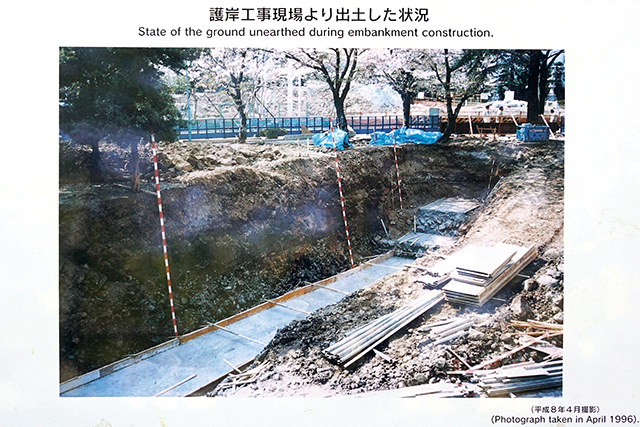
The present embankment included some of the original stones that were scorched by the flash of heat generated by the explosion.
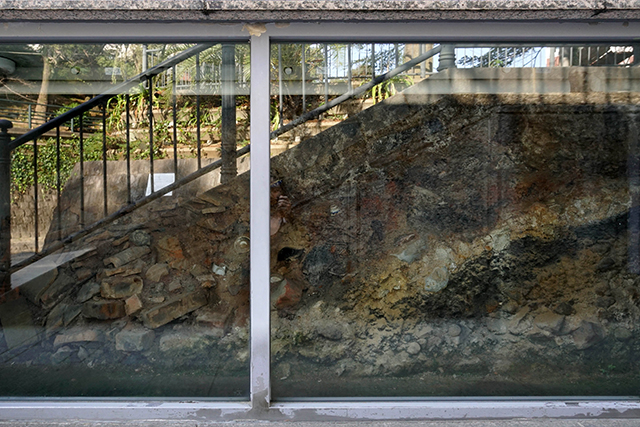
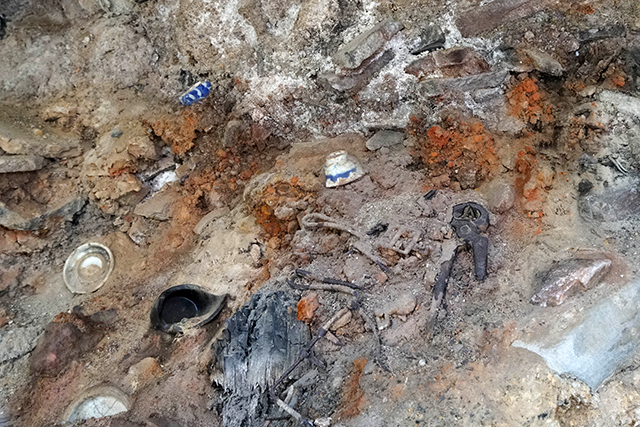
Various household goods and building materials, including — teacups, hand tools, roof tiles — were unearthed during construction work.
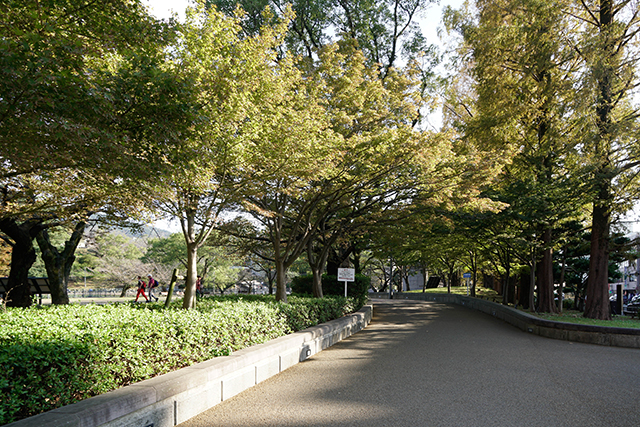
Nagasaki Peace Park
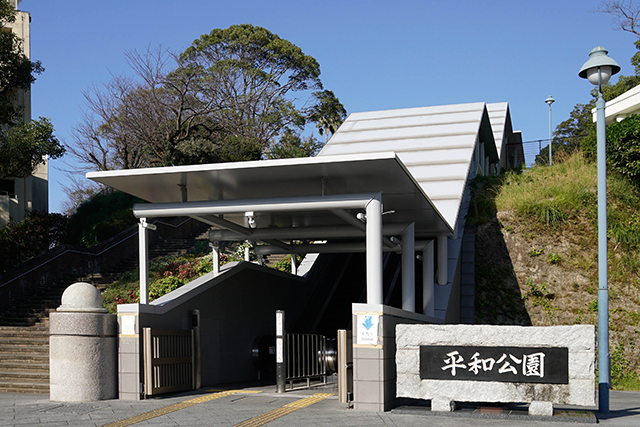
After enjoying our drinks on benches in the quiet of the hypocentre area, we headed over to the Nagasaki Peace Park.
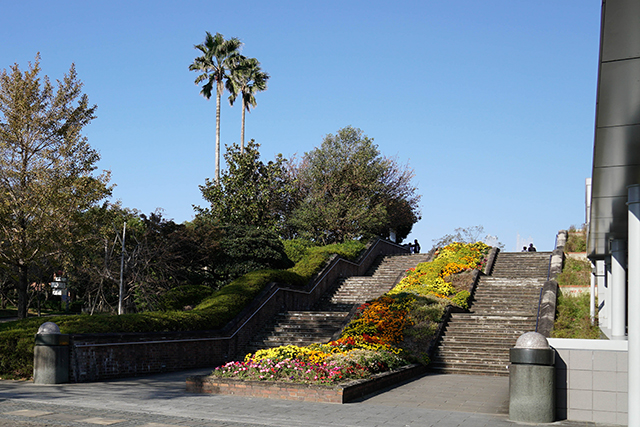
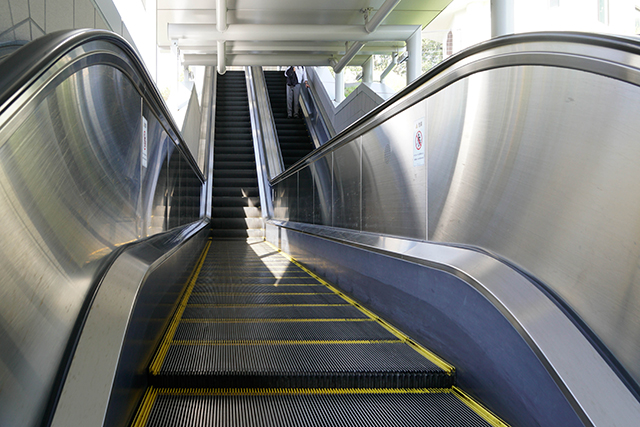
There was the option of taking the stairs or the escalator, and of course, we take the latter. It featured one of the longest flat middle sections we’ve seen, which allowed the visitors to alight from the escalator at the same location as the staircase once at the top.
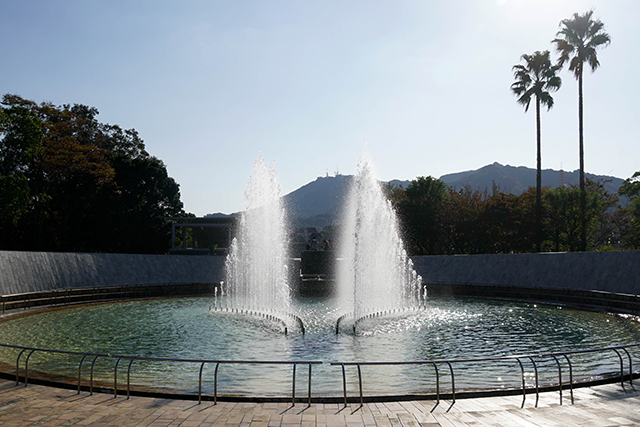
At the south end of the park, nearest to the escalator was Fountain of Peace. It was completed in August 1969 and served as a prayer for the repose of the souls of the many atomic bomb victims who died searching for water, and as a dedication to world peace.
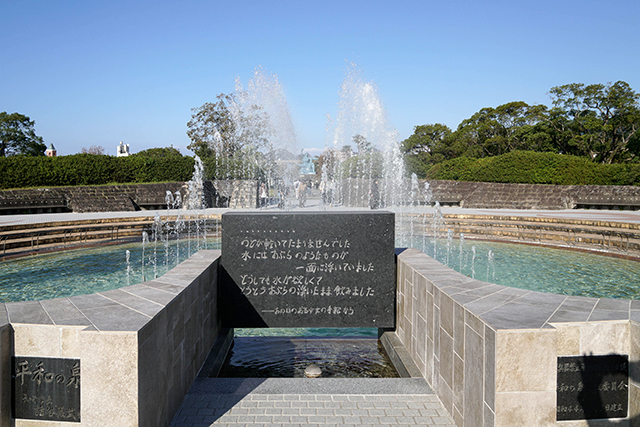
Lines from a poem by a girl named Sachiko Yamaguchi, who was nine at the time of the bombing, were carved on a black stone plaque in front of the fountain. It read: ‘I was thirsty beyond endurance. There was something oily on the surface of the water, but I wanted water so badly that I drank it just as it was’.
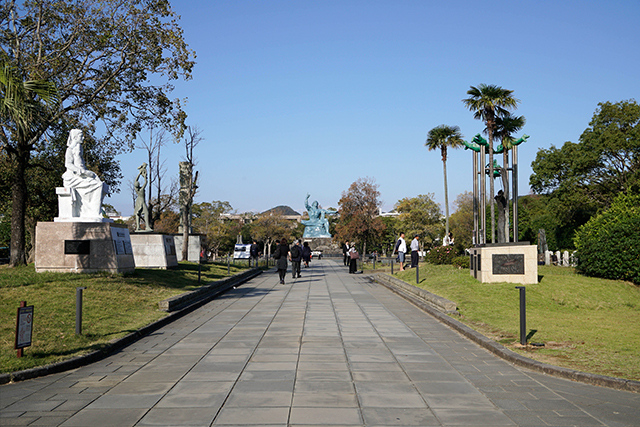
A Peace Symbols Zone was established on both sides of the park in 1978 and featured donations of monuments from countries around the world.
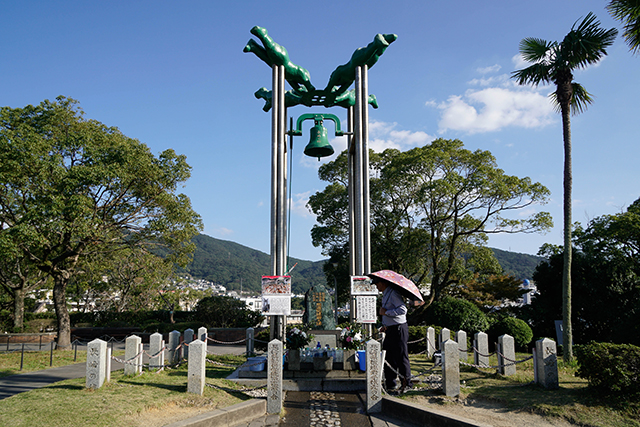
On the right was the Nagasaki Peace Bell (completed in 1977). There is a strong symbolic connection between the ringing of bells and Nagasaki’s recovery from the bombing, in part due to the survival of the larger of the two church bells at Urakami Cathedral, and its use by Dr Takashi Nagai as a rallying point in the dark days following the explosion.
A representative of the victims rings the bell once a month, and on the anniversary of the bombing. We’re fortunate to see Mr Inosuke Hayasaki, a volunteer at the park, who was working at an arms factory 1.1 km from the hypocenter when the blast occurred. He was thrown 14 meters but was one of the few in the factory to survive. He shared his story with Japanese speaking visitors and encouraged all visitors to sprinkle water on the base of the tower as a symbolic offering to those like him who thirsted for water in the hours after the blast.
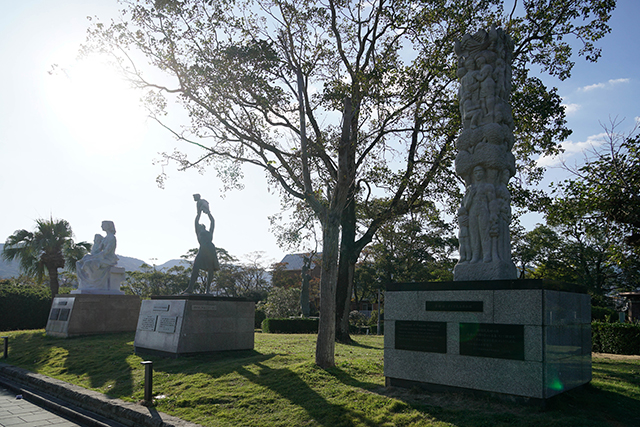
From left to right, we have:
- Statue of Peace from the former Union of Soviet Socialist Republics, 1985. It shows a mother holding her infant child as an expression of love and peace.
- Joy of Life by Jan Hána from Czechoslovakia, 1980. It shows a jubilant mother lifting her baby in her arms.
- Monument of People’s Friendship from the former German Democratic Republic, 1981. The sculpture symbolises the efforts for peace and a happy future of mankind, for the friendship among the peoples.
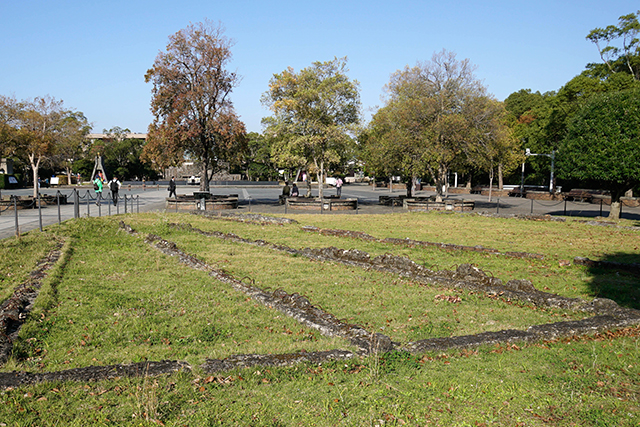
This is the Site of the Former Urakami Branch of Nagasaki Prison.
[The prison] was built on a site of 20,000m², with its offices covering 13,000m². It was located between 100 m and 350 m north of the hypocentre of the atomic bomb, and was the closest public building to the hypocenter.
At 11:02 a.m. on August 9 .1945. the explosion of the plutonium bomb killed 18 staff, 35 facility residents and 81 inmates (including 32 Chinese and at least 13 Korean inmates) at the prison. In total 131 people died here. The wall surrounding the prison was 4 m high, 0.25 m thick and made from steel-reinforced concrete: it was reduced almost to its foundations. The wooden office buildings and kitchen were blown apart and burned down completely, save for a single remaining chimney.
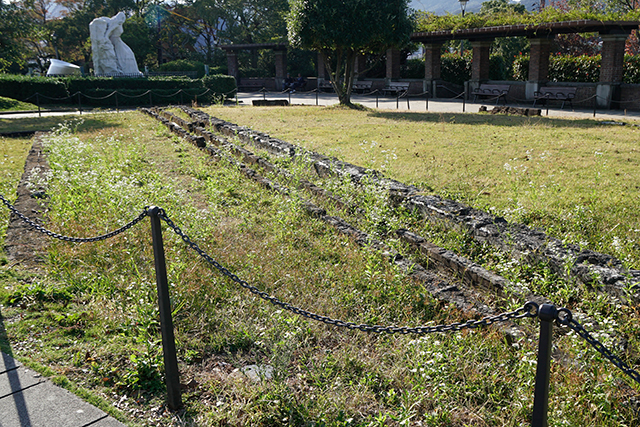
In the background was Maiden of Peace, which was donated by the People’s Republic of China in 1985. The marble statue weighed 27 tons and stood over 3 meters in height.
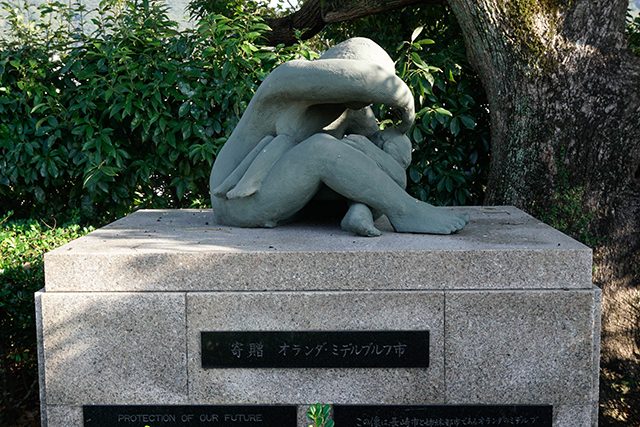
This was Protection of Our Future, a work gifted by Nagasaki’s sister city, Middelburg in The Netherlands in 1983. It showed a mother protecting her infant child from danger, ‘representing that we must protect not only the present generation but also the coming generation as well so that the people of the world can live in peace together’.
Finally, at the northern end of the park facing the Fountain of Peace was the Peace Statue:
This statue was erected by the citizens of Nagasaki in August, 1955, on the 10th anniversary of the devastation of this city by the atomic bomb. Thanks to contributions from Japan and abroad, the ten meter bronze statue, which was designed by Seibo Kitamura, was dedicated as an appeal for lasting world peace and as a prayer that such a tragedy would never be repeated.
The elevated right hand points to the threat of nuclear weapons, while the outstretched left hand symbolizes tranquility and world peace. Divine omnipotence and love are embodied in the sturdy physique and gentle countenance of the statue, and a prayer for the repose of the souls of all war victims is expressed in the closed eyes. Furthermore, the folded right leg symbolizes quiet meditation, while the left leg is poised for action in assisting humanity.
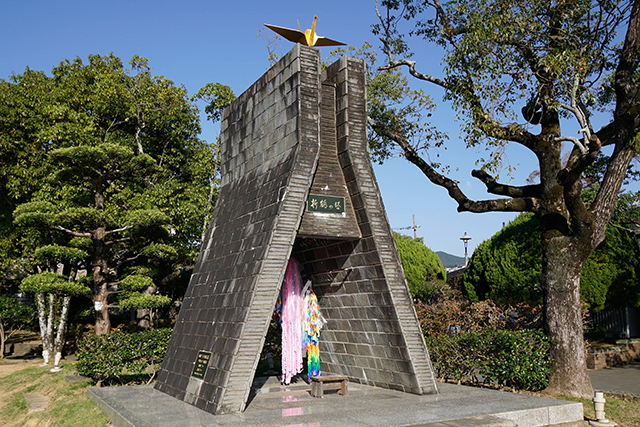
One of these Origami Crane Towers sat on each side of the Peace Statue. They were erected as a commemorative project by the Lion’s Club International (Nagasaki and Kyōto branches) in 1982 with the stated intention of consoling the victims and standing as a prayer for global peace.
At the northern end of the Peace Park, we missed the vault for the unclaimed remains of victims collected from Nagasaki City and nearby towns.
Amu Plaza Nagasaki
アミュプラザ長崎, 1-1 Onouemachi, Nagasaki, 850-0058, Japan
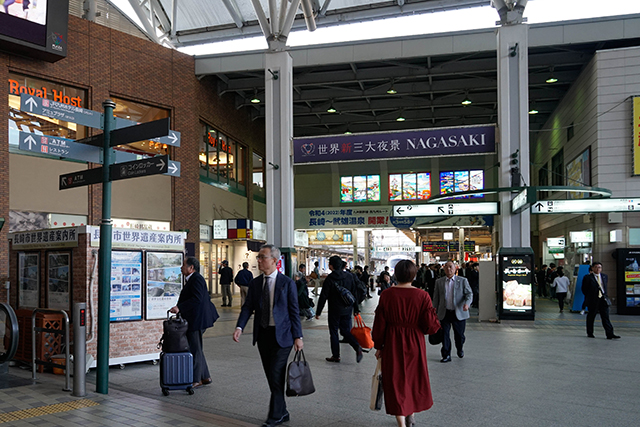
We caught the tram back to Nagasaki Station to check out the shops at the connected Amu Plaza and to grab some lunch.
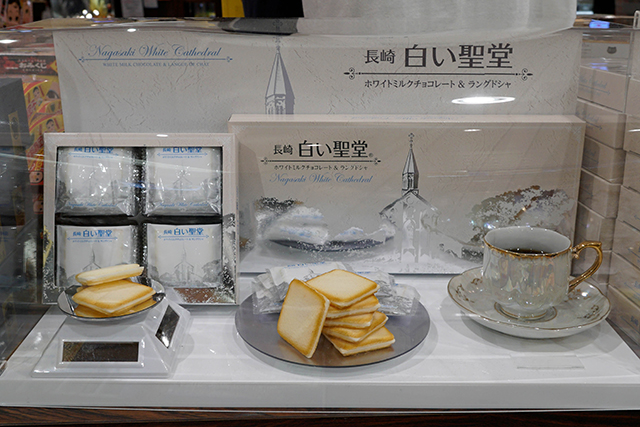
At the omiyage store, we spot Nagasaki’s answer to Hokkaidō’s Shiroi Koibito.
Kineya
杵屋, アミュプラザ長崎, 5F, 1-1 Onouemachi, Nagasaki, 850-0058, Japan
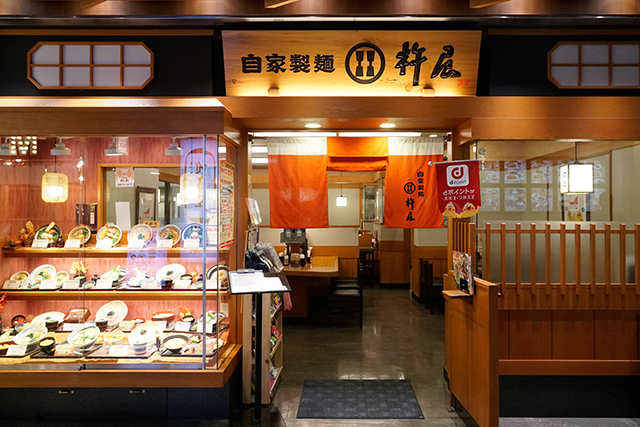
We made a round of the restaurants on level 5 before heading into Kineya.
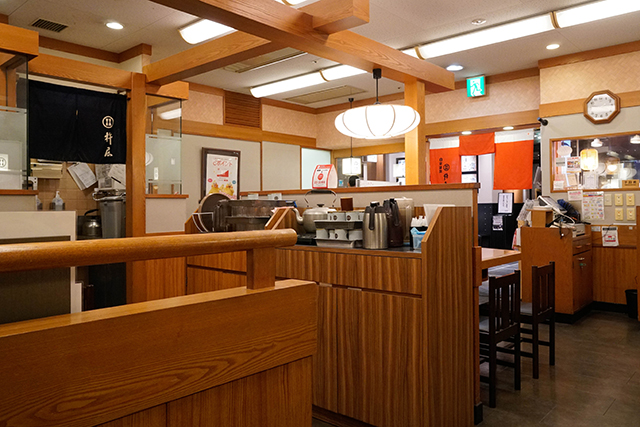
It was a simple noodle restaurant serving soba and udon based dishes with tempura.
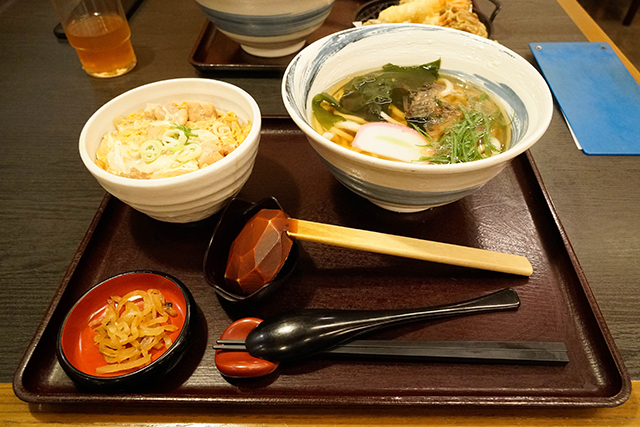
This was D’s Oyakodon Set (¥940, including tax), which came with a bowl of udon and a mini oyakodon. D ordered the oyakodon rather than the katsudon but enjoyed it nonetheless. While he lamented at the lack of crispiness from the oyakodon, the simplicity of the fare was very satisfying.
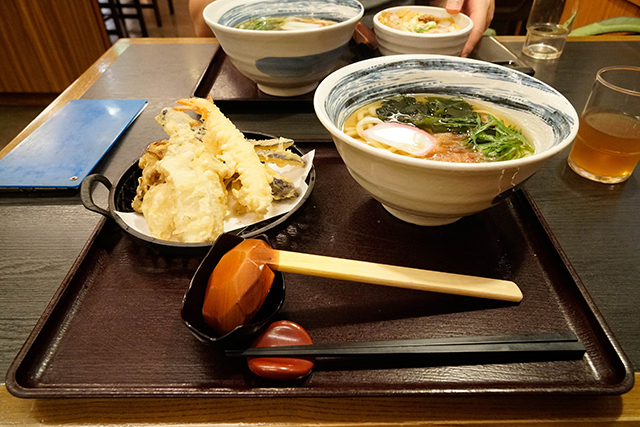
This was my Udon Tempura (¥1080, including tax), which comes with a bowl of udon with tempura of 2 prawns, maitake, eryngii, and eggplant. The tempura here was spot on — light and crisp while allowing the freshness of the ingredients to shine through. Udon served in a simple dashi broth is easily one of my favourite comfort foods.
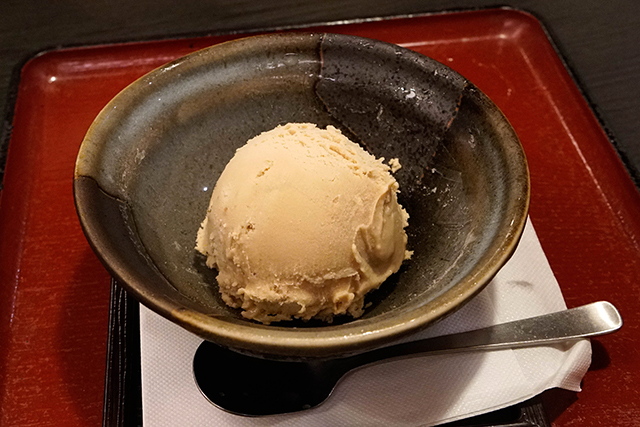
Not one to skip dessert, we ordered a scoop of their seasonal Marron Ice Cream (¥190, including tax). For a restaurant that focuses on hot food rather than dessert, we were thoroughly impressed that the bowl was stored in the freezer to keep the ice cream frozen for longer. The ice cream itself was creamy with a bright chestnut flavour that came through nutty and creamy. Indeed, the quality of the ice cream was something we could’ve received from a gelateria and far exceeded our expectations for the price.
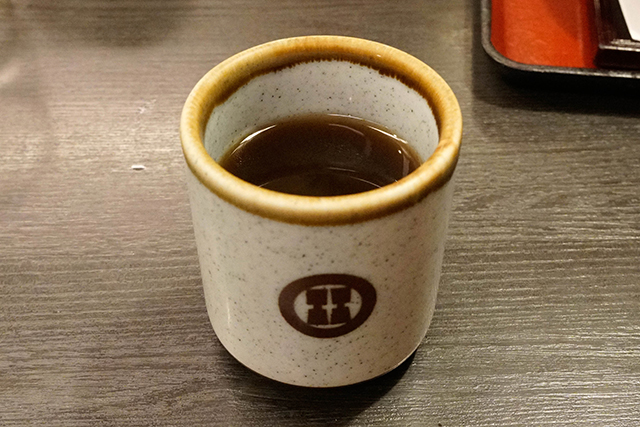 The ice cream came with complimentary cups of hot hōjicha, which provided an enjoyable contrast to the coldness of the ice cream while complementing the nutty chestnut.
Seiyu
Seiyu, 1−1 アミュプラザ長崎 1F, Onouemachi, Nagasaki, 850-0058, Japan
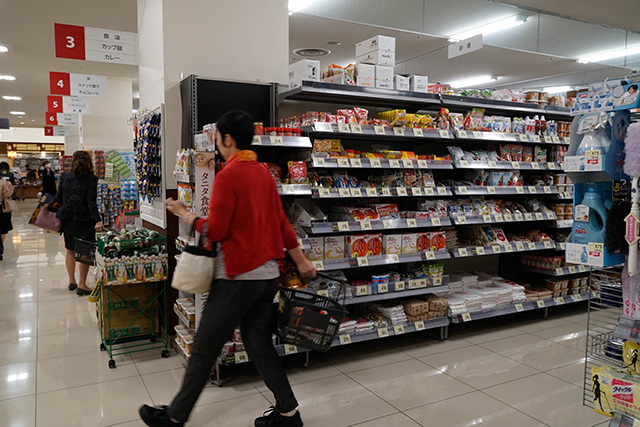
D and I are huge supermarket tourists, and we made a quick trip to the Seiyu before heading back to the hotel for some rest.
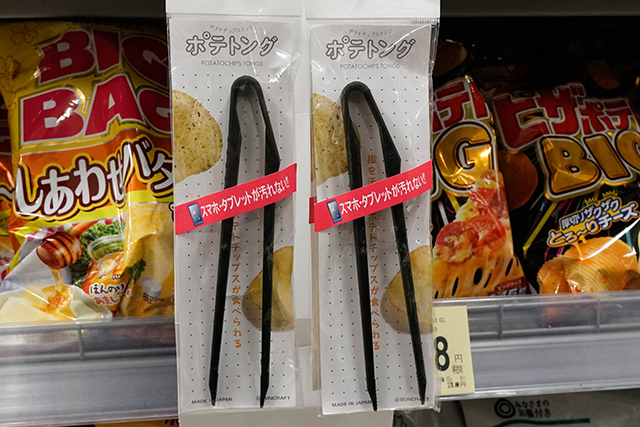
We spotted these ‘potato chips tongs’ so one can eat potato chips while keeping their hands clean to use the touch screens on their electronic devices.
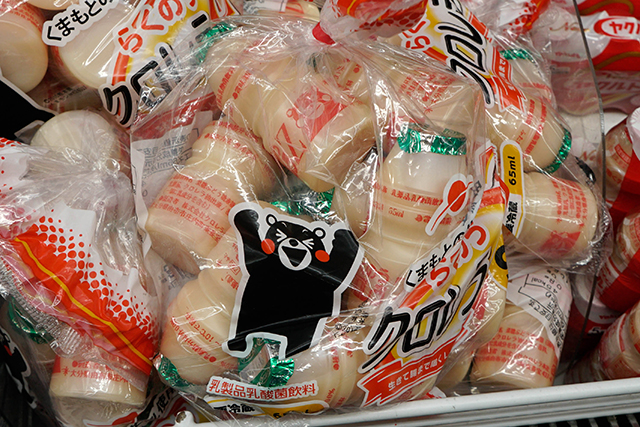
Kumamon appeared on probiotics!
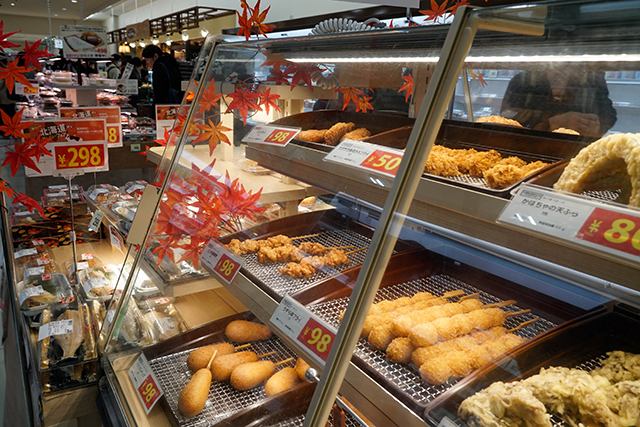
D picked up a few bits of fried meat for a snack later in the afternoon.
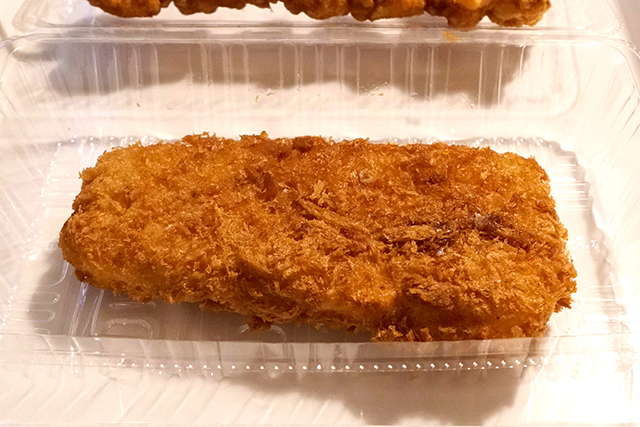
This is the chicken katsu, which was the best of the three that D tried, but still a bit tough.
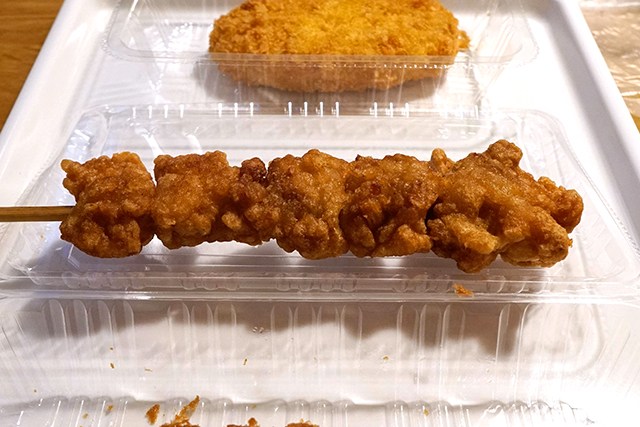
This chicken skewer had a rubbery, overcooked texture.
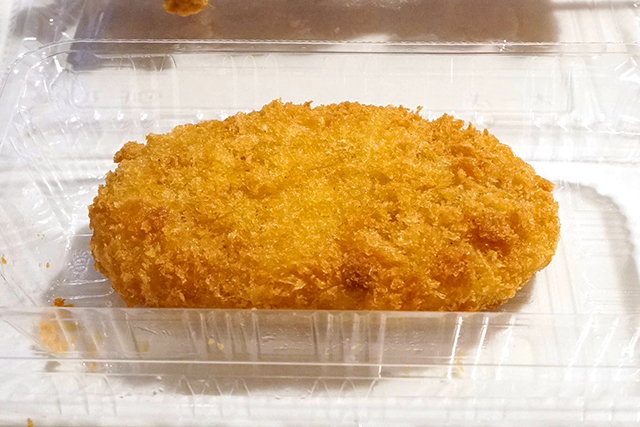
Finally, this menchikatsu was mostly mashed potato with a hint of mince.
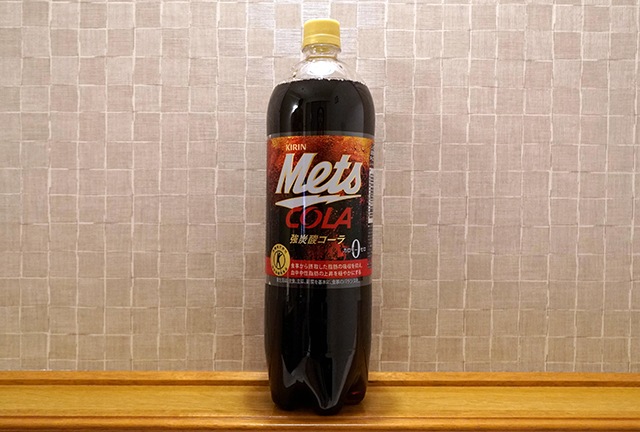
We like to drink Kirin Mets Cola when it comes to cola in Japan. While regular Coca-Cola and Pepsi taste the same everywhere around the world, this cola has a deeper cola nut flavour (obviously artificial) that is not widely available in Australia.
Mt Inasa
稲佐山, 364 Inasamachi, Nagasaki, 852-8011, Japan
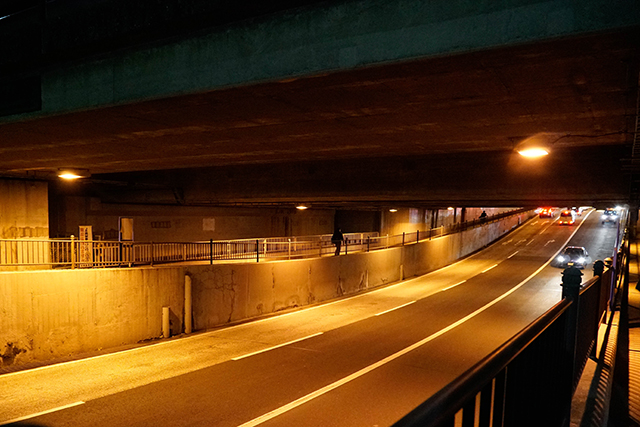
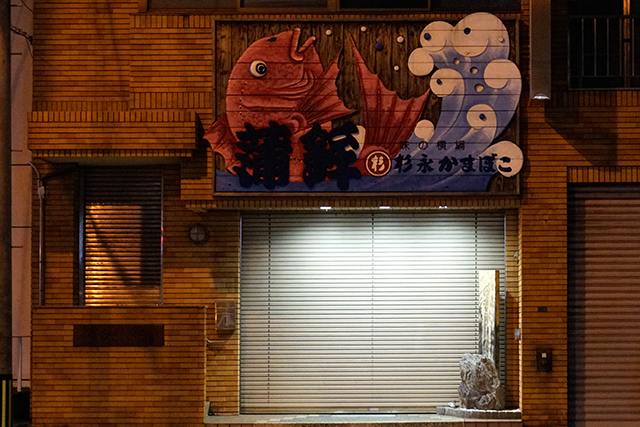
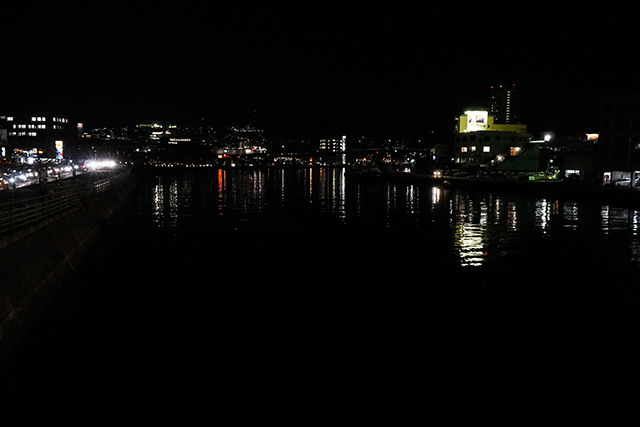
After a rest in the hotel, we hopped back onto the tram to visit Mt Inasa. Getting off at Takaramachi Station, it was a good 15-minute walk to the Nagasaki Ropeway. We crossed Uragami River.
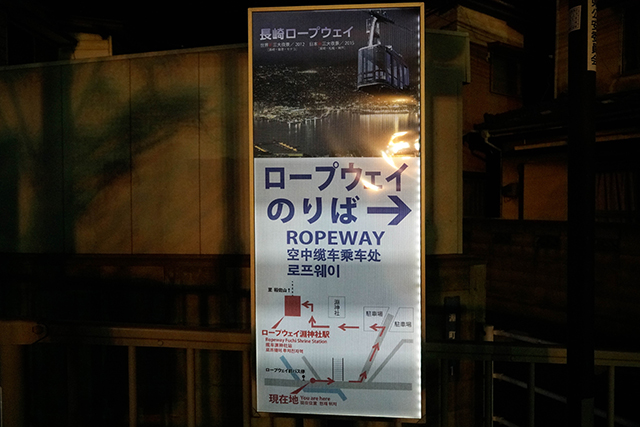
There was no signage until we were 1 minute away from the Fuchi Shrine Station at the bottom of the Nagasaki Ropeway.
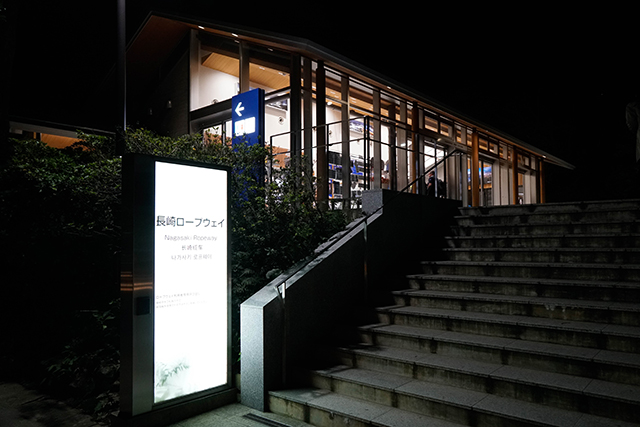
Located up a steep hill that’s also pitch black, there were some traffic control officers directing people to the brightly lit Fuchi Shrine Station that’s tucked behind a gate and other shrine buildings.
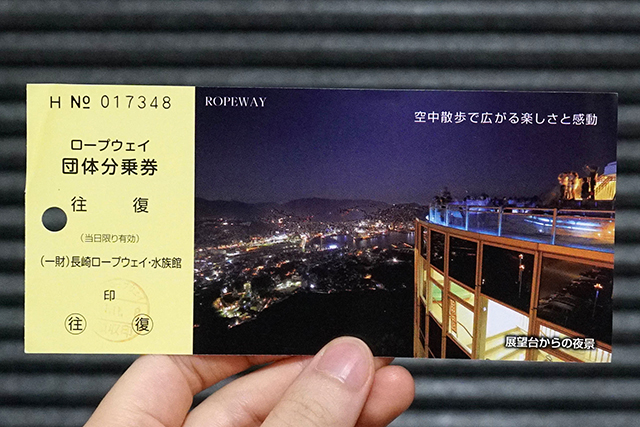
A regular round-trip ticket for the Nagasaki Ropeway is ¥1,250, but we managed to get it for ¥1,120 by showing them the coupon for a discounted round-trip ticket on their website (in Japanese only).
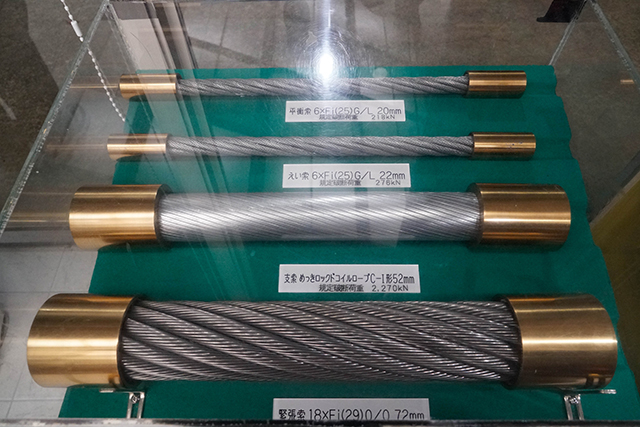
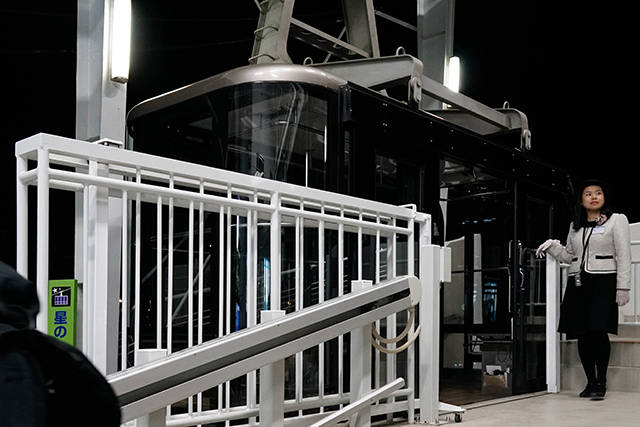
The ropeway was a 5-minute ride from Fuchi Shrine station to the top of Mt Inasa at Inasa Dake Station and travelled at 5 m/s.
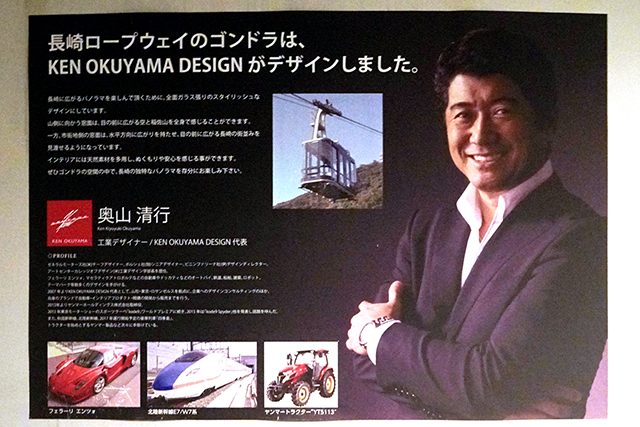
The glassed-in gondola was designed by Kiyoyuki Okuyama, an internationally acclaimed industrial designer who has also produced designs for companies such as Ferrari and Porsche as well as designed numerous trains, including various shinkansen and the JR Yamanote Line.
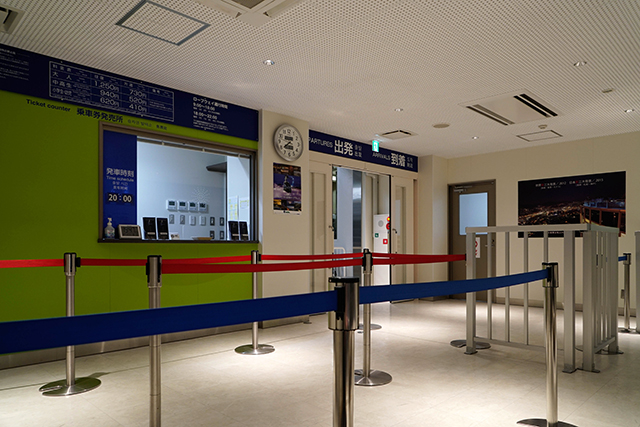
After alighting at Inasa Dake Station, we’re ushered into an elevator that took us to the Hikari Tunnel.
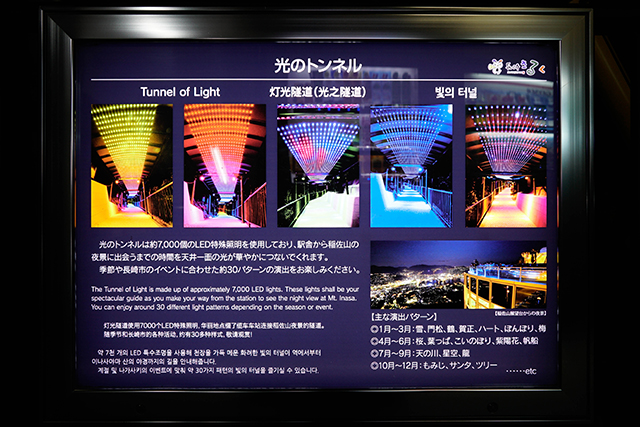
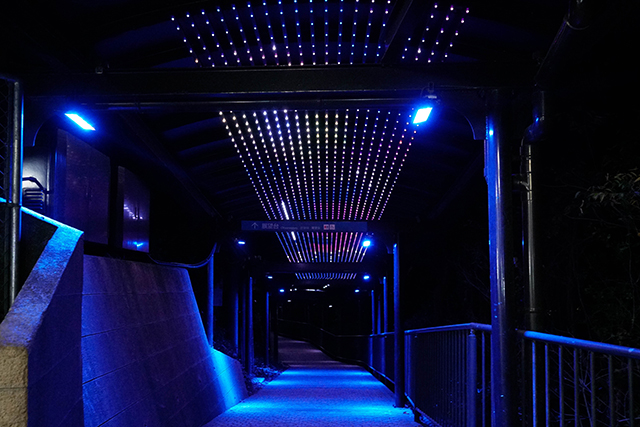
The Hikari Tunnel was made up of approximately 7,000 LED lights. The lights illuminated the path from the station at the top of the ropeway to the observation tower. Around 30 light patterns displayed depending on the season or event.
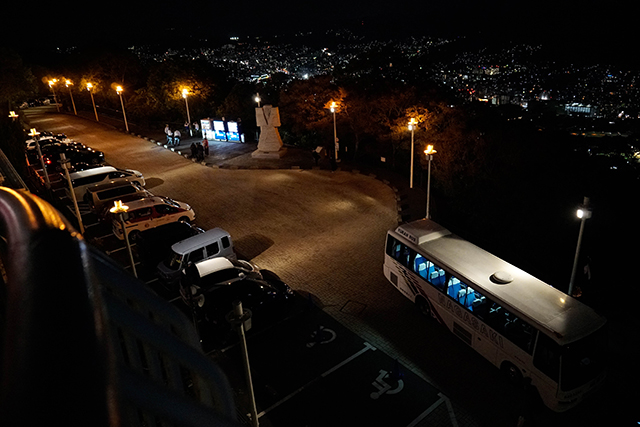
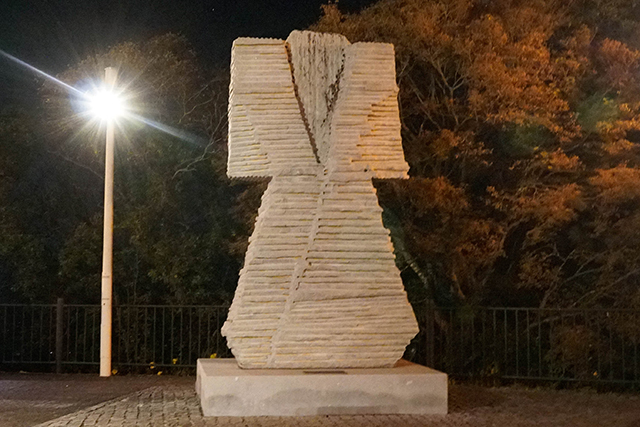
At the base of the observation tower was Candlelight Parking (a mountain top car-park, named after the peace candles used to light it).
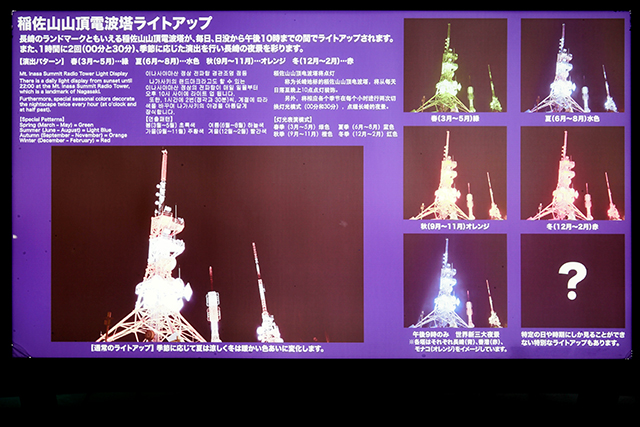
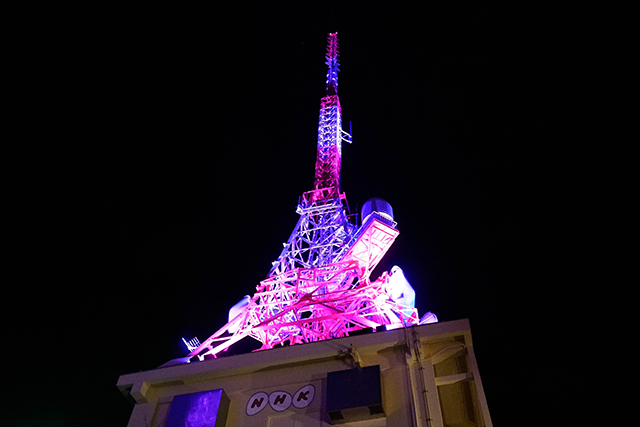
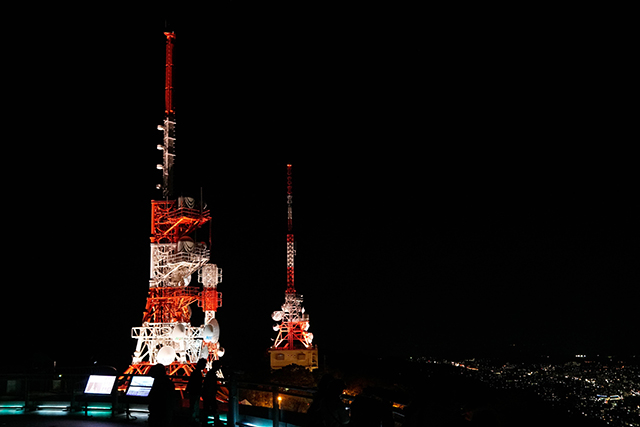
Nearby was the Mt Inasa Summit Radio Tower Display. There was a daily light display from sunset until 10 pm of the radio tower, a landmark that can be seen around Nagasaki city itself. Special colours decorated the nightscape twice every hour.
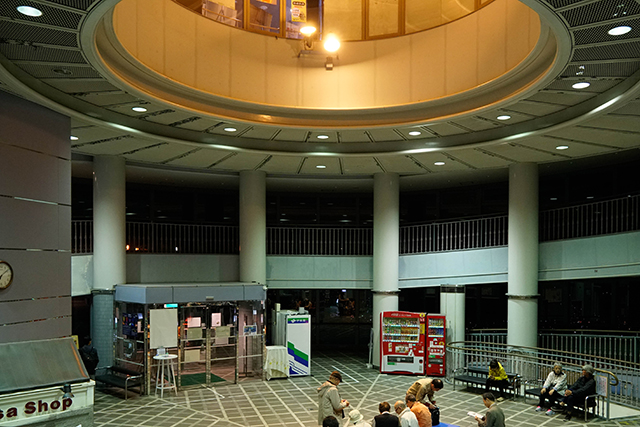
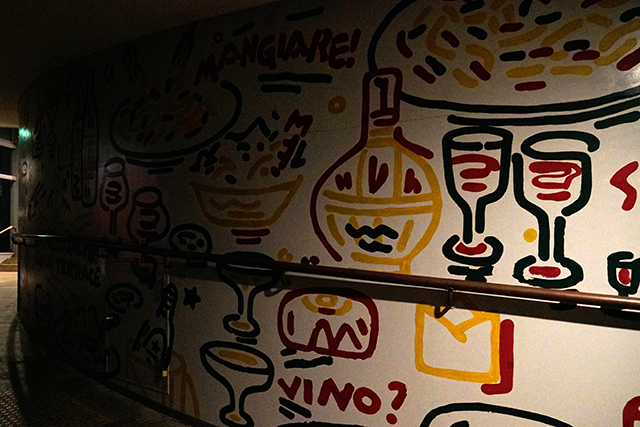
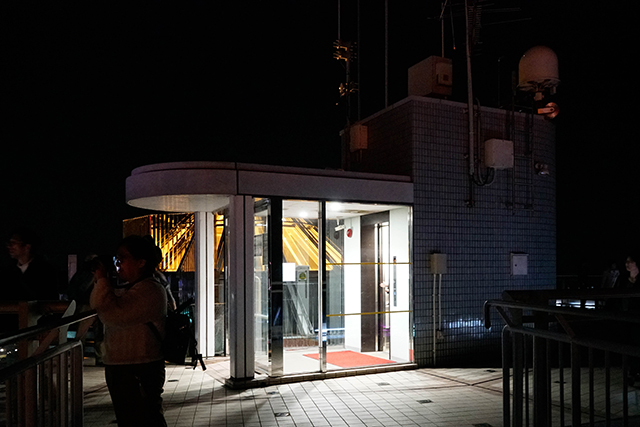
The Observation Tower featured a walkway that spiralled around the edge of the building to take in a 360° view as you walked up to the top of the tower roof. While the Nagasaki Ropeway opened in 1959 and established the mountain as a place with a beautiful scenic view, this viewing space was established in 2009.
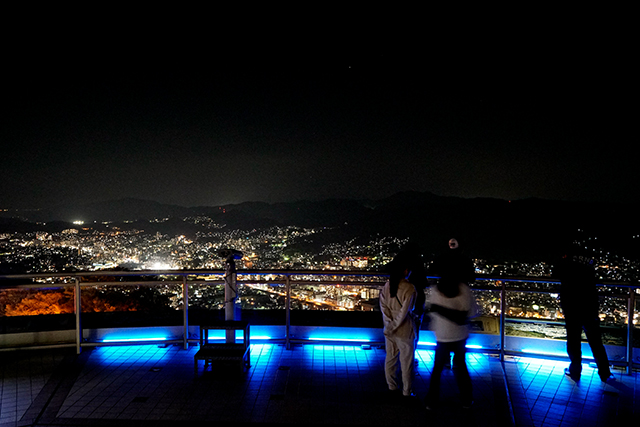
On top of the observation tower roof, we took in the sweeping 360° panoramic view that included Nagasaki Station and the surrounding town at its centre and stretched as far as the Peace Park, Urakami River and the local residential area.
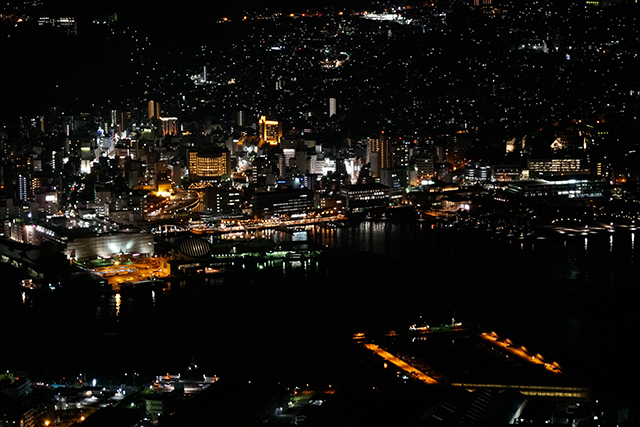
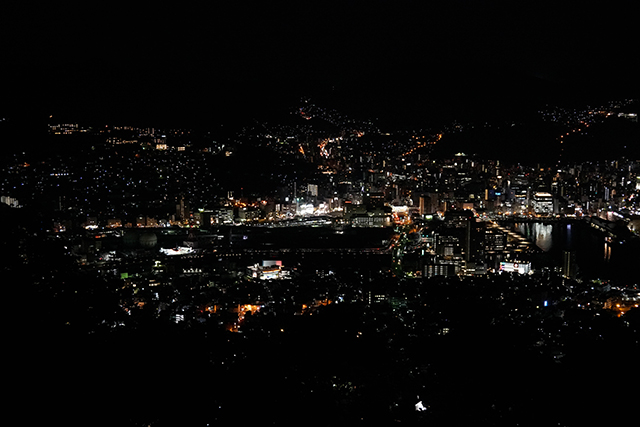
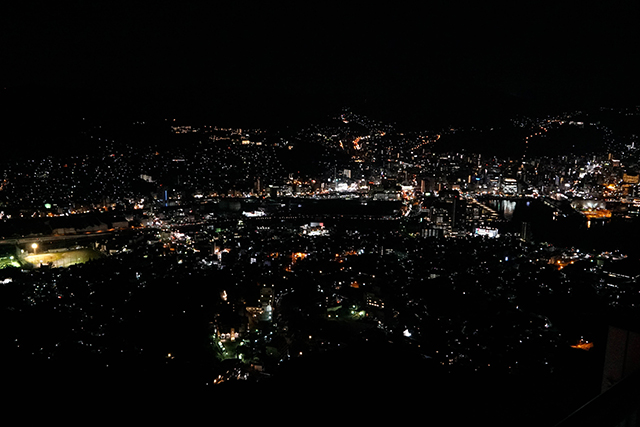
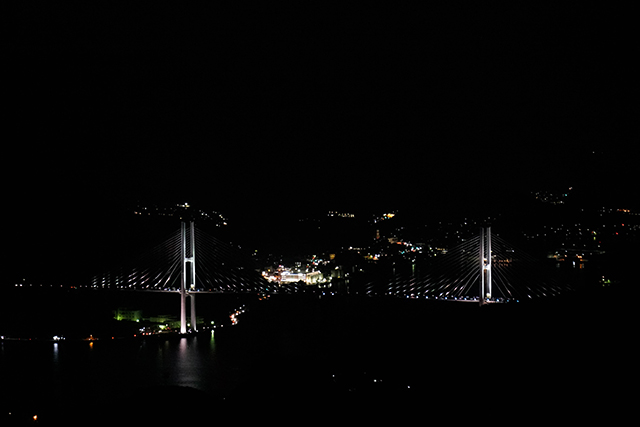
At a height of 333 m, Mt Inasa is considered one of the ‘three great views of Japan’ which is recognised as a piece of Japan’s heritage that must be preserved for future generations.
We’re quite selective in paying to access observation towers but we did enjoy the view of the night lights from Mt Inasa with a brisk breeze.
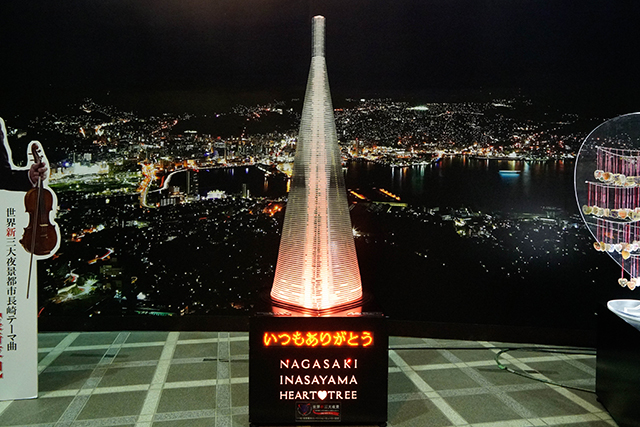
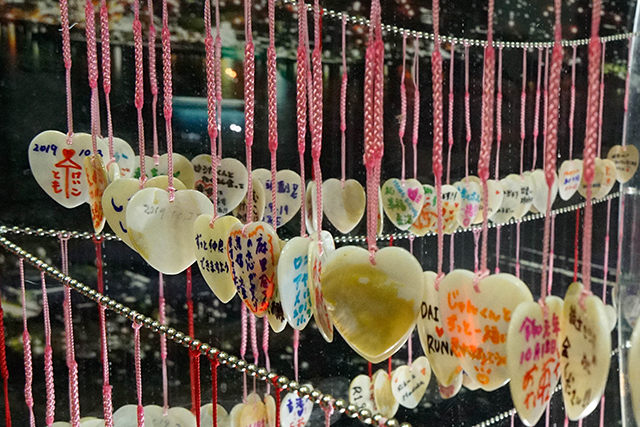
Inside the Observation Tower, there is a Hikari Monument (above, top), which lit up in rainbow colours, along with a Promise Heart (above, bottom) encouraging visitors to ‘pledge their love with a heart-shaped plate tied with a red string’.
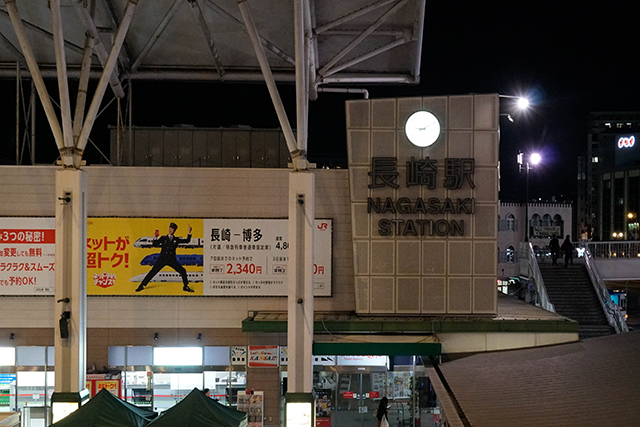
After taking in the view, we headed back to Nagasaki Station for some dinner.
Koujyoukou
皇上皇, Amu Plaza Nagasaki 5F, 1-1 Onouemachi, Nagasaki, 850-0058, Japan
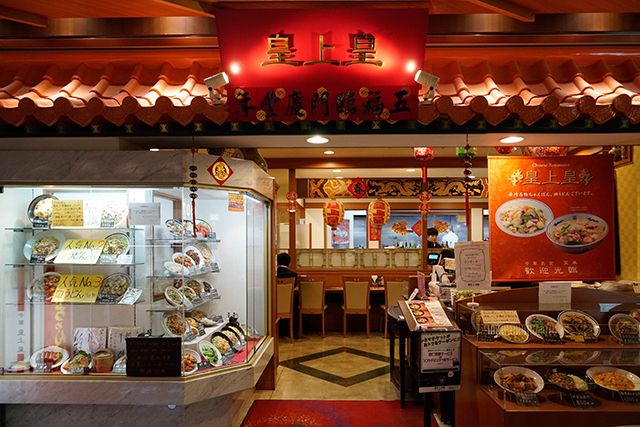
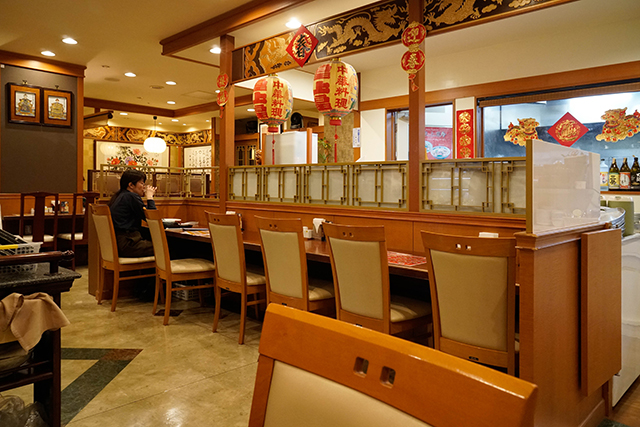
Champon is a regional dish in Nagasaki first created by the owner of a Chinese restaurant in Nagasaki called Shikairou as a nutritious yet economical dish to serve to the large population of Chinese students in Nagasaki during the Meiji Period. The dish was available throughout Nagasaki and we picked Koujyoukou for convenience.
Koujyoukou is described as a ‘Canton and Taiwanese cuisine restaurant which is operated under the expertise of a 35-year veteran chef from Taiwan. There is no made pre-made or packaged food; every dish is cooked to order’.
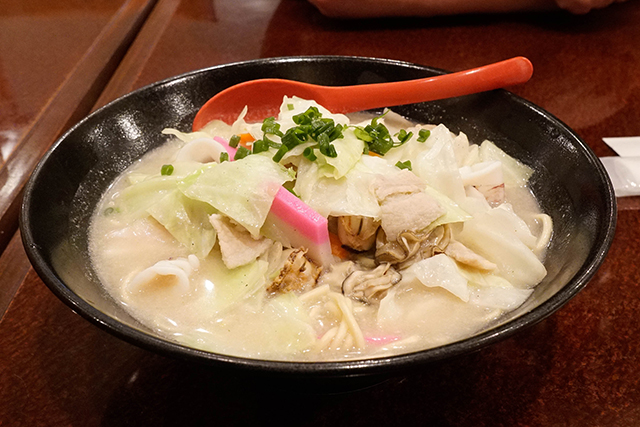
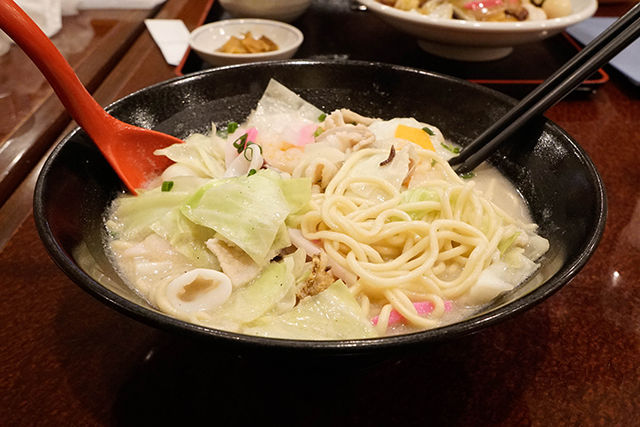
Champon is based on a Chinese dish in Fujian menmian and is made by frying meat, seafood and vegetables with lard, to which a soup made with chicken and pig bones is then added. The noodles are added to the soup, and then let to stew for several minutes before serving.
This Nagasaki Champon (¥1,500, +tax) had an abundance of meat — mussels, prawns, scallops, squid, kamaboko, chicken and pork — along with crisp cabbage, wood ear, and quail eggs. We enjoyed the variety of toppings but wasn’t quite a fan of the broth — which tasted like chicken stock cubes with pepper — or the overall heaviness of the noodles and dish generally.
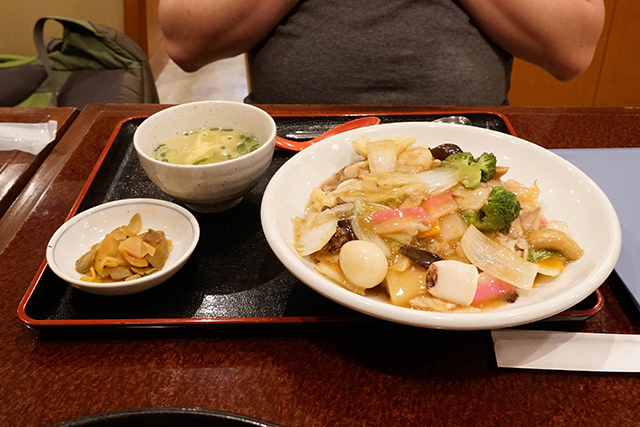
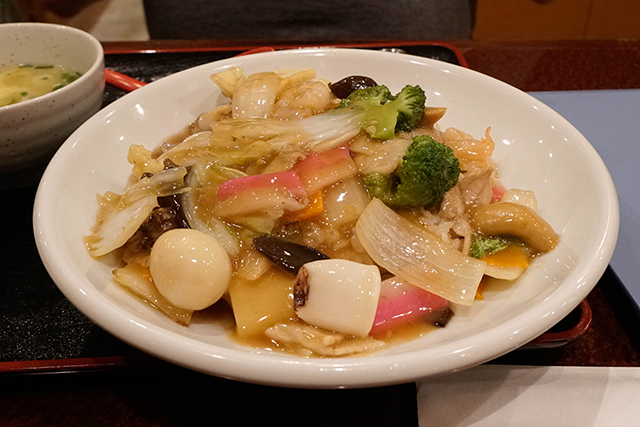
This is the Nagasaki Saraudon (¥1,500, +tax). Essentially, the dish consisted of the same toppings as the champon with the addition of onion and broccoli on top of a bed of the same thick noodles. The broth was swapped for a thick gravy-like sauce. We enjoyed the flavour of the saraudon over the champon, simply because we’re not much of a fan of too many ingredients inside a broth. We’re glad we tried these regional dishes, but we preferred the simplicity of traditional Japanese food.
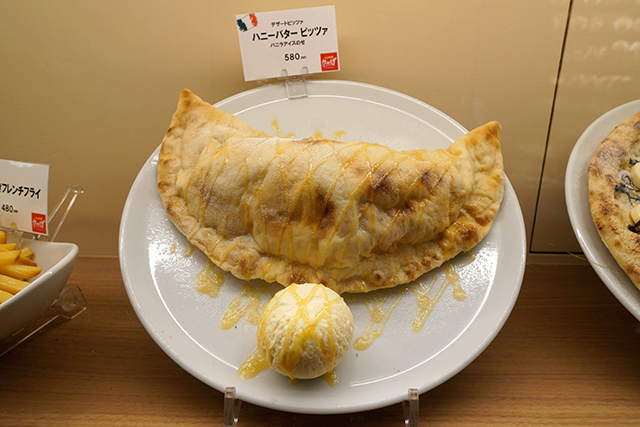
A few restaurants down at an Italian restaurant, we spot this Honey Butter Pizza that looked like giant gyōza.
Mister Donut
ミスタードーナツJR長崎ショップ, 1-1 アミュプラザ長崎, Onouemachi, Nagasaki, 850-0058, Japan
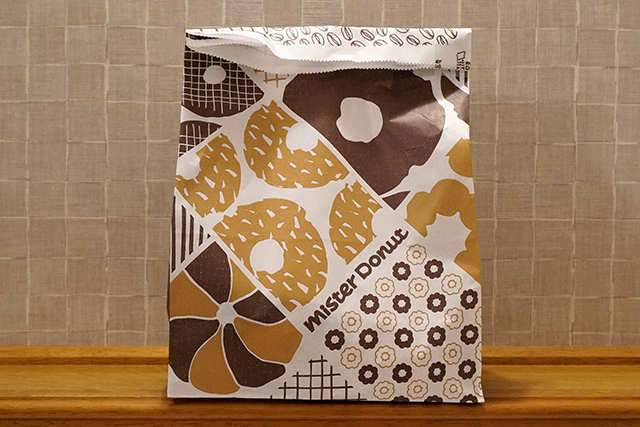
We dropped by Mister Donut for a quick dessert before heading back to the hotel.
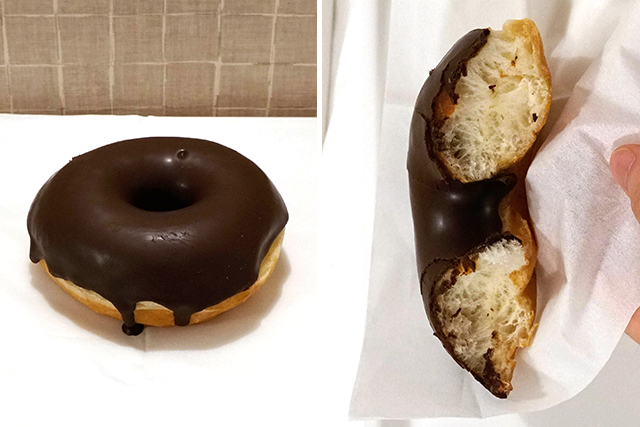
This was D’s Chocolate Ring (¥120 + tax) as he was still craving a yeast-raised doughnut. This one tasted much like the one at Top Ryde, which was enjoyable but still not as fluffy and light as the ones from 7-Eleven in Australia.
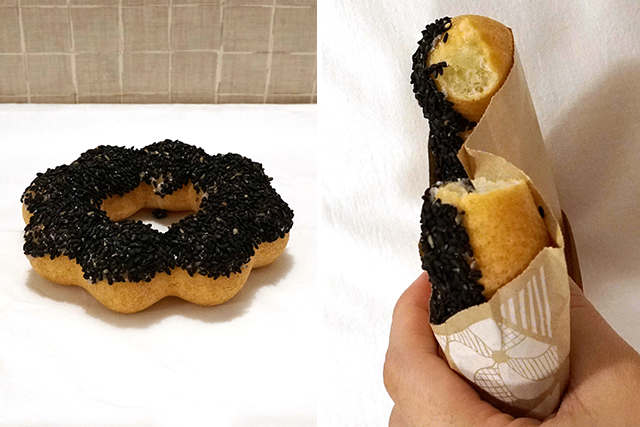
This is the Pon De Ring Sesame (¥110 +tax). I’m a great fan of the mochi doughnut that is the pon de ring and I was delighted to find this black sesame version. It was coated in a thick layer of black sesame that delivered a very prominent nuttiness with a hint of sweetness from the layer of icing sticking it to the doughnut. Our only regret was that we didn’t eat more when we had the chance in Nagasaki because we never saw it again.
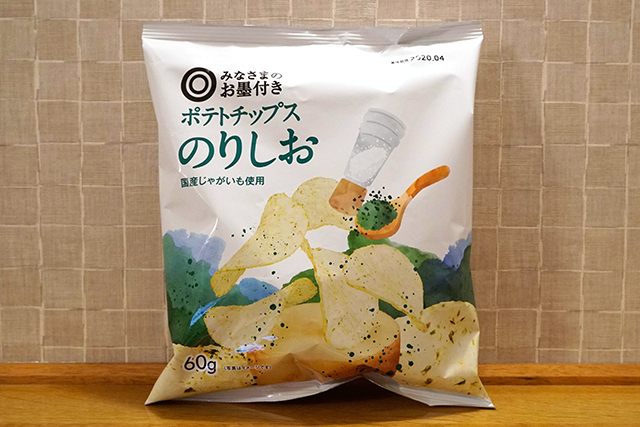
And finally, to finish off the night, these were some Seiyu branded Seaweed Salt Potato Chips, which were thin and crisp with enjoyable umami from the seaweed salt. That said, the seaweed salt flavour faded into the background after a while, so a break to reset the palate helps to enjoy these chips best.
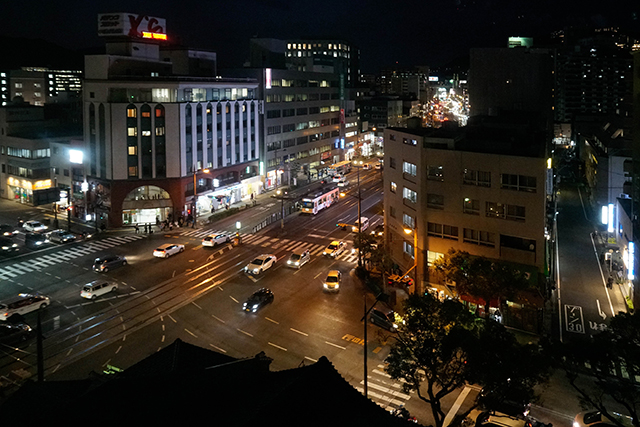
Nagasaki was Day 2 of 15 in this Japan 2019 trip around Kyūshū. Day 3 saw us exploring more of Nagasaki.