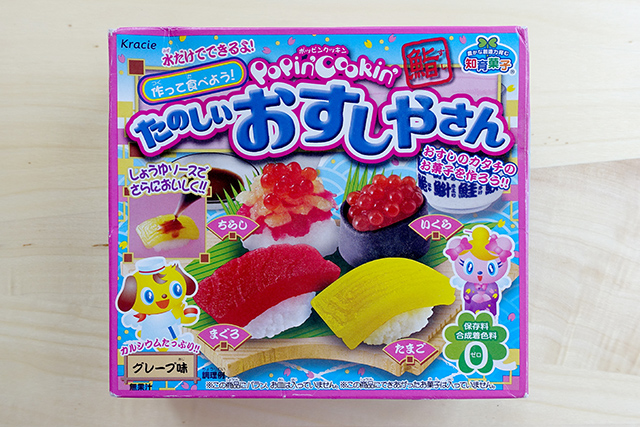
When I visited Kappabashi Street in Asakusa, Tōkyō many years ago, I’d stumbled into a multi-storey supermarket that sold your staple groceries, but also everything from takeaway containers in every size and shape to all your craft essentials. This included edible crafts that came in boxes filled with everything you’d need to make the item on the front. Think hamburger candy, donut candy and sushi candy that were about the size of your thumb. At the time, I didn’t think I’d ever want to eat the candy, so I left Japan without ever purchasing one. Luckily, N went to Japan between then and now, and brought me back a box for making sushi candy.
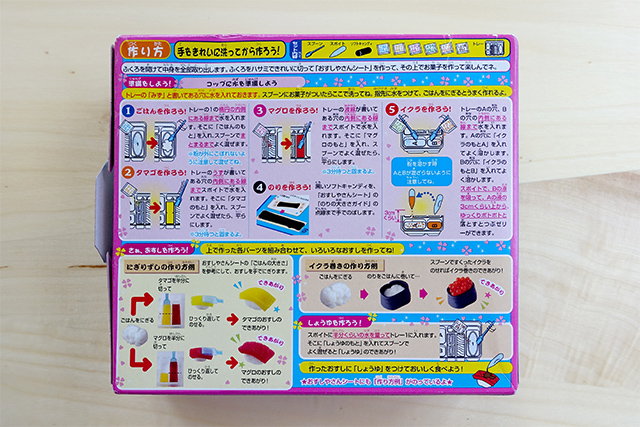
As with everything Japanese, not only is the packaging super colourful, but everything inside the box was used in the process of making the sushi candy.
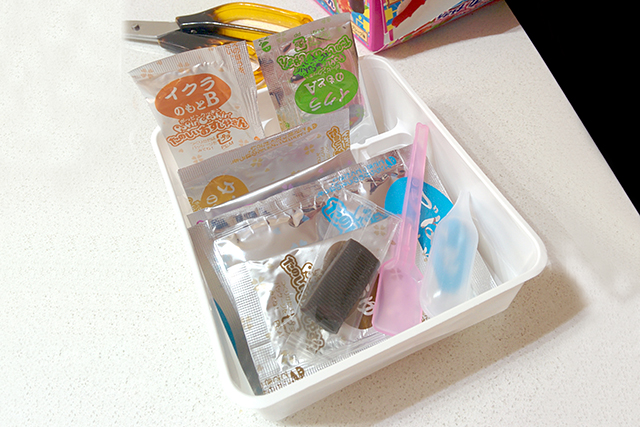
Inside the box was a plastic bag that sealed a plastic tray. The plastic tray held the powders for the sushi parts, a spatula for stirring, and a dropper. The plastic bag was printed with the size into which you’d need to mould the rice and the seaweed.
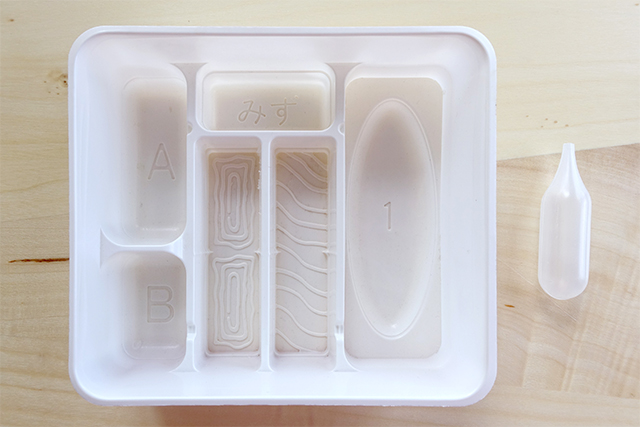
The plastic tray had various labelled compartments for moulding each part of the sushi (i.e., the rice, tuna, egg, roe).
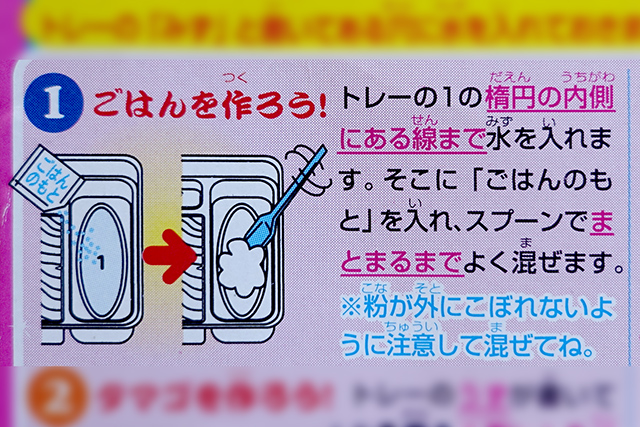
First off is making the gohan or rice for the sushi by mixing the powder with some water to form a thick paste.
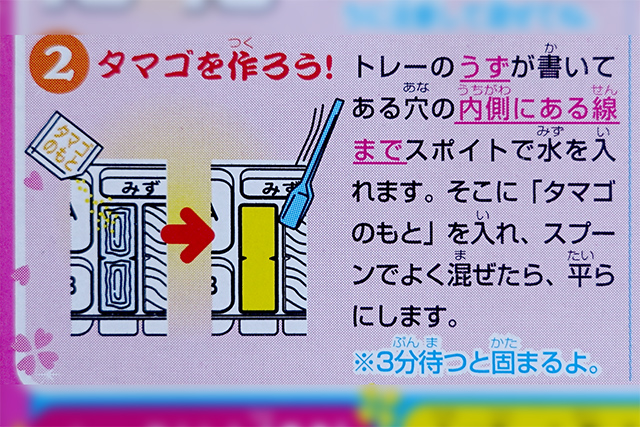
Then, onto the tamagoyaki. It’s made the same way, in a mould with markings to resemble a rolled egg omlette.
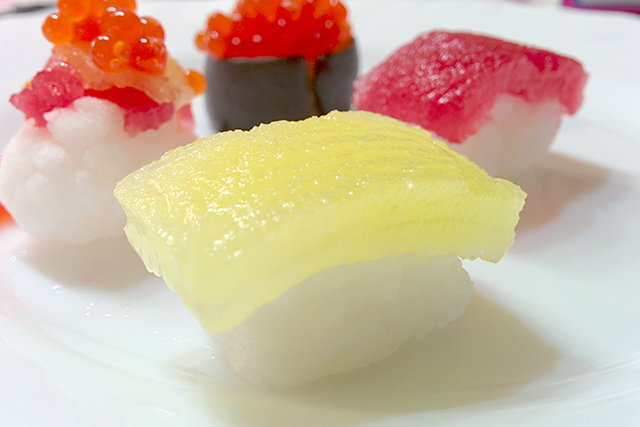
And the finished tamago nigiri. I wasn’t too impressed with the appearance as the imprint wasn’t that noticeable and it was a tad pale in comparison to real tamagoyaki and on the packaging. It looked much better after I’d ‘dipped’ it in soy sauce, though (see below).
The ‘rice’ tasted rather terrible – something like the fluoride that my dentist puts on my teeth when I visit.
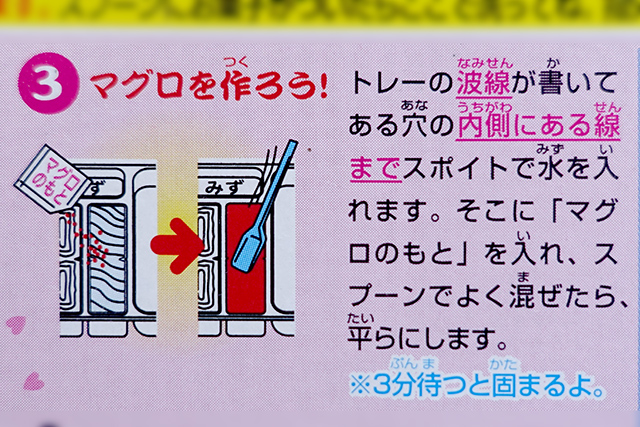
This is the maguro, or tuna, nigiri which also has the horizontal markings to resemble real tuna.
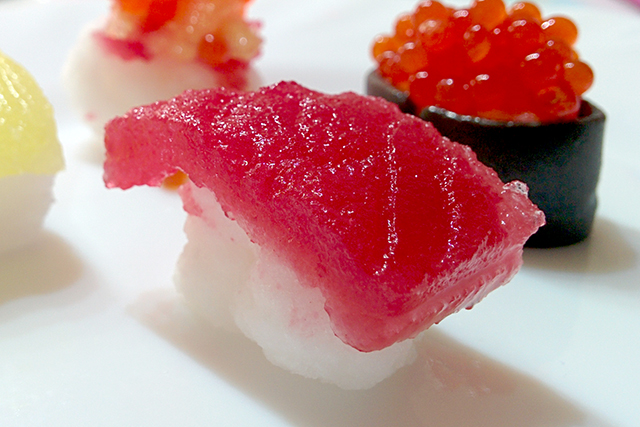
Again, it looks less refined than the one on the packaging, but it looks pretty much like the sushi an amateur would make with real fish and rice, so I’m impressed. The fatty imprint came through better here, although it tastes rather grainy.
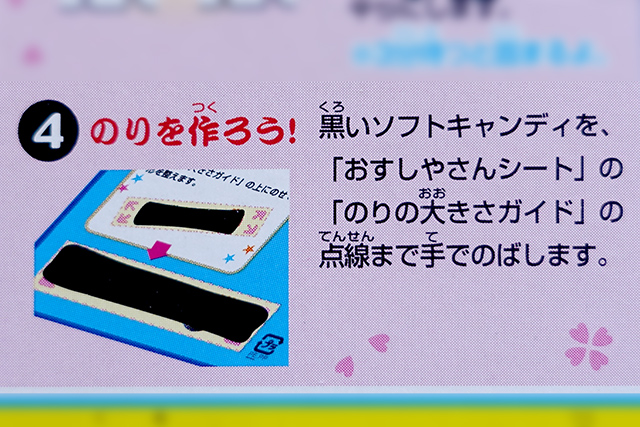
And then we’re onto the ikuramaki! The nori or seaweed is rolled out into the rectangular shape provided on the packaging.
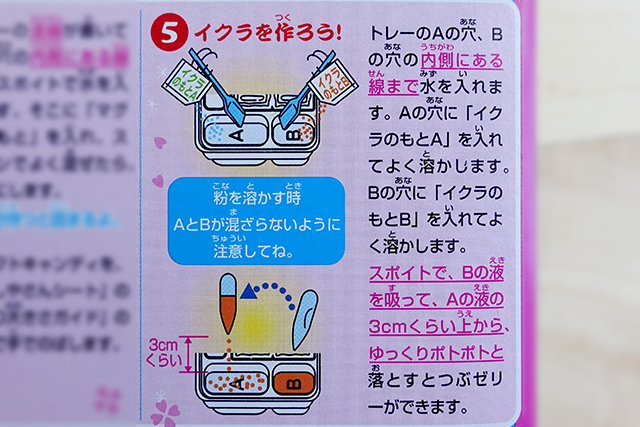
And the immensely fun part of making the roe for the ikuramaki by creating an orange liquid in one container, before using a dropper to make droplets into a water bath that had a powder mixed in to prevent each drop from sticking to each other.
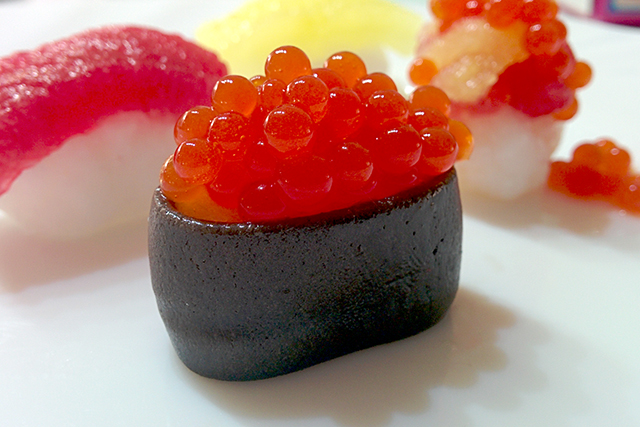
And voila! This is the most impresive of the four, in terms of assemblage, appearance and flavour. The seaweed tasted like chewy blackcurrant candy, while the roe tasted like sweet popping boba.
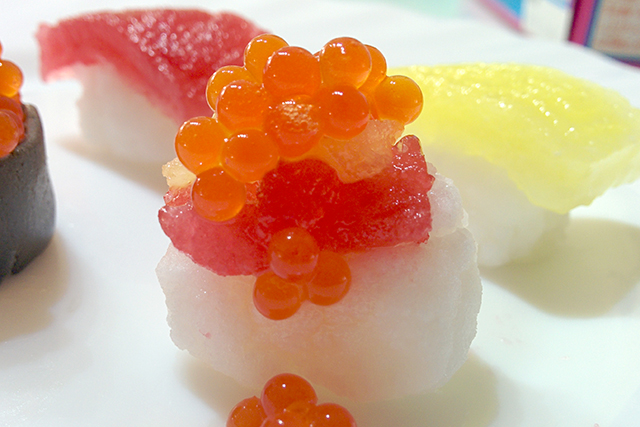
The last of the sushi is the chirashi, which is pretty much an amalgam of the previous three: chopped up ‘tuna’ and ‘egg’ topped with ‘roe’.
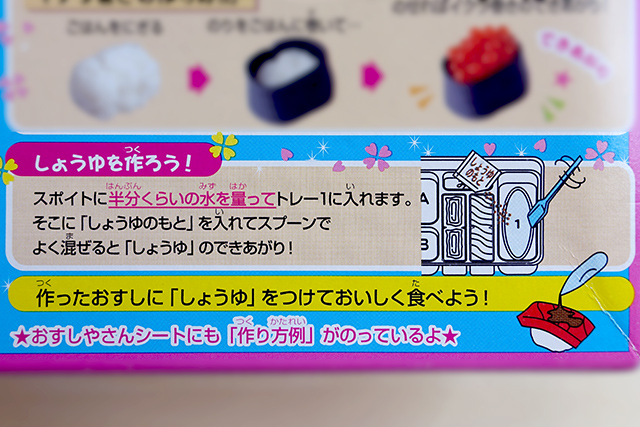 The final step is to make the shōyu or the soy sauce, again a powder mixed with water.

The ‘soy sauce’ brought out the markings on the tamago nigiri.
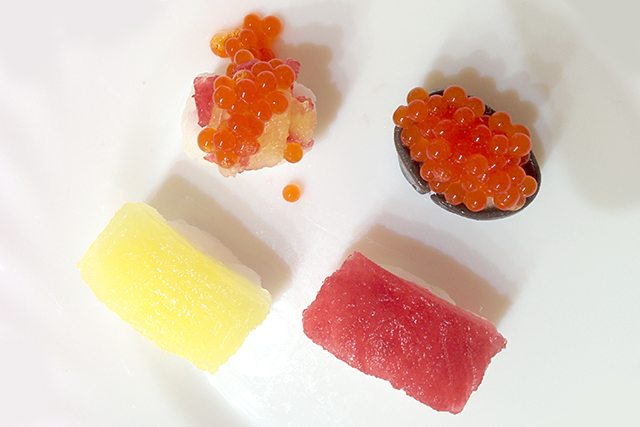
The sushi candy don’t taste particularly great, but they are immensely fun to make.
This box of Kracie Popin’ Cookin’ Tanoshii Osushiyasan was produced in Japan and gifted by friends visiting Ōsaka, Japan in 2013.