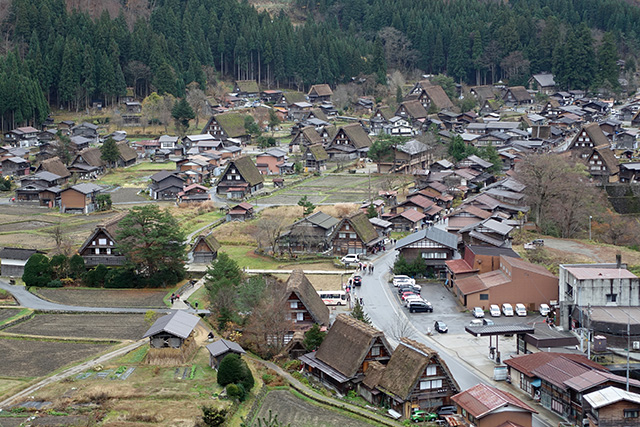
The day immediately after a national holiday in Japan is always tricky to plan. Shops, restaurants and tourist attractions are open on the national holiday, unlike Australia. But in Japan, you’ll find many in tourist districts closed the day after the national holiday. With that in mind, we visit Shirakawa-go.
Shirakawa is a mountain village well known for its houses constructed in the architectural style known as gassho-zukuri. We’re off to see the biggest village, Ogimachi.
Kanazawa
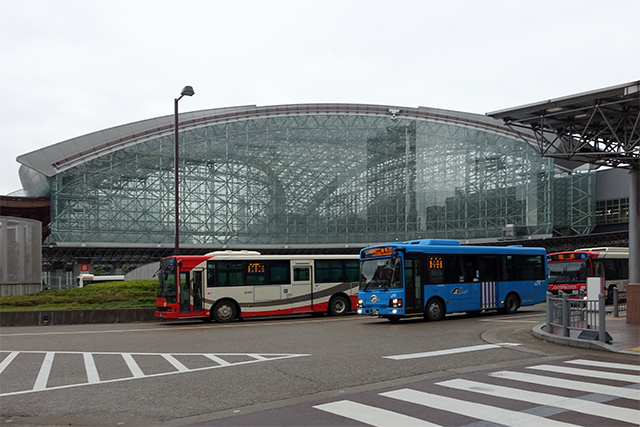
We wake up to an overcast morning after escaping the wet weather for the past few days. Walking from our hotel to Kanazawa station, we get a good view of the Motenashi Dome.
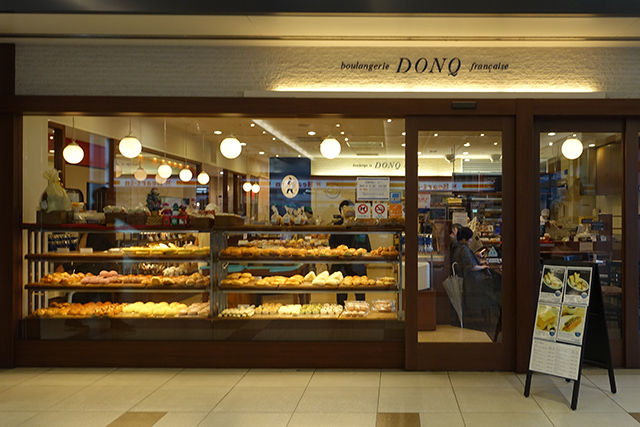
It’s a 2-hour trip by highway bus to Shirakawa-go from Kanazawa, so we head off to the station and find Boulangerie DonQ Francaise for some food for the road.
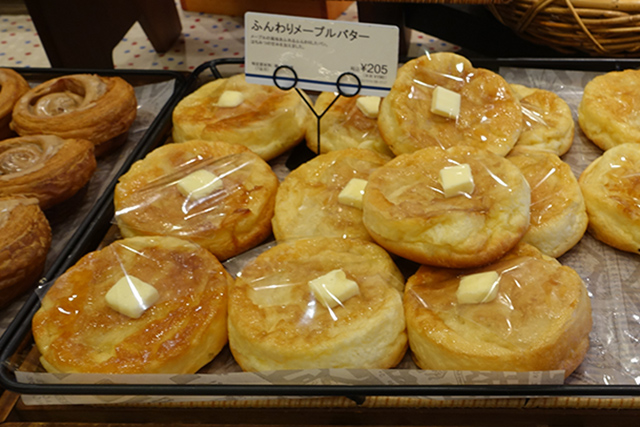
There are round pillows drizzled with maple syrup and knobs of butter. Cute, but we pass.
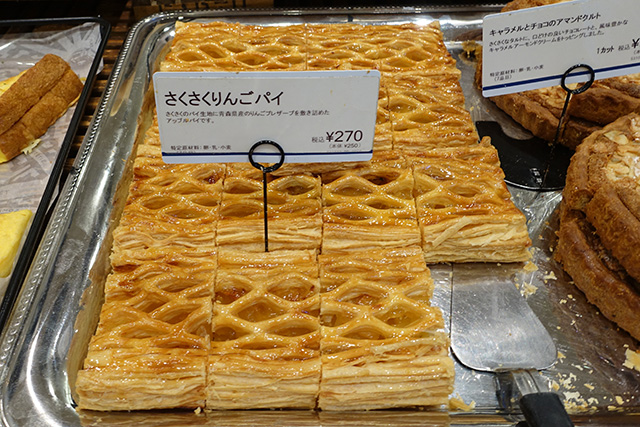
Instead, we take one of these slices of apple pie with layers of flaky pastry for later.
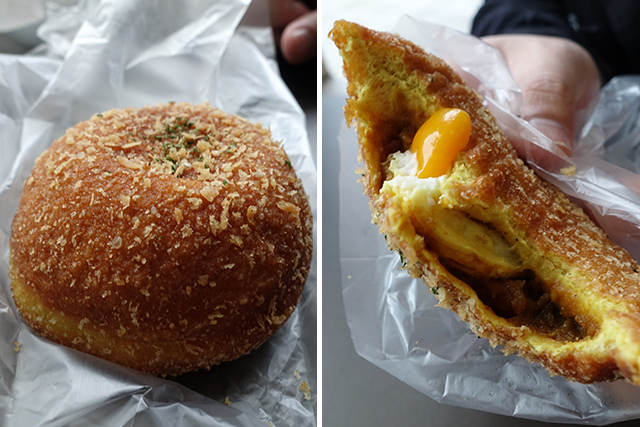
For breakfast, D goes back to his trusty curry pan only to discover a beautifully oozy quail egg hidden inside. Delicious!
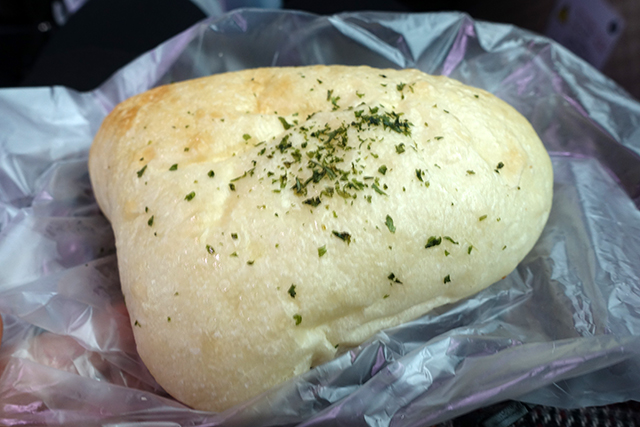
And, I get curious about this Japanese-style curry naan. It doesn’t taste anything like a traditional naan – it’s very doughy – although the innards are spicier and less sweet than we’re used to.
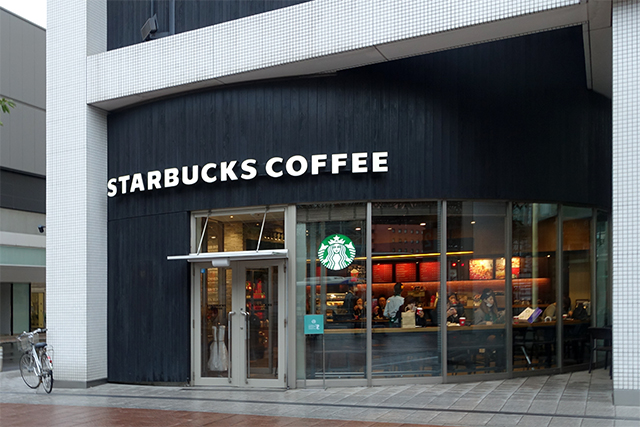
The bus stop for the highway bus is right outside a Starbucks Coffee.
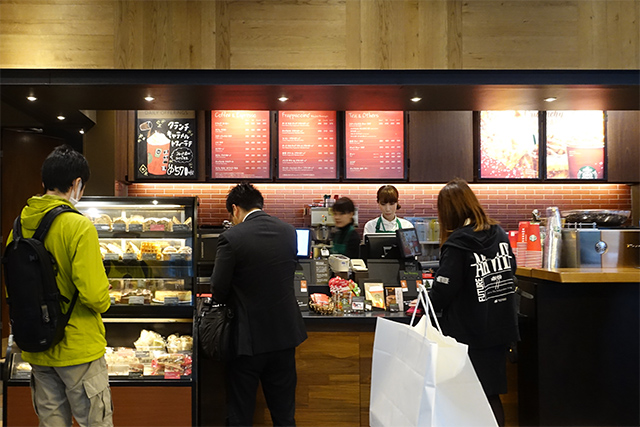
There’s 10-15 minutes to spare, so we get some caffeine to kickstart our day.
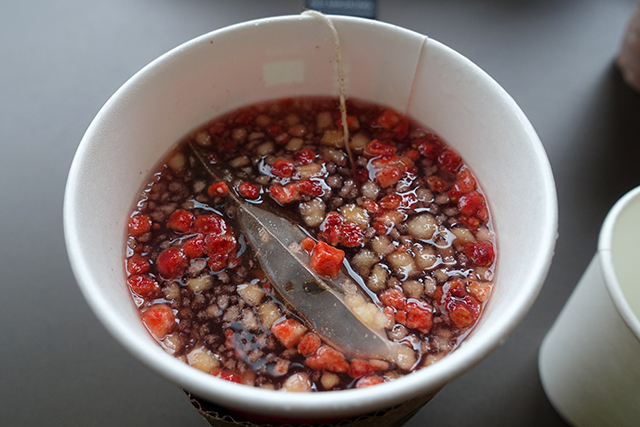 I get a black tea infused with freeze dried strawberries. Isn’t it pretty and so Christmassy? D gets a Dark Mocha Chip Frappucpino Blended Cream – a truly decadent chocolaty coffee that I forgot to photograph!
Kanazawa -> Shirakawa
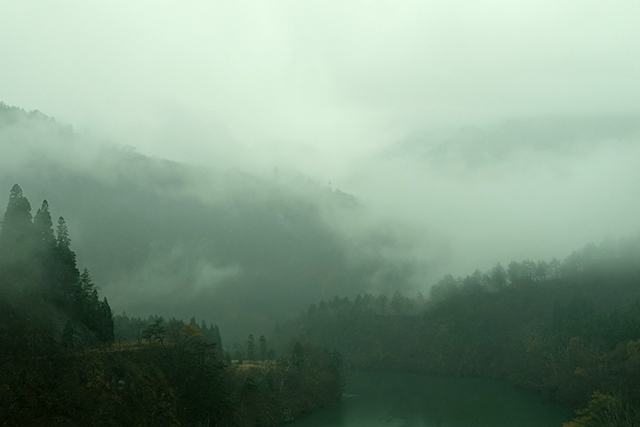
Shirakawa is a mountain village located at the highest peak on Mount Haku in the Ryohaku Mountains. Being at such high altitudes with such wet weather, we’re driving through mist.
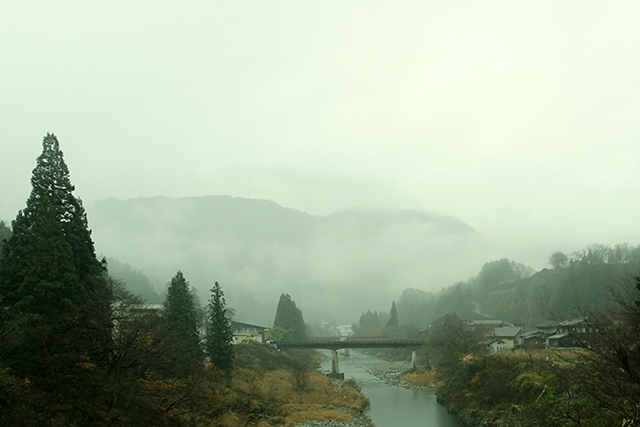
Is it mist or clouds?
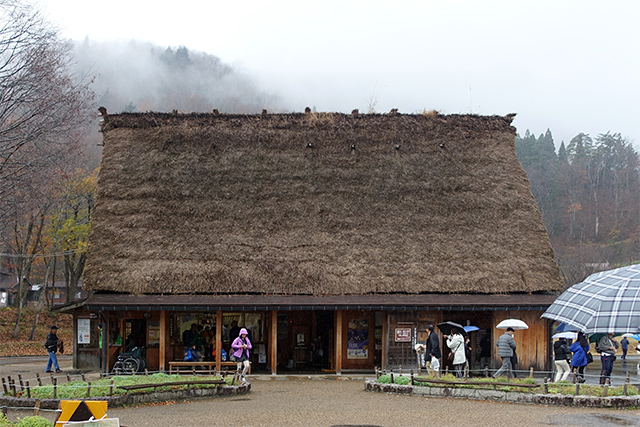
The wet weather causes minor delays and we arrive a bit later than scheduled. This is the tourist information centre opposite the bus stop, with hoards of less prepared tourists buying umbrellas.
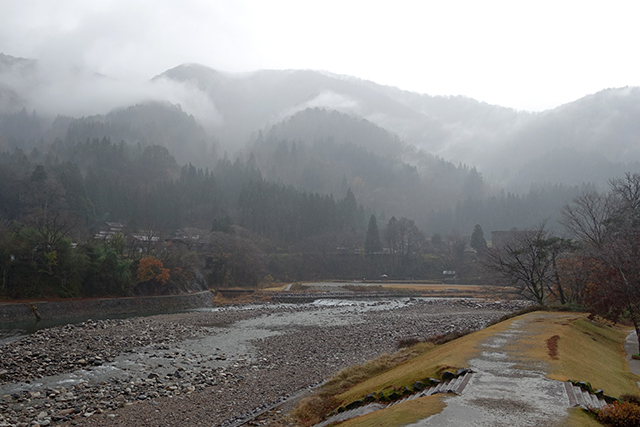
To get to the village, we cross a suspended pedestrian bridge.
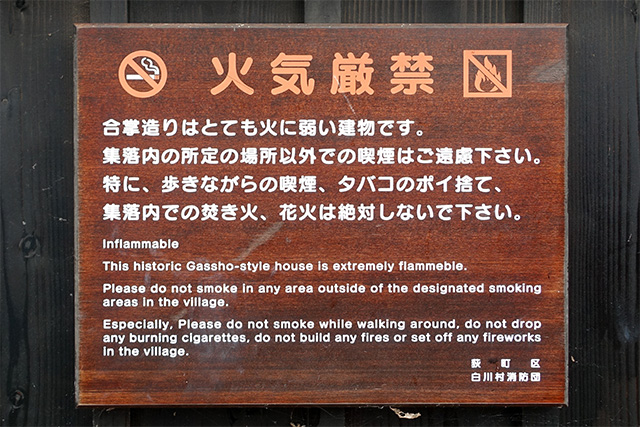
There are signs near the bridge explaining the flammable nature of the farmhouses.
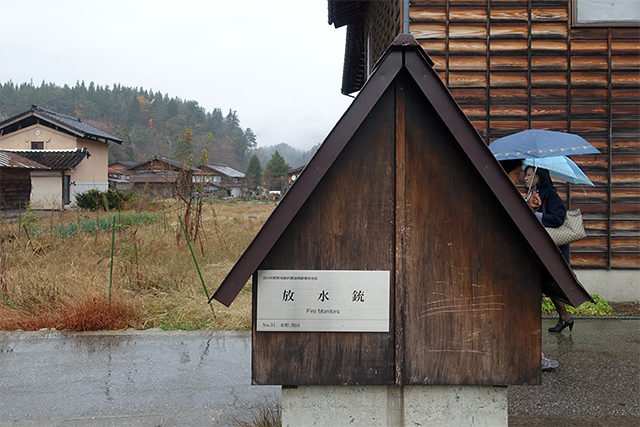
To assist, there are fire monitors throughout the village.
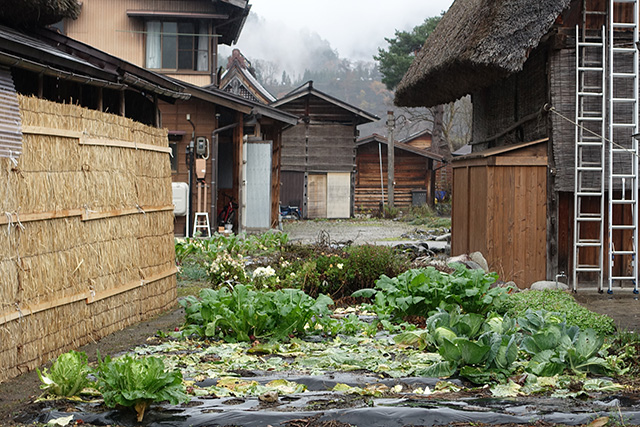
The farmhouses are occupied by people living in the village, so we see vegetable gardens.
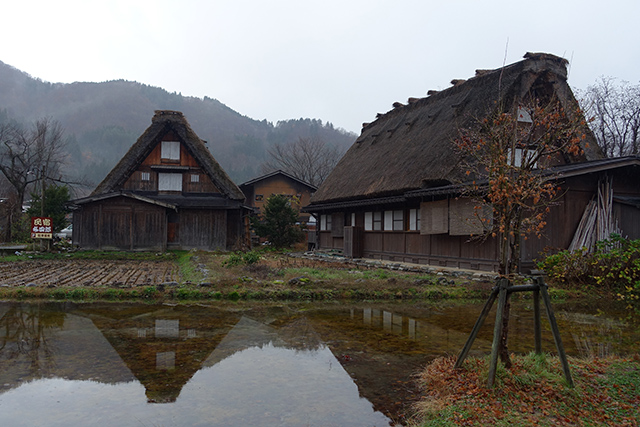
The heavy rain has flooded various parts of their fields.
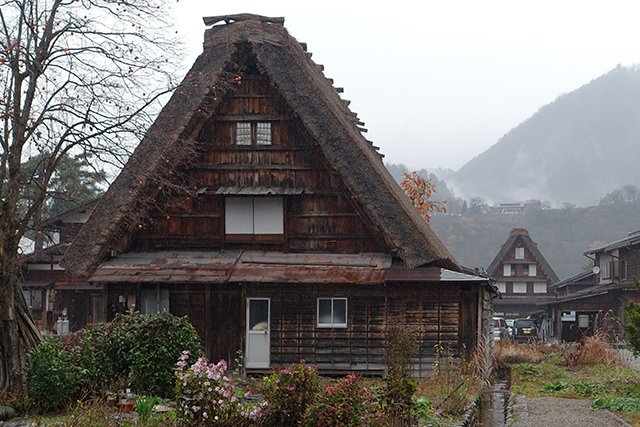
Gassho-zukuri means ‘constructed like hands in prayer’, as the farmhouses’ steep thatched roofs resemble the hands of Buddhist monks pressed together in prayer. The architecture is designed to withstand the harsh winters.
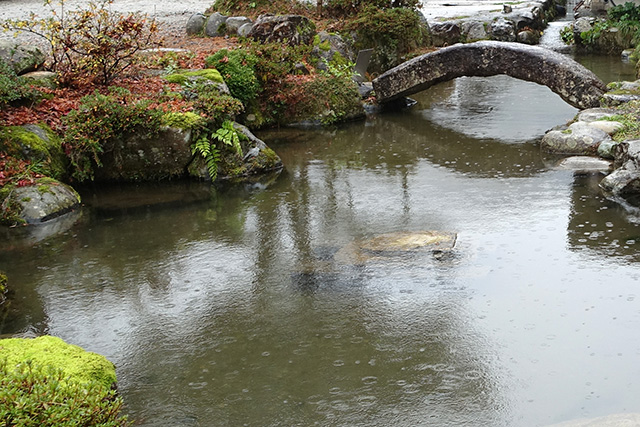
A stream flows next to a farmhouse.
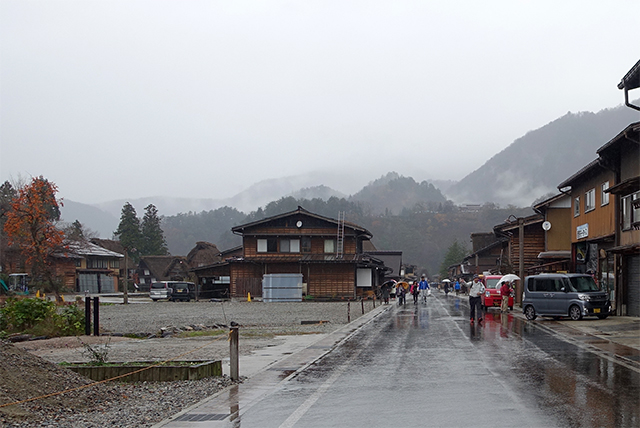
This is the main road through the village. It’s closed to cars between 9am and 4pm.
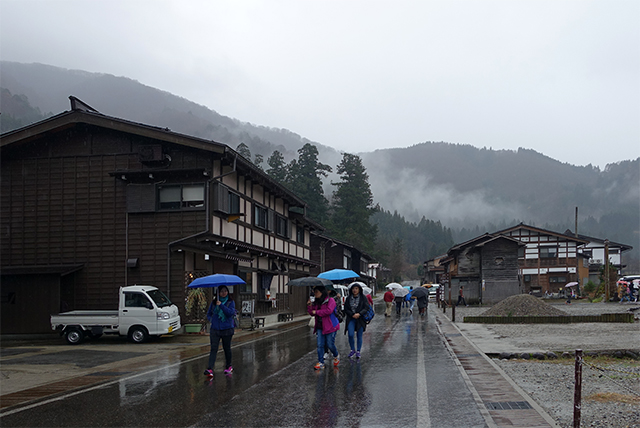
The village is located in a valley, so there’s a mountainous backdrop everywhere you look.
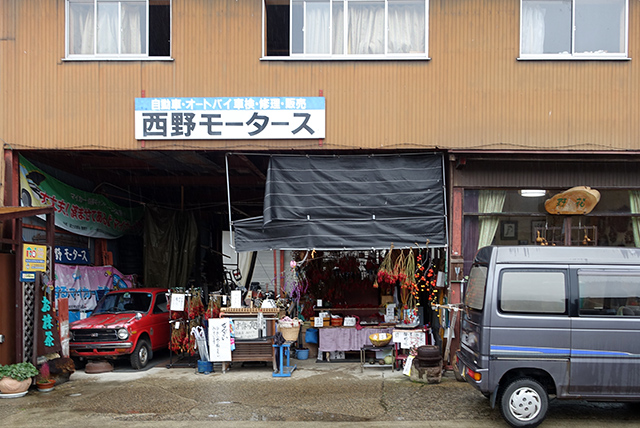
This shop specialises in preserving chilli, which you can see hanging from racks.
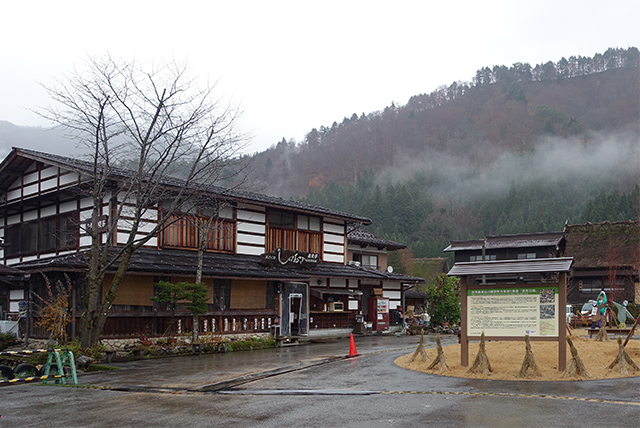
This is the stop for the shuttle bus to the Shiroyama Viewpoint. Everything’s a bit quiet and some shops are closed due partly to the rain and partly to it being the day after a national holiday.
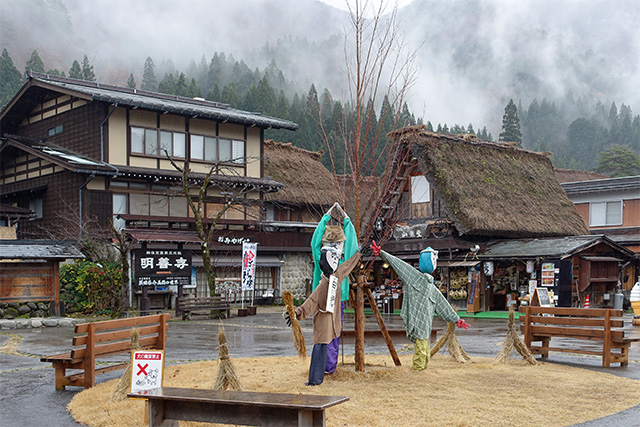
There’s a some sort of scarecrow display at the centre of the space – I’m not sure what they’re trying to keep away. Isn’t the mist behind the trees just beautiful?
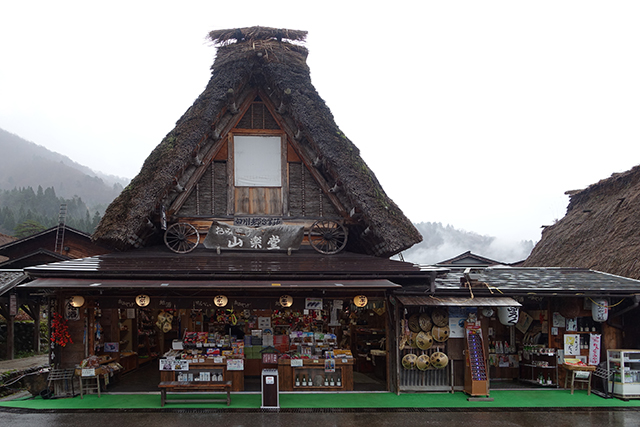
There’s a souvenir shop tucked into the corner behind the bus stop.
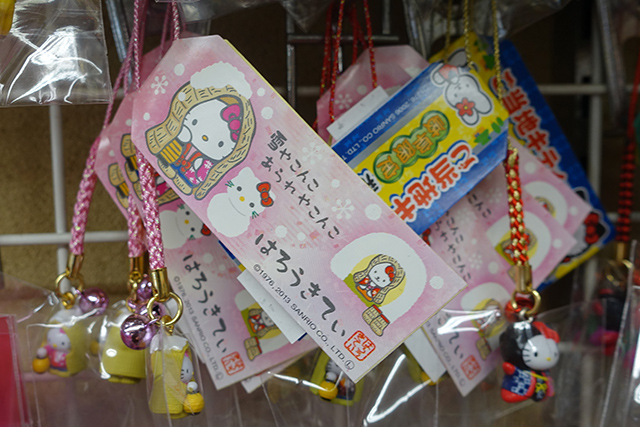
We see Shirakawa-go themed Hello Kitty merchandise. Cute!
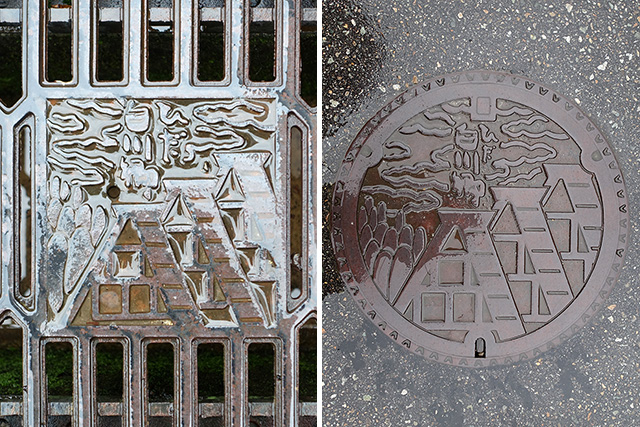
And outside, we see Shirakawa-go themed manhole covers. Pretty!
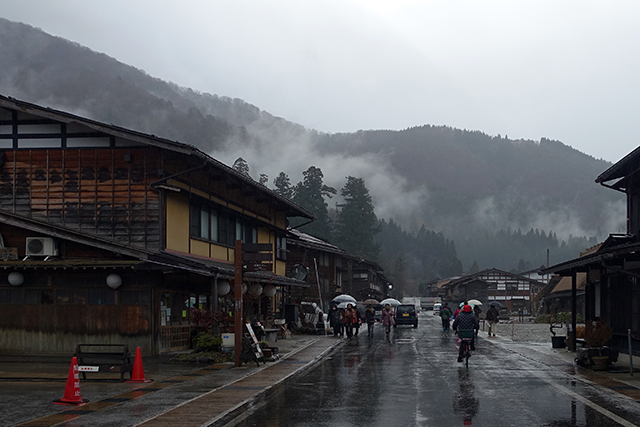
Looking back, we’re about half way down the main road.
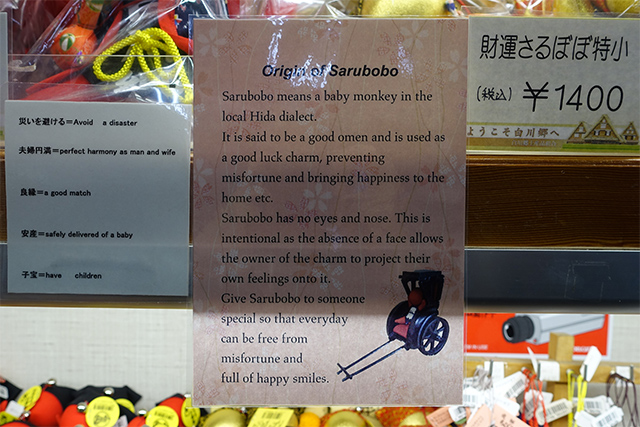
We duck into another souvenir store for some respite from the rain – though, we love souvenir stores even in fine weather – and find an English sign explaining the origins of sarubobo, which we’d seen before during our earlier visit to Takayama.
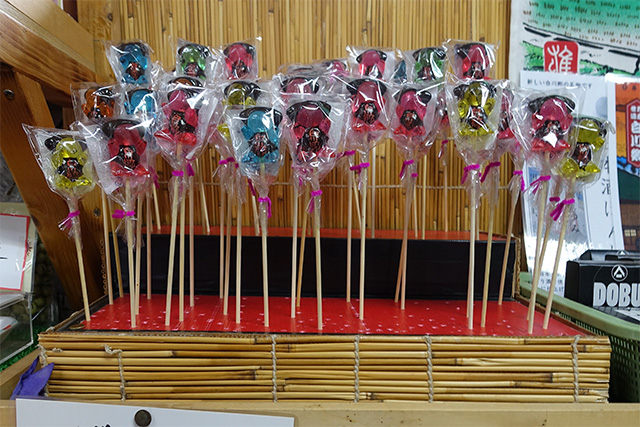
There’s sarubobo shaped lollipops in multiple colours. While you see the red one most often – being the most well-rounded in its luck – the other colours bring luck in different aspects.
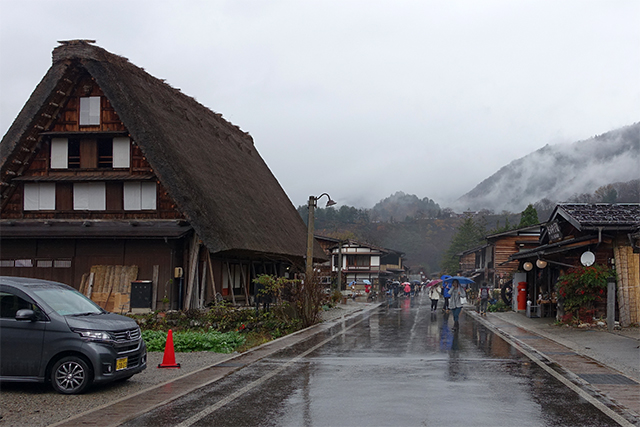
Walking to the village, you’re a world away from the hustle and bustle of modern day Japan.
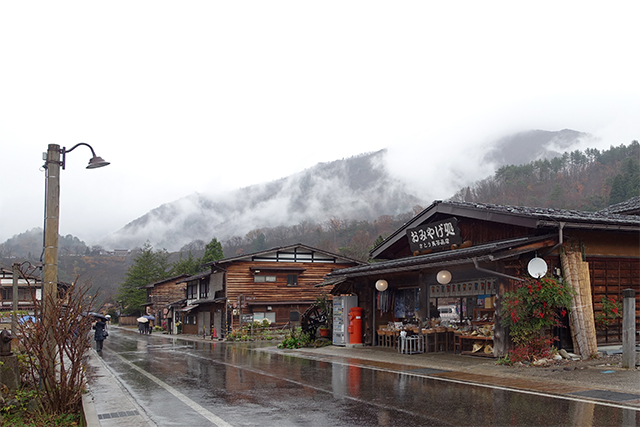
There aren’t all that many shops in the village, although families have increasingly turned their homes into shops and restaurants in recent years.
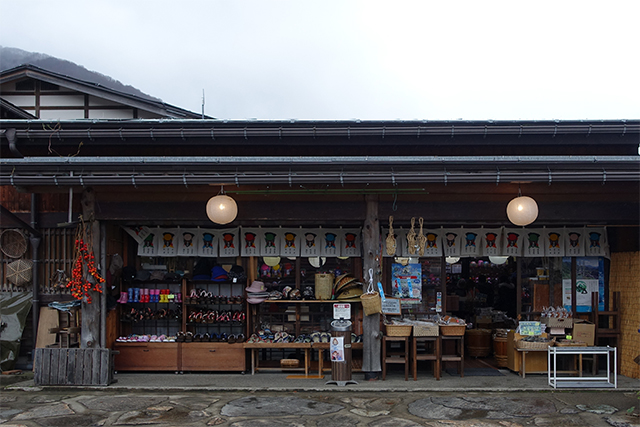
This shop has banners of all the colours of the sarubobo and the luck associated with each.
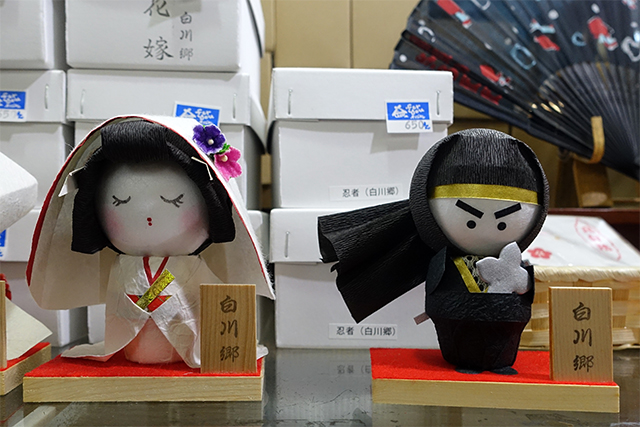
The ninja on the right is just the cutest.
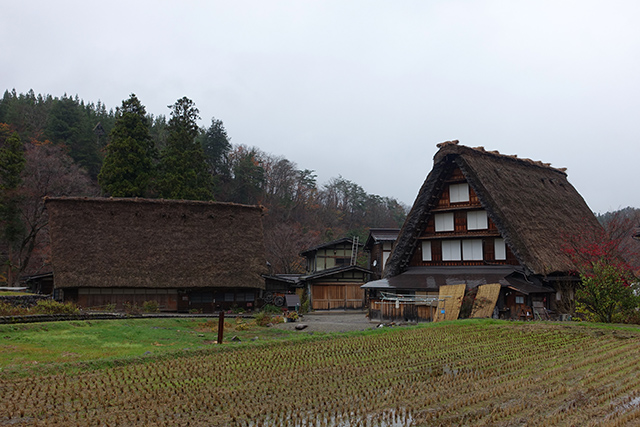
Heading into winter, the rice fields look a bit dead.
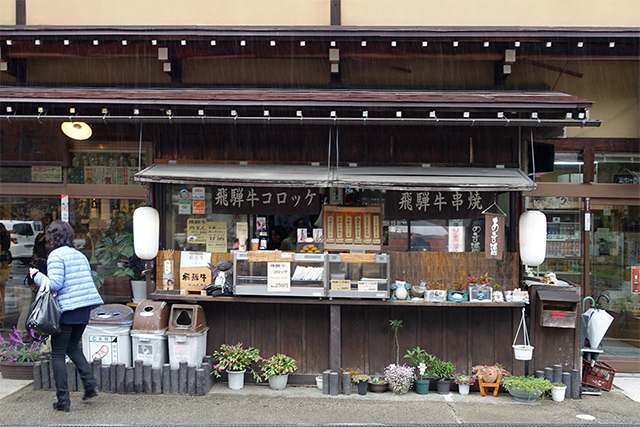
At this shop, there are Hida beef croquettes.
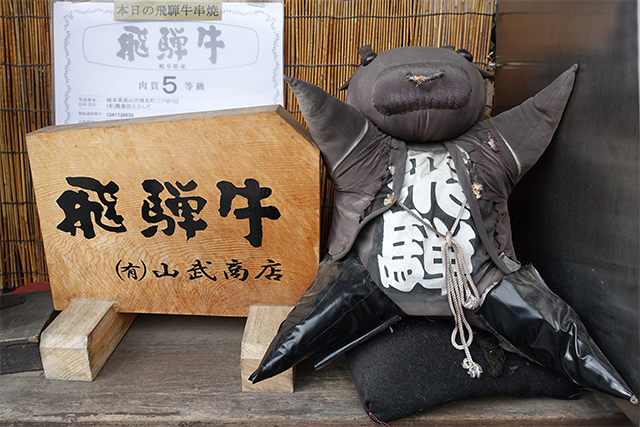
There’s a sarubobo in the shape of a cow. Hida beef refers to beef from black-haired Japanese cattle that have been raised in Gifu Prefecture. Like Kōbe beef, there’s a strict certification system and the beef is high quality with a marbled pattern not only on the steaks, but also in the fat coating. We tried grilled hida beef on our visit to Takayama, also located in the Hida region.
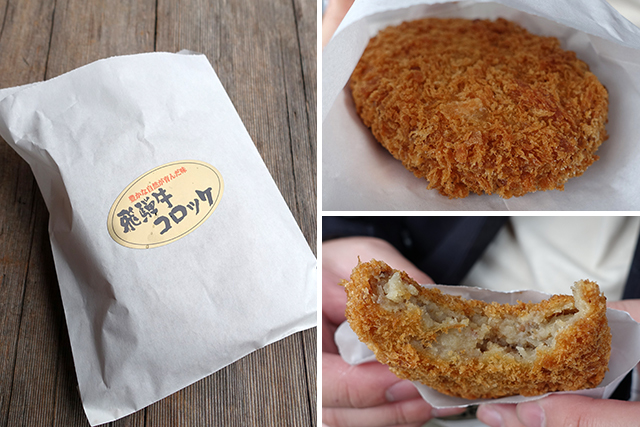
The Hida beef croquette is piping hot with a crispy panko coating and deliciously juicy and tender Hida Beef mixed into the potato innards.
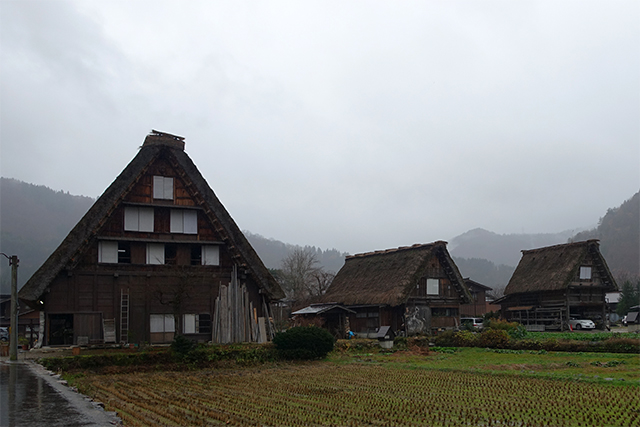
The rain doesn’t let up as we eat our croquette to the view of these farmhouses.
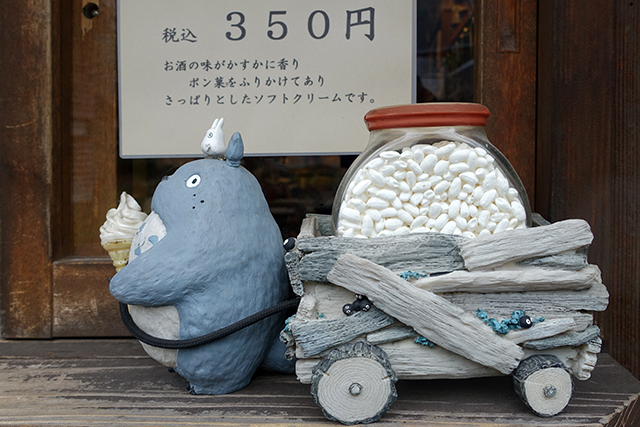
A mini Totoro hauls a jar of either mints or puffed rice at the window selling soft serve.
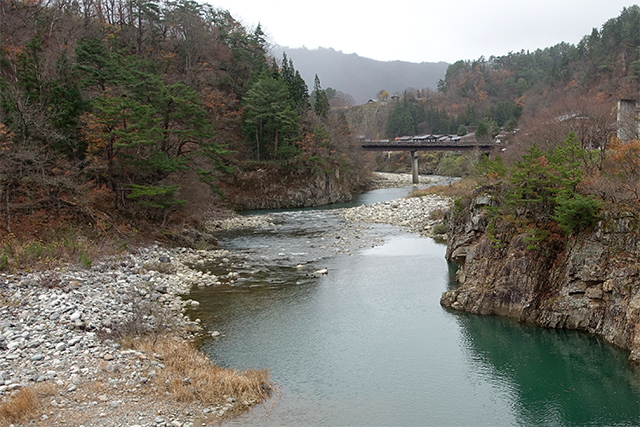
The river we crossed from the bus stop to reach the village snakes around.
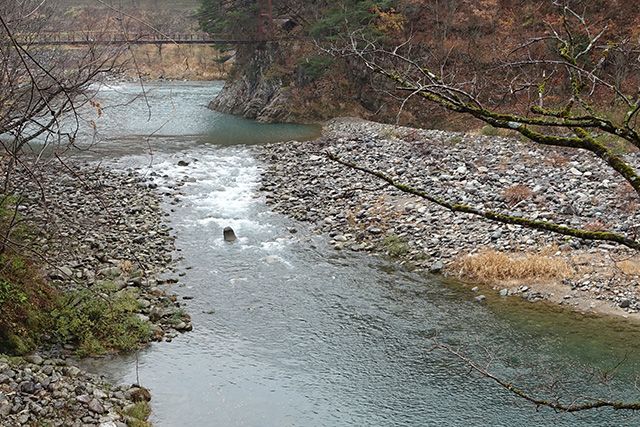
The rushing sound of the river makes it unmistakable from afar.
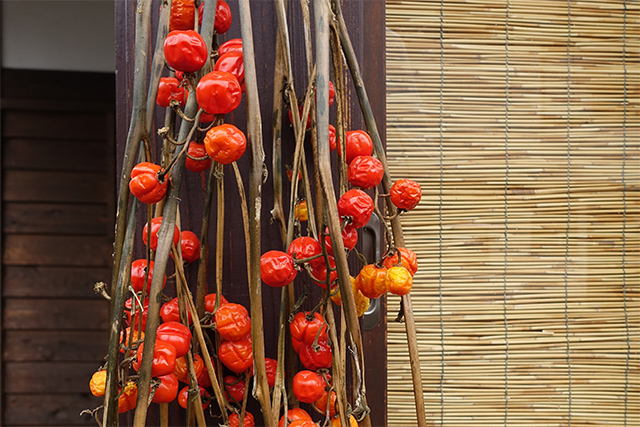
There are fruits being preserved outside a house.
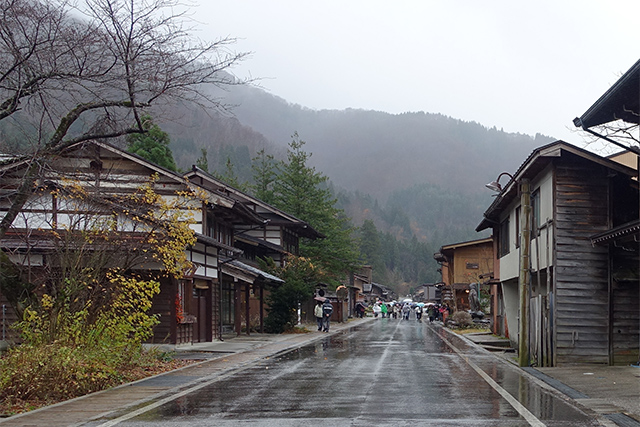
Looking back, we’re a fair way down the main road.
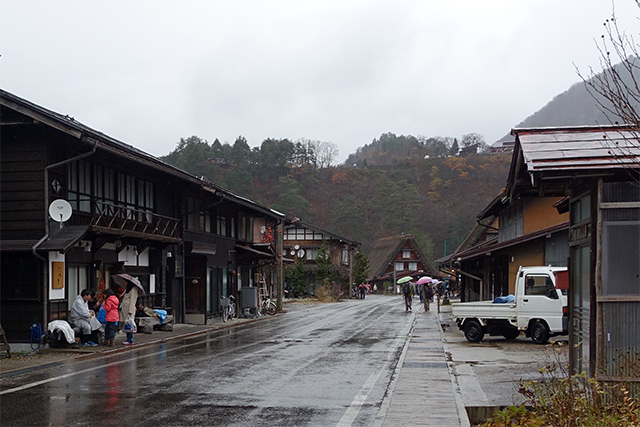
And as we reach the end of the main road, we see the Shiroyama Viewpoint in the background.
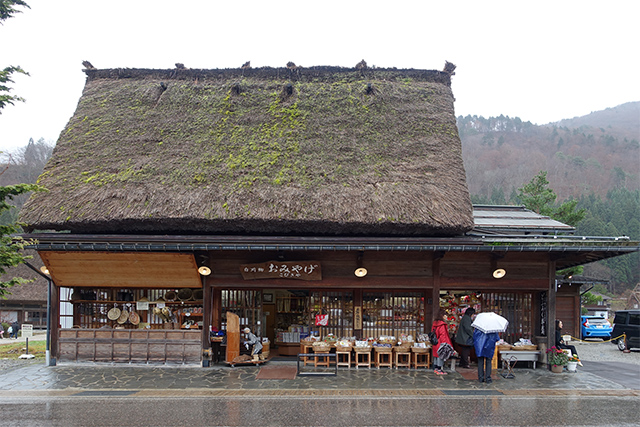
Some of the buildings look to be modern buildings built in the traditional style. This one has a rather modern looking carport behind it.
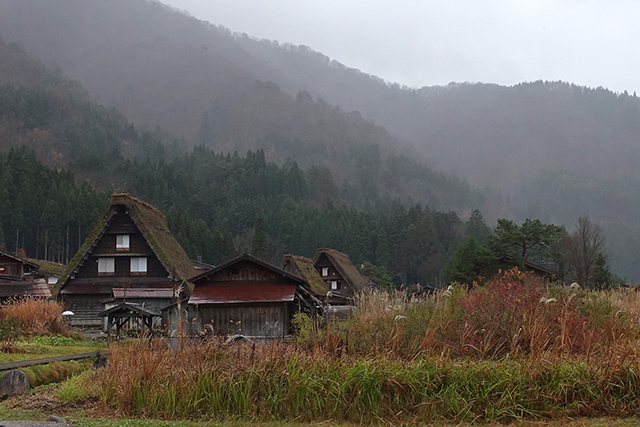
But some original buildings look to be still used as farmhouses.
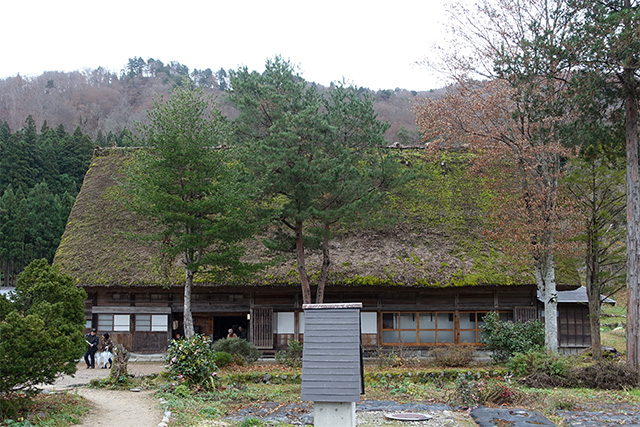
This is Wada-ke. The Wada family was one of the wealthiest families and village leaders of Ogimachi. Their gassho-zukuri farmhouse, which is the largest in the town, is open to the public as a museum. Having been inside other gassho-zukuri farmhouses in Takayama, we pass.
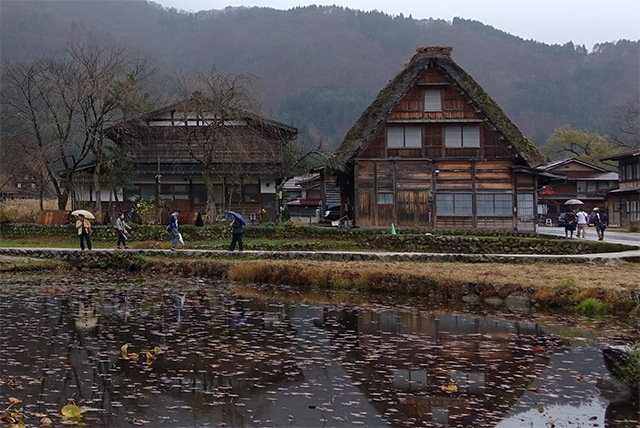
The lake in front of Wada-ke (to the left of this photo) is filled with ginkgo leaves.
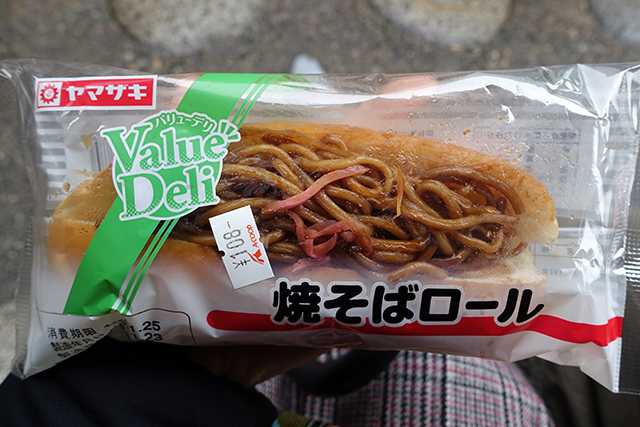
The rain lets up as we reach the end of the road. It’s the edge of the town, so we spot a petrol station and convenience store. Before we make the steep trek up to Shiroyama Viewpoint, we eat our apple pie from the bakery this morning and try a yakisoba pan (bread roll with yakisoba) from the convenience store. Noodles in bread – it’s not bad!
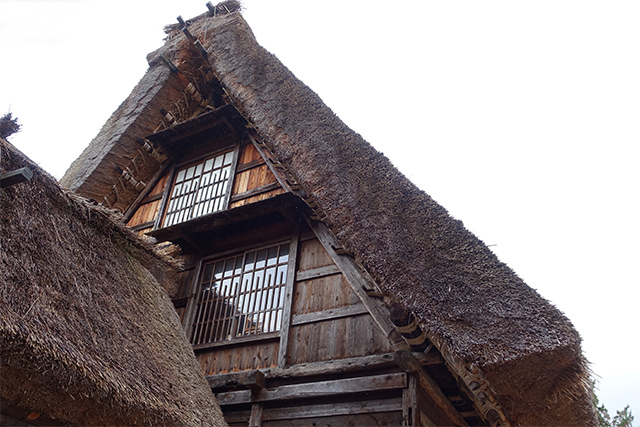
The thatched rooves are really quite thick.
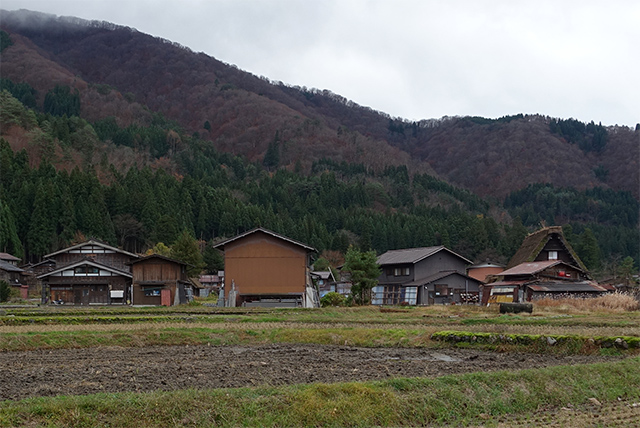
With the rain letting up, the mist clears from the mountains and the temperature drops.
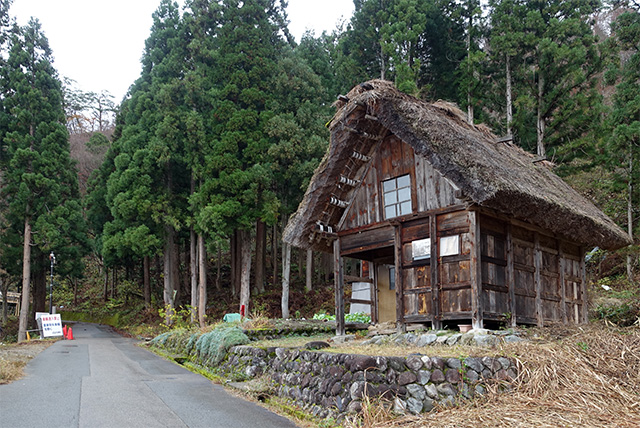
Wrapped up in my cozy Uniqlo jacket, we’re at the entrance to the walk up the mountain to the Shiroyama Viewpoint.
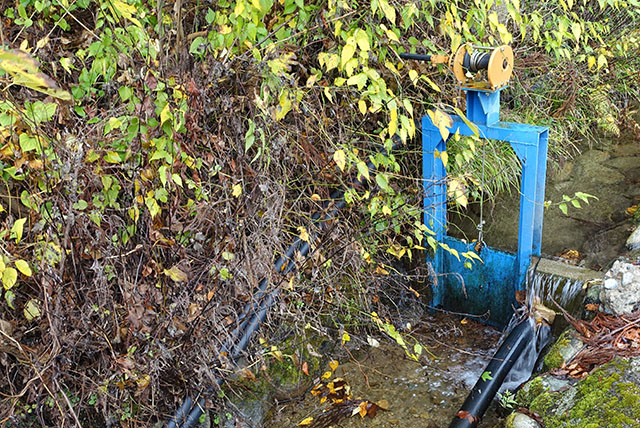
There’s a device stopping an overflow of water reaching the town from the mountains.
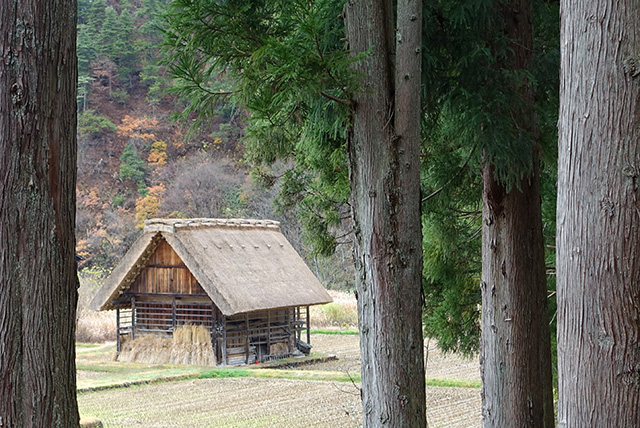
There are glimpses of the village below through the trees as you ascend.
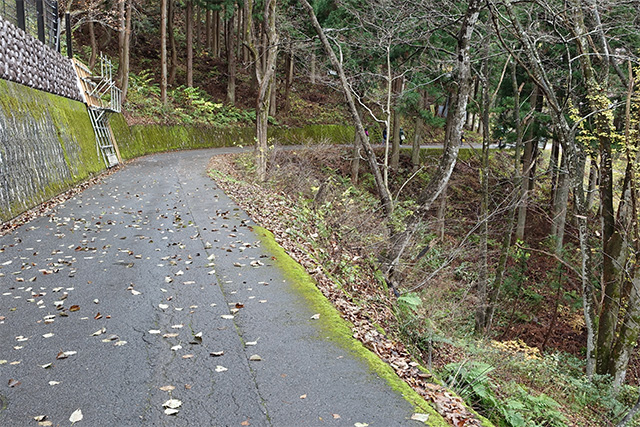
The road up the Shiroyama Viewpoint is closed during winter as it becomes too dangerous.
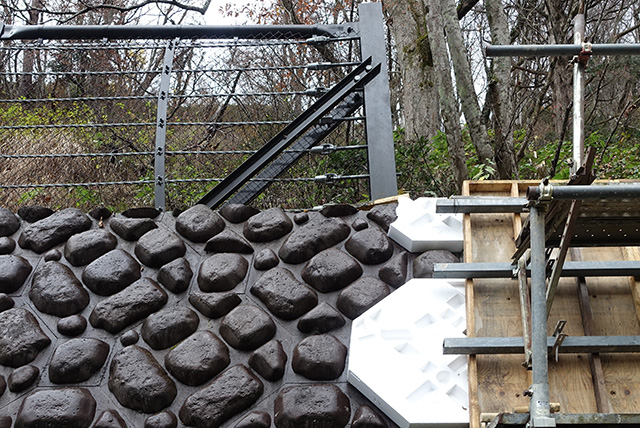
They’re mid-way to building a higher embankment. Here, we see each of the jig-saw pieces comes prefabricated and wrapped in styrofoam.
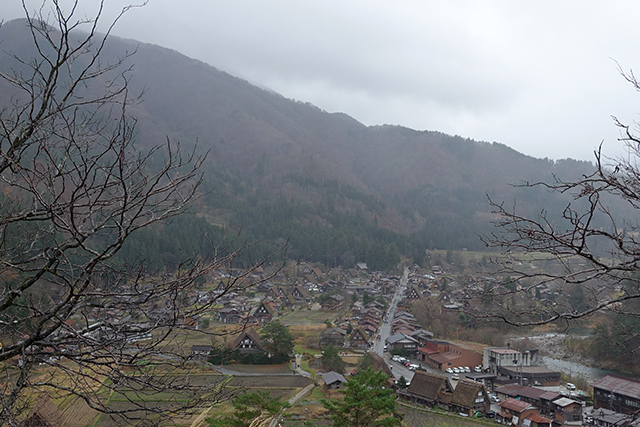
The view as you approach the top is really quite something as you get tired from the trek.
Making the trek up the mountain is a must to truly appreciate the village.
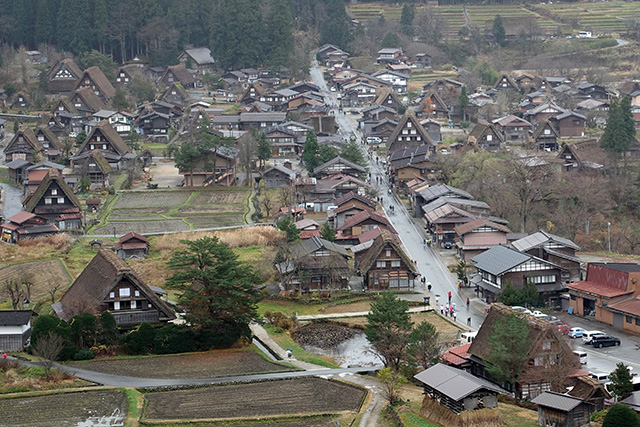
And here, we see the main road of the village, which we just walked down.
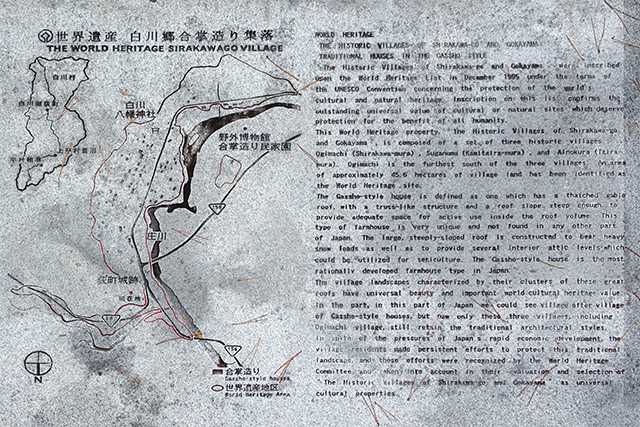
A sign explains Shirakawa-go’s status as a UNESCO World Heritage Site.
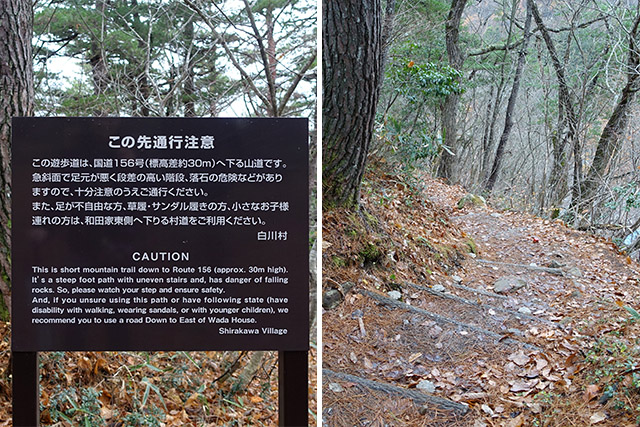
There’s short mountain trail to the road below. It’s narrow, slippery and steep. Dangerous!
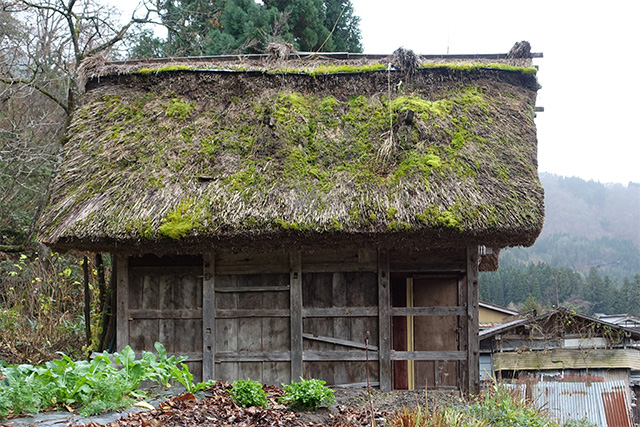
And we’re back on the ground after enjoying the view from above.
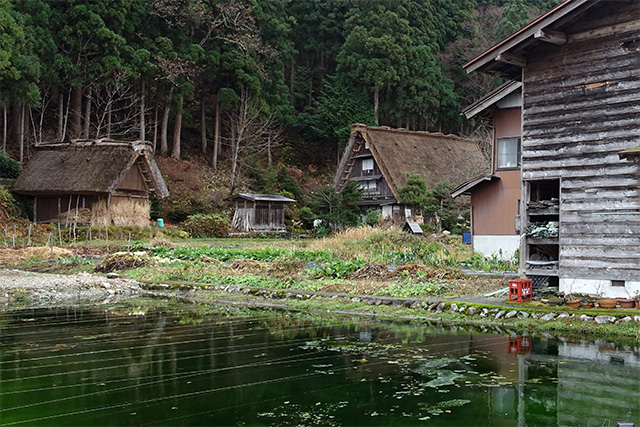
Closer to the edge of the village, we spot more farming activity and less souvenir activity.
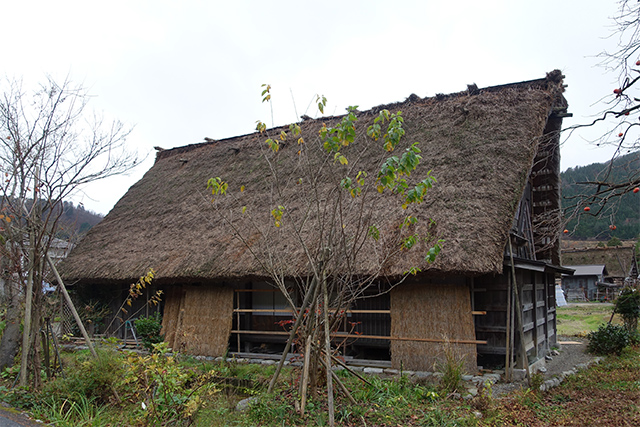
Some of the smaller houses are getting ready for winter with added insulation.
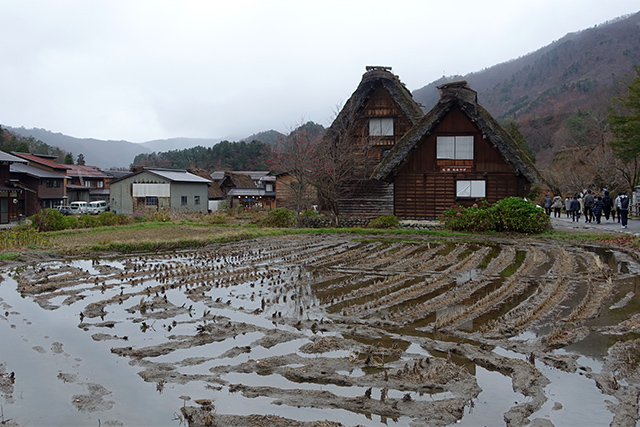
The rain has flooded this rice field.
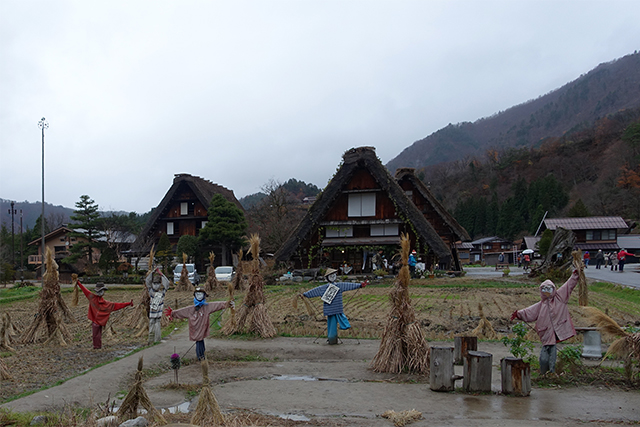
There’s another scarecrow display near some farmhouses.
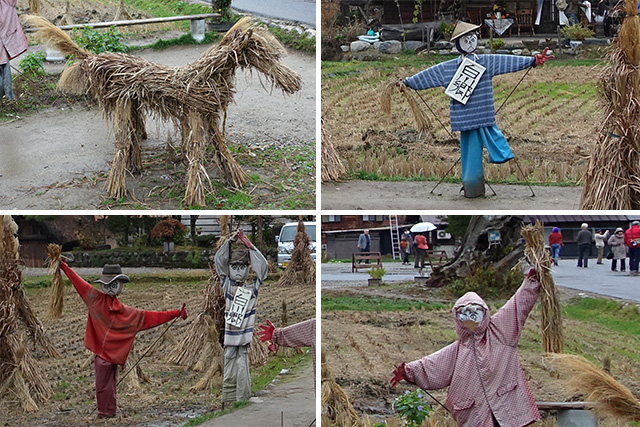
They’re dressed in clothes with a straw dog companion.
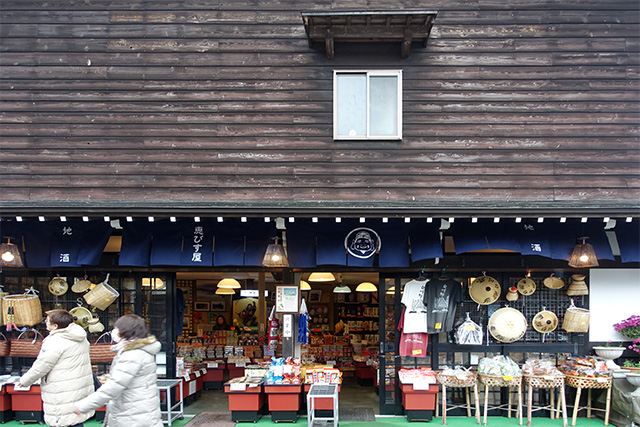
We stop by this store for some yuzu shichimi powder.
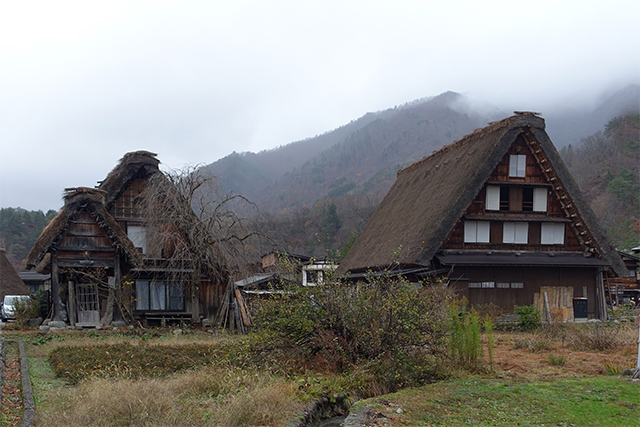
And with that, we’re back at the start of the main road.
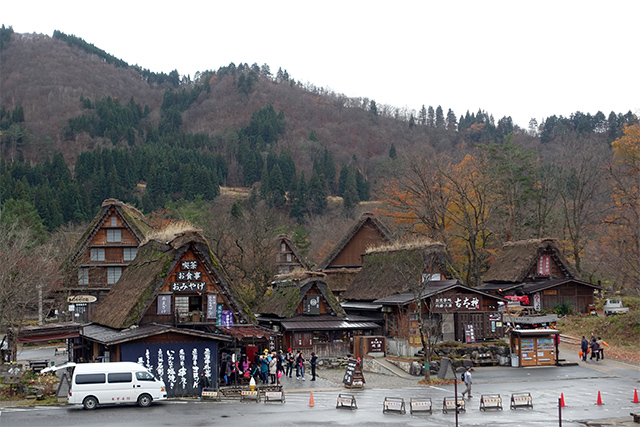
There are a bunch of souvenir stores near the bus stop for the highway bus.
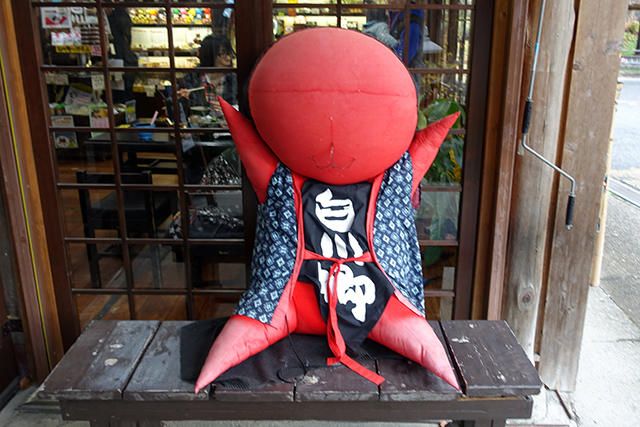
A sarubobo sits outside the store.
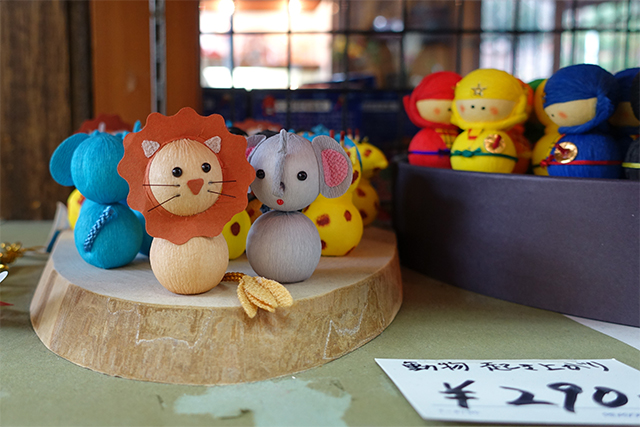
There are cute animals and ninja figurines.
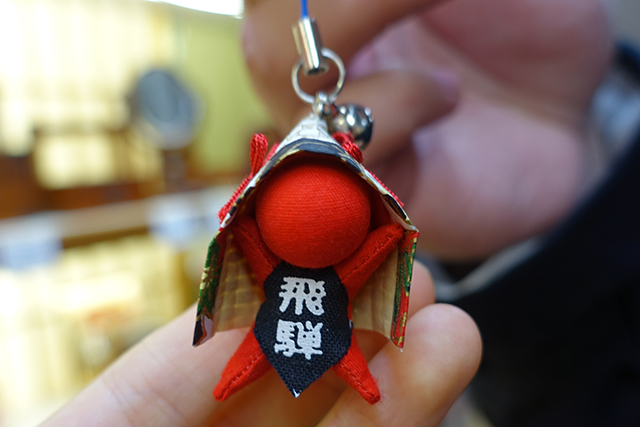
And a sarubobo taking shelter from the snow with a tatami mat.
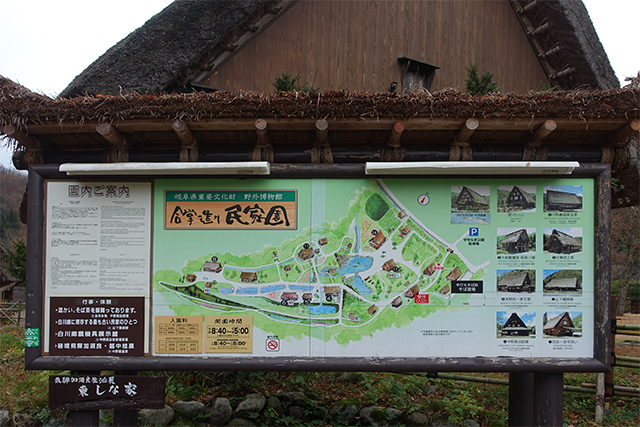
Behind the shops near the bus stop is an open air museum exhibiting farmhouses and other structures relocated to Ogamachi to save them from destruction.
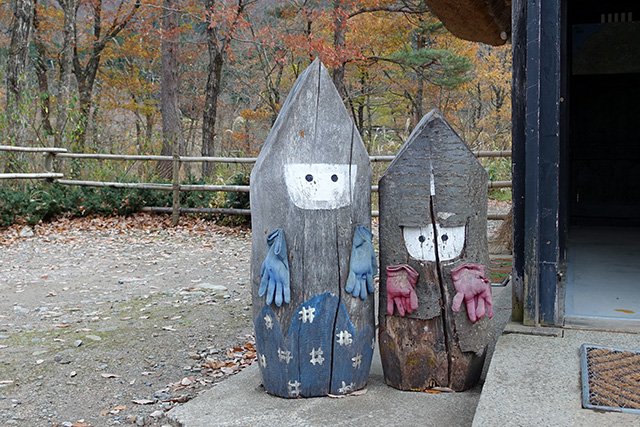
These two sculptures guard the entrance to the open-air museum.
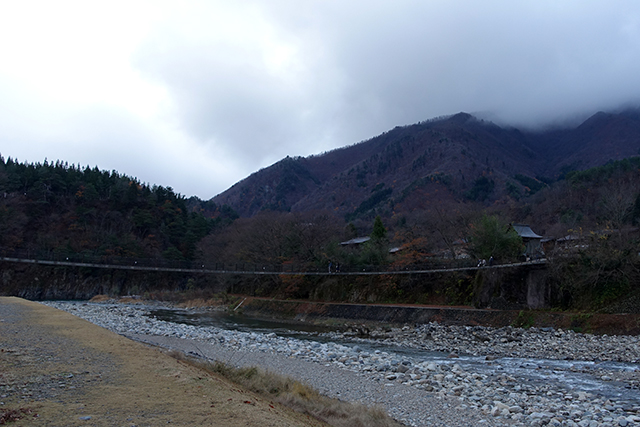
Here, you can see the suspended bridge to the village center. It sways in the wind!
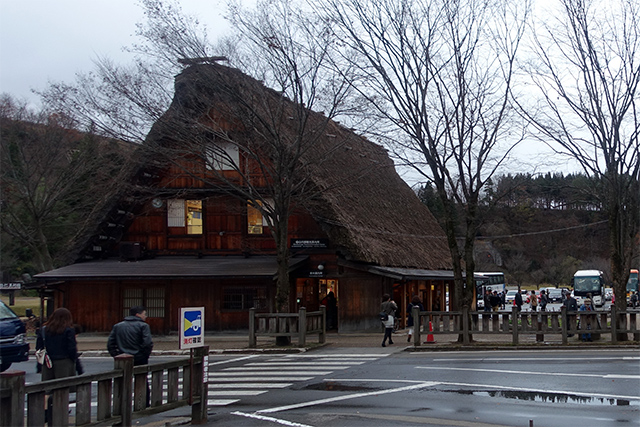
The sun’s set so it becomes super cold. We head back to the Tourist Information Centre to defrost.
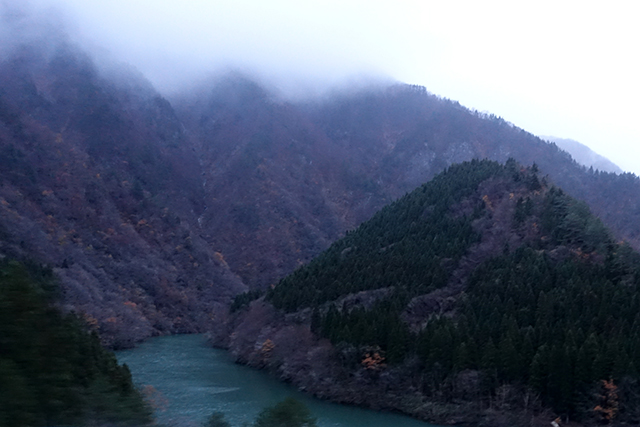
And, we’re on the bus back to Kanazawa.
Kanazawa
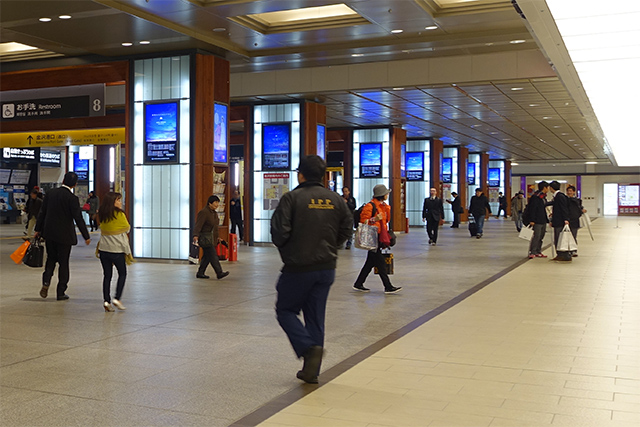
After a quick rest in our hotel, we search for dinner at Kanazawa Station. Major train stations in Japan are built like airports.
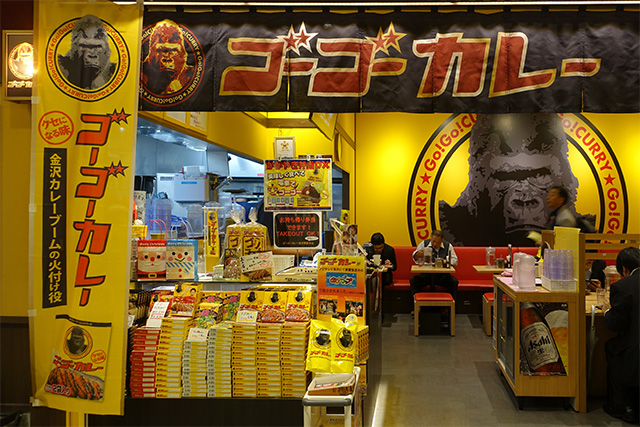
Tonight it’s Go Go Curry with their gorilla mascot.
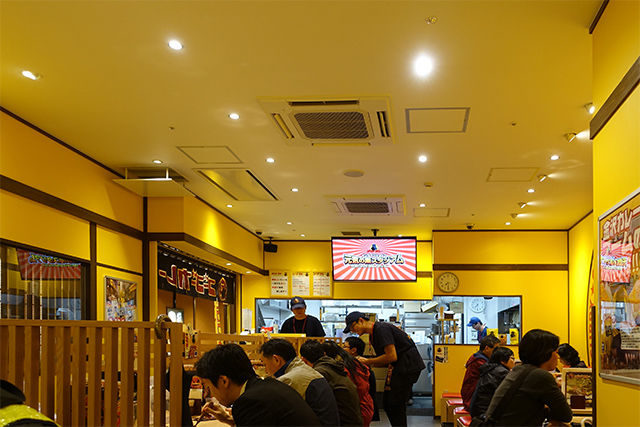
The entire store is a palette of bright yellow with a smidgen of black.
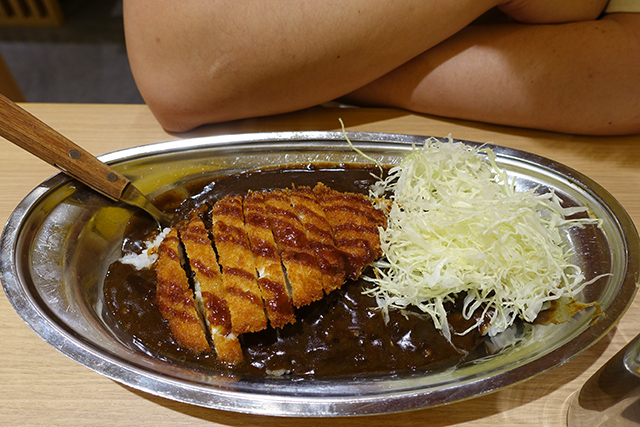
D goes for the Chicken Katsu Curry. The chicken is deliciously juicy and tender. The photo makes the plate look deceptively small – it’s about 30cm wide.
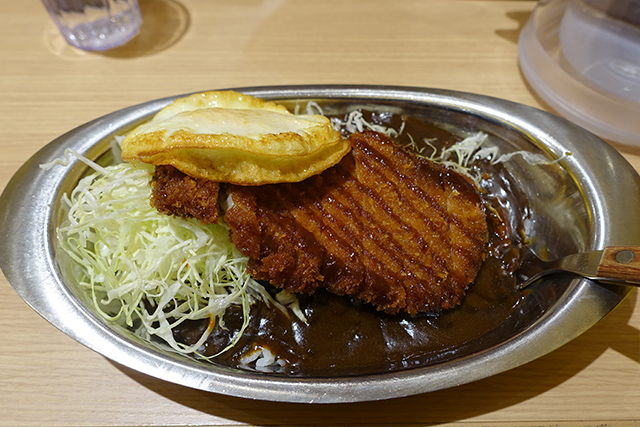
I go for a pork katsu curry with a sunny-side up egg. It’s about two-thirds the size of D’s plate. The pork is tender – though not as juicy as the chicken – and the egg is perfectly gooey in the middle. The flavour of the curry at Go Go Curry is a tad more spicy and less sweet than the curry at CoCo Ichicban Curry House, although it may be a regional thing given the same experience with the curry naan and curry pan this morning.
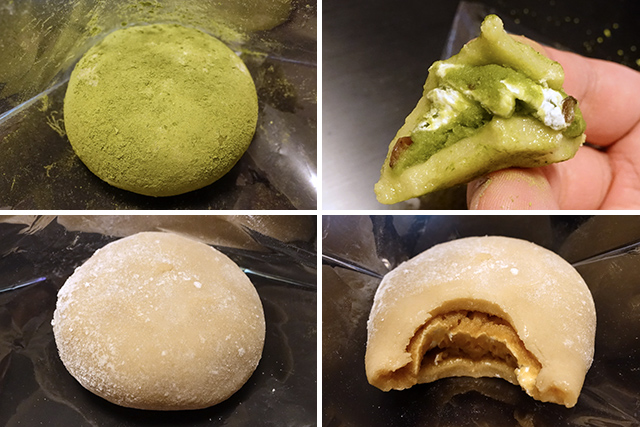
For dessert, we’re back at MochiCream. We’re quite taken with them, and having never seen one of these stores elsewhere, we try a few more than last night.
Here, we have maccha (top), which is dusted in maccha, with a maccha cream filling studded with azuki beans – the quintessential Japanese pairing. Below, we have cafe au lait with a pronounced and pleasantly balanced sweet and bitter milk coffee flavour.
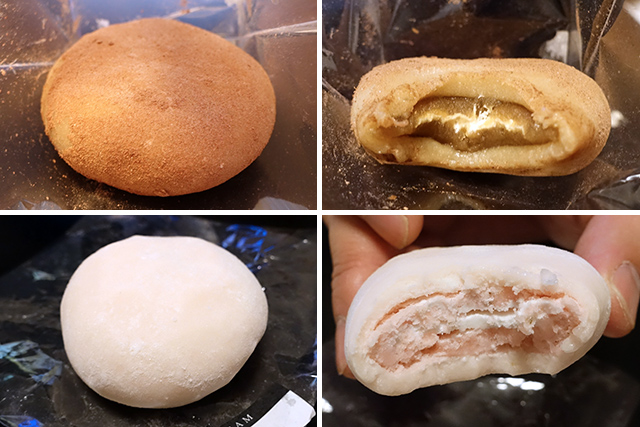
We also have caramel macchiato (above) with a more subtle coffee flavour than the cafe au lait and a mellow caramel flavour, and sakura (below) with its distinctive floral notes and a subtle saltiness (as expected from preserved sakura). The sakura mochicream was sold frozen unlike the others, which were refrigerated.
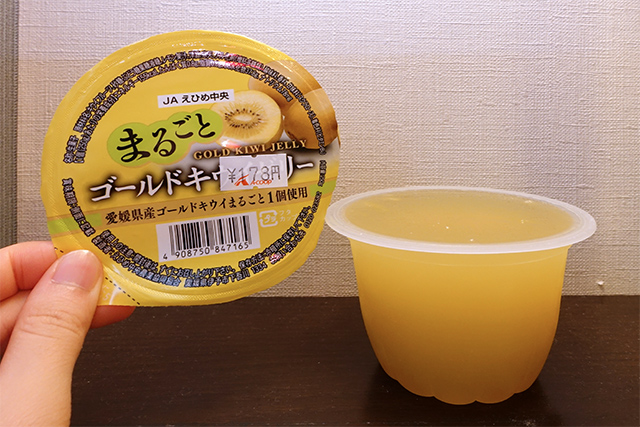
Finally, to finish off our night, we have some gold kiwi jelly, which we’d bought from the convenience store at Shirakawa-go.
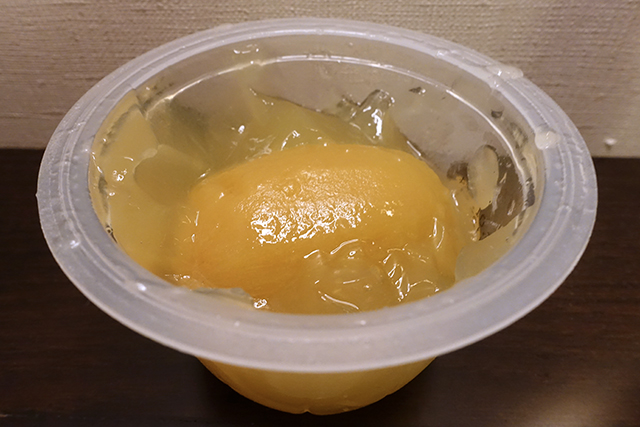
Surprise! There’s a whole golden kiwifruit hidden inside the jelly! D and I like our jelly rather bouncy, and this was rather lacking in the bouncy department. But considering the price of fruit in Japan Y178 for jelly and whole fruit, it’s not bad.