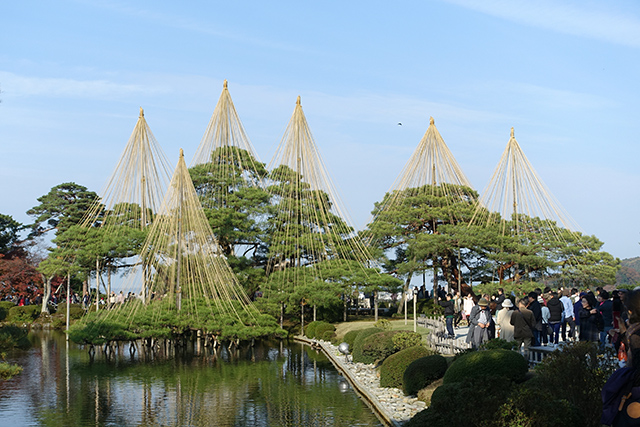
Historical districts have a certain charm, and having escaped air raids during World War II, Kanazawa boasts restored samurai and chaya districts, as well as an impeccable landscape garden in Kenroku-en, one of Japan’s three best landscape gardens.
So, we’re off to take a look at Kanazawa, which literally means ‘marsh of gold’ and fittingly describes a city that produces 99% of Japan’s gold leaf.
Ōsaka – Nippombashi
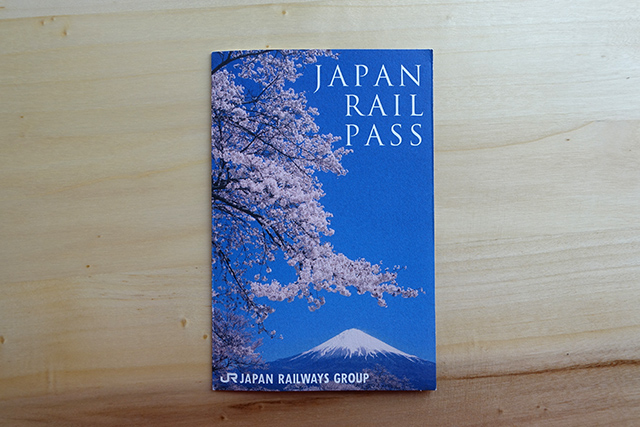
We’re travelling around Japan using the 7-day JR Pass this time.
We want to make as much use of the JR pass as we can, so we’re up bright and early at a quarter to 6 to check out of our Ōsaka accommodation and make our way to Kanazawa in Ishikawa. Ordinarily, we’d leave the previous evening or later in the day – we’re late risers!
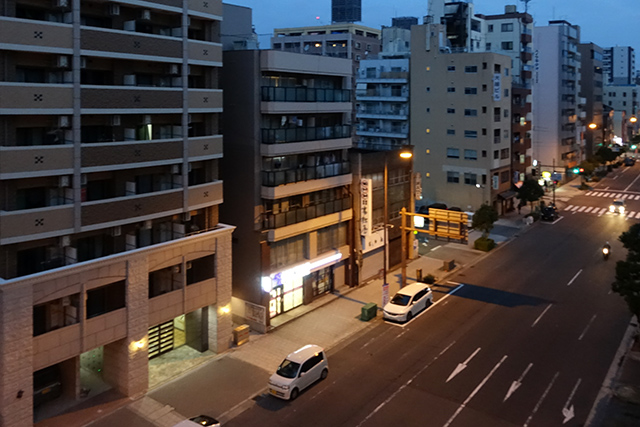
It’s still rather dark outside and the streets are quiet.
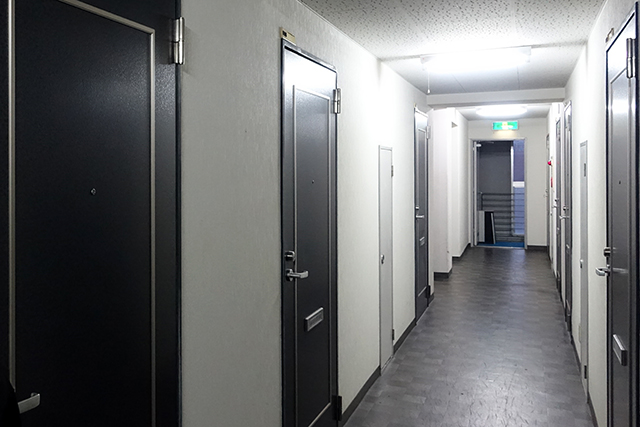
Right on the dot at 6am, the cleaning lady for our Airbnb host arrives to check us out.
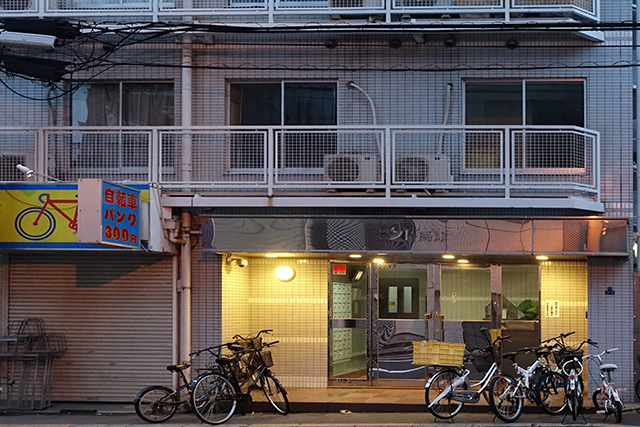
Being a residential apartment complex, there’s a bunch of bicycles parked outside.
Ōsaka -> Kanazawa
We catch the JR Thunderbird from Ōsaka to Kanazawa. The Thunderbird is a limited express train fitted out much like shinkansens. The trip is about 3 hours long.
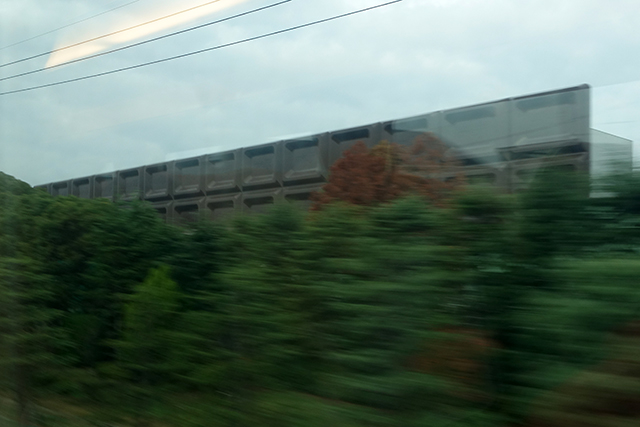
Just outside of Ōsaka, we spot the Meiji factory with a giant chocolate bar as its facade.
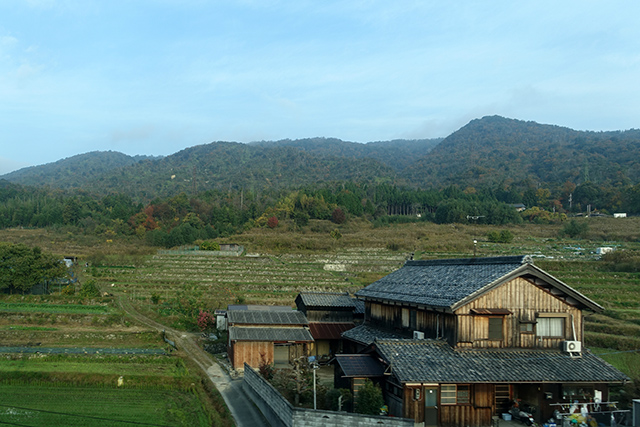
Outside the city, the train zooms past some rural towns…
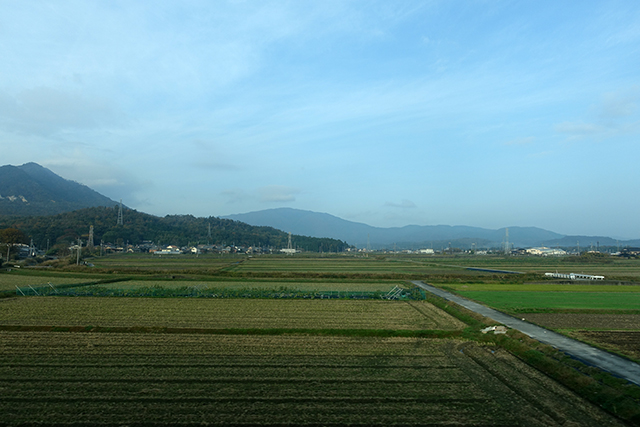
…and a bunch of fields.
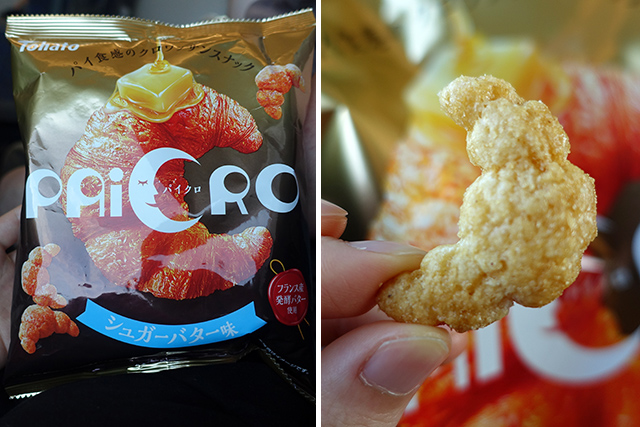
Having skipped breakfast on our rush to get onto the train, we rely on convenience store snacks purchased earlier. These PaiCro are mini croissants. They’re super crispy and buttery and sweet. I’m usually a fan of buttery and sweet, but these were just too much.
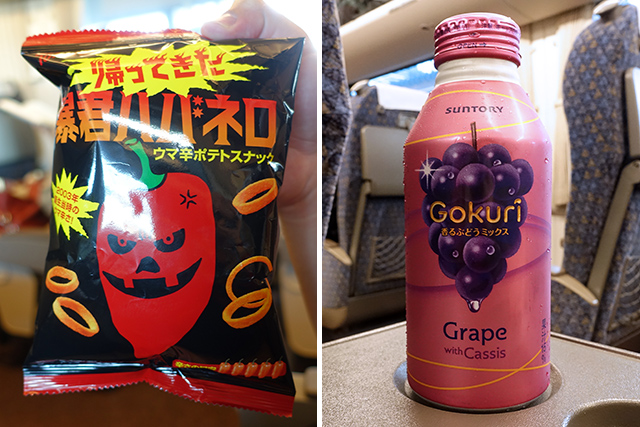
D is always on the hunt for spicy chips (left). These have a chilli rating of 5 peppers, and the heat really does build up as you eat them. And then we have the grape with cassis juice, a tasty grape candy flavoured drink with hints of currant and grape pulp.
Kanazawa – JR Station
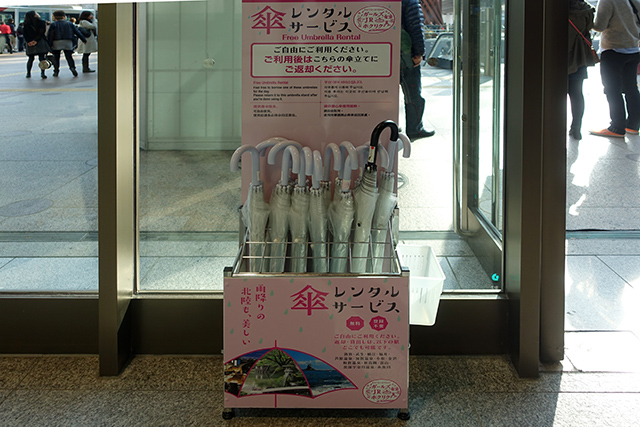
We arrive at Kanazawa around 10am, just in time for main shops and sights to open so we can make the most of our day in Kanazawa. At the station we see these stands for ‘free umbrella rental’. By rental, they mean free – just return them when you’re finished with them. Ah, the Japanese are so honest.
Omi-cho Market
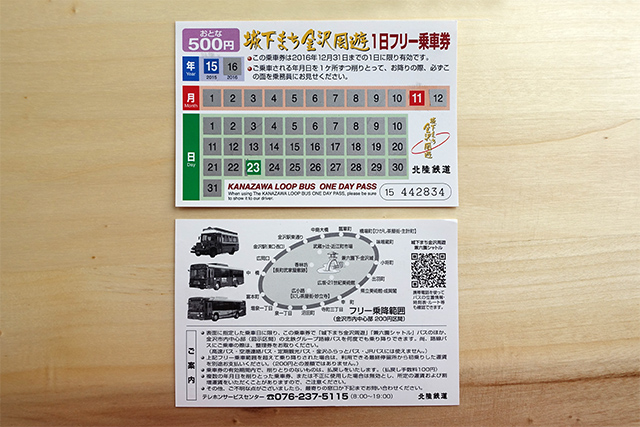
After dropping off our luggage at the hotel, we head back to Kanazawa Station to take the Left Loop Bus to Omi-cho Market, Kanazawa’s largest fresh food market. You can buy an all-day pass for Y500 that lets you catch the loop buses around Kanazawa as often as you like on one day.
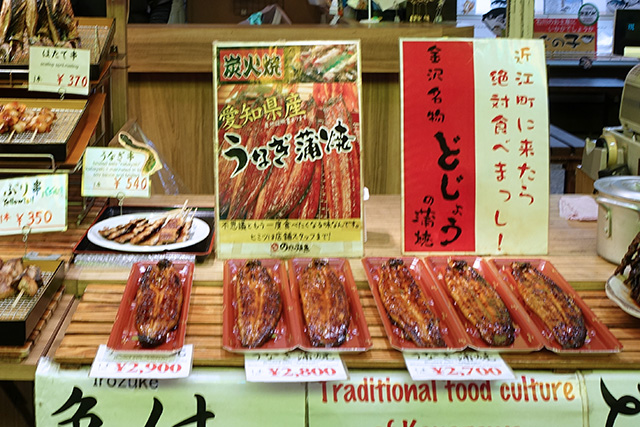
There are plates of grilled eel going for Y2,700-2,900 (~$30.00).
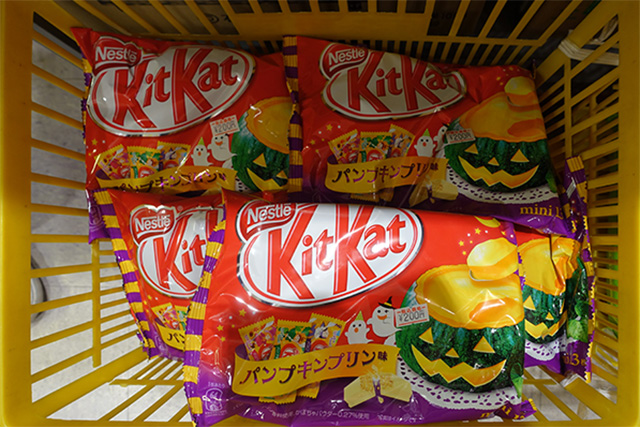
As well as pumpkin pudding KitKat. I like to collect KitKats but I’m afraid my aversion to all things pumpkin means I have my limits.
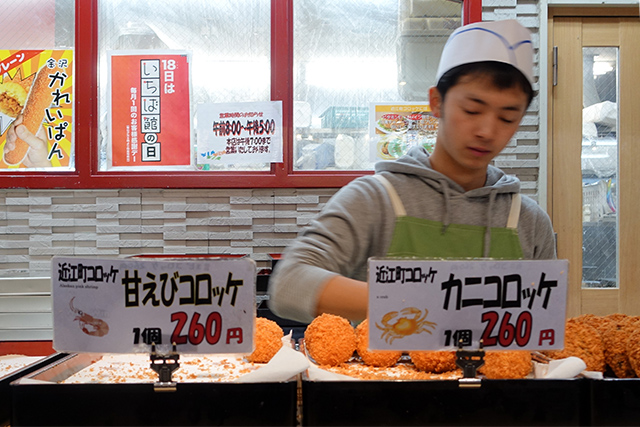
A shop called Diamond L-II sells freshly fried croquettes using local seafood.
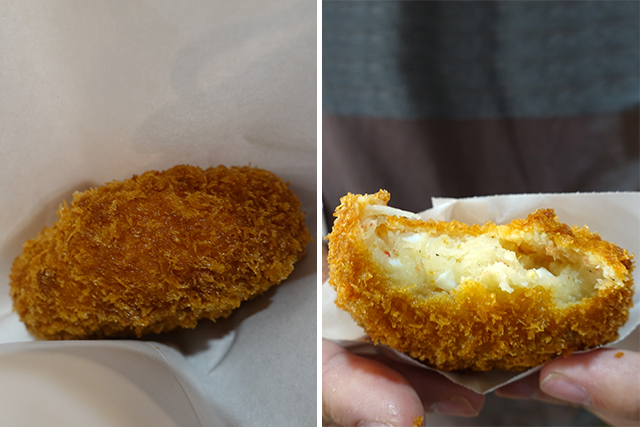
We try the crab croquettes. You can see the crab meat in the potato, although the crab flavour was rather subtle. It’s piping hot with a crunchy exterior.
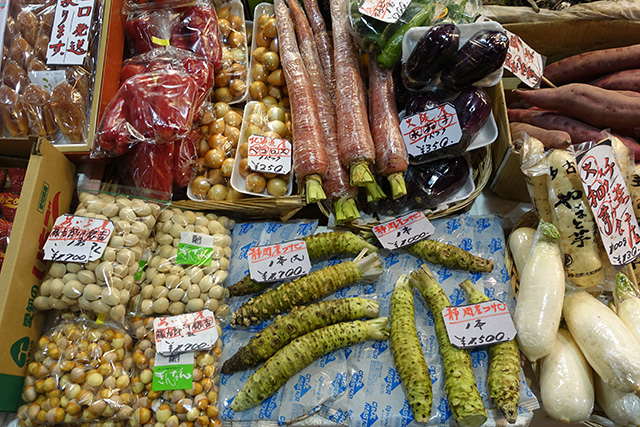
There’s fresh produce in abundance. Even wasabi root for Y1,000-1,500.
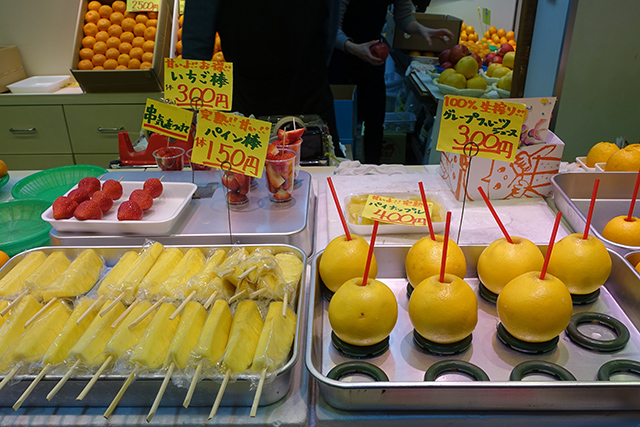
There’s frozen pineapple as well as fresh grapefruit and orange juice served inside the fruit.
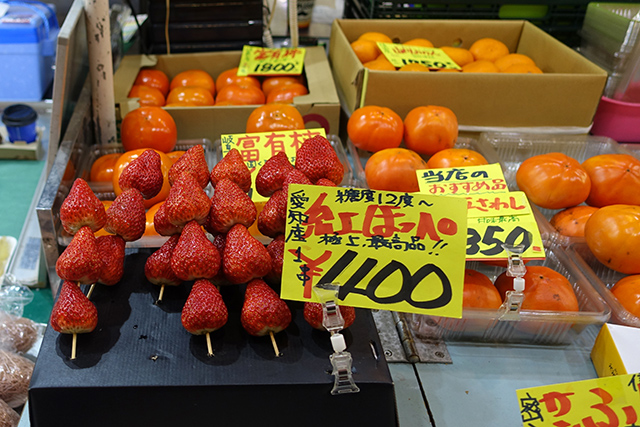
There’s even three impeccable strawberries on a stick at a premium.
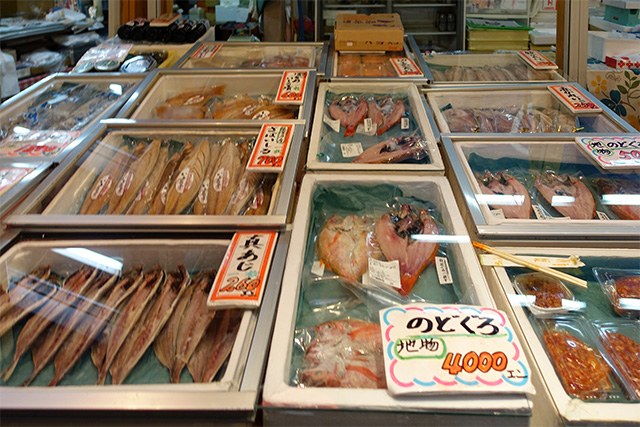
There’s prepared fish of all kinds.
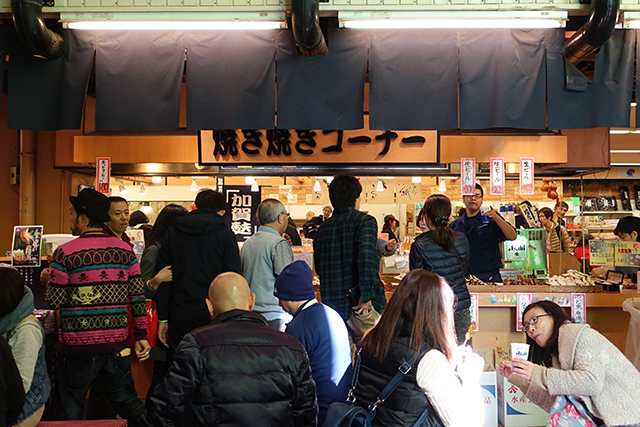
After making our way through the crowds, we spot grilled seafood on skewers.
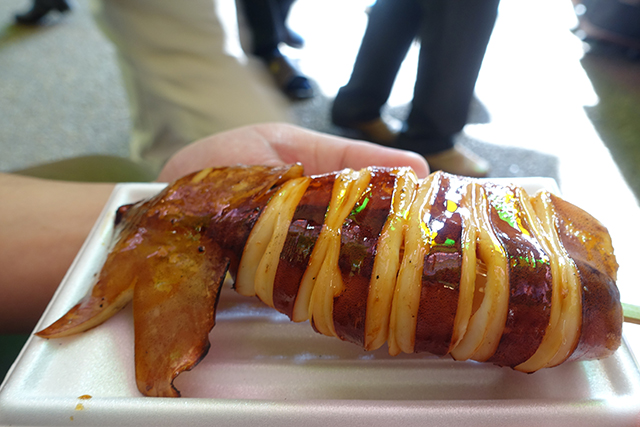
We try ikayaki (grilled squid) which we see eaten often at festivals in anime. They heat it up to order. The flesh is quite tender, although it’d have been tastier if it was heated a tad further.
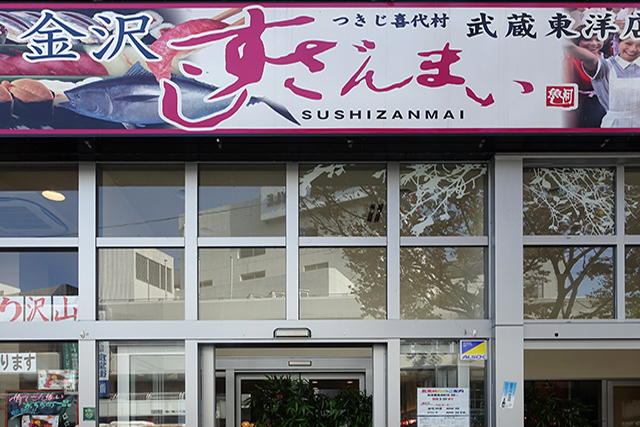
The squid whets our appetites for a proper breakfast, so we head to Sushizanmai a few steps outside the entrance to Omi-cho Market.
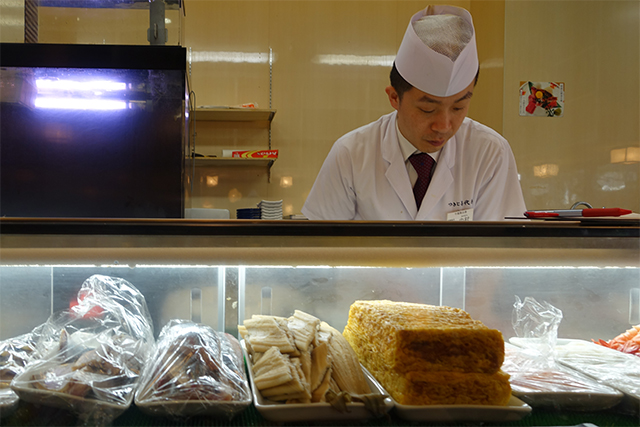
We sit at the bar in front of the sushi chefs as we weren’t sure whether we wanted to order dishes off the menu or sushi before seeing the menu.
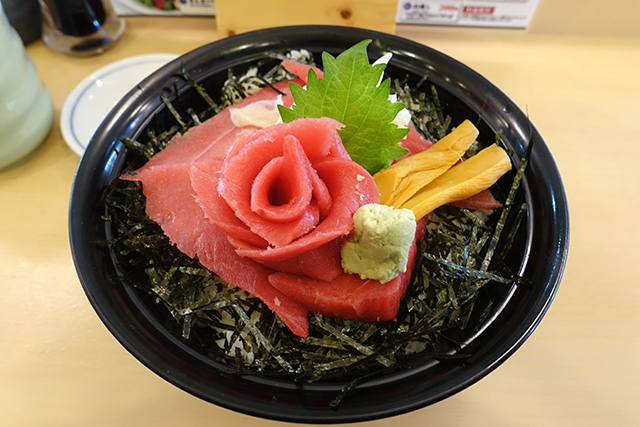
We end up ordering off the menu, though. This is a a tuna chirashi arranged in the shape of a rose. Isn’t it just beautiful? Much of the seafood in Tōkyō’s Tsukiji Market comes from Kanazawa, so the tuna is bright and fresh as expected.
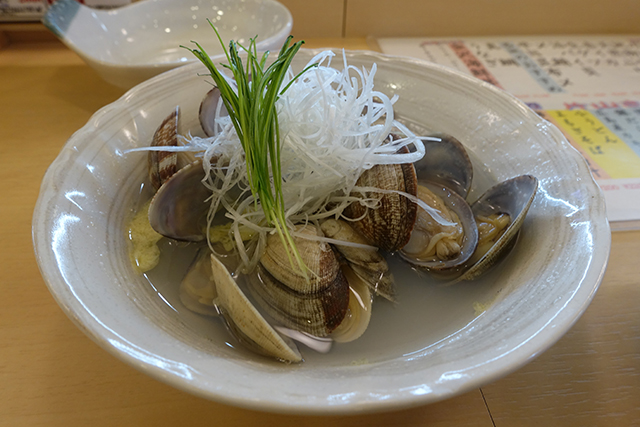
D tries the clams cooked in sake. The sake takes on the fishiness of the clams, which left a weird flavour. Some of the clams were still gritty, but it’s an interesting dish.
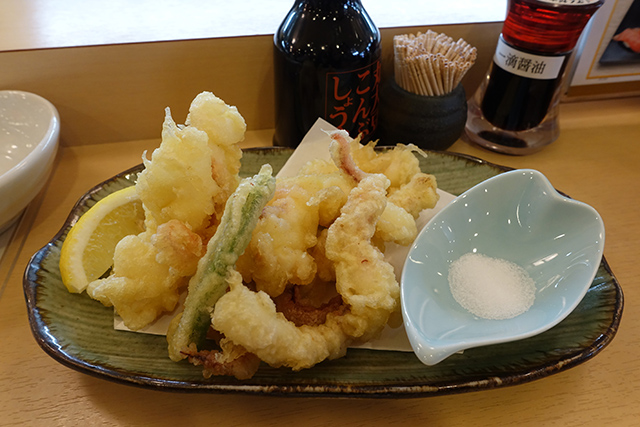
To go with his clams, D also gets some squid tempura. The batter is thing and crispy, the squid is tender and and goes well with the salt.
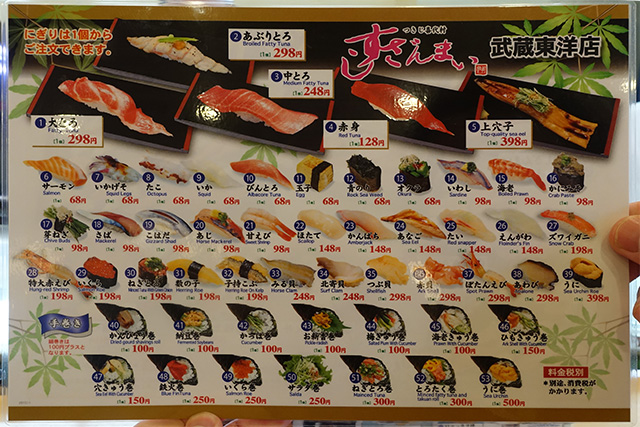
Having chosen to sit at the bar, we feel bad for not ordering nigiri, so we take look at the menu.
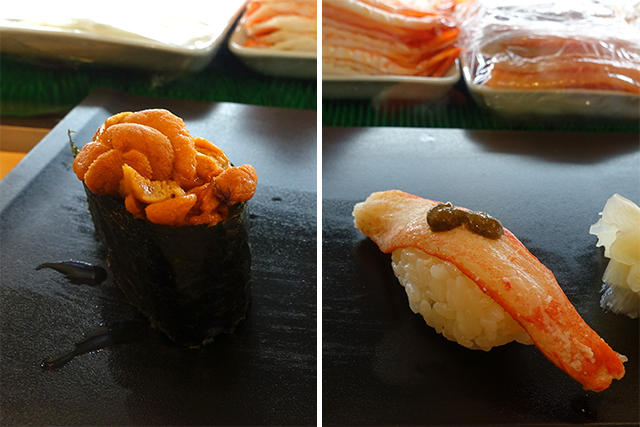
…and try sea urchin and snow crab nigiri. The sea urchin we’d seen sold in boxes at departments stores and markets, so we were curious as to what the big fuss was – it’s got a very creamy texture with a somewhat fishy tasty. The snow crab nigiri comes with a dollop of crab paste – the snow crab is sweet and melt-in-your mouth, but we could do without the crab paste.
Nagamachi Samurai District
After a rather late breakfast, we hop back onto the Left Loop bus and head towards the Nagamachi Samurai District.
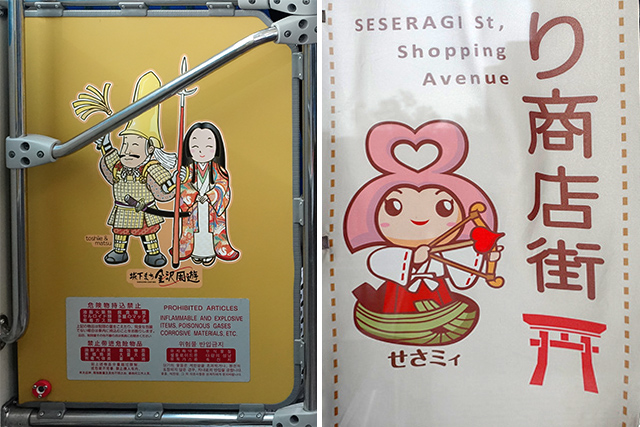
There are cute samurai and geisha figures on the bus. And another cute local mascot for the shopping street leading to the Nagamachi Samurai District.
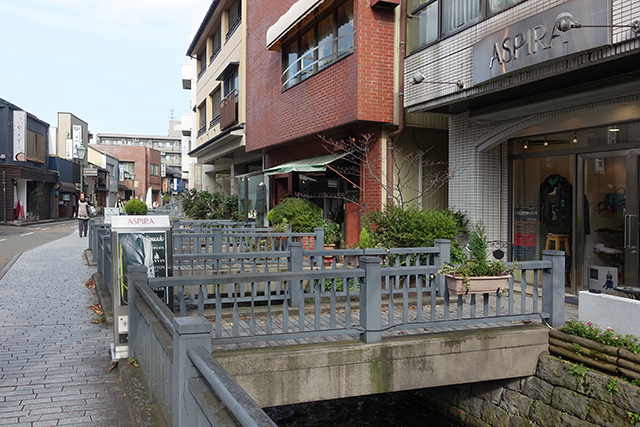
All the shops on the shopping street have a short walkway bridging over the river that runs immediately in front of the store.
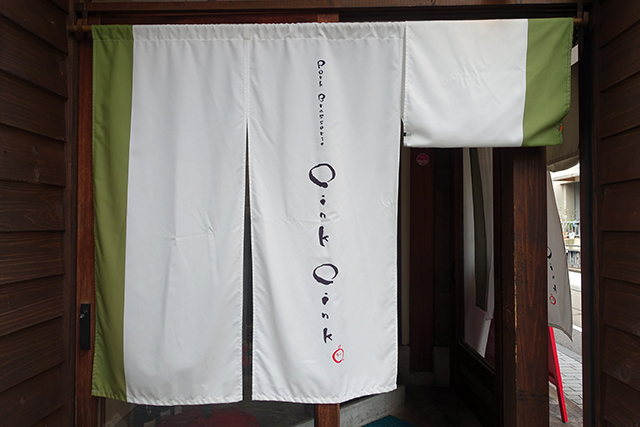
On the way, we spot a restaurant using stylish Japanese-style calligraphy for its English.
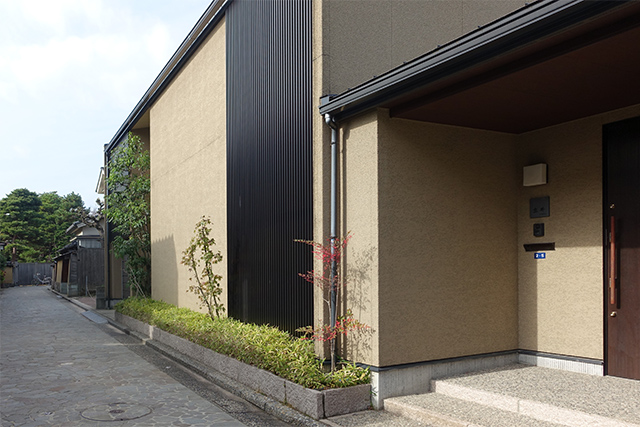
There’s a modern residential building that’s devoid of windows street side.
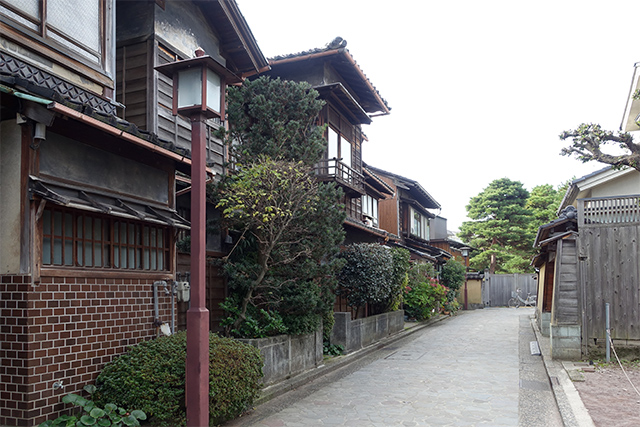
The houses on the other side of the road look less imposing.
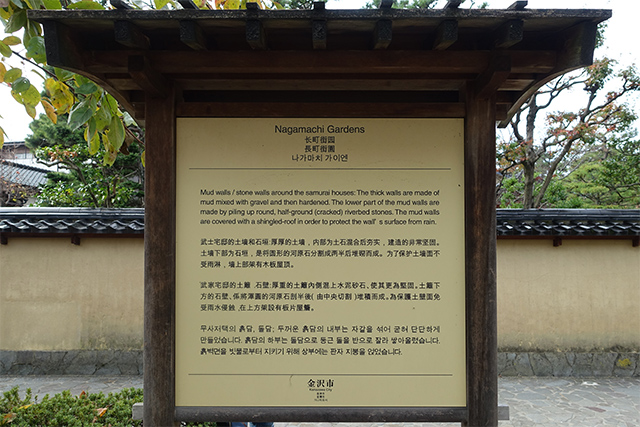
At the end of the road, we reach the Nagamachi Gardens. The sign explains how the mud walls throughout the are were built.
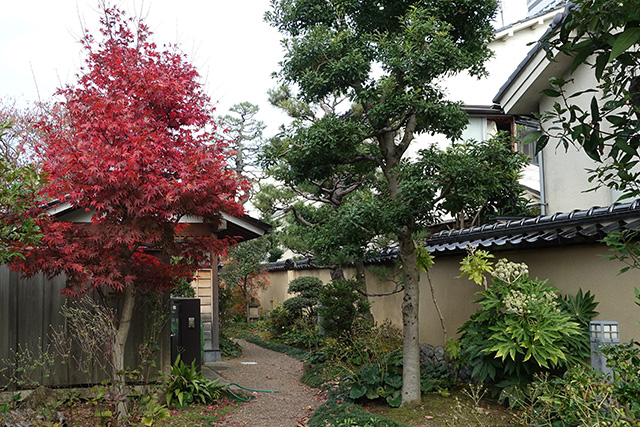
The gardens look to be a stylish garden surrounding a toilet block.
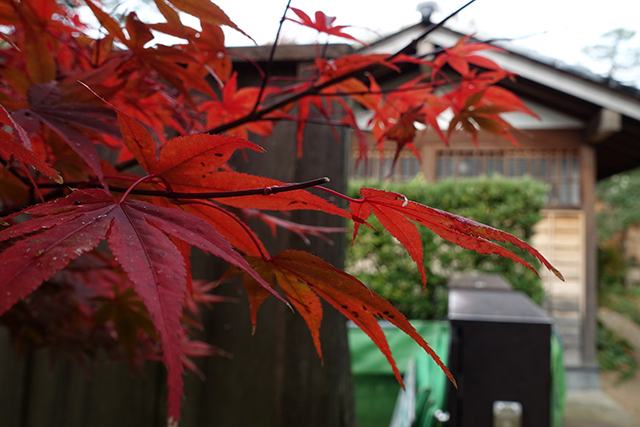
There’s maple tree with brilliantly red leaves – my favourite!
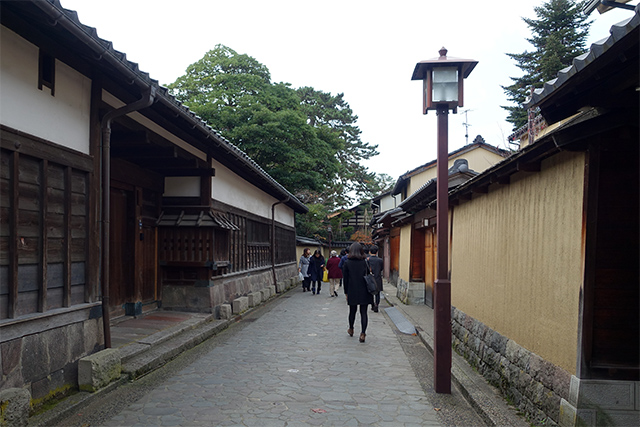
You feel as though you’re walking in an bygone era in the district.
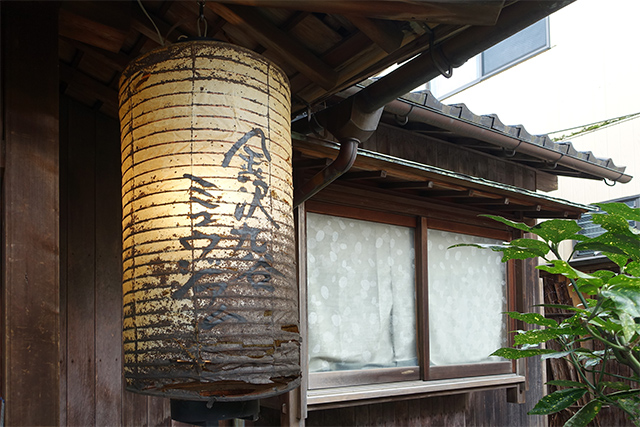
One of the open buildings exhibits ceramics. There’s a rather well-loved lantern hanging outside.
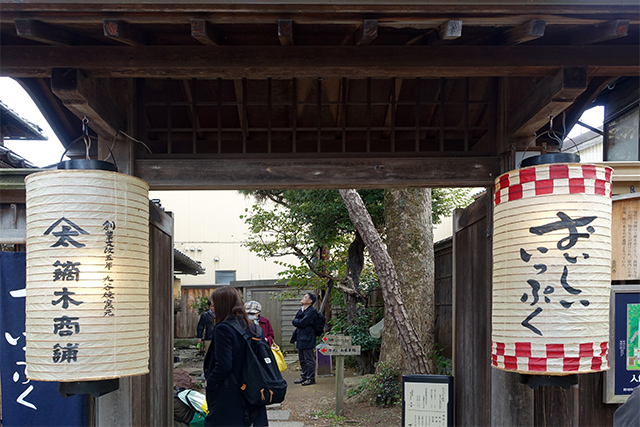
And another two in better condition hanging by the main gate.
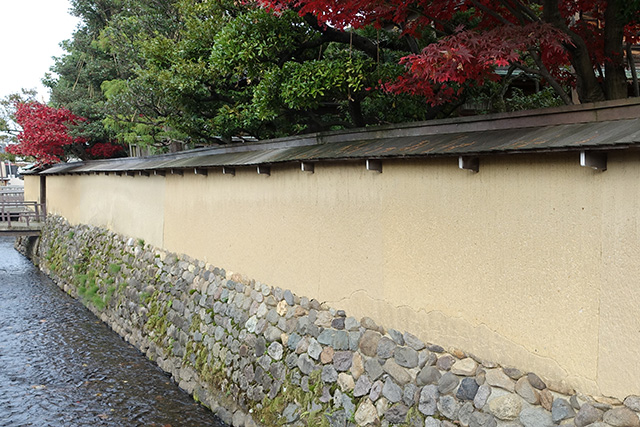
At the other end of the narrow street we reach a river with more brilliant red maple leaves.
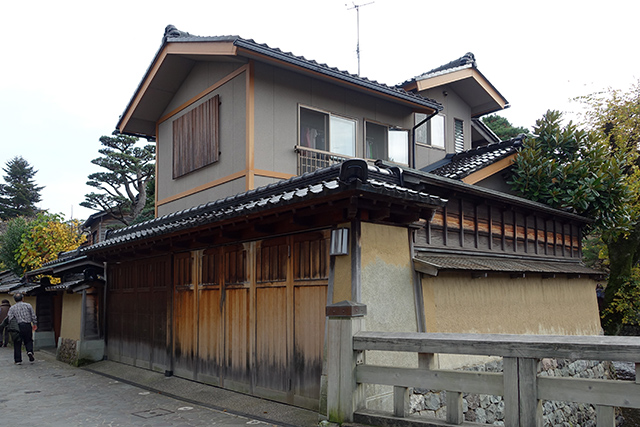 Some houses look to be recent constructions in the style of the old buildings.
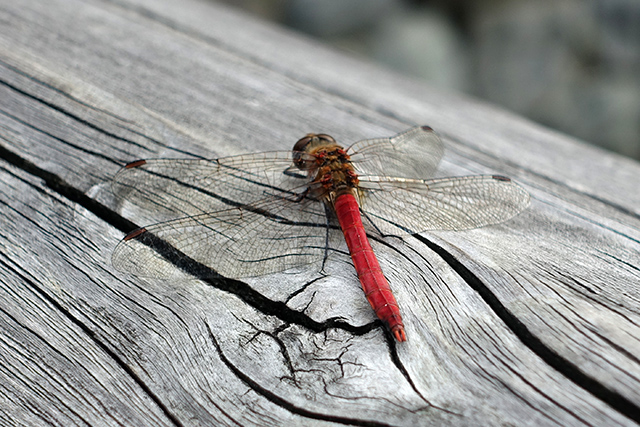
There are quite a few dragonflies buzzing around.
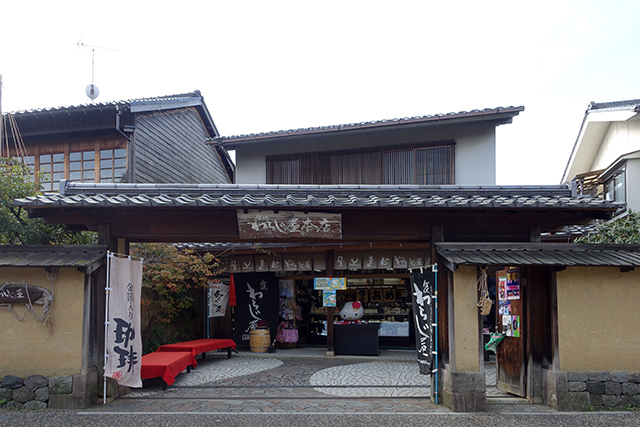
A souvenir shop sold all sorts of Hello Kitty merchandise. Rilakkuma isn’t so popular in Kanazawa.
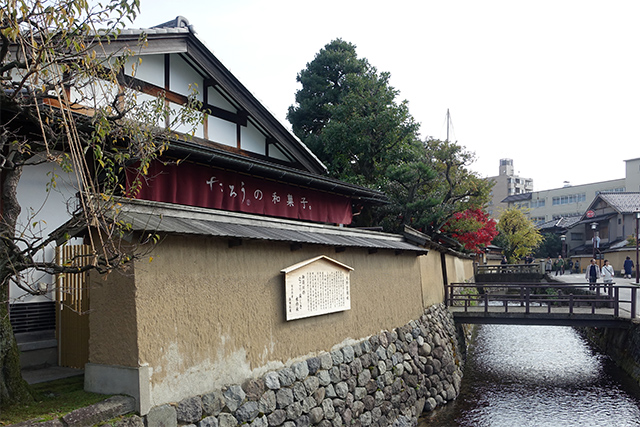
This view faces the south of the district where you can see a school in the distance.
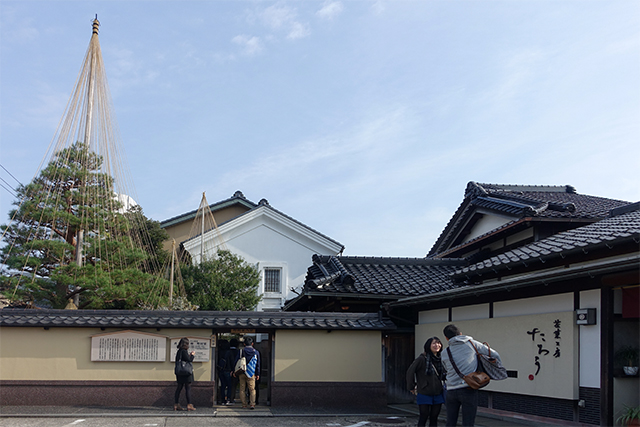
One of the famous buildings in the district is Nomura-ke, a restored residence of a high ranked samurai family who went broke when Japan’s feudal era came to and end.
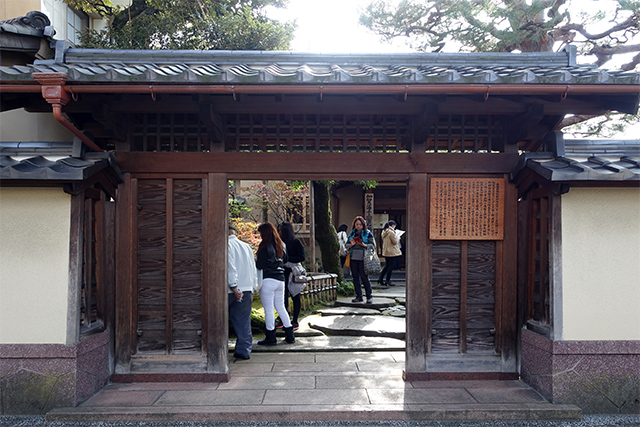
There’s a small beautiful garden inside, but we opt out of paying the admission fee to see the garden.
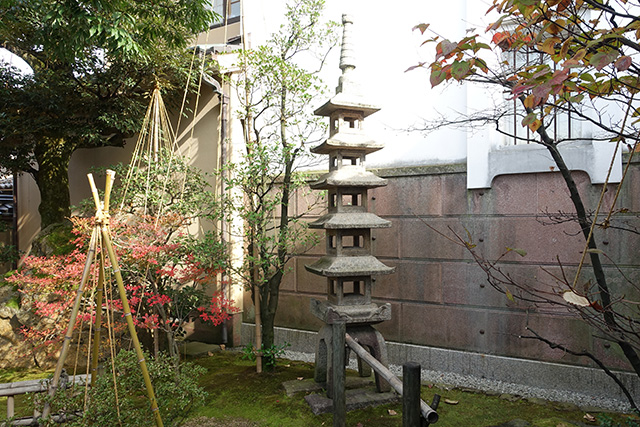
Instead, we have a quick look at the tiny garden outside with its stone sculptures…
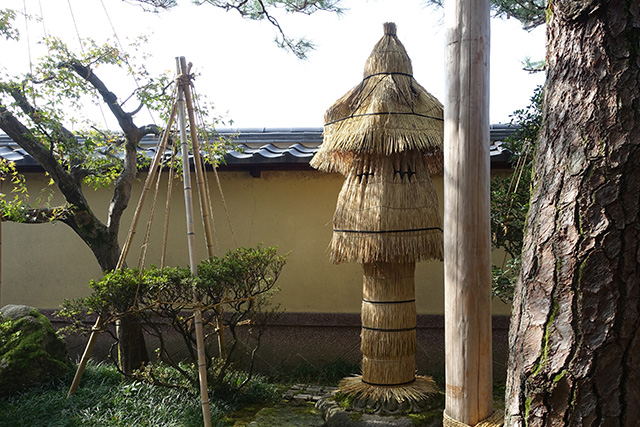
And straw sculptures too!
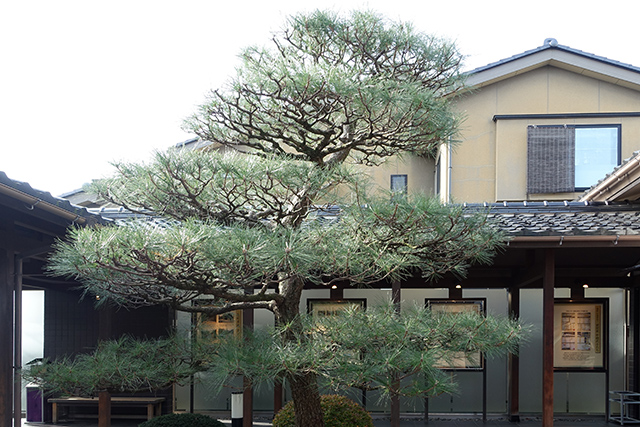
At another building for an art exhibit, we see this picturesque tree in its courtyard.
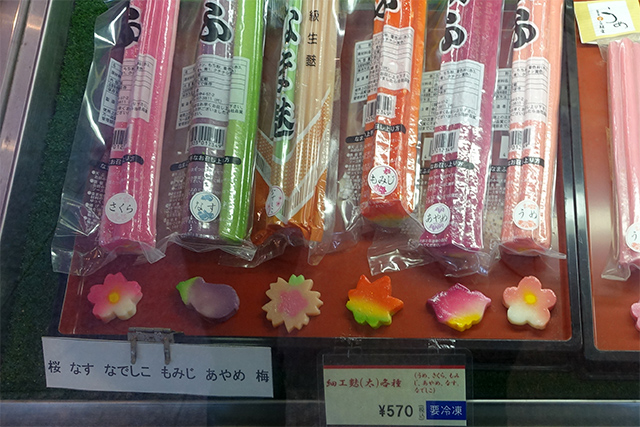
At a confectionery store opposite Nomura-ke, we see these colourful sticks being sold. Each slice from the stick reveals a perfectly blossom or leaf.
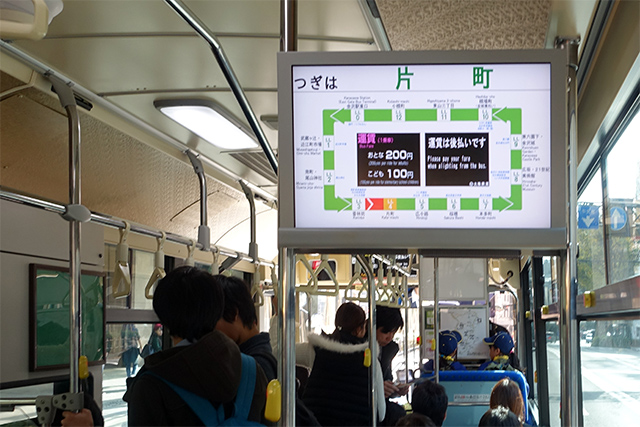
…and we’re back on the bus to Kenrokuen.
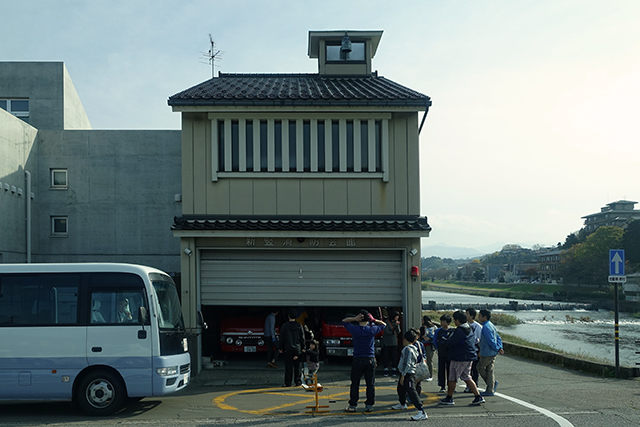
On the way, we pass by a fire station giving a demonstration to some school kids.
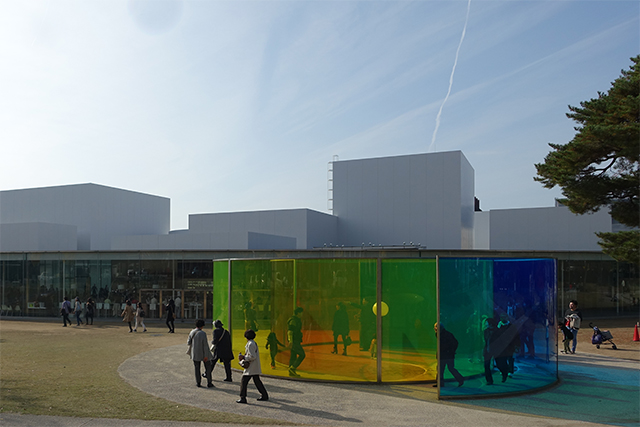
We get off at the stop for the 21st Century Museum of Contemporary Art. While I love contemporary art, viewing art isn’t as much of a priority when travelling overseas anymore. We alight from the stop before Kenrokuen so that we can enter via the Mayumizaka entrance and exit via the Katsurazaka entrance, meaning we don’t have to double back. Efficiency!
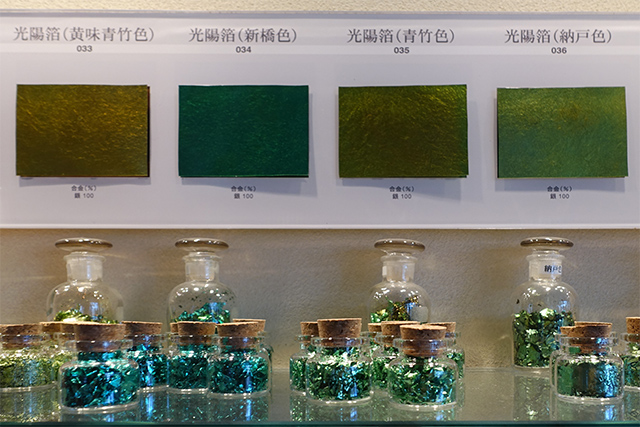
Opposite the entrance to Kenrokuen, a shop sells all sorts of gold leaf products. Indeed, even a Y1,080 gold leaf soft serve. The store also has a rainbow display of silver leaf that’s changed colour due to chemical patination (above).
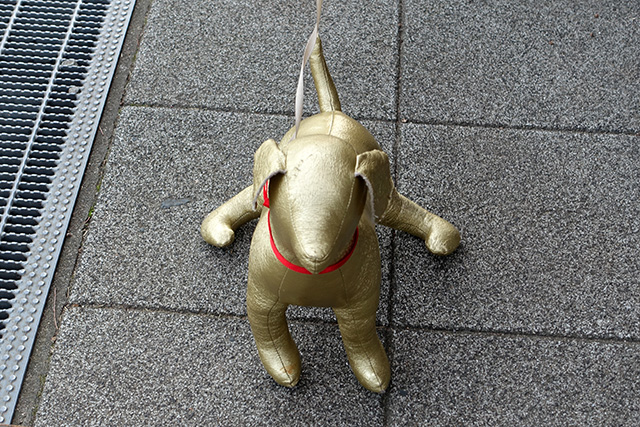
Outside the store, there’s a gold dog plush toy welcoming visitors.
Kenroku-en
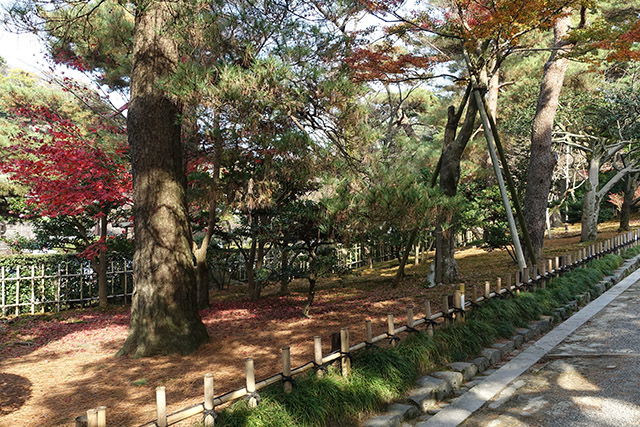
Kenroku-en is one of the Three Great Gardens of Japan. The other two Great Gardens are Kairaku-en (in Mito, Ibaraki) and Koraku-en (in Okayama, Okayama). We visit Koraku-en later on our trip. Kenroku-en translates to Six Attributes Garden, being built around three sets of contrasting garden elements: spaciousness contrasts with seclusion, artifice contrasts with antiquity, and watercourses contrasts with panoramas.
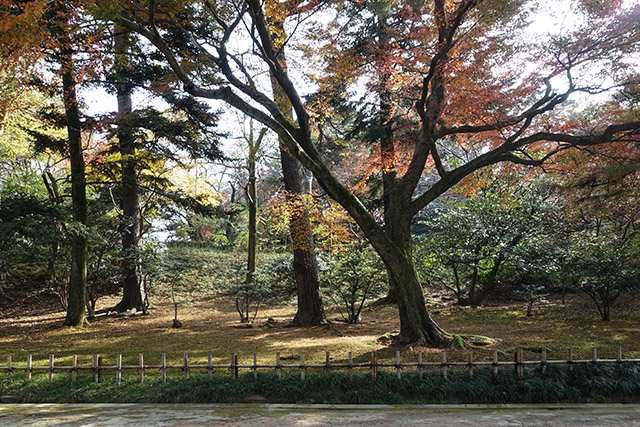
Late November is the perfect time to catch the autumnal foliage, and it could not be better than in a well-manicured garden.
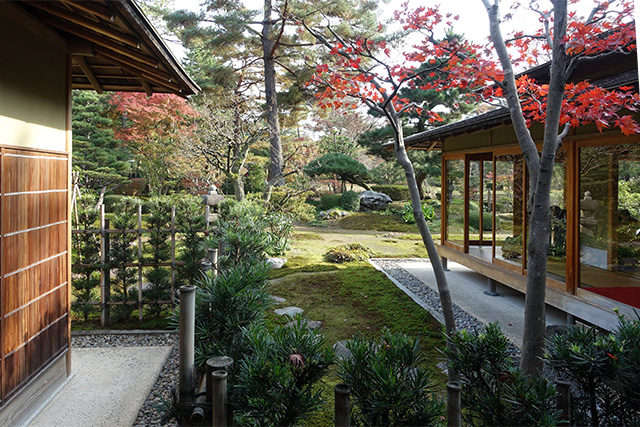
We make our way into Shigure-tei, a reconstructed rest house, where people are waiting for their tea ceremony to begin.
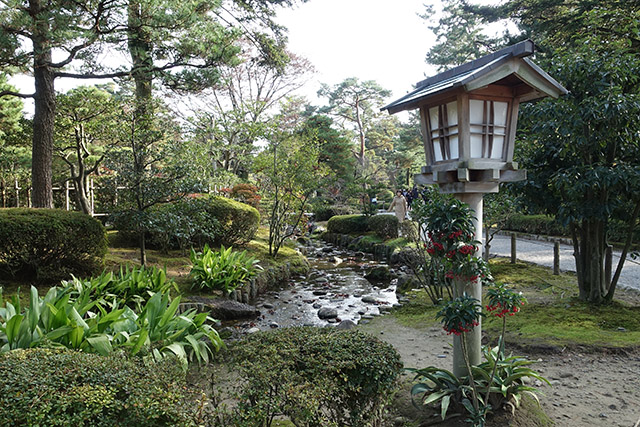
The Japanese think of everything – even the lights fit in with the design of the garden.
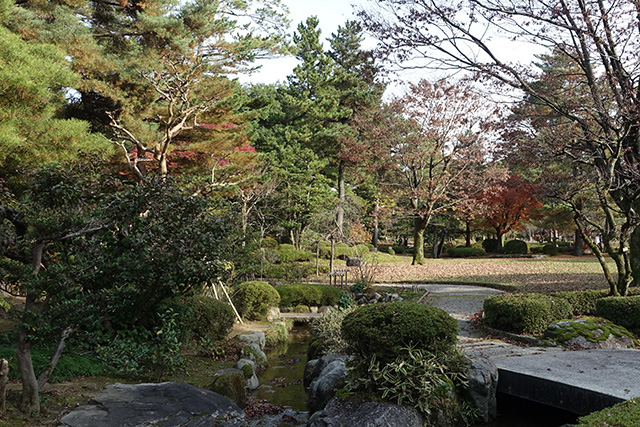
There are many winding paths and streams in the garden…
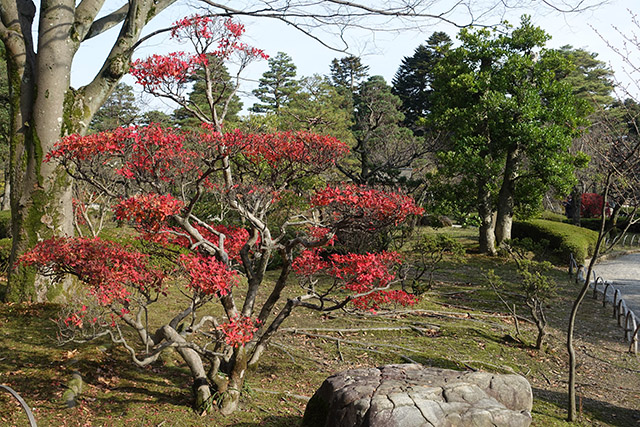
…and beautiful red trees that aren’t maples.
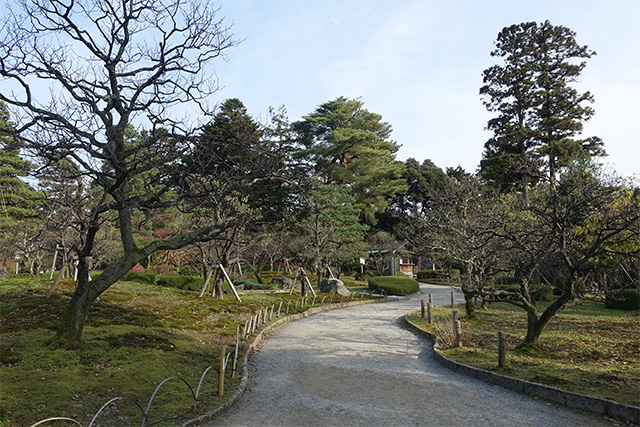
The plum grove is just behind the tea house. I’m sure it’s a sight to behold in spring and summer.
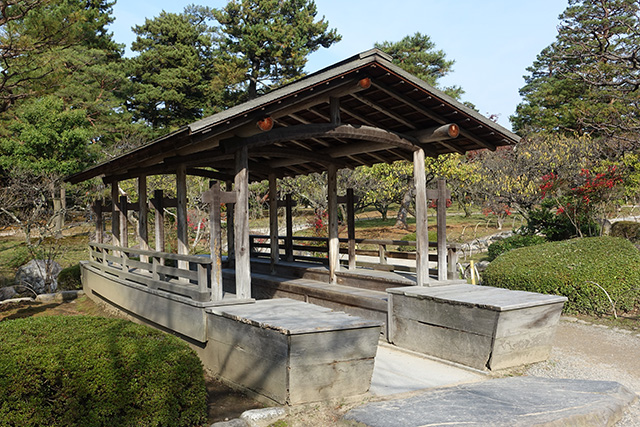
Situated in the plum grove is the Funa no ochin. This is a reconstruction after it was torn down in the early Meiji Period.
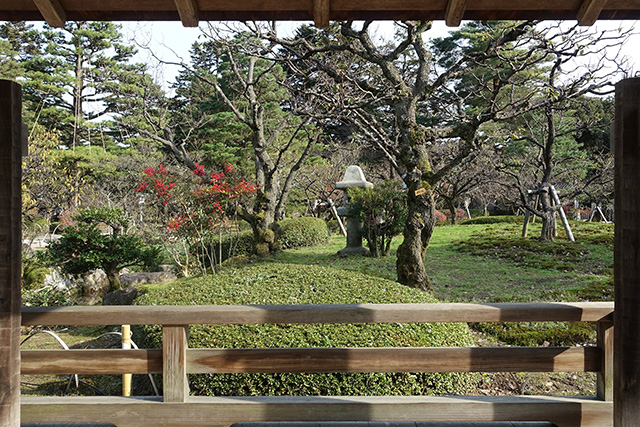
The Funa no ochin frames a beautiful view of the plum grove.
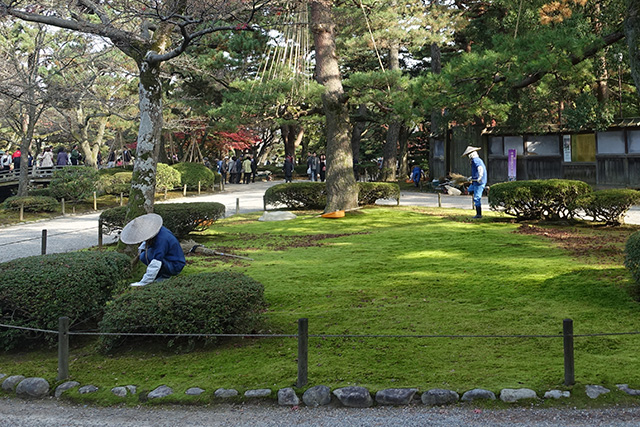
Midway to the eastern side of the park, we see workers tending to the garden on a national holiday. There’s grid drawn with string over the entire area – either to assist with maintaining the shape of the shrubs or to relieve the vegetation of the heavy weight of the impending snow.
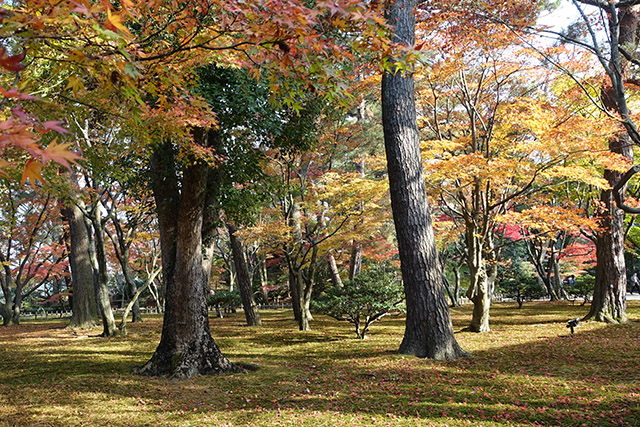
Yamazakiyama Hill is in the eastern corner of the park. It’s main attraction is maples.
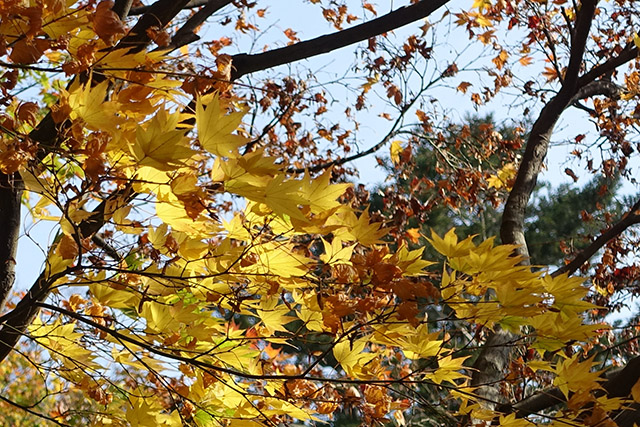
We get some beautiful yellow ones against the sunlight.
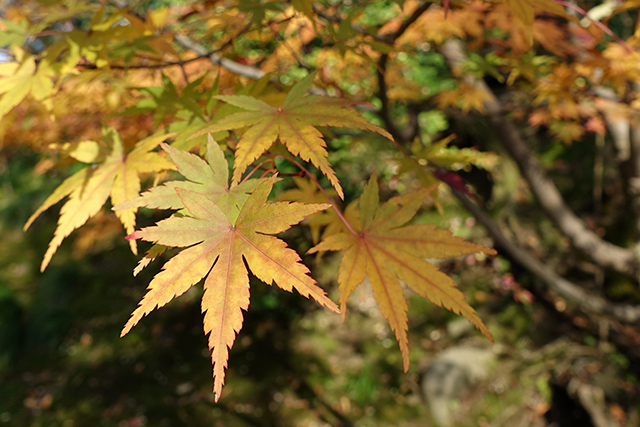
There’s some that are still a little green.
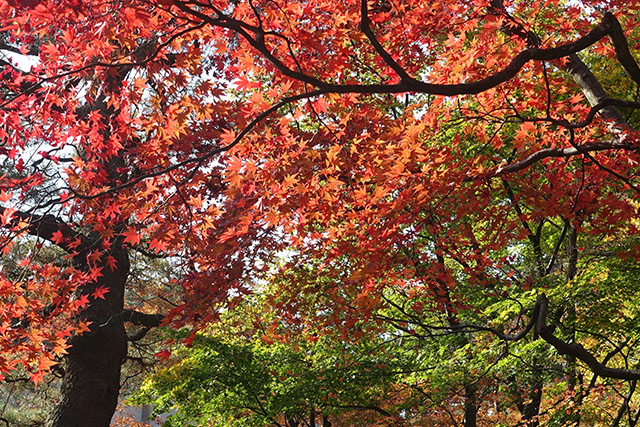
And then, entire trees turned brilliantly red – how magnificent!
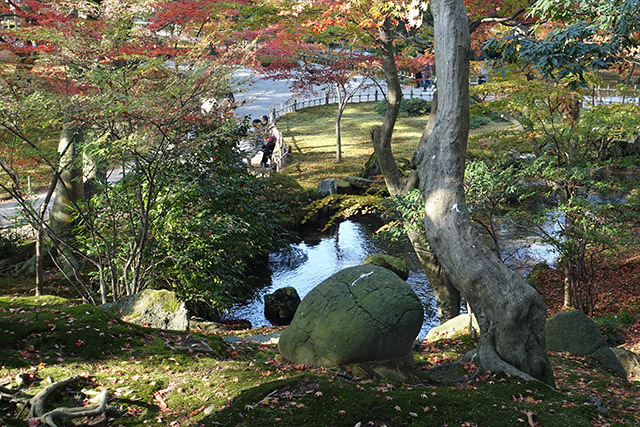
Ascending Yamazakiyama Hill, we get a wider view of the garden.
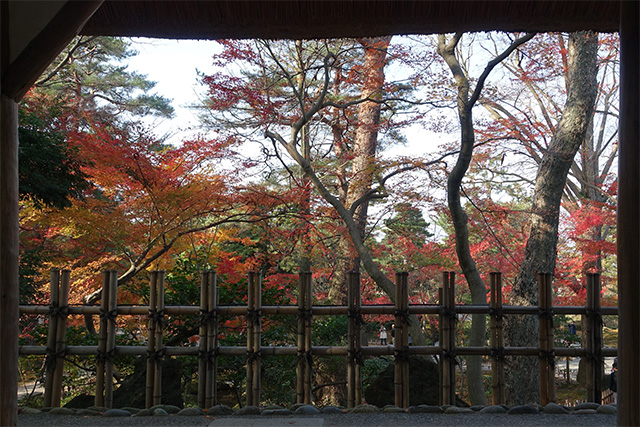
At the top of the hill is a sheltered space to enjoy the view.
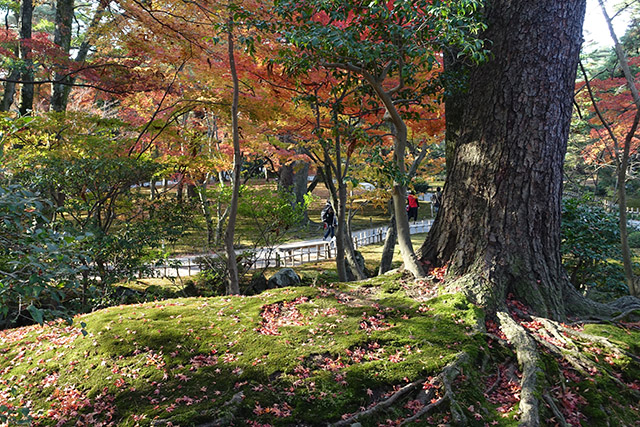
Maple leaves cover the moss carpeted ground.
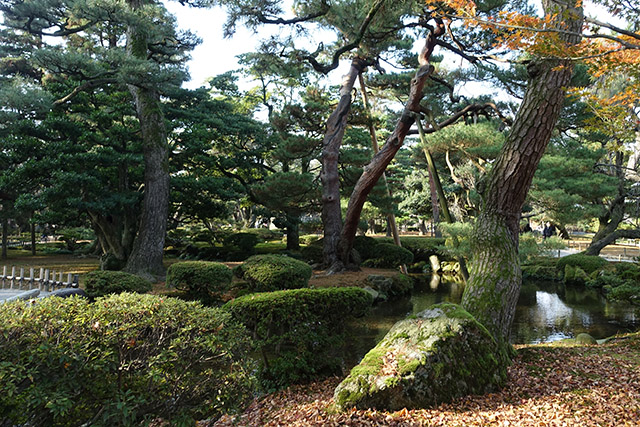
And just before you think I only took photos of maple trees, we spot some evergreens….
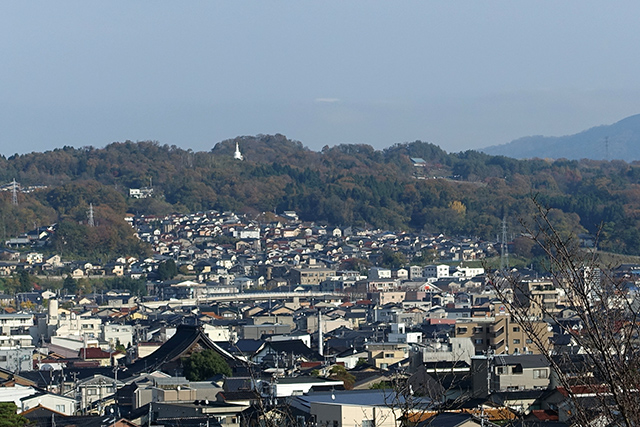
Along to north-eastern side of the park, there’s expansive views of the Kanazawa skyline.
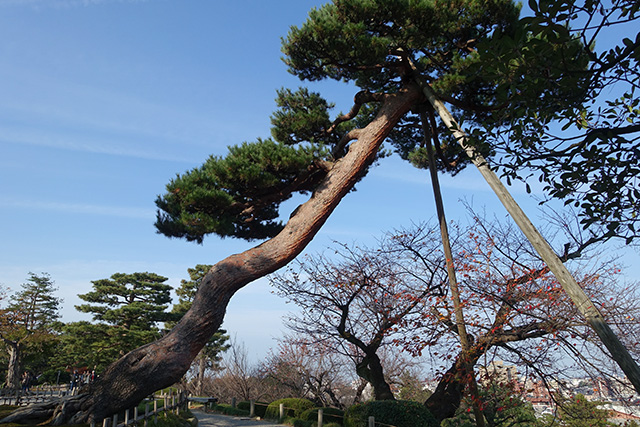
Further north, we see a tree leaning precariously over the sidewalk.
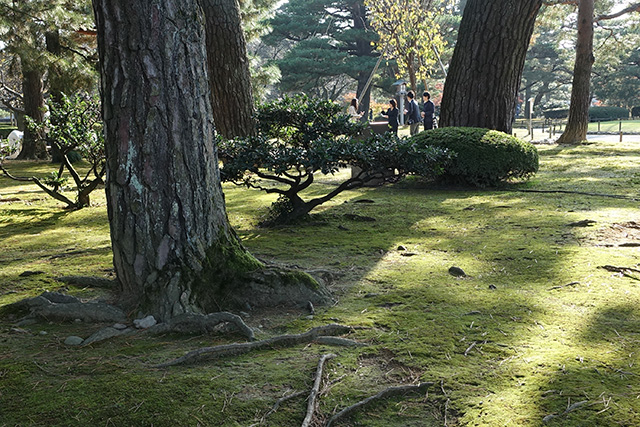
A moss carpet seems so much less maintenance than grass!
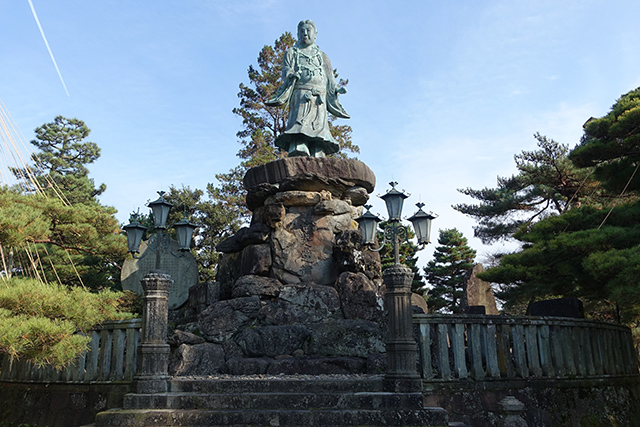
Having seen almost all the edges of the park, we circle back towards Kamsumigaike Pond where we meet the statute of Yamato Takeru, the 12th Emperor of Japan.
Gardeners erect yukitsuri on the Karasaki Pine from November 1. The Karasaki Pine (left of the path) is a pine tree grown from a single seed from Karasaki, near Lake Biwa.
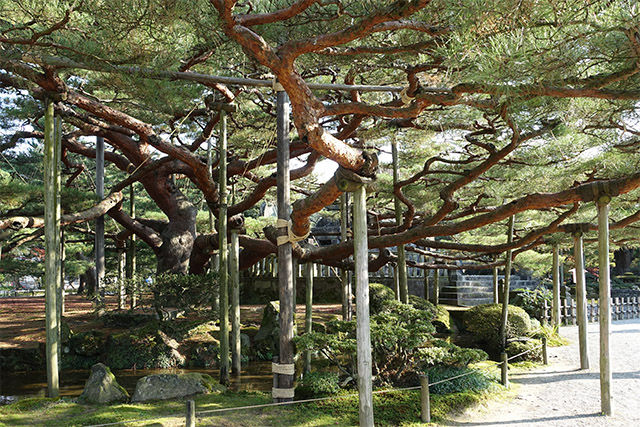
Yukitsuri are ropes attached in a conical array (kōtō) that protects the trees from damage caused by heavy snowfall by supporting the trees branches in their desired arrangements.
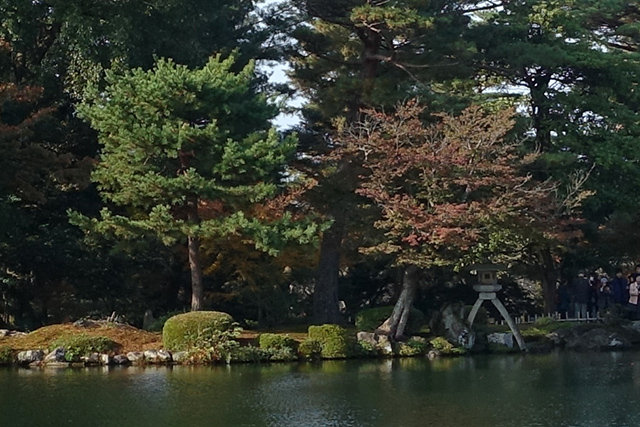
Here, we see the Kotoji-toro lantern, a stone lantern with two legs said to resemble the bridge on a kōtō, and emblematic of Kenroku-en and Kanazawa.
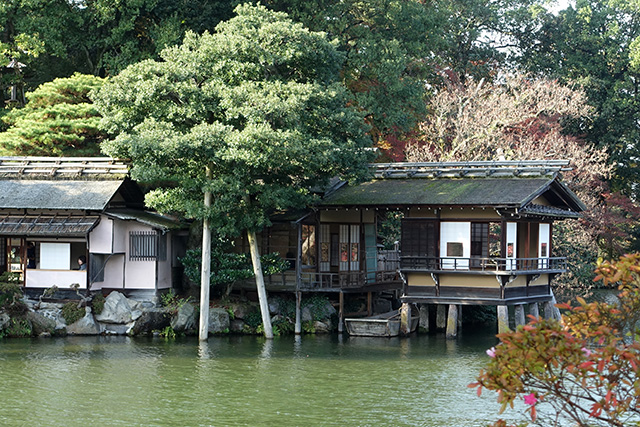
Overlooking the lake is Uchihashi-tei, where you can enjoy your tea and the view at once.
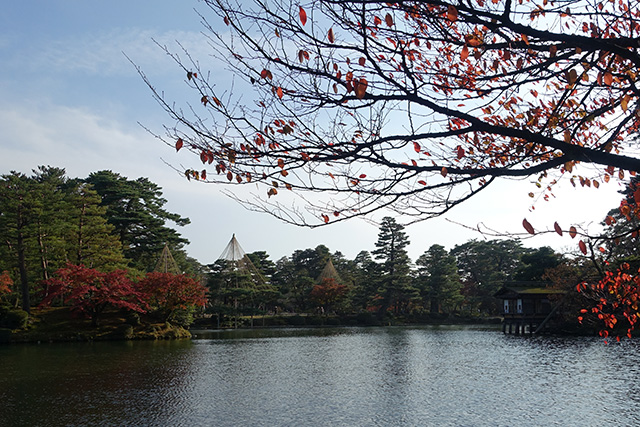
The Uchihashi-tei faces onto a tortoise-shaped island in the centre of Kasumigaike Pond.
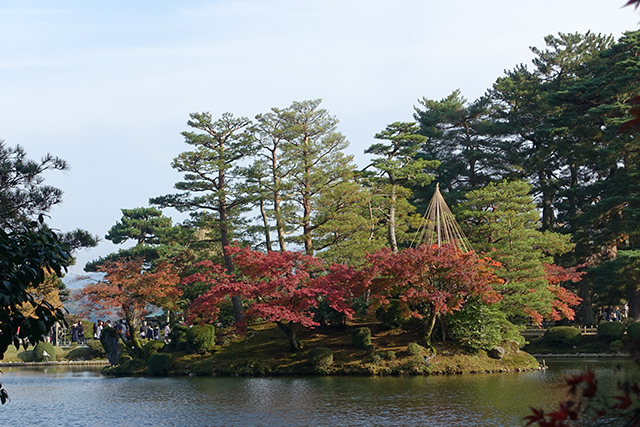
The tortoise shell shaped island said to represent perpetual youth and longevity.
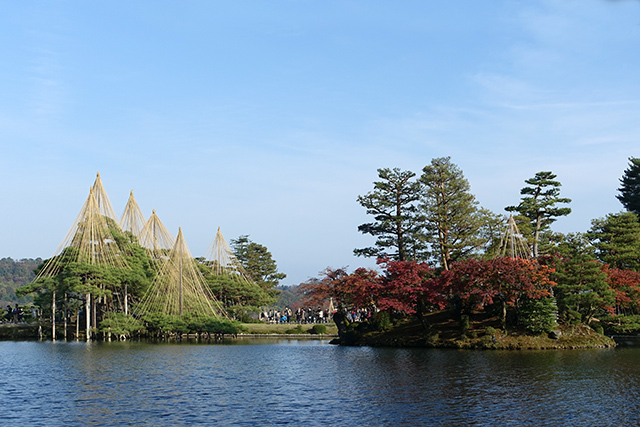
Walking around the pond, you get a beautiful view of the Karasaki Pine next to the island.
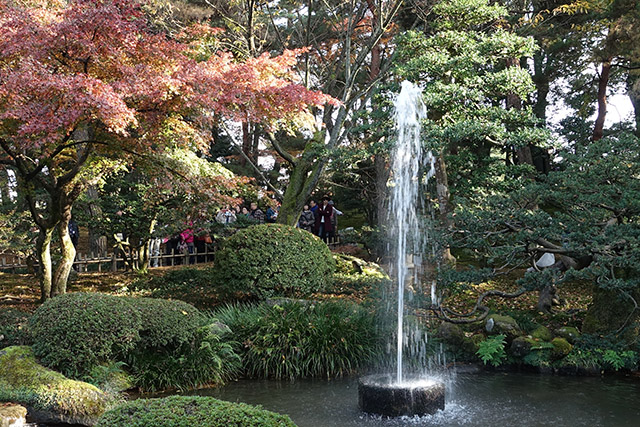
And finally, to wrap up one of the most beautiful gardens we’d seen to date, this fountain is the oldest in Japan operating by natural water pressure.
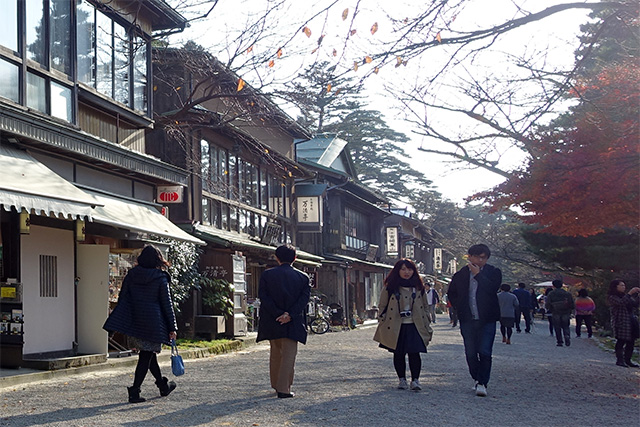
Outside the Katsurazaka entrance is Chamisedori.
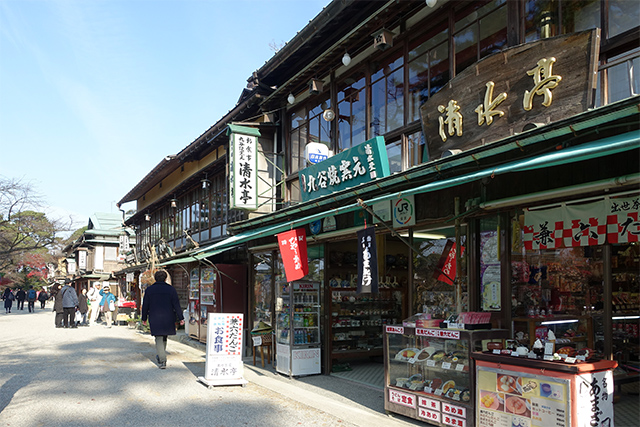
A number of restaurants and souvenir shops line the street.
Kanazawa Castle
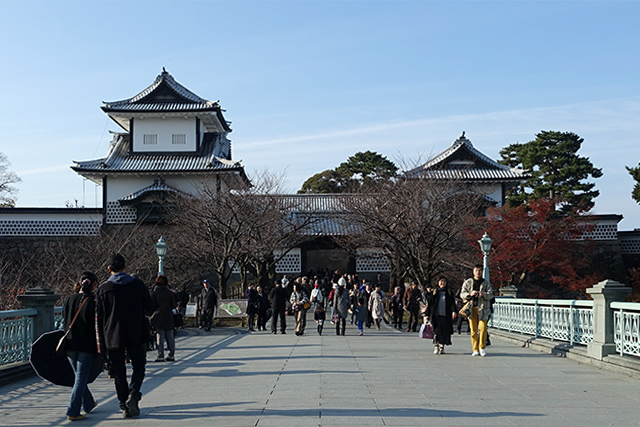
The Ishikawa-mon Entrance to Kanazawa Castle is directly opposite the Katsurazaka entrance to Kenroku-en. Kenroku-en once formed the castle’s private outer garden. The Ishikawabashi Bridge spans over the busy Ohoridori Ave below and connects the two sights.
The castle’s main keep was destroyed by fire and never rebuilt, and what was rebuilt was burnt down several more times. As such, only two storehouses and the Ishikawa-mon Gate now remain of the original buildings. Many of the castle’s buildings are being reconstructed and the completed sections charge admission fees, although entrance to Kanazawa Castle Park is free.
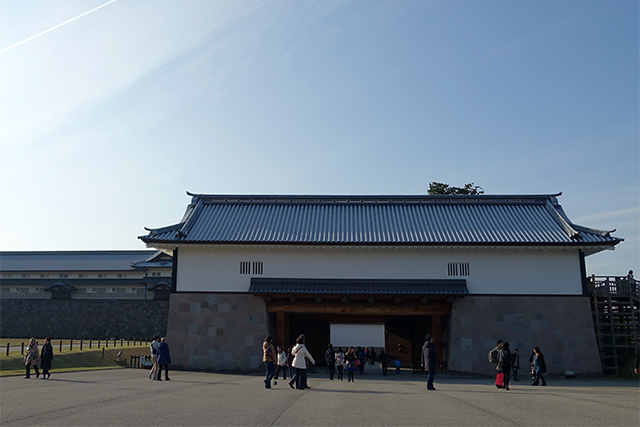
The castle’s former main entrance gate, the Kahoku-mon, was completed in 2010. Going through the gate, you find another gate at right angles to it, a masugata.
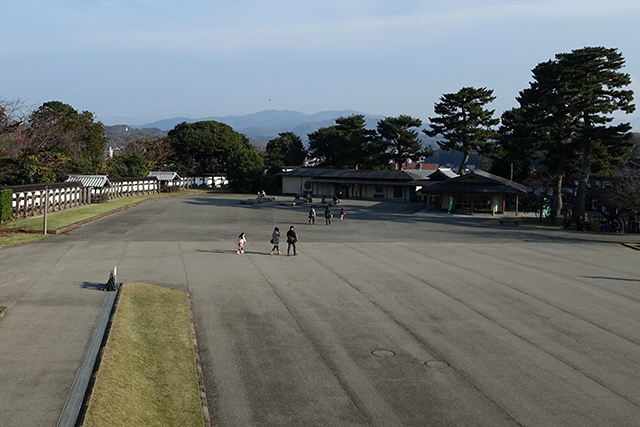
Looking down from the platform for entering the second floor of the Kahoku-mon, you can see the vast grounds of the castle.
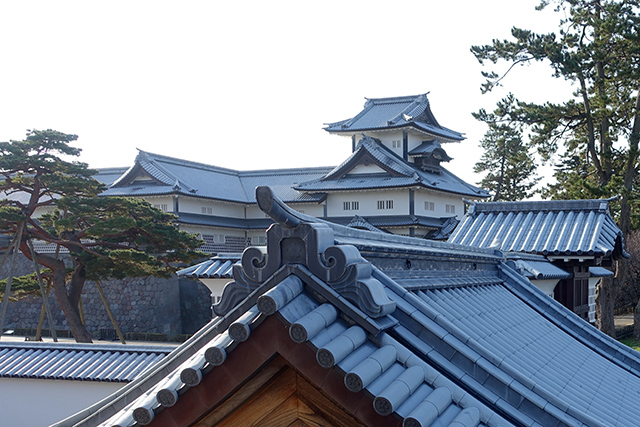
Looking towards the other side, we see the reconstructed Gojukken Nagaya storehouse.
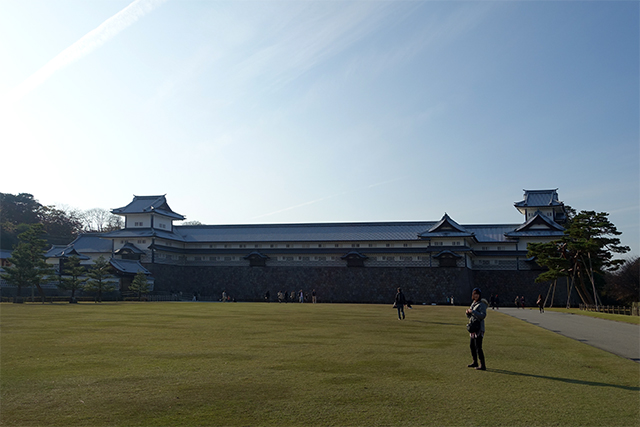
…and coming back down to the ground, we see the vast expanse of the storehouse.
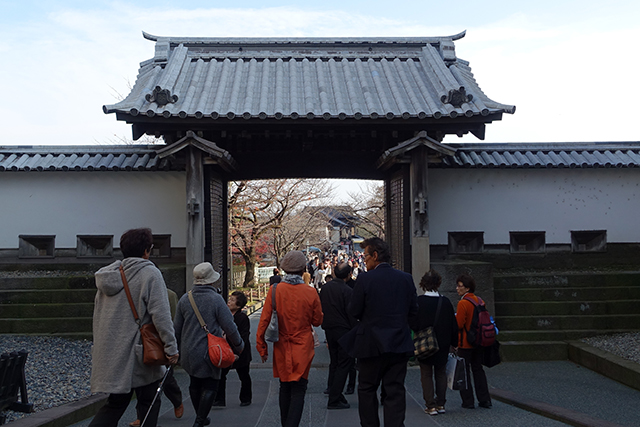
We don’t spend too long at Kanazawa Castle as we want to visit a geisha district.
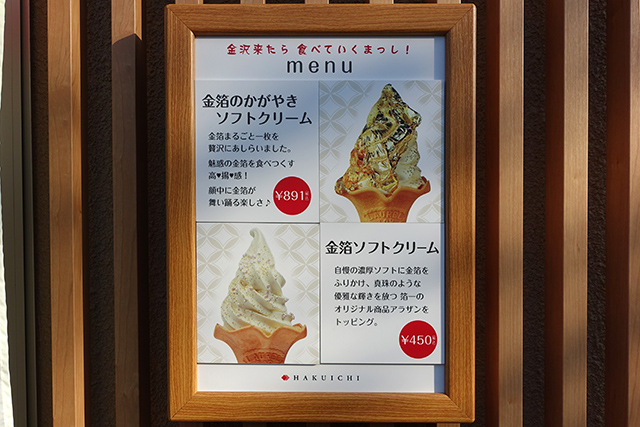
Walking down towards Ohoridori, we spot a more ‘reasonably’ priced gold leaf soft serve. And, if you’re desperate to get in on the fun and can’t afford to pay Y891 for a soft serve cone, you can get one with gold dust for Y450 instead.
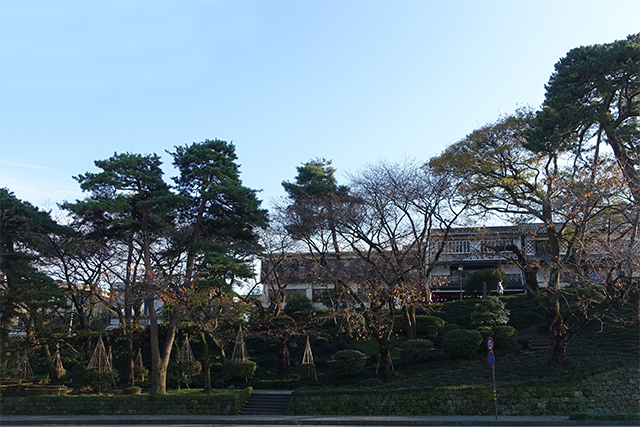
We enjoy the view across the street as we wait for the bus.
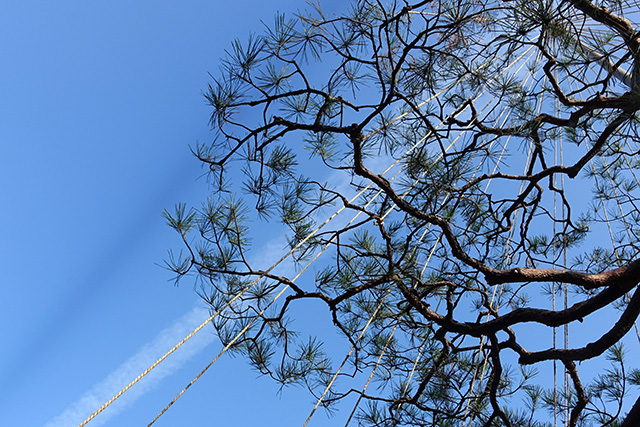
The view above is quite picturesque too!
Higashi Chaya District
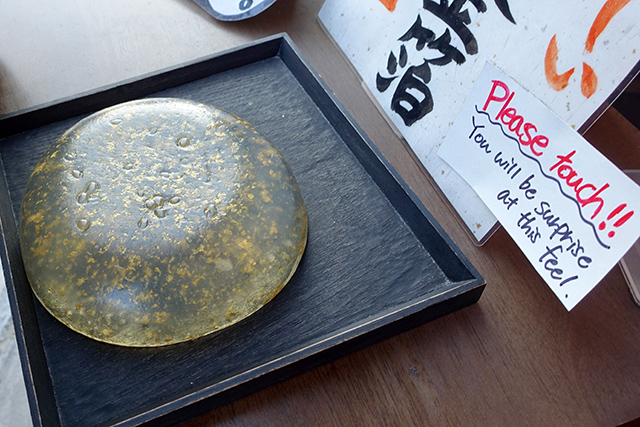
On our way to the Higashi Chaya district we pass a shop selling gold leaf soaps. Supposedly, the gold leaf and the soap does amazing things for your skin.
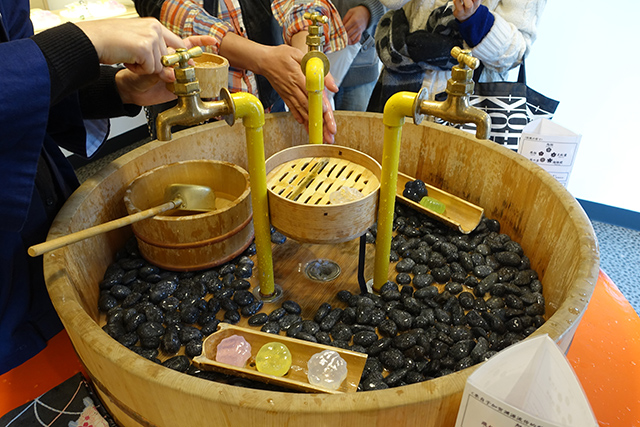
There’s a basin in the middle of the store for you to try out their soaps. I begin to regret washing my hands, though, as I rinse off under the icy cold water coming from the taps. But to my surprise, the shop assistant pours warm water from the bucket (on the left) after washing your hands. Japanese customer service is unfailingly thoughtful.
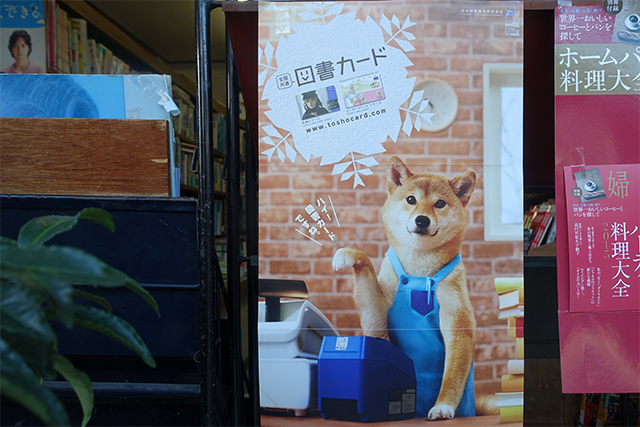
A bookstore, has a cute Japanese akita promoting their loyalty card.
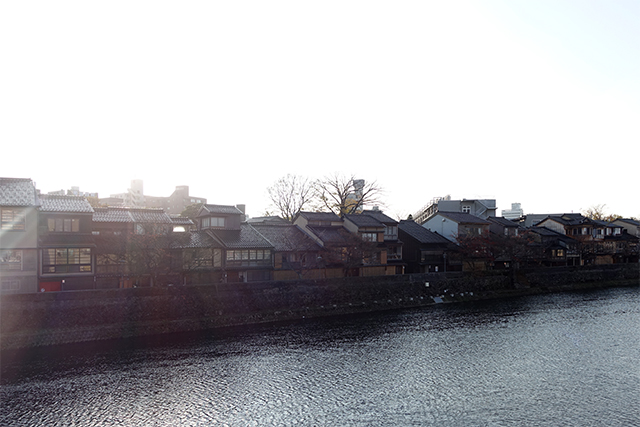
The sun’s about the set as we cross the bridge towards the Higashi Chaya District.
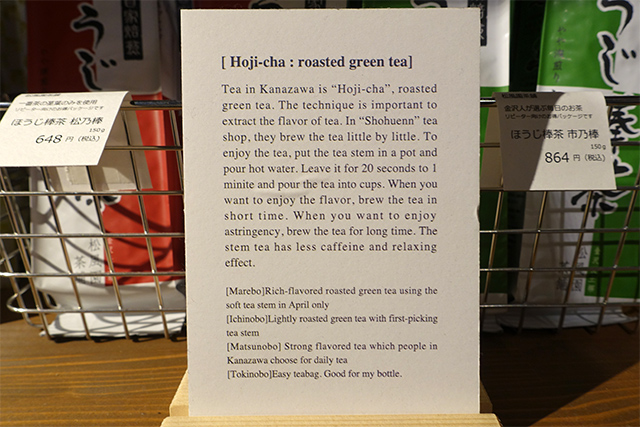
But before then, we diverge into another souvenir shop that explains to us that hōjicha is the main tea consumed by people in Kanazawa (as opposed to sencha).
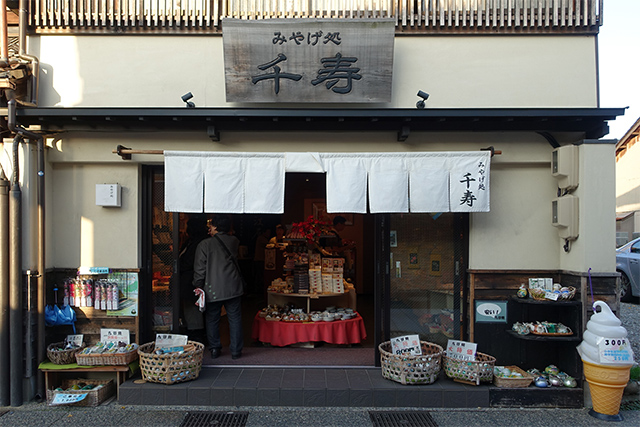
On the street leading into the Higashi Chaya district, we stop at this souvenir shop to purchase some black sesame mochi – we only ever purchase from shops with samples.
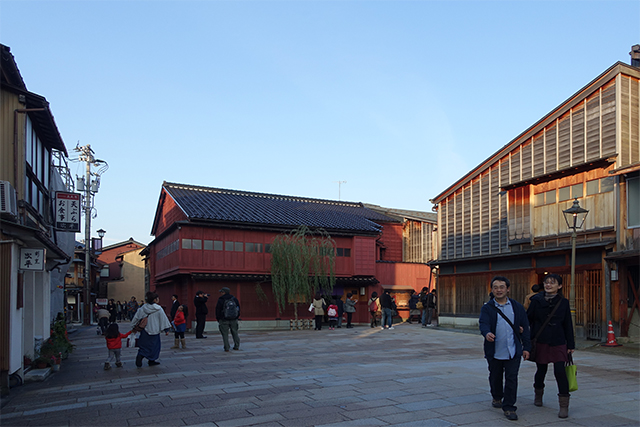
This is the central square of the district.
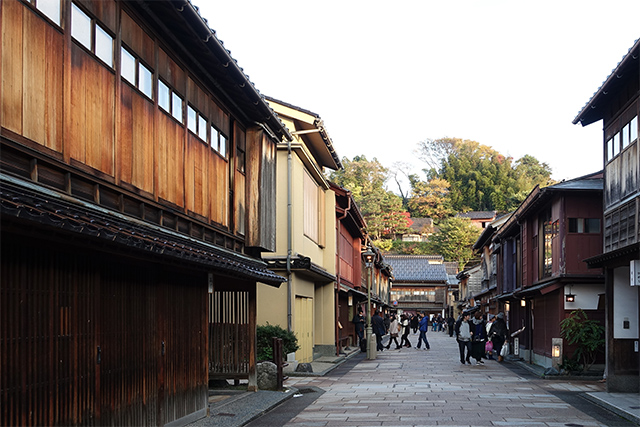
Many chaya houses line the streets of the district, although many have been convereted into restaurants and souvenir shops.
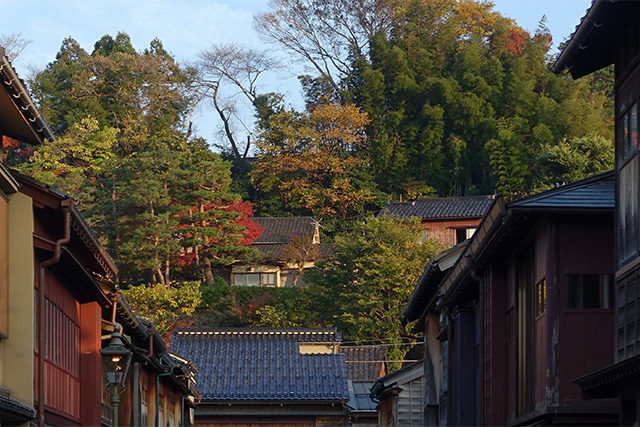
Sunset casts a beautiful light on autumnal foliage.
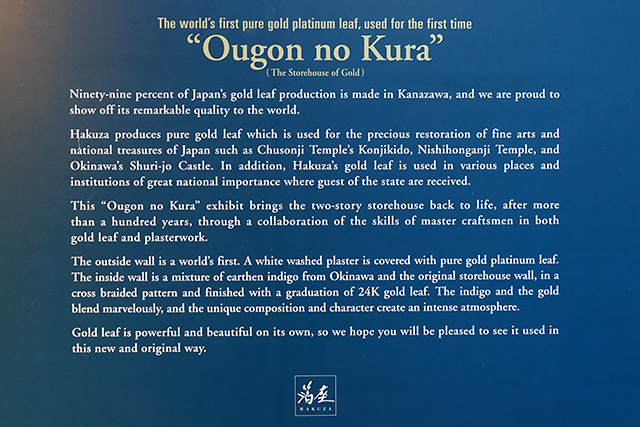
We enter Hakuza. Hazkua is world renowed for the production of gold leaf, and in their store is a a storehouse turned tea house covered with gold leaf both internally and externally.
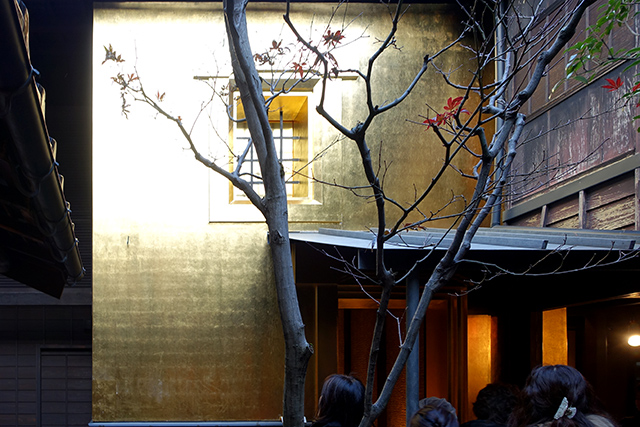
The exterior is ‘white washed plaster covered with pure gold platinum leaf’….
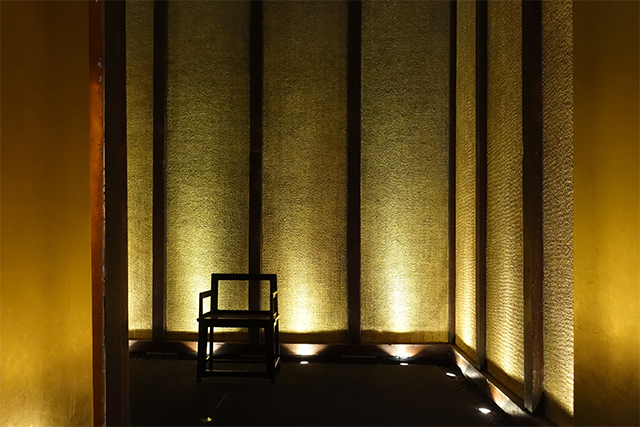
…while the interior is ‘a mixture of earthen indigo from Okinawa and the original storehouse wall, in cross braided pattern and finished with a graduation of 24K gold leaf’. It’s a sight to behold! It’s also the only part of the store permitting photography. They also sell matcha roll speckled in gold leaf!
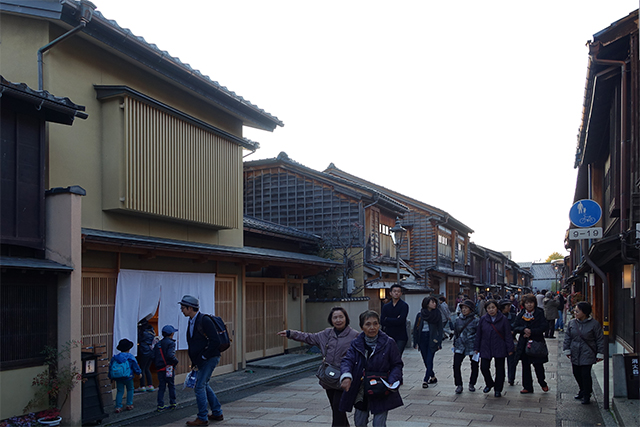
The district is getting dark with the sun setting around 4pm.
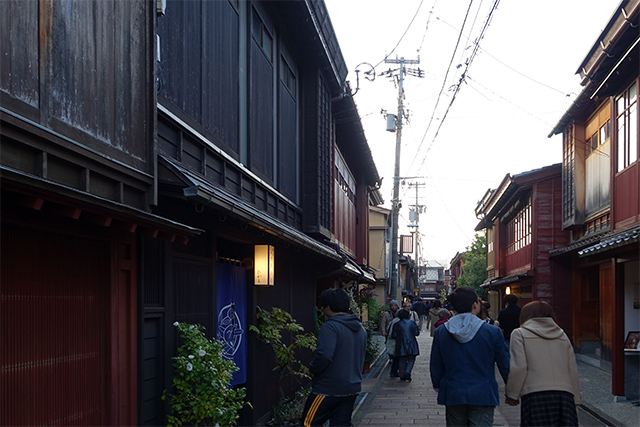
The area has a certain charm that’s unlike the more spacious geisha districts in Kyōto.
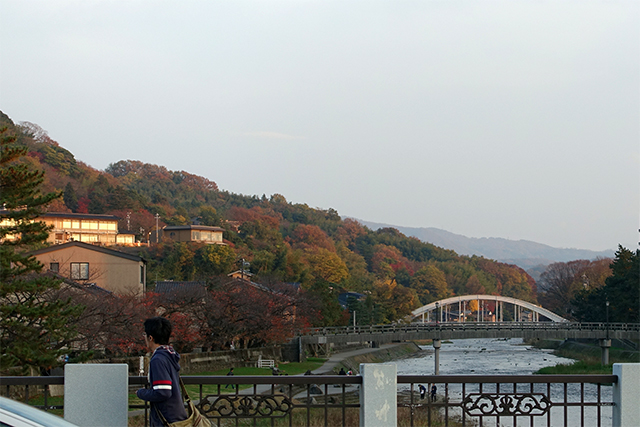
With that, we’re back on the main street.
Kanazawa Station
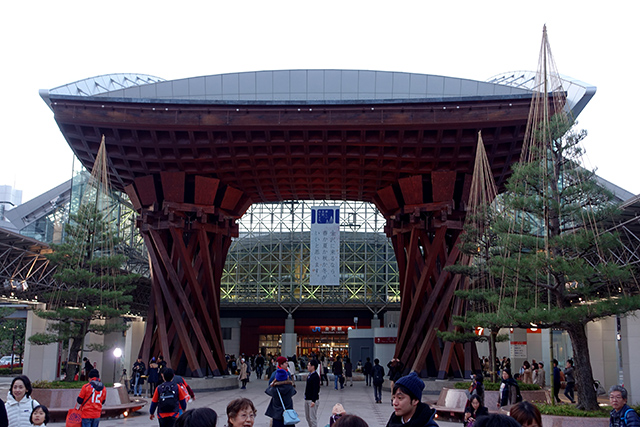
This is the Tsuzumi-mon Gate at the east entrance of JR Kanazawa Station. The gate symbolises the traditional Japanese hand drums by the same. Behind, is the glass Motenashi (‘Welcome’) Dome that looks like a huge umbrella.
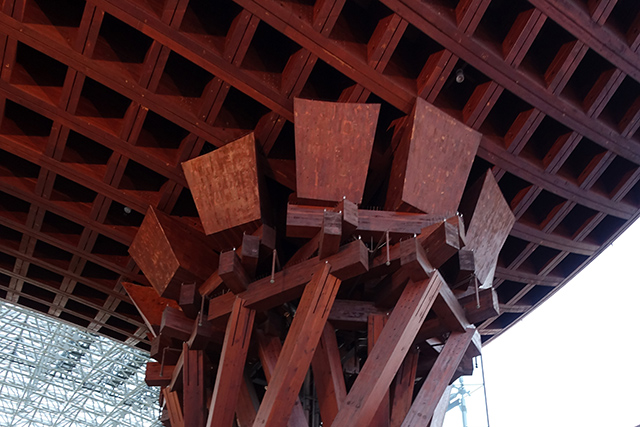
It’s a magnificently imposing wooden structure.
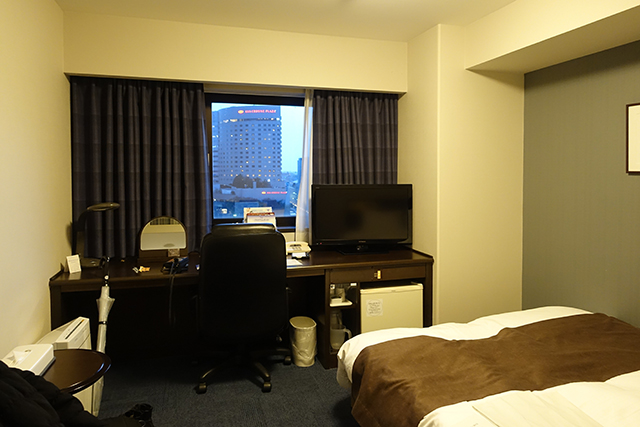
After the early start and the packed day exploring Kanazawa, we head back to the hotel for a rest. This is by huge by Japanese standards, and even beats the biggest hotel room I’ve stayed at in Australia (for 150% of the price, too!). It’s wide enough for two Queen sized beds, and then some. Oh, and big TV!
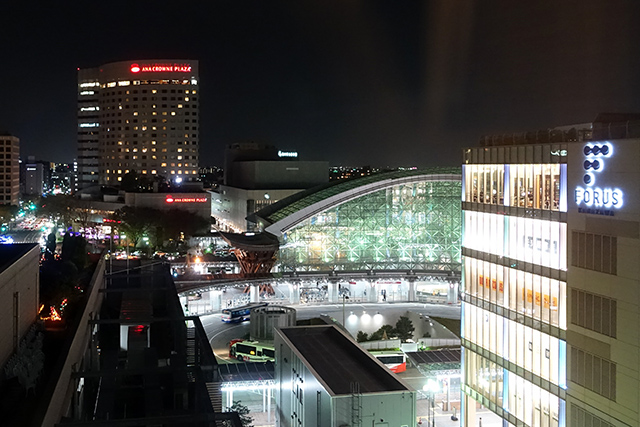
Our hotel is a 3 minute walk to the station, which we can see from our window.
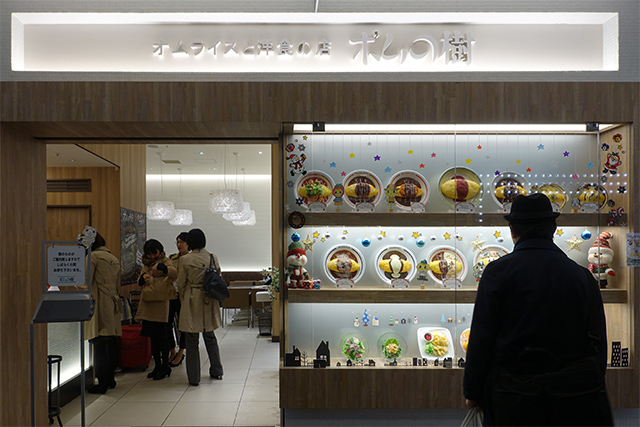
After a short rest back we to Forus, the shopping mall across the street, in search of dinner. In the spirit of trying something new, we eat at Pomme’s.
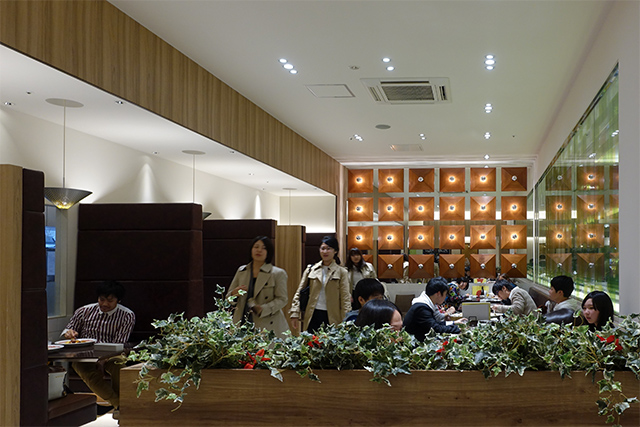
Pomme’s specialises in omurice, a staple that pops up in anime all the time, but not something we’ve ever actually eaten all our times in Japan.
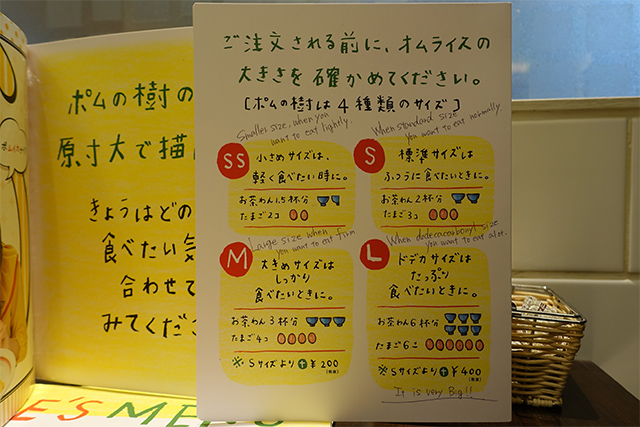
They’re quite used to English-speaking customers, with an English menu at the ready. This page explains what the sizes mean – SS (smaller size, when you want to eat lightly), S (standard size, when you want to eat normally), M (large size when you want to eat firm), L (dodecacarbonyl size, when you want to eat a lot). I’m not sure what they mean by dodecarcarbonyl size other than it being ‘very big’.
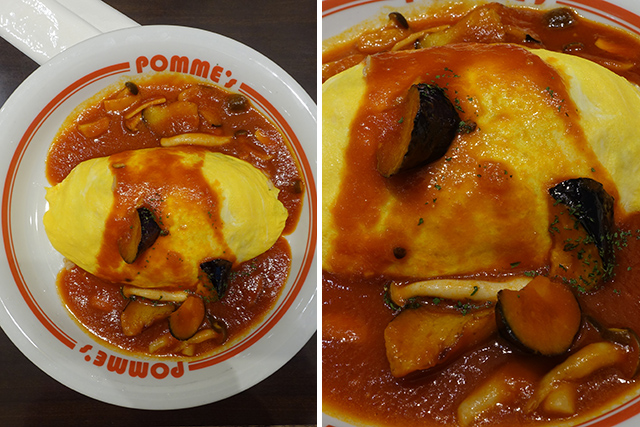
I order the tomato sauce with eggplant and mushroom with butter rice. I love tomato based dishes and this was no exception, and I’m always keen for a vegetable fix in Japan that isn’t cabbage.
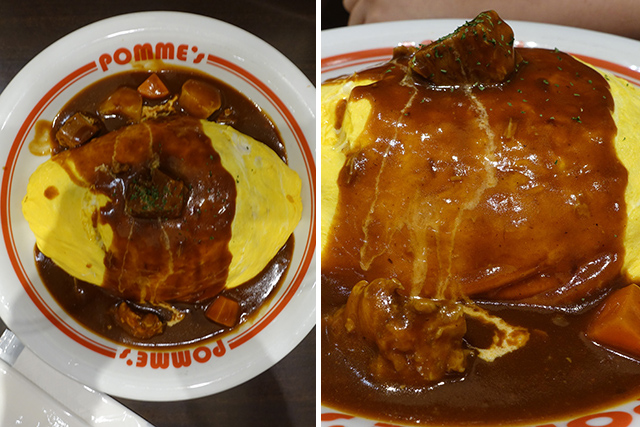
D tries the beef stew with ketchup rice. Whereas I loved the buttery flavour of the rice, he found it a bit weird, and the meat lover in him would’ve liked more hunks of beef.
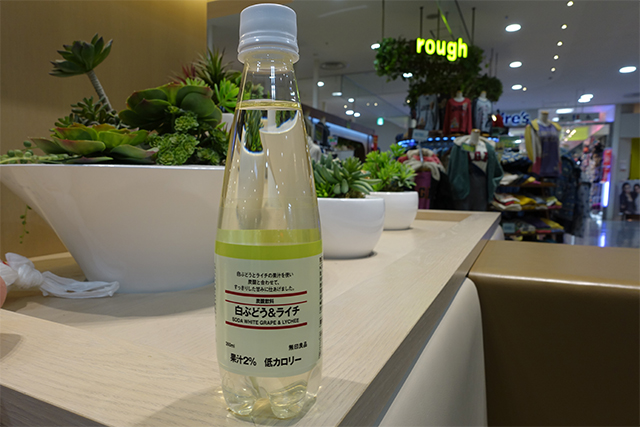
After dinner, we take a walk around the shopping mall and stop by Muji for a Soda White Grape & Lychee, a refreshingly fizzy drink to wash down the omurice.
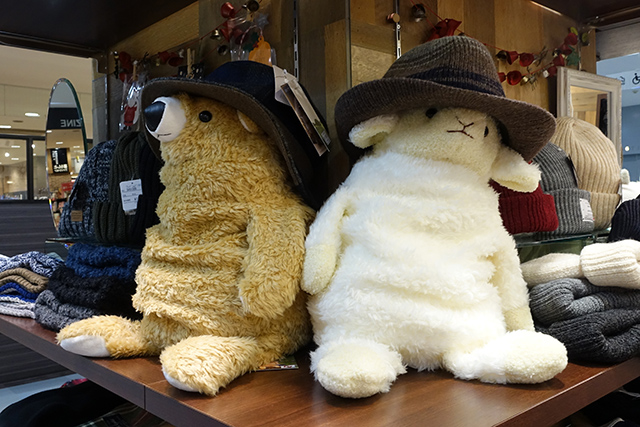
We spot some cute bear and sheep plush toys wearing hats.
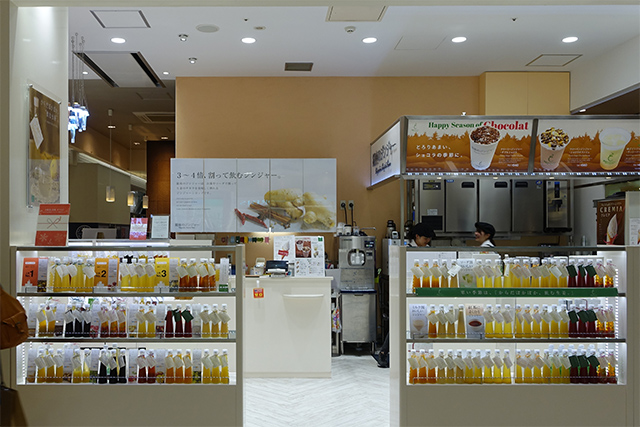
This store lured us in with its pretty bottles of syrup bases for drinks, until we find out they’re all ginger-based. Nothing ruins our interest as quickly as ginger!
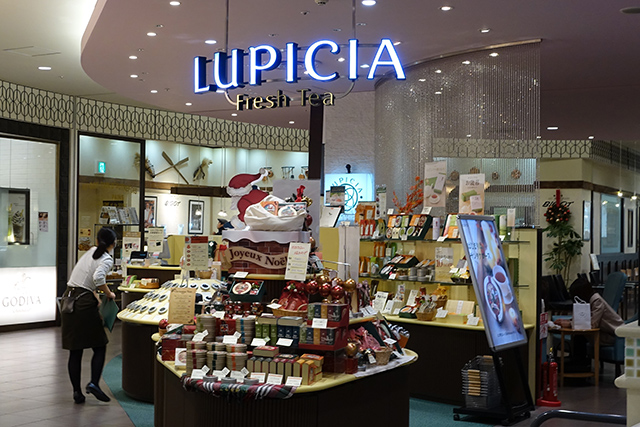
We stumble upon a branch of my favourite tea store, Lupicia, and I end up stocking up on so many teas the shop assistants amusingly give me the deepest bows ever.
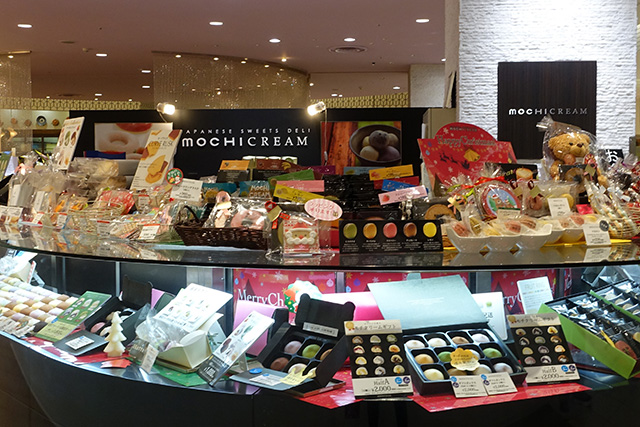
Next door at Mochi Cream, we find dessert for the evening: cream filled mochi.
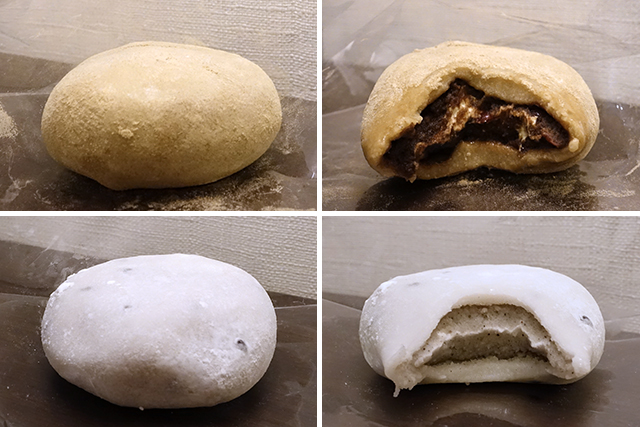
We try the hōjicha (top) and the black seasame (bottom). The hōjicha mochicream is dusted in hōjicha flavoured powder and filled with a anko (red bean jam), while the black sesame mochicream has black sesame seeds studded in the dough as well as a black sesame cream within. The flavours were pronounced in both these tasty morsels, with the black sesame being the favourite.
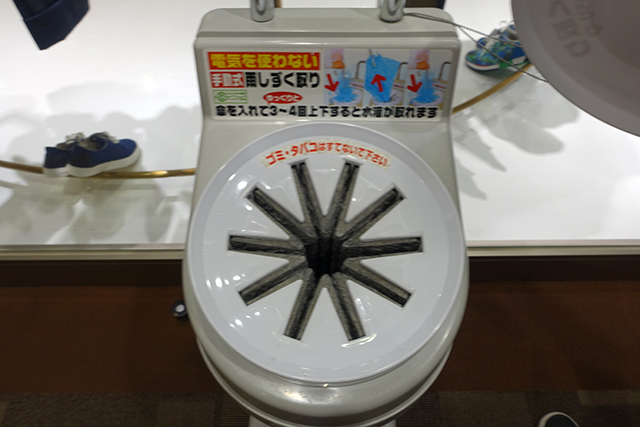
And to finish off our night, we encounter this funny device at the entrance to the shopping mall – it’s an umbrella drier! They’ve done away with plastic bags.