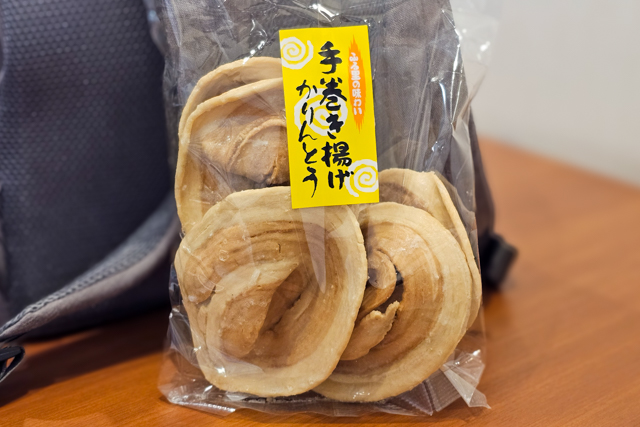
This is the Katō Temakiage Karintō (White), a regional speciality from Iwate Prefecture known for its striking size and distinctive “ear” shape. Unlike the slender sticks more commonly associated with karintō, these are large, hand-formed discs. They follow the traditional construction of flour, yeast, and brown sugar, but their scale and shaping give them a character entirely their own.
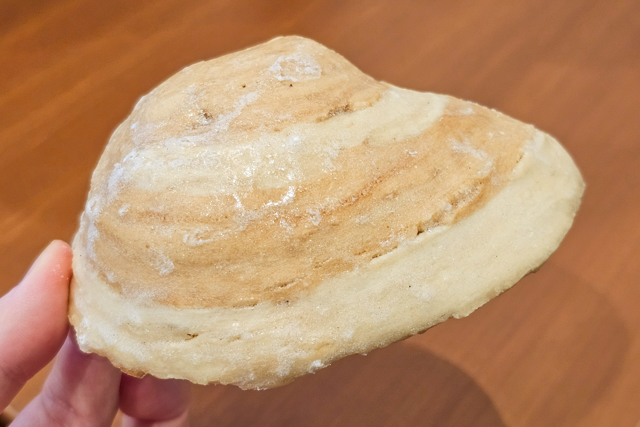
Each bag contained five pieces, each roughly 10 cm in diameter and 4–5 mm thick. The darker sections of the spiral pattern were made with brown sugar.
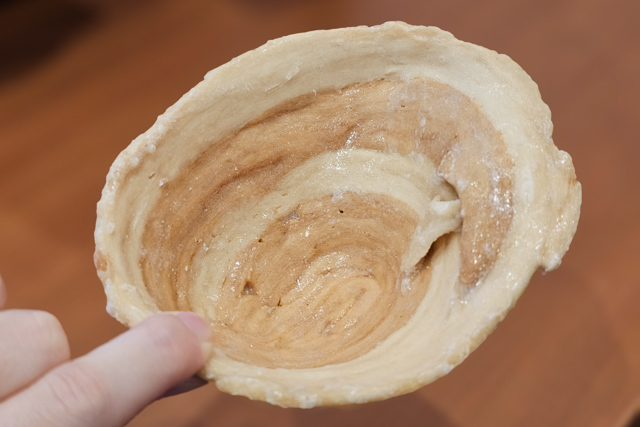
Owing to the handmade process, no two pieces shared the same umbrella-like form or internal swirl. They carried little aroma, offering only the faintest trace of grain and sugar.
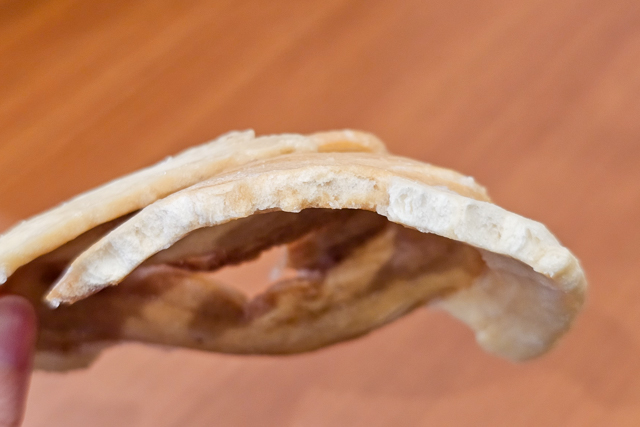
On tasting, the exterior delivered a brief, crystalline crunch from the sugar coating before giving way to a dense, almost rigid interior. The texture was closer to biting into extremely dry, fried wheat bread than to the lighter crisp one expects from senbei. Sweetness was minimal, providing only a light dusting of uncaramelised sugar rather than the deeper, molasses-driven sweetness typical of many karintō. The result was austere and texturally dominant, with the flavour leaning more towards plain fried dough than confectionery.
Overall, a visually striking regional variation with substantial crunch, restrained sweetness, and an experience more defined by texture than flavour.
This Katō Temakiage Karintō contained 5 pieces. It was produced in Japan and purchased in Ichinoseki, Japan in 2024.