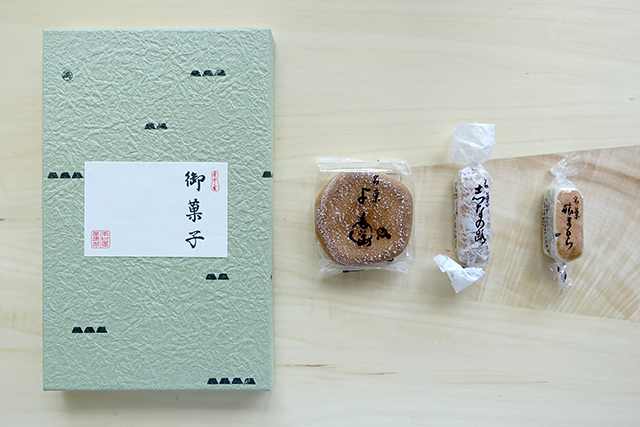
Wagashi are traditional Japanese sweets that are often served with tea and made from plant ingredients, notably anko or azuki bean paste. Ryoguchiya Korekiyo is a wagashi maker established in Nagoya in 1635. Initially making wagashi for the family of samurai and merchants in Aichi prefecture, it still makes wagashi today and has branched out even to a modern cafe called Fuwadoran in Nagoya that D and I visited in 2014.
Here, though, is the Meika Tsumeawa, baked wagashi using anko made from rich red beans from Hokkaidō that are famous for their sweet taste and tender texture. Each box comes with three different wagashi –
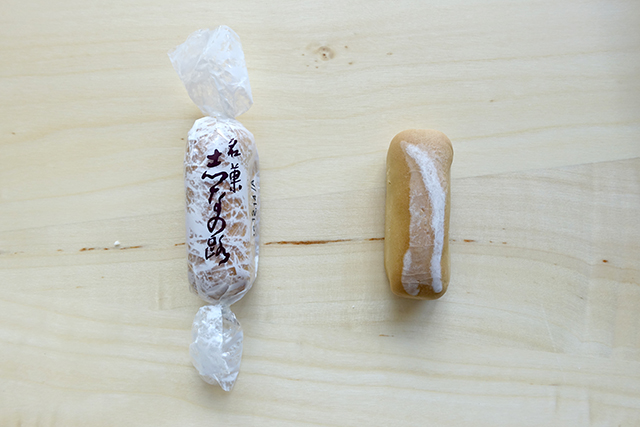
This is the Yomo Yama, described as having a mild flavoured skin filled with anko.
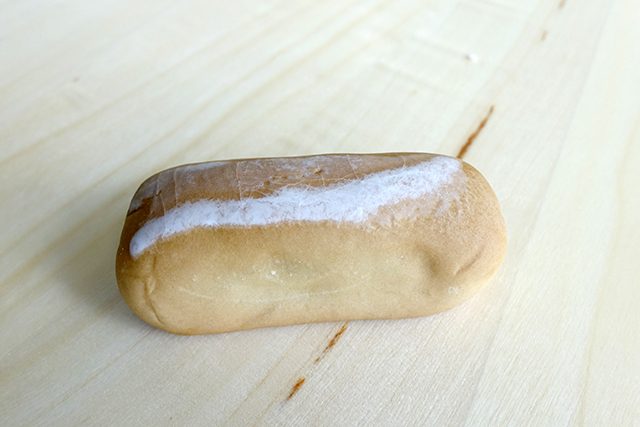
The white decorative dash across the top of the wagashi is meant to recall a mountain of home.
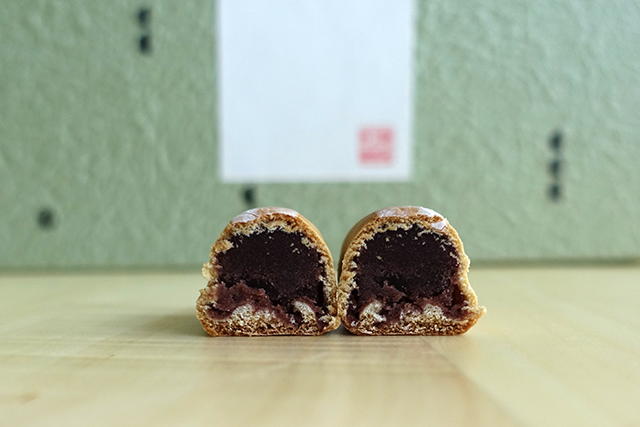
The pastry is firm, not crispy or soft, and is just thick enough to balance the sweetness of the anko, which is beautifully smooth, without dominating.
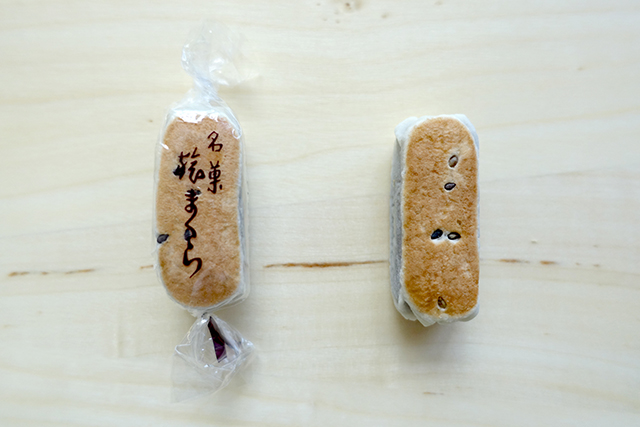
This second one is the Tabi Makura with a thin pastry holding the anko and accented with black sesame.
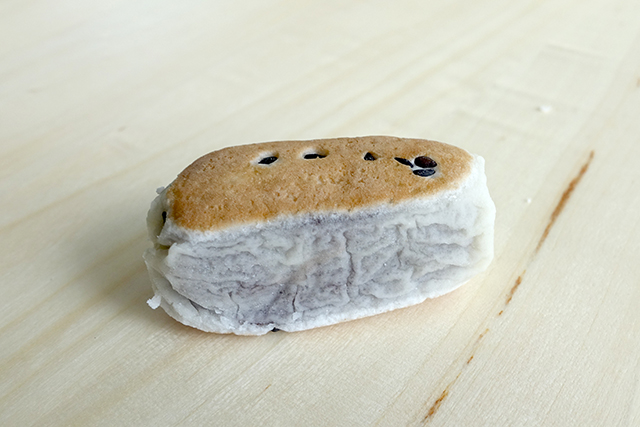
The appearance of this wagashi is meant to recall a travelling pillow. Isn’t that adorable? The pastry is so thin that the colour of the anko came through.
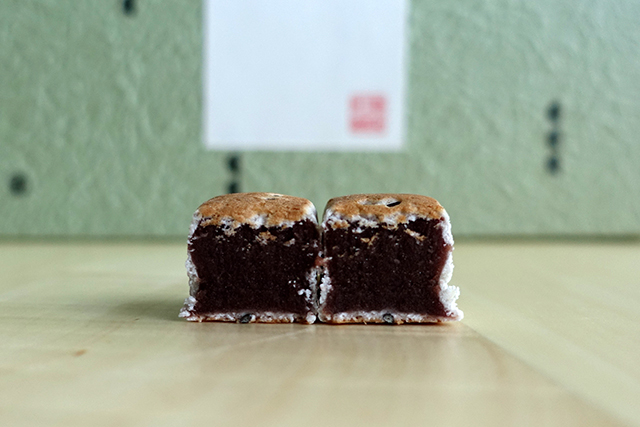
The pastry is thinner here with a barely detectable taste, serving solely to hold the anko in its shape and as a vehicle for the black sesame seeds. The black sesame seeds add pops of nuttiness that cut through the sweetness of the anko that comes across as sweeter as there’s less pastry to balance it out.
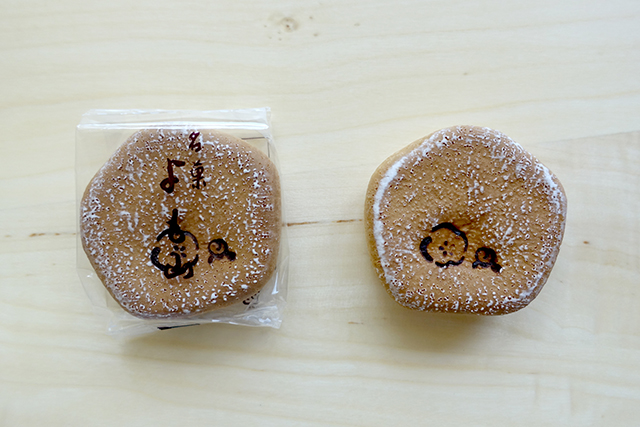
And finally, the Kokorozashina No Ji featured a savoury egg pastry encasing the anko.
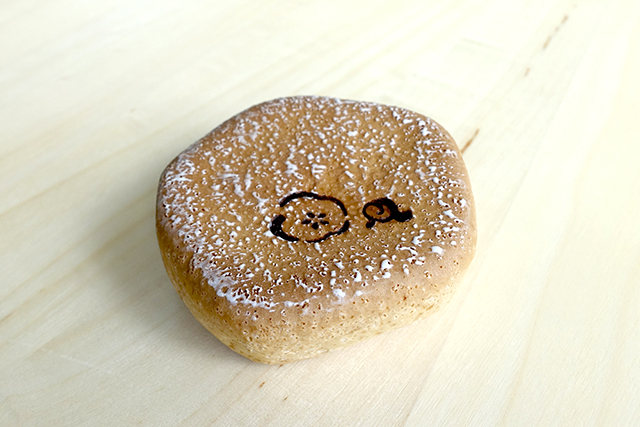
This one is 2-3 times the size of the other two and illustrated with ‘aspirations of the road’.
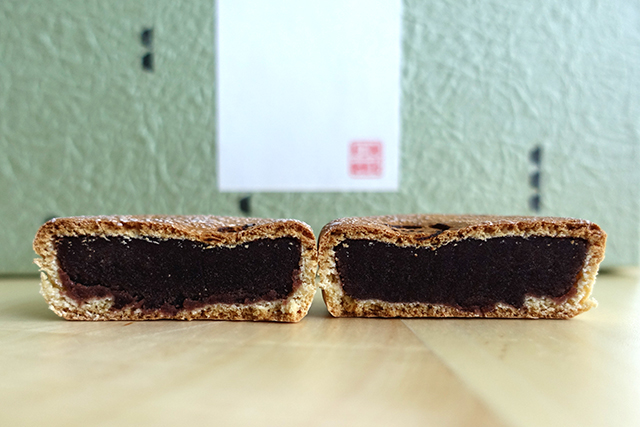
The thicker egg pastry with a slight savoury and eggy note used in this wagashi provides a crunchy texture that contrasts the tenderness of the red bean,and further mellowed the sweetness of the red bean, which would otherwise be overwhelming in this larger portion size.
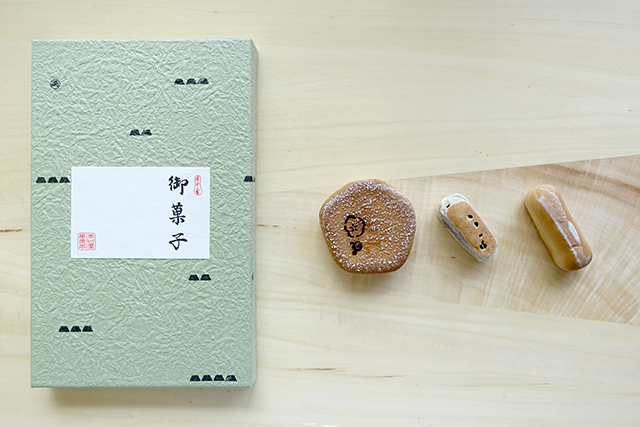
All three wagashi use the same anko, yet it’s fascinating that the different pastries used can so change the flavour in subtle ways. These wagashi would go very well with some green tea.
This Ryokuchiya Korekiyo Meika Tsumeawa contained 2x Kokorozashina No Ji, 6x Tabi Makura and 8x Yomo Yama. It was produced in Japan and sourced from Tōkyō, Japan in 2016.