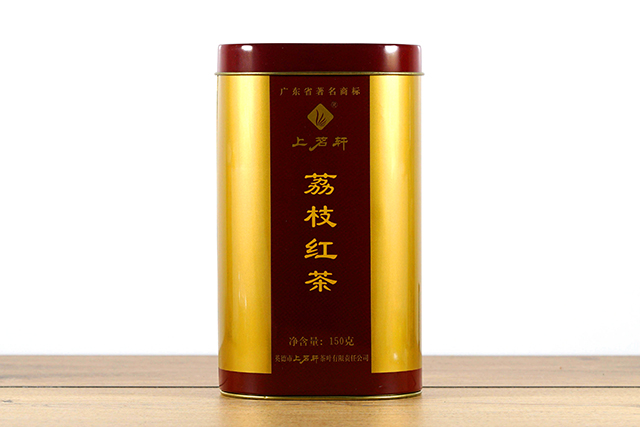
Steeping black tea at a lower temperature and for a shorter time has dramatically increased my enjoyment of flavoured black teas – the flavoured component is not overwhelmed because the black tea is less bold and bitter. This Shang Ming Xuan Lychee Black Tea is a high-grade black tea famous in Guangdong province in China and calls for a much shorter steeping time than black teas in the West.
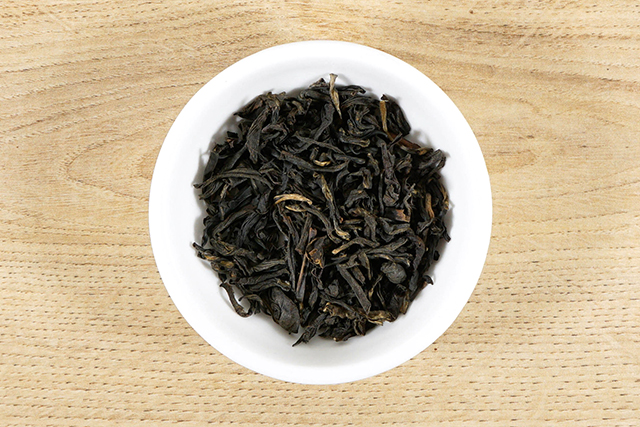
The tea is a lychee scented loose leaf black tea that produced by roasting the tea leaf with unpeeled lychees.
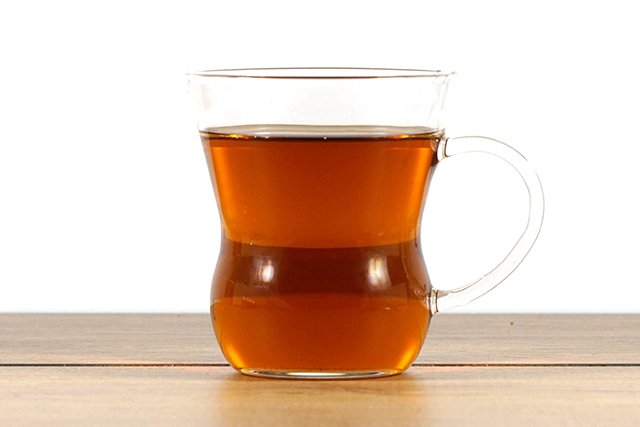
There’s no definitive guide to preparing this black tea. I’ve tried 1) 1.5 g per 100 mL of water at 85°C for 3 minutes (our usual method for black teas generally), and 2) 8 g per 100 mL of water at 90°C for 10 seconds, with the infusion of both yielding a similar clear amber colour with a fragrant floral lychee aroma.
Steeping 1.5 g per 100 mL of water at 85°C for 3 minutes brought the briefest hint of a floral lychee flavour in the head before bold notes of black tea dominate in the body and leave an unpleasant bitterness and a moderate astringency in the finish that lingered long on the palate.
In comparison, steeping 8 g per 100 mL of water at 90°C for 10 seconds, floral lychee notes emerge at the head of the sip and lingered through to the body as a light black tea flavour developed with pleasant malty caramel notes – without being actually sweet – in the finish. Prepared this way, the tea was smooth with little astringency.
That said, the weakness of the lychee – scented with lychee peel rather than the fruit itself – sees us preferring a stronger lychee flavour akin to Lupicia Lychee Oolong, which has a deep and complex lychee flavour, or The Tao of Tea Lychee Black Tea, which has a simple but obvious lychee flavour.
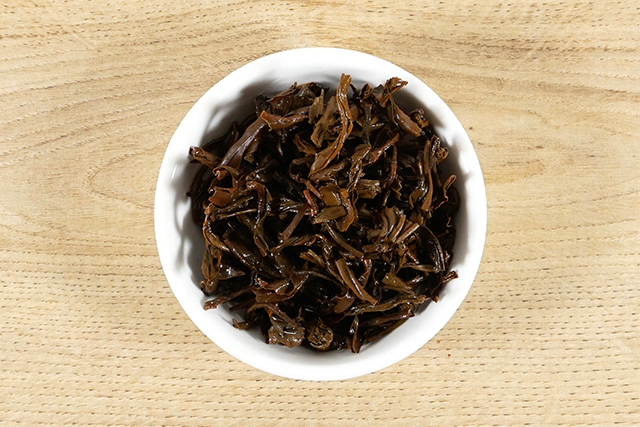
This tin of Shang Ming Xuan Lychee Black Tea contained 150 g. The tea originated in China and was gifted by family visiting Guangzhou, China in 2015.