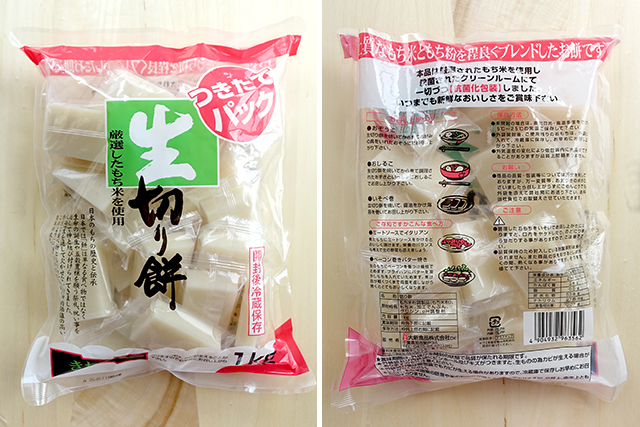
The warm, soft, stretchy texture and sweet rice flavour of mochi is a favourite comfort food. Mochi is a Japanese rice cake made from a sticky type of rice called mochigome that’s been steamed and then pounded while hot. Pounding increases the viscosity of the mochigome, creating a soft glutinous called mochi that is then separated into smaller pieces before the mass cools and hardens.
While mochi was traditionally pounded by two persons using a huge wooden mortar and mallet, mochi can now be made at home using special machines, as well as purchased dried in rectangles called kirimochi. Here, is Daishin Shokuhin Kirimochi.
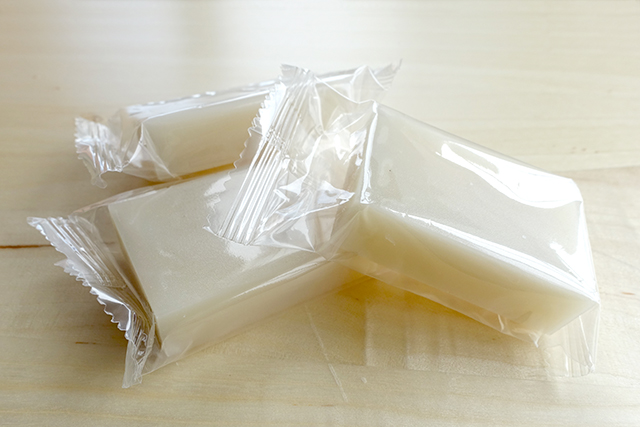
Each piece of kirimochi is sealed individually.
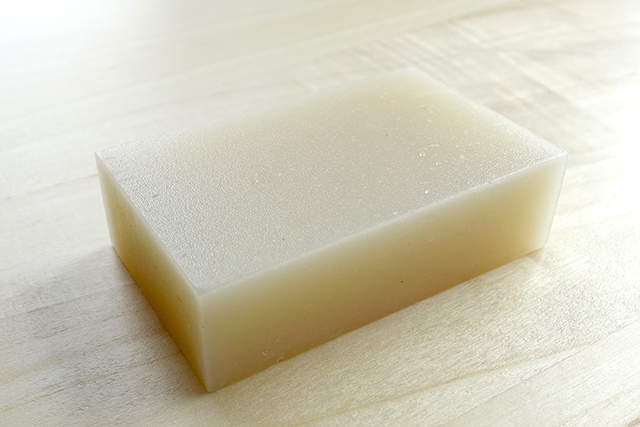
To turn kirimochi into the soft and stretchy mass we love, it just needs to be heated up. While it can be boiled, fried, grilled or deep fried, m favourite (and most convenient) methods are to heat it up using 1) the microwave, 2) the oven, and 3) the waffle iron.
In the microwave
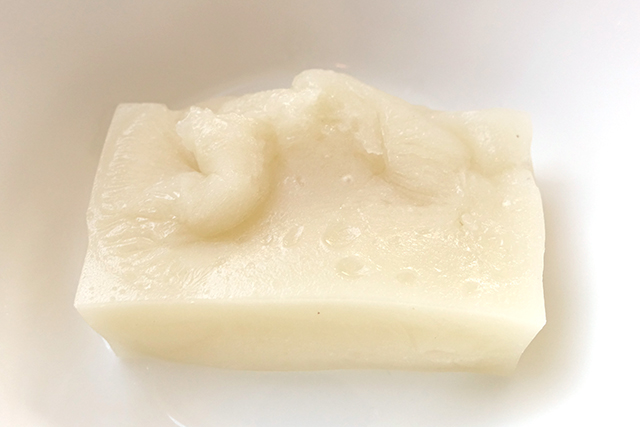
The fastest and easiest way to prepare kirimochi is in the microwave. Wet the surface of the mochi, place it in a covered microwavable bowl and heat in a 1200W microwave for 20 seconds.
Wetting the mochi prevents it from sticking to the covered bowl. Alternatively, you can use a layer of baking paper, seaweed or kinako. Covering the bowl traps the heat and also guards against the mochi from exploding all over the inside of the microwave if you happen to overheat it.
The resulting mochi is soft and stretchy and does not have the crispness of baked mochi.
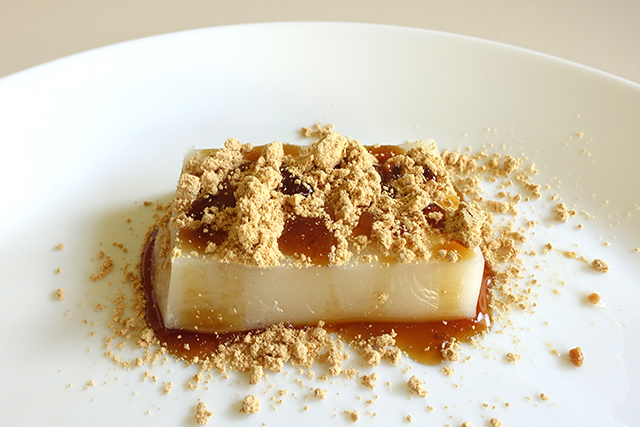
Mochi does not have much flavour, so I dust with kinako and drizzle with kuromitsu for a sweet nutty flavour. Kuromitsu can be swapped out by mixing sugar into the kinako before dusting. I use kuromitsu for moisture.
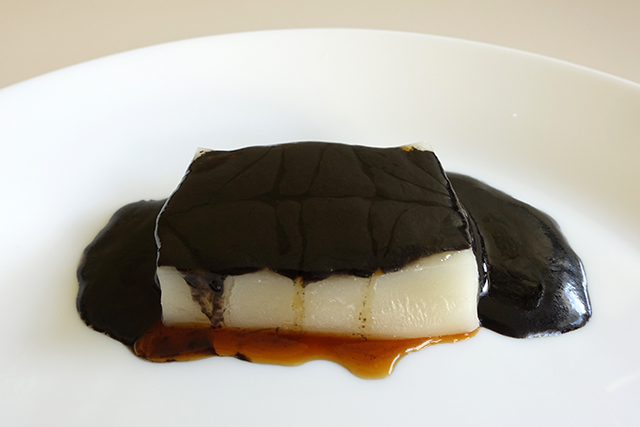
Other days, I eat it with black sesame paste and kuromitsu for a different sweet nutty flavour. You can also try anko (red bean paste), but it doesn’t keep well in the fridge.
In the oven
A toaster oven is another easy and fast method of preparing kirimochi. Living in Australia, electric wall ovens are more popular and they take considerably longer to heat up than the small toaster oven units that are popular in Japan. Nonetheless, preparing kirimochi in the oven is second to none in achieving a crispy surface.
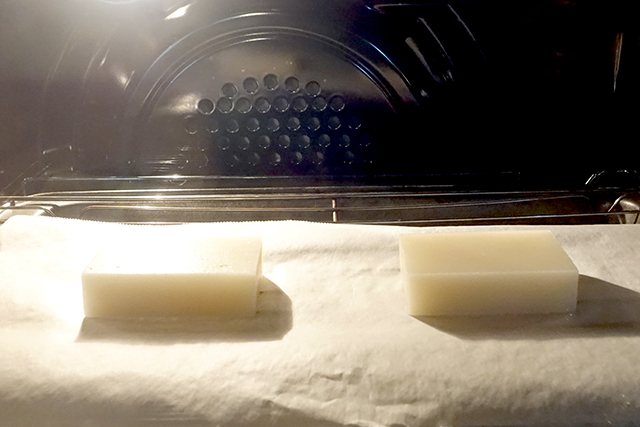
Place the unwrapped kirimochi on a rack lined with baking paper into an oven preheated to 180°C.
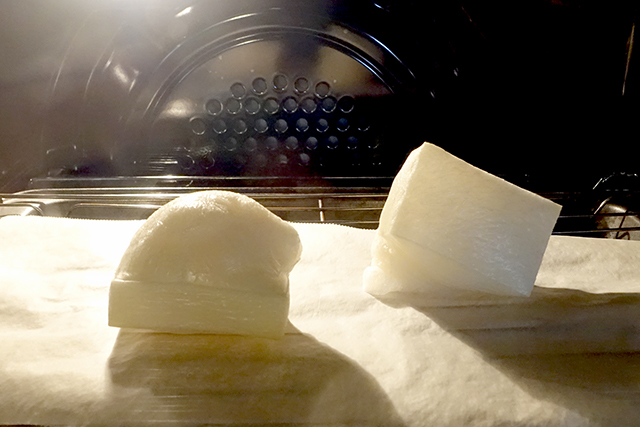
After 3-4 minutes, the kirimochi will expand to very organic forms.
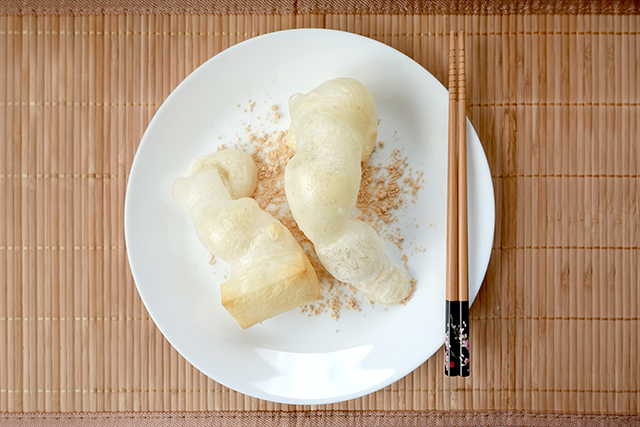
Once the kirimochi stops expanding after about 10 minutes, transfer to a plate dusted with kinako to avoid the kirimochi sticking to the plate.
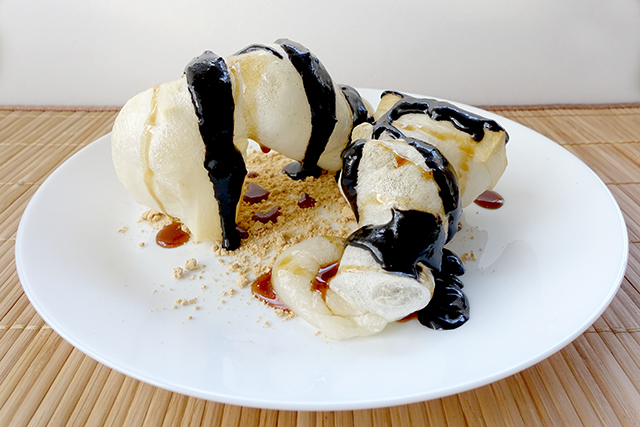
Finally, I add toppings of kuromitsu and black sesame paste. Kirimochi from an oven is crispy on the outside like senbei but soft and stretchy on the inside, making it one of the most delicious preparation methods.
In the waffle iron
Not owning a fast-heating toaster oven, though, moffles (mochi waffles) are the easiest and fastest way for preparing crispy mochi.
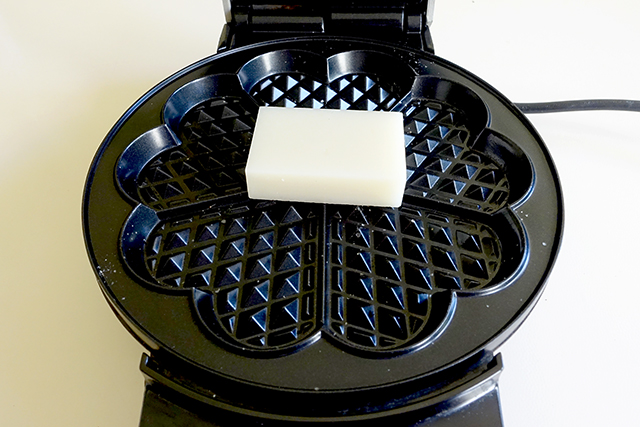
Wet the surface of the kirimochi and place it on a pre-heated waffle iron. Oil is unnecessary.
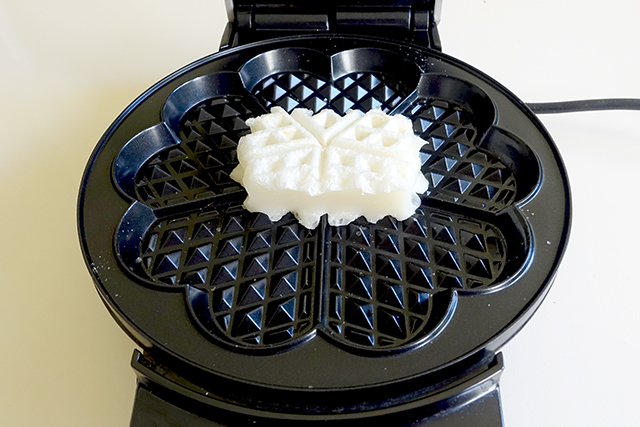
Keep it in the waffle iron for a few more minutes as its surface begins to soften.
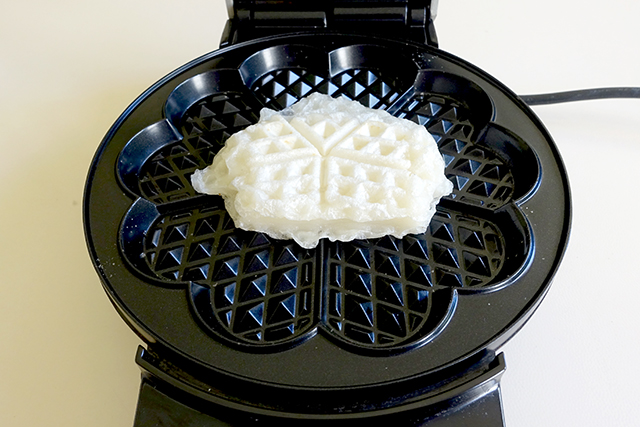
Once the moffle has spread out of its original rectangular shape take it off the waffle iron at this point. For a crispy waffle, transfer the freshly made moffle on a wire rack immediately and avoid keeping it longer in the waffle iron as the extended heat will cause the kirimochi to soften further and become very thin, losing the soft and stretchy texture for the innards.
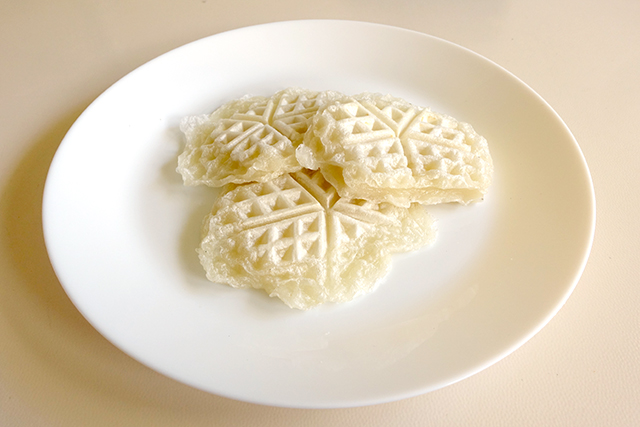
If you have a large waffle iron or like larger waffles, more than one piece of kirimochi can be used each time. I prefer mine small, which gave more surface area for the crispy edges. That said, the crispiness is less addictive than when prepared in an oven as the mochi tends to soften from the steam if not eaten immediately.
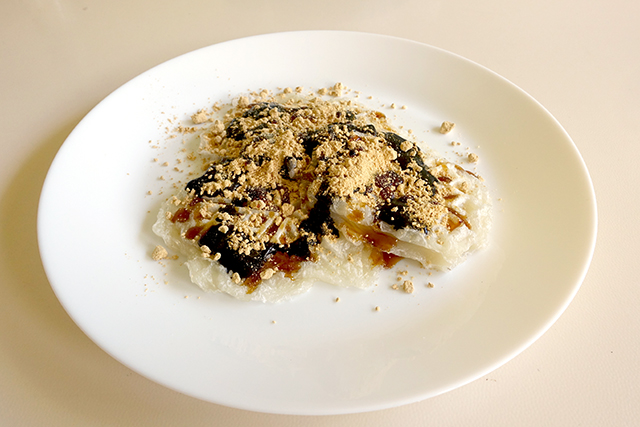
My toppings are the same regardless of how I prepare the kirimochi, although I’m keen to try the kirimochi in homemade zenzai, a traditional Japanese dessert consisting of a thick sweet soup of boiled azuki beans.
This Daishin Shokuhin Kirimochi contained 1 kg. It was produced in Japan and purchased in Sydney, Australia in 2016.