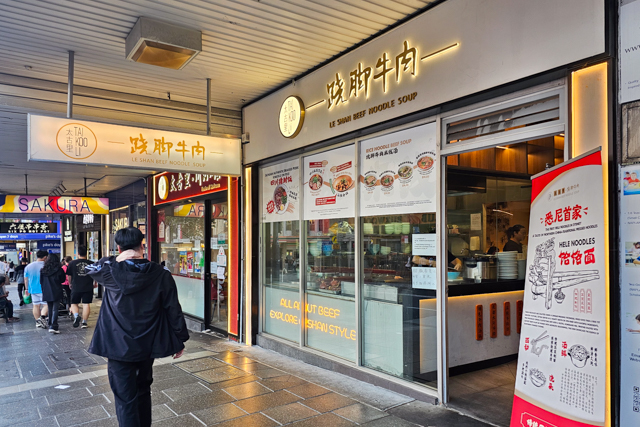
This is Leshan Beef Noodle Soup, a restaurant specialising in qiāojiǎo niúròu tāng, a traditional beef soup from southern Sichuan. The hand-operated wooden noodle-cutting device displayed at the storefront signals an emphasis on house-made noodles and traditional preparation.
2025
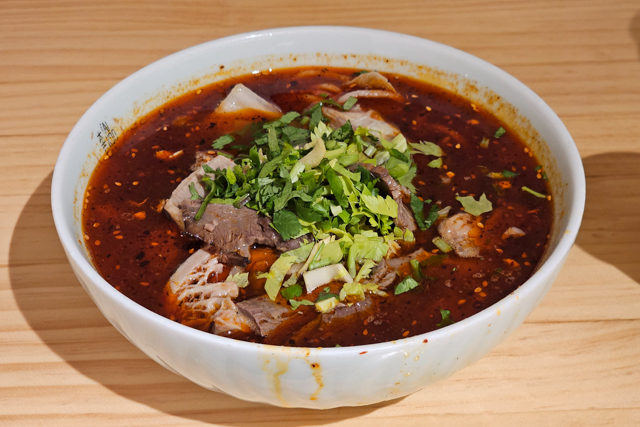
Classic Hot Spicy Beef Soup with White Noodles ($15.80)
This served as the reference point. The broth carried layered savoury depth with a restrained herbal profile that sat beneath the surface rather than leading. A mix of beef cuts and offal—brisket, multiple stomach types, kidney, and tongue—introduced variation in texture, each cooked to a soft, yielding consistency.
The base incorporated over 20 medicinal ingredients, including goji berries, red dates, and angelica, though this did not translate into overt medicinal flavour. Instead, the broth read as clean and cohesive. Spice was present but controlled, contributing structure without overwhelming the palate.
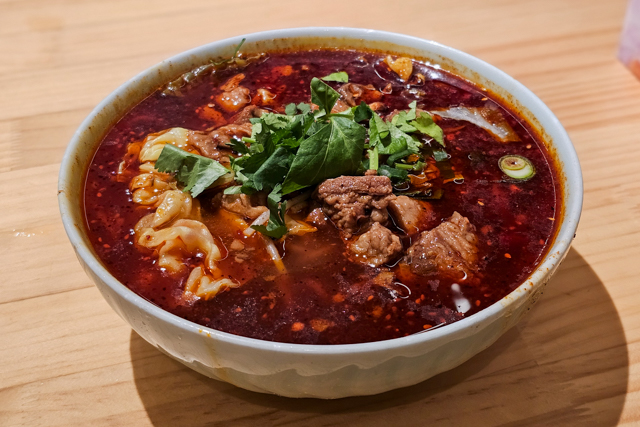
Chengdu Beef Brisket Soup with Rice Noodles ($16.80)
The broth remained aligned with the signature soup: balanced between savoury, sweet, and mild heat. The key shift sat in the noodles. The rice noodles were thicker, with a springier, more elastic bite compared to the softer white noodles. This increased resistance added weight to each mouthful, making the bowl more texturally defined.
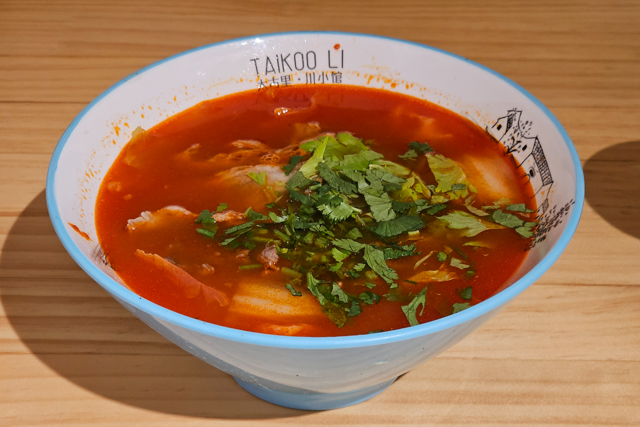
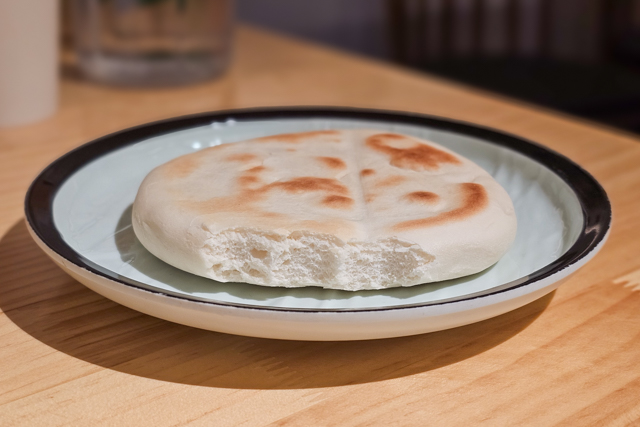
Classic Tomato Beef Soup + Handmade Pita Bread ($16.80)
This version pivoted toward a lighter structure. The broth resembled a clear tomato consommé, with a balanced interplay of sweetness, acidity, and savoury depth. Beef intensity was reduced, allowing the vegetable components—Chinese cabbage and celery—to contribute freshness.
The handmade bread arrived hot, with a crisp exterior and dense interior. Its flavour remained neutral, functioning primarily as a vehicle to absorb the broth rather than as a focal element.
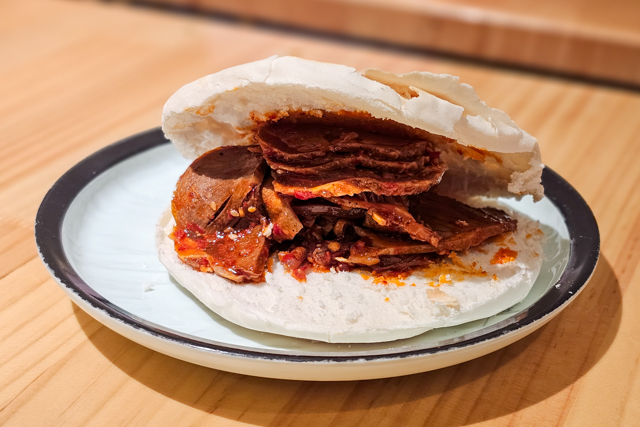
Pita Bread with Sliced Beef and Ox Tongue ($10.80)
Using the same bread, this format introduced cold sliced beef shank and ox tongue. The meat was tender with mild spice, though the flavour lacked the depth seen in the soups. It read as structurally sound but secondary within the menu.
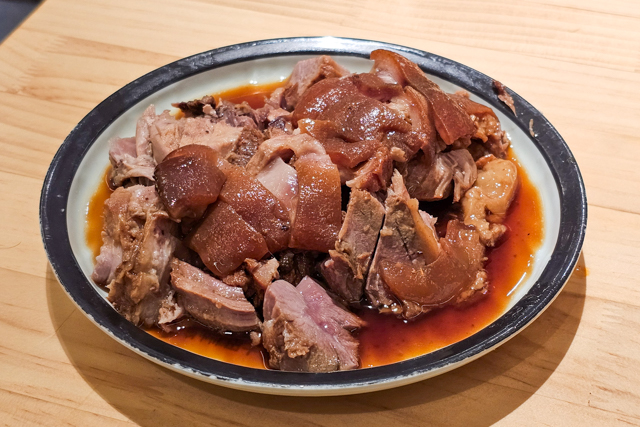
Braised Pork Hock ($8.80)
Deboned and soy-braised, the pork hock balanced fat and lean portions effectively. The texture was soft and gelatinous without excess heaviness, and the seasoning remained savoury without tipping into saltiness. This stood out among the smaller dishes.
2026
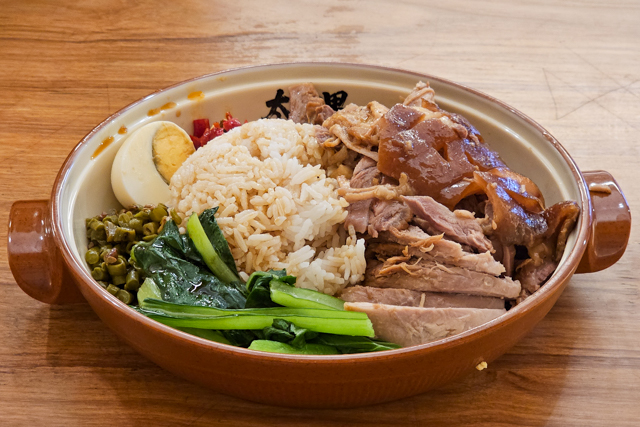
Braised Pork Hock with Rice ($15.80)
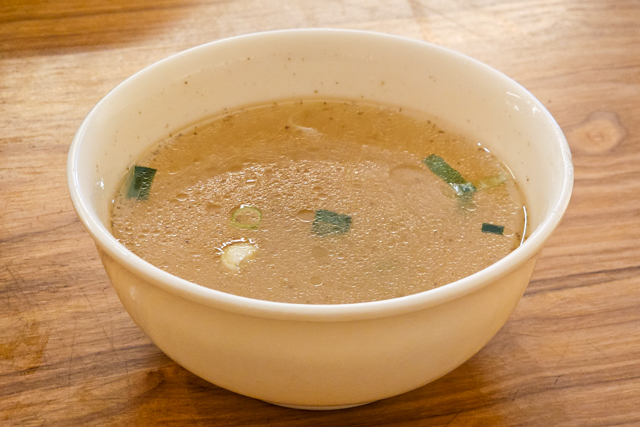
Served with rice, blanched greens, pickled mustard greens, chopped chilli, half a boiled egg, and soup, this extended the earlier dish into a full meal. The composition was balanced, with each component contributing either freshness, acidity, or heat; married by the homey savoury profile of the soy. The pork remained tender, though slightly firmer than before. Portioning was generous, and the dish maintained ease of eating. The soup was serviceable, though the flavour of the broth was less driven by bones and meat and more by added seasoning.
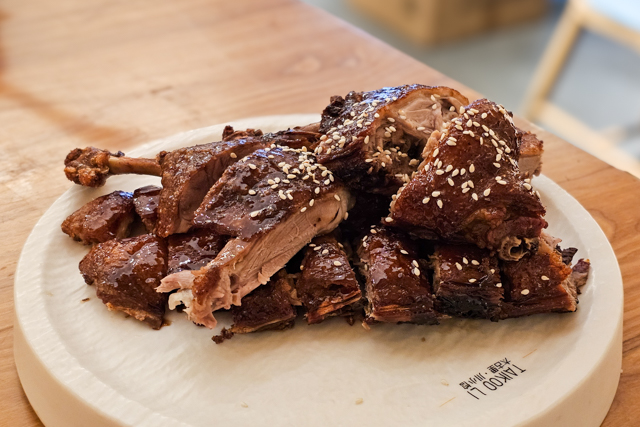
Braised Sweet Flavoured Duck ($21.80, half; 20 min wait)
The duck skin carried a sticky, sweet glaze with a profile reminiscent of Cantonese char siu. The surface was crisp, suggesting a final high-heat finish, while sesame seeds added a light nutty contrast. The meat beneath was tender and moist, with sufficient fat to maintain juiciness. The dish read as rich but controlled.
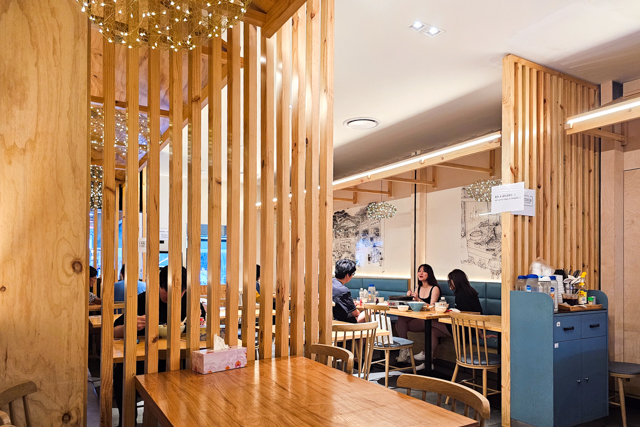
Overall, Le Shan Beef Noodle Soup offers Sichuan-style fare defined by layered complexity and textural variation, strongest where spice and herbal elements remain restrained.
Le Shan Beef Noodle Soup is located at 152 Burwood Rd, Burwood NSW 2134.