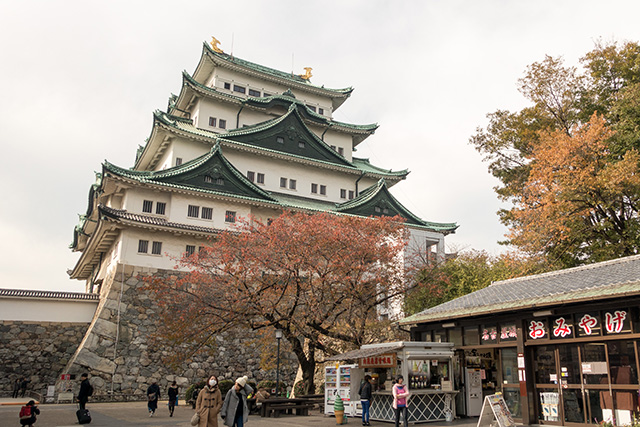
Nagoya isn’t the first place you’d visit in Japan. We were here this time, though, because we were going to use it as a base for our adventures into Central Japan. So off we went to Nagoya bright and early on our fourth day in Japan.
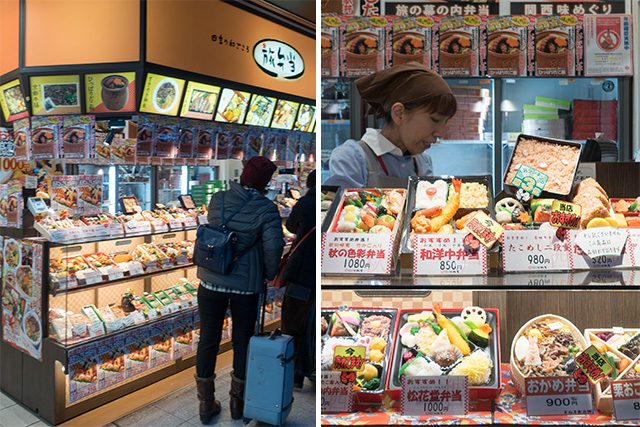
First off, ekiben! Ekiben are bento boxes sold at train stations with long distance trains, such as shinkansen. Most regions have a bento box that is unique to them and contained the region’s specialty food items. Train stations with only local lines do not sell ekiben, so we bought this Ōsaka Castle shaped Ōsaka ekiben at Shin-Ōsaka station.
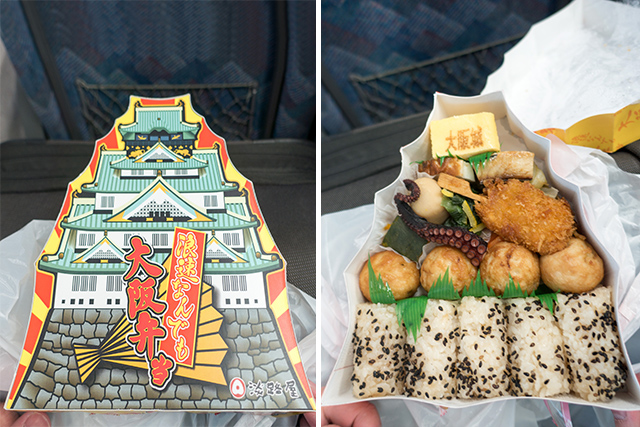
Ekiben are typically served cold, but I’ve read that they taste better hot, so we spotted a microwave not 5 m away at the convenience store attached to this place and heated it up. This Ōsaka ekiben was rice-based (as are the majority of ekiben), with four takoyaki (with sauce in a packet), an octopus leg, a crab croquette, a fish cake, a piece of tofu and egg (with Ōsaka Castle printed on it). How did it taste? There are definitely better foods out there, but it wasn’t so bad to be inedible. It was certainly an interesting experience, but I travelling around Japan to sample regional ekiben is certainly not high up on my to do list. The one Ōsaka thing it seemed to be missing was okonomiyaki.
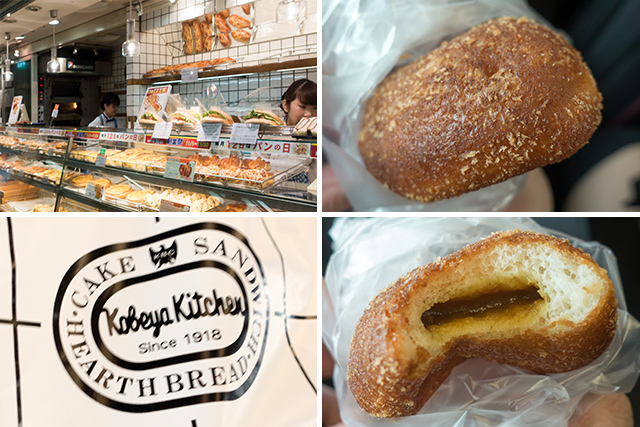
As the ekiben breakfast was meant to be more of an experiment than a meal, D and I also got curry pan from a local bakery to fill ourselves up on the road.
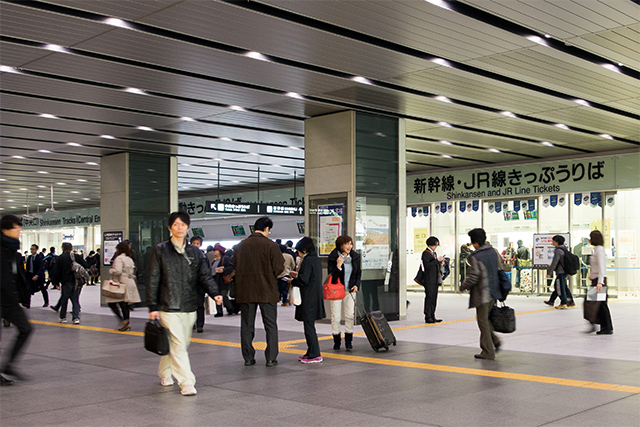
Now, all this food we’d just bought wasn’t eaten until we’d purchased out tickets and settled into our seats on the shinkansen.
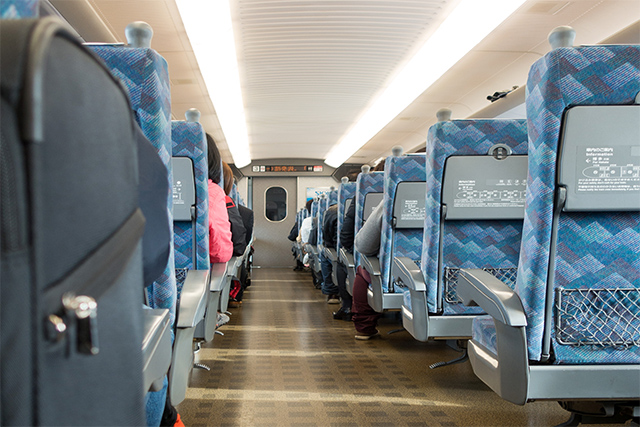
Nagoya isn’t all that far from Ōsaka, so we were there in a little over an hour.
Sakae
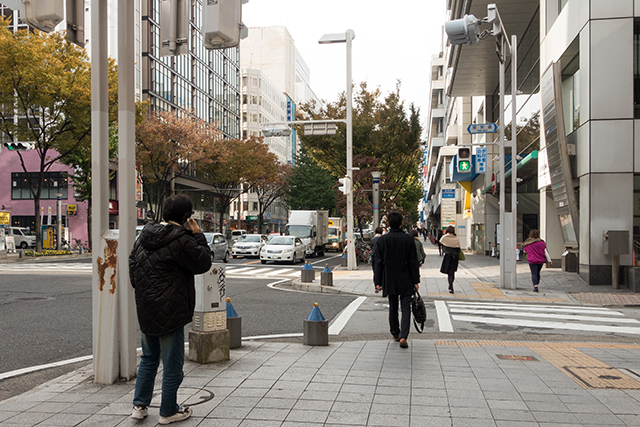 After lugging our suitcases up a generous flight of subway stairs to our hotel, we headed for Nagoya Castle.
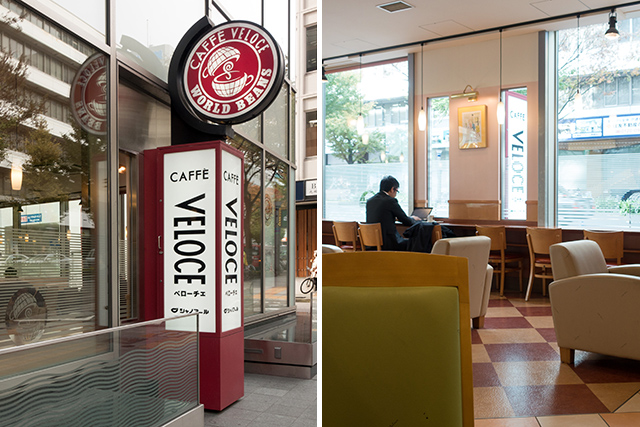
But not before we make a stop at Caffe Veloce. During our previous trip to Japan, I’d been attracted to this place because I liked the sound of its name, but D had been skeptical because the one in Kanda and Kyōto had particularly dark-tinted windows. But it’s quite a pleasant cafe.
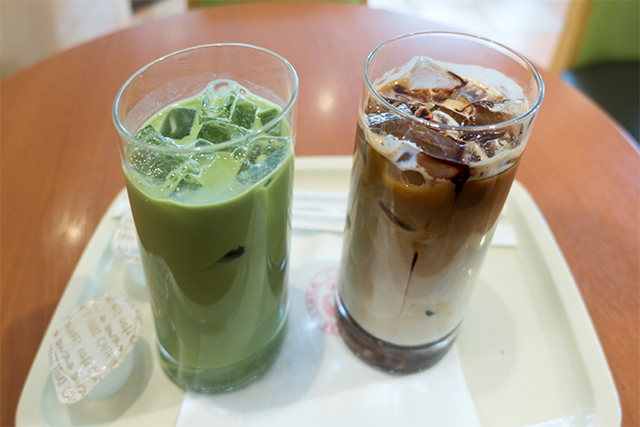
I ordered an iced matcha latte, while D had an iced cafe mocha. It was actually quite a cold day, but we like our beverages cold. My only other experience with a green tea latte was hot, and that didn’t leave me too impressed. Also the idea of sugar and milk in green tea seemed rather odd. As a cold beverage with sugar syrup, though? It taste much better! D’s cafe mocha was really quite delicious – mochas always taste better when the chocolate component is a syrup rather than powder.
Nagoya Castle
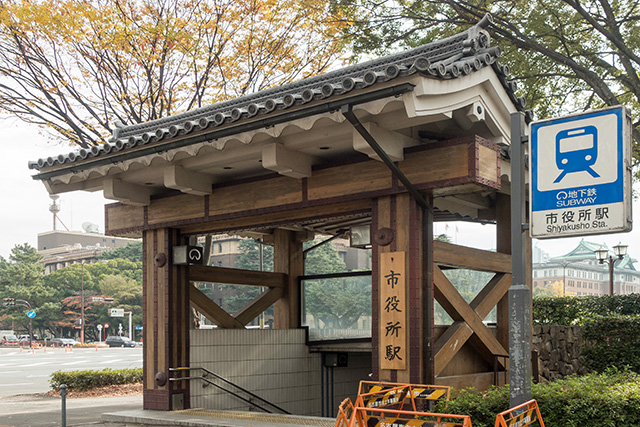
And we arrive at Shiyakusho Station for Nagoya Castle.
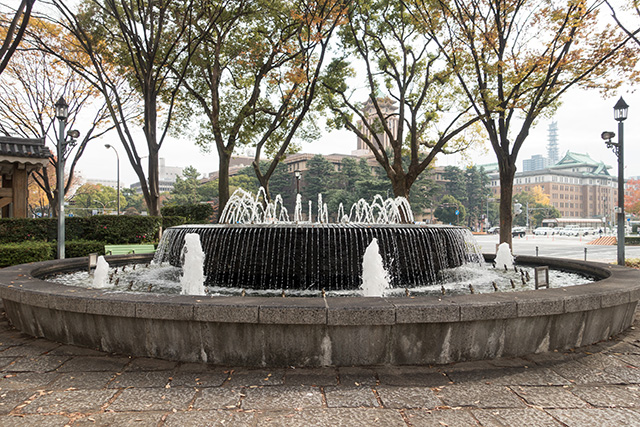
Near the entrance to the station is a water feature…
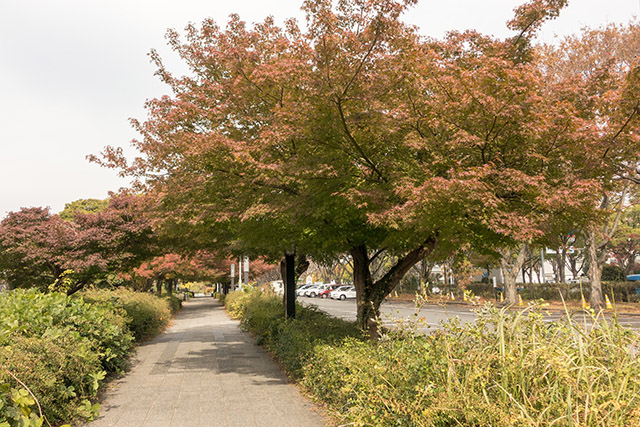
Nagoya Castle is a short walk away..
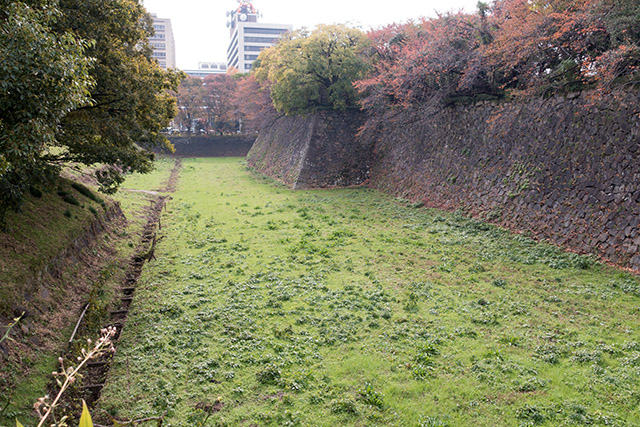
Along the walk, we can see the outer moat that used to be filled with water.
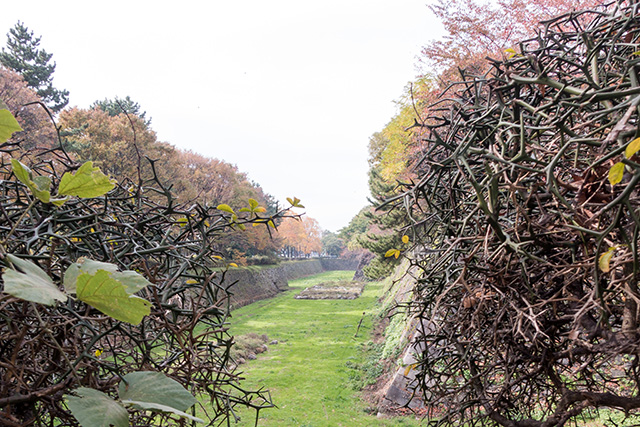
Unlike Ōsaka Castle, which survives in its original state, most of Nagoya Castle (including the main castle building and palace) was destroyed during World War II. They’re in the process of rebuilding the palace from photographs using traditional techniques.
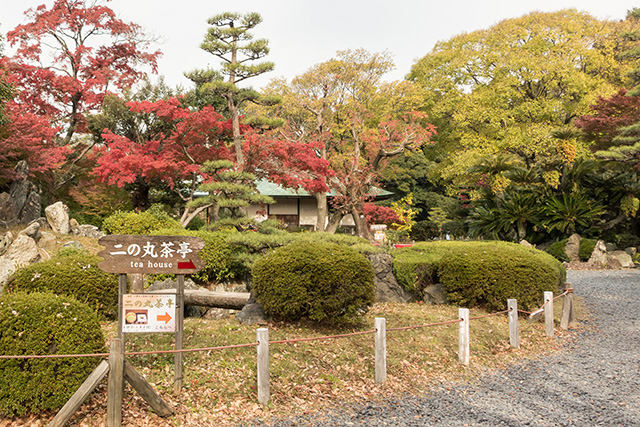
We didn’t enter via the main gate, so took a stroll around the gardens around the tea house.
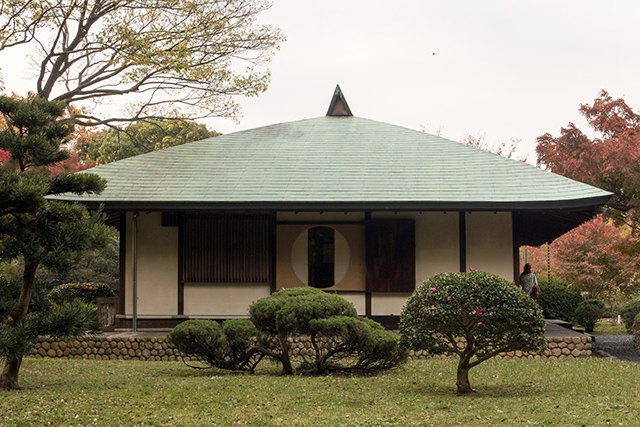
You can enjoy tea with sweets at the tea house while overlooking the garden.
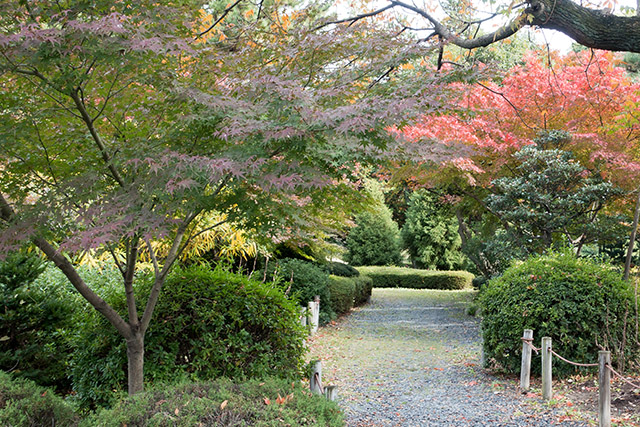 We seem to be just a touch early for the autumnal foliage, with most trees still green.
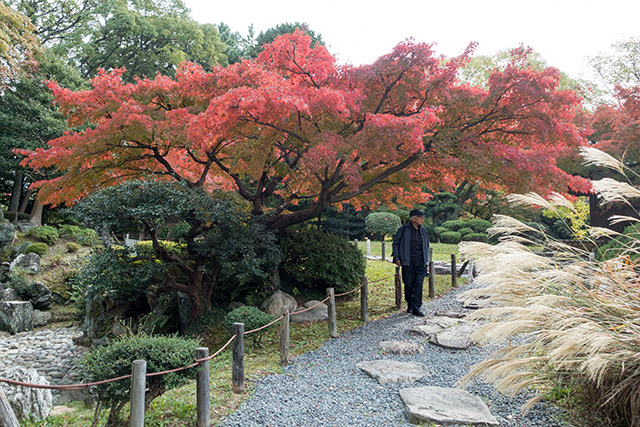
Though there are spectacular exceptions.
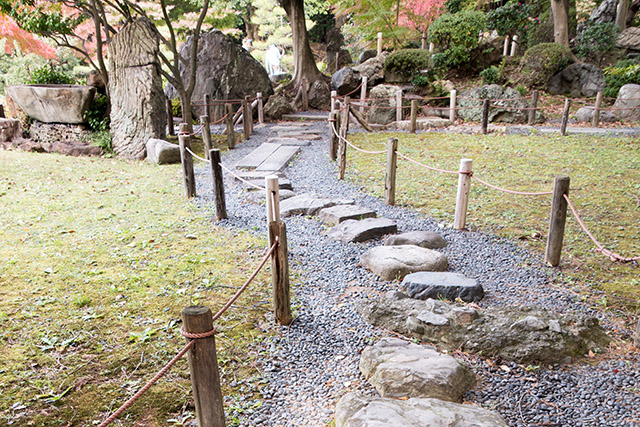
The gardens are meticulously kept – we even saw a tree being pruned by two gardeners.
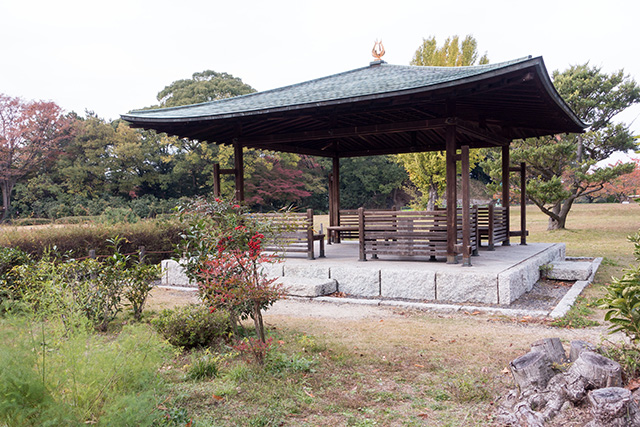
Across a field near the tea house is the South Pond with a pleasant viewing area.
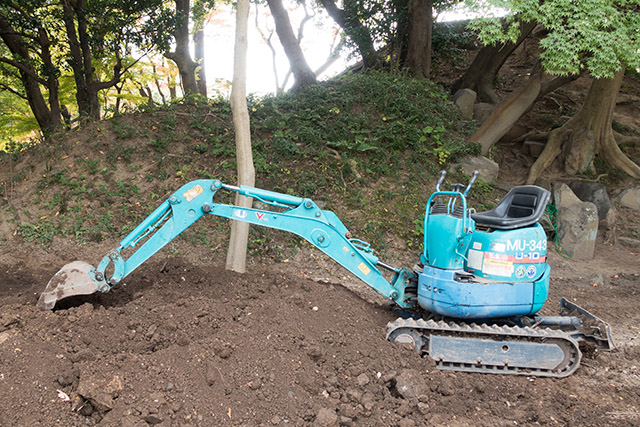
We make our way along the riverbank back towards the main keep of the castle where we spot some mini-size machines.
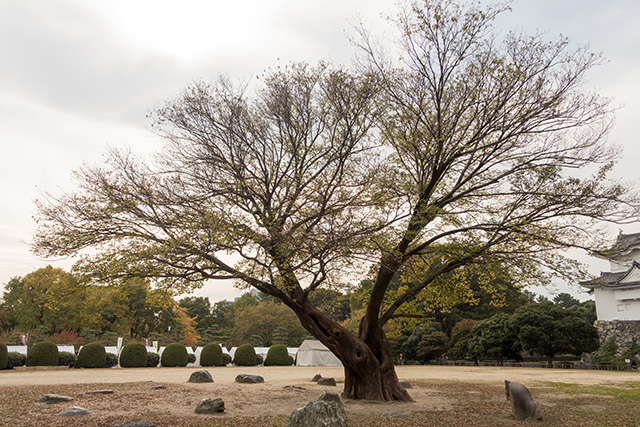
A lone tree stands in the otherwise empty area outside the main keep.
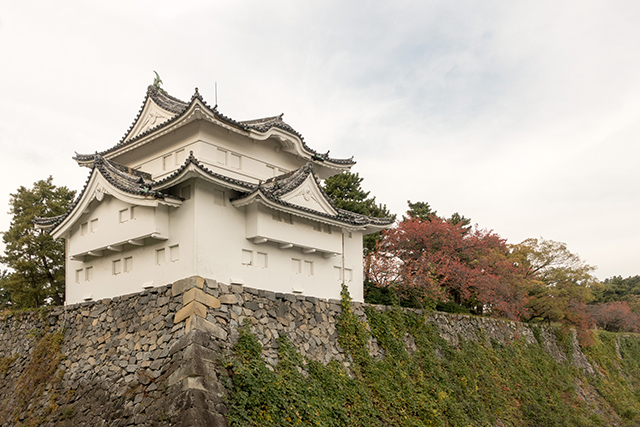
We walk around the south west turret. It is three stories tall with a two-level roof.
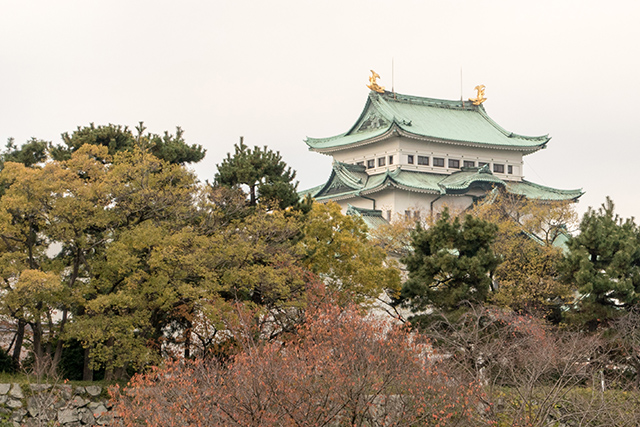
Before spotting the main castle tower, reconstructed in 1959, in the distance.
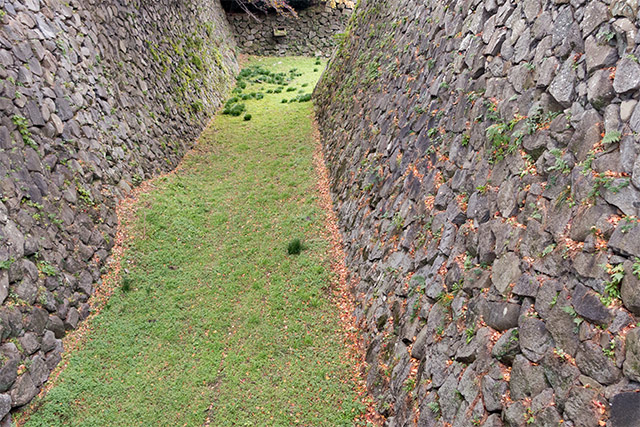
Neither is the inner moat functioning….
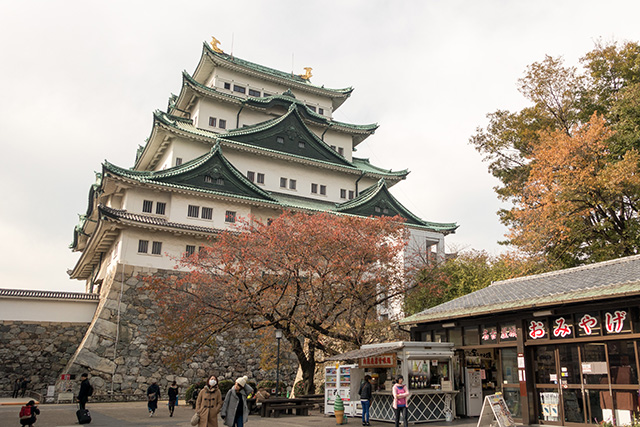
Despite vast sections of the castle being under reconstruction, we’re able to enter the Main Castle Tower.
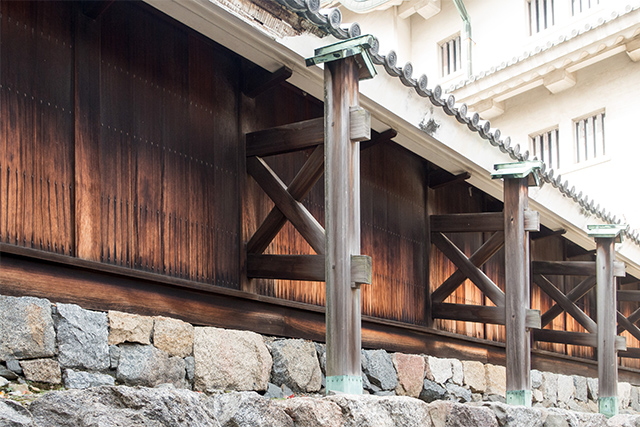
Being a rather recent reconstruction, the castle is in good condition.
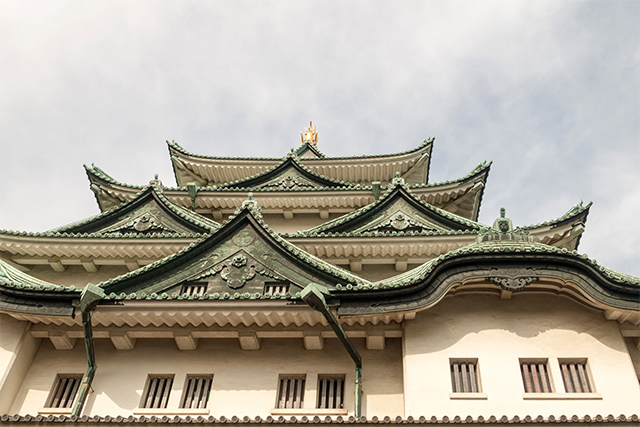
The main keep is five stories high.
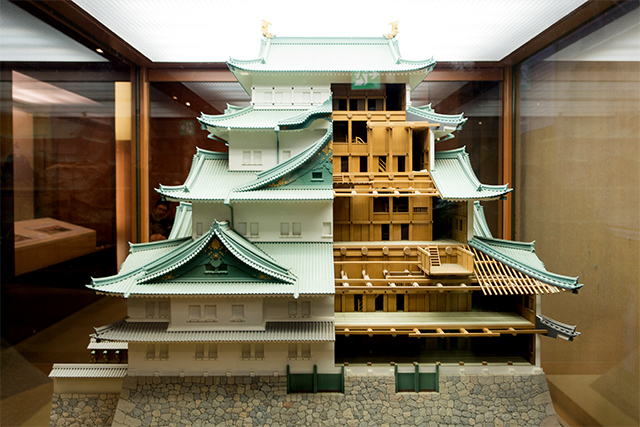
Most of the stories house a museum explaining the history of the castle. I’m more interested in the miniature reconstructions though.
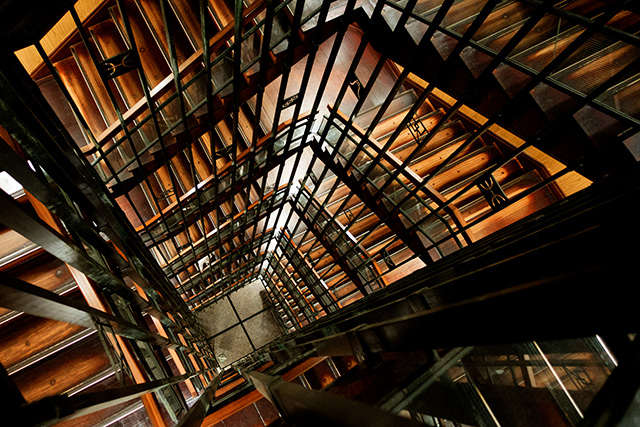
After going up some 6 – 7 flights of stairs, we’re at the top.
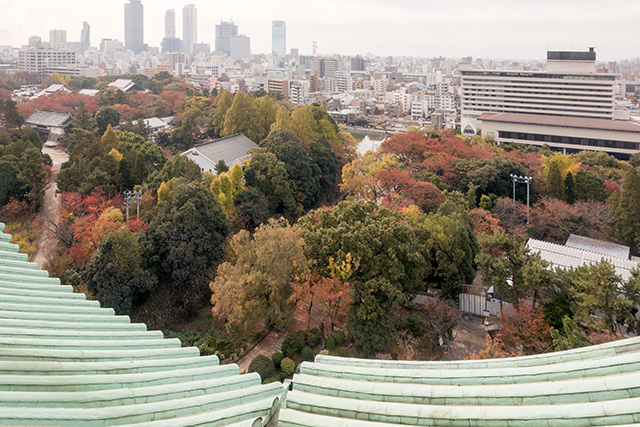
Compared to Ōsaka Castle, the view is less spectacular – the grounds of the castle aren’t as big and the castle isn’t situated on as high ground.
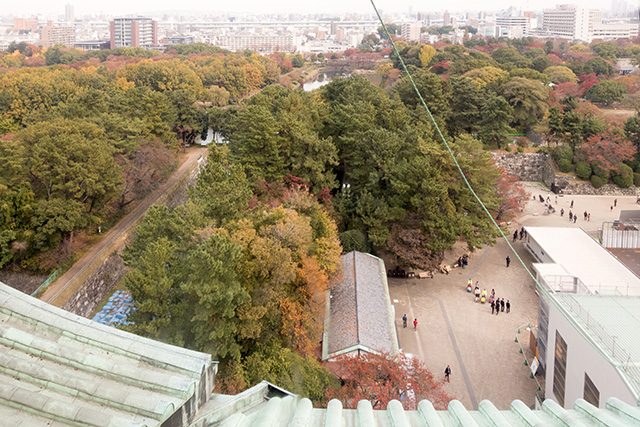
But nonetheless you get 360 degree views of Nagoya.
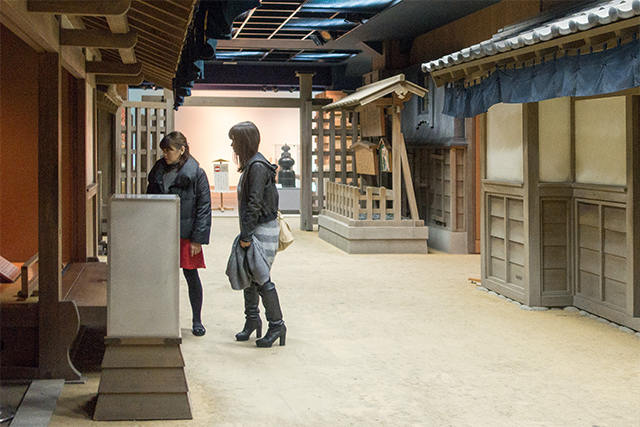
One level of the castle houses period reconstructions of areas around the castle.
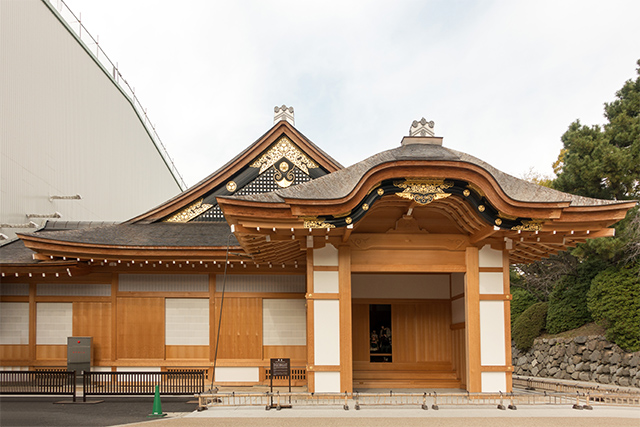
Back outside, the Honmaru Palace is in the process of being reconstructed, so you can see the giant white structures covering various parts of the grounds. The exposed building is the completed front and back view of the place where people on horseback would first communicate with the palace, I believe.
On an ordinary day, they’d let tourists enter the white structures, and view the faithful traditional reconstruction from above. Unfortunately they weren’t open on the day we went (which was devastating, ‘cause I was so looking forward to it!), but there was a room that explained what the traditional techniques involved, and some of the documents, old photographs, survey maps and screen paintings used to make the restoration.
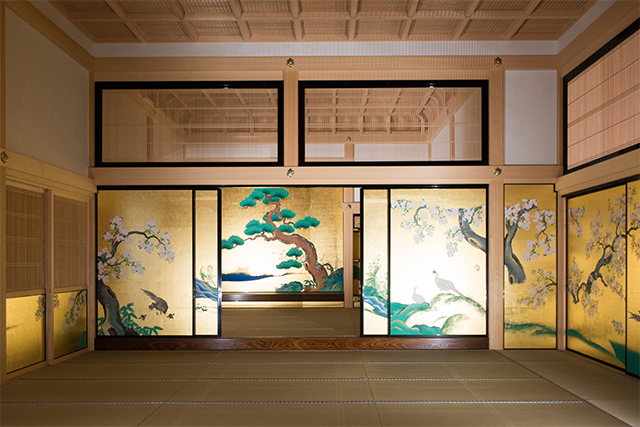
Although the Hommaru Palace was lost to fire during the war, many of the removable partitions and panels were saved from the fire.
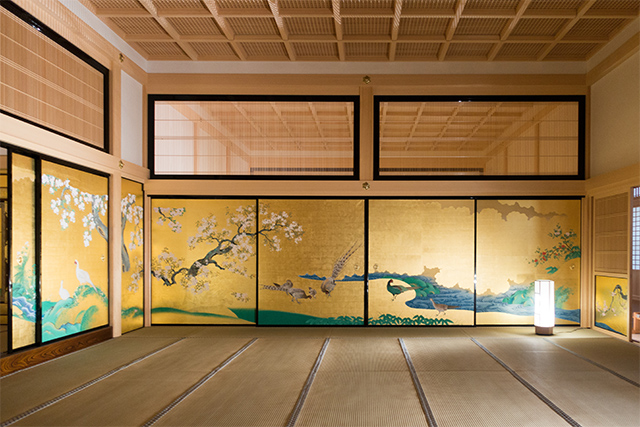
The paintings seen in the Palace are full-scale restorations and reproductions using traditional techniques.
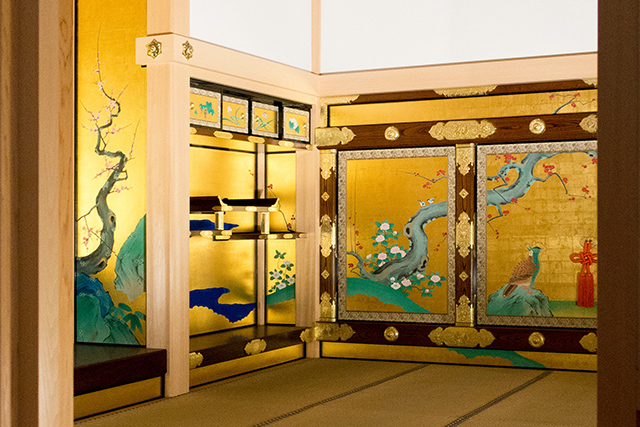
It’s easy to see why this Palace is often referred to as Japan’s finest castle palace.
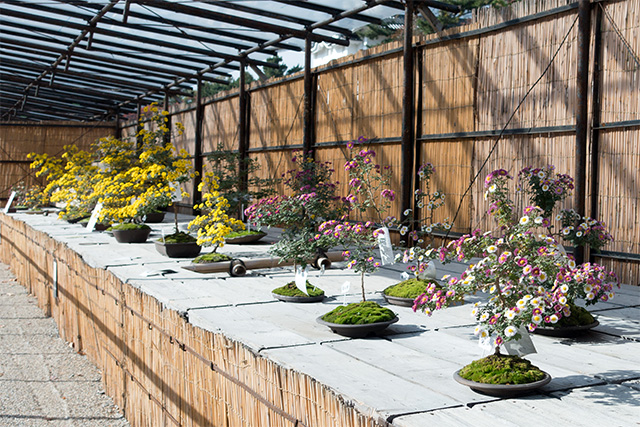
Outside the inner palace grounds was a bonsai exhibit.
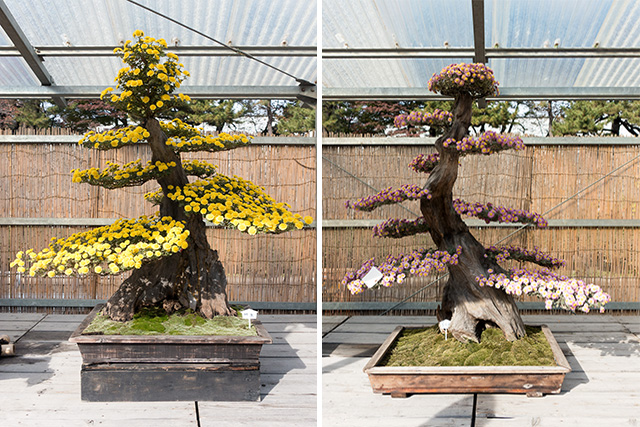
I believe the plants here were entered into a competition.
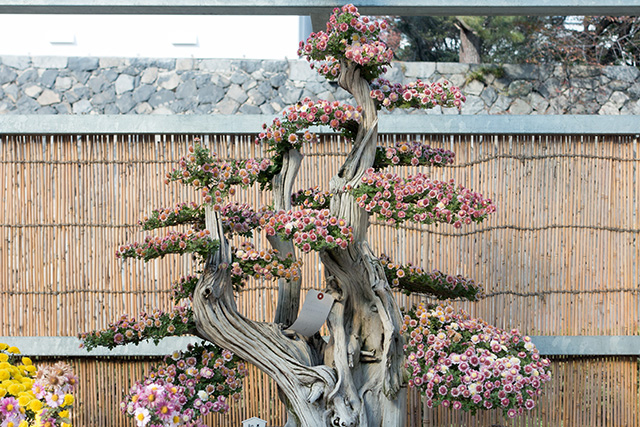
We’d contemplated visiting bonsai and chrysanthemum exhibits during our time in Japan but they fell through, so it was quite serendipitous to see both here.
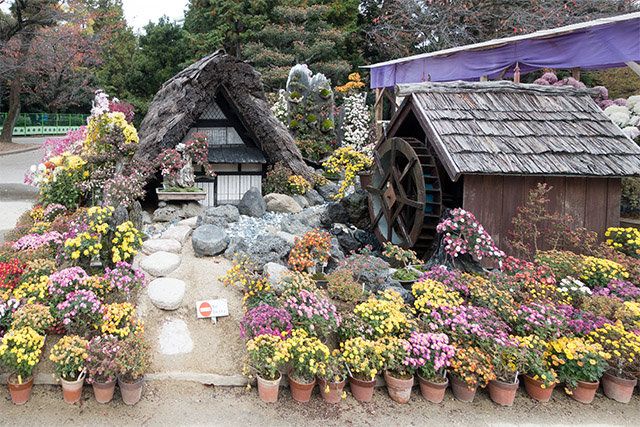
And then there’s a small-scale reproduction of a Japanese farm house. I’m not sure what the significance of this was, but it was quaint!
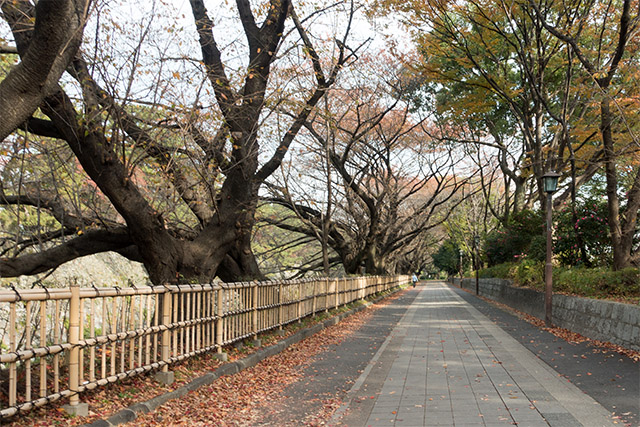
After Nagoya Castle, we head back to Sakae for lunch and browsing. This is the beautiful walk to the train station from the main entrance to the castle.
Pine cones are out enjoying the sun too.
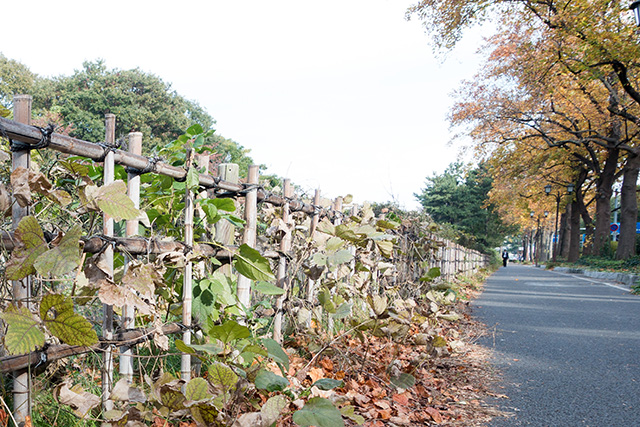
Exiting from the main entrance, we walk past a major hospital (to the right of this photo).
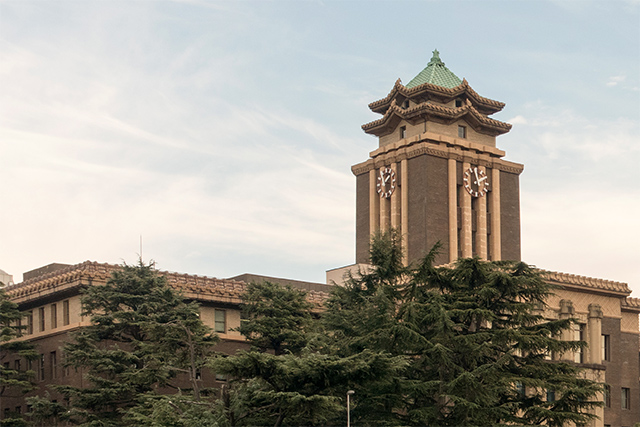
Opposite the train station are examples of colonial period architecture in Japan.
Sakae
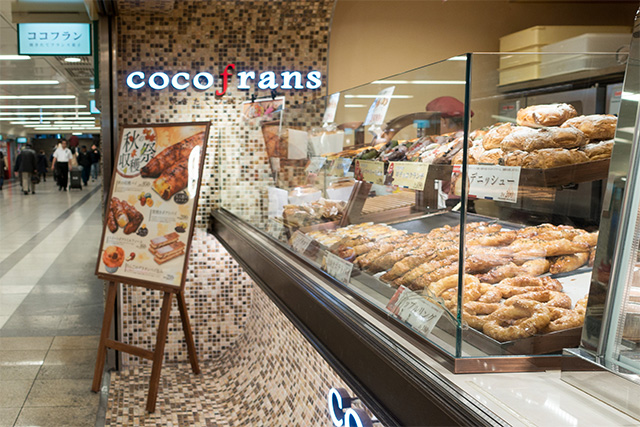
Back at the main city centre, we stop by a Coco Frans.
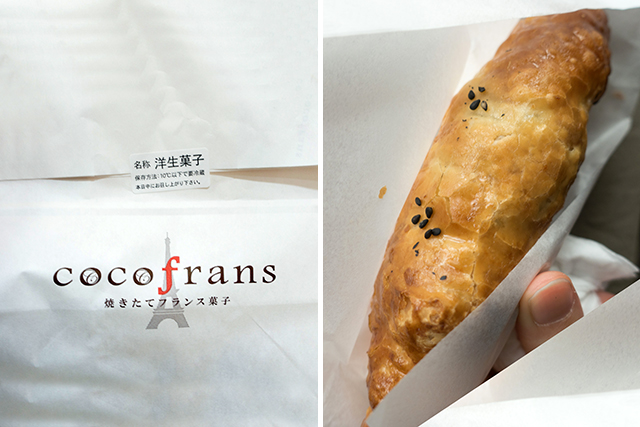
We pick up a small sweet potato (purple skin, yellow innards) roasted and wrapped in puff pastry. It was tasty, even for D who has a hard time reconciling sweet potatoes with his instinct that potatoes should be a salty.
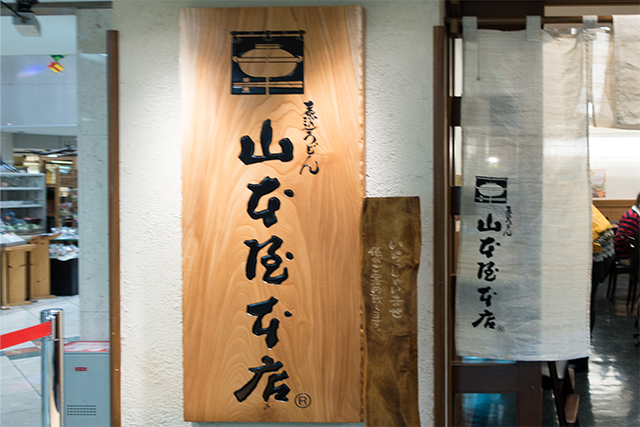
At Sakae, we hunted down Yamamotoya. They make miso-nikomi udon, or flat udon noodles prepared in a miso-rich, bonito-based soup.
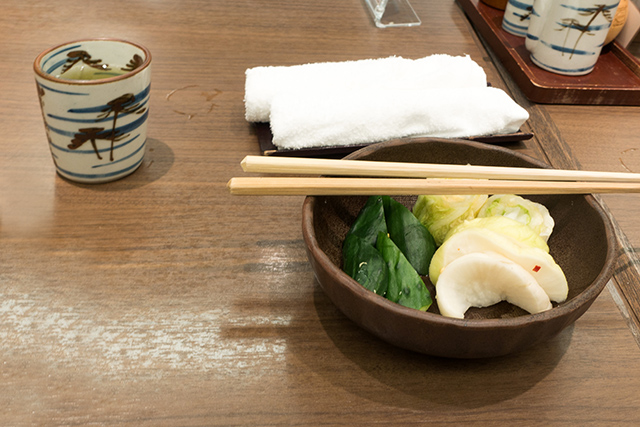
A plate of picked hakusai, thinly sliced raw onions, and cucumbers accompany all the dishes.
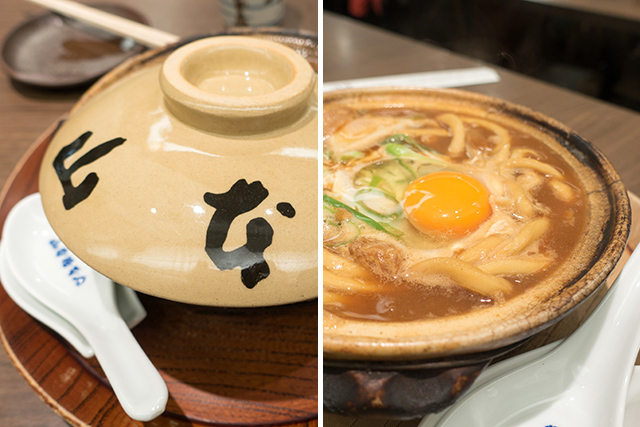
I ordered the standard item, which had thick and chewy noodles in a soup filled with fish cakes, leeks, and egg. The soup is as thick as they say – a good experience but not something we’re keen to repeat.
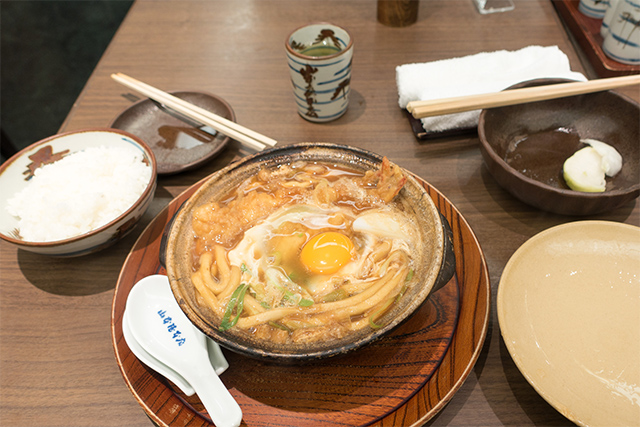
D ordered the standard one with the additional option of Nagoya cochin chicken. The way to eat this is to use the lid of the bowl, as a bowl. You see some people eating with a bib, so the soup doesn’t splash everywhere.
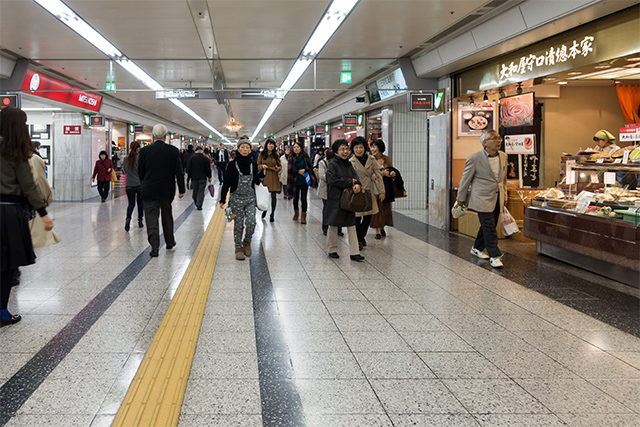
After lunch, we browsed along shops leading to Sakae station.
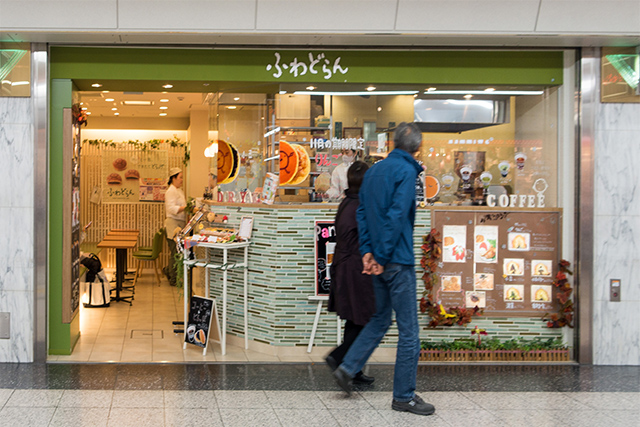
We came across Fuwadoran.
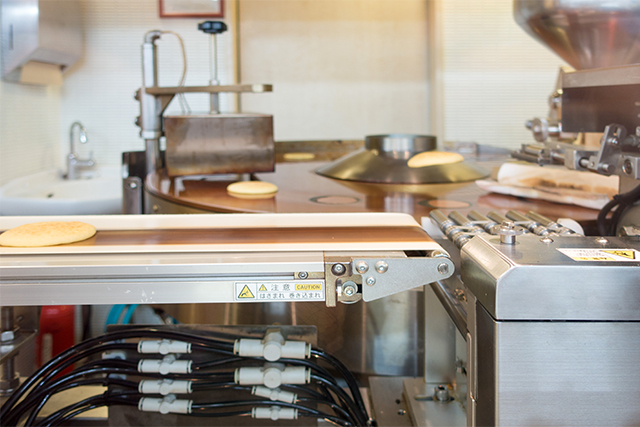
Or rather, we saw this super cool machine in their window that made their flapjack/pancakes. IYou can see a flapjack midair after being flipped by a spatula but before it lands on the conveyor belt.
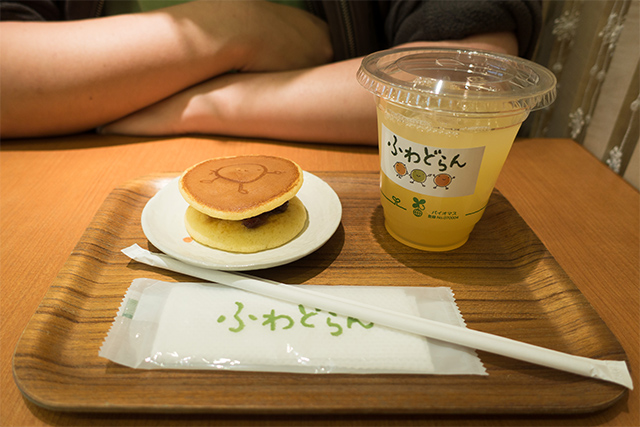
After the excitement of watching them being made, we order a flapjack take on the azuki sandwich (azuki beans with butter) with an apple juice.
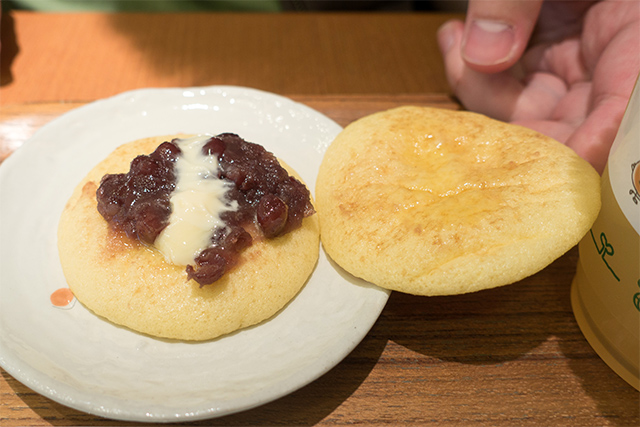
It was deliciously buttery – butter makes everything taste good!
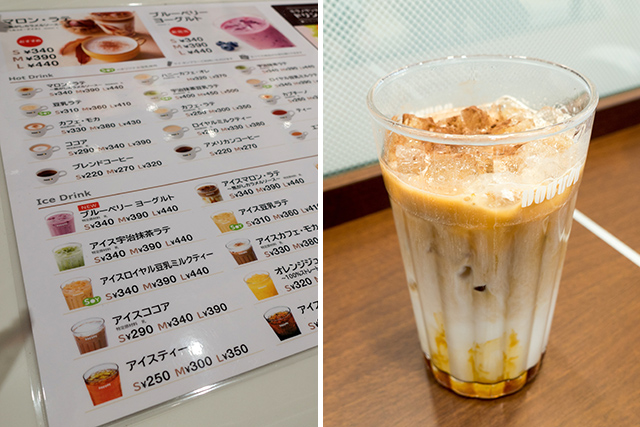
A couple of stores down we spot a Dotour. We’d seen an advertisements outside it’s stores for a marron latte and were keen to try it out. Marron or chestnut is a ‘thing’ in Japan – you can get roasted chestnuts, chestnut soft serve, and mont blancs feature at almost every place that sells cake.
The marron latte definitely tastes like chestnut – it had a pleasant nuttiness to it, and it’s certainly a more pleasant seasonal drink than something like a pumpkin spice latte (urgh, why?) at Starbucks.
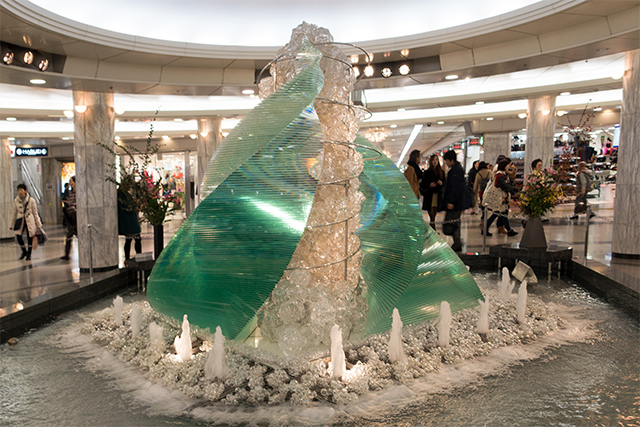
Mid-way, we reach a water feature that resembles a Christmas tree.
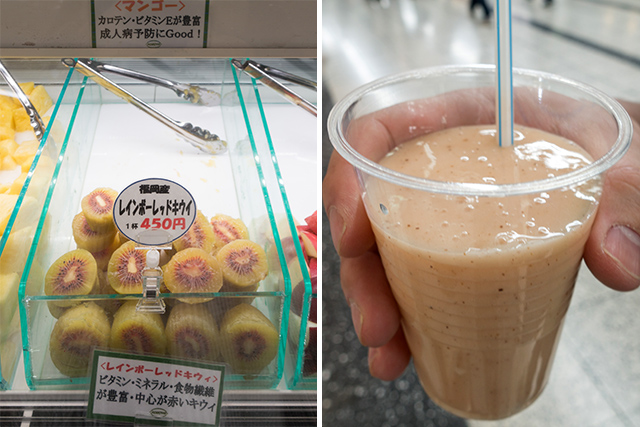
Down a path off the main, we spot a place selling rainbow red kiwifruit smoothies. We’d never seen this kind of kiwifruit (just the normal and golden kinds). It basically tastes like a sweet kiwifruit (so a golden one). I’m not sure I could tell how the red center affected its flavour.
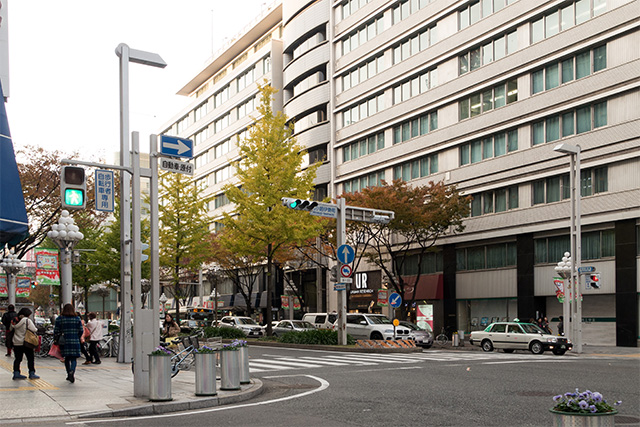
We head back to our hotel to check in and a quick rest.
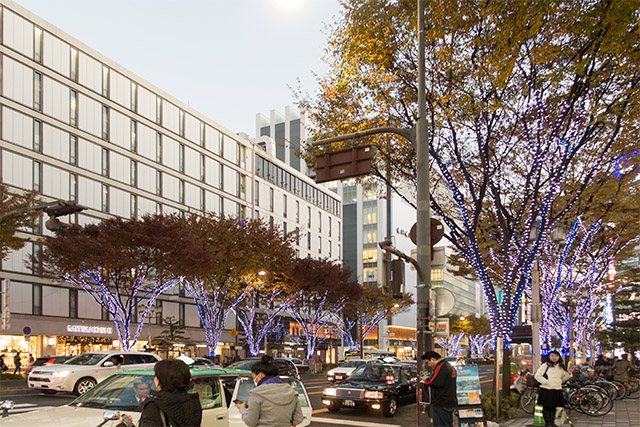
On the way, we see the trees at Sakae decorated for Christmas (above, left).
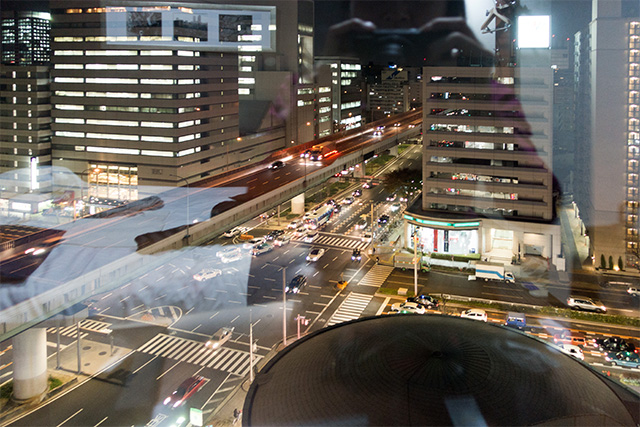
Our hotel also overlooks the Nagoya Expressway (above, right), but the rooms are well insulated so noise isn’t an issue.
Nagoya Dome
The intention in visiting Japan this time around, was to get out of the main tourist spots and head to places less well-trodden by tourists. So for the evening, we head to the shopping mall located near Nagoya Dome.
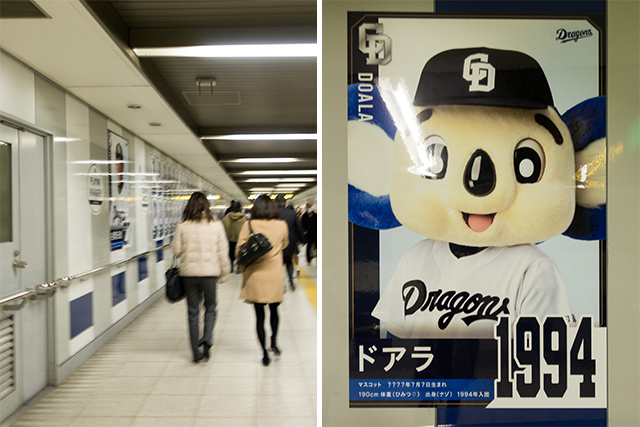
Nagoya Dome is home to the Dragons. So the entire underground tunnel from Nagoya Dome-mae Yada Station is lined with posters featuring the Dragons, from mug shots of all their players and mascots, complete with their weight and height, to the evolution of their uniform and mascots over the years.
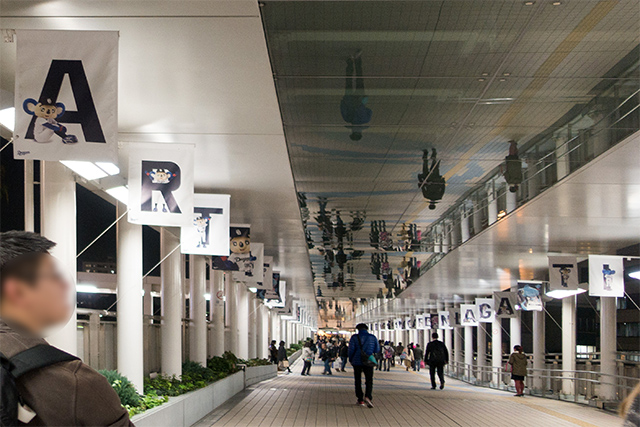
For someone who cares nothing about sports, let alone baseball, it was still an interesting stroll.
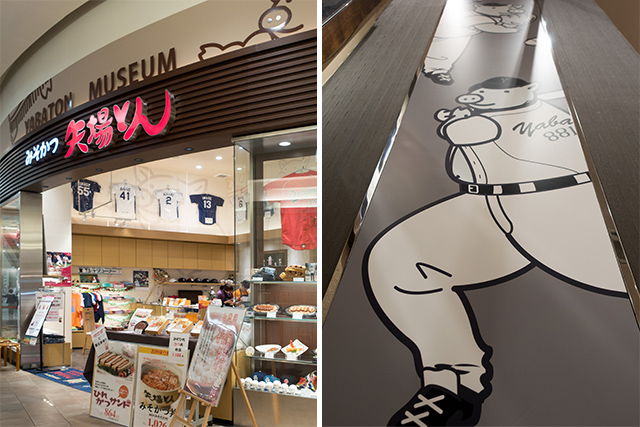
In Nagoya, there were a few foods we wanted to tick off our list (it seemed highly unlikely we would be revisiting here on future trips). The miso-nikomi udon was the first, and the second is miso katsu – pork cutlets with a rich miso sauce. For that, we headed to Yabaton. We wanted to eat early because we’d seen huge crowds gather at a venue outside. We weren’t sure if it was a baseball game, but had read online that the food court gets packed to capacity after a baseball game, so we wanted to be safe.
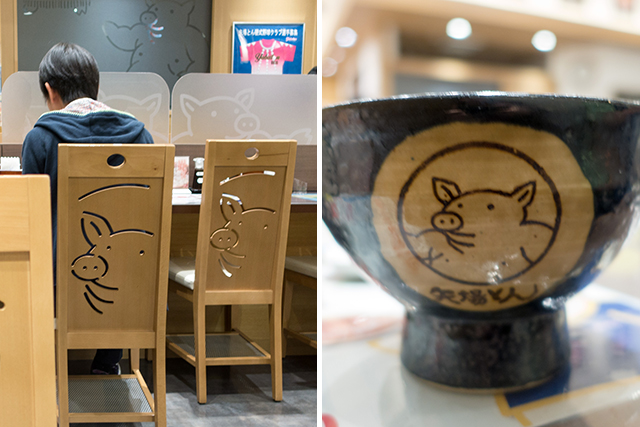
Yabaton pays particular care to their decor – the chairs have a woodcut of the pig, while the bowls for rice are also painted with the pig.
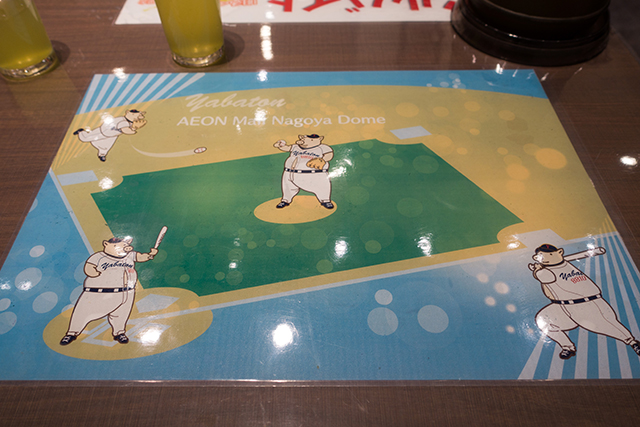
Being the branch near Nagoya Dome, the decor of the restaurant is themed accordingly – the wall and place mats feature the pig in a Dragons uniform playing basebal
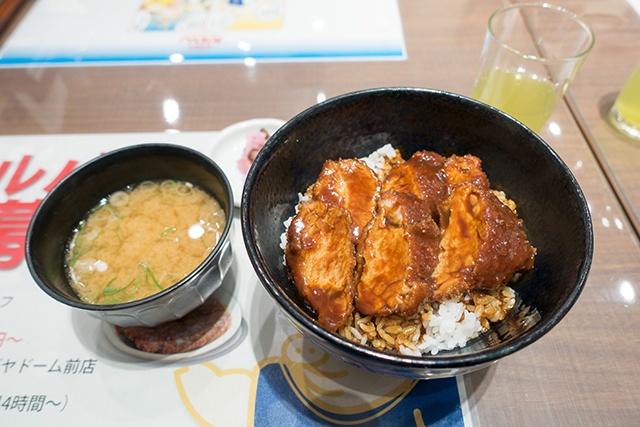
I ordered katsu with rice (above, left)…
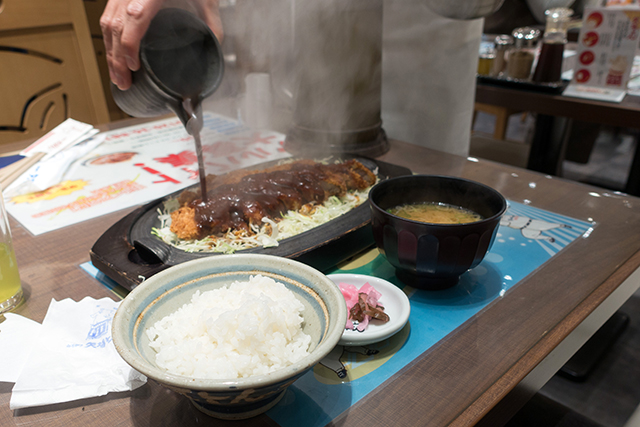
while D ordered a slightly more expensive dish so we could tell the difference between the two cuts of meat. The waiters bring out your dish, before a second person follows behind and pours the hot miso onto the katsu. While D couldn’t tell much difference between the two meats, I thought his was slightly more tender. The miso, though, was really quite salty. It’s not our favourite way to eat katsu, but it’s something special to Nagoya.
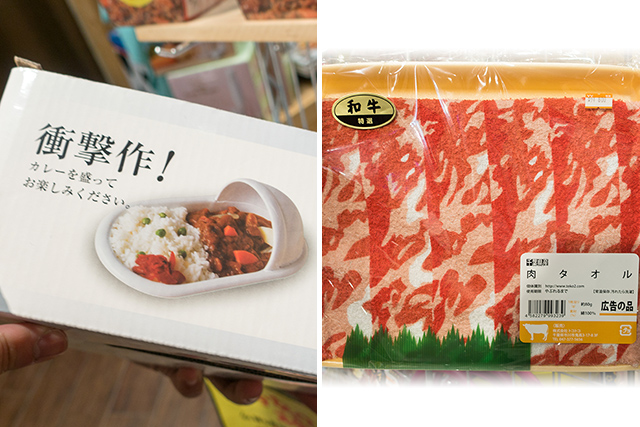
After dinner, we wander into a kitschy store selling odd goods. We see the curry plate in the shape of a urinal (even though I love Japanese curry, I can’t deny that it resembles diarrhea), and a wash cloth printed to resemble thin slices of delicious marbled beef. Yum!
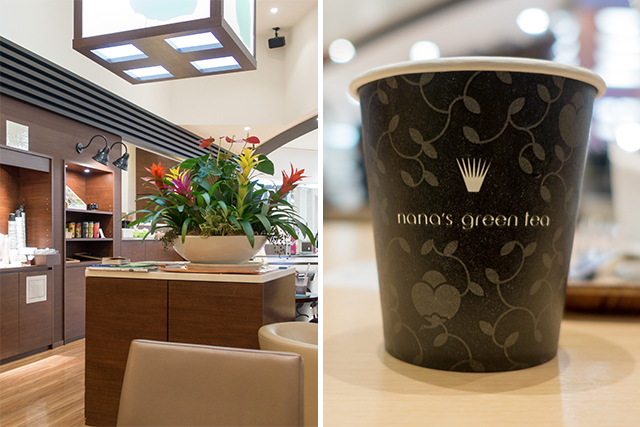
Dessert! Dessert always rounds out a meal. We head to nana’s green tea, which make delectable desserts (pricey for Japanese standards, but still cheaper than Australian standards). We ordered a black sesame warabi mochi parfait (¥920). From bottom to top: maple syrup, whipped cream, corn flakes, black sesame paste, black sesame ice cream, warabi mochi, whipped cream, maple syrup.
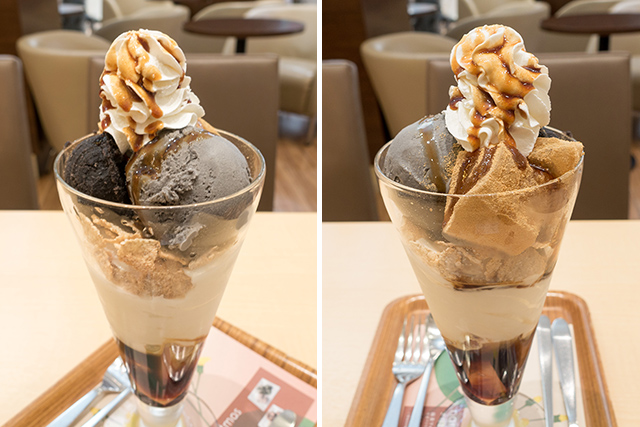
D and I really enjoyed this dessert. We both like black sesame and the ice cream and paste hit just the right spots. The warabimochi was interesting though – at first we thought it was maple syrup jelly, but that’s probably just from the syrup drizzled on it. I like whipped cream much more in Japan – it’s different to the whipped cream you get in Australia, which tastes ridiculously airy. Yum!
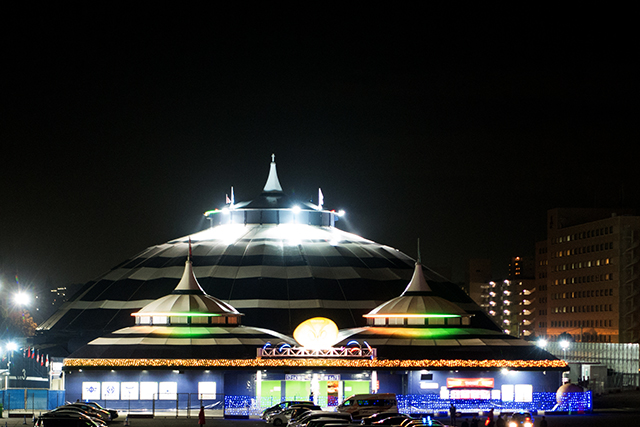
And just before we head home, a photo of the tent set up by Cirque de Soleil (which explains the crowds of people we encountered earlier on).