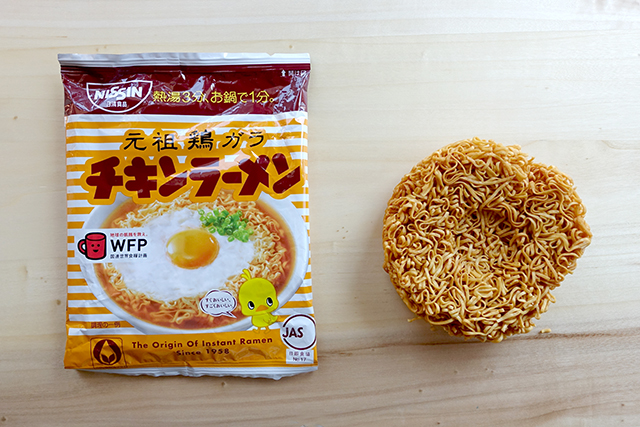
Instant ramen is everywhere these days. Back in 1958, though, they were only just invented in response to a shortage of food in post-war era Japan by Momofuku Ando after seeing tempura being cooked at home. The Momofuku Ando Instant Ramen Museum located in both Ōsaka and Yokohama is a museum dedicated to instant noodles and Cup Noodles, as well as its creator and founder, Momofuku Ando. When D and I visited Yokohama in 2014, we participated in a class to make our own Nissin Chikin Ramen from kneading, spreading, and steaming the wheat flour and then drying it with the flash frying method. We enjoyed our freshly made instant noodles at home and were gifted with a packet produced for sale to compare the two.
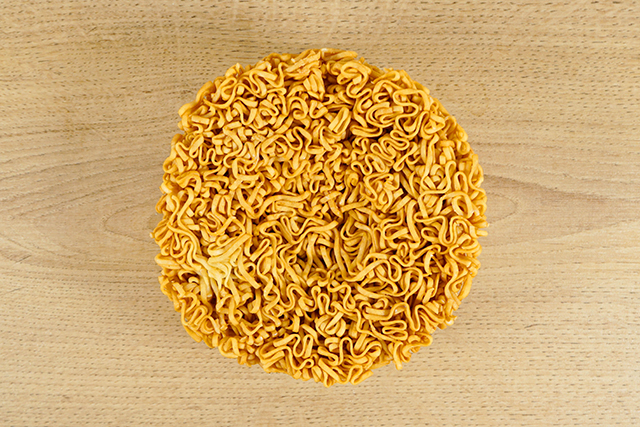
Unlike other Nissin instant noodles, the ramen does not have seasoning packets but are contained within the noodle itself, and are circular – rather than square-shaped. This accounts for the darker colour of the noodles and makes it easier to fit in a bowl.
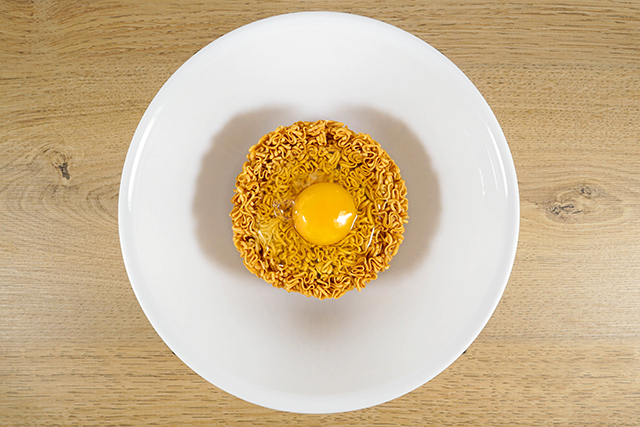
The noodles also have a depression in the centre for placing a raw egg as in the serving suggestion. Boiling water is added to just come up to the top of the noodles and then covered for three minutes.
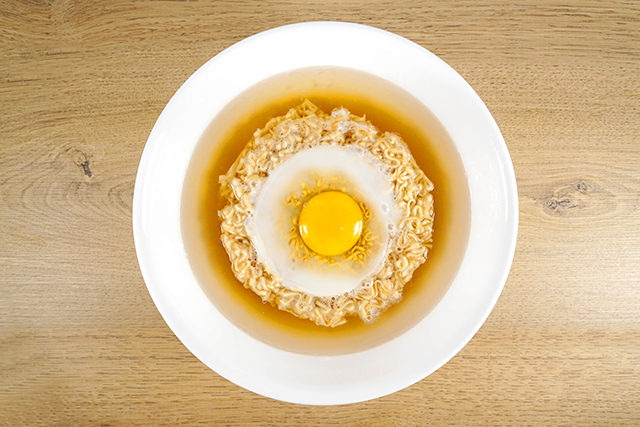
Unfortunately, I’d used an egg straight from the fridge so the egg didn’t cook very well.
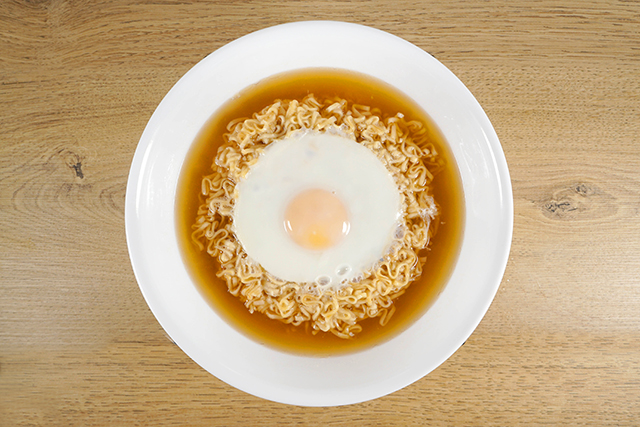
But that’s nothing some time in the microwave can’t fix. After a further 40 seconds in the microwave, the egg was half cooked. The noodles soaked up more water, but still retained a good aldente bite, while the runny half-cooked egg gave a delicious creamy texture to the noodles and the rich savoury chicken broth.
As the noodles are pre-cooked, these instant noodles can also be eaten dry like the dagashi snack, Baby Star Ramen, which also comes in chicken flavour.
This Nissin Foods Chikin Ramen contained 85 g. It was produced in Japan and received as part of a Chicken Ramen Factory Workship at Momofuku Ando Instant Noodle Museum in Yokohama, Japan in 2014.