Kyōto — North
Kinkaku-ji
金閣寺, 1 Kinkakujicho, Kita Ward, Kyōto, 603-8361, Japan
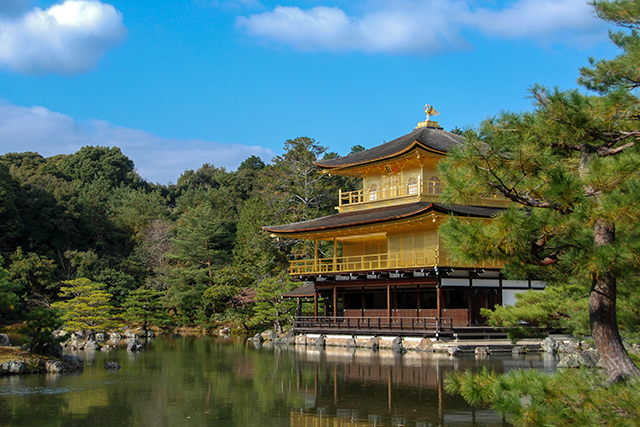
Kinkakuji is a Zen temple in northern Kyōto whose top two floors are completely covered in gold leaf.
Formally known as Rokuonji, the temple was the retirement villa of the shogun Ashikaga Yoshimitsu, and according to his will, it became a Zen temple of the Rinzai sect after his death in 1408. Kinkakuji was the inspiration for the similarly named Ginkakuji (Silver Pavilion), built by Yoshimitsu’s grandson, Ashikaga Yoshimasa, on the other side of the city a few decades later.
Kinkakuji is built overlooking a large pond and is the only building left of Yoshimitsu’s former retirement complex. It has burned down numerous times throughout its history including twice during the Onin War, a civil war that destroyed much of Kyōto; and once again more recently in 1950 when it was set on fire by a fanatic monk. The present structure was rebuilt in 1955.
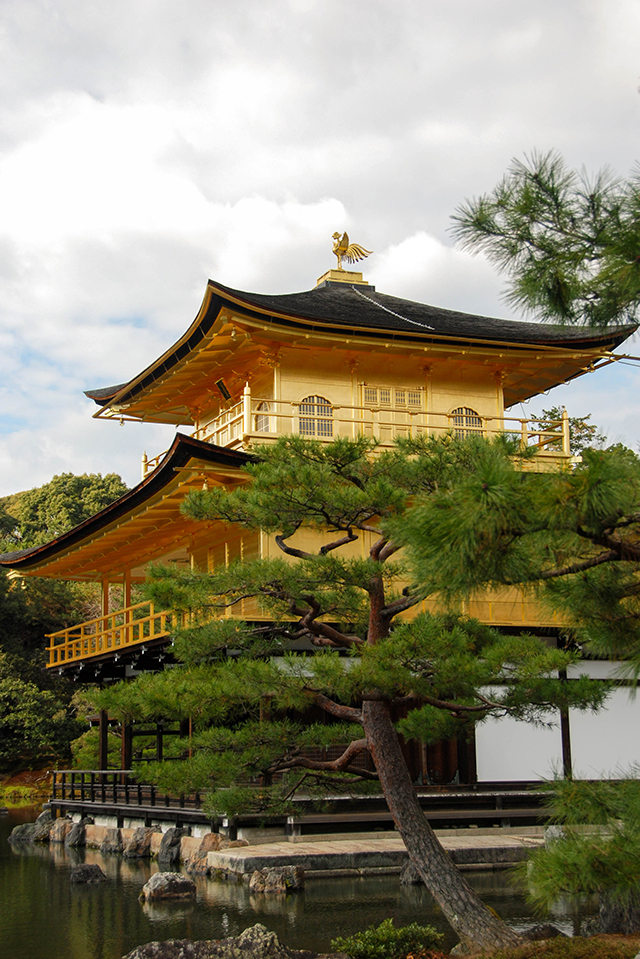
Kinkakuji was built to echo the extravagant Kitayama culture that developed in the wealthy aristocratic circles of Kyōto during Yoshimitsu’s times. Each floor represents a different style of architecture.
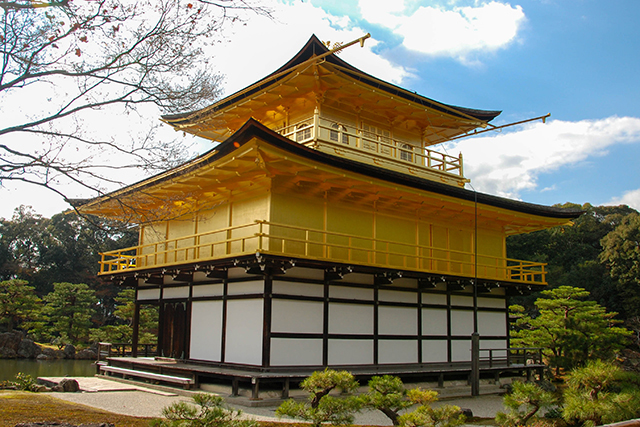
The first floor is built in the Shinden style used for palace buildings during the Heian Period, and its natural wood pillars and white plaster walls contrast yet complement the gilded upper stories of the pavilion. The second floor is built in the Bukke style used in samurai residences and has its exterior completely covered in gold leaf.
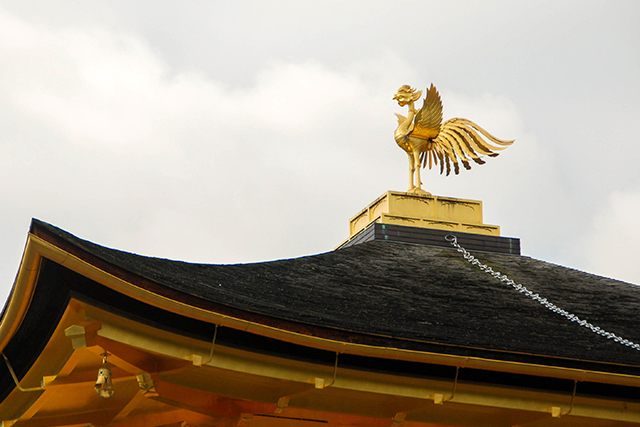
Finally, the third and uppermost floor is built in the style of a Chinese Zen Hall, is gilded inside and out, and is capped with a golden phoenix. The building is not open to the public.
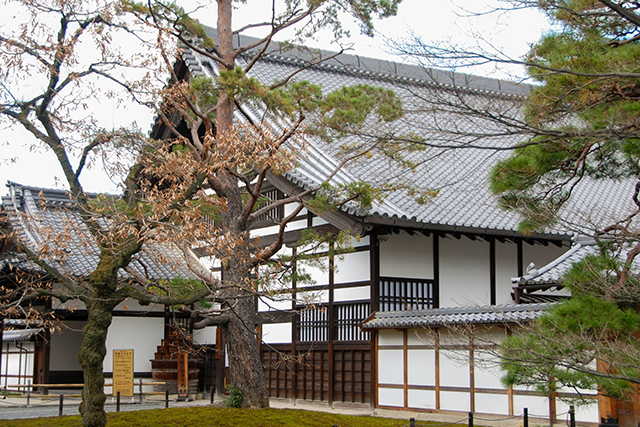
After viewing Kinkakuji from across the pond, visitors pass by the head priest’s former living quarters (hojo) which are known for their painted sliding doors (fusuma), but are not open to the public.
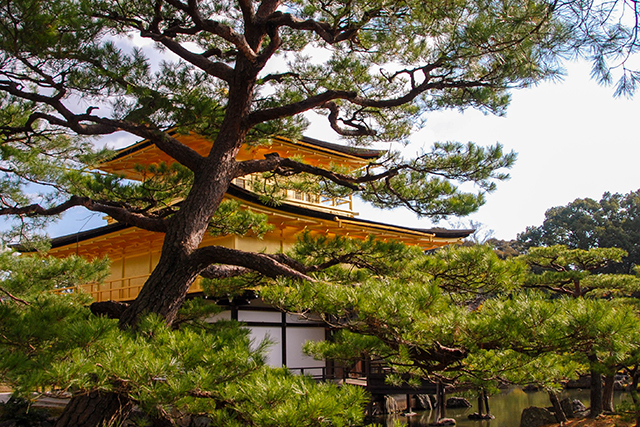
The path once again passes by Kinkakuji from behind then leads through the temple’s gardens which have retained their original design from Yoshimitsu’s days.
Ryōan-ji
龍安寺, 13 Ryoanji Goryonoshitacho, Ukyo Ward, Kyōto, 616-8001, Japan
Ryōan-ji is a Zen temple and the site of Japan’s most famous rock garden.
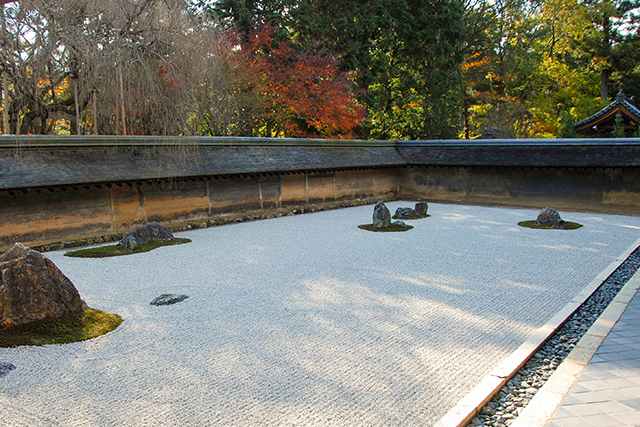
The garden consisted of a rectangular plot of pebbles surrounded by low earthen walls, with 15 rocks laid out in small groups on patches of moss. An interesting feature of the garden’s design is that from any vantage point at least one of the rocks is always hidden from the viewer.
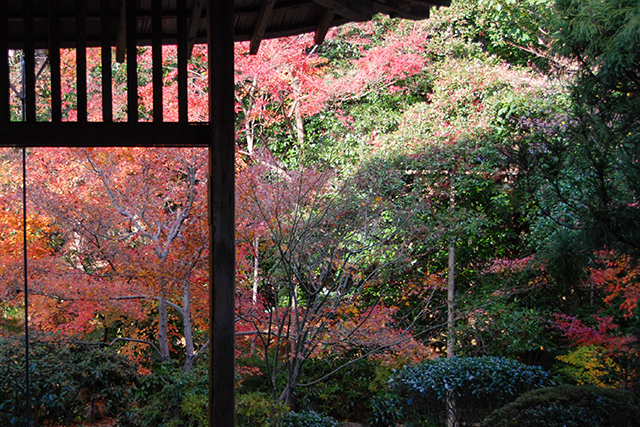
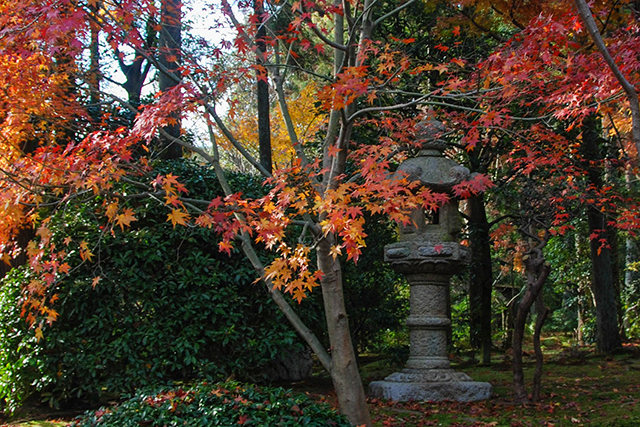
Originally an aristocrat’s villa during the Heian Period, the site was converted into a Zen temple in 1450 and belongs to the Myoshinji school of the Rinzai sect of Zen Buddhism, whose head temple stands just a kilometre to the south.
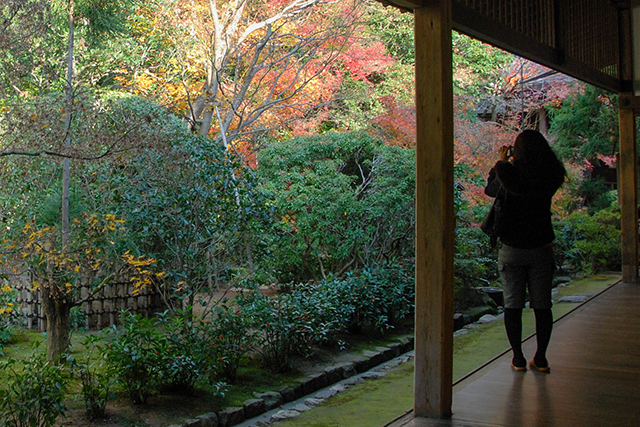
Ryoanji’s garden is viewed from the Hojo, the head priest’s former residence.
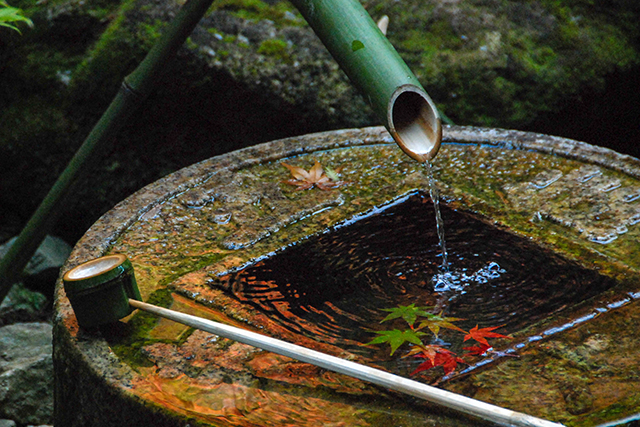
Besides the stone garden, the Hojo featured some paintings on the sliding doors (fusuma) of its tatami rooms, and a couple of smaller gardens on the rear side of the building. In one of the gardens there is a round stone trough that cleverly incorporates its square water basin into a Zen inscription.
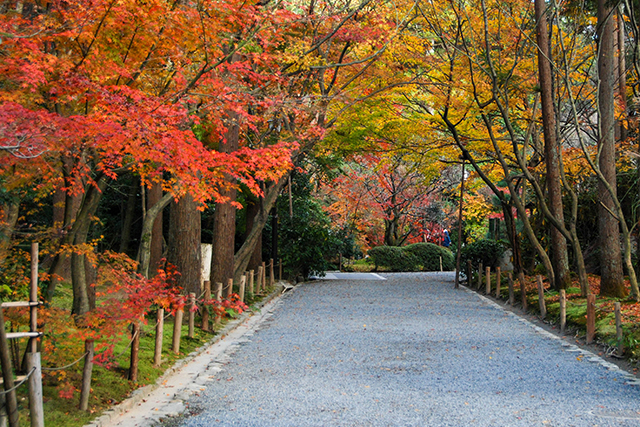
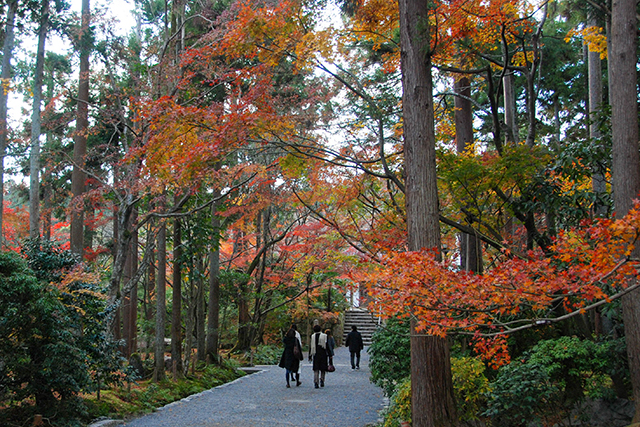
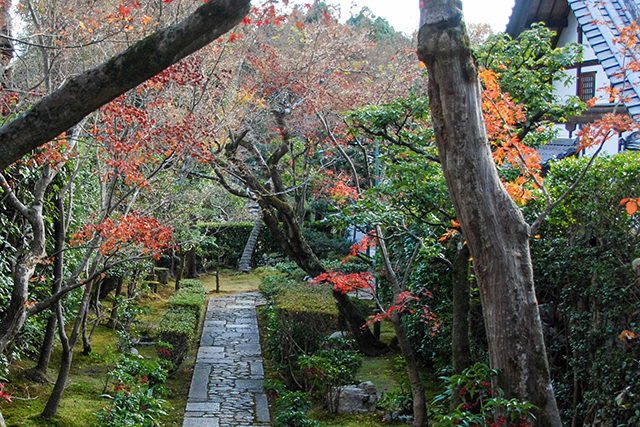
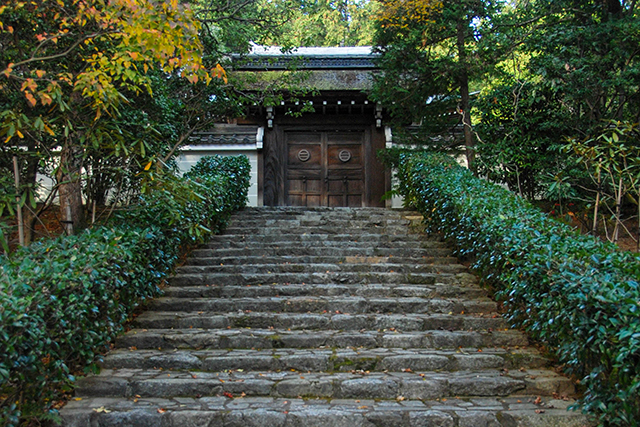
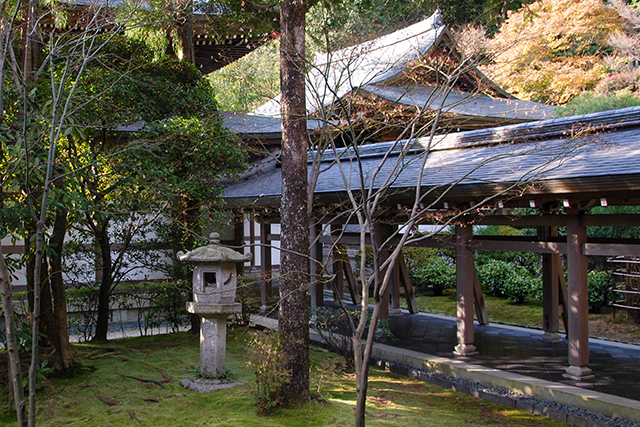
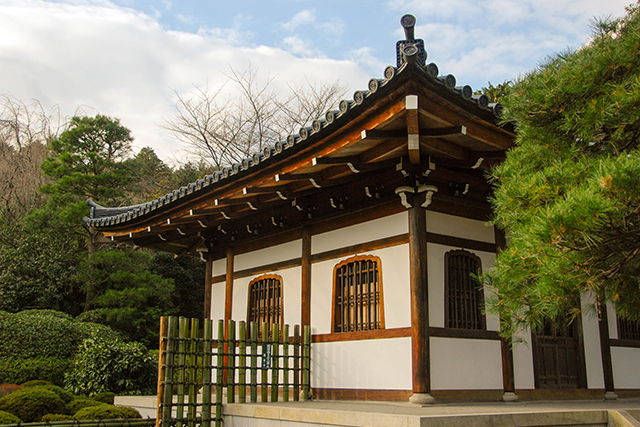
The Hojo is connected to the Kuri, the former temple kitchen, which now serves as the temple’s main entrance.
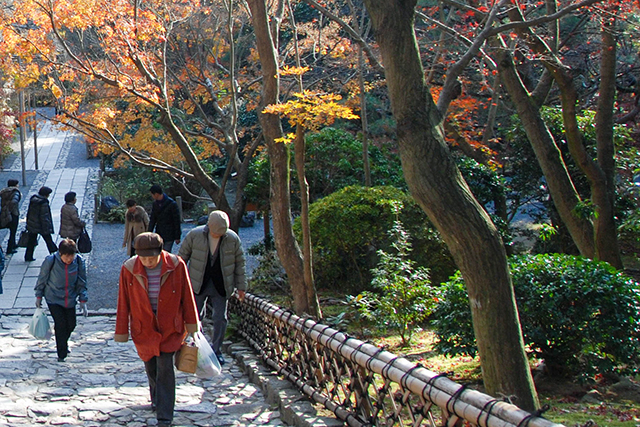
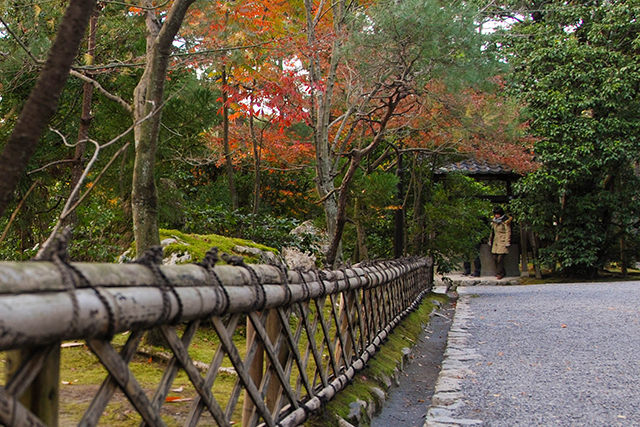
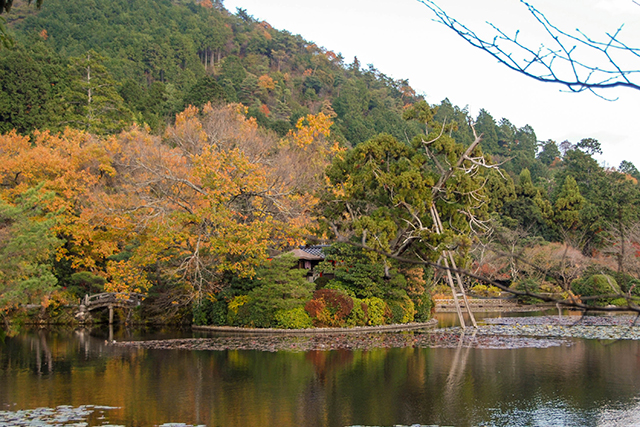
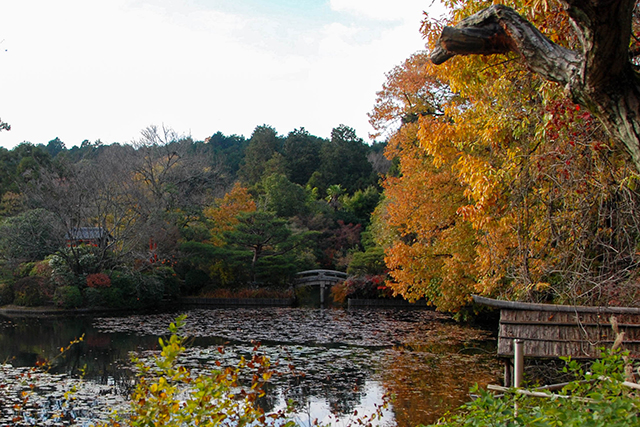
Ryoanji’s temple grounds also include a relatively spacious park area with a pond, located below the temple’s main buildings. The pond dates back to the time when the site still served as an aristocrat’s villa and featured a small shrine on one of its three little islands that can be accessed over a bridge.
Ninna-ji
仁和寺, 33 Omuroouchi, Ukyo Ward, Kyōto, 616-8092, Japan
Ninnaji is one of the many great temples in Kyōto which are listed as World Heritage Sites. It is the head temple of the Omuro School of the Shingon sect of Buddhism and was founded in 888 by the reigning emperor. Over many centuries, a member of the Imperial Family used to serve as Ninnaji’s head priest, and the temple was also known as Omuro Imperial Palace.
Due to the many wars and fires that ravaged Kyōto throughout its history, none of the buildings from the temple’s foundation in the 9th century still survive. The oldest buildings date back to the beginning of the Edo Period in the early 1600s, including the main hall (Kondo), the Kannon Hall, the Niomon front gate, the Chumon inner gate and the five storied pagoda.
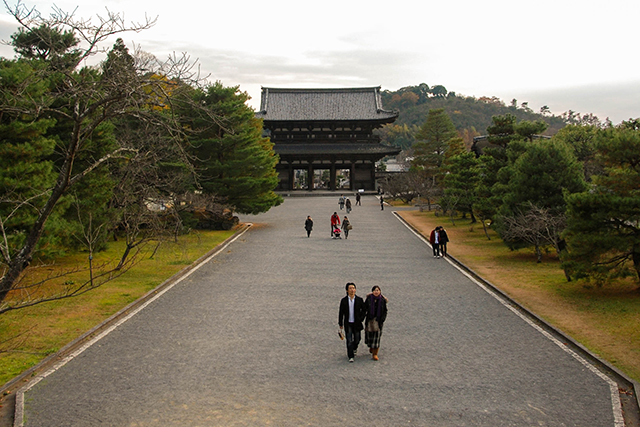
The Niomon Gate serves as the front gate and entranceway to Ninnaji Temple. The name of the gate refers to the Kongōrikishi: wrestler-like guardian statues enshrined to the left and right of the gate, which was constructed in the Kanei through the Shohou periods (roughly 1624 – 1648 in the early part of the Edo Period) by Tokugawa Iemitsu.
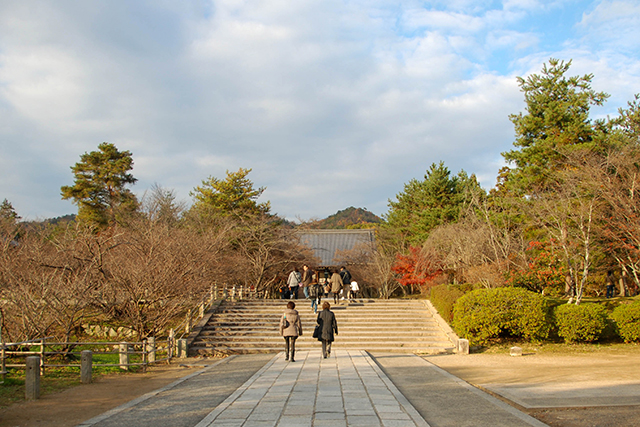
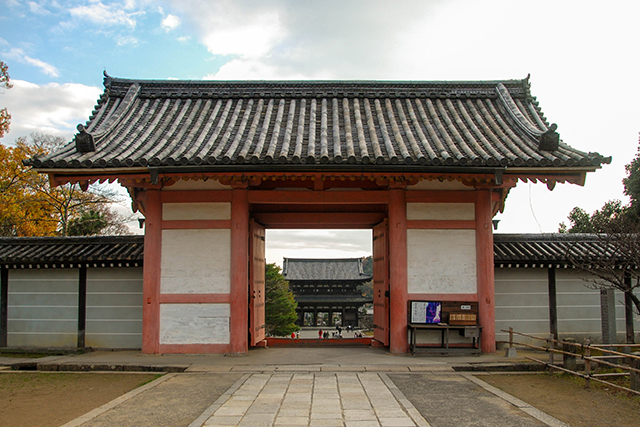
As you go further into the grounds, you come to the Chumon Gate, which is the entrance to the garan, the principal buildings of a Buddhist temple.
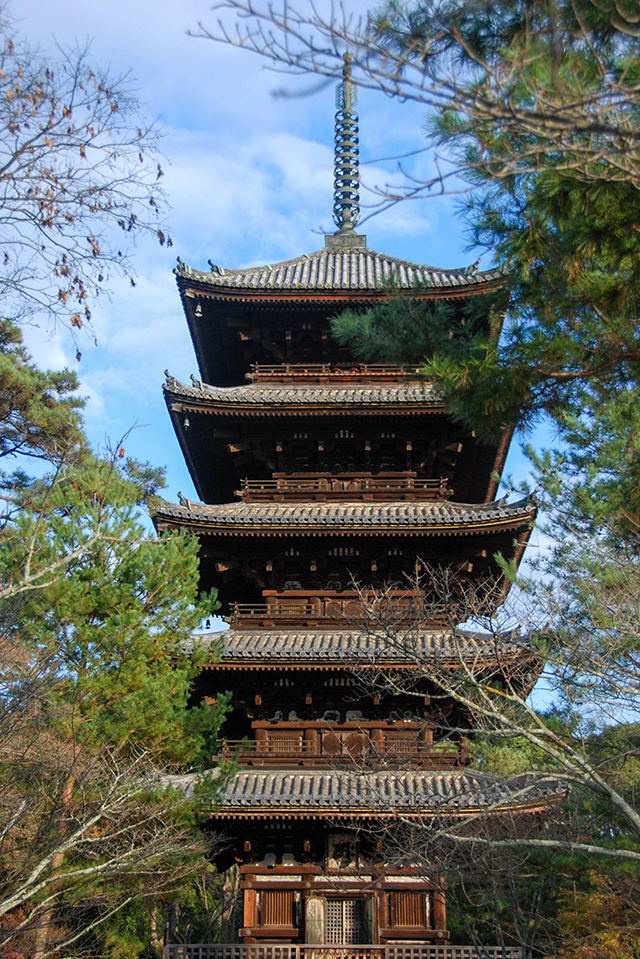
After passing through the Chumon Gate and up the approach road to the north, is the five-storied pagoda. The pagoda, which stands 36 meters tall, represents the technical peak of construction skills of the Kanei Period (1624 – 1644). The tiles of each story are almost the same size, a characteristic of the Edo Period, and it is considered a perfect example of pagodas built in the ‘modern’ period of Japan (Edo Period).
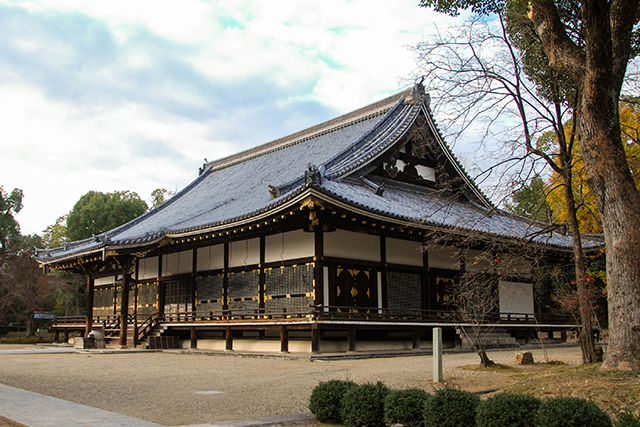
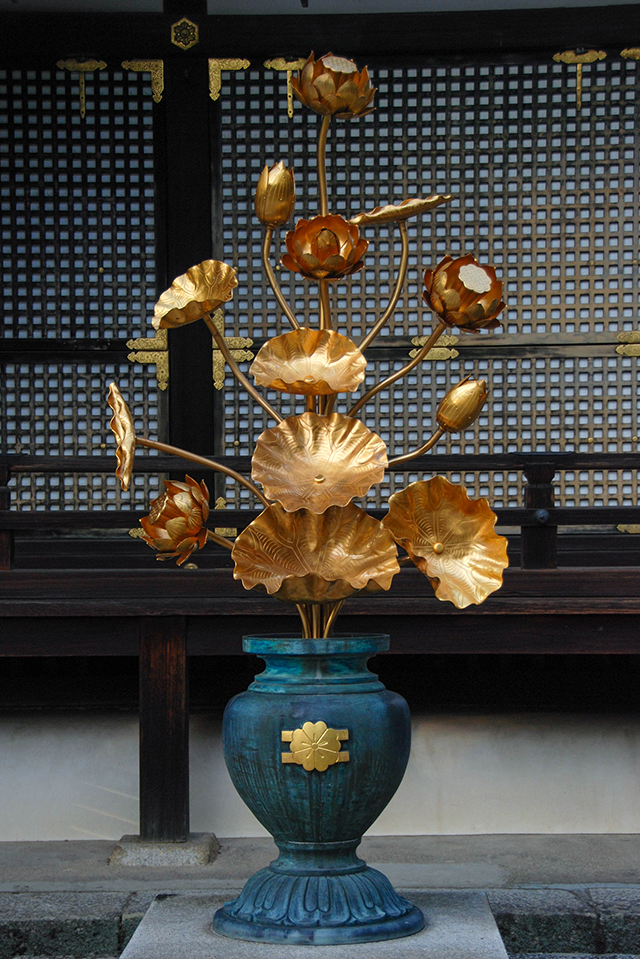
After leaving the pagoda behind and going a little further to the north, is the Kondo Hall.
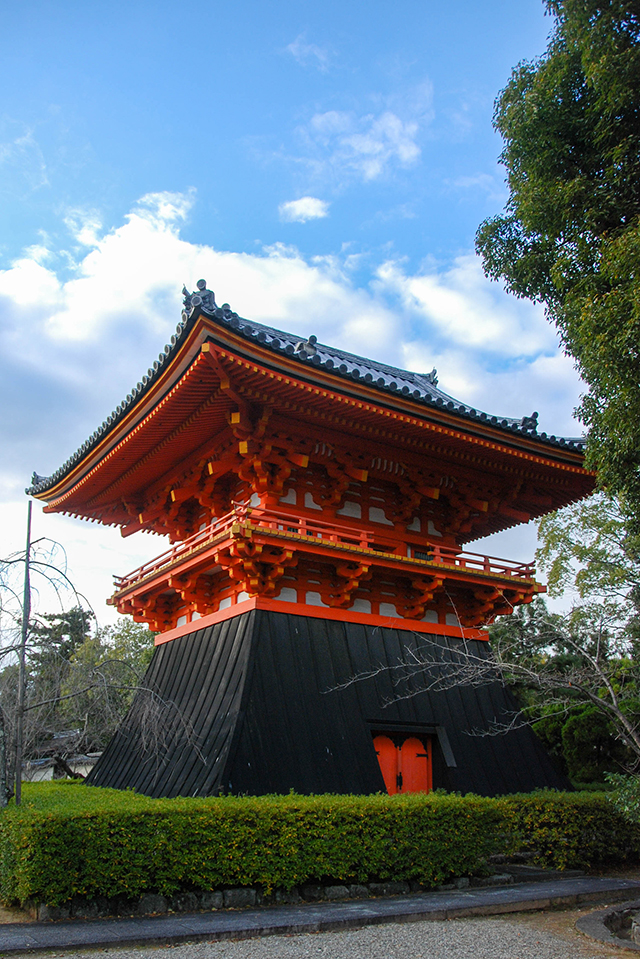
On the west side of the Kondo Hall, there is a tall vermilion belfry called the Shoro, with a hanging temple bell. Large and imposing, it is a good example of the bell towers built in the Edo Period.