This is our last proper day in Japan. Right across from our hotel was a Mister Donut.
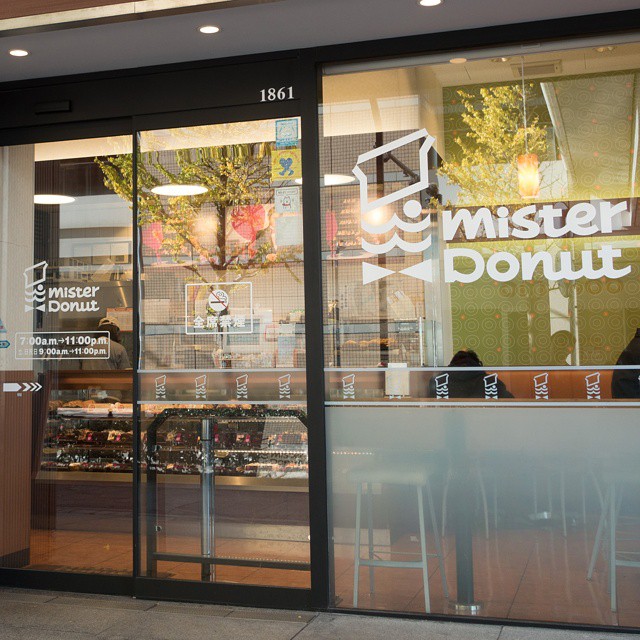
I’d semi-joked to D that we should eat at Mister Donut before we left Japan the previous night and this morning D insisted on a pit stop. I protested that donuts were hardly a breakfast food but D assured me that we’d just buy them and eat them later. Breakfast first.
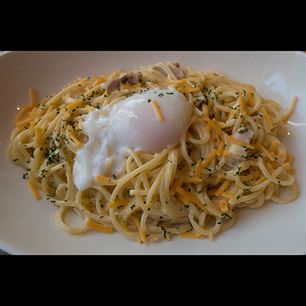
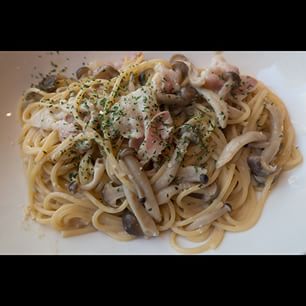
We found a Cafe Pronto where we indulged in pasta one last time. D had a bacon cabonara with a soft boiled egg, while I had a mushroom and bacon pasta. We’d both wanted the mushroom and bacon pasta but D was averse to ordering the same thing and I has ordered first. The mushroom and bacon pasta is definitely one of my favourites.
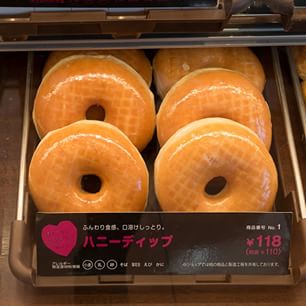
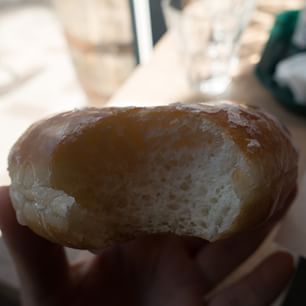
And it’s donut time. I chose the original glazed donut. I’m boring and wanted to compare it to the original glazed Krispy Kreme. They taste much the same, although a Krispy Kreme has a thicker glaze making it more tasty.
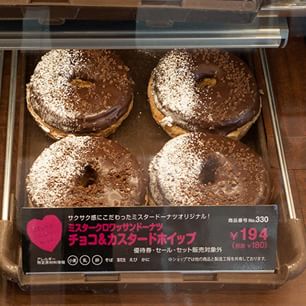
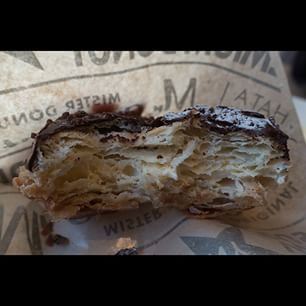
D chose what we thought was a doughnut with chocolate icing. Except when D bites into it, I realise it’s actually a cronut. All those fluffy layers. D had no idea what a cronut was but I did and had lamented that they cost upwards of $3.00 in Sydney. and here, they sell them just like any other doughnut for ~$2.00. D’s fancy cronut put my original doughnut to shame.
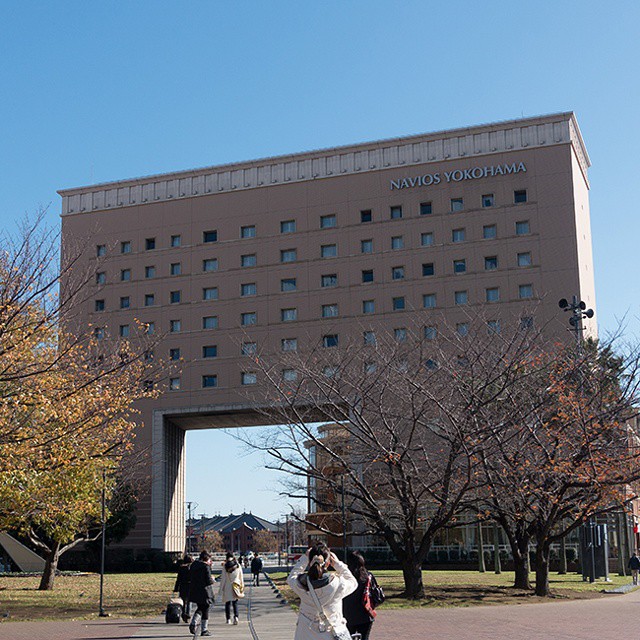
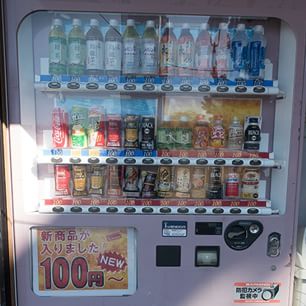
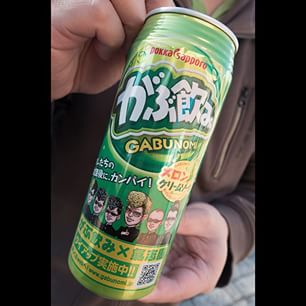
Stuffed with pasta and finis, we make our way to the Cup Noodle Museum once again. But not before we walk past the vending machine selling a melon soda spider that we’d spotted the previous day before realising we were out of cash. ¥100 for a 500 mL can is a bargain.
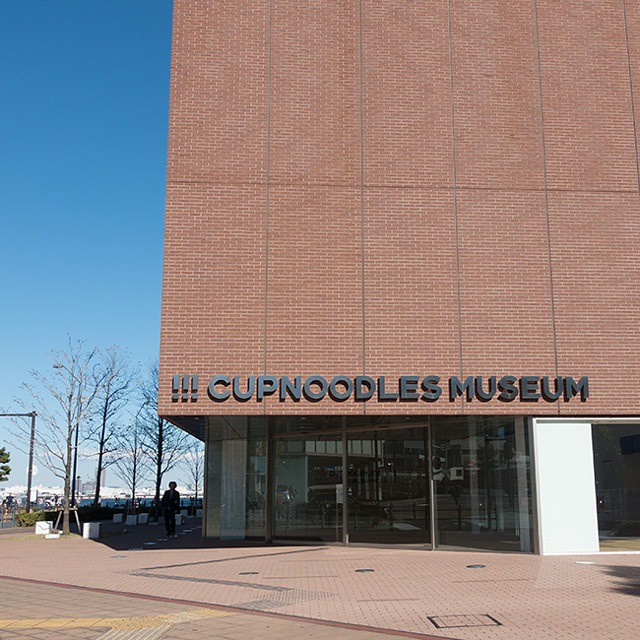
The Cup Noodle Museum is one of the very few places that could pull off the use of not only one, but three exclamation marks in their logo and still manage to be classy.
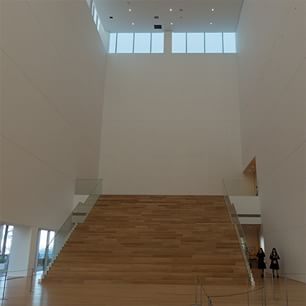
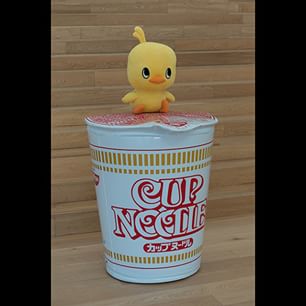
The inside of the museum makes generous use of space like you’d expect in a contemporary art gallery. The ceilings are high and there’s ample white walls. And there’s a giant blow up replica of a Cup Noodle container with the cute chicken mascot sitting atop.
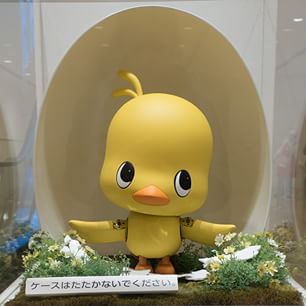
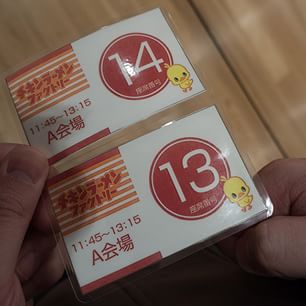
We’re interested in making chicken ramen from scratch, so after paying for general admission we head upstairs to level three to pay for our tickets (¥500 per person). The chicken ramen class takes 90 minutes and all participants must be in pairs, so this isn’t something a single traveller can enjoy unless you befriend a stranger beforehand.
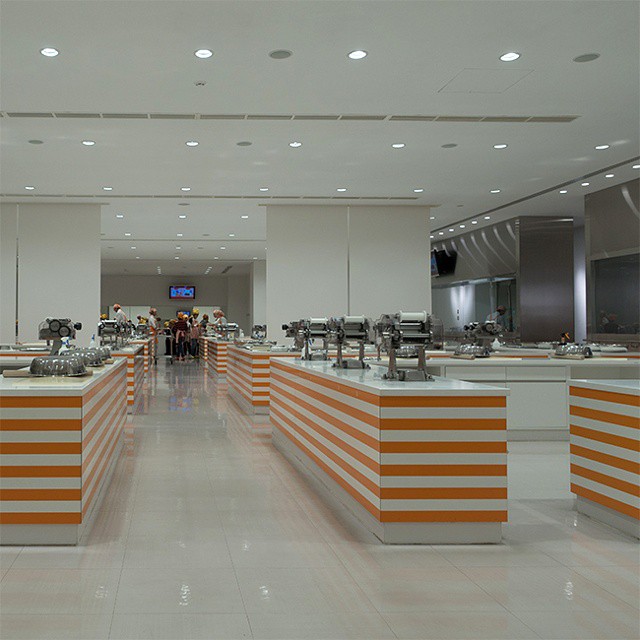
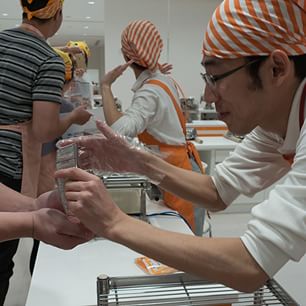
There’s a dedicated area where they hold the chicken ramen classes. It’s divided into three sections with each having enough equipment (mainly a pasta maker) for 20 students. Before you start they take you through hand washing (of course.) and donning a bandana and apron.
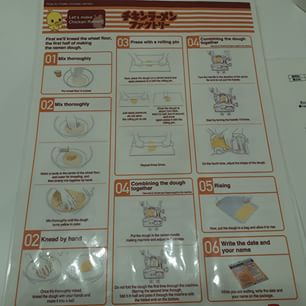
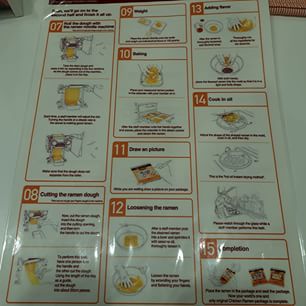
The staff are used to having foreign visitors (of our group of 10 people, over half were English speaking) so they have the instructions ready in English for us. There’s a staff never who gave the general overview of what’s happening and afterwards there’s another staff member assisting each group (usually two groups to each staff member, but we were lucky and got one all to ourselves.) through each of the steps.
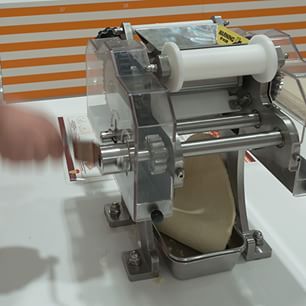
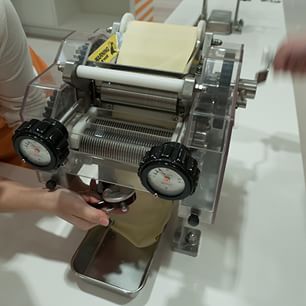
The flour mixture is prepared earlier so all we need to so is add liquid and knead the dough. After kneading and resting the dough for about 10 minutes we put the dough through the pasta maker multiple times to achieve increasing thinness.
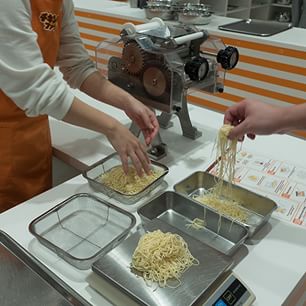
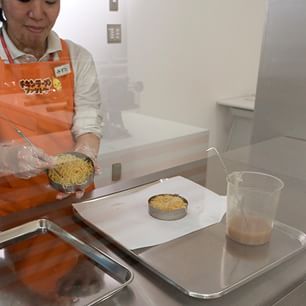
Once the dough is the right thinness, the staff member changed the settings on the pasta maker so that it would slice the dough into thing strips that we’d cut with scissors every 20 cm. We then weighed two 100g portions of the noodles, before tossing it around in the liquid seasoning provided. Once that’s done the staff member takes it behind to the commercial kitchen and prepares it for deep frying.
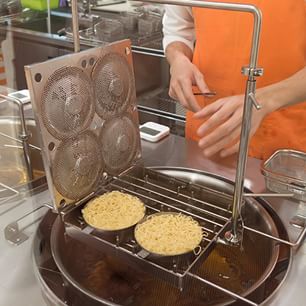
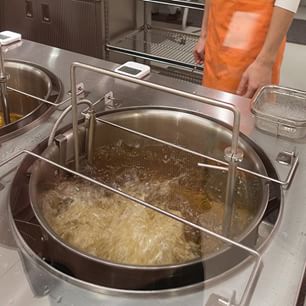
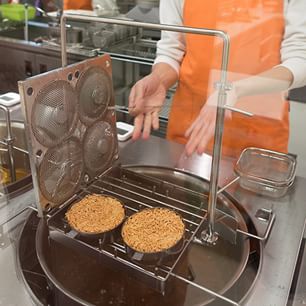
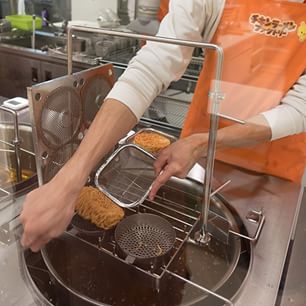
The kitchen area where all the deep fryers are kept is restricted to staff. But they’re keen on assuring their visitors that nothing funny is happening with their noodles – glass windows fronting the kitchen extend from the waist up to the ceiling, and the containers used to deep fry the noodles are numbered to correspond with the number you received when signing up (so 13 and 14) and they take note to show you the number when putting them into and taking them out of the deep fryer. You can be sure you don’t have someone else’s noodles.
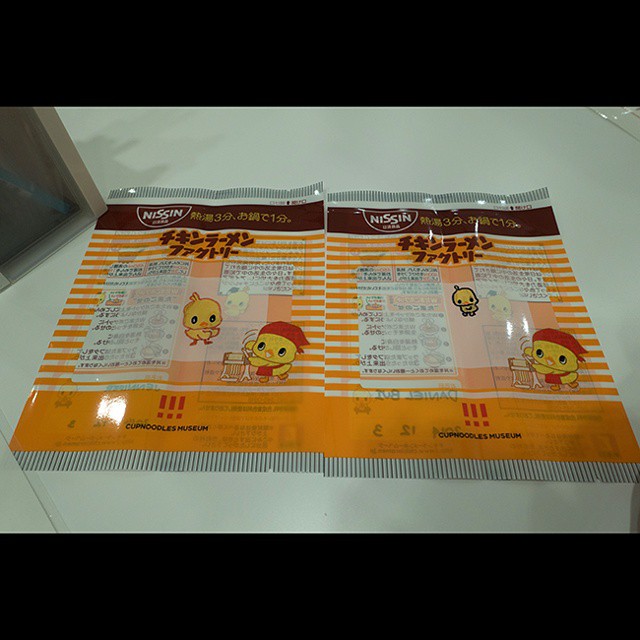
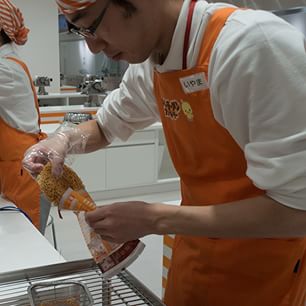
While we waited for the dough to rise earlier, we drew pictures on the packaging provided. The freshly fried noodles are placed in this packaging before heat sealed for freshness. Perhaps a result of the human labour involved in making the noodles, the time to expiry for the noodles is only one month.
At the end of the class, each person receives a bag with the packet of chicken ramen they made and an original (mass produced) packet of chicken ramen. You also get to keep the cute bandana that you were given to wear during the class.
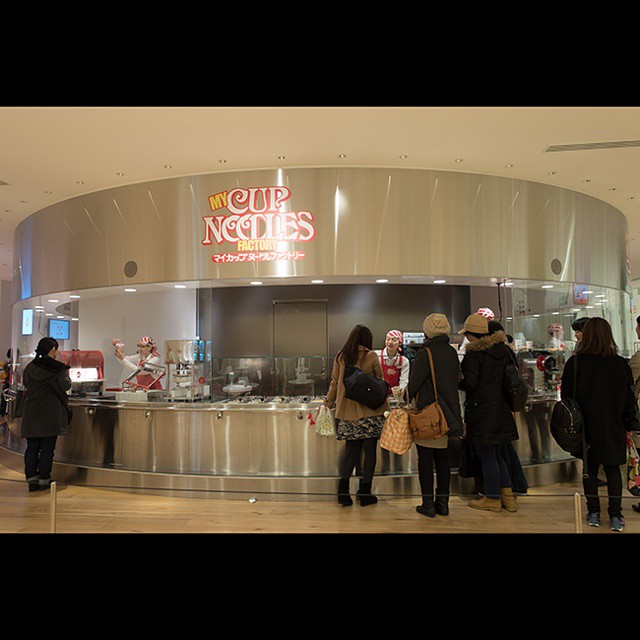
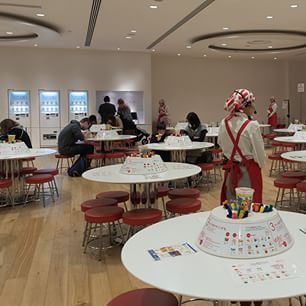
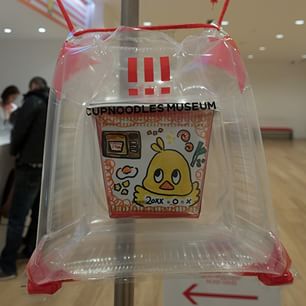
If you can’t spare 90 minutes, there’s also a section of the museum that let’s you decorate your own cup noodles and choose the toppings. Each cup of noodles is ¥300. We opted out of doing this after making chicken ramen – even though they give you an awesome air-filled bag (that you get to pump yourself) we were running seriously low on luggage weight and the air pressure in the plane would do weird things to the bag.
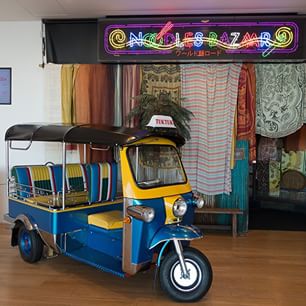
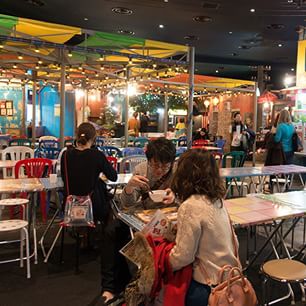
We head upstairs and find the Noodle Bazaar, which is a space decorated to look like street markets is South East Asia. There are stalls selling the most popular noodle dishes, including spaghetti from Italy, instant ramen from Japan, phở from Vietnam, mi goreng from Indonesia.
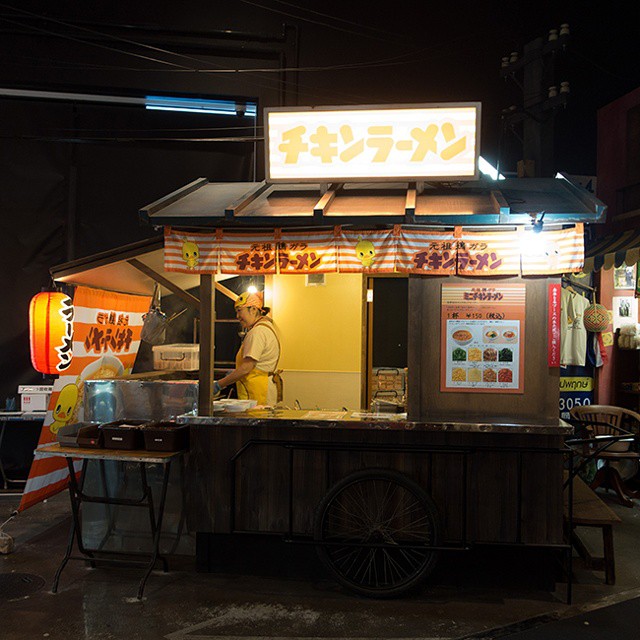
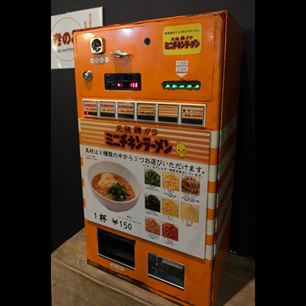
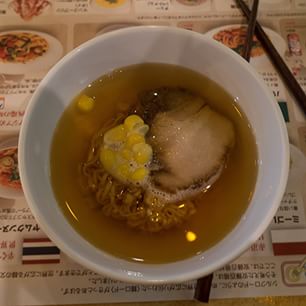
Coming off the end of the making chicken ramen class we tried the instant ramen. It’s the same chicken ramen we made, and you get to choose two toppings out of several, for ¥150. We chose pork and corn. You can also get unlimited soft drink refills for ¥300.
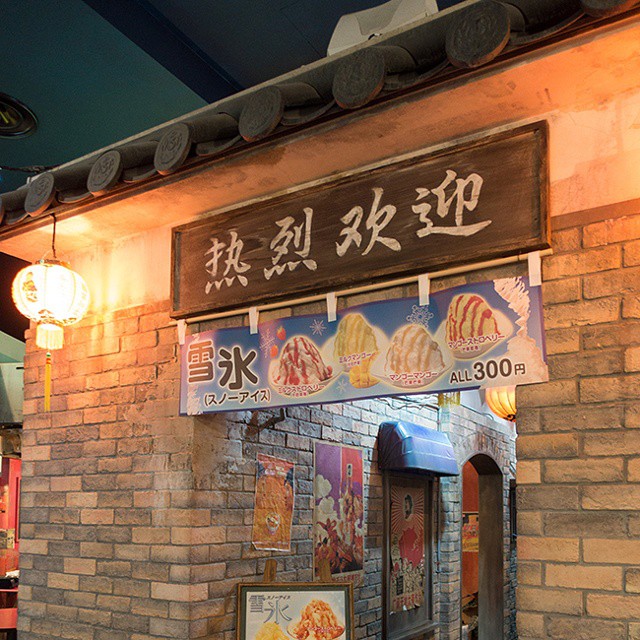
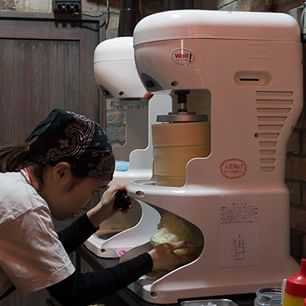
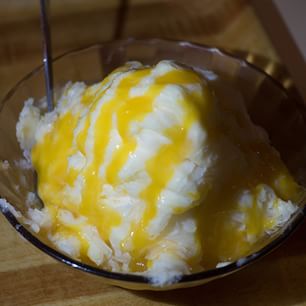
And shaved ice for dessert. This is best shaved ice I’ve ever tasted. It’s surprisingly creamy. I don’t understand how that’s possible but it’s so delicious I still crave it on hot summer days in Sydney.
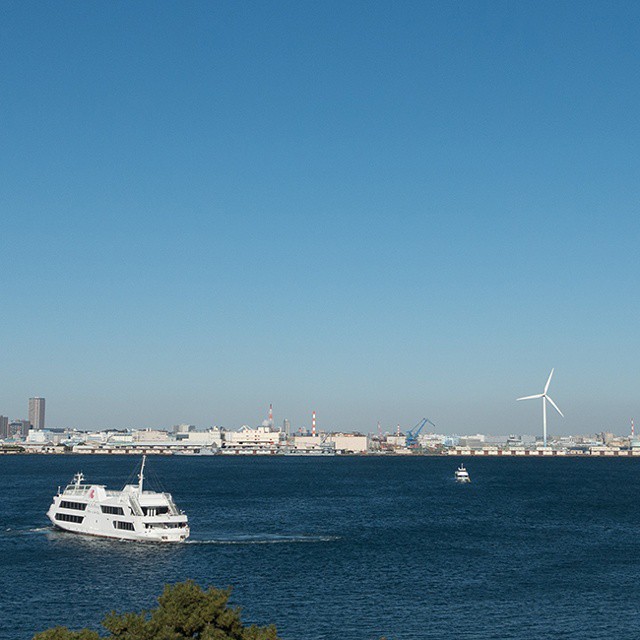
Directly opposite the entrance to the Noodles Bazaar is a balcony with expansive views of Tōkyō Bay. The cold front that came in just the day before meant it was absolutely freezing out here.
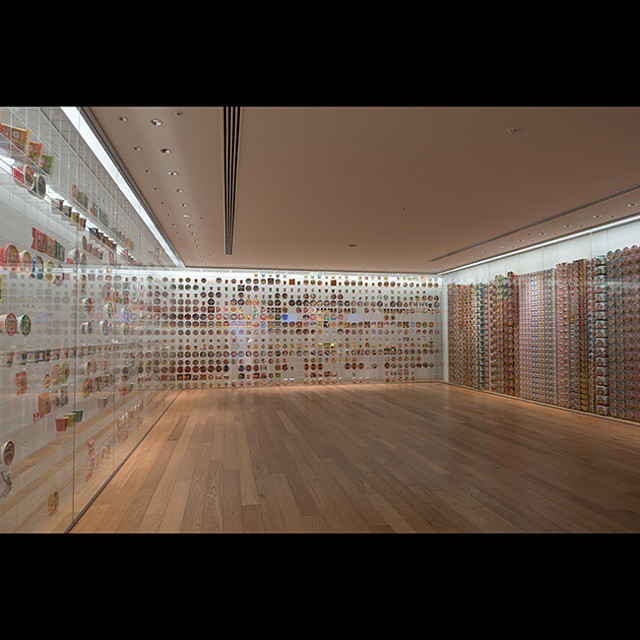
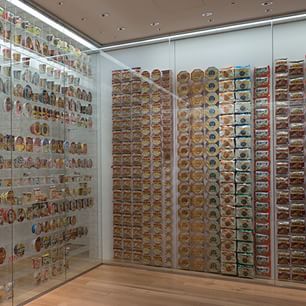
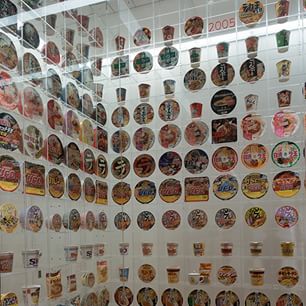
Back in the warmth of the museum, we head downstairs to the main museum part (as opposed to the area with all the actitivities). The entrance is a room to a physical timeline of the history of instant noodles, both by Nissin and of brands around the world.
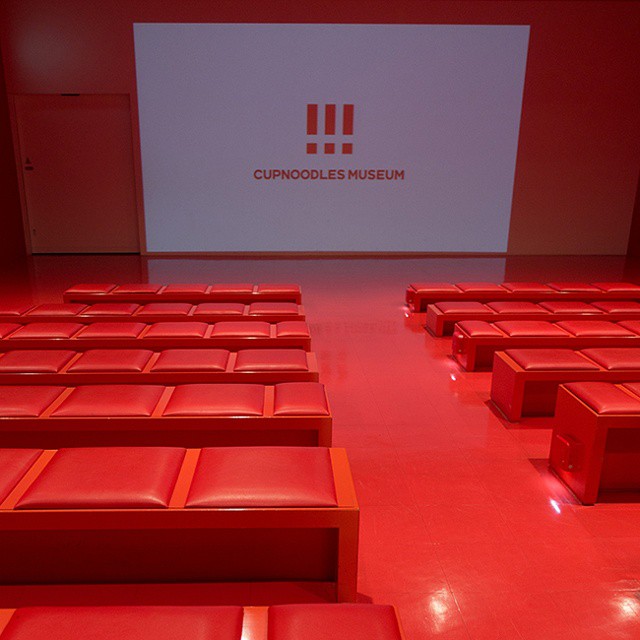
The room of instant noodles brought you to a bright red room showing a video explaining the origins of Cup Noodle and the journey the the founder took to make the brand the success that it is today. At the end of the video, a door opens at the opposite side to the entrance to bring you to the start of the exhibits. You can borrow English (and Chinese and Korean) tracked headsets from the staff at the entrance.
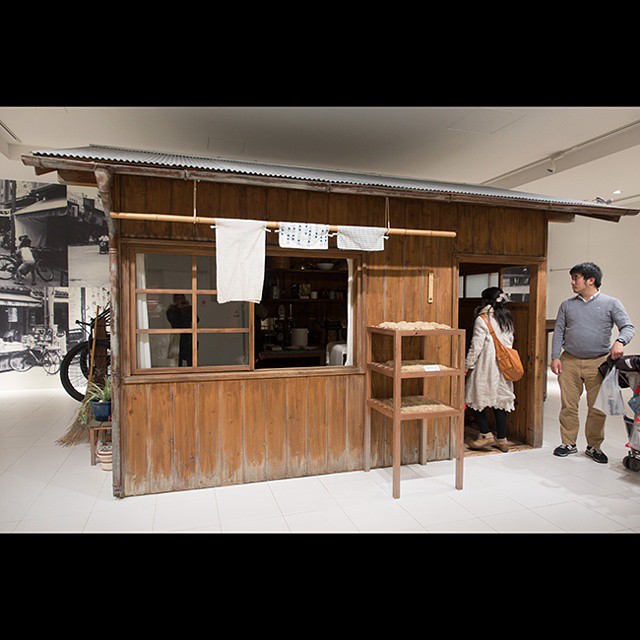
This is a replica of the founder’s hut in his backyard in which he discovered instant ramen. It even has light effects to simulate the noodles being deep fried.
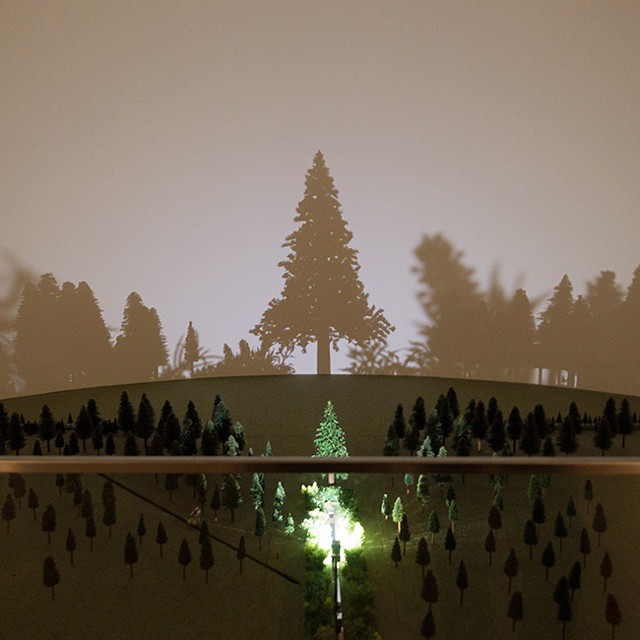
A central part of the success of Cup Noodle relies on the fact that it’s founder sought to share his experience with people who wanted to copy his methods rather than monopolising the idea. In this way, he was focused on the forest (that improved quality in instant ramen in the market would be beneficial for the wider community) rather than the trees (the financial gain to be had from monopolising the method of making instant ramen). This very simple shadow display that uses only trees and a moving light source illustrate this idea with immense clarity.
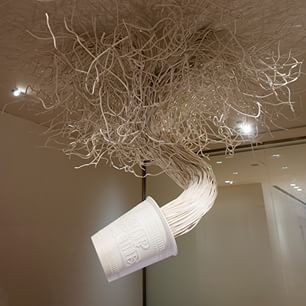
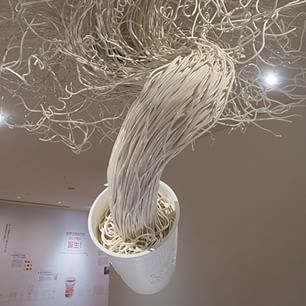
Further through the exhibits we encounter a sculpture featuring a noodles spilling out of a Cup Noodle container. The noodles near the roof spell out words like ‘love’, ‘creativity’, ‘inspiration’.
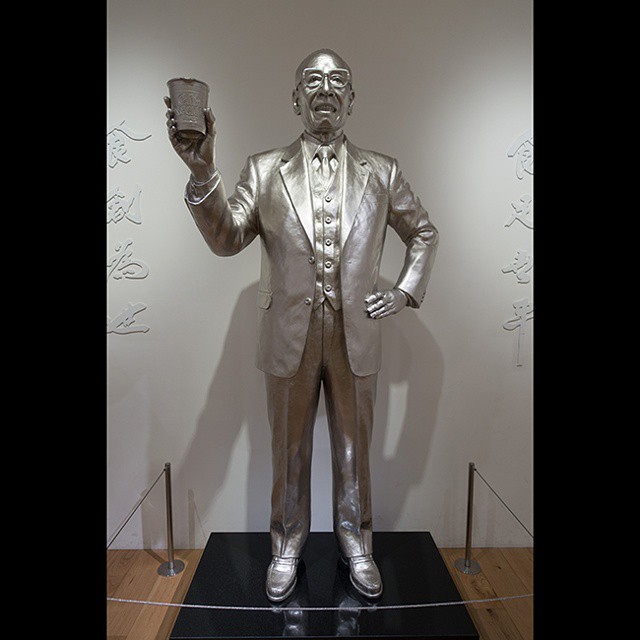
At the end of the exhibit there is a life size model of the founder holding Cup Noodles.
It still surprises me that gift shops in Japan do sell their products at a huge mark up. Indeed you can get a souvenir for as little as ¥100, which will get you a mini eraser Cup Noodle eraser, and ¥550 will get you four key chains featuring mini Cup Noodle in four flavours (chicken, curry, seafood, chilli tomato).
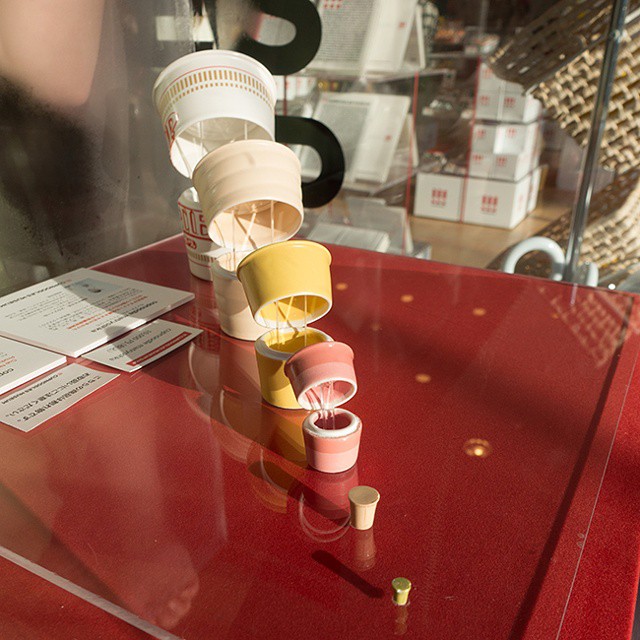
What was most intriguing though was matroska doll like configuration in the form of Cup Noodles. Each smaller cup represents an ingredient that goes into the making of a container of Cup Noodle (e.g. flour, seasoning, oil etc.).
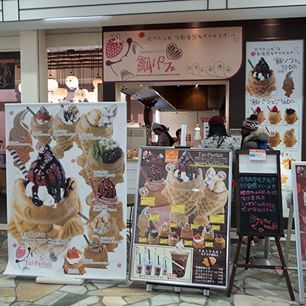
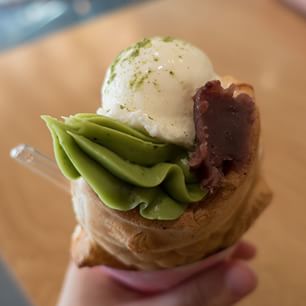
After spending a good three to four hours in the Cup Noodle Museum, we head across the street to World Porters. I’d lamented that we’d not eaten any taiyaki this time in Japan earlier. So we stopped by this taiyaki place attached to a ramen restaurant.
Unlike normal takoyaki, which is filled wjth red bean paste, this one had the red bean paste coming out of its mouth as well as ice cream and matcha paste. It was tasty.
While the different filling was something I ordered expecting, to be absolute delight, they had used mochi batter instead of the typical pancake/waffle batter to make the taiyaki. Before Hana Hana closed down in Sydney, it used to sell mochi waffles that were deliciously crispy on the outside but chewy on the inside. I was so disappointed when they closed down, so it was delightful to find it in taiyaki form in Yokohama.
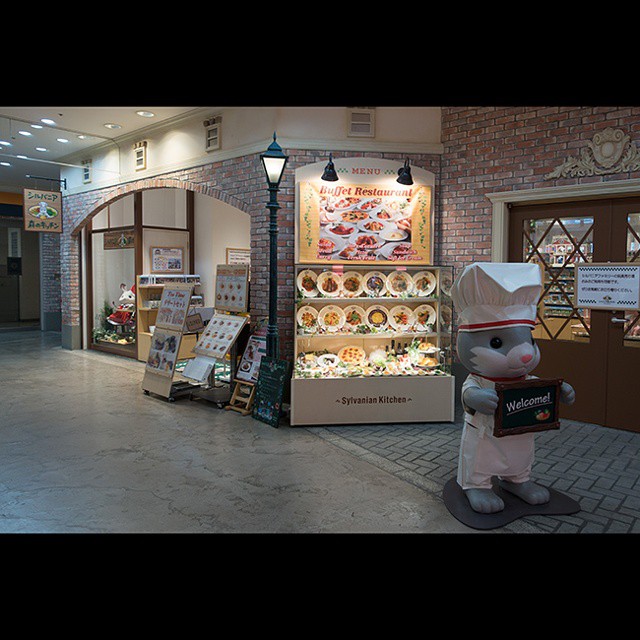
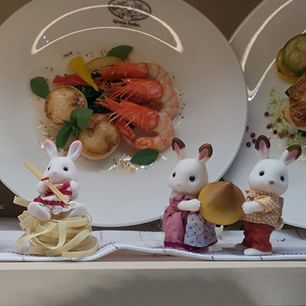
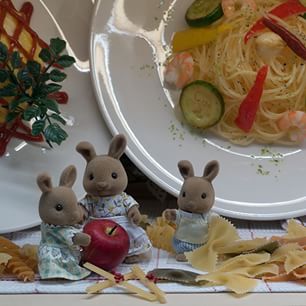
We explore the upper levels of World Porters (many of the middle floors sell homeware) and bump into a Sylvabian Family themed restaurant. I love the playsets as a child (and still do.) so I spent some time admiring the displays outside. The restaurant itself is a buffet, but we weren’t too interested in the food (we were being the end of our trip so more interested in Japanese, rather than Western, food at the time.
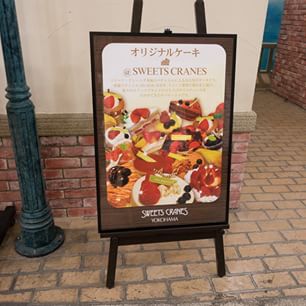
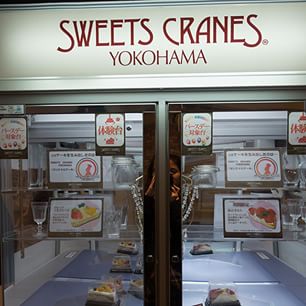
Japanese food seemed hard to come by in Sakuragicho. But they did have their very Japanese take on desserts that combined cakes with the crane machines that you usually see in arcades for winning plush toys. If I recall correctly, ¥100 will get you one try to move the cake off the shelf. I assume they don’t make it too hard, ‘cause otherwise they’d lose too much money from having to throw the old cakes out (cakes, unlike plush toys, do go off.). We didn’t try, but we did was much two school girls try without success.
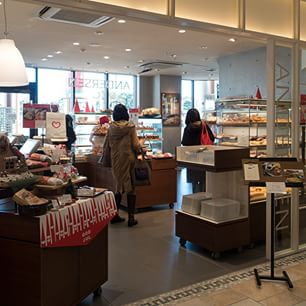
After exploring World Porters from top to bottom, we headed back to the hotel for a break. Earlier in the morning we’d visited the Andersen’s Bakery bear Sakuragicho station but didn’t end up eating our purchases as we stumbled upon a Cafe Pronto.
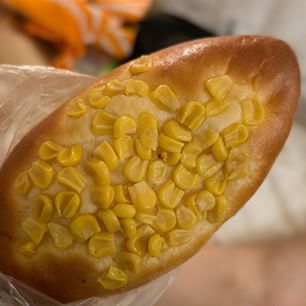
I purchased this corn bread, which was ridiculously unspectacular.
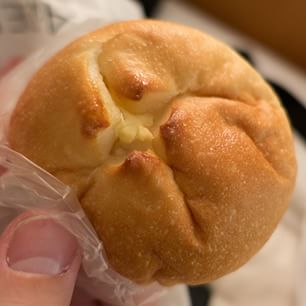
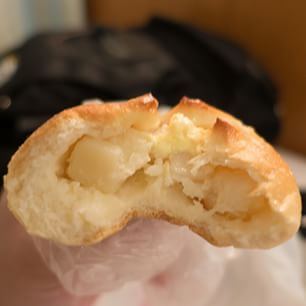
But D got a jagabata in bread form. The butter was cold so it probably wasn’t as tasty as it could have been but it was so novel.
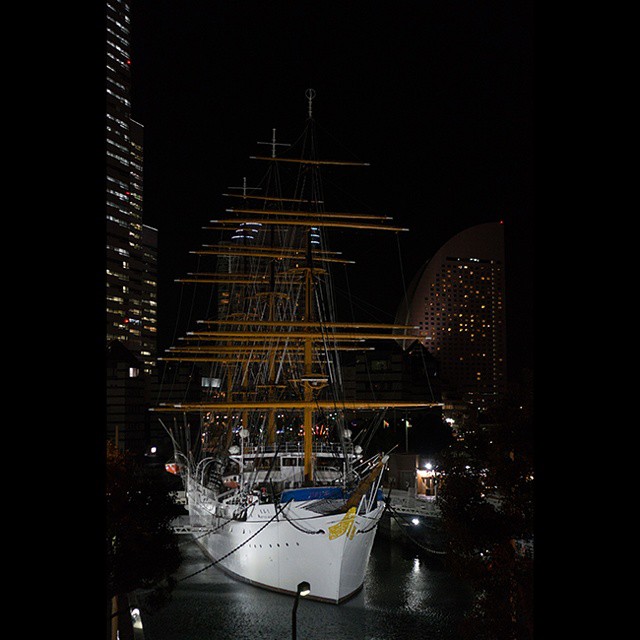
A while later, we head back out to explore the Minato Mirai area some more. We’d left our hotel with our normal jackets but had to go back for our thicker winter jackets. It was really just that cold. And amazingly windy which makes it all the colder.
The walk from Sakuragicho to Queens Square is really quite long but there’s a long series of travelletors. Along the walk we see this boat sitting in the bay.
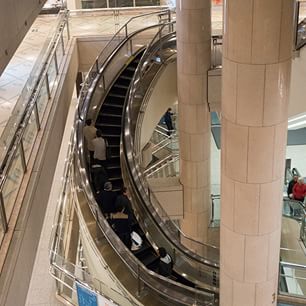
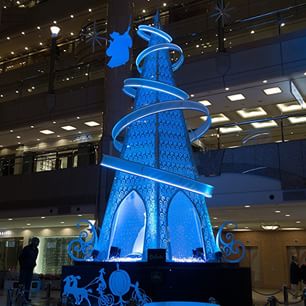
There’s a super neat curved escalator in Queens Square, which amused is enough to travel on it a couple of times. Queens Square has also partnered with Disney for Christmas. On the whole though, I found Christmas decorations to be lacking in Yokohama. There probably aren’t enough people around to appreciate them in Yokohama.
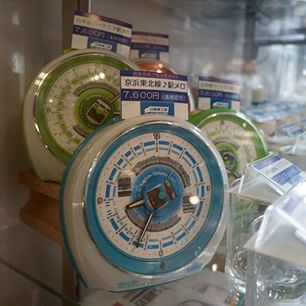
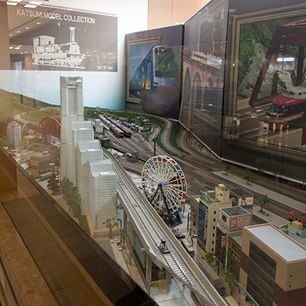
We pass by a train aficionado store, selling clocks themed using train lines like the Yamanote Line in Tōkyō for ¥76,000 or ~$76.00. The same store has a model of Sakuragicho in its window. It didn’t have moving model trains, alas.
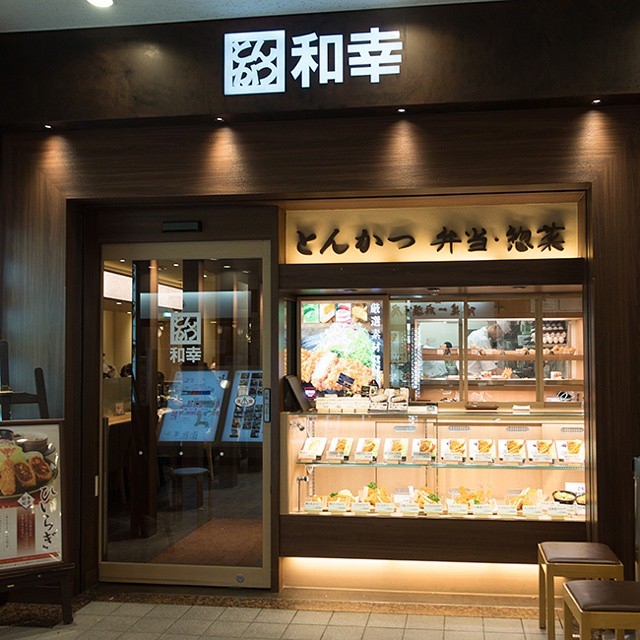
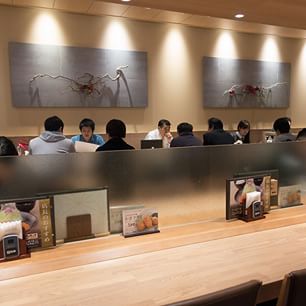
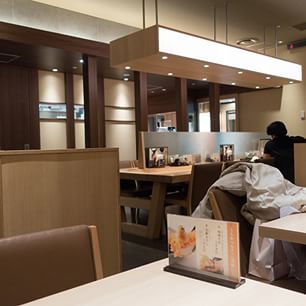
It’s our last proper meal in Japan, so we had a good look around for some Japanese food before deciding on this tonkatsu restaurant. Our previous experience with a tonkatsu restaurant was the dark miso tonkatsu from Yabuton in Nagoya.
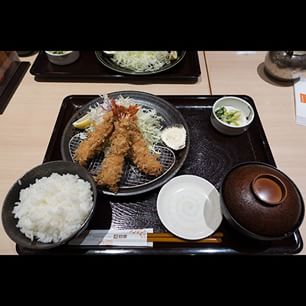
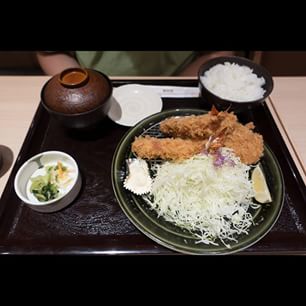
The tonkatsu might have drawn me in but D and I both ended up ordering dishes with prawn in them. Mine had three fried prawns, while D’s had two fried prawns and a piece of fried chicken. Each meal came with a cabbage (free refills.), rice, and miso soup.
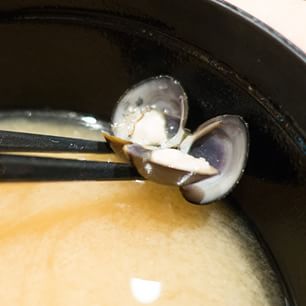
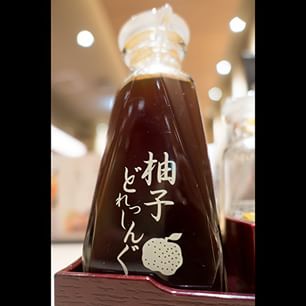
The miso soup had tiny clams in it. And yuzu flavoured soy sauce was available at each table. I quite like the taste of yuzu (its both sweet, tangy, and a little bitter) and the sauce on the fried prawns was just delicious.
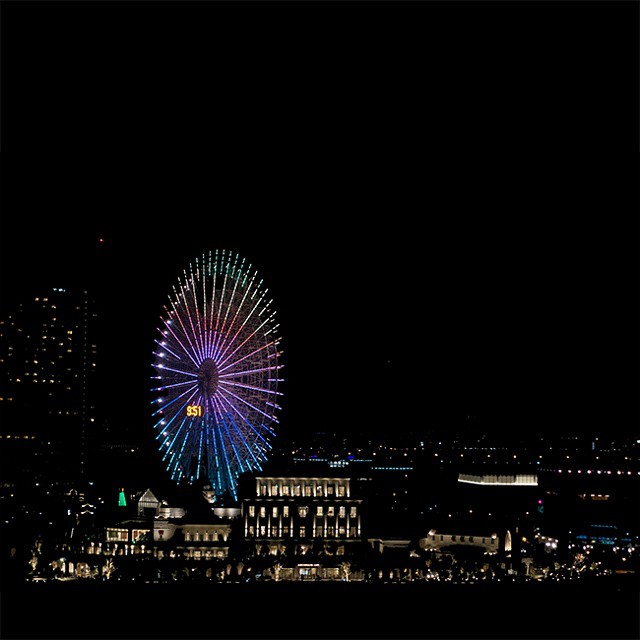
And we’re back to our hotel to enjoy this amazing view one last time.