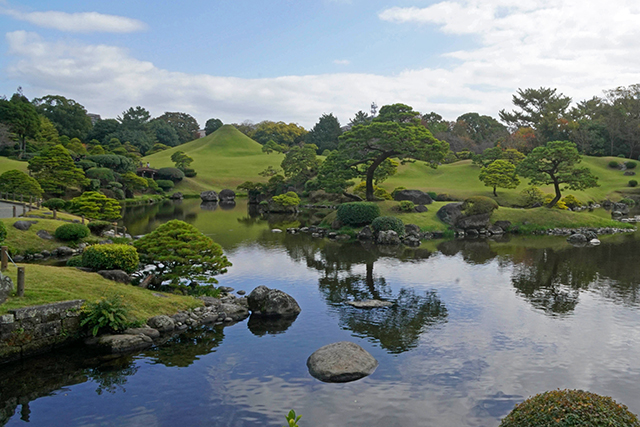
The third and last day in Kumamoto saw us visiting Suizenji Garden, enjoying the local delicacy that is horse meat as well as visiting the Art Aquarium exhibition featuring goldfish.
Kumamoto
DonQ Editer
ドンクエディテ, B1 SAKURAMACHI KUMAMOTO, 3-10 Sakuramachi, Chuo Ward, Kumamoto, 860-0805, Japan
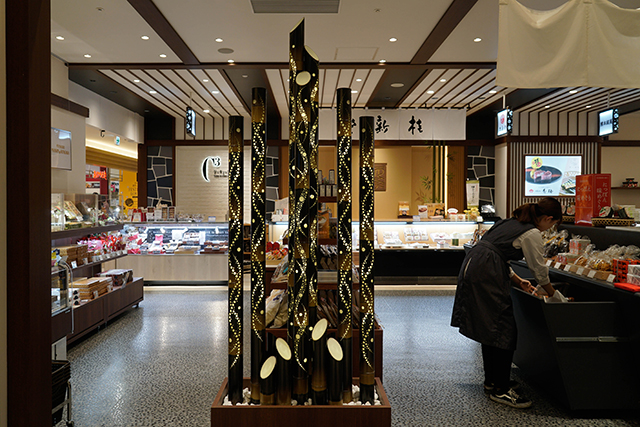
For breakfast, we stopped by Sakuramachi to visit DonQ, a gourmet bakery in the basement. Between shops, there’s a display of the illuminated bamboo that is part of the autumn lantern festival in Kumamoto that is Mizu Akari.
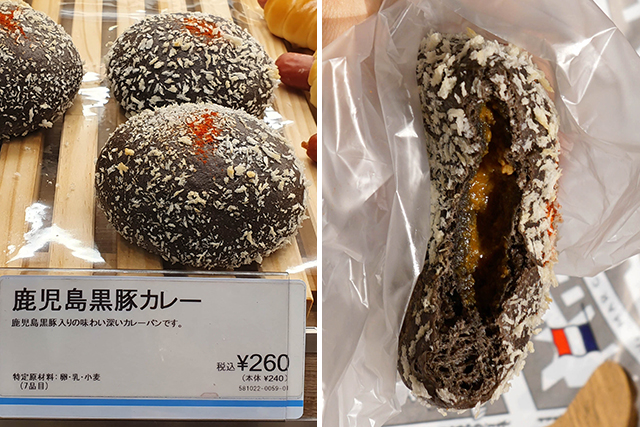
At the bakery, we picked up a Kagoshima Kurobuta Curry. We enjoyed the black colour of the bread as well as the pork-based curry, although we’re not sure we could distinguish the Kagoshima black pork used in it.
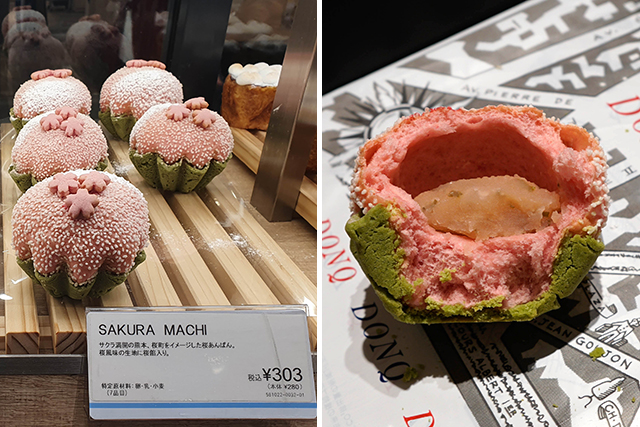
We also picked up a SAKURA MACHI, which featured a green coloured cookie base around a pink coloured bread with a gentle sakura flavour which came through brightest on reaching the centre of sakura flavoured shiroan. While it was a pretty sight, its shape made it difficult to eat.
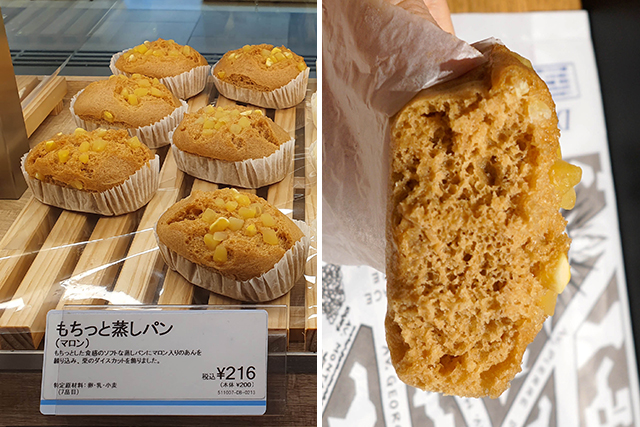
Finally, we picked up the Mochitto Mushi Pan (Maron). The steamed bread gave it a spongy, chewy texture more so than steamed manjū, while the candied bits of chestnut on top gave a contrasting firm texture.
Suizenji Park
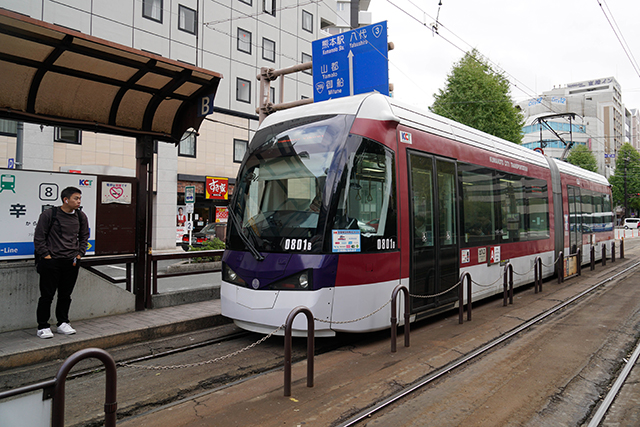
After breakfast, we catch the city tram to Suizenji Park Station to visit Suizenji Jojuen, a park located within the larger Suizenji Park.
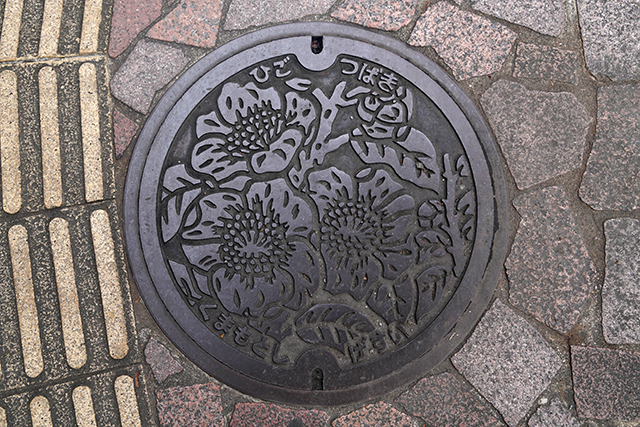
The manhole covers in Kumamoto feature the camellia. There are coloured versions of this cover around the city, although we weren’t fortunate enough to see one. The camellia is the symbol flower of the Kumamoto city, which is well known for its special variety named Higo Camellia, after the old feudal name of the province.
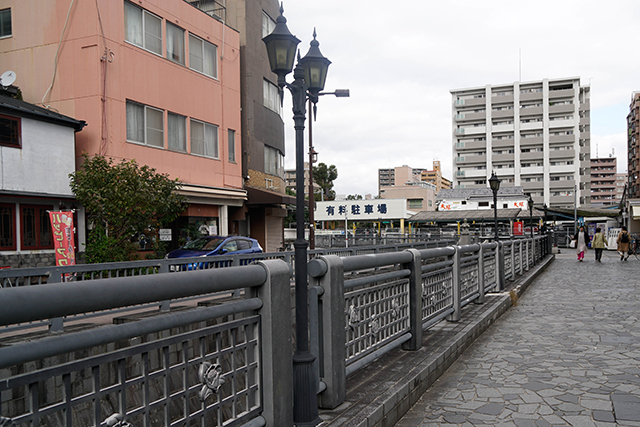
To get to Suizenji Jojuen, it’s a few minutes’ walk alongside Kase River.
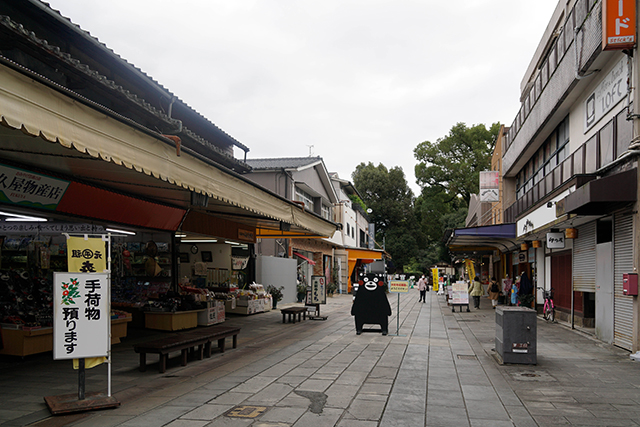
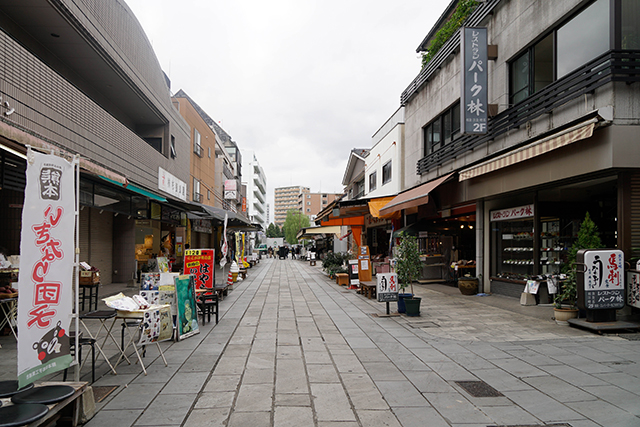
The approach to the garden is short but lined with various omiyage stores.
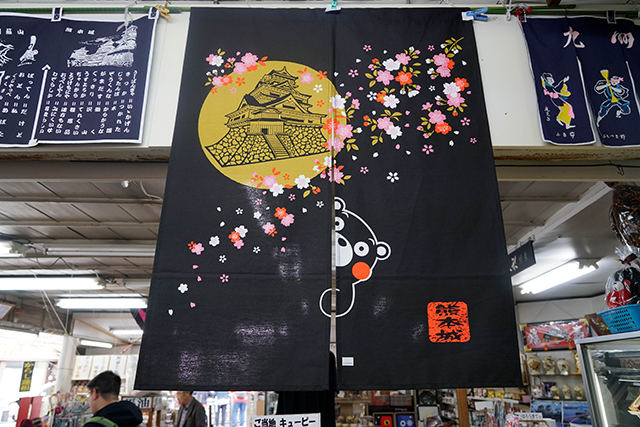
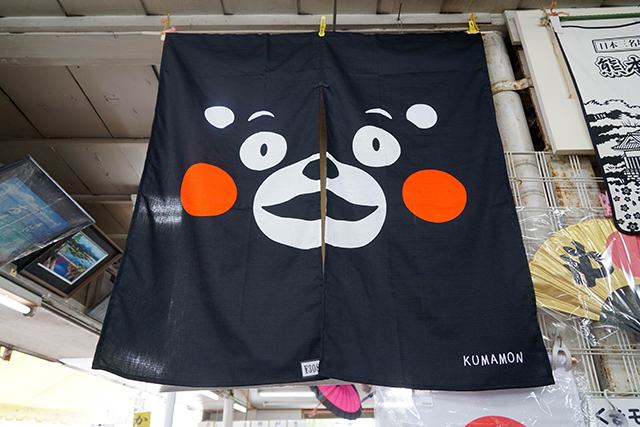
We stop by and find the first place we’ve encountered that sold Kumamon noren. We’d all but given up at this point.
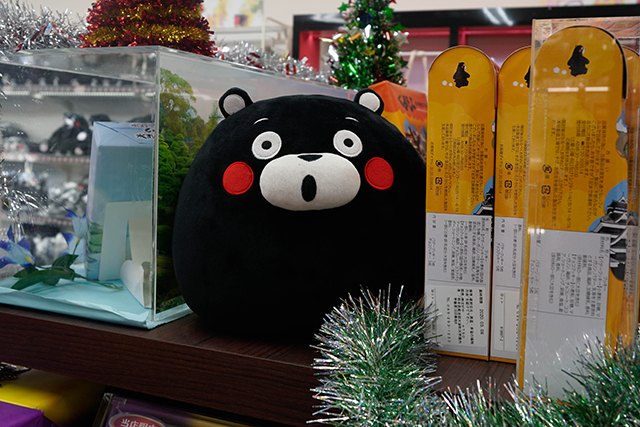
There’s also a Kumamon in the shape of a daruma.
Suizen-ji Jōju-en
水前寺成趣園, 8-1 Suizenji Koen, Chuo Ward, Kumamoto, 862-0956, Japan
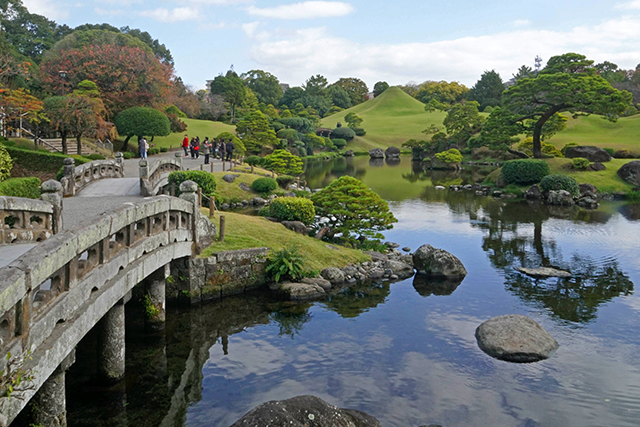
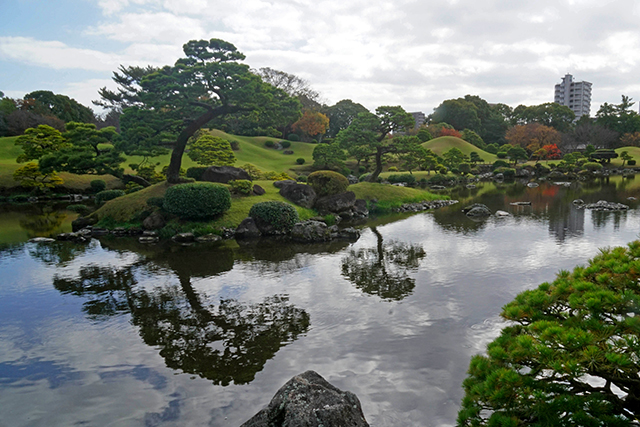
Suizenji Jōjuen is a tsukiyama Japanese garden located within Suizen-ji Park in Kumamoto and declared a national scenic and historic site in 1929.
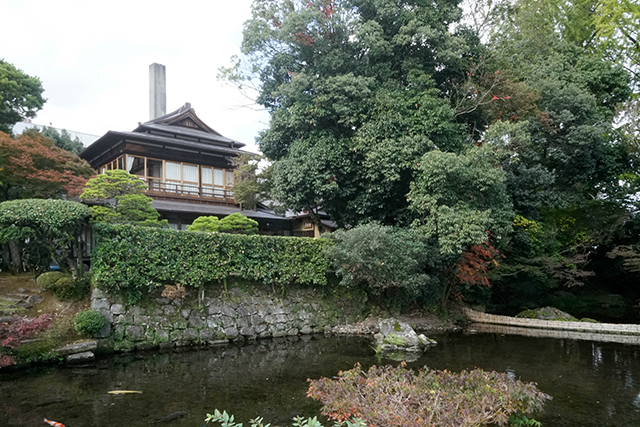
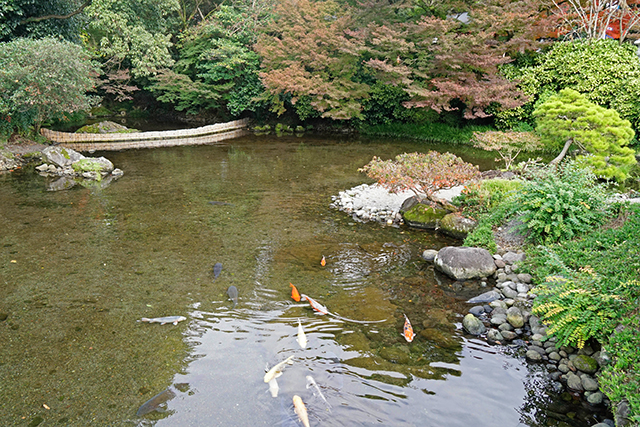
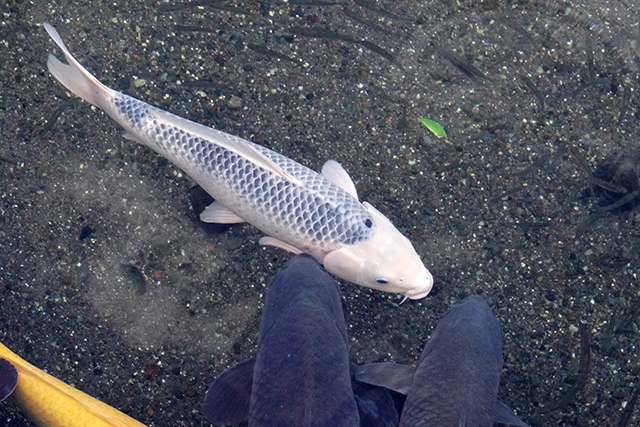
There are various koi in the lake…
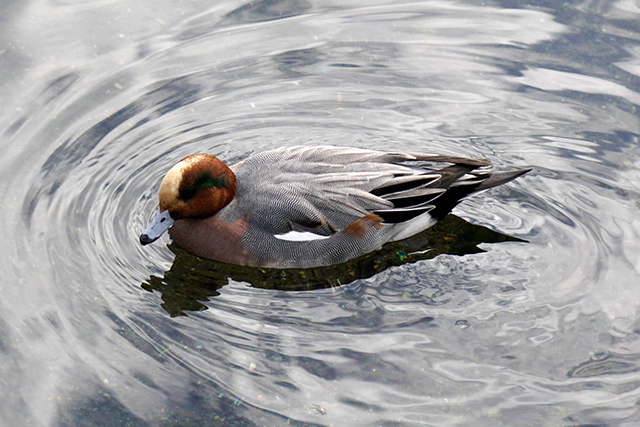
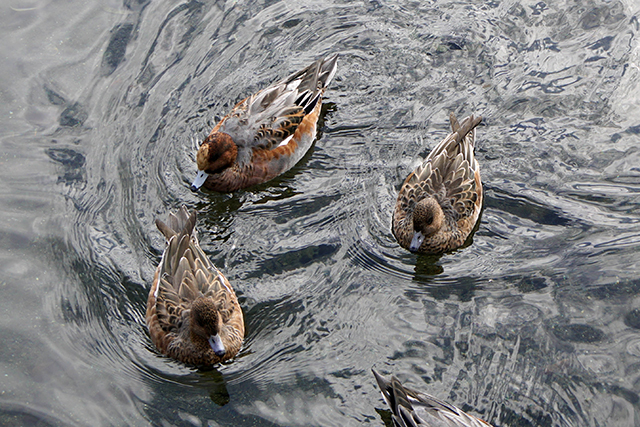
..as well as some plump ducks.
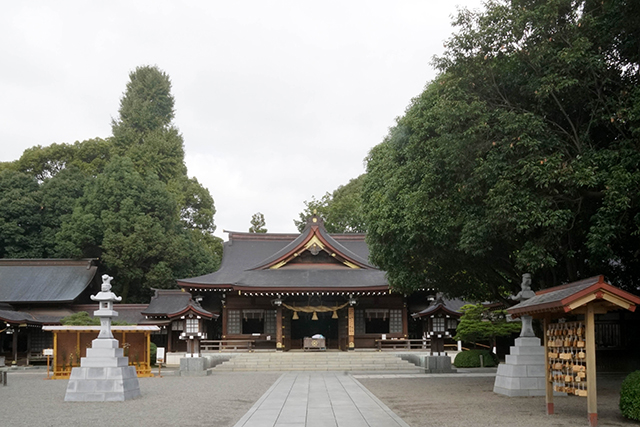
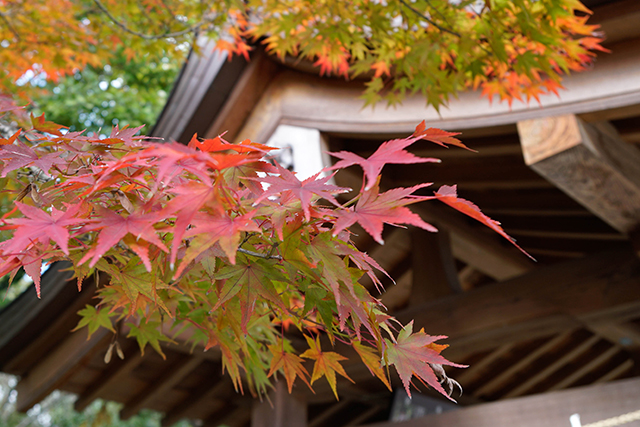
Suizenji Jojuen is owned and managed by the Izumi Shrine on its grounds.
In 1877, the town of Kumamoto was completely burnt down due to the Seinan Civil War. In 1878, the former feudal retainers of the Kumamoto Domain founded a shrine in Suizenji Jojuen, which is deeply connected to the Higo Hosokawa Clan. They enshrined the Hosokawa lords praying to appease the people and revitalise the town of Kumamoto with their spiritual support. Fujitaka Hosokawa, the first generation of the Higo Hosokawa Clan, and the three other Hosokawa lords are enshrined as the main deities and the other 10 successive lords and Gracia (the wife of Todaoki, the second generation) are enshrined together.
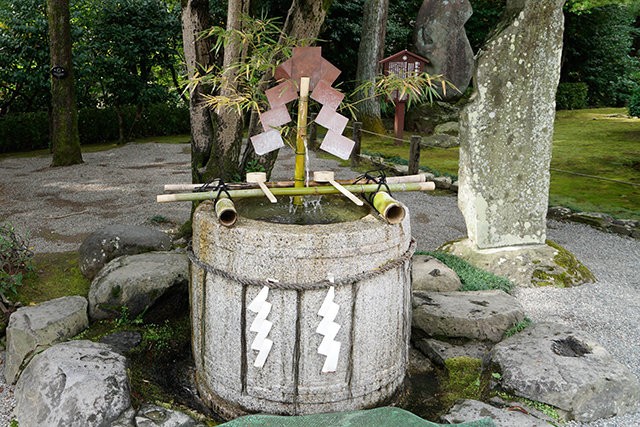
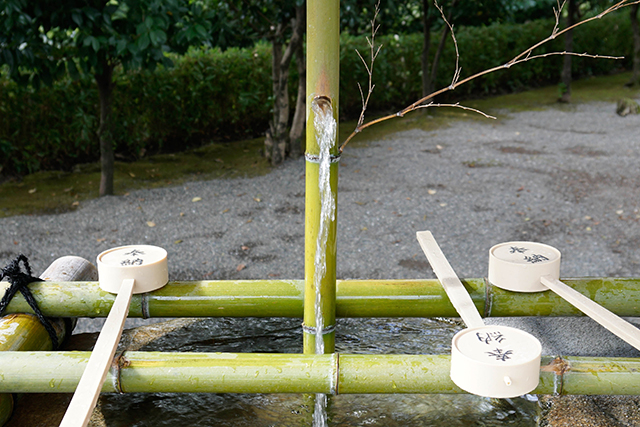
Inside the grounds is the Water of Longevity. The water is drinkable hard water coming from Mt Aso.
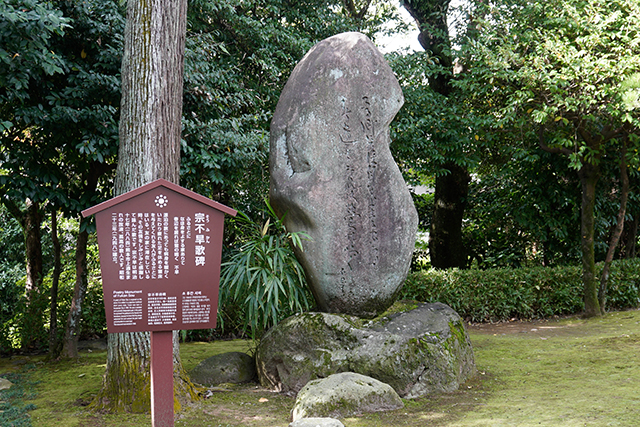
This is the poetry monument of Fukan So
In this poem he expressed his gratitude to his friends in his hometown, because they always welcomed him with warm heart. Fukan Sou was a poet who loved solitude and a wanderer who had a unique perspective. He was born in Kami-tori, Kumamoto City, in 1884.
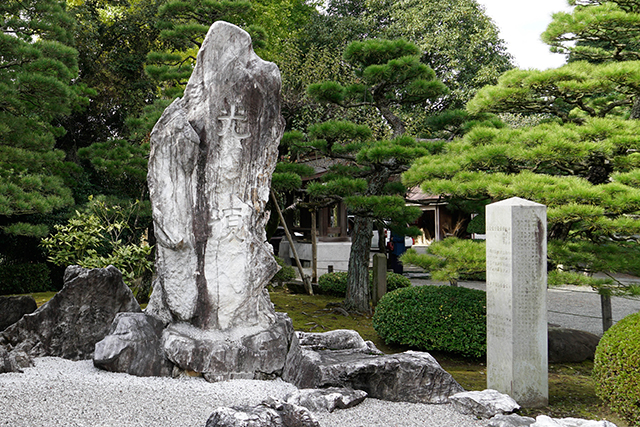
This is the Monument of Kofuku, which was erected to commemorate the restoration of the main shrine building in 1973 that was burned down in the Second World War in 1945.
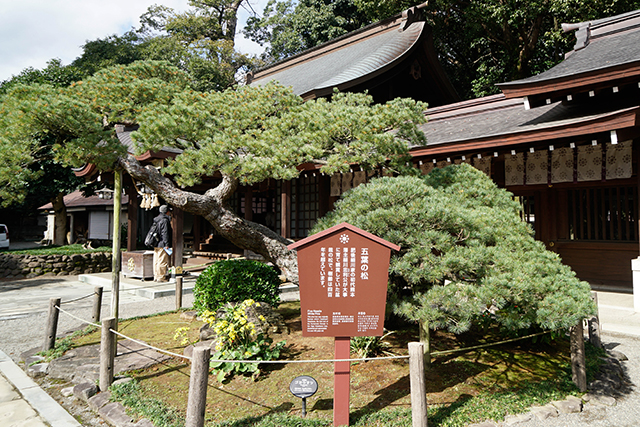
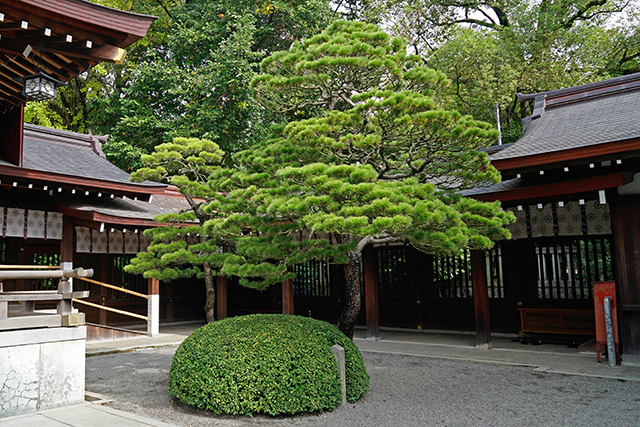
This is the five-needle white pine which amusingly, was originally bonsai!
This pine tree was originally bonsai, which Takadatoshi Hosokawa, the first lord of the Kumamoto Domain in the Higo Hosokawa Clan, cherished and appreciated.
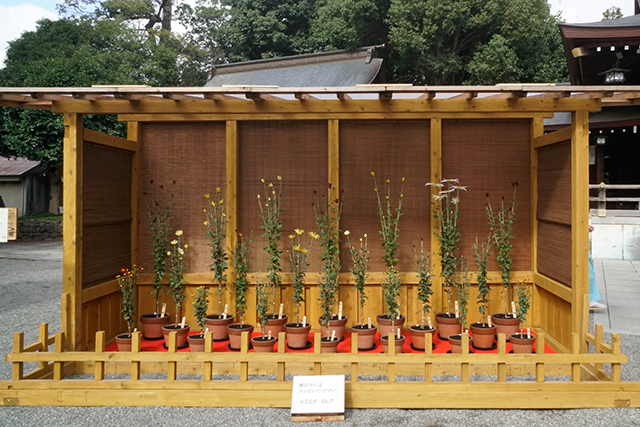
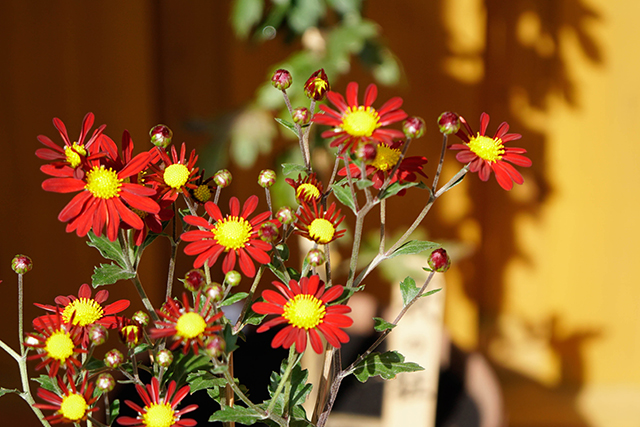
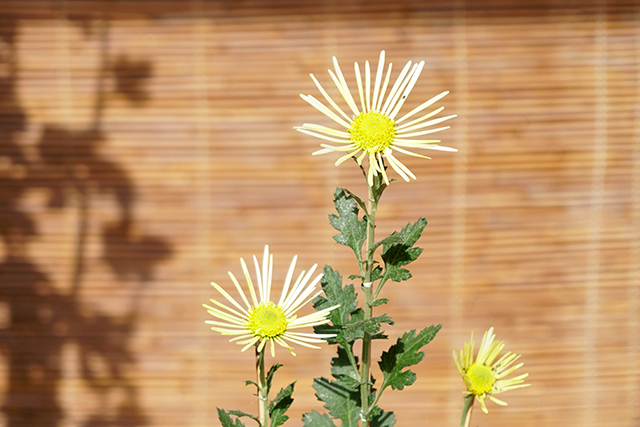
There are six traditional higo flowers — camellia, peony, iris, morning glory, chrysanthemum and sasanqua. We’re there in late November, which was the season for the higo chrysanthemum. While not planed there, there’s a display showing them outside the shrine building.
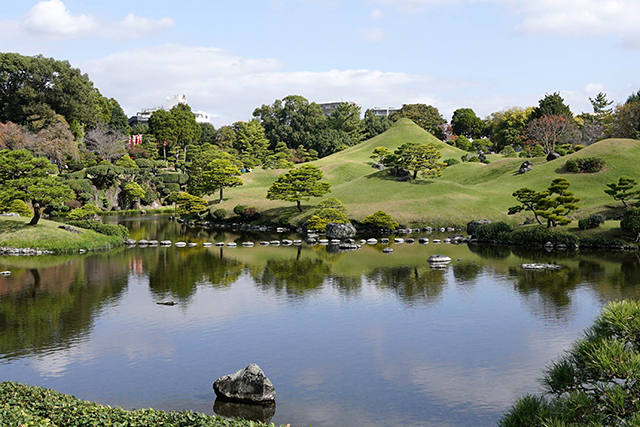
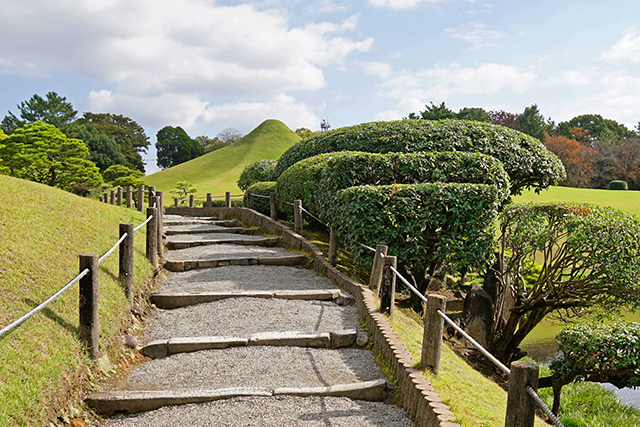
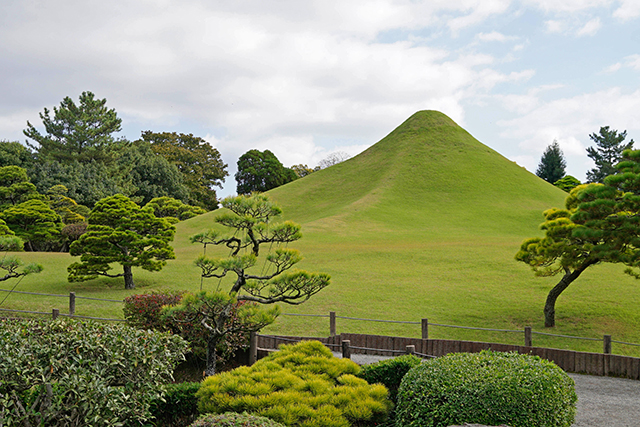
The main tsukiyama is a representation of Mount Fuji, which can be seen from most areas of the garden.
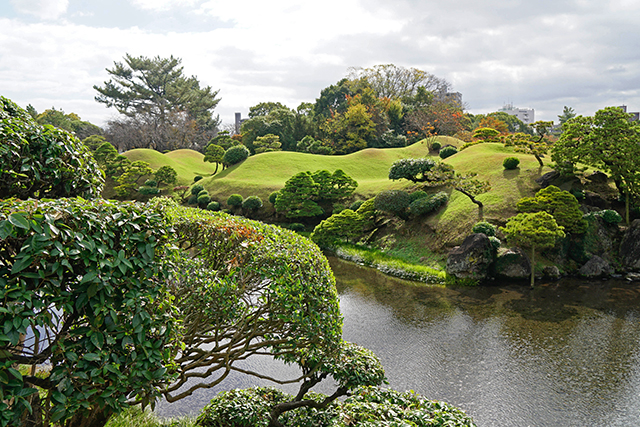
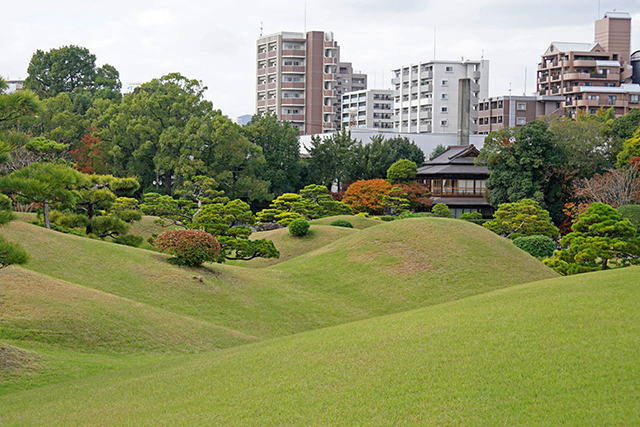
Smaller tsukiyama undulate through the landscape.
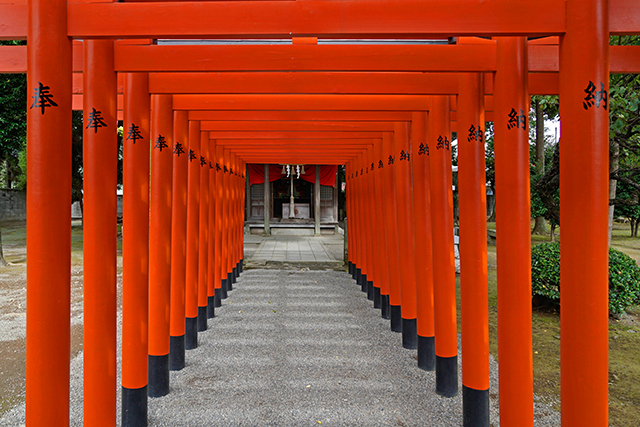
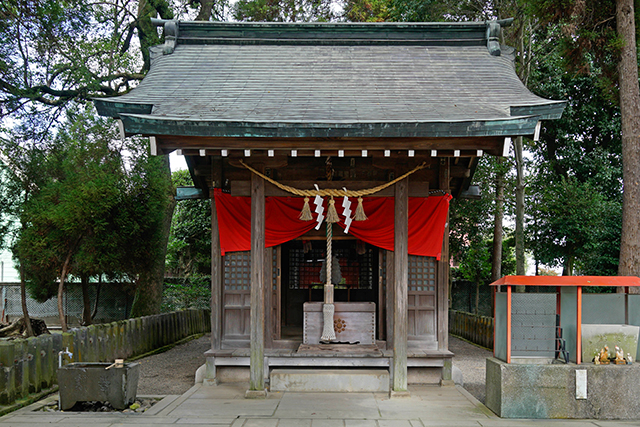
The Inari Shrine also on the grounds is a subsidiary shrine of Izumi Shrine and enshrines the divided spirit of Fushimi Inari that is the Grand Shrine in Kyōto. The shrine reveres the gods of food and industry.
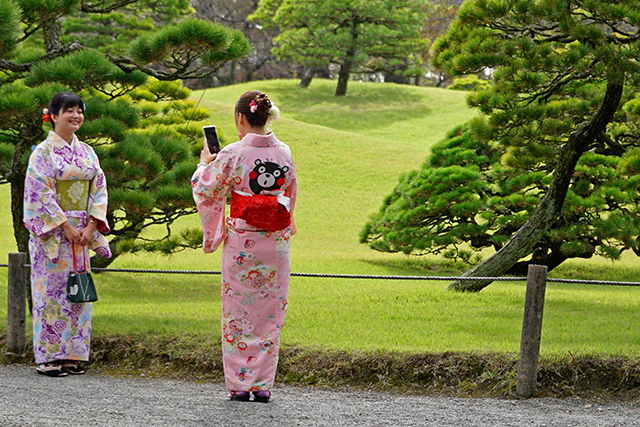
There are stores renting kimono, which these girls have taken advantage of.
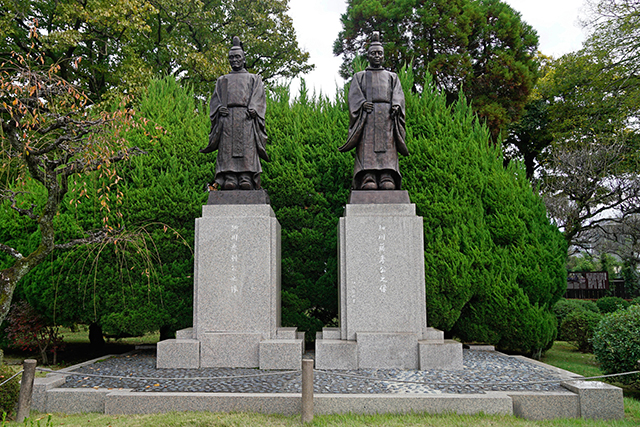
These were the statues of Tadatoshi Hosokawa (the first lord of the Kumamoto Domain in the Higo Hosokawa Clan and the founder of Suizenji Jojuen) and Fujitaka Hosokawa (he established the foundation of the early modern Hosokawa Clan as the first generation of the Higo Hosokawa Clan).
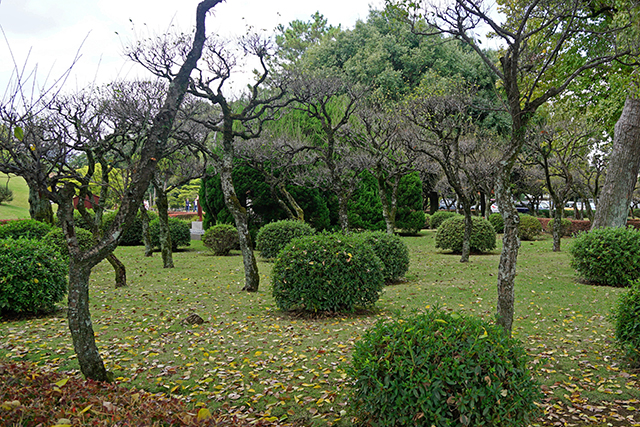
During early spring, these plum trees would make a beautiful sight.
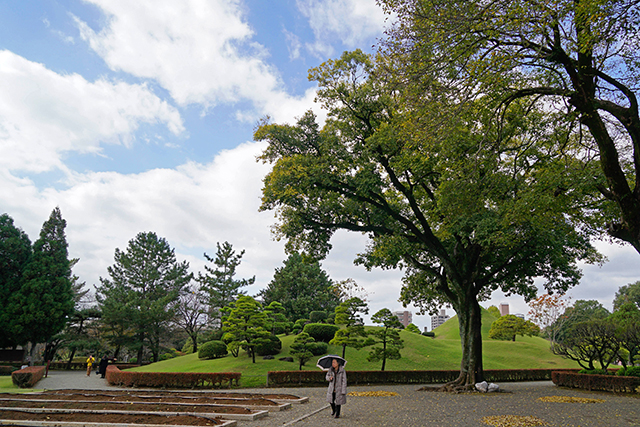
This area at the back is planted with higo peony and higo sasanqua, which bloom in May and November to December respectively.
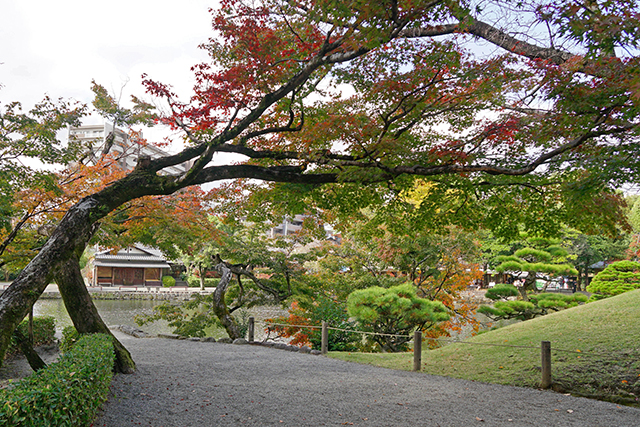
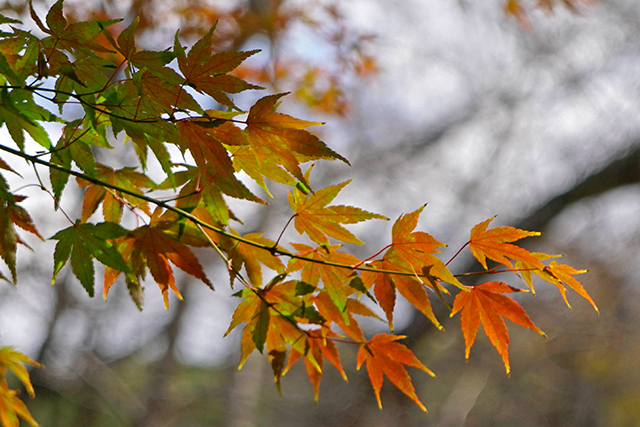
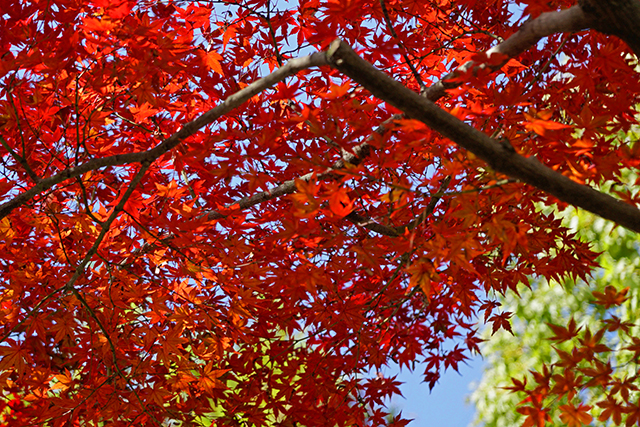
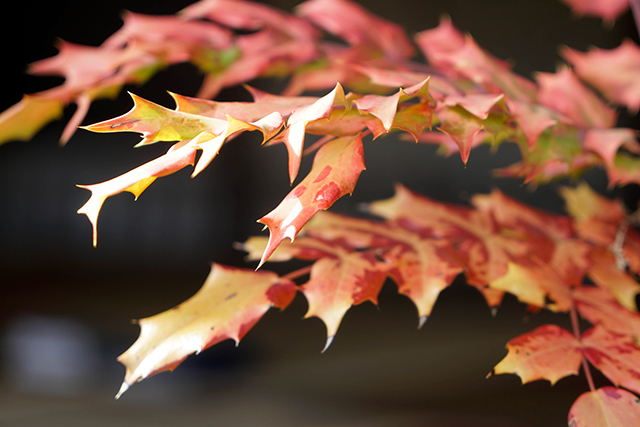
Further along, there are numerous sakura trees. It’s almost winter, though, so we get beautiful momiji instead.
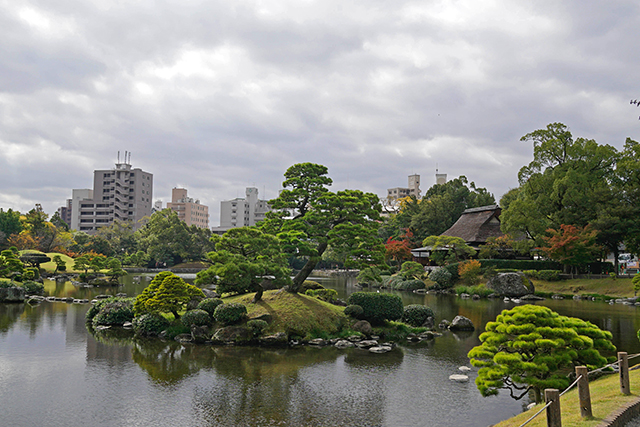
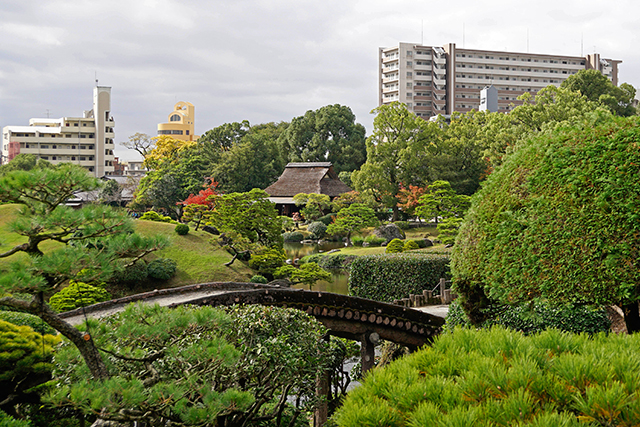
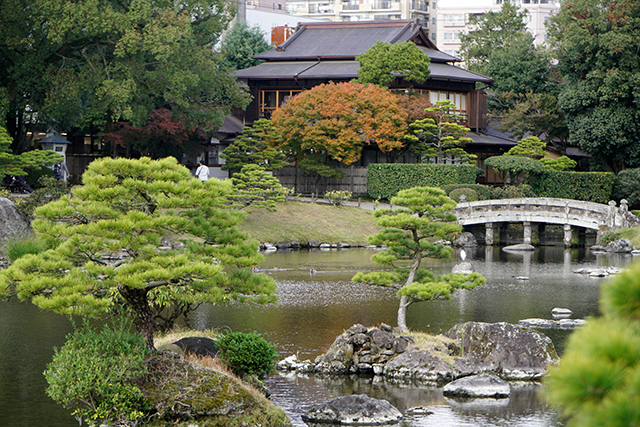
Small islands and rocks on the water as well as stone bridges spanning over the water make for a very beautiful sight.
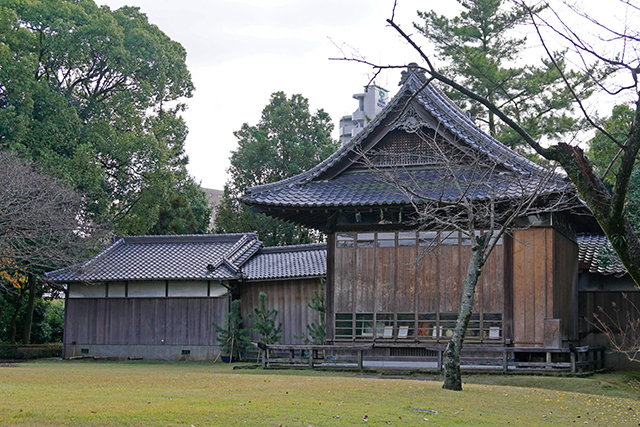
There’s a Noh Stage on the grounds as the Hosokawa family especially loved Noh among the feudal lords.
Fujitaka (Yusai), the founder of the modern Hosokawa Clan, was proficient in various arts and is aid to have been a highly accomplished Japanese Noh drummer. The Hosokawa Family acquired Noh from generation to generation, even in modern times up to the Second World War. They handed down many records relating to Noh and Noh song books called ‘utai-bon’, to posterity.
The Noh Theater was built at the same time as Izumi Shrine in 1878, but it was burned down in 1965. The present Noh Theatre was suceexded from the Matsui Family, the former lord of Tasushiro Castle, to Izumi Shrine and recosntructed in this place in commemoration of the 60th anniversay of his Majesty Showa Emperor’s Accession to the throne.
Takigi-Noh (the Bonfire Noh) is held here on the first Saturday in August every year. It is also widely used as a venue for live jazz pwerformance, musical drama and Japanese dance.
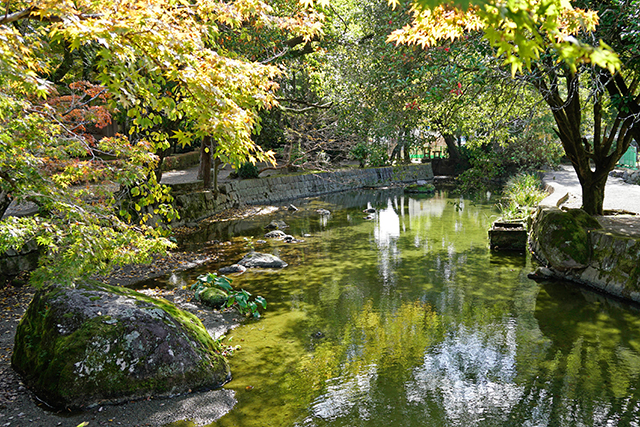
This serene body of water is home to a garden of higo iris in early June.
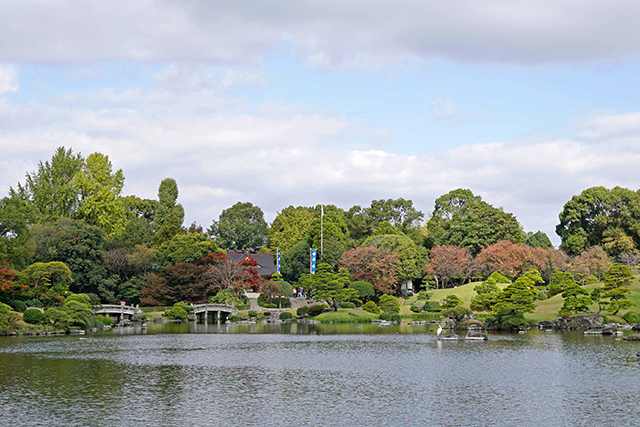
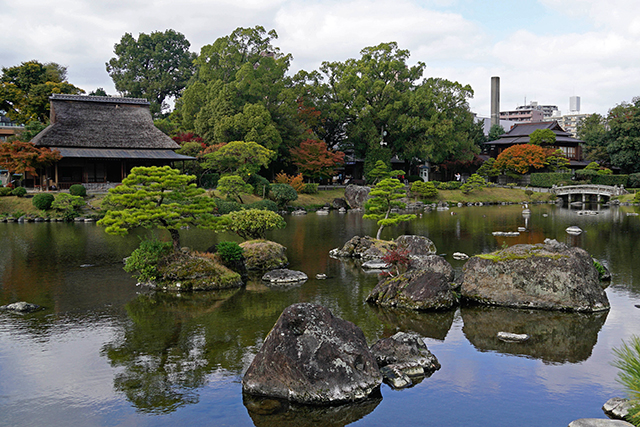
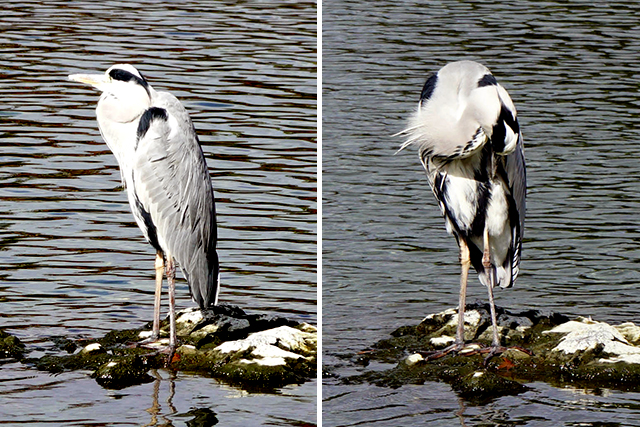
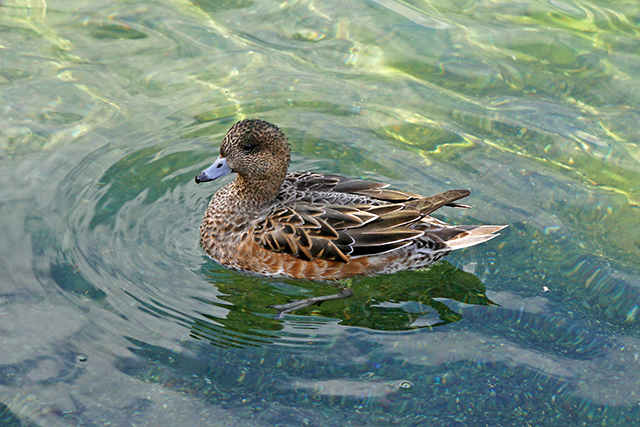
The pond is home to numerous birds and ducks, as well as an elusive pair of snapping turtles.
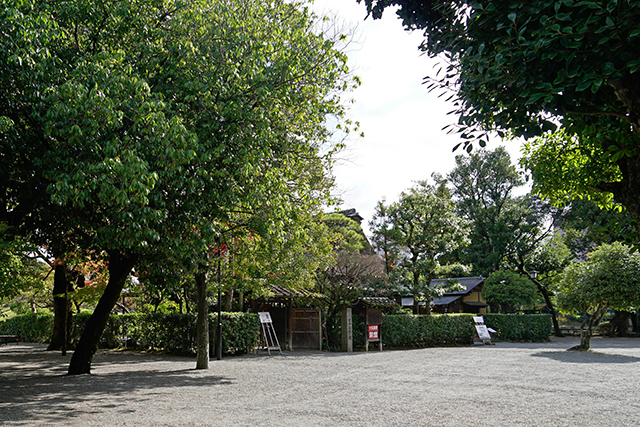
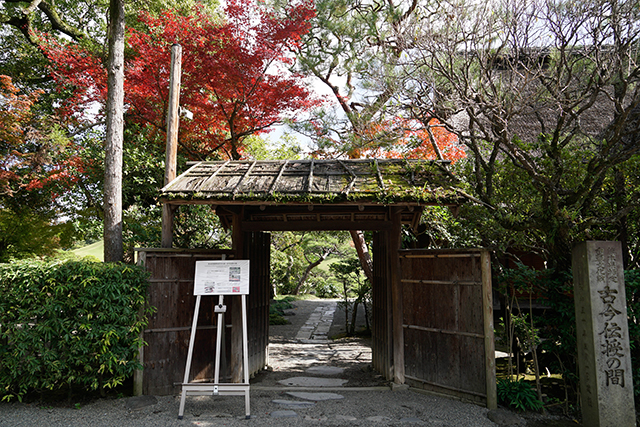
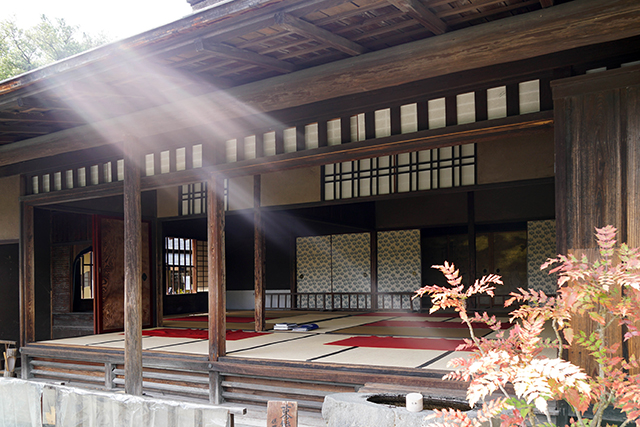
This is the kokindenju-no-ma.
‘Kikindenju’ means passing down the secret interpreation of ‘kokin wakashu’ orally from master to his disciple. The interpretation of ‘kokin wakashu’ was highly regarded in the peotry society during the medieval period. A master passed the initiation of the poems only to his selected disciple.
Yusai Hosokawa began the initiation to Prince Toshihito, the younger brother of Emperor Goyozei, in 1600. The initiation was interrupted by the civil war but accomplished in the end.
This room, ‘kokindenju-no-ma’ is th room the actual initiation occured. It was moved and restored here in 1912 because Suizenji Jojuen Garden has a strong association with the Hosokawa family. This thatched house is the only existing building that has the room of ‘kokindenju’ in Japan.
It was designated as Kumamoto Prefectural Importation Cultural Property in 1964.
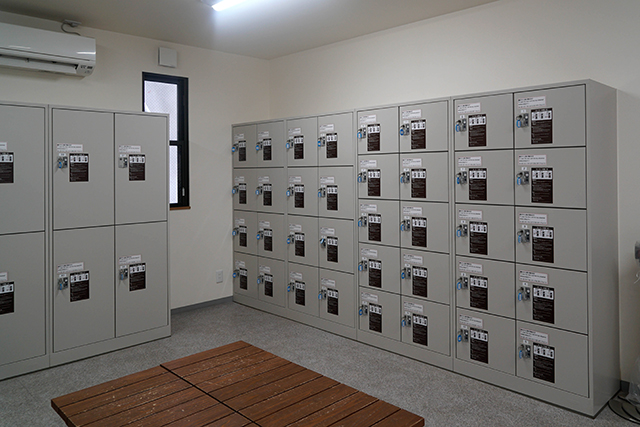
We’re fans of the free lockers available at the garden so we can walk around without carrying anything. The room has air conditioning too, so makes for a nice retreat from the cold in winter and the heat in summer.
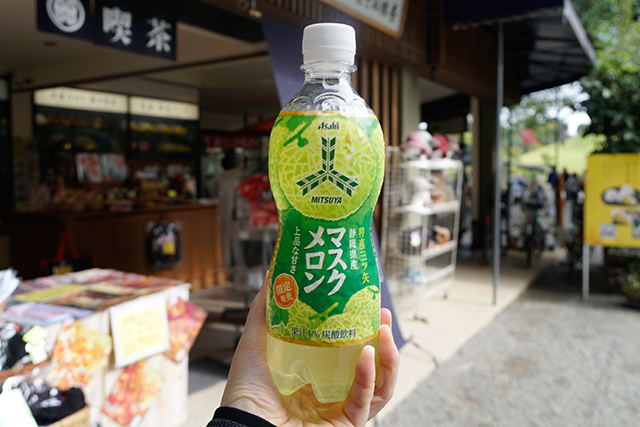
To refresh ourselves, we enjoyed an Asahi Mitsuya Musk Melon that we’d picked up from the supermarket earlier. It had a mellow, natural melon flavour that avoided the artificiality of the bright green melon sodas.
Okashi no Hayashi Garden
お菓子の林ガーデン, 7-2 Suizenji Koen, Chuo Ward, Kumamoto, 862-0956, Japan.
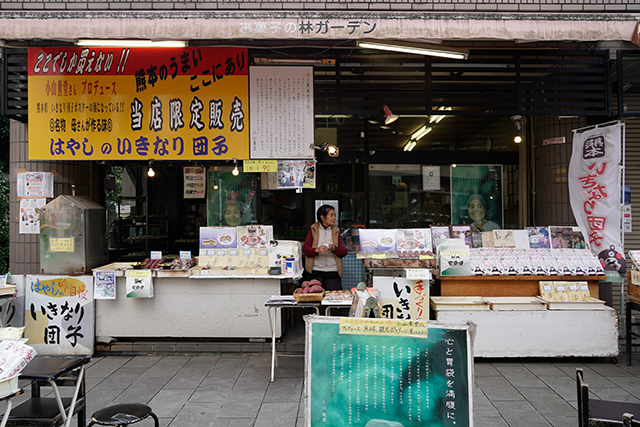
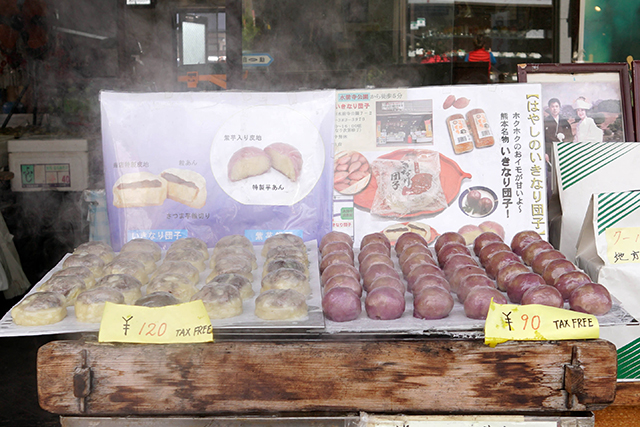
Okashi no Hayashi Garden is directly outside the garden’s entrance and they specialise in the local sweet that is ikinari dango.
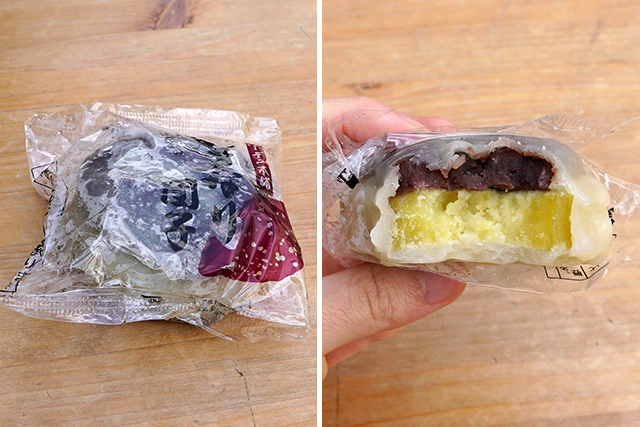
We picked up an ikinari dango (¥120, including tax) to try. Served warm, it involves a thick slice of yellow sweet potato, topped with a layer of anko and wrapped in a thin layer of mochi. Its name, ikinari, means ‘suddenly’ and so implies that one can make these sweets quickly. I enjoyed mellow sweetness alongside the contrasting texture of the firm sweet potato with the softer anko, while the thinness of the mochi allowed the innards to shine.
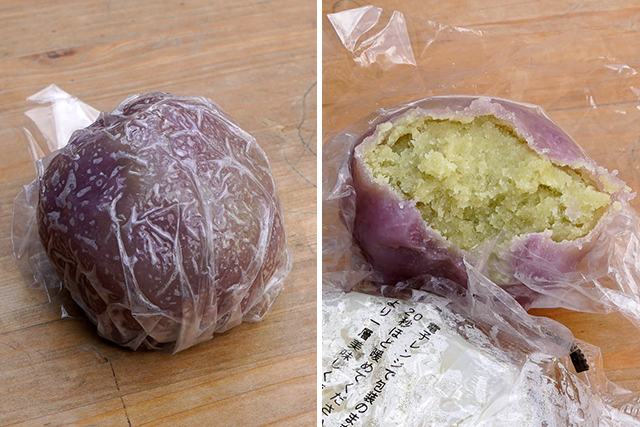
We also picked up a murasaki imo manjū (¥90, including tax). In contrast to the ikinari dango, this one featured mashed yellow sweet potato wrapped in a thin layer of purple coloured mochi to give the overall appearance of the yellow sweet potato itself. This one had a softer mouthfeel and more pronounced sweetness, and required less effort to eat overall
Suganoya
菅乃屋, アンピールパーキング上通り2F, 2-12 Jotomachi, Chuo Ward, 860-0846 Kumamoto, Japan
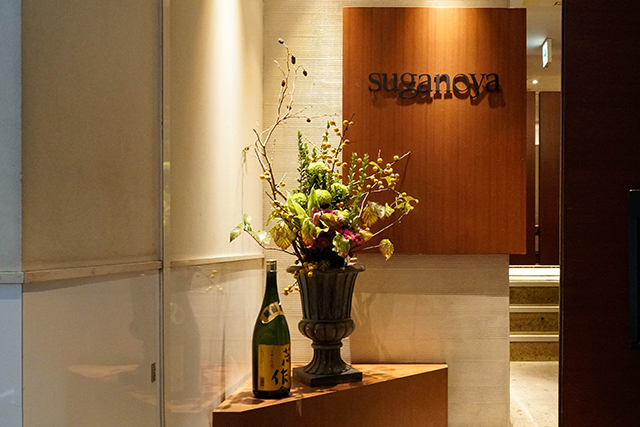
Kumamoto Prefecture is famous for its horse meat, known as basashi or sakura niku (lit. cherry blossom meat) where it is marbled. Suganoya is one of the most famous restaurants for serving this local delicacy and has multiple branches in Kumamoto.
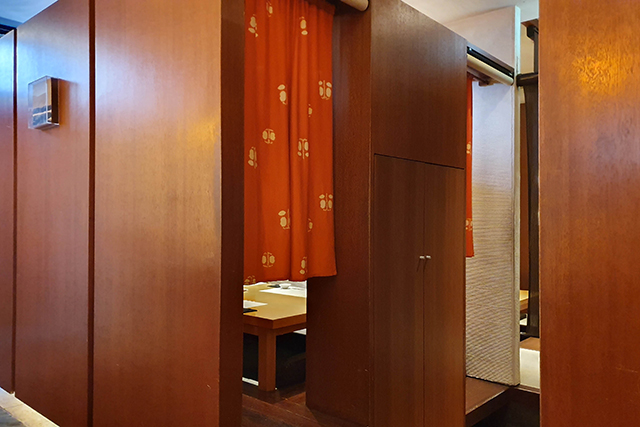
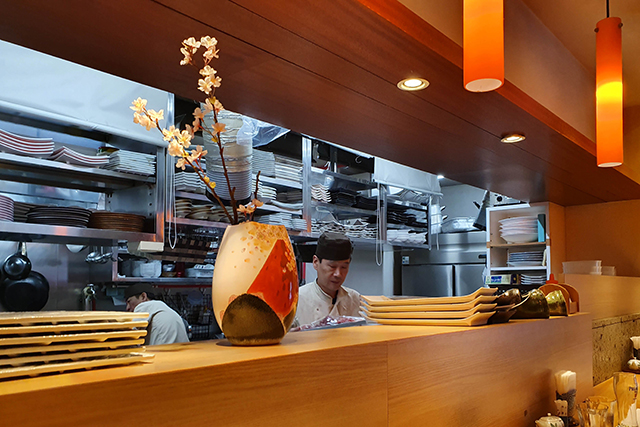
We arrive at lunch hour without a reservation, but luckily, we manage to get two seats at the bar just as a couple finishes with their meal.
I ordered the horse meat sushi course (¥3,870 +tax), while D ordered the grilled horse meat course (¥3,670 +tax).
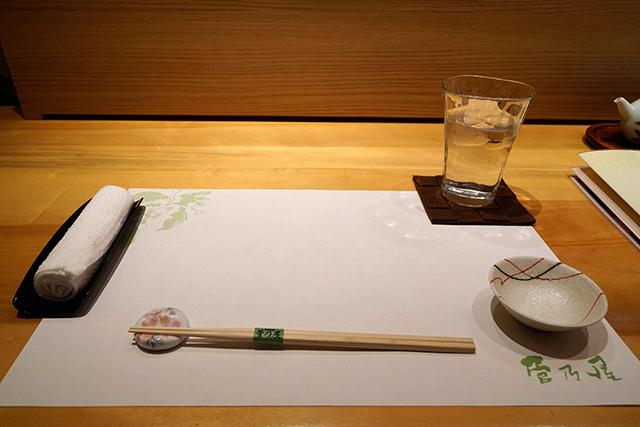
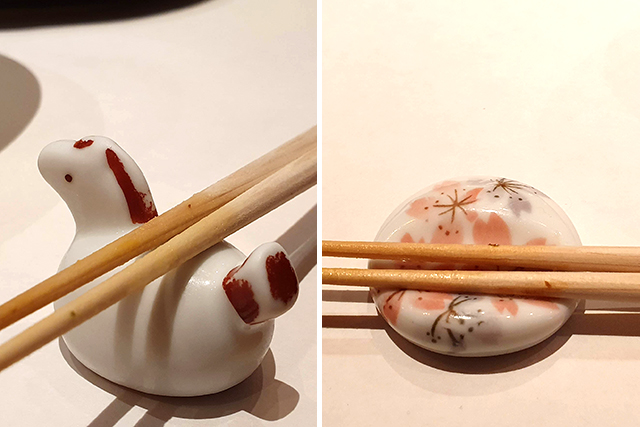
Each set was accompanied with cute chopstick holders, including a horse, fittingly.
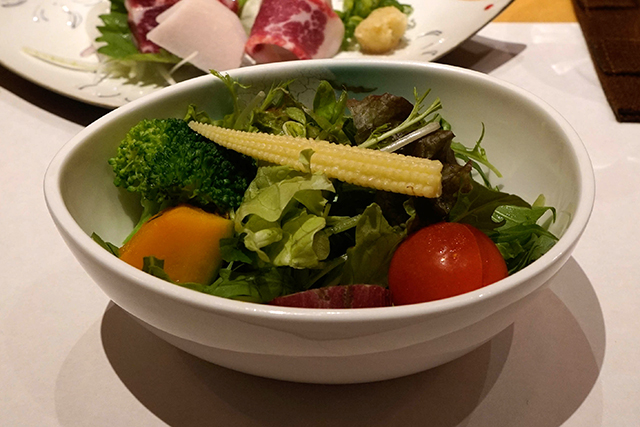
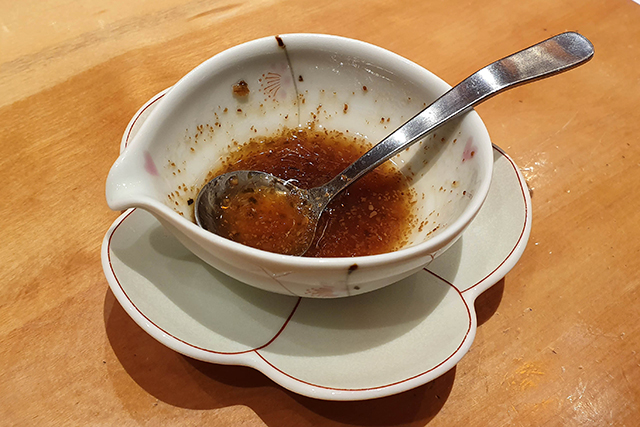
Both sets started with a salad. The vegetables were crisp and fresh, while the dressing added just a touch of acidity to bring out the flavour of the veggies.
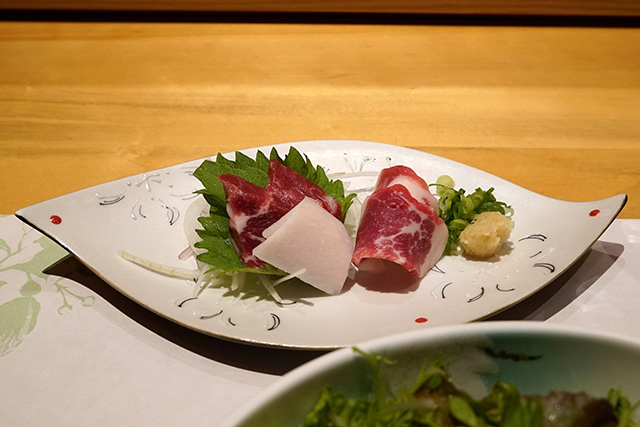
Following on is a plate of sashimi featuring different cuts of basashi.
- koune, a rare cut taken from the fatty part of the mane (centre), which was firm and oily with a chewy texture.
- shimofuri, white fat marbled cut (right), which had a delicious melt-in-the-mouth texture that reminds of well-marbled wagyu.
- rosu, a lean cut (left), which had a soft and tender mouthfeel that recalled something between raw beef and raw tuna.
We weren’t fans of the koune, but the other two were delicious.
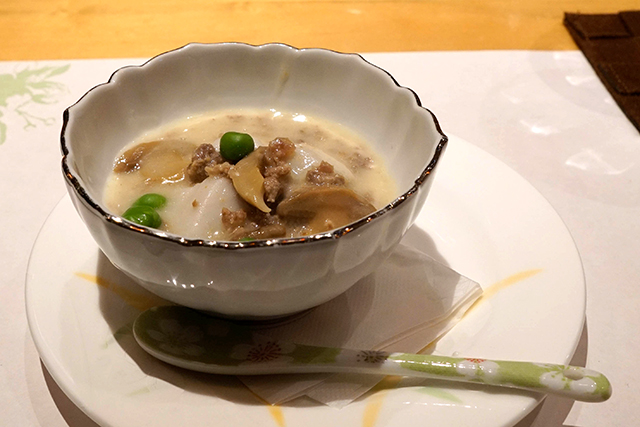
Next up, is a stewed dish was chawanmushi using mushrooms, peas, taro and minced horse meat. It was hearty and warming, although the basashi shone brighter in the other dishes.
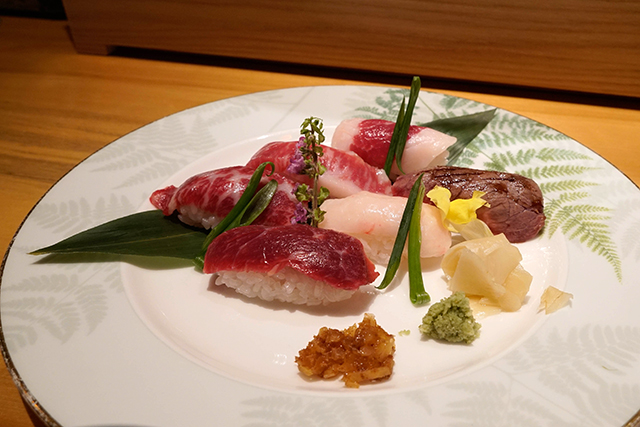
From here, our orders deviate. This is my dish of basashi sushi. It featured five different cuts of basashi ranging from fatty to lean and finishes on a seared piece. As with the sashimi, I enjoyed the lean to well-marbled cuts for their soft and succulent flavour, while the koune was an odd mouthfeel that wasn’t for me. The preparation is meticulous and each peace melts-in-the mouth. Indeed, I would be happy to eat horse meat regularly, if it weren’t for the price!
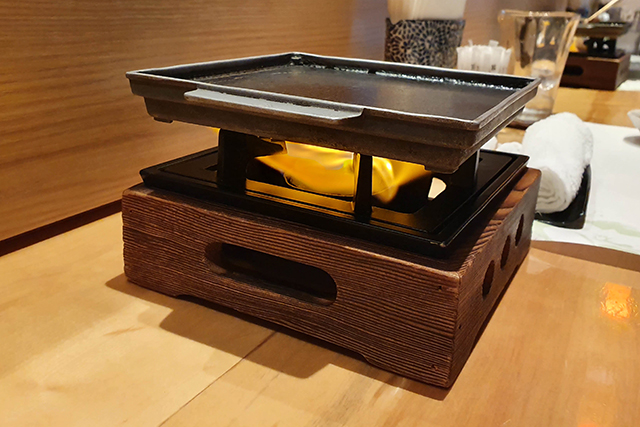
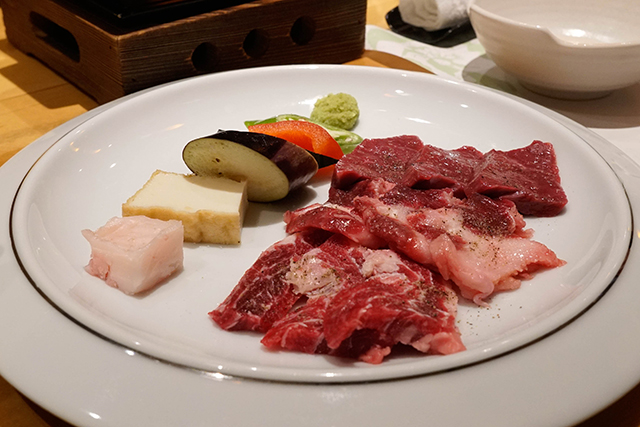
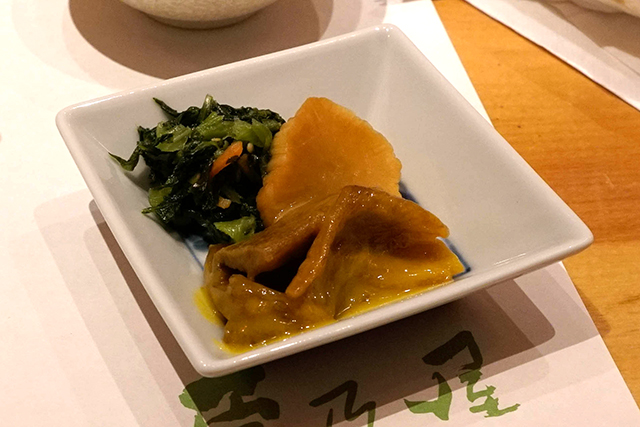
This is D’s set up for his grilled horse meat. There’s a variety of vegetables and tofu as well as a range of cuts from lean to well-marbled, all of which is cooked in a cube of horse fat (much like many types of wagyu), which gave the vegetables a moreish flavour while the meat retains its soft and succulent mouthfeel that’s much like great lean beef.
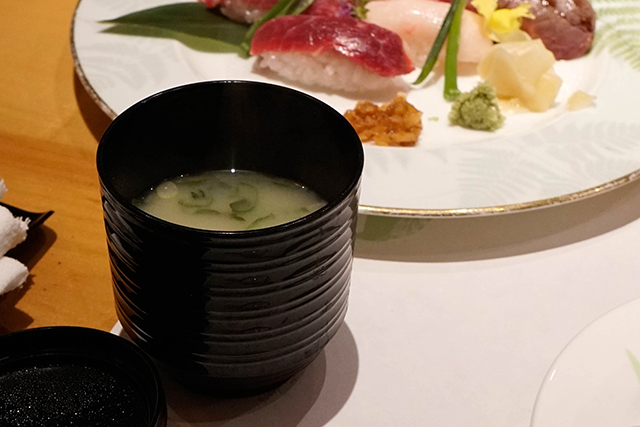
Our sets are accompanied by miso soup.
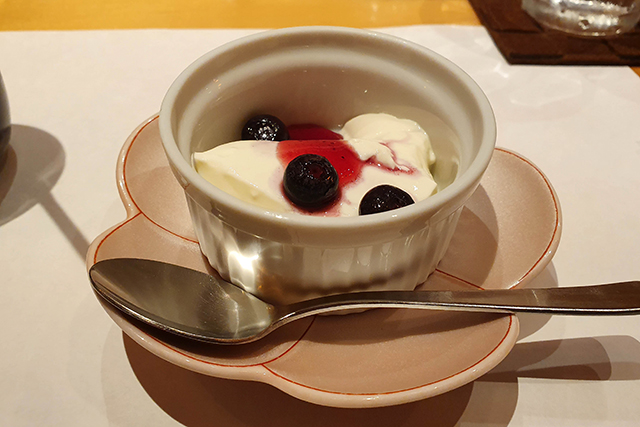
And finally, dessert was a sort of pannacotta with berries. While we enjoyed it, we would’ve appreciated a more traditional dessert.
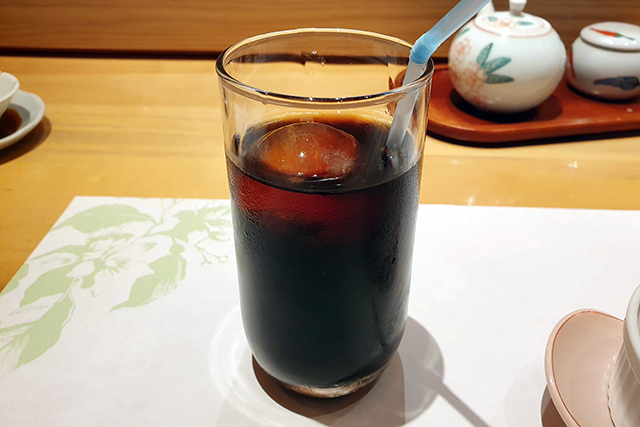
And to finish, we have an iced coffee that was the perfect end to our meal.
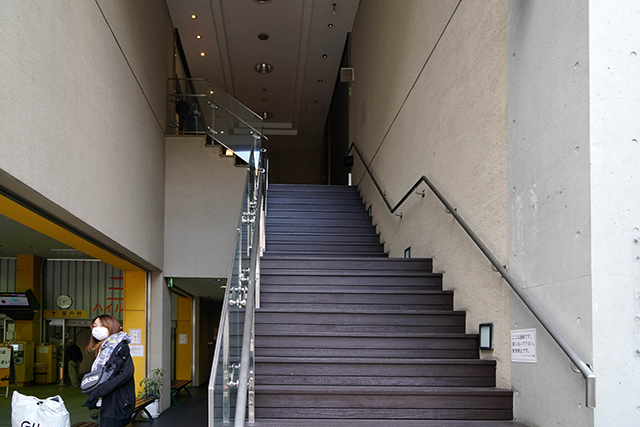
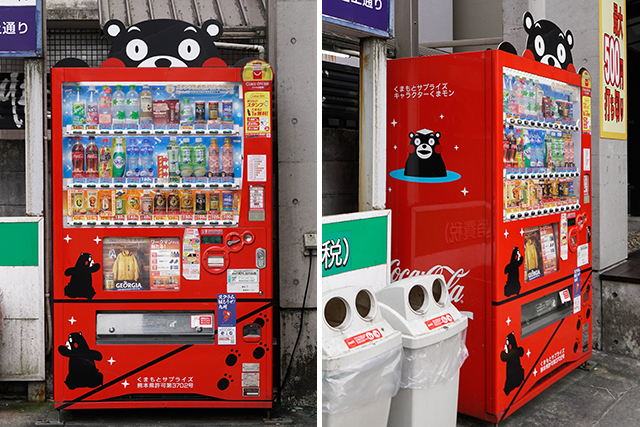
The restaurant is located up a flight of stairs with limited signage. At the base was a Cola-Cola vending machine that replaced the usual polar bear with pictures of Kumamon.
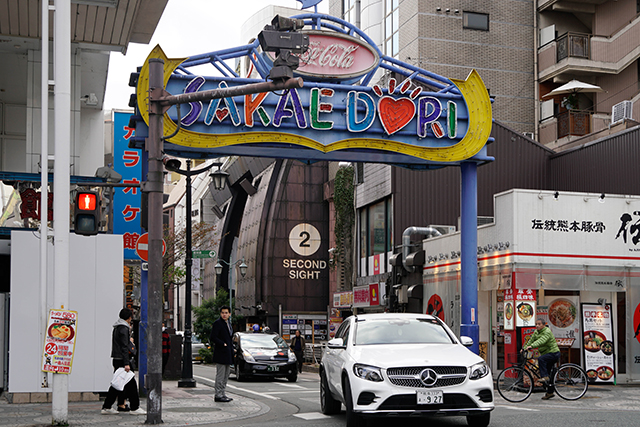
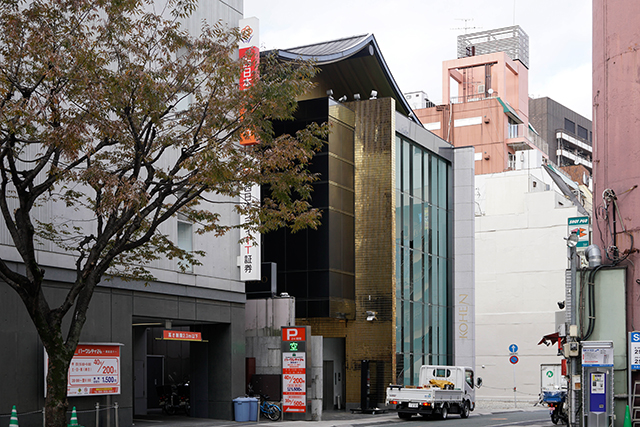
A short walk away, we stumble into some interesting architecture. The former is some shopping arcade of sorts, while the latter is a bar.
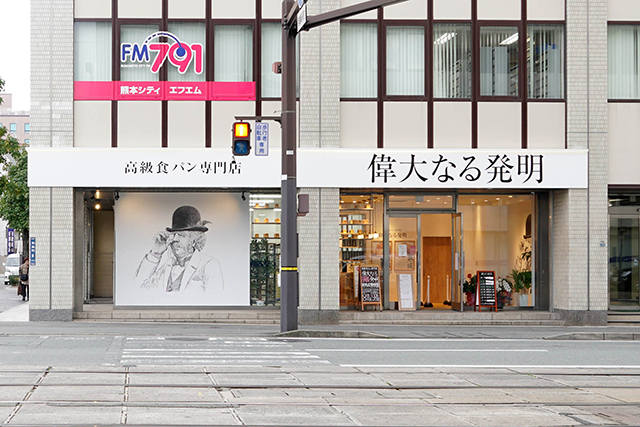
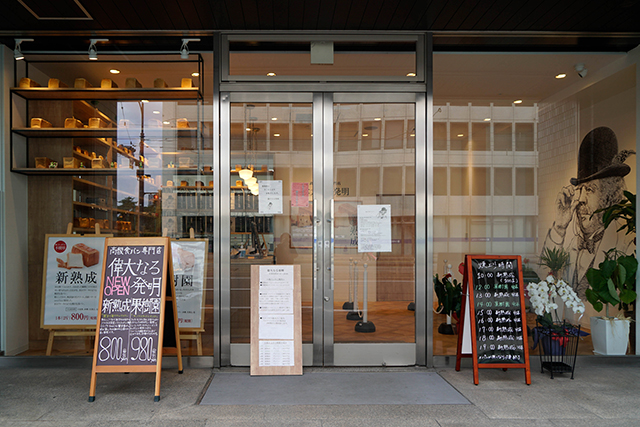
Back near our hotel, we breathe in the delicious smells of this bakery that we’d noticed the previous day, and subsequently learned that it was newly opened with queues streaming out the door during the morning (before we ventured out).
Kumamoto-Jo Hall
熊本城ホール, SAKURA MACHI Kumamoto, 3 Sakuramachi, Chuo Ward, Kumamoto, 860-0805, Japan
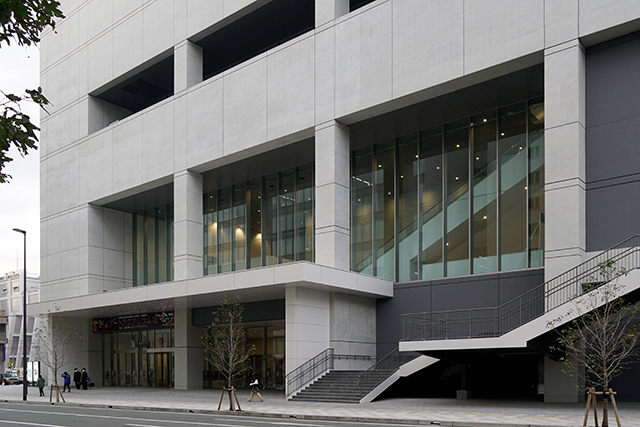
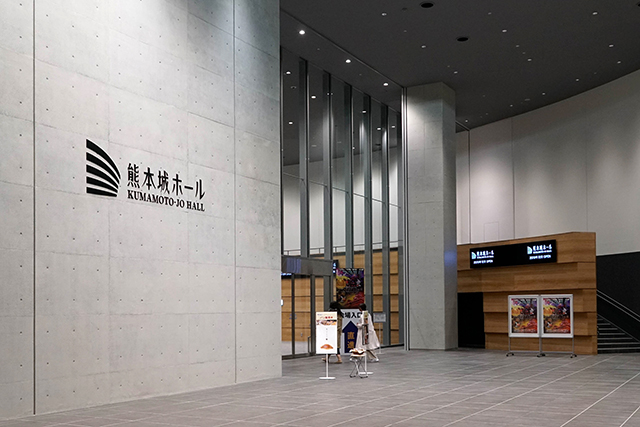
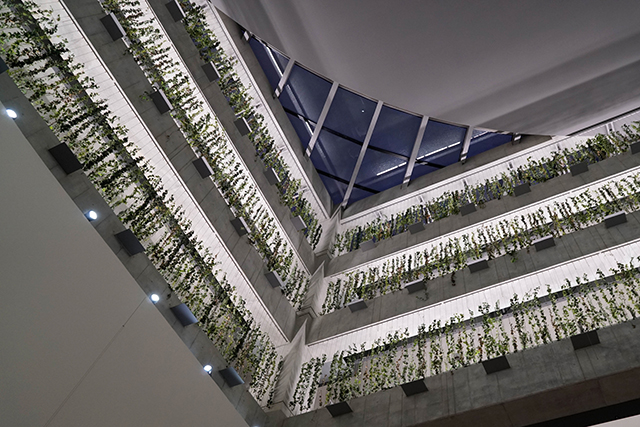
After a short rest at our hotel, we make our way back to Kumamoto-jo Hall, which is attached to SAKURA MACHI.
Forest of Numbers | 2019-2118 | 100 colors No 31 by Emmanuelle Moureaux
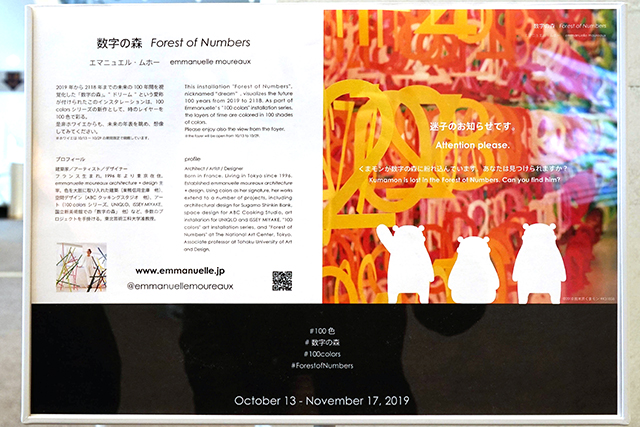
We were lucky to catch the end of the ‘Forest of Numbers’ on exhibition in the Entrance lobby of Kumamoto-Jo Hall. They were in the middle of dismantling it as we entered. The installation was organised especially for the opening of the hall in collaboration with Kumamoto’s Contemporary Art Museum to visualizes the future 100 years from 2019 to 2118. In it, there are three figures of Kumamon hiding within.
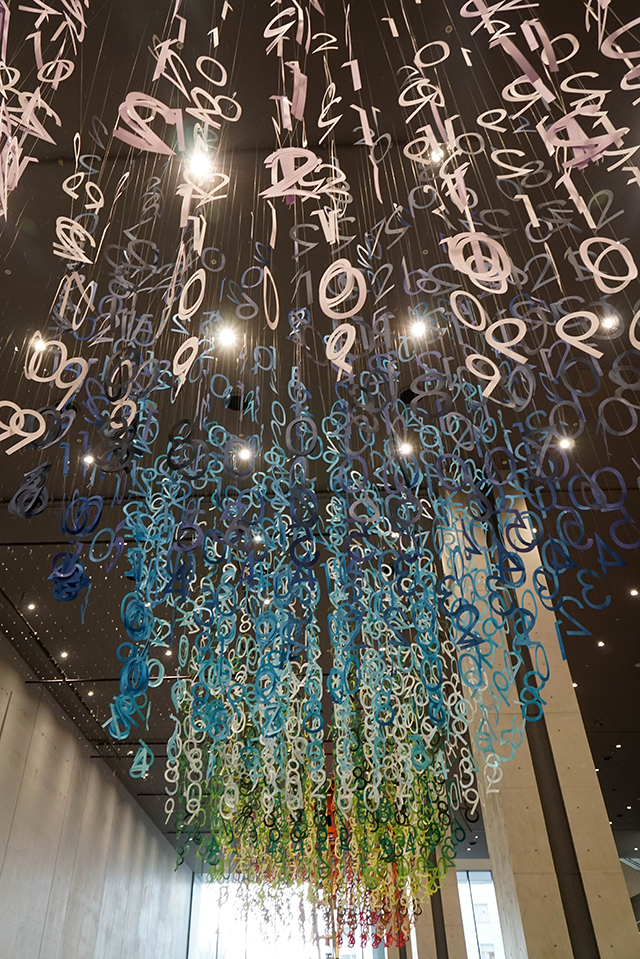
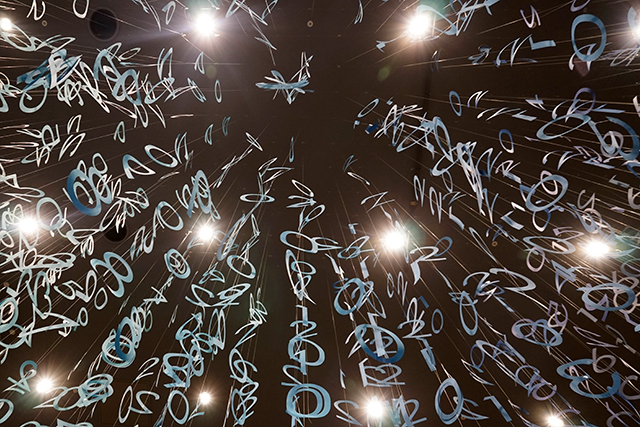
About the “100 colors” series from the artist —
“100 colors” is an installation series began in 2013, which forms space using 100 shades of colors. Emmanuelle wishes to give emotions through colors as she felt from seeing overflowing “colors” in Tōkyō when she first visited in 1995. She also wishes to give opportunities for people to see, touch and feel colors with their senses to become more conscious of colors that exist around them.
In “100 colors”, colors are explored in various forms depending on the environment, to maximize the beauty of colors. 100 colors entering the body with a glance triggers a physical response to engage with the sensation of colors. The installation series will continue to travel around the world.
“When I first arrived in Tōkyō, I was fully fascinated by the colors overflowing on the street. In that very moment, my mind decided to move to Japan. Overwhelming number of store signs, flying electrical cables, and flashes of blue sky framed by various volumes of buildings, created three dimensional ‘layers’ in the city. The flood of various colors pervaded the street built up a complex depth and intensity in the space. These indelible experiences of colors and layers in Tōkyō were the inspiration and flavour of my design concept of shikiri, which means dividing (creating) space with colors. Valuing the emotion inspired from Tōkyō, in the 10th anniversary year of my studio, I want to show the beauty of colors to the fullest extent. I also wish to share the feeling of being surrounded by overflowing colors by exhibiting 100 colors, here in the middle of Tōkyō. Please come and find your favorite color.”
Art Aquarium Castle
アートアクアリウム城, 2 November 2019 – 13 January 2020, Kumamoto-Jo Hall, Event & Exhibition Hall, 3-40, Sakuramachi, Chuo-ku, Kumamoto-city, Kumamoto
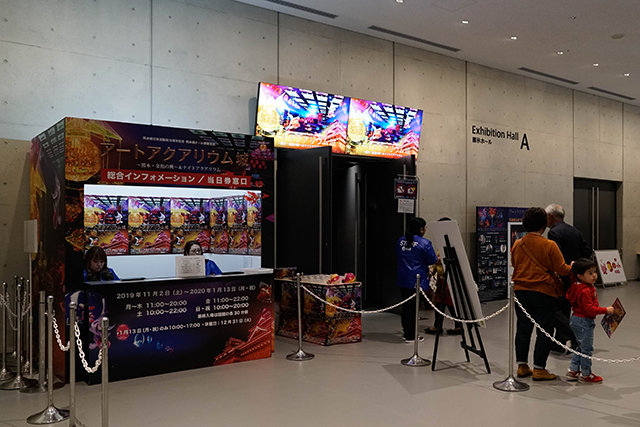
The mind behind ART AQUARIUM is Hidemtomo Kimura. He is the first and only person to combine ‘art’, ‘design’ and ‘entertainment’ with his life work ‘aquarium’. He had the following to say about the exhibition in Kumamoto —
There were many twists and turns on the way to holding the ART AQUARIUM in Kumamoto. Immediately after the agreement was set to hold the event in Kumamoto Castle, I remember feeling stunned to see the castle crumbling in an earthquake.
At that time, I wondered if there was something I could do for the people affected by the disaster, but in the chaos just after it occurred, I felt that my own power was too powerless. Three and a half years later, I am delighted to be able to hold an ART AQUARIUM in conjunction with the opening of the Kumamoto Castle Hall. Because I’ve been able to do the only thing which I could: to make people smile with the power of art.
It will take time to fully recover, but it would delight me to be able to bring many smiles to even some of the people who were affected. A variety of new efforts are moving forward, and the event here at Nihonbashi Mitsui Hall this year will be the last. First, I would like to thank this place, where the Art Aquarium, specializing in gold fish as well as Edo culture, came into its own, here in the unique atmosphere of Nihonbashi.
On the history of kingyo in Japan, he said —
Kingyo (goldflsh) is “Ornamental fish” which was created by human hands and kept changing its form. The history of kingyo goes back to nearly 2,000 years ago when mutation happened and a red colored carp appeared in China. It is said that in year 1502 (Muromachi period), kingyo came to Japan. At that time, kingyo was very luxury item so only privileged class people such as lords of castle and senior statesmen were able to enjoy kingyo. In the Edo period, wealthy merchants and samurai started to pet kingyo at the pond in their house and kingyo was displayed beautifully sometimes as an elegance to bright up the watering hole where people gathered and sometimes as the coolness for the hot summer. Later in the Edo Period, kingyo has spread among the common people and kingyo boom came and kingyo was drawn in ukiyoe, furniture, and pattern of kimono. This is when the base of Japanese original kingyo culture which still continues until today was built. In this exhibition, taking into consideration the chic world of kingyo that was brought up in Edo period, I try to bring it back to present in a new form.
On his interaction with the goldfish used in his exhibitions —
ART AQUARIUM often gets the attention for its unique expression and idea but before that, I am proud to present the knowledge and technology to keep the ecosystem keeping the fish alive. The fish swimming here are living their happy hours with the nutritious meal, high spec water purifying system, and are looked after by the professional maintenance staffs who stay up all night every day to do so. Bom as an ornamental fish, they receive the most love human can give them. After the exhibition, the kingyo goes back to where they originally came from such as the pond of kingyo market and wholesalers. The ones that are hard to find, we keep it in our hands to take care carefully and they go around with us to each exhibitions. There were many kingyo that travelled with us from Hokkaidō to Kyūshū exhibitions. Sometimes, baby kingyo is born during the exhibition and this baby grows to be in the exhibition.
ART AQUARIUM is the exhibition where my thought to prepare the grandest occasion for the fish born as ornamental fish became reality. I would always like for visitors to experience the underwater world that the aquarium, sublimated as art, weaves together, and to feel the message inside that. The Art Aquarium is a fusion of the aquarium ecosystem with product and spatial design and performance. At the vanguard of technology within human reach, there is a natural beauty born of the earth. The kingyo may have been produced by the hands of man, but there is no doubt that they are under the providence of nature. I hope that visitors feel the “small realization” of wanting to protect beautiful things, through the strong beauty that the great artist, Mother Earth, has created and through the beautiful and elegant, yet ephemeral, dance of the kingyo. To date, this exhibition has attracted a total of 9.9 million customers. There was a lot of cooperation and understanding regarding this history. Most of all, I am grateful to the people who have visited the venue. Furthermore, I am extremely grateful for the wonderful performance prepared to commemorate the opening or Kuninmoto-jo Hall, allowing us to usher in a new era of history here.
Flower²Aquarium (フラウーフラウーアクアリウム)
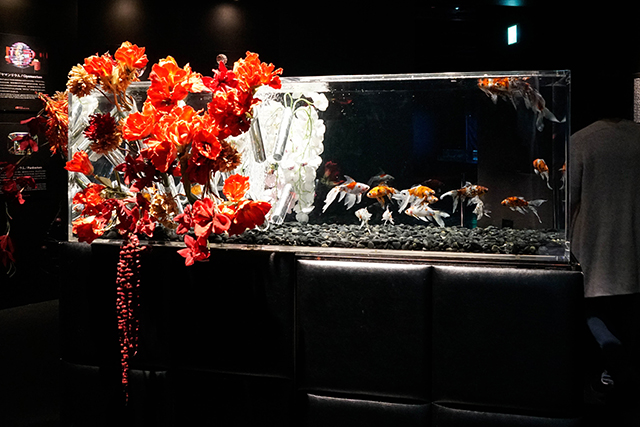
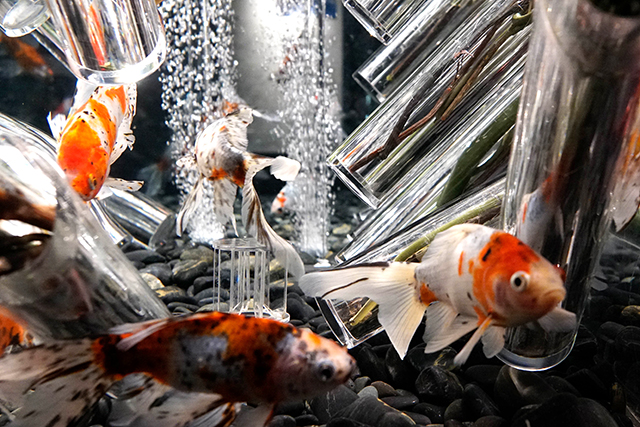
This is the Flower²Aquarium (フラウーフラウーアクアリウム)
It is an extremely gorgeous aquarium. It’s the collaboration of flower arrangement jumping out fromt he aquarium tank and aquarium display in the tank.
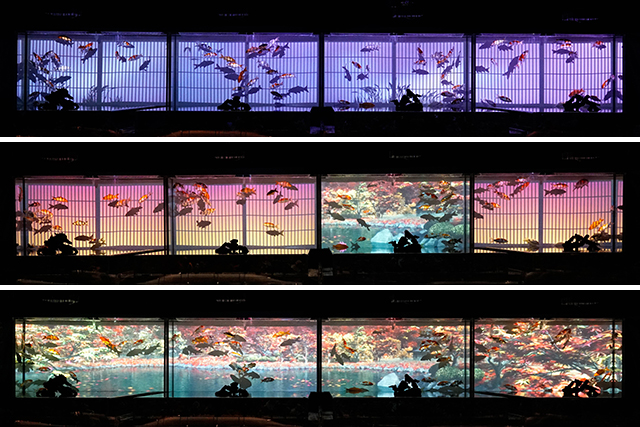
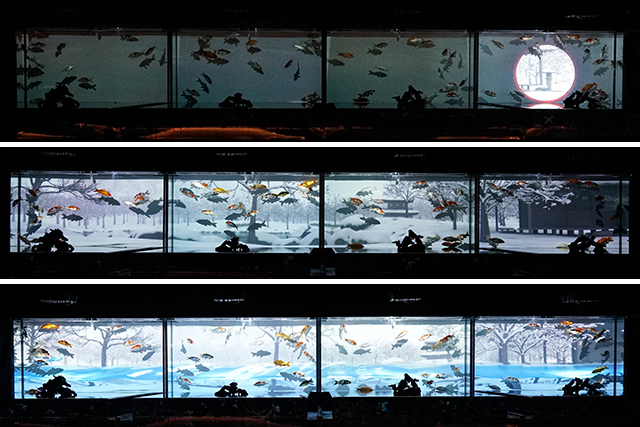
The Four Seasons Aquarium (水中四季絵巻)
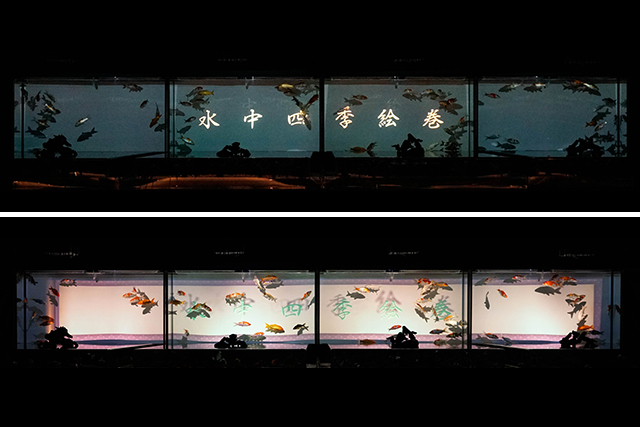
This is The Four Seasons Aquarium (水中四季絵巻)
It is huge 8 meter work where the real nishikigoi swims in the Japanese four seasons which are projected by projection mapping. The work that reminds you of Japanese garden also reproduced beautifully the scenerey to reflect on the pond. It can be said it is the greatest work of ‘cool Japan art’ using nishikigoi and the four seasons which are the attractiveness of Japan to be proud of to the world.
Reflectrium (リフレクトリウム)
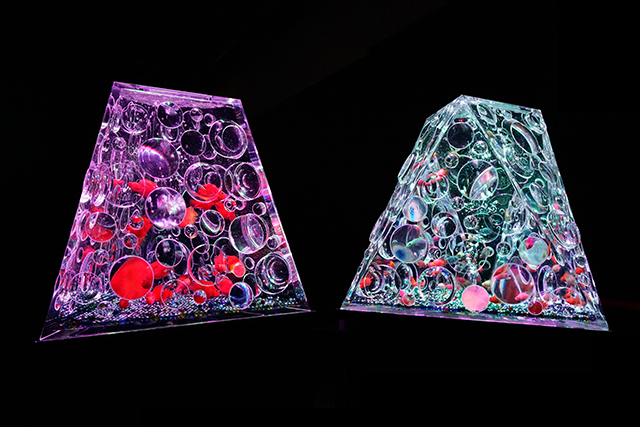
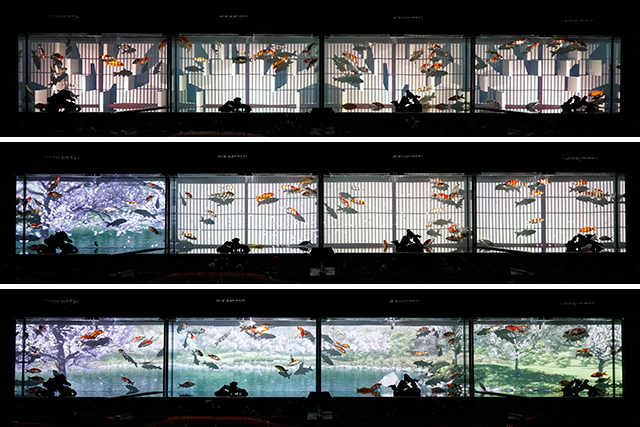
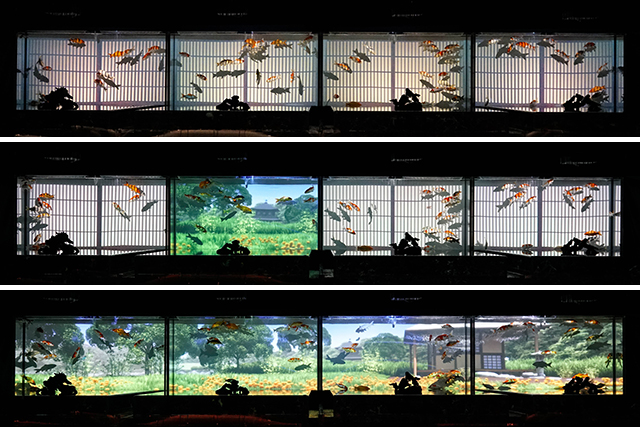
This is the Reflectrium (リフレクトリウム)
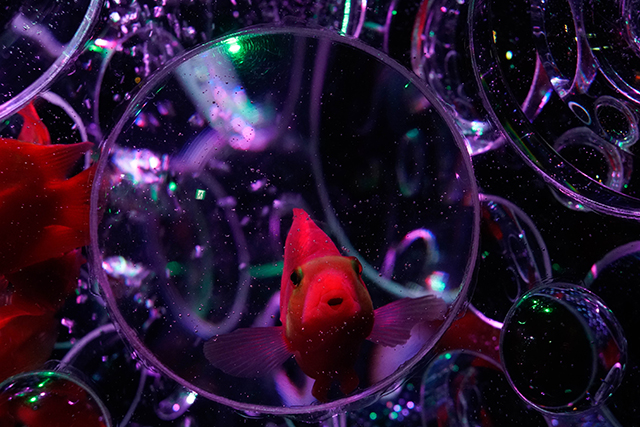
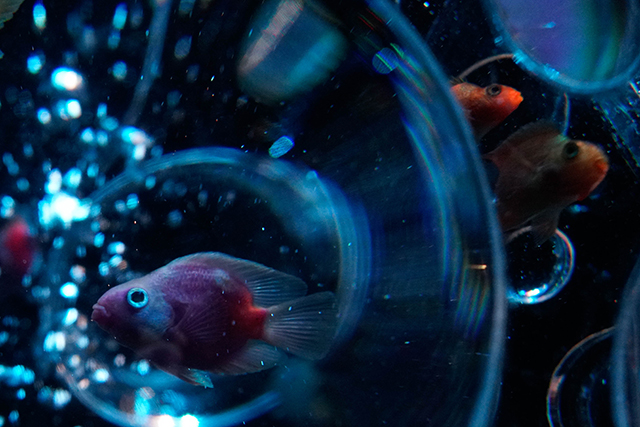
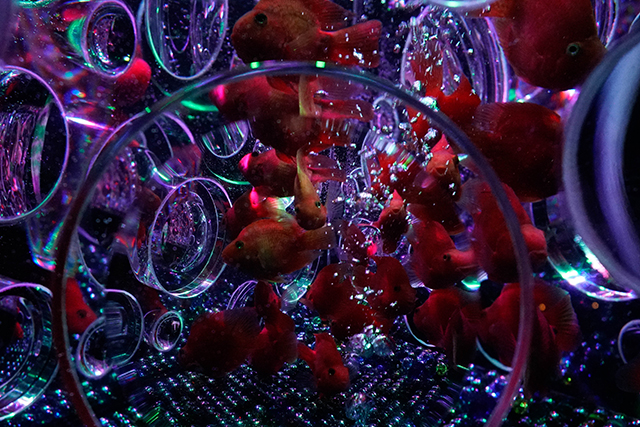
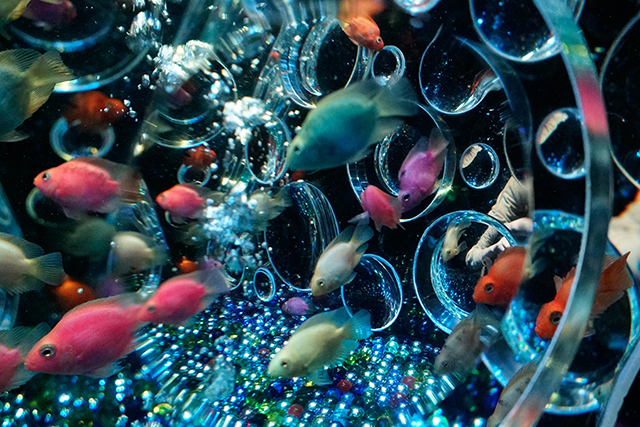
It is a new artwork which put a concave lens, a convex lens, the double lens, and lens of the various vanity to an aquarium. The fish swimming inside are sometimes seen big, seen small, seen double, seen reflected, bringing mysterious world. The edgy structure beauty is also worthy of note.
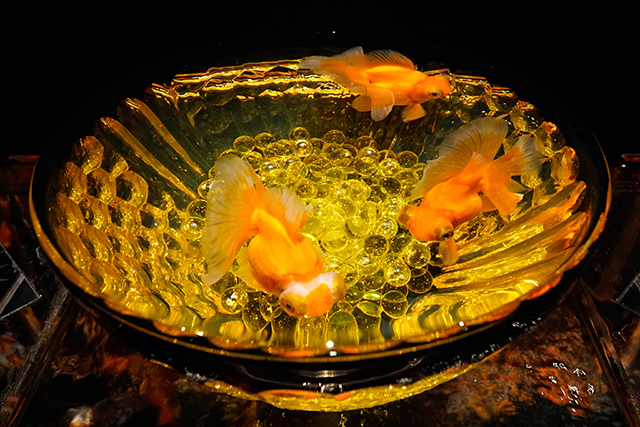
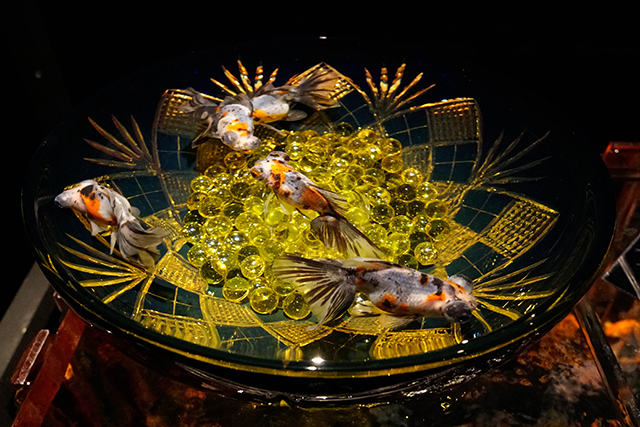
Kirikorium (キリコリウム)
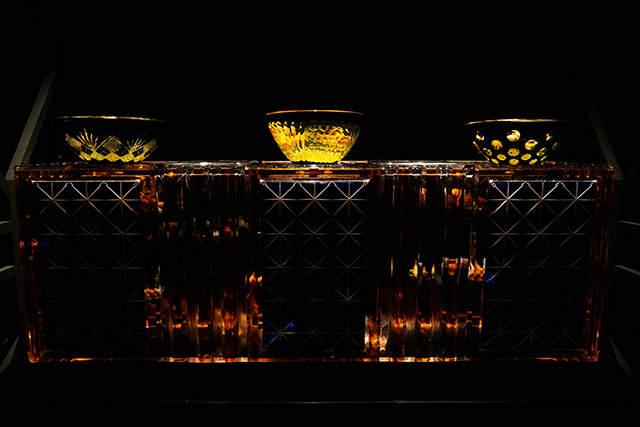
This is Kirikorium (キリコリウム)
Artwork using edo-kiriko which is the traditional craftwork from Edo period. Making use of the characteristic of edo-kiriko cut glass technology, kingyos look mysterious and beautiful when looking from above and the side. Beneath part is made by acrylic, the modern craftwork, imitating the edo-kiriko. The ancient and modern craftwork technology Japan is proud of have collaborated to bring out elegant beauty to the artwork.
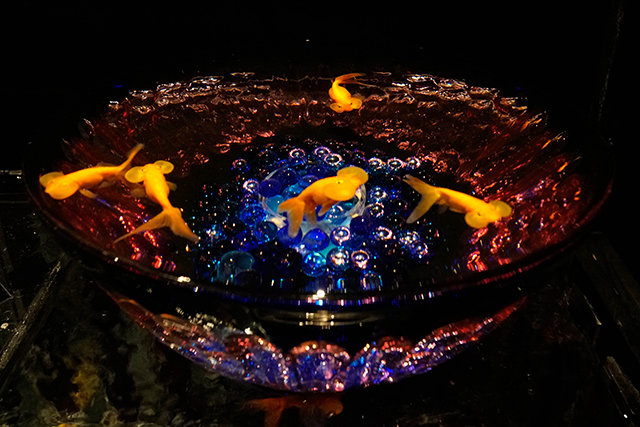
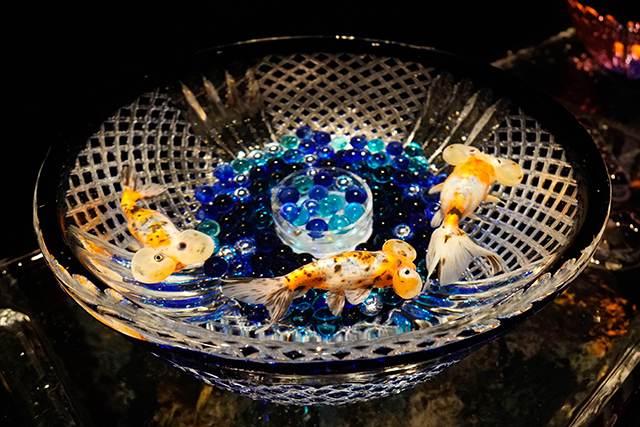
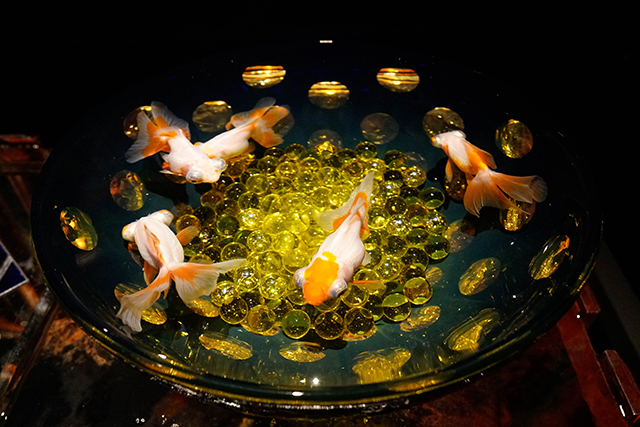
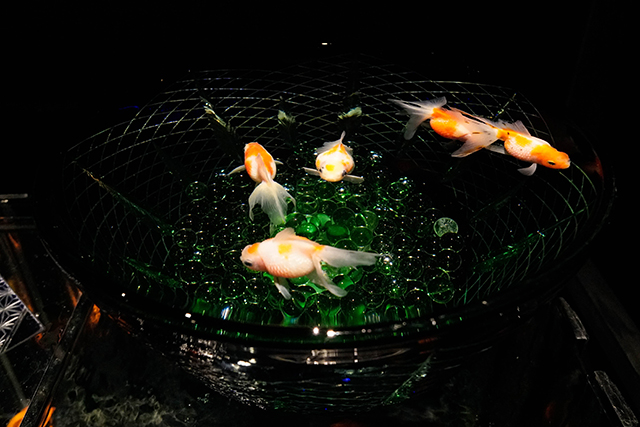
Kutani Goldfish Exhibition (九谷金魚品評)
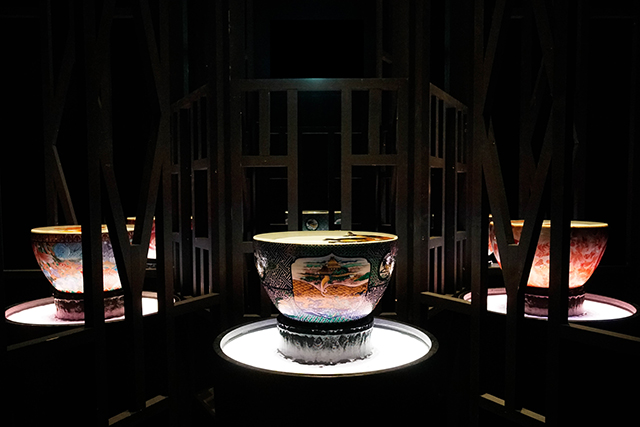
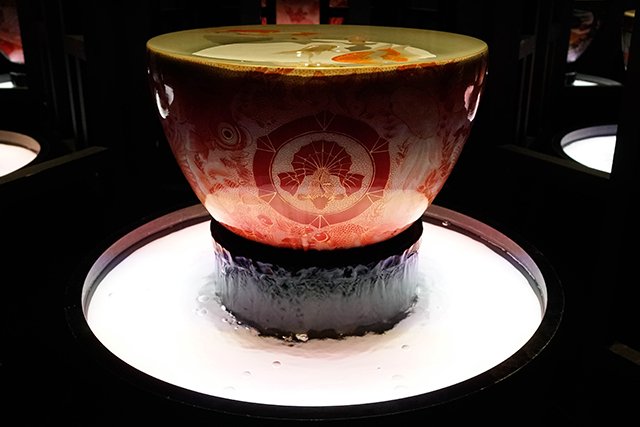
This is the Kutani Goldfish Exhibition (九谷金魚品評)
An art aquarium crafted through the traditional Japanese art of Kutani procelain, adorned with goldfish designs applied using the three foundational kutani techniques: kutani blue, akae red and hanatsume pink. With this luxury piece, you’ll be able to take goldfish that seem real enough to appear in a real exhibition from the trop, while the sides allow you to enjoy a brilliantly colourful world of golfish adorning the kutani porcelain.
Super Oiran (超花魁)
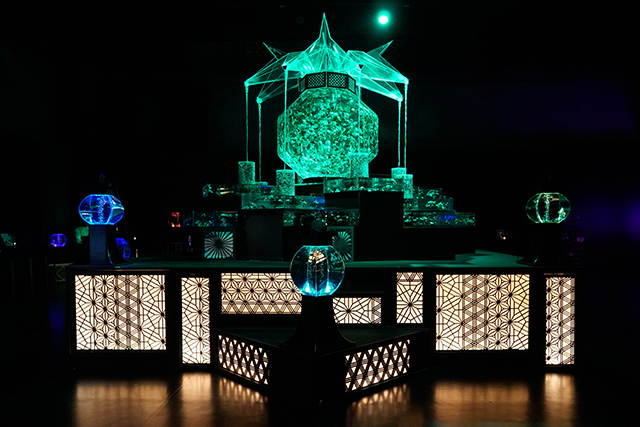
This is the Super Oiran (超花魁)
Oiran which has been the symbolic artwork since the beginning of ART AQUARIUM has reached its 10th year and evolved in Super Oiran. Having power and beautifulness, with 3 times the scale of Oiran, overwhelms those who see it. It expresses the legendary oiran, a courtesan, who reigned over during the golden age of fleshpots in Edo period.
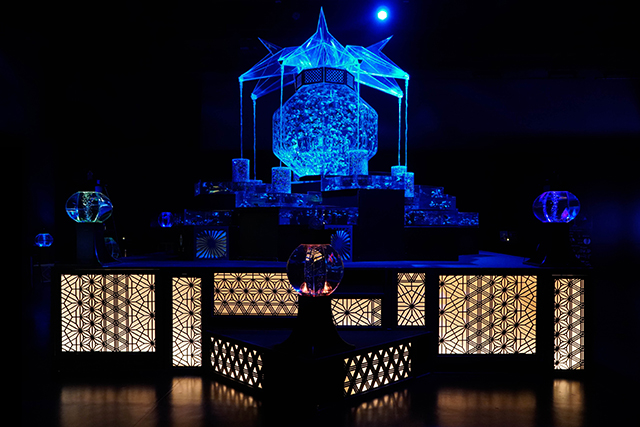
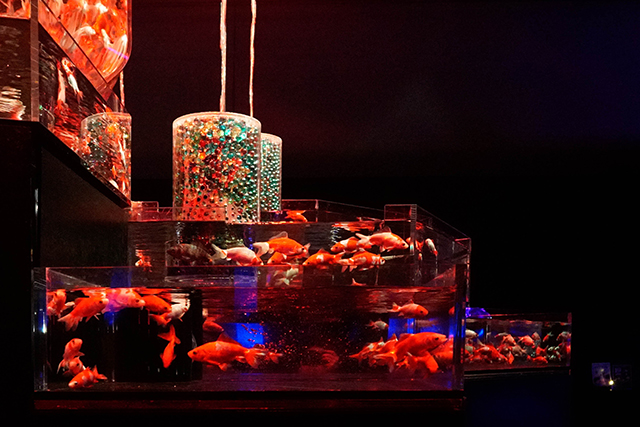
Bonborium (ボンボンリウム)
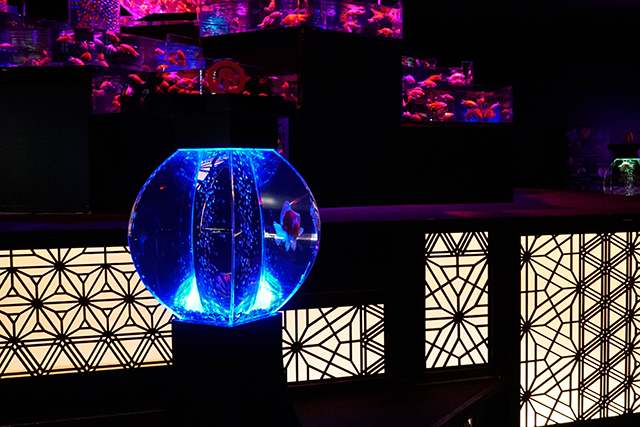
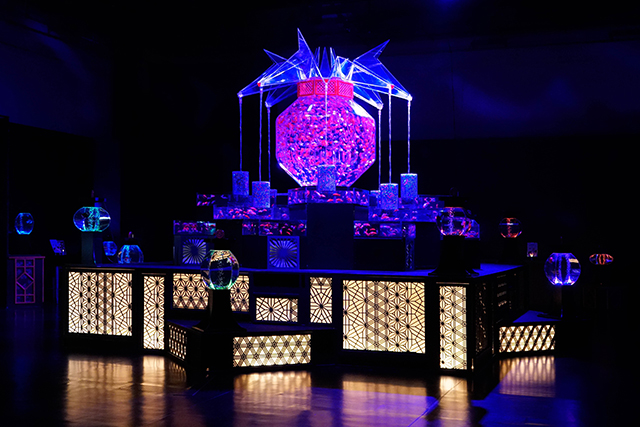
Situated around the Oiran is the Bonborium (ボンボンリウム)
The series that likened an aqurium to illumination. A work reflecting the image of a bonbori (traditional Japanese light) which is familiar in Japan from the Edo era to the present. The attractiveness bonbori has is emphasised. Please enjoy the collaboration of kingyo lighted with an abstracted air and the slowly changing light.
New Edo Kingyo Display (新江戸金魚飾)
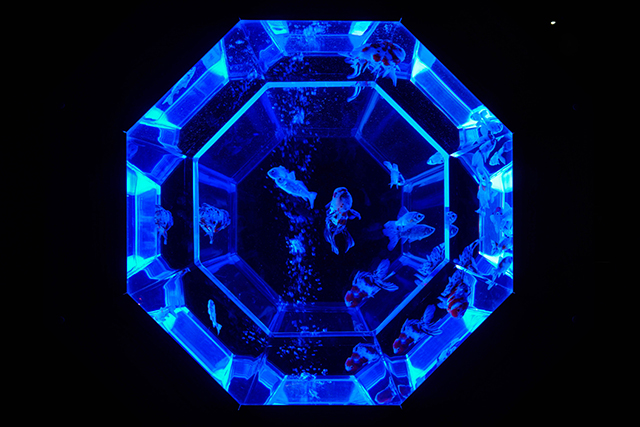
This is the New Edo Kingyo Display (新江戸金魚飾)
It is a wood frame aquarium tank enjoyed during Edo Period which you will enjoy from looking form the side. It is transparent polyhderon fish tank bringing prism effect, revive in a new form. It is the work which while leaving the emotion, feel the future.
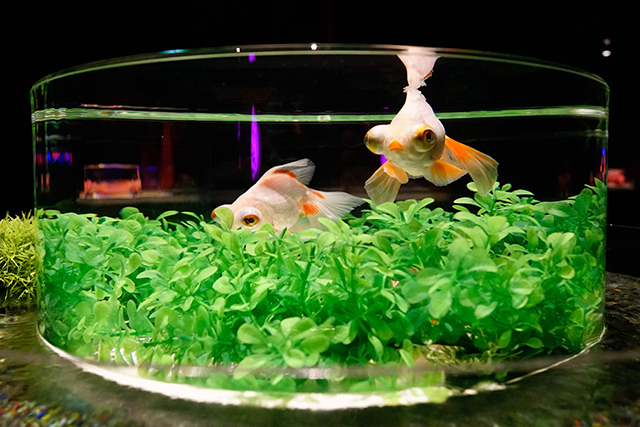
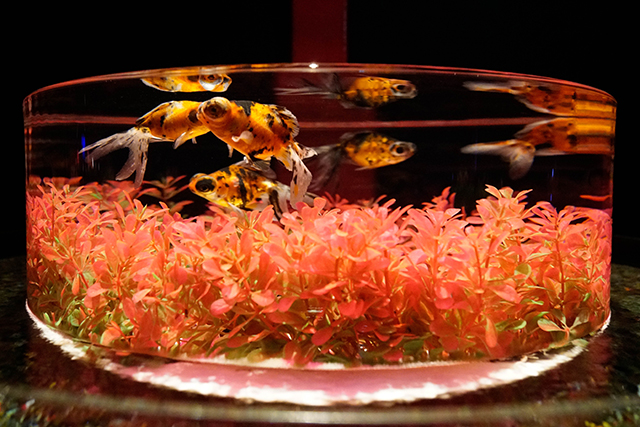
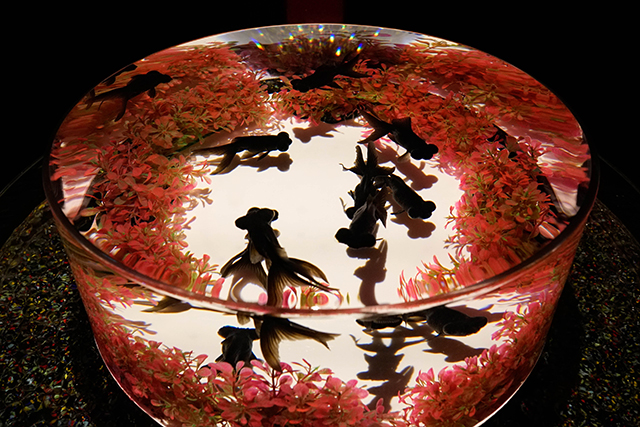
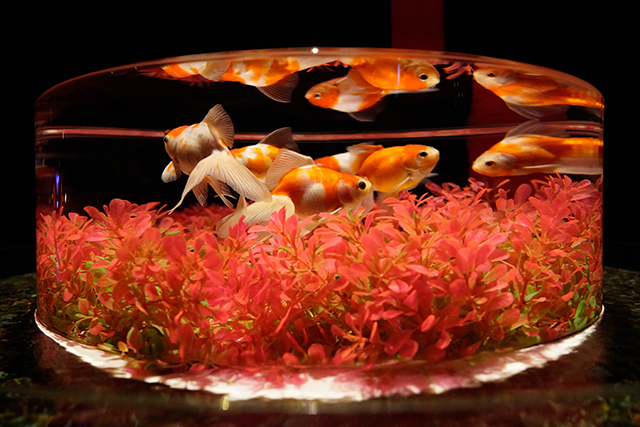
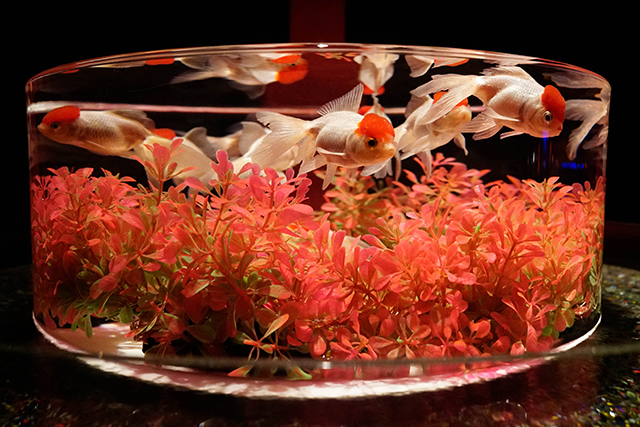
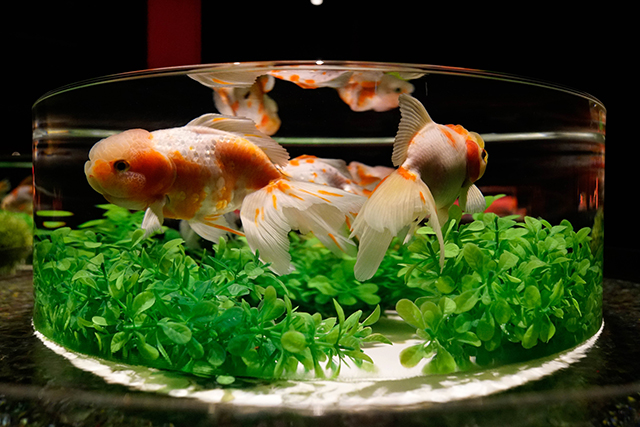
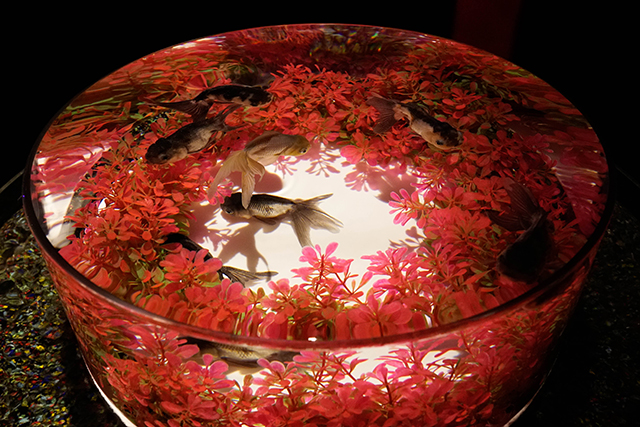
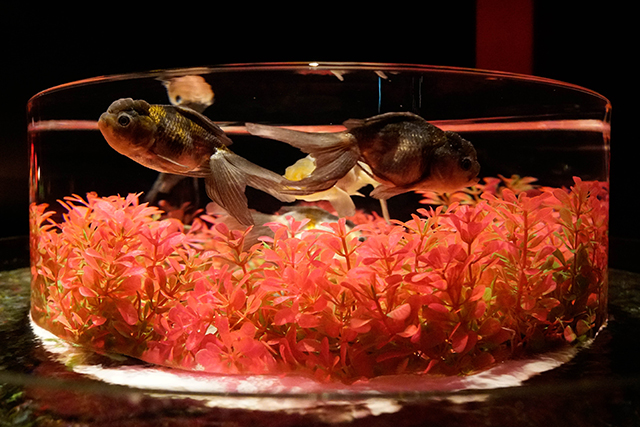
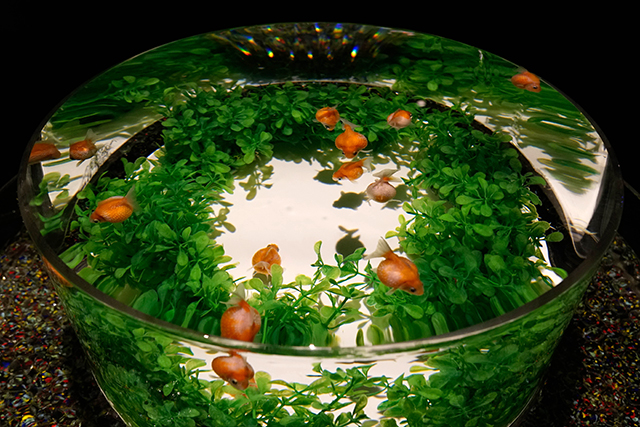
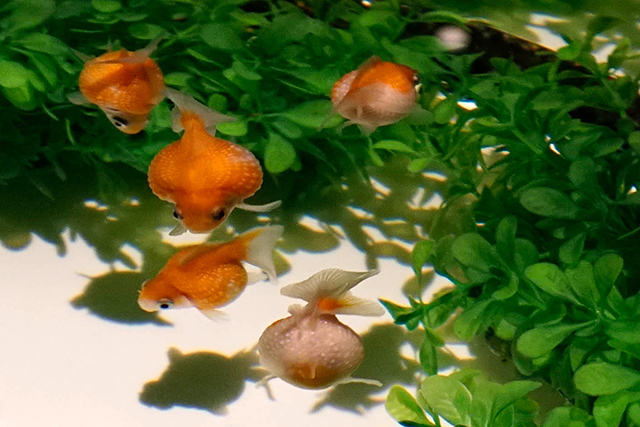
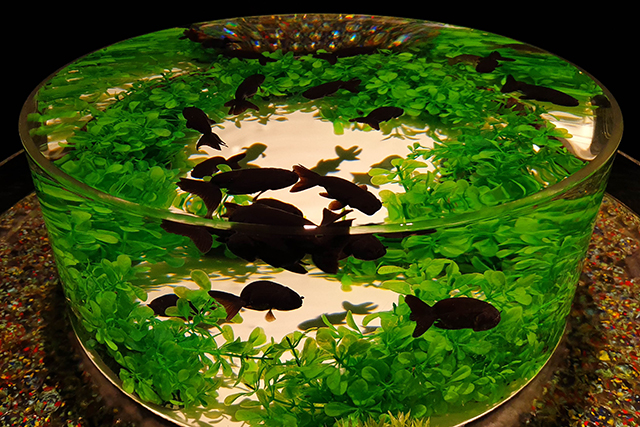
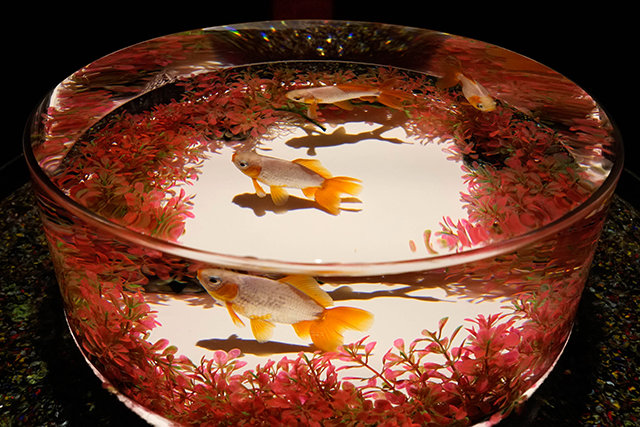
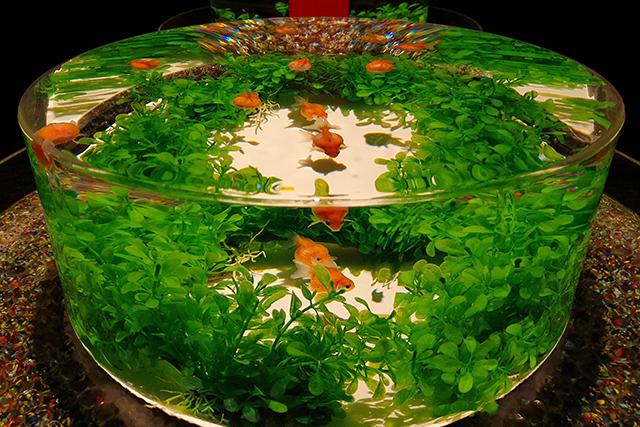
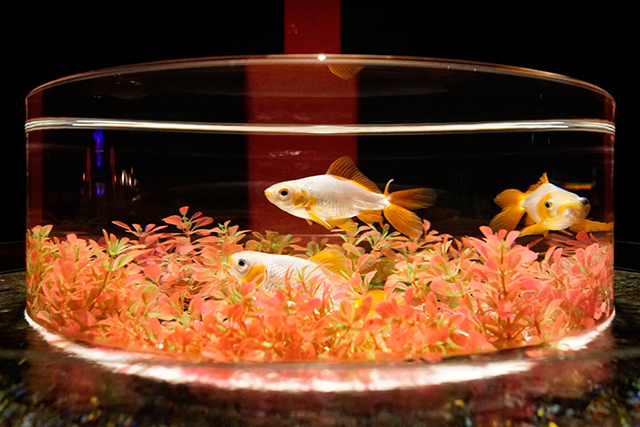
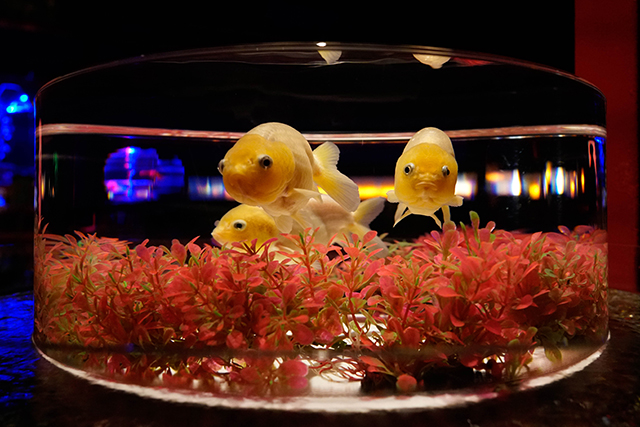
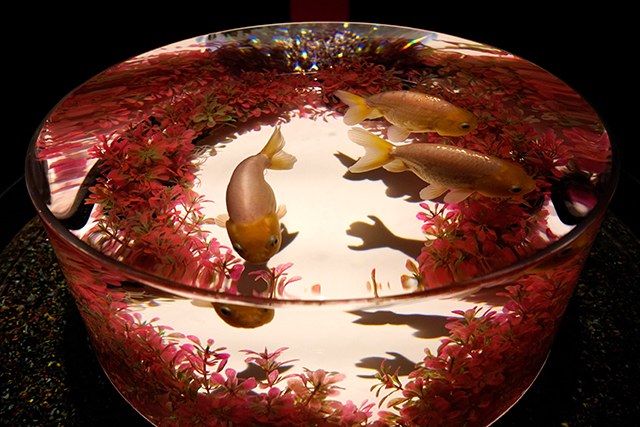
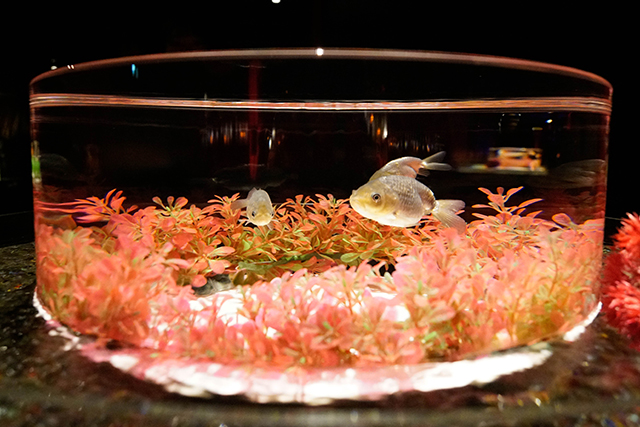
A Show of Kingyo (金魚品評)
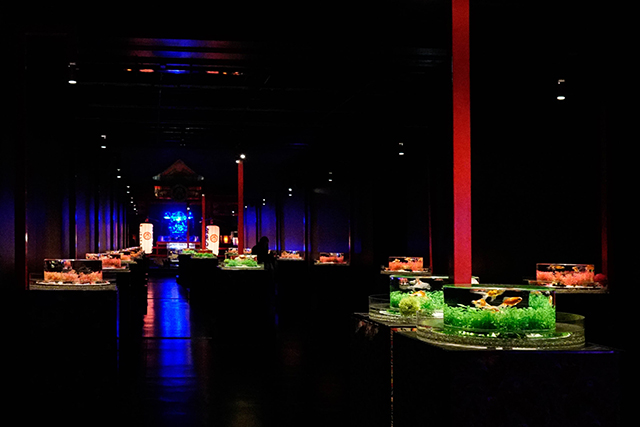
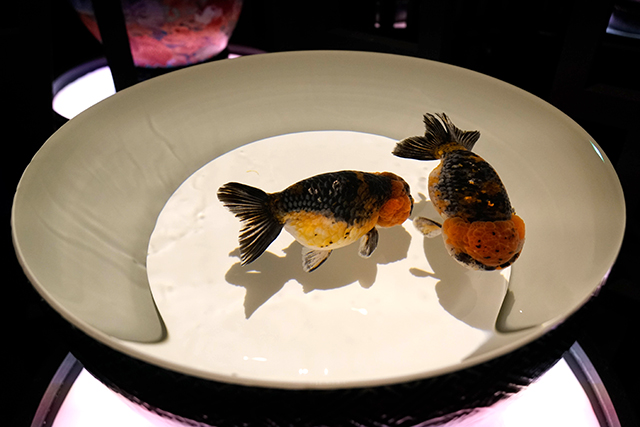
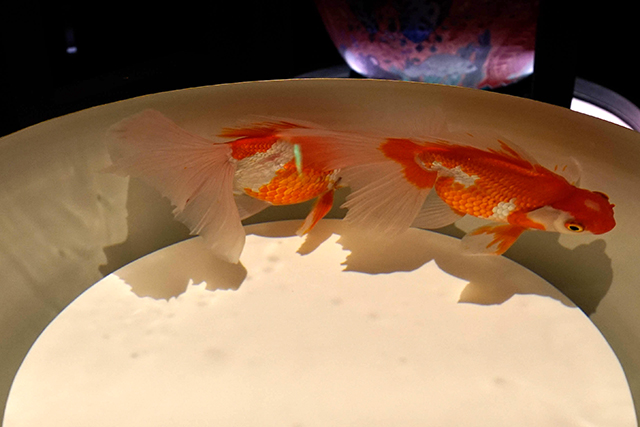
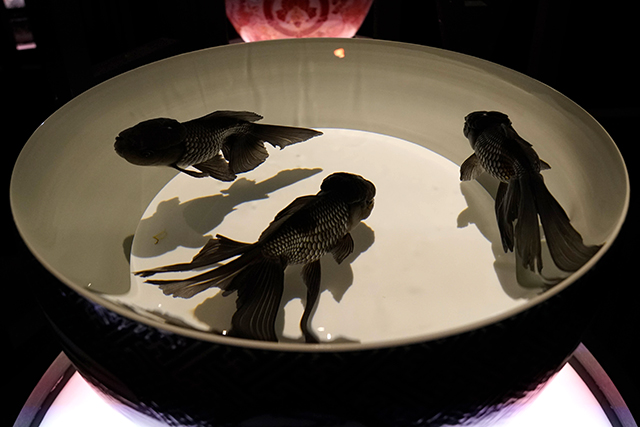
This is A Show of Kingyo (金魚品評)
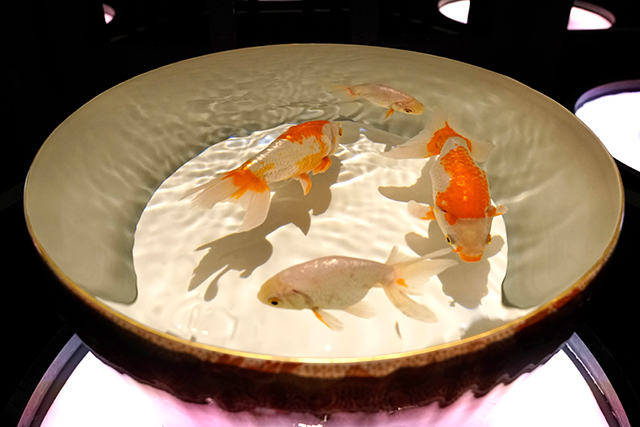
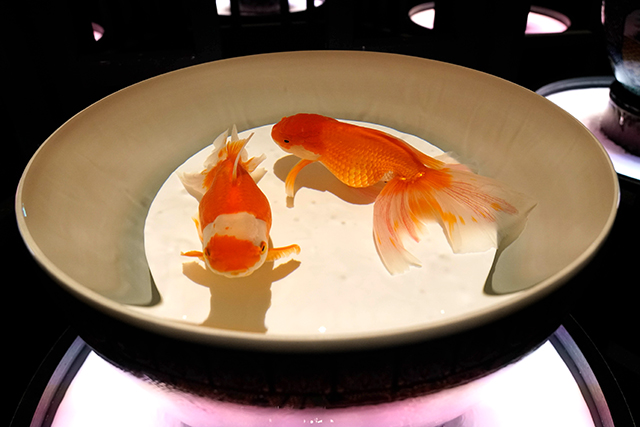
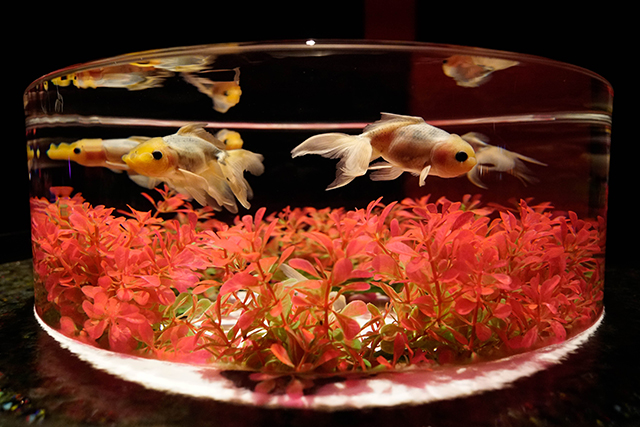
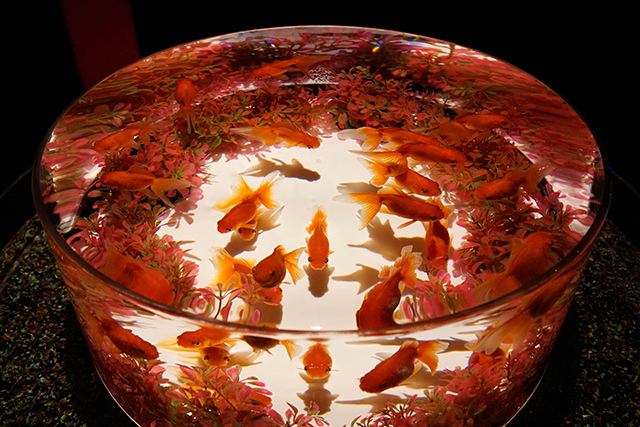
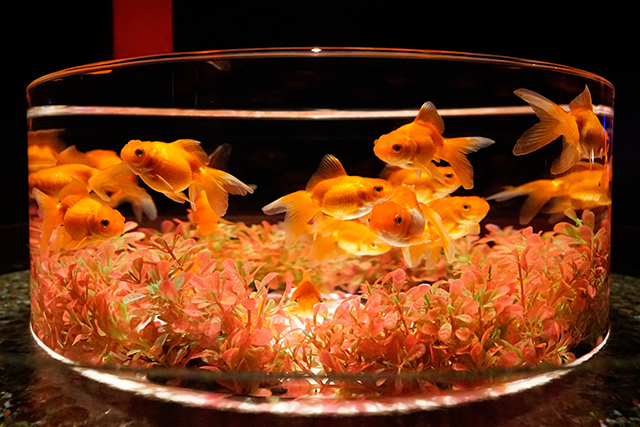
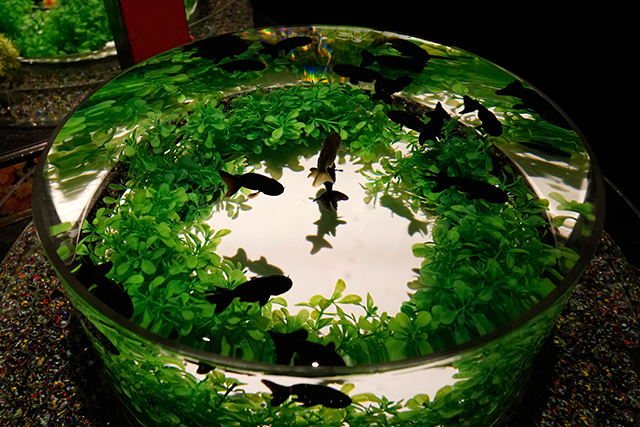
It is the group of artwork to enjoy kingyo which swims elegantly in the circle tank with no waves on water surface. It is very suitable design for kingyo show.
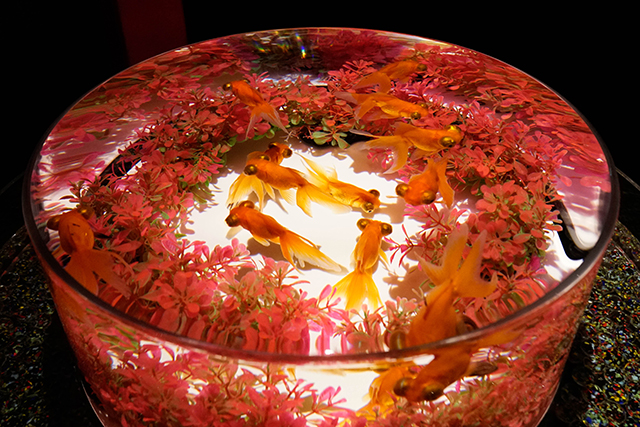
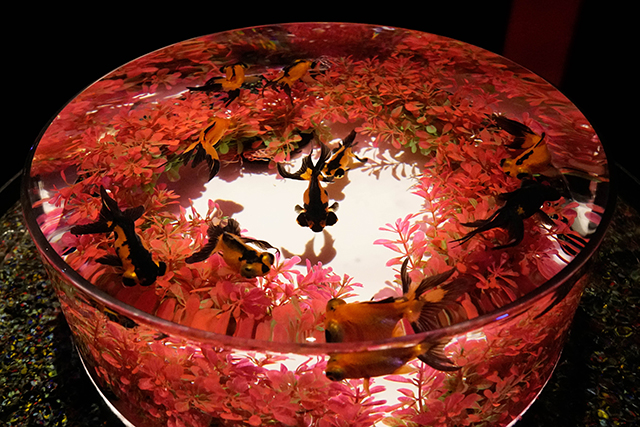
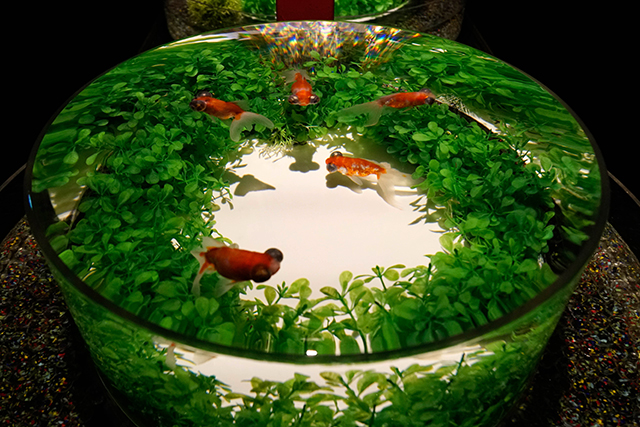
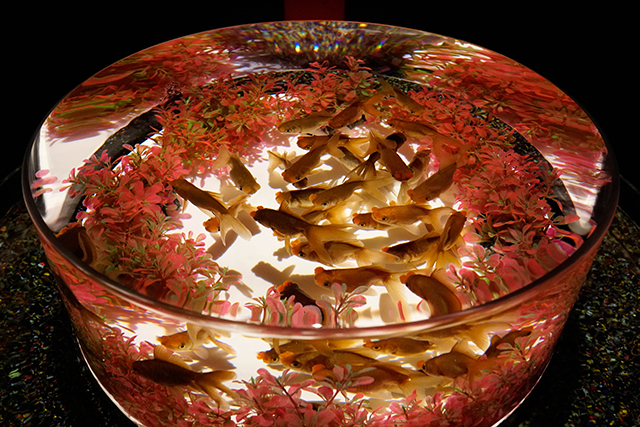
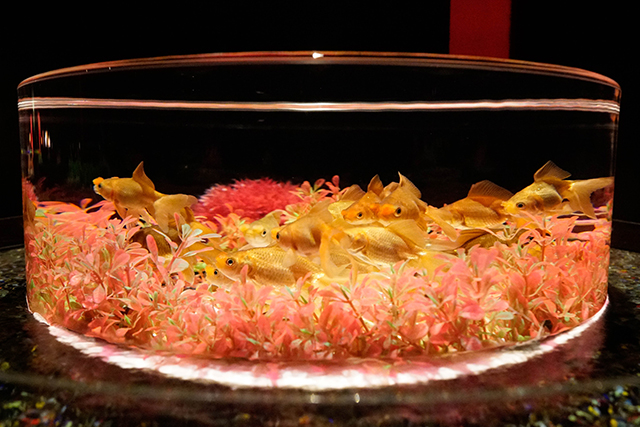
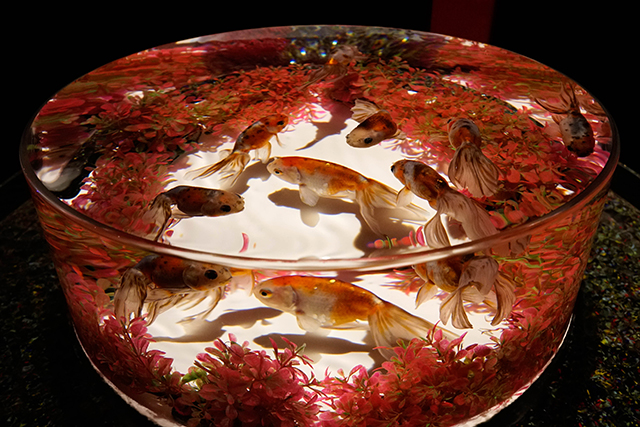
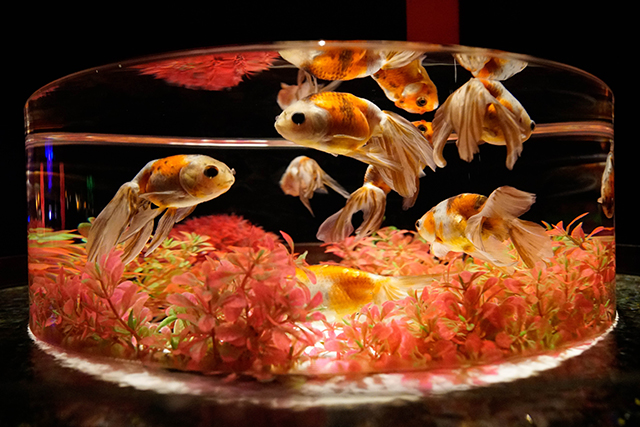
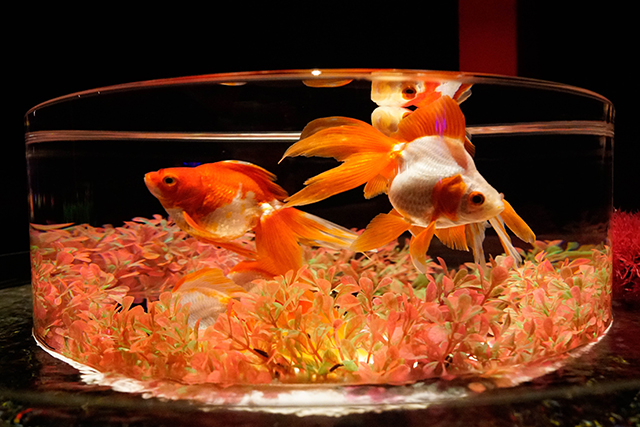
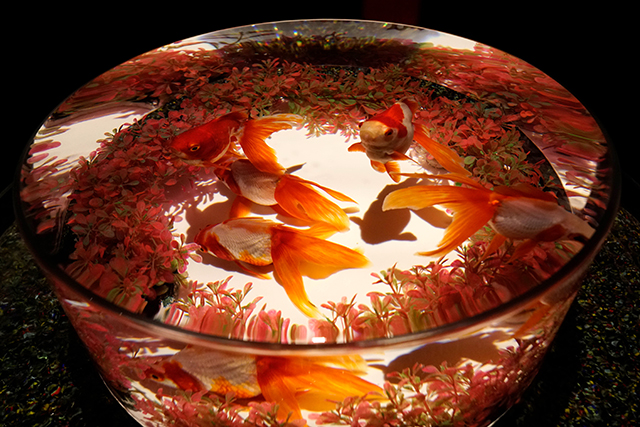
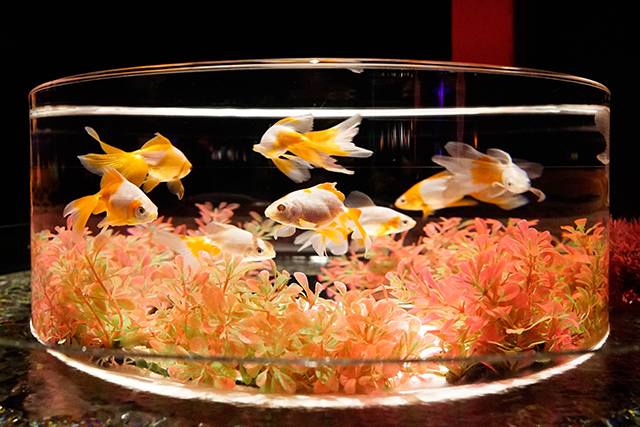
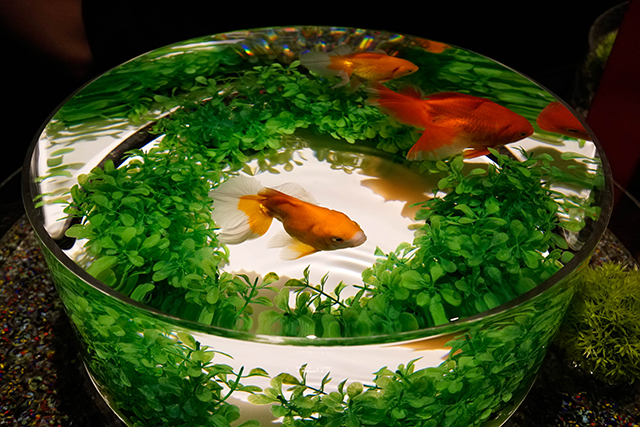
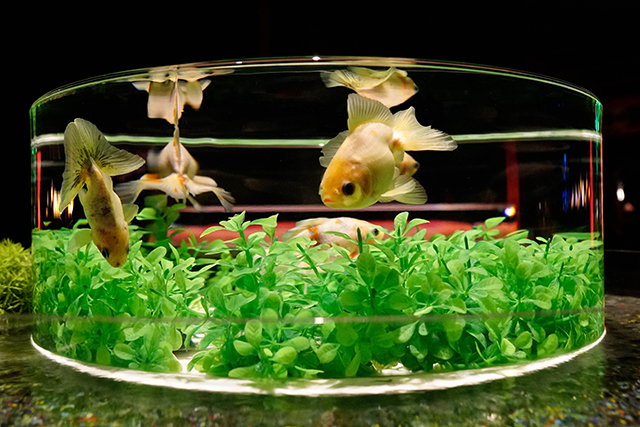
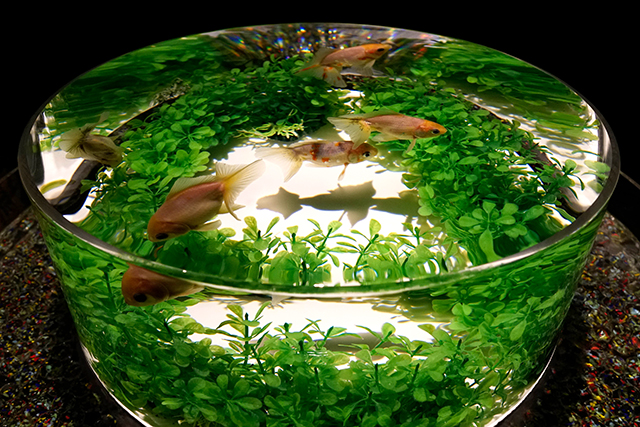
Oiran (花魁)
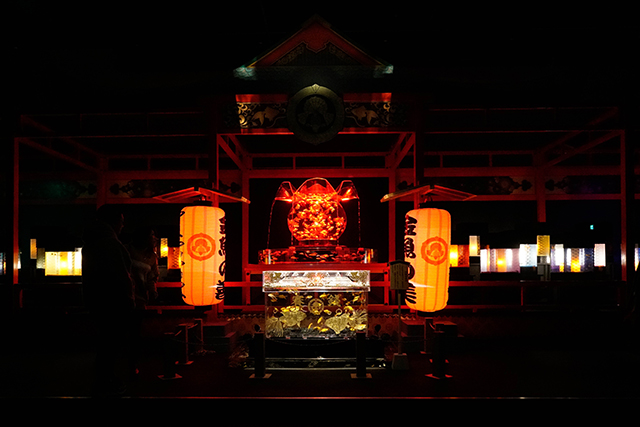
This is Oiran (花魁)
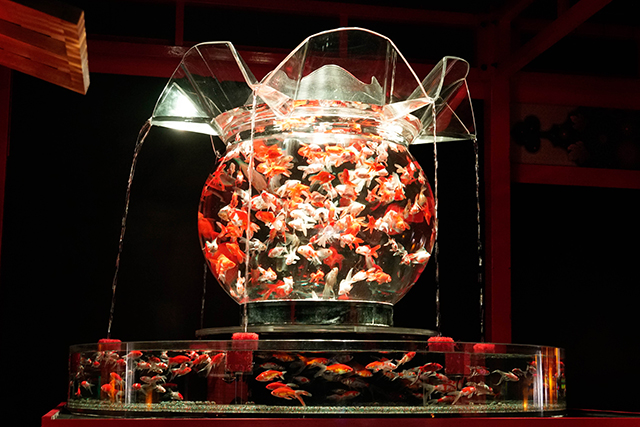
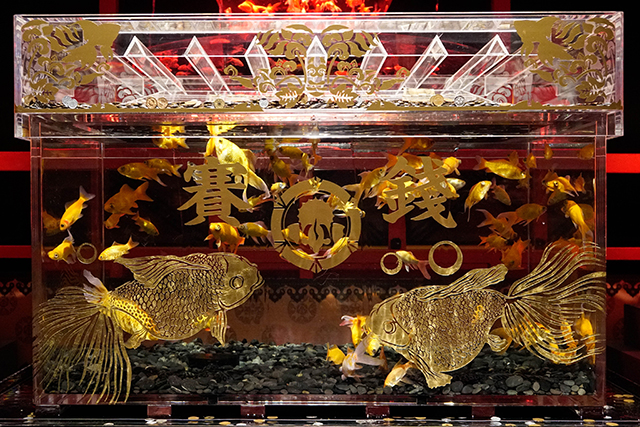
This is probably the biggest golfish tank where nearly 1,000 goldfish swims. This work expresses the red-light district during the Edo Period. The lighting that changes into 7 colours show its fascinatingly beautiful atmosphere. The goldfish represents the top oiran and ladies aiming to become oiran.
Giyamanrium (ギヤマンリウム)
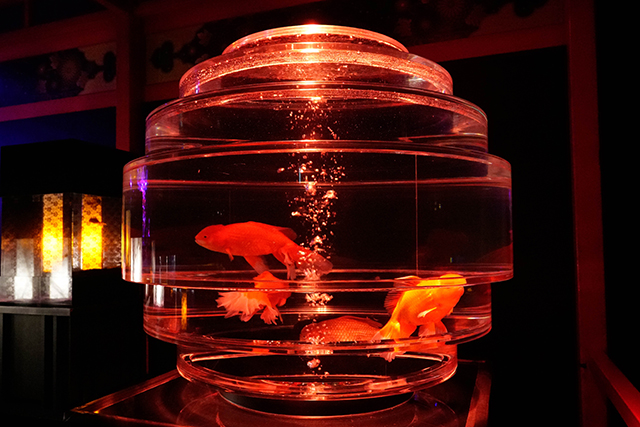
This is the Giyamanrium (ギヤマンリウム)
It is the new challenge of ‘Prisrium’ aquarium which brought prism effect by the transparent polyhedron. During the Edo Period, shining things like diamonds and glass were called giyaman and that is where the title came from.
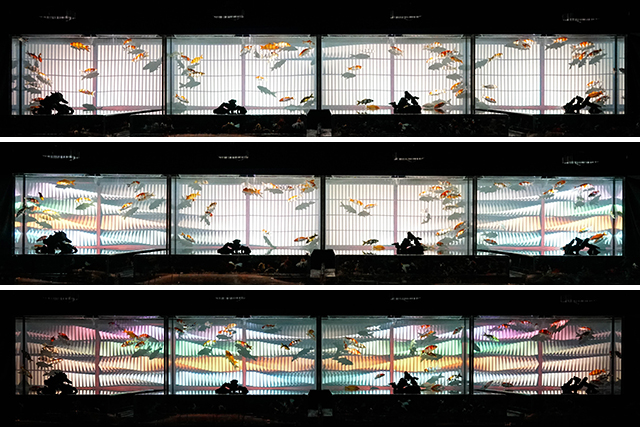
Andonrium (アンドンリウム)
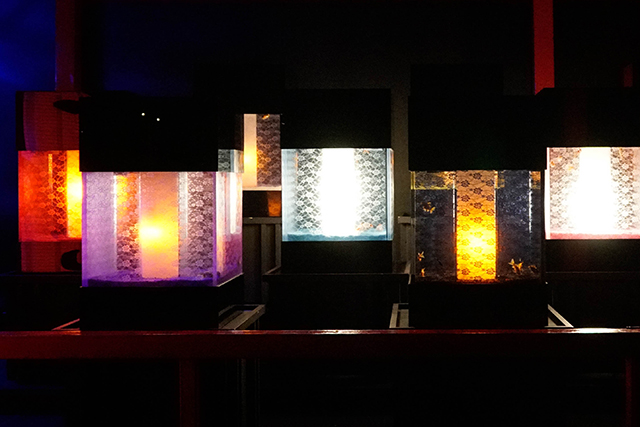
This is the Andonrium (アンドンリウム)
From the goldfish swimming inside and the graphic made from the lace of the side, it creates the complex shadow that continuously changes, bringing out the new attractiveness of the goldish. Motif being andon which is traditional Japanese light, it can be said this work is the compilation of the thought, lighting by aquarium.
Pardoxrium (パラドックスリウム)
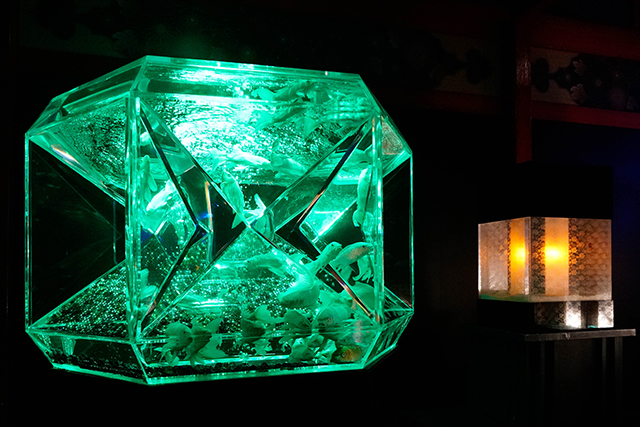
This is the Pardoxrium (パラドックスリウム)
It is an artwork with special structure with no vertical surface. Aquarium tank is usually watching the underwater world through the vertical surface glass but here, there is none. The impression you get looking from the distance and looking from close brought totally different result. Using the mirror effect of the water, the fish swimming inside can be seen in many ways.
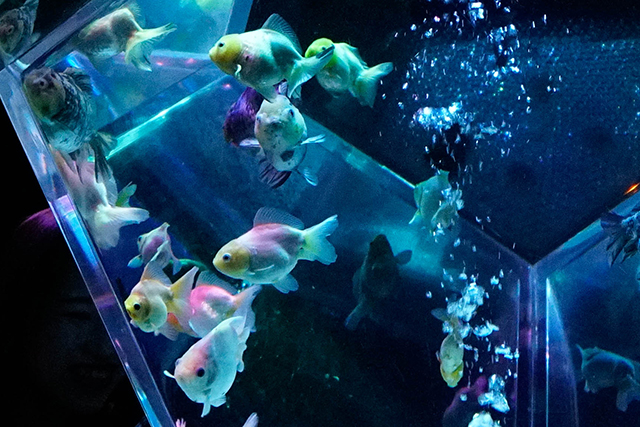
Prisrium No 12 (プリズリウム)
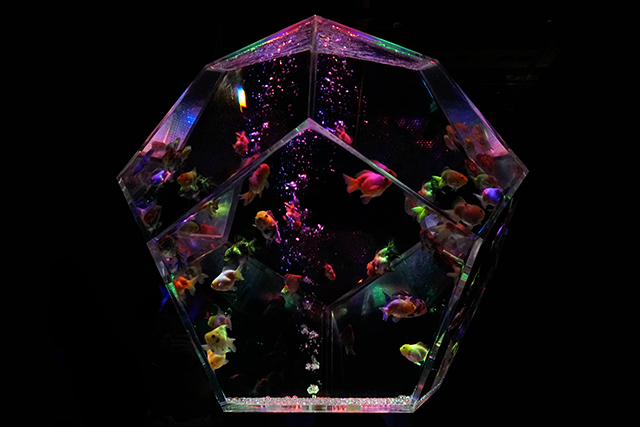
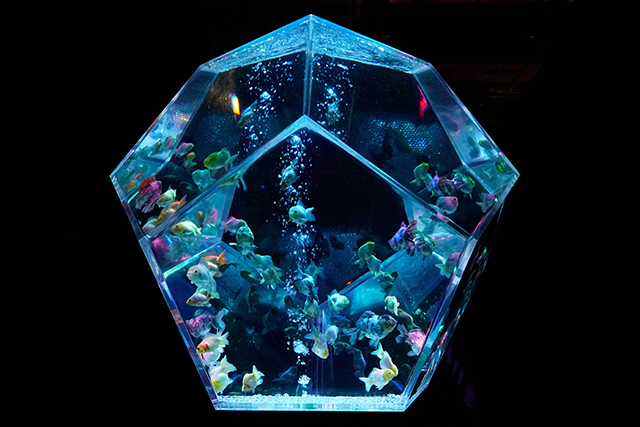
This is the Prisrium No 12 (プリズリウム)
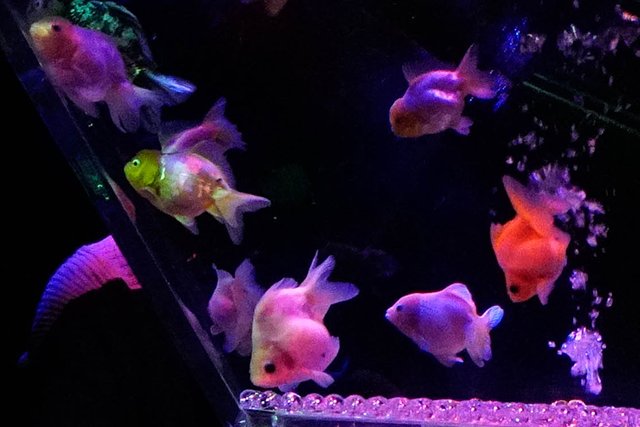
It is unique polyhderon aquarium, refracting effect bringing magical sight. Huge 12-sided polyhedron and 18-sided polyhedron shines like diamonds. Swarm of the fish inside the tank and image projected instead of lighting reflected diffusely inside the tank bringing prism effect.
Ceiling Kingyo (天井金魚)
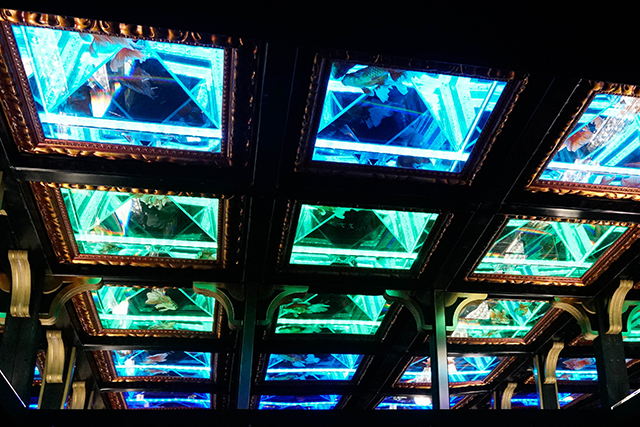
This is Ceiling Kingyo (天井金魚)
A new work that spanned over a five-year planning period, the legend of the wealthy Edo period merchant who enjoyed looking up and watching kingyo has been brought to life in the present, made as a glass water tank built inside the ceiling. This artwork is one that gave a new sensation that allows you to see the beauty of kingyo from multiple angles thanks to mirror-like effects.
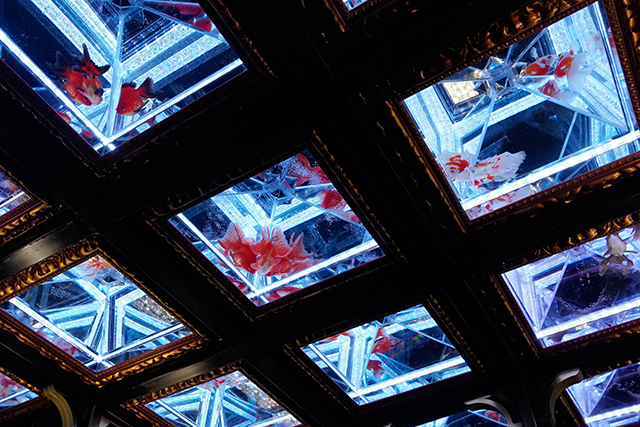
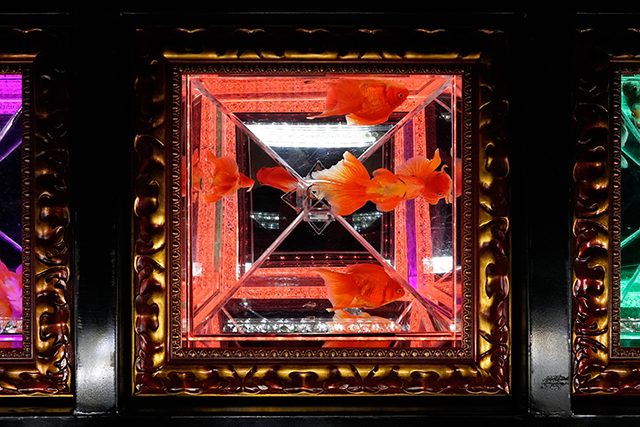
Temaririum(手鞠リウム)
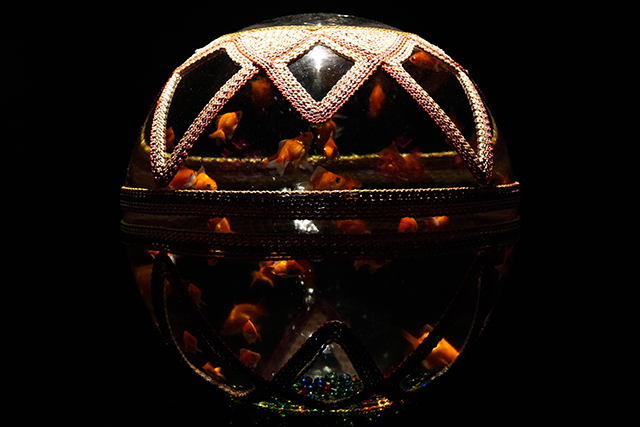
This is the Temaririum (手鞠リウム)
It is a spherical body artwork with the motif of ‘temari’ ball which is one of the toy that has been around in Japan since long ago. It’s a masterpiece with the fusion of iga-kumihimo, traditional braiding craft and aquarium. Kingyo swimming inside will also become pattern of the colorful termari ball.
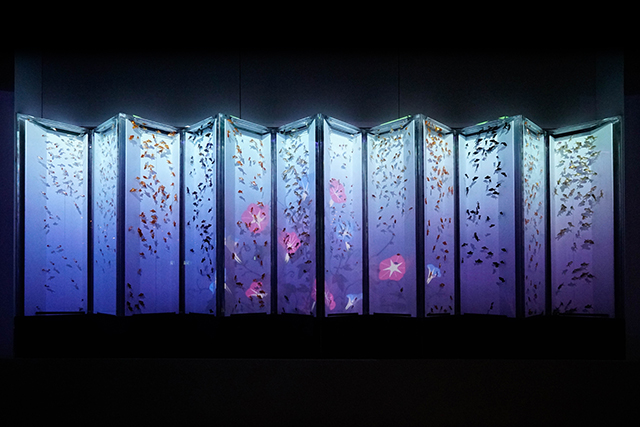
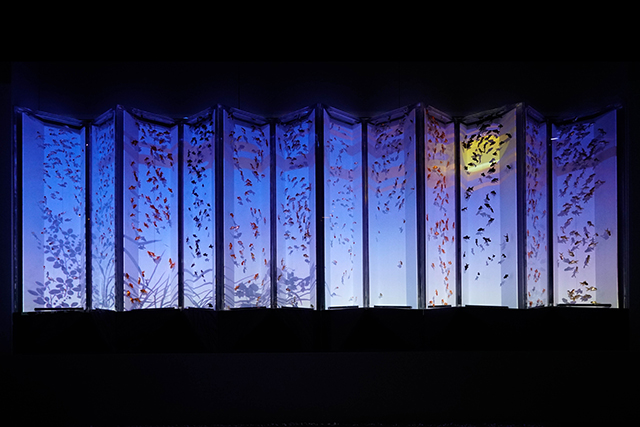
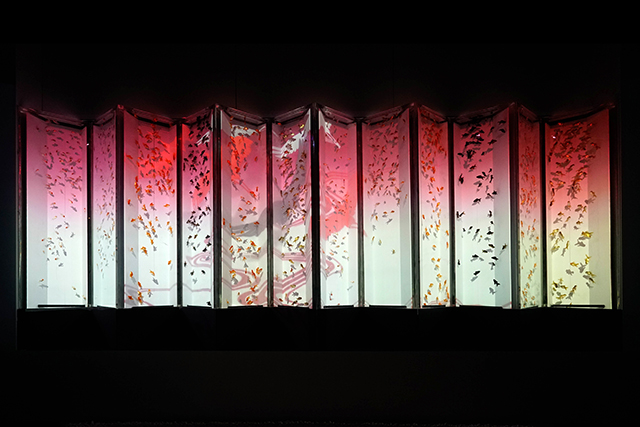
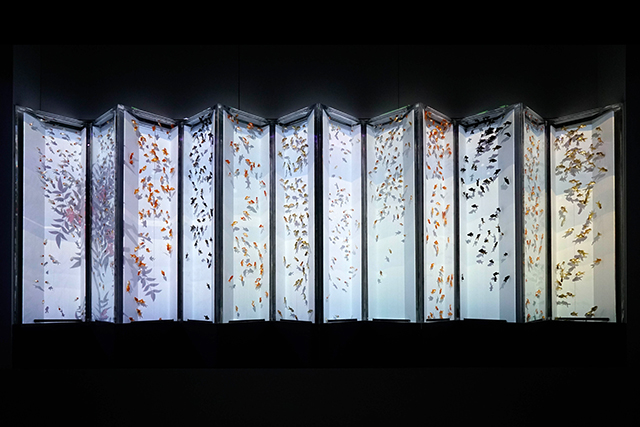
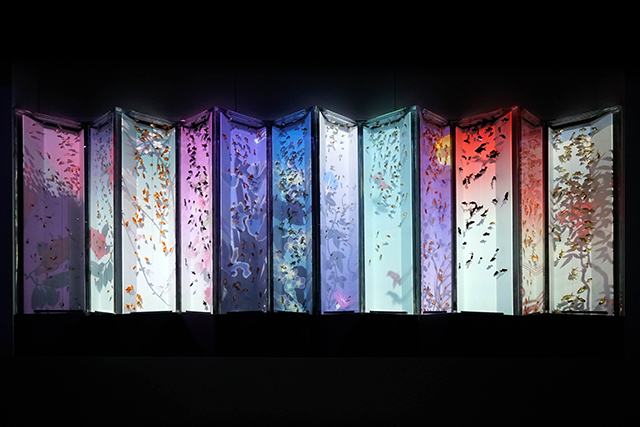
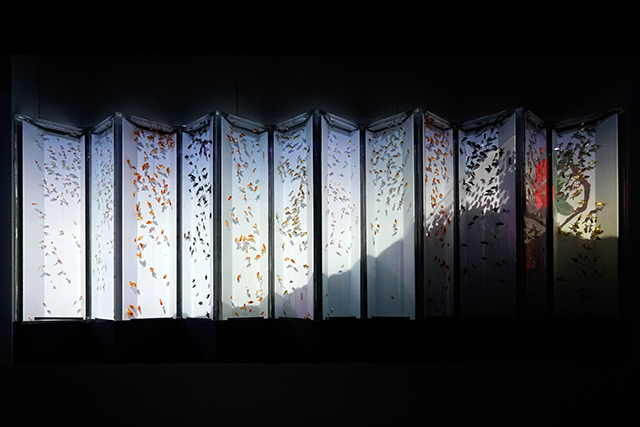
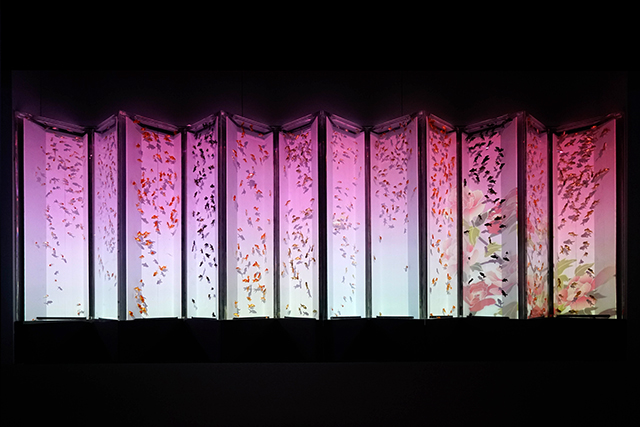
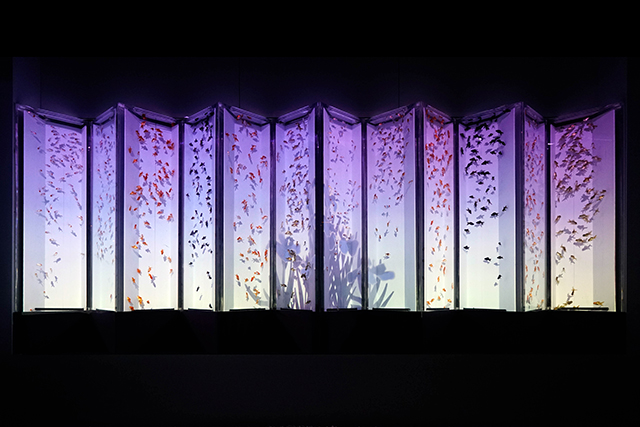
Byoburium II (ビョウブリウム II)
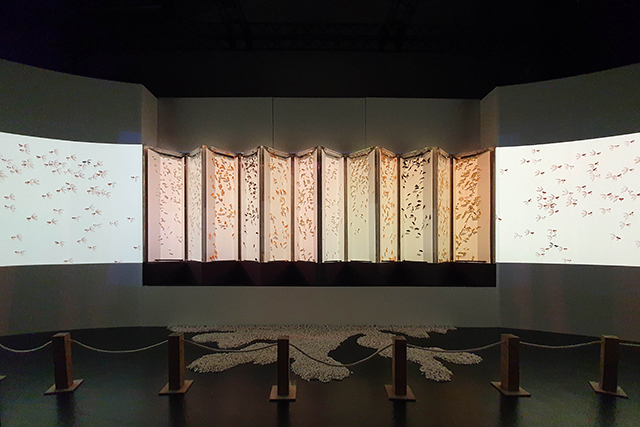
This is the Byoburium II (ビョウブリウム II)
‘ByouburiumII’ is the realization of a collaboration between Hidetomo Kimura and and aartist whom he greatly respects, Tsurutaro Kataoka, a veteran graduate from the same high school. Tsurutaro has created a masterpiece featuring kingyo painted on a folding screen, therefore Byouburium II has incorporated Tsurtaro’s folding screen art into its imagery to give birth to a special Byouburium. Furthermore, the kingyo from the folding screen art begin to swim out of the grame of the folding screen as if they have been given life.
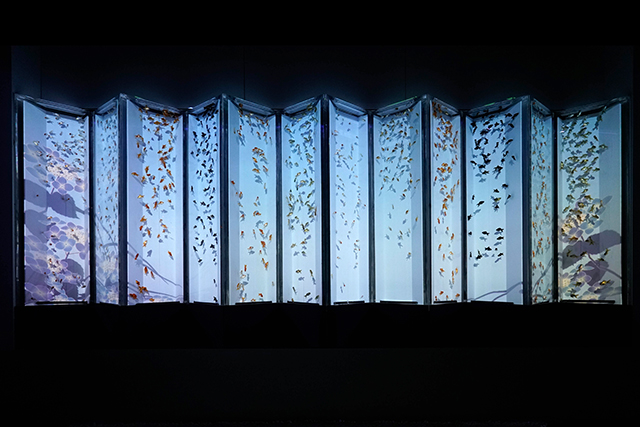
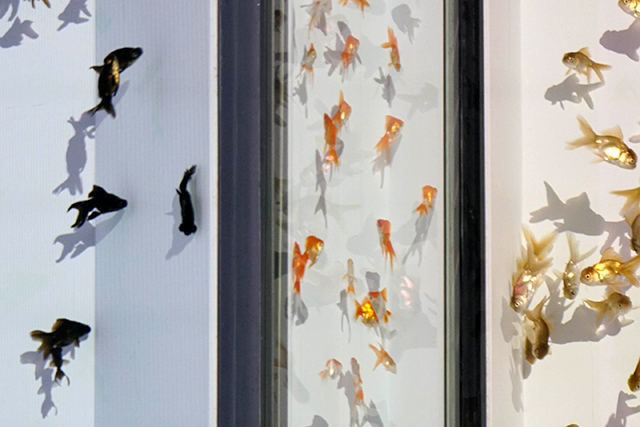
Kingyo (Hidetomo Kimura X VENINI)
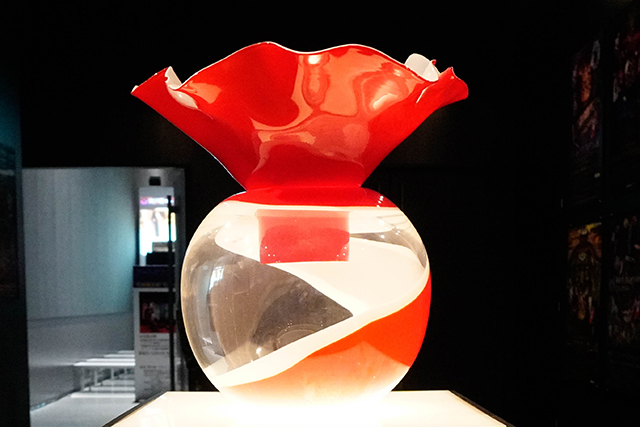
At the end of the exhibition was Kingyo (Hidetomo Kimura X VENINI) —
It is a collaboration with Venini, the highest Venetian glass art manufacture. Symbolically expressing the fin tail of kingyo (tosanishiki) swinging in the water, the shape reminds you of kingyo in Asia. Kimura is the second artist to collaborate with Venini, first is the architect Tadao Ando.
The History of Kingyo
From the remarkable development of the mitochondrial DNA analysis, the ancestors of kingyo (goldfish) are understood that is was a type of carp. It is said the start of kingyo was when sudden mutation occurred to the carp, turning the body color to red, was found in China about 2,000 years ago. Basically, the shapes and the color of the carp today is said to have appeared 60 million years ago, but because carp is known to have high genetic mutation, and there are no regularity and too many uncertain elements, among scientists, it is said it is a taboo to study on carp. In the nature, the ones born with mutation tends to be physically weak, stands out too much, etc. and easy to become a target of the capture. For this reason, the screened probability is high in the growth process and even it grows, the existence percentage is nearly zero. Probably in the captured fish, unexpectedly there was one. Moreover, If It was not alive when found or was thrown away because it did not look normal, or was eaten, there would not have been the kingyo of today. In the past, there must have been similar coincidences. I must say it is a miracle that a person with some impulsion came out and tried to breed the fish which is nearly zero percentage in its existence and captured alive.The mutation of the carp appeared suddenly, and people did not know if it will happen again and even though it was bred, the carps are born in gray color and changes its color to red after more than 90 days after hatching. It is stupendous story but because there were someone who accomplished this, the kingyo culture of today exists and this is how the history of kingyo started.
Kingyo Transmission
Found in China long time ago and increasing its numbers, it is said kingyo (goldfish) came into Japan nearly 500 years ago in year 1502 during Muromachi period. It was then nearly 1500 years since the kingyo history in China started. The kingyo that came to Japan at that time was only one type, the red colored fish with the shape of carp which you can see at kingyo scooping in Japan’s matsuri festivals today. Now days, it is easy to obtain kingyo but until the middle of Edo period, kingyo was very expensive and precious so only privileged class people such as lords, senior statesmen, and wealthy merchants were able to own and enjoy kingyo. The red colored fish with the shape of carp has increased variations in shapes and colors, and now Japanese national species has increased to 30 species. To reach to this point, there must have been many failures and patience of dramas for the kingyo manufacturers.
Kingyo Culture and Artistry
Today, there are many kingyo (goldfish) species with various shapes and color but it all started from the red colored fish with shape of the carp. How did the beautiful kingyo with such prettiness born? I believe the first reason is when kingyo came into Japan, it was put under the culture and situation where breeding environment was controlled by human and not under the wildlife. Second big reason is probably from humans challenge spirits, wanting to create things others haven’ t Kingyo has the characteristics of carps which is easy to mutate and it is not stable as carps. For this reason, when trying to breed kingyo. it is no wonder there are the ones with popped-eyes, round body shape, spotted colors, different shapes of fins, etc.. When you breed many types of kingyo that now exists, you will considerably find kingyo with unique shapes and colors. As that level is farther than the original shape of red colored carp, the more expensive it becomes. Based on this characteristic which is different from other fish, the new types of kingyo have been born. To create one species, it takes a lot of time, at the shortest 10 to 20 years. Also, even if born, it needs to get compliments and sympathy for its prettiness and beautifulness. Kingyo that lives today exists above humans aesthetics. That is why kingyo attracts us with its presence as “living jewels” or “living arts” . You think that kingyo is close to our lives but it has too many handicaps to live in the nature and even though it survives, if natural breeding is repeated, it will return back to carps someday. This is kingyo.
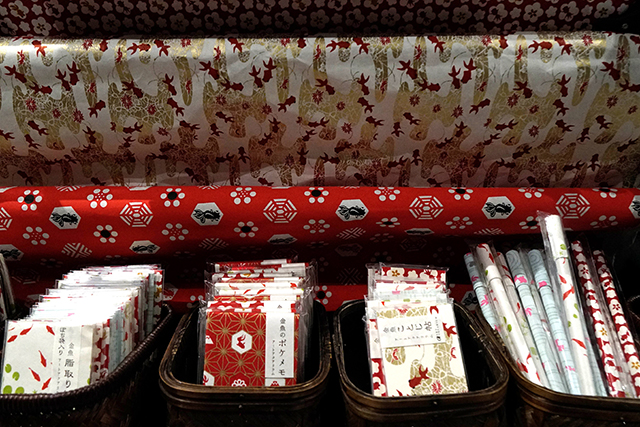
Goldfish themed washi and various other accessories, including earrings, were available for purchase in the gift shop.
We were thrilled with the ART AQUARIUM exhibition and delighted to have caught it during our time in Kumamoto, despite not planning for it in advance. It was a unique experience that surpassed the hype of other light exhibitions, including our visit to teamLAB in Tōkyō.
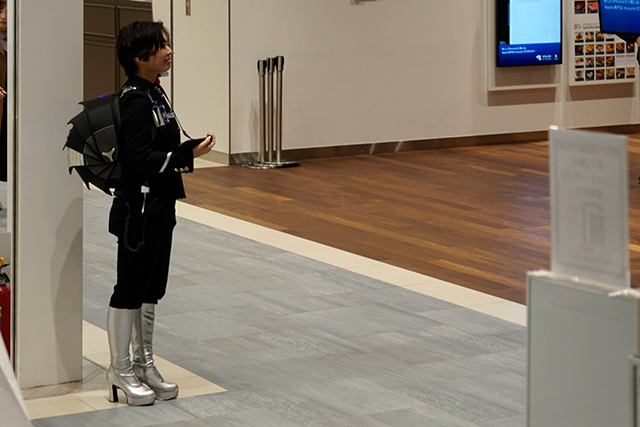
On our way out of the exhibition, we saw a concierge dressed like an android.
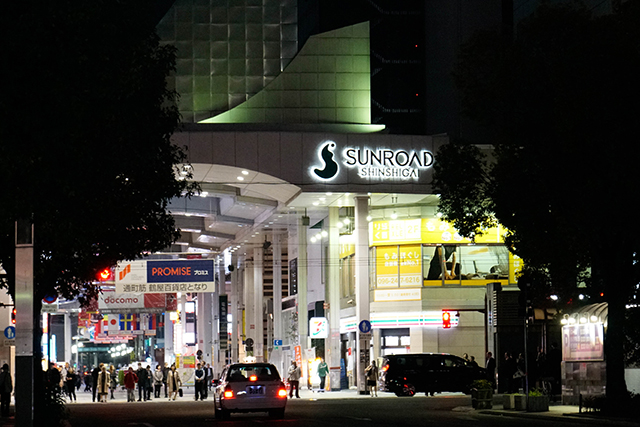
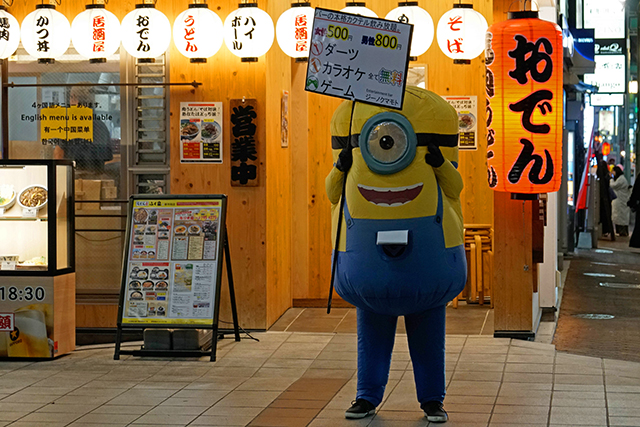
For dinner, we headed towards Sunroad Shinshigai once more. There’s a staff member dressed as a minion standing outside a bar trying to attract customers.
Coco Ichibanya Curry House
カレーハウスCoCo, 9-5 ドゥ・アンディオール新市街ビル, Shinshigai, Chuo Ward, Kumamoto, 860-0803, Japan
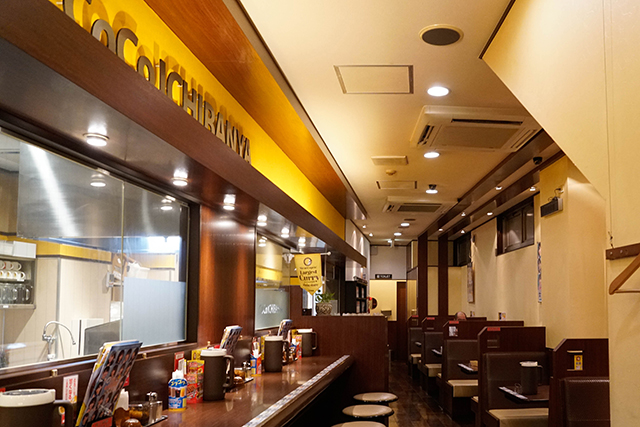
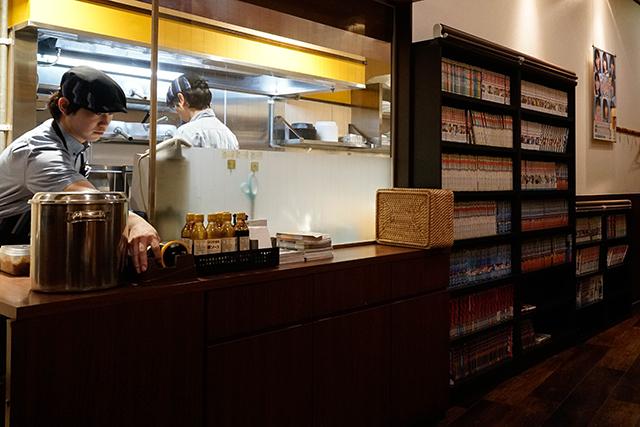
Every trip, we also have one meal at Coco Ichibanya, our favourite national chain for Japanese curry.
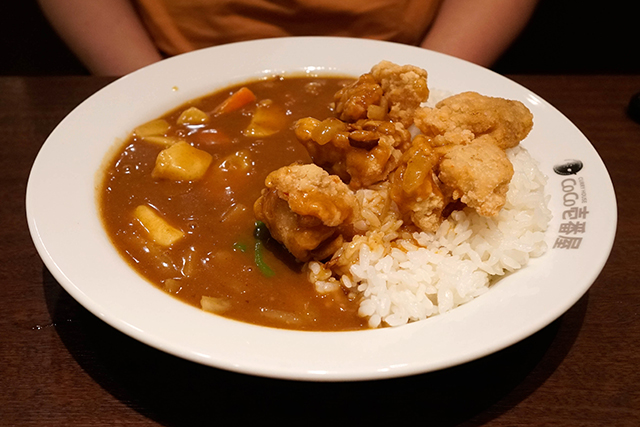
And of course, we also order the same dish. This is D’s Fried Chicken Curry, with the karaage always delivering a reliable crunch and juiciness alongside a healthy dose of vegetables.
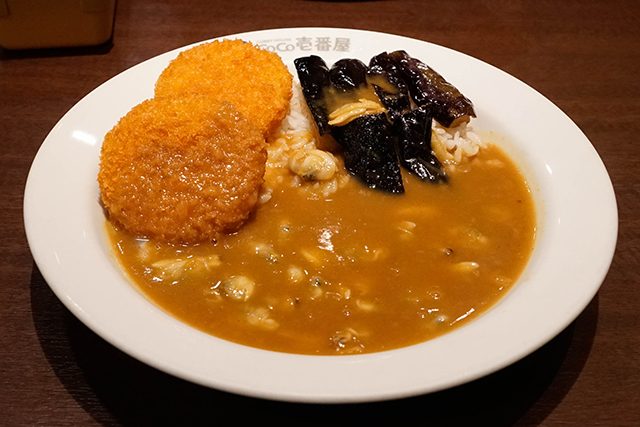
And my favourite dish is a custom order of Cream Croquette Curry (with Crab) with added Eggplant and Asari Clams, the combination of which is unfailingly satisfying.
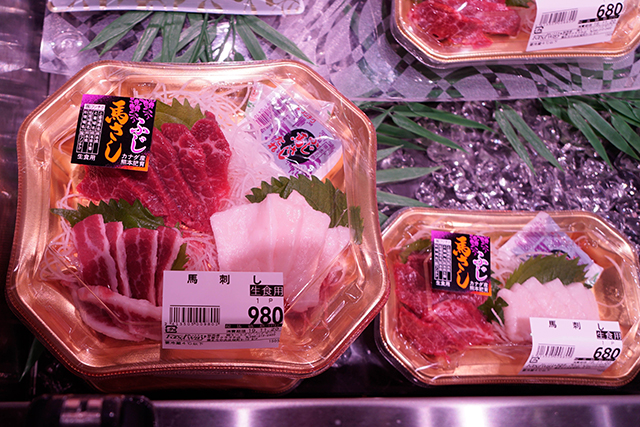
Before heading back to the hotel for our final night in Kumamoto, we headed to the supermarket in the basement of SAKURA MACHI where we found basashi available in the prepackaged meats section.
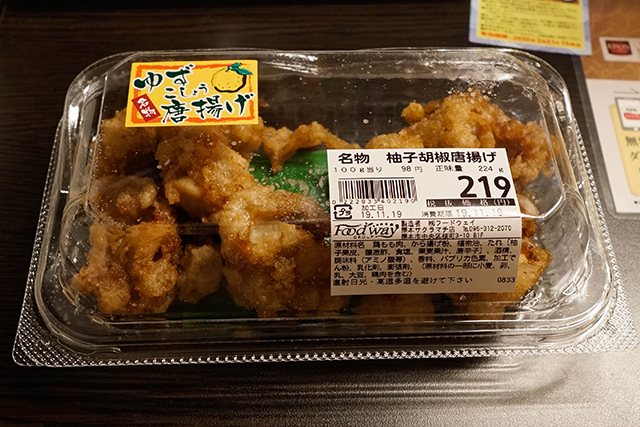
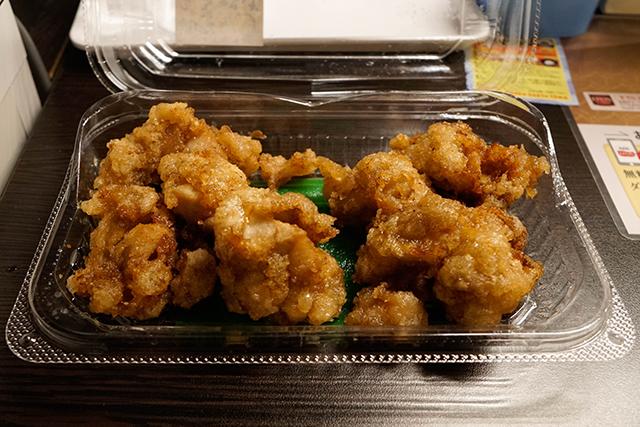
D picked up some yuzu koshō karaage. He enjoyed the citrusy notes and the juiciness of the chicken but lamented its lack of crunch.
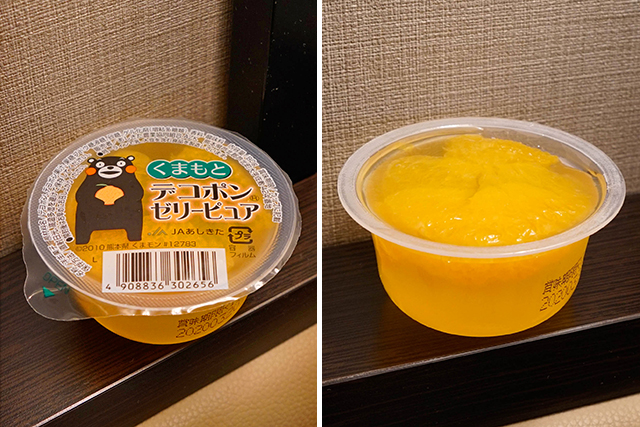
As for dessert, this is my dekopon jelly. We ended up buying a few more to take home with us (review forthcoming) as we enjoyed its sweet and bright flavour with the fresh dekopon segments so much.
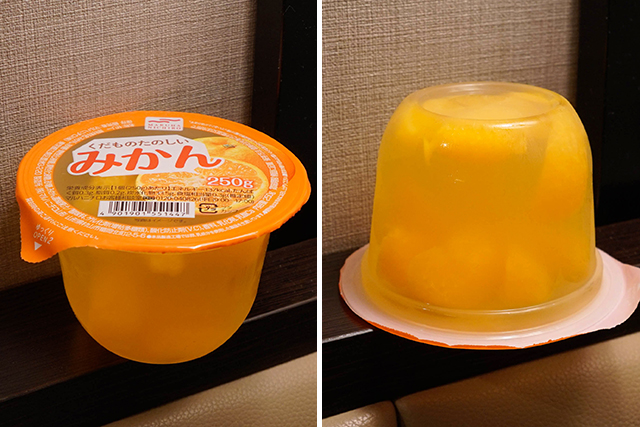
D opted for a mikan jelly, which also had segments of the fresh fruit and was enjoyable but had a less bright sweetness than the dekopon.
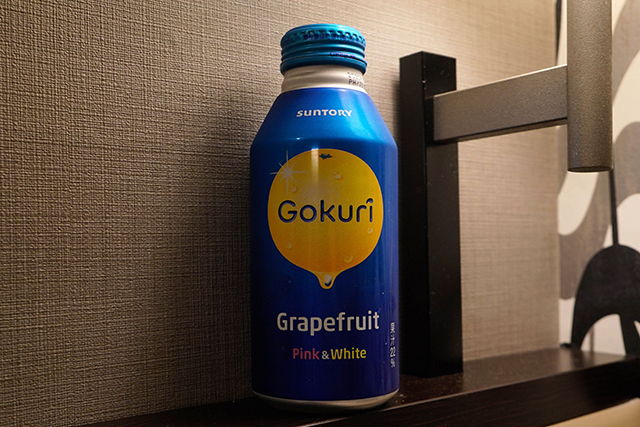
Finally, we finished with a Suntory Gokuri Grapefruit drink. The combination of the pink and white grapefruit mellowed the sharpness that we usually associate with white grapefruit, making for a zesty and refreshing beverage.
Kumamoto surpassed our expectations — we left knowing that we will return in the future. More importantly, though, Kyūshū reminded us of why we fell in love with Japan during our first encounter in 2011 soon after the Tōhoku earthquake and tsunami and before the torrent of tourists. It’s the ease of transportation and the relaxed and less congested streets, but critically, it’s the welcoming and friendly locals and shopkeepers who are yet to be jaded by the culturally insensitive and inconsiderate behaviour of some tourists that have marred some of our more recent encounters in the more popular Kantō, Kansai and Hokkaidō regions. I sincerely hope the Kyūshū region keeps its welcoming character.
Kumamoto was Day 13 of 15 in this Japan 2019 trip around Kyūshū. Day 14 saw us returning to Tōkyō.