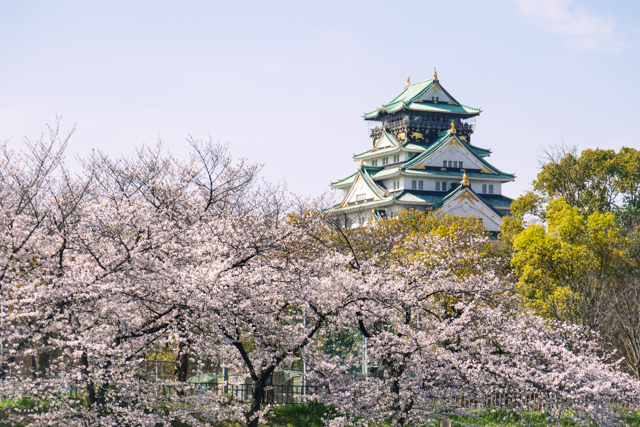
Our first full day in Japan saw us visiting the area around Ōsaka Castle to appreciate the sakura in full bloom, then visiting the area around Umeda for some shopping, and TeamLab Botanical Garden in the evening.
Chuo Ward
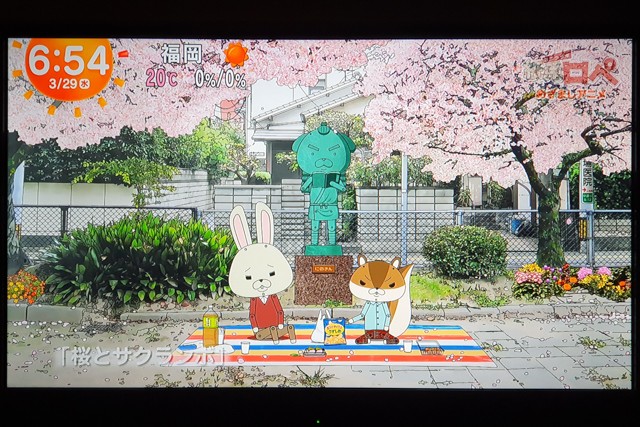
We got a taste of the sakura forecast on television after waking up.
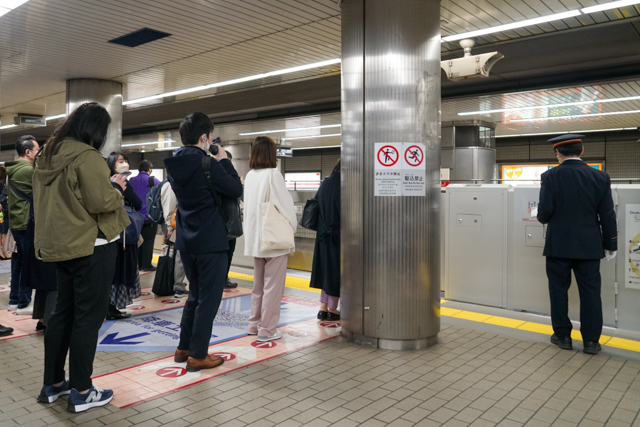
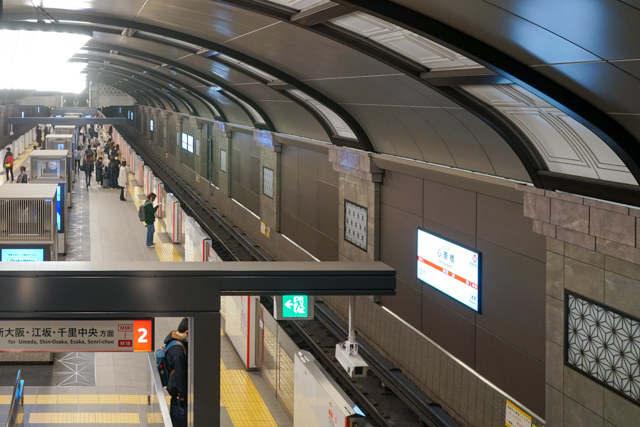
There was an incident on the Midosuji Line, so the platforms were very crowded (in an orderly fashion, of course) and station staff were handing out train delay certificates (chien shoumei) to people on the way to work. The delays would extend into the afternoon, with screens on the subway directing people to alternate subway routes to reach their destination.
Daini Neya River
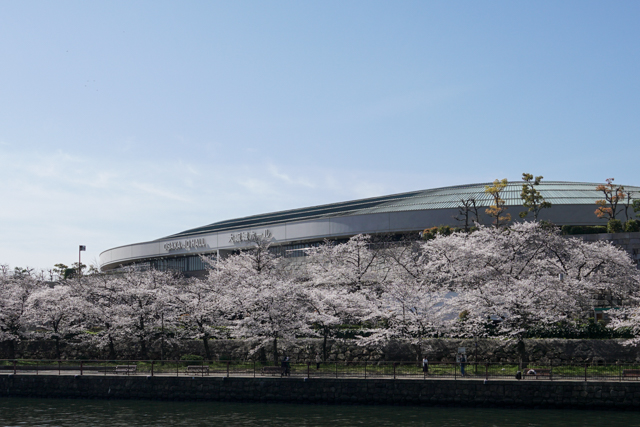
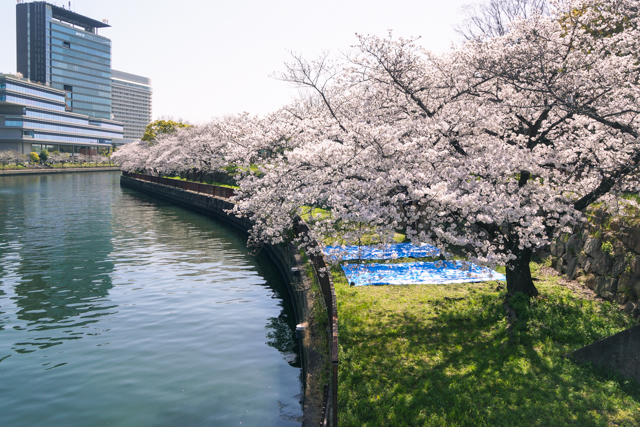
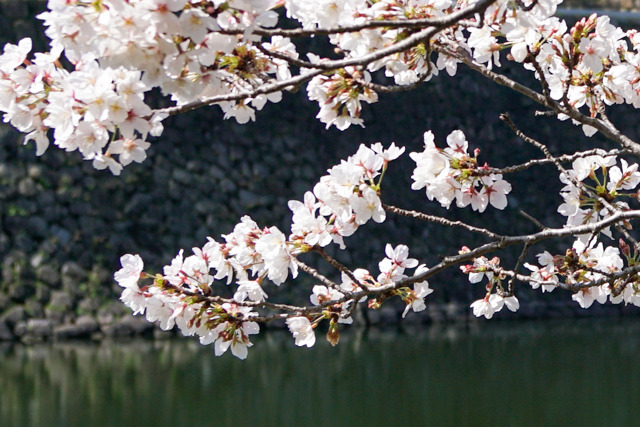
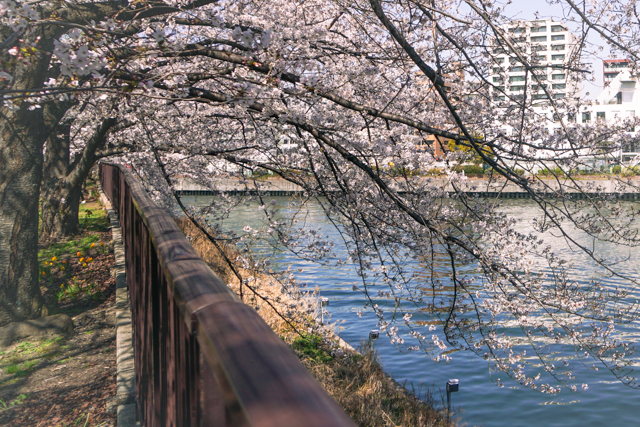
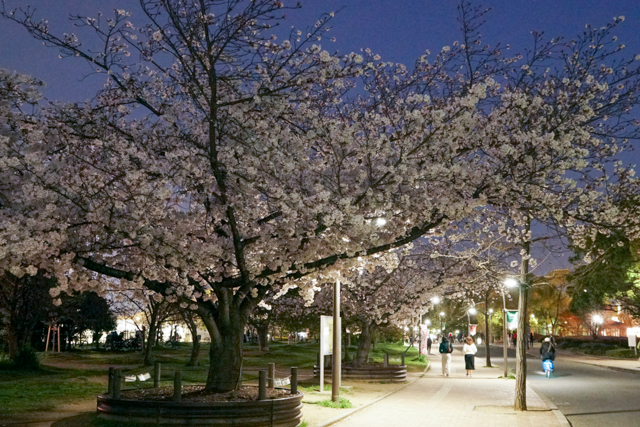
Cherry blossoms lined both sides of the Daini Neya River en route to Ōsaka Castle Park.
Ōsaka Castle Park
1-1 Osakajo, Chuo Ward, Ōsaka, 540-0002, Japan
Peach Grove
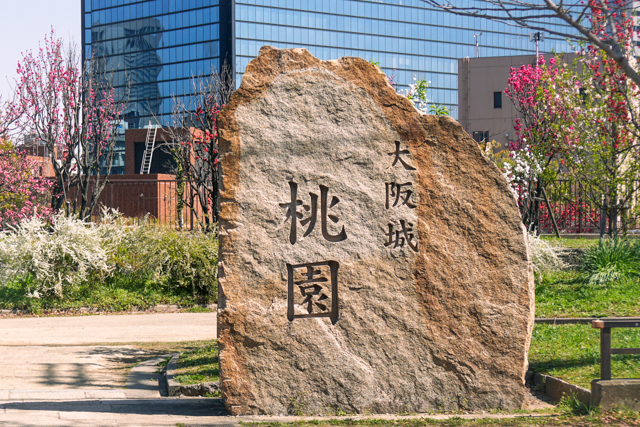
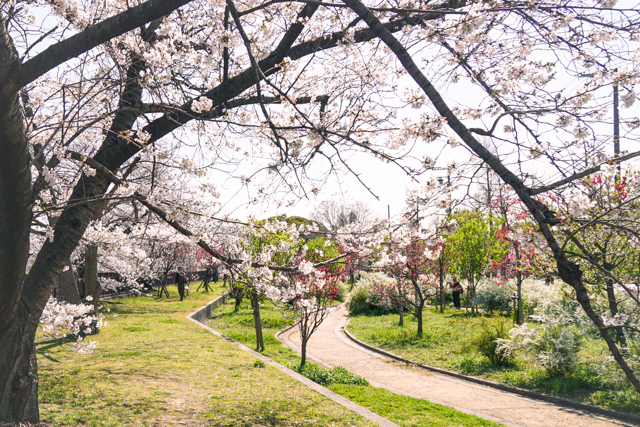
We stopped by Ōsaka Castle’s Peach Grove at the northern end of the park.
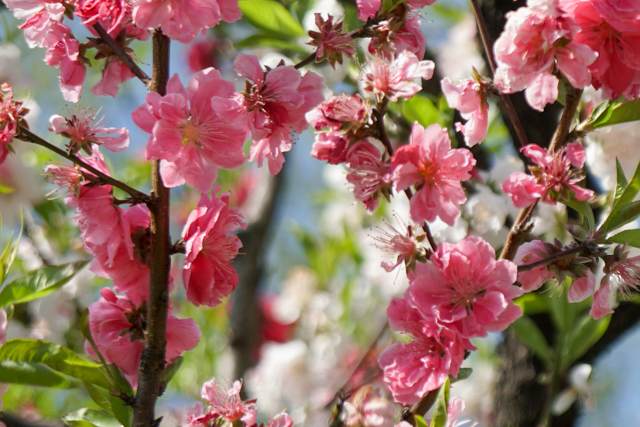
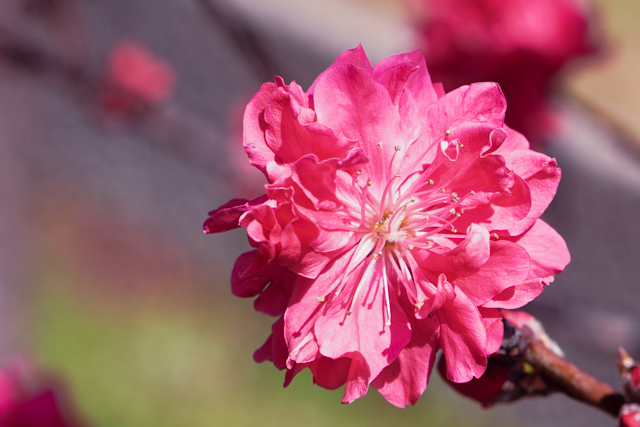
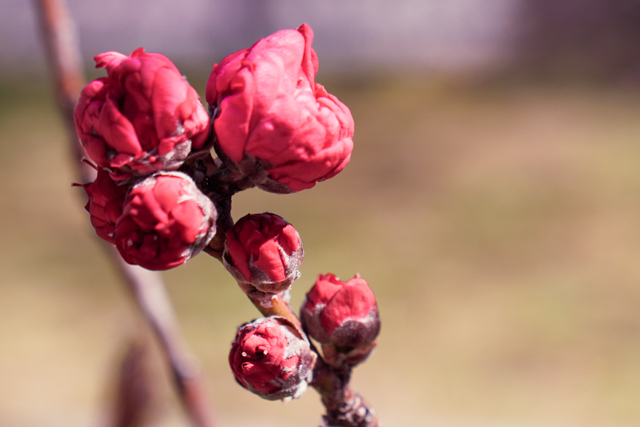
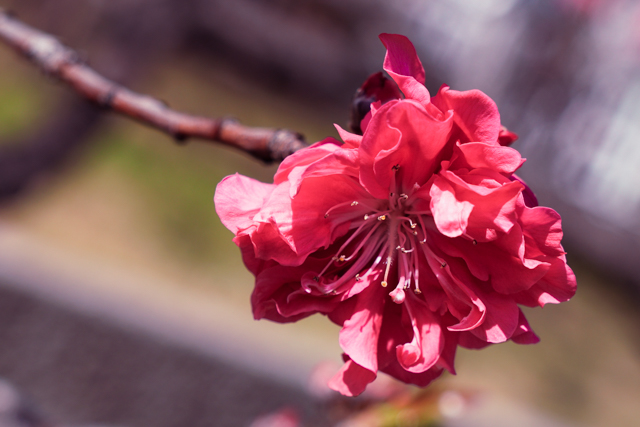
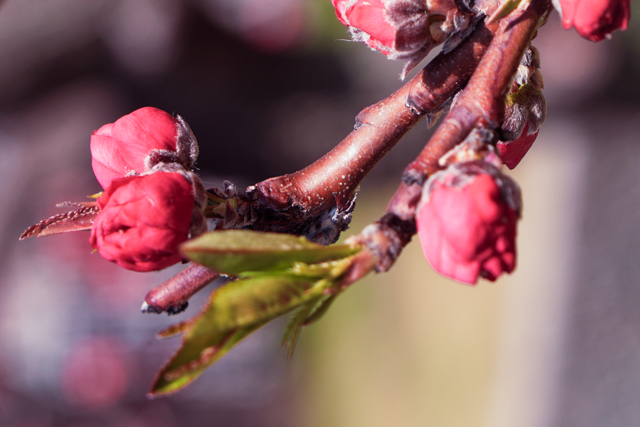
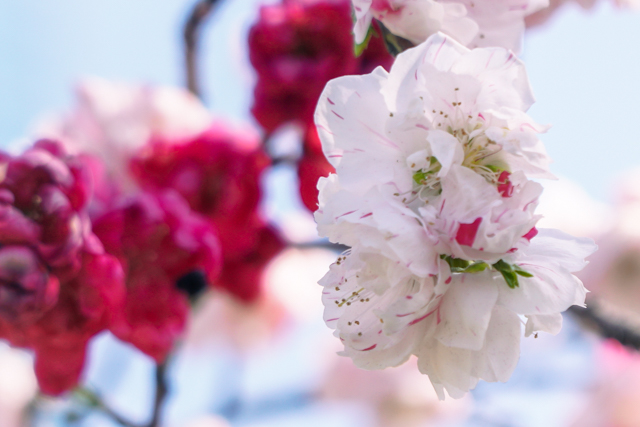
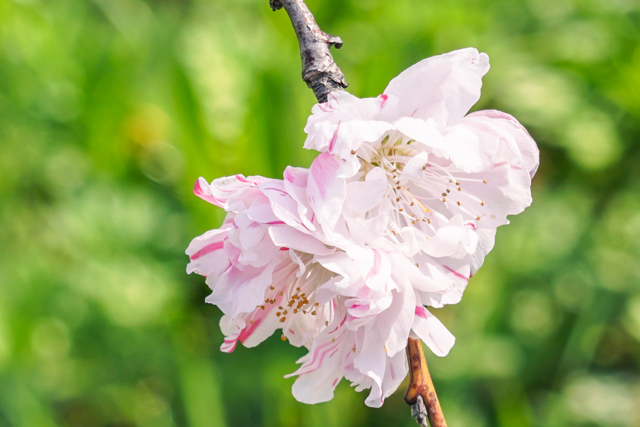
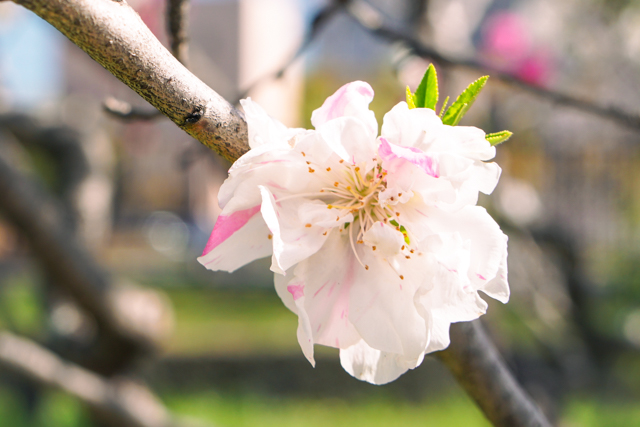
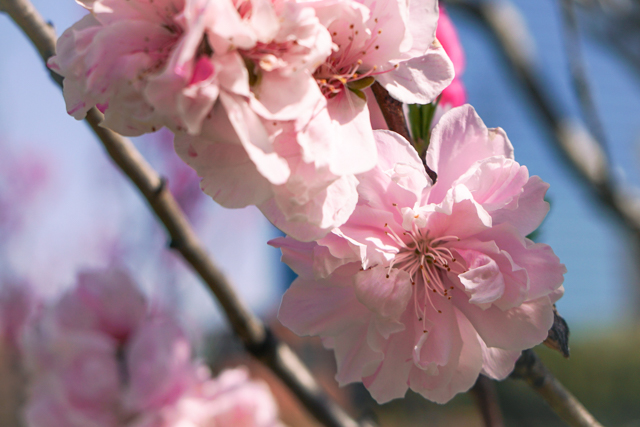
Peach blossoms tend to bloom early to mid-April, coming into full bloom after plum and cherry blossoms.
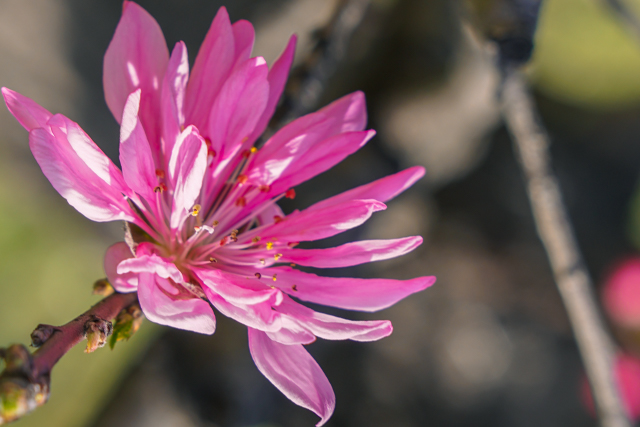
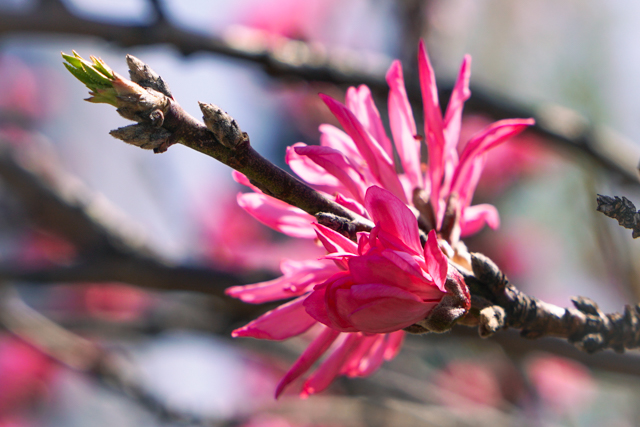
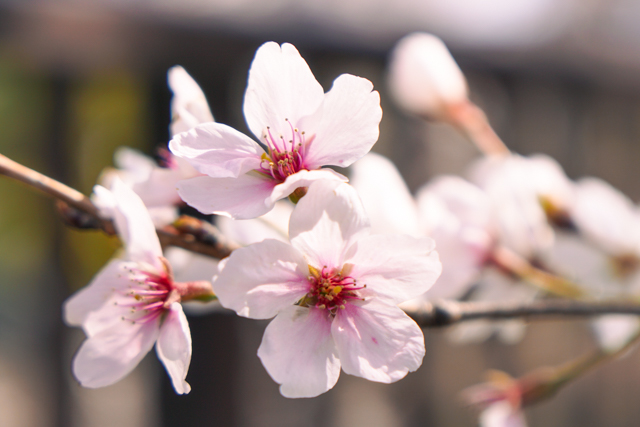
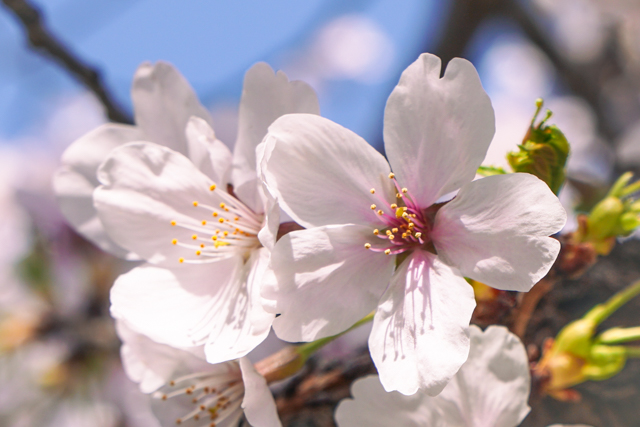
We’re not sure what these flowers were but they provided interesting variety to the peach blossoms.
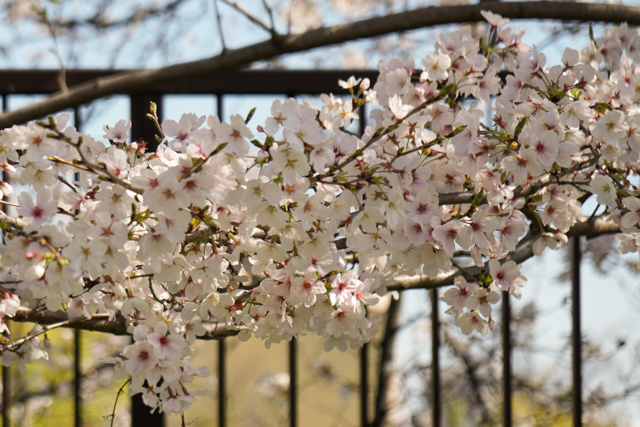
The Peach Grove was bordered by the exterior castle moat and the cherry blossoms along the Daini Neya River.
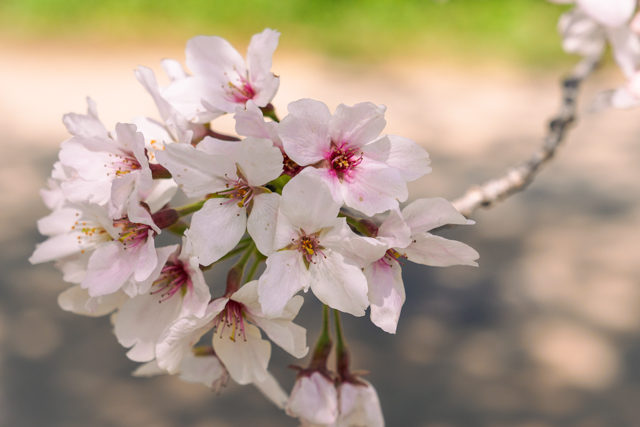
Forest of Memories
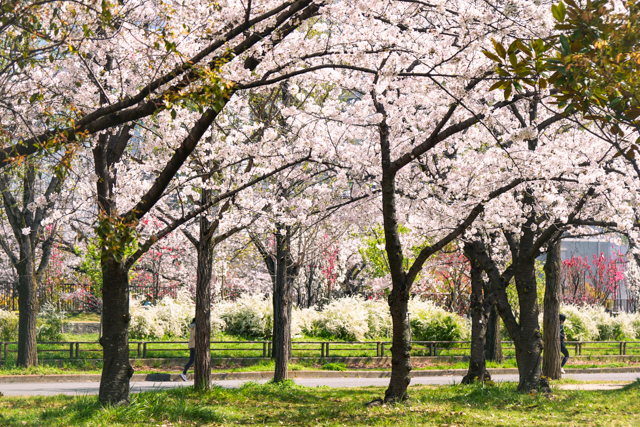
We encountered plenty of people on their morning jog around Ōsaka Castle Park. The Forest of Memories across the road from the Peach Grove was filled with sakura in full bloom.
Lawson
ローソン, 3 Osakajo, Chuo Ward, Ōsaka, 540-0002, Japan
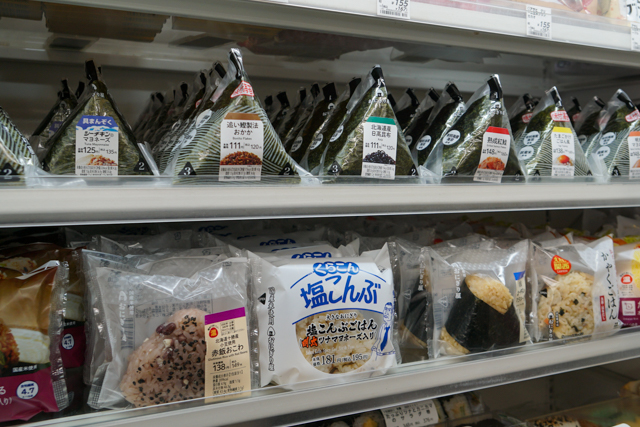
We stopped by Lawson for a quick breakfast.
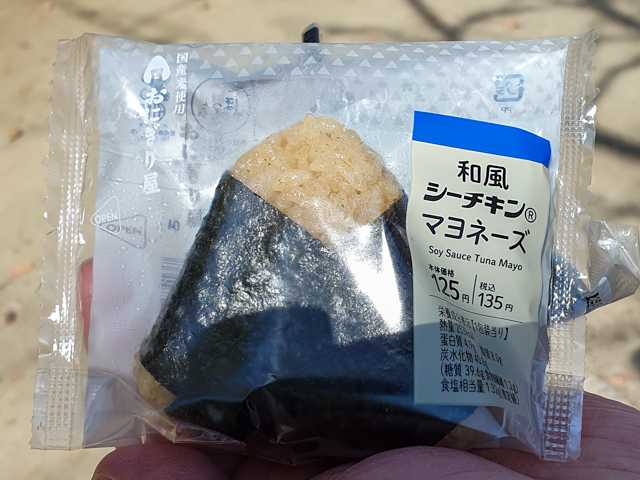
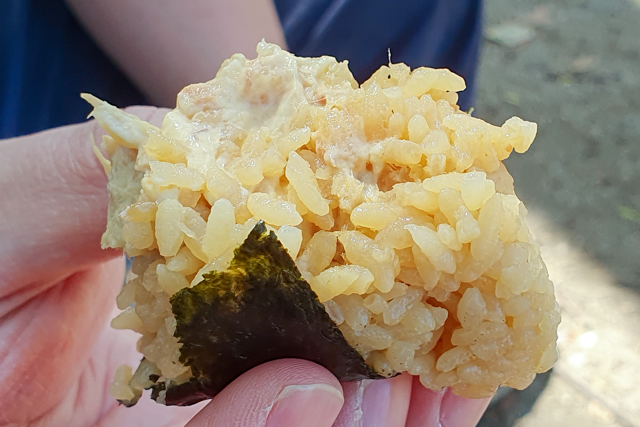
D had the Wafū Shīchikin Mayonēzu (literally, Japanese style sea chicken mayonnaise), or in English, Soy Sauce Tuna Mayo (¥135, inc tax). He enjoyed the savoury depth added by the soy sauce compared to regular tuna mayo sandwiches in Australia.
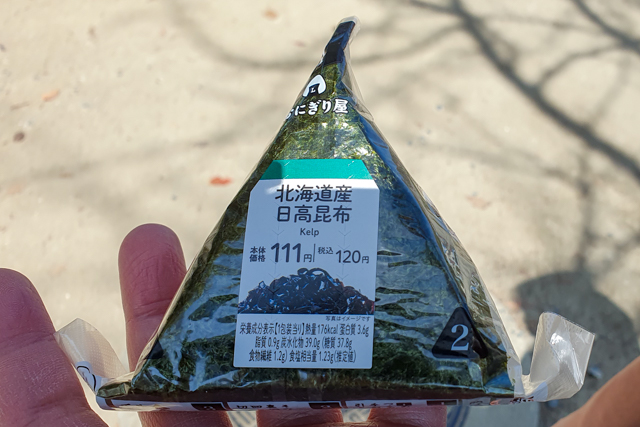
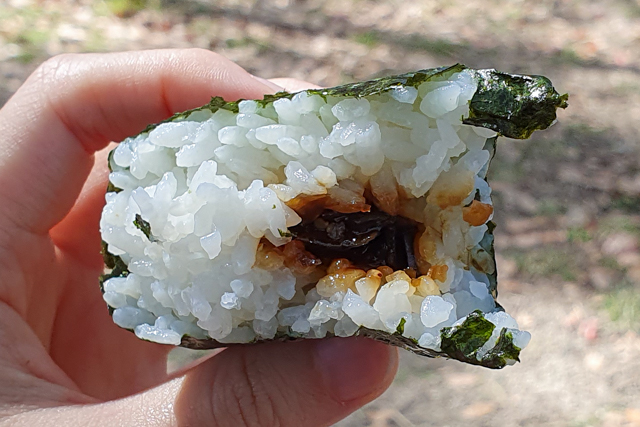
I had the Hokkaidō Hidaka Konbu and enjoyed the rich umami of two kinds of seaweed paired with the rice.
Ōsaka Castle
大阪城公園, 1-1 Osakajo, Chuo Ward, Ōsaka, 540-0002, Japan
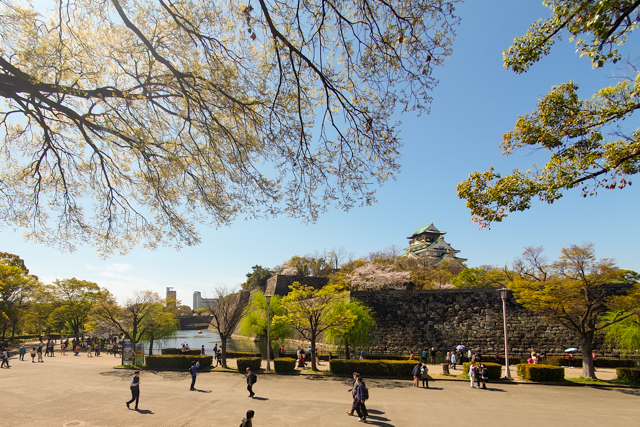
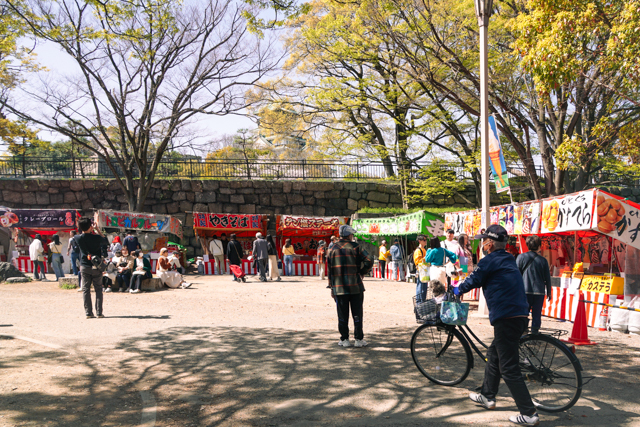
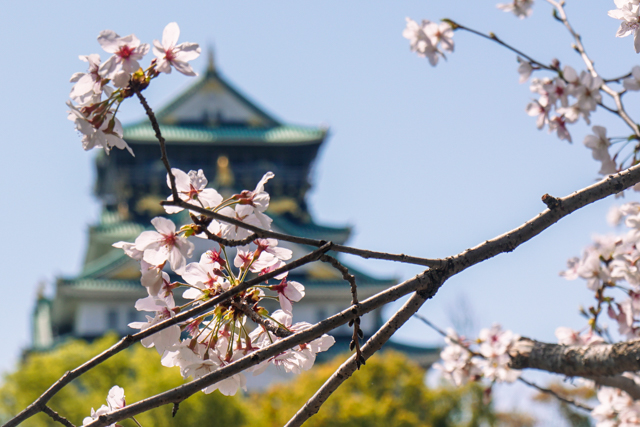
We visited the main keep of the castle during the autumn of 2014, so were content to walk around the park and enjoy the castle as a backdrop to the cherry blossoms.
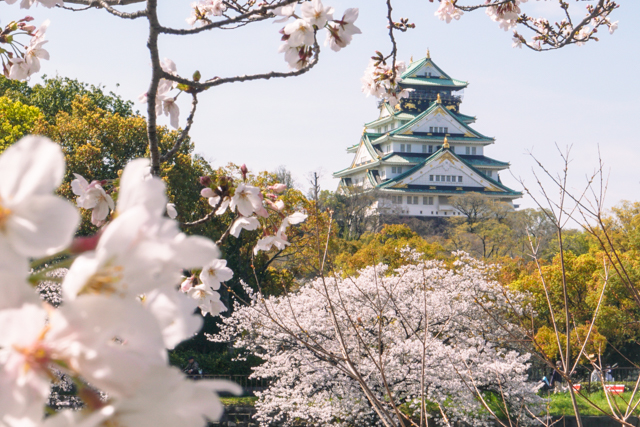
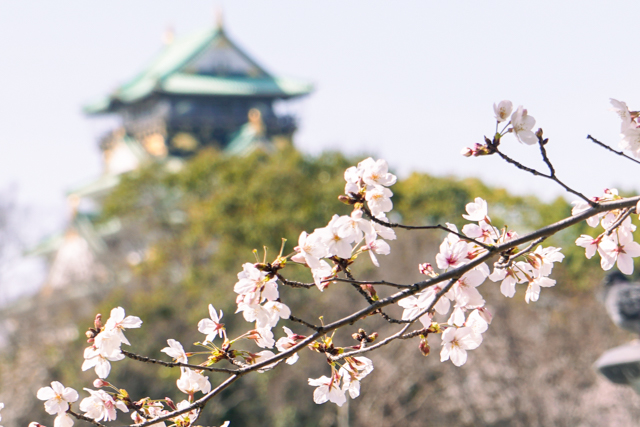
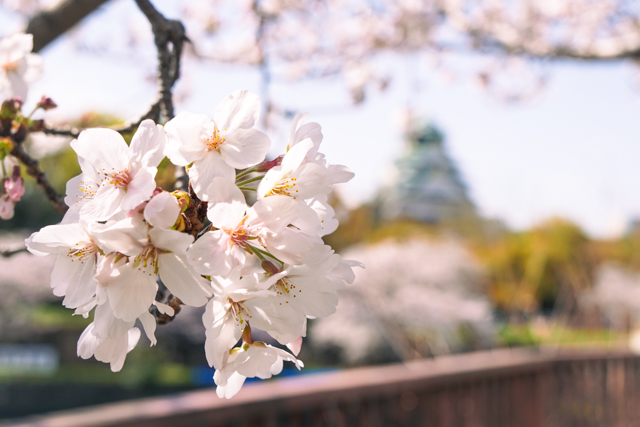
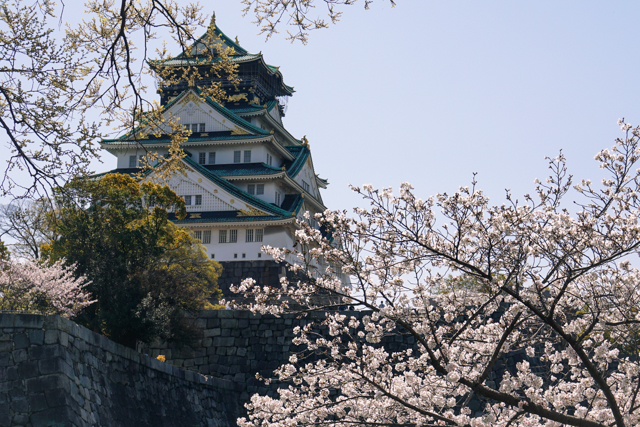
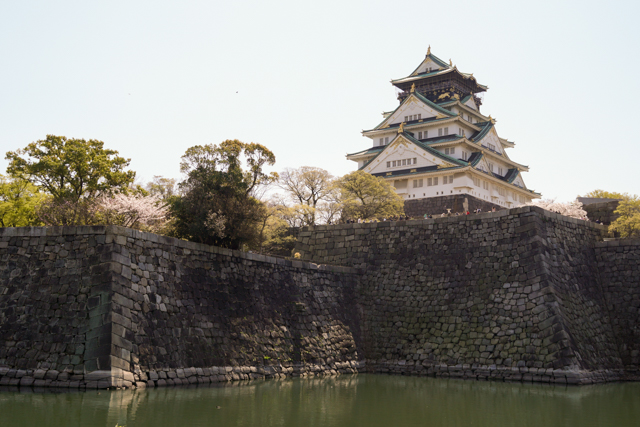
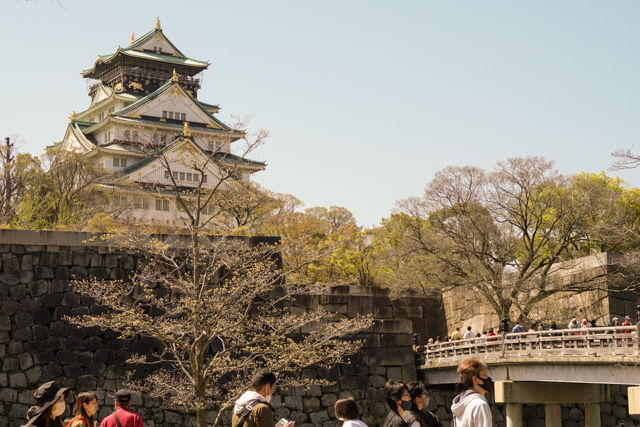
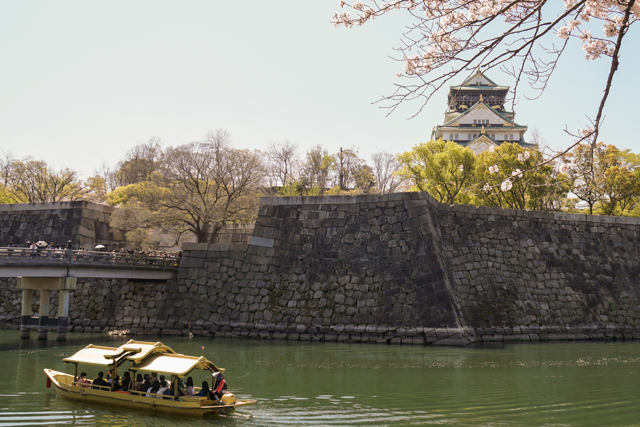
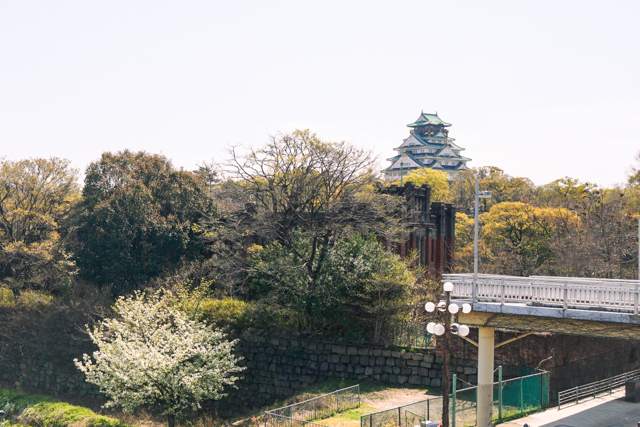
From Ōsaka Castle Park, we walked to Kyobashi Station where we caught the subway to Umeda for lunch and shopping.
Kita Ward
Mitsuya
心斎橋ミツヤ ホワイティうめだ店, B1 Whity Umeda, 2-5 Umeda Underground Shopping Center, Komatsubaracho, Kita Ward, Ōsaka, 530-0057, Japan
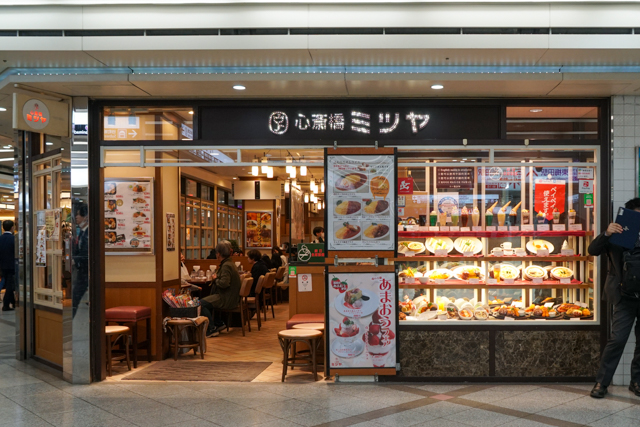
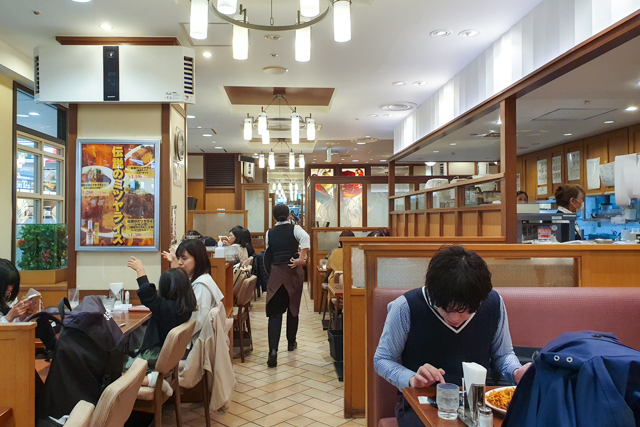
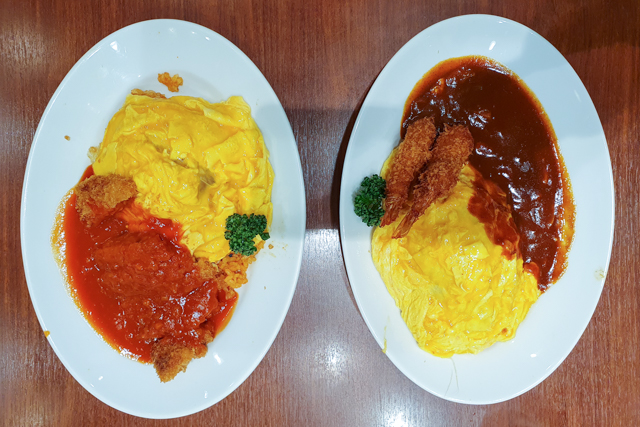
Omurice from Mitsuya was our choice for lunch. Their menu boasted that their omurice was made with three eggs.
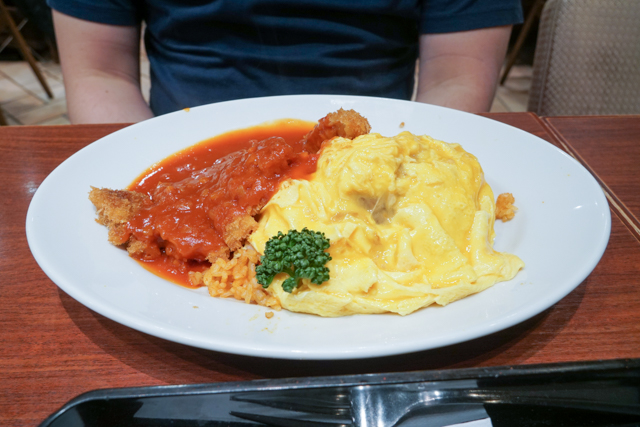
D had the Omurice & Tonkatsu with Tomato Sauce (¥1,078, inc tax). D enjoyed the crispness of the tonkatsu, which paired well with the tanginess of the tomato sauce and the tomato rice. The omelette was silky smooth.
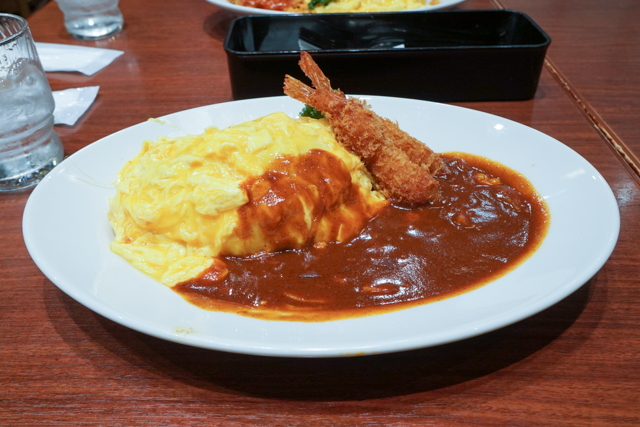
I had the Omurice & Fried Shrimp with Demi-glace Sauce (¥1,133, inc tax). The fried shrimp were crisp and juicy, while the richer sweetness of the demi-glace sauce paired well with the creamy omelette and the tanginess of the tomato rice. All in all, it was a satisfying meal for us.
Hankyu Department Store
B1, Hankyu Department Store Umeda Main Store, 8-7 Kakudacho, Kita Ward, Ōsaka, 530-8350, Japan
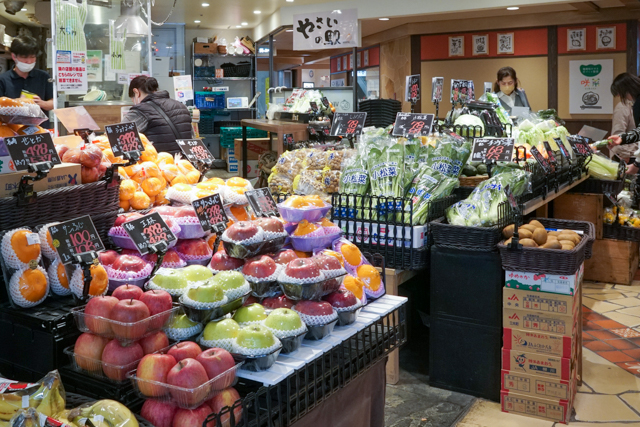
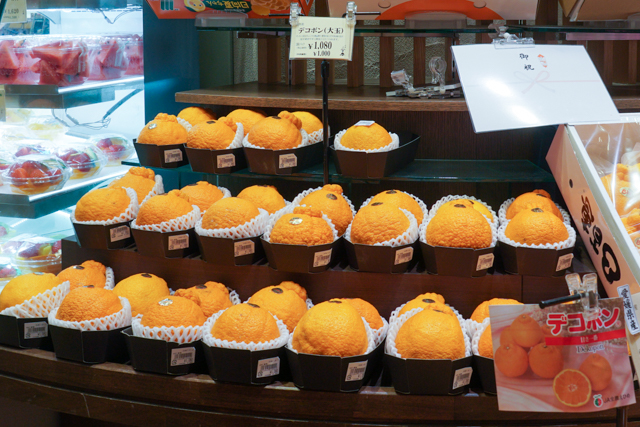
We love visiting the basements of department stores in Japan to explore their food options. There’s the fruit for gifting but also some more affordable everyday prices.
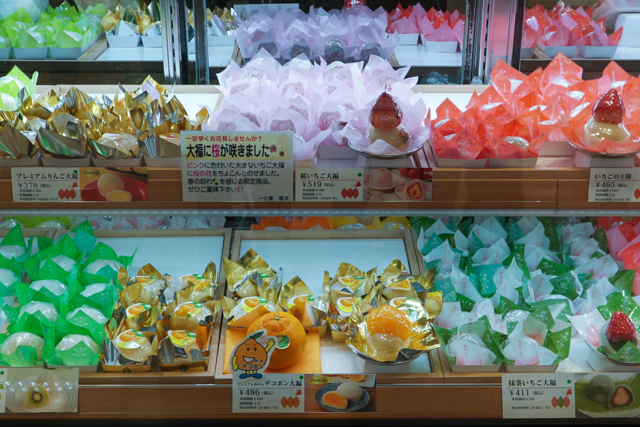
Then there are the cabinets of fruity sweets. These were daifuku filled with fresh fruit.
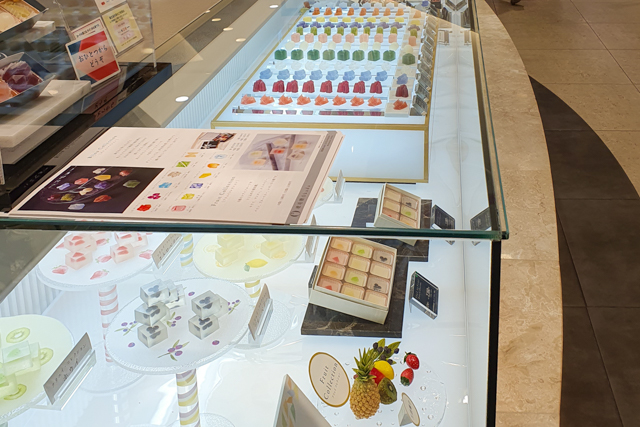
And another store sold fruity sweets that looked like precious stones.
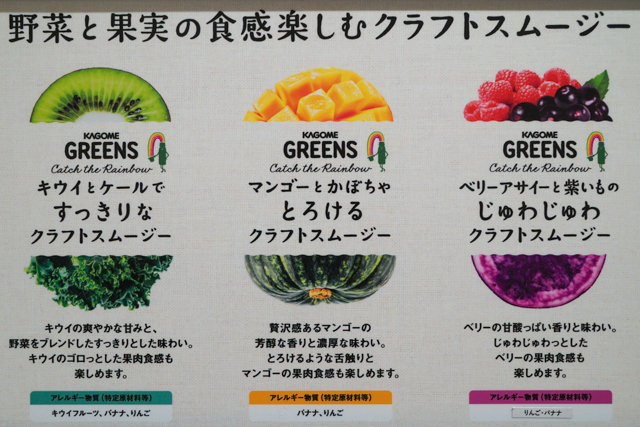
Kagome offered freshly squeezed healthy juices.
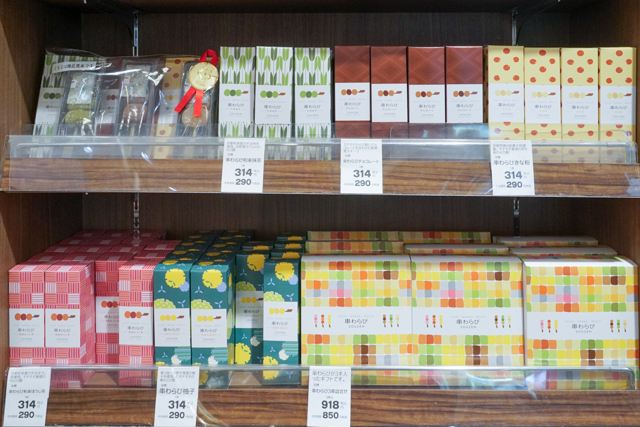
I was delighted to find the kushi warabi mochi from Kyo Nishijin Kasho Souzen outside of Kyōto.
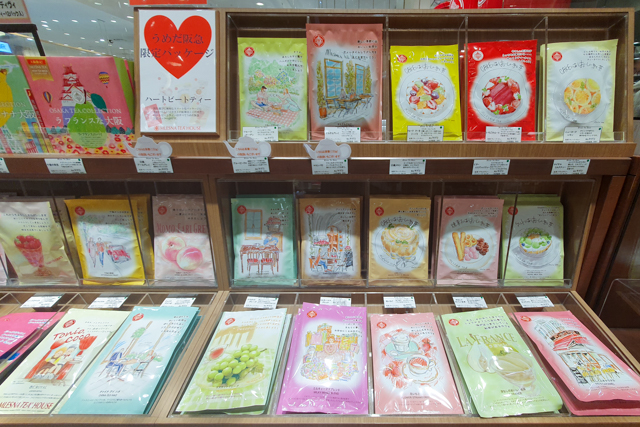
Mlesna, a well-known Sri Lankan tea company, had a shop offering flavoured teas.
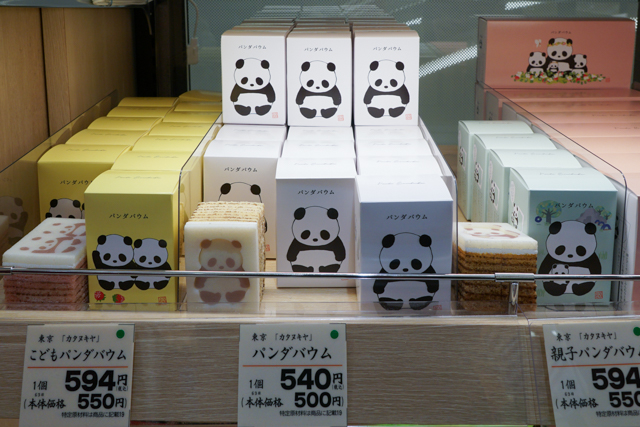
And the cutest panda-themed baumkuchen.
Keishindo
桂新堂 阪急うめだ本店, B1 Hankyu Department Store Umeda Main Store, 8-7 Kakudacho, Kita Ward, Ōsaka, 530-8350, Japan
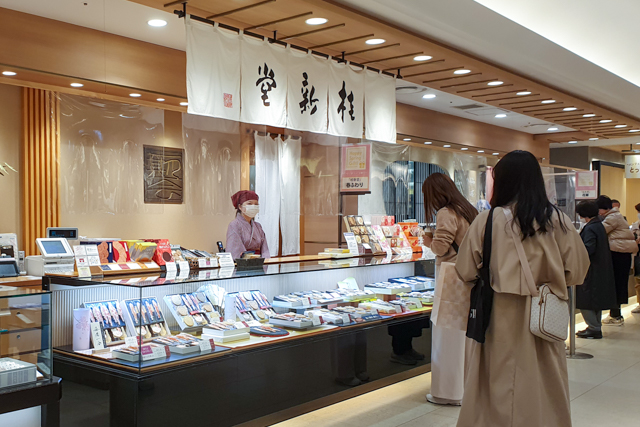
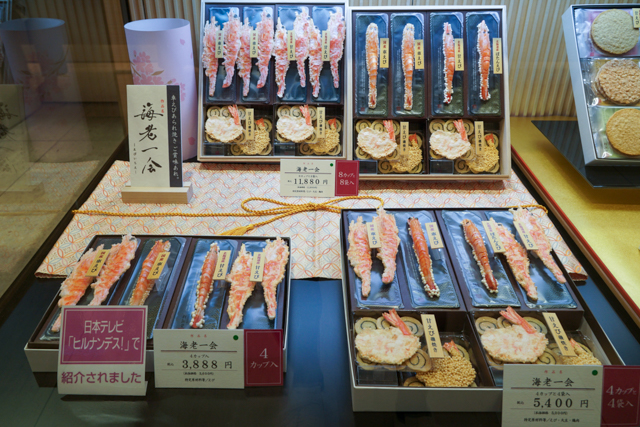
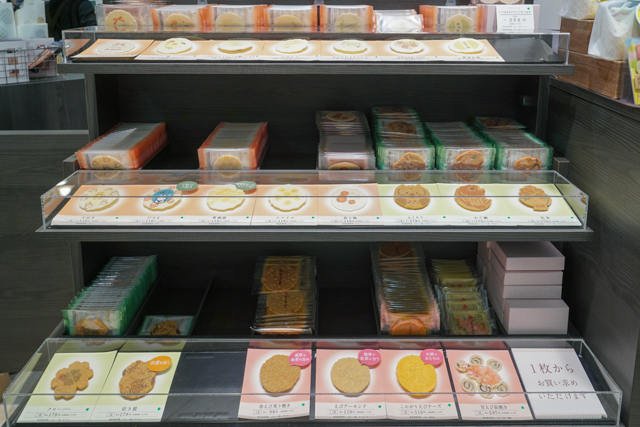
Seduced by the whole shrimp crackers and their samples, we left with quite a few items from Keishindo.
発酵CALPIS PARLOR
発酵CALPIS PARLOR, B1 Hankyu Department Store Umeda Main Store, 8-7 Kakudacho, Kita Ward, Ōsaka, 530-8350, Japan
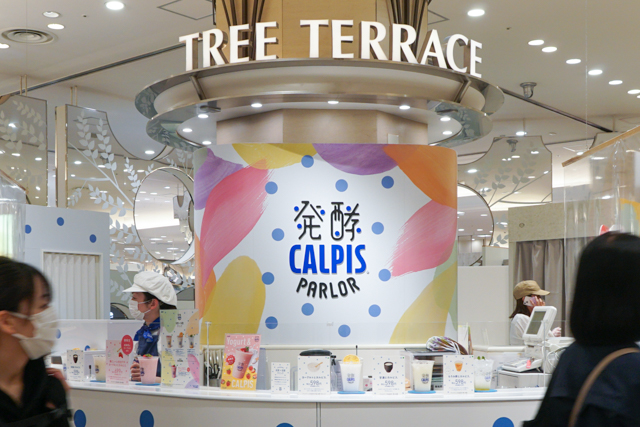
Calpis had a store selling freshly mixed fruit drinks. We purchased one of their drink sets to take home.
Lupicia
ルピシア 阪急うめだ店, B1 Hankyu Department Store Umeda Main Store, 8-7 Kakudacho, Kita Ward, Ōsaka, 530-8350, Japan
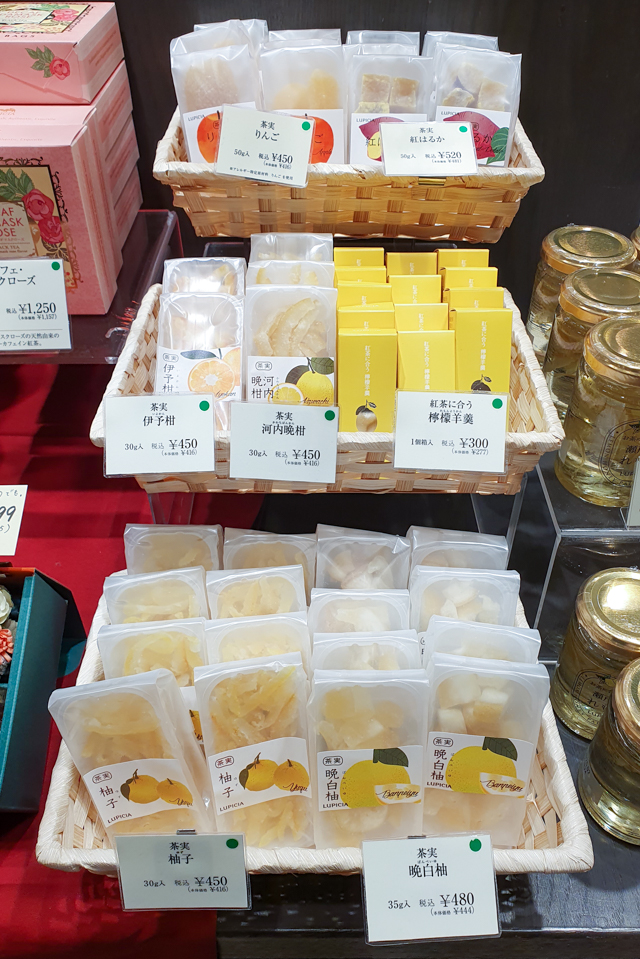
Lupicia was the original reason we ventured into the Hankyu Department Store. Here, we picked up a number of limited edition teas and restocked some old favourites. They offered sugared citrus fruits for enjoying with tea.
Morozoff
ルピシア 阪急うめだ店, B1 Hankyu Department Store Umeda Main Store, 8-7 Kakudacho, Kita Ward, Ōsaka, 530-8350, Japan
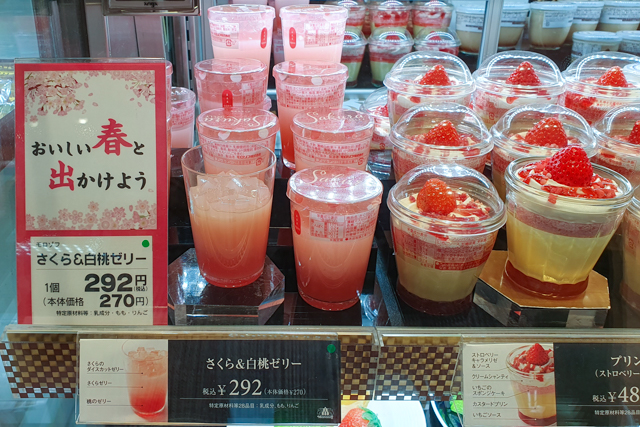
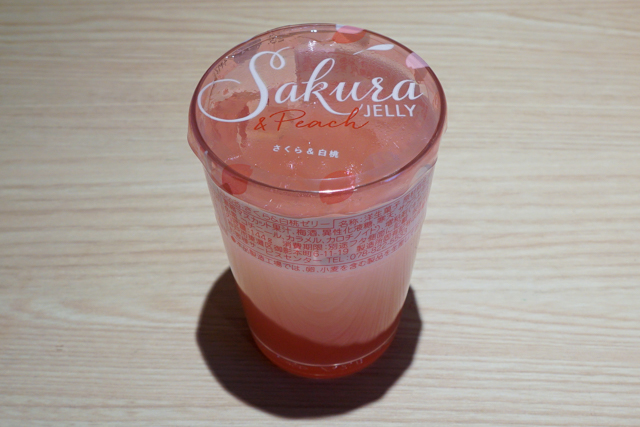
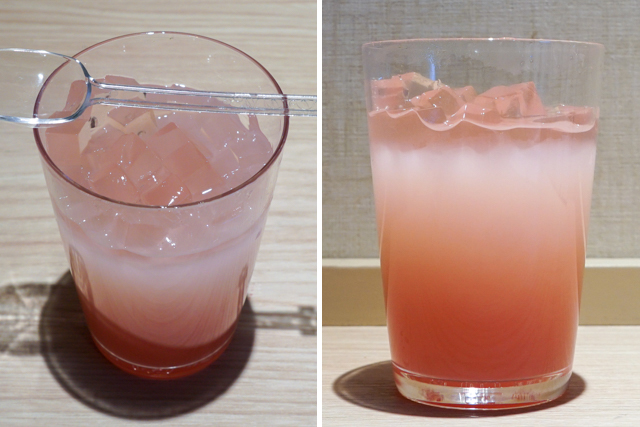
At Morozoff, we picked up a Sakura & Peach Jelly (¥292, inc tax). It consisted of three layers: peach jelly and sakura jelly, topped with diced sakura jelly. We enjoyed the floral quality of the sakura jelly, which had a refreshing subtle tartness, while the peach jelly balanced with a juicy sweetness. It was a very satisfying dessert for the price.
Iyemon Cafe
伊右衛門カフェ ルクア イーレ店, 2F LUCUA Ōsaka, 3 Chome-1-3, Umeda, Kita Ward, Ōsaka, 530-8558, Japan
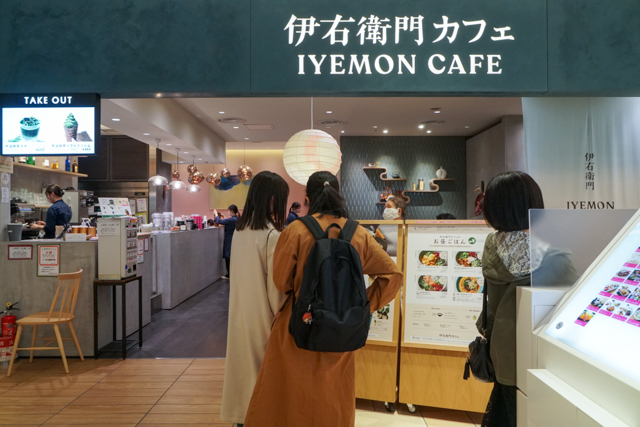
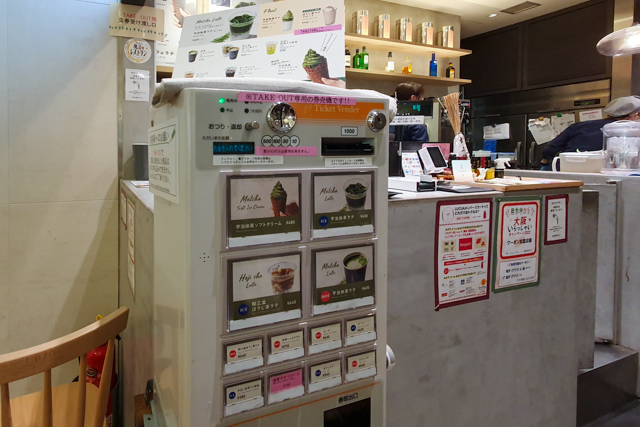
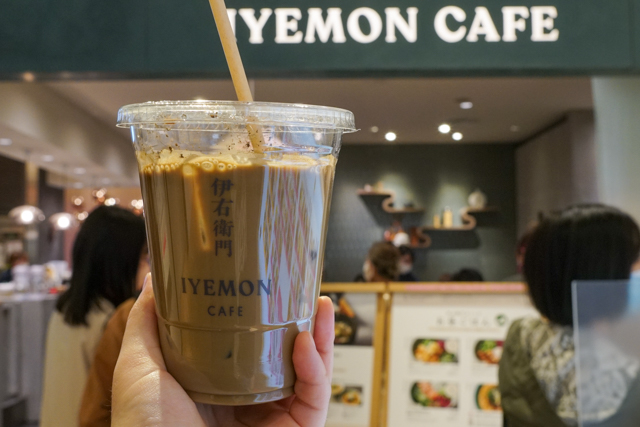
We’d hoped to stop by Itemon Cafe to rest our feet, but the queue for a table was very long, so we opted for takeout for a caffeine hit. The Hōjicha Latte (iced, ¥640, inc tax) had a deeply roasted flavour, but most of the cup was filled with ice, making for a rather watery and unsatisfying drinking experience after a few sips.
HEP FIVE
HEP FIVE, 5-15 Kakudacho, Kita Ward, Ōsaka, 530-0017, Japan
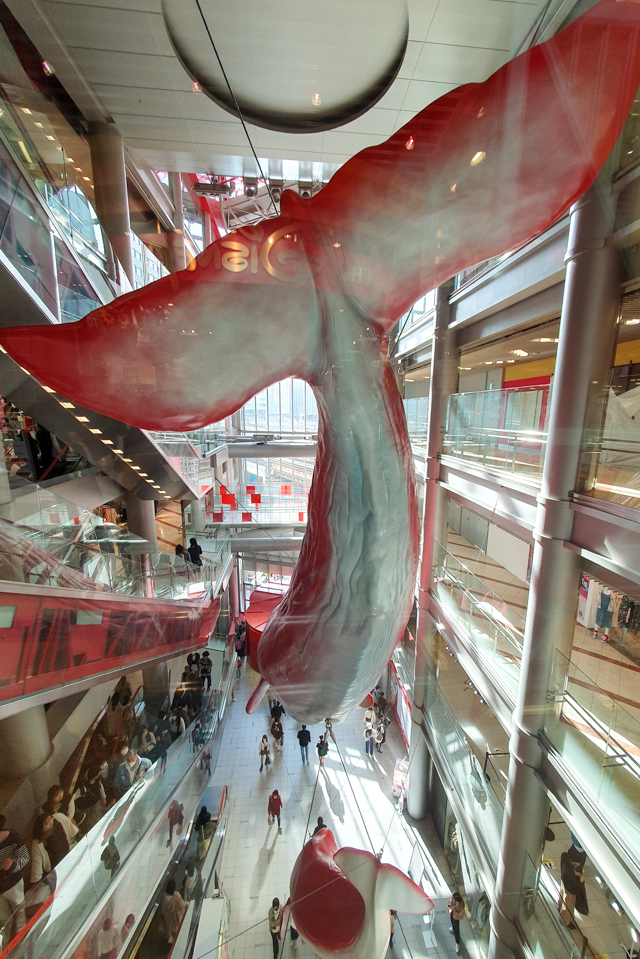
We ventured over to HEP FIVE to visit INGINI and one after another NICE CLAUP. Two large red whales occupied the central atrium.
Ujien Cha no Iro
宇治園 茶の彩 阪急三番街店, B2F, Hankyu Sanbagai South Building, 1 Chome−1−3 , Shibata, Kita Ward, Ōsaka, 530-0012, Japan
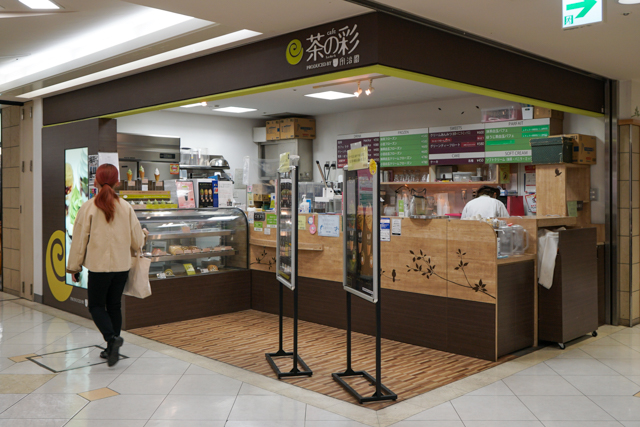
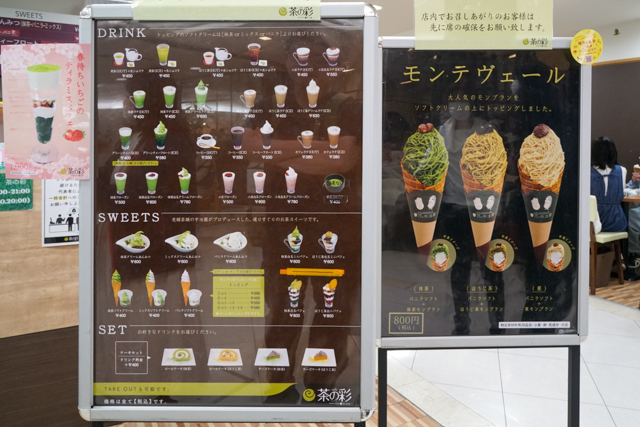
Eager to satisfy my craving for tea sweets, we stopped by Ujien Cha no Iro, a Japanese-style cafe produced by the long-standing tea shop Ujien.
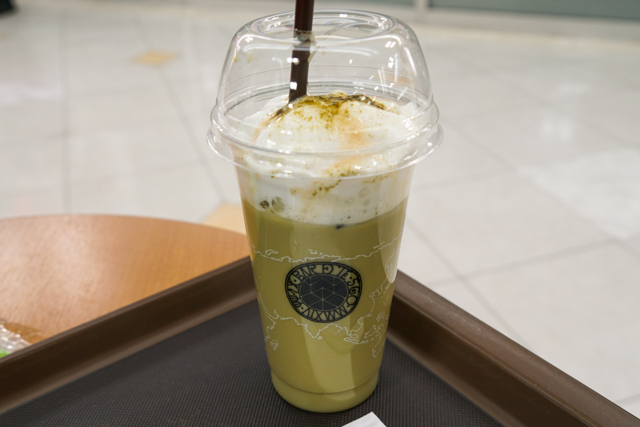
Hōjicha Latte (iced, ¥450). The hōjicha at Ujien was greener than we expected, which came through with a less intensely roasted flavour. The version from Iyemon Cafe was more to our taste in terms of flavour, but the size was similar after accounting for the ice, so this one was better priced.
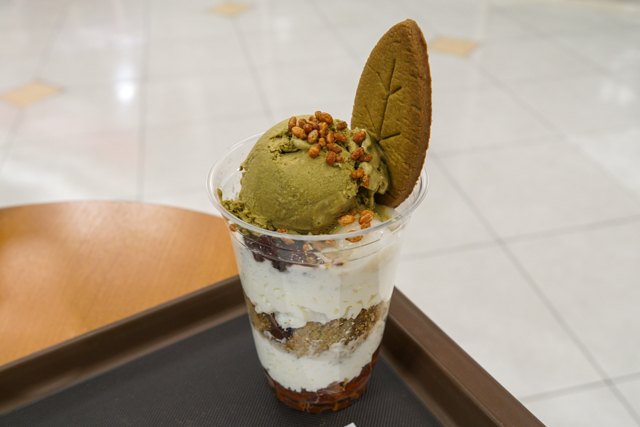
Mini Hōjicha Shiratama Parfait (¥800). It consisted of hōjicha ice cream, shiratama dango, hōjicha jelly, hōjicha castella cake, hōjicha cookie, whipped cream and puffed rice. With the exception of the jellies, the roasted notes of the hōjicha came through bolder in the ice cream, cookie and cake than in the drink. That said, we enjoyed the enormous variety of textures in this mini parfait. While we’re not usual fans of whipped cream, here it acted as a sort of palate cleanser between bites to refresh the hōjicha for the next bite.
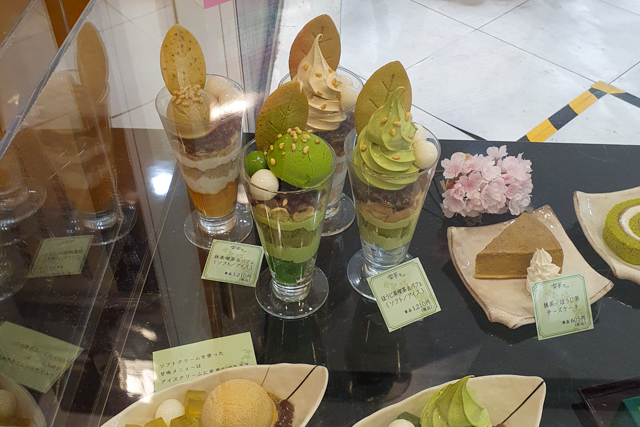
Opposite the takeout store (which also had a few seats) was their dine-in store that offered more premium desserts in proper dining ware as well savoury dishes like matcha soba.
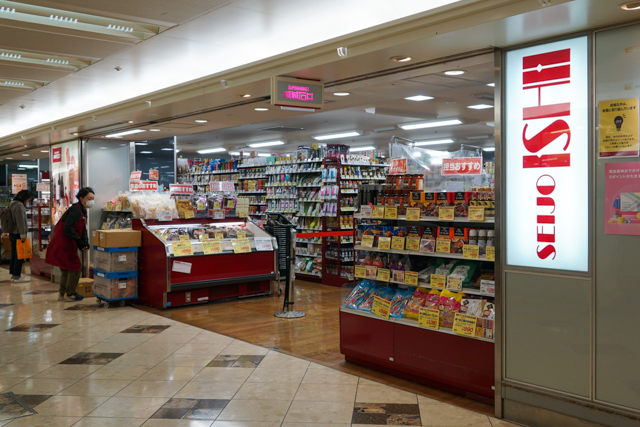
Seijo Ishi was opposite the seating area for Ujien Cha no Iro, so we stopped by afterwards to pick up some drinks and snacks.
Mister Donut
ミスタードーナツ ホワイティうめだショップ, B1 Whity Umeda, 2-5 Umeda Underground Shopping Center, Kakudacho, Kita Ward, Ōsaka, 530-0017, Japan
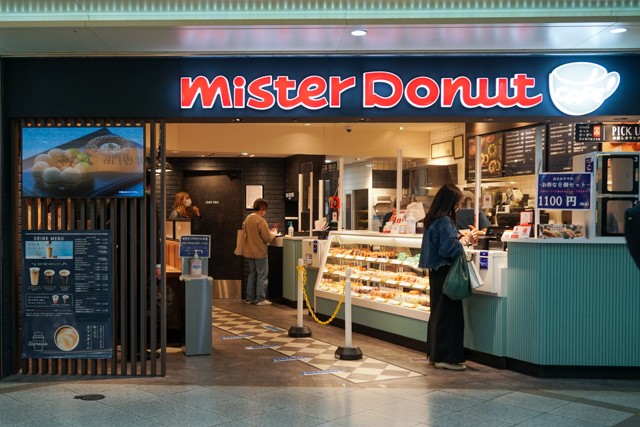
Heading back to the train station, we chanced upon Mister Donut.
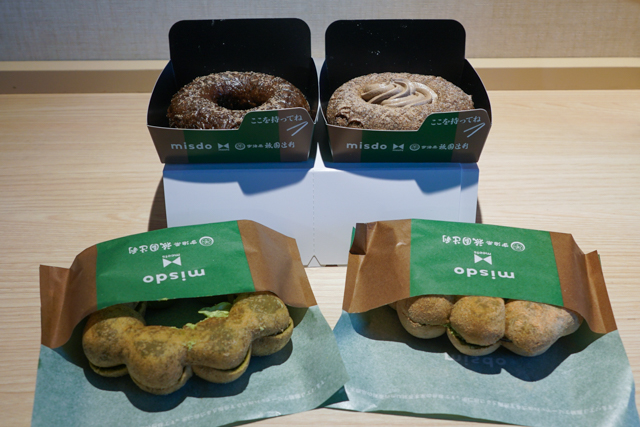
Their collaboration with Kyōto-based tea house Tsujiri was available for sale from March 29 (that same day), so were pleased to find all but one of them in the cabinet. We found the fifth one a few days later at Shin-Ōsaka Station, and have included our thoughts on it below for completeness.
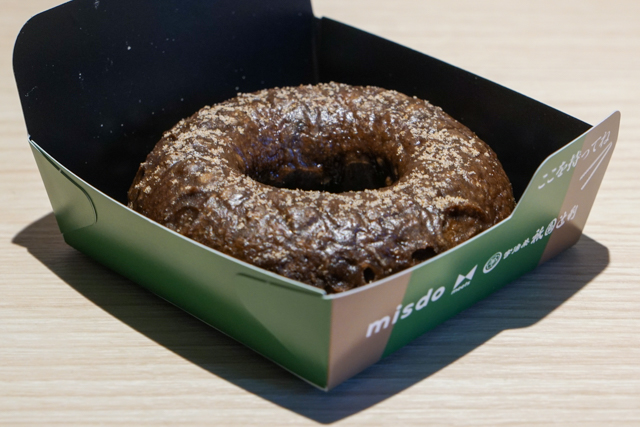
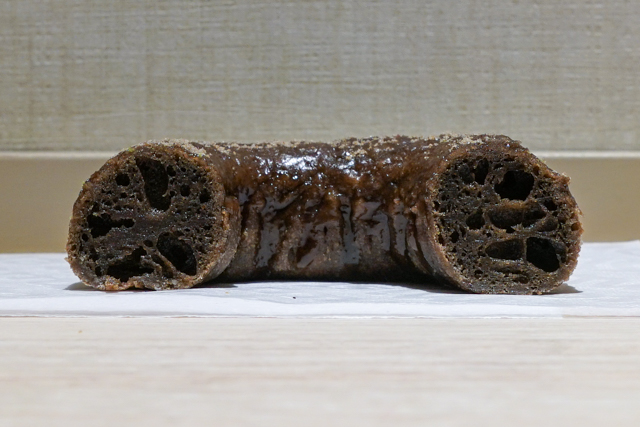
Komeko Uji Hōjicha (¥194, takeout). It featured a hōjicha flavoured rice flour doughnut with a hōjicha flavoured glaze.
Made with (non-glutinous) rice flour, this doughnut had a denser, stodgier texture than the other doughnuts at Mister Donut, and definitely none of the bounce of the pon-de-ring series. That said, it carried the hōjicha flavour well, with a warm roasted flavour that was enhanced by the sticky glaze.
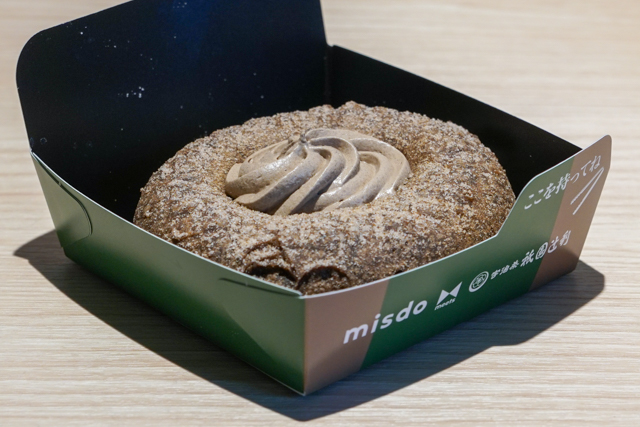
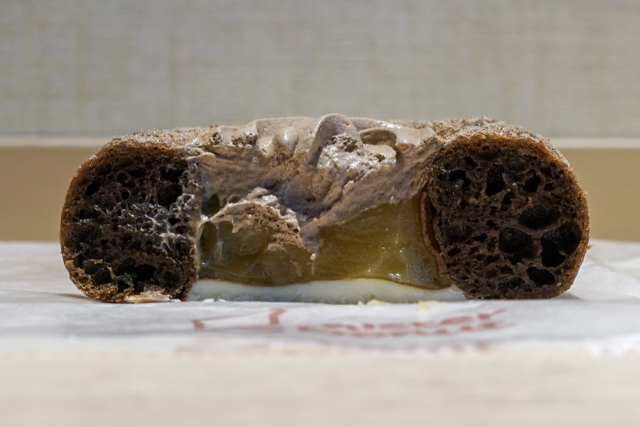
Komeko Koi Hōjicha Whip (¥216, takeout). It consisted of a hōjicha flavoured rice flour doughnut, with a centre swirl of hōjicha-flavoured whipped cream atop a dollop of chestnut paste and sealed with a base of white chocolate.
This doughnut had the same texture as the previous one, but the addition of the hōjicha whipped cream and the chestnut paste elevated the luxurious quality of the doughnut. The whipped cream contrasted the stodginess of the doughnut with an airy lightness, and the chestnut paste added a nutty creaminess.
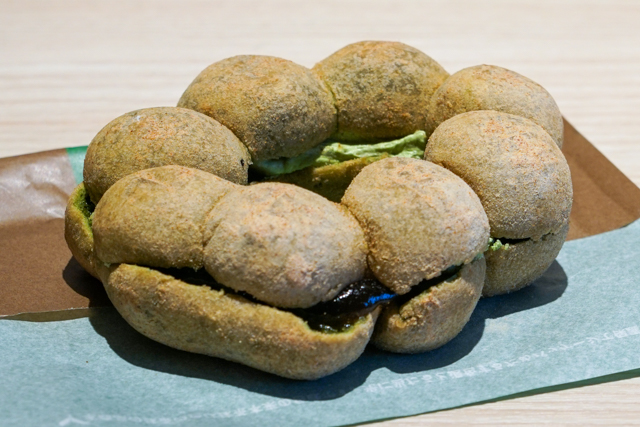
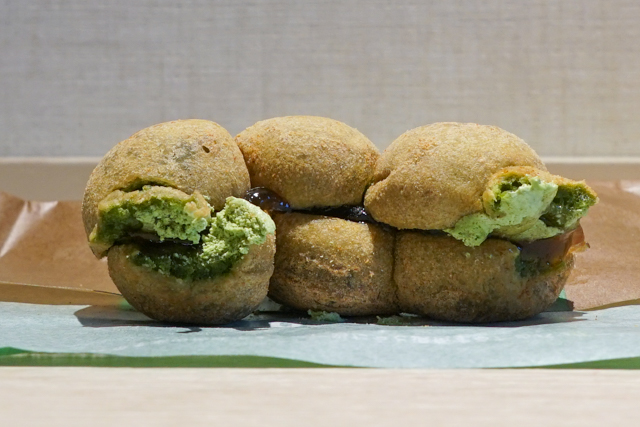
Pon de Koi Matcha Whip Warabi Mochi (¥216, takeout). It consisted of a matcha-flavoured pon-de-ring mochi doughnut filled with matcha whipped cream and warabi mochi and dusted in kinako.
We are huge fans of the regular Pon-de-Ring doughnut, so there was no question about whether we’d like the rest of these doughnuts. The doughnut was bouncy and light, yet contrasted well with the cool sweetness of the jelly-like warabi mochi and the creamy lightness of the whipped cream. The subtle grassiness from the matcha came through with a balanced sweetness.
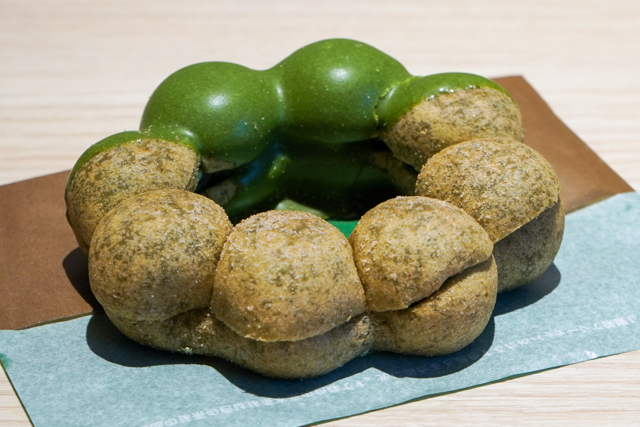
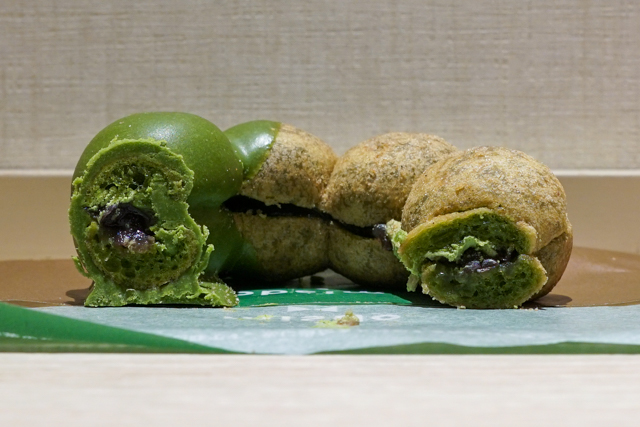
Pon de Koi Matcha Whip Azuki (¥216, takeout). It consisted of the matcha-flavoured pon-de-ring mochi doughnut filled with matcha whipped cream and red bean paste, dusted in kinako and dipped in matcha-flavoured chocolate.
Much like the previous, we enjoyed the bouncy texture of the doughnut, while the matcha-flavoured chocolate covering part of the doughnut countered the richer nuttiness of the azuki well, coming through with its vegetal notes without additional bitterness.
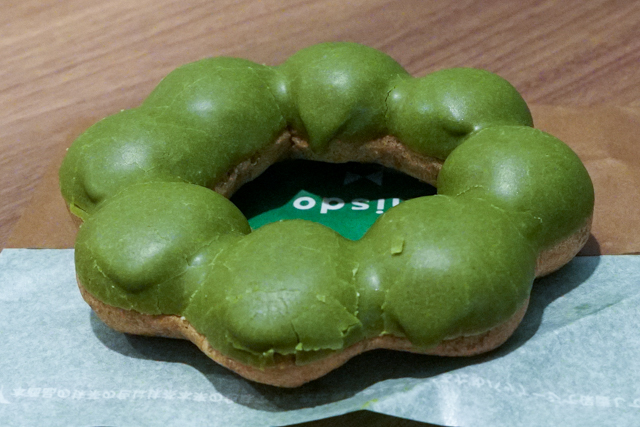
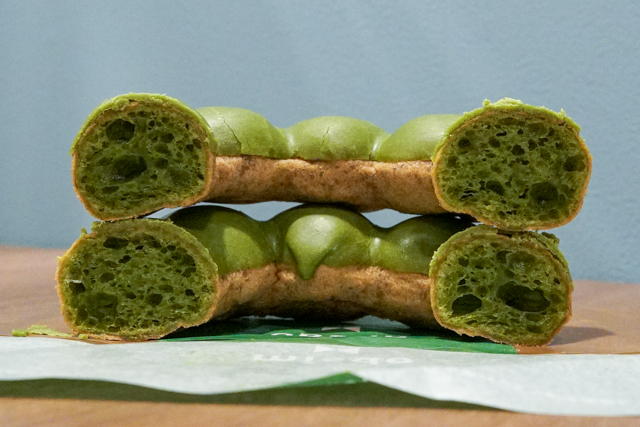
Pon de Double Uji Matcha (¥194, takeout). It consisted of a matcha-flavoured pon-de-ring mochi doughnut dipped in matcha-flavoured chocolate.
We picked up this doughnut a few days later en route to Tōkyō, so its squished appearance was on us as we received it in perfect condition. As expected, this doughnut delivered an intense matcha flavour, with a double matcha hit from the matcha chocolate coating and the matcha dough itself. It celebrated matcha with an unapologetic matcha flavour.
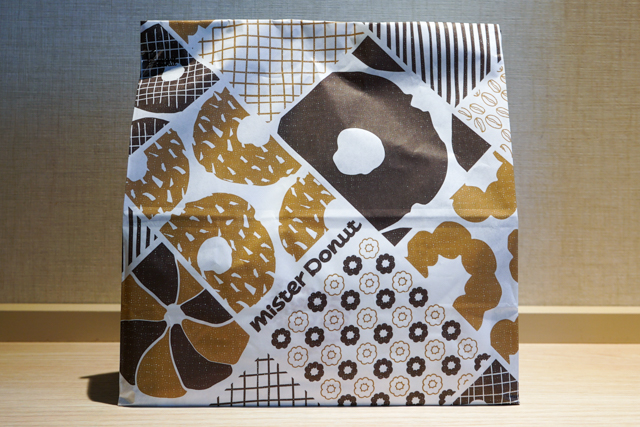
We enjoyed all five doughnuts immensely, and as usual, our only lamentation, other than the doughnuts being a time-limited collaboration, is that they’re available only in Japan.
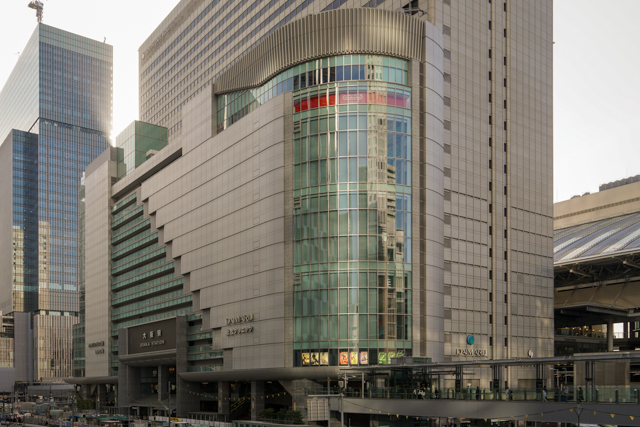
Laden with shopping and sweets, we headed back to the hotel for a rest before heading back out in the evening to see teamLab Botanical Garden Ōsaka.
Higashisumiyoshi Ward
teamLab Botanical Garden
大阪市立長居植物園, 1-23 Nagaikoen, Higashisumiyoshi Ward, Ōsaka, 546-0034, Japan
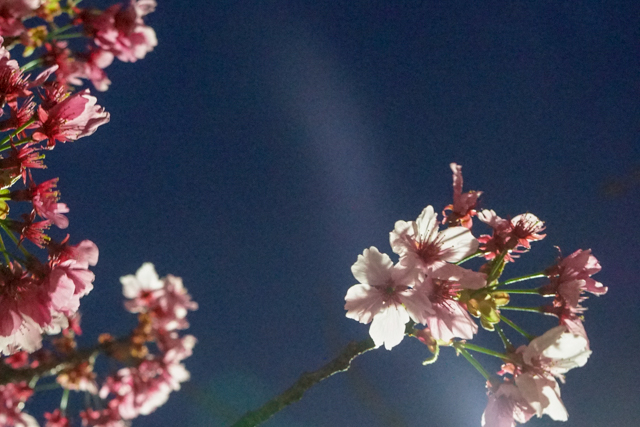
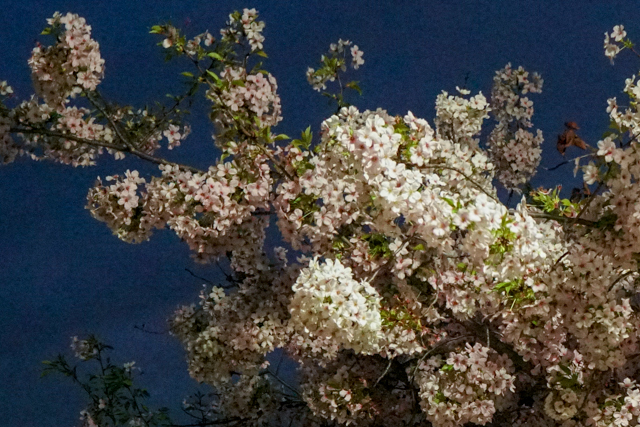
Nagai Botanical Garden is an outdoor botanical garden in Ōsaka that opened in 1974. It is located inside Nagai Park that opened in 1944 as an urban park that includes facilities such as a baseball stadium. Nagai Botanical Garden stretches over an area of 240,000-sqm with a large lake in the center, and its flora change with the seasons throughout the year.
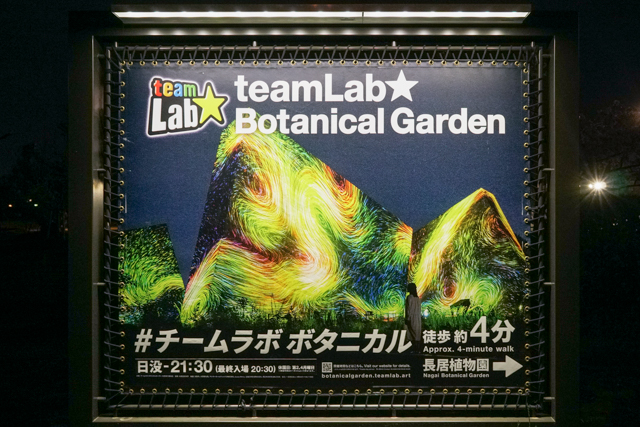
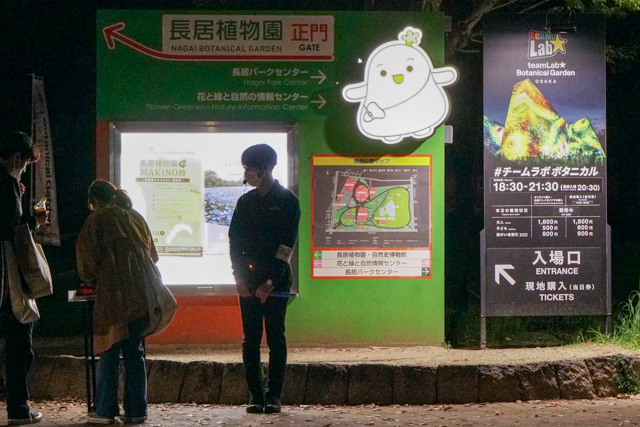
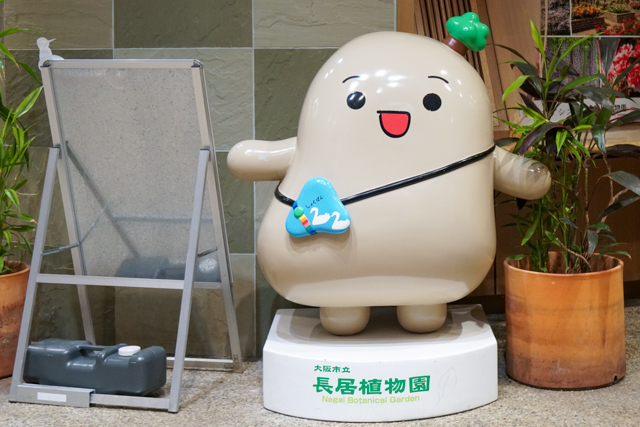
From Nagai Station, the path to the Botanical Garden was well-signed.
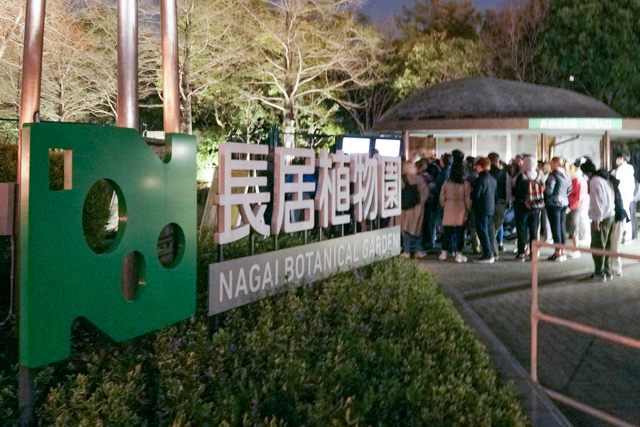
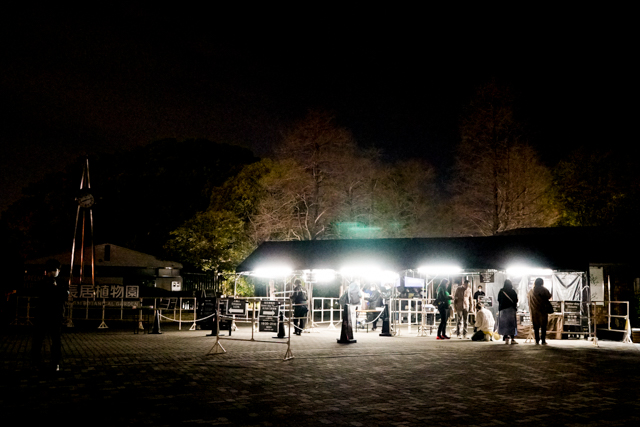
TeamLab Botanical Garden Ōsaka was first opened on 29 July 2022 and is a permanent installation available for viewing (with tickets) in the evening after sunset.
Contours of a Life-like Existence
Nagai Botanical Garden is an outdoor botanical garden in Ōsaka that opened in 1974. It is located inside Nagai Park that opened in 1944 as an urban park that includes facilities such as a baseball stadium. Nagai Botanical Garden stretches over an area of 240,000-sqm with a large lake in the center, and its flora change with the seasons throughout the year.
50 years since its opening, the garden is now home to many wild birds, such as Northern goshawks and owls, which are placed at the top of the food chain and thus dependent on a healthy ecosystem to exist. In the middle of the city, this man-made botanical park and its lake sustain the ecosystem together with humans, as a man-made ecosystem within the city that includes human beings.
Where are the contours of the existence of life?
Objects like stones and man-made creations maintain a stable structure on their own. A stone can continue to exist in a closed box, sealed off from the outside world, but life cannot sustain its existence in such a box because it does not maintain an independent structure.
Life is like a vortex created in the ocean. If a vortex is taken out of the ocean and placed in a closed box, the vortex will disappear. The vortex cannot maintain a stable structure on its own; rather, it is created and sustained by water that continuously flows inwards and outwards. The vortex is an existence within the flow, and the contour of its existence is ambiguous.
The same is true of life. It consumes external matter and energy as food and discharges it, sustaining its ordered structure as the energy dissipates. Life does not exist by itself; rather, it is the environment that is continuous with it that maintains the structure of life. In other words, the contour of life’s existence is not a physical, bodily boundary, but an ambiguous one that includes the continuity with its environment. Life is not defined by physical borders. Life is continuous with its environment, an existence whose boundaries are ambiguous.
teamLab’s art project Digitized Nature explores how nature can become art. The concept of the project is that non-material digital technology can turn nature into art without harming it.
As the artworks in this exhibition are influenced by the trees and birds that live in the garden, if the wildlife disappear, the artworks will also disappear. The trees and birds cannot be separated from the ecosystem such as the garden’s forest or lake, so if the environment is not sustained, the trees and birds will cease to exist, and as a consequence, the artworks as well. The artworks’ existence is not defined by their physical surface boundaries, but is continuous and ambiguous with its surrounding environment.
The artworks transform interactively, influenced by wind, rain, as well as by the behavior of the people in it, making the environment and the people a part of the works. The people and the artworks, the trees, the forest and the lake, the ecosystem and the environment, all form a continuity without boundaries.
teamLab aims to explore an environment where human perception expands from the artwork itself to the environment.
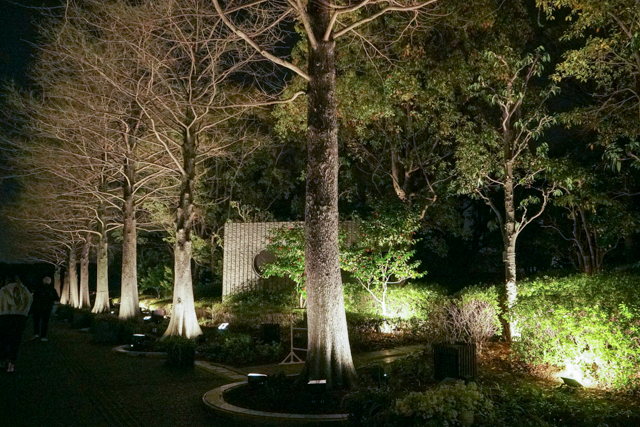
Life is Continuous Light – Bald Cypress
teamLab, 2022, Interactive Digitized Nature, Sound: Hideaki Takahashi
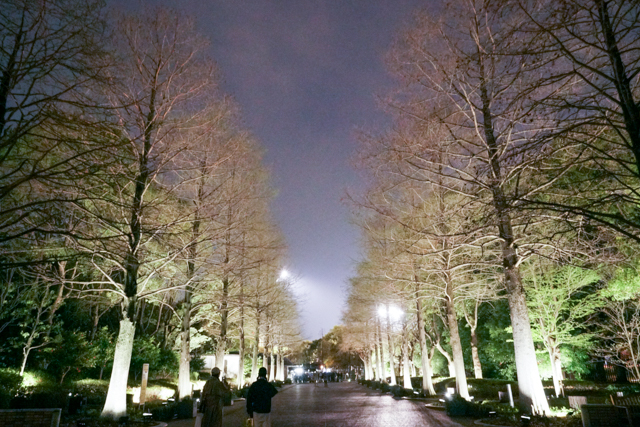
The cypresses connecting the Nagai Botanical Garden entrance to the Oike Lake shine brightly.
When people pass by the cypresses, they shine more brightly and produce a tone. The light of that tree then radiates out, spreading to nearby cypresses as they resonate with the same tone. If light approaches from the opposite side it signifies the presence of people there, making people more aware of the existence of others in the same space.
Resonating Crape Myrtles
teamLab, 2022, Interactive Digitized Nature, Sound: Hideaki Takahashi
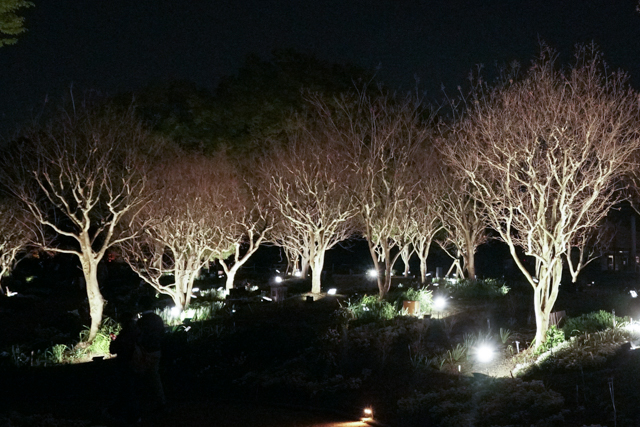
The crape myrtles along the Oike Lake banks shine brightly.
When people pass by the crape myrtles, they shine more brightly and produce a tone. The light of that tree then radiates out, spreading to nearby crape myrtles as they resonate with the same tone. If light approaches from the opposite side it signifies the presence of people there, making people more aware of the existence of others in the same space.
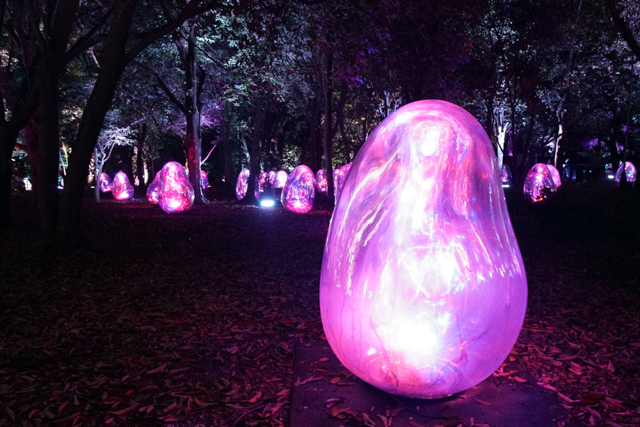
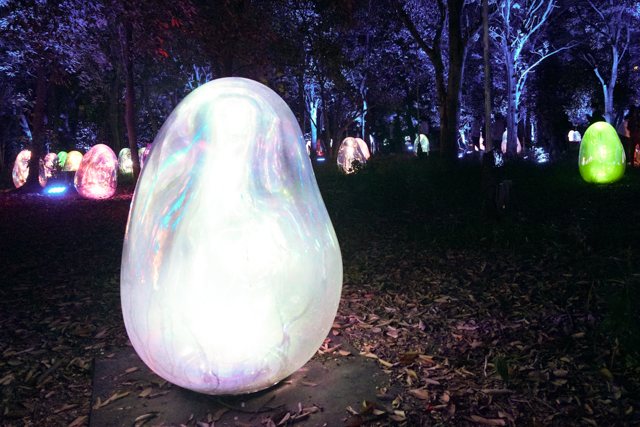
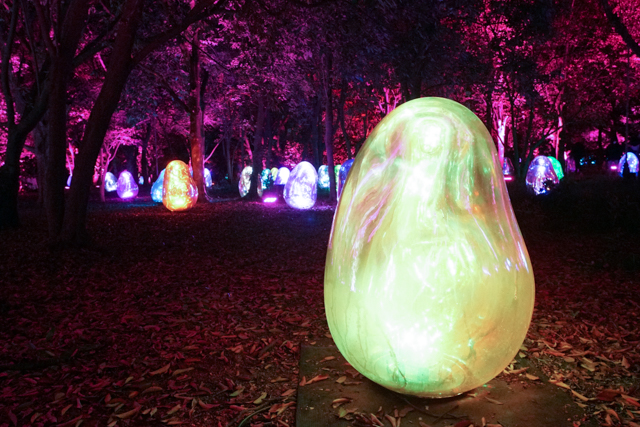
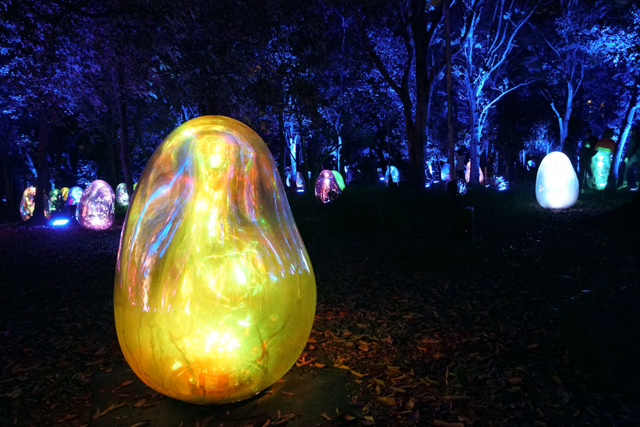
Resonating Microcosms in the Common Camellia Garden – Solidified Light Color, Sunrise and Sunset
teamLab, 2022, Interactive Digital Installation, Sound: Hideaki Takahashi
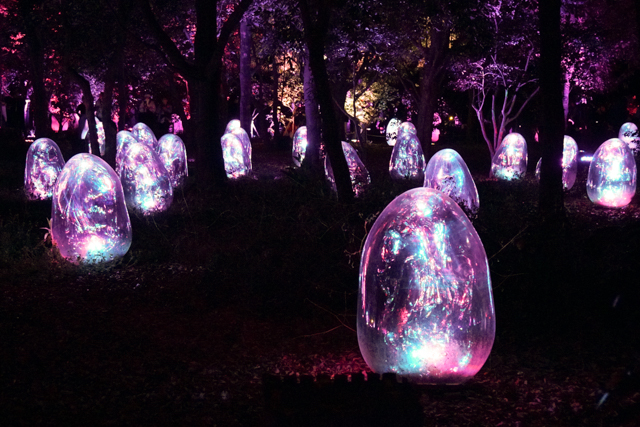
A camellia garden filled with ovoids that transform from day to night.
Under the sun, the ovoids reflect the world around them.
As the sun sets, the ovoids begin to shine by themselves. When an ovoid is pushed by a person, blown by the wind, or hit by rain, it shines brightly and produces a tone as it rises back up on its own. The surrounding ovoids respond one after another, resonating and emitting the same tone and light color.
The ovoids begin to flicker slowly when the wind is quiet and people do not push them.
The ovoids can change into a total of 61 newly-defined Solidified Light Colors.
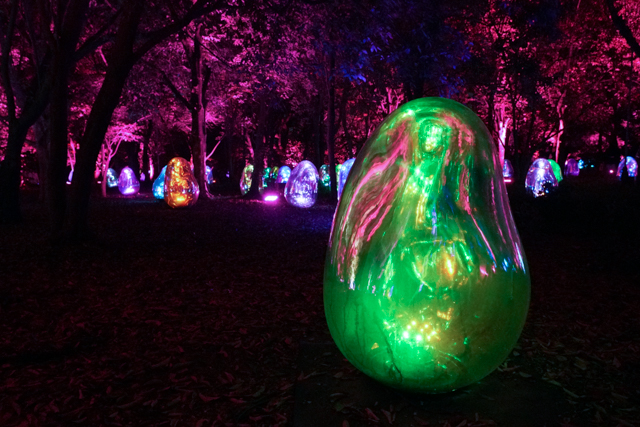
Resonating Microcosms in the Common Camellia Garden – Liquified Light Color, Sunrise and Sunset
teamLab, 2022, Interactive Digital Installation, Sound: Hideaki Takahashi
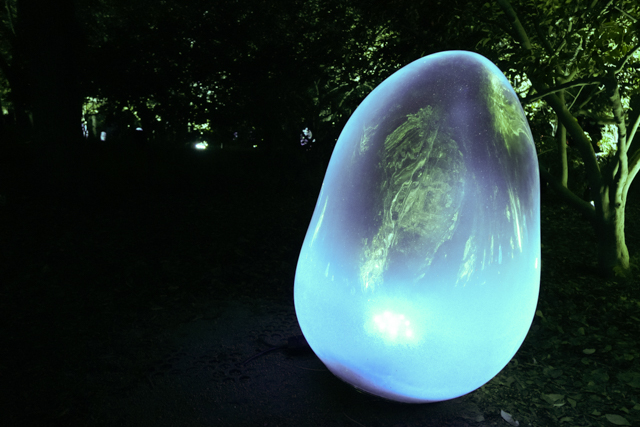
A camellia garden where the ovoids transform from day to night.
Under the sun, the ovoids reflect the world around them.
As the sun sets, the ovoids begin to shine by themselves. When an ovoid is pushed by a person, blown by the wind, or hit by rain, it shines brightly and produces a tone as it rises back up on its own. The surrounding ovoids also respond one after another, resonating and emitting the same tone and light color.
They then continue to spread to the nearby Resonating Common Camellia Garden, which transforms into the same light color and produces the same tone.
The ovoids begin to flicker slowly when the wind is quiet and people do not push them.
The ovoids can change into a total of 57 newly-defined Liquified Light Colors.
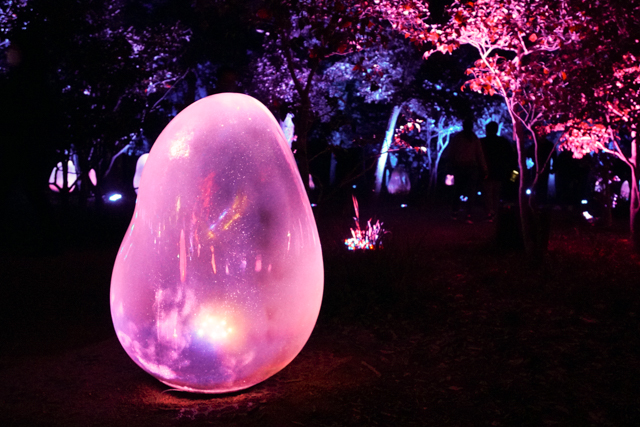
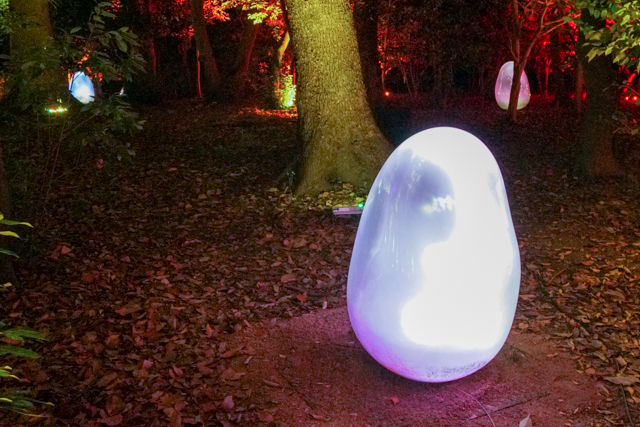
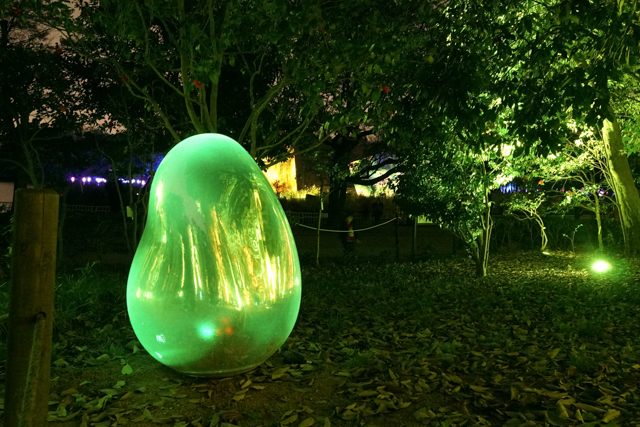
Resonating Common Camellia Garden
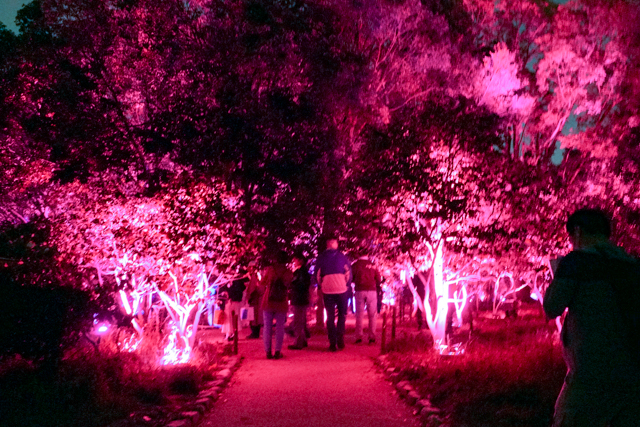
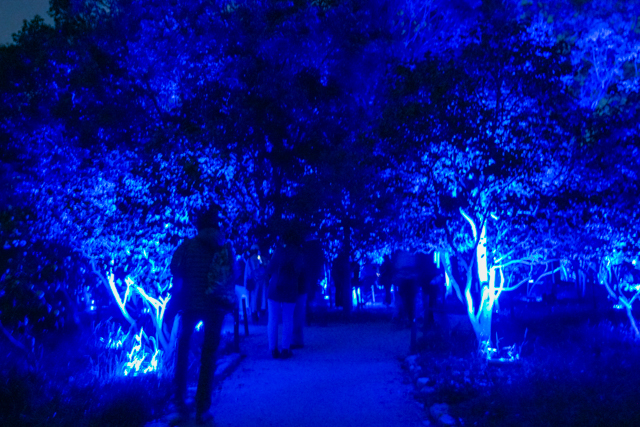
The trees in the camellia garden shine brightly. The light of each tree is autonomous, blinking slowly.
The light transmitted from Resonating Microcosms in the Common Camellia Garden – Liquified Light Color causes the trees’ lights to change color and produce a tone specific to that color. The tree’s light spreads to the surrounding trees one by one, continuously resonating with the same tone.
If light approaches from the opposite side it signifies the presence of people there, making people more aware of the existence of others in the same space.
Sculptures of Dissipative Birds in the Wind
teamLab, 2022, Interactive Digital Installation, Raised earth, Birds, Wind, Flora, H7300 mm W11550 mm (left), H7610 mm W111820 mm (center), H7670 mm W12300 mm (right), Sound: Hideaki Takahashi
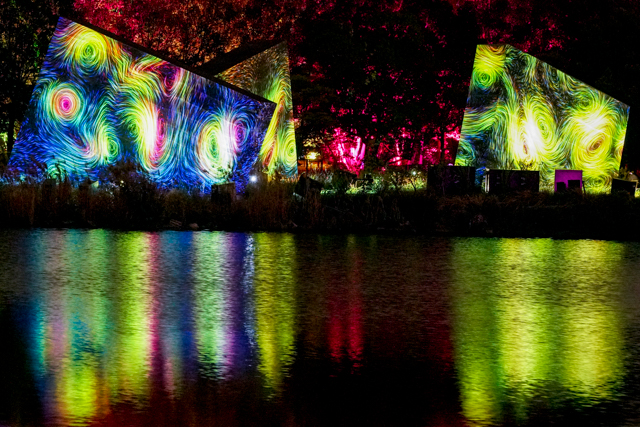
Life is not defined by physical borders. Life is continuous with its environment, an existence whose boundaries are ambiguous.
The giant sculptures in this artwork depict the continuous dissipation of energy into the environment by the birds that fly around them.
When birds fly, that energy affects the environment, such as the flow of air. The wind blowing and the birds flying at the present moment, and the memories of birds that flew by from sunrise to sunset overlap. The sculptures depict the energy dissipated into the wind by the birds at this very moment.
If birds do not fly around the artwork, the sculptures will dissolve into the darkness, as though they are non-existent. In order to create an environment favorable for birds, flora was planted near the sculptures to attract insects that birds could feed on. The sculptures are created by the birds that gather around the flora. The existence of both the birds and insects, however, is not just sustained by the flora of the island, but rather by the larger ecosystem made up of the forest and lake of the vast botanical garden.
The sculptures themselves transcend the physical boundaries of existence; they are continuous and ambiguous with the surrounding environment.
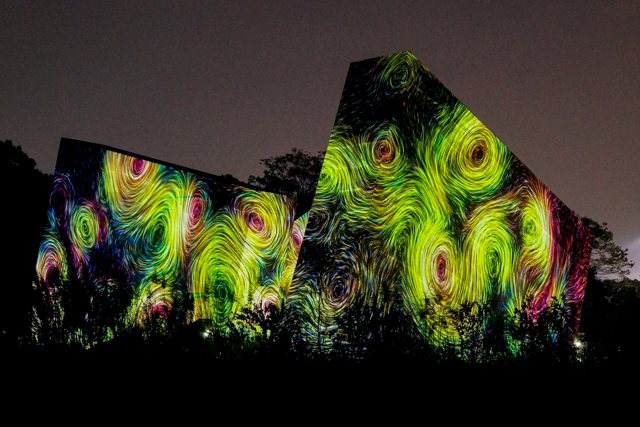
Forest of Autonomous Resonating Life – Eucalyptus
teamLab, 2018, Interactive Installation, Endless, Sound: Hideaki Takahashi
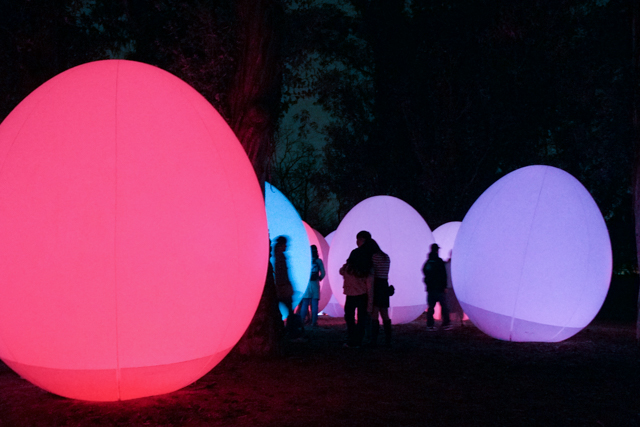
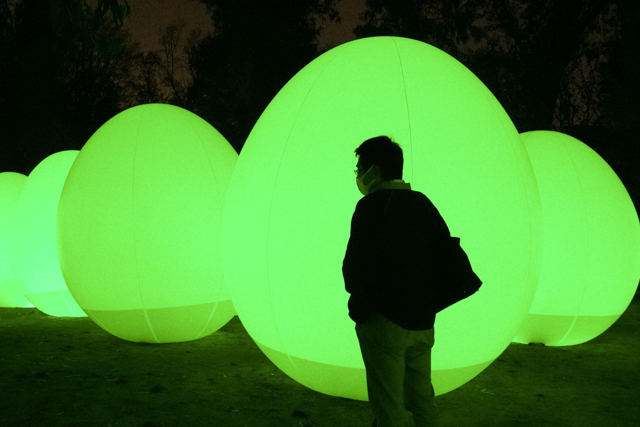
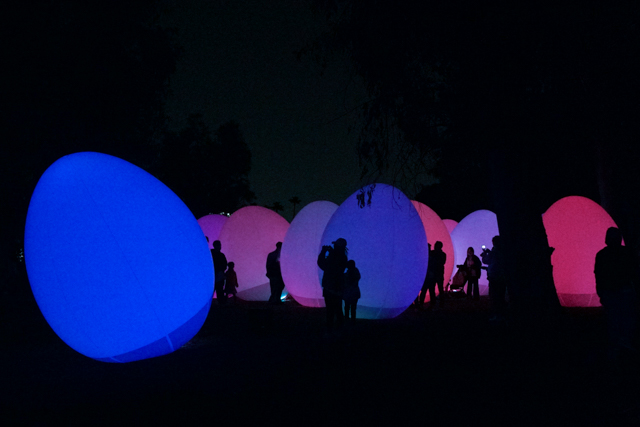
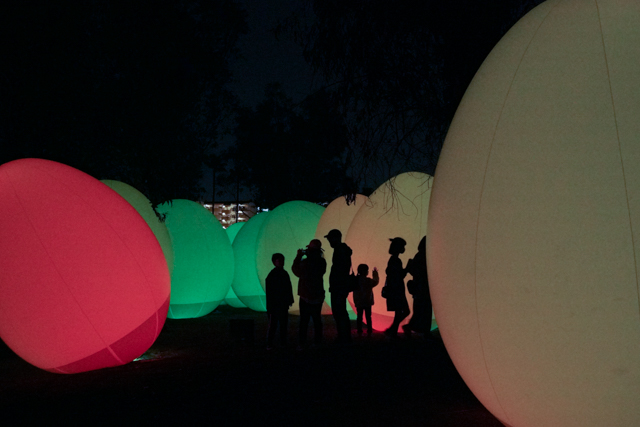
The densely packed ovoids of light, standing in the Eucalyptus park, are autonomous. When an ovoid is pushed over by people moving through or blown down by the wind, it rises back up as the color of its light changes and emits a tone specific to that color. The surrounding ovoids respond one after another, resonating and emitting the same tone and light color.
When the wind is not blowing and the people nearby are not interacting with the ovoids, their lights begin to blink slowly.
If light approaches from the opposite side, it signifies the presence of people there, making people more aware of the existence of others in the same space.
Concrete and Abstract – Secondary Forest Entrance
teamLab, 2022, Interactive Digital Nature, Sound: Hideaki Takahashi
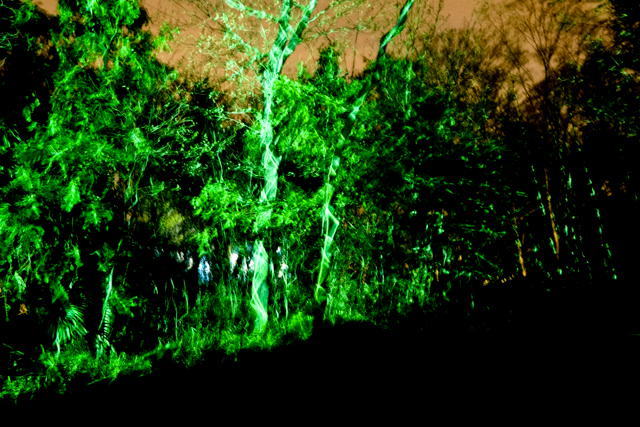
This artwork is located at the entrance of a forest called Nagai Satoyama.
When people stop inside the artwork space, a new set of lines is born and spreads across the space.
The combination of the lines turns the trees into flattened layers.
Spatial Calligraphy in the Forest – One Stroke, Secondary Forest
teamLab, 2022, Digital Nature, Sound: Hideaki Takahashi
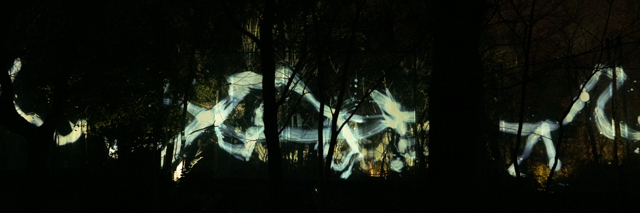
A continuous and unicursal Spatial Calligraphy drawn in the forest. The Spatial Calligraphy intersects and rotates in multiple layers, and eventually disappears.
Spatial Calligraphy is a form of calligraphy drawn in space that teamLab has been exploring since it was founded. The artwork reconstructs calligraphy in three-dimensional space to express the depth, speed and power of the brush stroke, and that calligraphy is then flattened using the logical structure of space that teamLab calls Ultrasubjective Space. The calligraphy shifts between two and three dimensions.
Universe of Fire Particles in the Forest – Secondary Forest
teamLab, 2022, Digital Installation, Continuous Loop
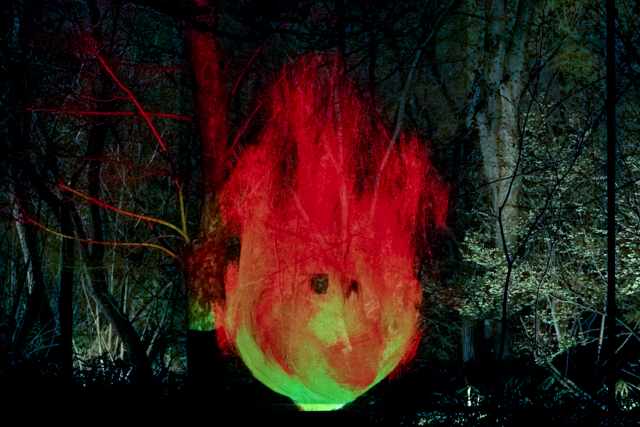
The flames of Universe of Fire Particles in the Forest – Secondary Forest change shape due to a dark, absolute presence.
Flames are a phenomenon of light and heat generated by combustion; it is a vaporized substance in a flow, a decomposed substance. It is our sensory experience of seeing what is in between phenomenon and substance. We perceive this sensory experience of the flame as a physical object, and at times feel that life resides within it.
Lines are drawn in relation to the flow of combusting gas, and the flames are created by the accumulation of those lines in three dimensions. The lines are then “flattened” using what teamLab considers to be Ultrasubjective Space to represent the flames.
teamLab is exploring the concept of Distributed Art.
If you launch the Distributed Fire smartphone application and approach this artwork, the flame will ignite in your phone, and you will be able to take the artwork home with you. When you bring that flame close to another person’s smartphone, a flame will similarly alight in their phone. As you connect the flame, and they connect that flame with someone else, the flame will spread all over the world. The distributed flames are displayed on the Map of The Flame.
Distributed Art duplicates itself, or a part of an artwork is distributed among people. Then, once in the hands of the people, the artwork is further actively distributed, and also makes copies of itself. The artworks will be distributed and exist on people’s networks and become decentralized. When the artwork exists on the network, it continues to exist even if the original disappears.
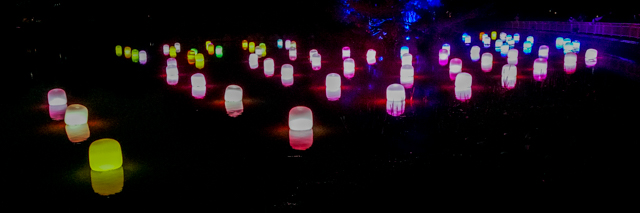
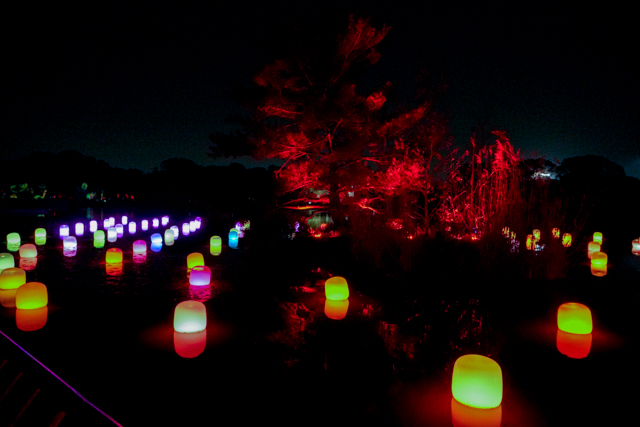
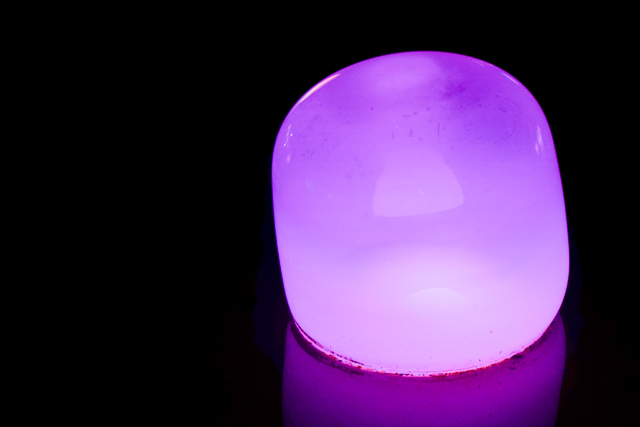
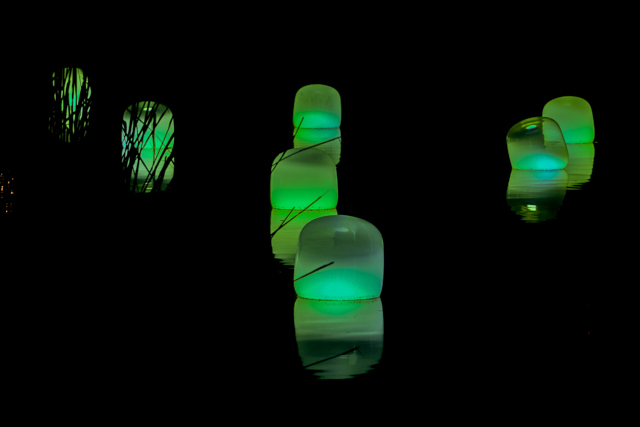
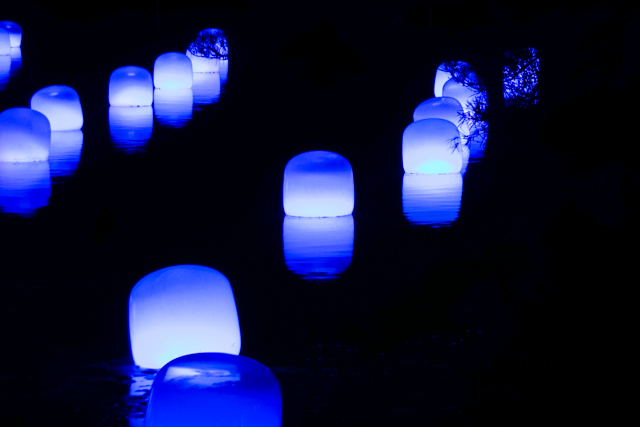
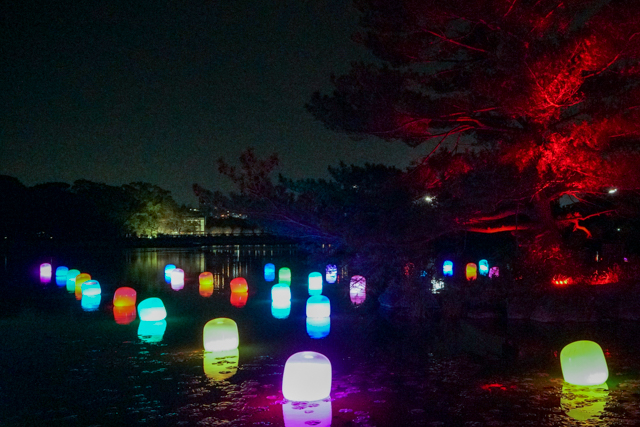
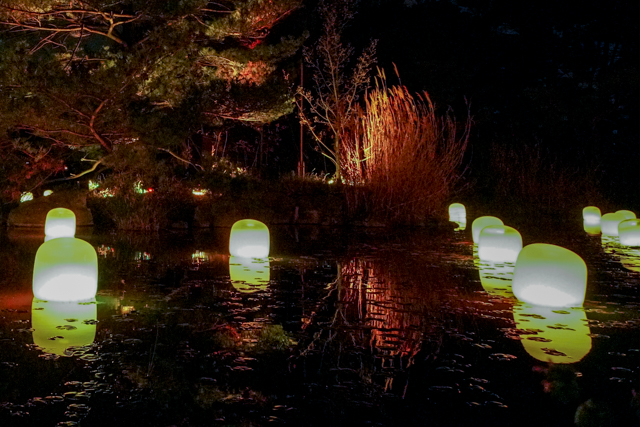
Floating Resonating Lamps on Oike Lake – Ambiguous Colors
teamLab, 2022, Interactive Installation, Murano Glass, LED, Endless, Sound: Hideaki Takahashi
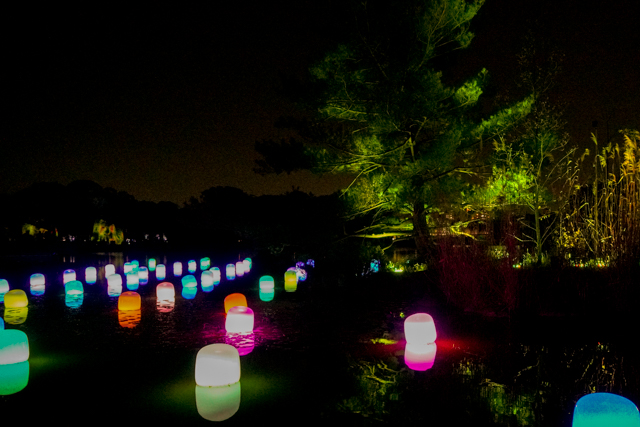
Each of the lamps on the Oike Lake’s surface floats autonomously. When a person stands still near a lamp, or when the wind blows a lamp, it changes color as it shines brightly and produces a tone. The light of that lamp spreads to nearby lamps one by one, as they resonate with the same tone, continuing on to the trees on the islet in the centre of the lake. If light approaches from the other side it signifies the presence of people there, making people more aware of the existence of others in the same space.
When the wind is not blowing and people are not nearby, the lamps begin to blink slowly.
Before the modern era in Japan, ambiguous colors born from the characteristics of silk were given descriptive names evocative of the four seasons. Such colors were called Kasane no Irome (nuances of layered colors), and were created by the combination of the lining and exterior fabric (silk was thin at the time so the color of the lining showed through the exterior fabric) and gradations from overlapping colors. Since the colors of the lamps are produced by light, the lamps can create ambiguous colors similar to Kasane no Irome, such as light in water, sunlight on water plants, morning glow, morning sky, sky at twilight, peach, plum, iris, and spring maple.
Naniwa Ward
Namba Station
Exit 7, なんば駅, 1-chōme-9 Nanba, Chuo Ward, Ōsaka, 542-0076, Japan
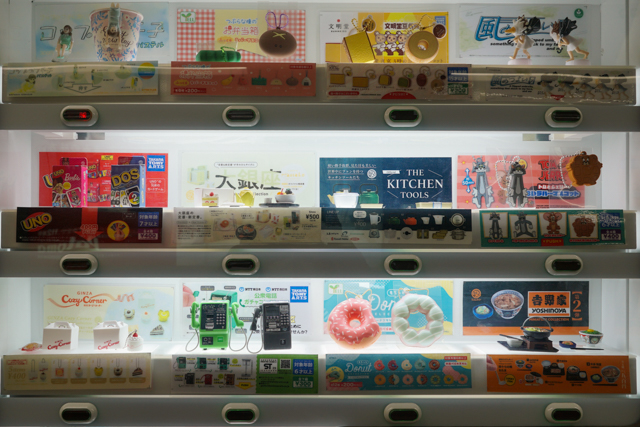
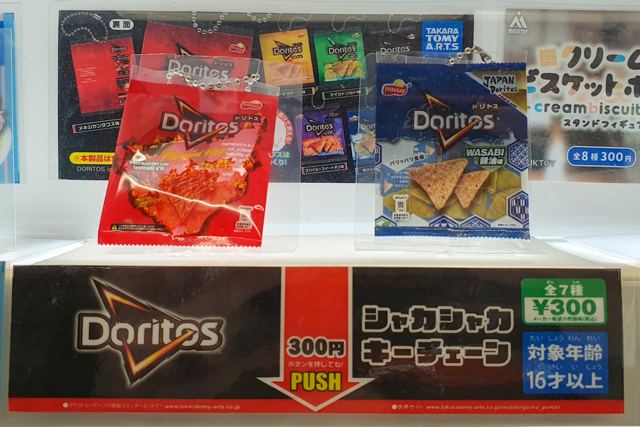
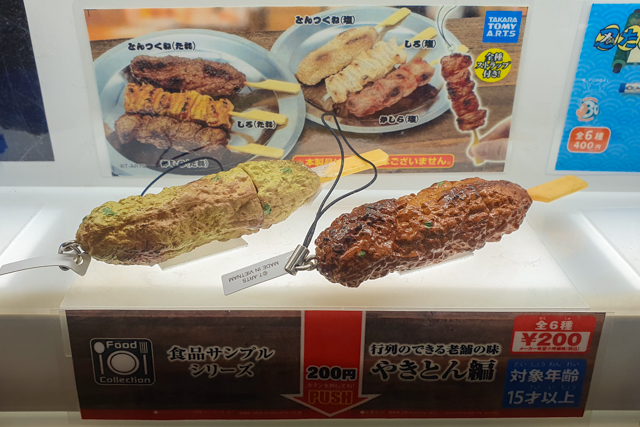
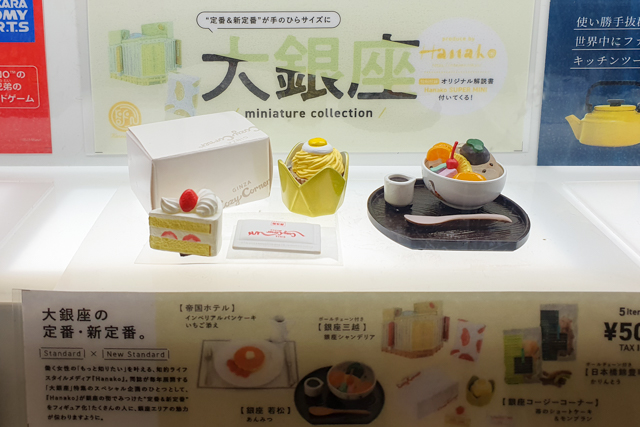
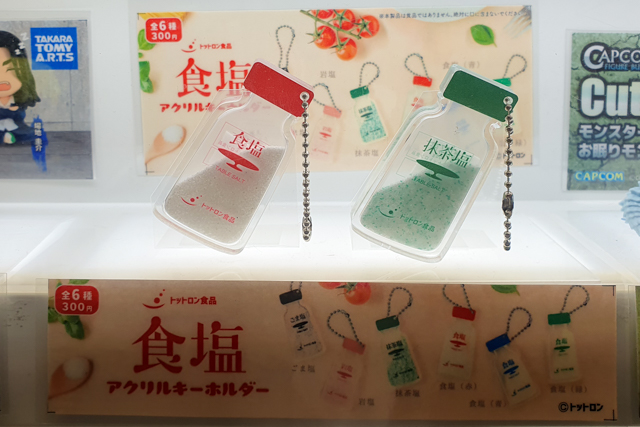
Near Exit 7 of Namba Station were a couple of vending machines selling miniature versions of foods from various restaurants and brands.
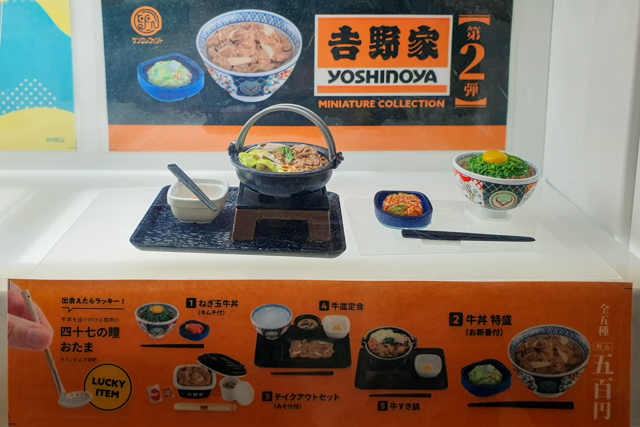
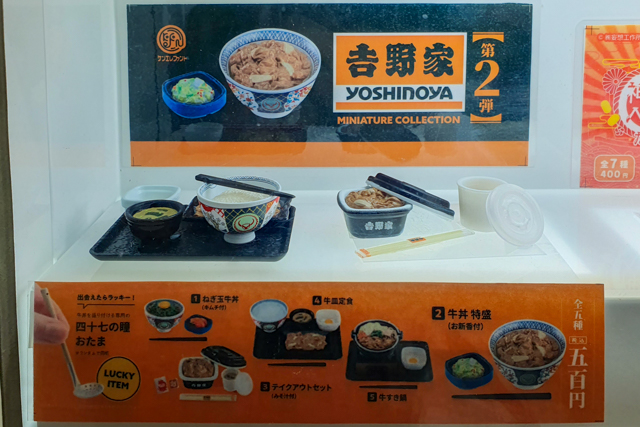
We’re not usually into collecting the entire set, because we want to avoid doubling up when it’s pure chance which one we end up getting.
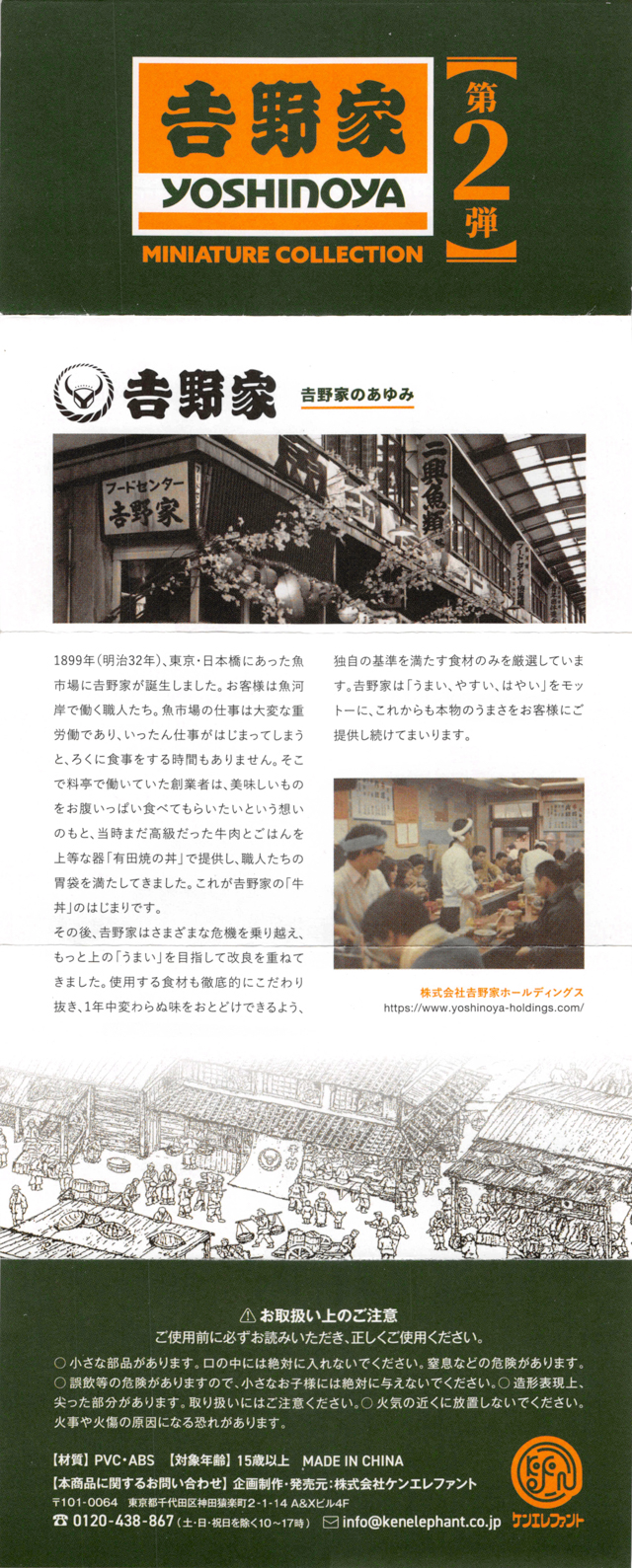
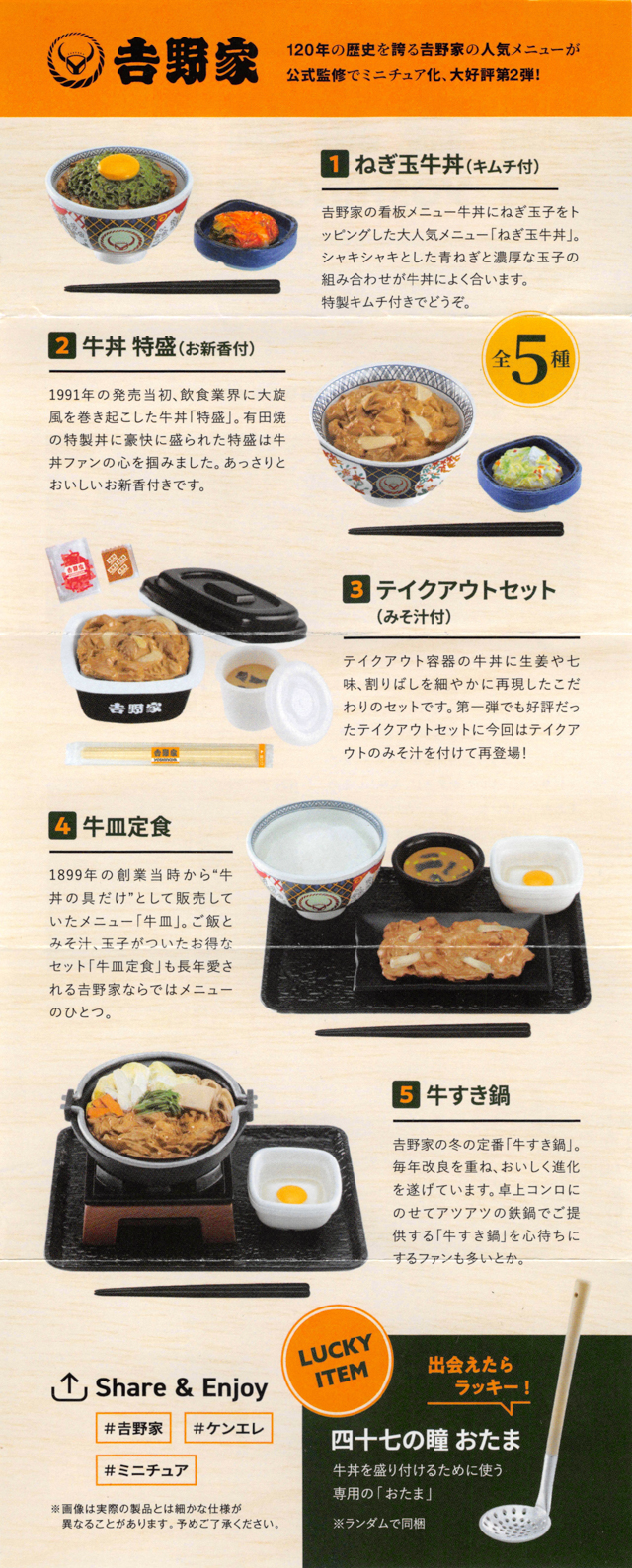
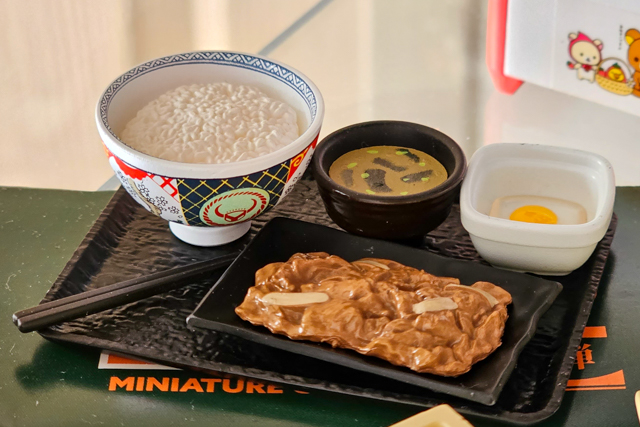
But playing just once guaranteed a unique set. We were happy to get the gyu-zara teishoku (‘beef plate set’).
Since its founding in 1899, [Yoshinoya] has been selling “beef bowl ingredients only” and has been selling “beef plate”. Great deal with rice, his miso soup, and an egg. The set “Gyu-zara Teishoku” is also one of Yoshinoya’s unique menus that has been loved for many years.
Matsuya
松屋 南海難波店, 4 Chome-4-6, Namba, Chuo Ward, Ōsaka, 542-0076, Japan
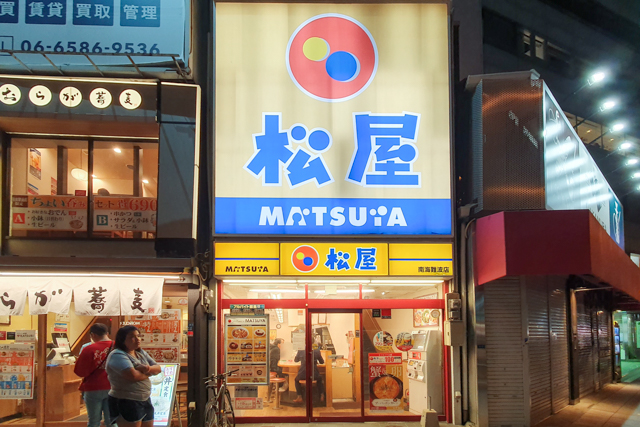
Inspired by the gyu-zara set, but not dedicated enough to walk further for a Yoshinoya, we headed to Matsuya for a quick dinner.
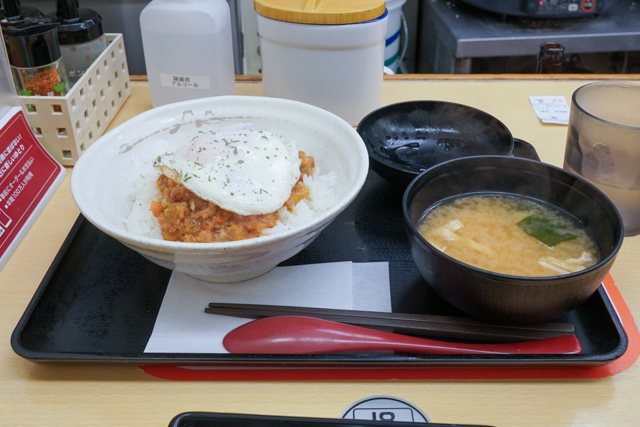
Egg Meat Sauce Don (regular rice, ¥500, inc tax). The meal was comforting after a long day, and tasted as expected: tomatoey, meaty, tied together with an oozy egg, and washed down with miso.
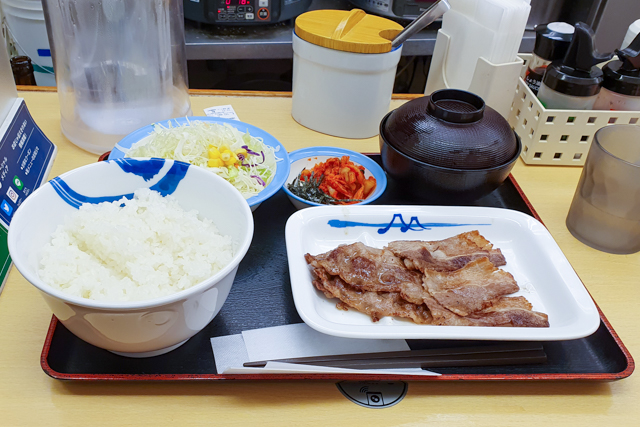
Beef Yakiniku Teishoku (extra rice with nori and kimchi, ¥780, inc tax). D similarly found his dish simple yet satisfying and balanced.
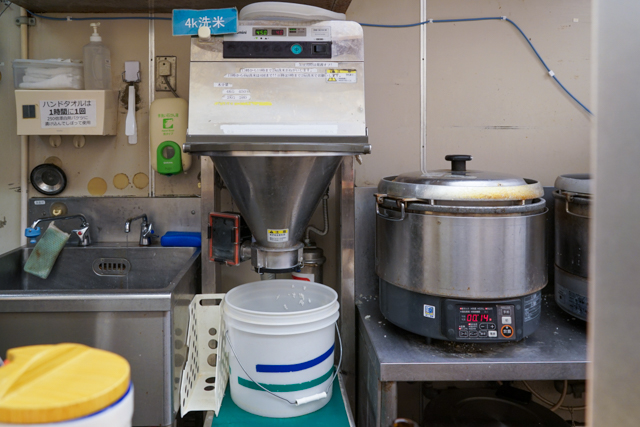
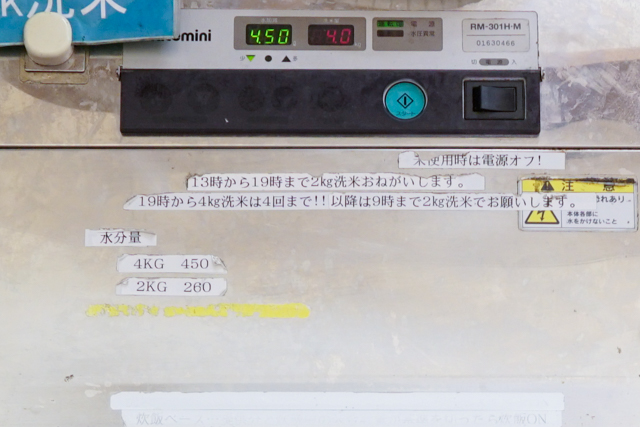
While we waited for our meal to arrive, we found their schedule for cooking rice a little interesting.
Between 13:00-19:00, the restaurant’s slow period, staff are only to wash 2 kg of rice. From 19:00, that restaurant’s peak hours, staff can wash 4 kg of rice up to 4 times. After that, staff should only wash 2 kg of rice until 9:00. The restaurant closes between 3:00-5:00, but we weren’t sure what happened between 9:00-13:00. Perhaps 4 kg for breakfast?
Exhausted from a full day of chasing cherry blossoms, shopping and teamLab, we headed back to the hotel for some much-needed rest.
Ōsaka – Ōsaka Castle, Umeda, and TeamLab Botanical Garden was Day 1 of 8 in the Japan 2023 trip. Day 2 saw us visiting Wakayama Prefecture.