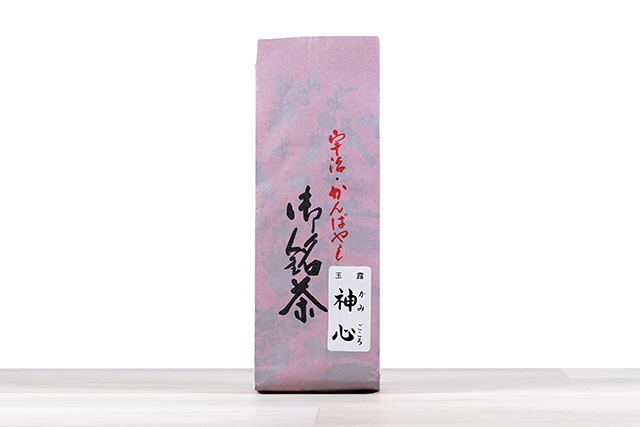
Shinobi cha is a technique of ice brewing high-grade Japanese green tea that produces a liquor that’s even sweeter and higher in umami than hot brewing. Ice brewing gyokuro is one of the best ways to understand what umami means. The amino acids in the tea leaves, which are responsible for sweetness and umami, can be extracted at low temperatures, but caffeine and catechin, which are responsible for the bitterness and astringency, are hardly extracted at low temperatures.
With the terrible summer heat lingering well into March, I tried cooling down by preparing my Ocha no Kanbayashi Kami Gyokuro using the shinobi cha technique.
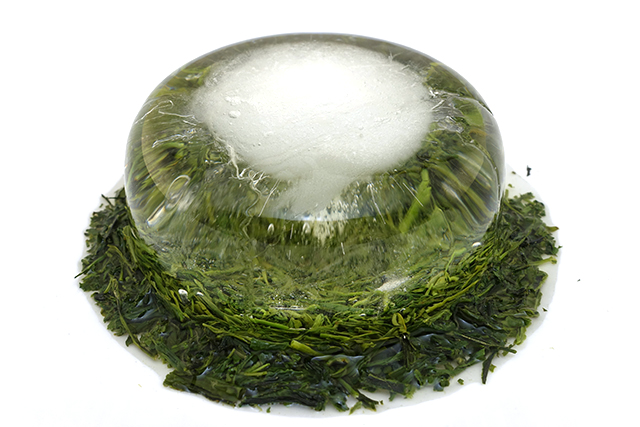
Gyokuro is the prettiest shade of green. With shinobi cha, I covered 8 g of gyokuro tea leaves with 250 mL of ice (as a block or as ice cubes) to yield 150 mL of tea liquor.
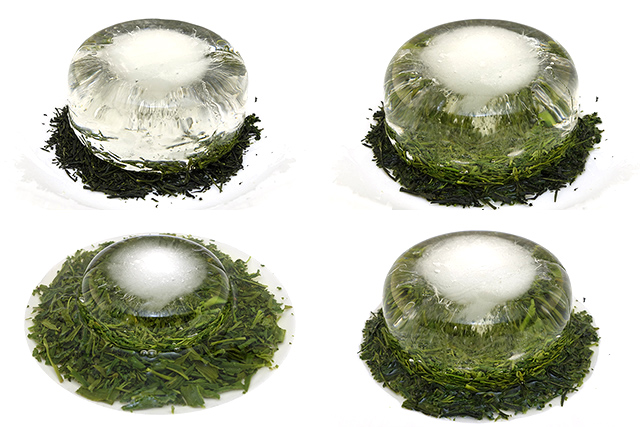
Whereas preparing hot gyokuro is a time-consuming process due to its time and temperature sensitive qualities, shinobi cha is a time-consuming process that’s all about patience. Once the ice is on the tea leaves at room temperature, it’s a matter of waiting until the ice cubes melt. On a warm summer’s day around 28°C, 250 mL of ice took around 4 hours to drip through 150 mL of liquor.
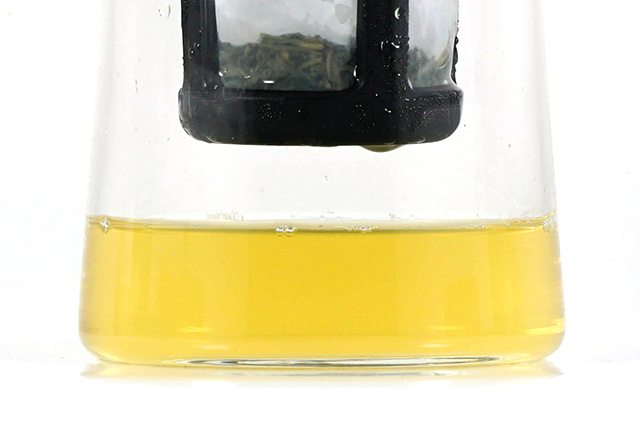
The first ice infusion was a clear bright golden green colour with a buttery and savoury aroma and a viscous mouthfeel. Buttery and umami-rich notes came through at the head of each sip before giving way to the sweeter vegetal flavours of the gyokuro, which build with every sip. The buttery umami notes are intense and linger on in the aftertaste with no astringency or bitterness, making it best enjoyed sipped slowly.
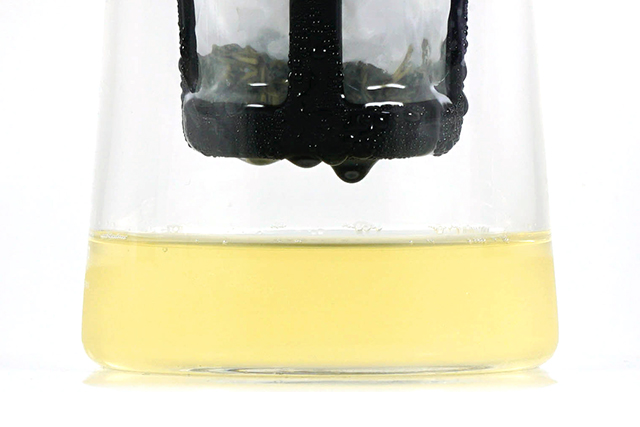
The second ice infusion was a clear light yellow-green colour with a thinner mouthfeel than the first. The umami notes that dominated the first are replaced by more pronounced sweeter vegetal flavours of the gyokuro. This infusion is a pleasure to drink as an iced tea, rather than slowly savoured like the first.
By the third ice infusion, almost all trace of umami and vegetal flavours are gone, leaving a very bright and watery liquor that’s not worth waiting a few hours for the ice cubes to melt. A third hot infusion (after the second ice) with 200 mL of water at 60°C for 1 minute results in a light, fresh flavour much like the 2nd ice infusion.
This Ocha no Kanbayashi Kami Gyokuro contained 100 g. The tea originated in Japan and was purchased in Uji, Kyōto, Japan in 2015.