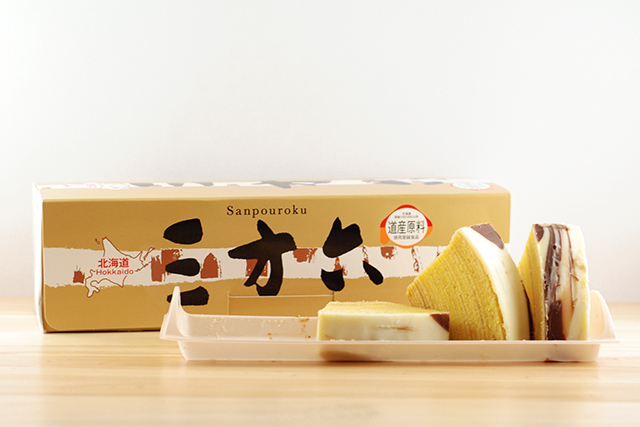
Baumkuchen, translating literally to ‘tree cake’ in German, is a German kind of spit cake so named for the characteristic rings that resemble the tree rings of a crosscut tree when sliced. Since its introduction to Japan by a German baker during World War I, it’s become one of the most popular pastries in Japan (called baumukūhen), particularly as favours for wedding guests due to its ring shape. At various shops, including in Nishiki Market in Kyōto, you can see baumukūhen being made through glass windows.
Ryugetsu is a popular confectionary maker in Hokkaidō and said to be the pioneer of moist baumkuchens in Japan. Their long famous signature baumukūhen is the Ryugetsu Sanpouroku.
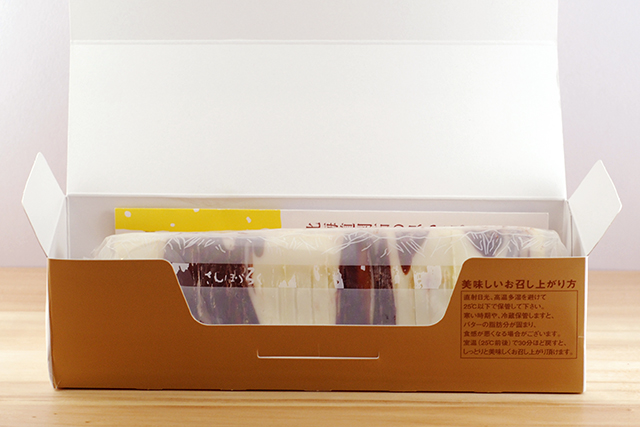
Sanpouroku is named after the style of cutting firewood during Hokkaidō’s development period. While straight trees were used for construction, firewood was split into three sections each six inches long.
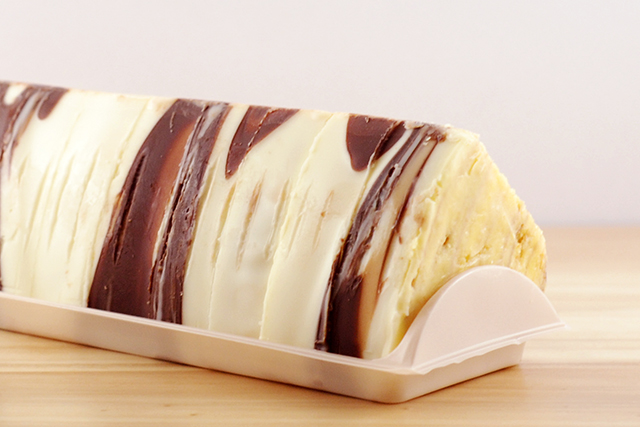
Sanpouroku draws on the appearance of the firewood being about six inches long with the tree rings within that form the baumukūhen covered in white and milk chocolate to mimic the appearance of birch bark.
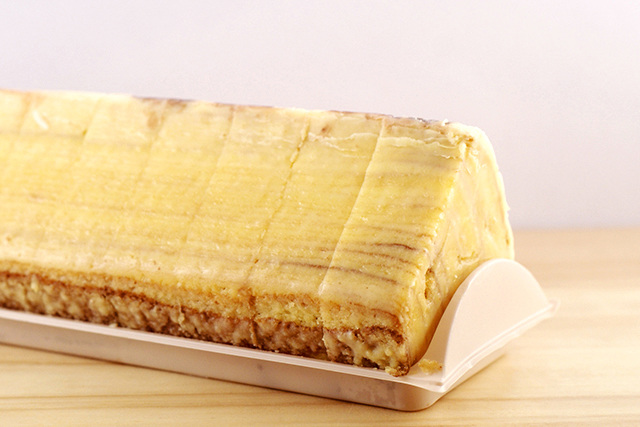
The impeccable Japanese attention to detail sees the cake pre-sliced straight from the packaging, so you can get straight to enjoying it with your friends and family.
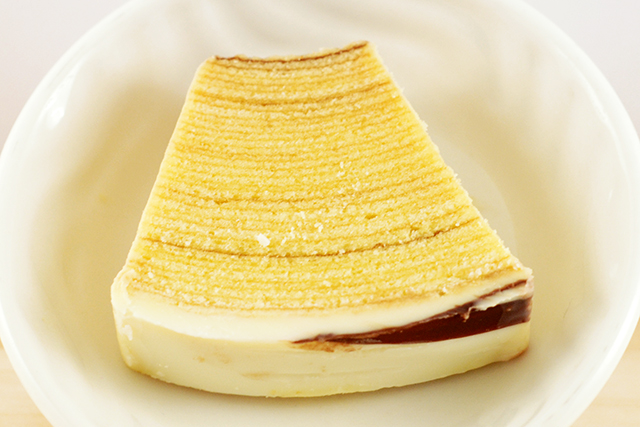
The almost thirty layers making up the baumukūhen is impressive and the cake delivered on the promise of a moist texture. It’s also a somewhat dense cake as you’d expect from a spit cake, which is made by evenly brushing on thin layers of batter, then rotating the spit over a heat source, allowing each layer to dry before pouring another layer of batter over the previous. Although dense, the moistness creates a softness in the cake. The cake is lightly sweetened, allowing for the white and milk chocolate to deliver most of the sweetness.
The box of Ryugetsu Sanpouroku contained 10 slices. It was produced in Japan and gifted by family visiting Tōkyō, Japan in 2016.