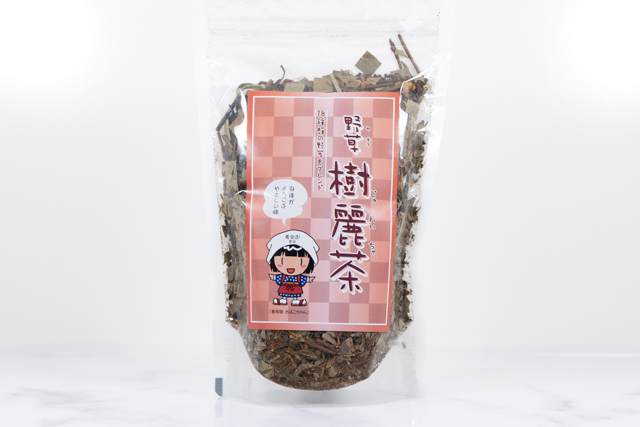
This is the Jurakuen Yasou Jureicha, a blended tea made from eighteen types of wildflowers and grains.
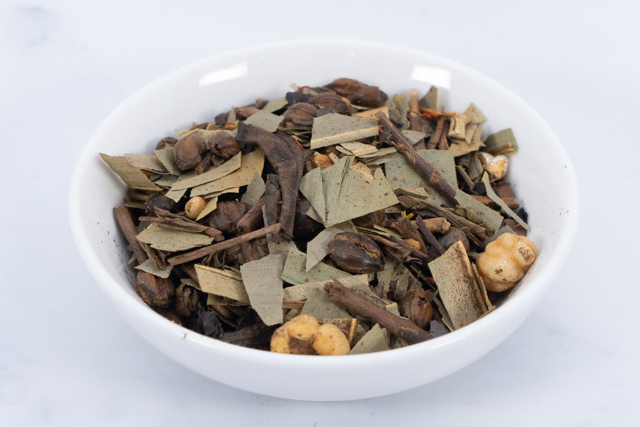
The blend included Job’s tears (hatomugi), barley tea, Japanese kumazasa, roasted wolfberry leaves, fish mint (Houttuynia cordata), Eucommia tea, sweet potato vine, brown rice, habu tea, oolong tea, safflower, pearl barley, persimmon leaves, and kidachi aloe. Many of these are associated with traditional Chinese medicinal benefits.
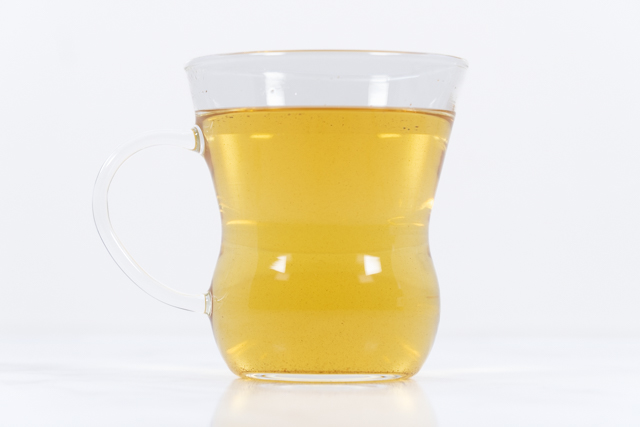
The instructions suggest that one palmful (roughly two heaped tablespoons) yields more than one litre of hot tea and can be resteeped as long as the liquor retains colour. For cold tea, a brief boil is recommended. The blend is also suggested as a gentle mixer with shōchū.
Steeping 3 g in 200 mL of just-boiled water for 1.5 minutes produced a golden yellow-brown infusion with a mellow, lightly sweet aroma. When consumed hot, the tea presented a smooth, gentle sweetness from the head of each sip through to the finish. Despite the complexity of the ingredient list, the flavour profile was cohesive and guided primarily by the mild, sweet-nutty, cereal quality of Job’s tears. Compared with the Kumamoto sixteen-grain tea—which emphasises hōjicha and pearl barley—this blend offered a softer, less roasted profile, leaning instead into a subtle sweetness and a calm, wholesome character that remained light yet satisfying.
Overall, this delivered a quietly nourishing cup with a unified grain-forward profile, offering comfort more through softness and balance than through complexity.
This Jurakuen Yasou Jureicha contained 130 g. It was produced in Japan and purchased in Fukushima, Japan in 2024.