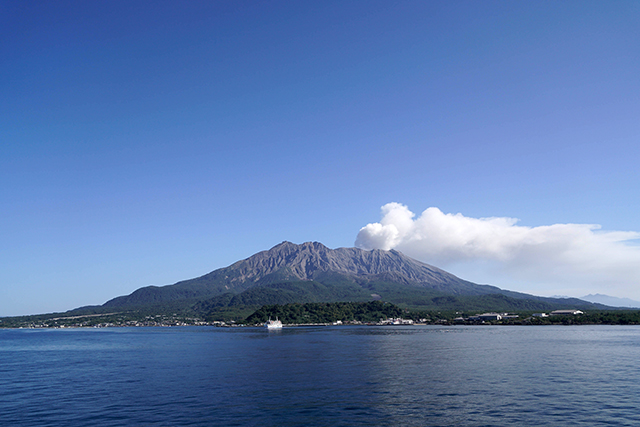
Kagoshima is Kyūshū’s southernmost major city and known for its mild climate and Sakurajima, Japan’s most active volcano. The cities of Miyazaki and Kagoshima are connected in 2.5 hours on the JR Kirishima Line.
Miyazaki
Intercity Limited Express to Kagoshima-Chuo Station
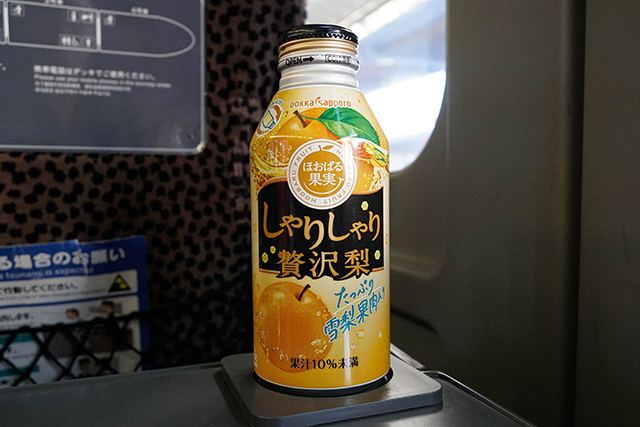
We start our day by making out way to Kagoshima on an Intercity Limited Express. To hydrate us through the 2.5-hour journey we have this Hoobaru Fruit Sharishari Nashi, which contained 10% nashi. We enjoy the small cubes of nashi suspended in the juice that retain the crunch of the fresh fruit. We’re fans!
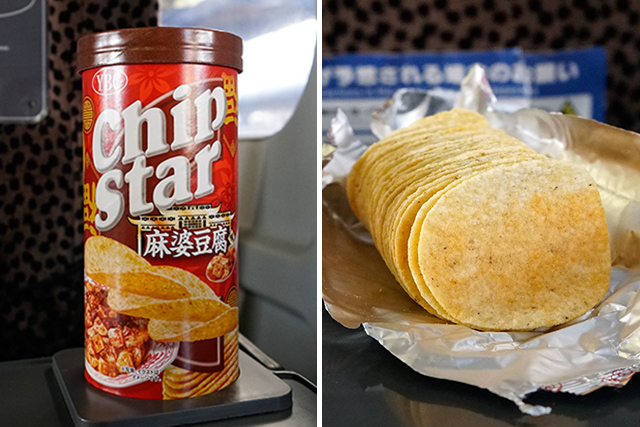
We have this limited edition YBC Chip Star Mapo Tofu, which does not deliver on heat but does have the distinct Chinese flavour of the spices in the dish.
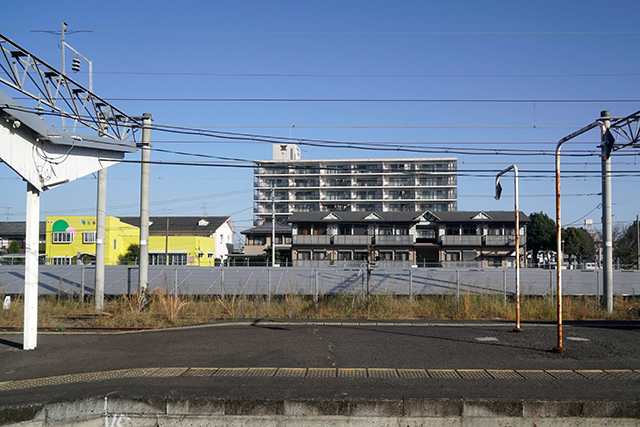
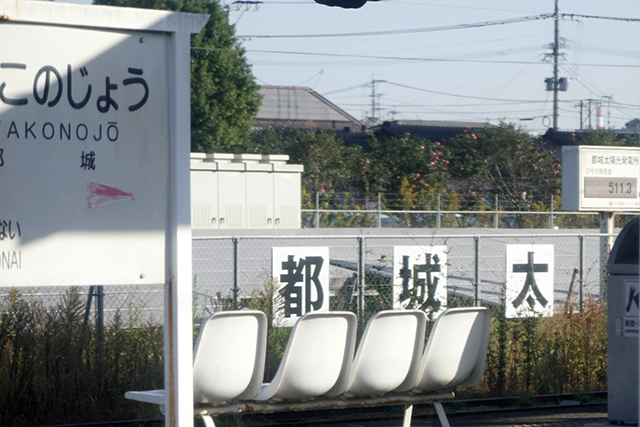
Passing by Miyakonojō Station, we see a solar farm that displays its real-time power as 511.3kW.
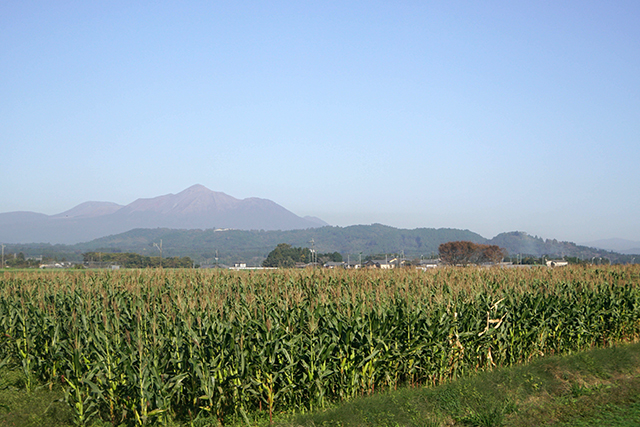
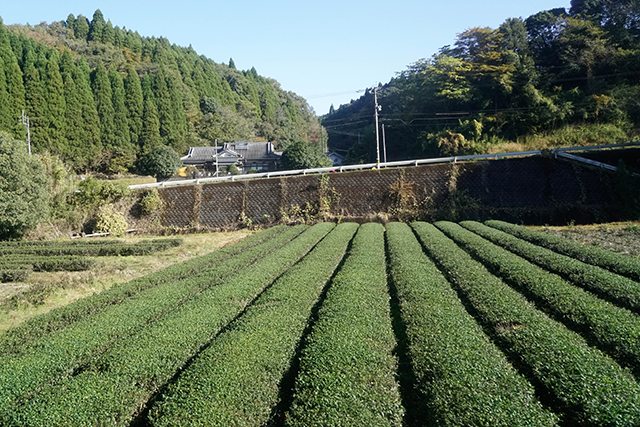
We pass by farmland growing maize and tea…
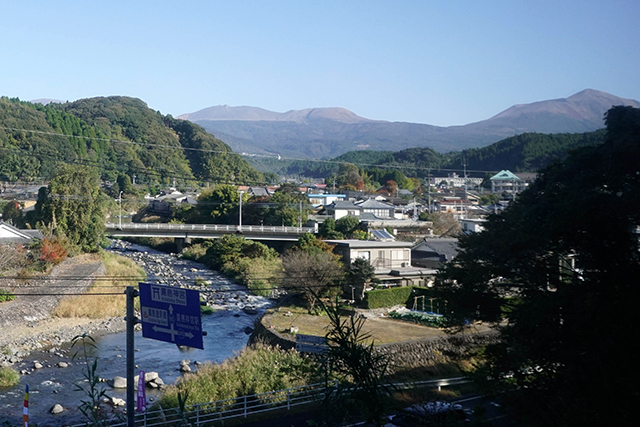
…as well as small towns nestled in the valleys between mountains.
Kagoshima
Kagoshima-Chuo Station
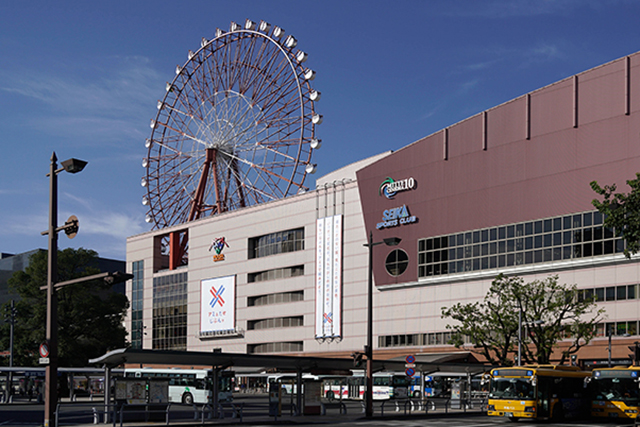
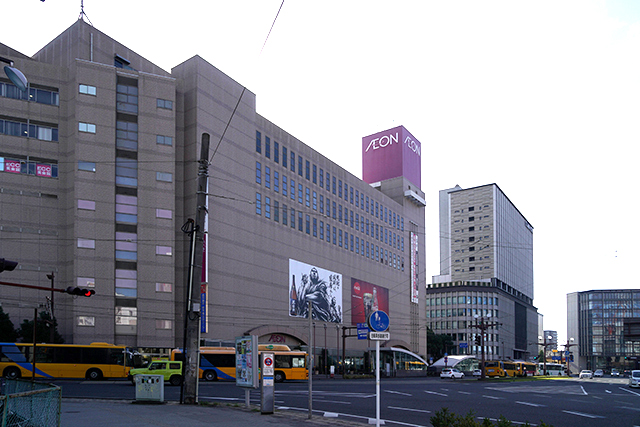
Kagoshima Chuo is the train station in the heart of the city. There’s a large shopping complex attached to the train station as well as an extensive bus terminal located out front.
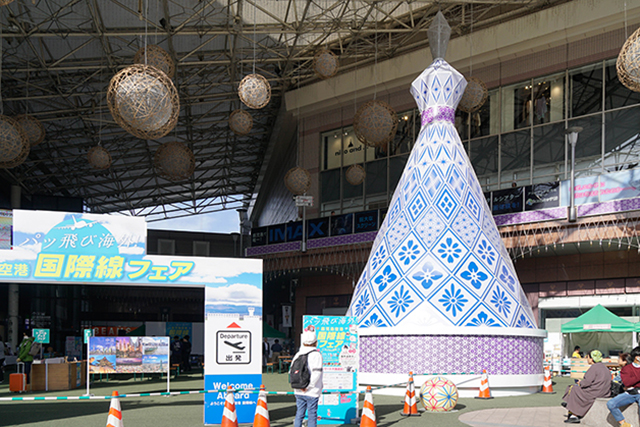
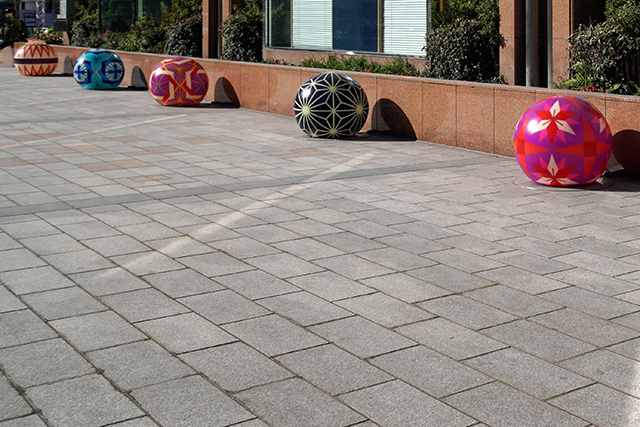
There are Christmas decorations at the station as well as a stall promoting Kagoshima Airport.
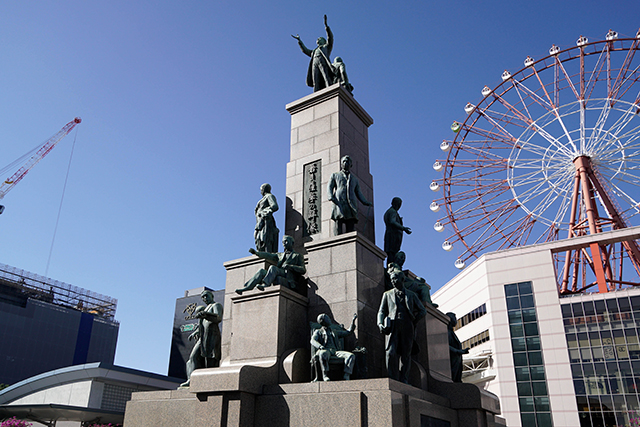
There’s also a statue of Satsuma students who were dispatched to the West.
In 1865 the Satsuma Domain went against the national isolation stance of Japan and dispatched 19 students to England. They overcame various hardships in a foreign country, studied technology and scholarship, and after returning to Japan were a driving force in the dawn of a new era of Japan. They left behind many achievements in various fields
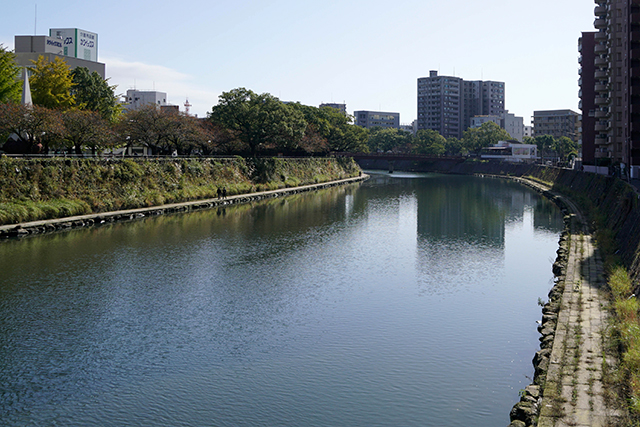
After dropping off our bags at our hotel (review further below), we take in the city by walking to the main shopping district in the city: Tenmonkan.
Tenmonkan
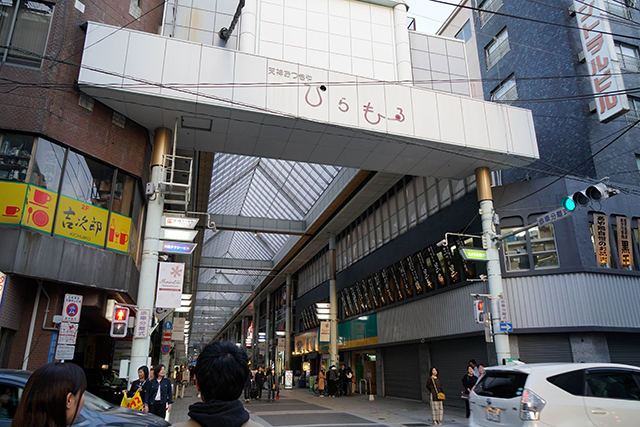
天文館本通り
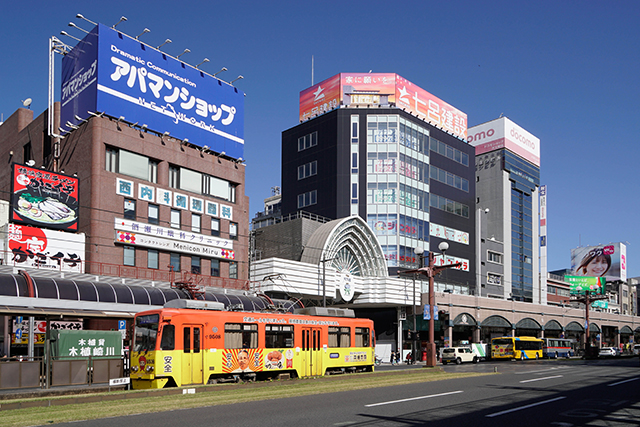
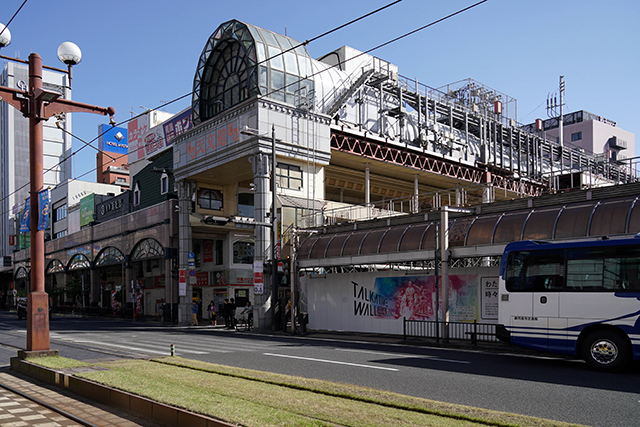
Tenmonkan is an expansive shopping area with the Tenmonkan tram stop at its centre.
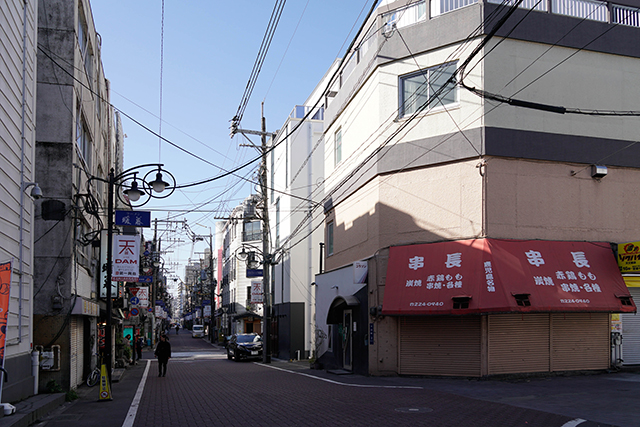
After a short detour down its quieter side street, we find our destination for brunch: Kurobuta.
Kurobuta
黒福多, かまつきビル1F, 3-2 Sennichicho, Kagoshima, 892-0843, Japan
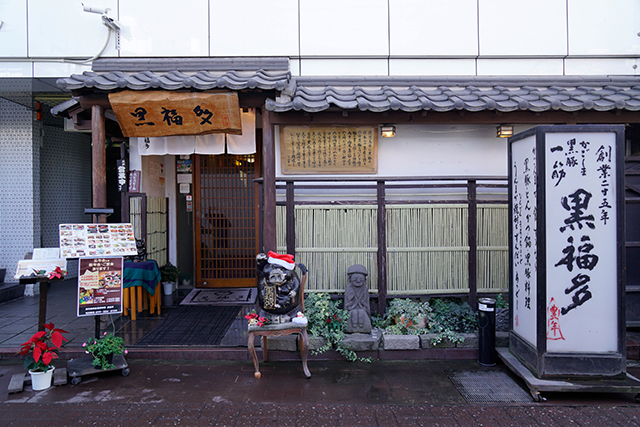
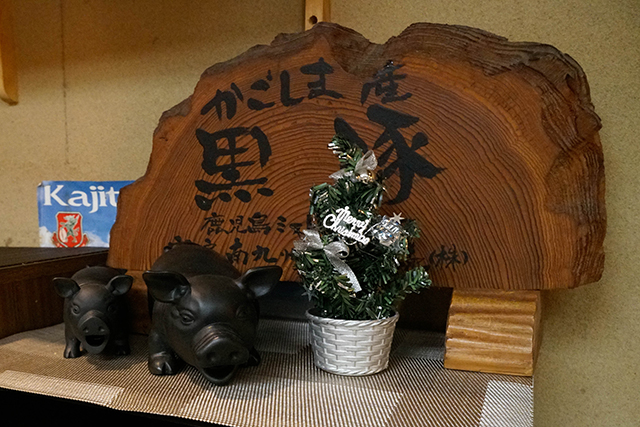
Kurobuta is a restaurant specialising in black pork with a 30-year history.
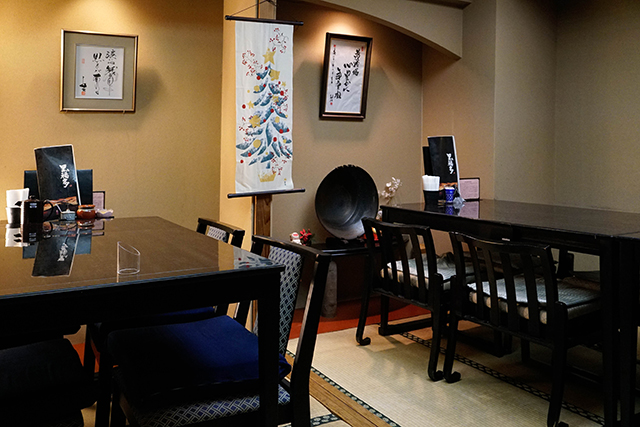
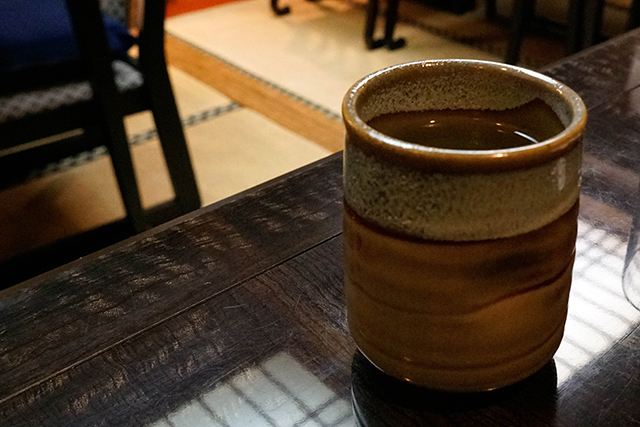
Arriving just before 11:30 am, we’re one of the first customers and are shown into the tatami room at the back of the restaurant.
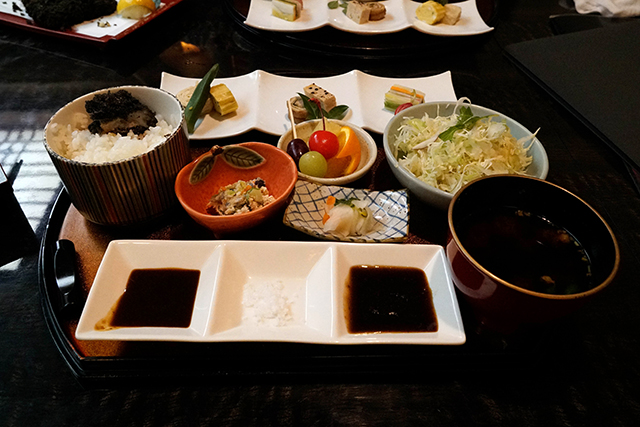
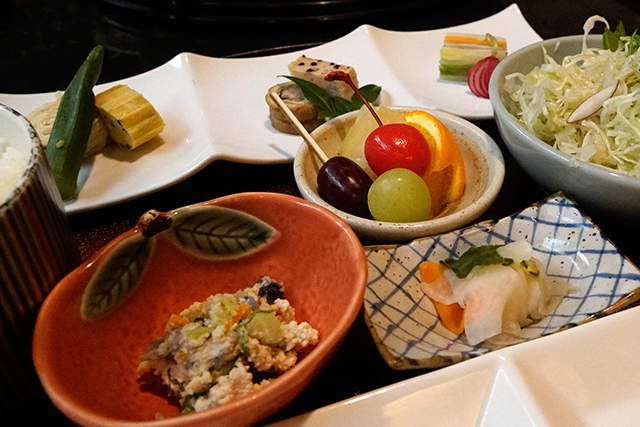
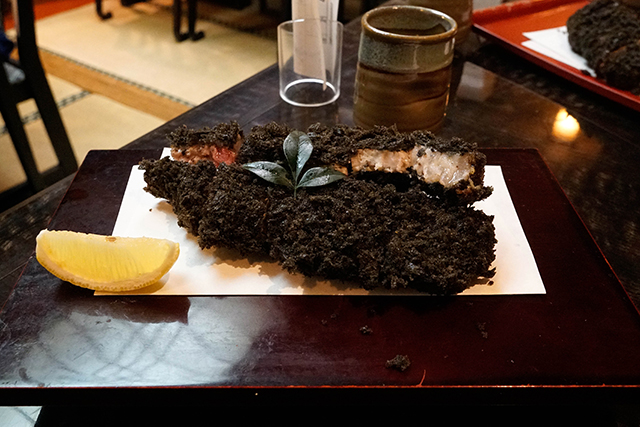
This restaurant is known for its kurokatsu or black tonkatsu made with a black batter containing bamboo charcoal powder and black sesame. Two sets come with the kurokatsu with each set coming with bowls of rice and miso soup and several side dishes (clockwise from top left): a tamagoyaki with okra, a chicken roulade, a vegetable terrine, a cabbage salad, a selection of pickles, a scoop of potato salad and fresh fruit to finish. With every side dish, it’s evident a lot of time and attention has gone into its preparation. The set is well worth it as it’s only an additional ¥450-500 compared to ordering the kurokatsu on its own.
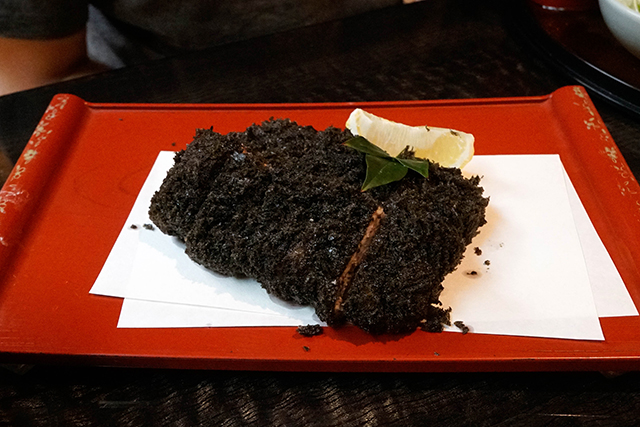
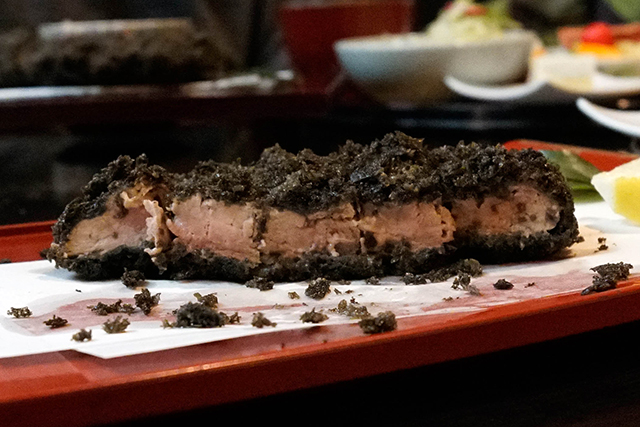
This is the Black Fillet Kurokatsu (¥1,650 +tax by itself or ¥2,000 +tax as a set). The batter was crisp while the meat was lean, yet tender and juicy with a fresh porky flavour.
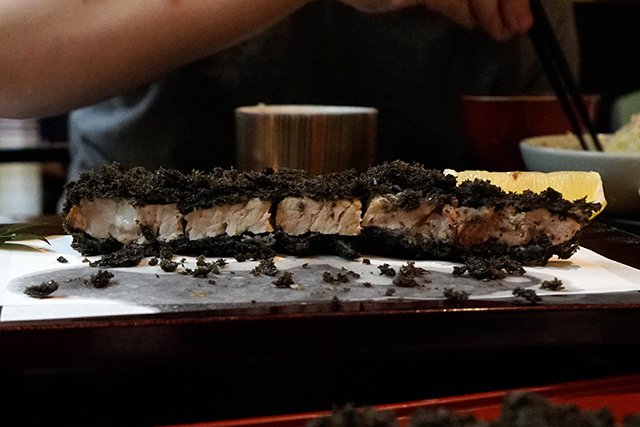
This is the Black Roast Kurokatsu (¥1,500 +tax by itself or ¥2,000 +tax as a set). We thoroughly enjoyed the fillet, but the higher fat content in this roast gave it an extra tender and juicy mouthfeel that kept us wanting more despite the less rich pork flavour.
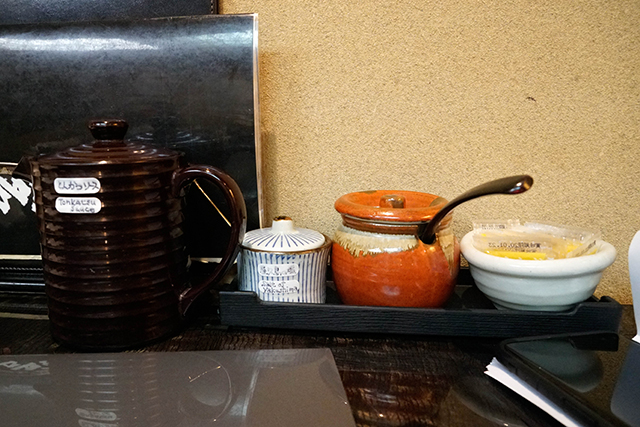
There’s tonkatsu sauce, salt, spicy miso and yuzu zest to accompany the kurokatsu. We’ve enjoyed many a tonkatsu meal in Japan and this one ranks right up the top in terms of flavour (and cost). We could’ve easily eaten many more pork dishes in Kagoshima if we had more time.
Kagoshima Port to Sakurajima Port
桜島フェリー鹿児島港乗船券発売所, 4-1 本港新町 Kagoshima, 892-0814, Japan
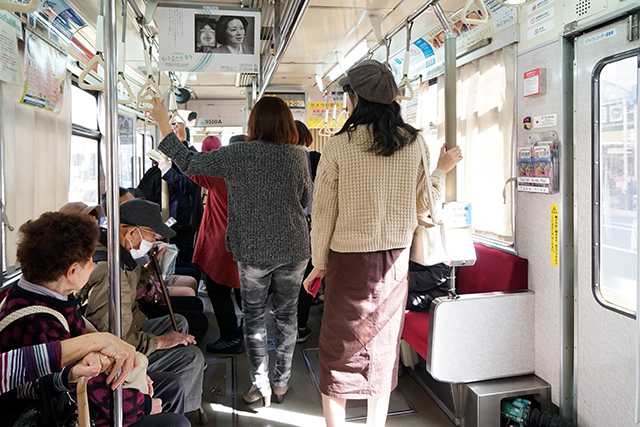
We hop on a tram at Tenmonkan to Suizokukan-guchi tram stop.
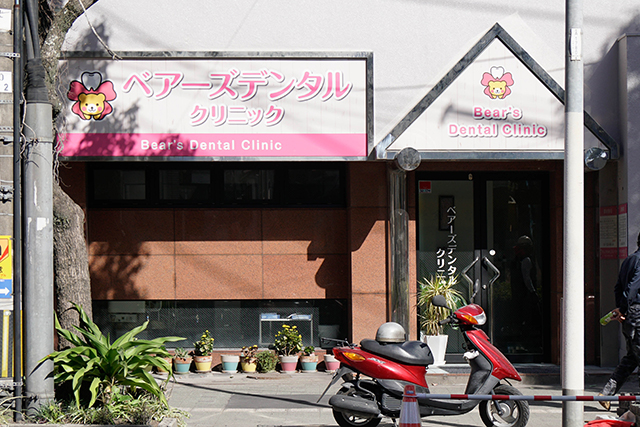
The port is a short walk from the tram stop. We spot the Bear’s Dental Clinic.
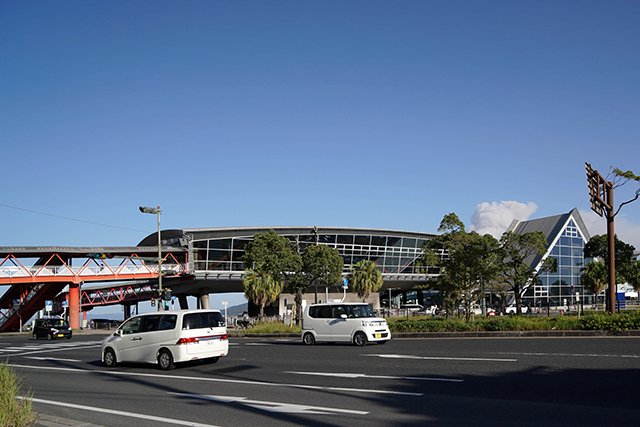
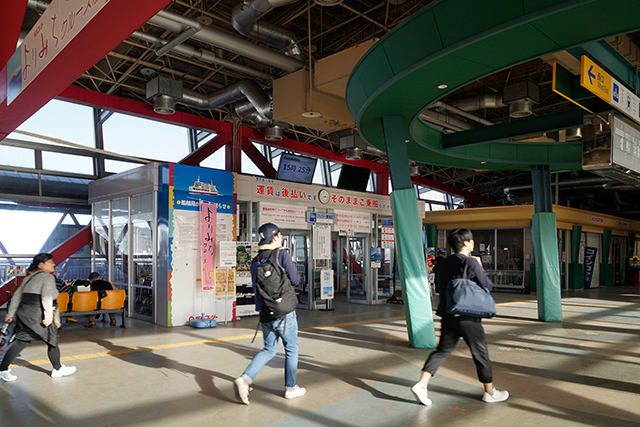
Passengers do not need to purchase tickets from the Kagoshima Port. Rather, payment is made on reaching and leaving the Sakurajima Port.
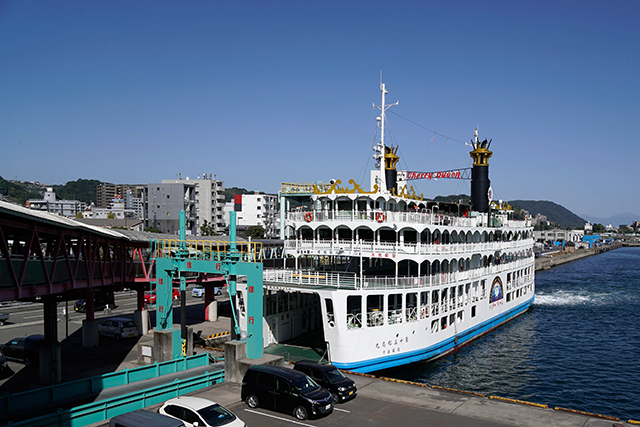
The ferry runs around the clock with a one-way ride taking 15 minutes and costing ¥200.
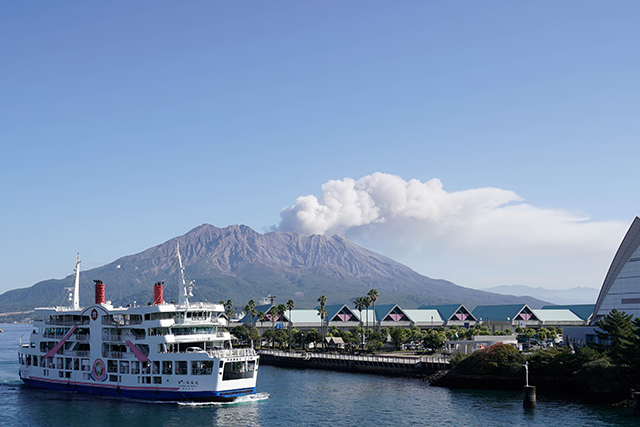
With the ferry departing every 15 minutes, we have plenty of time to enjoy the view of the volcano from afar.
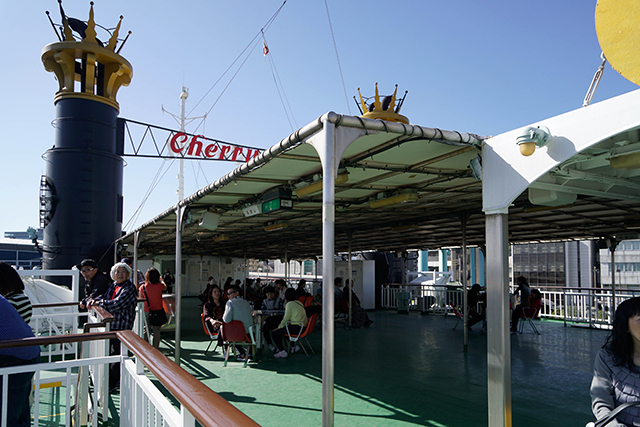
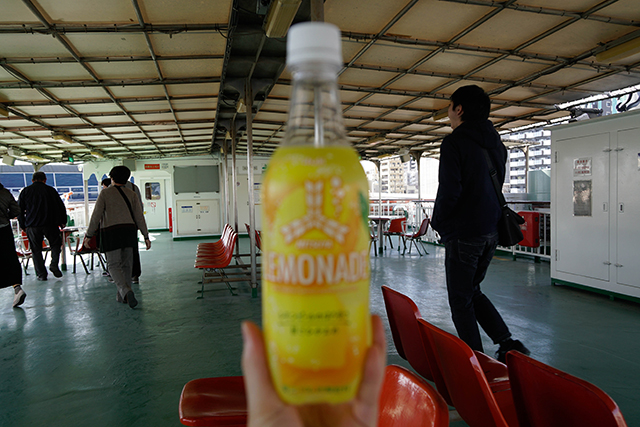
We enjoy the view and cool air from the upper deck, along with some Mitsuya Cider Lemonade.
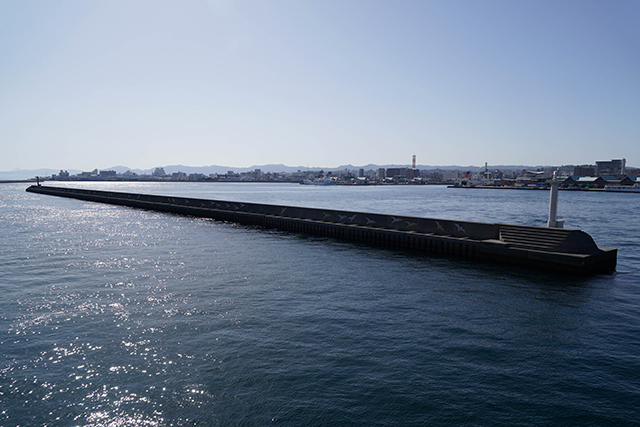
There are numerous breakwaters between Kagoshima and Sakurajima.
Sakurajima
The ferry gave expansive views of the volcano with its three main peaks: Kita-dake (‘north peak’, 1,117 m), Naka-dake (‘middle peak’ 1,060 m) and Minami-dake (‘southern peak’, 1,040 meters). The Minami-dake peak is the most active, with many eruptions taking place from the Showa Crater on the peak’s eastern slope.
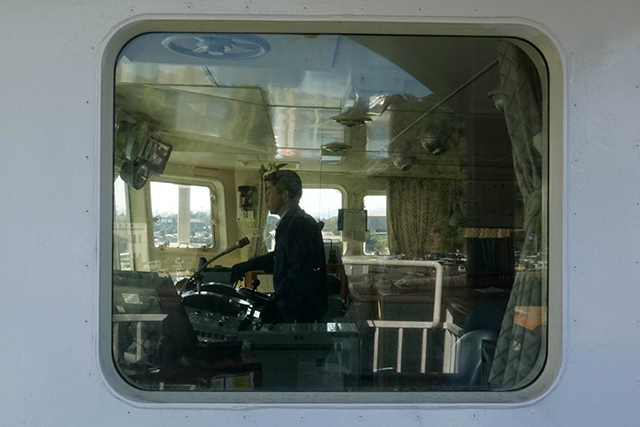
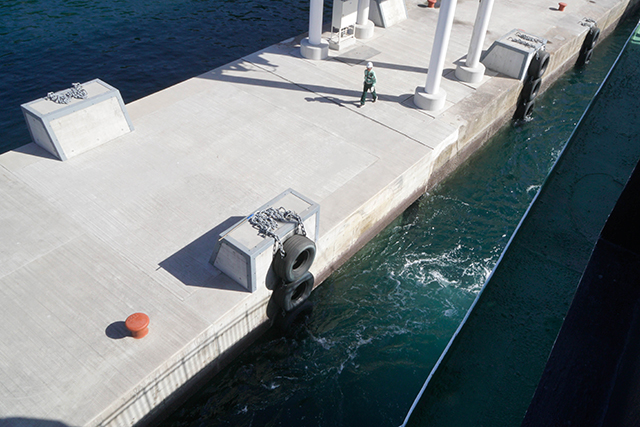
The upper deck also has a view into the cockpit. We enjoy watching the pilot manoeuvre the ferry into position.
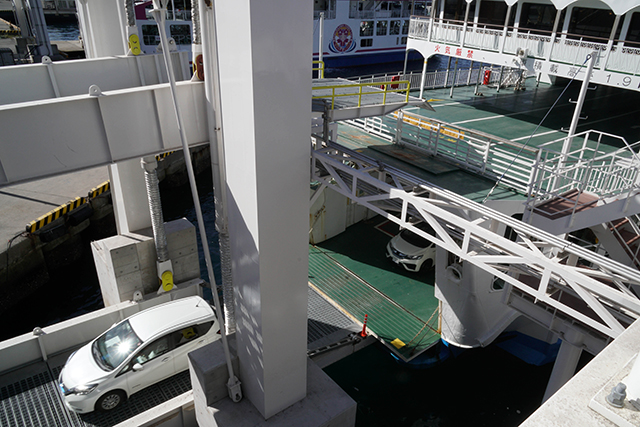
The lower levels of the ferry are for transport vehicles.
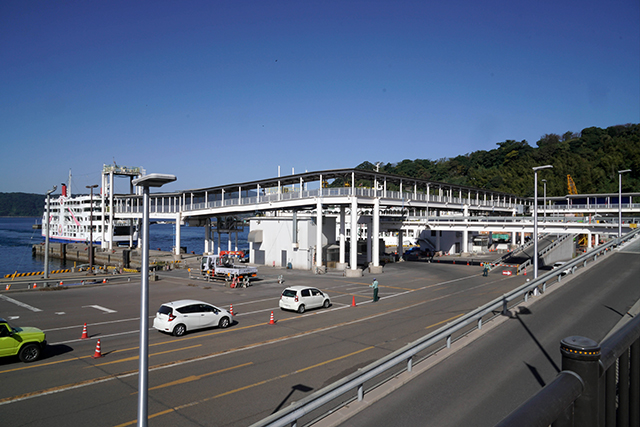
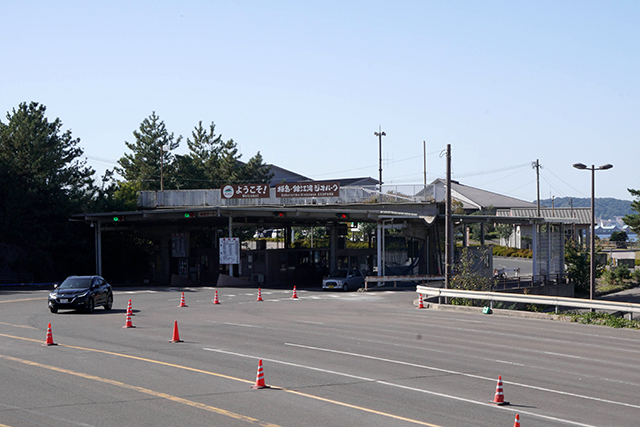
From the Sakurajima side, we can see the toll both and ramp taking cars onto the ferry.
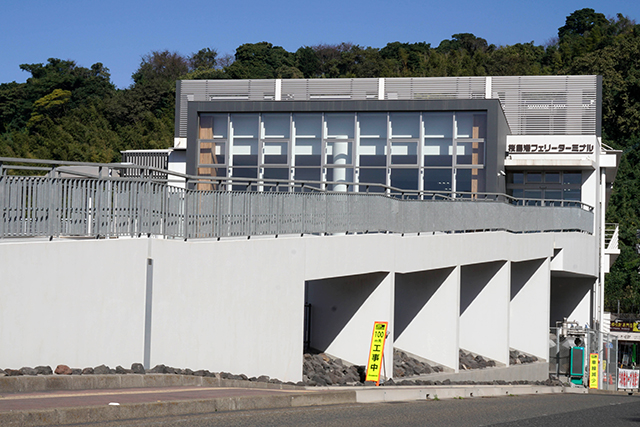
The ferry terminal looks shiny and new.
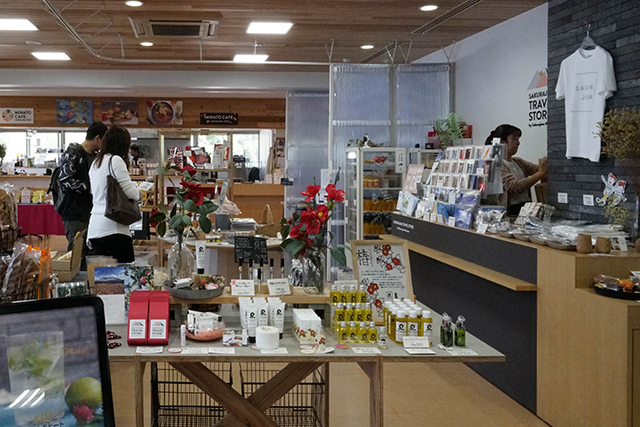
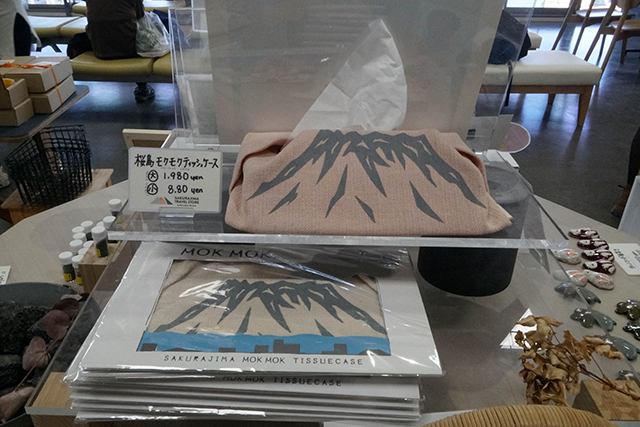
The gift shop sells an awesome tissue case that echoes the shape of the volcano with the tissues giving the appearance of the smoke.
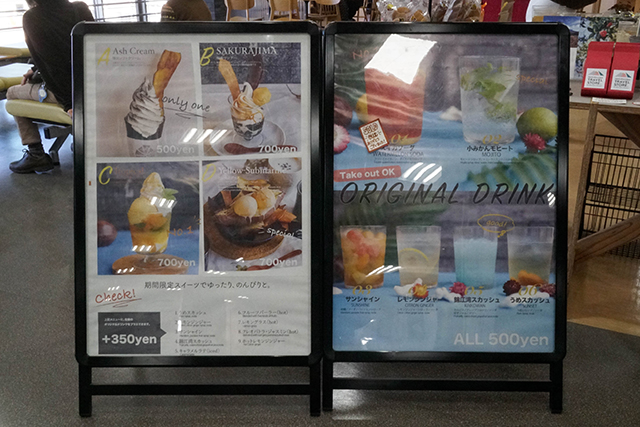
There’s also a pricey cafe.
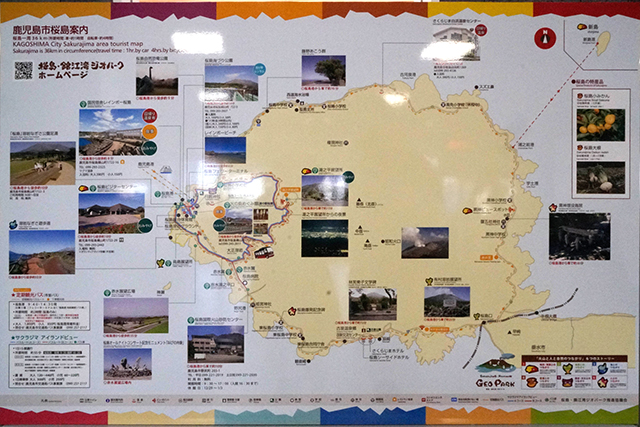
Many of the attractions on Sakurajima are located just around the ferry terminal, including an onsen, foot bath, short hiking trails and an information centre.
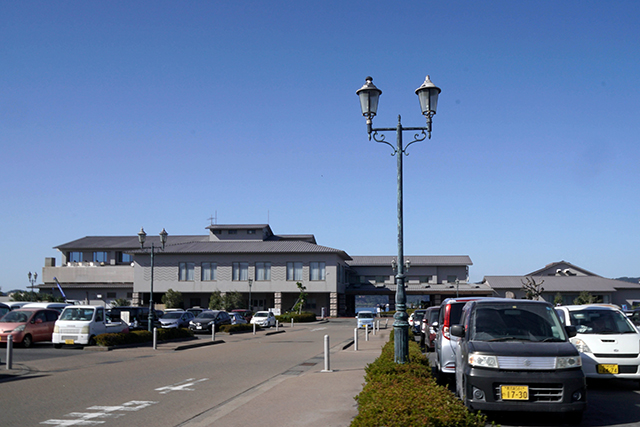
This is Magma Onsen, which includes a hotel and hot spring baths open to day-trippers.
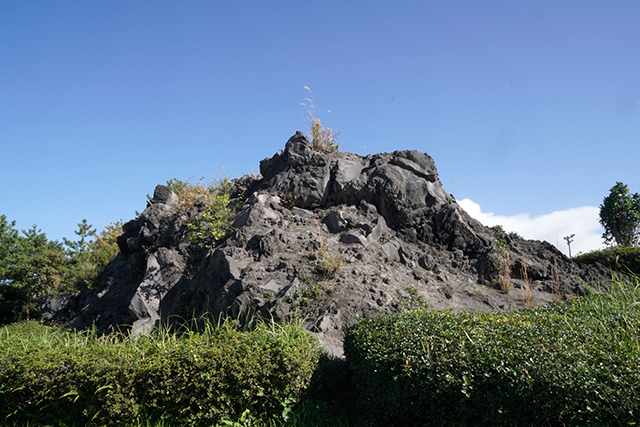
Hakamagoshi Karasujima Lava Trail
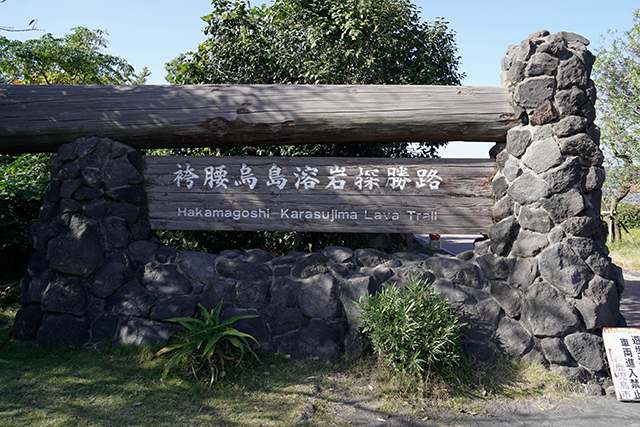
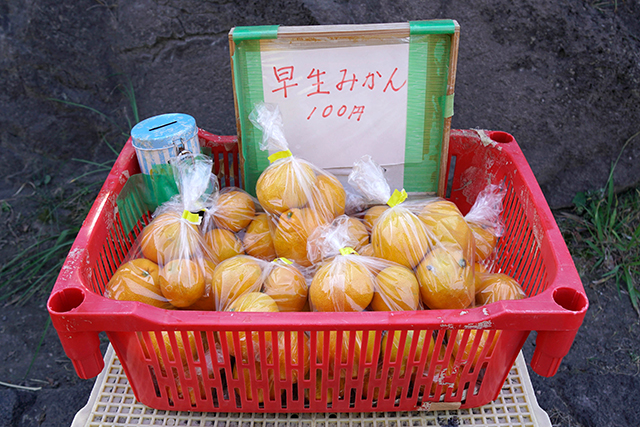
At the entrance to the Hakamagoshi Karasujima Lava Trail, there are bags of mikan being sold for ¥100.
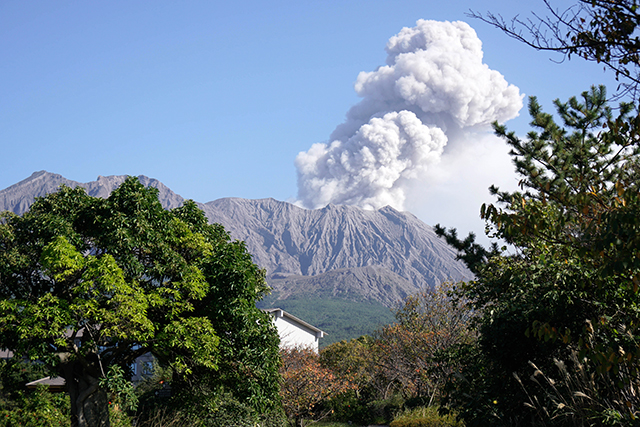
Since Sakurajima is still active, visitors cannot get close to the crater.
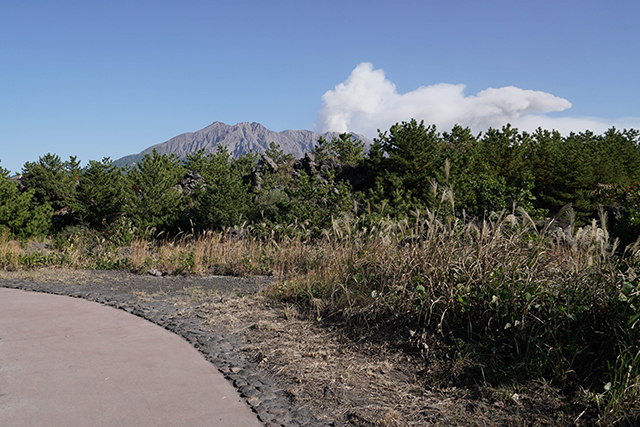
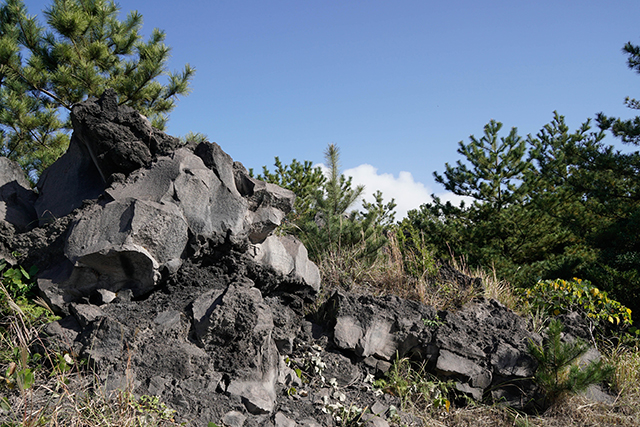
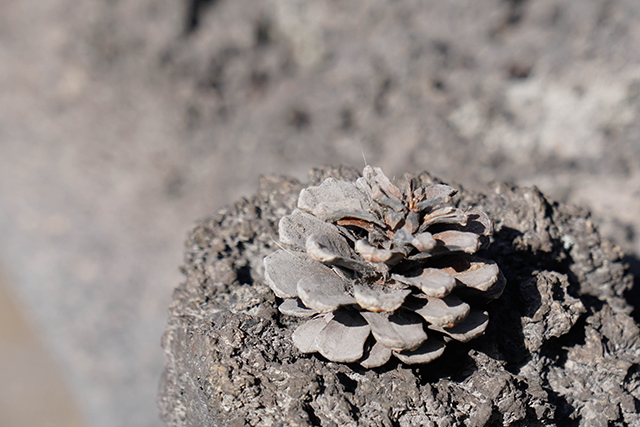
The plant life on Sakurajima reflects its volcanic reality. Mosses and ferns are some of the first plants to grow after a lava flow. Grasses, then shrubs and finally trees follow.
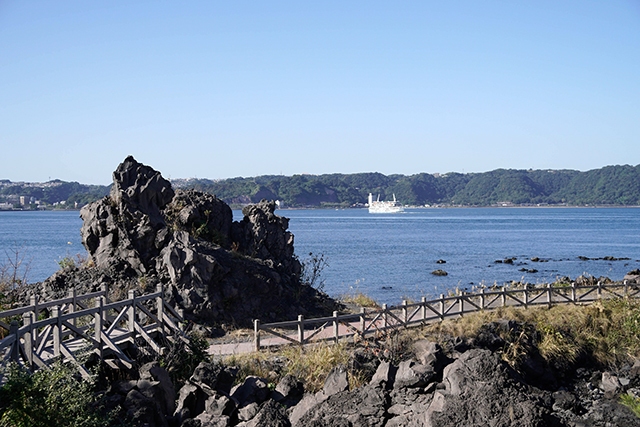
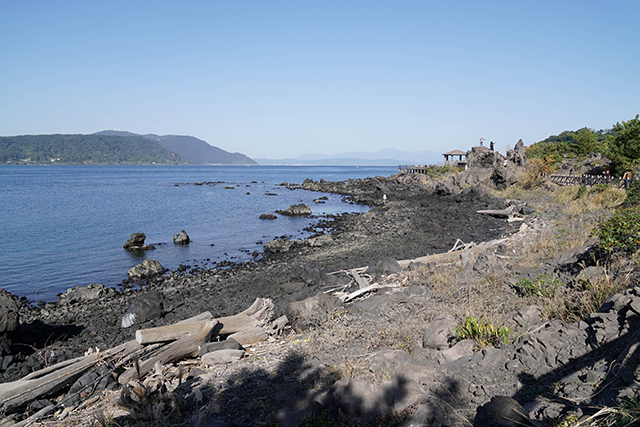
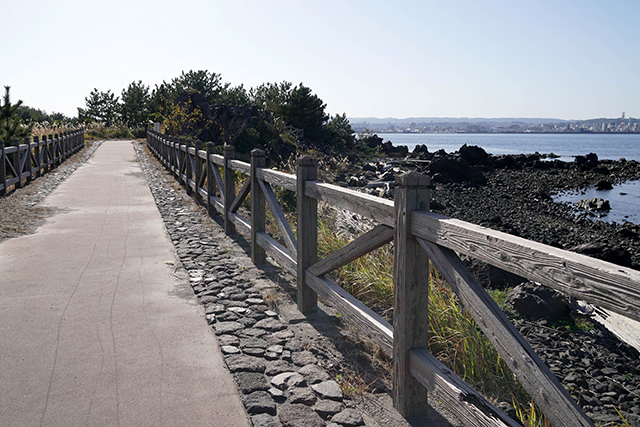
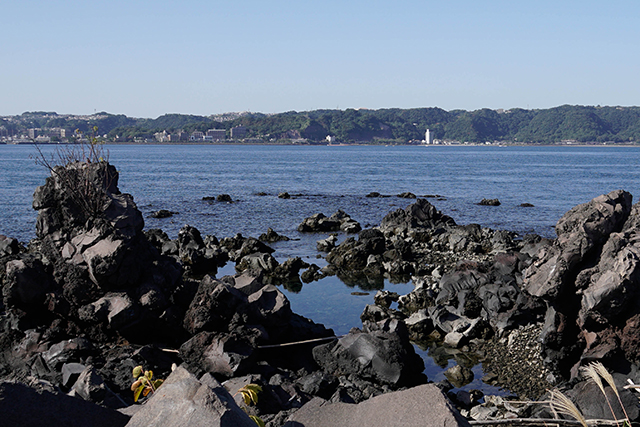
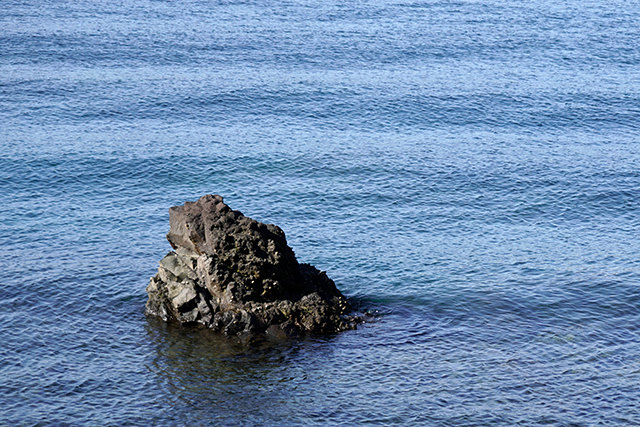
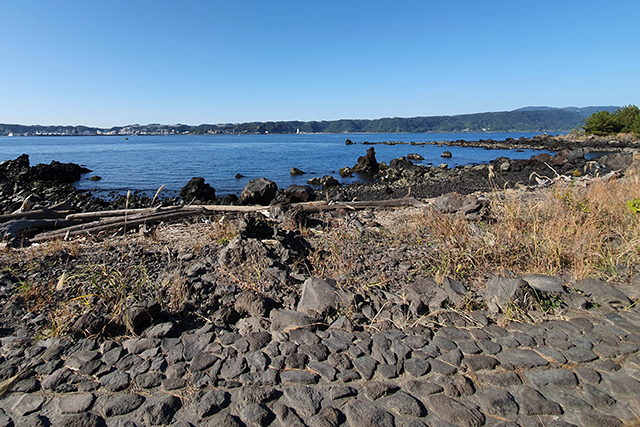
The trail is flat and easy to navigate, with the scorching sun being the main concern. It takes us close to the water with its volcanic beach…
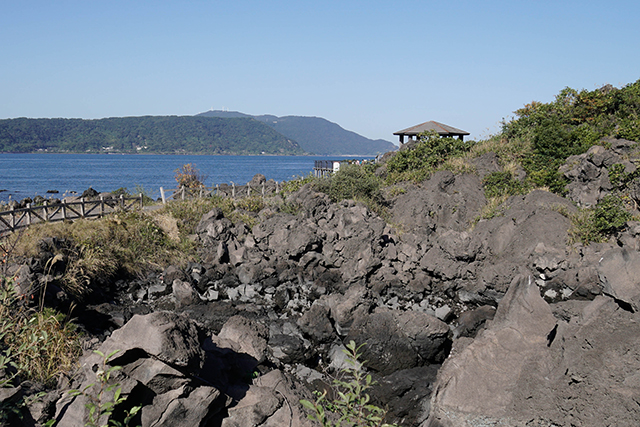
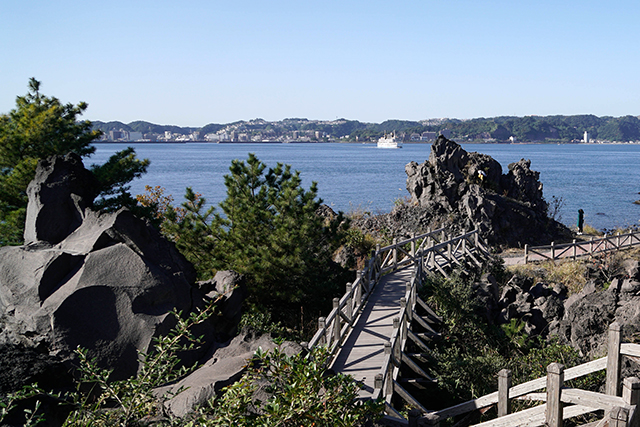
But also winds up a series of stairs and walkways for a more elevated view
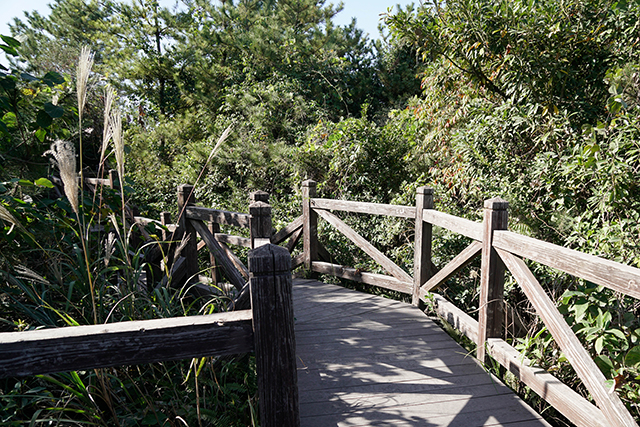
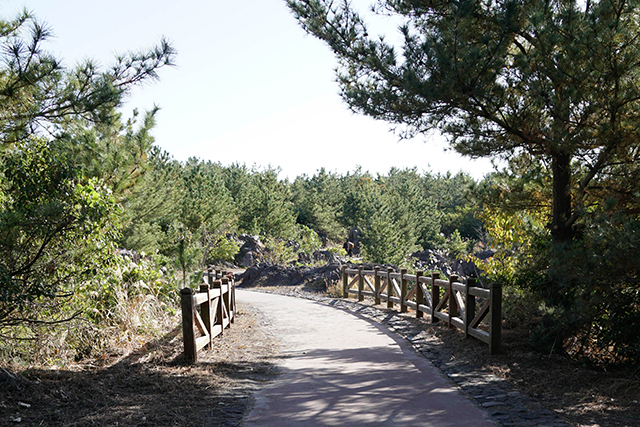
The walkway also takes us into the thick of the bushland for a closeup view of the area’s unique vegetation.
Sakurajima Visitor Centre
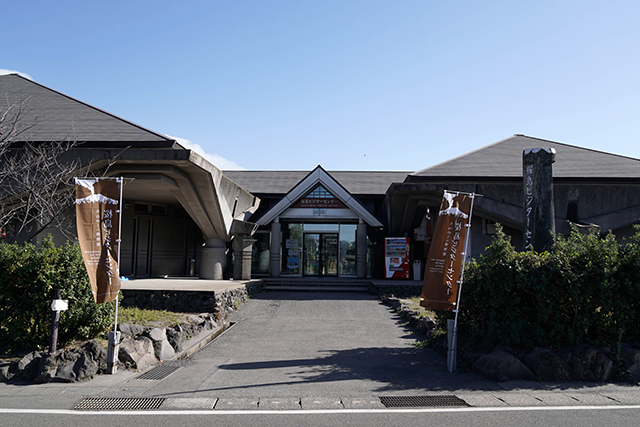
Nearby is the Sakurajima Visitor Centre (free admission), which has models, pictures and videos about Sakurajima.
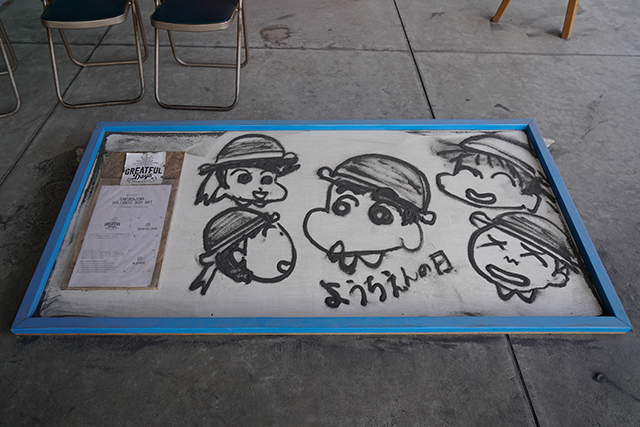
Outside is a drawing drawn from the volcanic ash collected around the area.
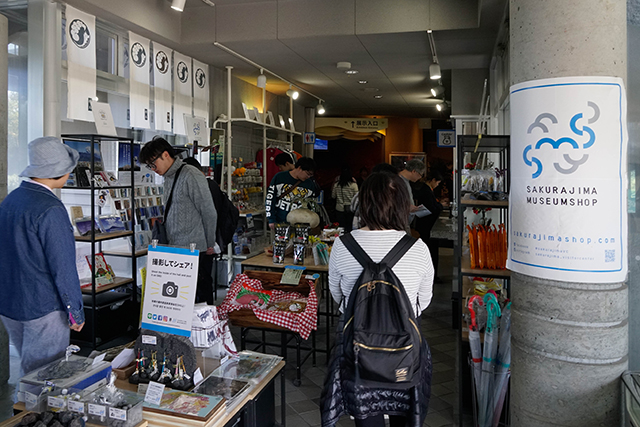
At the entrance is a gift shop.
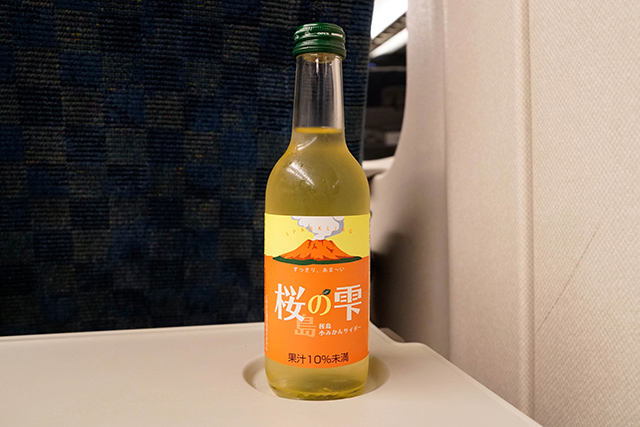
We pick up this Sakura no Shizuku Cider, which uses 10% juice from the Sakurajima komikan. The fruit is known as the smallest citrus fruit, much like a mikan, with a prominent sweetness. It’s a major export of Sakurajima, where the volcanic soil provides ideal conditions for growing the trees. The drink was a transparent orange colour and lightly effervescent, and on tasting has a brighter sweetness than usual mikan but also a more restrained zestiness.
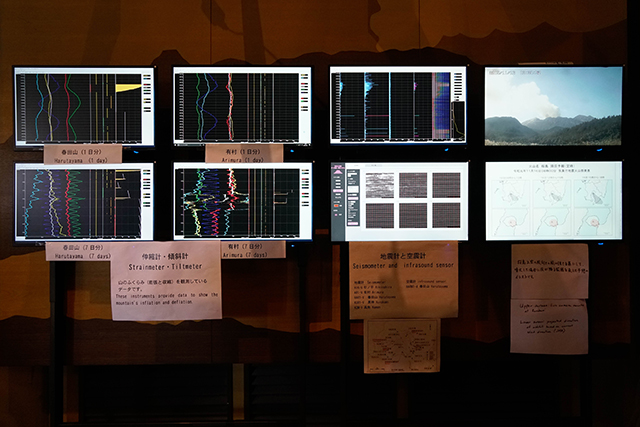
Past the gift shop is the entrance to the ‘museum’ section. At the start are live feeds showing the seismic activity of the volcano.
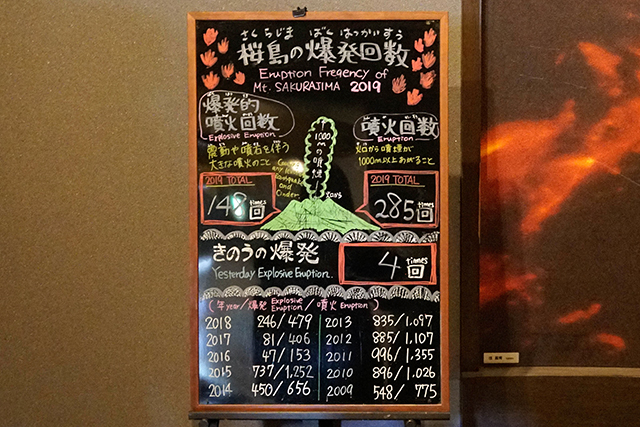
The volcano is the most active of the 110 located in Japan. Before our visit in mid-November 2019, the volcano had logged 148 explosive eruptions and a further 285 regular eruptions since the start of the year. Just the previous day, there were 4 explosive eruptions.
The Kagoshima Land Meteorological Observatory provides a daily forecast of the wind direction over Sakurajima. This information is used to determine which direction Sakurajima’s volcanic ash will spread. Generally, ash spreads towards Tarumizu and Kanoya cities during the winter by westerly winds, and in summer spreads towards Kagoshima City by easterly winds.
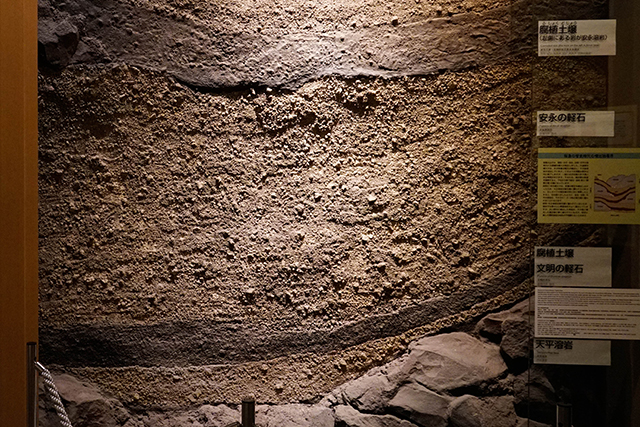
This display is the pumice from the Bunmei eruption and demonstrates the history that can be read from the sequence of volcanic material.
Sakurajima had strong eruptions In the Tempyo-Hoji (764-766), Bunmei(1471-76), An-ei (1779), Taisho (1914-15) and Showa (1946) periods. During these eruptions, huge amounts of pumice were first ejected, followed by lava flows. These activities terminated within several years after each eruption, and were usually followed by a long period of dormancy. Consequently, the section of erupted material shows, from the bottom, the strata of pumlce-fall bed, lava flow, and surface soli (humic soil).
The 1946 eruption did not produce large amount of pumice, therefore, the 1914 Taisho lava flow was not covered by any pumice layer. If the ejecta from different eruptions settled in the same areas, lavas from Tempyo-Hoji (764-766), Bunmei (1471-76), An-ei (1779) eruptions would be overlain respectively by three, two and one layer of pumice as shown on the right.
Since the Taisho and Showa lava flows were not covered by pumice layers, the rough surface landscape is well exposed until now. However, lavas from the oldest eruptions are thickly covered by tephra from later periods, making the configuration of blocky lava undulation unclear.
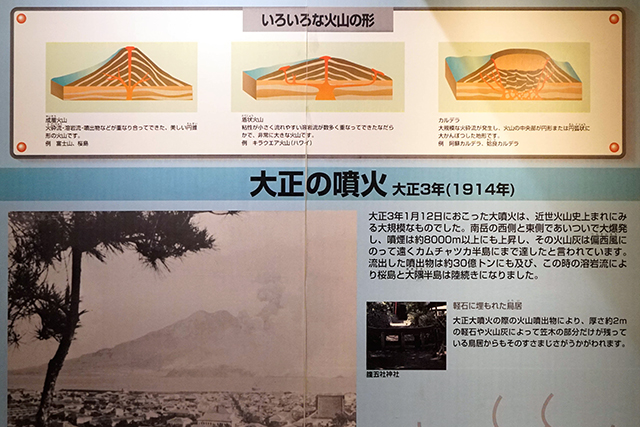
Mt Sakurajima is an andesite composite volcano (conical shaped and made up of pyroclastic flows, lava flows and ejecta) whereas Mt Aso in Kumamoto is a caldera (formed when the centre of the volcano collapses into a circular or arc shape due to a large pyroclastic flow)
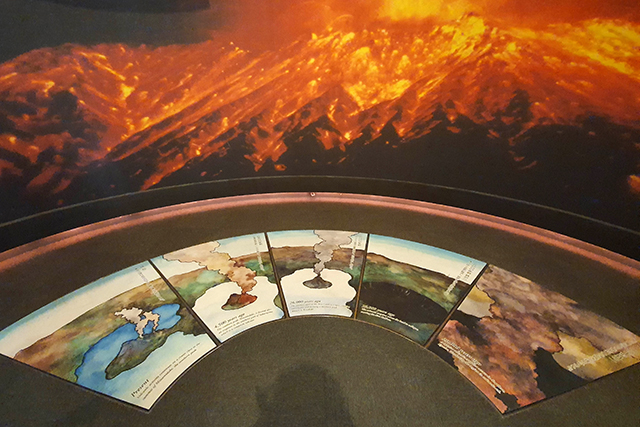
This illustration explains how the series of volcanic eruptions have changed the shape of Sakurajima, with the lava flows of the 1914 eruption connecting it with the Ōsumi Penninsula, changing it from an island to a peninsula. The gap between Sakurajima and the Ōsumi Peninsula was 330-400 m wide and 70-80 m deep.
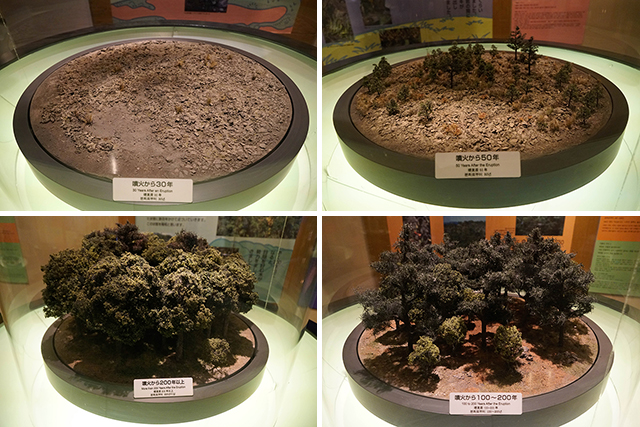
These models show the progression for plants to return after a lava flow.
Moss type plants are the first to regrow in a wasteland like a lava field. After a long period of time, enough plants can return to grow into a forest. This is called succession.
1. Primary Succession of a Plant Community
Succession refers to the establishment of plants on bare rock. In succession, the plant species at each stage prepares the environment for invasion by the next species. Bacteria and lichen are usually the first organisms to grow on bare rock. As the lichens create soil, mosses and ferns will begin to grow; this is followed by grasses, then shrubs and finally trees. Each successive species of plant then creates an environment that is uninhabitable by the previous species—the previous species die out, unable to survive in the shade of the new and taller species.
1. Primary and Secondary Succession
The primary succession starts with newly ejected lava and volcanic ash which do not contain any creatures or organisms. In an existing plant community, a disturbance, like fire, logging, or cultivation, destroys the plants. If the disturbance ends, the plant community will enter a secondary secession. Secondary succession advances more quickly than primary succession due to the existence of soil, supportive microorganisms and seeds within the soil.
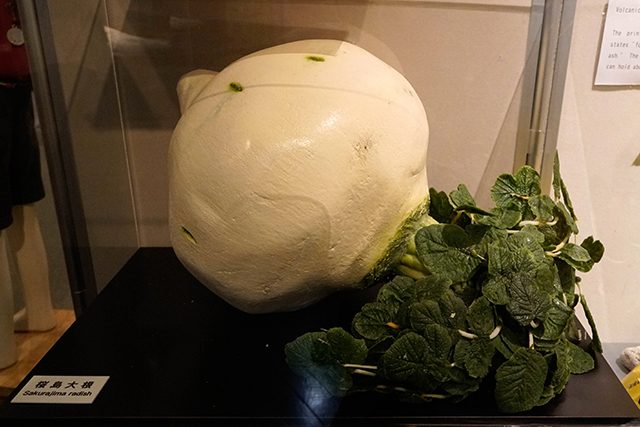
This is a model of the ‘Sakurajima big radish’. Harvested in 2013, it weighed 31.1 kg and holds the record for being the biggest radish in the world. The volcanic soil on Sakurajima is ideal for growing the radish, which has a soft texture and sweet taste.
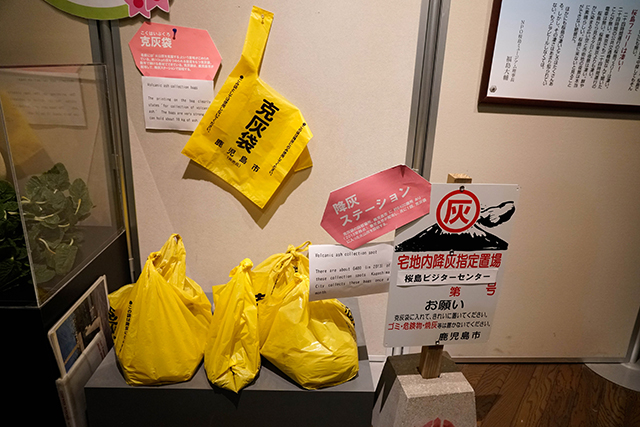
Around Kagoshima City, there are yellow ‘volcanic ash collection bags’. Each bag can hold 10 kg of ash, with the City collecting the bags from over 6,400 collection spots around the City once a month.
During the eruption of 1914, over 2 meters of volcanic ash and pumice were piled on the eastern side of Sakurajima within a few days. The total amount reached more than 500 million tons. The total amount of ashfall between 1978 and 1996 (18 years) was approximately 180 million tons. At one time over 5 million tons of volcanic ash fell in a month.
Nagisa Park Foot Bath
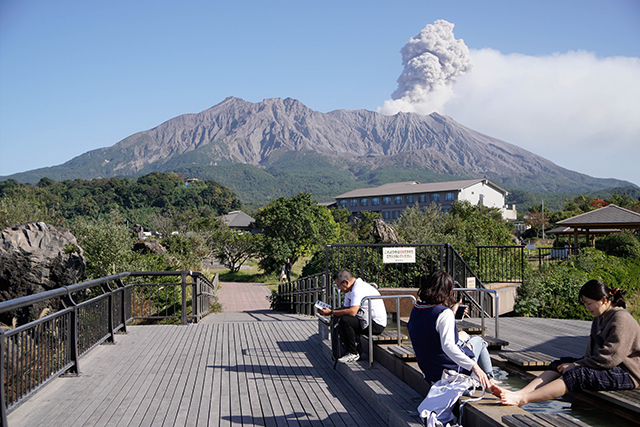
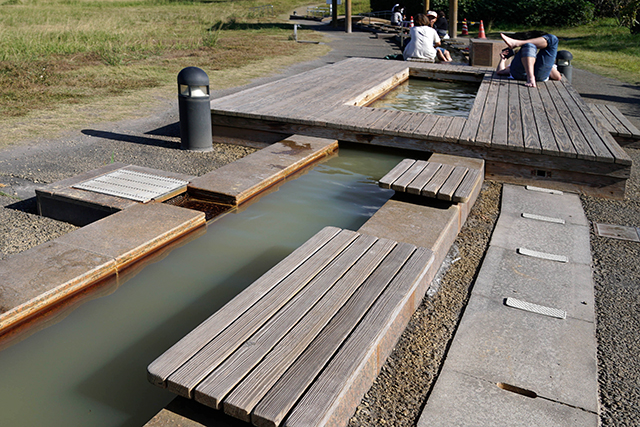
There is a free foot bath with a great view of both the volcano and onto the bay and across the water to Kagoshima City. There’s ample space for everyone, but the murky colour of the water puts us off even if it’s probably just volcanic ash.
A Coop
A Coop, 1722-40 Sakurajimayokoyamacho, Kagoshima, 891-1419, Japan
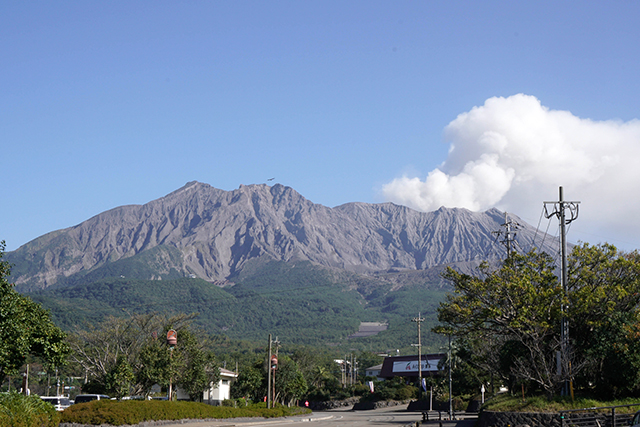
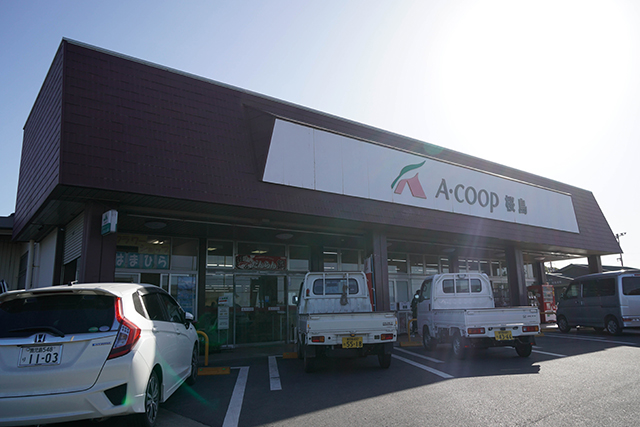
Heading back towards the port, we stop by the local supermarket. We’re thirsty and it’s hot. At a nearby park, there’s a bunch of school kids playing sport.
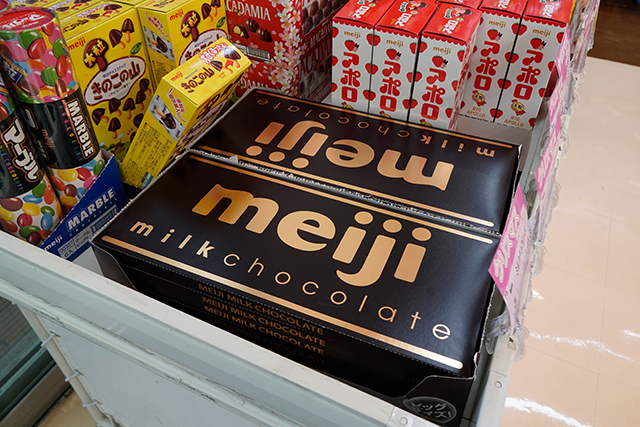
There are giant bars of Meiji chocolate available…
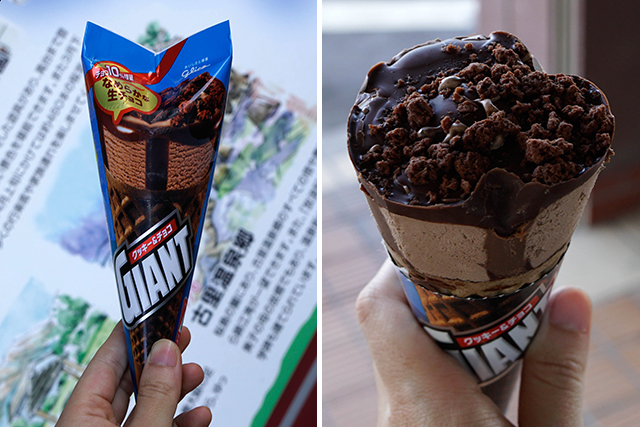
…but we pick up a Glico Gaint Cookie & Chocolate. D enjoyed the crunch and the rich chocolate flavour.
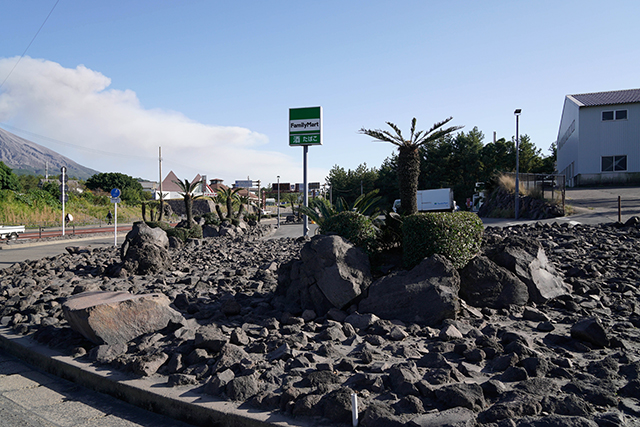
Nearby is one of the few konbini on the island.
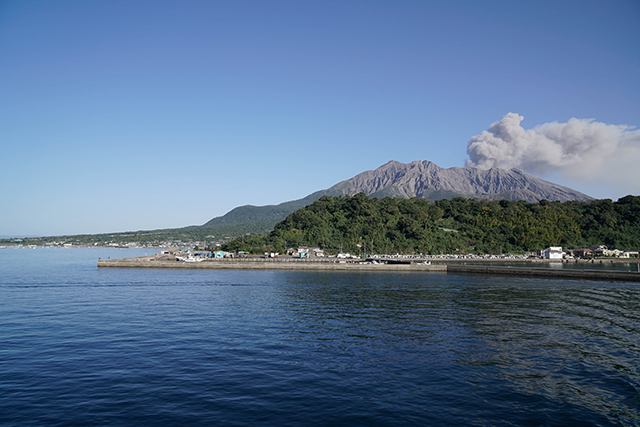
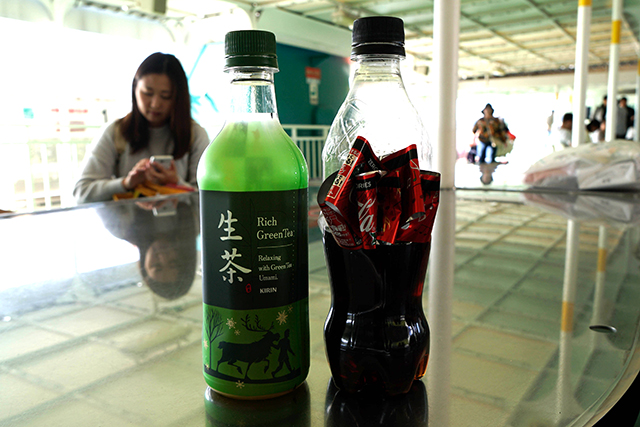
With our drinks — Kirin Rich Green Tea for me and Coca-Cola Zero for D — we enjoy the breeze on the upper deck of the ferry as we return to Kagoshima.
Kagoshima
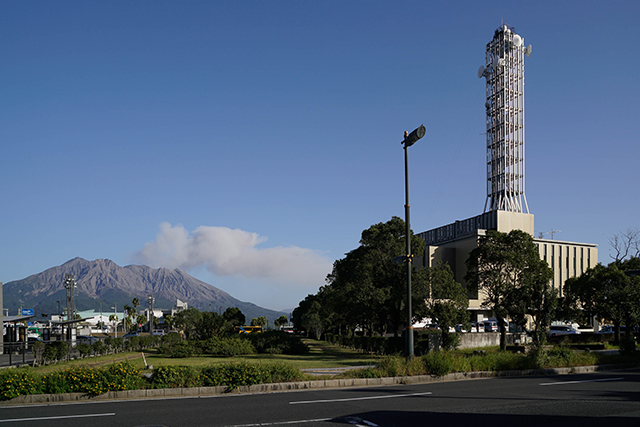
Back in Kagoshima, we walk past the NHK building with its spectacular view of Sakurajima in the background.
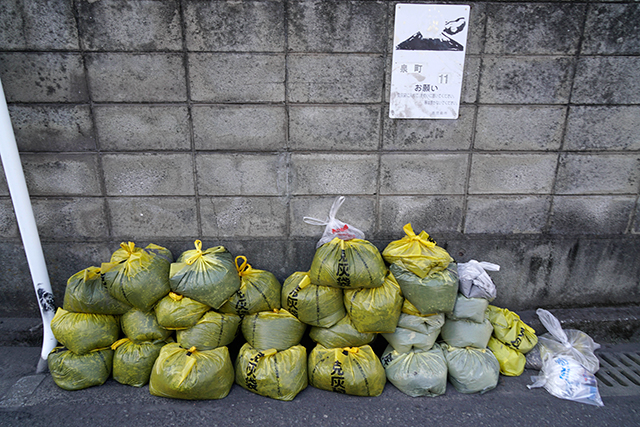
Walking through some side streets on the way back to Tenmonkan, we spot some of those yellow bags of volcanic ash we learned about in the visitor centre.
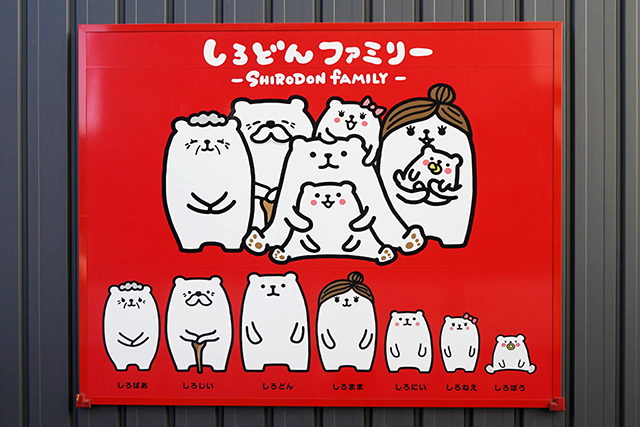
Outside Kagoshima Bank, we meet the Shirodon family, a series of original characters created by the bank and refers to the popular shirokuma dessert for which the city is well known.
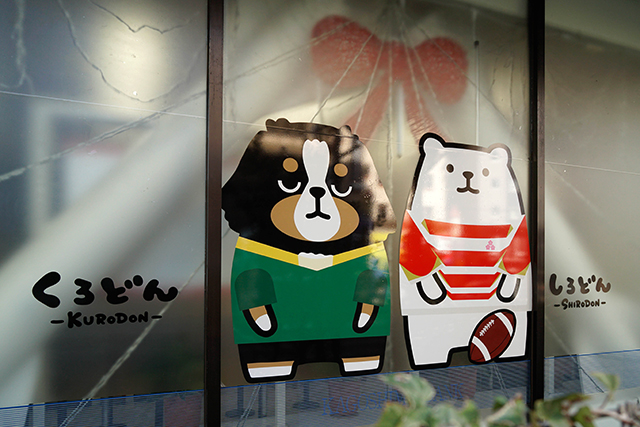
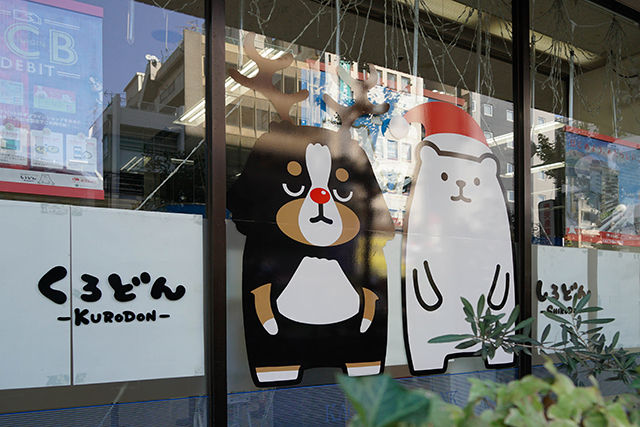
Shirodon is friends with a grumpy black dog who likes to dress up as a reindeer around Christmas.
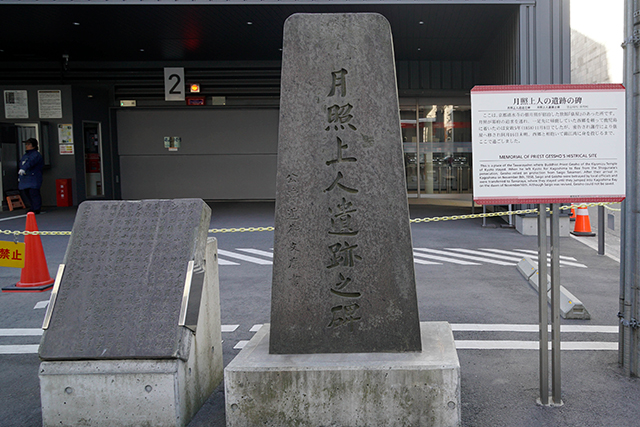
Nearby, we walk past a Memorial of Priest Gessho’s Historical Site:
This is a place of the Tawaraya lnn where Buddhist Priest Gessho of the Kiyomizu Temple of Kyōto stayed. When he left Kyōto for Kagoshima to flee from the Shogunate’s persecution, Gessho relied on protection from Saigo Takamori. After their arrival in Kagoshima on November 8th, 1858, Saigo and Gessho were betrayed by local officials and were transferred to Tawaraya, where they stayed until they jumped into Kagoshima Bay on the dawn of November 16th. Although Saigo was revived, Gessho could not be saved.
Wakohen
和香園 鹿児島店, 7-9 Kinseicho, Kagoshima, 892-0828, Japan
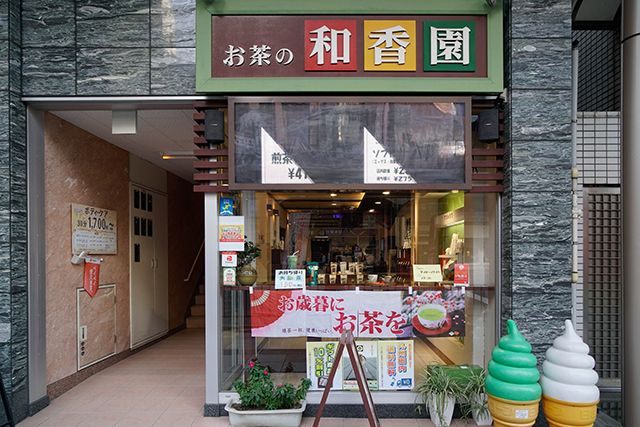
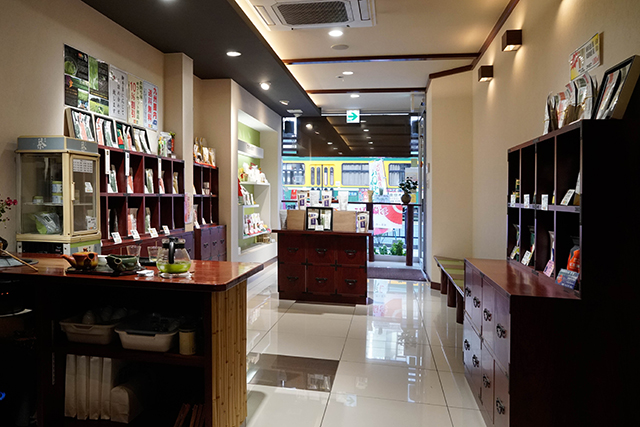
Wakohen is an award-winning tea house from the Ōsumi Peninsula in Kagoshima. They are well known for their arabikicha, which is a type of powdered green tea that’s coarser than typical matcha to retain a more natural, less grassy tea flavour. We originally visited its Tenmonkan store to browse but were greeted with such warmth we ended up also purchasing some tea and spending time in the cafe located at the back of the store.
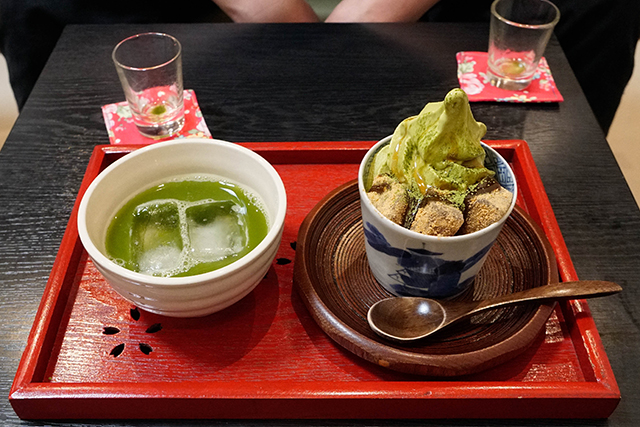
We order their arabikicha parfait set (¥600, including tax), which comes with iced arabikicha and arabikicha soft serve topped with warabi mochi coated in kinako and drizzled with kuromitsu and a dusting of arabikicha powder.
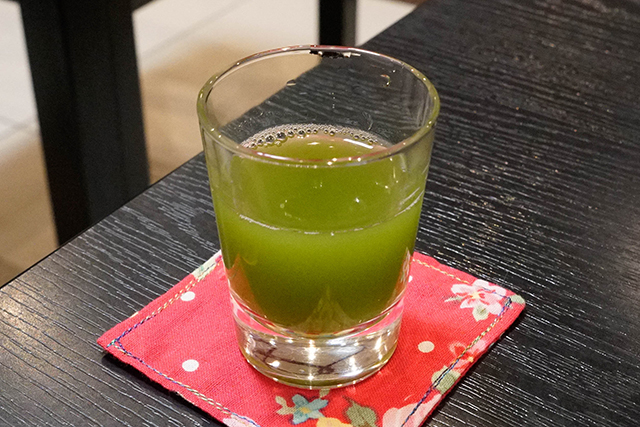
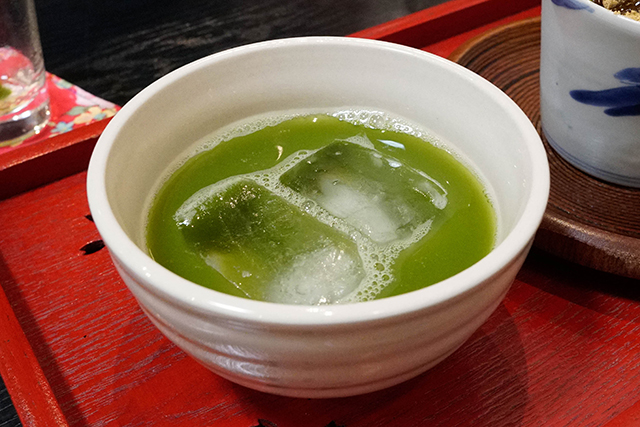
Customers receive a complimentary shot glass of arabikicha, while the set comes with a larger portion. We enjoy the more natural tea flavour of the arabikicha, which avoids the grassy and sometimes bitter notes of matcha. This tea won the Nihon Cha Award in 2016 and it’s easy to see why.
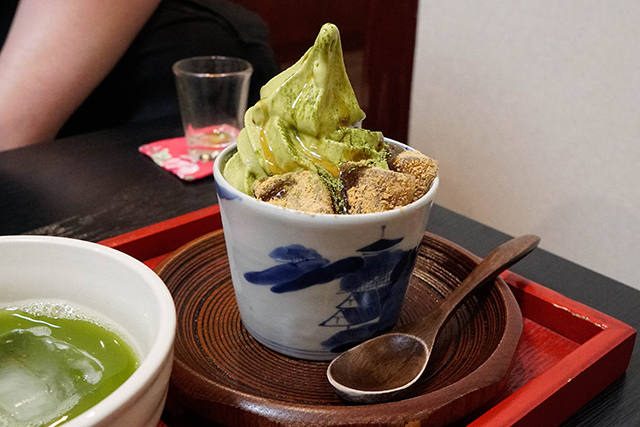
The rounder flavour of the arabikicha came through in the soft serve, but perhaps the bolder flavour of the matcha would hold its own better against the creaminess of the dairy. That said, it was delicious with the gentle bounce of the cubes of warabi mochi.
Tenmonkan
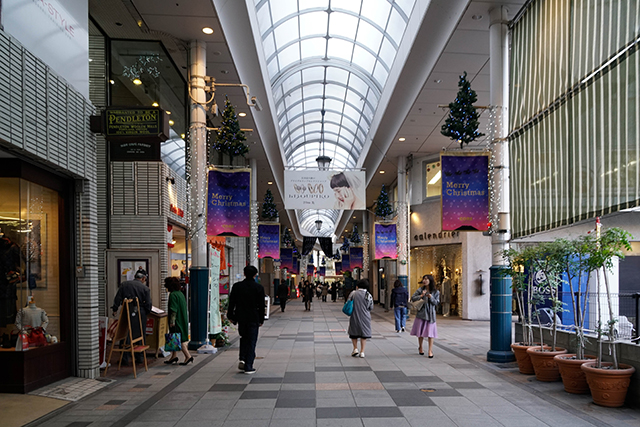
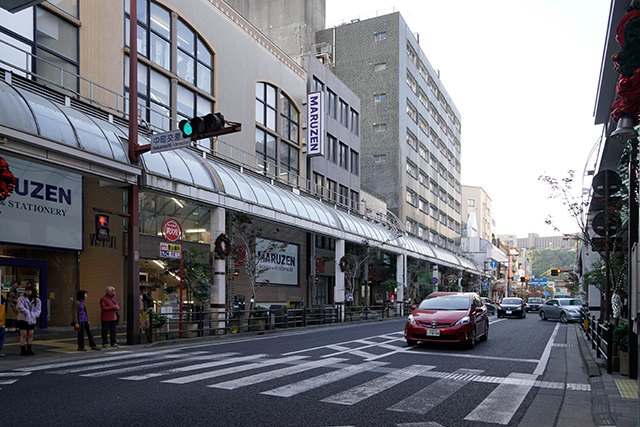
There are all sorts of restaurants, cafes and boutiques in the district. After a few days in the smaller cities on southeastern, the city-dwellers in us began to feel more at home in a bigger city.
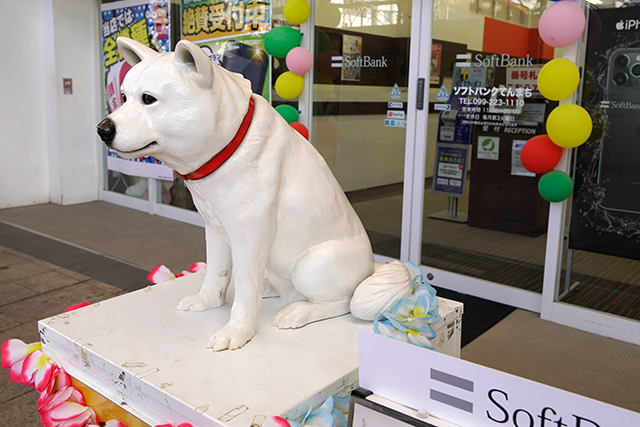
Otousan welcomes customers into Softbank.
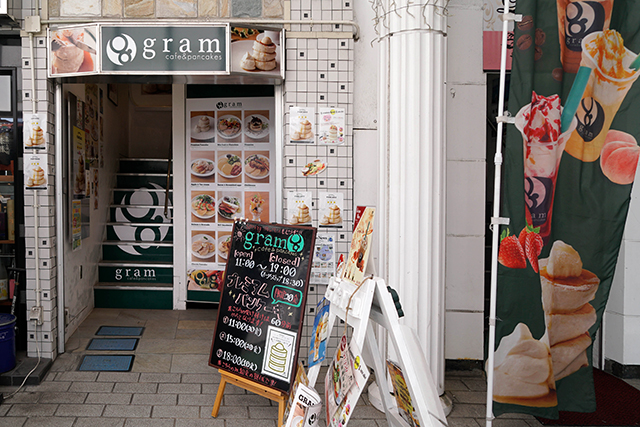
We pass by Gram Cafe & Pancakes but pass on the opportunity as we didn’t have time to work around its timed seatings.
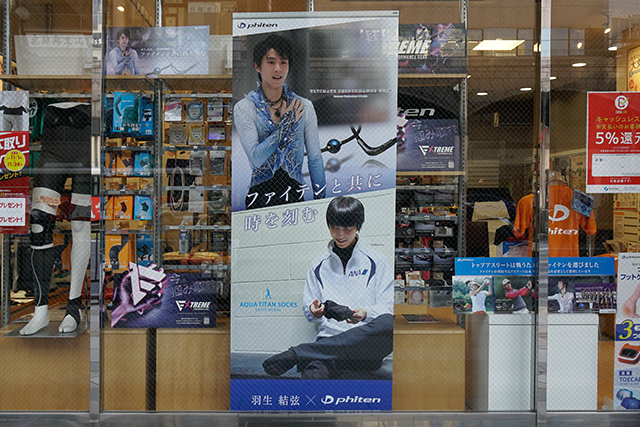
Nearby we spot figure skating legend Yuzuru Hanyu on posters advertising socks and jewellery.
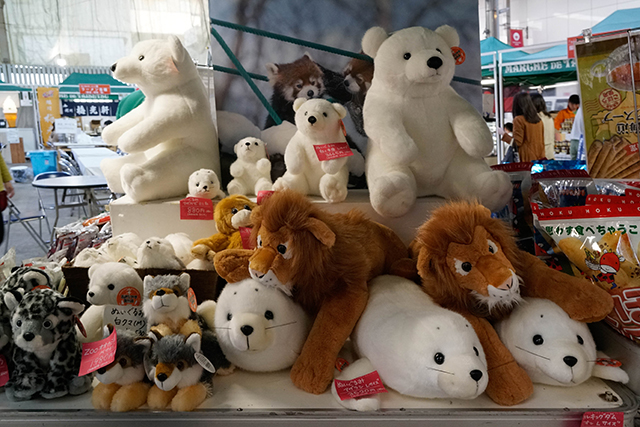
There’s a bunch of pop up stalls celebrating the produce (and cute animals) of Hokkaidō. We’re offered some cherry tomatoes, which were indeed plump, juicy and sweet.
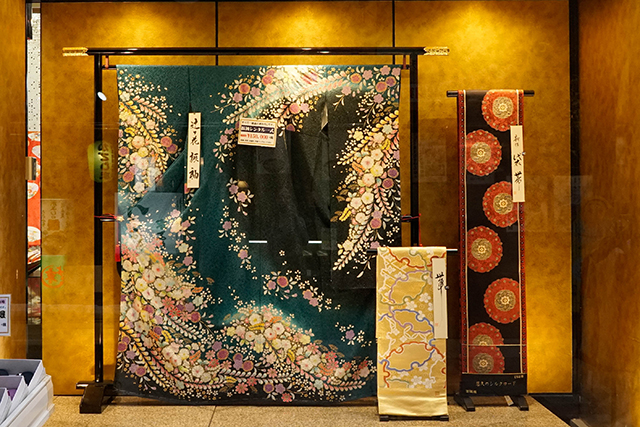
And of course, stores selling beautiful fabric, along with kimono and yukata.
We go out of our way to visit the Lupicia in Kagoshima.
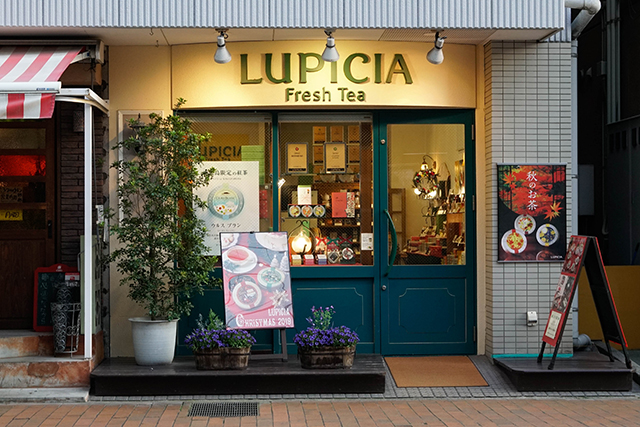
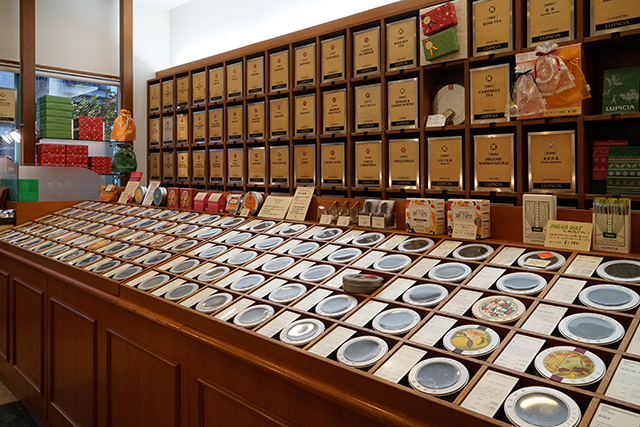
We’re here to pick up their region limited tea based on their famous dessert, shirokuma.
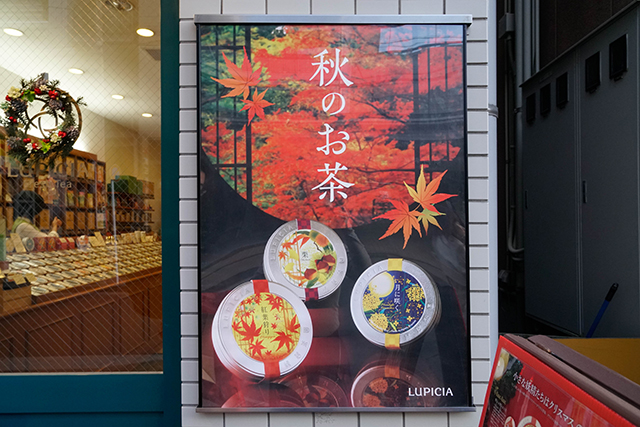
We also discover their Moonlight Osmanthus, which was unfortunately sold out at this location and the location in Tōkyō that we visited later on.
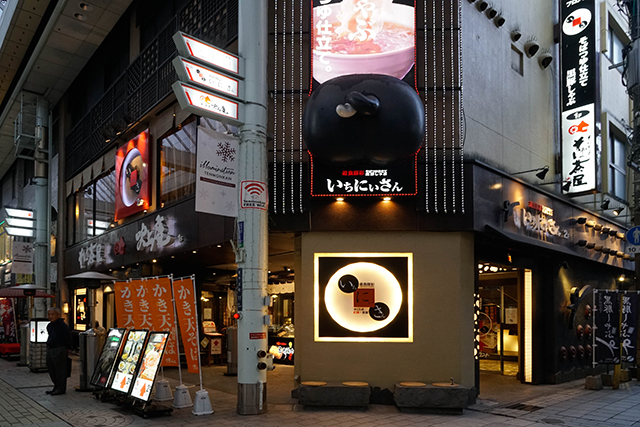
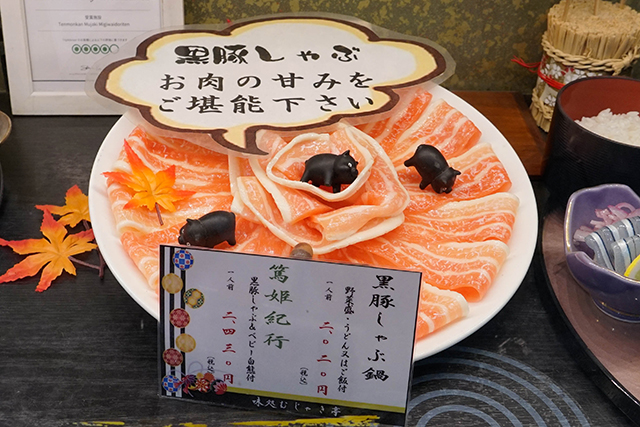
Nichiniisan is another popular restaurant for black pork with its black pig tooshie gracing the front of its store.
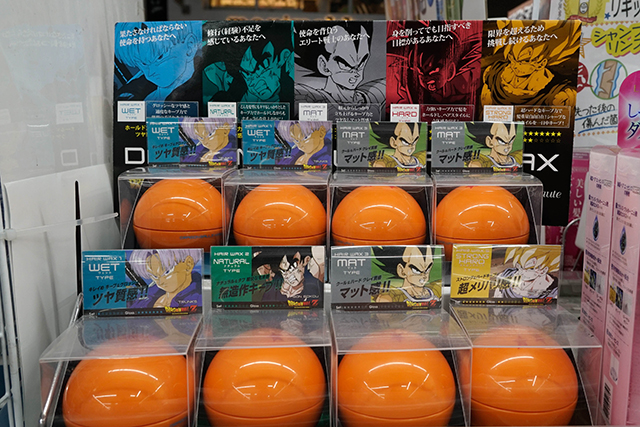
At a local pharmacy, we see the different types of hair gel paired up with various characters in Dragonball Z.
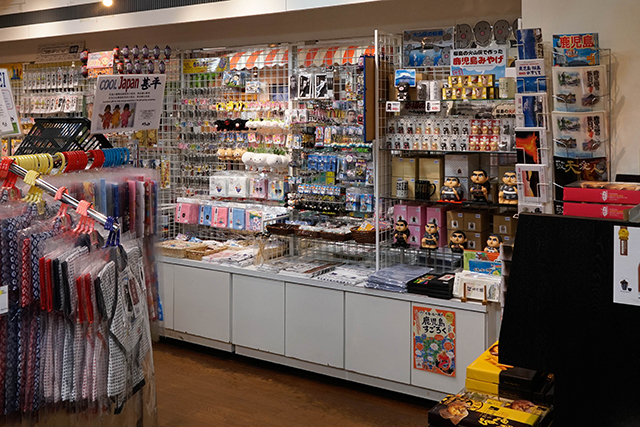
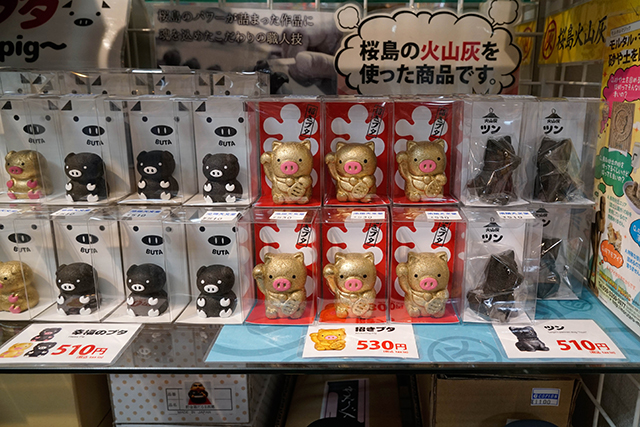
At an omiyage store, we pick up figurines made from the volcanic ash from Sakurajima as well as some other regional confectionery.
Mujyaki Shirokuma Cafe
天文館むじゃき 本店, 5-8 Sennichicho, Kagoshima, 892-0843, Japan
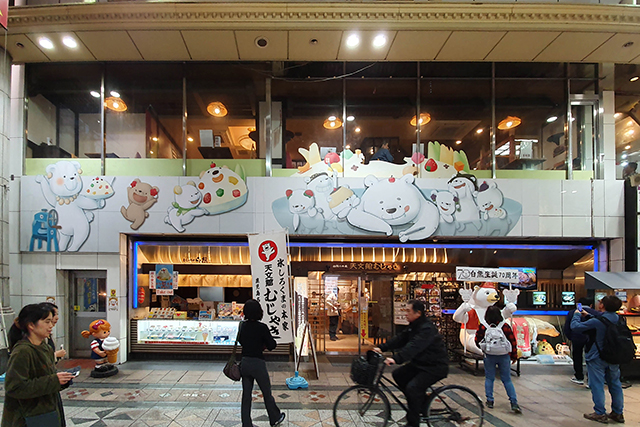
Mujyaki Shirokuma Cafe is known as the birthplace of shirokuma, a type of kakigōri, with condensed poured onto freshly shaved ice and topped with fruits, beans, jellies and other snacks.
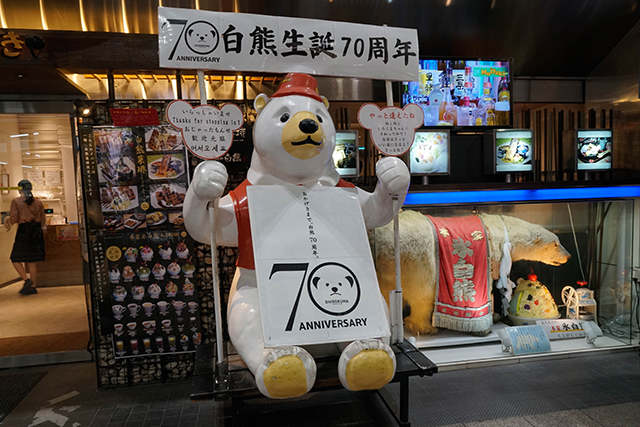
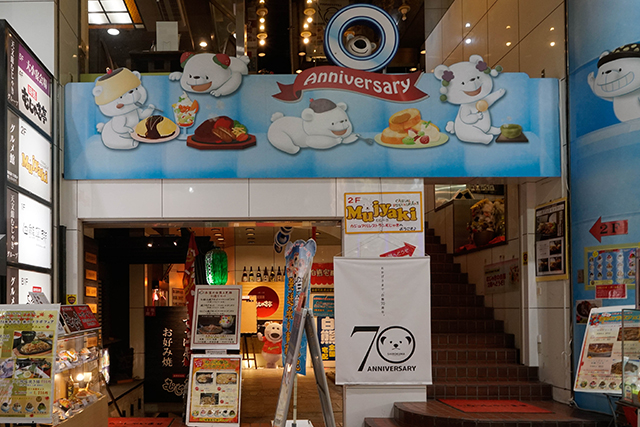
The dessert is now available throughout Japan with this original store celebrating its 70th anniversary in 2017. The store has the cutest decor.
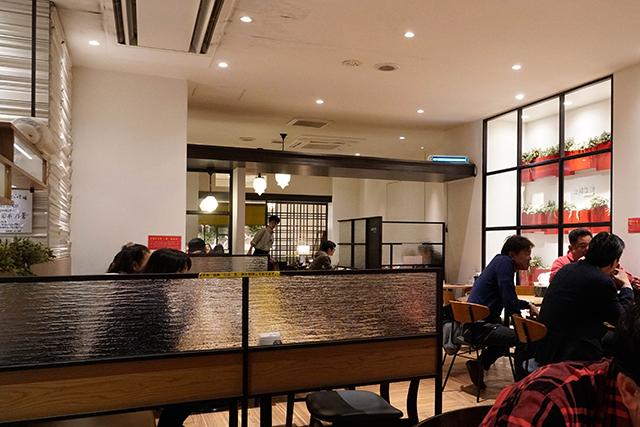
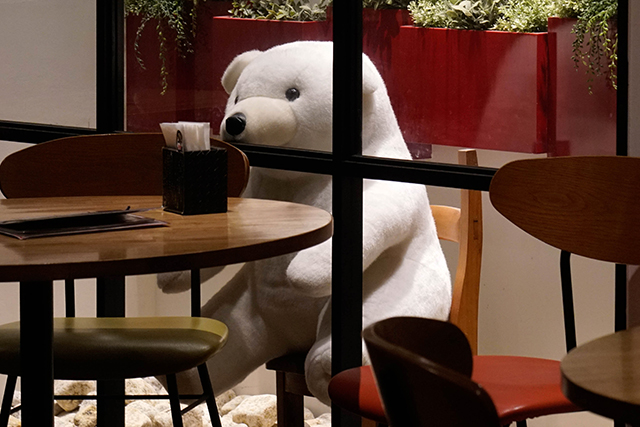
Visiting in the odd hours between lunch and dinner, we avoided the long queues and were seated immediately. For those lucky enough, you may be seated next to a polar bear in the window.
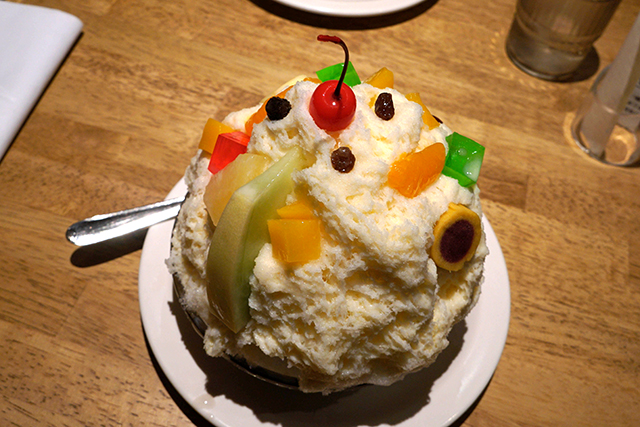
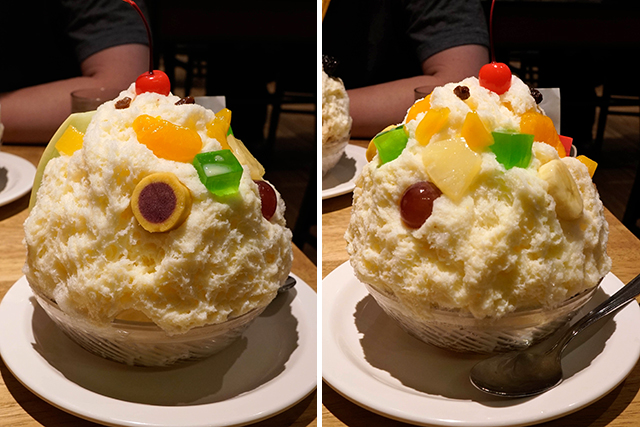
This is the Original Shirokuma (¥740) with condensed milk and topped with fruit including cherry, raisin, plum, mikan, peach, banana pineapple and beans as well as grapes and melon, baked snacks and jellies. First made in 1947, the dessert received its name shirokuma as the dessert resembles the face of a polar bear when viewed from above.
Shirokuma. Original was just milk flavour. Enjoyed the pops of fruit but the condensed milk made it more difficult to finish than the coffee one. Easy to finish one on our own. Dork thought it was warm on entering the restaurant but after 2/3 through was shivering in her coat.
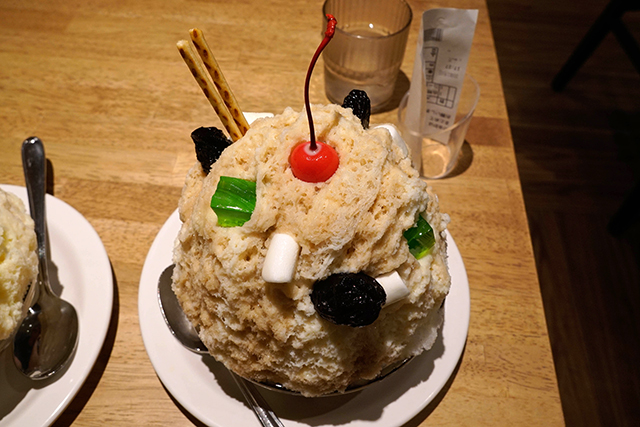
And this is the Coffee Shirokuma (¥740) with coffee and condensed milk and topped with red bean, green tea, mikan, pineapple, beans, as well as cherry, banana and jelly.
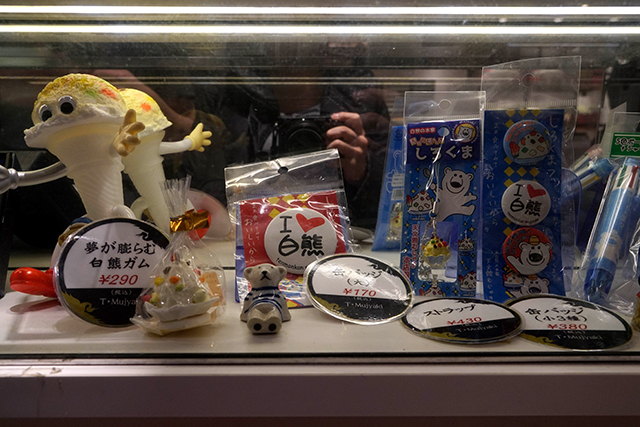
There is various (less cute) shirokuma themed merchandise available from the store.
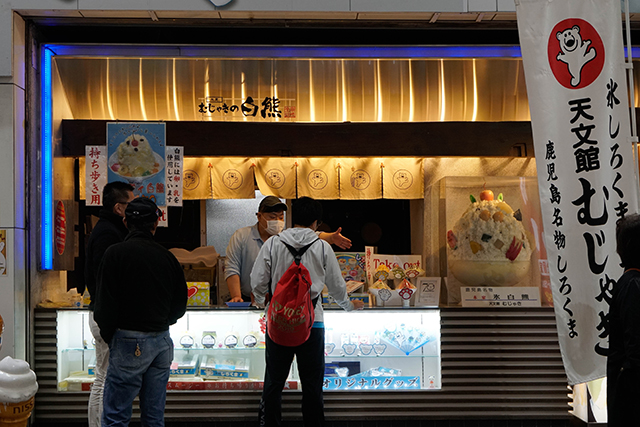
And believe it or not, shirokuma can be purchased for takeaway. Knowing typical Japanese hospitality, I’m curious how they package it for customers to take home given that ice melts.
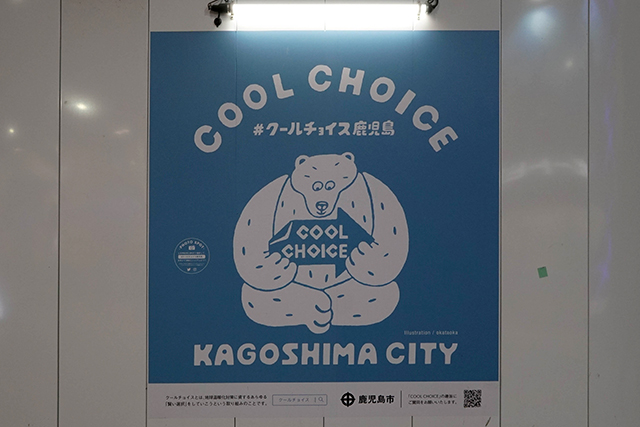
On the hoarding around a construction site, a polar bear is holding a sign saying ‘cool choice’ for Kagoshima City.
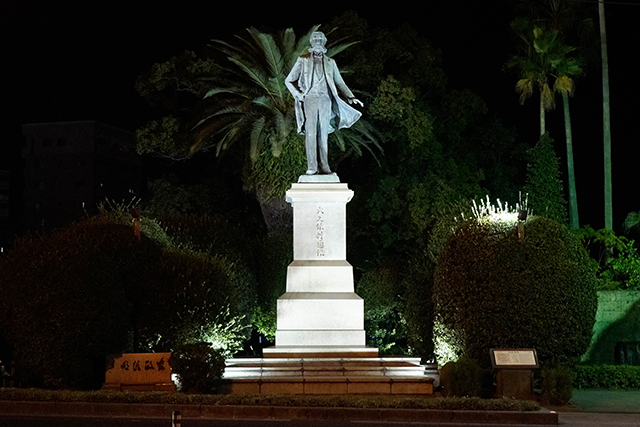
Near the bridge across Kotsuki River is a monument of Ōkubo Toshimichi, a samurai turned statesman (1830–78) from Kagoshima who helped overthrow the feudal regime and considered one of the Three Great Nobles regarded as the main founders of modern Japan.
Hotel Gasthof
ホテル ガストフ, 7-1 Chuocho, Kagoshima, 890-0053, Japan
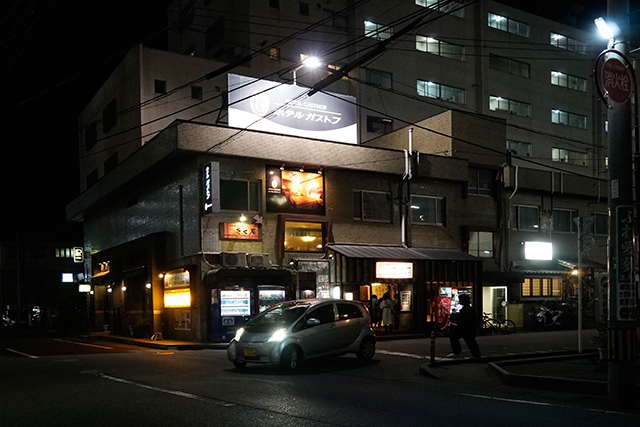
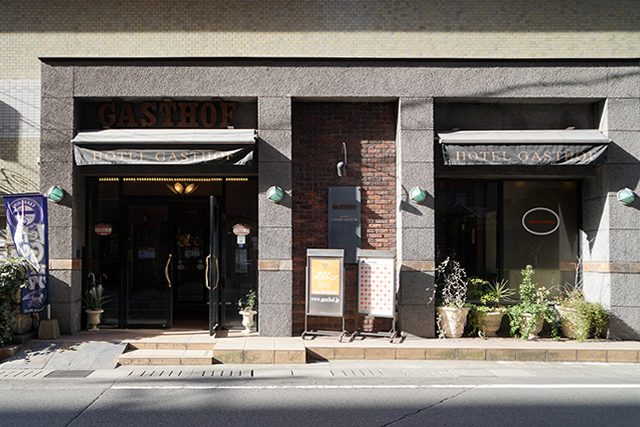
Hotel Gasthof is a 3-minute walk from JR Kagoshima Chuo Station. Viewed from the outside, it didn’t give the best first impression.
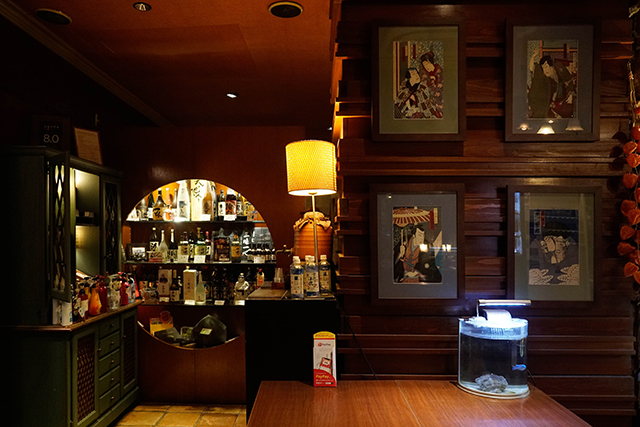
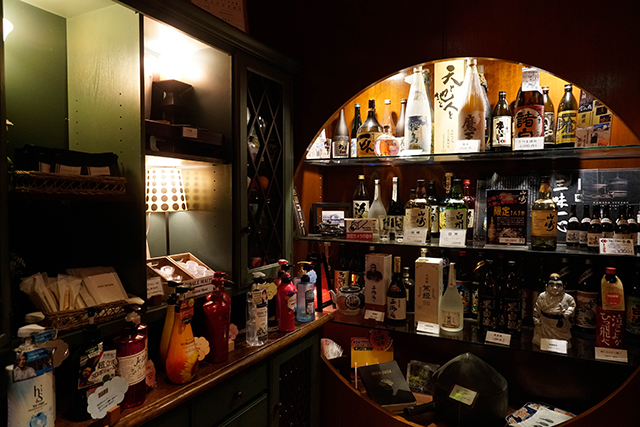
Inside, though, it had a retro vibe, with a complimentary selection of shampoos and conditioners along with small containers to hold a few pumps of each available for visitors near the reception. There are also several alcoholic beverages available for a charge.
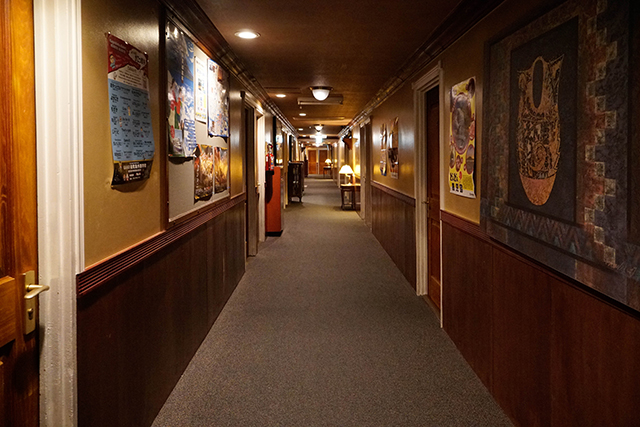
The rooms are located on the second floor with no lift access. Luckily, having left our luggage with the staff in the morning they kindly left it inside our rooms for us, so it was only a matter of getting it down the stairs upon checking out.
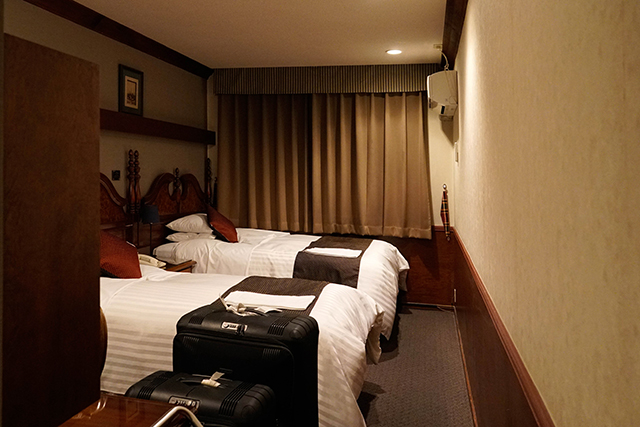
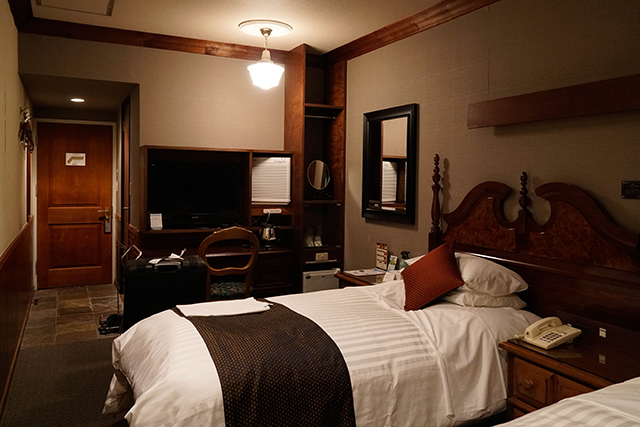
The room feels like it’s from another era and again, we’re surprised by the additional bed in the room. While the place looks retro and dated, it is very clean and the bedding is plush and comfortable, the room is spacious and there’s an individually controlled split system AC unit.
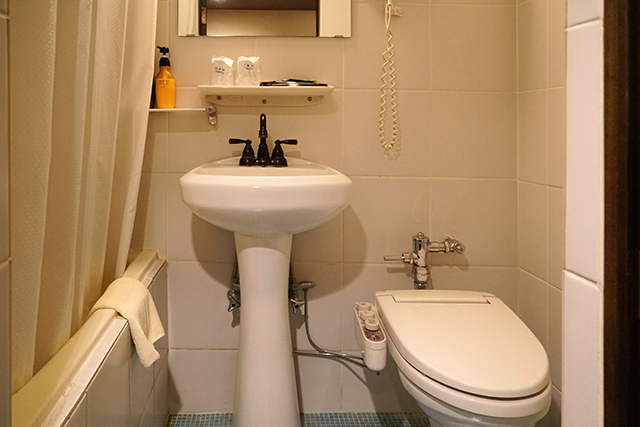
The toilet is very outdated, but it’s clean, there are separate taps for the sink and shower, and there’s a bidet.
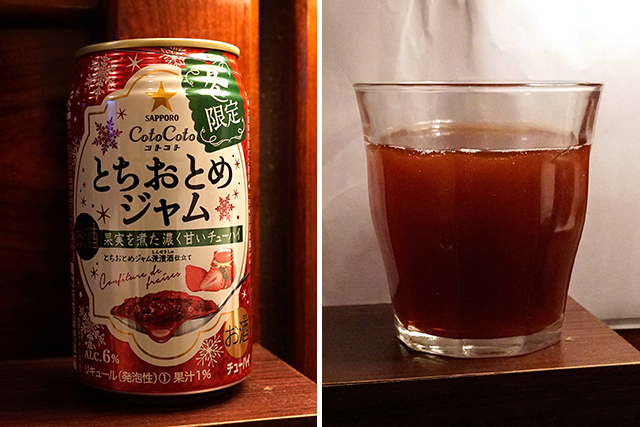
Cooling down with the AC, we try this Sapporo Coto Coto Tochiotome Jam Chu Hai, which had a bright fresh flavour of real strawberries with a fragrant, natural sweetness that masked the high alcohol content. We would’ve enjoyed diluting the sheer intensity of the strawberry flavour with some soda water.
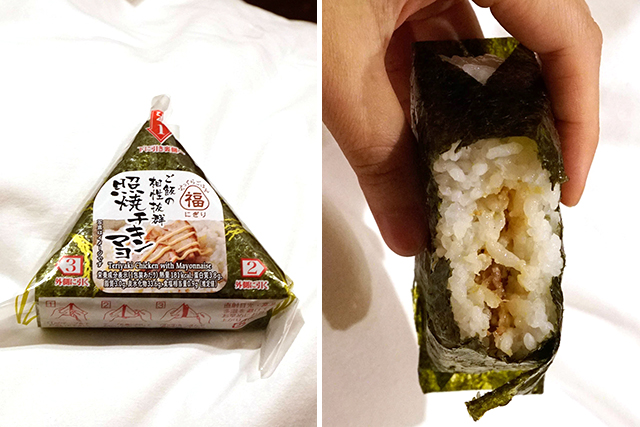
Not being hungry when we left Tenmonkan, we’d stopped into the Don Quijote and picked up some onigiri for later in the evening. This is the chicken teriyaki with mayonnaise. We weren’t too impressed with this one as it lacked actual meat, with only the flavour of the sauce in the last bite.
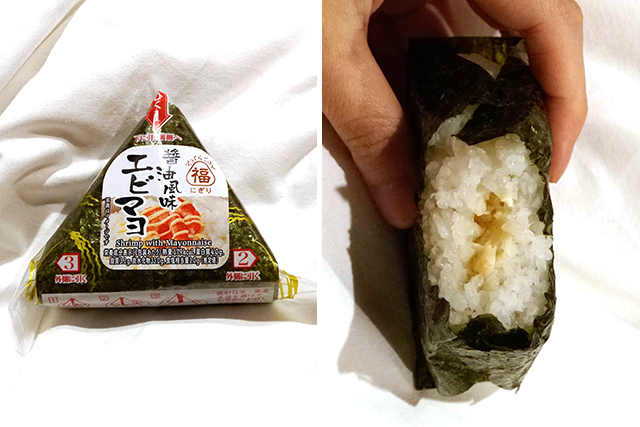
This is D’s trusty ebi mayonnaise which unfortunately tasted just a step up from plain rice.
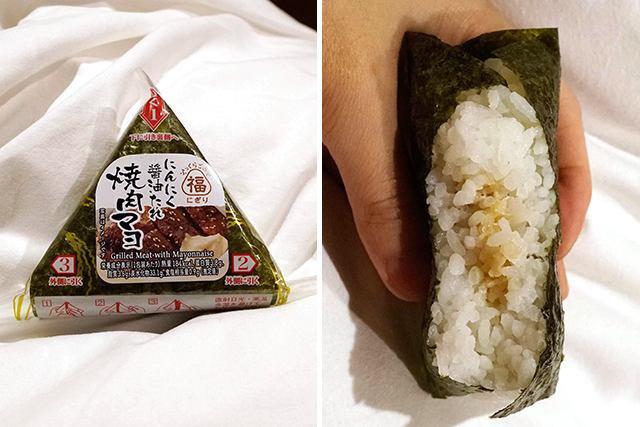
And continuing with the disappointing onigiri is this grilled meat onigiri, which lacked meat unsurprisingly. Indeed, we couldn’t even figure out what animal the meat came from because there was so little of it.
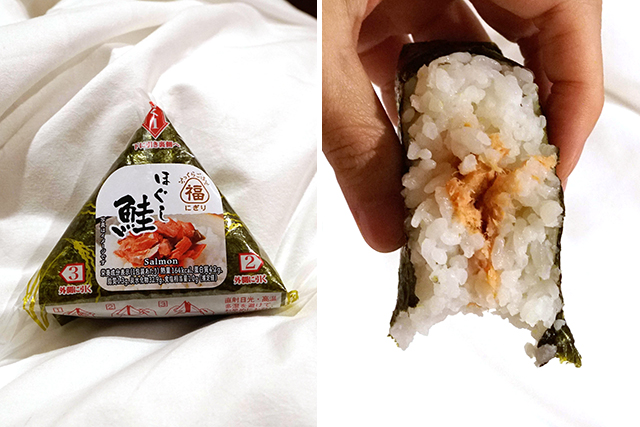
Finally, we the salmon, which thankfully satisfied our quest for protein. It was the only onigiri with a decent amount of identifiable innards, and indeed had a more balanced savoury flavour than the ones from the major konbini.
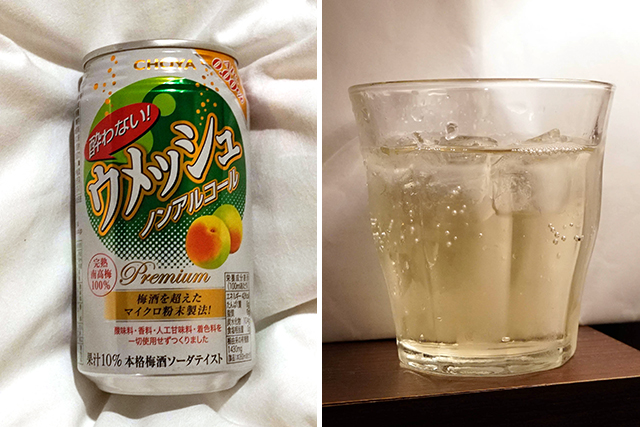
We brighten up our evening with this Choya Umeshu with 0% alcohol. It’s a clear pale yellow colour with a sweet-sour aroma of ume. And served chilled, it’s delicious — much like an umeshu without the bitter edge of the alcohol. We enjoyed the tartness of the ume.
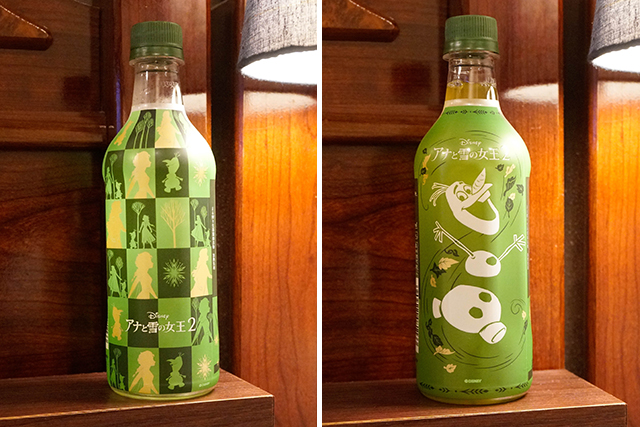
And finally, some pharmacies in Kagoshima were selling the Kirin Rich Green Tea for a bargain price (¥79) and with it being my drink of choice, we enjoyed the Frozen II-themed packaging.
We initially intended to stay a further day in Kagoshima but cut short our stay as we discovered Kumamoto Castle would open its ground to the public on Sundays only. So, we barely scratched the surface of Kagoshima, but the bits we did see has encouraged us to return in the future.
Kagoshima and Sakurajima were Day 10 of 15 in this Japan 2019 trip around Kyūshū. Day 11 saw us visiting Kumamoto.