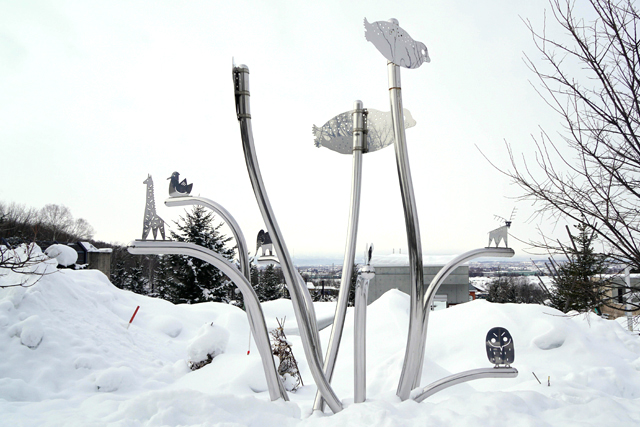
Asahikawa is located in central Hokkaidō and the island’s second largest city after Sapporo. During the winter, the Winter Snow Festival and its zoo, Asahiyama Zoo, are major draws for tourists to the city. In particular, the zoo is considered among Japan’s best and most popular.
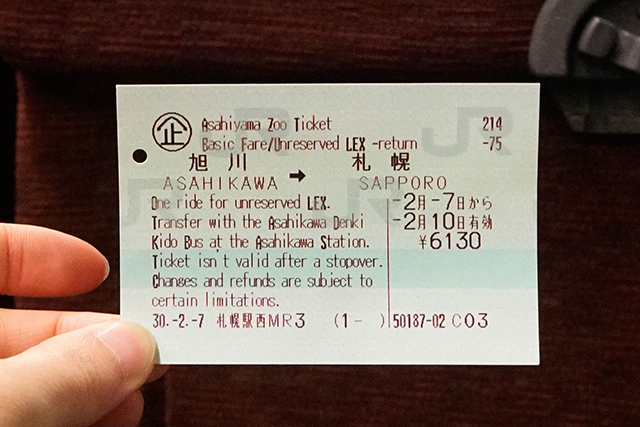
We take advantage of the Asahiyama Zoo Ticket, which includes a roundtrip ticket for the limited express train with non-reserved seating between Sapporo to Asahikawa, a roundtrip ticket for the bus between the station to the zoo, and the admission ticket to the zoo for ¥6,130. This is a considerable discount even with already discounted S tickets available for the train trip.
JR Asahikawa Station
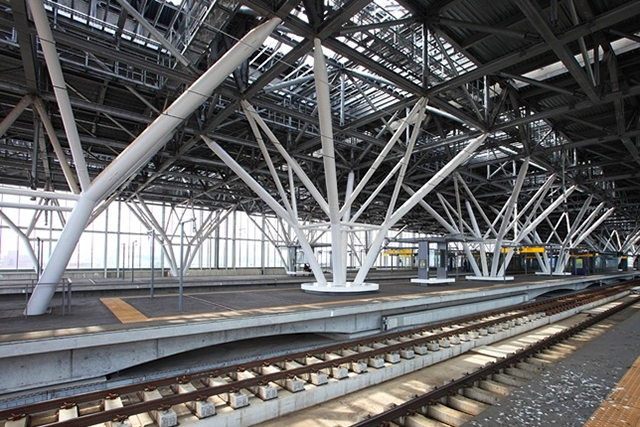
Asahikawa Station is a relatively new train station, completed 2011. The theme of ‘trees’ and ‘timber’ was evident throughout the station, a beautiful nod to the numerous industries in Asahikawa that make use of the region’s abundant timber resources, including furniture (which is made from trees with the bark left intact and known nationwide for its impeccable quality), pulp, paper and wood chemicals. These four-tined load-bearing pillars are designed to recall branches extending from a tree.
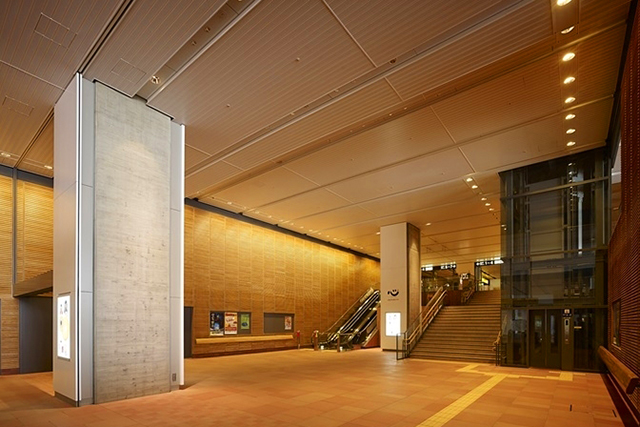
Beyond the tracks, the station is open and spacious, reminiscent of an airport. Even here, the design featured extensive use of wood grown in Asahikawa (or concrete with a wood-grain finish) and extends beyond the walls to handrails, window frames, benches, and even the name tags for station staff.
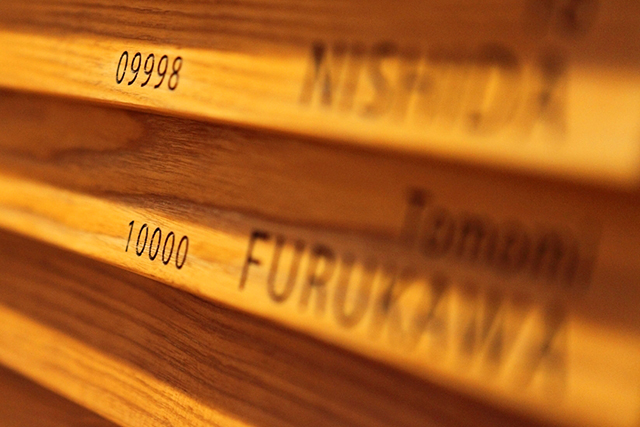
The walls are lined with wooden panels engraved with the romanji names of 10,000 participants in the ‘Asahikawa Name Engraving Project’.
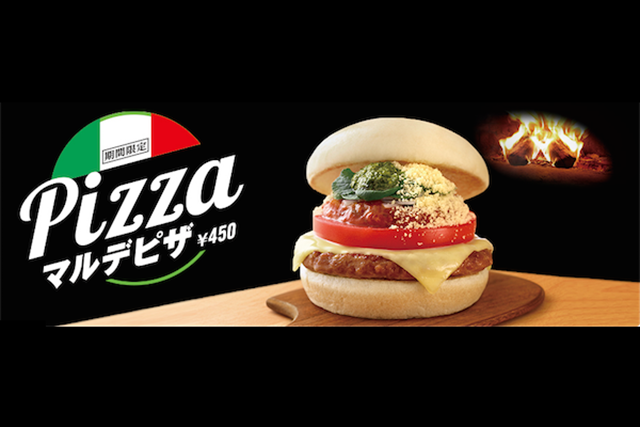
Attached to the train station is a sizeable Aeon Mall. We stop by here for a quick breakfast before heading to the zoo. There are numerous choices, including your standard donburi, takoyaki, and bakery as well as a supermarket and of course, Starbucks. We decide to eat at Mos Burger after I spot this Mardipiza on offer. It’s a time-limited item and essentially a Margherita pizza in burger form. I enjoy the pillowy softness of the bead contrasted with the fresh, crunchy thick-sliced tomato together with the pizza sauce, which brought it all together. Photo via Mos Burger Japan.
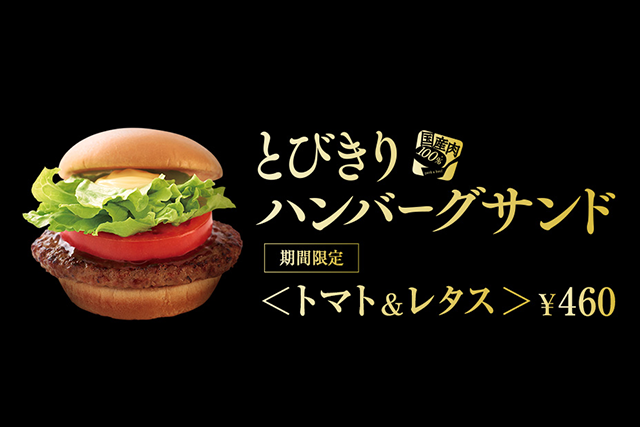
D tries one of their permanent menu items, the Tobikiri Hamburger with tomato and lettuce. He finds the burger tasty but not worth the price comparable to burgers at other chains. Photo via Mos Burger Japan.
Before we head to the zoo, we stock up on baked goods at the Delifrance. D picks up a flaky croissant that’s light as air and deliciously buttery. I go for an apple pie, which has firm – almost crisp – apple pieces atop a sweet custard and flaky pastry, as well as a sesame red bean ball with an audibly crunchy mochi-like shell with warm red bean innards. There’s also a pirozhki, which we save for later.
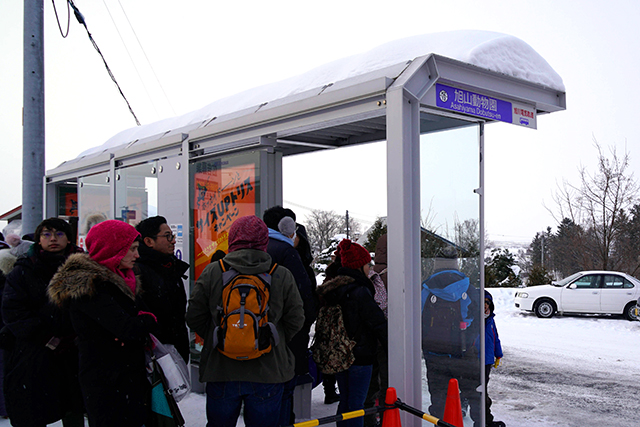
There’s a long queue for the bus to the zoo, which the traffic guard eagerly packing on commuters tighter than sardines in a rather high-pitched voice. We were surprised to discover that the voice belonged to a middle-aged man! With the heat on and the body heat from a gazillion people, we were melting the entire trip there.
Asahikawa Zoo
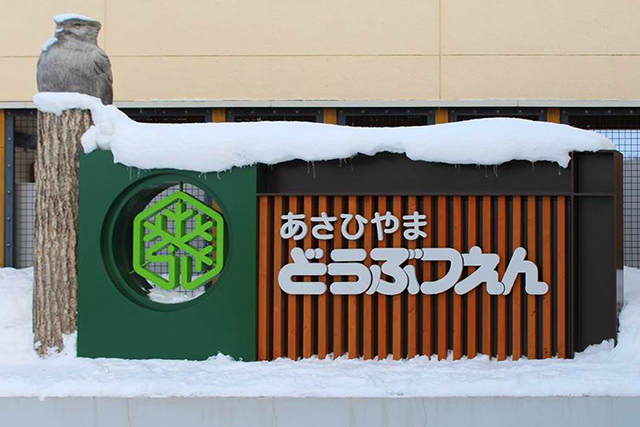
We were beyond relieved to finally reach the zoo so we could cool down.
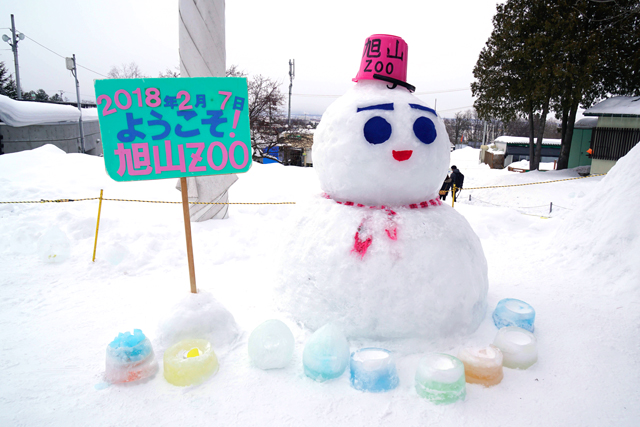
A colourful snowman welcomes us to the zoo.
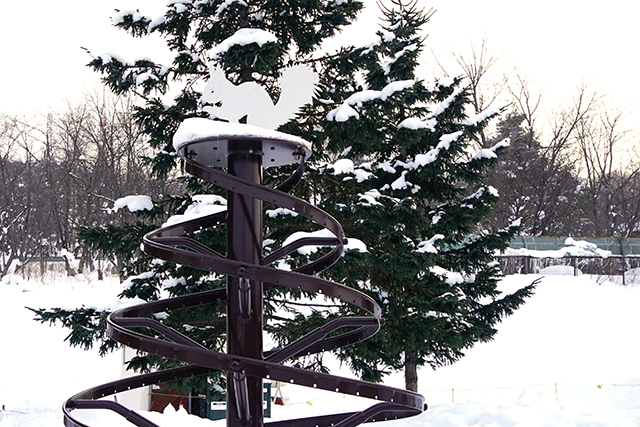
There are real pine trees looking Christmassy with its snow-covered branches, as well as sculptural ones with squirrels. But onto the real animals …
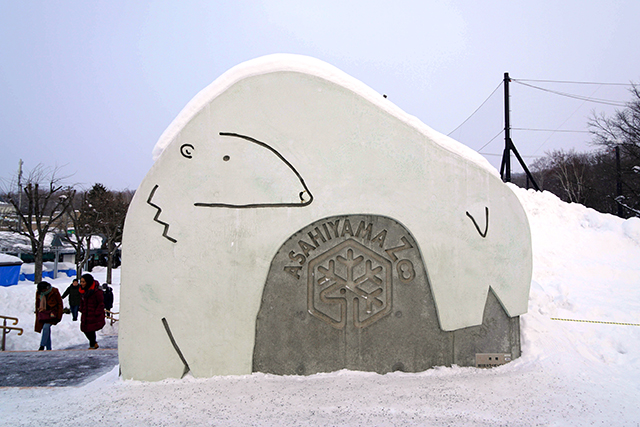
Situated in central Hokkaidō, the zoo is known for its colder weather animals, including polar bears.
A cute sign points you int he direction of each animals’ enclosure. Many animals at the zoo are in danger of extinction.
Polar Bear House
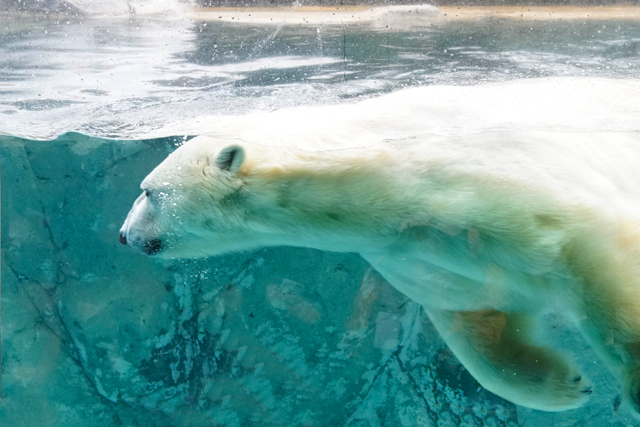
Polar bears are by far my favourite animals in cartoon form, plush toy form and now I can confirm, in live form too. We arrive just after feeding time has started so there’s a short wait before the earlier group that’s allowed inside moves on.
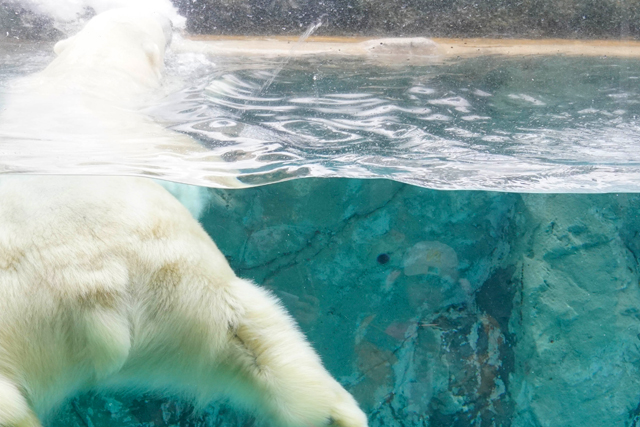
Up to now, I’d never encountered one in person before. They have the fluffiest and cutest tails.
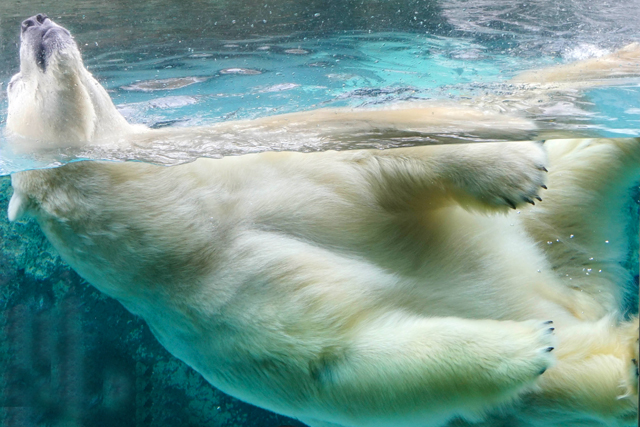
Polar bears have an average lifespan of 40 years and are in danger of extinction, alas.
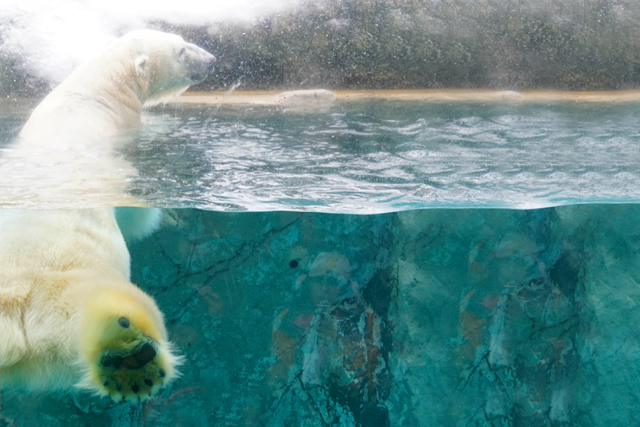
There are four polar bears at the zoo, though we only see two. This one was entertaining the visitors in the pool, which can be viewed from underwater. He has cute paw pads.
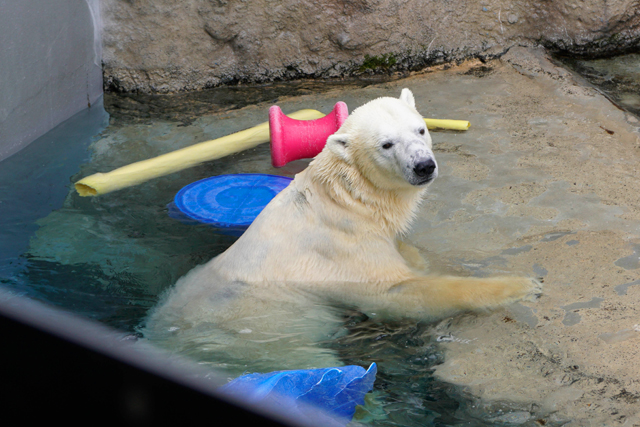
The polar bear can also be viewed from above. This is the same pool as the one in the photo above.
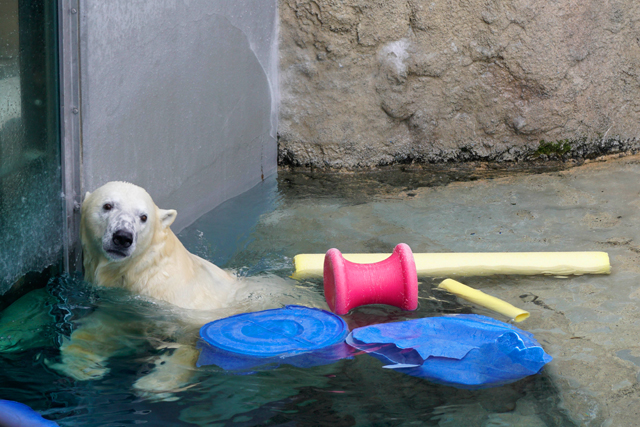
He has a variety of toys to play with. They’re cuter underwater than when they’re fresh out with their fur slicked back.
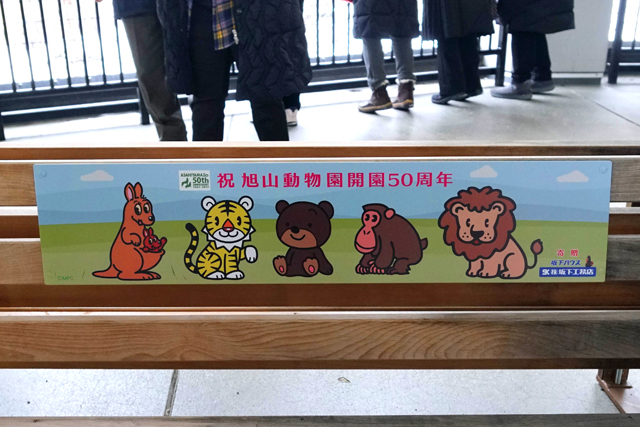
The seats near the enclosure are suitable themed for a zoo. There’s also a kangaroo, which I’m not sure is resident at the zoo.
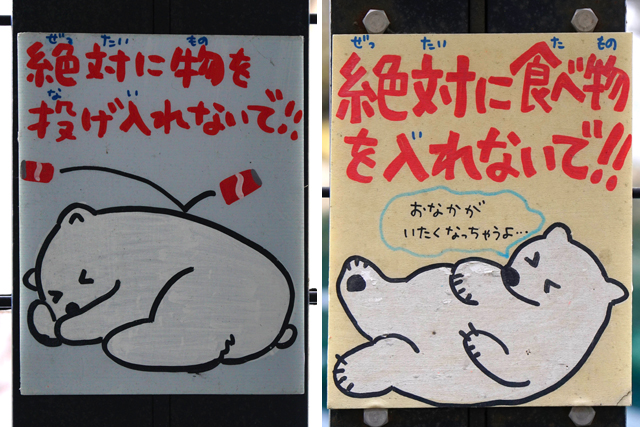
There are cute signs asking visitors not to throw things into the enclosures, while the second cautions against feeding the polar bears. The polar bear says he’ll ‘feel hungry for a while’ until the next feeding time.
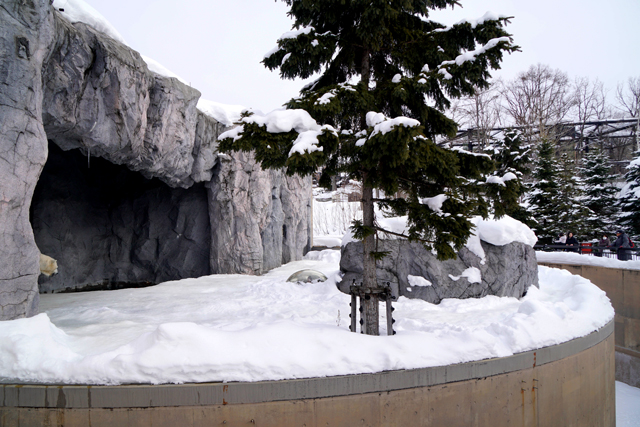
Outside, we view the second polar bear walking around the snow. The edge of the enclosure is surrounded by a steep moat to prevent the bears from escaping.
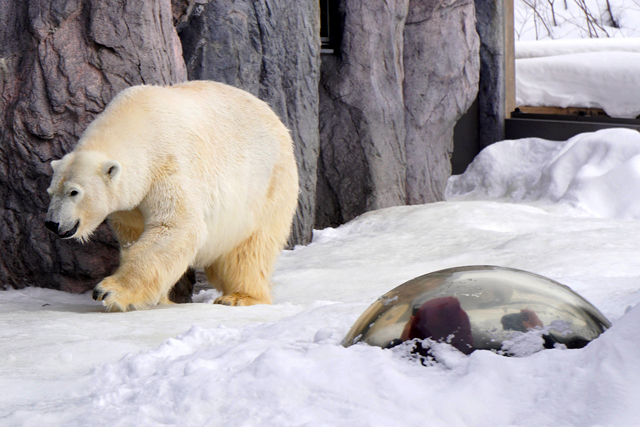
This one spends the good fifteen minutes we’re watching it, pacing back and forth somewhat agitated. Visitors can view the polar bears from the perspective of harbour seals, which are hunted and eaten by the polar bears in the wild, via the domes underground.
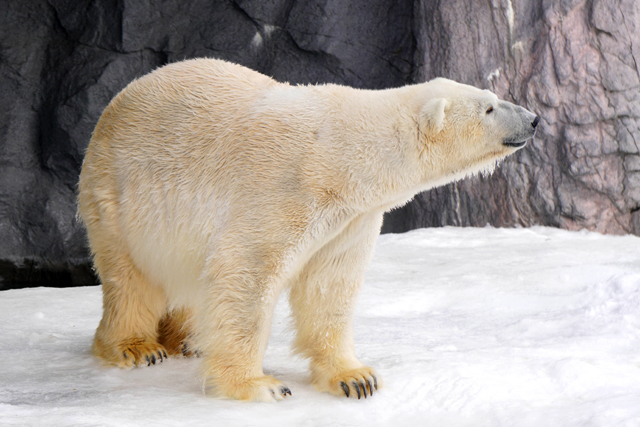
Perhaps he wants to join his friend?
Harbour Seal Museum
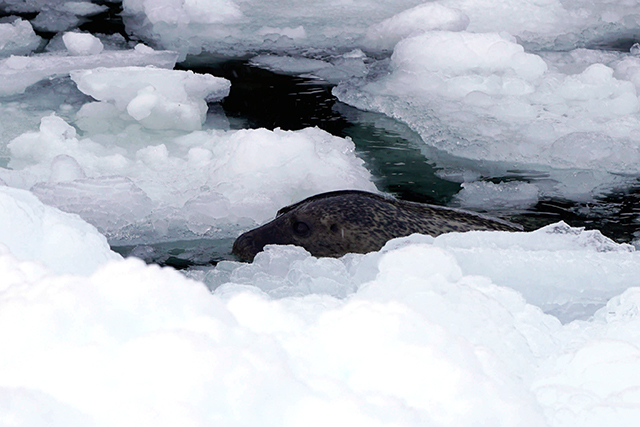
The Harbour Seals are situated directly next door in a space reproducing a fishing port in Hokkaidō, fittingly! It must be warmer in the water as they only make very brief appearances above water with the top half of their body. Those lucky enough can view the seal swimming through a cylindrical tank.
Lesser Panda House
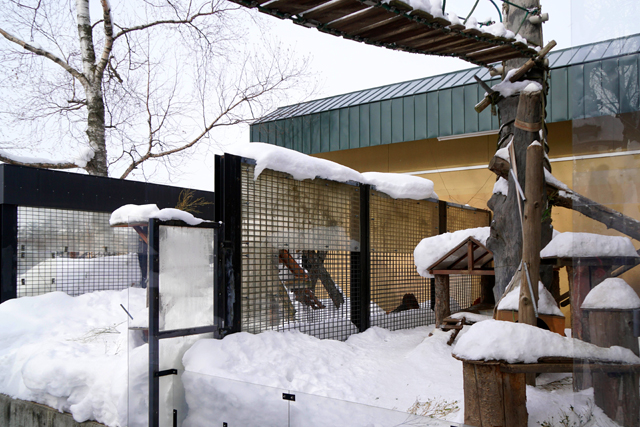
On the other side of the polar bears are the lesser pandas. There are two enclosures with five animals between them.
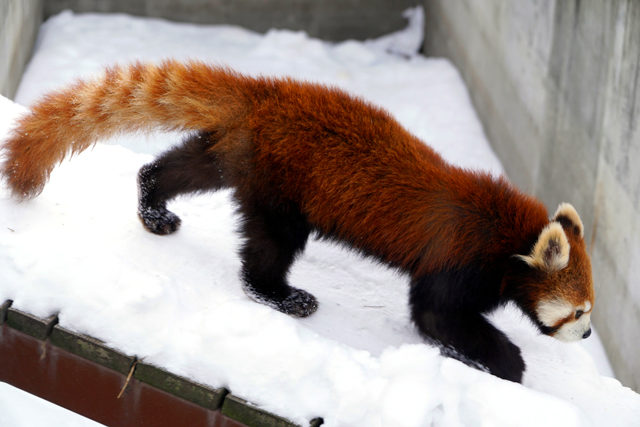
Only one of them is interested in walking around to amuse the visitors. The others are sleeping. This one manages to climb up from the moat in front of their enclosure to the brick wall separating the two enclosures. With their agility, we’re surprised they don’t make it outside the enclosures using the overhead bridge (see above photo).
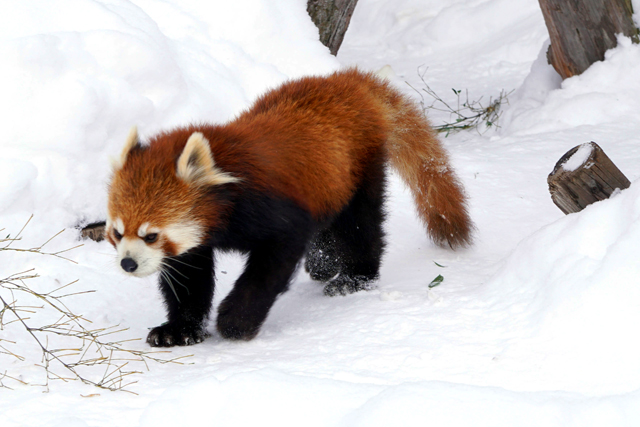
Lesser pandas are neither bears nor pandas, but part of the racoon family and in danger of extinction.
Blue Fox House
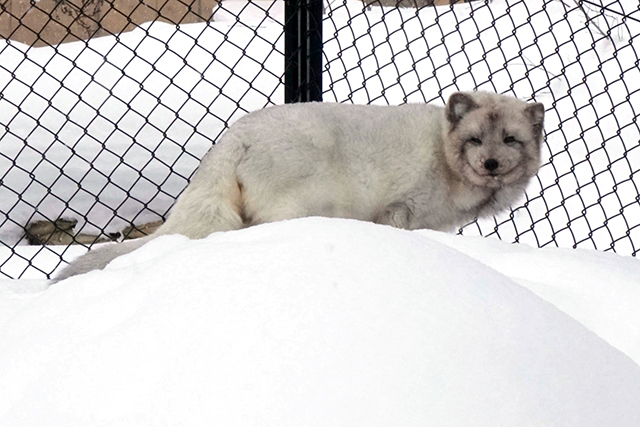
Next to the lesser panda is the Blue Fox House, also known as the Arctic fox. Blue foxes inhabit the Arctic and are covered by black hair in summer that changes to white hairs in winter. During the transition period, their coat can appear blue, hence its name.
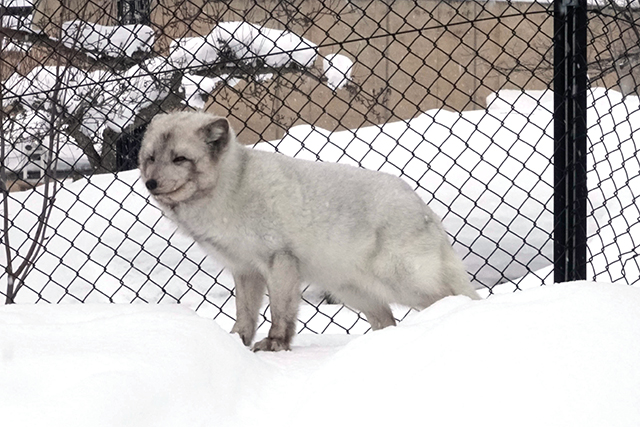
There seems to be only one fox and they’ve woken up just as we arrive.
Fierce Animal Museum
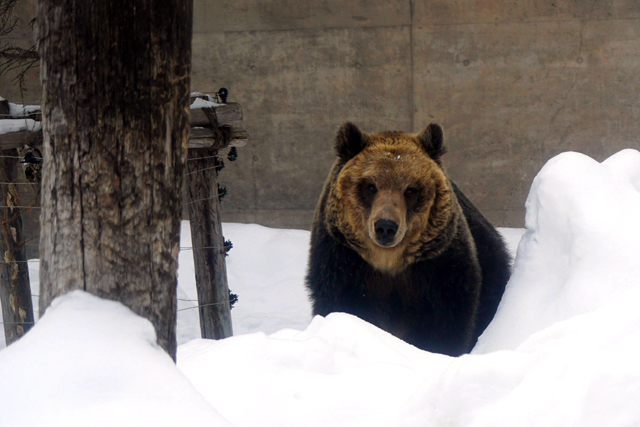
Elsewhere in the Fierce Animal Museum, there’s a Yezo Brown Bear, original inhabitants in Hokkaidō and the largest mammals in Japan (over 3.5 m).
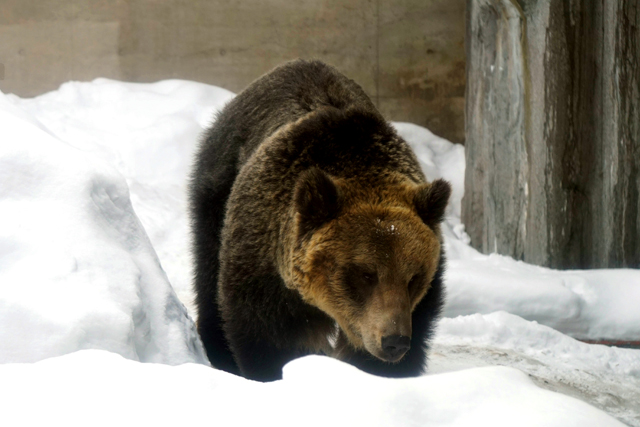
The windows looking into the enclosure are situated such that you can look directly at the animal rather than obscured by caging.
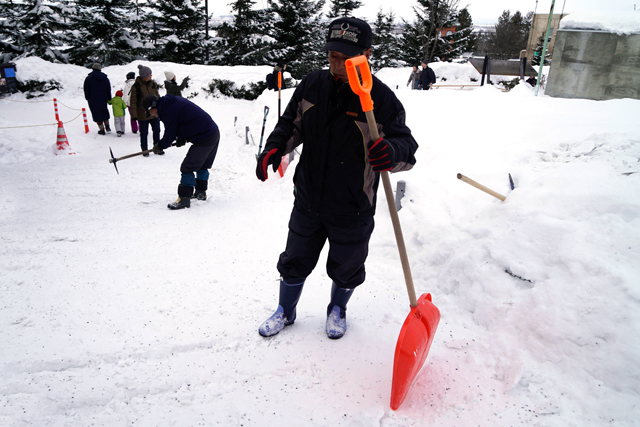
Staff are busy at work putting gravel down on the snow and hacking away at the slop to create makeshift stairs.
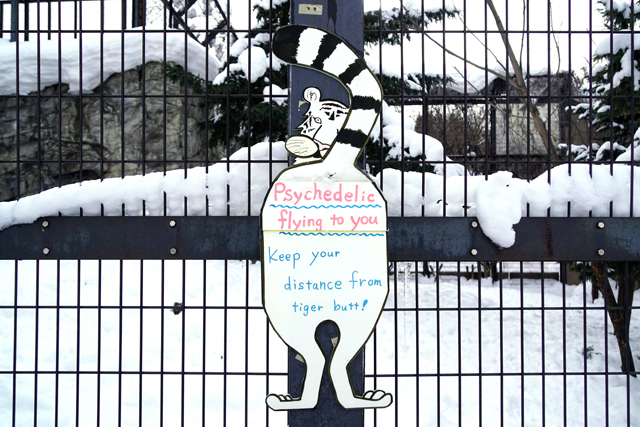
Nearby is the Amur Tiger enclosure with warnings to watch for flying tiger poop.
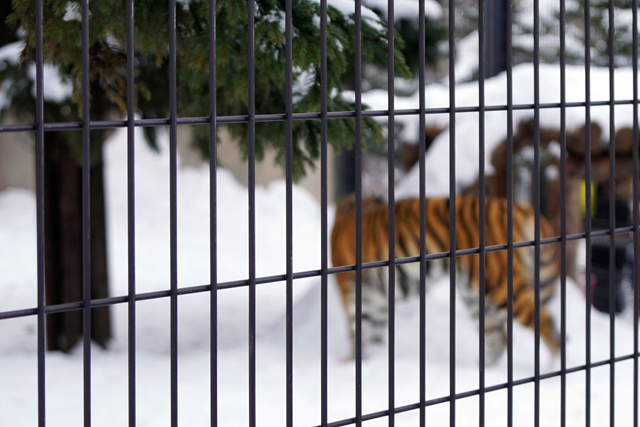
There’s a lone tiger in the enclosure. She’s moving around a lot so we don’t manage to catch a photo of her before we camp for a spot for…
Penguin Museum
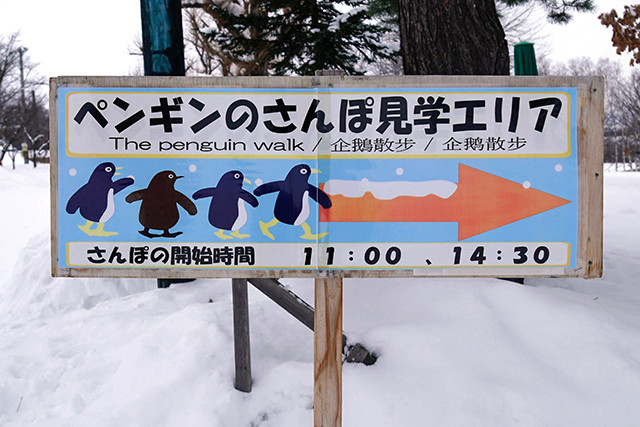
the penguin walk…! They happen twice a day during the winter months at 11 am and 2:30 pm.
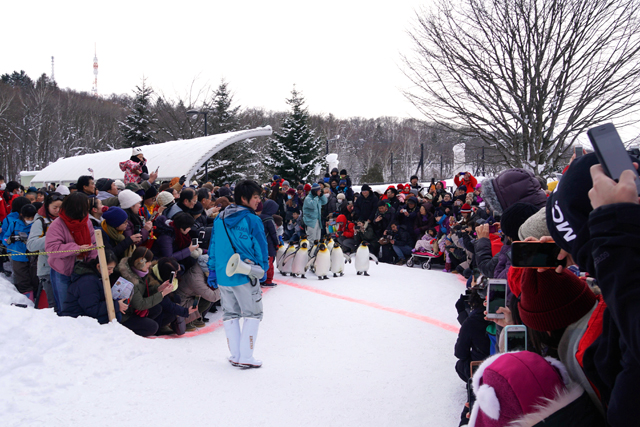
This is a major attraction at the zoo and draws all the visitors out to brave the cold.
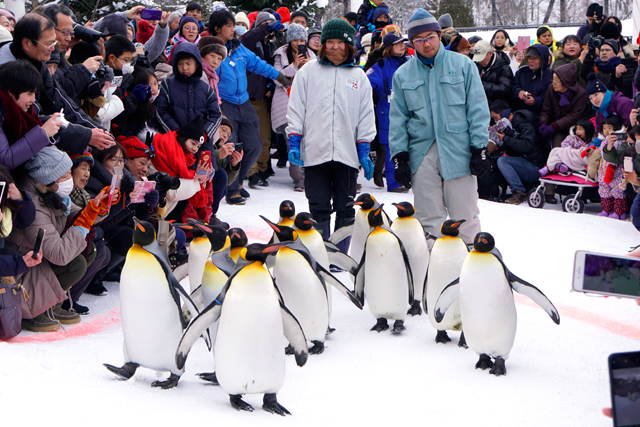 Unique to the zoo, the walk involves staff leading the adult Emperor penguins on a predetermined route flanked by visitors standing behind a red line.
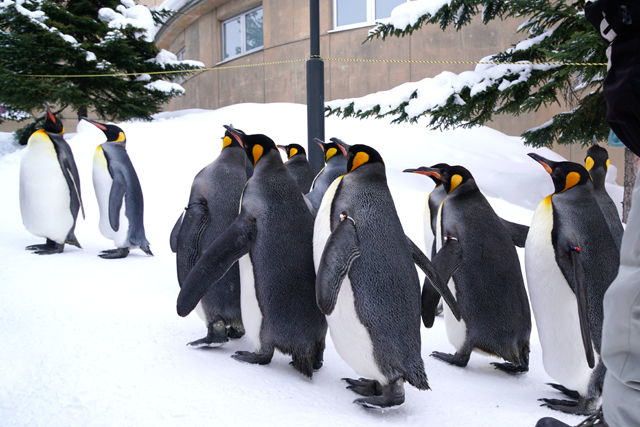
We’re situated near the first half of the walk at the base of an incline, so we watch the penguins climb up the slope.
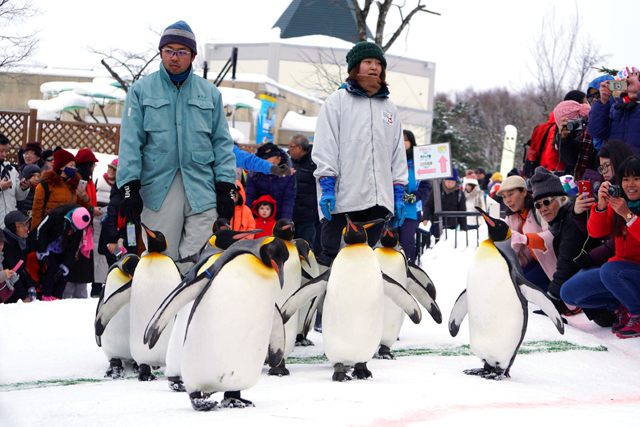
Being in the front half of the walk means that if you wake about 15-20 minutes, you can see the penguins complete the circuit and walk back towards their enclosure.
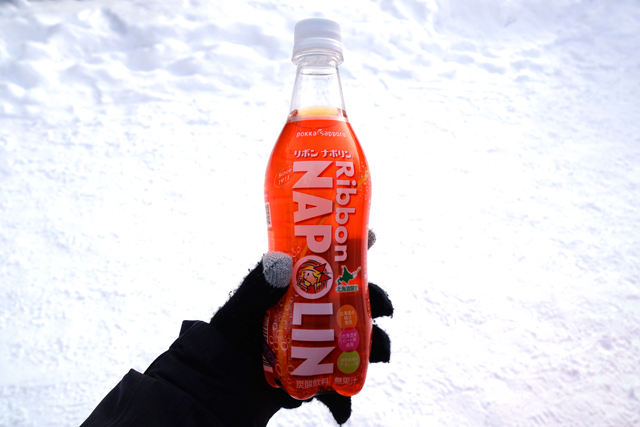
We try the Ribbon Napolin while we waited and lost sensation in our feet from the cold. This drink is specific to the Hokkaidō that we’d seen everywhere since arriving. It’s like a less sweet Fanta or an adult orange soft drink. As with most soft drinks in Japan, it’s very well-carbonated.
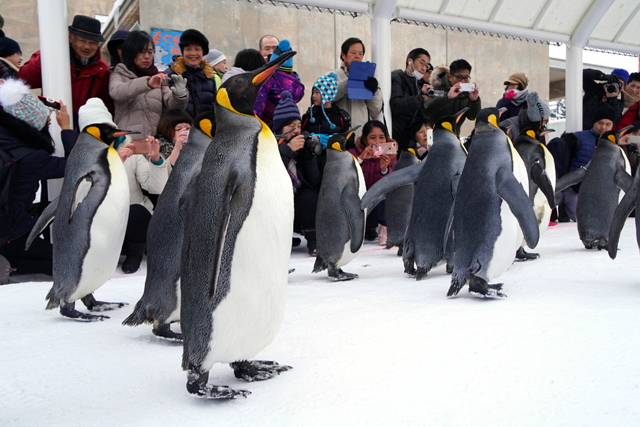
Doesn’t this penguin look so chuffed?
Hippotomaus Museum
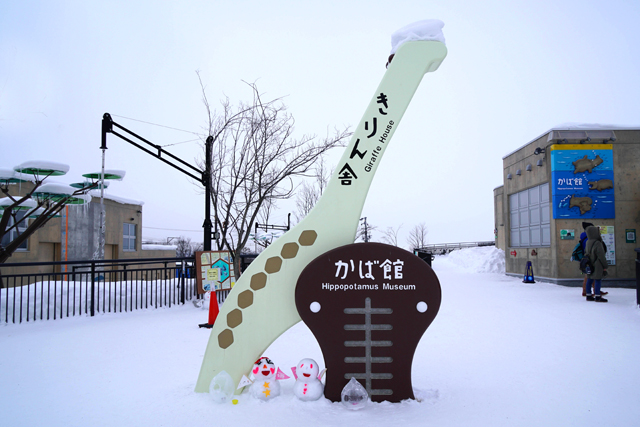
It’s too cold for the giraffe outside.
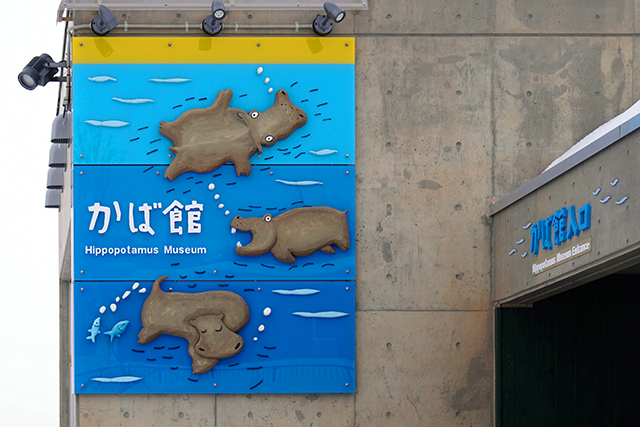
So we head next door to the Hippopotamus Museum instead.
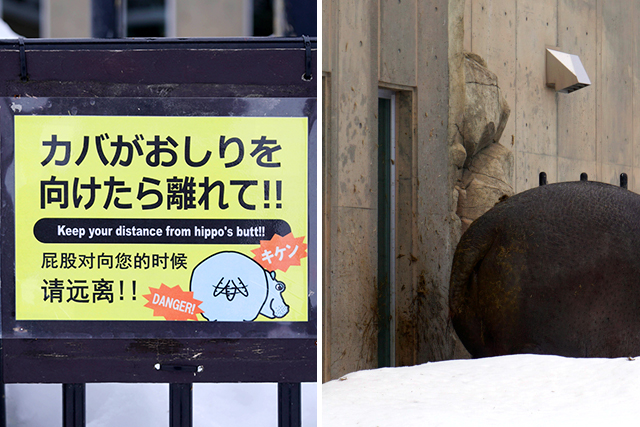
As we approach, the hippo outside makes a huge, explosive poop against the viewing window. What a view for the person behind!
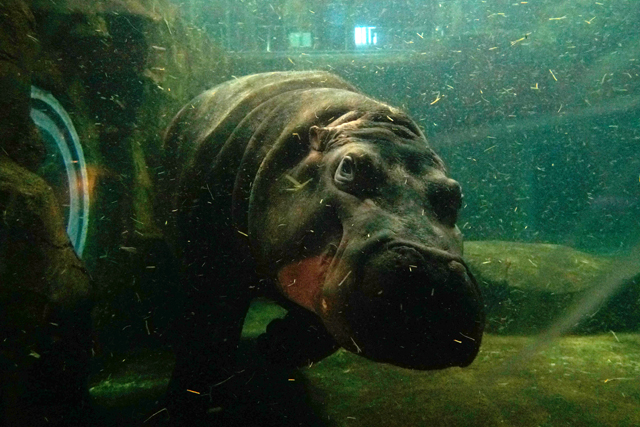
The top floor of the room with the hippo pool is uncovered and reeks like poop, so we hurry downstairs to view the hippos underwater.
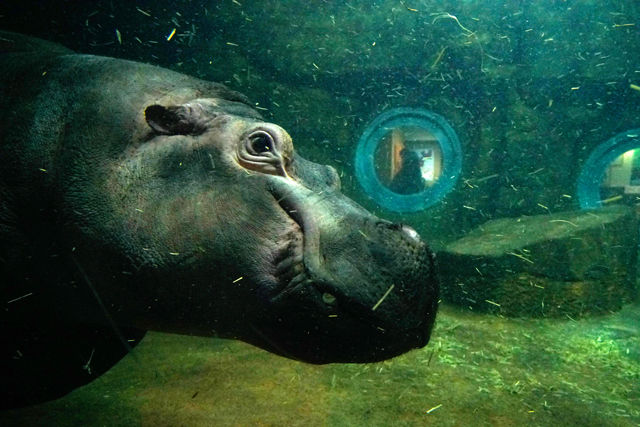
You can see the murkiness of the water. Mmm. There are two hippos at the zoo.
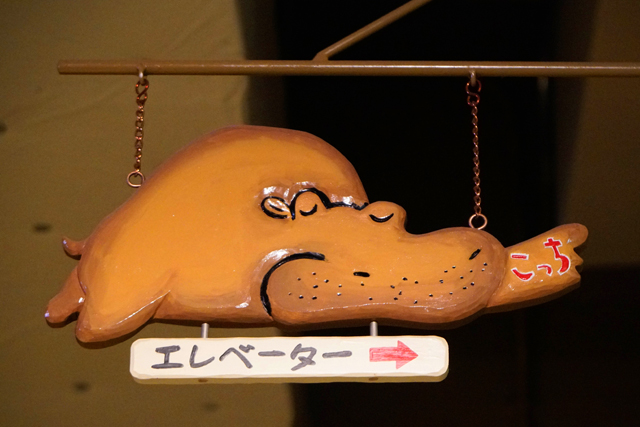 All the signs in each animal’s enclosure are themed accordingly. This one directs you to the elevator.
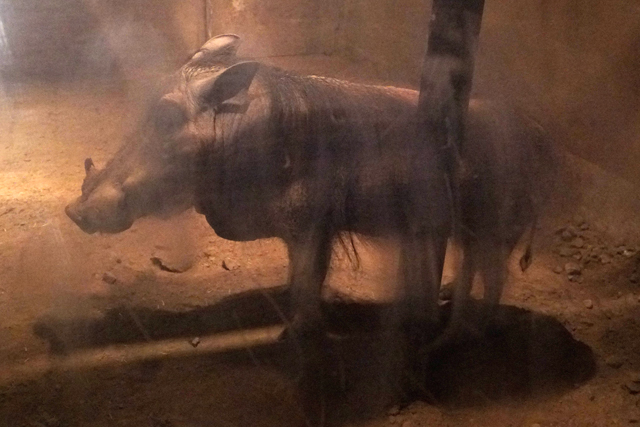
Towards the end of the museum are smaller related animals in rather dark spaces. This is a dessert warthog.
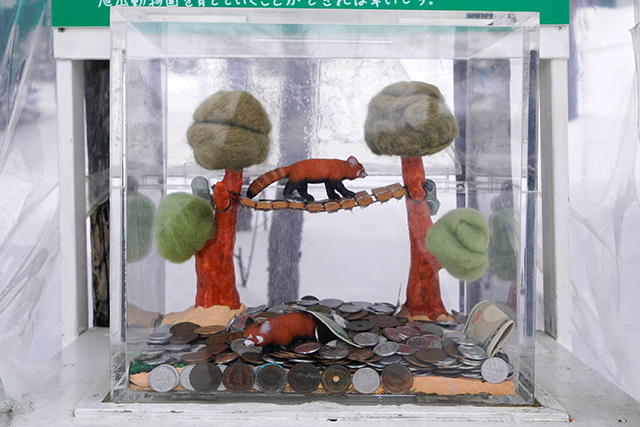
We head back outside and spot a donation box with a cute red panda diorama.
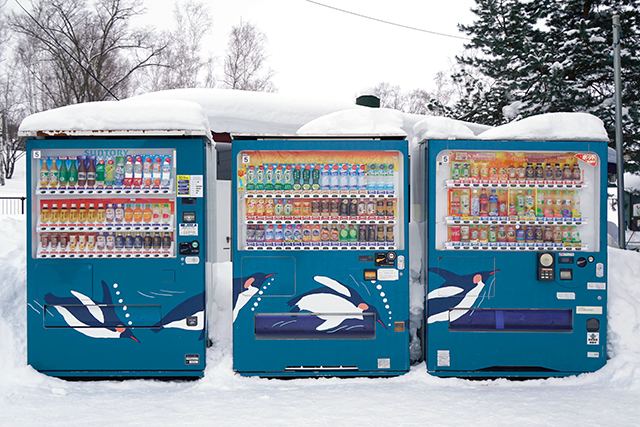
The vending machines at the zoo are designed to blend in with their penguin decals.
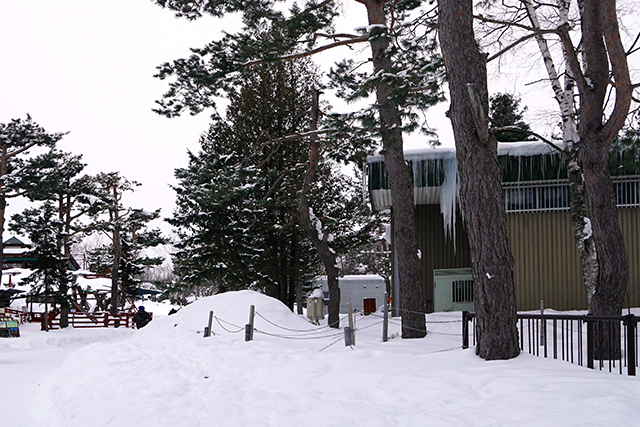
There’s a distinct chill in the air and before long it starts snowing again.
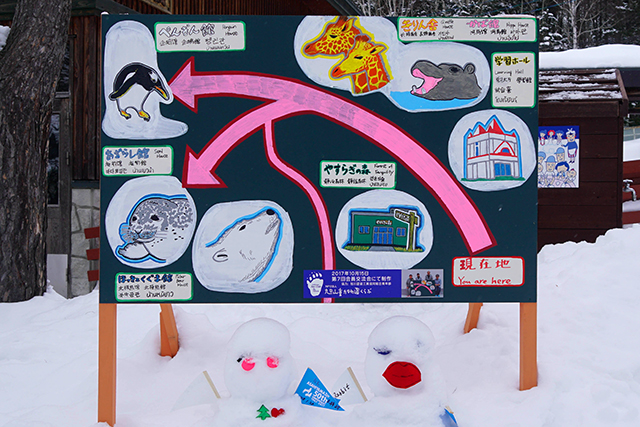
A hand illustrated sign shows you the animals around the area.
Farm for Children
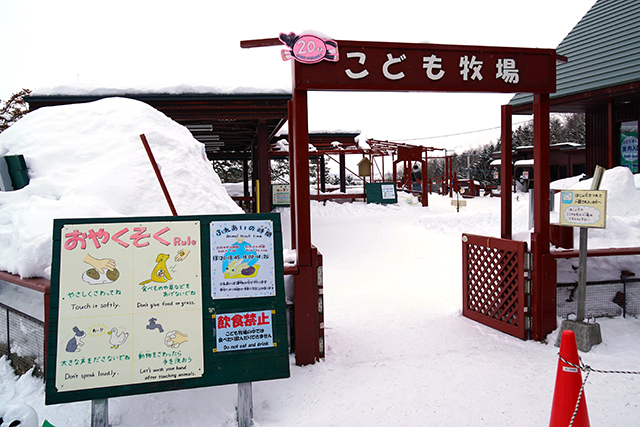
At the top of the slope is a petting zoo with rabbits, marmots, sheep and ducks, but it’s rather quiet.
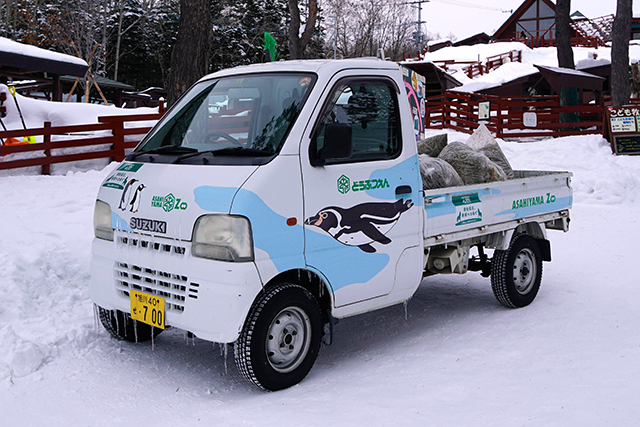
Trucks are smaller in Japan, making them look as if they have oversized front compartments.
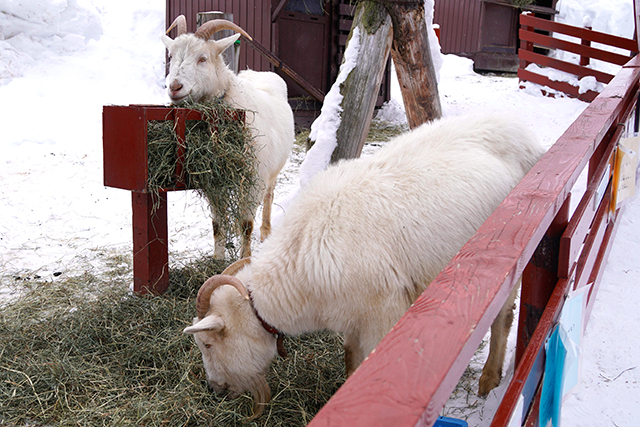
The only animals awake in the farm for children seem to be the goats who have thick fluffy fur for winter.
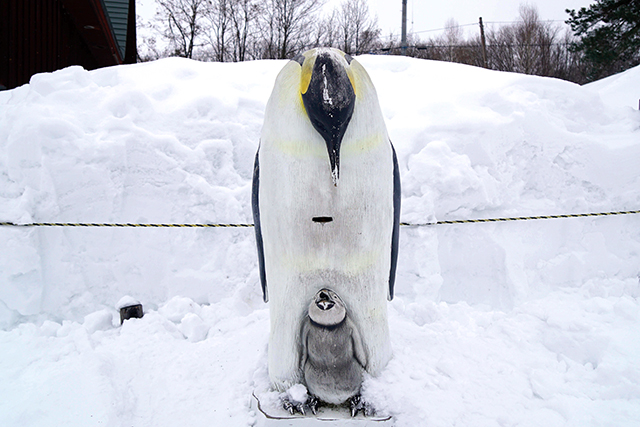
The penguin walk makes it all the way up to this penguin sculpture near the farm for children. It’s quite a trek for the penguins!
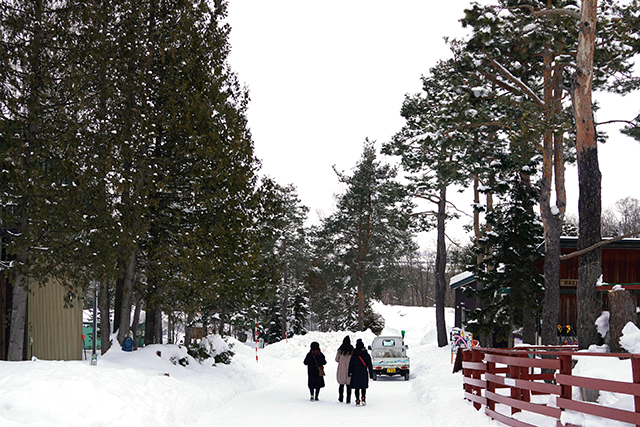
It’s quite pleasant seeing evergreen trees against the snow when most other vegetation has shed their leaves.
Chimpanzee Museum
We’re too late for the snow monkeys as the staff have started cordoning off areas of the zoo on account of the heavy snowfall so we head into the Chimpanzee Museum instead.
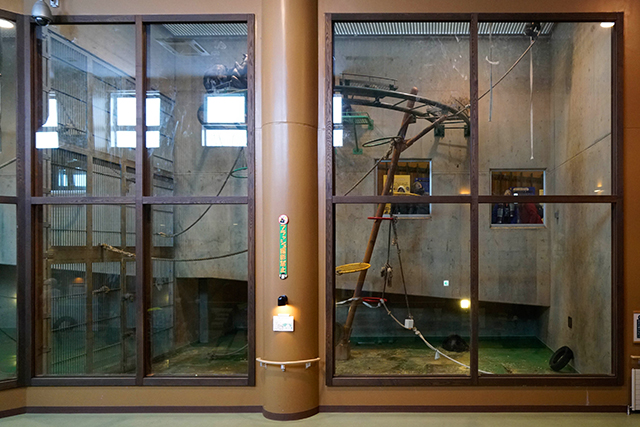
The enclosure is heated to a balmy temperature, with the tall structure designed to imitate the height of a Central African forest, their native habitat.
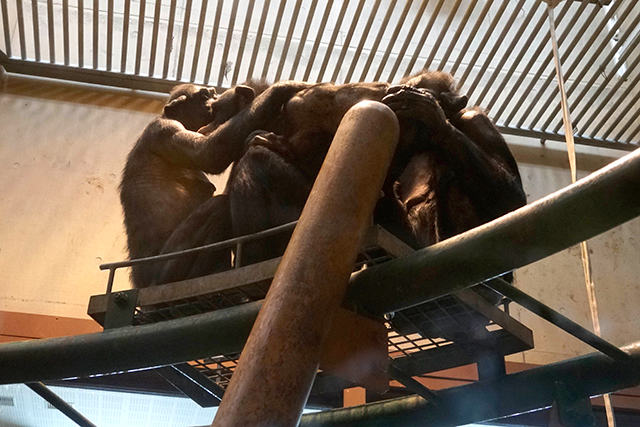
But even so, all the chimpanzees are huddled together on this platform. There are supposed to be 13 chimpanzees.
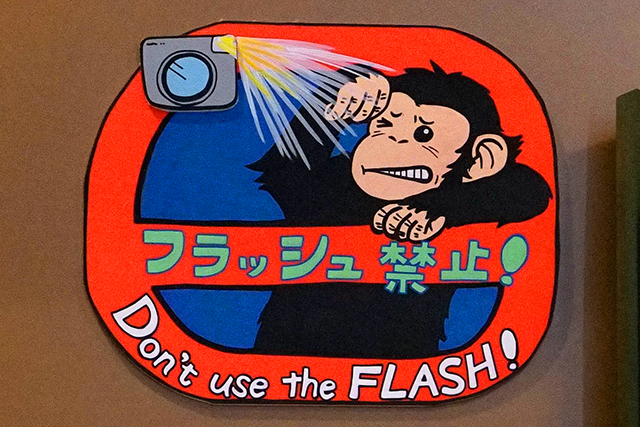
The zoo reminds us that chimpanzees (and animals in general) don’t like to be startled by flash.
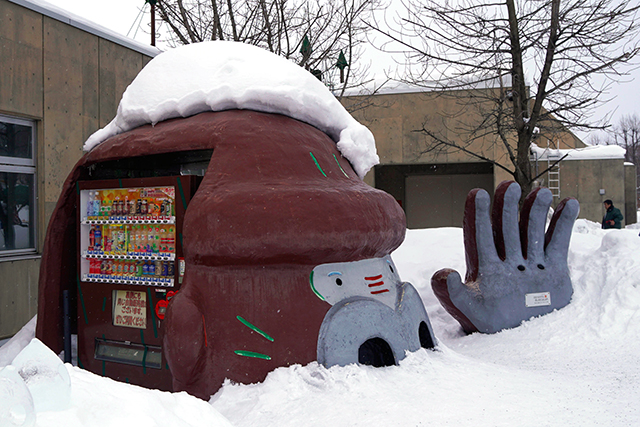
The vending machine near the gorilla enclosure is built into the zoo environment.
Japanese Crane House
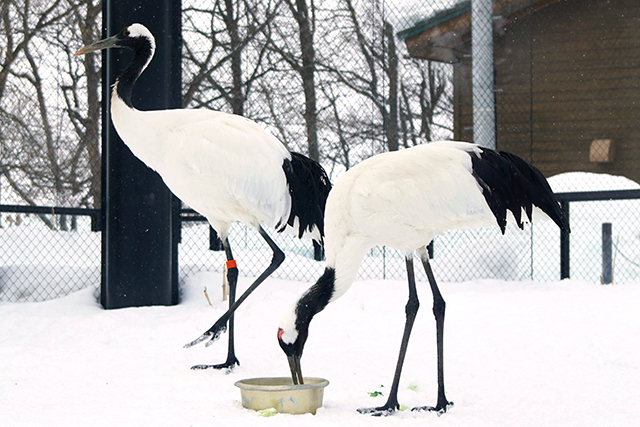
Further down the slopes, there’s a pair of Japanese Cranes being majestic. There’s an additional chick who’s not on view. The Japanese Crane is native to Hokkaidō, in danger of the extinction and designated as a natural monument in Japan.
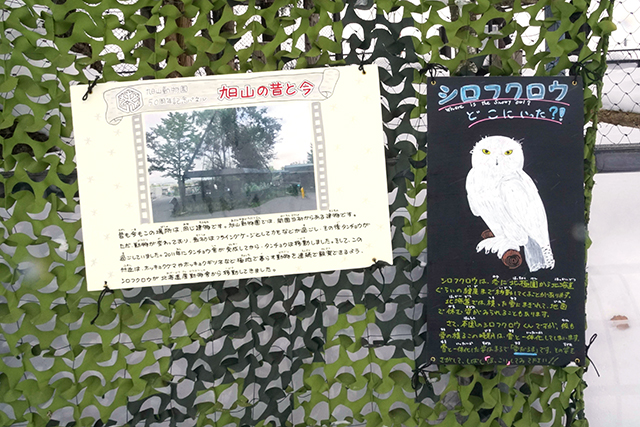
We walk past the enclosure for the Snow Owl and D thinks I’m joking when I ask him to spot the owl and continues walking on…
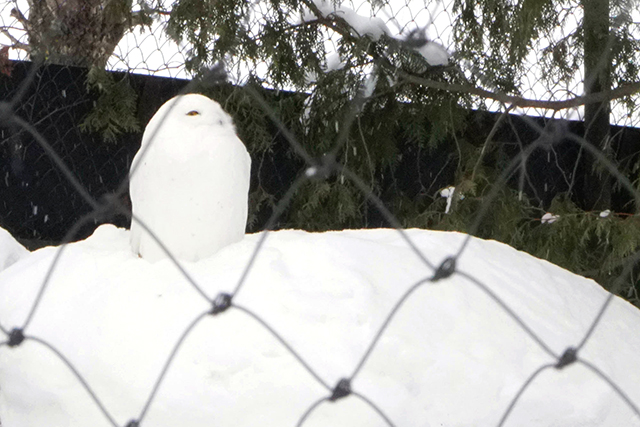
…until I point out that the owl is snow white and camouflaged by the snow.
Hokkaidō Sika Deer Museum
There’s a section dedicated to the Hokkaidō Sika Deer.
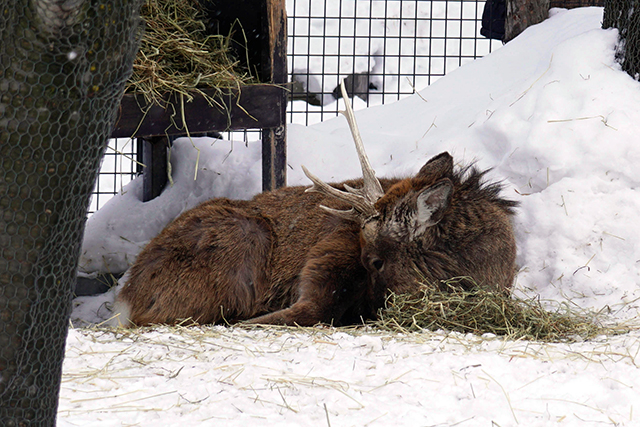
This one’s snuggled up near its feed. We’d previously encountered Sika Deer in the wild at Nara and Miyajima.
Wolf Museum
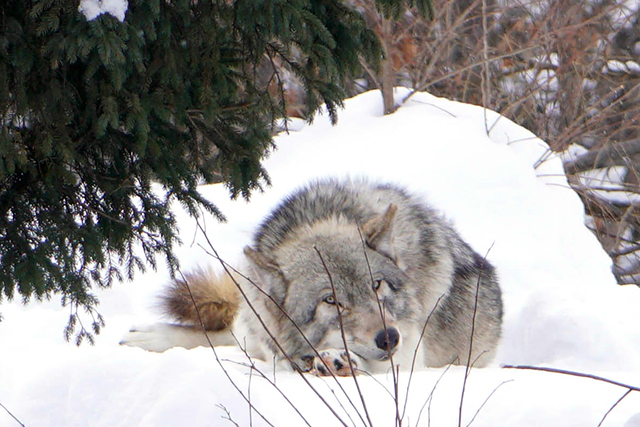 Across from the Sika Deer is the Wolf Museum.
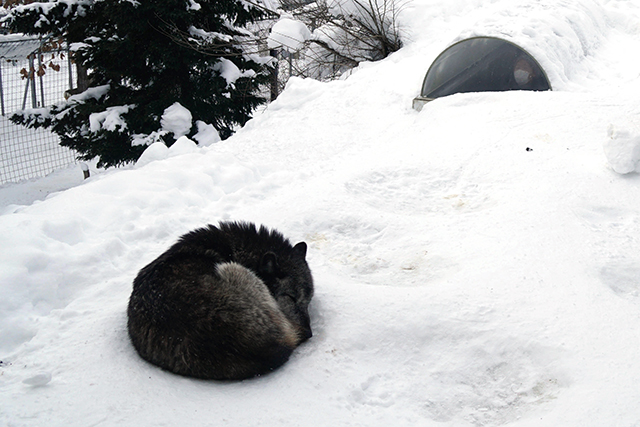
Visitors can also view the wolves from the perspective of their prey via the domes underground. Indeed, the Yezo Deer, which is often hunted and eaten by the wolves are displayed next door!
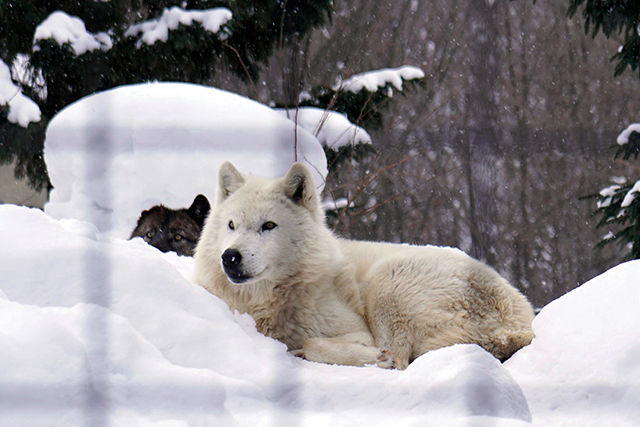
This one’s alert with a beautiful white coat…
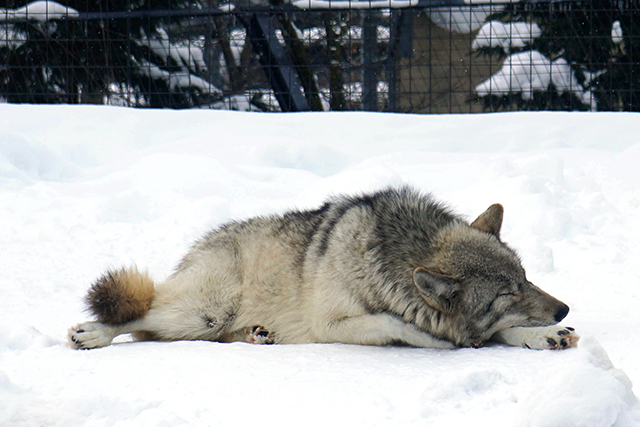
…while this one is stretched out, asleep.
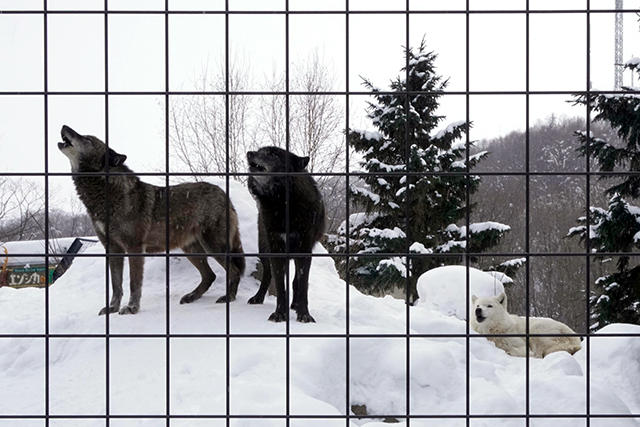 The enclosure has been built to resemble a forest complete with rocks, stones and river from Hokkaidō a century ago.
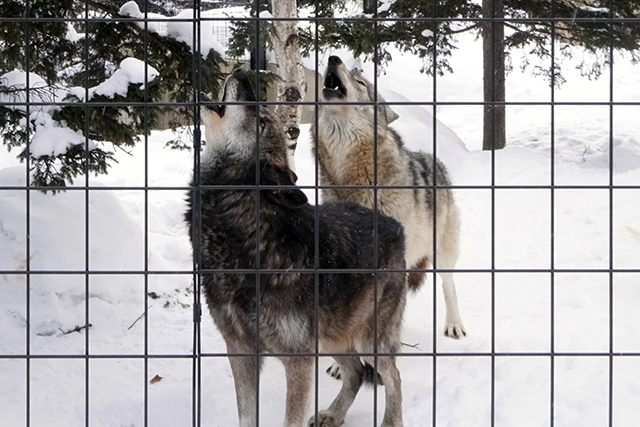
After watching the wolves for a while, they start howling…
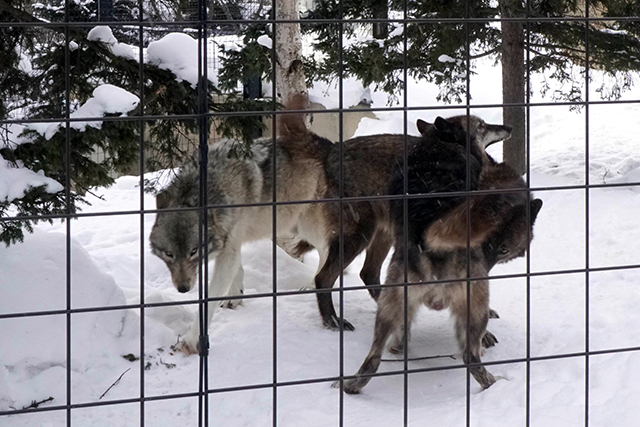
…before becoming rowdy.
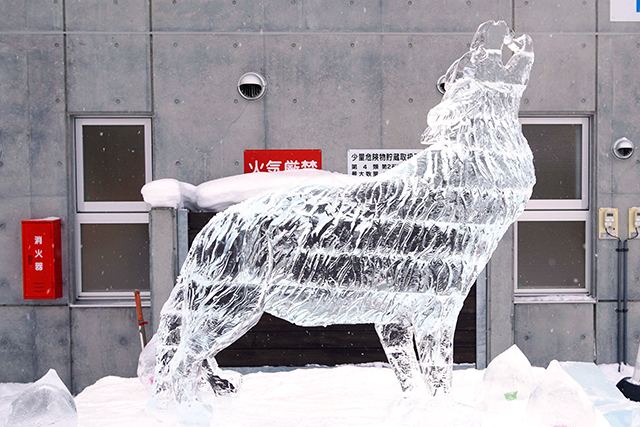
Nearby, there’s a howling wolf carved from ice.
Zoo Shop
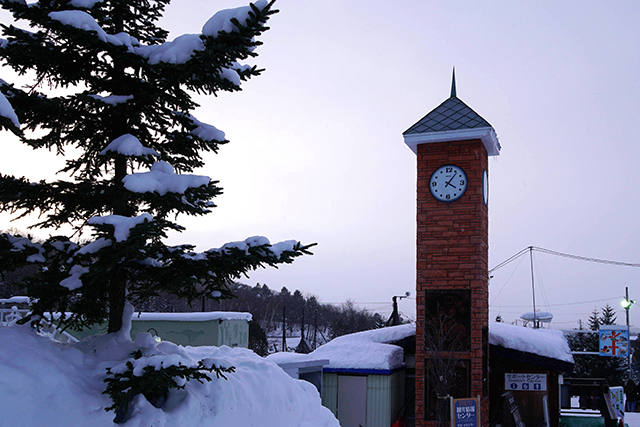
It’s getting late dark around 4 pm and we want to head back to the city.
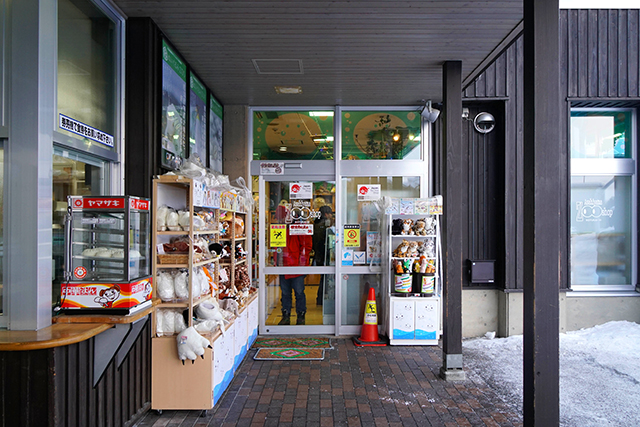
Our last stop is the Zoo Shop. I always enjoy visiting souvenir shops in Japan.
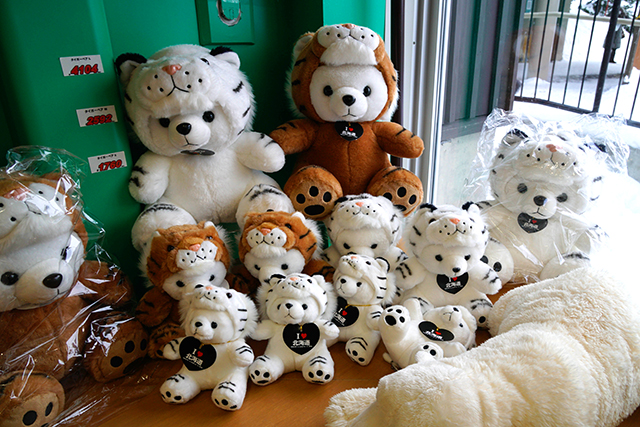
A corner of the store is filled with bears posing as tigers and leopards. They’re so squishy!
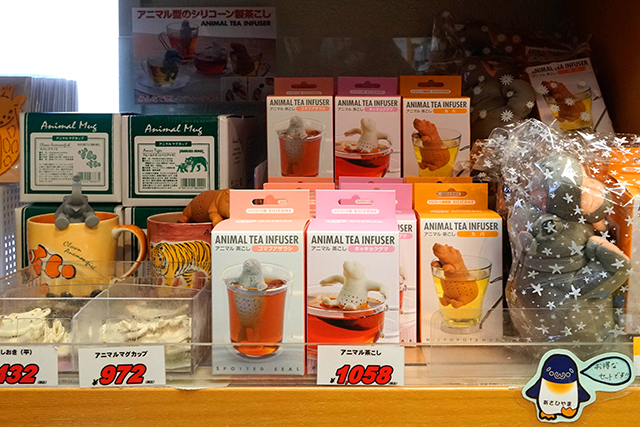
There are all sorts of animal merchandise including these Animal Tea Infusers with lazing seals and hippos.
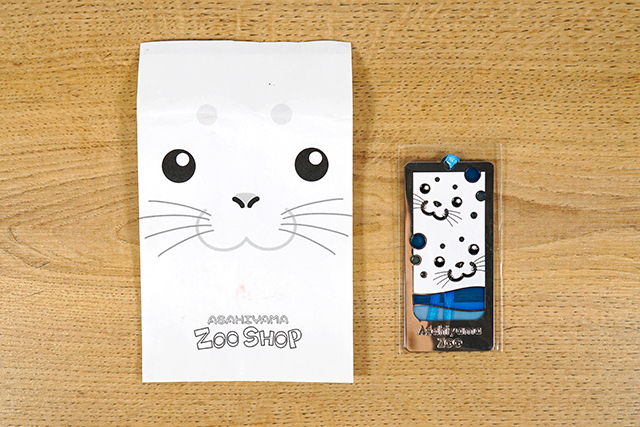
I pick up a metal bookmark with cute seal faces. The packaging is a cute seal too!
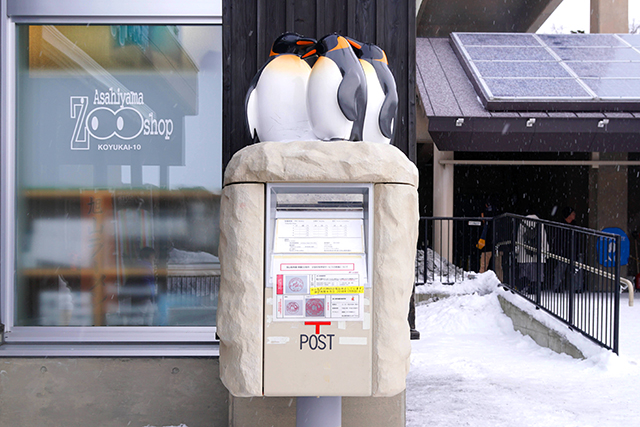
At certain tourist destinations in Japan, there are special post boxes allowing you to post your memories of that specific place or event to your loved ones on the spot.
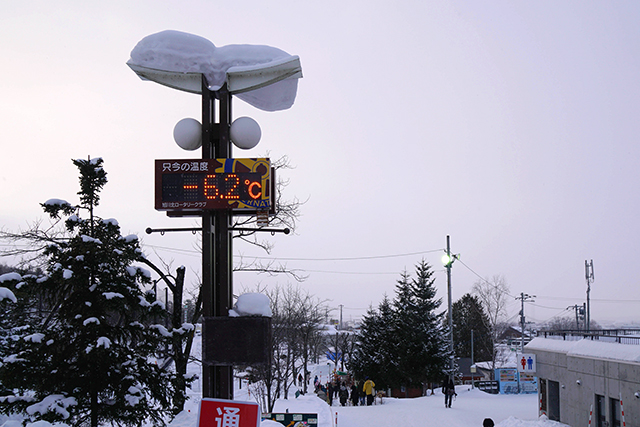
By the time we leave, it’s a frosty -6.2°C.
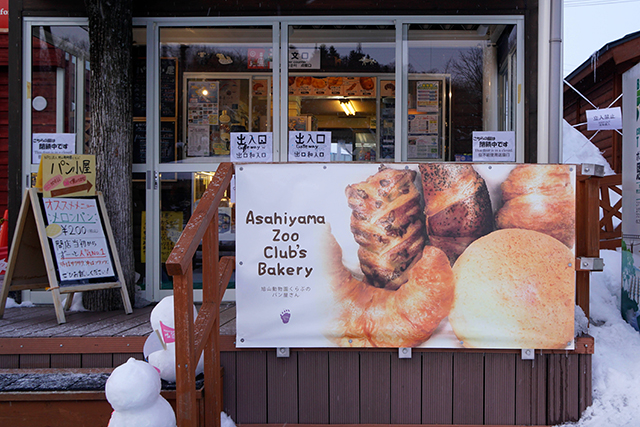 There’s only a handful of shops selling food at the zoo, all of which are located near the entrance. One of these is a bakery.
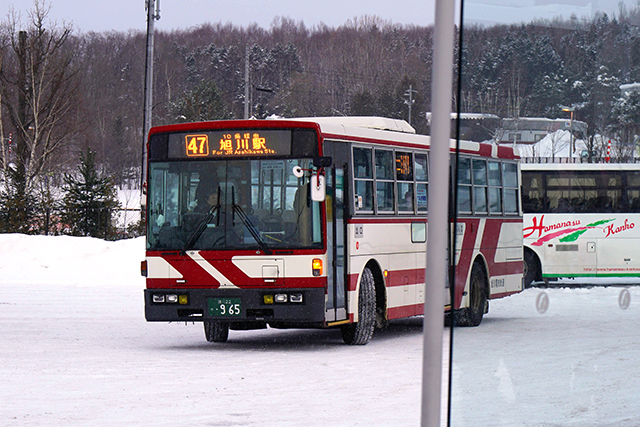
The bus back to JR Asahikawa Station is packed…
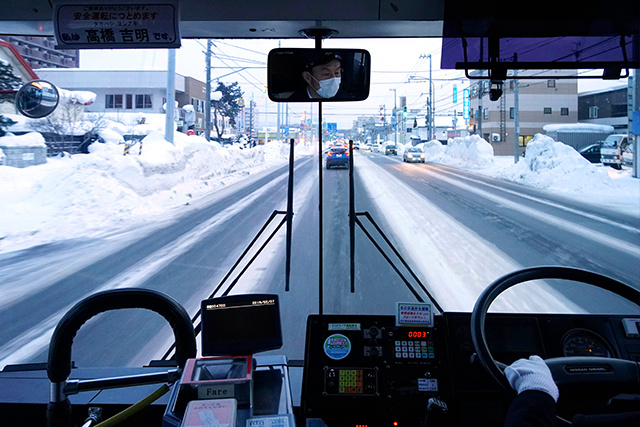
…but we’ve learned from this morning to stand near the front of the bus for faster disembarking. We also get a drivers’ view of the streets in Asashikawa.
JR Asahikawa Station
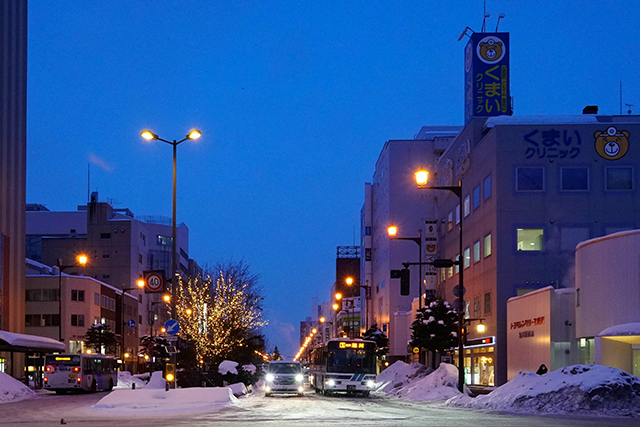
The sun sets quickly in winter.
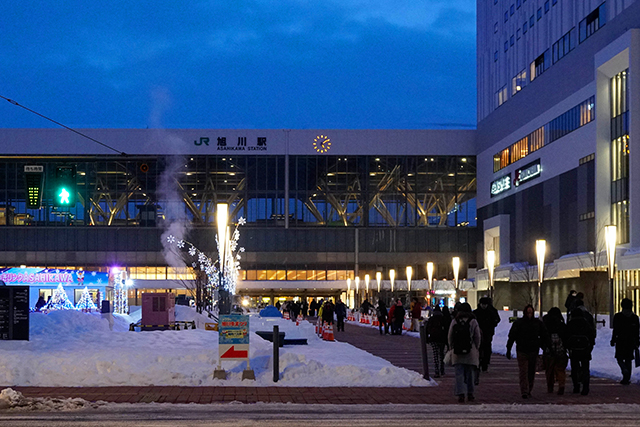
It’s quite dark by the time in the 30 minutes it tastes for the bus to get back to the station.
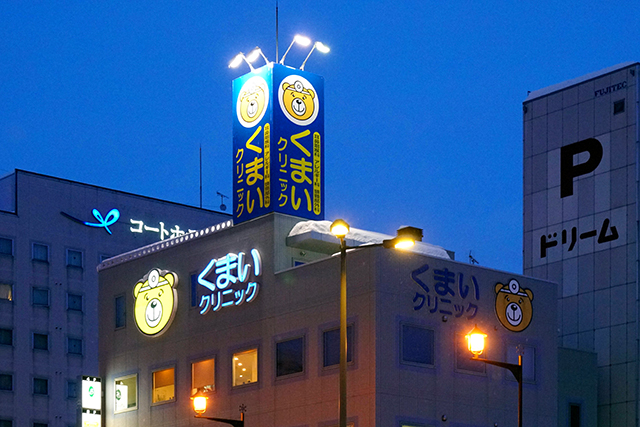
There’s a medical clinic with a cute bear logo.
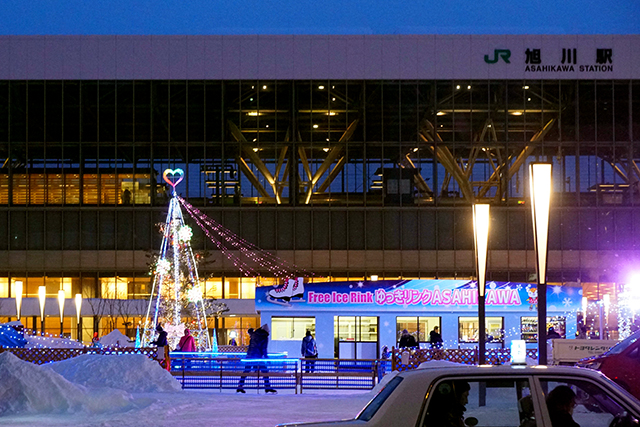
There’s a free ice rink outside the front of the train station.
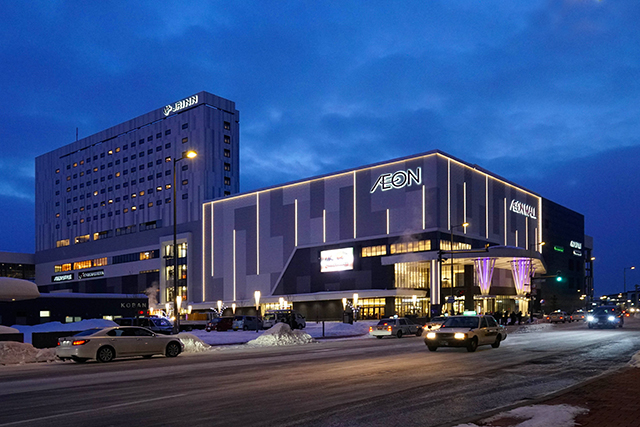
An Aeon shopping centre and a JR Inn are attached to the train station.
Asahikawa Winter Festival
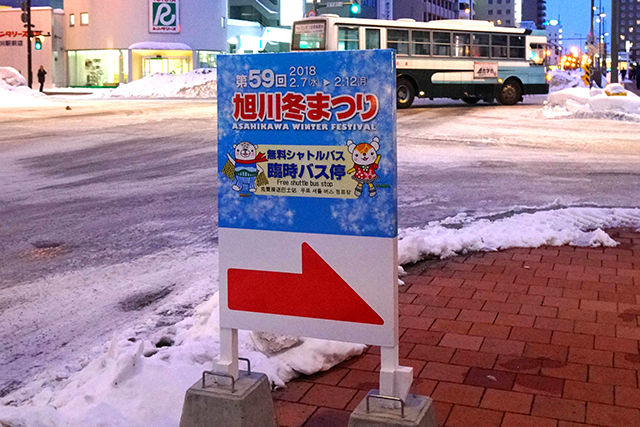
There are signs around the station pointing to where the shuttle bus is for the festival. We decide to walk down Heiwa Dori area though…
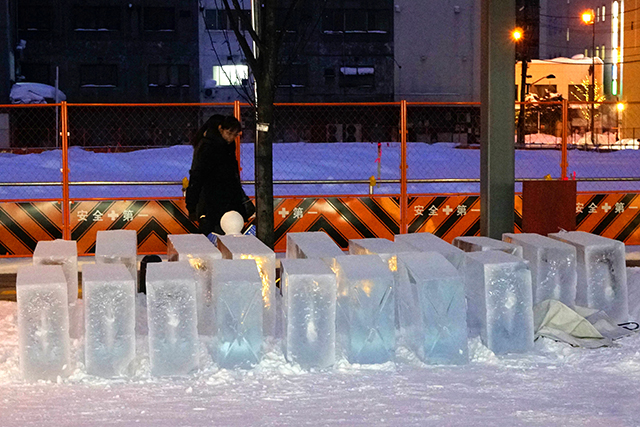
We thought the competition part of the ice festival would be running on the first day so we’d see the artists making their sculptures, but alas, all we get are blocks of ice in preparation. The competition sees professional ice sculptors from around the world compete to ‘combine 8 blocks of ice (height: one meter, weight: 125 kilograms) in various ways to complete with artistic ice sculptures of animal or human figure within two days (40 hours).’
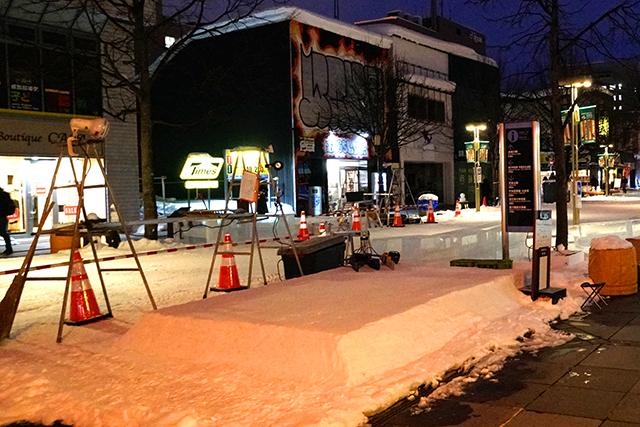
There are also snow pedestals ready for the ice sculptures to sit atop.
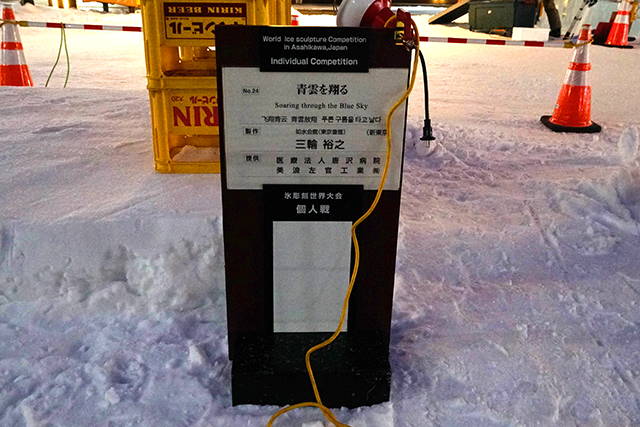
Some signs for the ice sculptures to be made as part of the competition are also up. This one promises one called ‘Soaring through the Blue Sky’.
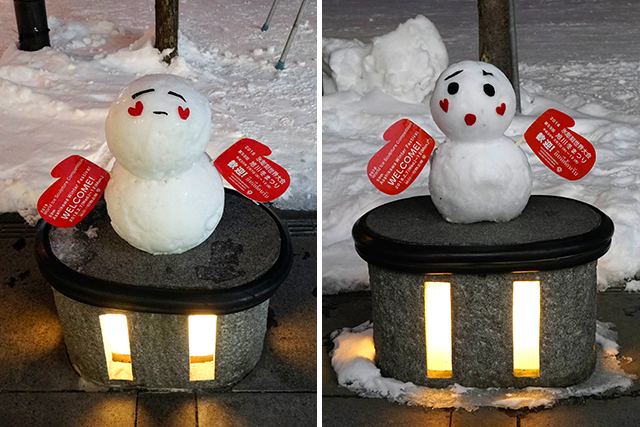
Instead, we satisfy ourselves with these cute snowmen welcoming visitors to Asahikawa sitting atop benches along the length of Heiwa dori.
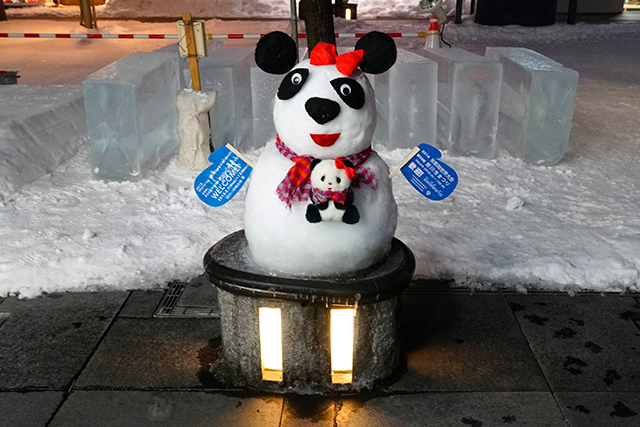
There’s even one that looks like a panda.
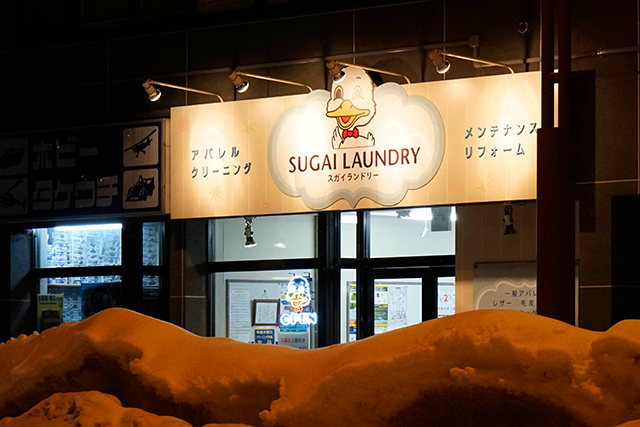
This laundromat has a cute duck logo. The snow is piled high in the centre of the road.
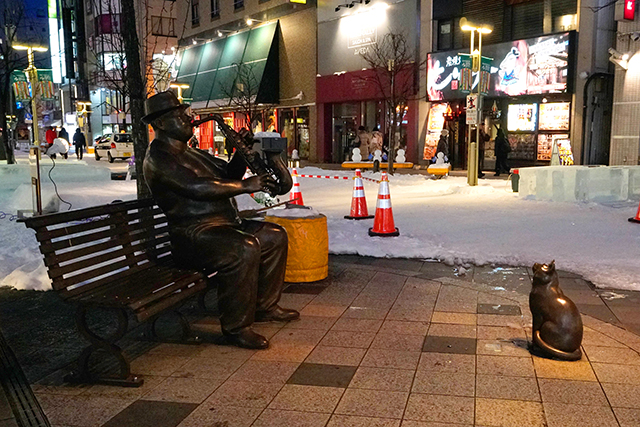
We pass by a bench with a sculpture of a man playing the saxophone to a lone cat.
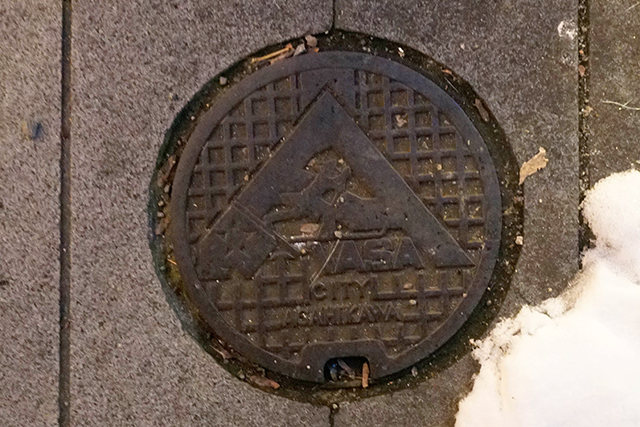
They don’t have particularly decorative manhole covers in Asahikawa.
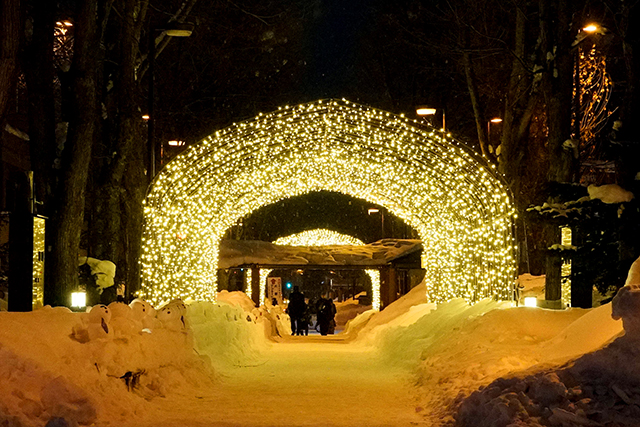
The Asahibashi Site for the festival is about a 10-15 minute from the end of Heiwa-dori.
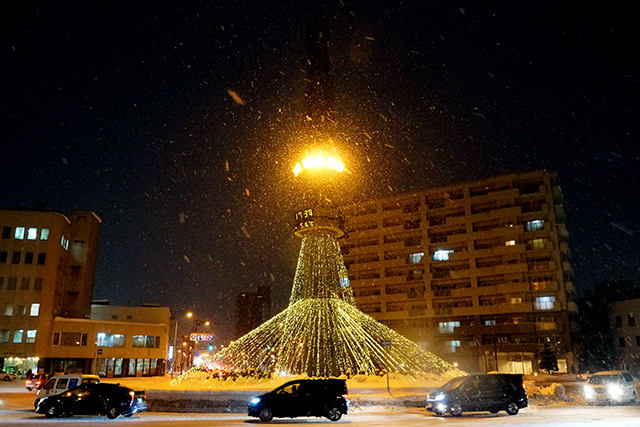
It’s starting to get colder and sure enough, the snow starts to come down. It’s 5:30 PM and -5.6°C
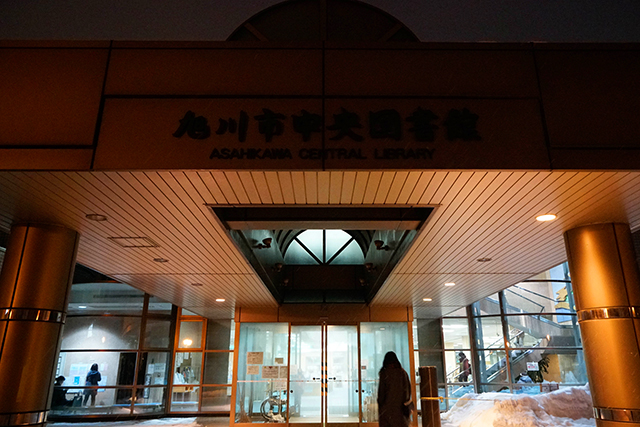
We pass by the busy Asahikawa Central Library.
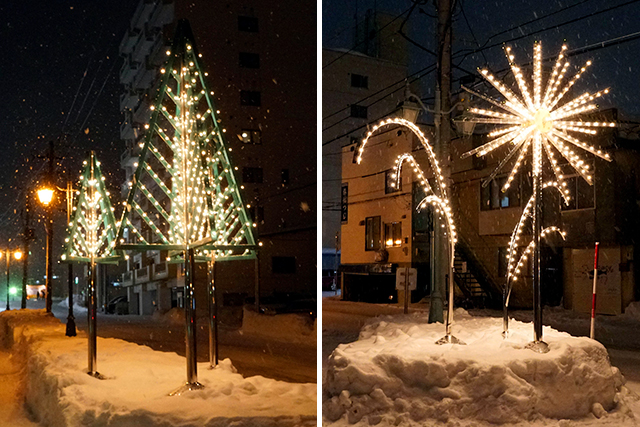
There are some lights along the way. It’s beginning to get miserably cold and I wonder to D if it’s worth our while, but we push on.
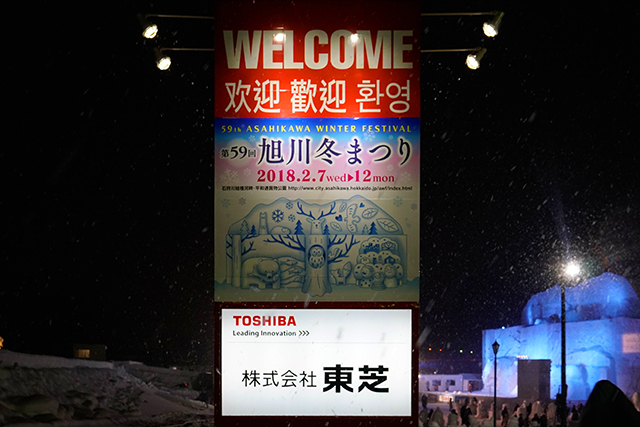
Finally! We reach a place with bright lights and loud music. We’ve have found the site for the 59th Asahikawa Winter Festival.
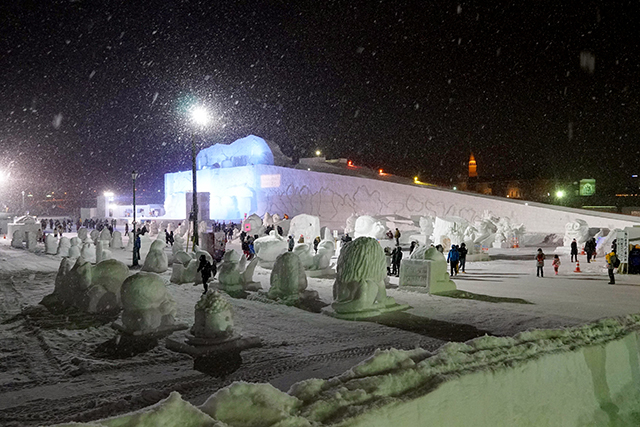
At this Asahibashi Site, there are several smaller snow sculptures and snow slides.
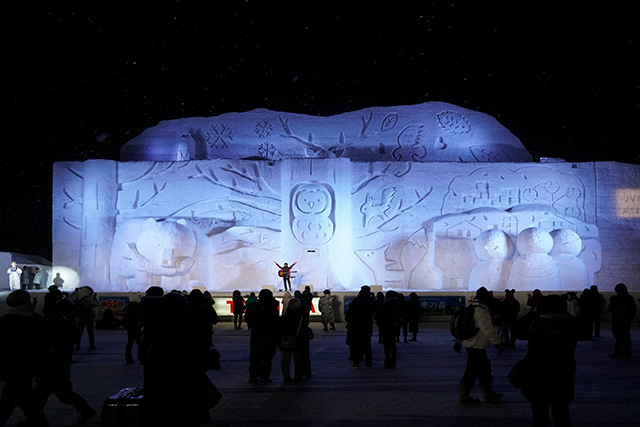
Asahikawa doesn’t have as big a winter festival as Sapporo, but it does boast some of the biggest snow sculptures with a massive sculpture made as a stage. A polar bear with a fish in its mouth, an owl, squirrels, foxes and snowmen feature in this years against a backdrop of trees.
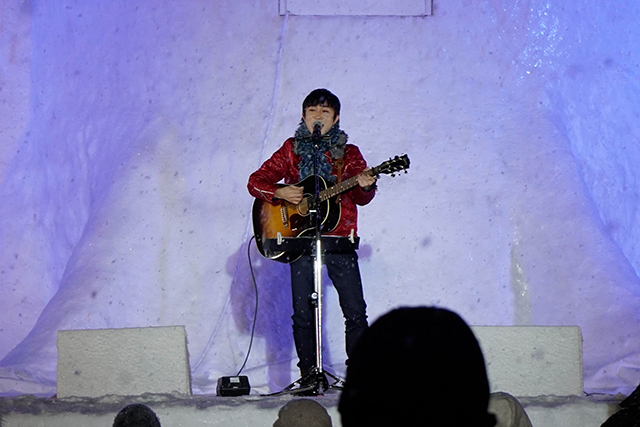
The stage is made for music and other performances. This guy is entertaining a crowd with his guitar. We marvel at how his hands can still play the instrument as we’re having trouble feeling our fingers inside our gloves at this point.
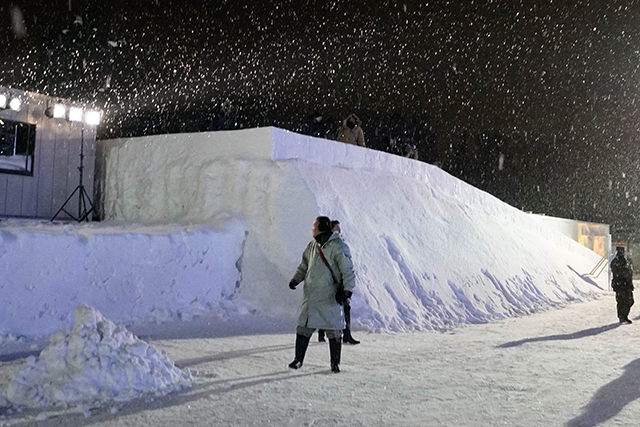
Those wanting a better view of the stage can climb up to this snow platform opposite.
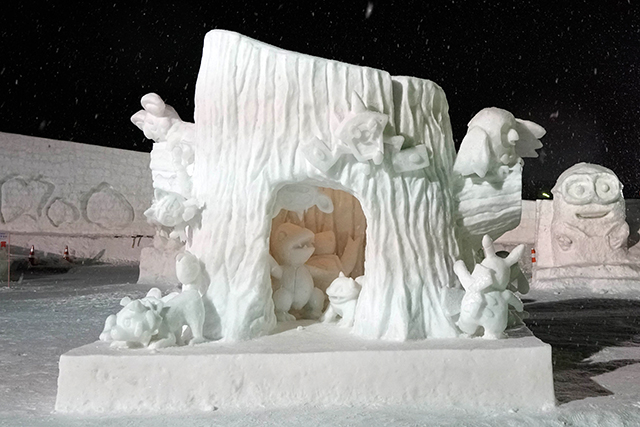
This is the Pokemon Forest, which won the Sakuragi Award, the first prize in the medium-size snow statute contest.
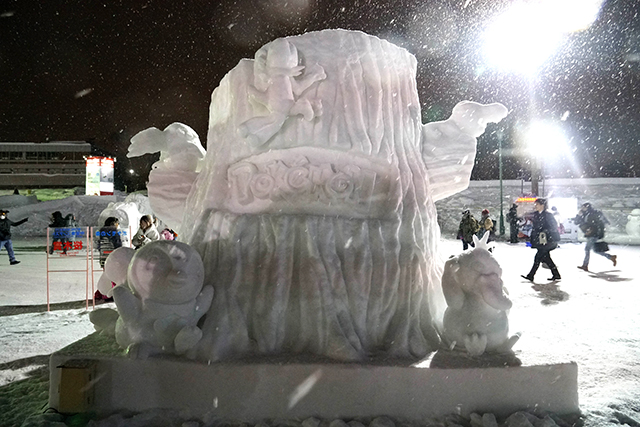
It’s a truly three-dimensional sculpture. This is the back.
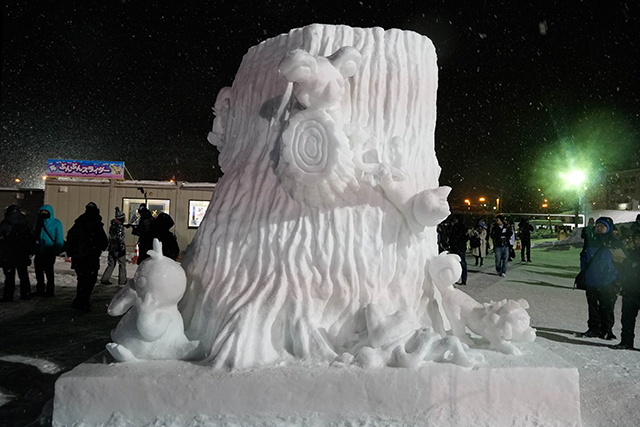
And this is the side.
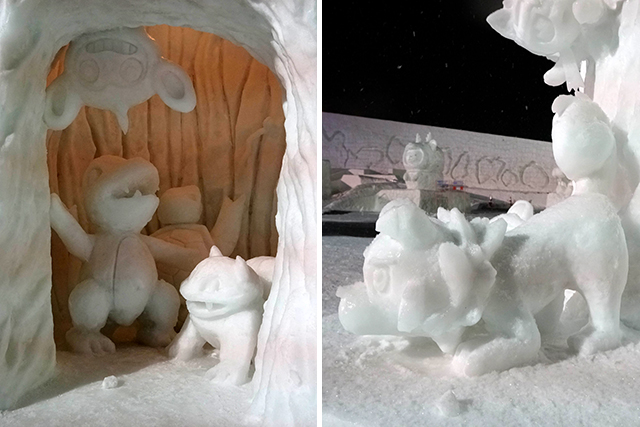
The level of detail is amazing, both inside the hollow of the tree trunk as well as around it. There’s Charmander, Squirtle, Bulbasaur, Aipom and Rockruff.
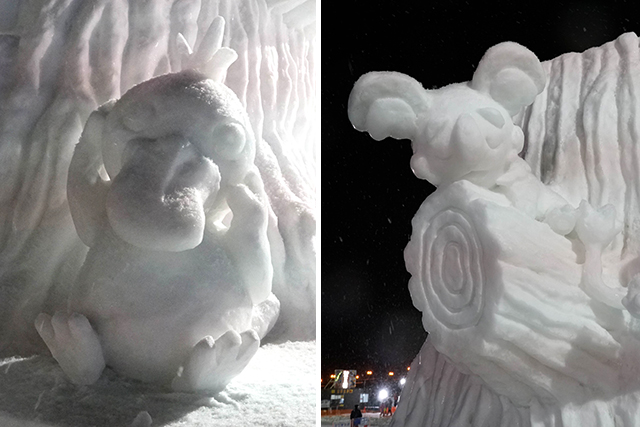
I’m not a Pokemon fan but I always find Psyduck cute. Nekkoala is clinging to a tree branch.
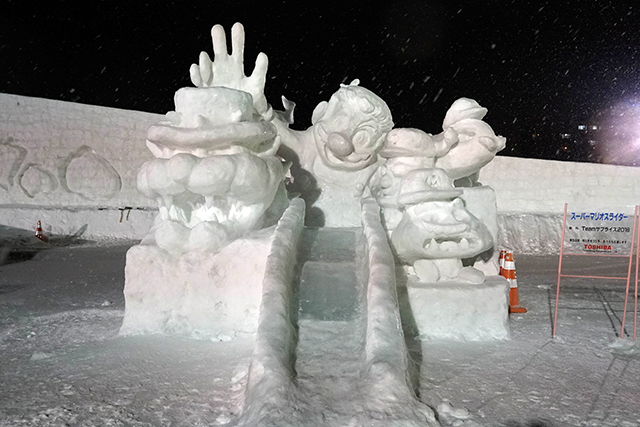
This is the Super Mario Slider that won the Gold Prize in the Medium-size Snow Statute Contest.
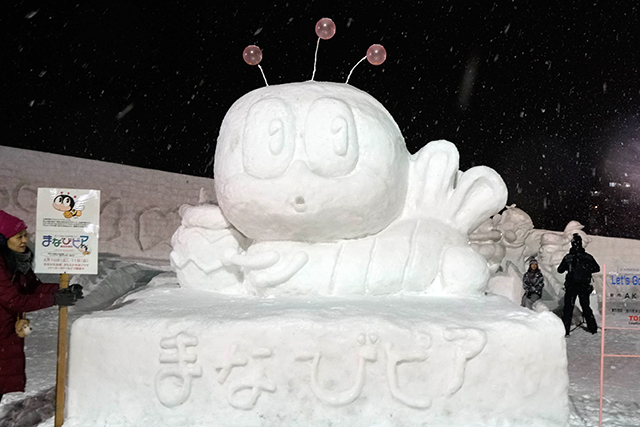
This one is called Let’s Go!! Manabi Pia. Manabi (Learning) Pia (Utopia) is a ‘festival’ run by the Japanese Ministry of Education, Culture, Sports, Science and Technology in conjunction with one local administration each year to foster lifelong learning. It partners local associations, corporations, schools, activity groups, and administrative institutions to offer people opportunities to improve themselves with various skills.
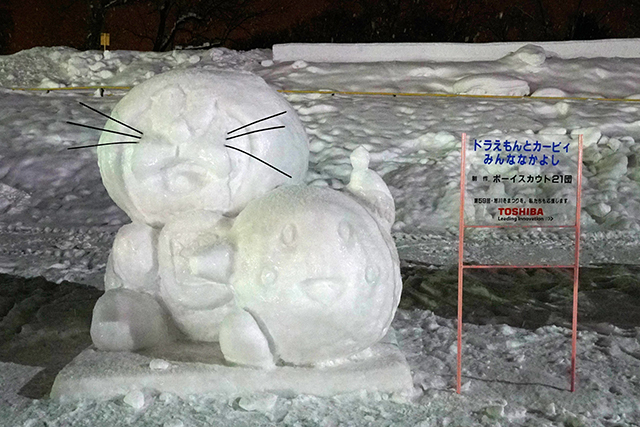
This is Doraemon and Kirby.
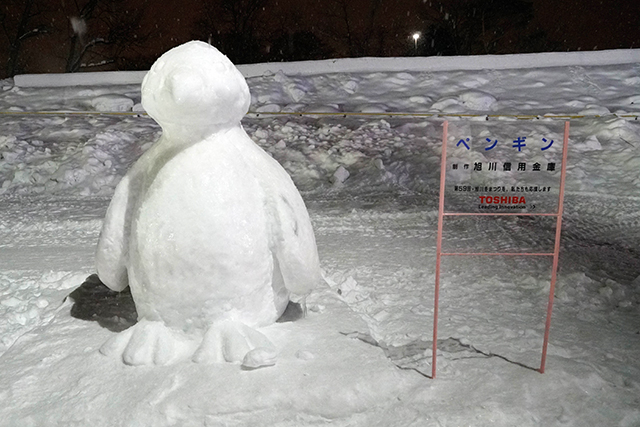
There’s Penguin.
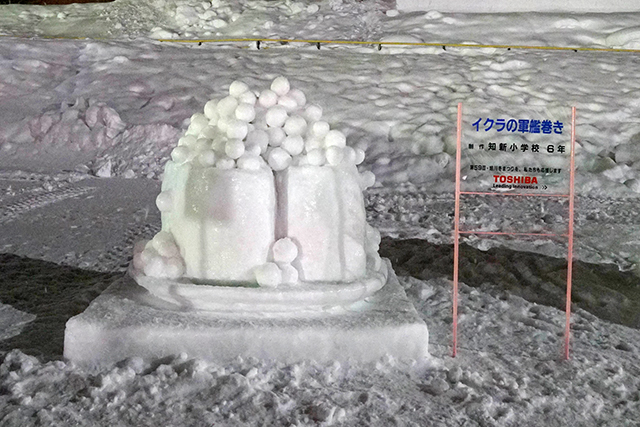
This is an Ikura Gunkan Maki, also known as salmon roe battle ship maki.
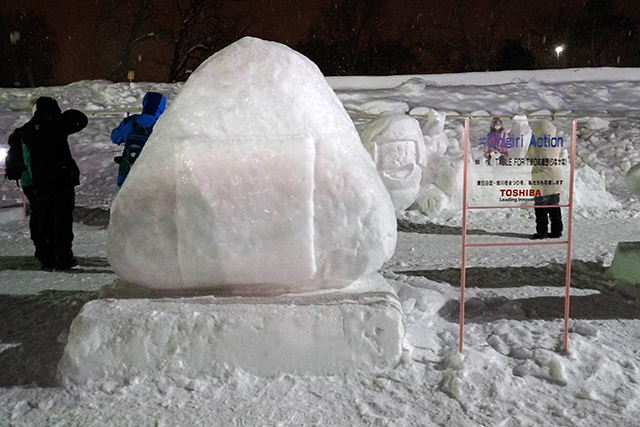
Following on with the food sculptures is another onigiri from Onigiri Action.
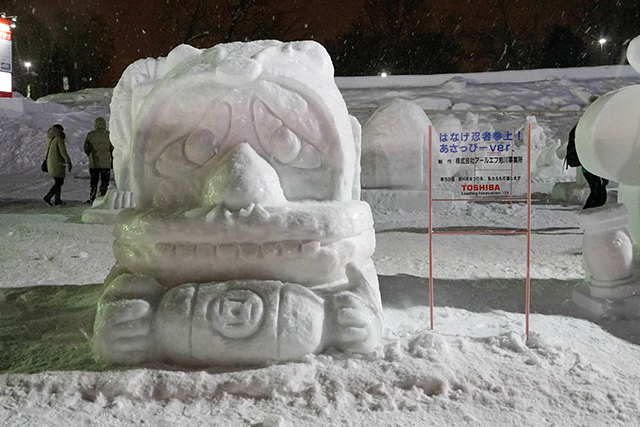
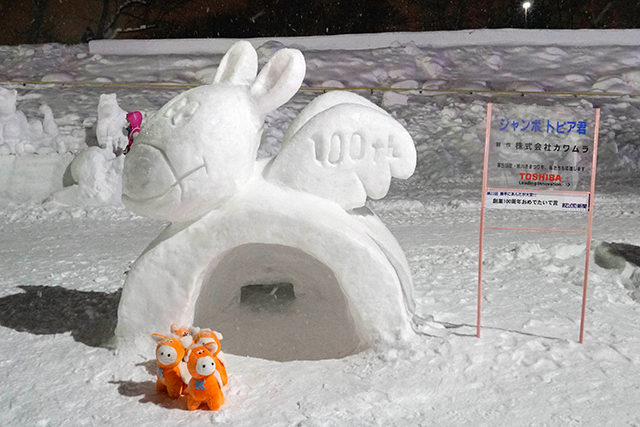
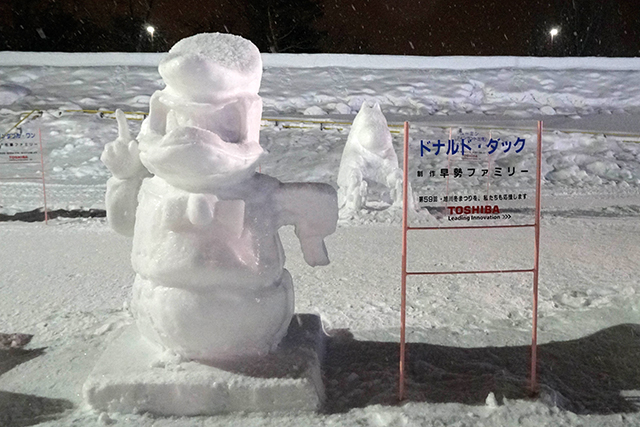
The further you get from the Tōkyō the less the Japanese seem to be interested in Disney characters. Nevertheless, we see Donald Duck.
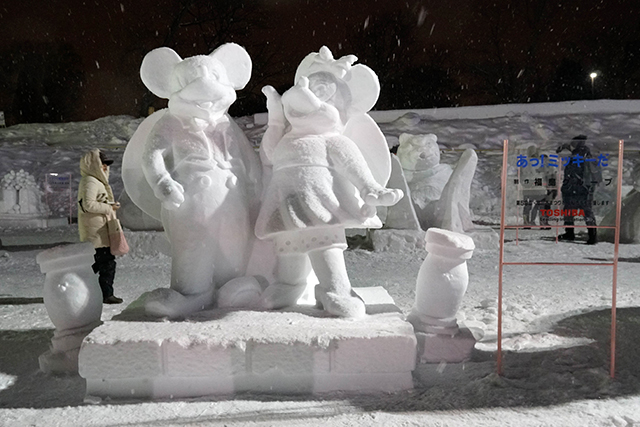
There’s also Ah! Mickey with Minnie in tow.
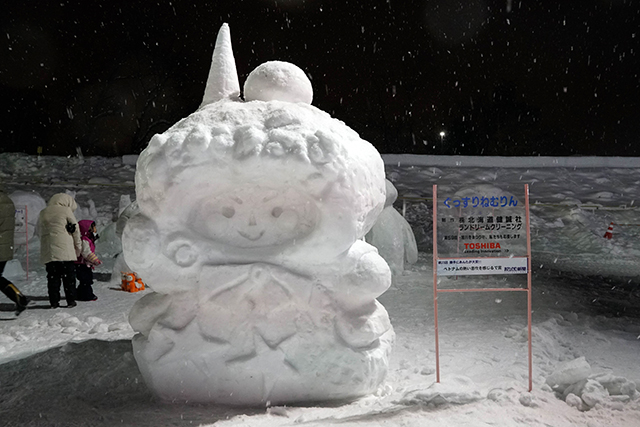
This one is called Kutsu suri nemurin, which translates roughly to ‘I do not sleep well’. It depicts someone wrapped up nicely exposing only their face…
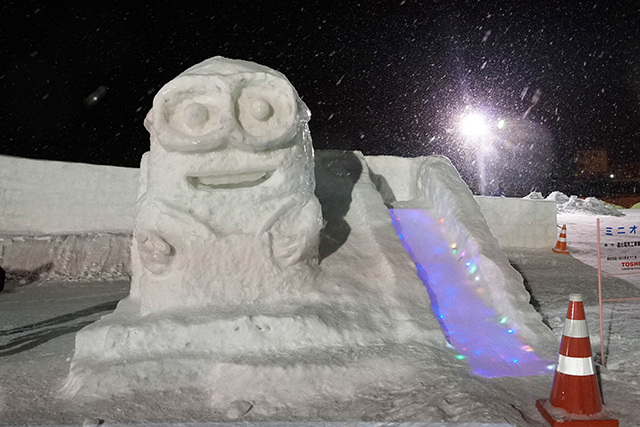
This is the first many sculptures featuring Minions. This one is a slide that won the bronze prize in the Medium-size Snow Statute Contest.
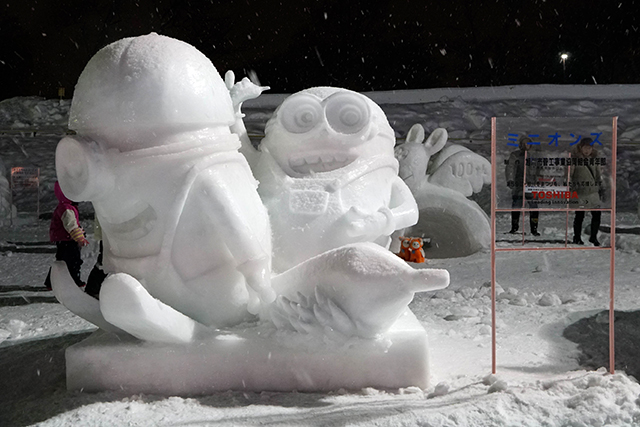
This one shows the Minions skiing.
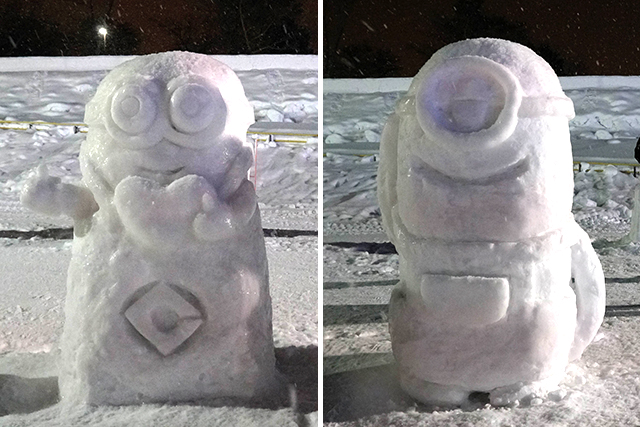
The one on the left embraces the Japanese obsession with Minions, calling itself ‘I ♥ Minion‘.
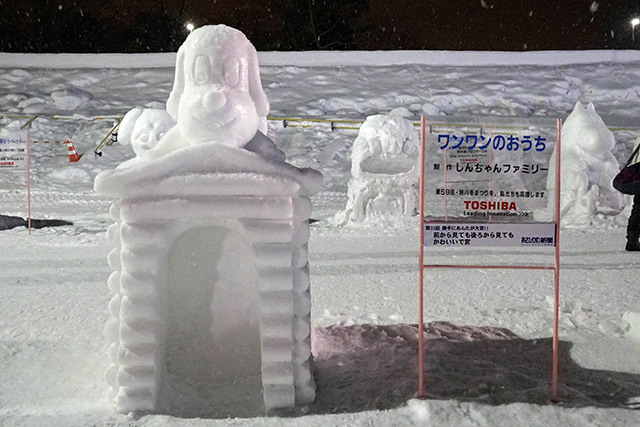
This is Dog’s House.
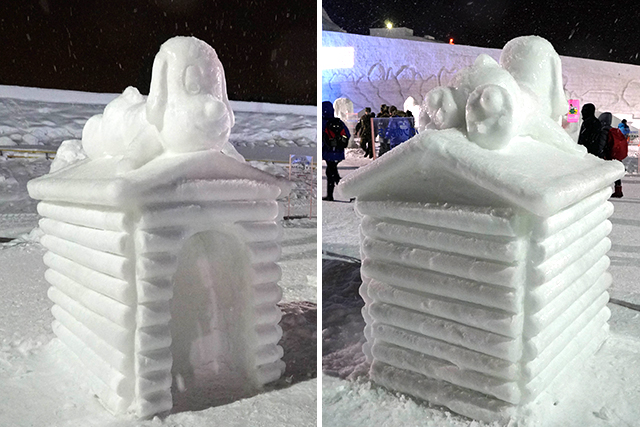
It reminds of a signature resting pose of another famous Beagle.
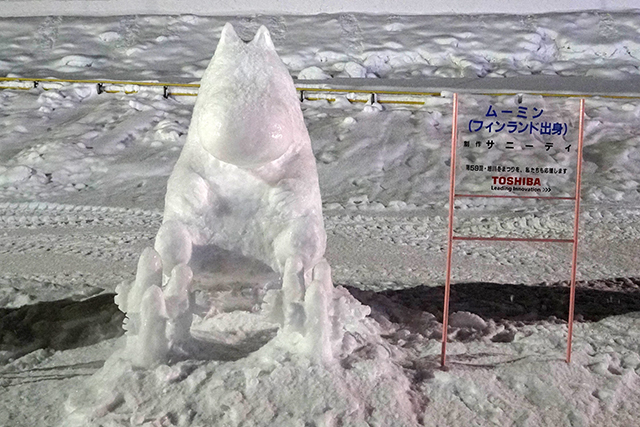
Moomin is also a popular character in Japan.
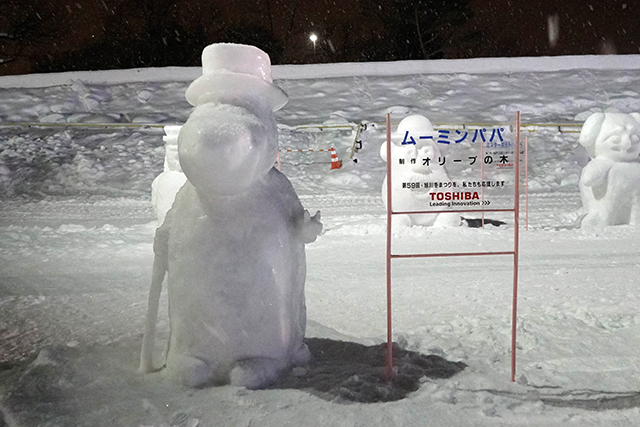
This is Moomin Papa.
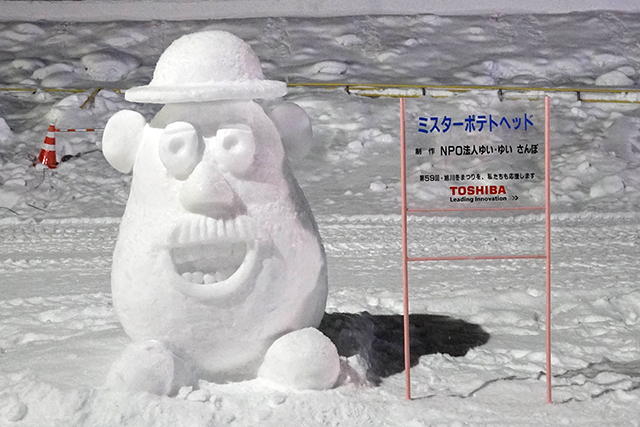
This Mister Potato Head offers a break from the Minions.
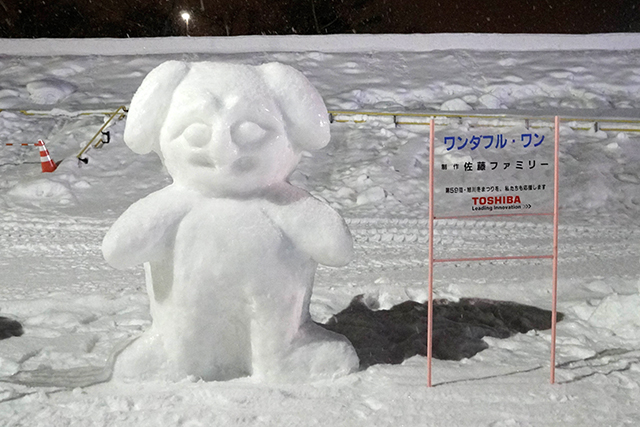
This scary looking thing is called Wonderful One.
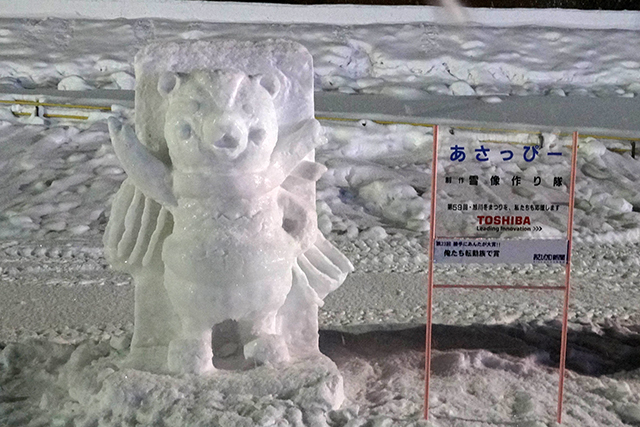
This sculpture of a bear is called Asappii.
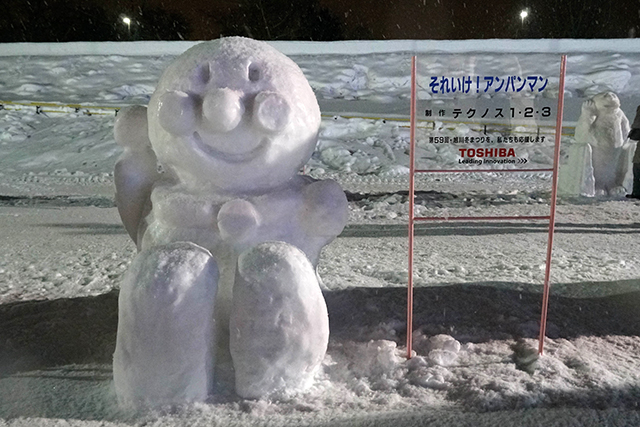
This one is aptly named Soreike! Anpanman. He’s the main hero from the series, a red bean bread man.
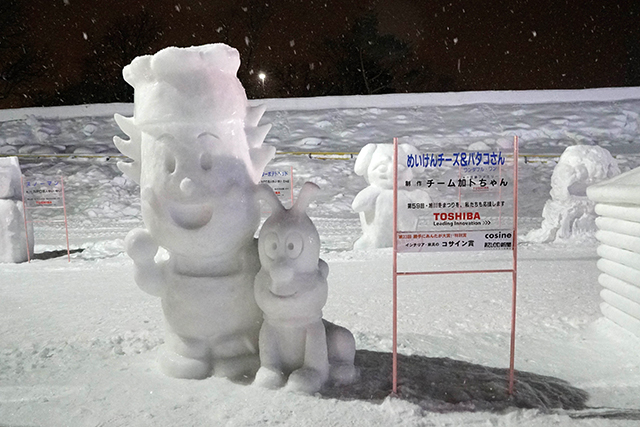
This is Meiken Chiizu & Batakosan also from Anpanman. The characters’ names translated to ‘Fine Dog, Cheese’ and ‘Miss Butter’. Meiken Chiizu is Anpanman’s pet dog, while Batakosan is the assistant of Anapanman’s baker and helps bake new heads for Anpanman.
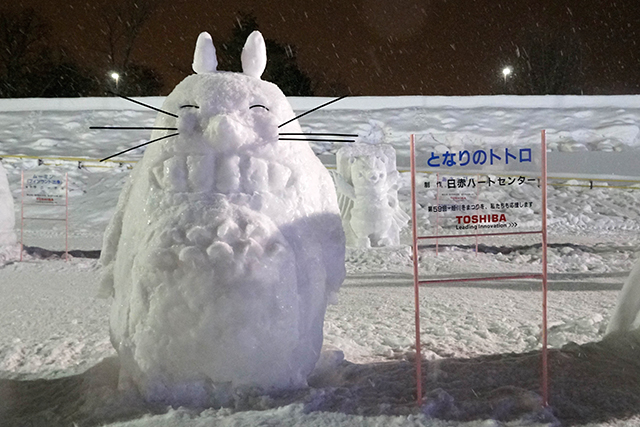
There’s My Neighbour Totoro for the Ghibli fans.
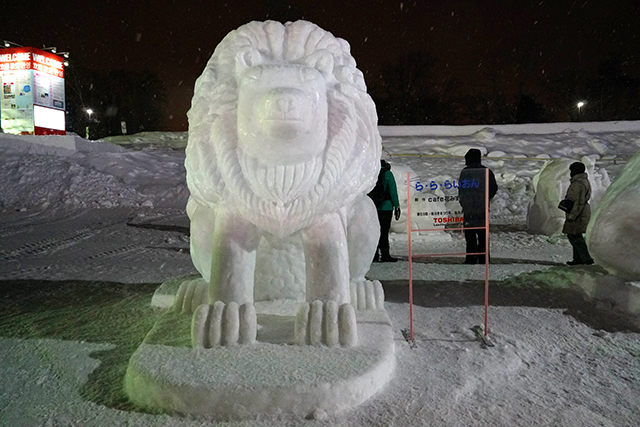
This one is called Ra Ra Lion.
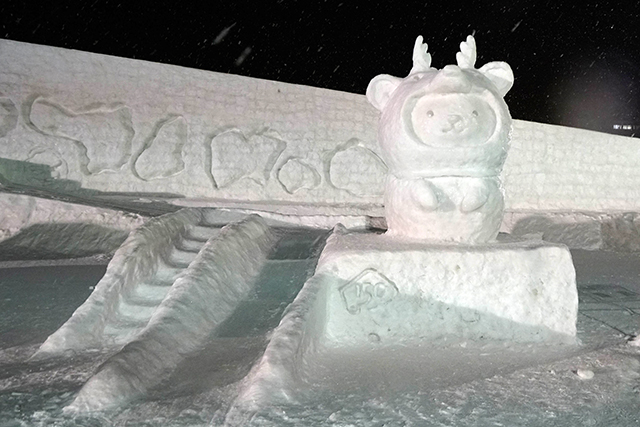
This mini slide featured a bear inside a Hokkaidō Sika deer costume, ‘Kyonchan’, in celebration of the 150 year anniversary of the naming of Hokkaidō. It won the bronze prize in the Medium-size Sculpture Contest.
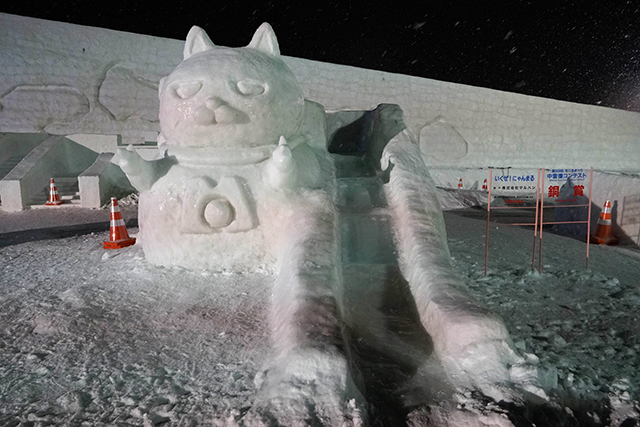
This slide is called Lets’s Go! Nyanmaru.
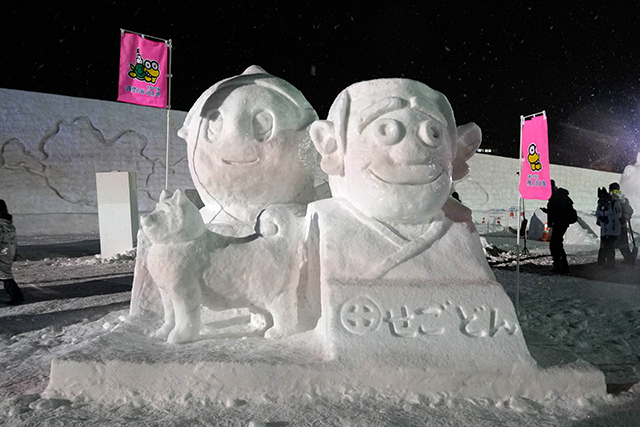
This one featured the leading characters from Segodon, a taiga drama that follows the life of historical figure Takamori Saigo.
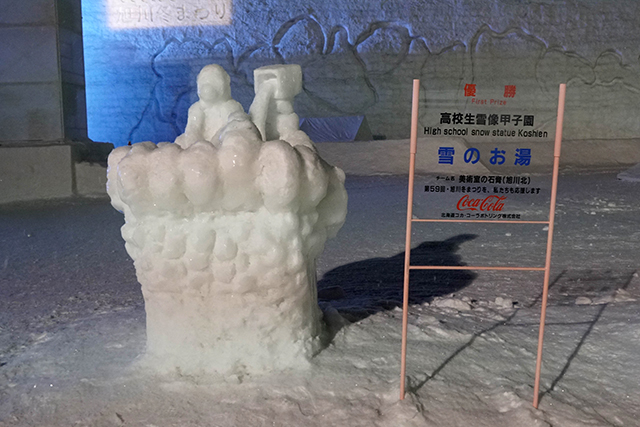
Another section of the sculptures featured those from the High school snow statute Koshien sponsored by Coca-Cola. This one, Yuki no Oyu won first prize and looks like a kappa in a hot spring.
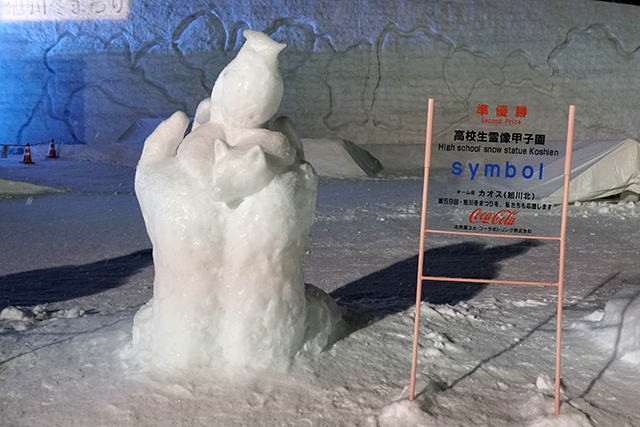
This one called symbol featured a hand holding a fox and a bird won second prize.
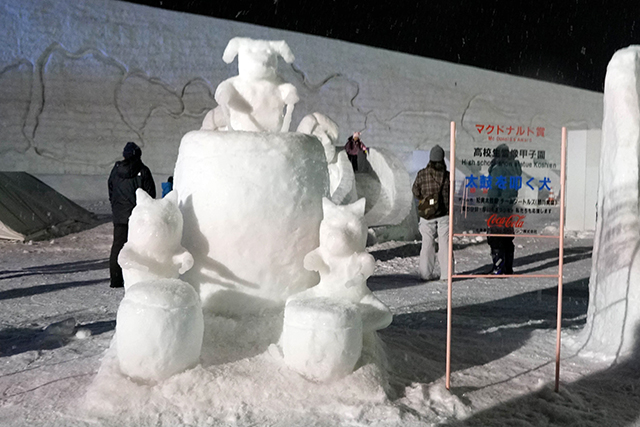
This is called Dogs Tapping Taiko Drums. It won the McDonald’s Award.
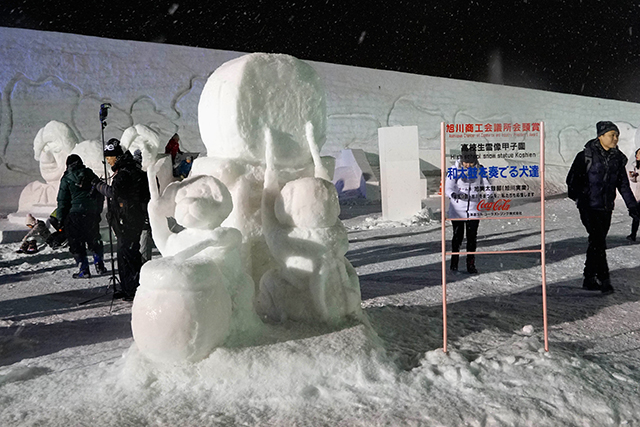
There’s another one called Dogs Playing Taiko Drums. It won the Asahikawa Chamber of Commerce and Industry President’s Award.
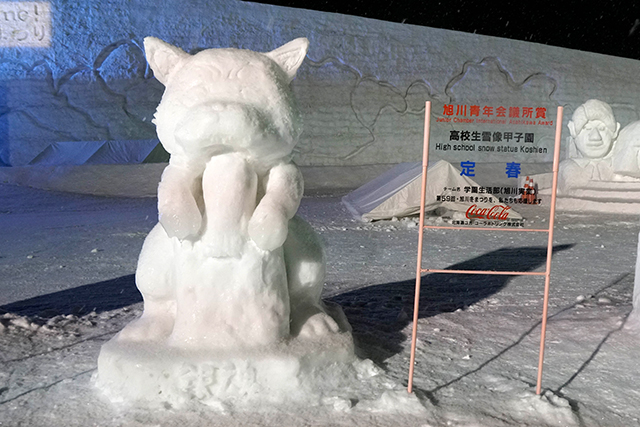
This is Sadaharu, a character from the popular anime Gintama who has the tendency of biting people’s heads. It received the Junior Chamber International Asahikawa Award.
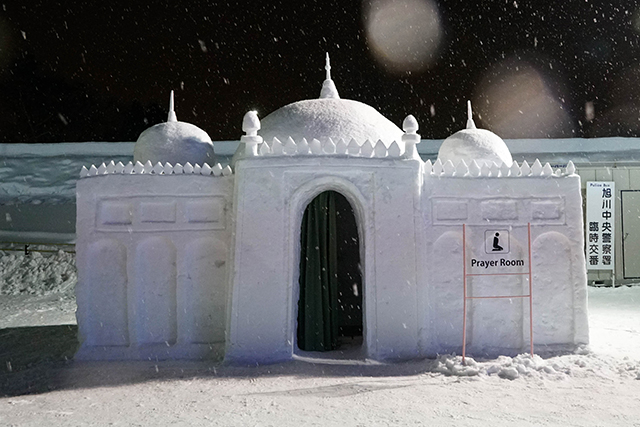
Closer to the stage and away from the other sculptures is a Prayer Room snow sculpture.
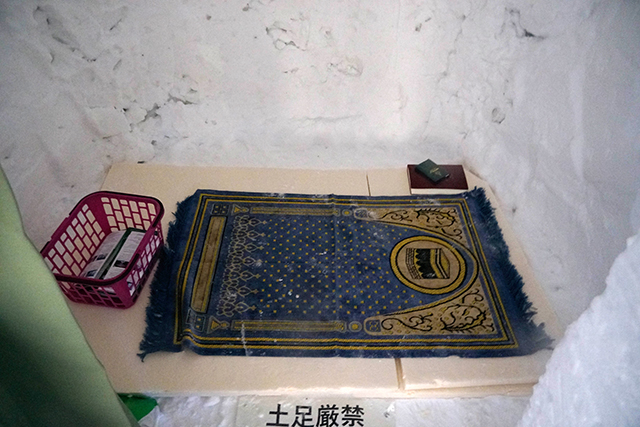
It’s functional with a rug and prayer books for those inclined.
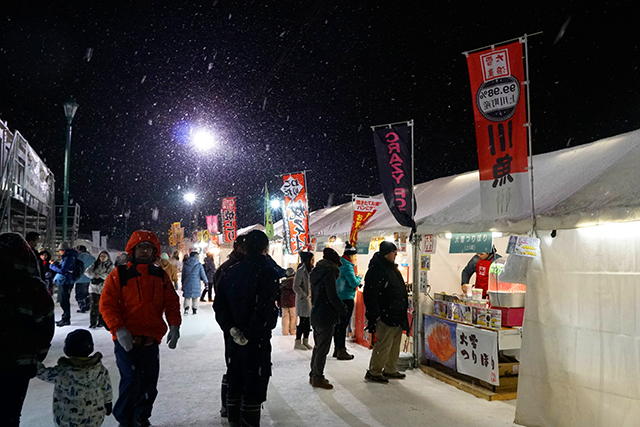
Having checked out all the sculptures, and getting rather miserable from the cold, we make a quick round of the food stalls at the far end of the site.
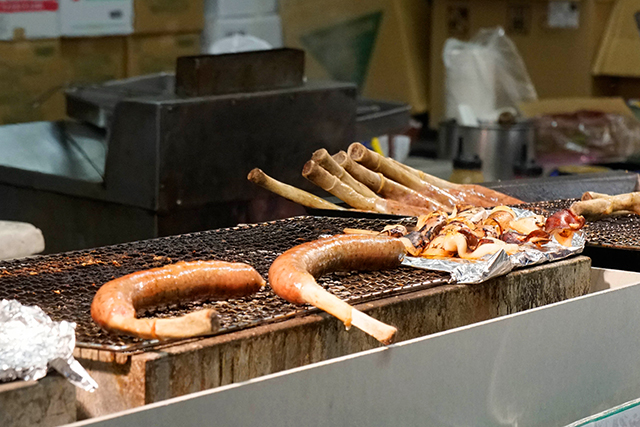
We’re confused by these sausages on what looks like bones.
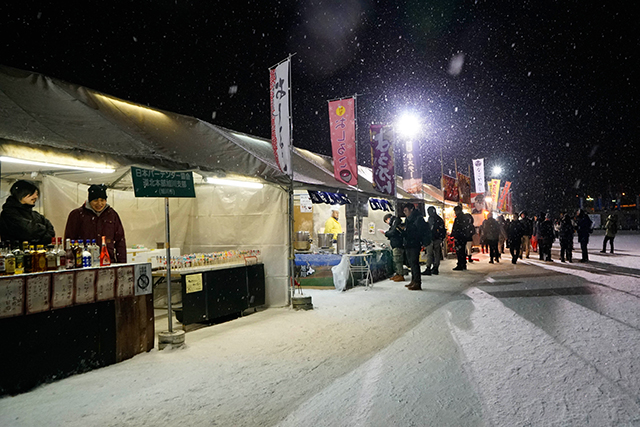
There are numerous stalls selling hot ramen as well as alcohol.
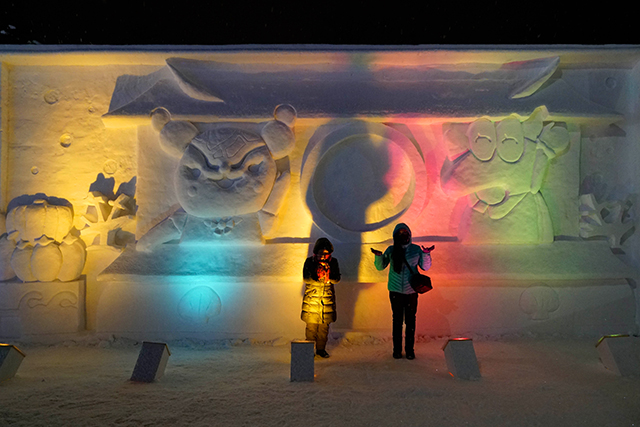
On the way back, we take a look at the snow mural. It featured popular Japanese characters…
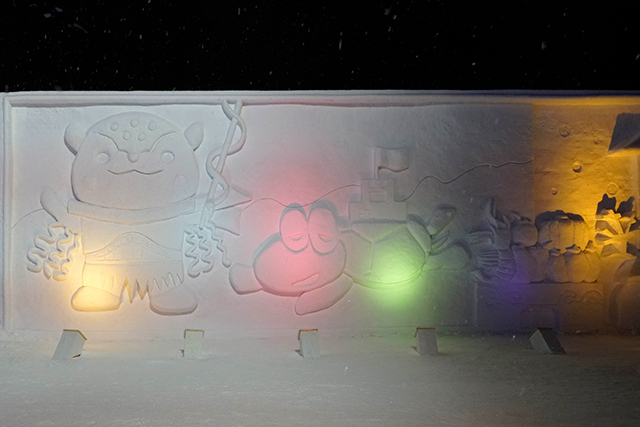
…but their names escape us and Google is not particularly helpful.
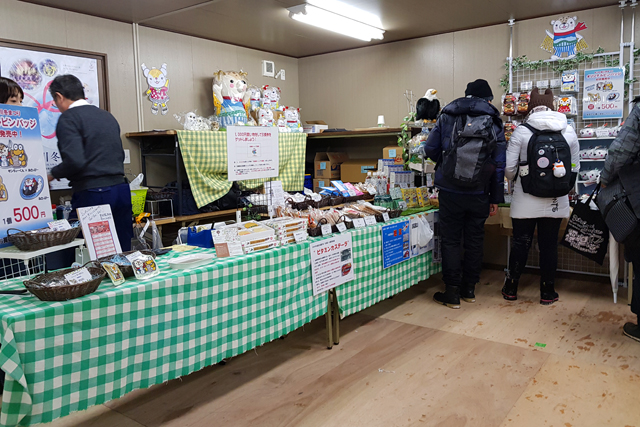
We make a pit stop in the omiyage store to defrost.
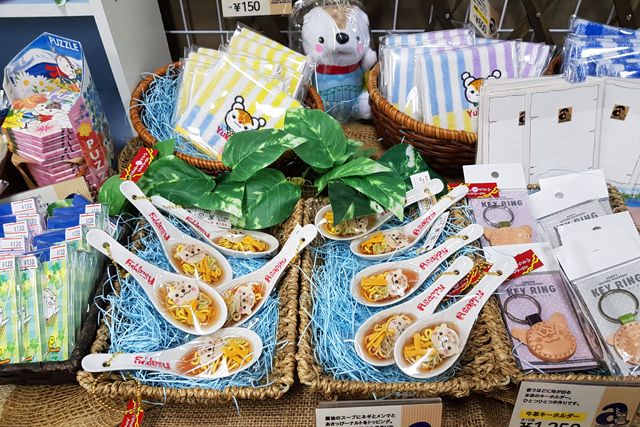
Lots of merchandise feature Asappy, Asahikawa City’s mascot who is a mix of a seal and a polar bear, dressed like “70s Elvis, complete with ramen tassels on his sleeves.
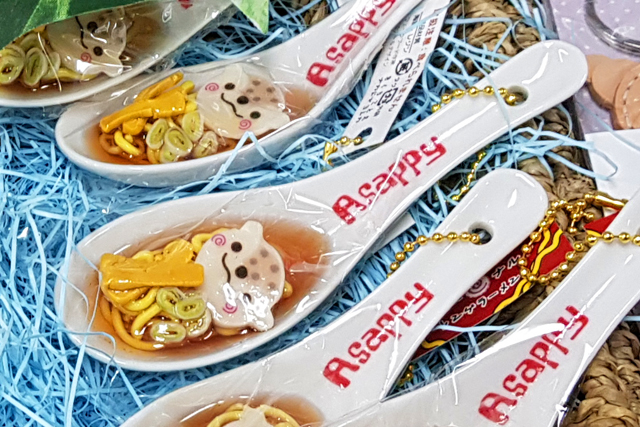
These spoonfuls of ramen are cute and ¥1780 each.
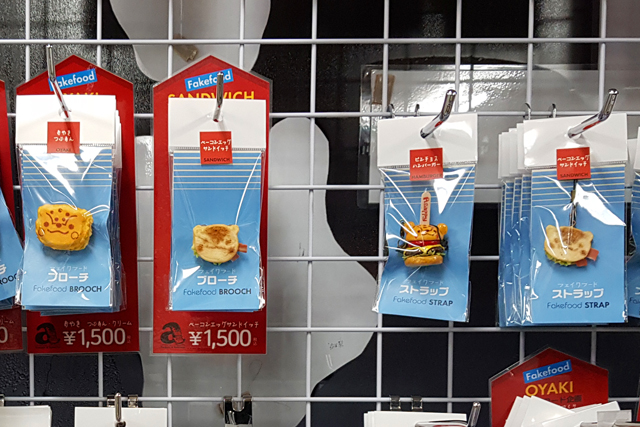
The spoonfuls are actually very reasonably priced when you consider these broaches, straps and magnets are ¥1500 each. Having defrosted, we head back to the shuttle buses to defrost some more.
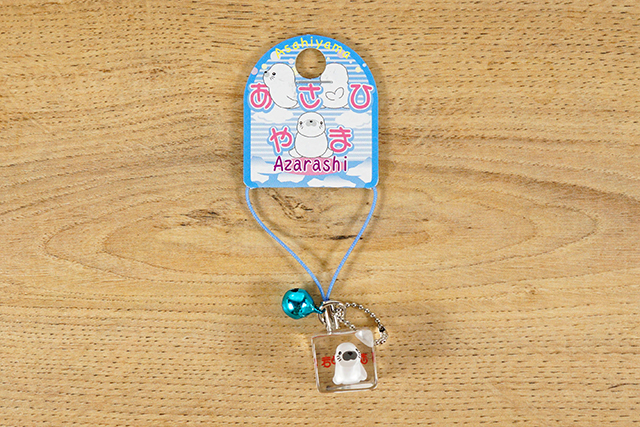
I stop by the gift shop attached to the tourist information centre to pick up this keychain with an azarashi, or earless seal, inside the cube that I’d seen this morning.
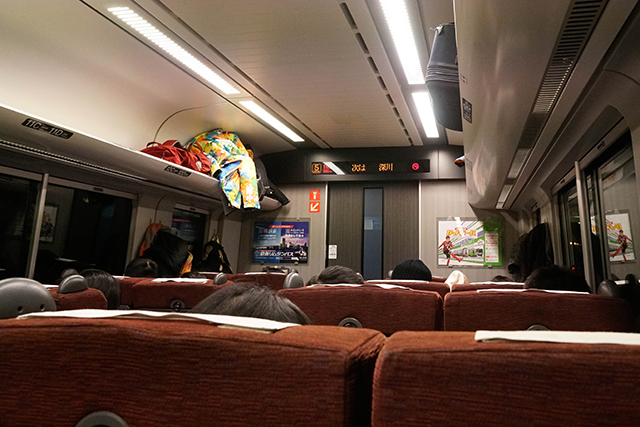
The 80-minute train back to Sapporo leaves once an hour so we high tail it to the train right afterwards. Thankfully, we manage to score seats on the train shortly after 7 PM before the truly last-minute passengers arrive soon after.
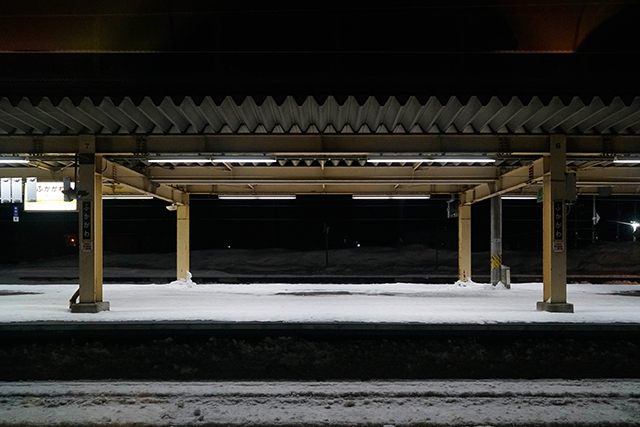
It’s mostly dark on the journey back except for the numerous snowy station platforms.
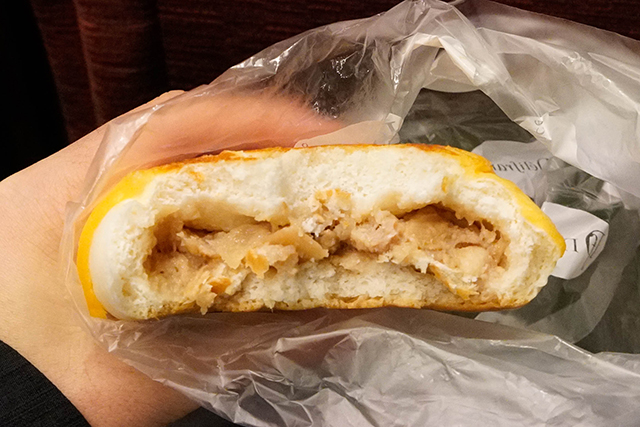
I’m hungry and thankfully have the pirozhki that I’d saved from this morning. I’d first encountered these buns while watching the anime Yuri on Ice and was keen to try one when I spotted it in the Delifrance. I enjoyed the savoury meat flavour with bamboo shoots and the thin yet moreish layer of cheese covering the top.
Sapporo
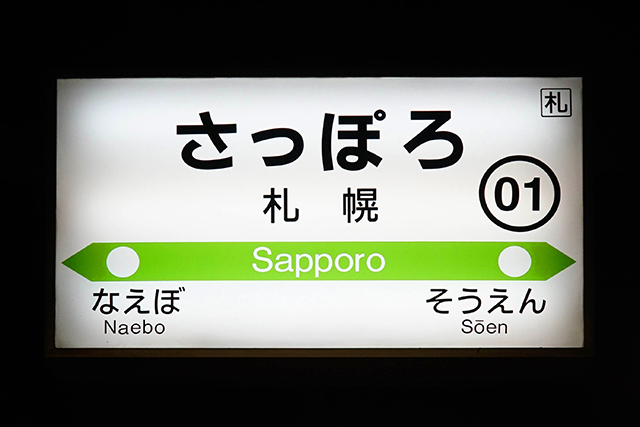
We arrive at Sapporo Station around 8:30 PM and hunt for dinner in the restaurant floors above the station.
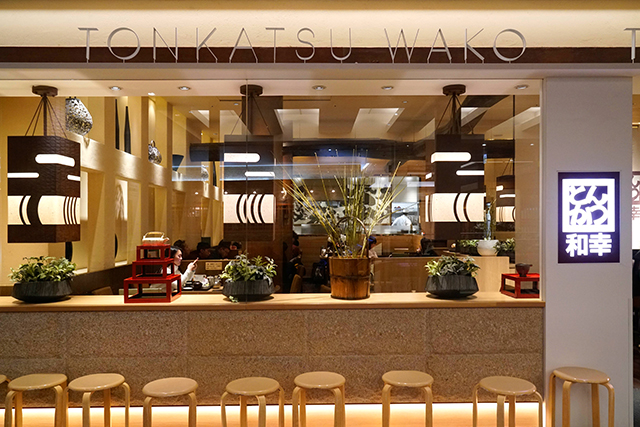
We decide on Tonkatsu Wako. It’s the tail end of dinner time so there’s only a short wait. This is a chain around Japan. We thought briefly about eating something unique to Hokkaidō but exhausted from the day and nursing terrible URTIs we settle in for something comforting.
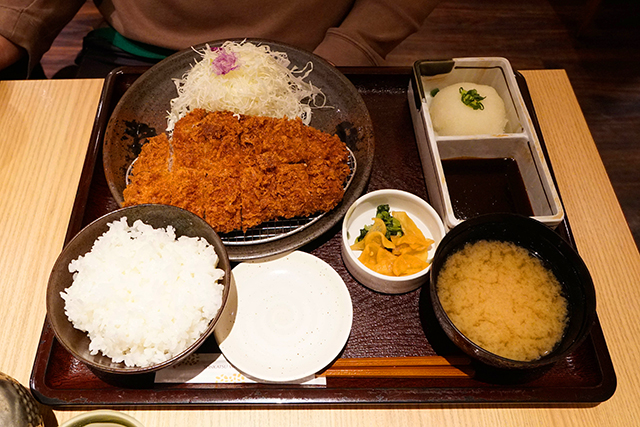 D orders the Tokudai Rosu Katsu Gohan (¥1,761).
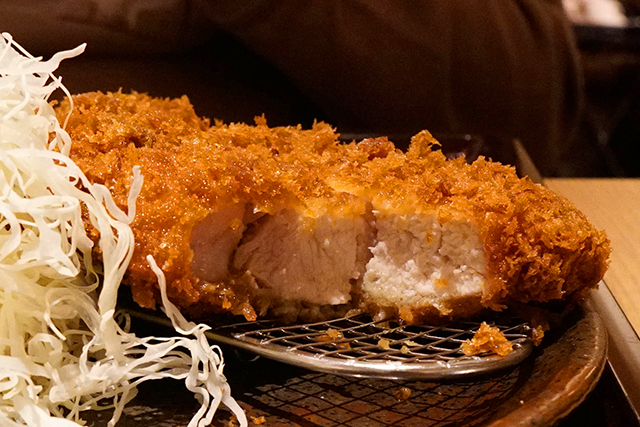
It comes with an extra large pork loin cutlet, which D enjoys immensely. It’s juicy and crunchy.
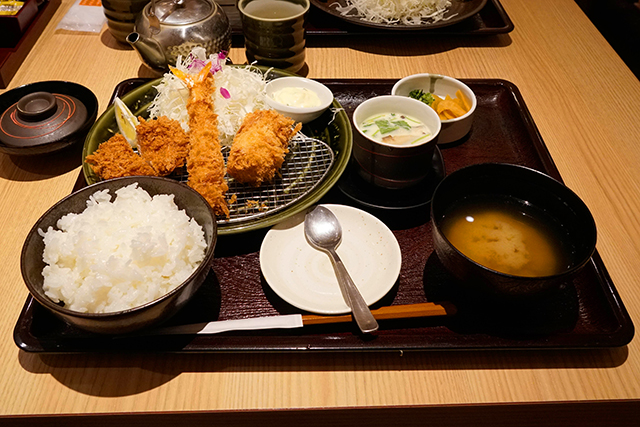
As for me, I have the Hiiragi (¥1,300), which is available only in winter.
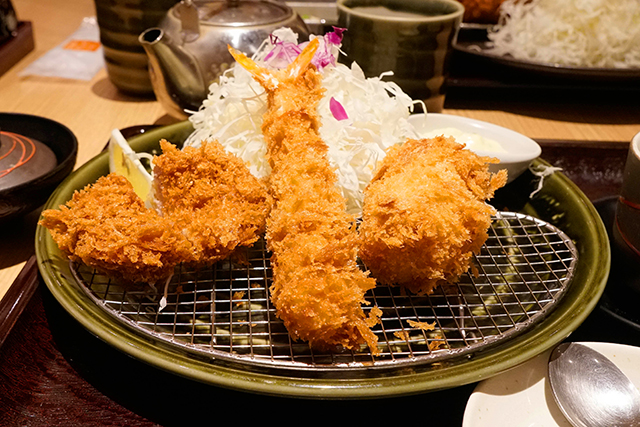
It comes with ‘bite-size pork fillet cutlet, fried shrimp and creamy snow crab croquette’.
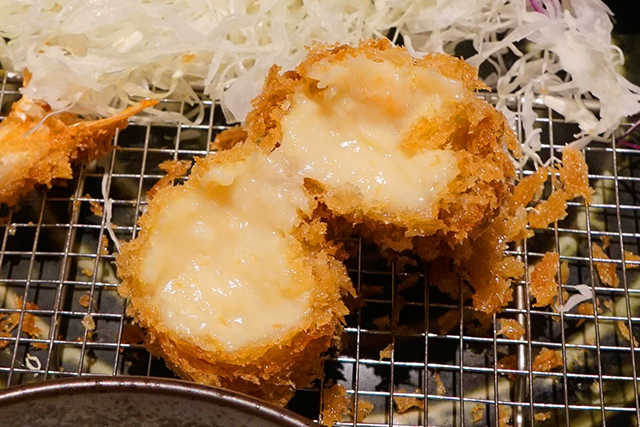
The creamy snow crab croquette is deliciously creamy with sweet crab flavour that I could taste even through a congested nose. Yum!
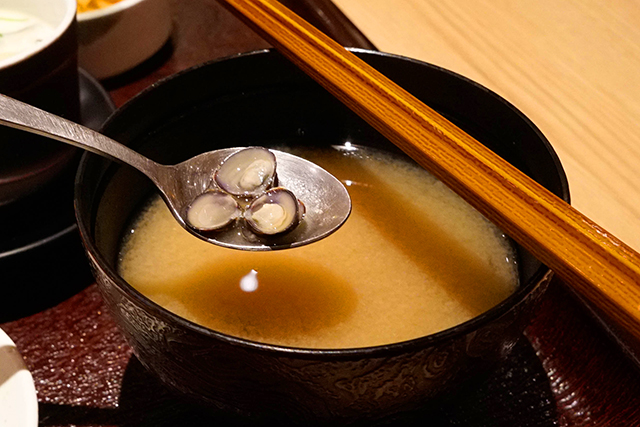
I’m always delighted find mini clams in my miso soup in Japan. They’re probably used for flavour, but I like to pick the meat out.
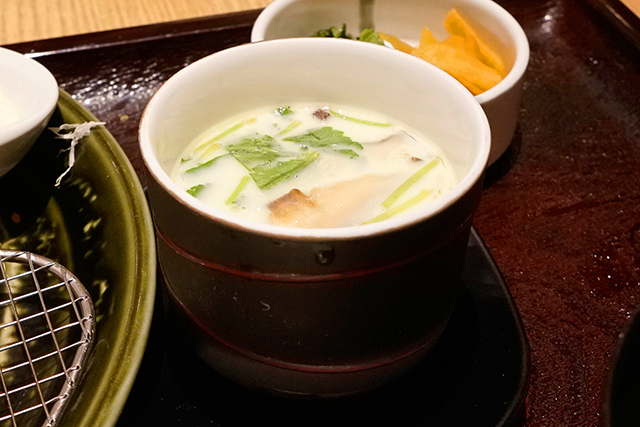
A small cup of chawanmushi, a steamed egg custard dish, accompanies the meal. There’s shiitake and green leafy vegetables inside to bring flavour to the smooth custard.
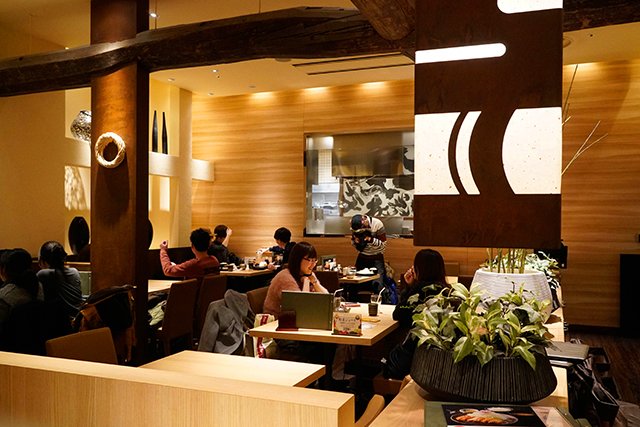
And with that, we’re exhausted and ready to roll back to Shin Sapporo.

It’s the same night we discover that the highly accomplished Japanese spoken by the blonde American female in adds for Trivago in Japan is actually spoken by Natalie Emmons. It’s not dubbed even though the audio seems a touch out of sync in some versions.
We lazy about in our warm and luxe hotel room with a side of Japanese TV before exploring more central parts of Sapporo the next day.