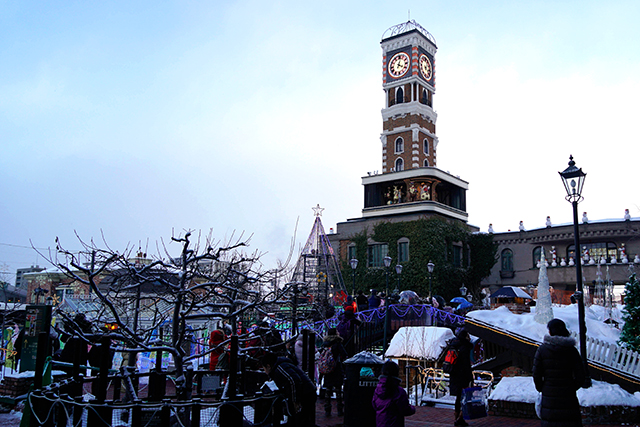
The Shiroi Koibito cookie by Ishiya is easily one of the most famous and popular souvenirs from Hokkaidō. In Sapporo, you can visit the Shiroi Koibito Park, a theme park where you can observe the cookie production process in the factory. D and I are very fond of factory tours, so we make our way to the park after a stop at Curb Market, a wholesale fish market, along the way.
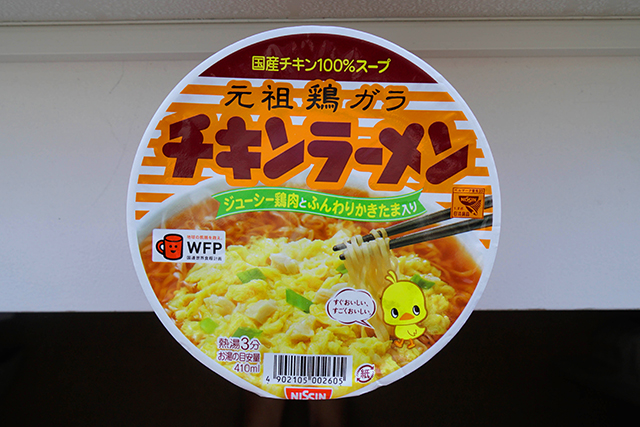
Still feeling the effects of the URTI and wanting to linger in warmth a tad longer, we have a light breakfast with Nissin Chikin Ramen.
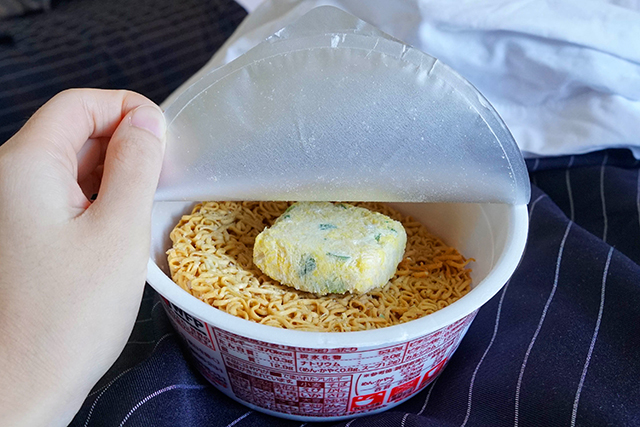
We’d had it before in the packet format, but this cup format comes with a dehydrated slab of scrambled eggs and chives.
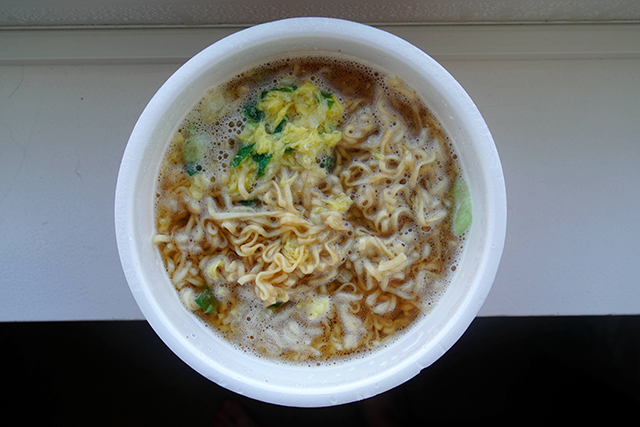
The addition of egg makes it quite a fancy instant noodle breakfast.
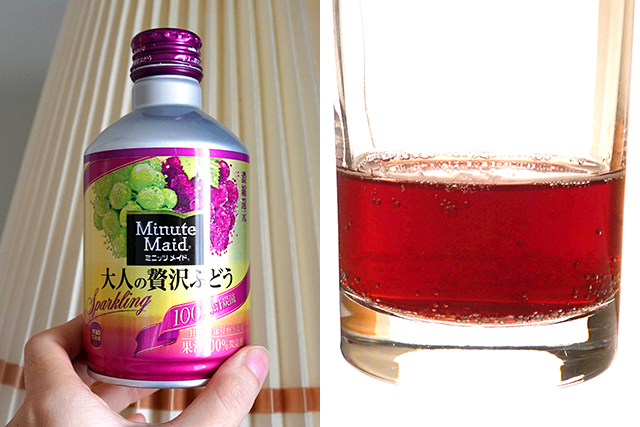
There’s also the grape version of the Minute Maid that’s also a Hokkaidō limited edition. This one has a similarly rich flavour of grapes. We wish it came in bigger bottles!
Sapporo – Curb Market (Sapporo Jogai Ichiba)
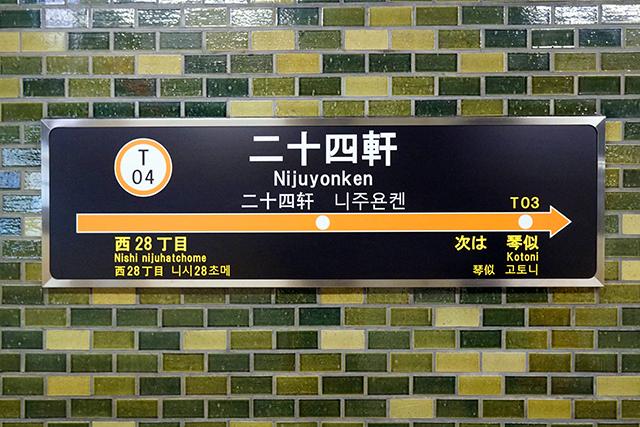
With our bellies padded, we head towards Nijuyonken Station.
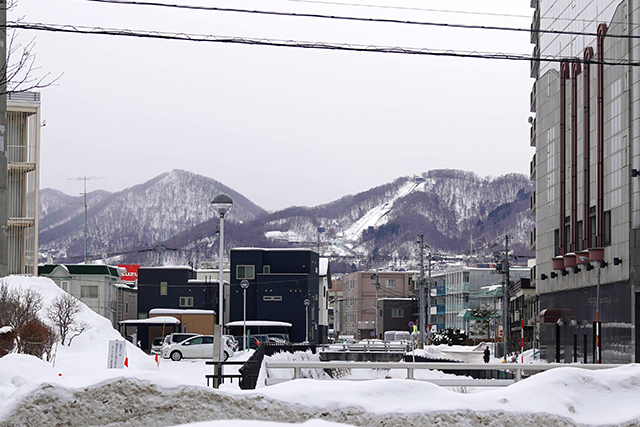
The station is a short walk to Curb Market. There are snowy mountains close by.
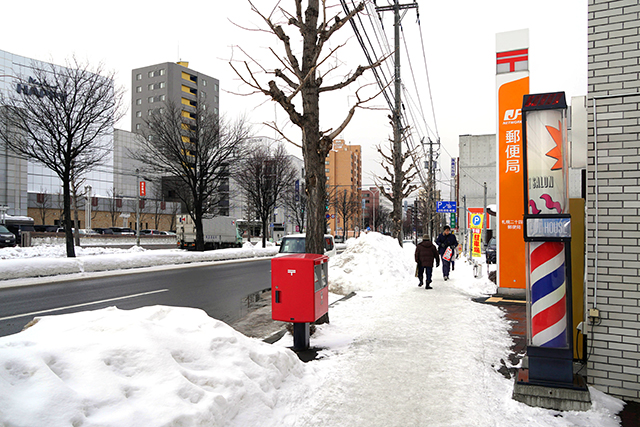
close bydewalk is piled high with snow.
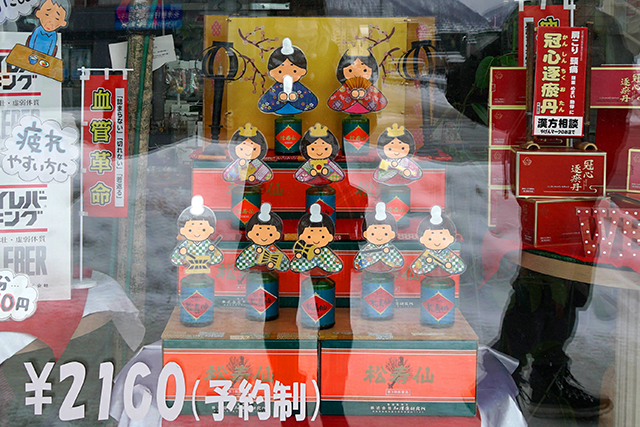
We pass by what looks like an independent pharmacy/chemist that has this cute Hina Matsuri set up of medicines in the window.
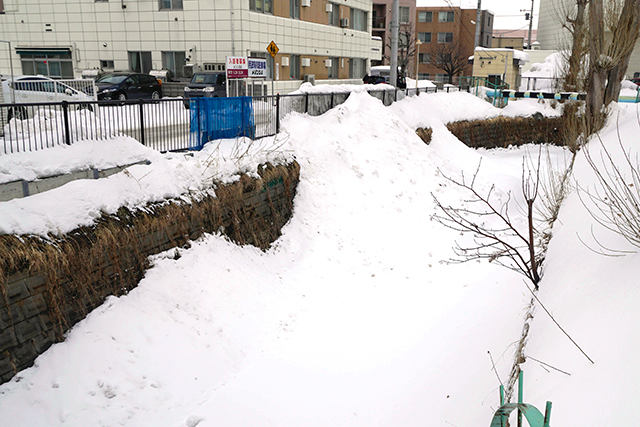
Even the river has been taken over by piling snow.
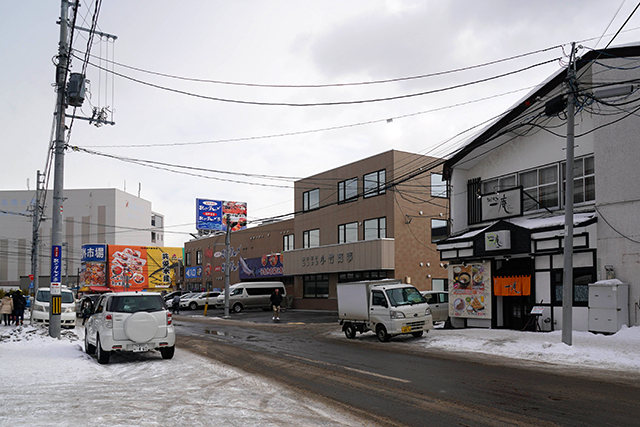
Curb Market is a short 10-minute walk from the station.
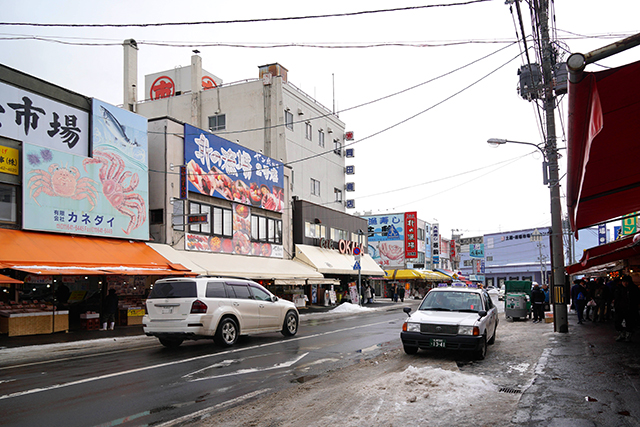
Looking down the main street, we see some of the almost 80 stores and restaurants that line the streets for several blocks.
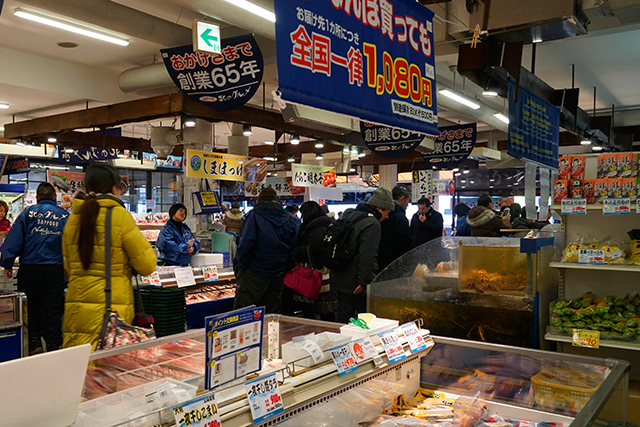
It’s one of the largest public markets in Hokkaidō and specialises in seafood from the region.
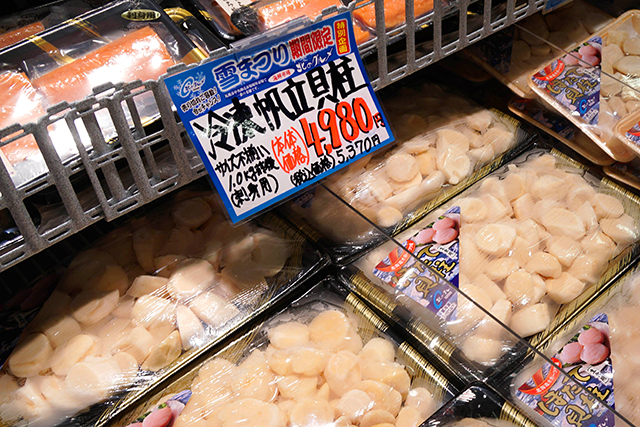
This includes scallops.
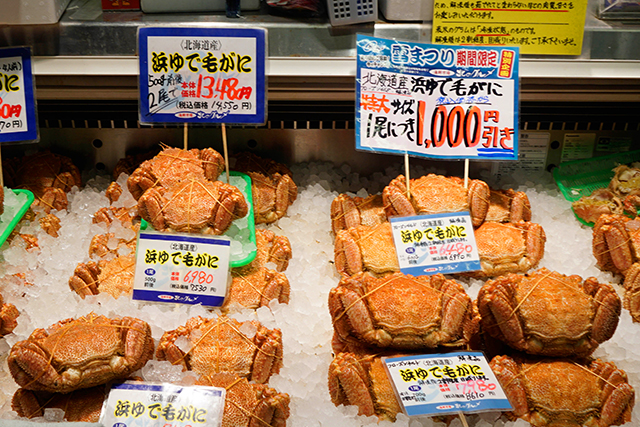
There are also crabs.
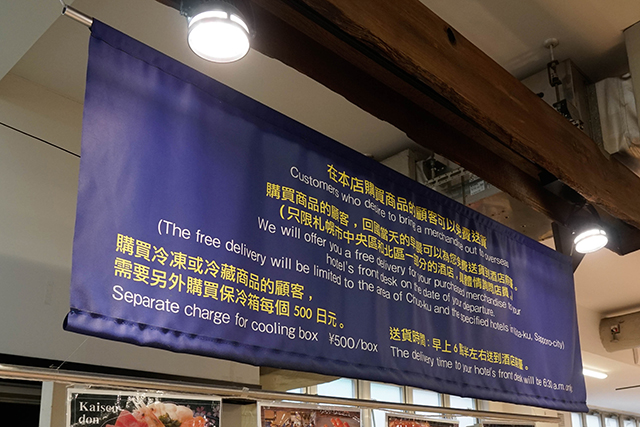
This sign tells customers who wish to bring their seafood overseas that ‘We will offer you a free delivery for your purchased merchandise to your hotel’s front desk ont he date of your departure’. There’s a charge of ¥500 if you need a cooling box, and the delivery time is 6:30 AM.
We actually do see some Chinese tourists dragging their luggage with them, picking up boxes of seafood from the market!
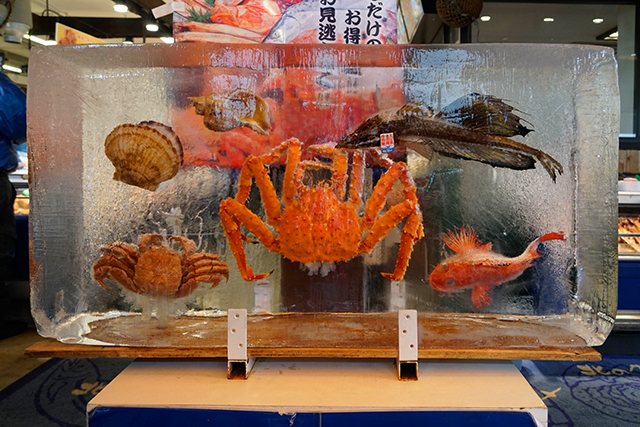
We see more seafood frozen in blocks of ice. It continues to amuse us that its cold enough to do this.
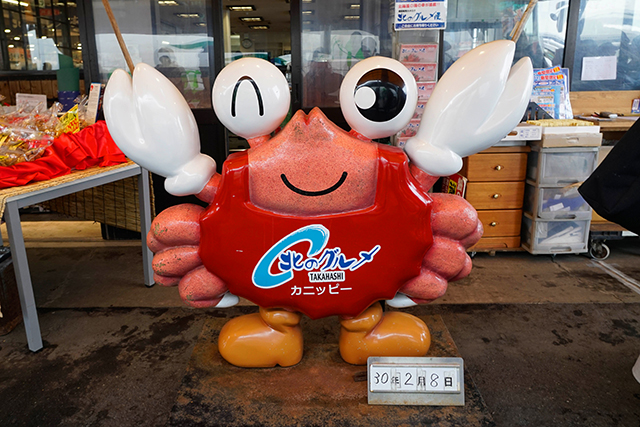
There’s a cheeky crab mascot wearing an apron.
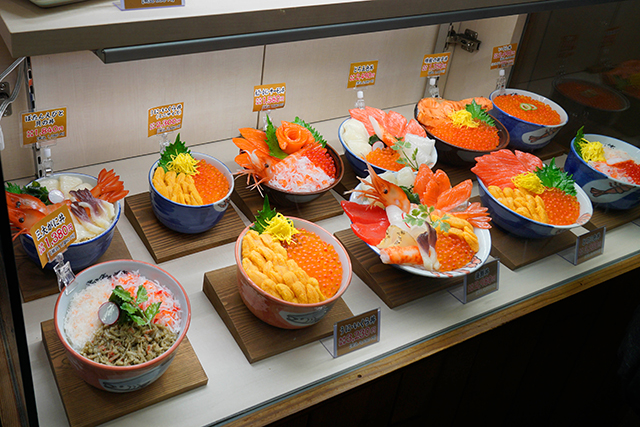
In the same shop, there’s a restaurant attached selling delicious looking donburi topped with fresh seafood.
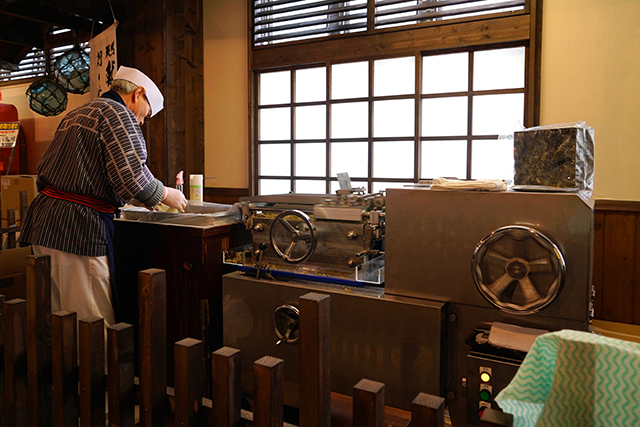
Further back in the store is a gentleman giving a demonstration shaving freshly shaven seaweed.
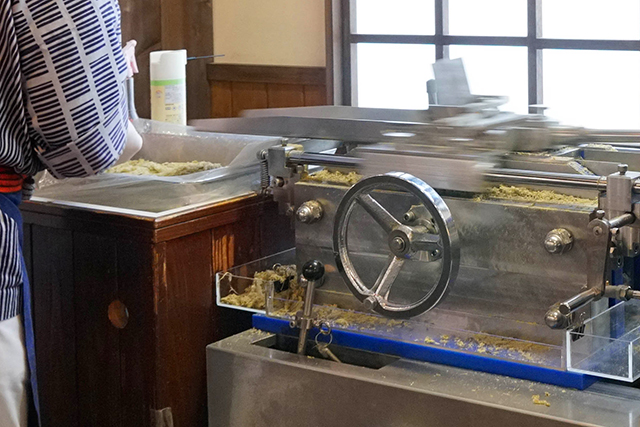
There are no samples, though, so we have no reason to buy any, alas.
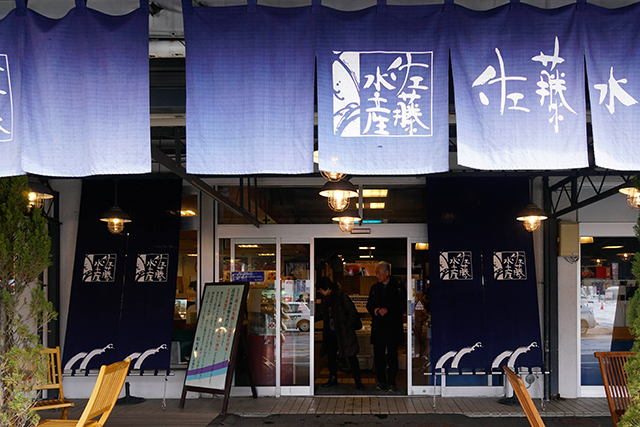
We head out of the crowded shop and into this quieter one on the other side of the street.
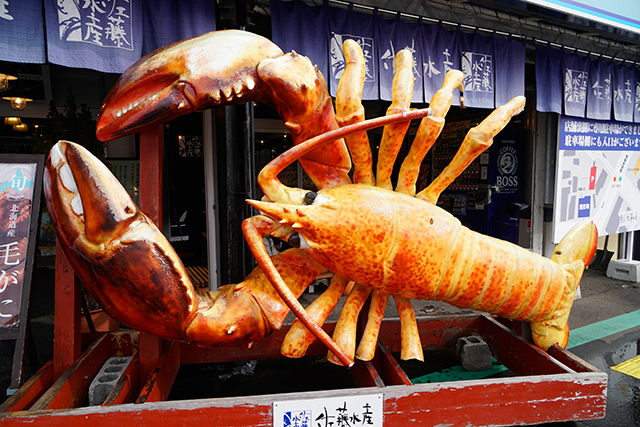
There’s a giant lobster outside it.
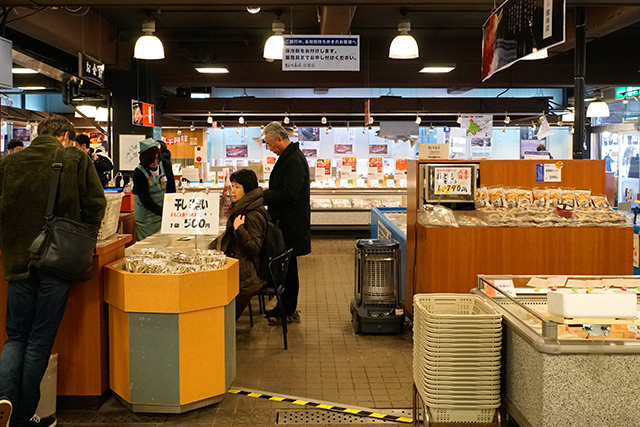
Inside we find it stocked we packaged seafood.
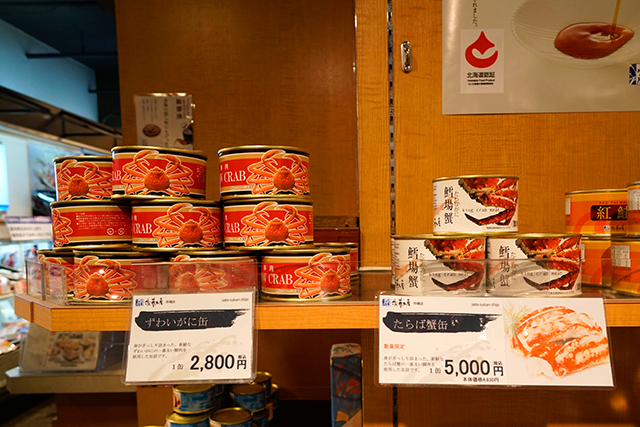
There’s canned snow crab selling for ¥2,800 and ¥5,000. We have never seen such expensive canned food!
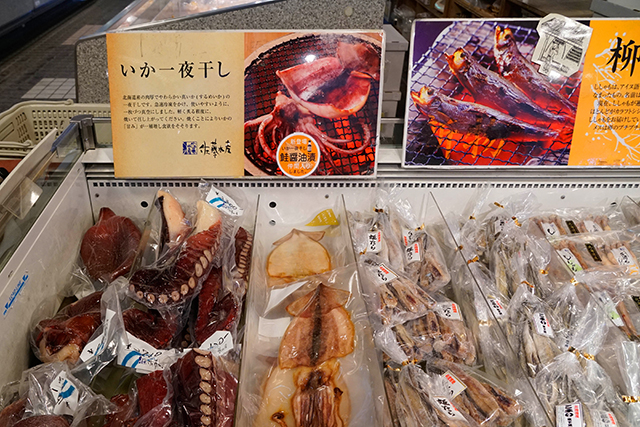
We see giant octopus tentacles and squid in the fridge as well as all sorts of fish.
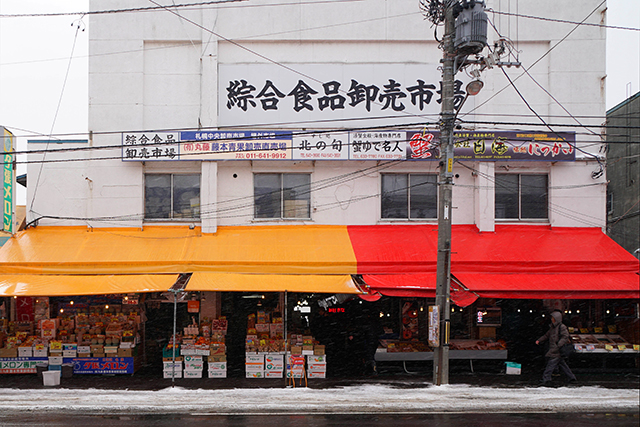
Outside we spot another shop selling all sorts of packaged seafood as well as fresh produce and omiyage.
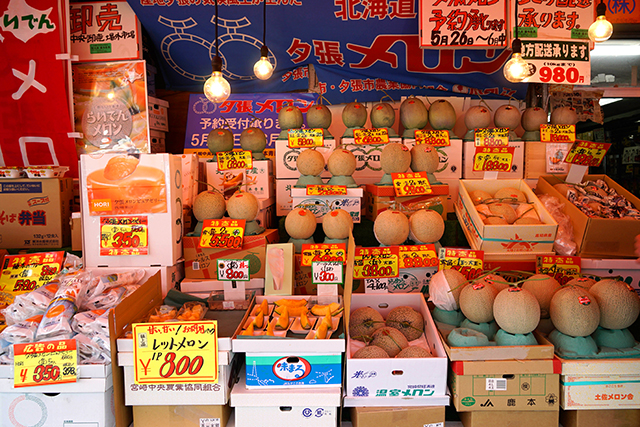
There are some expensive melons outside!
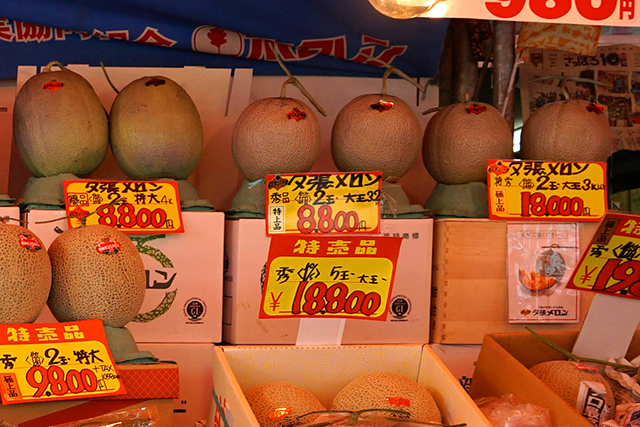
These ones go for between ¥8,800 to ¥18,800!
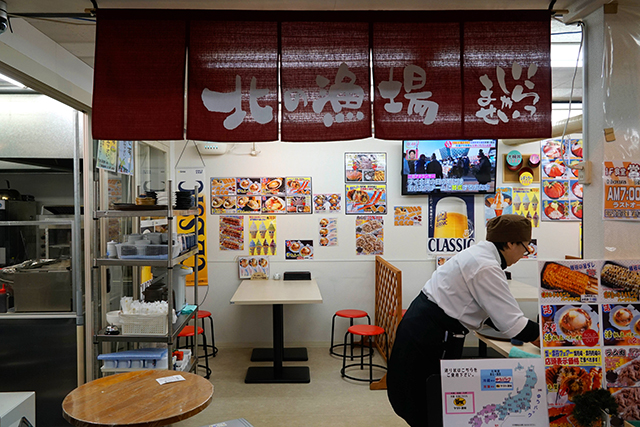
We head inside and decide to eat at this restaurant, Kita no Ryōba Ueda Bussan, which has at 3 branches dotted along the main road with similar prices and menus.
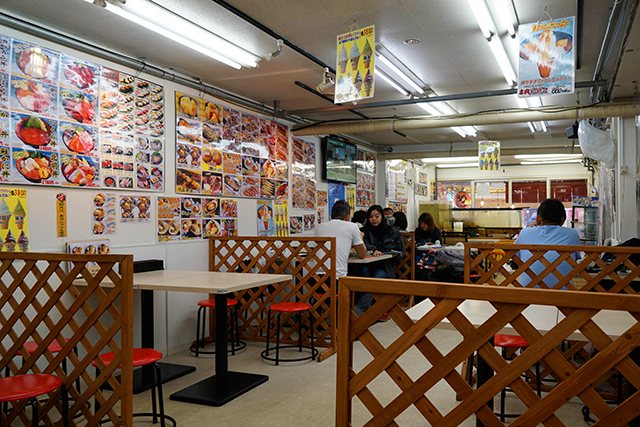
The menu is very extensive and is also plastered all over the walls.
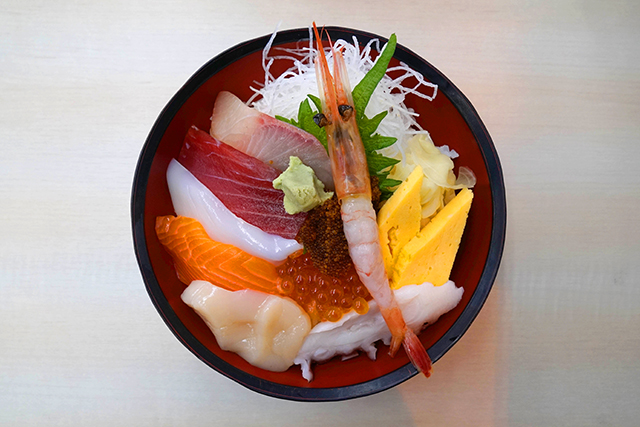
D orders the Kaisen Omakase Don (¥1,580), which has a bit of everything in it including salmon roe, prawn, scallops, salmon, tuna, and squid. He enjoys the freshness of the seafood, but we’re still not fans of raw squid.
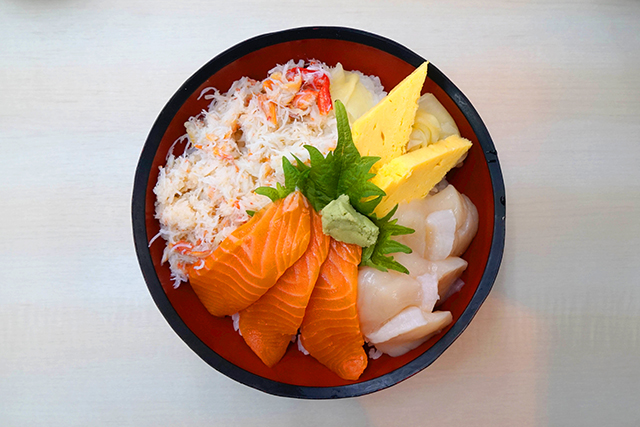
I’m after more Hokkaidō-centric seafood and order the Sohran Don (¥1,880), which has snow crab, scallops and salmon. The raw scallops are worlds apart from those I’ve had in Australia, which I’ve always avoided for their overly fishy and rather slimy mouthfeel. The scallops and snow crab meat is deliciously sweet.
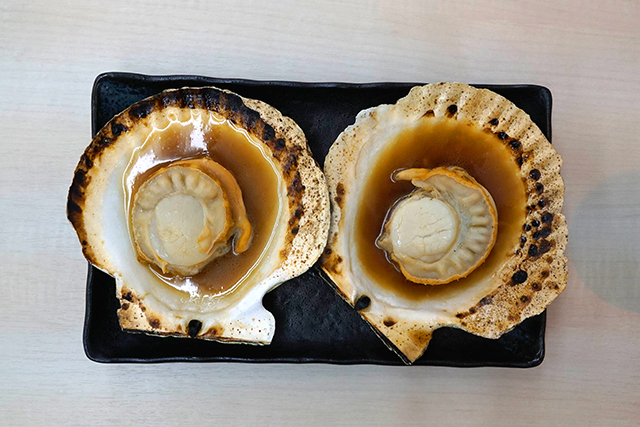
Hokkaidō is famous for its scallops so we finished off our meal with two Scallops with Butter (¥1,080 for 2). Again, the sweet flesh in these scallops is remarkable. I would love to eat many more of these!
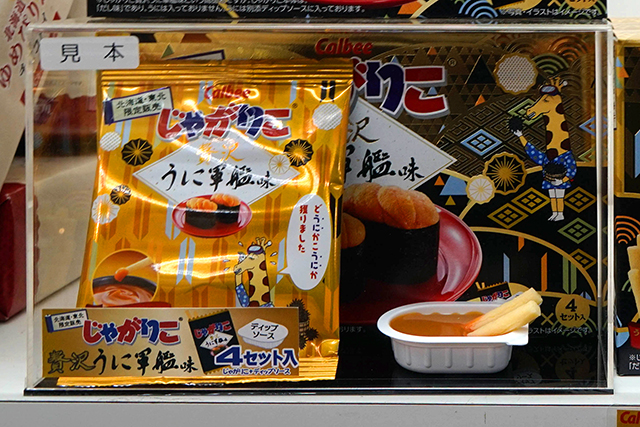
After filling our bellies, we see that it’s snowing heavily outside so we take the time to check out the shop directly outside within the same space. There are Calbee Jagariko with sea urchin dips!
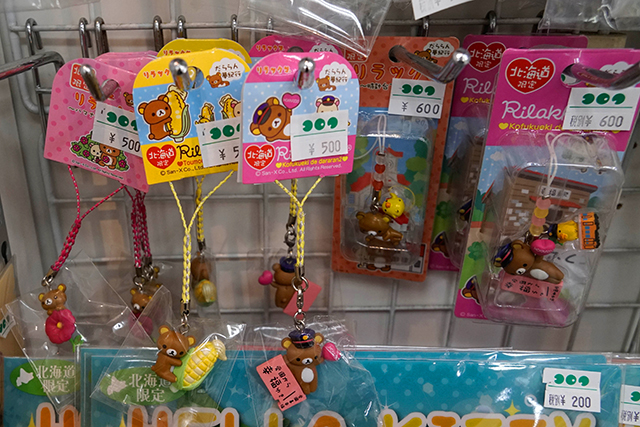
This is one of the few shops we see in Hokkaidō selling Rilakkuma merchandise. I pick up the corn one to add to my collection. Corn from Hokkaidō is famous for its sweetness.
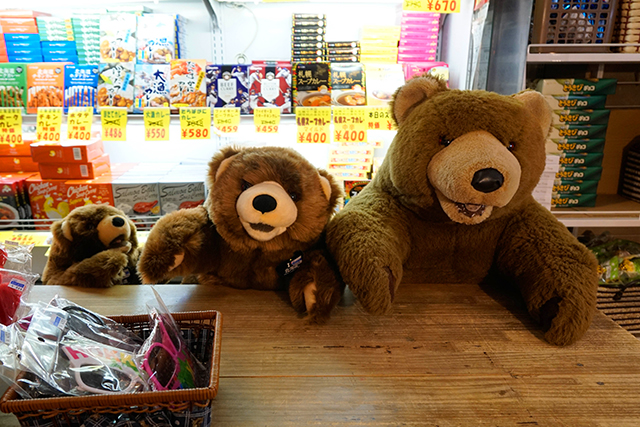
There’s a cute bear family sitting at a table. They’re not for sale.
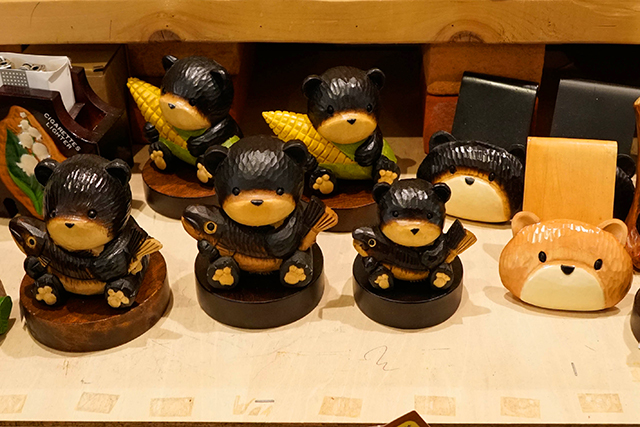
But these cute bears holding fish and corn are! They’re carved from wood and about ¥2,000 apiece.
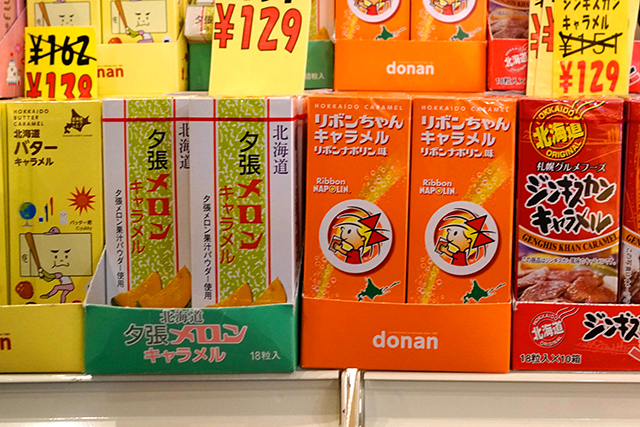
Caramels come in all sorts of different flavours in Hokkaidō. There’s Ribbon Napolin (an orange flavoured soft drink) and Genghis Khan (a savoury mutton dish) as well as your more ordinary Butter and Melon flavours.
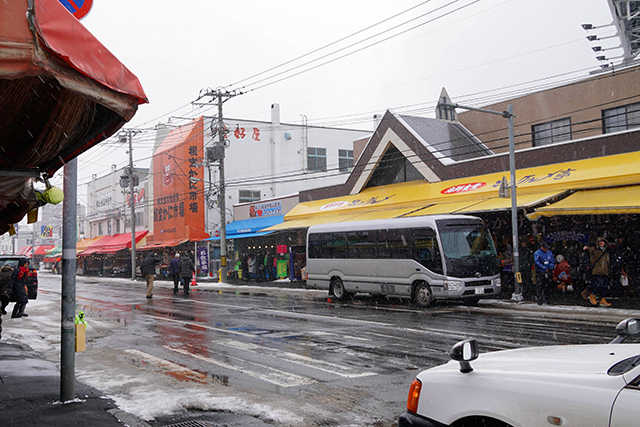
The snow is coming down so we head back to the station…
Sapporo – Shiroi Koibito Park
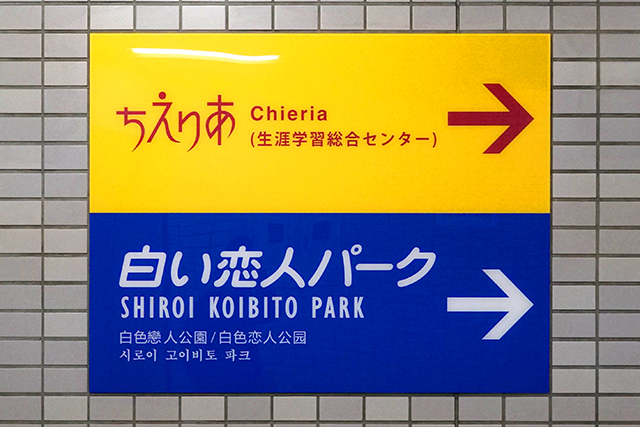
Shiroi Koibito Park is a 10-minute walk from Miyanosawa Station, which is 3 stops down from the stop for Curb Market. The station is well-signed, so there’s no getting lost!
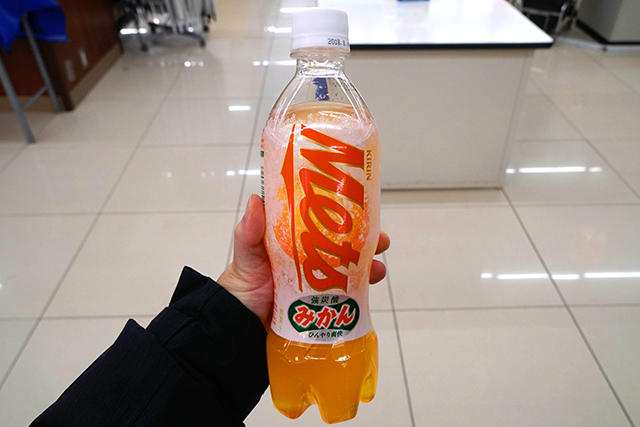
Before heading in, we stop by the supermarket in the Seiyu Shopping Centre on the way and pick up some drinks (and a box of tissues!). This is Kirin Mets Mikan. We’re disappointed that the flavour of mikan isn’t more pronounced.
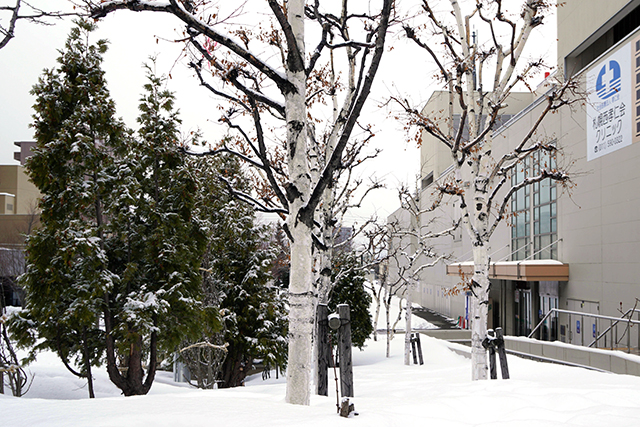
The signs at the station also give directions for Chieria, a community learning centre. This is space between it and the Seiyu.
Snow piling on pine trees is quintessentially winter.
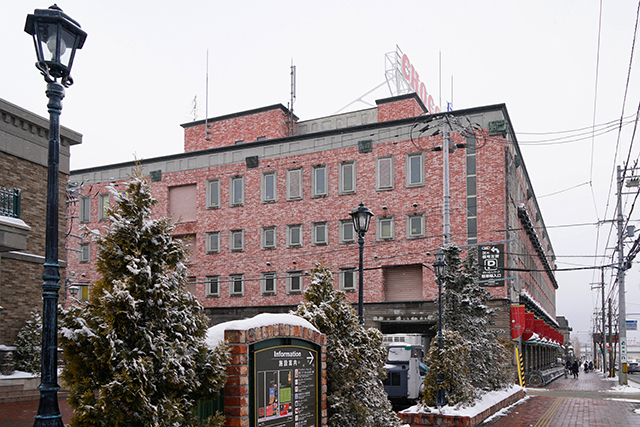
And we’re at Shiroi Koibito Park!
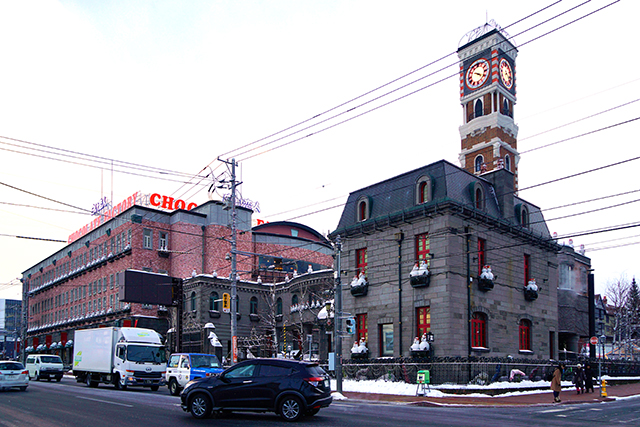
It fronts onto a busy road.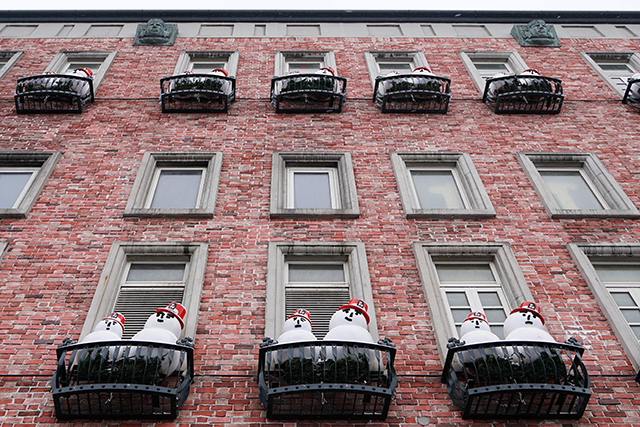
But there’s no missing the bright red bricks and the snowmen on the balconies of its numerous windows.
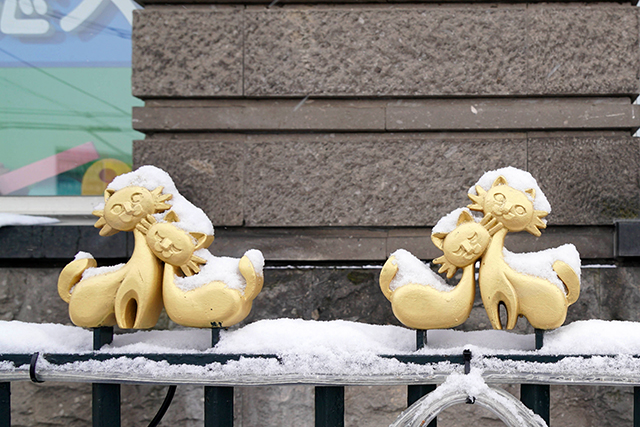
The Ishiya cat graces the fence outside their building.
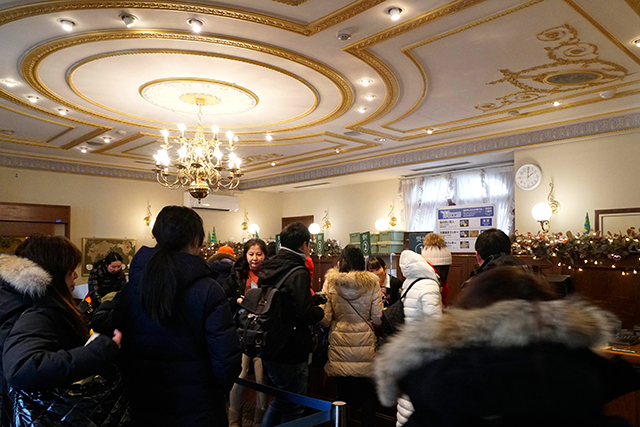
The park has a free area with a shop, cafe and restaurant but we decide to start with the paid area first. This is the room where you purchase tickets.
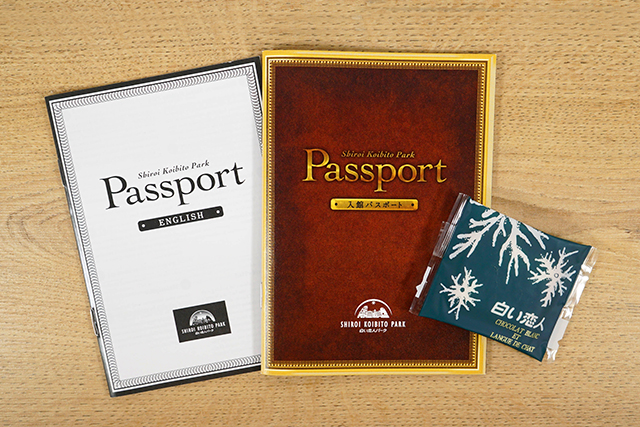
Upon payment, we receive a ‘Passport’, which is really a guide to the facility as well as a Shiroi Koibito cookie.
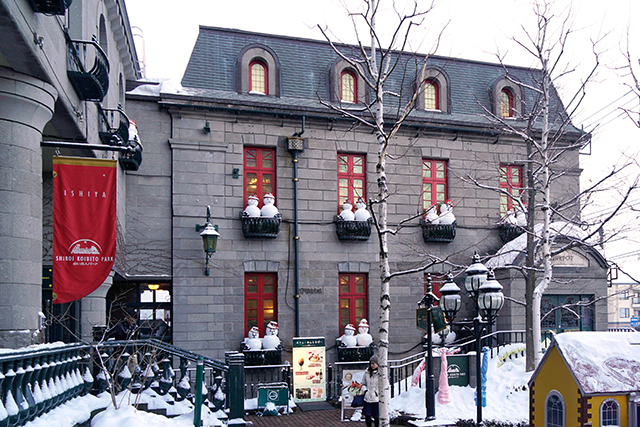
The first part of the paid area starts with various chocolate related exhibits within the Entrepot Hall.
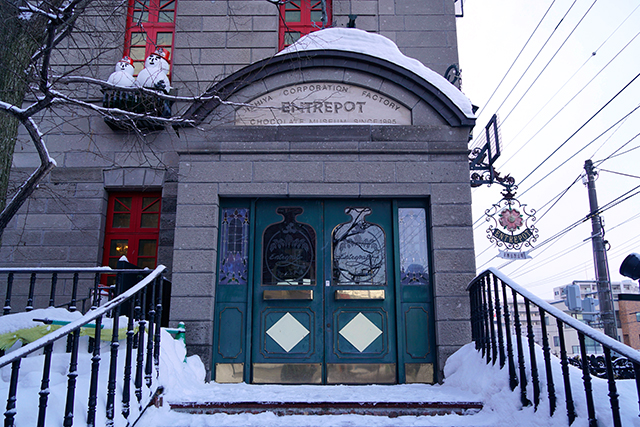
The Entrepot Hall is:
…a historical building with an air of roamnce. [It] was built as a brewer’s shop in Sapporo’s Chuo-ku district in 1911. The Frence Renaissance-style structure was then used as a restaurant and for other purposes before being slated for demolition in 1990. However, a campaign by locals to part of it being relocated and restored into what we now know as Entrepot Hall, thereby maintaining the building’s appeal and value.
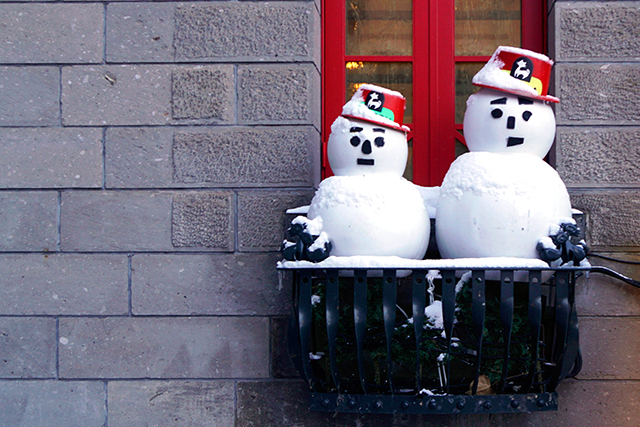
There are cute snowmen outside each window.
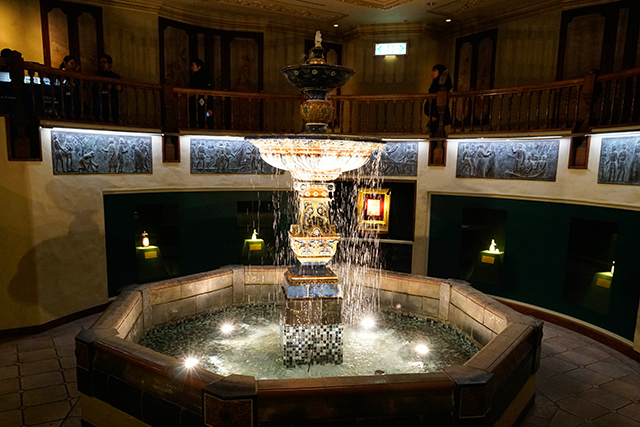
Inside the Entrepot Hall is the Aurora Fountain, ‘produced by England’s Royal Doulton Company in around 1870. Water runs down over the colorful ceramic surface, which is illuminated with an air of fantasy by lamps installed under the water’. The ceiling of the room has a painting called The Goddess of Aurora Ascending to the Sun believed to be painted by followers of French painter Francois Boucher in the 18th century.
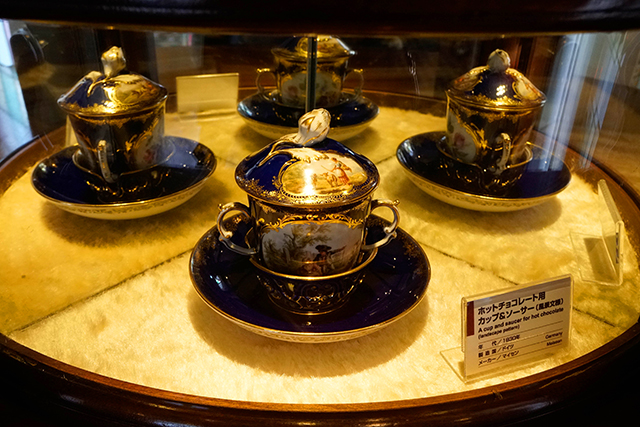
Up the stairs around the fountain is an extensive Chocolate Cup Collection.
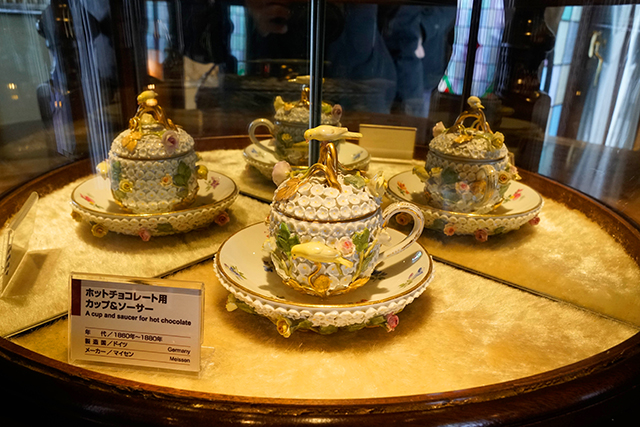
Chocolate was a popular drink among aristocrats until around the 18th century.
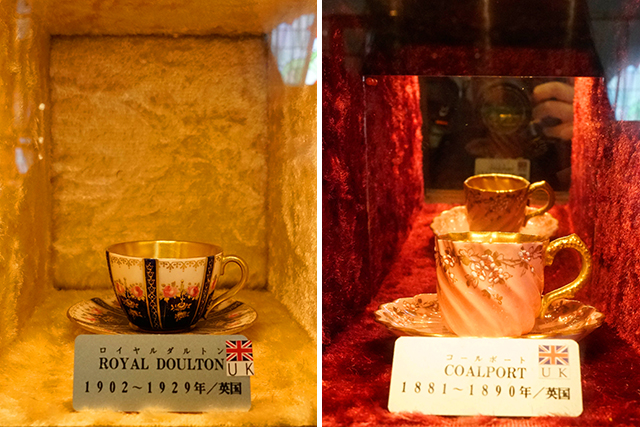
The collection on display showcases chocolate cups that were treasured in those days. Many are beautifully intricate.
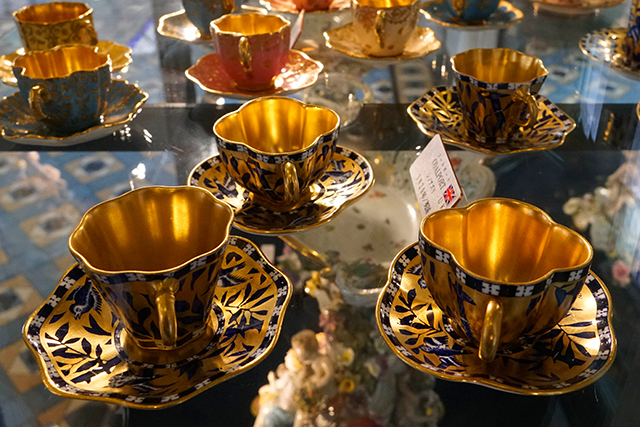
Most have some sort of gold in their design. In the background, you can see artistic tiles that were ‘widely popular as an indispensable part of houses in the UK for their clean feel in the 19th century’. These tiles cover the floors in most of the rooms in the Entrepot Hall.
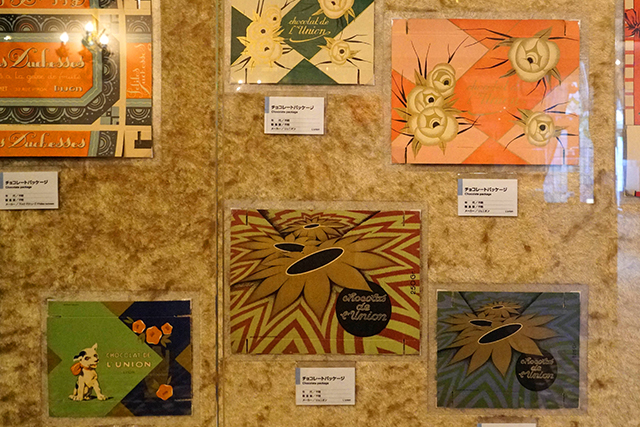
Continuing through the rooms, we see the section for Packaging Labels, showcasing ‘a number of valuable examples of chocolate packages from bygone days, including commercially available and made-to-order varieties’.
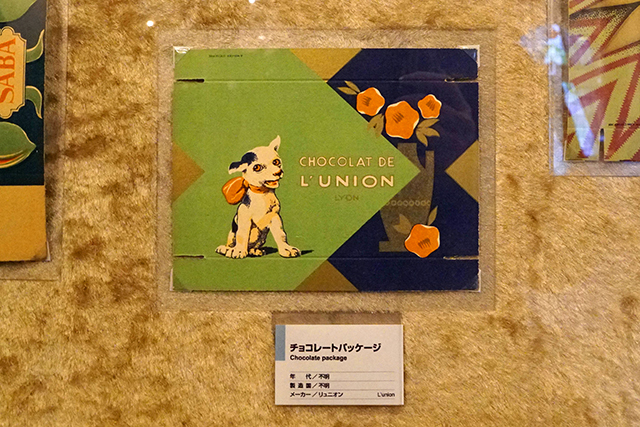
This one with a dog catches our eye. ‘Works of Japanese art, particularly ukiyo-e woodblock prints, were popular in France in the 19th century. This section includes examples of ukiyo-e design chocolate packaging, which is considered valuable as it reflects the daily lives of people in those days’.
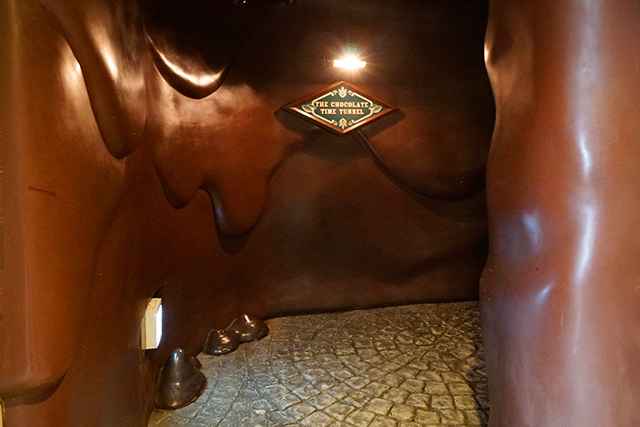
This indulgent looking space is The Chocolate Time Tunnel. We discover that ‘unlike most fruit trees, the cacao pod growds directly from a trunk or large branch of othe tree rather than from the end of a branch’.
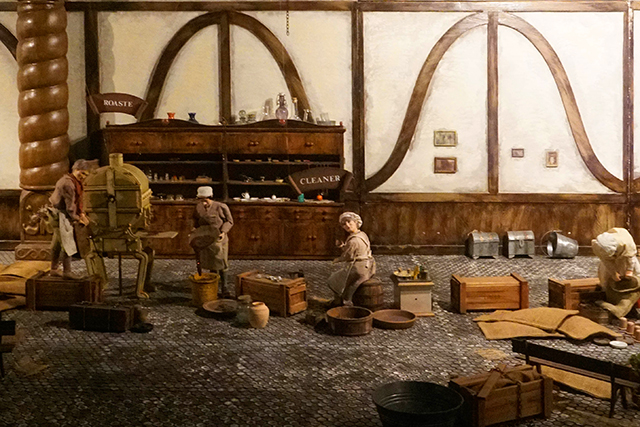
The tunnel takes visitors back in time to a 19th century UK factory to ‘highlight the conditions of such a facility in those days’. This display shows the ‘Cleaner’ and ‘Roaster’ sections (right to left).
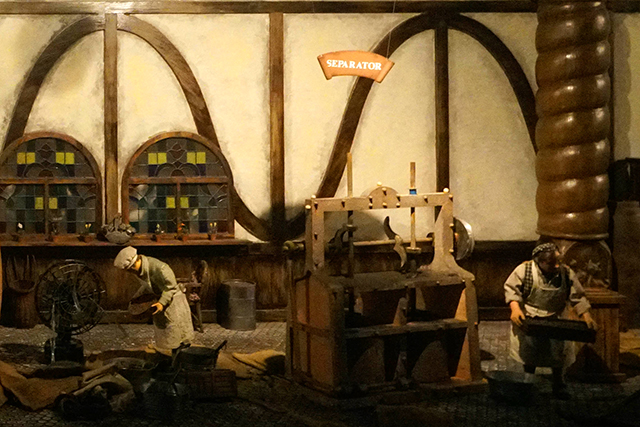
The next steps involving separating the cacao beans…
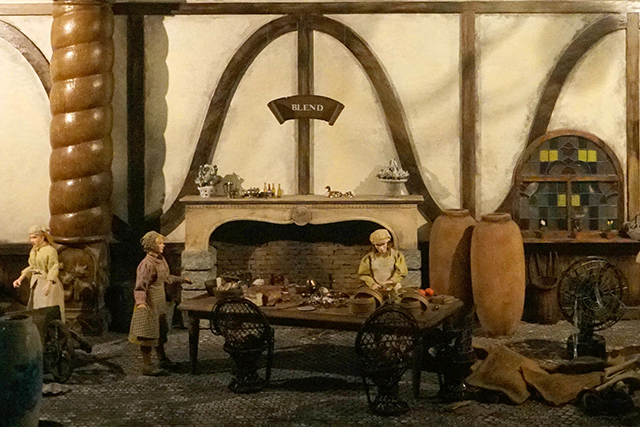
…then blending different beans for the desired flavour.
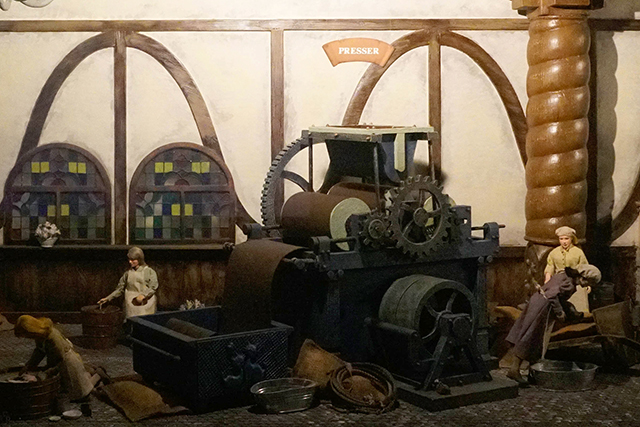
The beans are then pressed to release their oils.
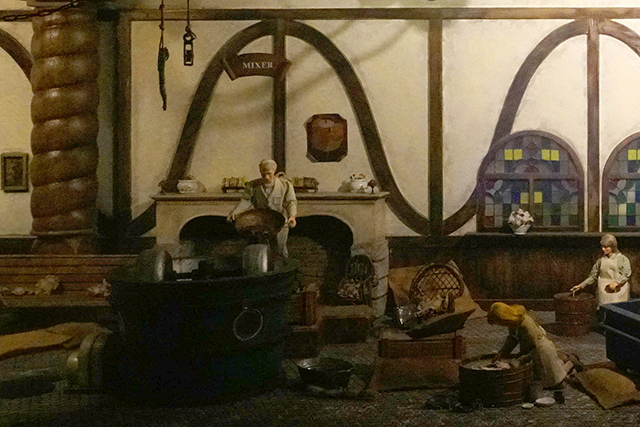
Here, they mix the various components together to form chocolate.
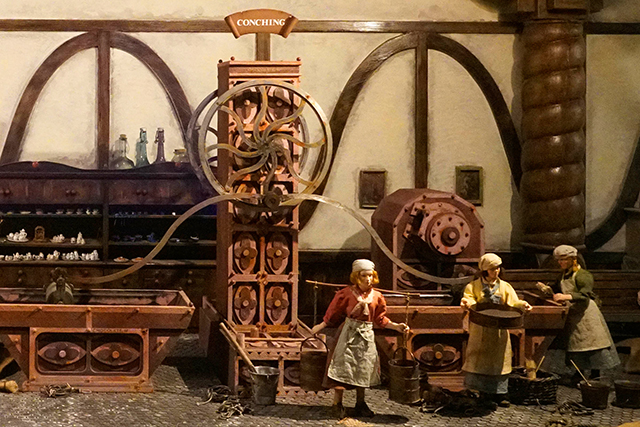
In the conching stage, the mix is agitated to evenly distribute cocoa butter within chocolate.
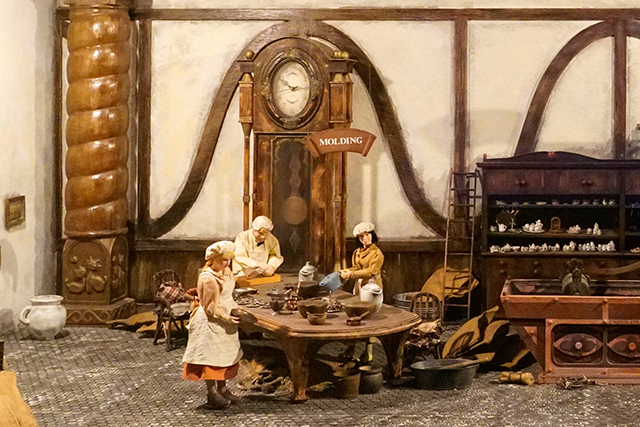
The resulting liquid is poured and set into moulds before finding their way to consumers.
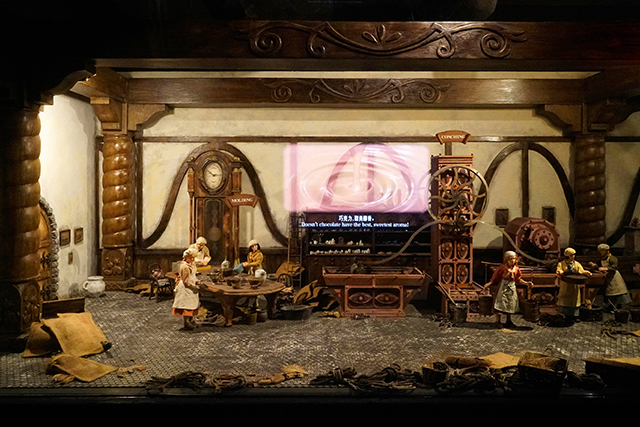
Each section of the chocolate tunnel has a button you can press to project a video explaining the process onto the display.
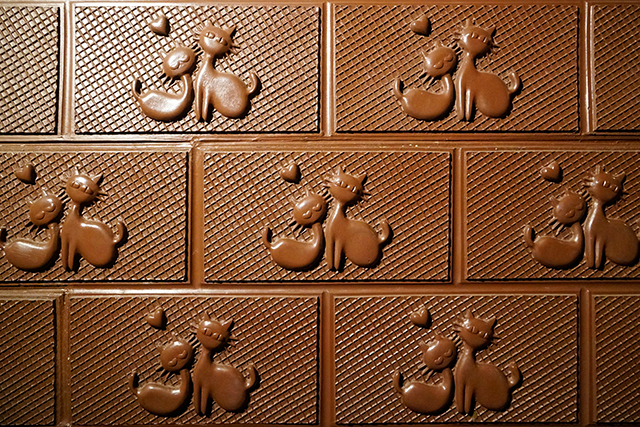
The walls have chocolate bricks featuring the Ishiya cat.
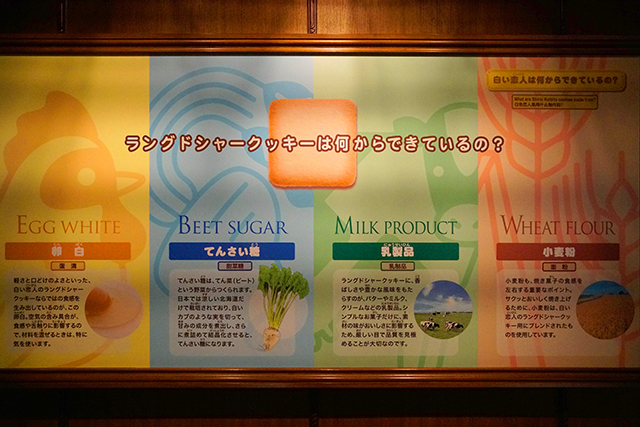
Following the Chocolate Time Tunnel, we head into the truly interesting part of the factory: the Shiroi Koibito Cookie Production-Line Observation. We learn that Shiroi Koibito cookies are made from egg white, beet sugar, milk products and wheat flour.
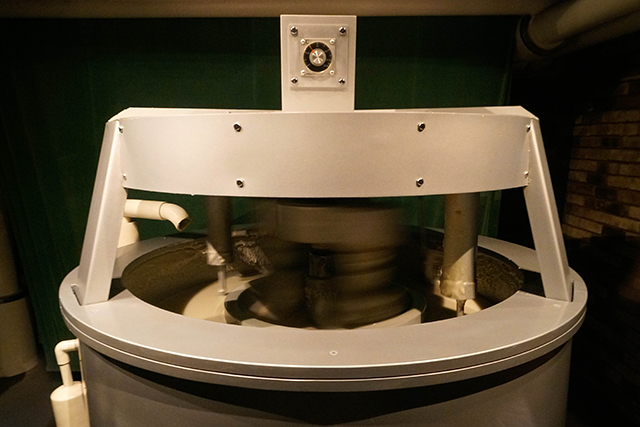
This here is their conching machine in operation. It mixes the liquid chocolate ‘for six hours at the temperature of a warm bath. This makes the chocolate soft and velvety smooth’.
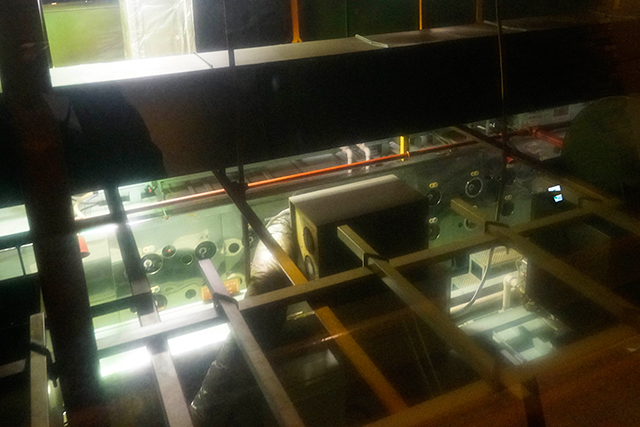
This rather enclosed part of the production line is where they bake the cookies. Top secret!
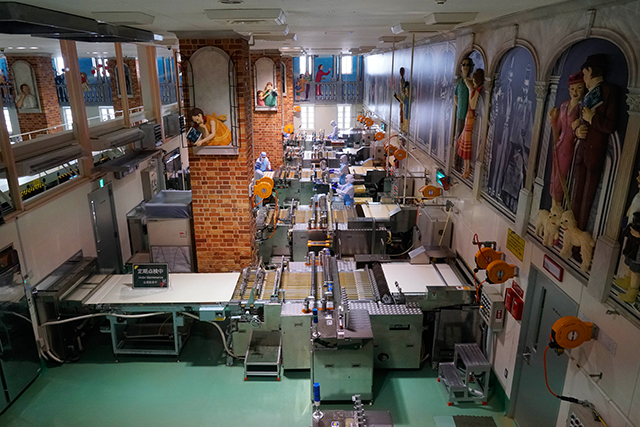
This first part of the room shows the cookies coming out from the oven (on the right).
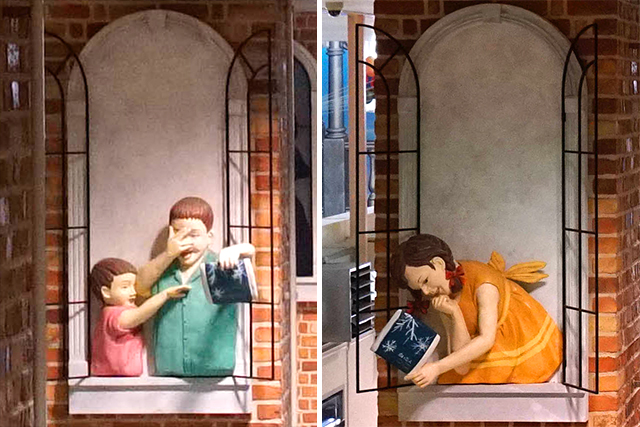
The columns in the space are decorated with families enjoying the cookies.
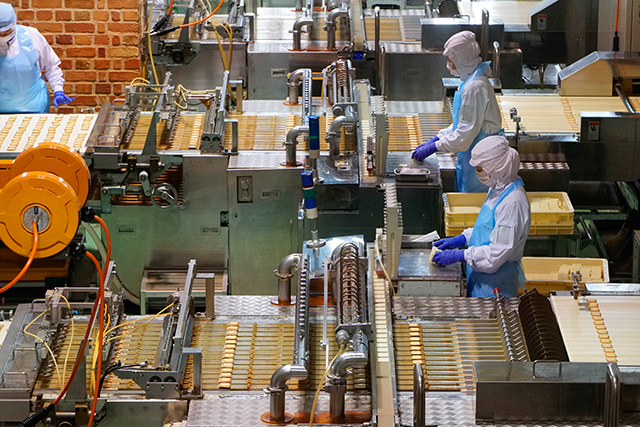
We see the workers on the right stacking the squares of white chocolate into the slots in front of her that then get automatically distributed across the length of the machine and sandwiched between the two fresh-baked cookies. The residual heat from the cookies melts the chocolate just enough to stick the two cookies together.
There’s a touch-screen interface that allows you to feel the heat from the oven room.
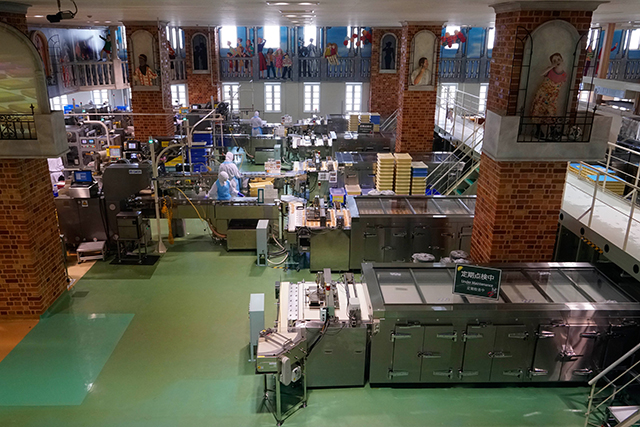
After the sandwiching space, we move to the space for cooling and packaging.
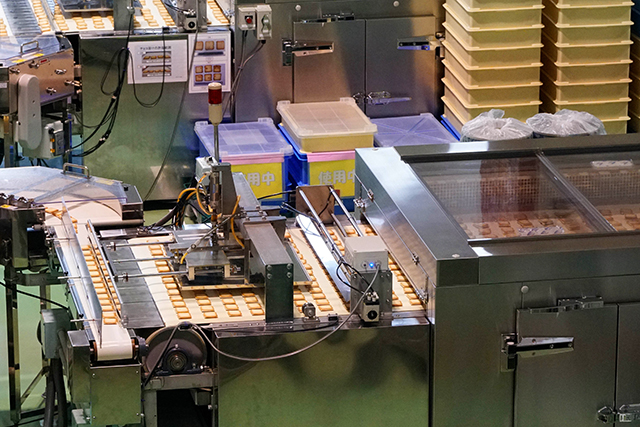
The cookies go through a cooling tunnel that lowers the temperature of the cookies to 6°C for stabilisation over 10 minutes. After they come out…
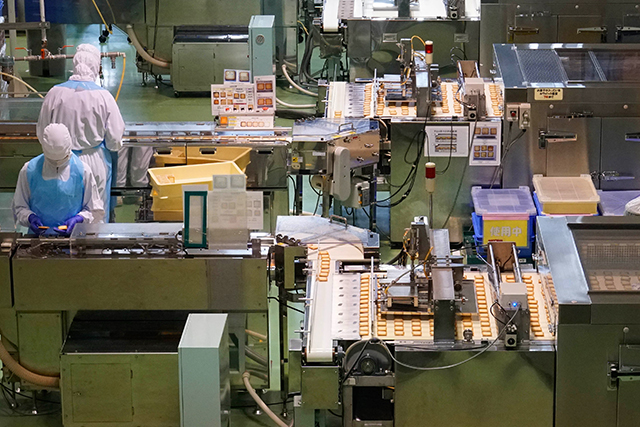
…they’re checked for thickness and weight by a sensor…
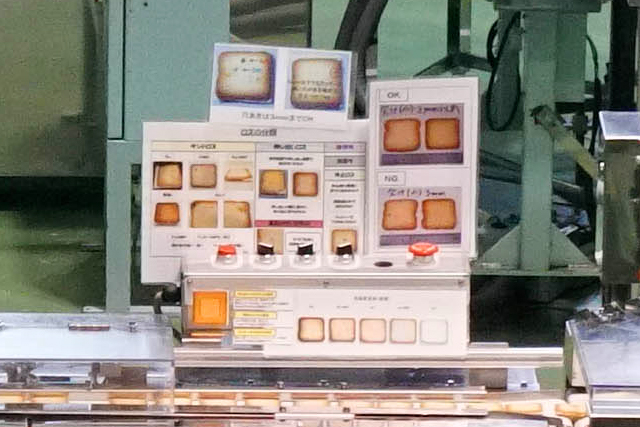
…before also undergoing a strict visual inspection for damage and deformation. There are photos for the workers to use as a guide.
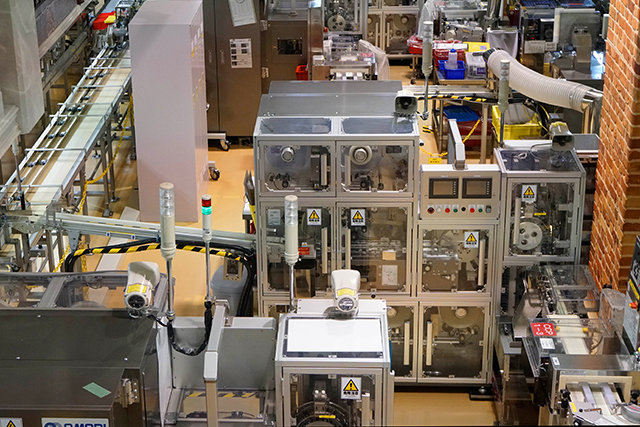
After passing inspection, the cookies are packaged individually with their best-before dates printed.
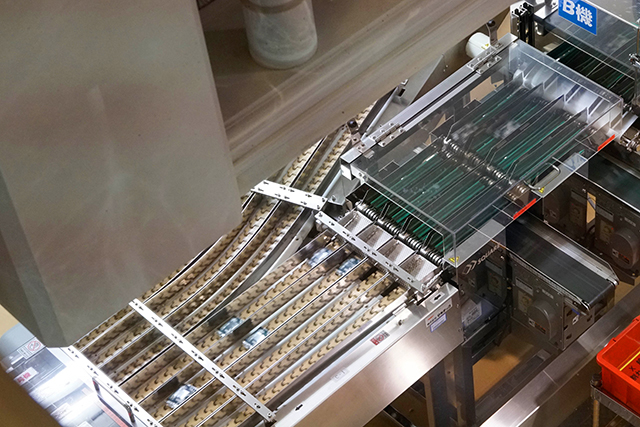
The cookies are then packaged using a high-speed packaging machine.
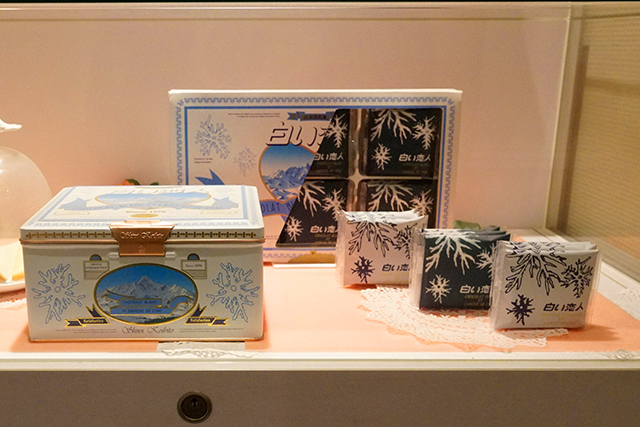
Outside the production line observation, we have a look at the origin of Shiroi Koibito and the other products by Ishiya.
Shiroi Koibito is their main product. The name translates to white beloved ones. Apparently,
One day, when the founder of Ishiya returned home from cross-country skiing, he casually described the gently falling snowflakes as ‘white beloved ones’. These no common words were adopted verbatim for the confection, giving the name of the Shiroi Koibito cookes we know and love today.
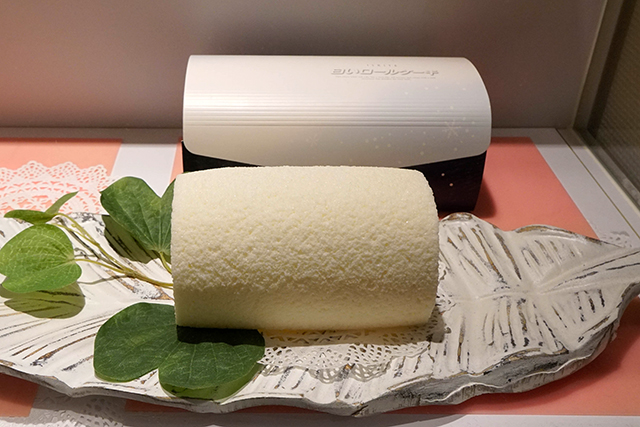
Next up is their Shiroi Cake Roll, a white roll cake that’s had tiny flecks of white chocolate throughout to give it a milky melt-in-your-mouth flavour.
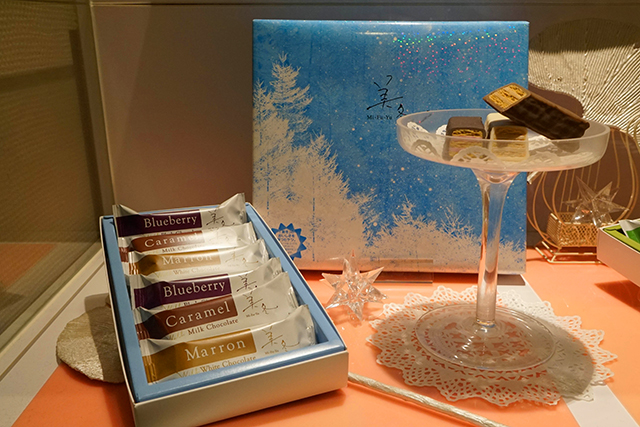
They also have their Mifuyu which comes chocolate with three other ingredients: dark chocolate with blueberry, milk chocolate with caramel and white chocolate with sweet chestnut.
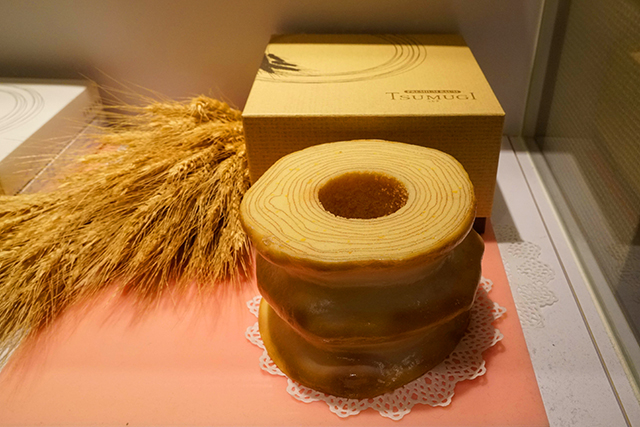
Finally, there’s the Tsumugi, a baumkuchen. They now also sell a Shiroi version, that uses the same white chocolate used for Shiroi Koibito to make a white baumkuchen not seen elsewhere before.
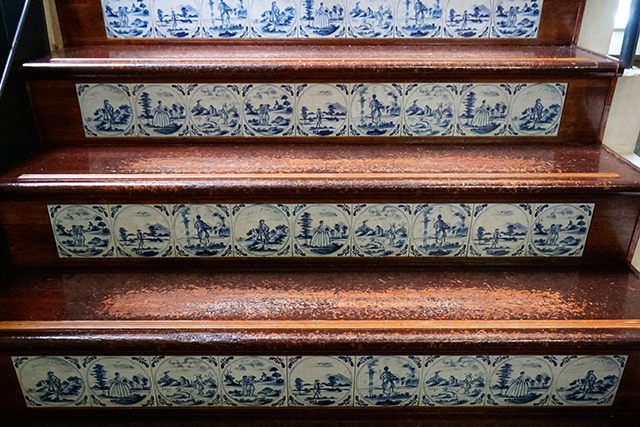
We see more tiles from the 19th century in the UK lining the rise the of the stairs between the floors.
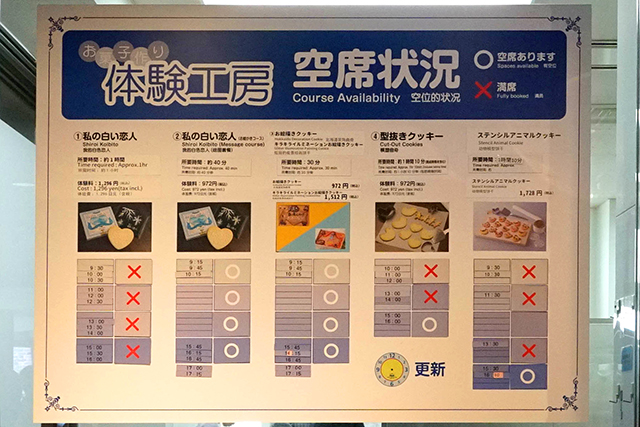
There’s a Cookiecraft Studio at the top of the stairs where visitors can try their hand at making confections, including their own designs of heart-shaped Shiroi Koibito cookies, for between ¥1,200-1,728.
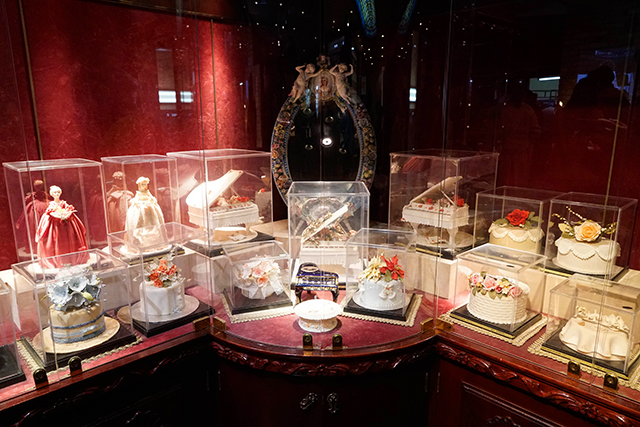
Opposite the studio is the Sugarcraft area, showing sugarcraft works often given as gifts on special occasions.
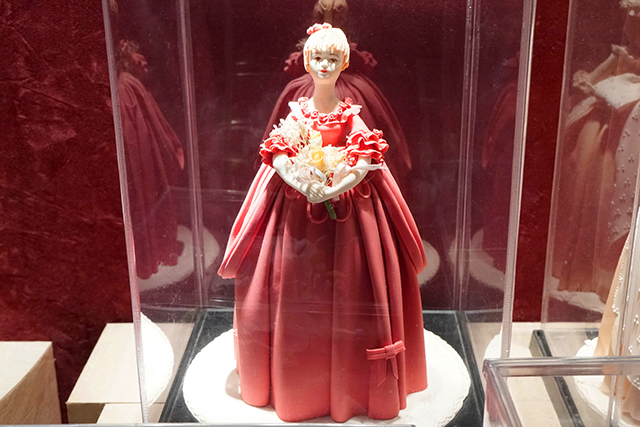
This is a sugarcraft doll, much like the porcelain ones you see from the 19th century in the UK.
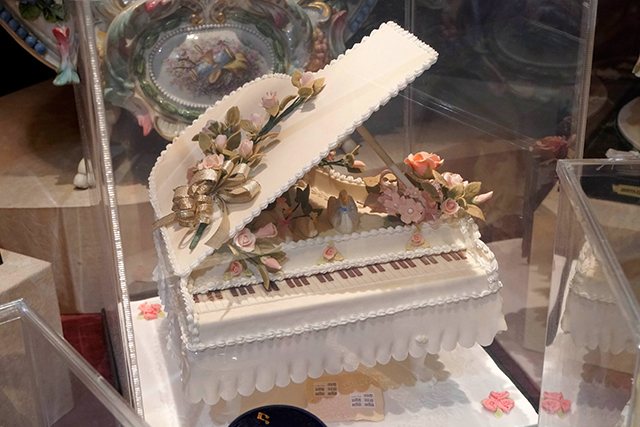
This is a sugarcraft piano.
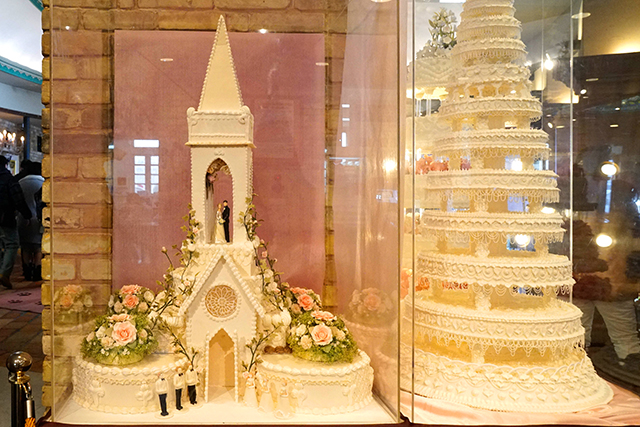
Of the sugarcraft cakes on display, the ones made for weddings are the most spectacular. This one featured a wedding chapel.
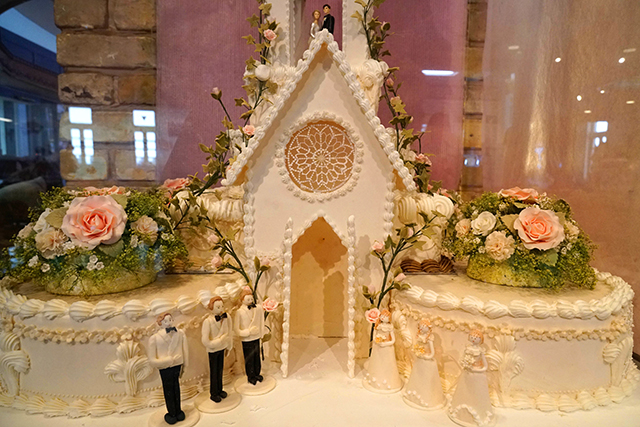
The stained glass window of the church is particularly intricate.
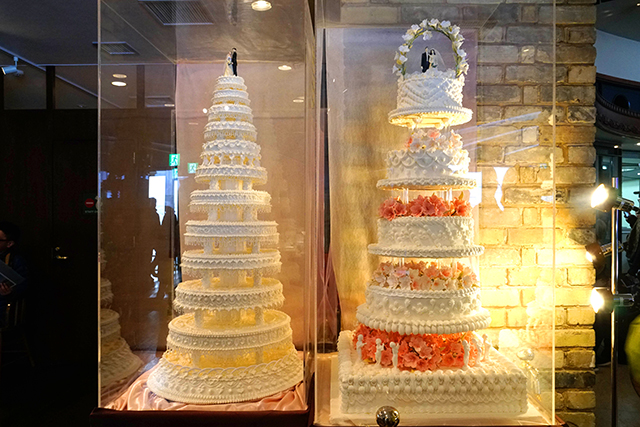
More conventional tiered sugarcraft wedding cakes are also on display.
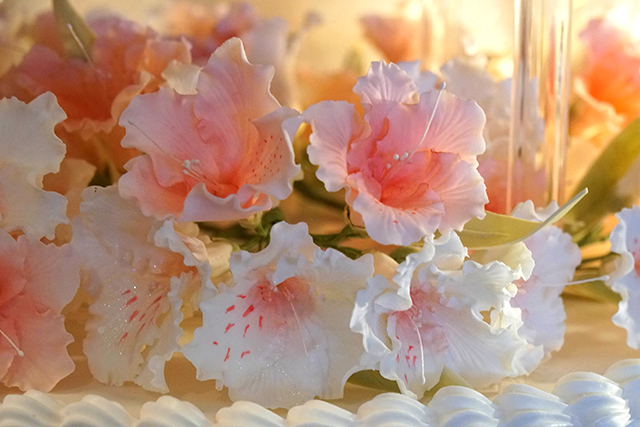
The level of detail in the flowers is amazing.
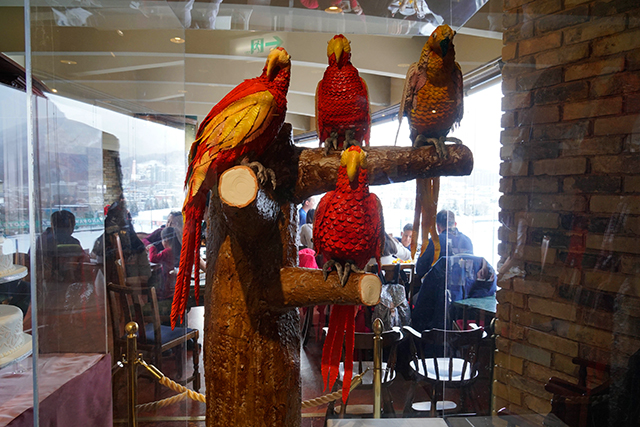
For a change of pace, there’s also sugarcraft parrots perched on a tree. Behind the sugarcraft work is the Chocolate Lounge where you can enjoy sweeping views of Mt Teine while nursing your chocolate drinks and parfaits and sitting in antique furniture from England. There’s a long waiting list for the lounge.
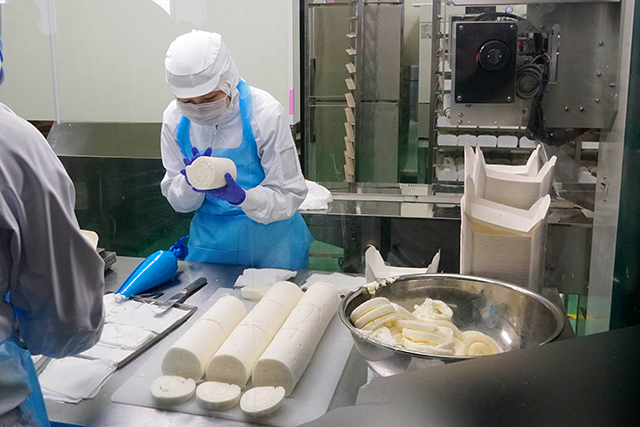
This is a view of their Quality Control Division Inspection Room. We see the workers taking meticulous care with the Shiroi Roll. I wonder what they do with the ends of the cakes they discard?
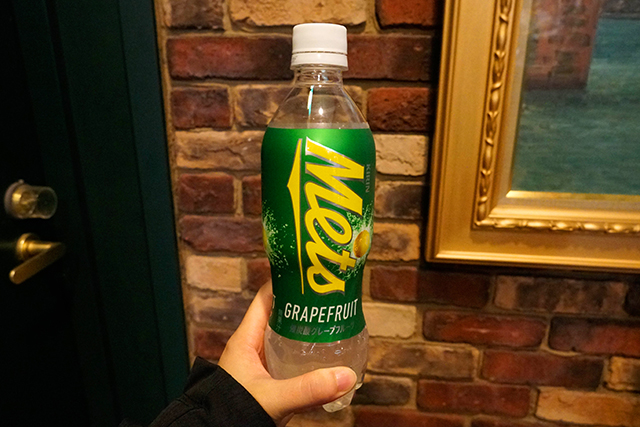
We take a short break and try the Mets Grapefruit we’d picked up at the Seiyu before arriving. It’s a pleasant and refreshing citrus flavour with just the characteristic hint of bitterness you expect from grapefruit.
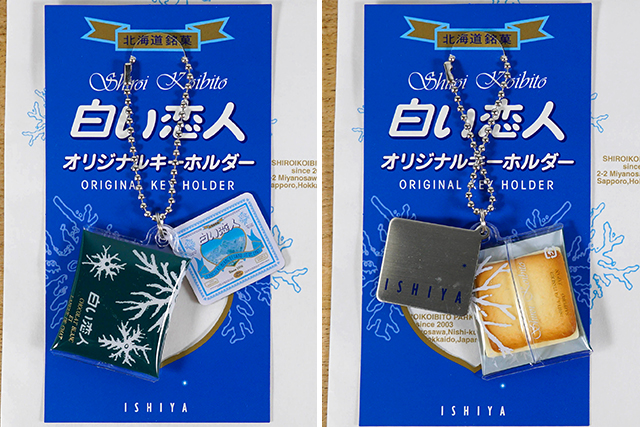
We pass by an area with oversized Ishiya products for people to take selfies with and pass onto the Souvenir Shop where I pick up this key holder. It featured an individual package of Shiroi Koibito with a transparent back where you can see a true-to-life cookie, while the other piece featured the cover of the tins for Shiroi Koibito with Mt Teine in the background.
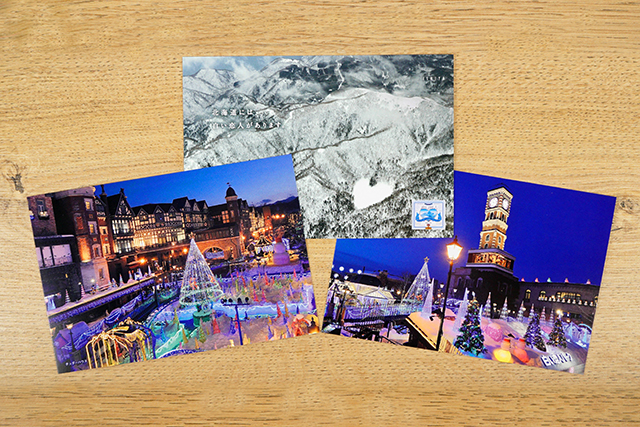
We receive three complimentary postcards with our purchase showing the park lit up at night.
There’s a section displaying a record collection as well as a music hall where visitors can listen to wax cylinder records and SP records using a real gramophone. We’re a bit confused about its place in a chocolate factory as are the rest of the visitors, perhaps explaining why that area is particularly deserted…
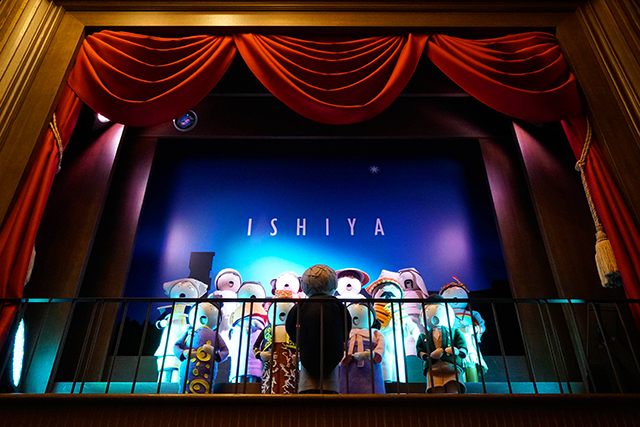
This here is the World Chorus Theatre, a ‘musical feast for the eyes as well as the ears, with a choir dressed in folk costumes from various regions of the world’.
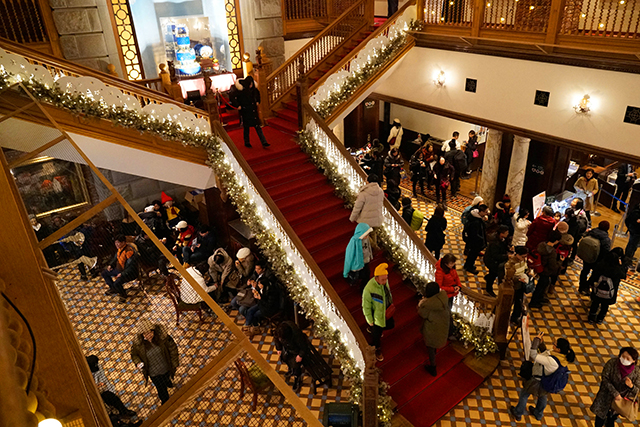
And coming down this grand staircase, we’re finally out of the paid area and into the free area. On the right is Shop Picadilly, which sells all Ishiya products as well as a range of fresh cakes. To the right is Candy Labo.
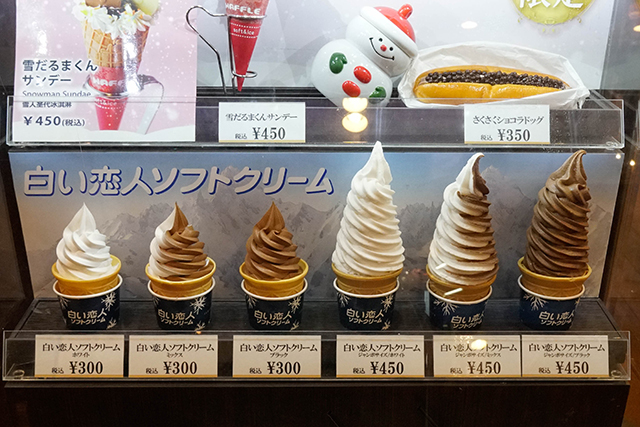
But first! We recharge with some soft ice cream.
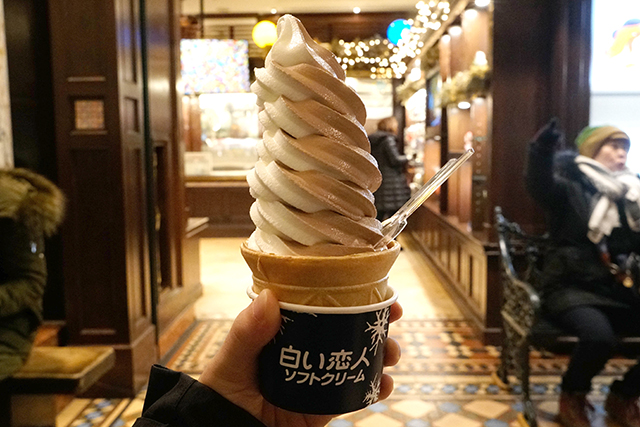
This is the Ishiya Soft Cream Jumbo Size White/Black Mix (¥450). We enjoy the creaminess of the soft serve. The rich dairy that Hokkaidō is famous for came through prominently in the white soft serve, but we prefer the chocolatey notes of the black soft serve.
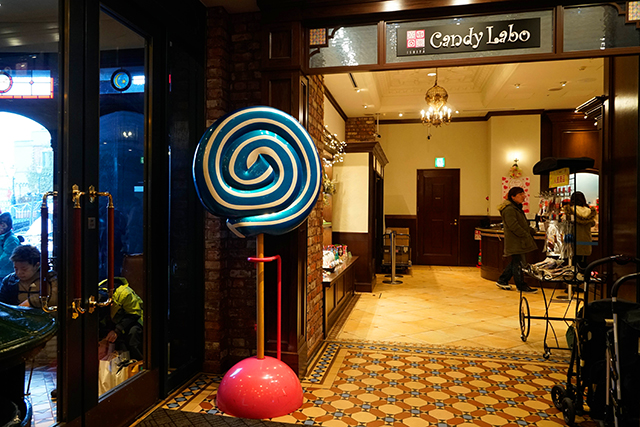
We eat the soft serve as we wait for the candy demonstration in Candy Labo, ‘a colorful candy shop offer[ing] an opportunity to see candy artisans make a variety of designs by combining different colored candies’. This is actually one of the few shops we’ve been to that allow you to take photos while they’re making the candy.
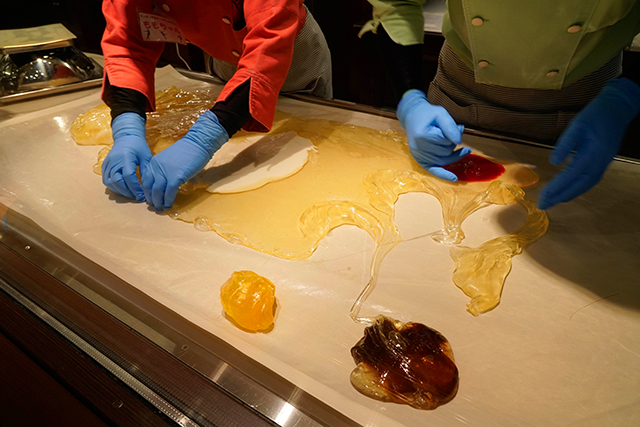
First up, they pour the molten sugar straight onto the table, and flavour and colour various sections according to the final design.
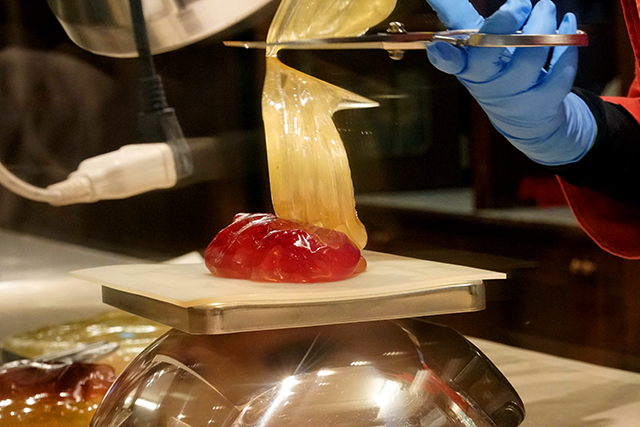
Each colour is weighed out precisely.
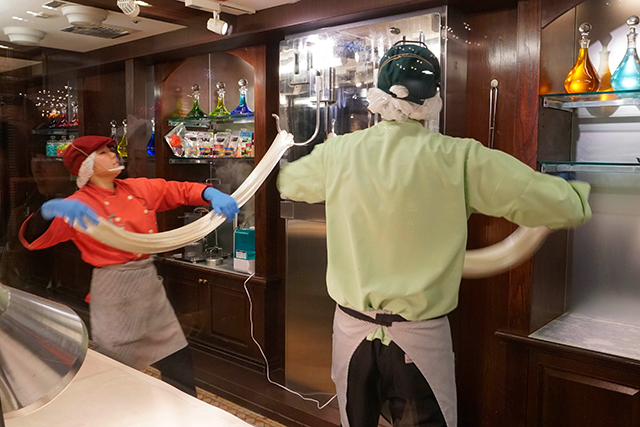
The colours are then embedded and (if it’s a large section like the white) stretched using hooks on the wall.
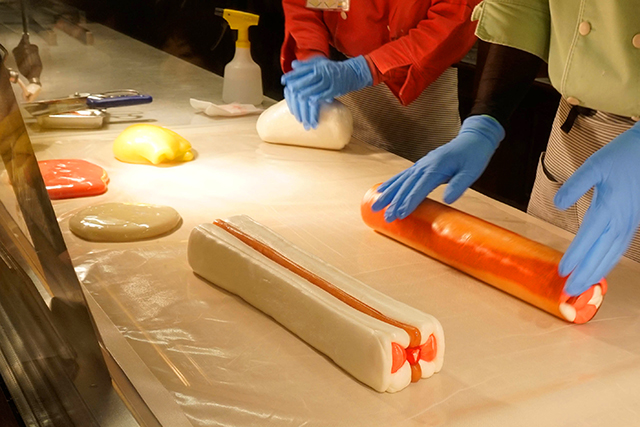
Then begins the process of assembling the colours to form the design.
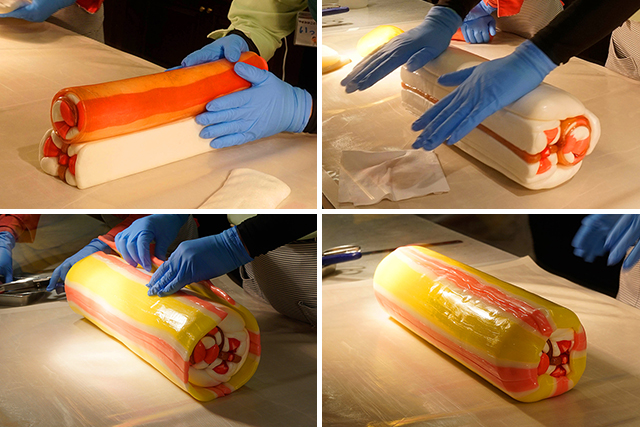
It’s a giant sausage shape at the moment!
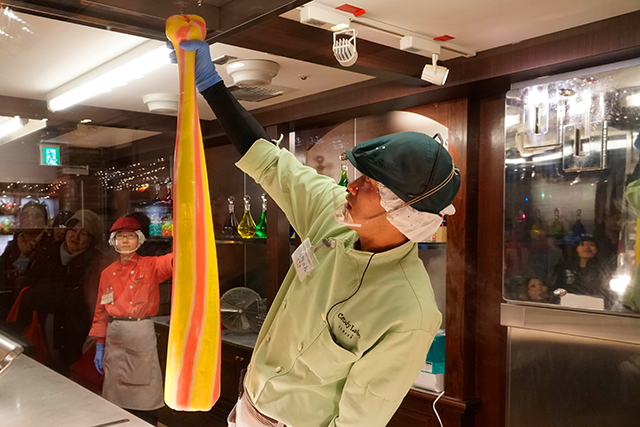
The sausage is then stretched out by hand and gravity.
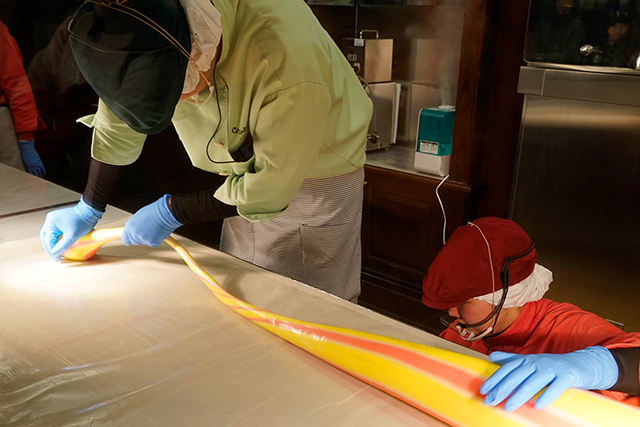
We’re beginning to see sections that resemble the size of the candy…
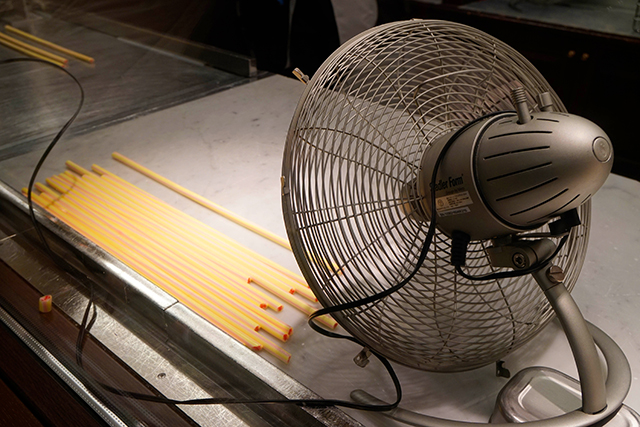
Each section is cut and cooled to allow it to harden…
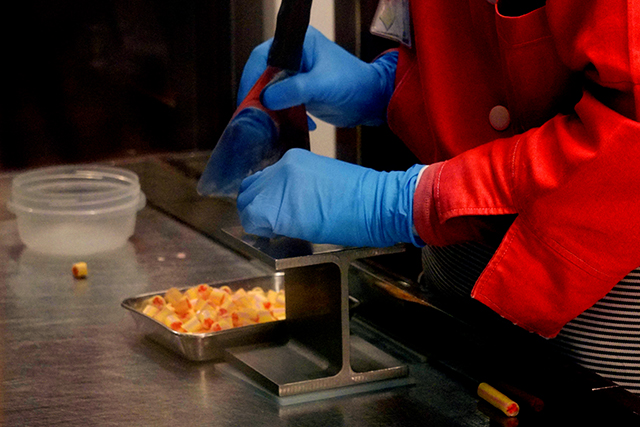
…before one of the workers cuts them into small pieces at lightning speed.
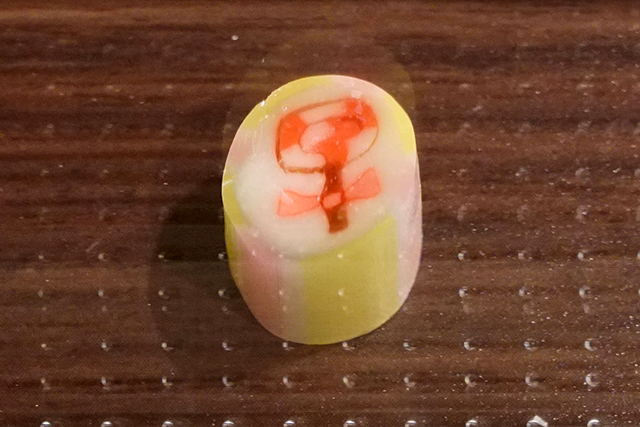
And the final product is a lollypop with a bow on it. The workers bring out samples for the audience and we find out that it’s grapefruit flavoured!
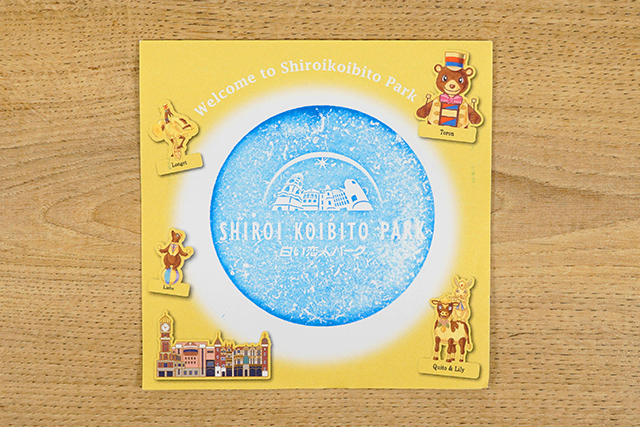
Outside there’s a commemorative stamp station as with all major tourist destinations in Japan. It shows Toron the Brown Bear, Quito the Rabbit, Lili the Cow, Liebe the Fur Seal and Longet the Japanese Crane.
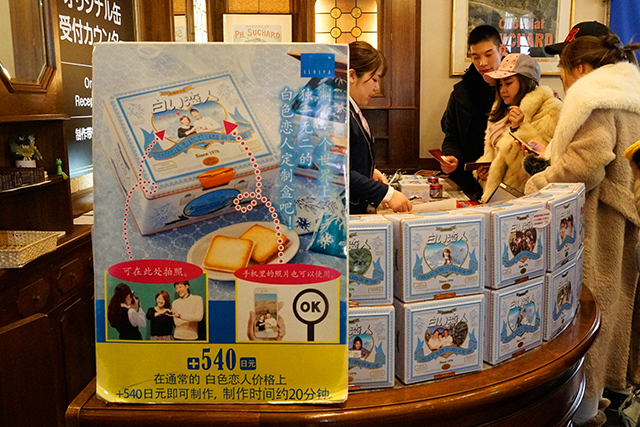
For the more selfie inclined population, Shiroi Koibito Park is also the only location where you can get a photo of yourself printed onto a metal box of Shiroi Koibito for ¥540.
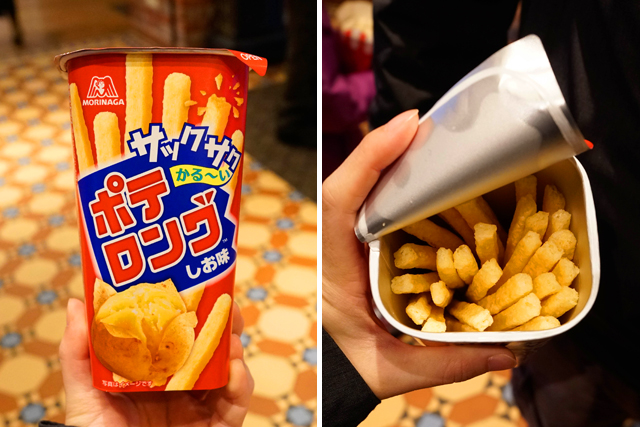
We have a quick snack of salt flavoured Potenrongu. They’re less crispy than Calbee’s Jagariko, although each stick is longer.
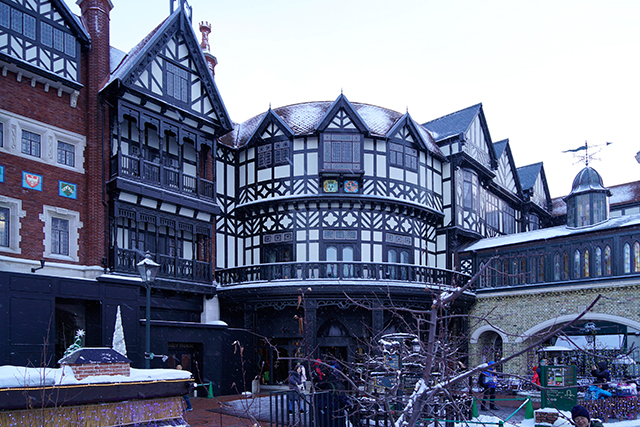
This is the view looking back onto the Exhibition Hall.
There’s the Sapporo Mechanical Clock Tower, and we’re lucky enough to catch it on the hour.
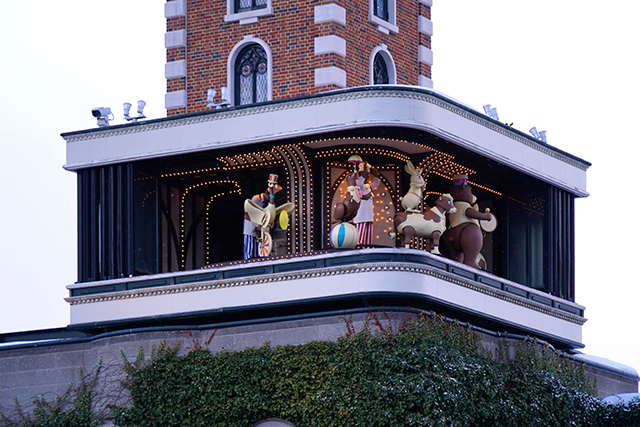
At the top of every hour…
is a parade of jolly singing and dancing mechcanical dolls. Toron the Brown Bear, Quito the Rabbit, Lili the Cow, Liebe the Fur Seal and Longet the Japanese Crane are all on hand to cheerfully greet onlookers. They play musical instruments under the spell of their master, and Dole-kin the Blakiston’s Fish Owl (the mascot of professional soccer team Consadole Sapporo) also joins in with the merry parade.
This photo captured all four of the Ishiya characters.
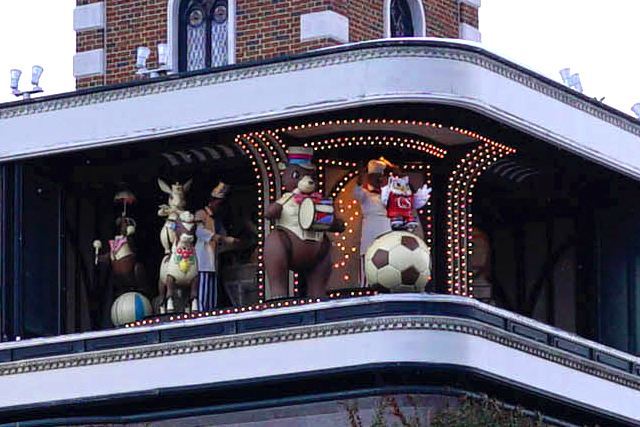
We see Dole-kun at the start of the parade, leading the Ishiya characters.
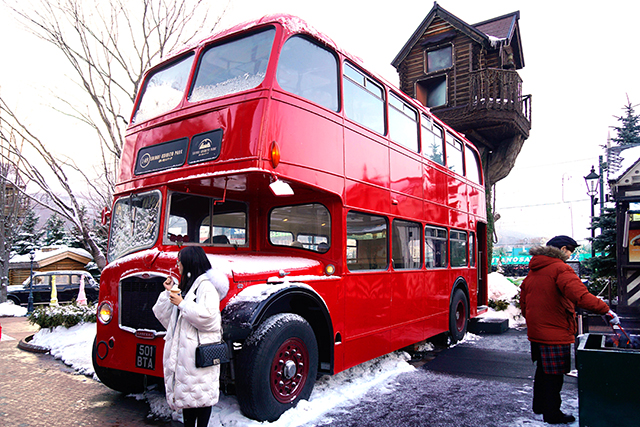
There’s a red London bus with Shiroi Koibito Park as the destination. It’s open for customers who want to escape the cold after purchasing food from the stalls.
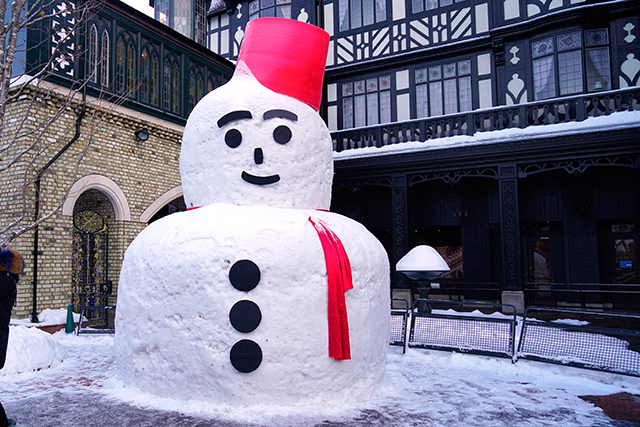
All the snow that’s piled up has been put to good use in snowman form.
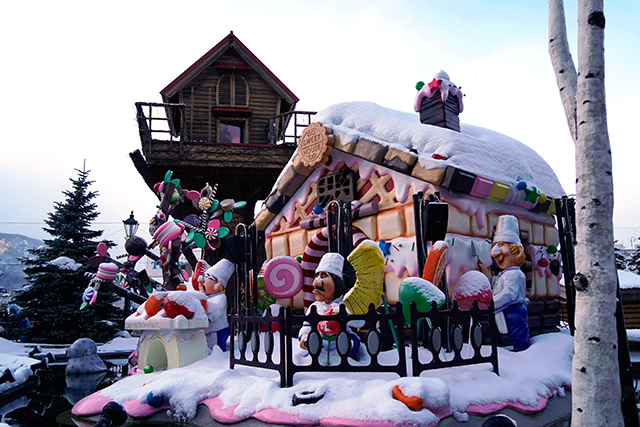
During the summer months, a Shiroi Koibito Railway runs among the trees and around this candy house in the park. It’s a miniature six-car steam train modelled after the Benkei Steam Locomotive and the train lasts approximately 10 minutes. It’s winter now and everything is snowed under!
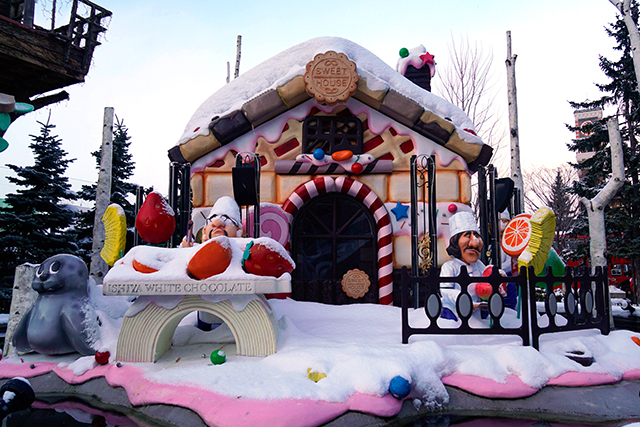
The house is constructed from various Ishiya products with Shiroi Koibito cookies forming the bricks for the walls of the house, the Mifuyu forming the tiles for the roof, and the Shiroi Tsumugi under the nameplate.
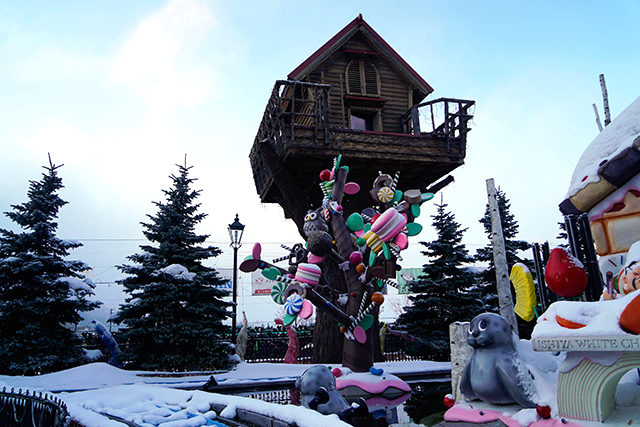
There is even a macaron tree and a tree house next to the sweet house.
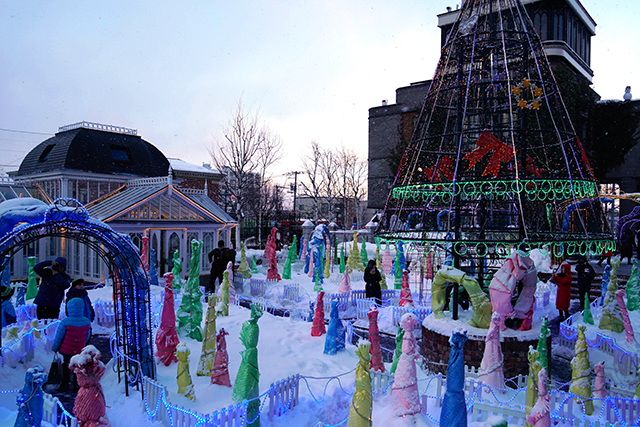
The colourful structures in this photo are a ‘wide selection of roses from classic to modern types that fills this 480-square-meter compound’. The flowers are The garden enchants visitors with its seasonal roses and other flowers from mid-May to the end of October.
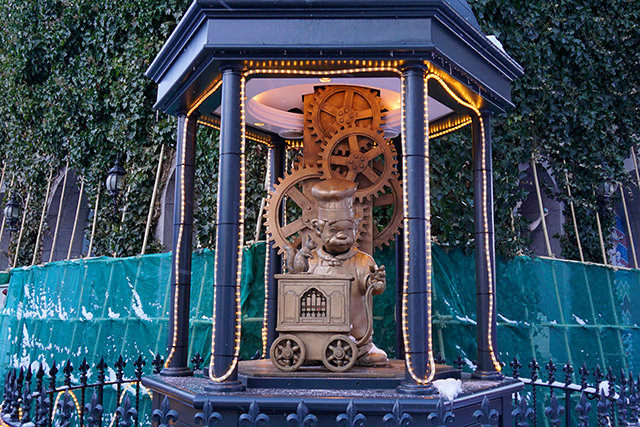
And with that, we’re ready to head back into warmth…
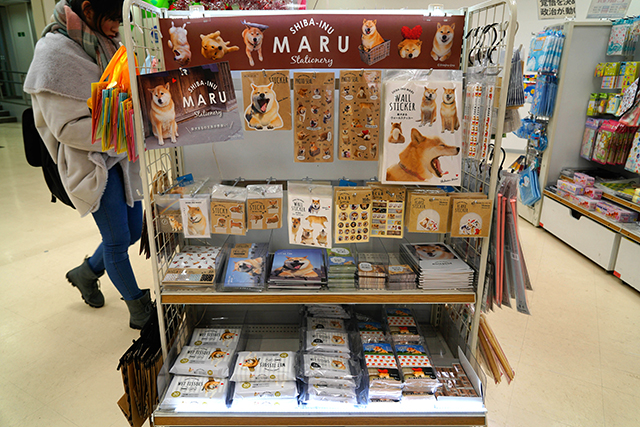
We check out the Can-do, a hundred yen store above the supermarket in the Seiyu. It has a section dedicated to Maru, a shiba inu in Japan. Maru is a celebrity with over 2.6 million followers on Instagram.
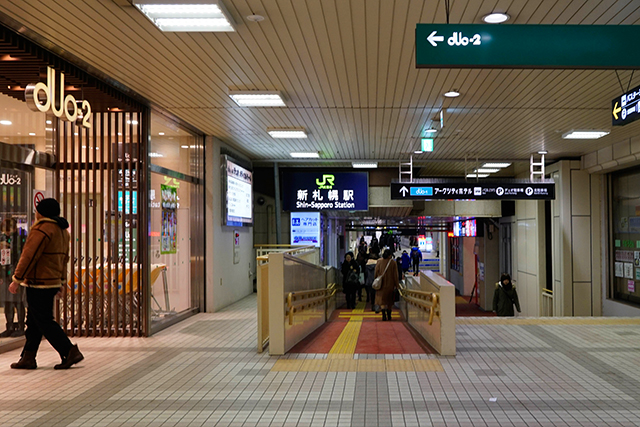
Back at Shin Sapporo station, we hunt for some dinner…
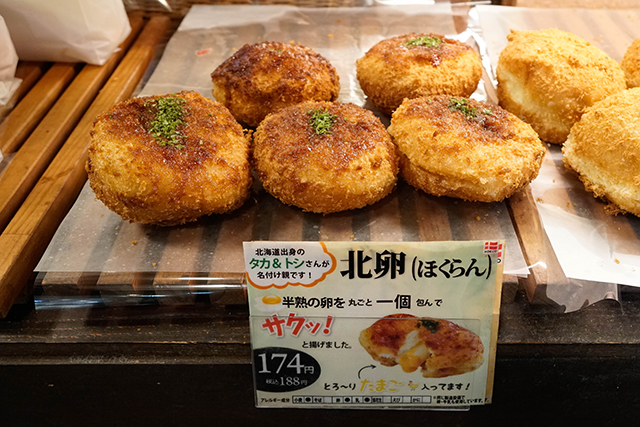
This delicious looking bread has an oozy quail egg inside.
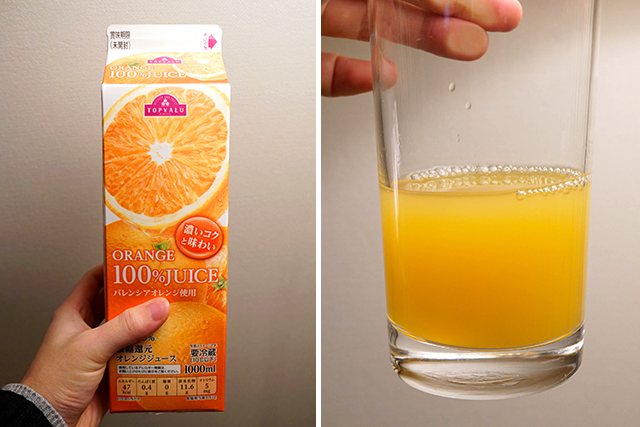
We pass ‘cause I’m feeling like death from my URTI. Instead, I opt for orange juice from the supermarket.
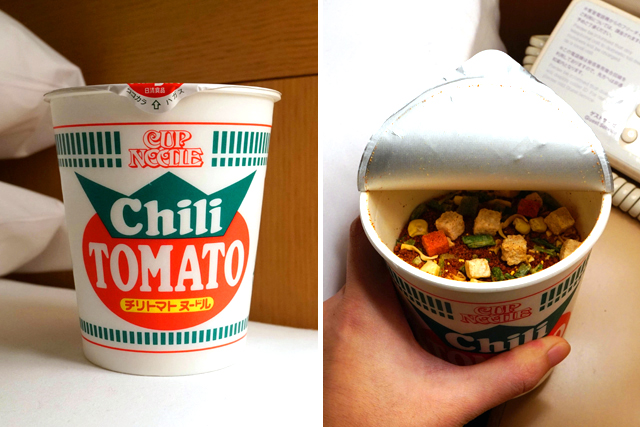
I pair it with Cup Noodle in Chilli Tomato flavour.
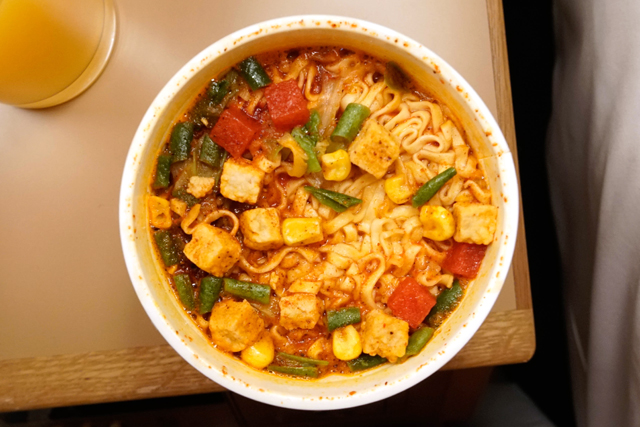
The dehydrated toppings plump up with their cubes of signature mystery meat, tomato, corn and beans. The soup It has a rich tomato-y flavour, but not much in the heat department.
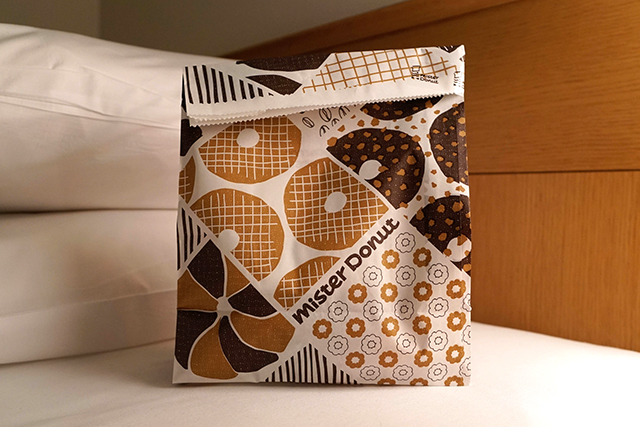
I also have a side of doughnuts from Mister Donut. It’s not the most nutritious but it’s comfort food!
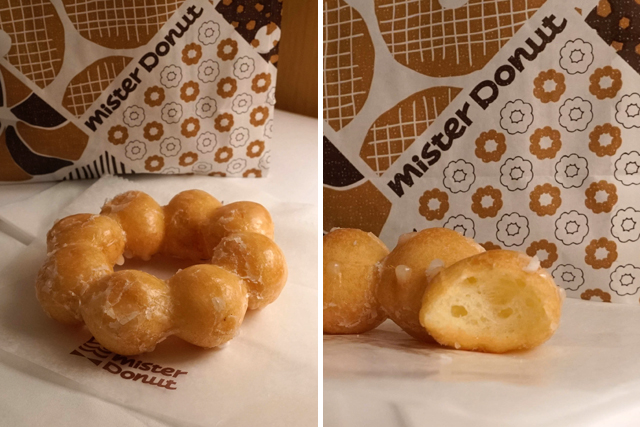
I’ve been meaning to try their Pon De Ring doughnuts ever since discovering them since our last trip. Pon De Ring doughnuts are a mochi doughnut meaning they’re extra chewy and bouncy on the teeth, that is, a normal doughnut but better. Even with my tastebuds half asleep, I enjoyed this Glazed Pon De Ring.
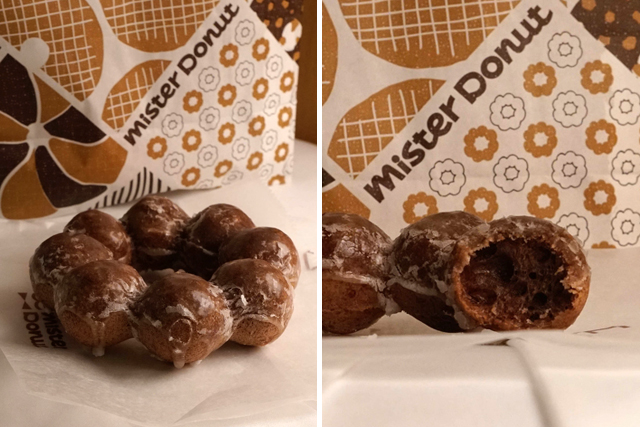
The Glazed Chocolate Pon De Ring tastes exactly like a chocolate version of the original with the same mochi texture.
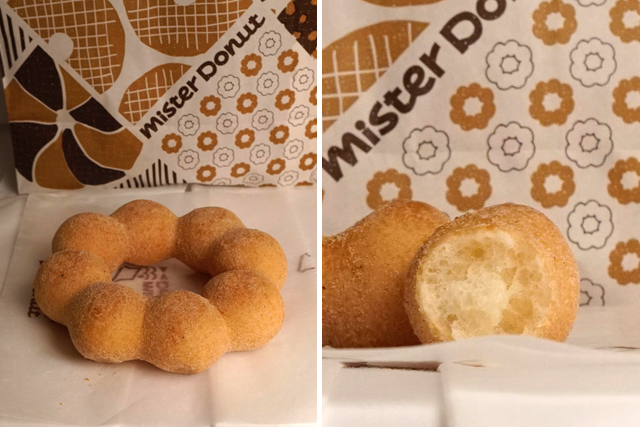
This last one is a Kinako Pon De Ring. The crust of the doughnut is firmer than the glazed ones, with the dusted kinako adding a slightly gritty and drier mouthfeel. I prefer the glazed ones.
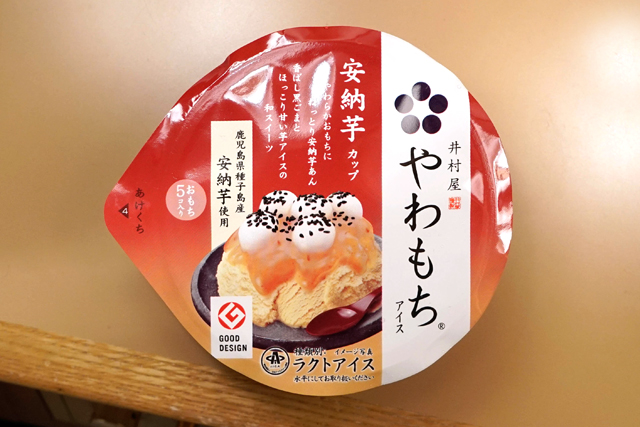
I finish with a sweet potato ice cream dessert. We’d tried the green tea and red bean version on a previous trip, so I was keen to try different flavours in the series.
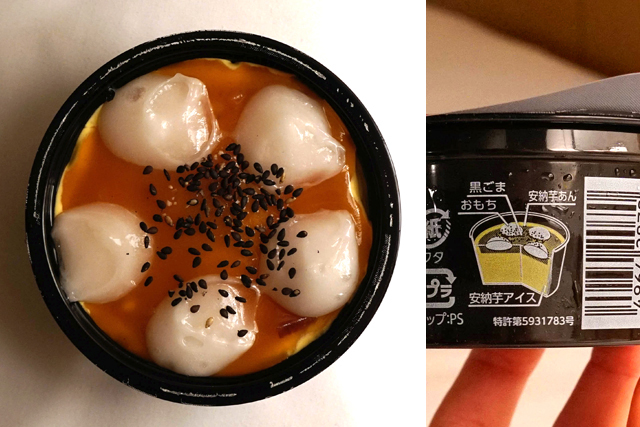
This one featured a yama imo ice cream topped with yama imo paste, five pieces of mochi and dusted with black sesame seeds. I’m not a fan of the sweet potato flavour – it’s overly sweet and soft without the texture of the tuber itself, which is part of the enjoyment when eating it roasted.
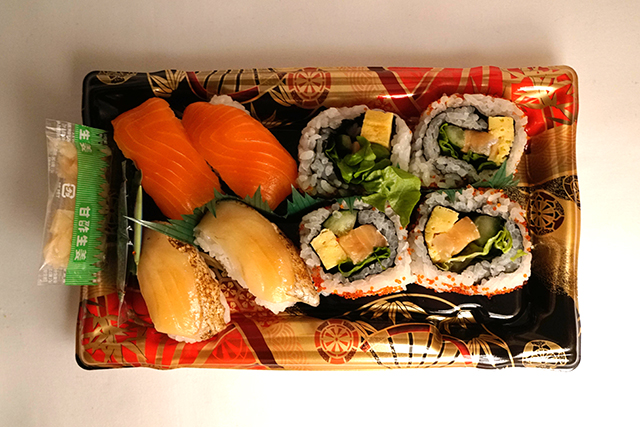
For D’s dinner, he starts with a side of sushi from the supermarket. He’s a fan of seared salmon.
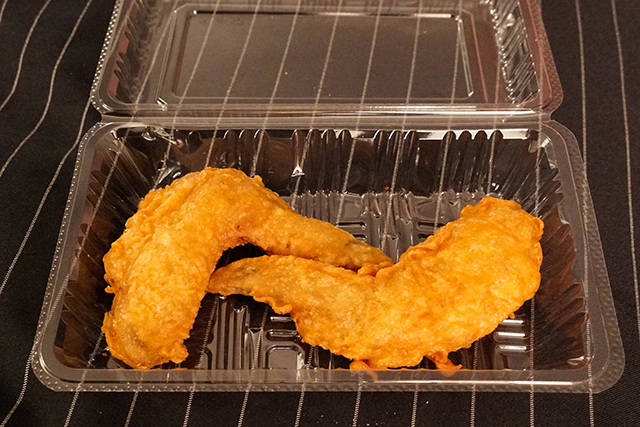
There’s also a side of deep fried chicken wings he picked up for ¥30 each at the supermarket. A gentleman was taking forever with the microwave that we gave up waiting and ended up warming them up with a hair dryer (yes, it works).
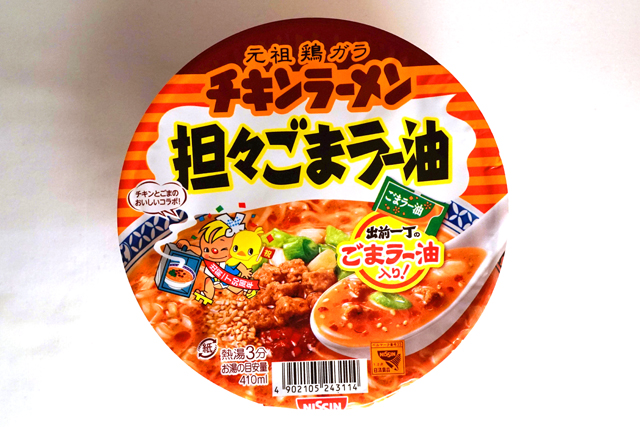
He finishes with a limited edition of Nissin Chikin Ramen: Tan Tan Goma Rayu. It’s a spicy ramen with sesame and chilli oil.
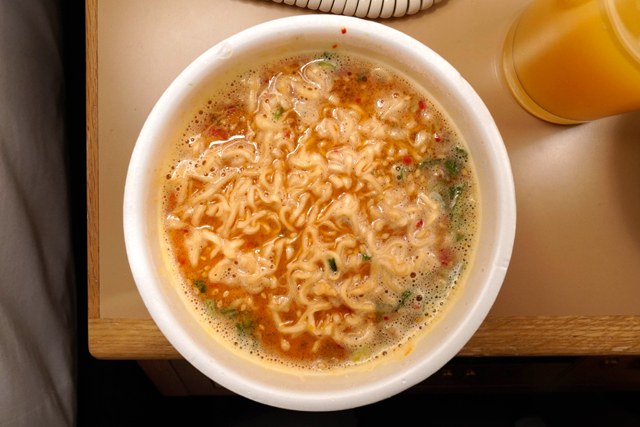
The noodles don’t look or taste half as spicy as the picture suggests, but D enjoyed the added nuttiness and spice to the original chicken flavour.
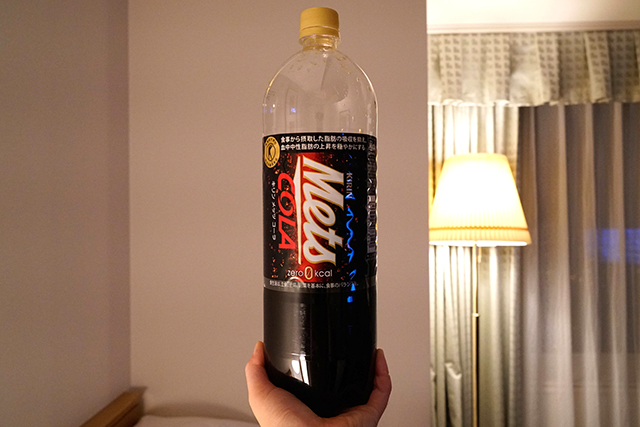
Mets Cola is our favourite cola in Japan – it had a very rich and deep cola flavour as compared Coca-Cola or Pepsi that makes it extra refreshing. We’ve not encountered a cola in Australia that has a similar taste. But on that note, I am very impressed that Coca-Cola can maintain consistent flavour in their cola across different countries – something that I wish Glico would look into.
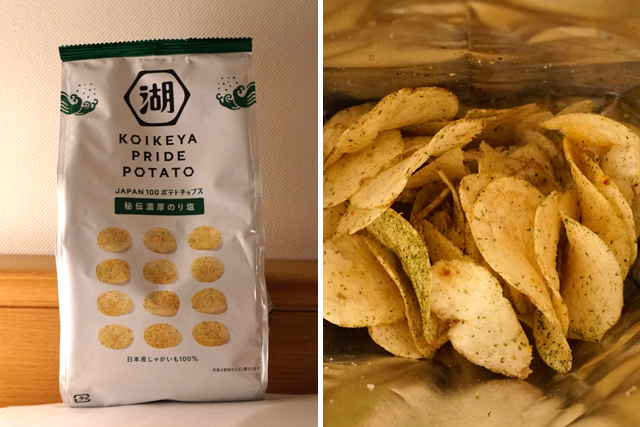
And to finish off our very nutritious dinner (hah!) these were some fancy potato chips: Koikeya Pride Potato in seaweed flavour. Alas, they’re not as thick cut as we’d hoped, although we do enjoy the umami-rich flavour.
Next up, we’re visiting Yoichi and Otaru for our final day in Hokkaidō.