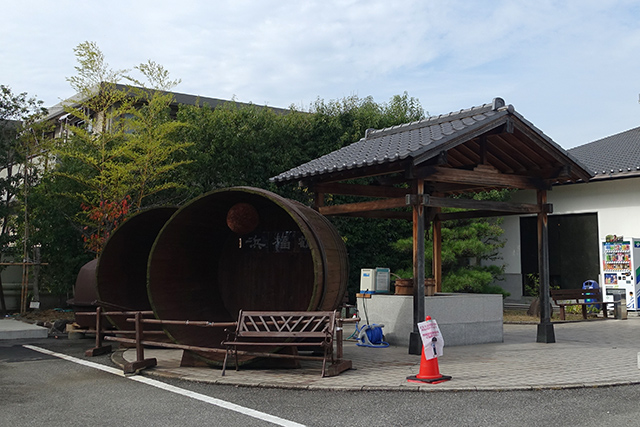
The Nada district in Kōbe has the most sake brewers of any prefecture in Japan as a result of the high mineral content in the water in the region that makes for a high quality sake. D and I aren’t big drinkers – in fact, unless we’re in Japan with access to chi-hi, we usually only have sips at work functions. But, we love factories and finding out how things are made, so we’re keen to visit the breweries in the Nada district. A visit means we can sample some sake and perhaps find something more palatable than One Cup Sake. <!-more->
But, of course, we must start off the day with a bout of TV –
Ōsaka – Nippombashi
Mid-2015, I watched an anime series called Futsuu no Joshikousei ga [Locodol] Yattemita in which two girls and a local mascot, Uogokoro-kun, join together to promote their local town and participate in a nationwide local mascot festival in the hopes of winning and attracting tourists to their town. The anime was one of the most interesting series I’d seen but I’d thought it was all fictional.
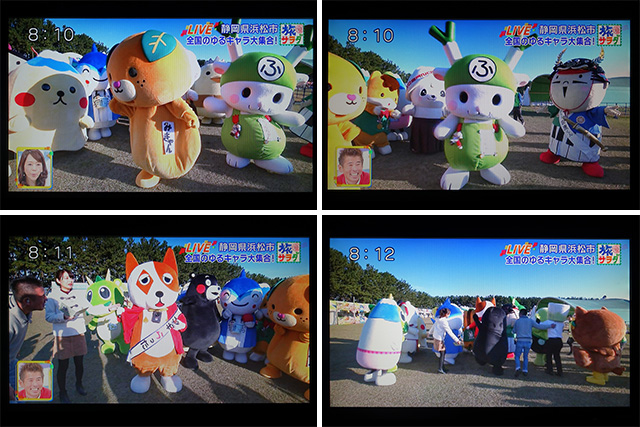
So imagine my surprise when I turn on the TV to find that it was the weekend of the three-day final Internet ballot for the 2015 Yuru-Kyara Grand Prix, a Real Life festival during which the most popular local mascot is voted. Anime is based on Real Life, I tell you! The winner for 2015, is the character on the far right of the top right photo: Shusse Daimyo Ieyasu-kun for the city of Hamamatsu in Shizuoka Prefecture. What an interesting start to the day!
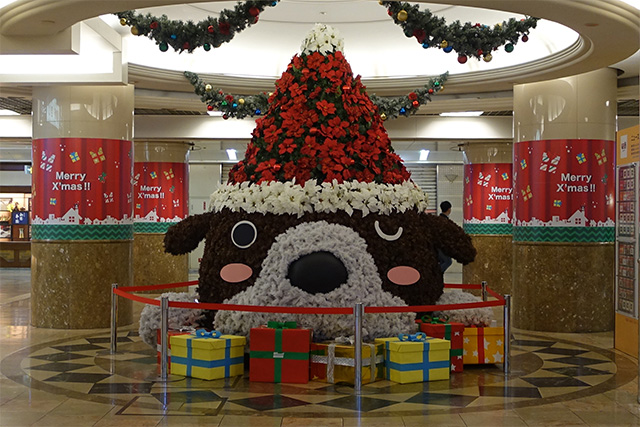
A bit past 9am, we head down to Namba Walk near Nippombashi Station to find breakfast. Christmas decorations are up! They used the same dog with the poinsettia hat from last year. The shops are still closed, though the cafes are open.
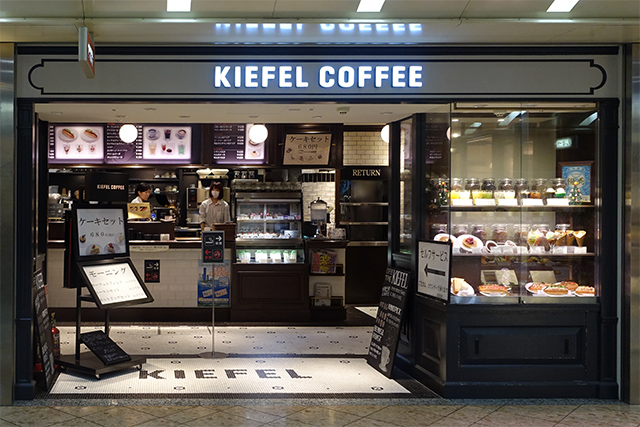
We have a look around Namba Walk and spot Kiefel Coffee. There’s a kiwifruit soda that I want, but the rest of the food options don’t particularly entice us, so we keep walking.
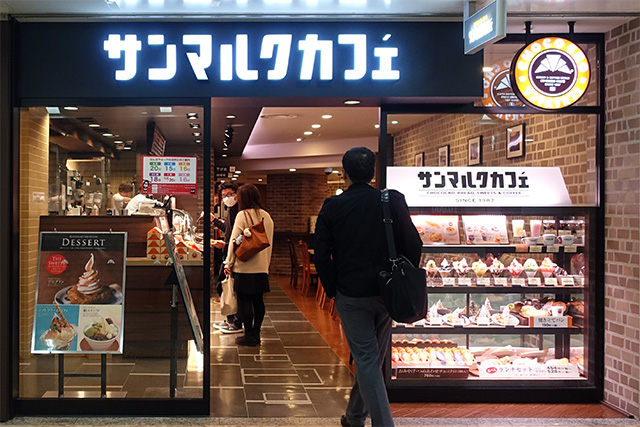
And we reach a St Marc’s Chococro Cafe! This will soon be our favourite haunt.
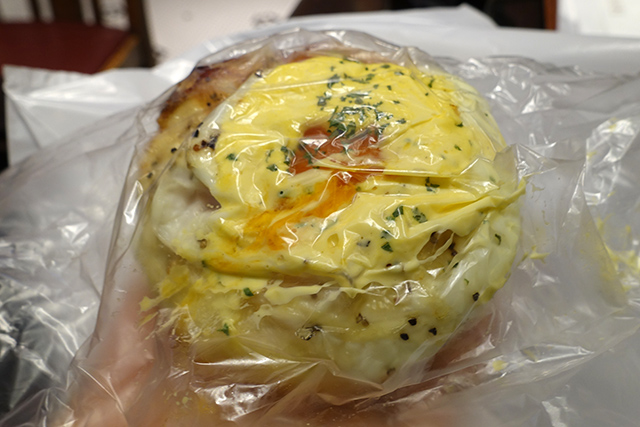
Alas, they only have one of those eggs benedict buns so D and I decide to get the bun for takeaway and go back to Keifel Coffee.
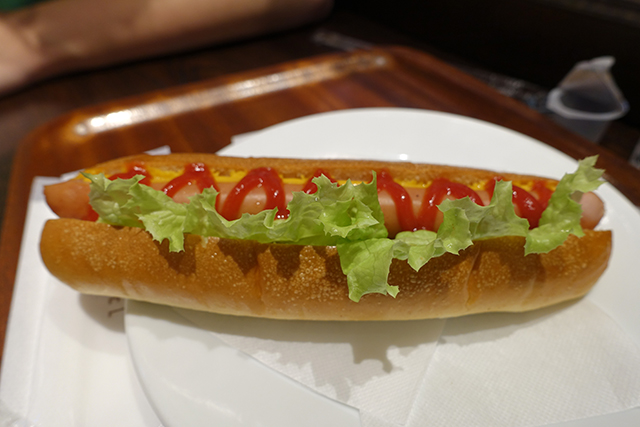
At Kiefel Coffee, D gets the hotdog morning set with an iced coffee. Aren’t the colours pretty?
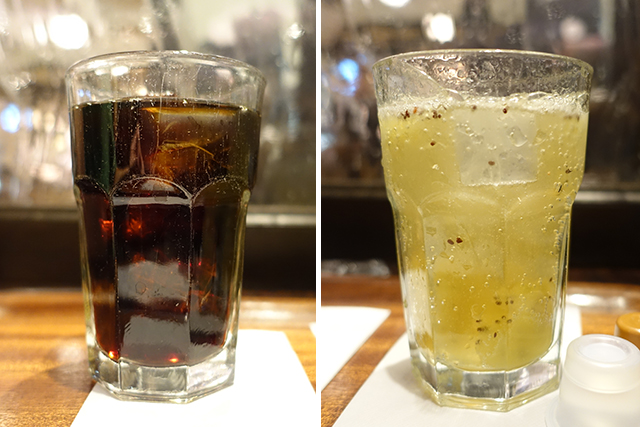
D’s iced coffee on the left, and my kiwifruit soda. The kiwifruit soda is tasty – not at all like the bottled kiwifruit juice that we got from the supermarket in Sydney – with real fruit pulp and just the right amount of sweetness and fizz.
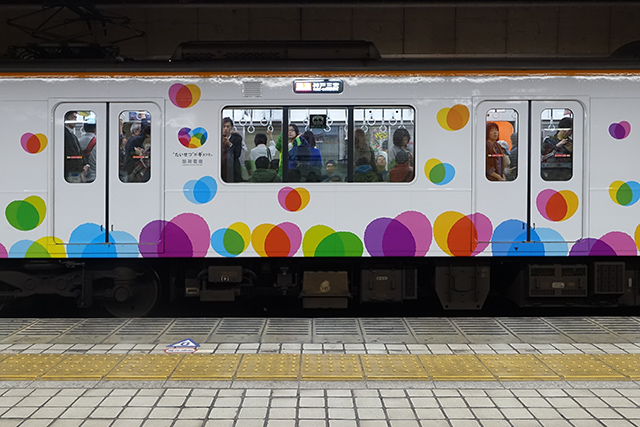
Inside the Kintetsu Station at Nippombashi, we accidentally get on the platform going the wrong direction. And we only realise this as I was taking this photo of the limited-express train we were meant to be taking. Luckily, trains – even limited express ones – come pretty frequently so we were waiting only 15 minutes.
Kōbe – Nada District
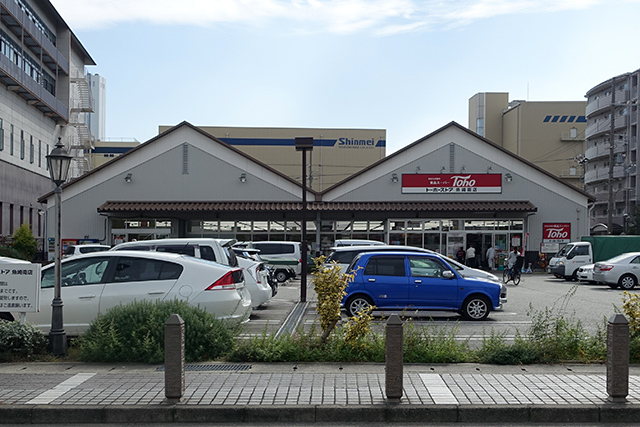
We get off at Uozaki Station to make our way to the first of the breweries. There isn’t much English signage, so we’re relying on our map and photographs of the brewery from the Internet. We reach a local supermarket (above), so we stop for a drink.
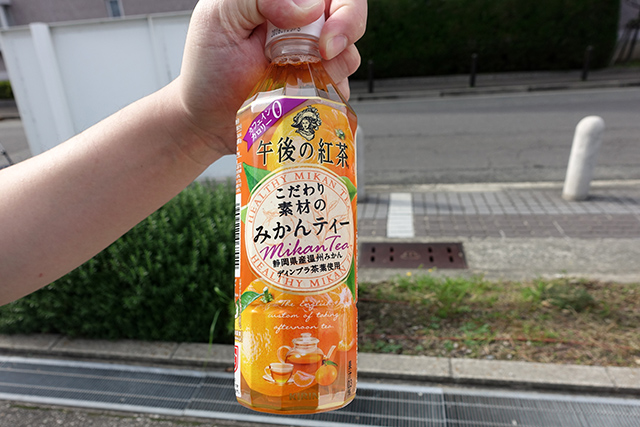
We’ve not come across mikan (mandarin) tea before and it’s a refreshing take with the sweeter citrus flavours of the fruit.
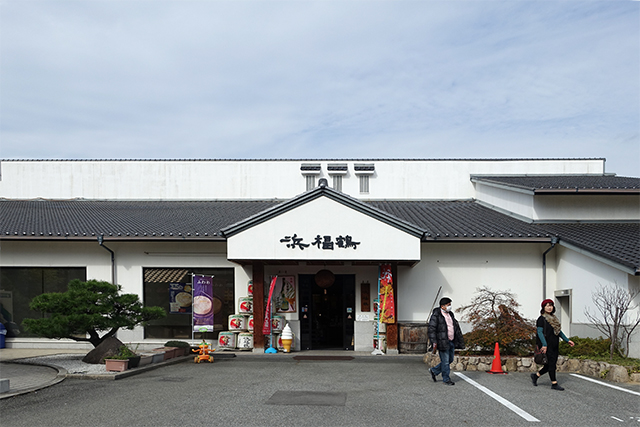
About 50m down the road, we spot our first brewery! This is Hamafukutsuru Brewery. Some of the breweries around the Nada District offer tours of their actual brewery, but it’s a weekend and the start of the sake season, so none were offering them on the day.
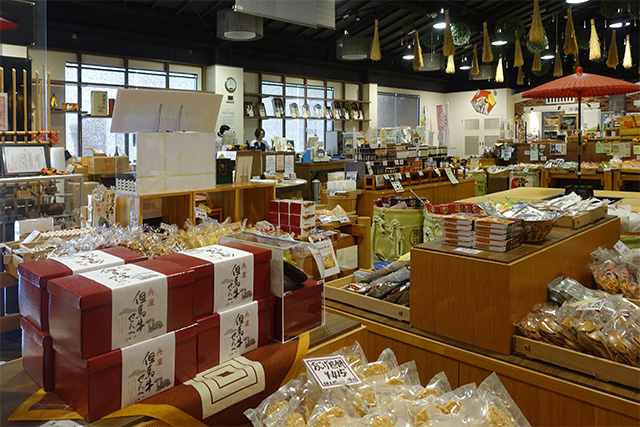
They sell a variety of snacks to go with sake, and there are free sake tastings at Hamafukutsuru Brewery. The gentleman who mans the free tastings doesn’t speak much English, but we manage. They’re very approachable with their tastings!
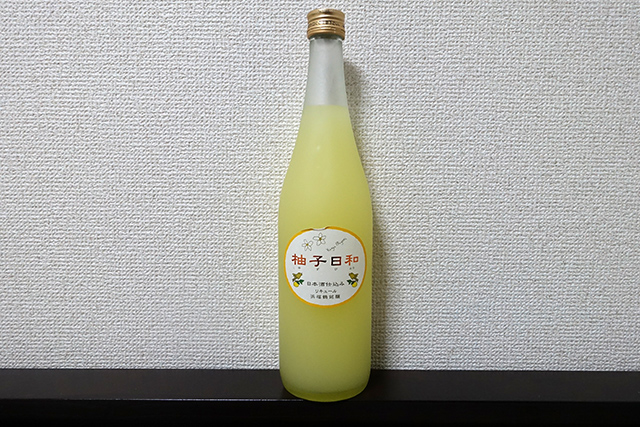
We try ginjo sake, plum sake, black sugar sake, nigori sake, and our favourite, namazake. Namazake is a unpasteurised sake, which gave it a fresher and more lively taste than pasteurized sake. As it’s unpasteurised, it should be kept cold. D and I love the refreshing and fruity taste of the yuzu namazake (made from 11 yuzu!). We end up enjoying our bottle during the night in our accommodation as keeping it cool and transporting it around Japan would’ve been too difficult.
Outside the brewery, there are examples of the large barrels they used to make sake in.
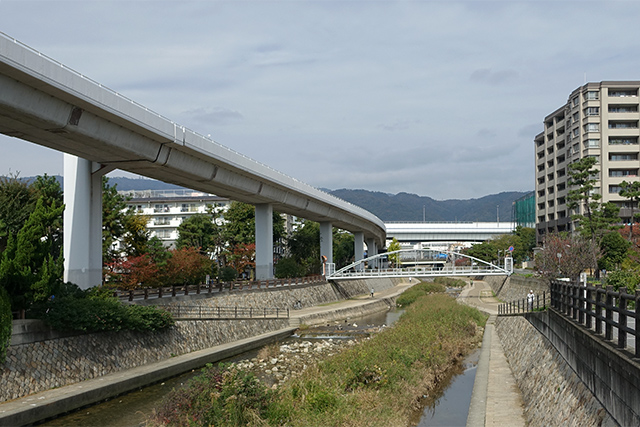
…and we’re on our way to the second brewery as we cross this river.
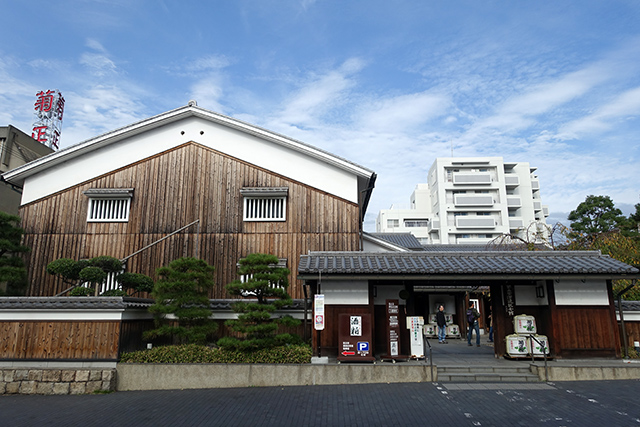
This is Kikumasamune Sake Museum, and unlike the previous brewery that opened the shop to visitors, has a dedicated museum section. Admission is free.
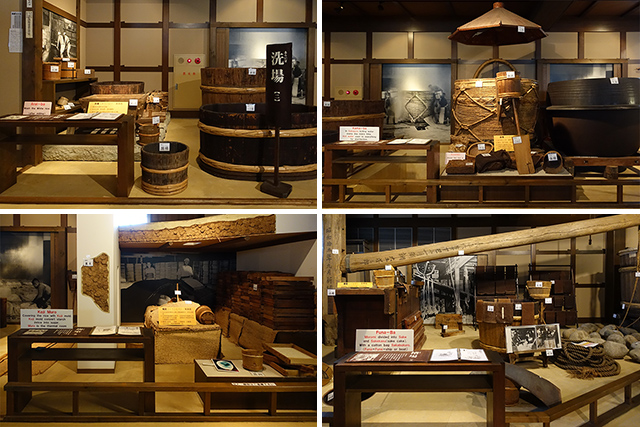
The exhibit is housed in the large warehouse space in the left of the previous photo and shows you the processes and equipment used in each step of making sake, from sourcing the rice, the water, the brewing and the maturation.
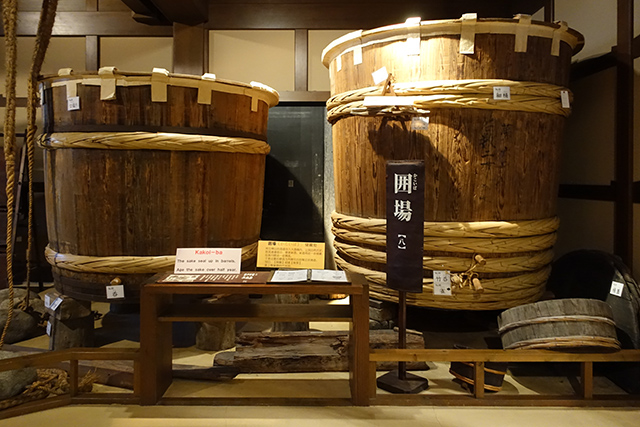
This last exhibit shows the barrels they used to store the sake in while aging. Sake production no longer uses these barrels, having advanced to modern technology.
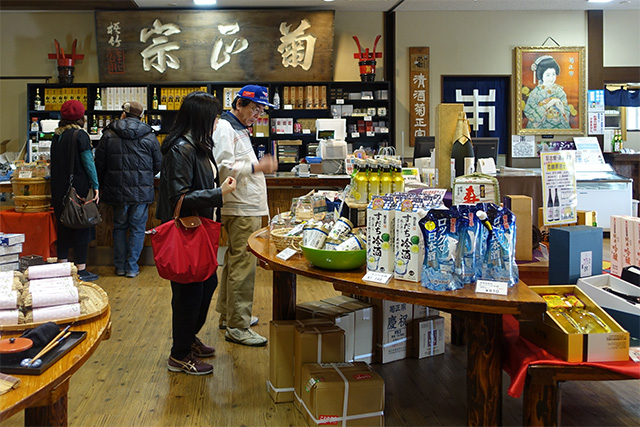
There’s a shop attached to the museum selling the brewery’s products.
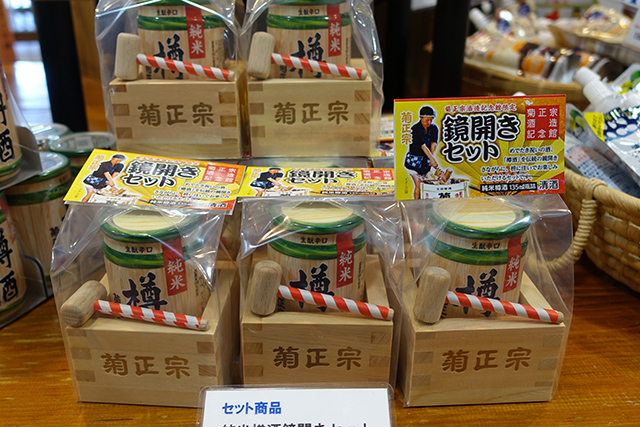
We spot these cute tiny cups of sake complete with a mallet to break into the barrel and a masu (a wooden, box-like cup). We’re not particularly fond of straight sake, cute as this is.
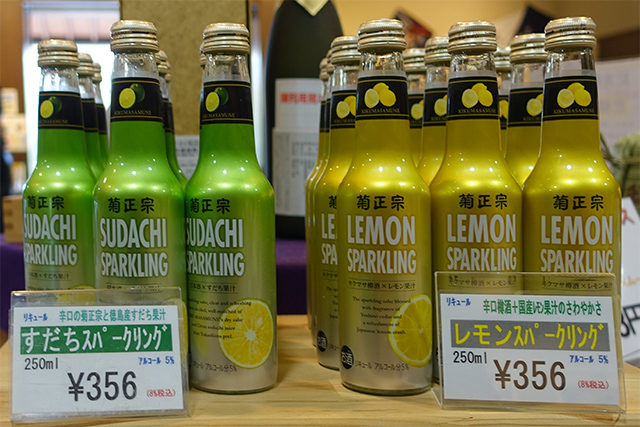
So! We end up trying the sudachi sparkling sake. Sudachi is a Japanese lime that tastes somewhere between a yuzu and a lemon. We prefer yuzu over sudachi for its uplifting flavour.
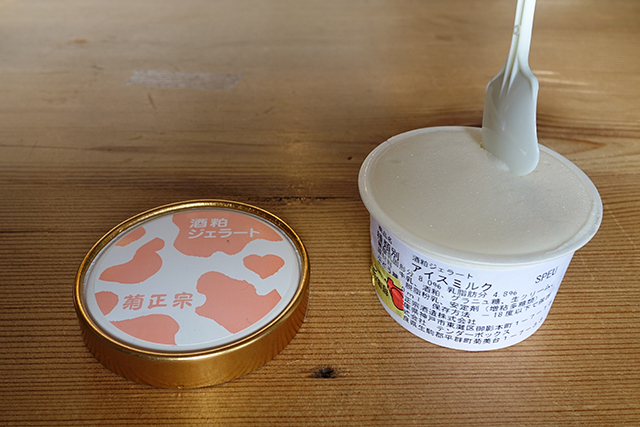
And we try amazake gelato made by the brewery. Amazake is made from the lees left over from sake production, and (understandably) has the taste of fermented rice. It’s an interesting flavour that’s more mellow when eaten in cold forms, and rather sickening in hot forms (like as a hot drink). It’s not something we’d want to eat all the time.
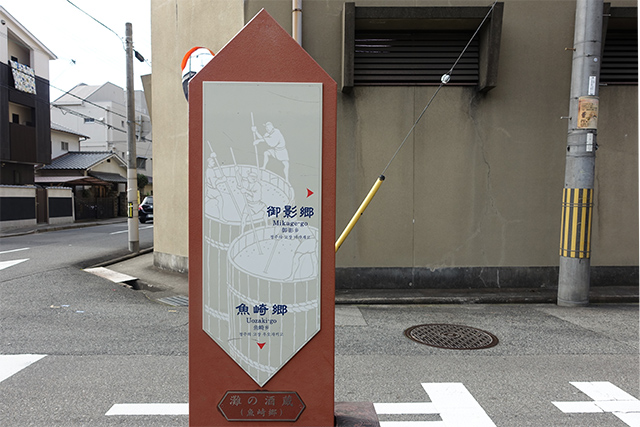
Outside Kikumasamune Sake Museum we see signage pointing in the direction of the closest train stations. With the brewery backdrop, they seem to be aimed at tourists visiting the Kōbe breweries.
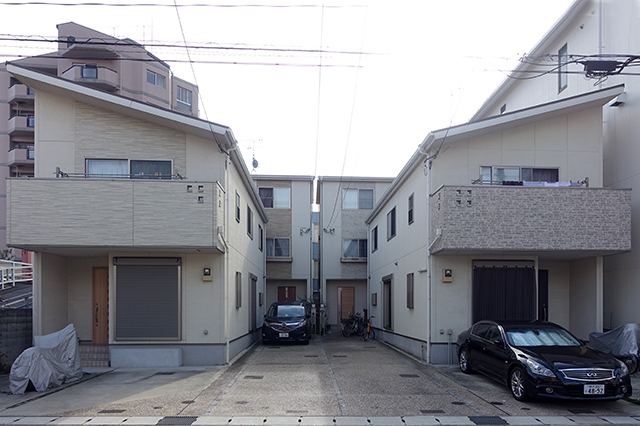
We’re on our way to the next brewery and walk past many residential streets. The cladding of the houses are quite stylish.
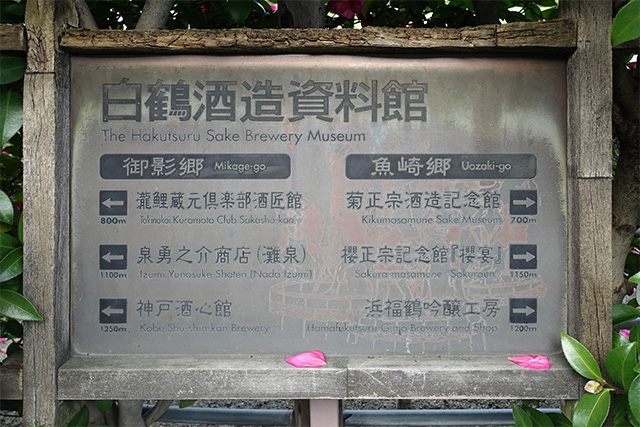
It’s a fair walk to the next brewery (some 700m) but we spot this sign just outside its entrance.
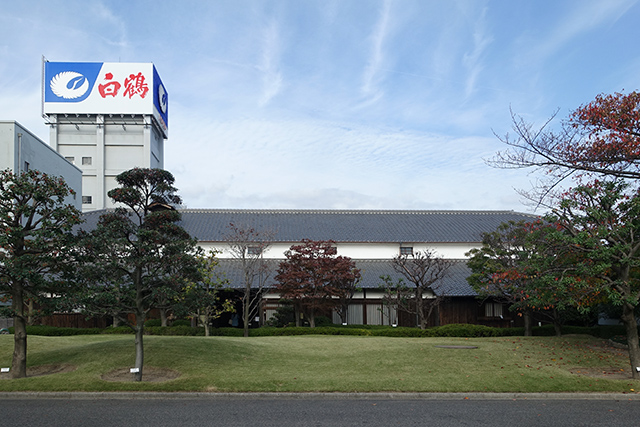
This is the Hakutsuru Sake Brewery Museum. Like the previous brewery, it is equal parts dedicated museum and shop, with the brewery itself behind it.
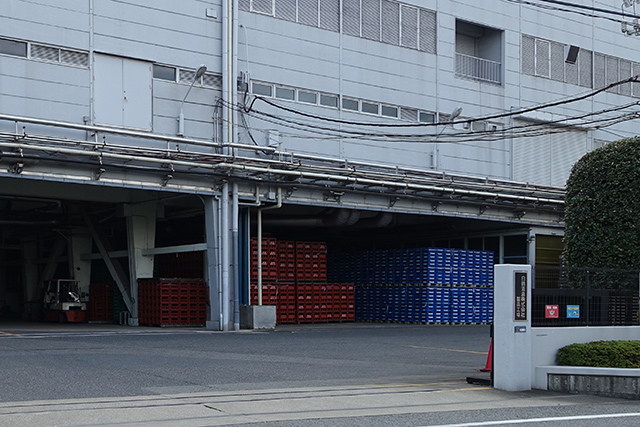
The loading and storage areas are on the opposite side of the street.
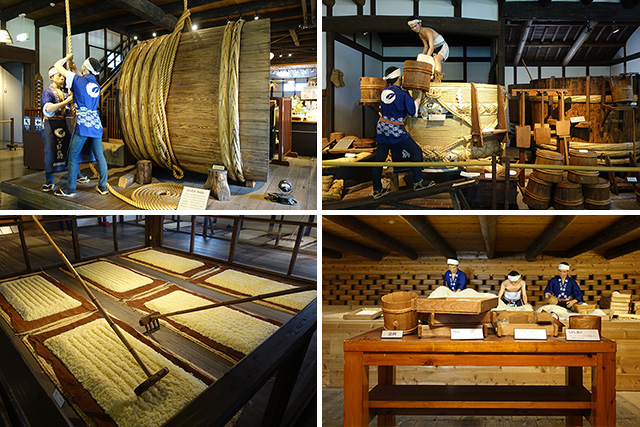
The museum in this brewery spans the entirety of almost two floors. The displays are detailed, with English signage and video narration throughout. Clockwise from top left, the photos show the sake brewers hoisting a barrel, filling the barrel with water, polishing and resting the rice grains.
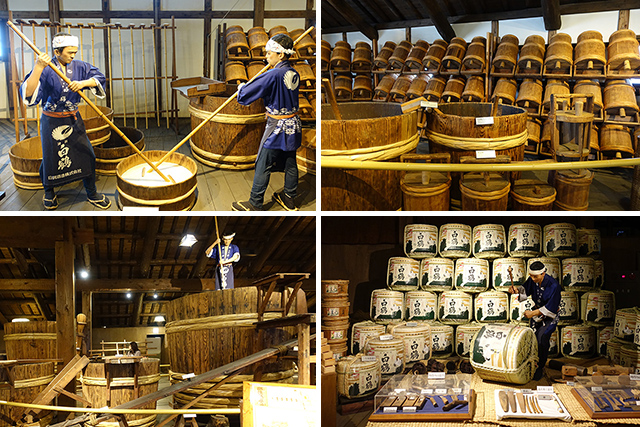
The top photos show the rice being soaked in water and the rice being stored in barrels after steaming, while the bottom photos show the steamed rice fermenting after the mold has been added, and the filtered sake stored in barrels.
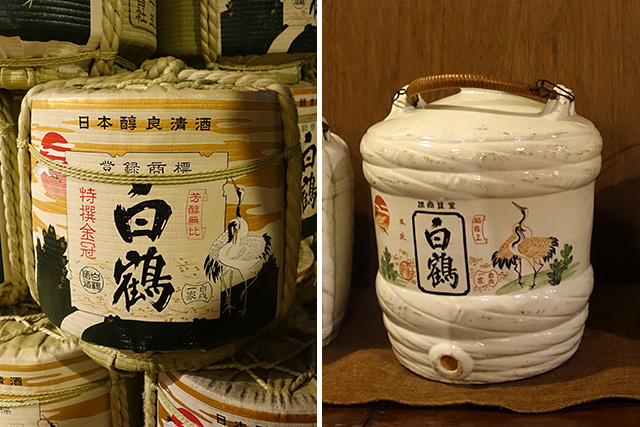
Here’s a close up of the sake barrels, as well as a ceramic version on the right.
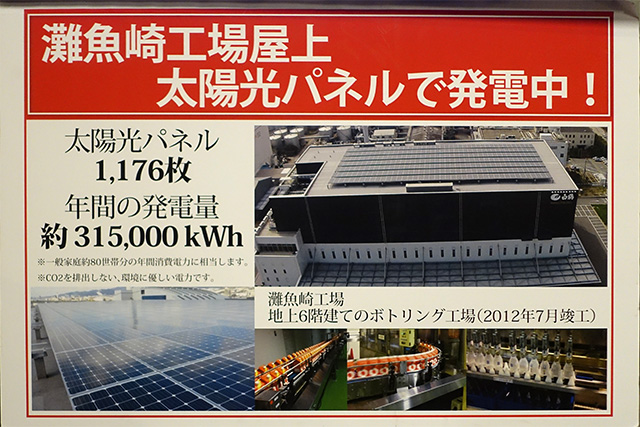
Since July 2012, the brewery’s factory uses 1, 176 solar panels on its roof to generate about 315,000kWh. It’s green!
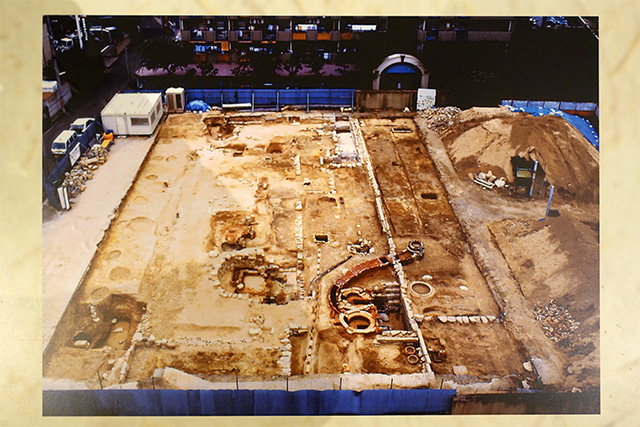
This photo shows the general floor plan of the traditional brewery prior to being rebuilt as a modern factory.
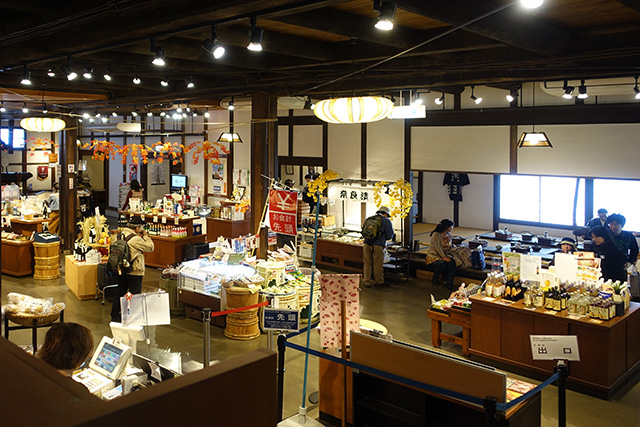
At the end of the museum route, we reach the shop that sells a variety of sake based goods.
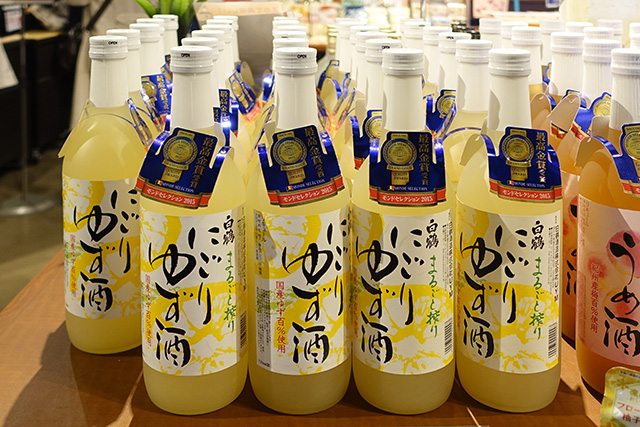
There are four types of sake tasting: sake, yuzu sake, plum sake and sakura sake. Sakura and plum sake are rather rich and too floral for our tastes. Yuzu provides the freshness and sweetness that ordinary sake lacked. We purchase this yuzu sake, which has a stronger alcohol flavour than the namazake above, being pasteurized.
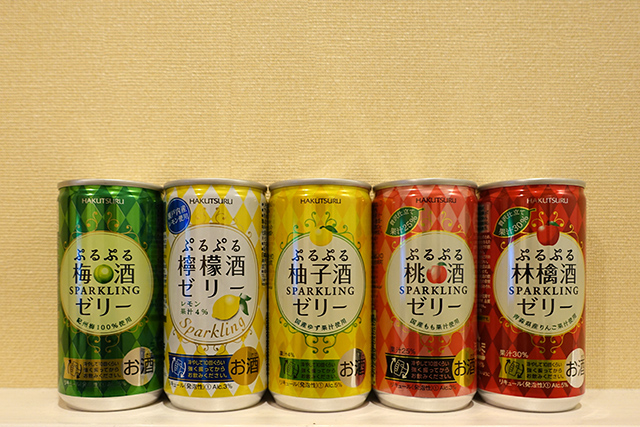
We try these sparkling sake jelly drinks in a variety of flavours: plum, lemon, yuzu, peach and apple. I’m surprised that jellies manage to be fizzy! Apple and yuzu were favourites, while plum came in last and lemon was rather unremarkable.
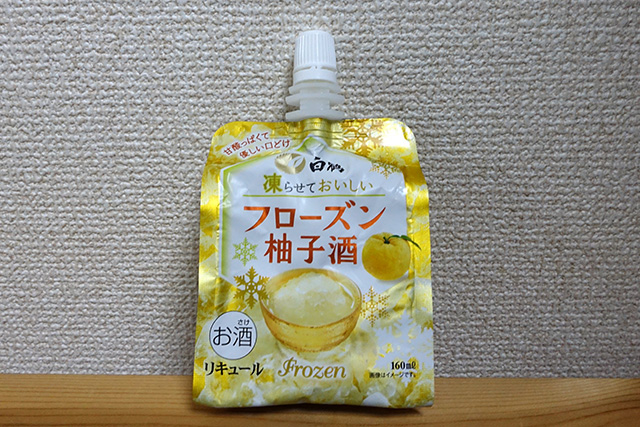
And finally, this is a foil packet of yuzu sake that freezes to a slushie like consistency. I find that the bitterness of the yuzu becomes more pronounced when frozen.
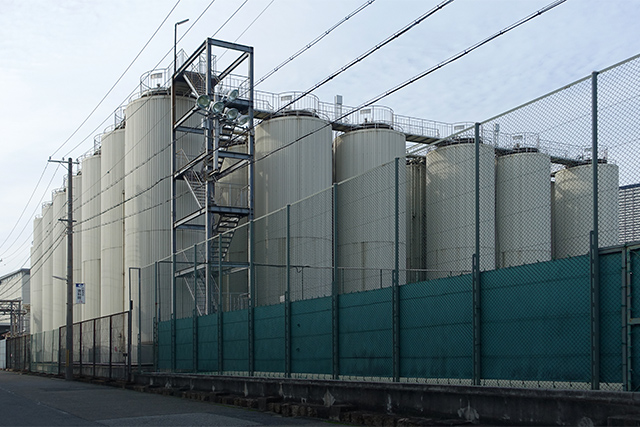
On our way to our last brewery, we walk past a number of these giant silos. Full of sake?
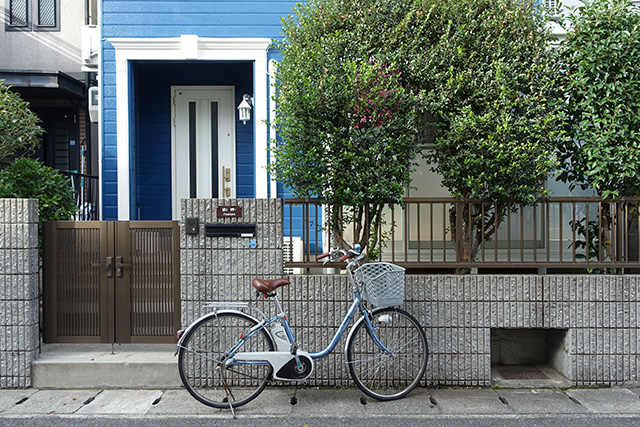
Walking past more residential areas, we find this blue house with a blue bicycle outside.
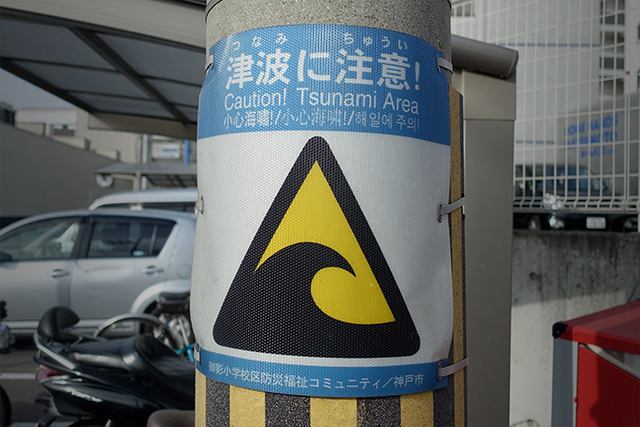
The proximity of the Nada district to the coast means it’s vulnerable to tsunamis.
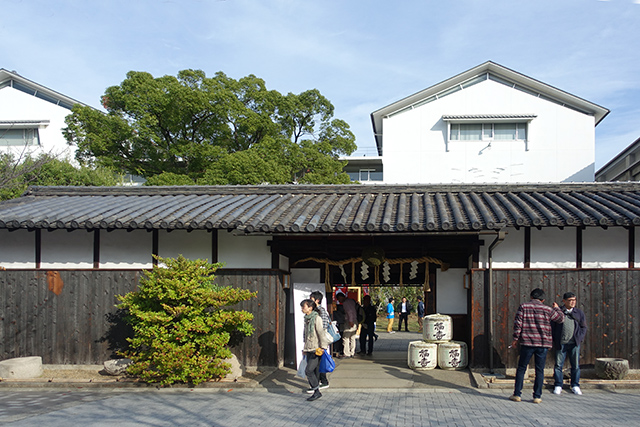
The last brewery is Kōbe Shushinkan Brewery, which usually offers tours of its brewery to visitors with prior reservation. Unfortunately, I was told that the particular weekend we were visiting was the festival for the first brew of the season. And true to the word, there was indeed a festival being held in its rowdy interior!
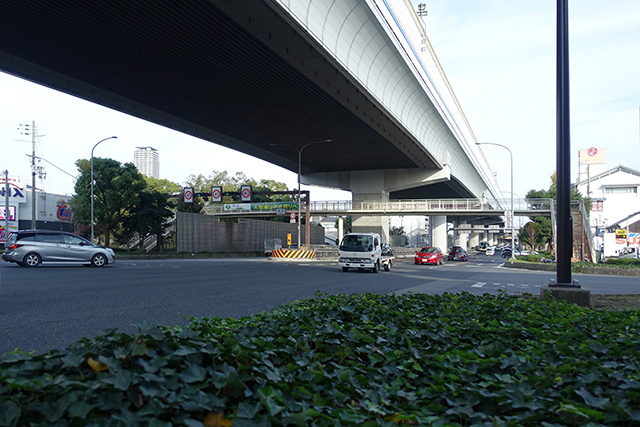
We’re hungry and exhausted from the 4km walk from the first brewery, so we skip the giant crowds at Kōbe Shushinkan Brewery and head towards the direction of the station. The harbourfront of Kōbe didn’t interest us so we’re heading back to Ōsaka.
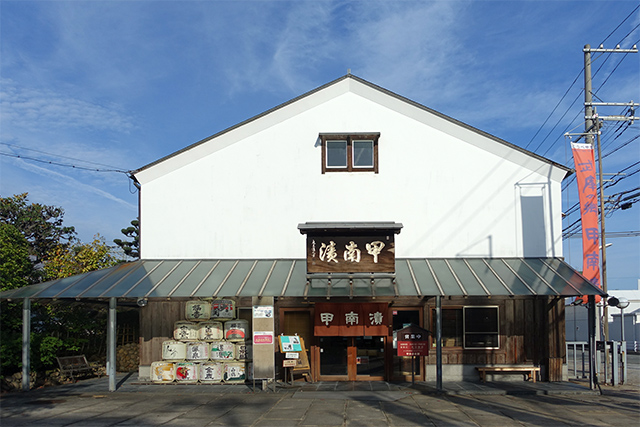
One last stop on the way to the station is the Kōbe Kōnan Muko no Sato.
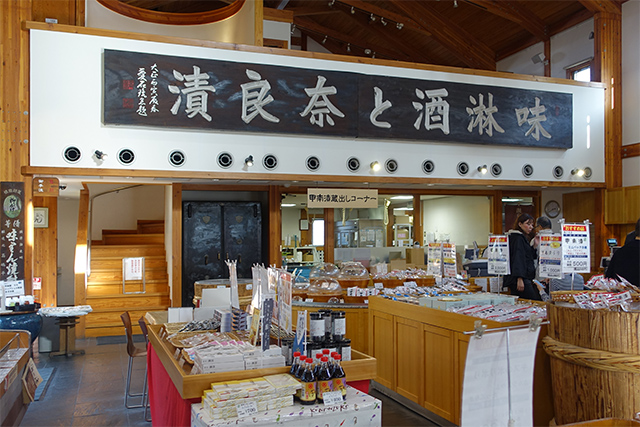
Rather than sake, Kōbe Kōnan Muko no Sato sells foodstuffs, condiments and pickles made with sake lees.
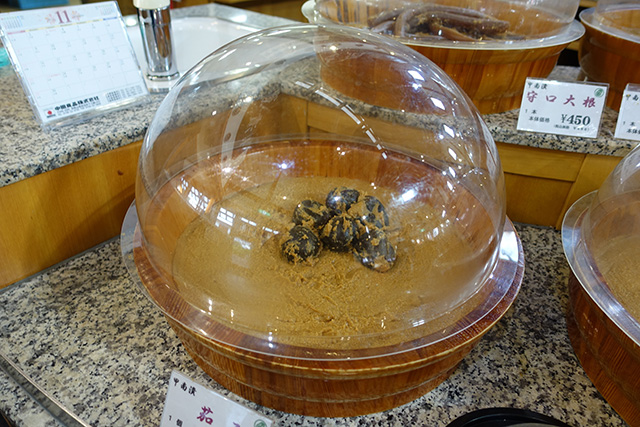
There’s no English in this store, and I’m not sure how something this (a fruit or vegetable?) involves sake lees as it looks to be pickled in some sort of miso paste, which is fermented soybean?
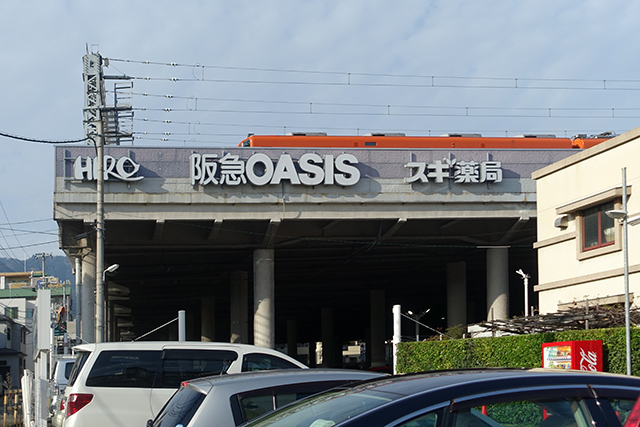
Back en route to the station we spot an train storage facility on the roof of a carpark.
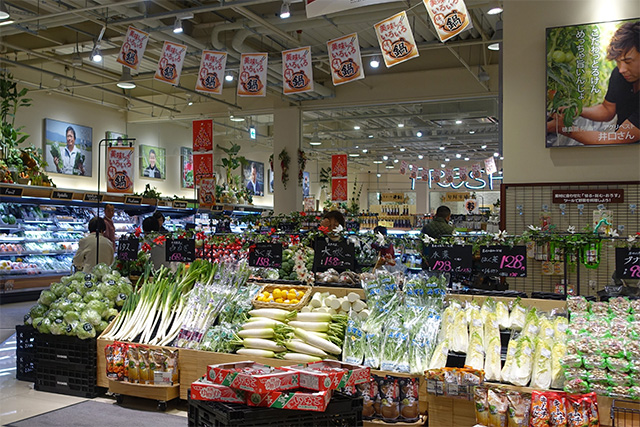
The carpark is for the Oasis supermarket underneath. It’s the biggest supermarket we’ve been to in Japan (and we’ve been to many!) with a fresh produce section that rivals those we find in Australia.
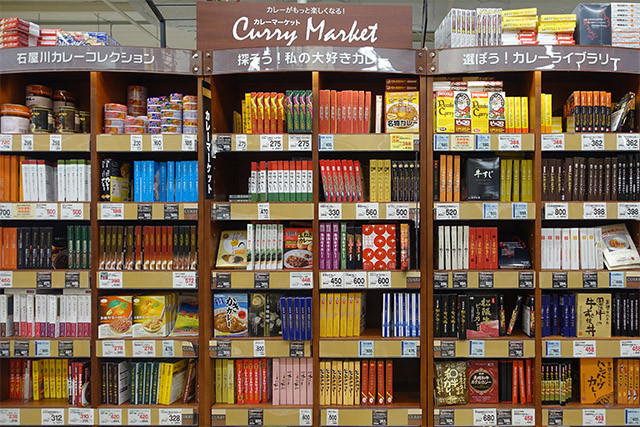
We find their boxed curry section in a bookshelf set up!
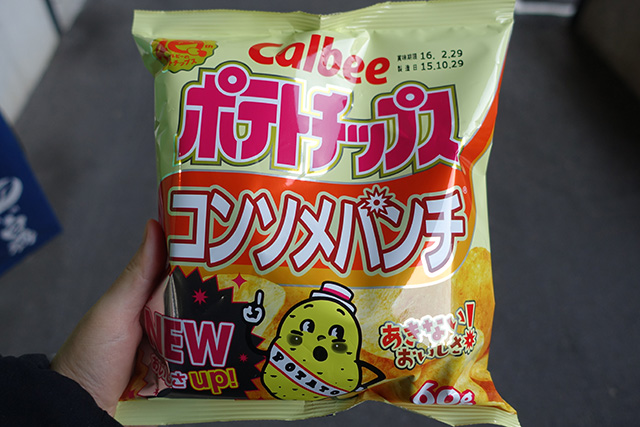
And we buy these Calbee Consomme chips, and we manage to eat them after I convince D that my hunger could not wait until dinner! Even if it was all-you-can-eat-yakiniku!
Ōsaka – Umeda
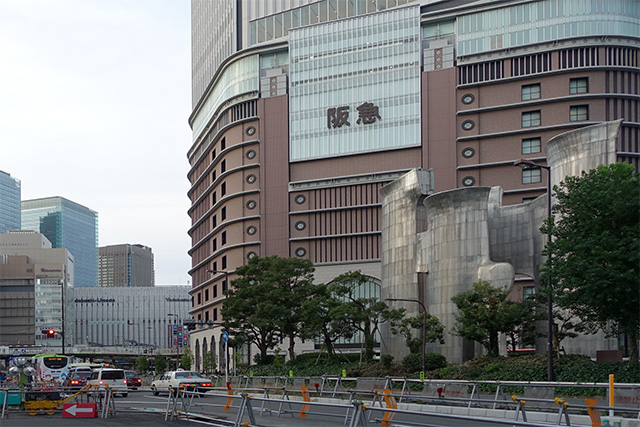
Fueled by potato chips, we arrive back in Ōsaka. On our quest to find the dinner destination, for the first time, we have trouble finding a way out of the train station to ground level and then once we do, we encounter a bunch of construction that prevents us from crossing the road efficiently!
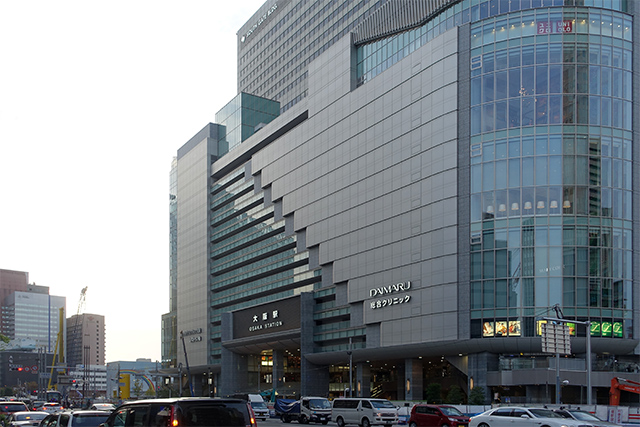
We end up on this side of Ōsaka Station, which we’d not seen since our first visit in 2011.
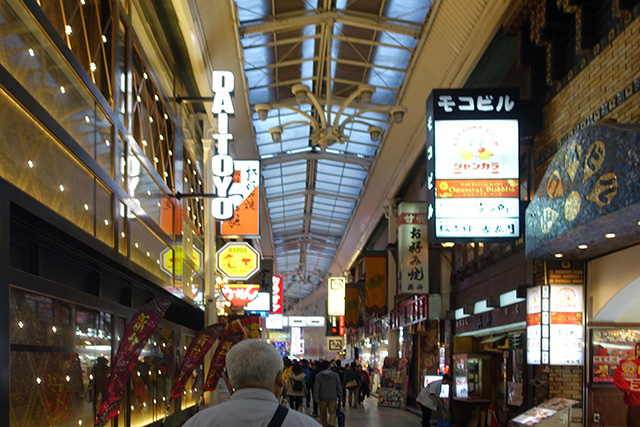
After some 10 minutes, we’re on the other side of the road and into this shopping arcade.
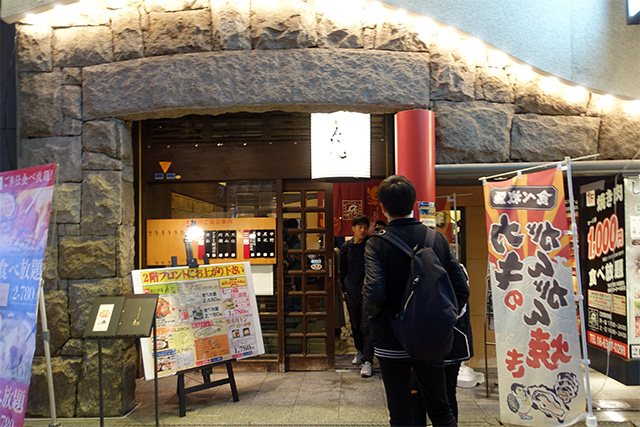
The restaurant, 298: All-You-Can-Eat Yakiniku, is located at the end of the shopping arcade. If we weren’t bent on finding it, we’d have turned back as the shops aren’t all that interesting.
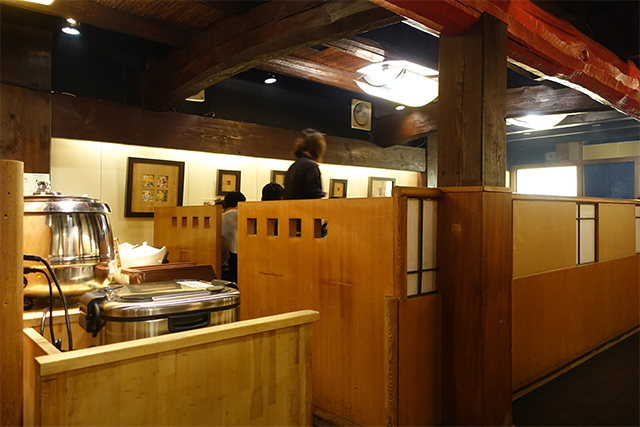
We get a booth to ourselves. You take your shoes off to sit at the booths.
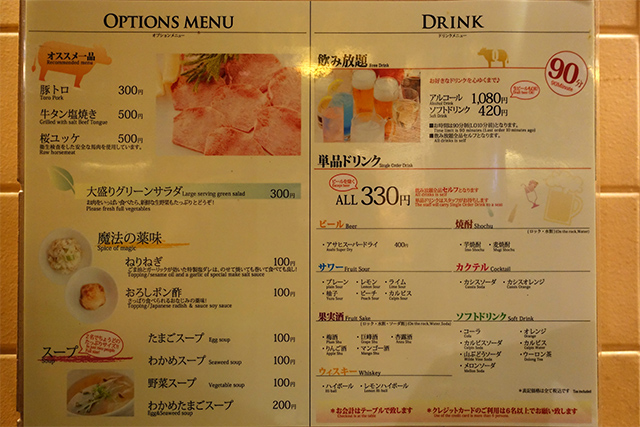
This restaurant supposedly offers all-you-can-eat yakiniku (grilled meat) for Y1080 and all-you-can drink softdrink for Y420 over 90 minutes, but we’re told that we only get it for 60 minutes because we didn’t make a prior reservation. We’re confused but Y1080 for an hour is still decent.
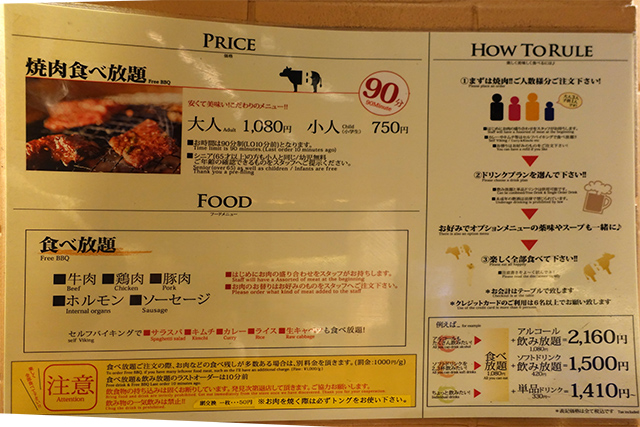
The rules state that if there is any meat left over on your table when your 90 minutes is over, you must pay Y1000/g. That’s about $10.00/g, an insanely high rate that works as a sure deterrent.
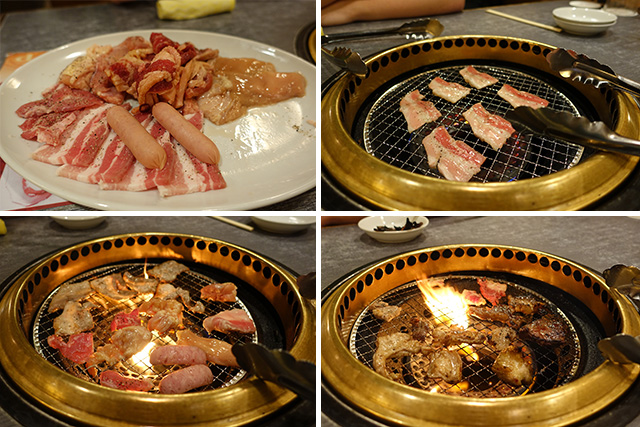
You start off with a plate of assorted meat, after which you can order anything additional from the choices of beef, chicken, pork, internal organs, and sausages. We end up eating a lot of beef, which is particularly juicy. The chicken was tasty, but took an very long time to cook! And the pork was rather dry, alas. I enjoyed the sausages, although D thinks they’re a rather cheap meat to eat at all-you-can-eat.
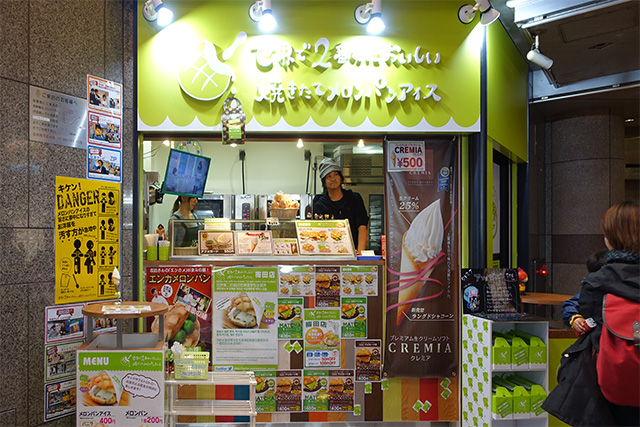
After dinner and before the meat settles in our stomach to put us in a food coma, we stop by this melon pan place.
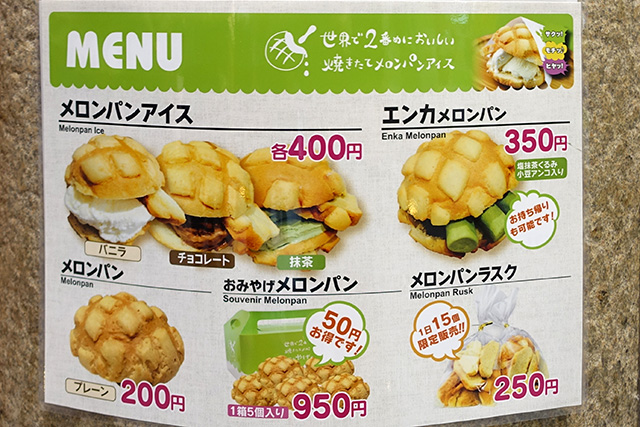
The shop, called World’s Second Best Freshly Baked Melon-pan Ice-cream, is famous for its crispy melon pan bread sandwiching a slab of maccha ice cream.
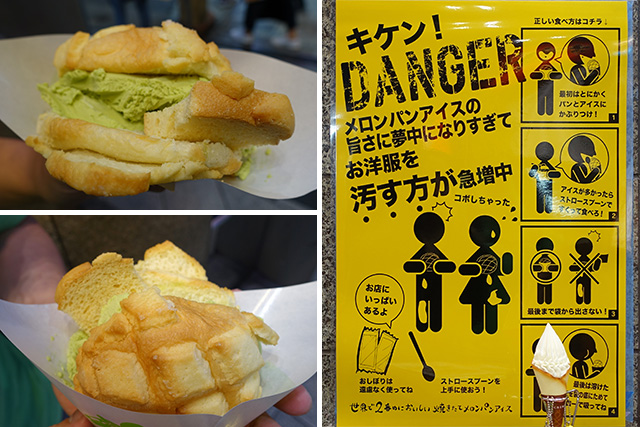
The bread is warm and crunchy, and contrasts well with the cold and soft slab of maccha ice cream. The sign on the wall of the store recommends eating it with the packaging so you don’t end up with ice cream on yourself, and even supplies straws, spoons and wet wipes for your convenience.
Ōsaka – Namba
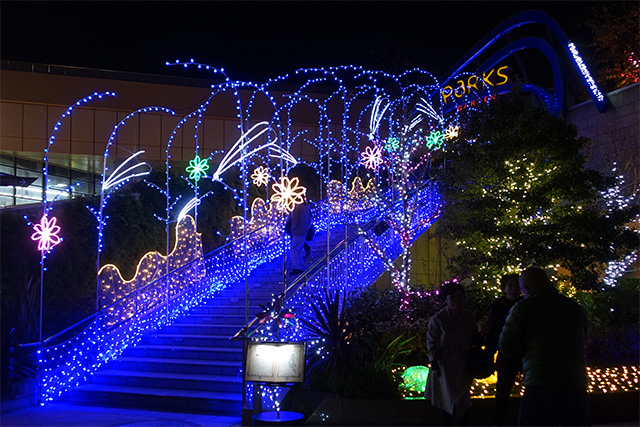
We head back to Namba Parks to view the Christmas illumination.
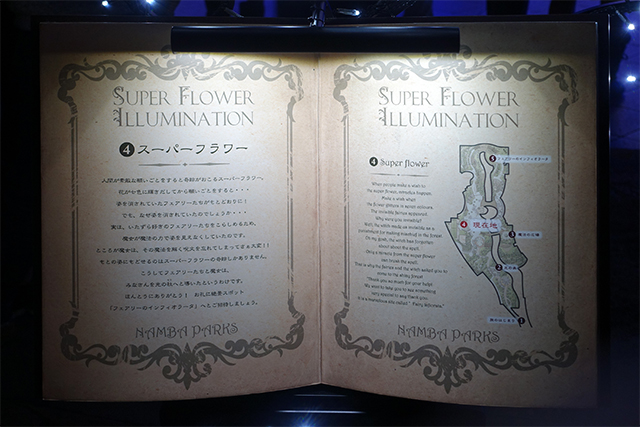
This year, it’s called the Super Flower Illumination.
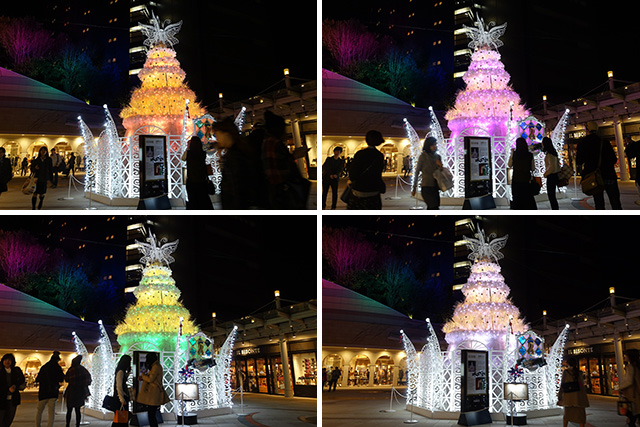
At the base is a Christmas tree that changes colour.
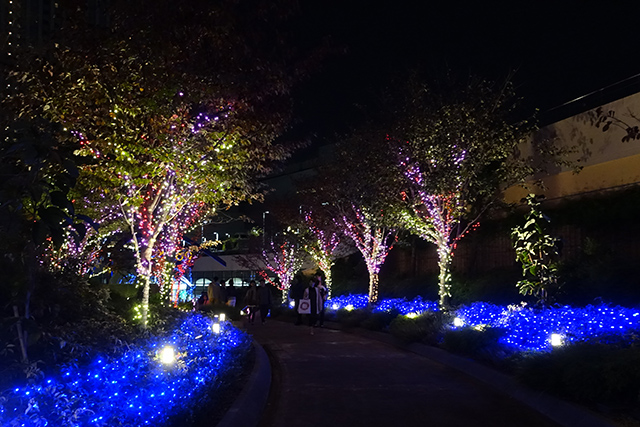
The walk towards the top of Namba Parks is illuminated with a multitude of LEDs.
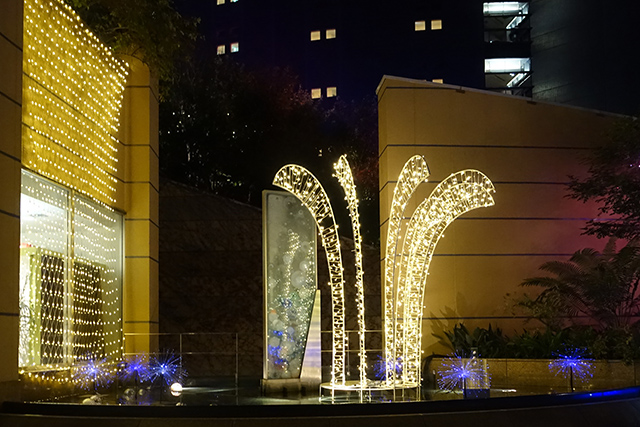
Half way up, there’s an illumination water feature outside one of the entrances to Namba Parks.
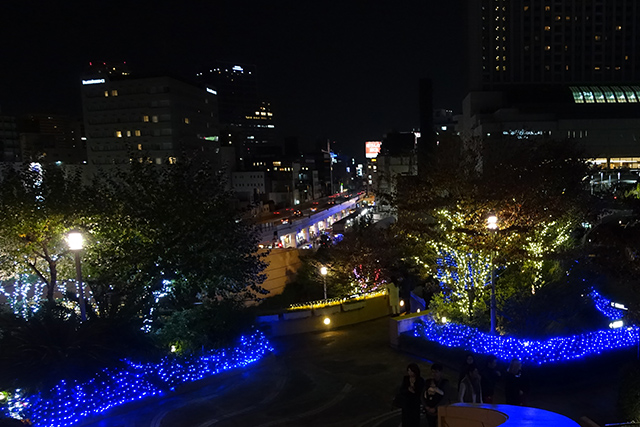
And the view from above, with the eastern side of Namba in the background.
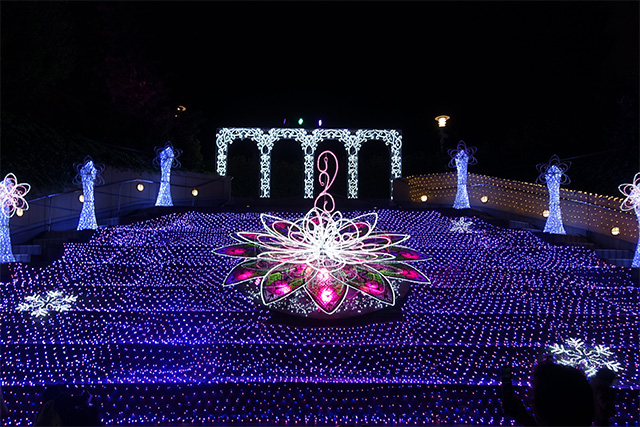
This is the main attraction at the Christmas illumination. The lights operate to a musical track that runs on loop. We’ve come just a bit too early (around 7pm), so all the kids are still about running riot!
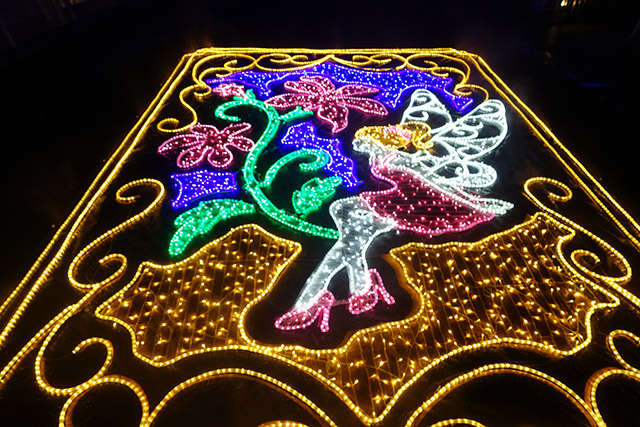
At the very top of the Christmas illumination, there’s a misting light display of a fairy on the grass beneath. You climb onto an elevated platform to view it from above.
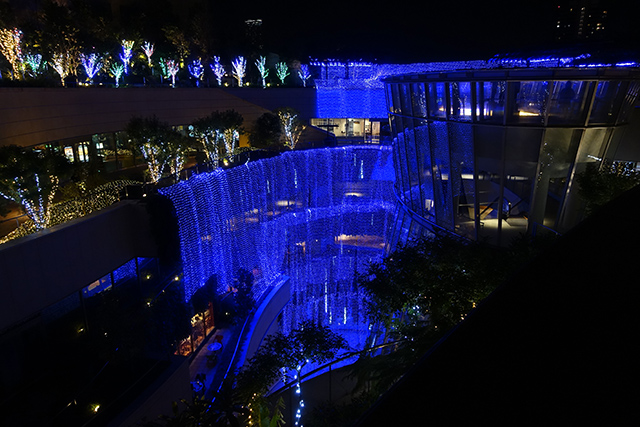
And…finally, the view of the Christmas Illumination from the opposite direction. This year’s Christmas Illumination looked much the same as last year and hence less impressive. To my disappointment, I’ve since found out that that’s much the same case with illuminations across Japan. So the only way to see new ones is to keep visiting new places!