After two days in Nagasaki, we head back to Fukuoka as our base for a few side trips to Kitakyūshū. Kitakyūshū is the second most populous city both in the prefecture and on the island. Our first destination is the historic city of Kokura where the TOTO Museum is located.
Nagasaki
Trandor
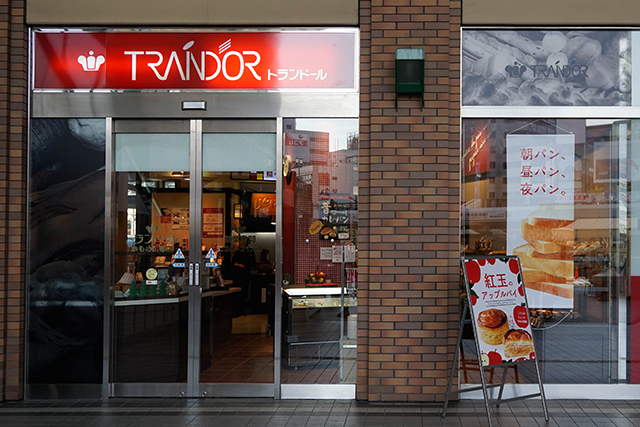
We’re up bright and early to catch a train before the main shops open, so we head to the Trandor in Nagasaki Station for some breakfast.
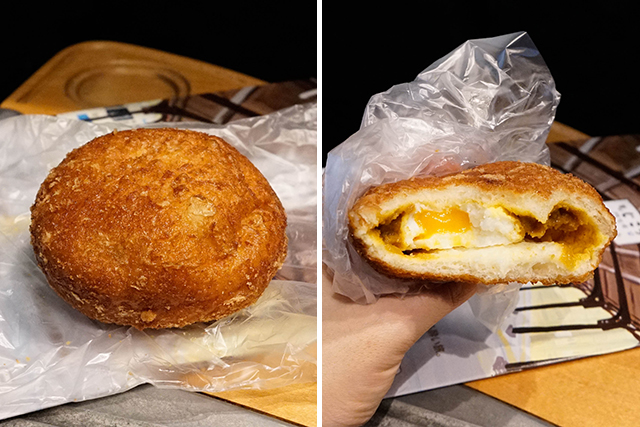
It featured a much smaller selection than the one in Fukuoka, but we spot the Curry Pan with Soft Egg that we enjoyed previously.
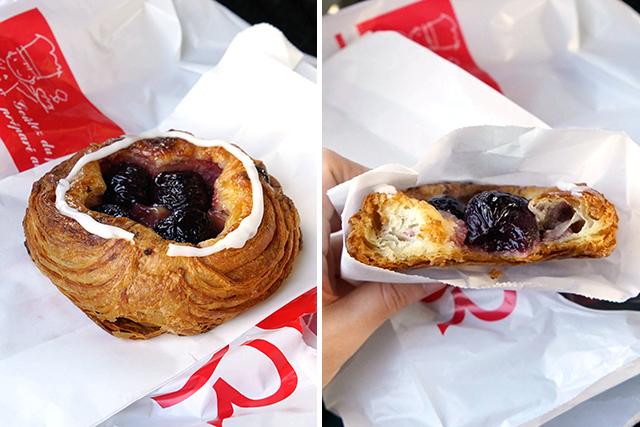
For my sweet tooth, this is the Cherry Danish, which had a flaky and crisp pastry with a mellow flavour with the fruit retaining some bite.
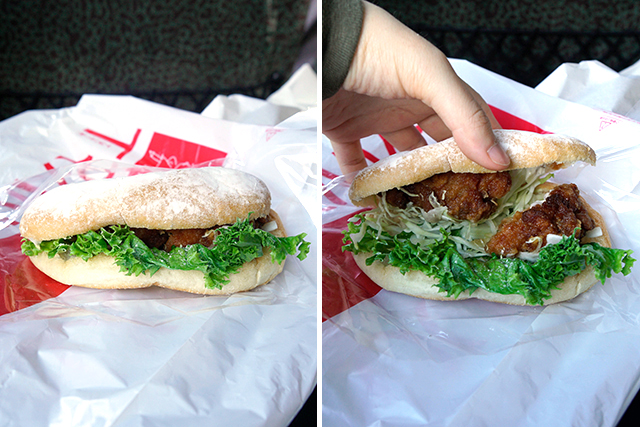
For D, I picked up this Yurinchi Sandwich for him while he minded the suitcase. The (Chinese-style) fried chicken was crisp and juicy, while the bread had a damper like texture and copious amounts of white flour that made it quite messy to eat.
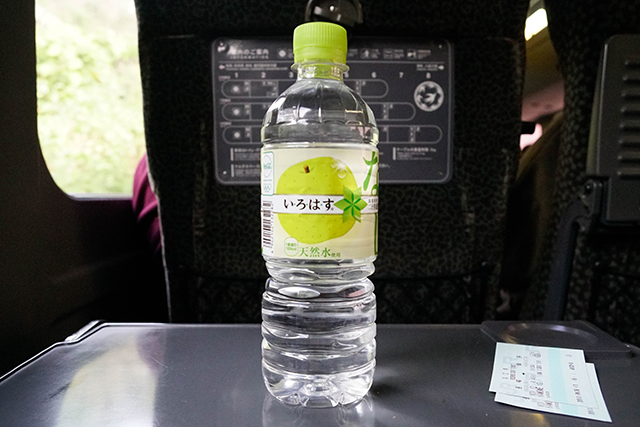
And to wash it all down is this Irohas Nashi, which had a bright and crisp nashi pear smell and taste, and left an aftertaste that recalled an electrolyte drink.
Limited Express Intercity Train
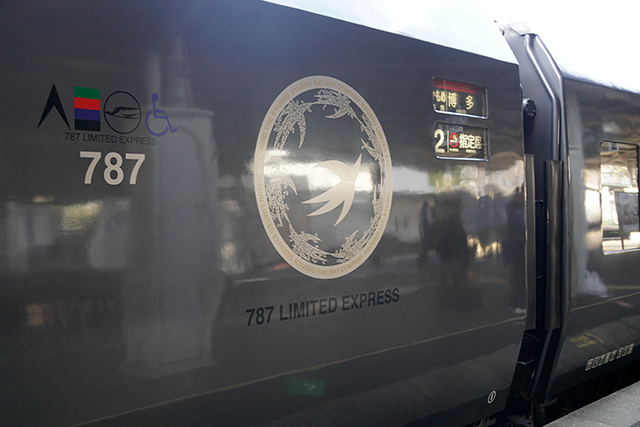
We booked seats on the train back to Fukuoka. The lady booking our seats had seated D and I separately and that was fine with us, but an elderly gentleman kindly offered to swap seats to allow us to sit together.
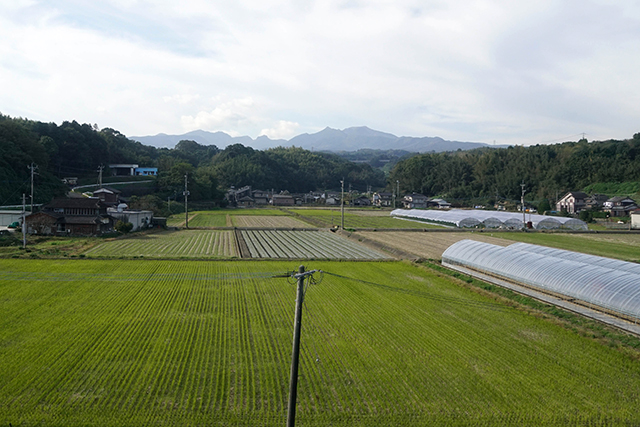
The train passes by numerous fields…
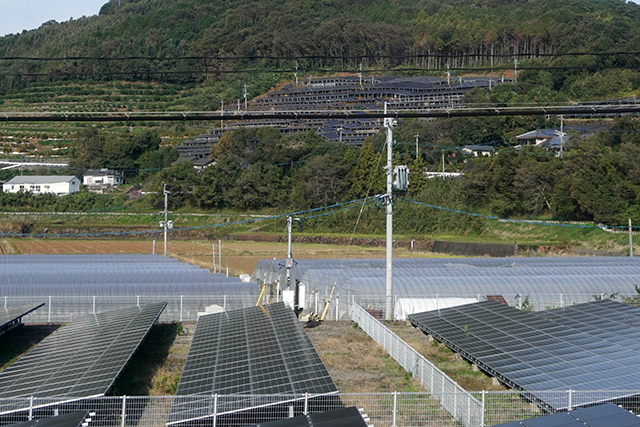
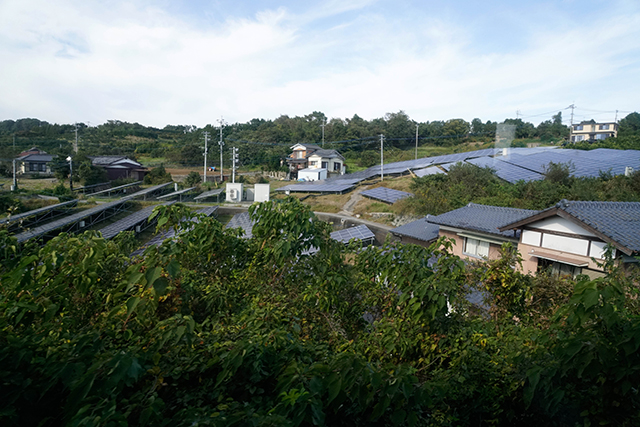
…as well as a large number of solar panels, which surprised us. Looking it up, Kyūshū has the largest growth of solar PV deployment in Japan, with its output covering almost 80% of demand for electricity in the area during midday.
Fukuoka
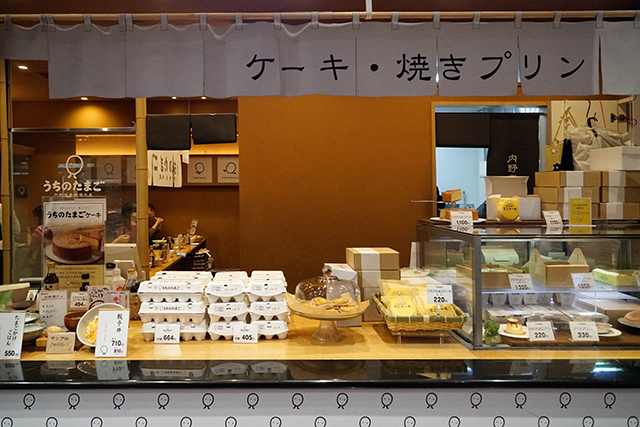
Arriving in Fukuoka, we drop our bags off at the hotel before heading back to the station to check out more of the shops before our train to Kokura. This shop is known for its eggs and egg products.
Apetito Cafe Metro
Ming, 1-1 Hakataekichuogai, Hakata Ward, Fukuoka, 812-0012, Japan
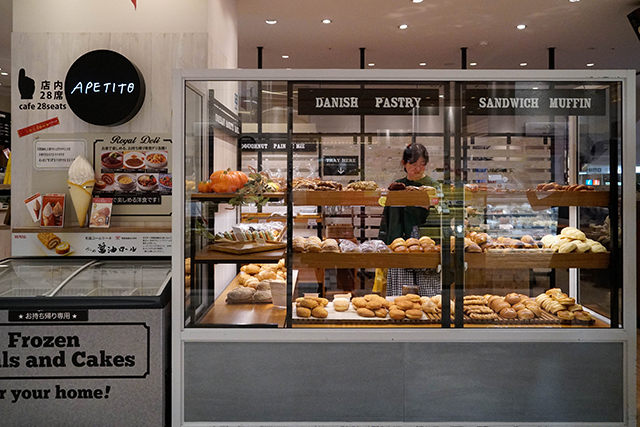
We stop by Apetitio Cafe Metro for some more baked goods to fuel us on the train ride to Kokura.
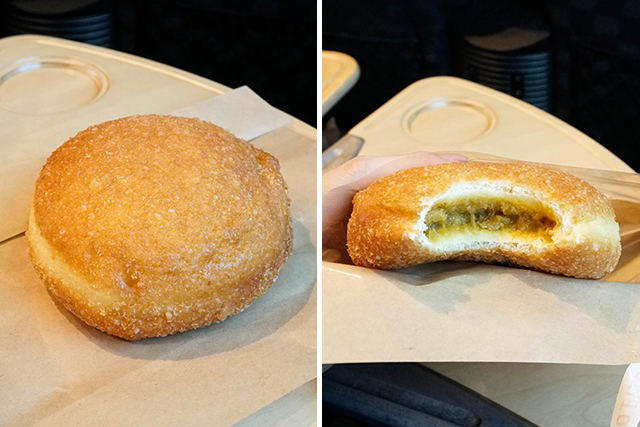
This is a Munakata Chicken Curry Bun (¥260 +tax). We’re disappointed by the doughiness of the bread, which was also not crispy. On the bright side, the curry was fragrant, though sweet.
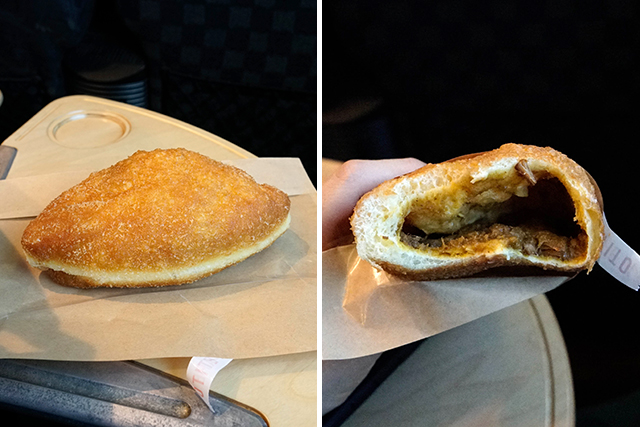
We’re intrigued by this Java Curry Bun (¥213 +tax), which we hoped would taste like the prepackaged roux by the same name. We’re delighted that it does have the fragrant, spicier mix of the roux with a more restrained sweetness and a prominent beefy flavour from the mince.
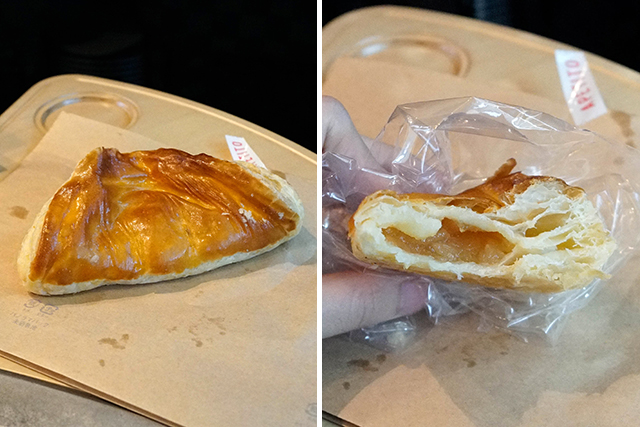
And this is the Apple Pie (¥176 +tax). The apple innards had an enjoyable balance of sweet acidity while retaining some bite, and the pastry was buttery but chewy as if it were undercooked.
Kokura
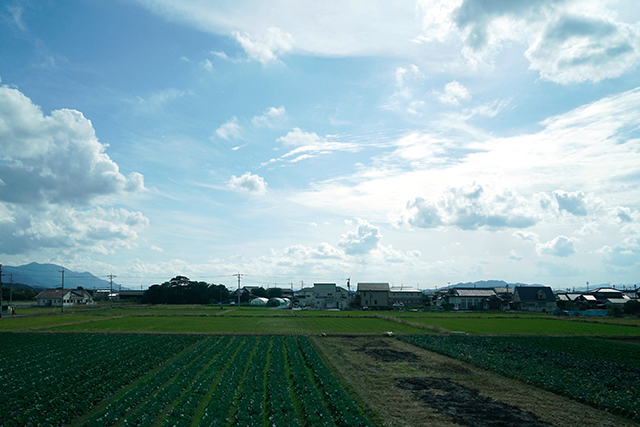
The JR Kyūshū pass cannot be used on the shinkansen section between Hakata and Kokura Stations, so we take a limited express that takes 45 minutes compared to the usual 15 minutes. It’s a bit like travelling between Ōsaka and Kyōto, really.
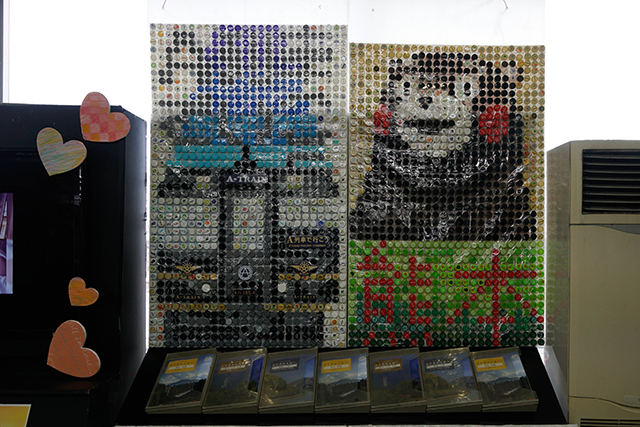
On exiting Kokura Station, we spot Kumamon’s likeness assembled with bottle caps along with an A-Train.
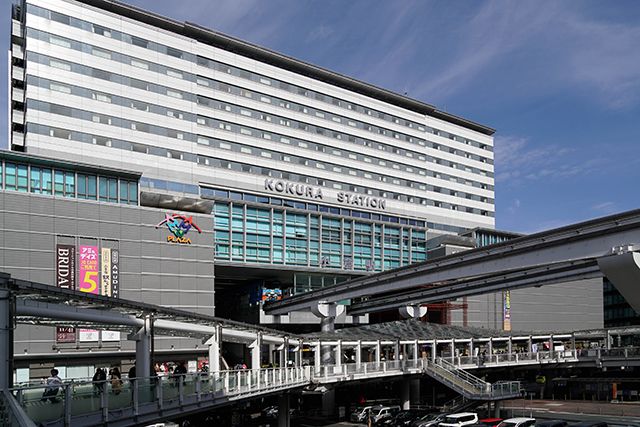
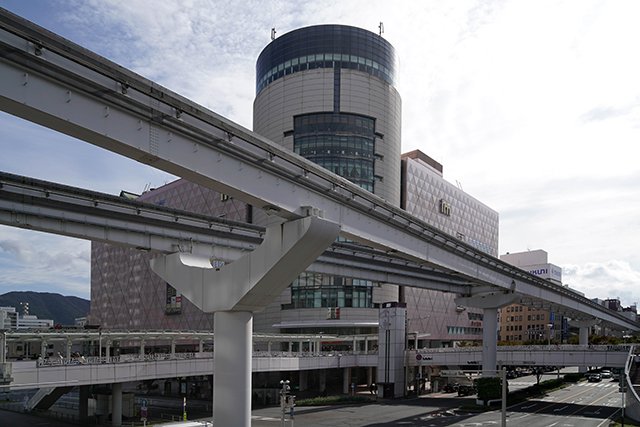
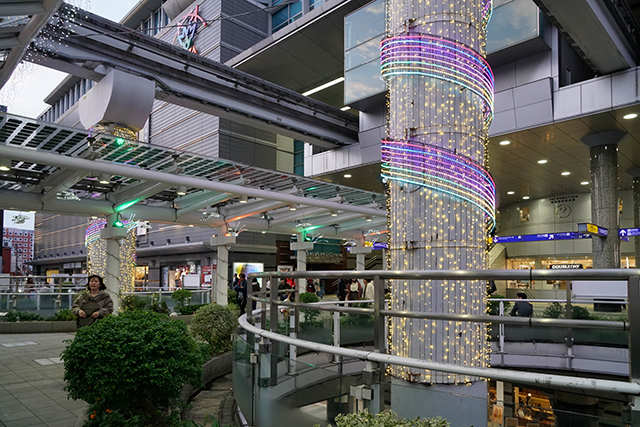
The monorail line stretches out directly in front of Kokura Station.
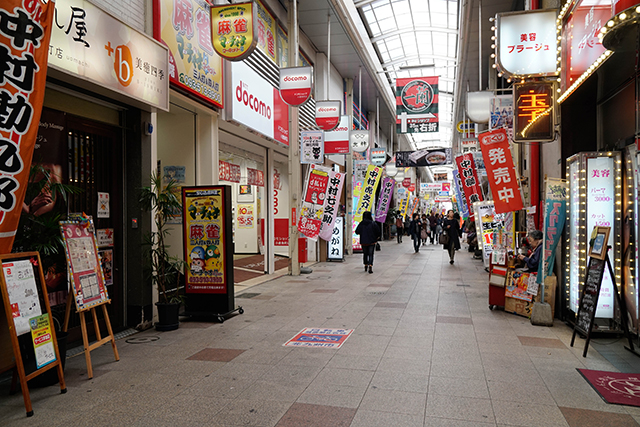
The shopping street, though, is just a stone’s throw away. It’s completely covered, which makes for convenient shopping any day of the year.
Ikinari! Steak
いきなり!ステーキ, 2 Chome-4-22 Uomachi, Kokurakita Ward, Kitakyūshū, Fukuoka 802-0006, Japan
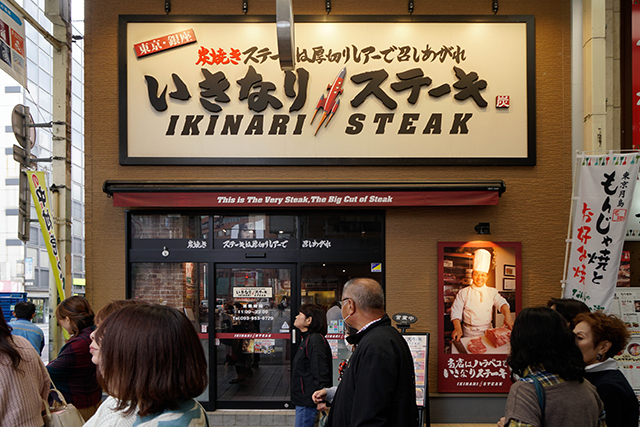
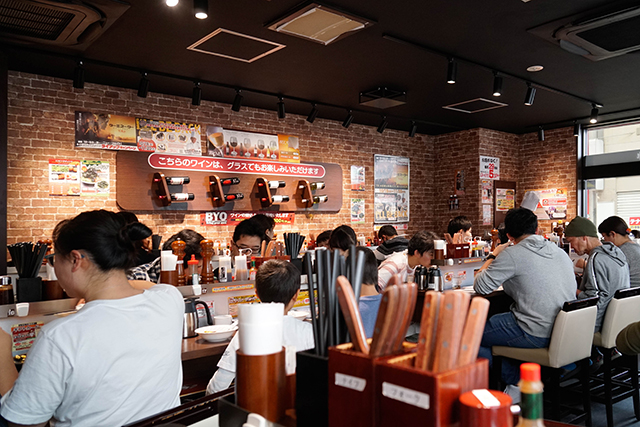
Having already visited two bakeries, it’s beginning to sound like we do nothing but eat in Japan (which is true…), but there’s plenty of proper sightseeing in this day. We just needed to stop by Ikinari! Steak for some lunch first!
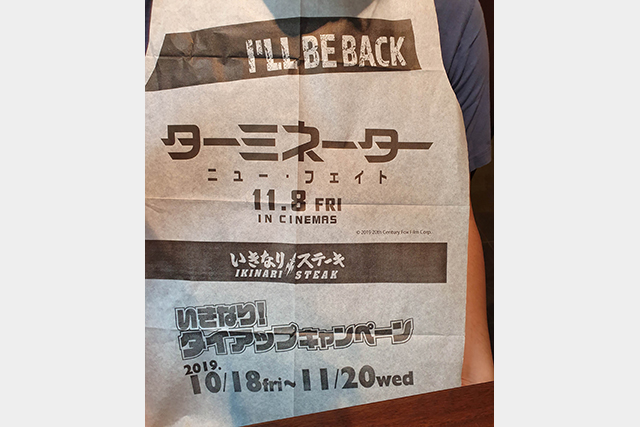
Ikinari! Steak is a chain across Japan and it tickles our fancy despite rarely eating steak even in Australia. All customers are required to wear after ordering to protect their clothes from the sizzling hot plates.
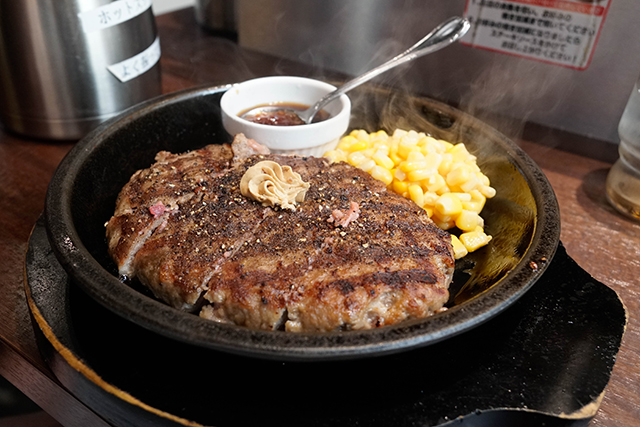
D ordered the 300 g Hamburger (¥1,100 +tax), which comes with a secret onion jam, a swirl of garlic sauce and corn. Funnily enough, the beef used in the hamburger originates from Australia. The patty is pre-sliced to halt cooking and we enjoy the tender beef with the accompanying jam, which we’re convinced uses sake as the ‘secret’ ingredient. The accompanying spicy sauce at the table was not spicy at all.
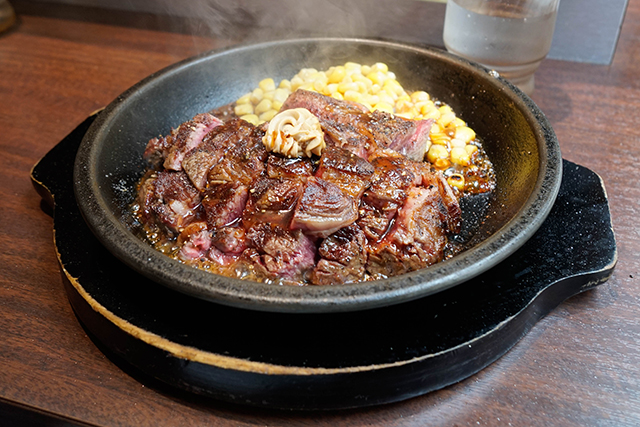
For me, this is the 200 g Steak (¥1,130), which also comes with a swirl of garlic sauce and corn. As with the hamburger, the steak arrives cut into small cubes, which makes it a breeze to eat and also keeps each bite medium rare (or if preferred, the steak can be cooked longer by leaving it on the hot plate). The beef, from America, was juicy and tender and truly one of the most enjoyable pieces of steak I’ve eaten.
Across Murasaki River
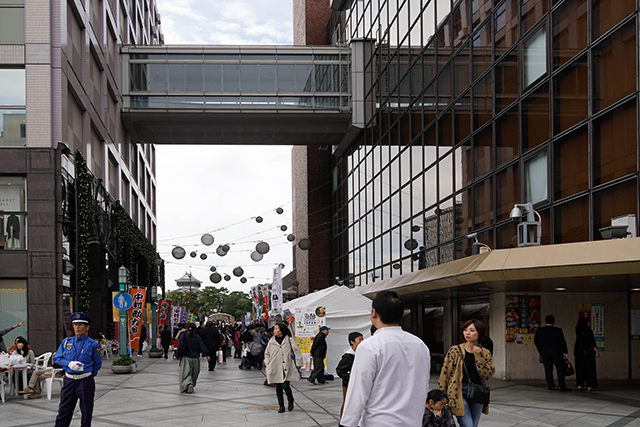
With our bellies full, we make our way towards Kokura Castle.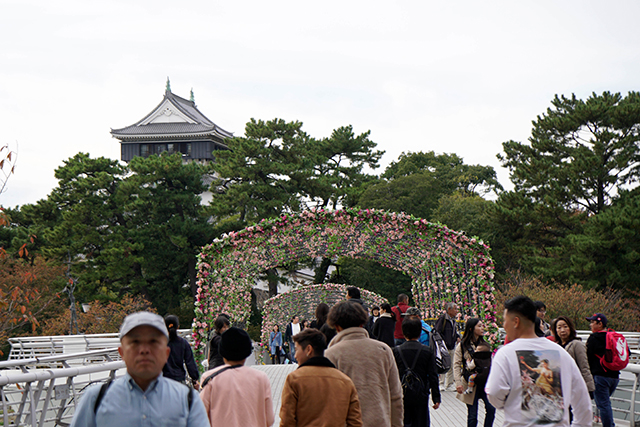
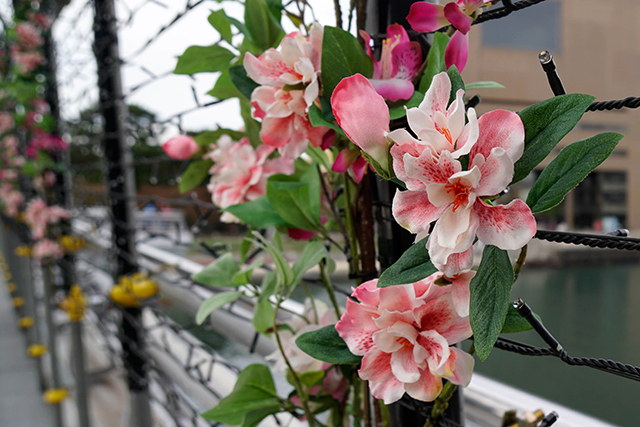
We catch a glimpse of the castle as we cross Ogaibashi Bridge over Murasaki River.
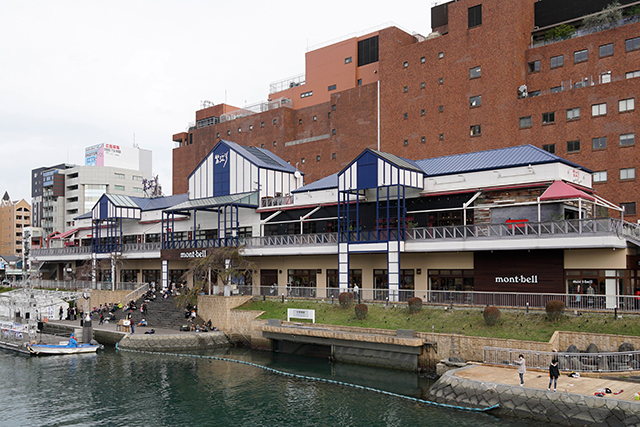
There’s a huge Mont Bell store occupying the entire ground floor of 紫江’S shopping mall.
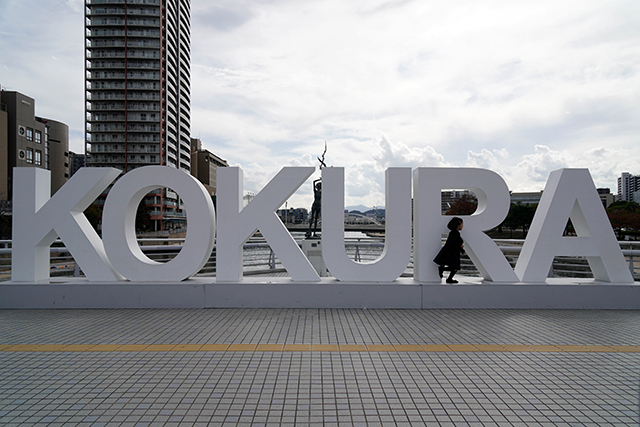
…and a huge sign in the middle of the bridge leaving one in no doubt as to where we are.
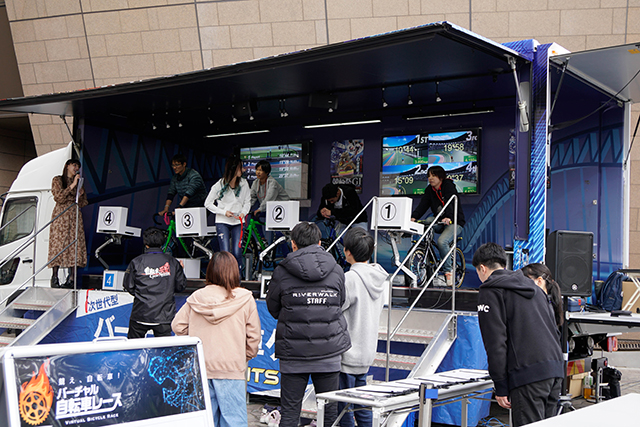
Outside Riverwalk Kitakyūshū, a large shopping complex is a cycling competition with winners (out of 4 contestants from the public) receiving a T-Shirt.
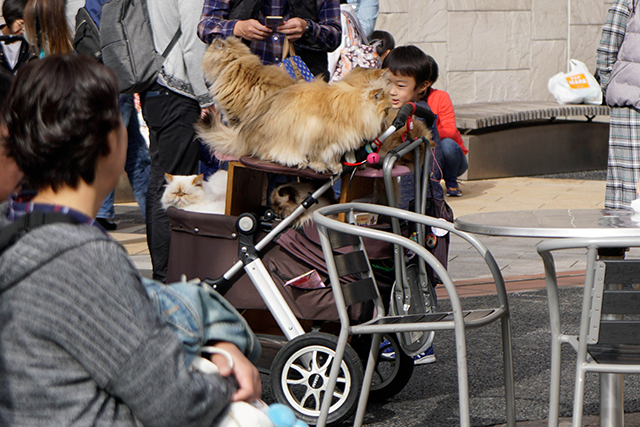
There’s an elderly gentleman stopping by to check out the festivities with his large entourage of cats.
Yasaka Shrine
小倉祇園八坂神社, 2-2 Jonai, Kokurakita Ward, Kitakyushu, Fukuoka 803-0813, Japan
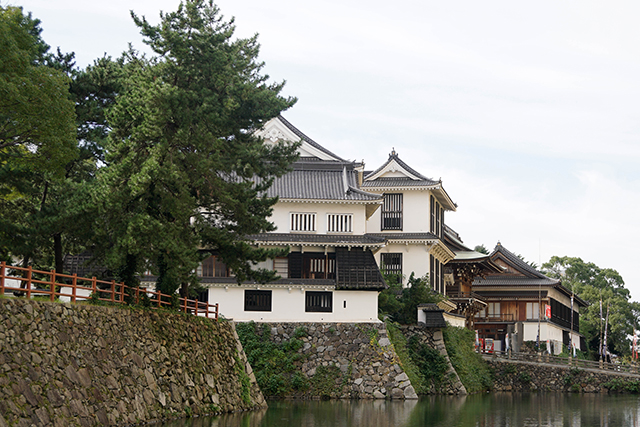
Buildings belong to the Yasaka Shrine located next to Kokura Castle front directly onto Riverwalk Kitakyūshū.
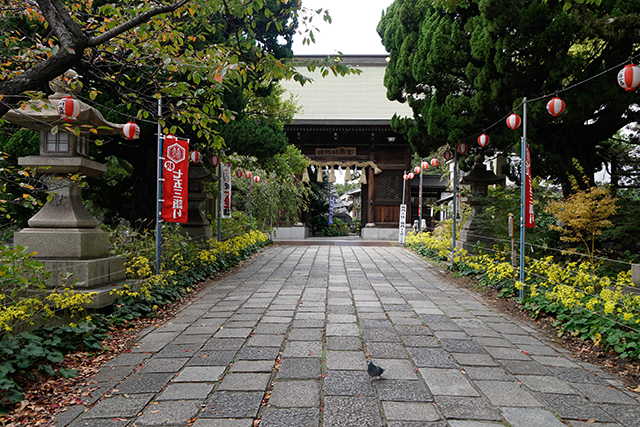
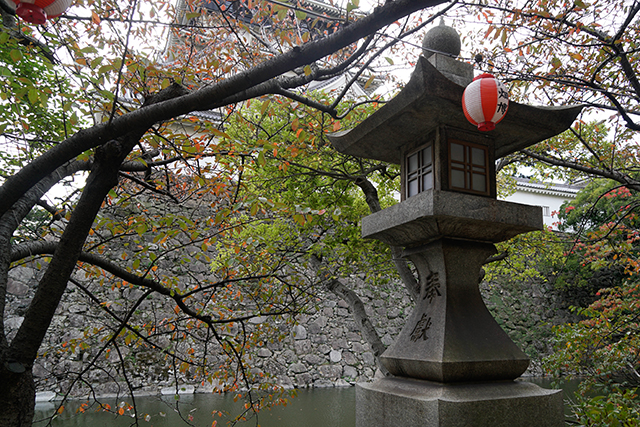
The castle is just a stone’s throw away from the path leading to the shrine.
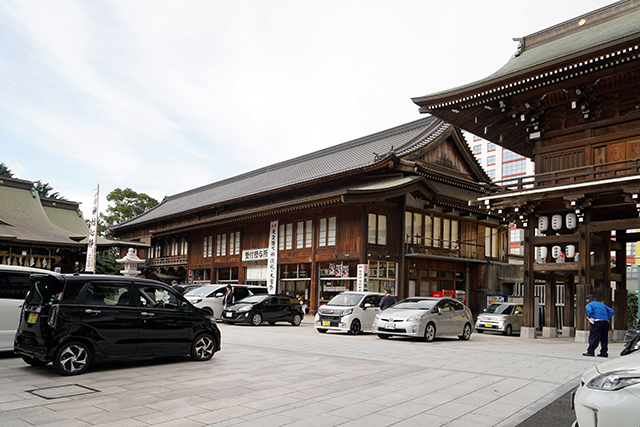
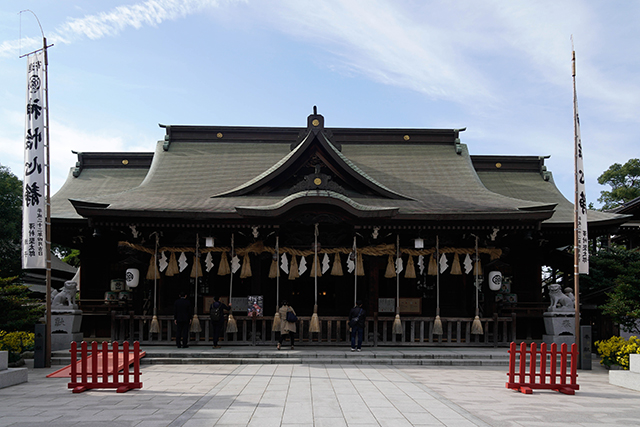
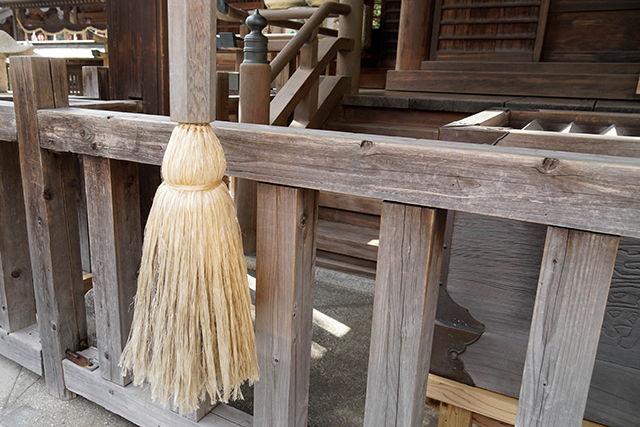
We saw numerous children visiting Shinto shrines to celebrate Shichi-go-san. The festival falls on November 15 each year and sees children aged seven, five and three dressed in traditional clothing and visiting the shrines to be blessed. While our visit did not fall on November 15 (a weekday), many families seemed to visit the days before and after. On that note, we saw many more children out and about this visit than on our previous visits to the mainland and Hokkaidō.
Kokura Castle
小倉城, 2-1 Jonai, Kokurakita Ward, Kitakyushu, Fukuoka 803-0813, Japan
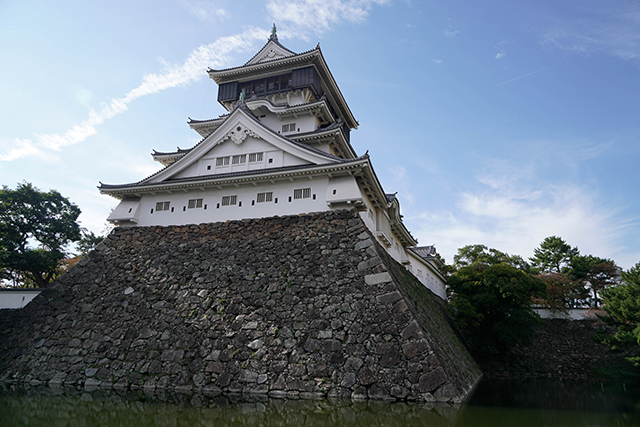
Kokura Castle was built by Hosokawa Tadaoki in 1602. It was originally designed in an architectural style called Karazukuridesign, which was unique and seen only in Kokura Castle. The current Kokura Castle was reconstructed with reinforced concrete in 1959 after the original keep burnt down in 1837 and the remaining castle buildings burnt down in 1866.
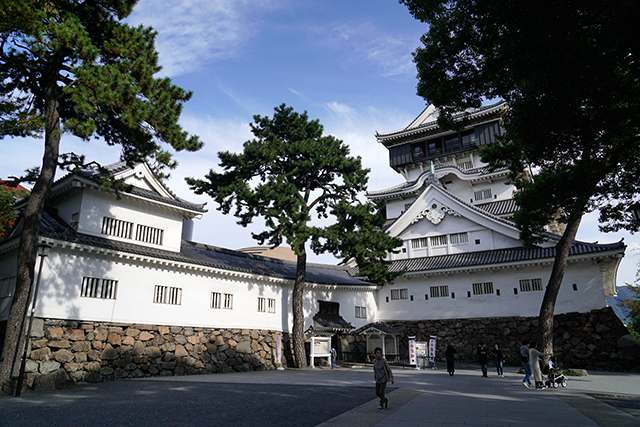
This is the view of the keep from inside the castle grounds. Admission to the keep is ¥350, but we’re not too interested in reconstructed castles.
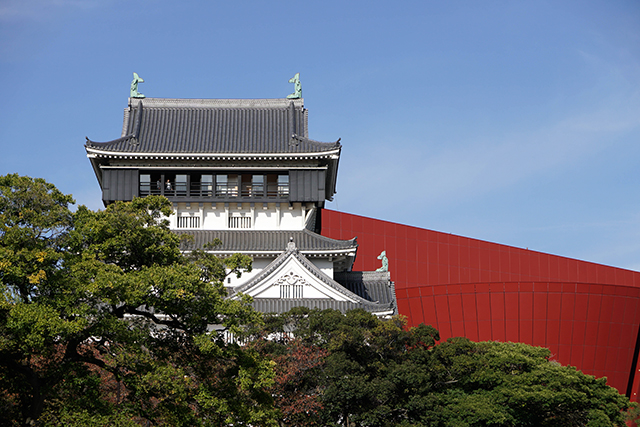
The bright red facade of Riverwalk Kitakyūshū can be seen in the background, giving an interesting contrast between the old and the new styles of architecture.
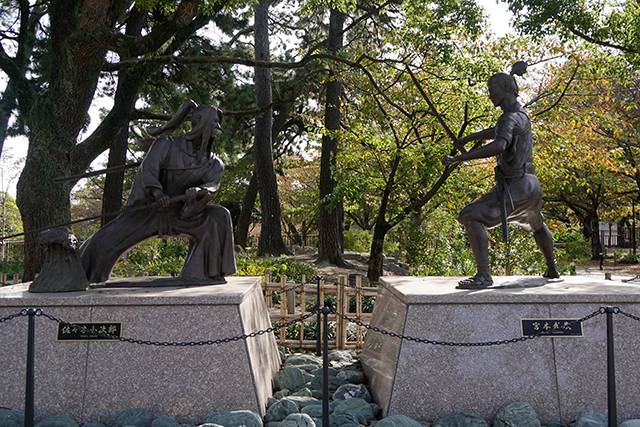
This pair of sculptures opposite the keep depict the duel between Kojiro Sasaki, a prominent Japanese swordsman widely considered a master of his craft, who died while battling his long-time rival, Musashi Miyamoto.
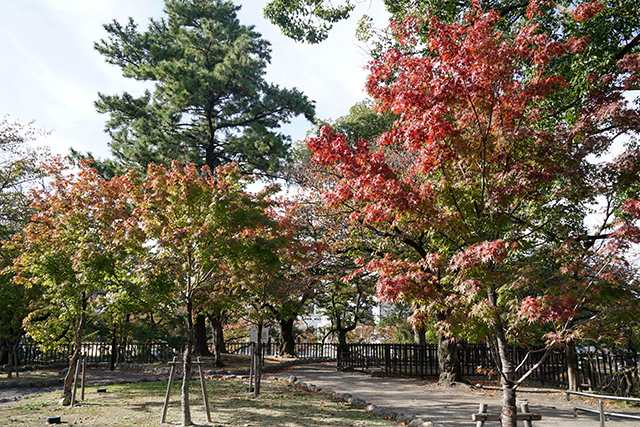
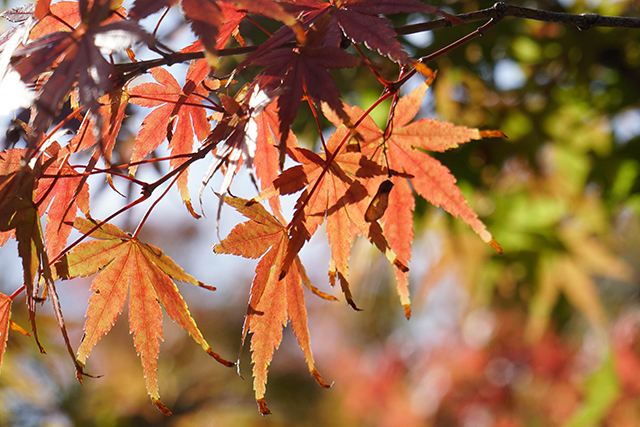
Visiting in autumn is our favourite season as the leaves are a beautiful fiery red.
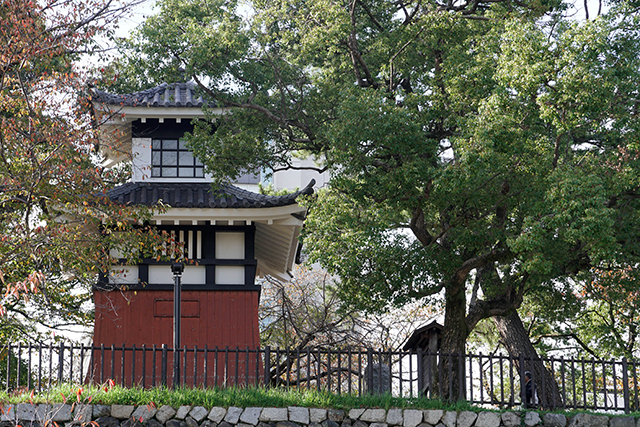
This is the old Shirasu lighthouse.
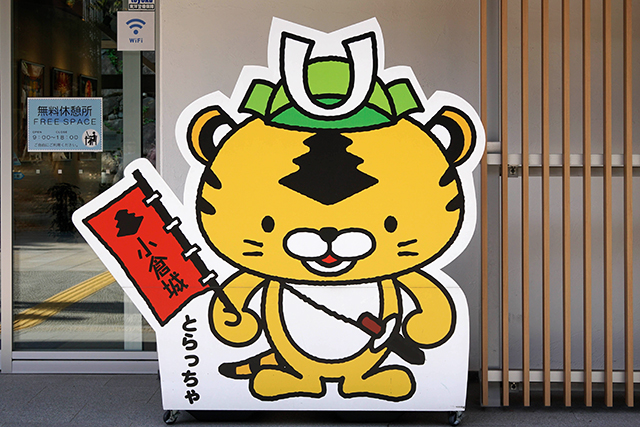
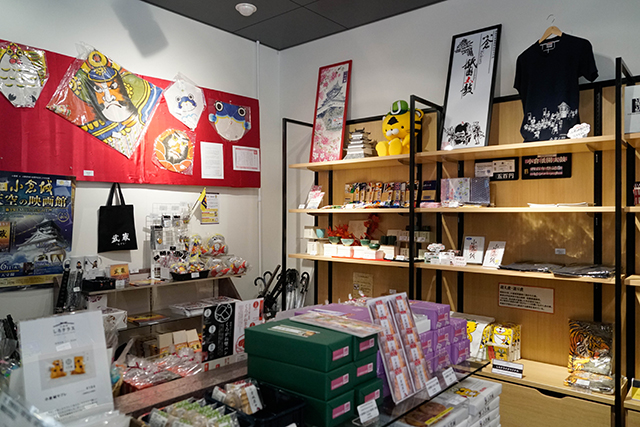
There’s a gift shop located just outside the castle grounds. In the same space is a branch of Tsujiri, a prominent tea house in Kokura. I’m tempted but the queues are extensive, so we wait to visit the head store in the main shopping street later in the evening.
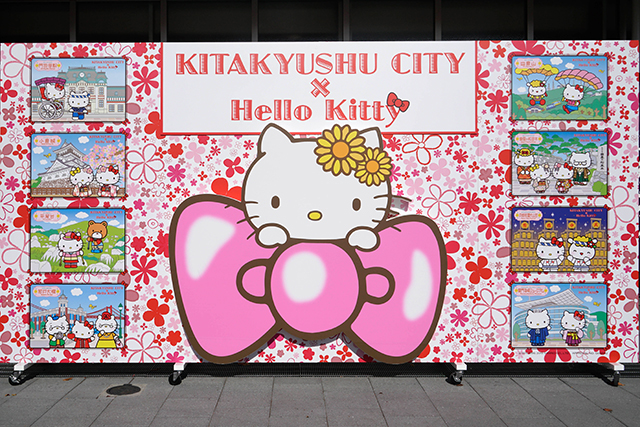
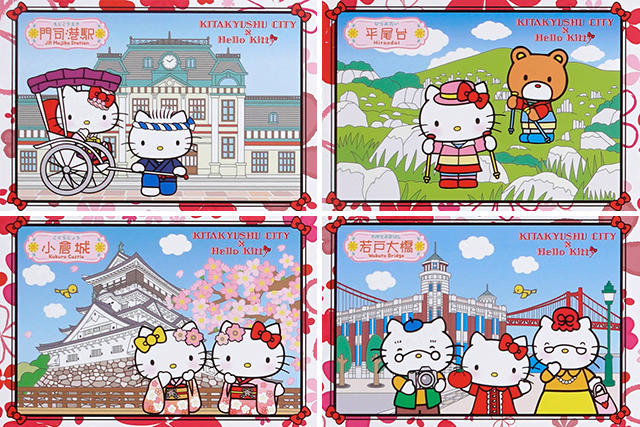
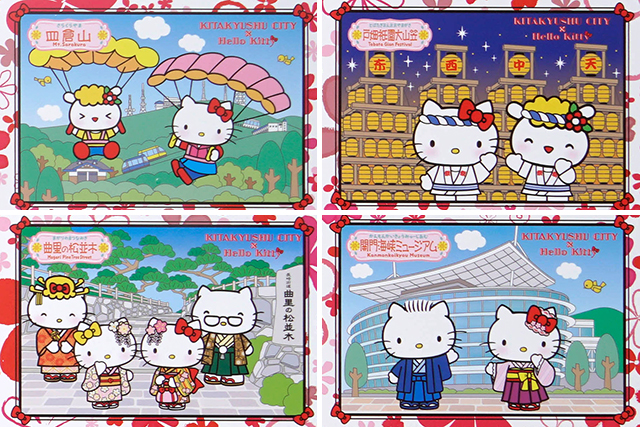
Hello Kitty is immensely popular in Kitakyūshū, with the city teaming up with the character to promote various areas including JR Mojikō Station, Kokura Castle, Hiroodai, Wakato Bridge, Mt Sarakuro, Mogori Pine Tree Street, Tobata Gion Festival and Kanmon Koikyou Museum.
Along Murasaki River
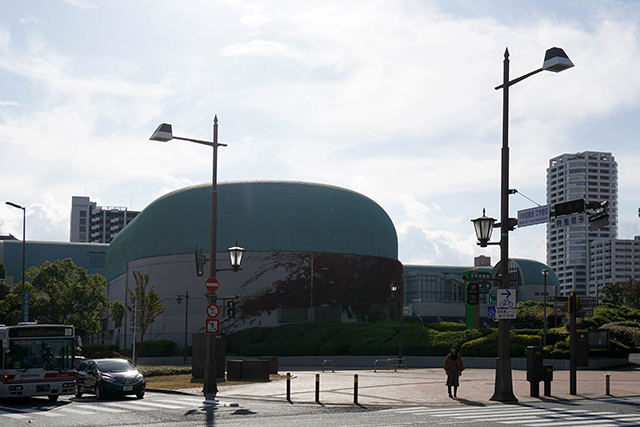
We walk past the Kitakyūshū Literature Museum and City Central Library.
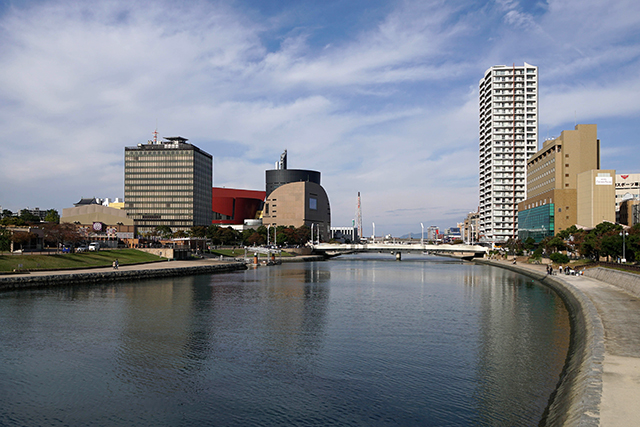
The TOTO Museum is about 1.6 km further down the river.
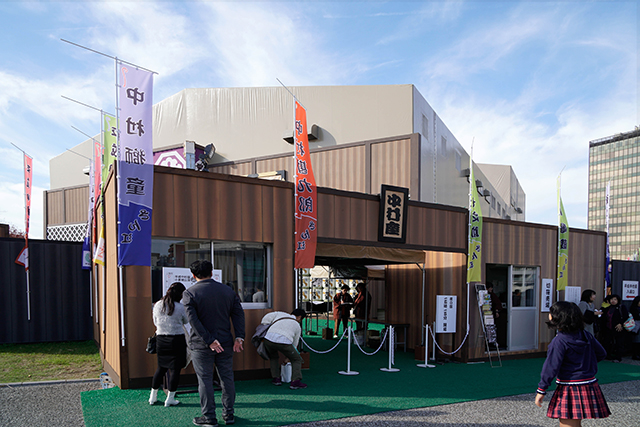
On the way, we pass by a ‘pop up’ facility at Katsuyama Park with people queuing to see traditional Japanese theatre performances within.
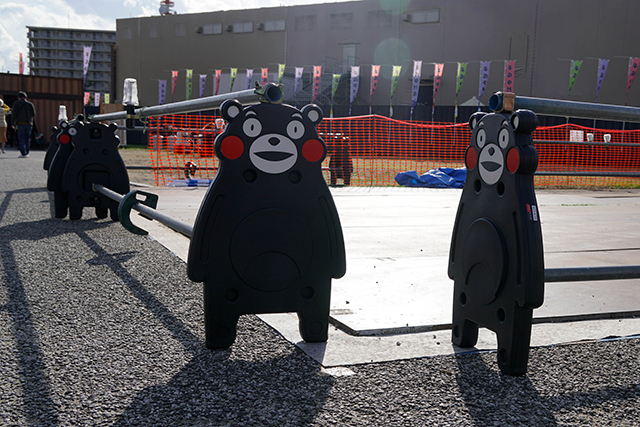
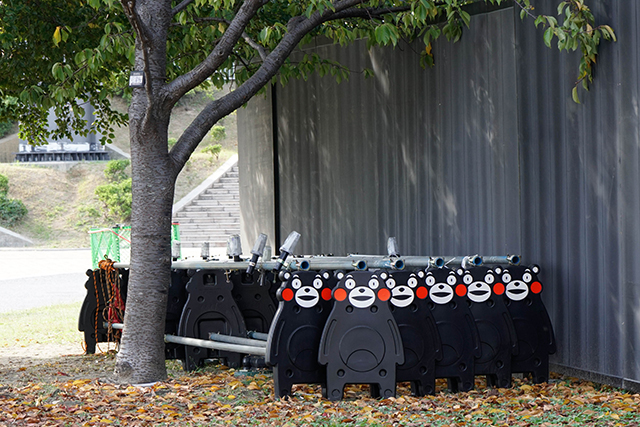
There are these barriers all across Japan featuring various designs including frogs, but here we see an army of ones featuring Kumamon.
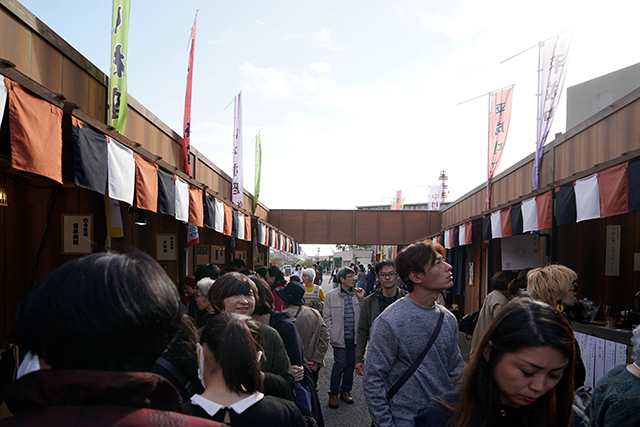
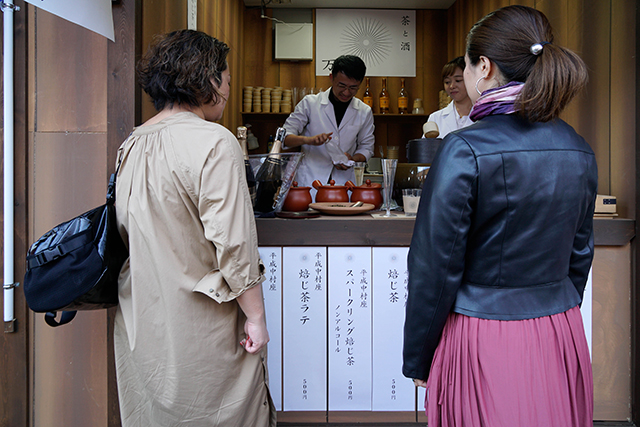
Alongside the event, there’s a stall selling tea-based cocktails made with freshly brewed green tea and hōjicha.
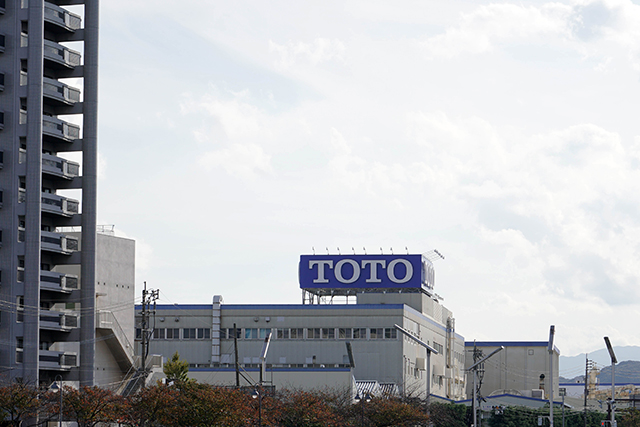
In the distance, we spot the giant TOTO sign. We get our hopes up that the museum is near, but it’s just the TOTO Kokura Plant No 1.
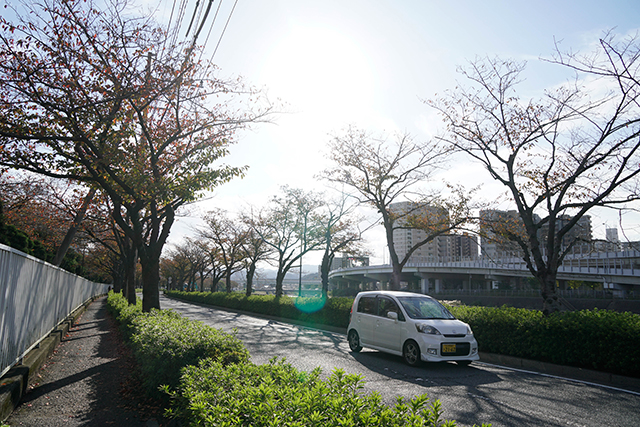
A bit further down the river, trees line the road next to the TOTO headquarters.
TOTO Museum
TOTOミュージアム, 2 Chome-1-1 Nakashima, Kokurakita Ward, Kitakyūshū, Fukuoka 802-8601, Japan
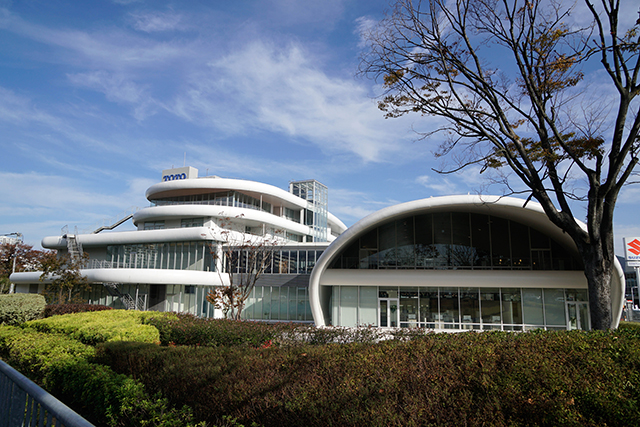
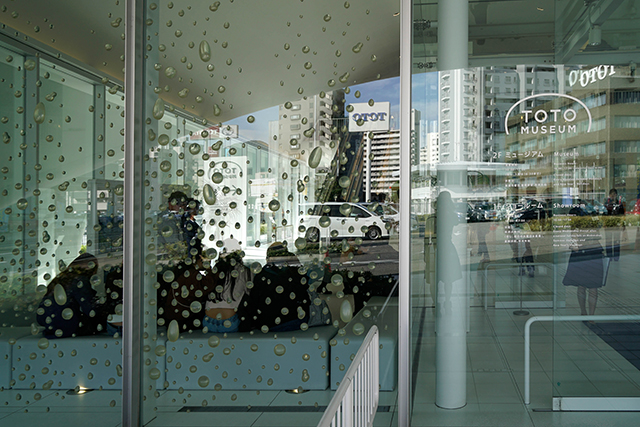
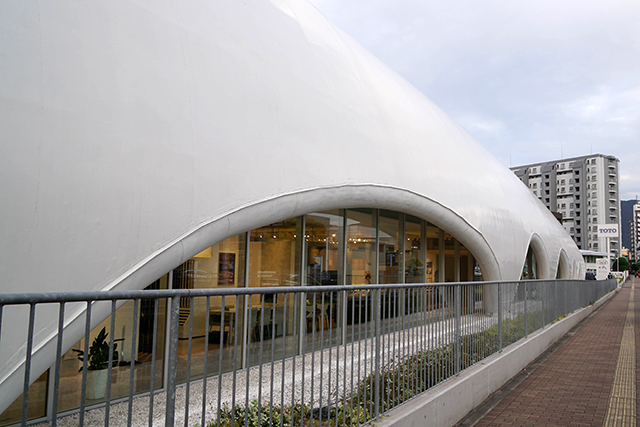
Finally, this futuristic white, curved building emerged on the left and we’re sure it’s the museum this time! The museum was opened in 2017 to celebrate the company’s 100th anniversary
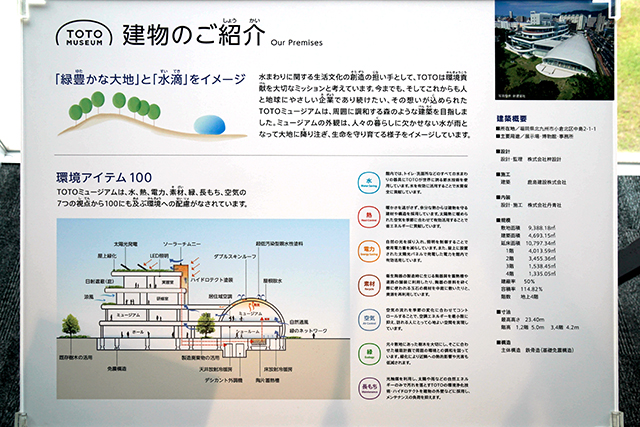
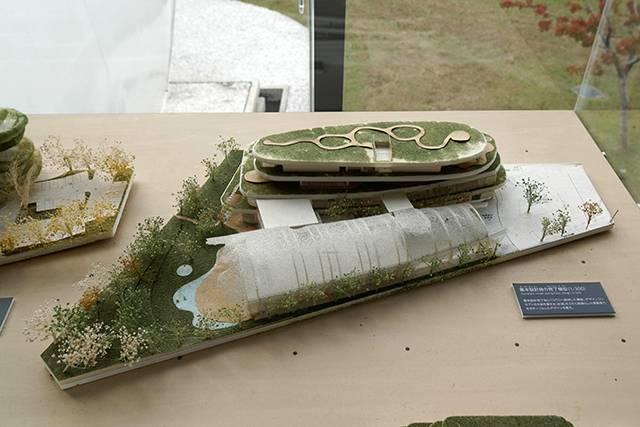
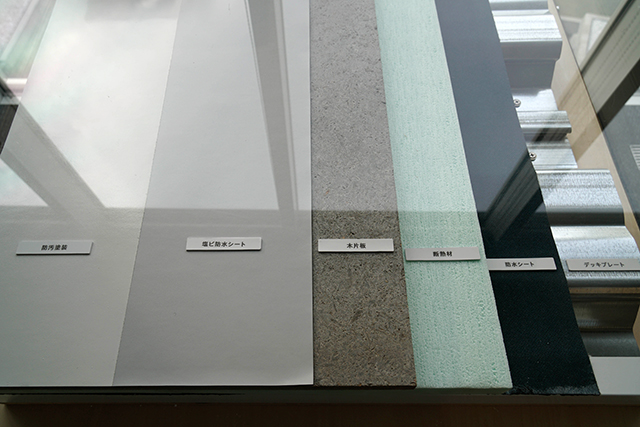
The museum building reflects TOTO’s philosophy ‘to create a sustainable society through environmentally conscious manufacturing’. It incorporates 100 environmentally-friendly measures that address environmental issues in seven areas:
- Water-Saving — Plumbing equipment such as toilets and faucets featuring TOTO’s water-saving technology
- Heat Control — Solar chimneys, high insulation architecture and high insulation glass
- Energy Saving — Solar power generation, use of naturally occurring light and LED lighting
- Recycle — Pavement using sanitary ware scrap produced in the TOTO product manufacturing process
- Ecology — Rooftop greening, use of locally produced lumber, and tree planting plans that consider the ecosystem
- Maintenance — Use of Hydrotect, a coating that employs the sun and water to remove dirt and clean the air
- Air Control — Natural ventilation, floor air conditioning and night purge
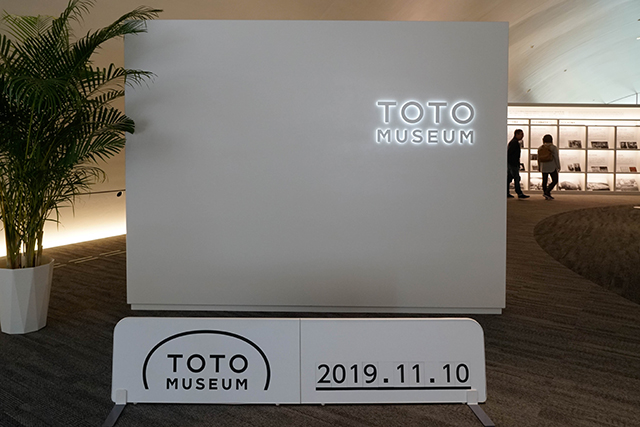
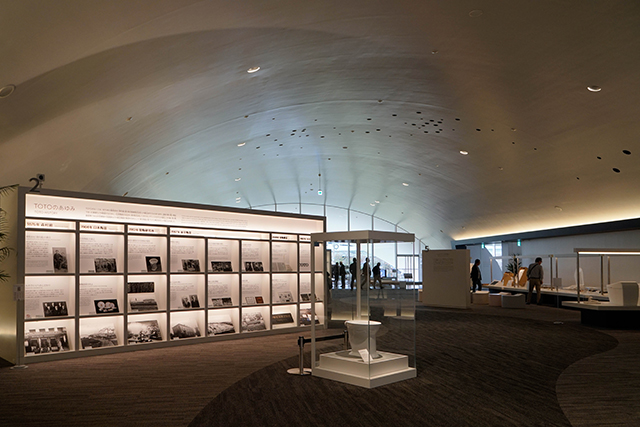
The TOTO Showroom is located on the ground floor, with the Museum accessed via an escalator.
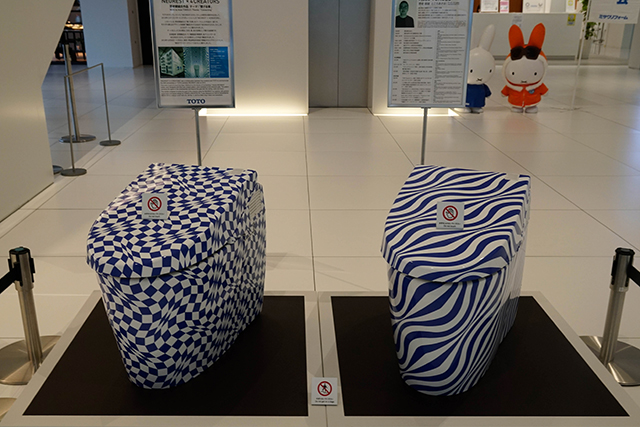
These toilets were part of a work by Asao Tokoro, who collaborated with TOTO and three other creators in the exhibit NEOREST x 4 CREATORS in 2013 to commemorate the 20th anniversary of the release of Neorest, TOTO’s washlet integrated toilet. If the pattern looks familiar, it may be because Asao Tokoro is also the designer of the chosen logo for the Tōkyō 2020 Olympics.
Exhibit Room 1
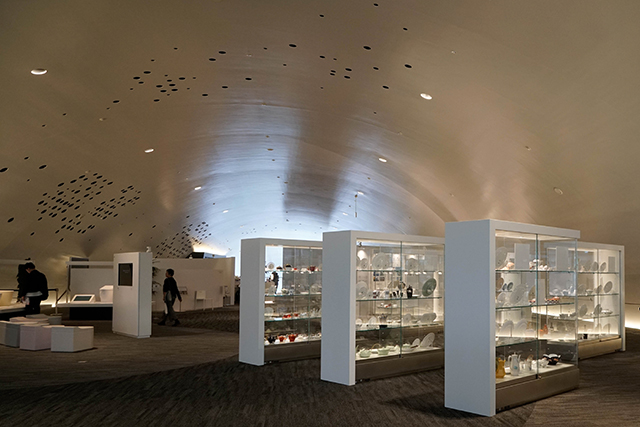
Exhibit Room 1 is located in this first space, which is elegant and generous. A sign explains that TOTO was established in 1917 during ‘a time when most of Japan was still without sewers’ with the aim of ‘bringing healthy, cultured lifestyles to the Japanese people’ through ‘manufacturing flush toilets and other ceramic sanitary ware’.
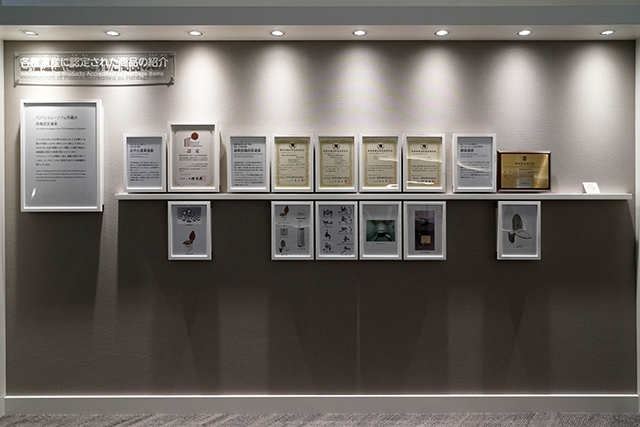
Certified Heritage – Before we’re taken through the history of TOTO, the exhibit first takes us through aspects of TOTO that have been designated as cultural heritage by the Japanese government int he categories of ‘modernized industrial heritage’, ‘building equipment technical heritage’ and ‘machine heritage’.
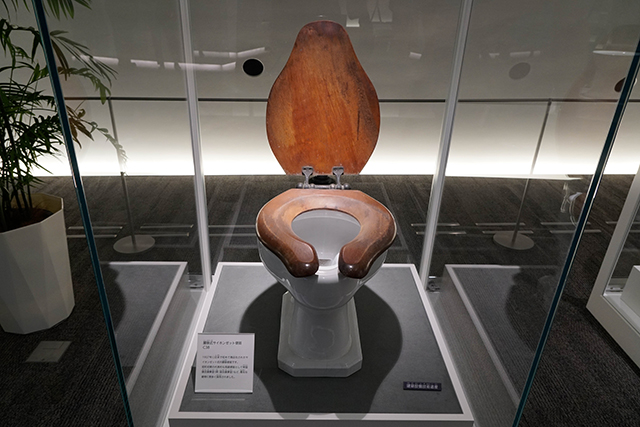
Sanitary ware (including the toilet above) and tableware manufactured by TOTO prewar were recognised as ‘modern industrial heritage’ in 2009 for contributing to the modernisation and development of the ceramic industry in northern Kyūshū.
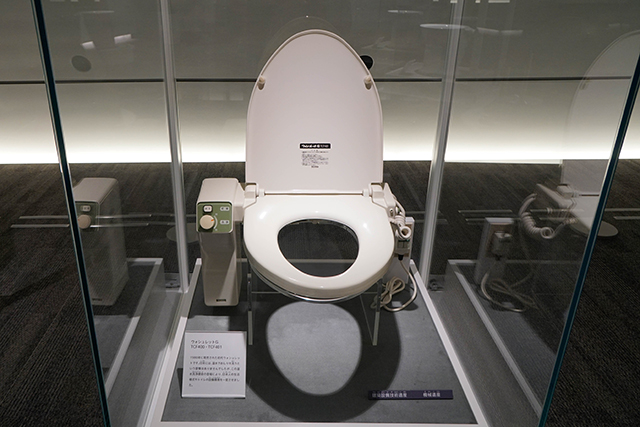
The first Washlet G was certified as ‘mechanical heritage’ in 2012 for changing Japanese toilet customs. As for ‘building equipment technical heritage’, various mixer taps were certified in 2014, the first unit bathroom in 2016, and the automatic faucet with a built-in photoelectric sensor in 2017.
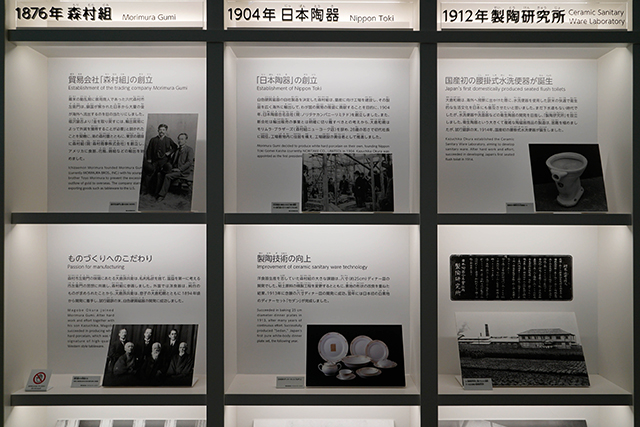
History of TOTO – Kazuchika Okura, who was in charge of purchasing at Morimura Gumi, visited Europe and on his return in 1904, he was tasked to manage a ceramics company established by Morimura Gumi, Nippon Toki Gomei Taisha (now Noritake Co Ltd).
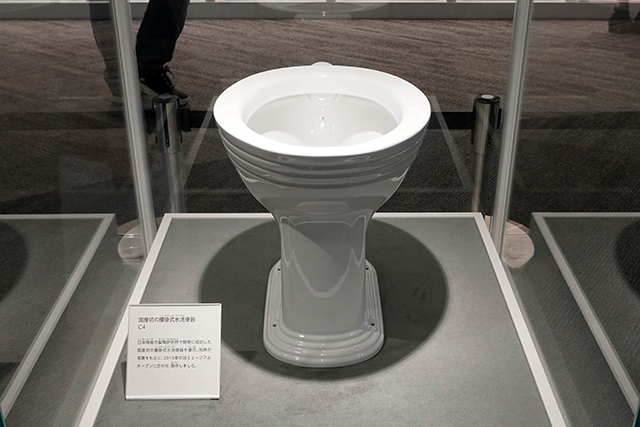
While dealing with the struggles to produce pure white tableware, Kazuchika had the idea to popularise the comfortable, hygienic Western-style flush toilets that he encountered in Europe for everyday use in Japan. While Japan did not yet have a sewer system, he established a ceramics laboratory in 1905 to develop sanitary ware such as flush toilets and washbasins and completed the first domestically produced seated flush toilet (above) in 1914.
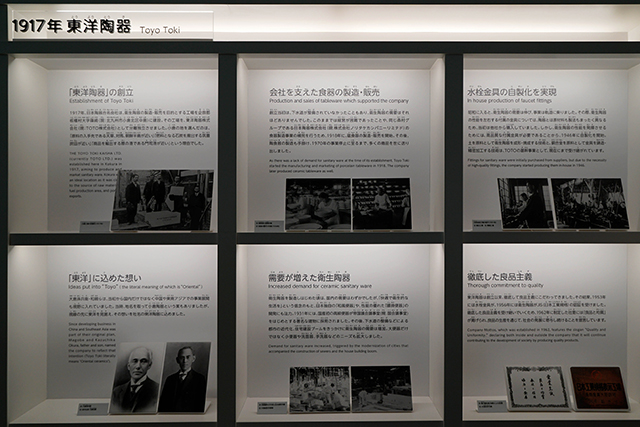
On receiving a positive response from sales in Ōsaka, Kazuchika established Toyotoki Co Ltd (now TOTO Corporation), a company for manufacturing and selling sanitary ware in Kokura where the conditions for obtaining raw materials logistics were favourable.
The company was reconstructed after the Second World War and a department for manufacturing faucets and accessories was set up at the same time.
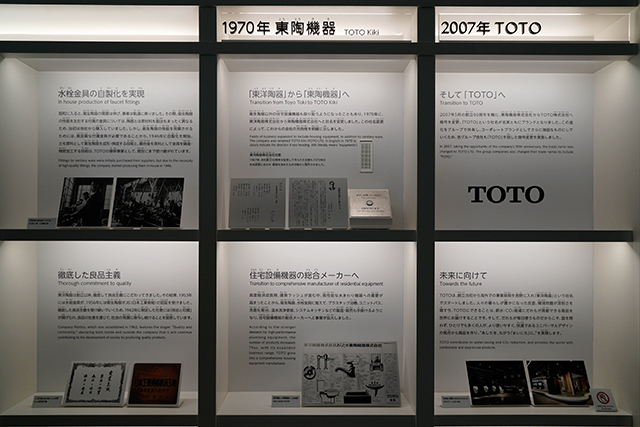
In 1970, Toyo Ceramics was rebranded as Totoki Equipment to reflect the company’s growth as a ceramic manufacturer to becoming Japan’s largest manufacturer of faucet fittings. In 1980, TOTO revealed the Washlet, an unprecedented sanitary device. In 2007, Totoki Equipment changed its name to TOTO on its 90th anniversary.
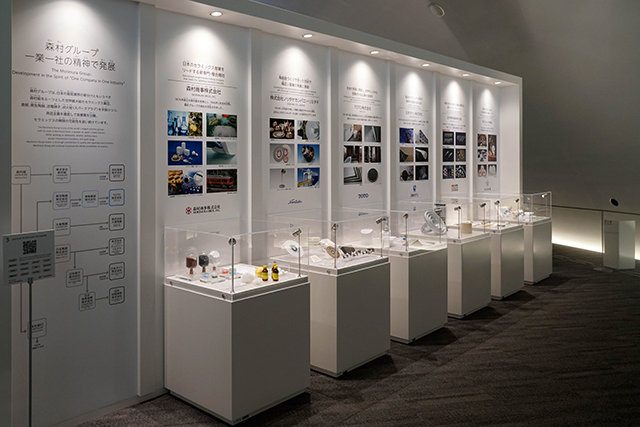
Morimura Group is one of the largest ceramics corporate group in the world:
- Morimura Bros Inc — imports and exports heat resistant raw materials, aircraft materials, metals, product for electronics industries, chemical products, plant machinery, flavours and fragrances, foodstuff and household goods.
- Noritake Co Limited — manufactures tableware as well as grinding and polishing tools, ceramic materials and heating systems.
- Okura Art China, Inc — manufactures fine porcelain Western tableware brand
- TOTO Ltd — developed and manufactures housing equipment such as restroom, bath, kitchen, washbasin, ceramic, and Green Building Material.
- NGK Spark Plug Co Ltd — developed and manufactures spark plugs used in automobile manufacturers.
- NGK Insulators Ltd — developed and manufactures ceramic technologies, including those used to transmit and transform electric power, ceramics used to clean exhaust emissions, and batteries for storing electricity.
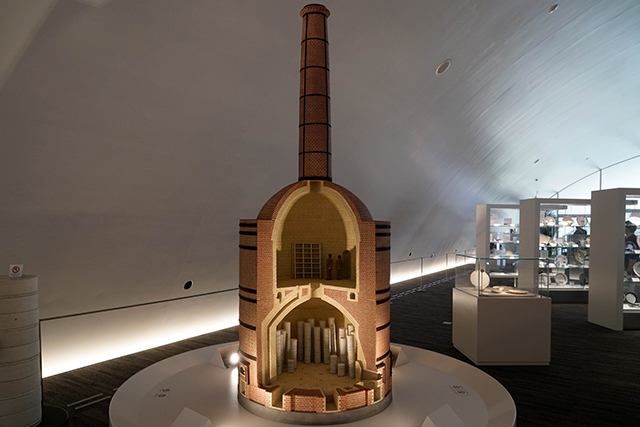
This is a 1:10 miniature model of the first kiln at Nippon Toki Gomei Kaisha with tableware stacked high inside.
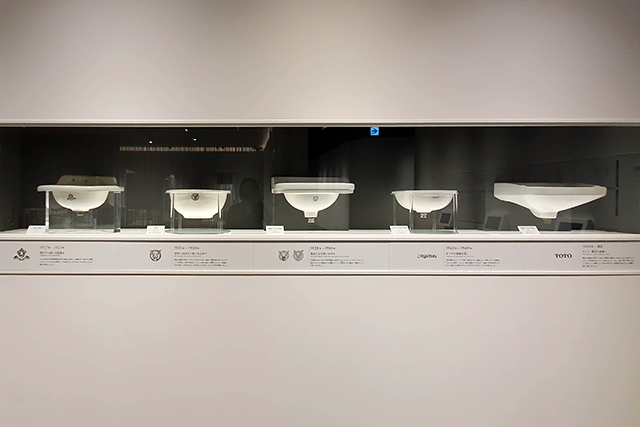
This display shows the evolution of TOTO’s trademark throughout its history.
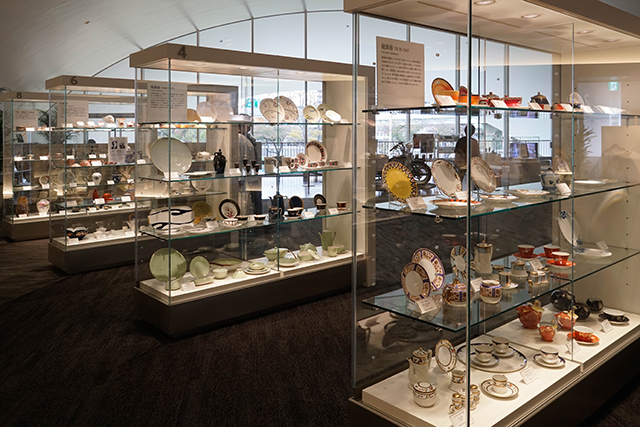
History of Tableware – The tableware business supported TOTO for half a century until its end in 1970. There’s an extensive display of tableware with various designs, such as amber-coloured tableware that TOTO is skilled at creating.
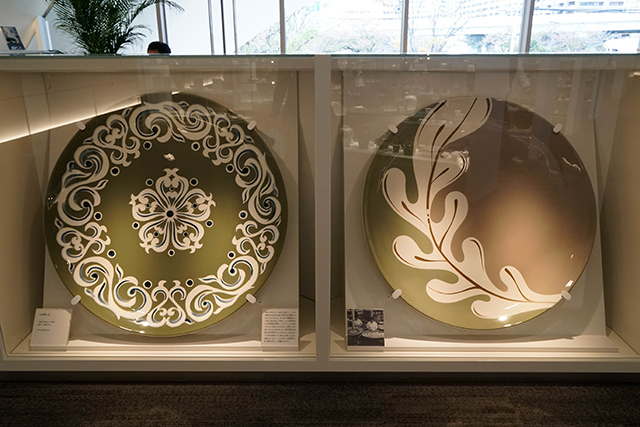
There are also large plates with a diameter of 1 meter made for department stores.
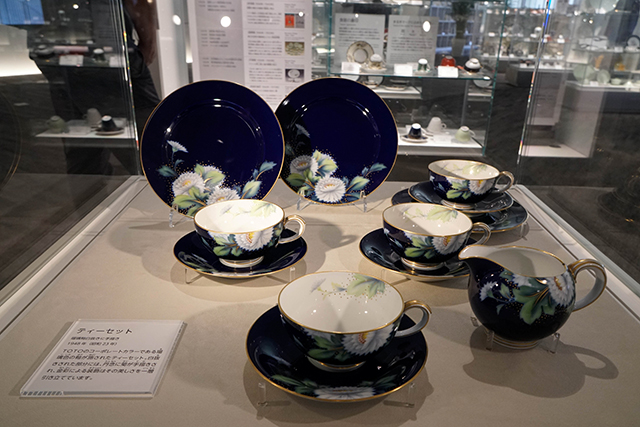
These pieces of tableware are coloured in lapis lazuli, which is also a base colour of TOTO’s corporate colour and is the most typical colour of the tableware manufactured by TOTO.
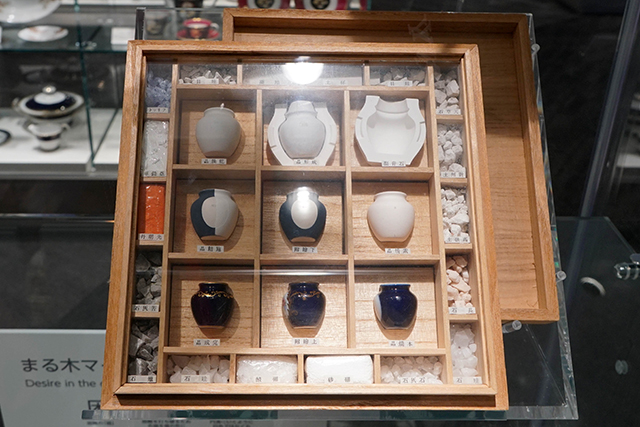
TOTO’s system for producing large quantities of ceramics with stable quality, such as the introduction of tunnel kilns and automation of glazing operations, contributed to the modernisation of the ceramic industry.
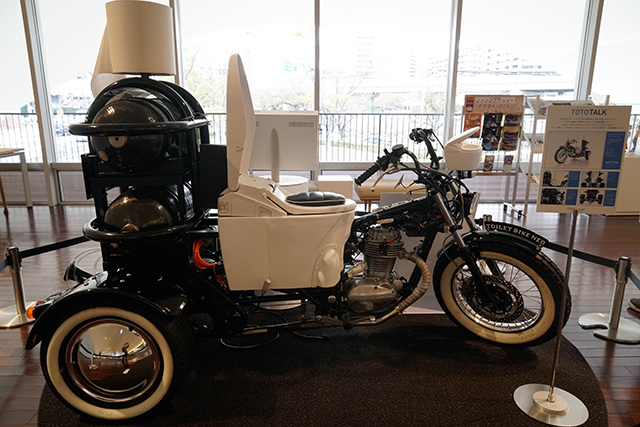
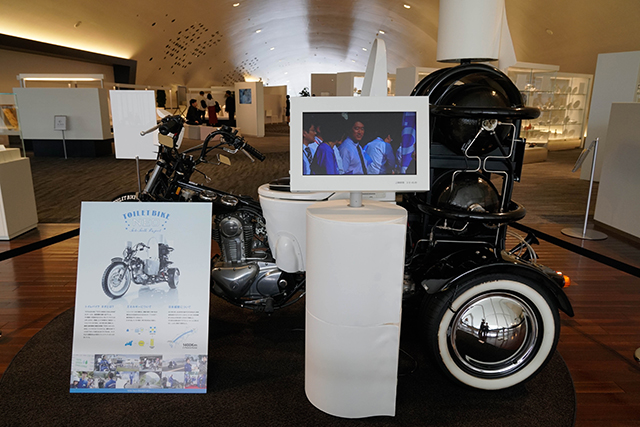
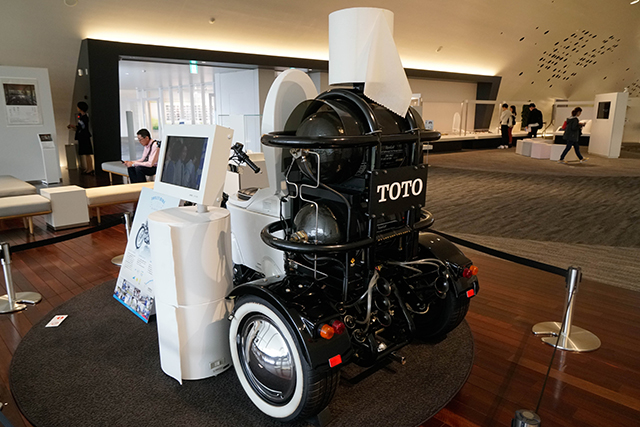
TOILET BIKE NEO – In 2011, TOTO created a toilet-motorcycle hybrid that runs entirely on biogas (or human waste), called the Toilet Bike Neo Project. The bike was part of the TOTO Green Challenge in which the company sought to achieve 50% reductions in C02 emissions in bathrooms by 2017 (vs 1990 levels).
The bike was ridden by over 500 people and covered 1,400 km in 28 days to travel from Kyūshū to Tōkyō.
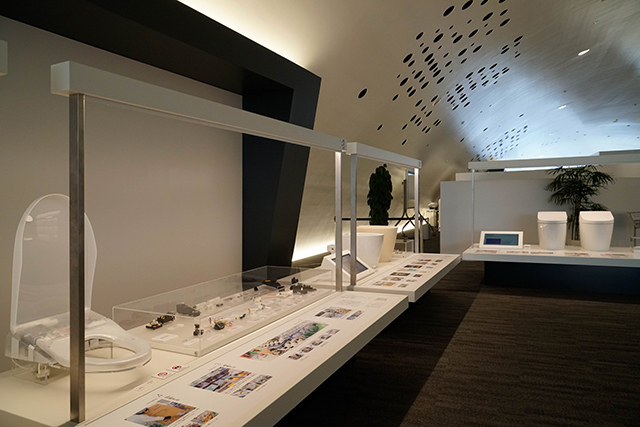
Manufacturing Flow – This exhibit shows the planning and development to the manufacture and packaging of sanitary ware, washlets and faucet fittings. ‘The toilet product is a combination of sanitary ware, faucet fittings, electronic parts, and parts ‘that are completely different in material and manufacturing process.
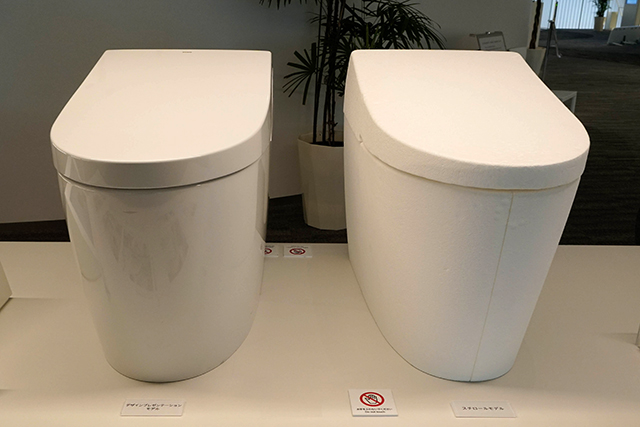
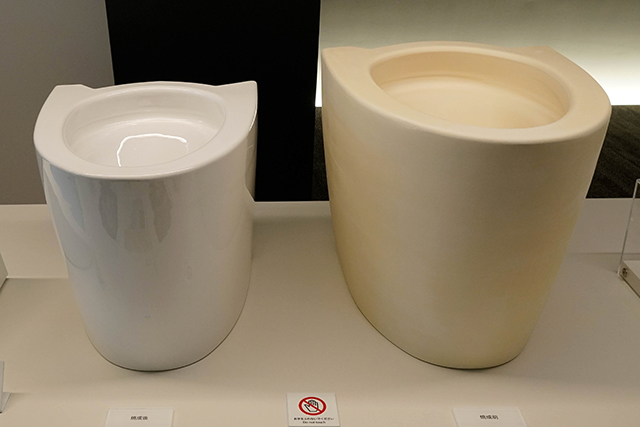
These displays compare the reduction in the size of the ceramic bowls before and after curing and drying.
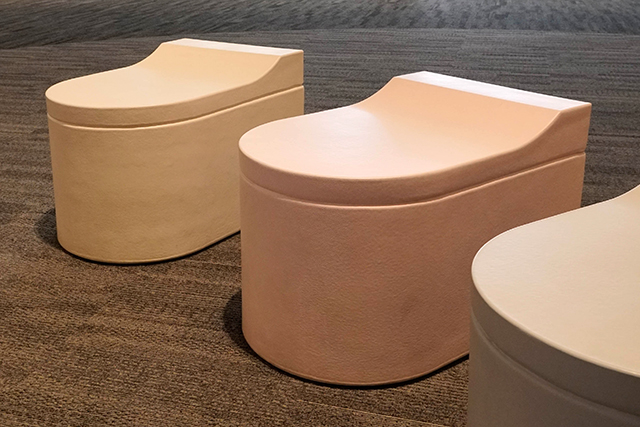
Videos take us through the process and we perch ourselves on seats in the shape of closed toilets.
Special Exhibition Room
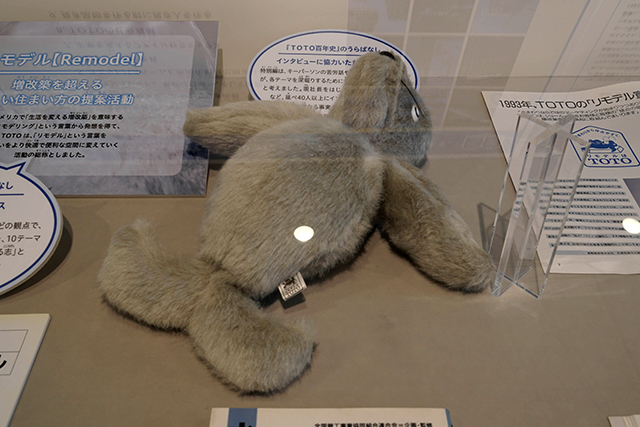
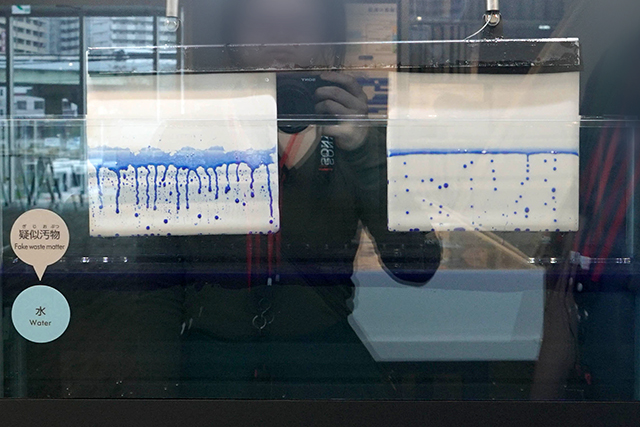
This display shows the effects of CeFiONtect (left, typical glaze; right, CeFiONtect), a technology developed by TOTO that smooths ceramic surfaces at the nano level (one-millionth of a millimetre) to prevent the waste matter from sticking and help to flush it away. The smoothness of the CeFiOntect treatment also means the surface ‘reflects light beautifully’.
Exhibit Room 2
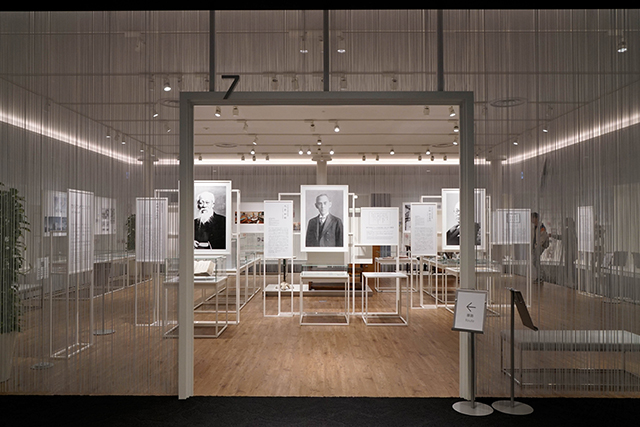
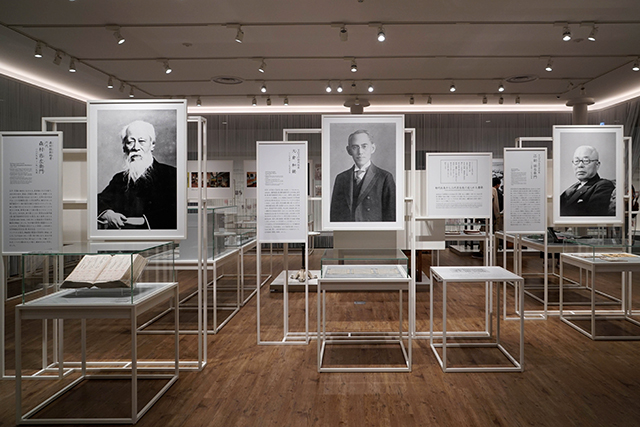
This room pays homage to the three most significant figures in the ‘making’, ‘creating’ and ‘transmitting’ of TOTO:
- Saemon Morimura (left) founder of Morimura Gumi, the mother company of TOTO. He established a trading company for the national interest and quickly launched Japanese products overseas.
- Kazuchika Okura (centre), founder of TOTO. He saw sanitary ware in Europe and the United States when he visited for an inspection and started the production of sanitary ware for the first time in Japan with the desire to spread a comfortable and hygienic lifestyle in Japan.
- Magoemon Ezoe (right), fifth president of TOTO post-war who passed on the principle of producing quality goods.
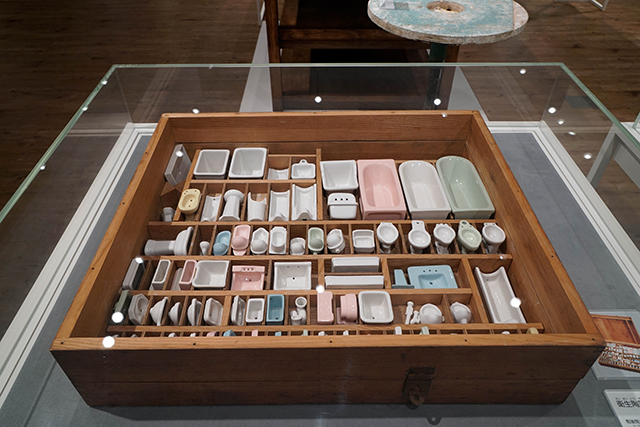
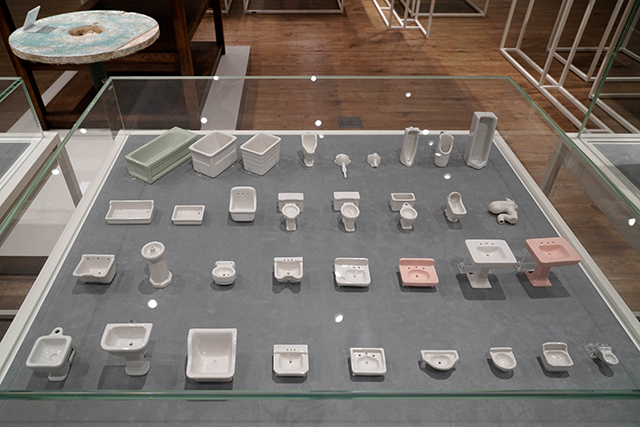
These sanitary ware miniatures are cute as a button and were used for checking the appearances and shapes before showrooms were established.
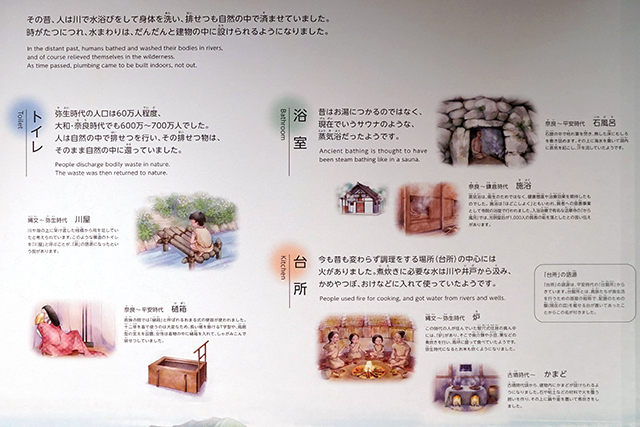
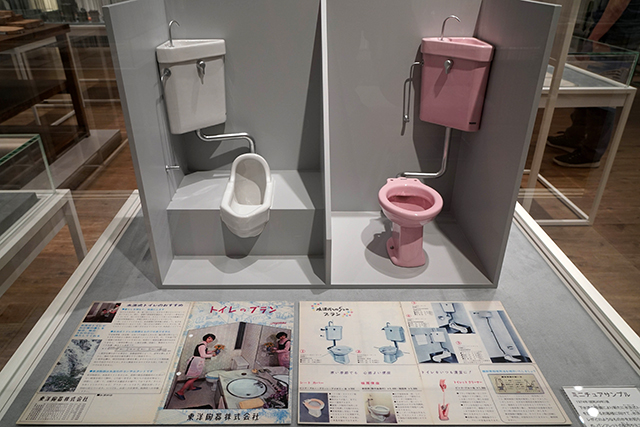
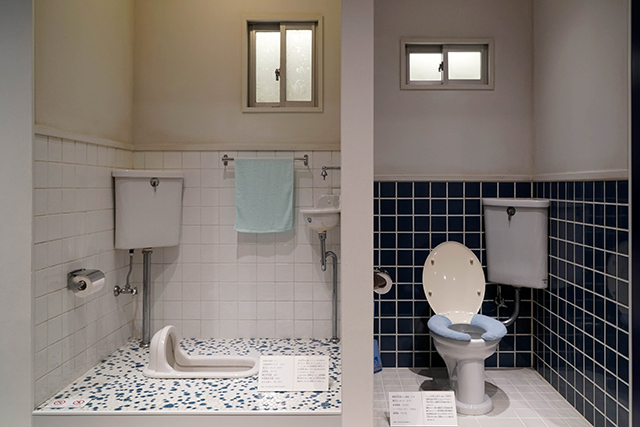
Plumbing Chronicles in Japan – Beginning in BC14000-AD1600, this next section chronicles the changes in Japanese people’s lifestyles and the evolution in plumbing products, which became common in Japan after WWII. As plumbing came to be built indoors, this display has a Japanese toilet (bottom left) that has a frame to hold up one’s long garment when using the bathroom.
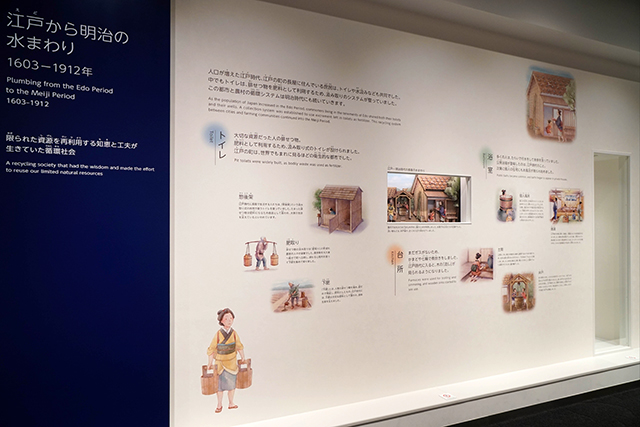
From the Edo Period to the Meiji Period, the country’s increasing population saw commoners living in the tenements sharing both their toilets and their wells. Developments in plumbing responded by establishing a collection system to use excrement left in toilets in cities as fertilizer in farming communities. This system continued into the Meiji Period.
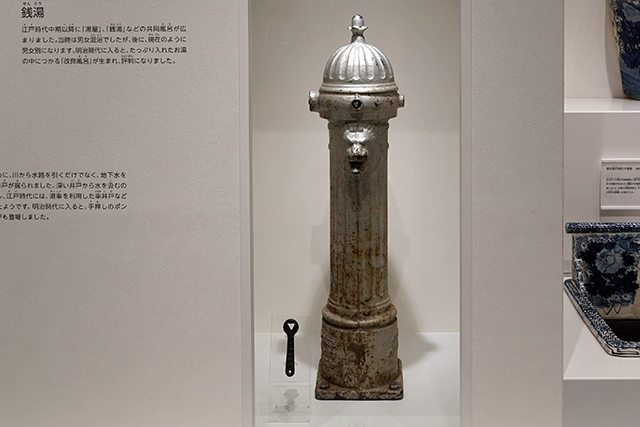
This is an example of a public tap.
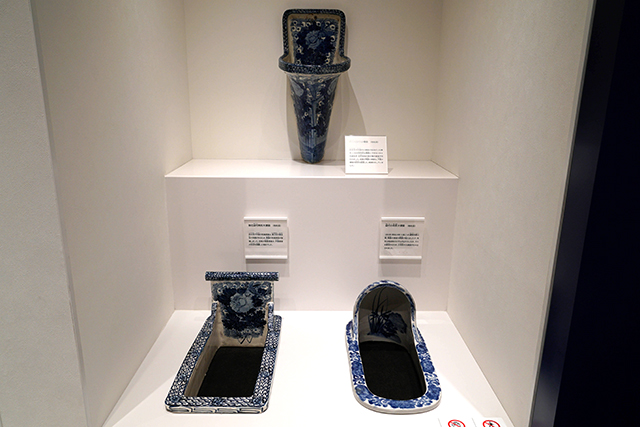
These were blue and white pottery toilets shared by the tenements.
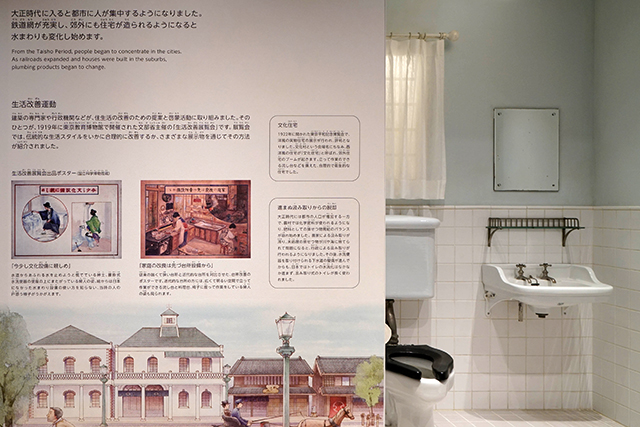
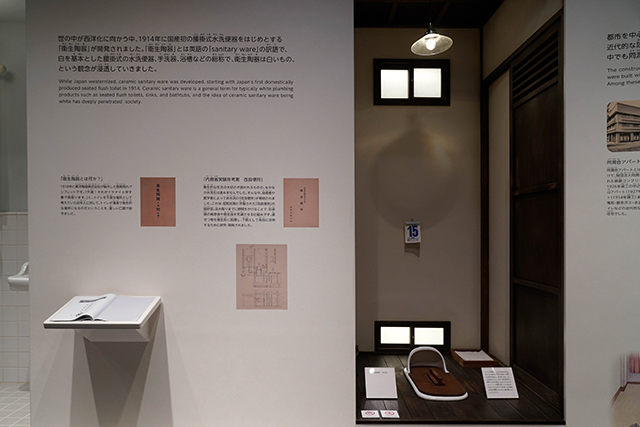
The Taisho Period to the early Showa Period saw the spread of the urban lifestyle and industrialisation of ceramic sanitary ware. While Japan westernised, ceramic sanitary ware was developed, starting with Japan’s first domestically produced seated flush toilet in 1914.
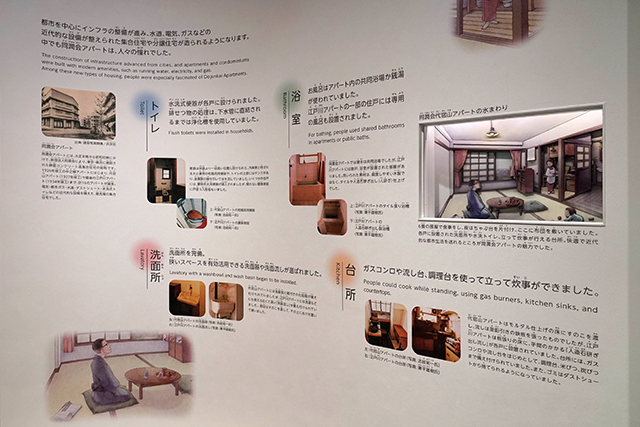
The construction of infrastructure advanced from cities starting with the expansion of railroads and saw apartments and condominiums being built with modern amenities, such as running water, electricity and gas. Flush toilets were installed along with a washbowl and washbasin, while people could now cook while standing using gas burners, kitchen sinks and countertops.
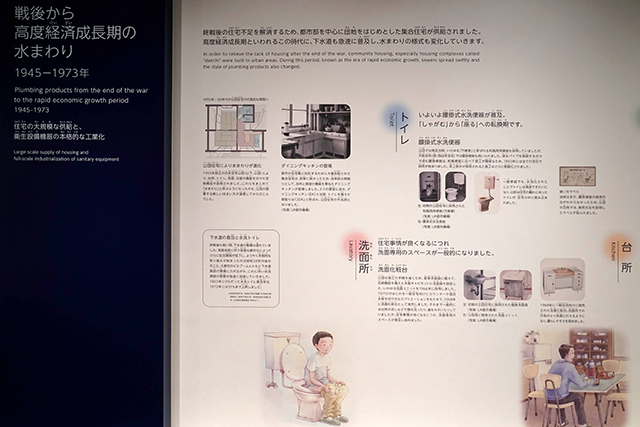
With many people losing their homes during WWII, community housing was built in urban areas.
During this period, sewers spread swiftly and the style of plumbing products changed to make more efficient use of smaller spaces.
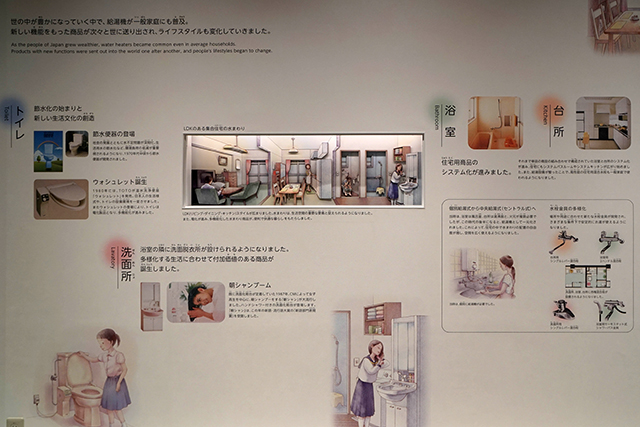
As the people of Japan grew wealthier from the Show Period to the Heisei Period, water heaters became common even in average households. This saw the introduction of warm toilet seats as well as toilets with a wash function, along with mixer taps. Baths, which were typically taken at a public bathhouse, were not possible within the home.
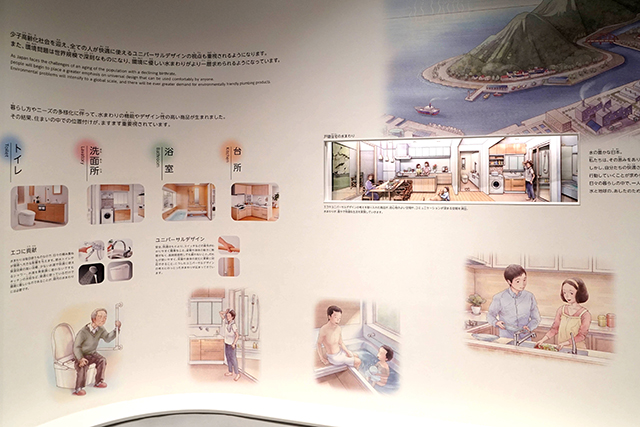
More recent developments posed by Japan’s ageing population with a declining birthrate has placed greater emphasis on universal design products that can be used comfortably by all ages, while environmental concerns have placed a demand on more eco-friendly products.
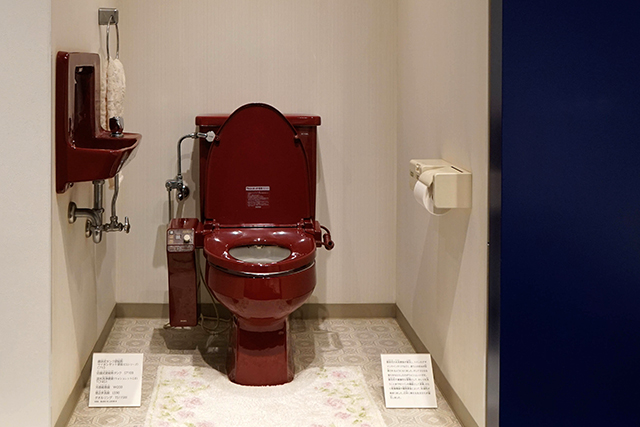
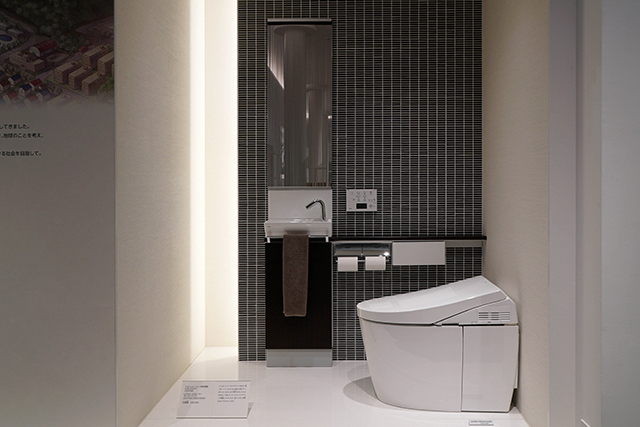
The displays in the next room introduce the evolution of TOTO products by category.
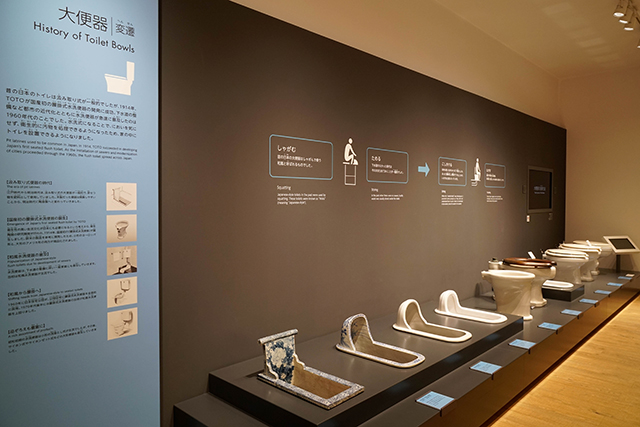
We start here with the history of toilet bowls from the squatting type, storing type when there were no sewers to the modern sitting type.
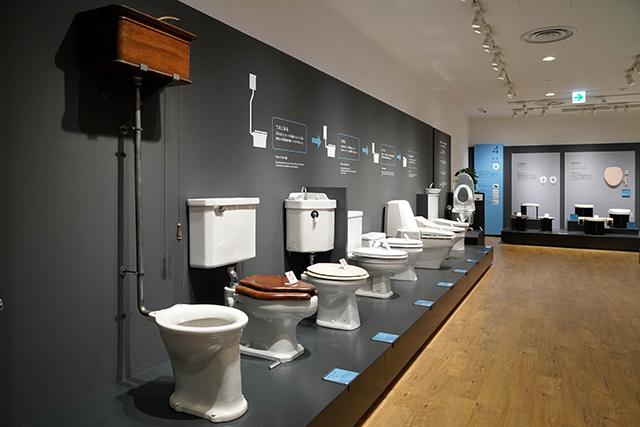
The water-supply tank holds the water used for a flush toilet. This display shows the evolution from ‘high-tank’ models that could be installed in small spaces to more easily installed and maintained ‘low-tank’ models and in recent years, low silhouette models such as the Neorest that streamlined the toilet space.
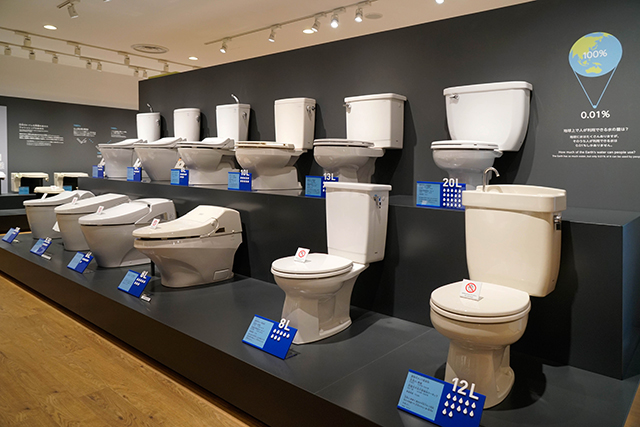
With only 0.01% of the Earth’s water being usable by humans, TOTO developed the CS Series of water-saving toilets in 1976. Each flush started off using 20 litres per flush with new water-saving methods reducing that volume to 6 litres in 2006, 4.8 litres in 2009 and 3.8 litres in 2012.
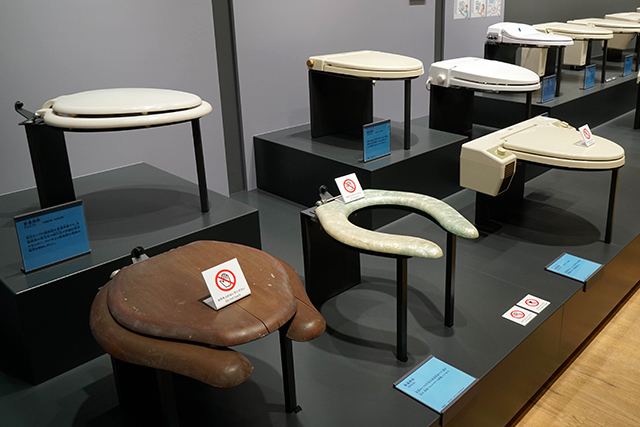
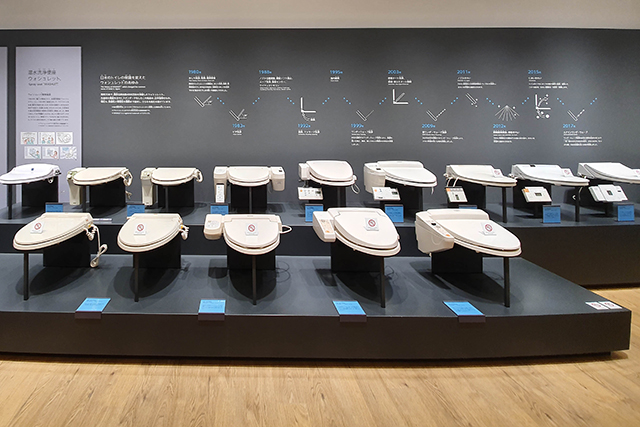
And finally, we move on to the evolution of the toilet seat, which ‘allows users to sit without directly touching the toilet bowl’. Progressing from a wooden toilet seat to plastic toilet seats, those from more recent years have developed to include warm seats (‘warmlet’) and sprays seats (‘washlet’), turning toilet seats into household appliances.
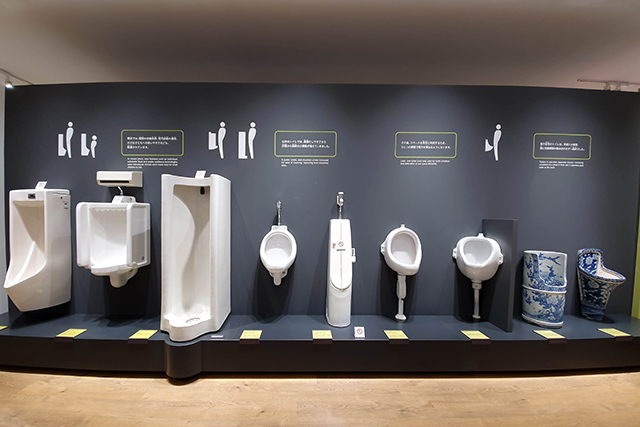
This display shows the evolution of urinals from:
- toilets in old-style Japanese houses commonly consisting of a urinal in front and a Japanese-style toilet at the back, to
- one toilet bowl being used for both urination and defecation to using space efficiently, to
- wall-mounted urinals that replaced floor-mounted ones, in public toilets for ease of cleaning, to
- new featured such as individual automatic flush and waste resistance technologies
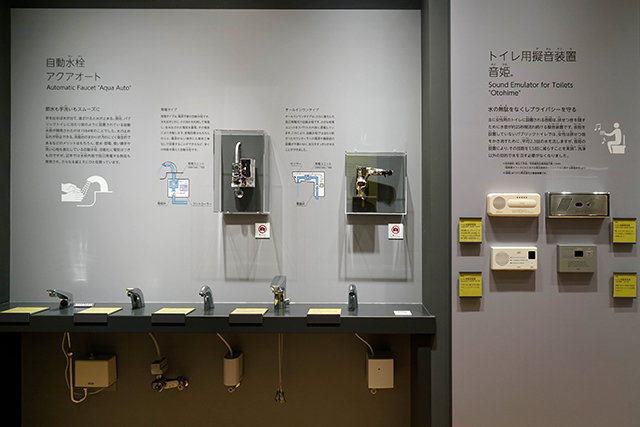
Otohime refers to the sound emulator for toilets, which was ‘born in response to the request of women who didn’t want to make their unpleasant sounds at the time of doing the business heard by other people. The equipment generates sound effects like flushing water’.
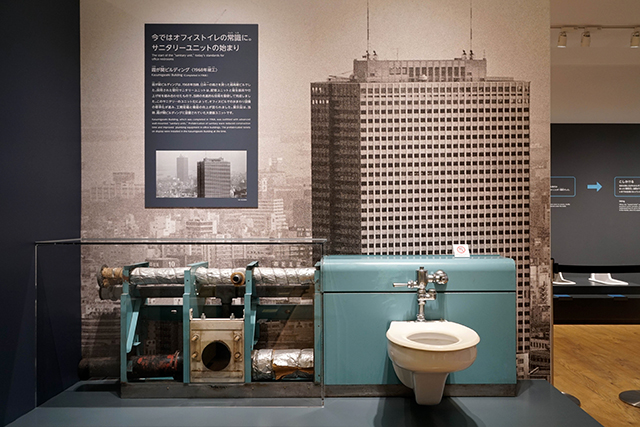
This display shows the start of the ‘sanitary unit’, today’s standards for office restrooms.
Kasumigaseki Building, which was completed in 1968, was outfitted with advanced wall-mounted ‘sanitary units’. Prefabrication of sanitary ware reduced construction time and improved plumbing equipment in office buildings. The prefabricated toilets on display were installed in the Kasumigaseki Building at the time.
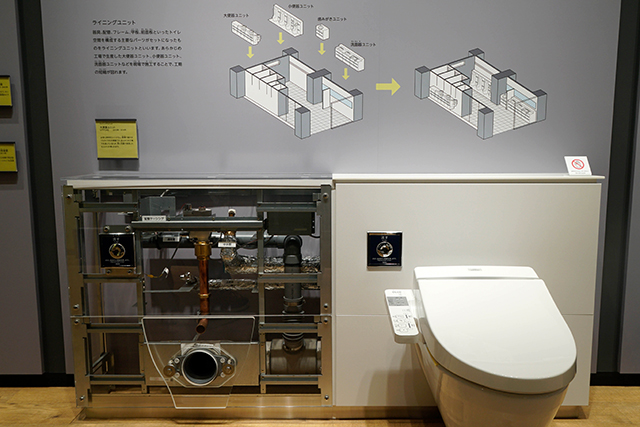
Further along, there’s an example of the ‘sanitary unit’ installed in modern public restrooms.
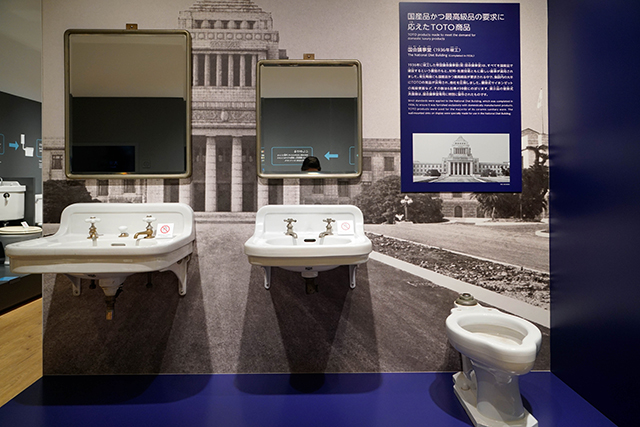
The National Diet Building (completed in 1936) was furnished exclusively with domestically manufactured products with TOTO products used for the majority of its ceramic sanitary ware. The wall-mounted sinks on display were specially made for use in the National Diet Building.
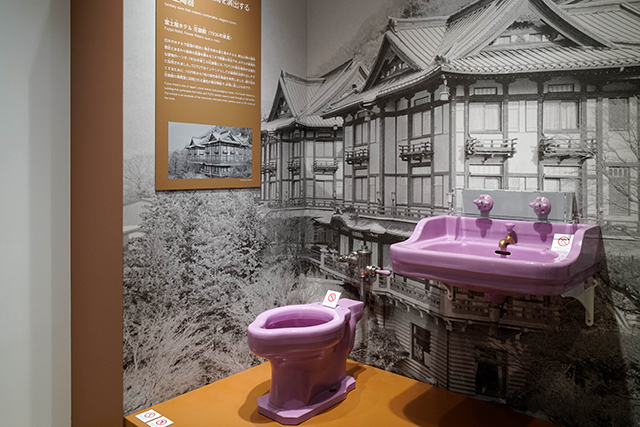
Located in Hakone, Fujiya Hotel is one of Japan’s most historic and prestigious hotels. The Flower Palace is one of the most iconic buildings making up the hotel with TOTO sanitary ware used throughout the facility. The exhibit is an example of the extremely rare pale violet sanitary ware in VIP rooms at the hotel. The description accompanying the exhibit describes it as ‘elegant’.
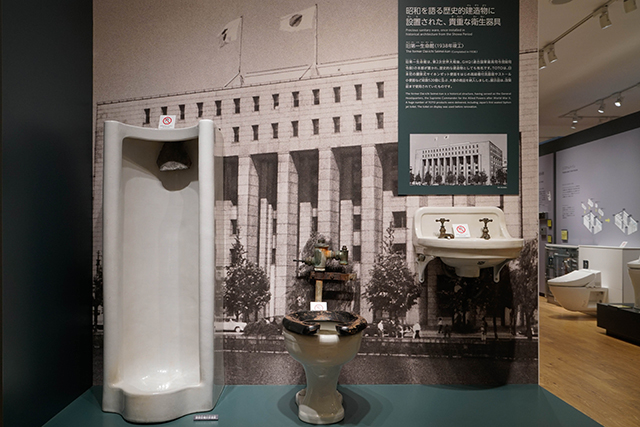
This is a collection of ‘precious sanitary ware’ once installed in the former Dai-ichi Seimei-kan in 1938.
The former Dai-ichi Seimei-kan is a historical structure, having served as the General Headquarters, the Supreme Commander for the Allied Powers after World War. A huge number of TOTO products were delivered, including Japan’s first seated siphon jet toilet. The toilet on display was used before renovation.
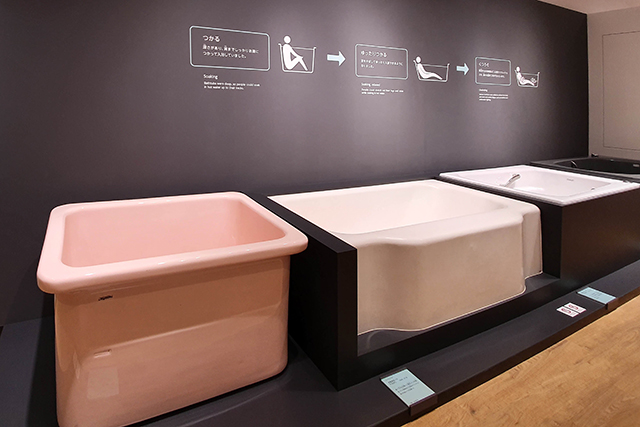
In Japan, bathing started in public facilities, but private baths have gradually found their place in the home. Now, baths are not only for cleaning the body but also used for relaxation.
This exhibit shows the progression in bathtubs from the deep design that allowed people to soak in hot water up to their necks to the longer design that allowed people to stretch out their legs and relax while soaking in hot water and finally to the incorporation of bubbles and underwater lighting to aid people to unwind and soothe fatigue.
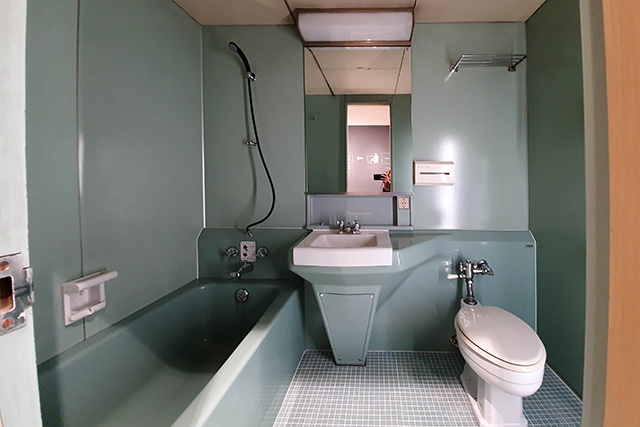
This exhibit shows one of Japan’s first prefabricated bathroom ‘units’ that were developed by TOTO and installed in Hotel New Otani Tōkyō, a skyscraper hotel built to meet the opening date of the 1964 Tōkyō Olympics. Prefabricated bathroom units contributed to the rapid construction of the hotel
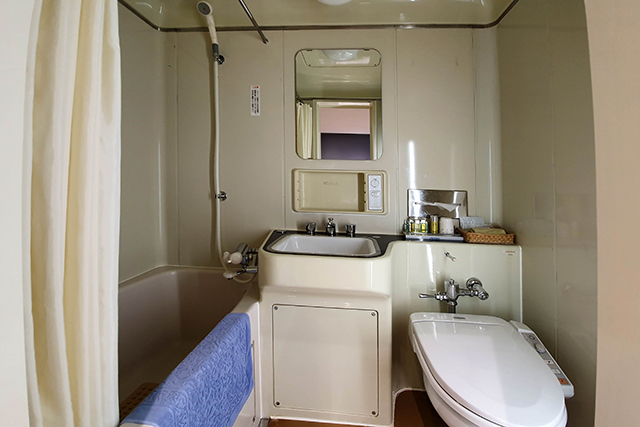
This exhibit shows later versions of prefabricated bathroom units that look much like those still used in many Japanese hotels.
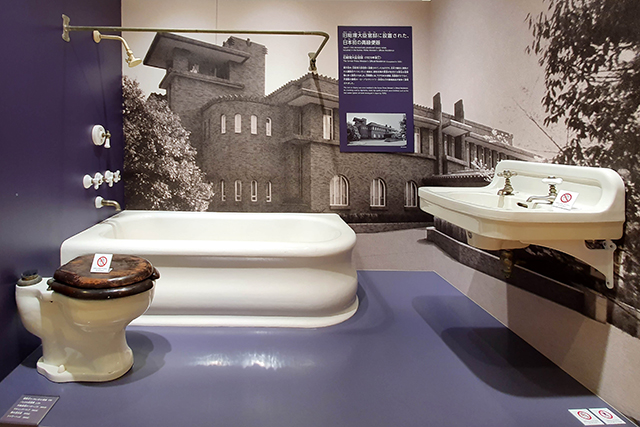
The sanitary ware displayed in this exhibit shows Japan’s first domestically produced luxury toilet installed in the former Prime Minister’s Official residence in 1979. As a building used by dignitaries, many top quality products were installed, such as the first seated siphon jet toilet developed in Japan by TOTO.
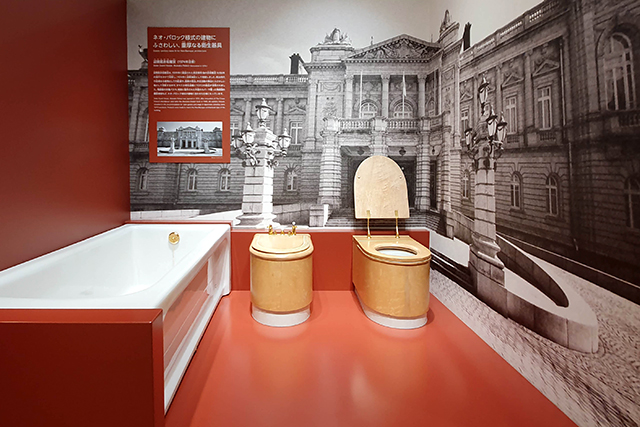 This exhibit shows ‘stately sanitary ware’ designed to fit the Neo-Baroque style of the State Guest House at Akasaka Palace, which was opened in 1974 after a renovation of The Crown Prince’s Residence (and later the Akasaka Estate) built-in 1909. All sanitary fixtures installed in this accommodation for state guests and stage of diplomatic activities were TOTO products.
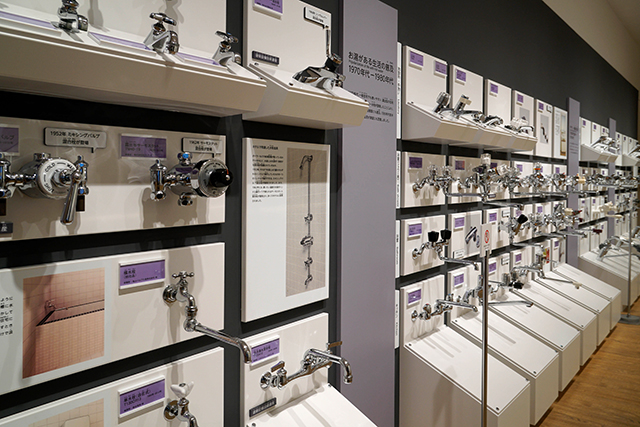
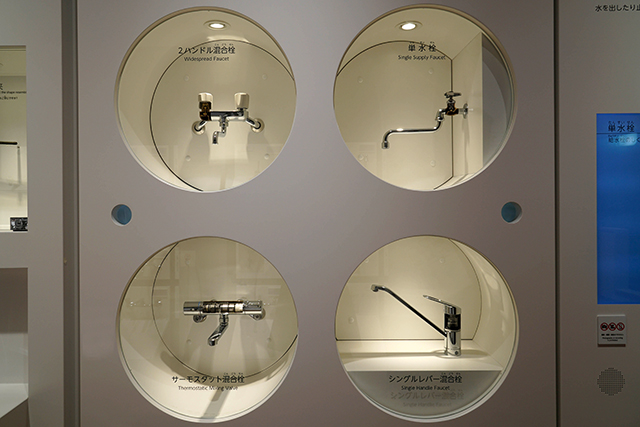
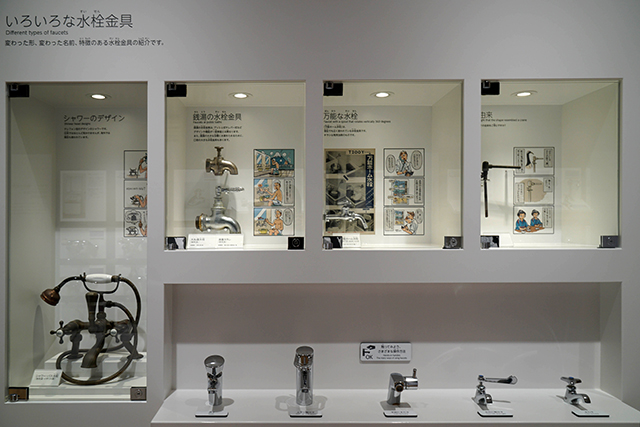 There’s an extensive and detailed display detailing the evolution of faucets.
Plumbing culture took a big step forward with the installation of faucets for private use in residences. They have become easier to use and easier on the environment over the time, as hot water faucets and water-saving faucets hit the market.
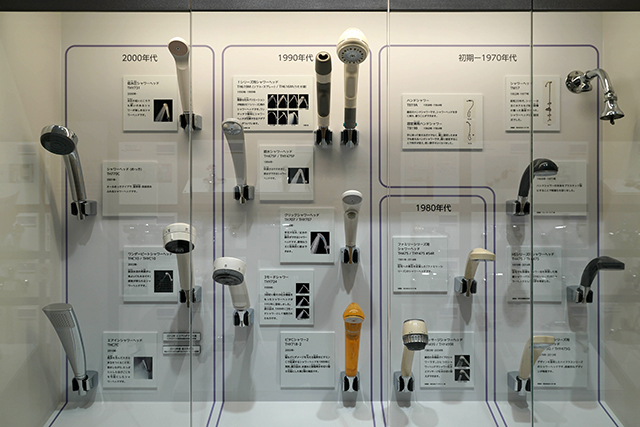
Following on is a smaller selection of showerheads through the ages.
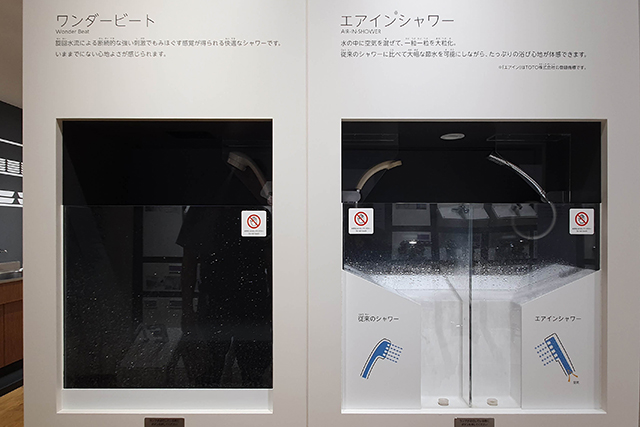
The showerheads culminate in a demonstration of TOTO’s Air-in-Shower technology (right) released in April 2010 and now used in all TOTO showerheads. The technology uses 35% less water than a normal showerhead. Whereas most water-saving showers save water by making the holes on the head smaller to create a finer mist, this technology aerates the water to make the water droplets larger so the shower experience is maintained. On the left is the Wonder Beat, a massage shower head that works by spins on use to deliver a swirling flow of water.
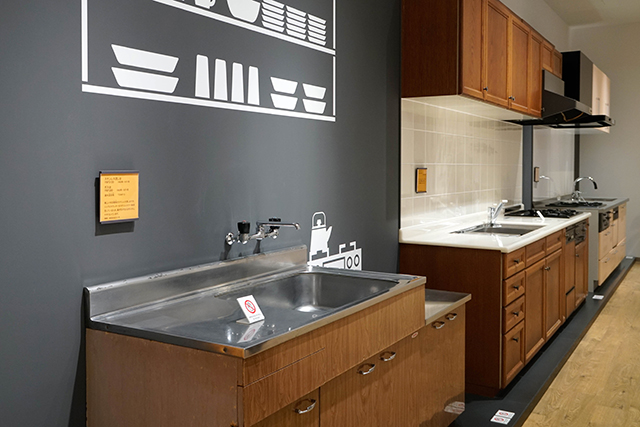
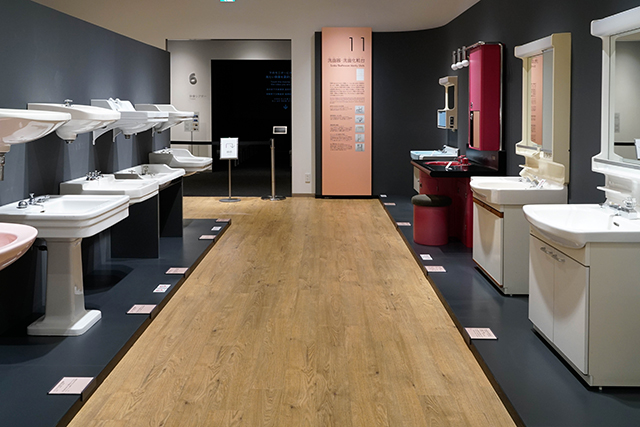
By this point it’s almost 5 pm, and having spent the entire time in TOTO Museum on our feet, we were dead set on catching the bus back to the train station, so we whisk past the smaller kitchen, sink and bathroom vanity units.
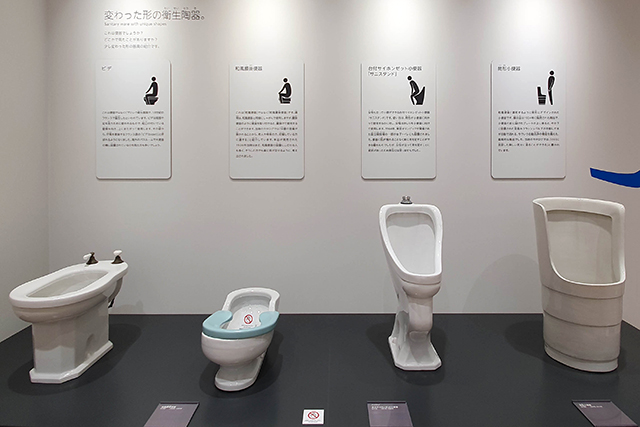
At the end, there’s a display of ‘sanitary ware with unique shapes’. From left to right: an early bidet (washing toilet), a Japanese style toilet (where you straddle the seat backwards), a ‘sanistand’ (a modified squat toilet where you hover in the air) and a simplified urinal (essentially a giant bowl).
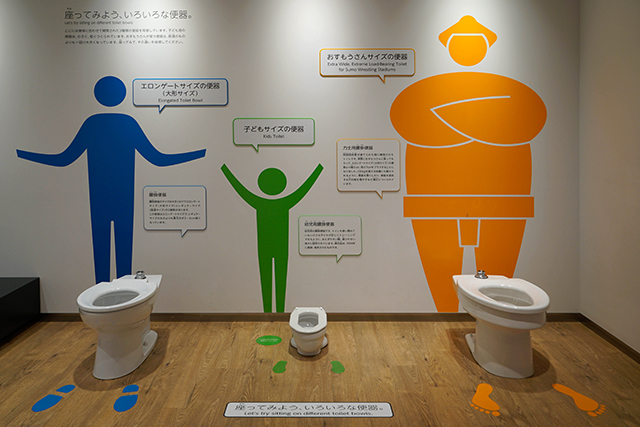
Finally, this display encourages visitors to try toilets in different sizes with the standard adult toilet (425 x 370 mm), the children’s toilet and sumo toilet. Toilets for sumo wrestlers are made larger than regular toilets, with an elongated size (height +7 cm, width +5 cm, thickness +2 cm).
Exhibit Room 3 — Global Gallery
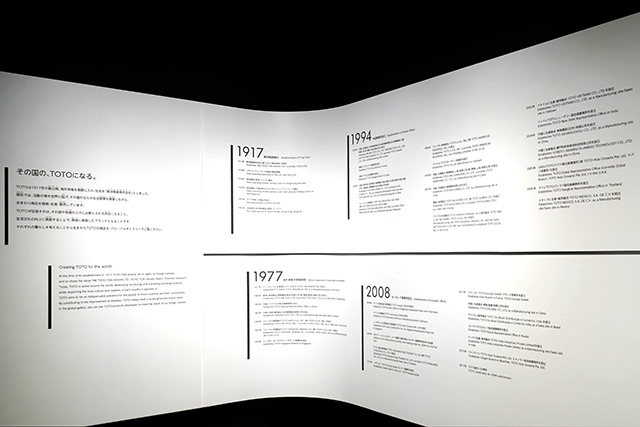
Founded with the view of reaching international markets in 1917, TOTO achieved this aim in 1977 with the establishment of a manufacturing site in Indonesia followed by sales offices in Hong Kong and China.
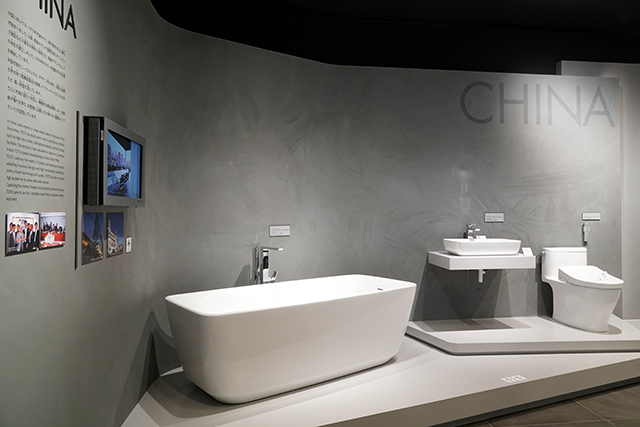
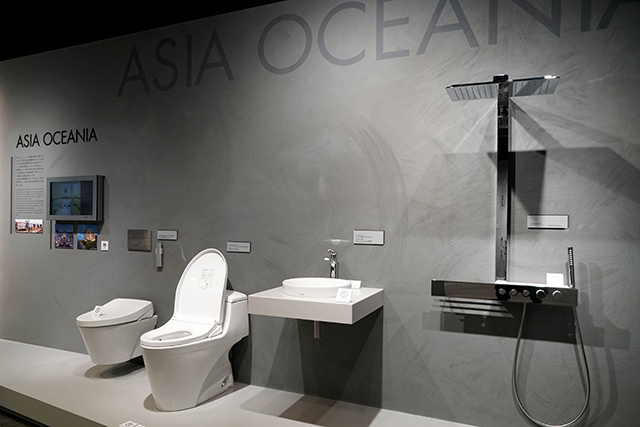
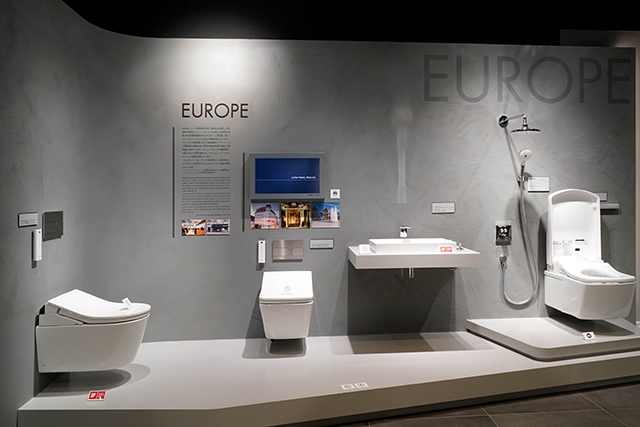
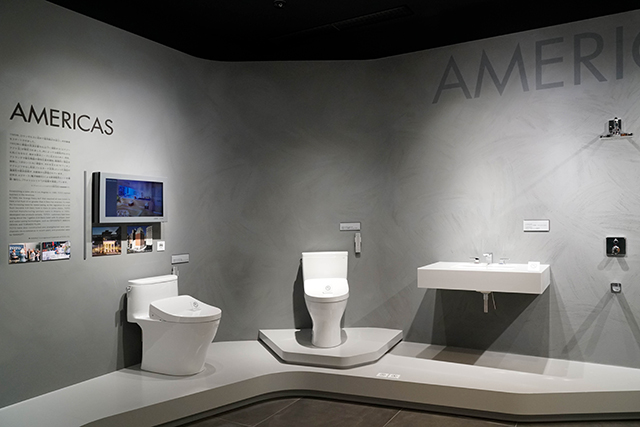
This space displays the TOTO products sold outside Japan by region.
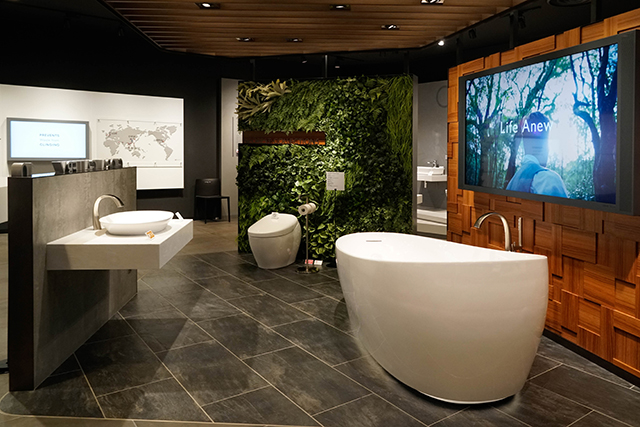
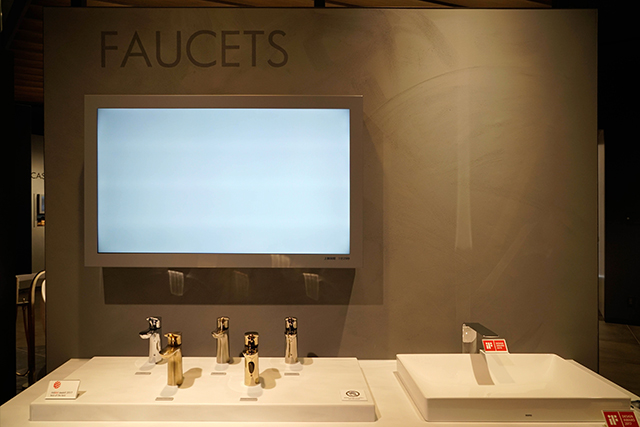
Front and centre is their Neorest collection along with the faucets that are both sold internationally.
Public Bathroom
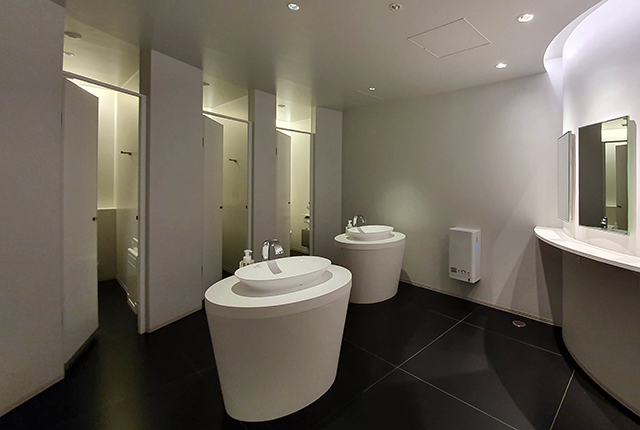
It would be remiss to visit the TOTO Museum and not use their bathroom, which is fitted with their top-of-the-line award-winning Neorest 750H. On entering the cubicle, the closure of the door signals the toilet lid to open automatically and reveal a toilet bowl with a sterilising UV light under the rim (Actilight) and an electrolysed water mist (Ewater). As one can expect, the toilet is pristine with the help of the CeFiONtect glaze and the customizability of the Washlet experience is impeccable.
We later find out that the toilet retails for US$10.00,400, making it the fanciest and expensive we’ve used and five times more expensive than any chair we’ve sat on.
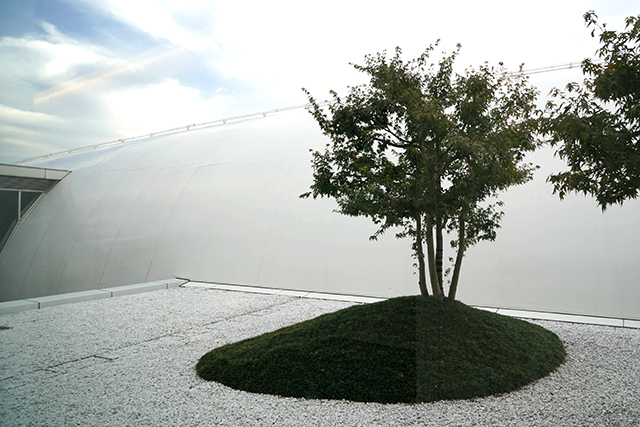
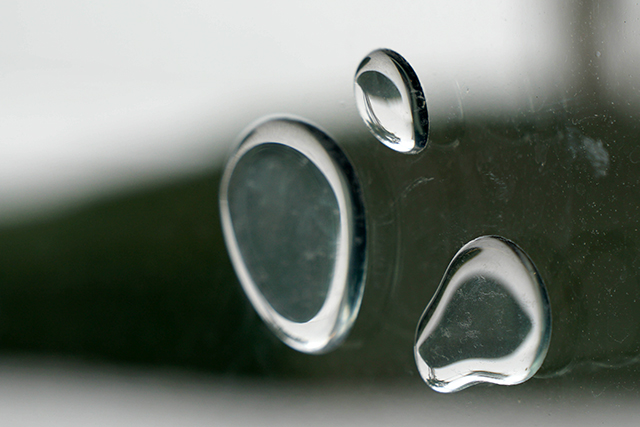
A tranquil spot with a rock garden and a few trees occupy an internal courtyard opposite the bathroom.
Gift Shop
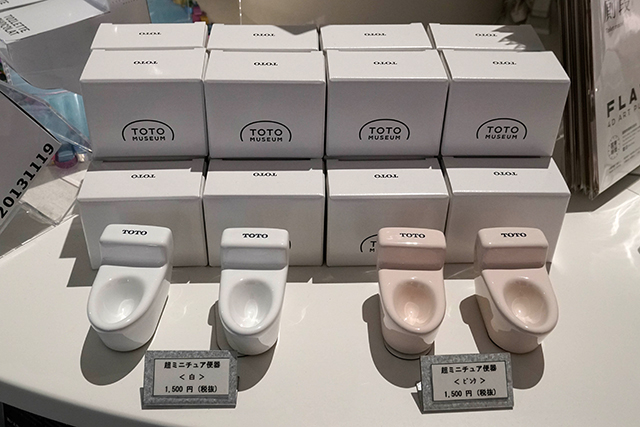
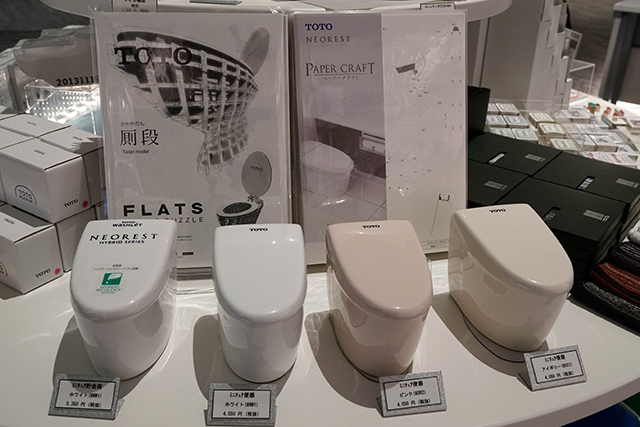
I had high hopes that their gift shop would sell toilet-themed charms. Unfortunately, the toilet shaped ‘paperweights’ start at 1,500 and go up to 4000 for their modern toilets and 5360 for their Neorest. They’re not exactly prices one spends on for a novelty souvenir.
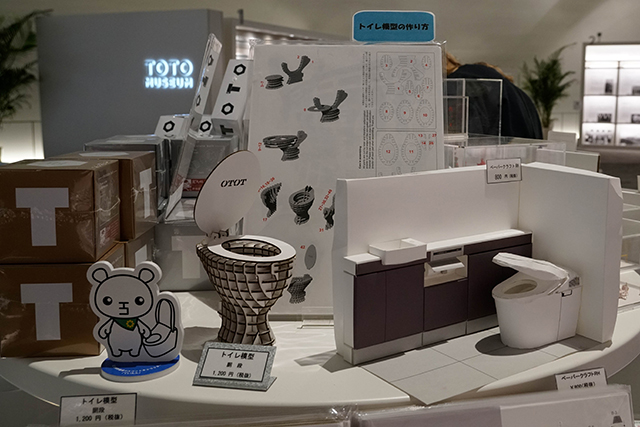
There are also paper models of their toilet and bathroom.
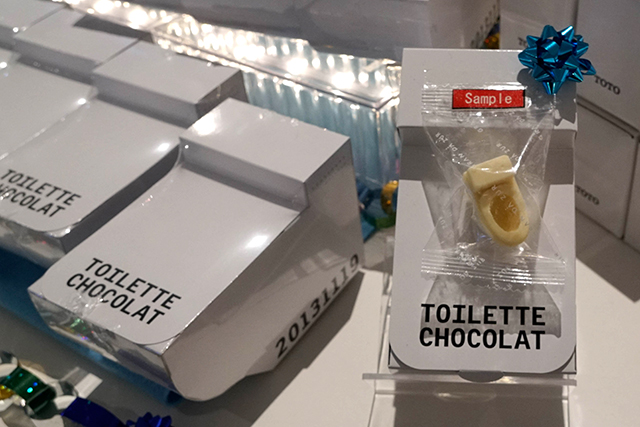
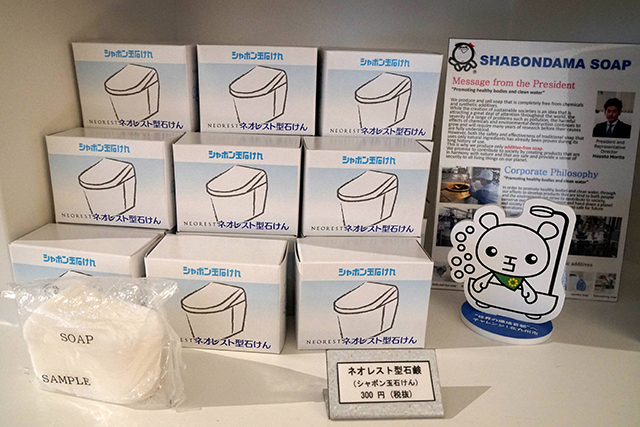 In the more affordable section, they had toilet shaped chocolates and soap for a more affordable price.
Kokura Loop Bus
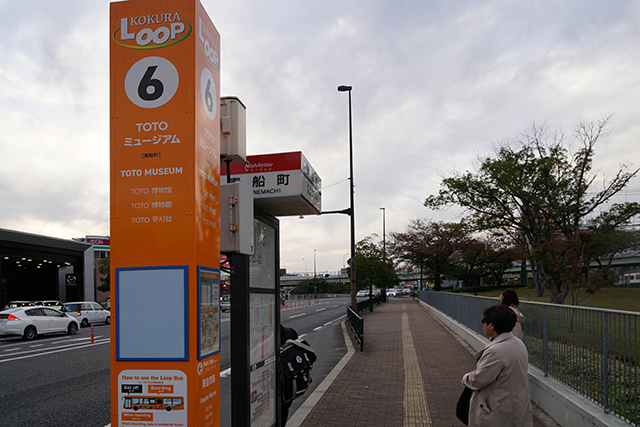
The TOTO Museum is located at Stop 6 of the Kokua Loop Bus.
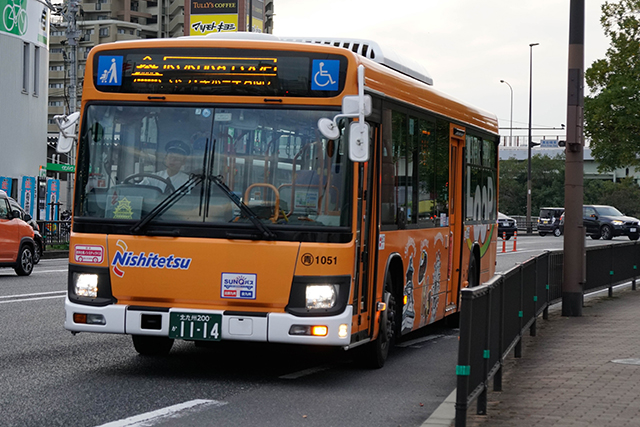
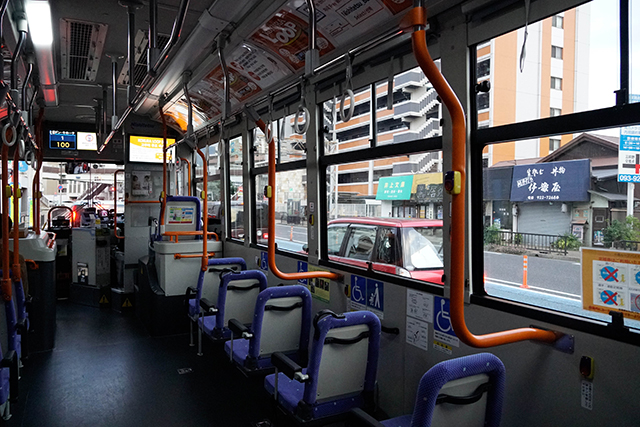
We arrive at the bus stop with 2 minutes ahead of the scheduled departure time, only to find the bus is running late!
Tsujiri
辻利, 1 Chome-2-11 Uomachi, Kokurakita Ward, Kitakyūshū, Fukuoka 802-0006, Japan
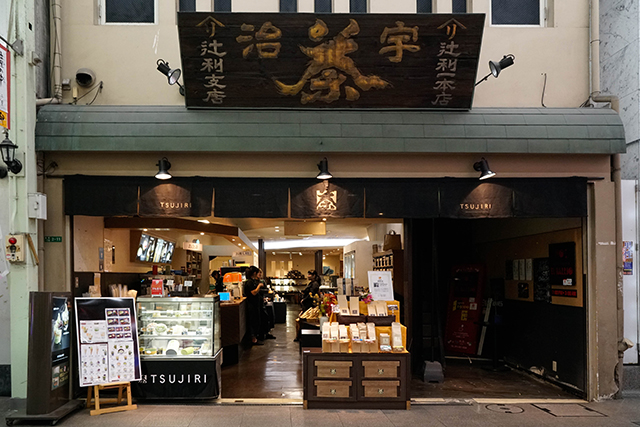
Heading back to the area near the station we make our way to the Tsujiri Kyomachi Main Store for some afternoon tea. This is the location of the first store set up in Kyūshū to sell Uji tea (in Kyōto) in 1923.
Tsujiri was founded in 1860 by Riemon Tsuji who was renowned for his spirit of ‘yuwa’, meaning ‘continue to innovate and sustain the tradition’. His statue was built in Kyōto, Japan to honour his contribution to the Japanese tea industry. Mr Tsuji has refined the cultivation of gyokuro (the highest grade of Japanese green tea) and his method is still being used to this day. He is also the inventor of the tea box (‘chabitsu’) that preserves the longevity and freshness of the tea leaves during transportation, making fresh tea from Kyōto available to other Japanese cities a century ago..
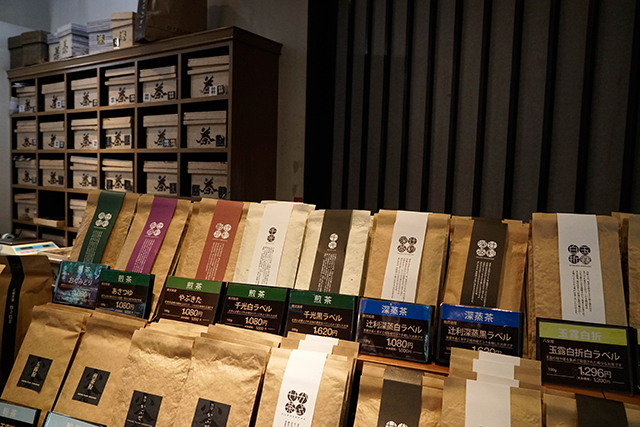
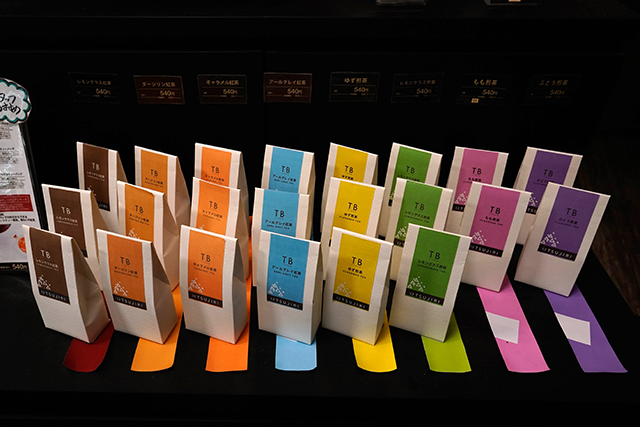
There’s a selection of various green teas as well as flavoured teas.
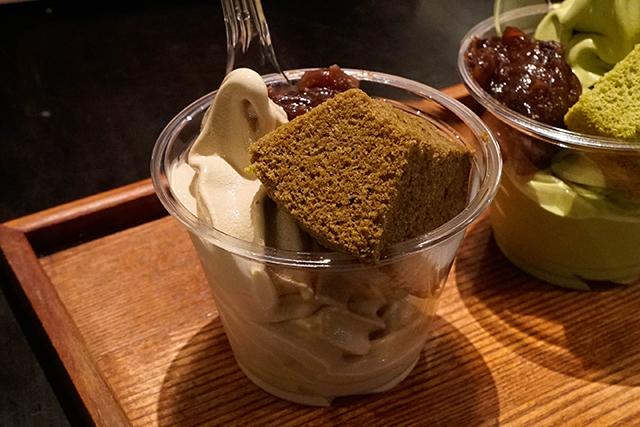
We sit down at the cafe with this Hōjicha Parfait (¥580) which has a delicious nutty hōjicha flavour and a smooth and creamy texture, while chiffon added a firmer and bolder hōjicha flavour and red bean added sweetness.
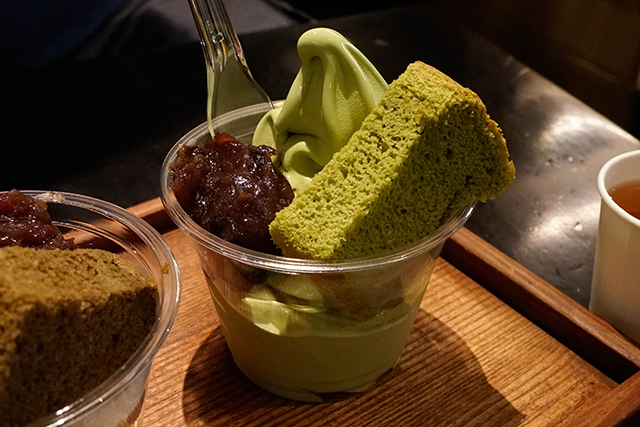
As D’s a fan of hōjicha, I try the Matcha Parfait (¥580), which had its typical vegetal flavour that was well mellowed by the sweetness of the red bean but lacked the moreish flavour of the hōjicha.
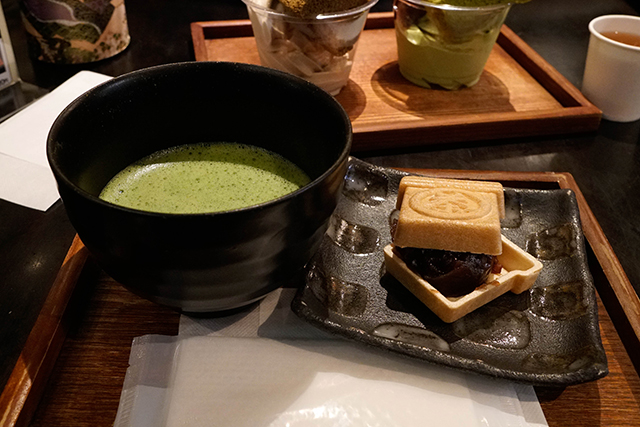
Finally, this is a matcha and wafer set (¥530), with the matcha having an enjoyably crisp flavour without grittiness or bitterness. The red bean wafer formed the shape of a tea box, with its crisp texture and toasty flavour contrasting well with the red paste which was less chunky than in the parfait.
Overall, we enjoyed the quality sweets and matcha at Tsujiri along with the complementary mugicha.
Kokura Station
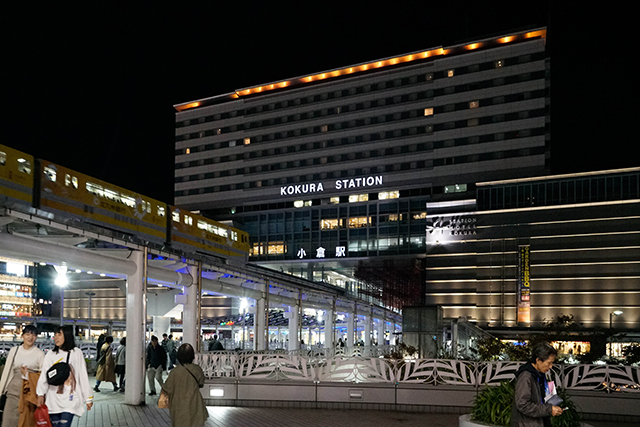
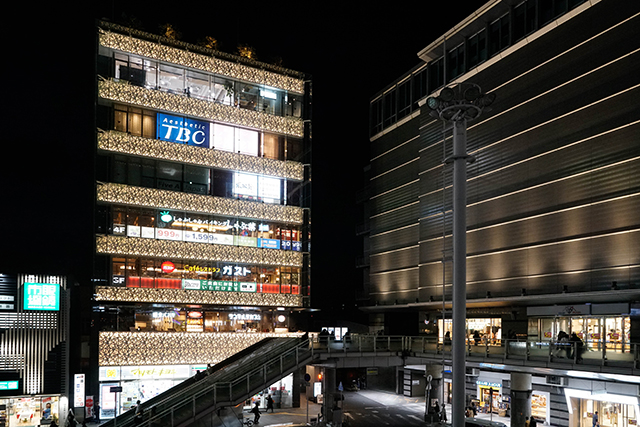
Heading back to Kokura Station, we have a quick look at the shops before deciding to head back to Hakata.
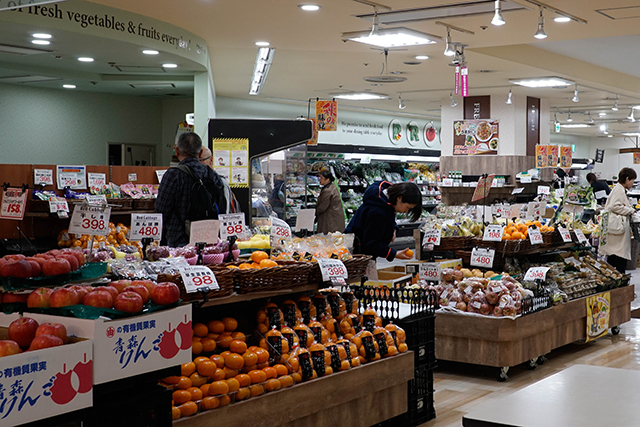
But not before popping into a supermarket. We enjoy the more suburban — and less metro — feel of these supermarkets compared to the ones in Tōkyō.
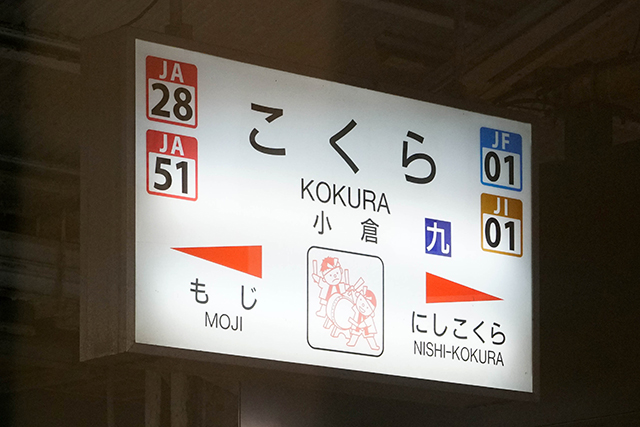
Fukuoka
Hakata Station
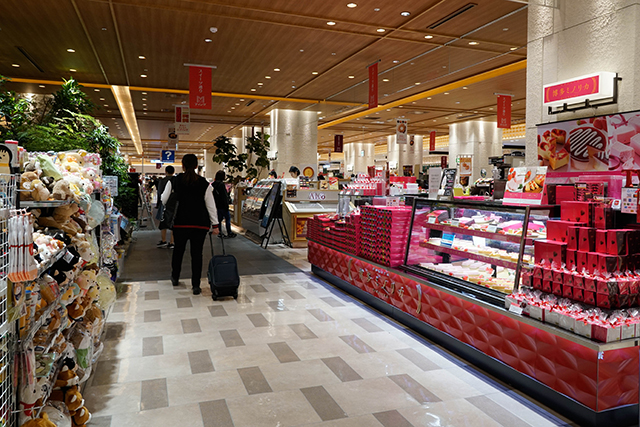
Back at Hakata Station, we take a walk around an extensive omiyage section.
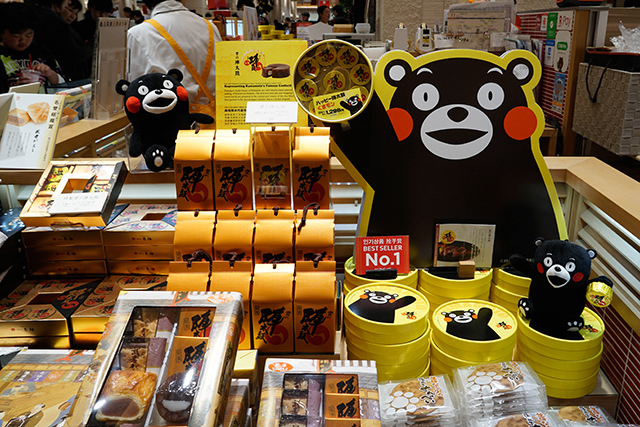
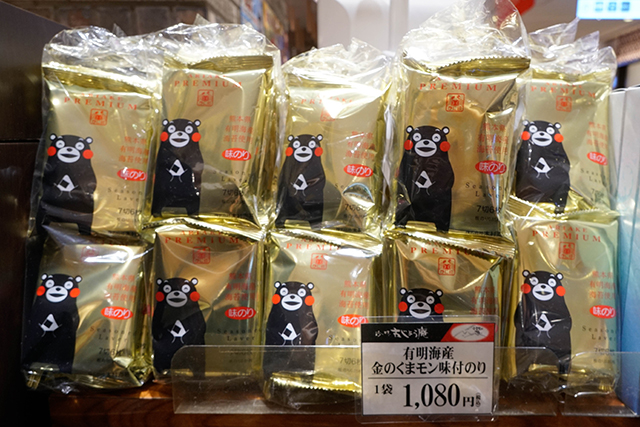
There’s various edible omiyage from Kumamoto featuring Kumamon on its packaging.
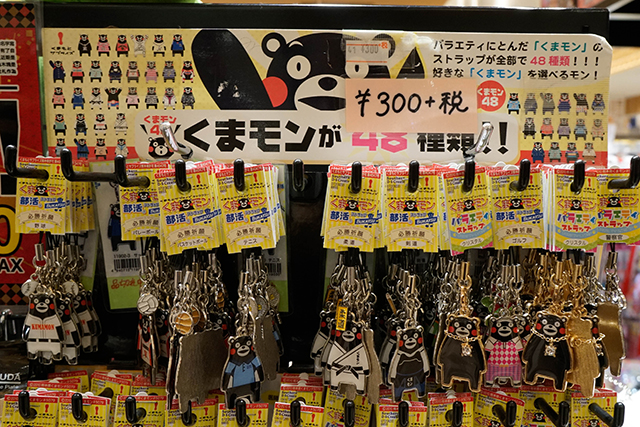
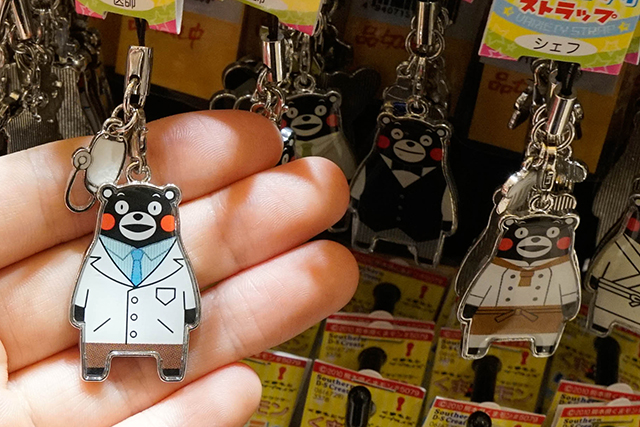
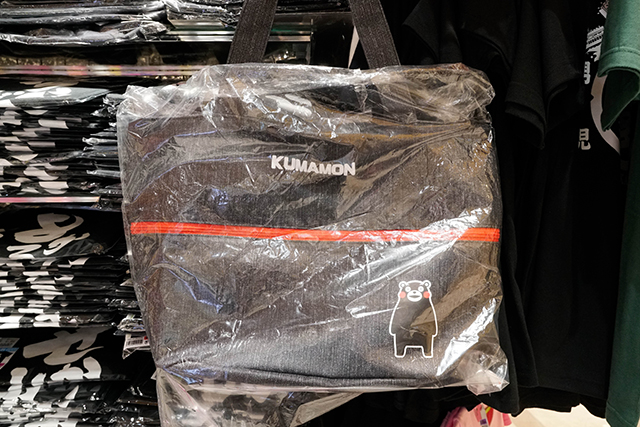
Of course, there’s a store selling trinkets and other non-edible Kumamon merchandise.
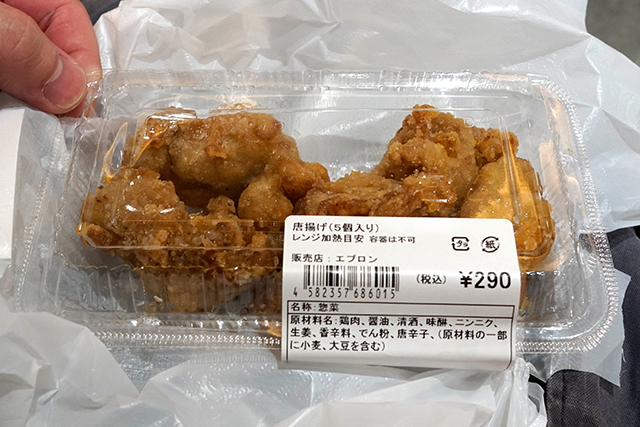
We catch the supermarket having a 50% sale and D picks up some fried chicken (a recurring theme on this trip!), which he enjoys.
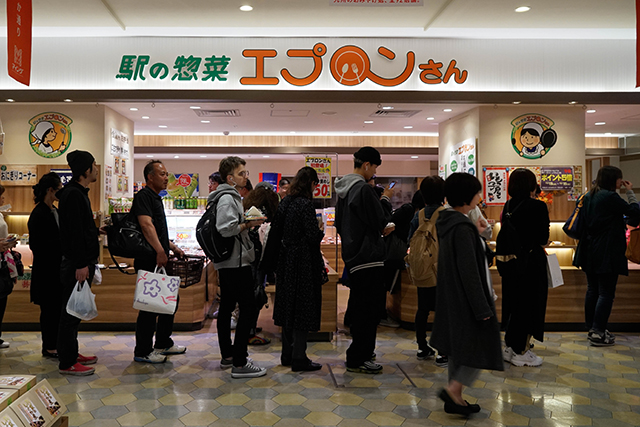
One shop down, there’s a super long queue of people clearing out bento that is also on sale for half price.
Mikadukiya Croissant
三日月屋カフェ 博多駅店, 中央街 デイトスB1, Hakata, Fukuoka, 816-0831 Japan
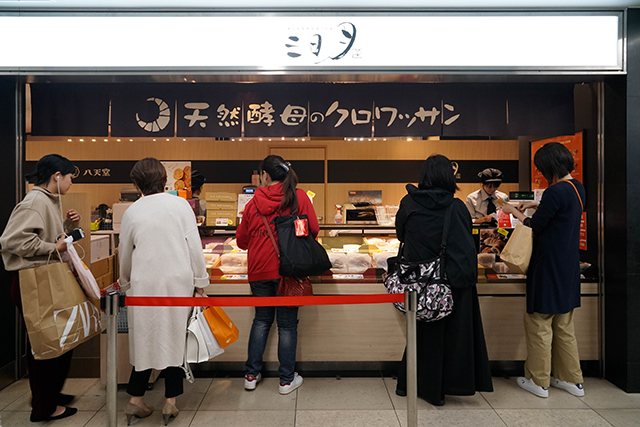
Not up for a meal, we pick up a few baked goods from Mikadukiya Croissant, a bakery specialising in flavoured croissants.
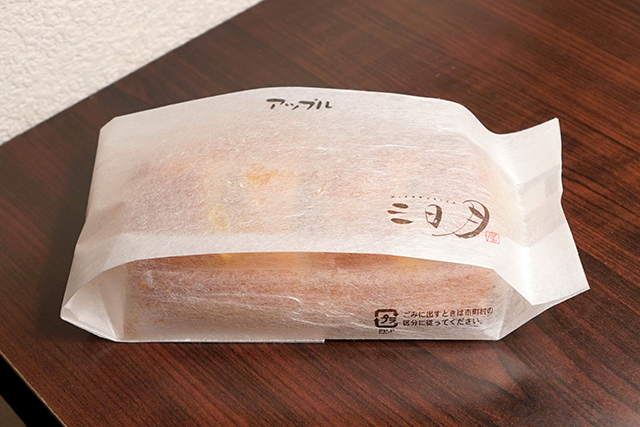
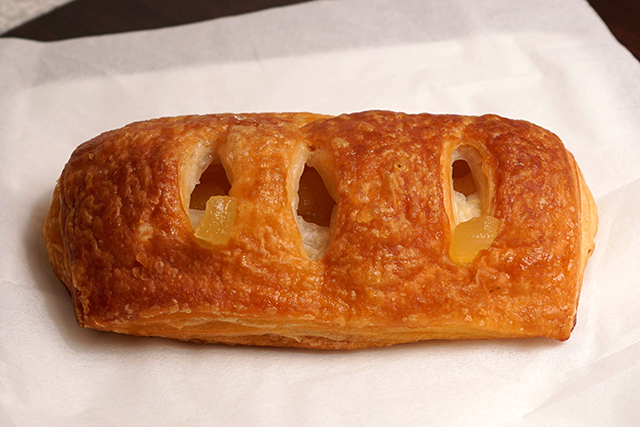
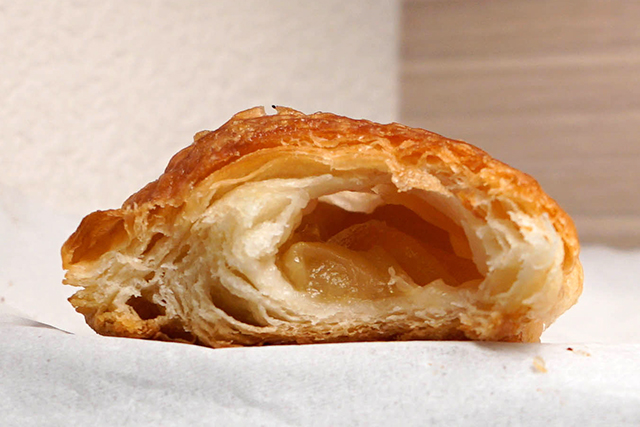
This is the Apple, which has the perfect pastry with balanced crispiness and chewiness with a healthy Maillard flavour without being crumbly. The apple innards were gently sweet and fresh with just enough a hint of cinnamon, and with the impeccable pastry, we don’t even mind the lack of bite in the apple.
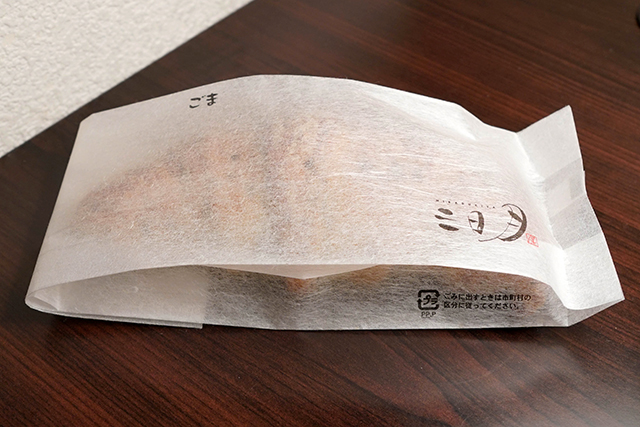
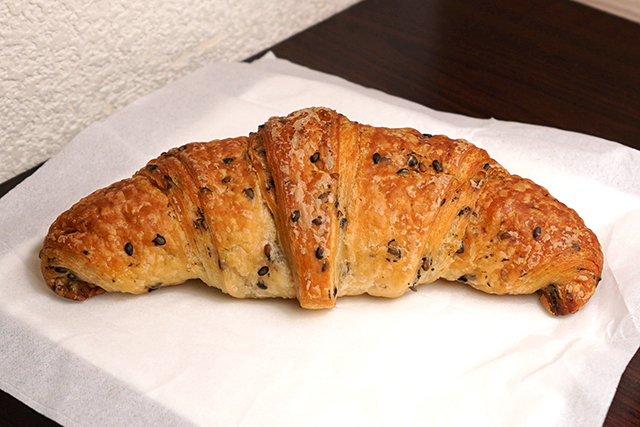
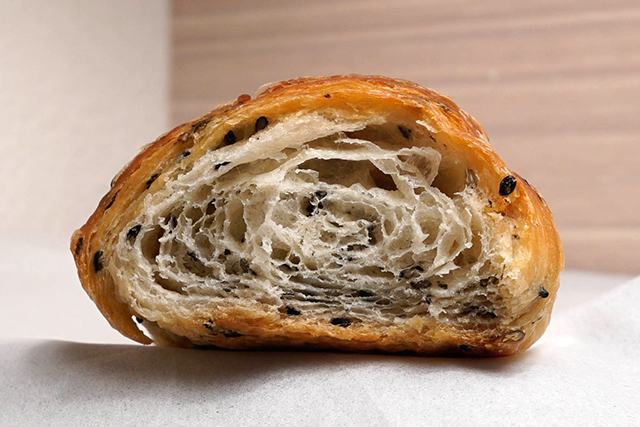
We’re fans of black sesame and this is the Sesame. The black sesame gave the croissant an initial nuttiness, but after the first bite, the flavour faded and begins to recall a (tasty) multi-grain roll.
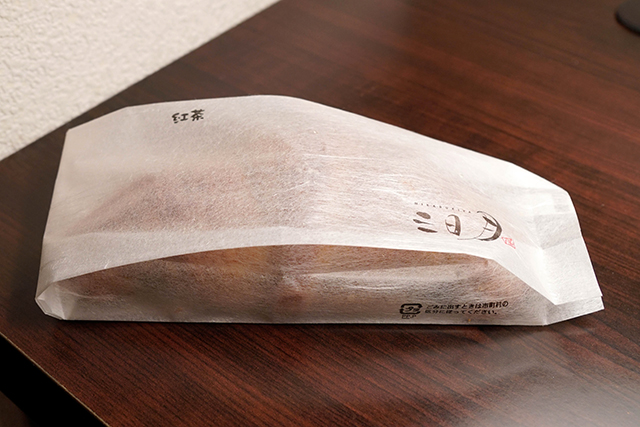
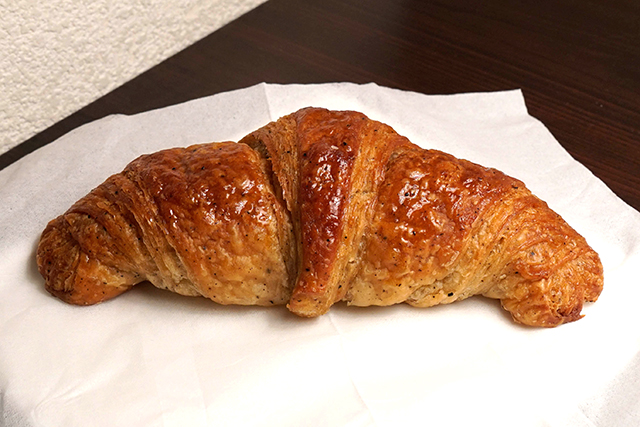
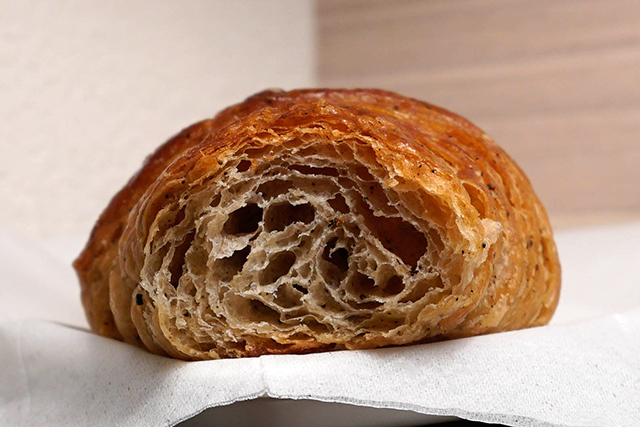
This one is Tea and smells and tastes like an Earl Grey tea with hints of citrus that came through subtly throughout each bite while the croissant is buttery and flaky. This is one classy croissant.
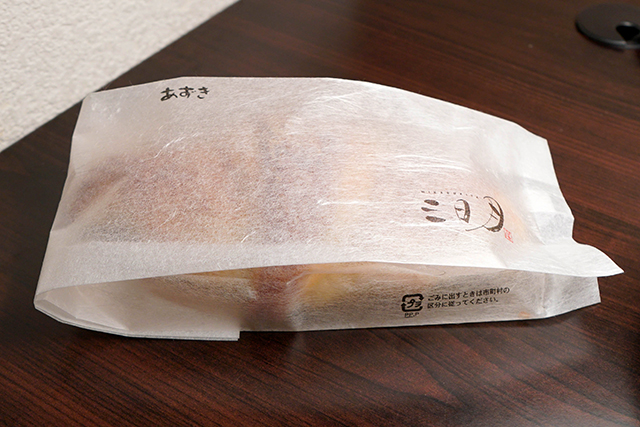
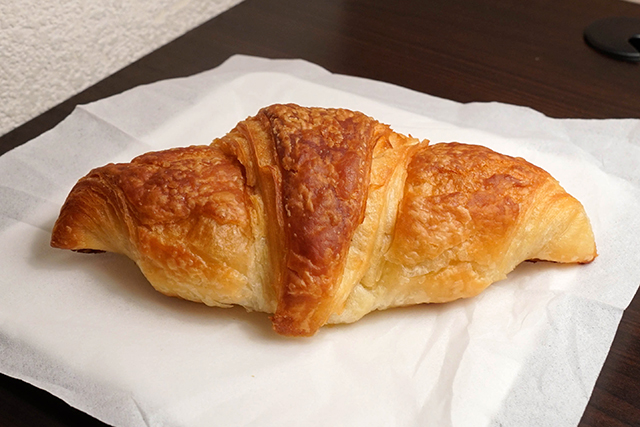
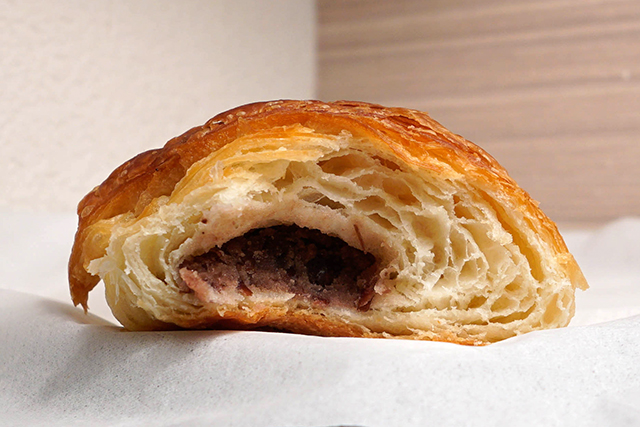
And finally, this is the Azuki, with the anko providing a heavier texture that contrasts with the lightness of the croissant.
Hotel Sunline Fukuoka
ホテルサンライン福岡博多駅前, 4 Chome-11-18 Hakata Ekimae, Hakata, Fukuoka, 812-0011, Japan
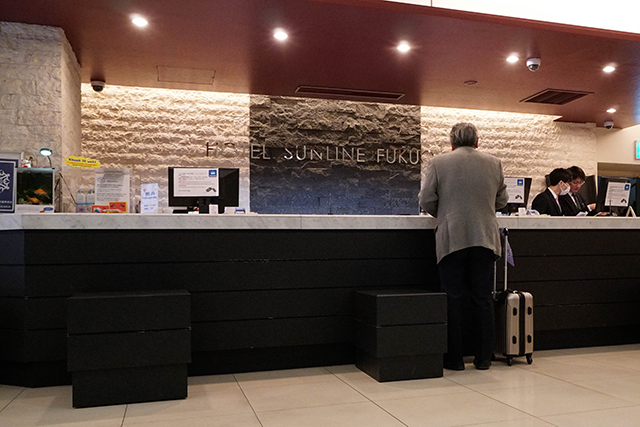
We return to Hotel Sunline Fukuoka for a second stay in Fukuoka.
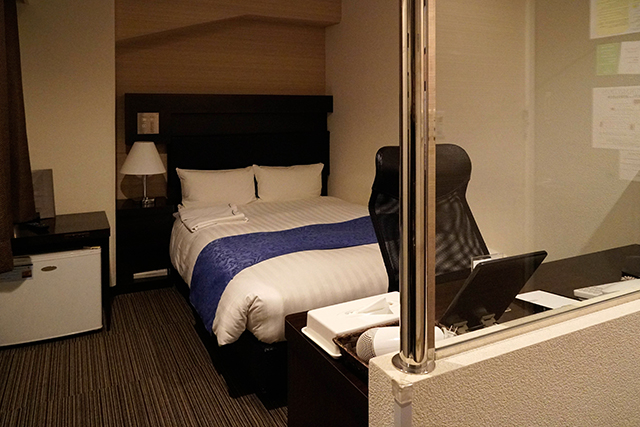
This time, we’re more pleased with our room. There were no stairs to lug our suitcase up after getting out of the lift and the room was more spacious with a firm but comfortable bed. While the accessible areas were clean and tidy, thick layers of dust did cover the walls further up, which was unsightly to see when lying in bed.
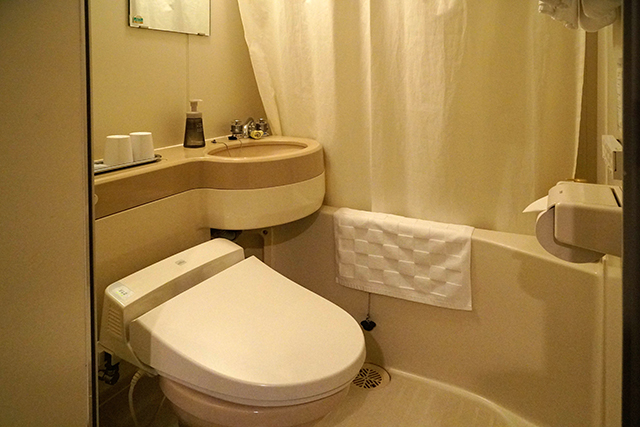
Bathrooms are much of a muchness in old hotels and this one is no different. It has the signature beige, although we did enjoy the extra space in the room as the toilet was separated from the bed by the entryway as it was the end room in a corridor.
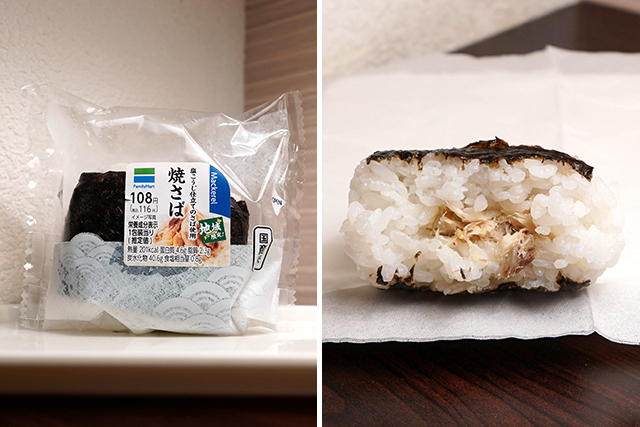
Tired from our travels, we have a very simple dinner of the croissants as well as some protein from onigiri. This is the mackerel onigiri, which had an enjoyable flaky, savoury flavour.
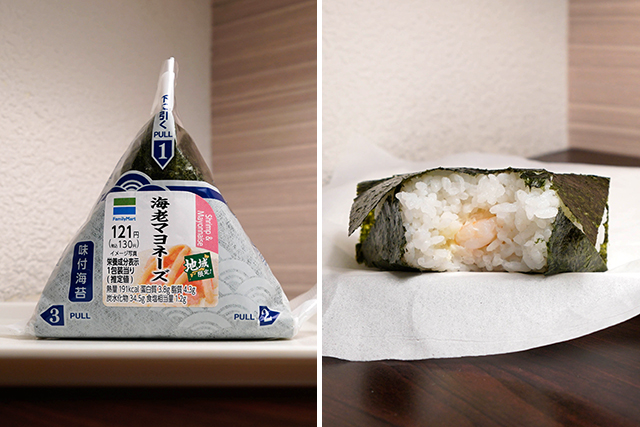
And D discovered he’s a fan of shrimp and mayonnaise, which had two prawns inside each one with a manageable amount of mayonnaise.
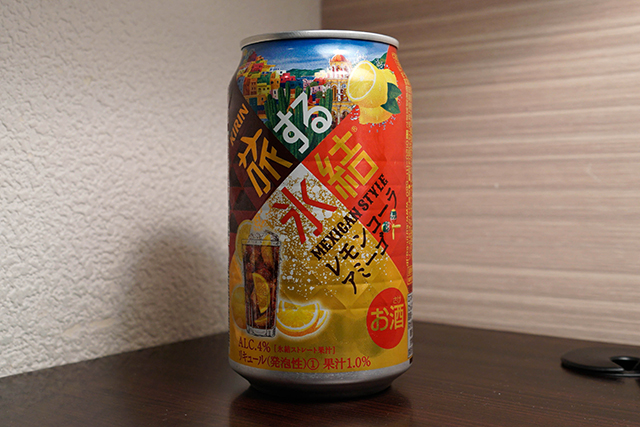
We picked up some chūhai from the supermarket in Kokura that follow on from the Kirin Traveling Hyoketsu series that we enjoyed on previous trips (starting with the Haochi Litchi representing Hong Kong).
This one here is Mexican Style, described as a ‘lemon cola amigo’ with the design on the packaging inspired by the colourful houses in Mexico and the flavour drawn from a cola one might order on a busy street corner in Mexico. Upon tasting, the zesty lemon came through tart and dominates the cola in the background. We’d prefer a stronger cola flavour for a more refreshing beverage.
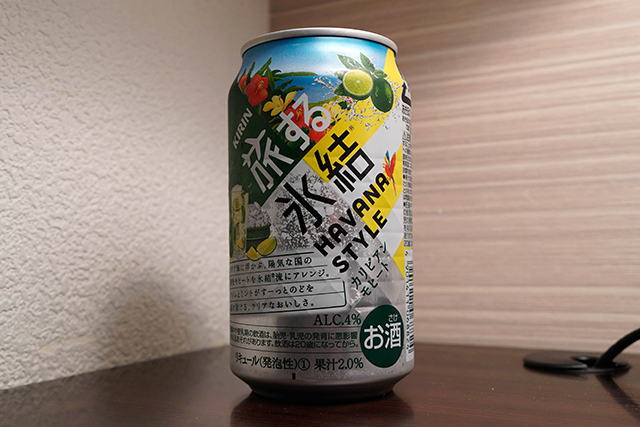
This is the Havana Style, described as a ‘Carribean mojito’ with the design inspired by the picturesque views in the region and tasting of lime and mint. Upon tasting, both the lime and mint came through in equal measure, making for a refreshing beverage when ice cold.
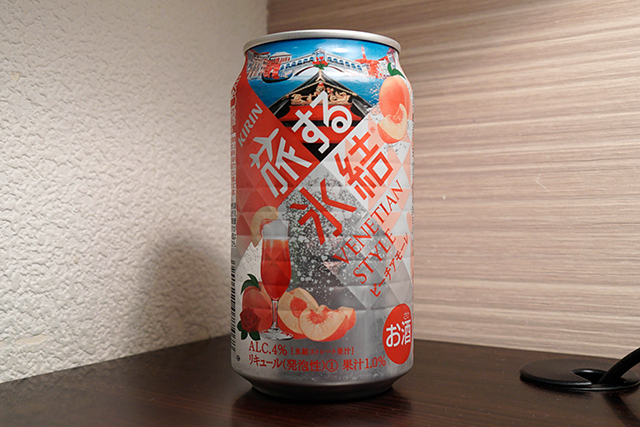
Finally, this is the Venetian Style, described as ‘peach amore’ with the design on the packaging inspired by Venetian canals and the flavour drawing on a peach bellini to create a fruity taste that reminds one of their first love. Upon tasting, the peach has the clear sweetness of a white-fleshed peach with an enjoyable fruity sweetness.
Kokura was Day 4 of 15 in this Japan 2019 trip around Kyūshū. Day 5 saw us visiting Moji and Shimonoseki.