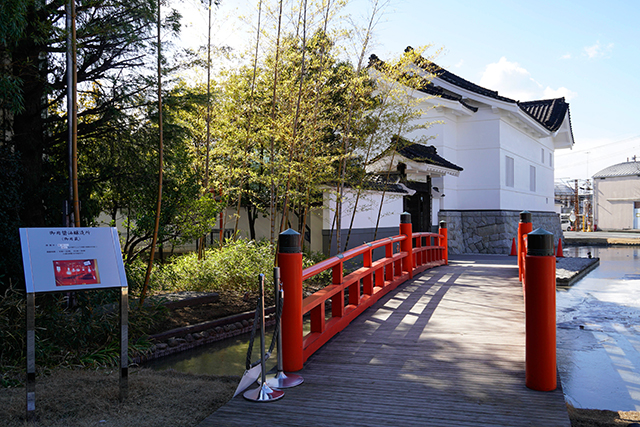
The brand Kikkoman is synonymous with quality soy sauce both in Japan and internationally. We spend a morning visiting the Kikkoman Soy Sauce Museum in Noda, the city of soy sauce, in Chiba prefecture to learn more about this popular seasoning before returning to Tōkyō Sky Tree in the afternoon.
Tōkyō – Asakusa
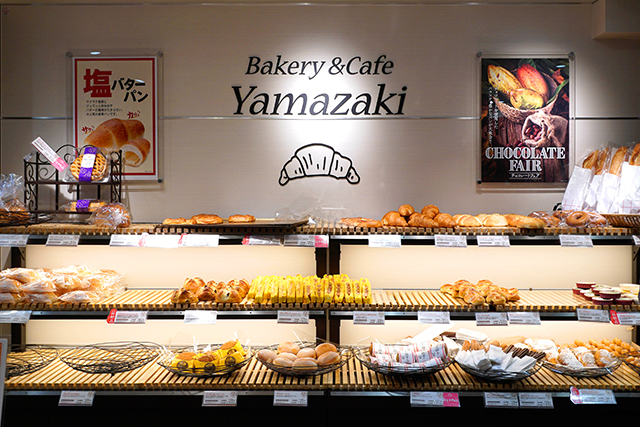
We head to Yamazaki Bakery & Cafe for some quick breakfast items.
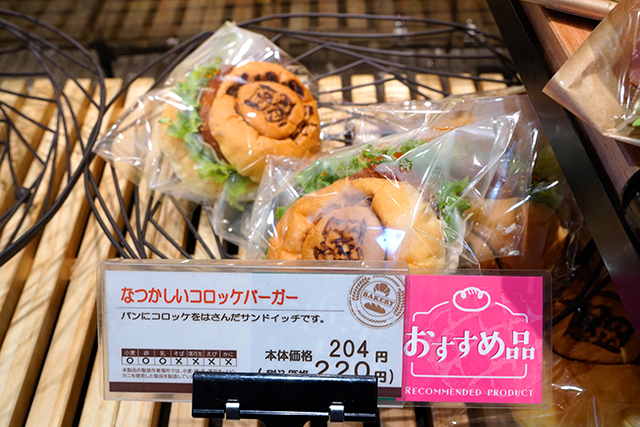
D gets the Natsukashi Croquette Burger (¥220), a potato croquette with lettuce and tonkatsu sauce sandwiched between buns stamped with the famed lantern of Kaminarimon at Sensoji.
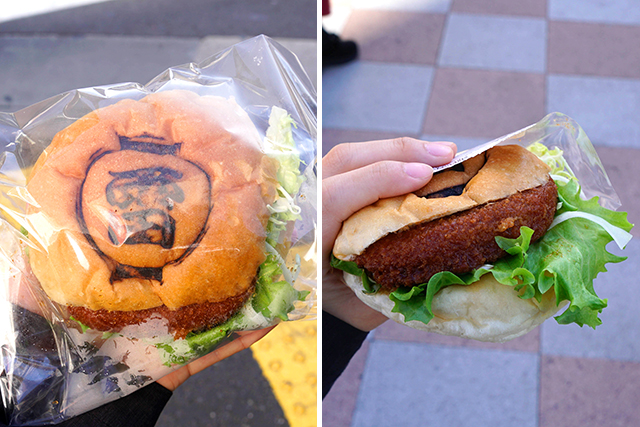
The burger is tasty comfort food (definitely, natsukashi as promised) with the soft buns, the crisp skin and soft innards of the croquette and the freshness of the lettuce.
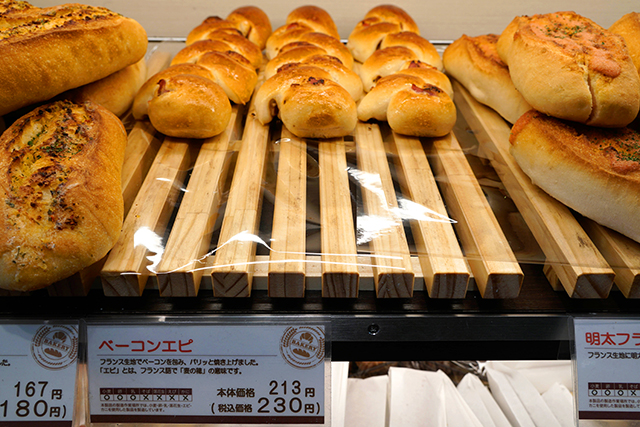
This is the Bacon Epi (¥230), essentially crispy French bread wrapped around bacon to resemble a ‘wheat stalk’ (epi).
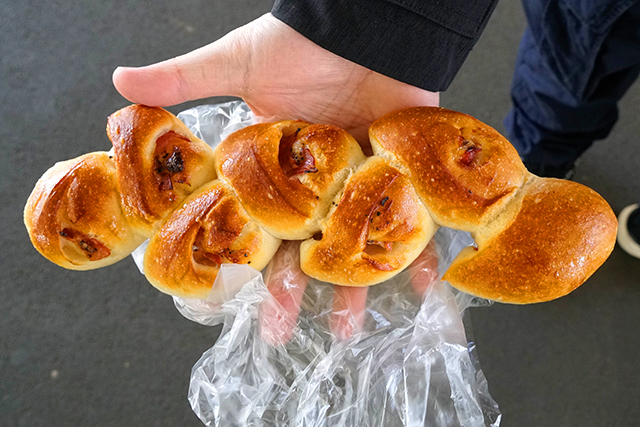
We find this one a bit dry, without the softness that we usually associate with bread from Japan.
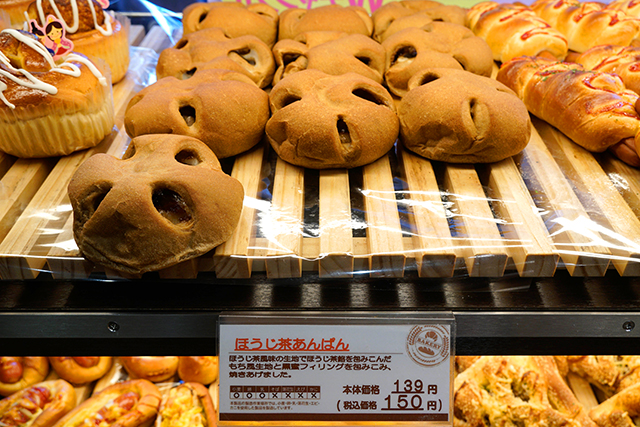
This is a Hōjicha An Pan (¥150), a houjicha flavoured bun with a filling of houjicha and kuromitsu jam wrapped in mochi.
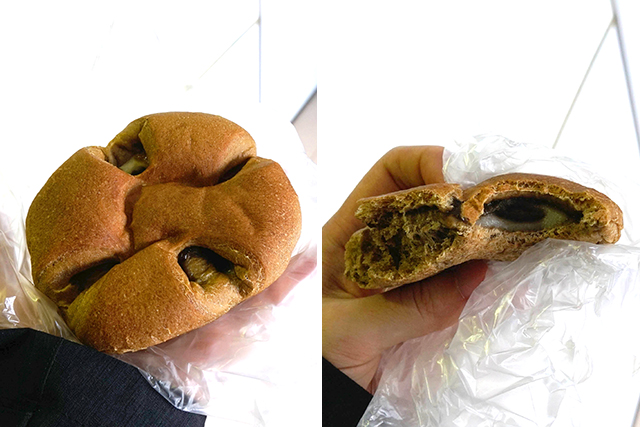
We’ve not encountered this elsewhere and it’s a delight with a prominent houjicha flavour and a soft and squishy centre.
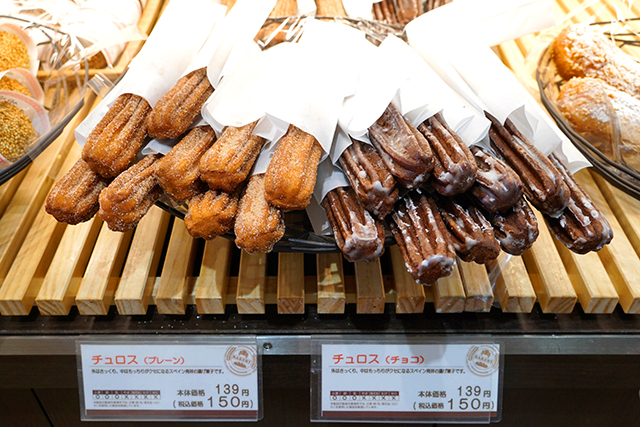
And finally, we try the Churro (Plain) (¥150)
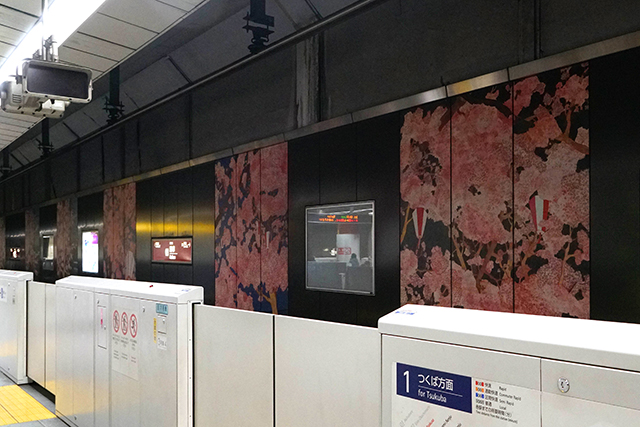
The city of Noda in Chiba prefecture is a good 90 minutes from Central Tōkyō. Lucky for us, Asakusa is on the Tsukuba Express line so the trip is marginally shorter. The entrance to the station is rather hidden, a short walk from the ROX Department store.
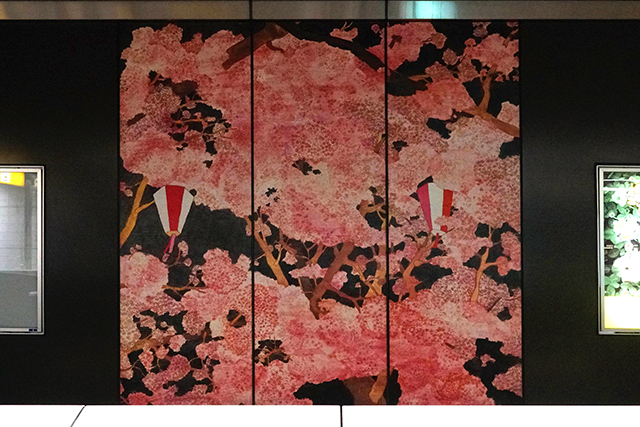
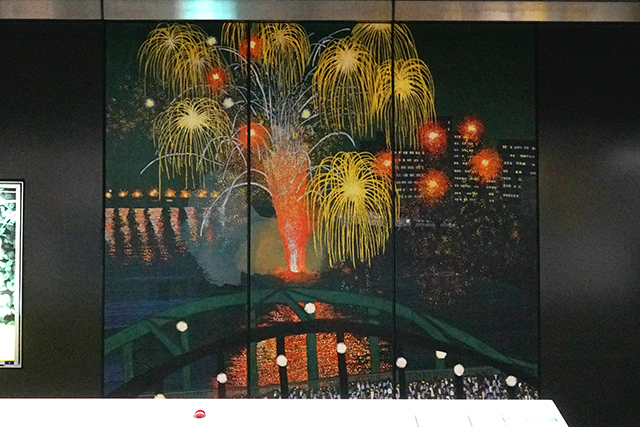
The walls of the tunnels are decorated with designs from around the Sumida area.
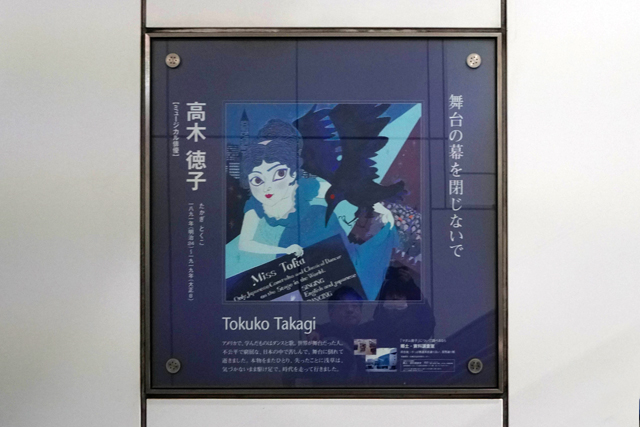
Asakusa’s reputation as a cultural centre for traditional arts is on display on the walls lining the escalators. This one depicts Tokuko Takagi, a Japanese dancer and actress in early silent films.
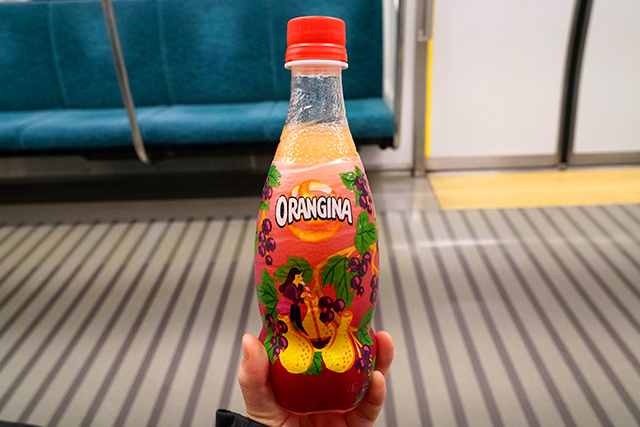
We have a bottle of cassis and orange flavoured Orangina that we picked up at an Aeon konbini. It’s like a more enjoyable orange cordial with the added sweetness of currants.
Noda – Kikkoman Soy Sauce Museum
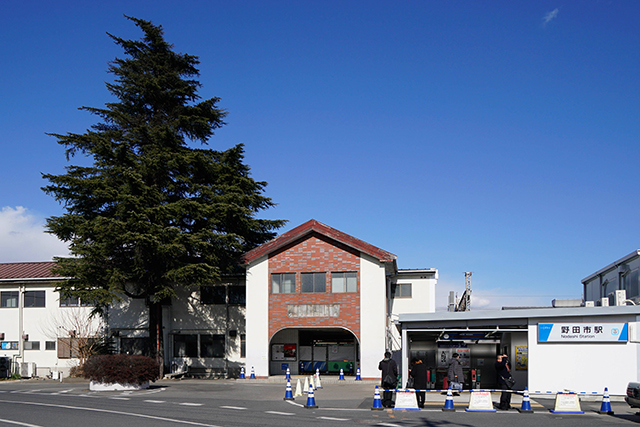
A little over an hour later and changing trains to the Tobu Urban Park Line, we arrive at Nodashi Station. Tobu Urban Park Line is a very small train line – the kind where the train doors do not open automatically at each stop and a button must be pressed when you want to get off.
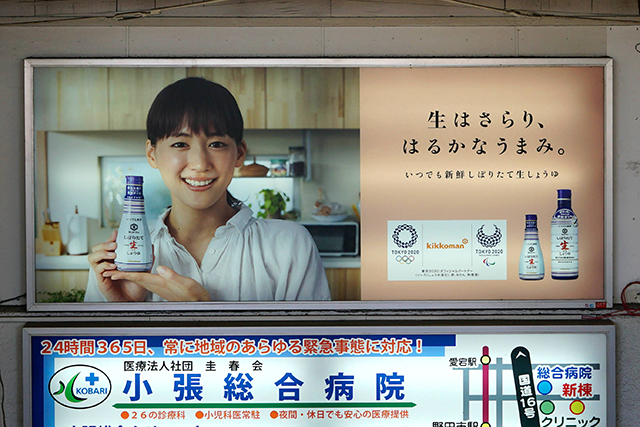
There’s no mistaking that we’ve alighted at the correct station as the train station itself is full of Kikkoman ads.
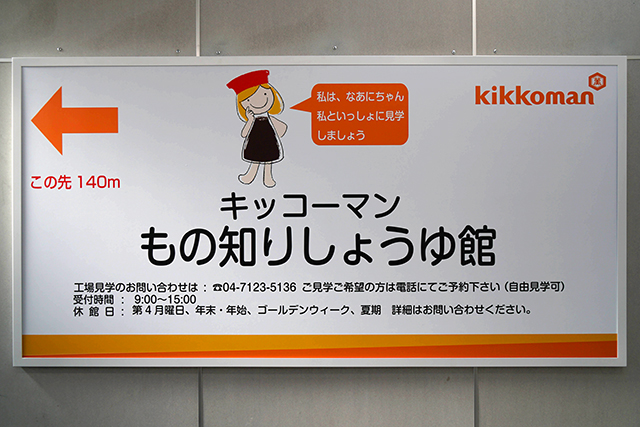
Another sign lets you know the museum is 140 m away.
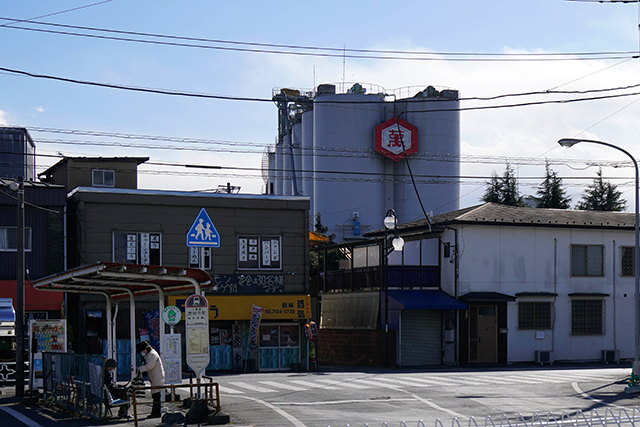
Indeed, Noda is the city of soy sauce.
The full-scale manufacturing of soy sauce in Noda began during the Edo period. The city was blessed with a climate perfect for making soy sauce, with transportation on the Edo and Tone rivers for easy access to soybeans, wheat and salt, as well as for shipping products to Edo (Tōkyō) in half a day. This allowed Noda to thrive as the ‘City of Soy Sauce’ and this has continued to the present day.
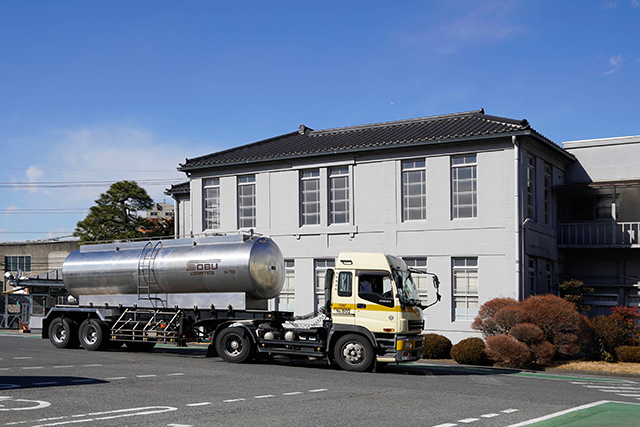
We check in at the factory entrance before proceeding to the museum.
And we’re there: Monoshiri Shoyukan.
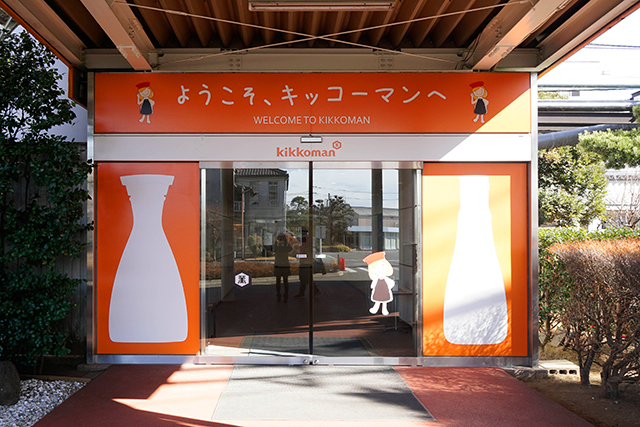
This is the entrance to the museum.
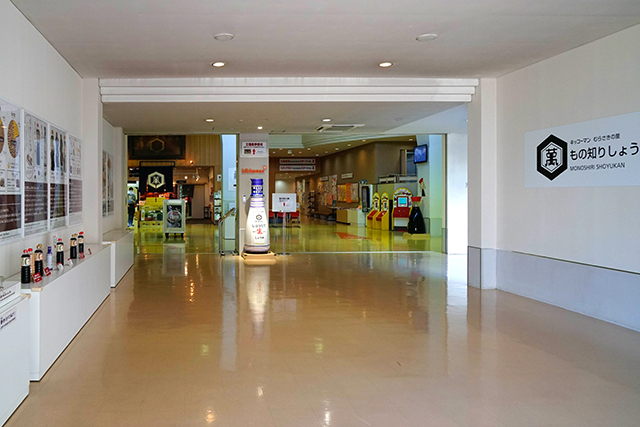
We’re about 10 minutes late for our tour at 11 am, so we rush to the reception staff at the Gift Shop. Fortunately (and unfortunately), they didn’t manage to arrange an English speaking guide for us so we were allocated and provided audio guides instead, so being late wasn’t too embarrassing! Phew.
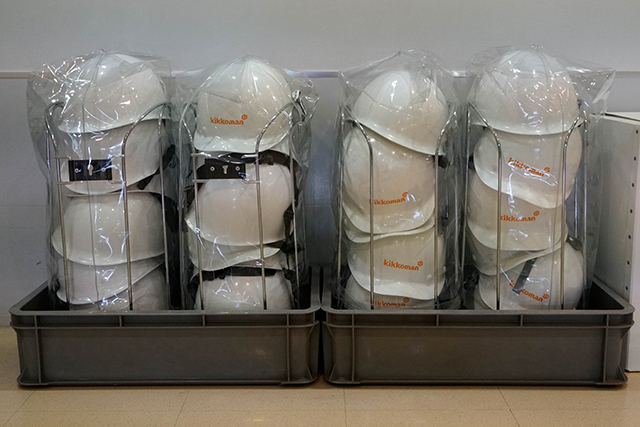
The entrance to the museum starts to the right of the Gift Shop. There are hard hats outside the area where we watch a quick video explaining how Kikkoman makes soy sauce.
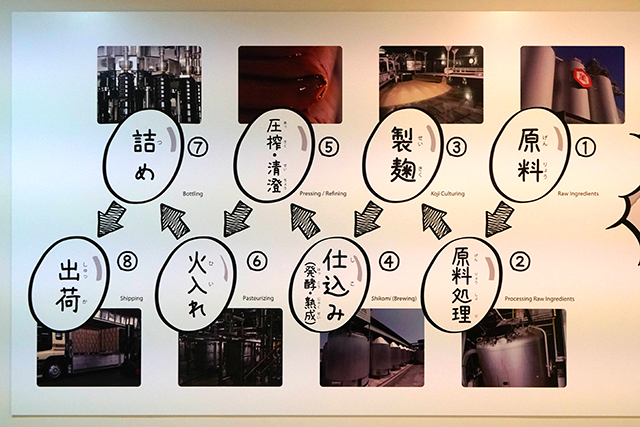
There are 8 stages in the production of Kikkoman soy sauce:
- Acquiring raw ingredients
- Processing raw ingredients
- Koji culturing
- Shikomi (brewing)
- Pressing/Refining
- Pasteurizing
- Bottling
- Shipping
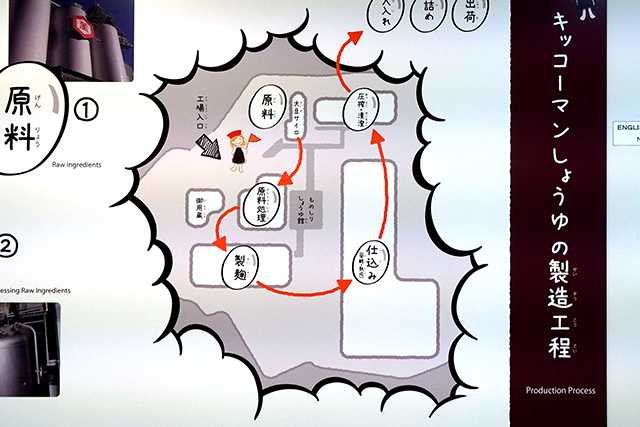
The tour takes us through the steps involved in each stage of the process.
1 Acquiring Raw Ingredients
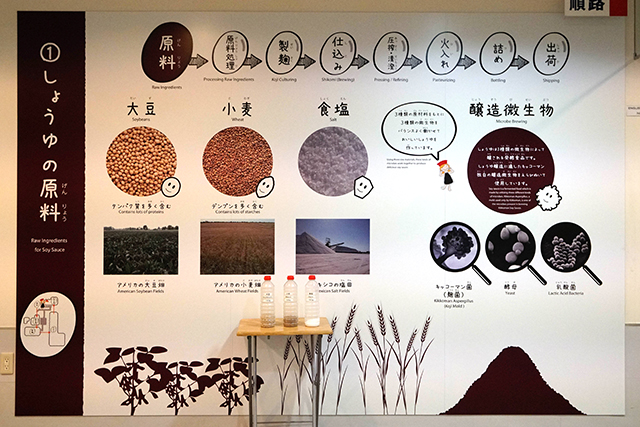
Kikkoman soy sauce is made from soybeans, wheat, salt and water. The soybeans and wheat are from America while the salt is from Mexico.
Kikkoman aspergillus is one of the microbes prsent in brewing the soy sauce. It’s a mold used only by Kikkoman.
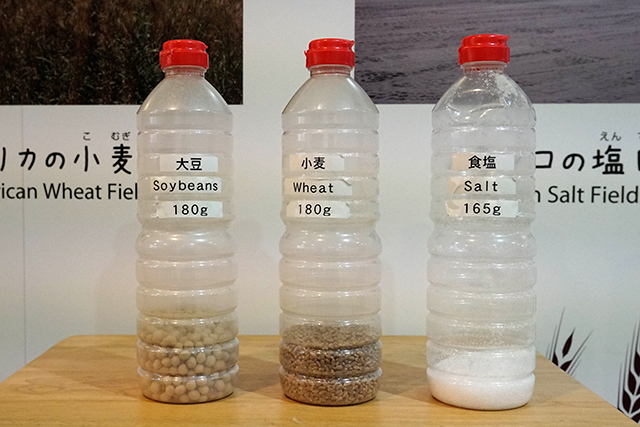
Each 1.5 L of Kikkoman soy sauce is made from 180 g soybeans, 180 g wheat and 165 g salt with the remainder made up of water.
2 Processing Raw Ingredients
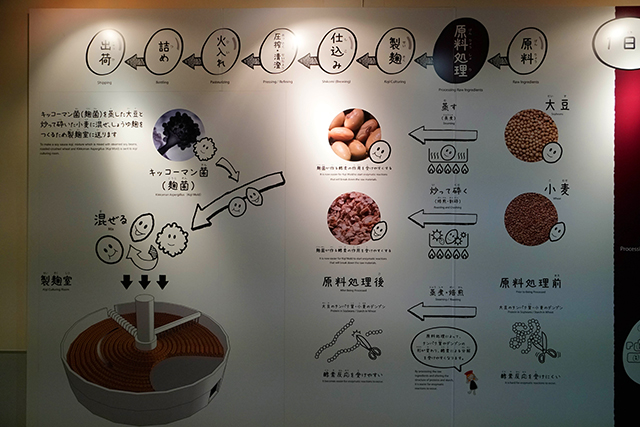
The soybeans are steamed and the wheat is roasted and crushed, making it easier for koji mould to start enzymatic reactions that will break down the protein and in soybeans and starch in wheat.
3 Koji culturing
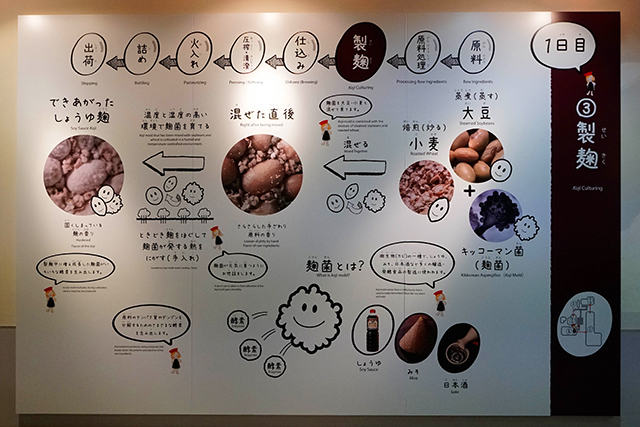
The steamed soybeans and roasted-crushed wheat are combined with Kikkoman aspergillus (koji mould) in the koji culturing room to begin the process. Koji mould is from the same mould family used to make sake.
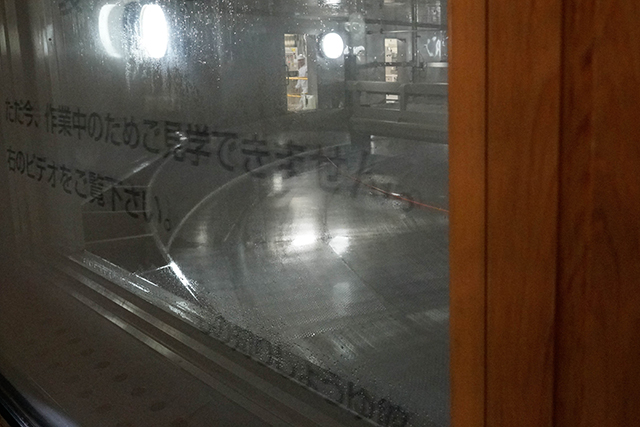
A window in the museum overlooks the koji culturing room, a humidity- and temperature-controlled environment.
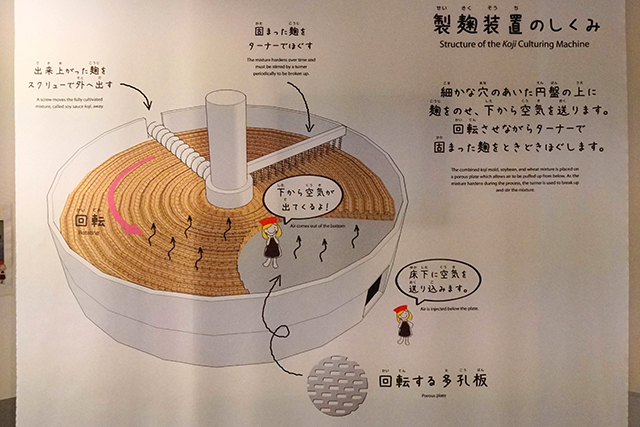
The mixture is placed on a porous plate that allows air to be puffed up from before. As the mixture hardens during the process, the turner is used to break up and stir the mixture, while a screw moves the fully cultivated mixture (soy sauce koji) away.
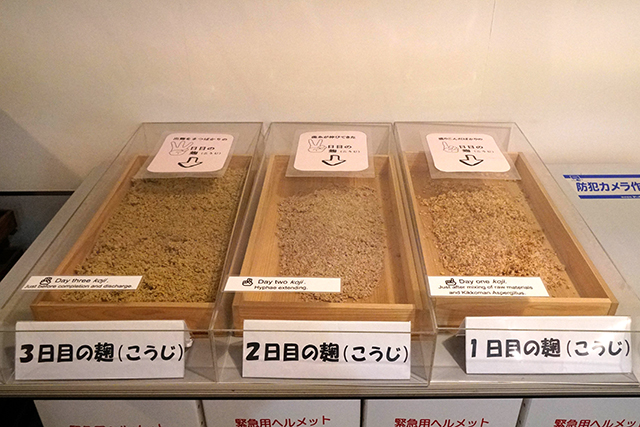
There are examples of the change in the koji over three days.
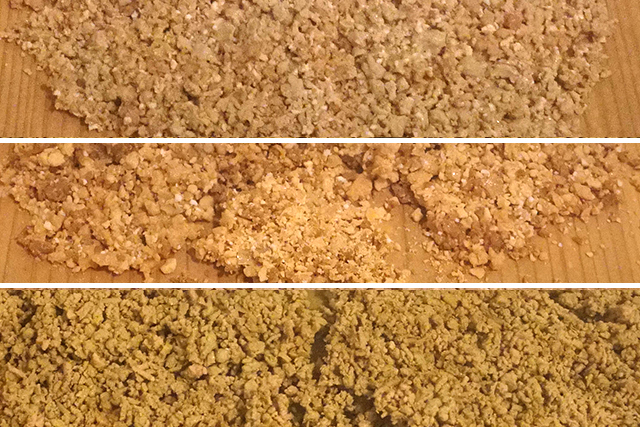
Day 1 (top) shows the mixture just after combining the raw materials with the koji mould. Day 2 (middle) shows the hyphae extending. Day 3 (bottom) shows the mixture just before completion and discharge.
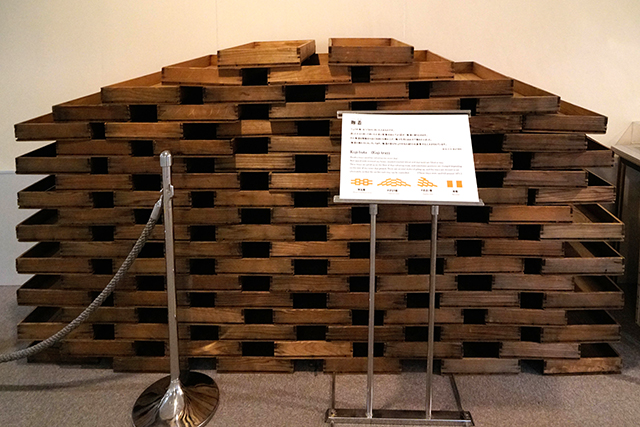
Prior to the introduction of the koji culturing machine in the 1970s, these wooden trays were used for culturing soy sauce koji.
Well mixed with steamed soy beans, roasted-crushed wheat and koji mold are filled in tray.
These trays are piled up on the floor of koji culturing room, and sometimes positions are changed depending on the rate of soy sauce koji growth. There are serveral styles of piling up, and the trays are devised to set alternately, so that the air for each tray can be controlled.
4 Shikomi (Brewing)
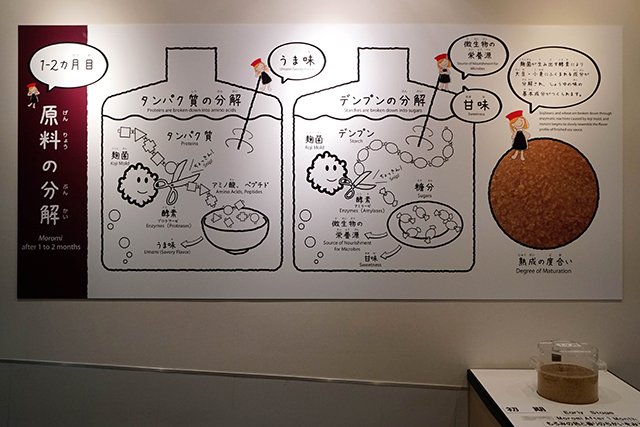
The next step is shikomi or brewing. At 1-2 months, enzymes caused by the koji mould begin breaking down the raw ingredients.
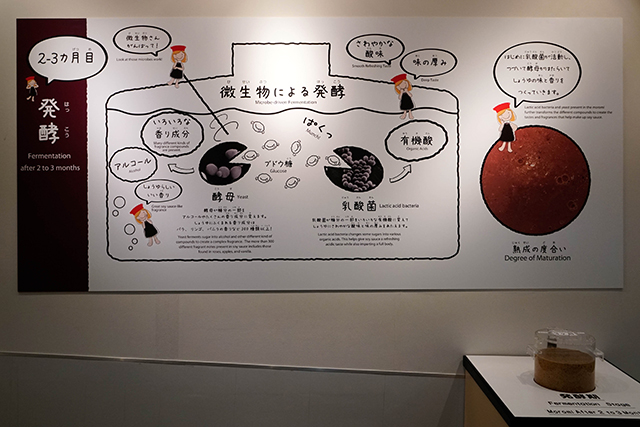
At 2-3 months, fermentation occurs. Lactic acid and yeast present in the moromi further transform the different compounds to create the tastes and fragrances that help make up soy sauce.
Yeast ferments sugar into alcohol and other different compounds to create a complex fragrance. The more than 300 different fragrant notes present in soy sauce include those found in roses, apples and vanilla. Lactic acidic bacteria changes some sugars into organic acids that help give soy sauce a refreshing acidic taste while also imparting a full body.
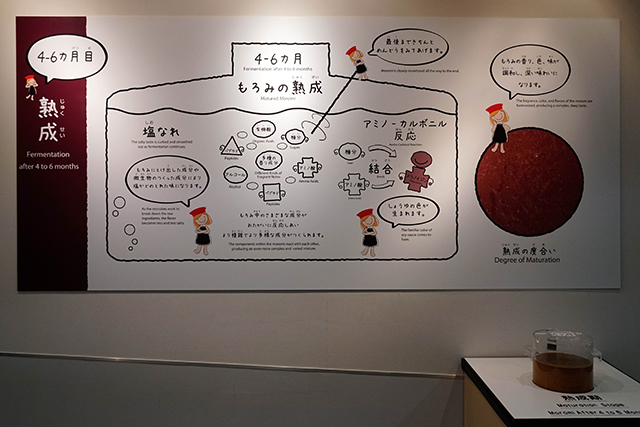
At 4-6 months, the fragrance, colour and flavours of the moromi are harmonised, producing a complex and deep taste. The familiar colour of soy sauce comes to form, with the flavour becoming increasingly less salty as the microbes continue to break down the raw ingredients.
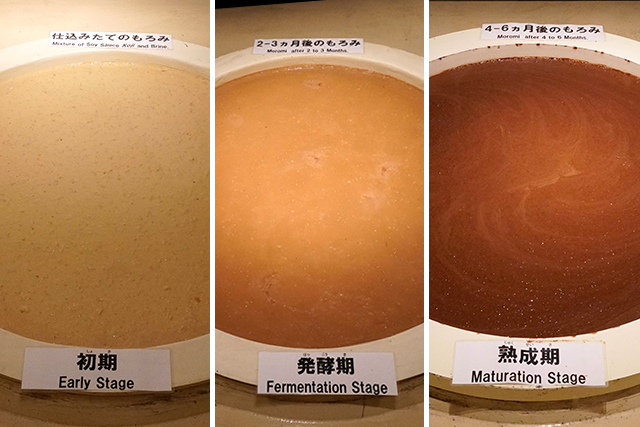
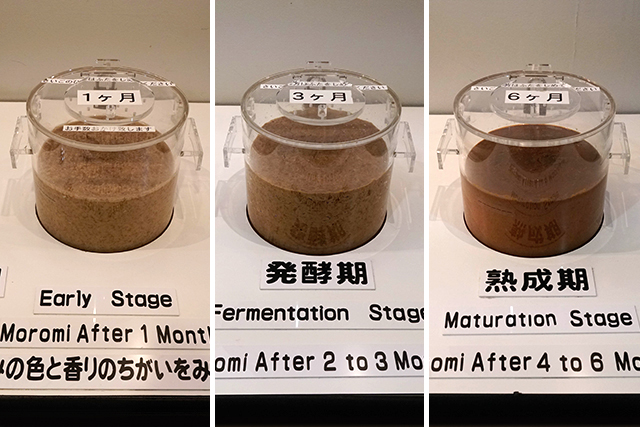
There are containers showing the moromi at each stage. We enjoy sniffing the change in the aroma at each stage.
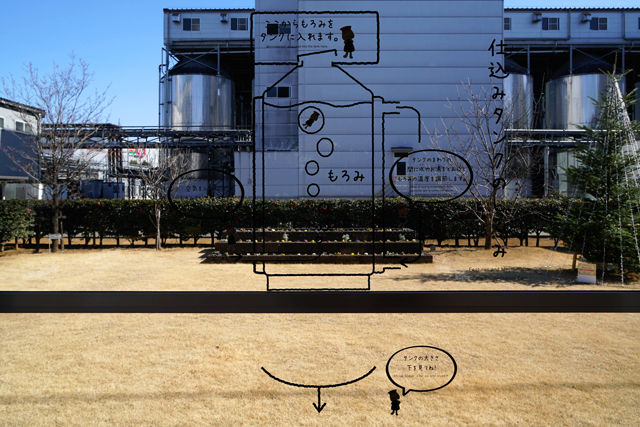
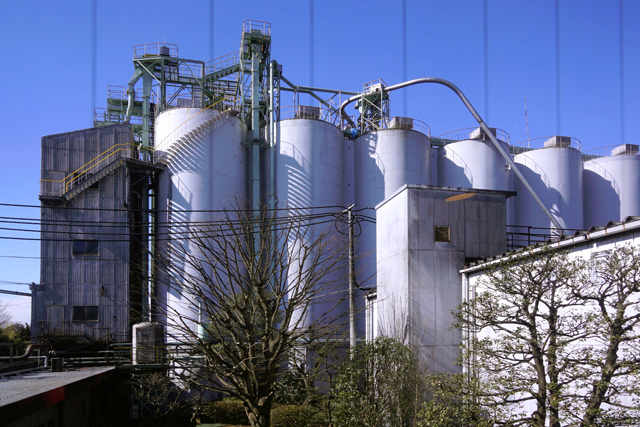
At this stage we pass by the Kikkoman Mini Gallery (more on that later) and walking through the Main Hall we look outside to the factory itself and see the huge tanks used to store the moromi as it matures. The moromi mash is poured into the tank from the top, while water of varying temperatures flows around the tank to control the moromi temperature inside the tank.
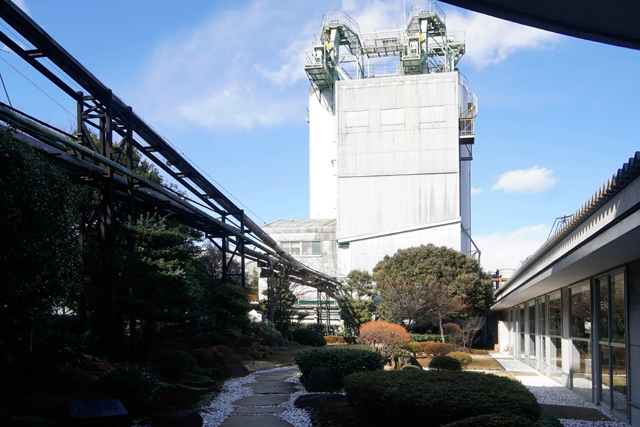
Huge spans of piping connect different parts of the factory transporting the soy sauce at various stages of production.
Pressing/Refining
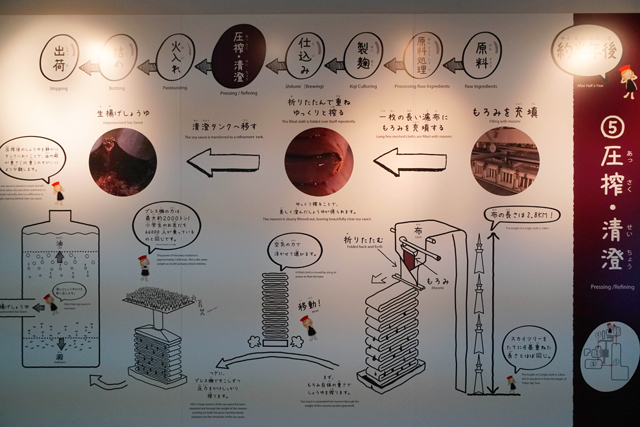
Past the Soy Sauce Facts and History Corners (more on that later), we observe how the moromi is strained through fabric and pressed. This is one of the most fascinating aspects of the tour and unfortunately the only part where photography is prohibited, as we witness the machine actually pressing the soy sauce from the fabric.
After six months, long fine-meshed cloths (each single cloth being 2.8 km in length) are filled with moromi. The filled cloth is folded over itself repeatedly, allowing the moromi to slowly filter out, leaving soy sauce. The majority of the soy sauce is separated from the moromi through the weight of the moromi stacked upon itself, with the remainder squeezed by a press machine (the power is approximately 2,000 tonnes).
The soy sauce is then placed in a tank and left alone to allow oils and other sediments to separate naturally due to a difference in weight, leaving behind clear soy sauce.
6 Pasteurising
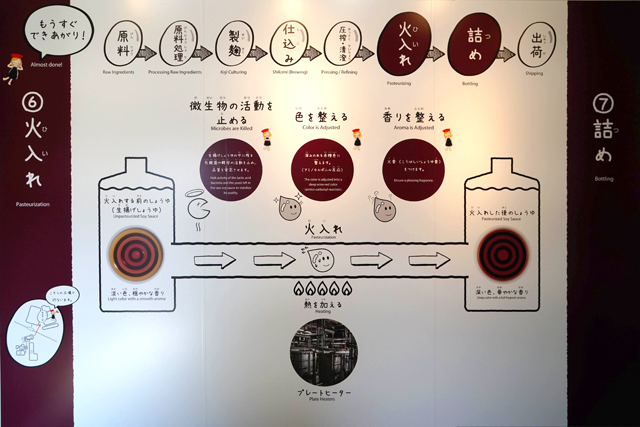
Unpasteurized soy sauce has a light colour with a smooth aroma. Pasteurisation using plate heaters causes three things to occur:
- Microbes are killed to halt the activity of the lactic acid bacteria and the yeast left in the raw soy sauce to stabilise its quality.
- The colour is adjusted into a deep wine-red colour through an amino-carbonyl reaction
- The aroma is adjusted to ensure a pleasing fragrance.
The resulting pasteurised soy sauce has a deep colour with a full fragrant aroma.
7 Bottling
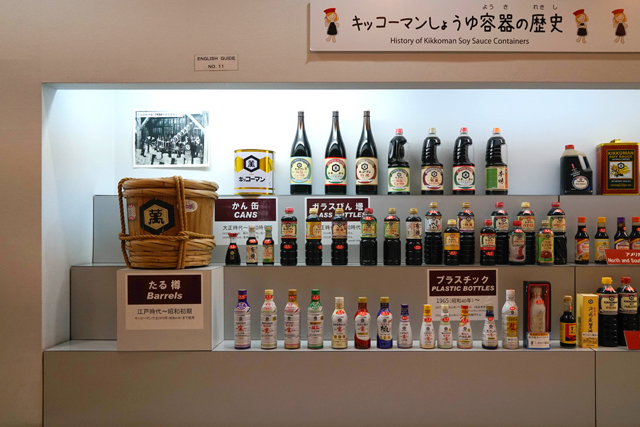
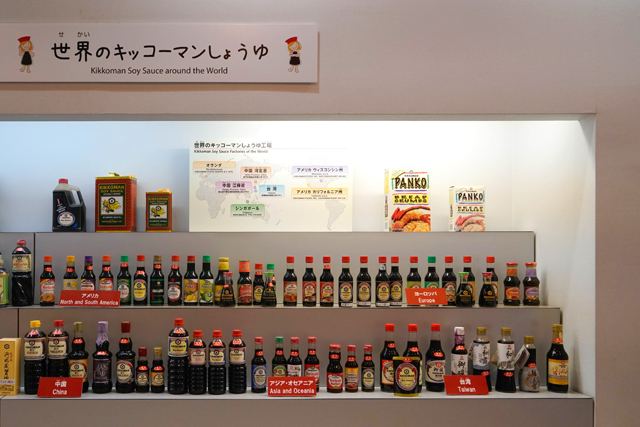
A video explains the bottling process: the plastic bottles are tipped upside down, injected with a puff ionised air to remove any debris. Flipped upright, the bottles are filled with soy sauce, then sealed, labelled and packed into boxes ready for shipping.
The photo above shows the evolution of containers used for storing Kikkoman Soy Sauce through the ages as well as the different shapes and labels used around the world.
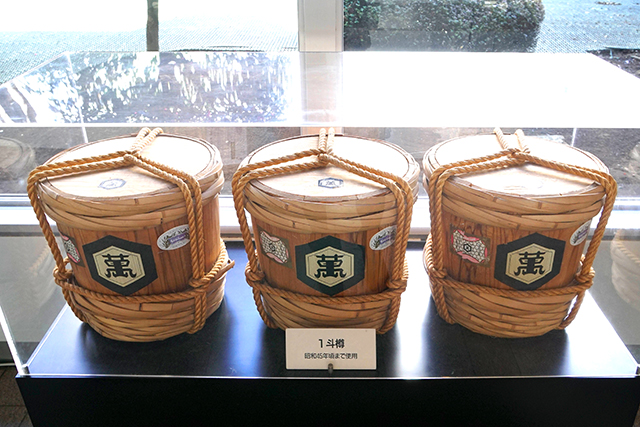
Barrels were the initial vessel for storing soy sauce.
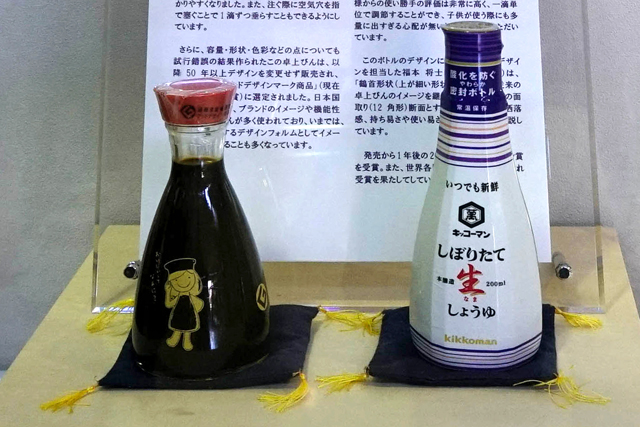
Now, these two glass and plastic bottle designs are the vessels for soy sauce.
Shipping
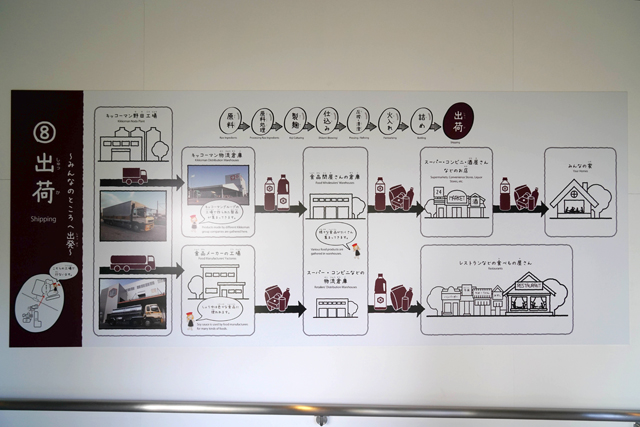
There are two methods that soy sauce is distributed from the Kikkoman Noda Plant:
- To Kikkoman Distribution Warehouses where products made by different Kikkoman group companies are gathered (this includes salad dressings and juices etc), then moved to food wholesalers’ warehouses and then supermarkets, convenience stores etc, to the home consumer.
- To Food Manufacturers’ Factories where soy sauce is used for the production of many kinds of foods, such as snack foods and premade side dishes, then moved to retailers’ distribution warehouses and then onto restaurants.
This truck that we spot on our way out of the factory resembles one in the photos in the museum (previous photo, bottom row) depicted as transporting soy sauce to various food manufacturers’ factories, including crisps, confectionery and other condiments in Japanese cooking.
And with that, is the end of the Kikkoman Soy Sauce process! Now for a look at the other exhibits in the museum…
Kikkoman Mini Gallery
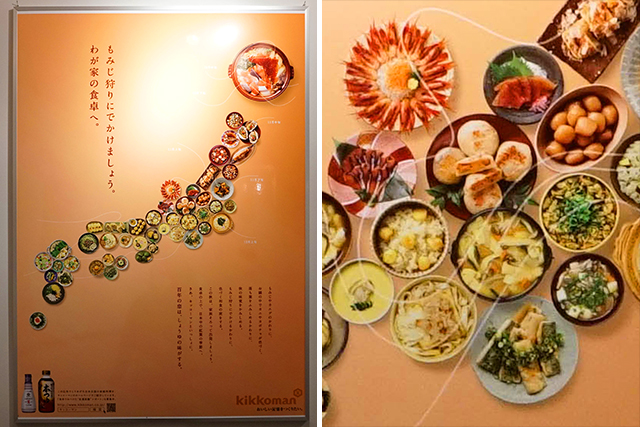
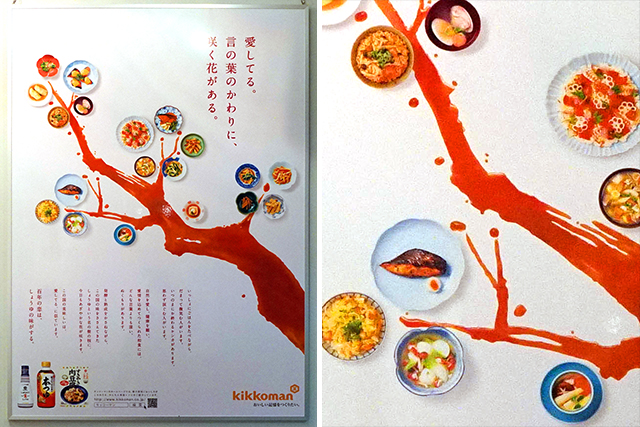
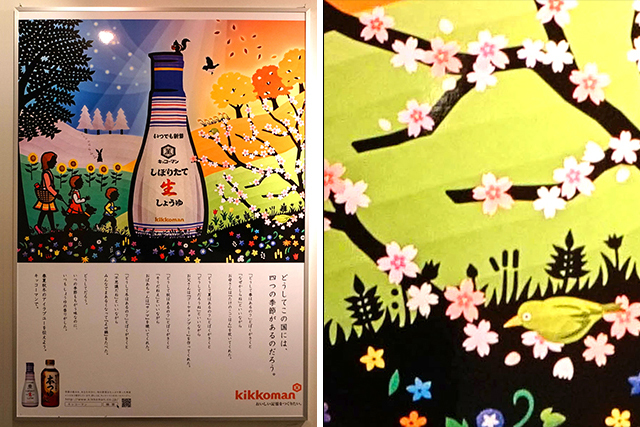
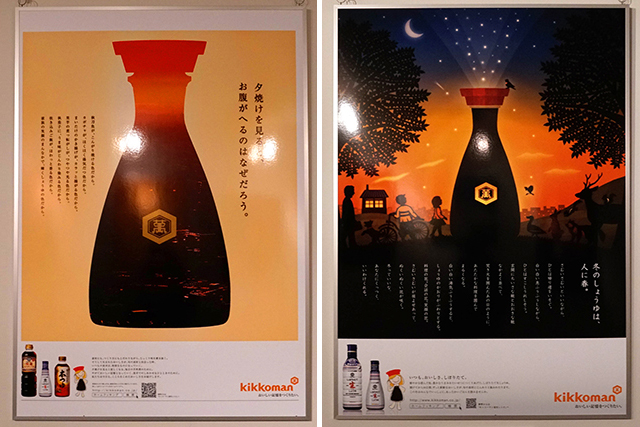
The Kikkoman Mini Gallery shows advertisement panels for soy sauce over the years. They’re so pretty, I wouldn’t mind them on our wall!
Soy Sauce Facts Corner
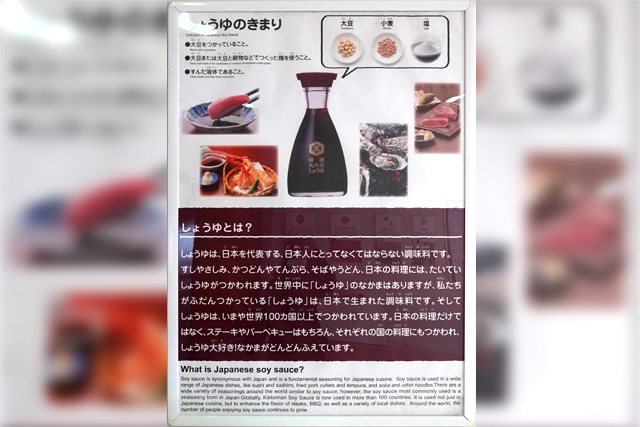
Near the main hall are numerous posters with interesting facts about soy sauce. This one explains:
Soy sauce is synomous with Japan and is a fundamental seasoning for Japanese cuisine. Soy sauce is used in a wide range of Japanese dishes, like sushi and sashimi, fried pork cutlets and tempura, and soba and udon noodles. There are a wide variety of seasonings around the world similar to soy sauce; however, the soy sauce most commonly used is a seasoning born in Japan. Globally, Kikkoman Soy Sauce is now used in more than 100 countries. It is used not just in Japanese cuisine, but to enhance the flavour of steaks, BBQ, as well as a variety of local dishes. Around the world, the number of people enjoying soy sauce continues to grow.
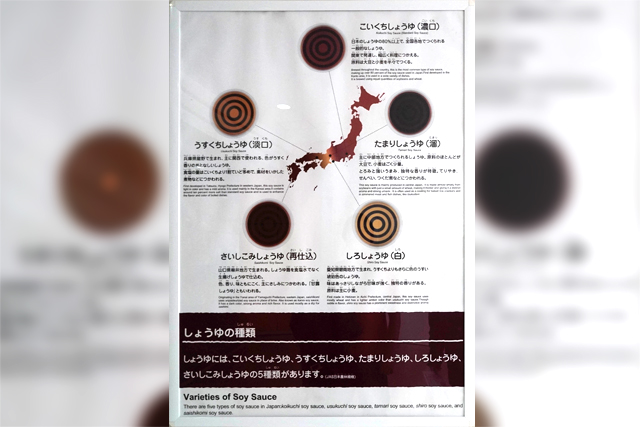
There are five types of soy sauce in Japan
- koikuchi soy sauce. This is brewed throughout the country using equal quantities of soybeans and wheat. It is the most common type of soy sauce, making up over 80% of the soy sauce used in Japan. It was first developed in the Kantō area and is used in a wide variety of dishes.
- usukuchi soy sauce. This contained around 10% more salt than standard soy sauce. It was first developed in Tatsuno, Hyogo Prefecture. It is light in colour and has a mild aroma. It is used mainly in the Kansai area and used to enhance the flavour and colour of boiled dishes.
- tamari soy sauce. This is made almost wholly from soybeans with just a small amount of wheat, making it thicker and giving it a distinct aroma and strong umami. It is produced mainly in central Japan and is oftened used as a coating for baked rice crackers and in simmered meat and fish dishes like tsukudani.
- shiro soy sauce. This uses mostly wheat and has a lighter amber colour than usukuchi soy sauce. It was first made in Hekinan in Aichi Prefecture. Though subtle in flavour, shiro soy sauce has a prominent sweetness and distinctive aroma.
- saishikomi soy sauce. This uses unpasteurised soy sauce in place of brine (water an salt), making it a ‘twice-brewed’ soy sauce. It is also known as kanro soy sauce, with a dark colour, strong aroma and rich flavour. It originated in the Yanai area of Yamaguchi Prefecture and is used mostly as a dip for sashimi.
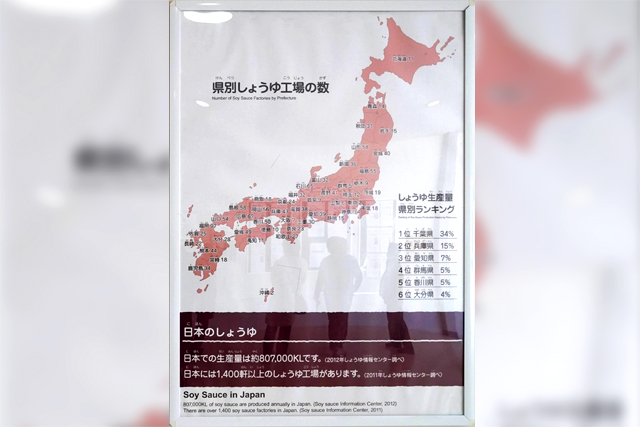
807,000 kilolitres of soy sauce are produced annually in Japan from over 1,400 soy sauce factories.
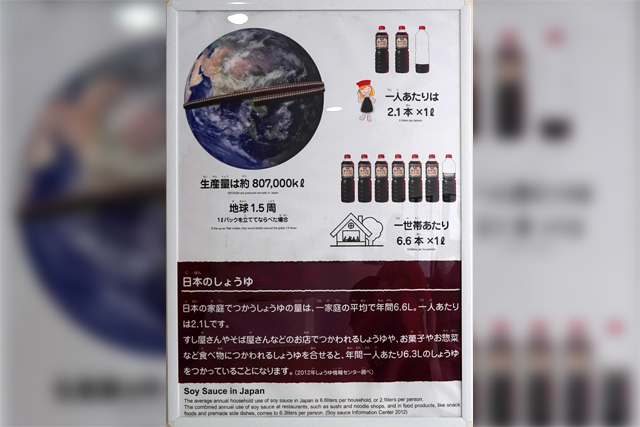
The average annual household in Japan uses 6.6 L of soy sauce or 2.1 L per person. In contrast, the combined annual use of soy sauce in restaurants, such as sushi and noodle shops, and in food products, like snack foods and premade side dishes, comes to 6.3 L per person.
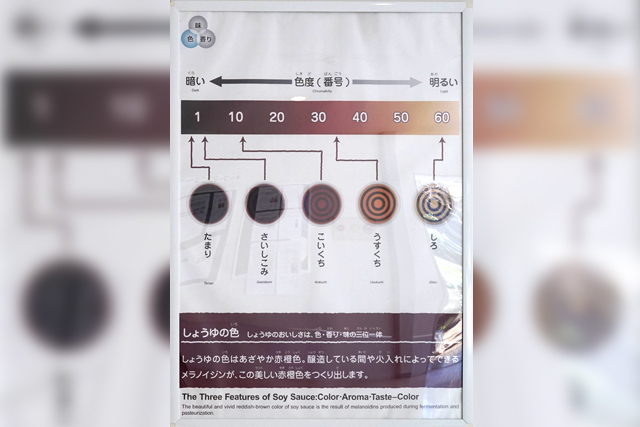
The three featured of soy sauce are colour, aroma and taste. This one here charts the different colours and explains:
The beautiful and vivid reddish-brown color of soy sauce is the result of melanoidins produced during fermentation and pasteurization.
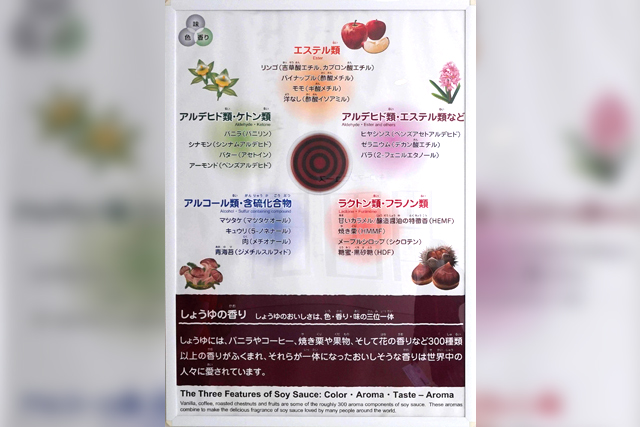
This one explains the aroma of soy sauce:
Vanilla, coffee, roasted chestnuts and fruits are some of the roughly 300 aroma components of soy sauce. These aromas combine to make the delicious fragrance of soy sauce loved by many perople arouund the world.
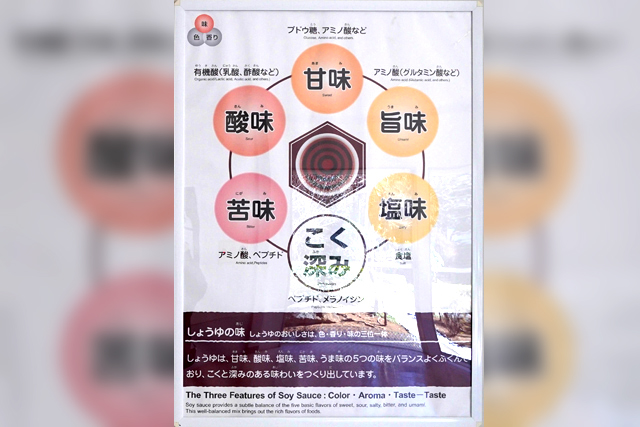
And finally, this one explains that the taste of soy sauce:
Soy sauce provides a subtle balance of the five basic flavours of sweet, sour, salty, bitter and umami. This well-balanced mix brought out the rich flavours of foods.
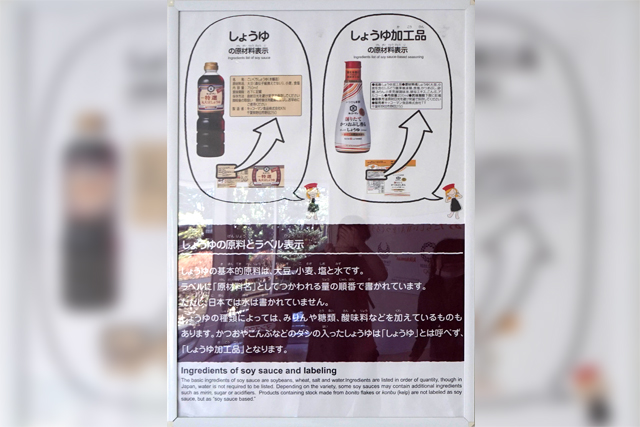
On the ingredients of soy sauce and labelling:
The basic ingredients of soy sauce are soybeans, wheat, salt and water. Ingredients are listed in order of quantity, though in Japan, water is not required to be listed. Depending on the variety, some soy sauces may contain additional ingredents such as mirin, sugar and acidifiers. Products containing stock made from bonito flakes or konbu are not labelled as soy sauce, but as ‘soy sauce based’.
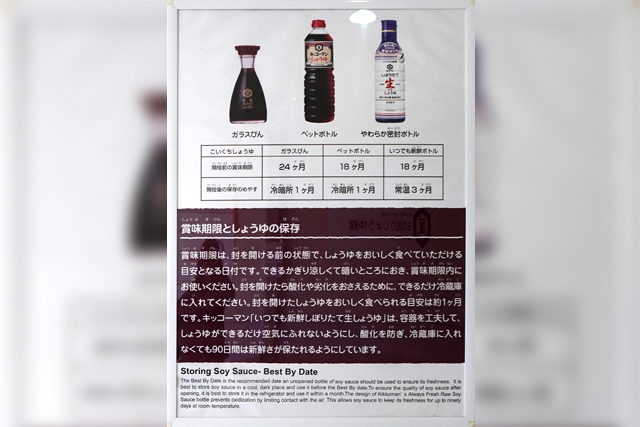
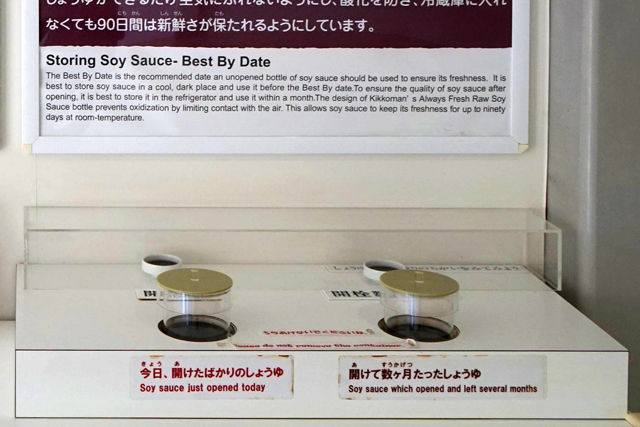
We enjoy comparing the difference in aroma between fresh soy sauce and soy sauce that’s been opened and left for several months. The fresh soy sauce has a brighter and more fragrant aroma. We learn:
The Best By Date is the recommended date an unopened bottle of soy sauce should be used to ensure its freshness. It is best to store soy sauce in a cool, dark place and use it before the Best By date. To ensure the quality of soy sauce after opening, it is best to store it in the refrigerator and use it within a month.
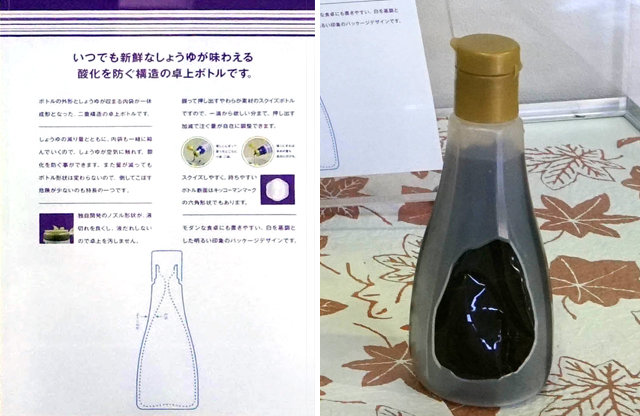
The design of Kikkoman’s Always Fresh Raw Soy Sauce bottle prevents oxidization by limiting contact with the air. This allows soy sauce to keep its freshness for up to ninety days at room temperature.
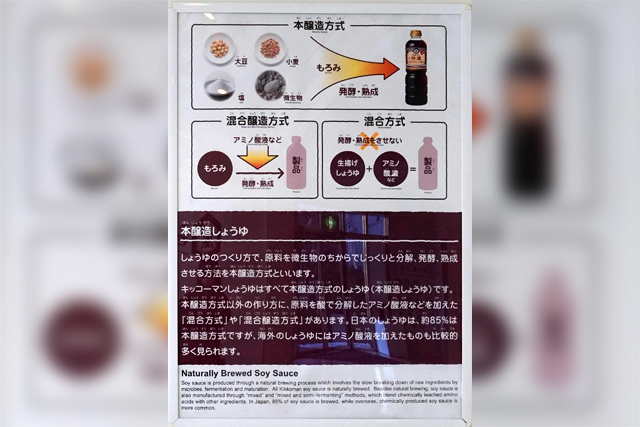
Kikkoman Soy Sauce is brewed naturally, but it’s not the only way:
Soy sauce is produced through a natural brewing process which involves the slow breaking down of raw ingredients by microbes, fermentation and maturation. All Kikkoman soy sauce is naturally brewed. Besides natural brewing, soy sauce is also manufactured through ‘mixed’ and ‘mixed and semi-fermenting’ methods, which blend chemically leached amino acids with other ingredients. In Japan 85% of soy sauce is brewed, while overseas, chemically produced soy sauce is more common.
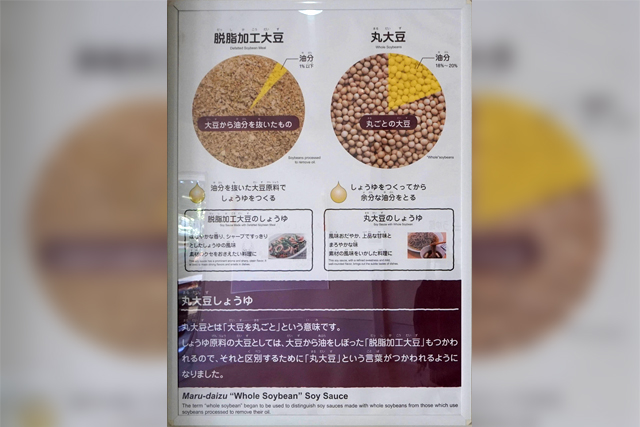
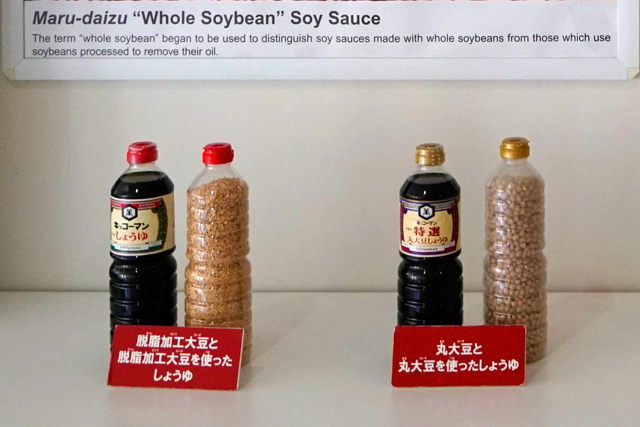
The term ‘whole soybean’ or maru-daizu distinguishes soy sauces made with whole soybeans from those using soybeans processed to remove their oil. Soy sauce made with ‘defatted’ soybean meal has a prominent aroma and sharp, clean flavour and is used to mask strong flavours and smells in dishes. In contrasted, soy sauce made with whole soybeans has a refined sweetness and mild, well-rounded flavour that brought out the subtle tastes of dishes.
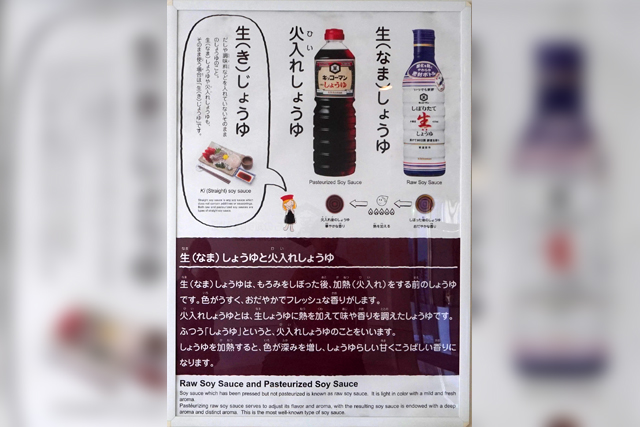
We learn the difference between raw and pasteurised soy sauce:
Soy sauce which has been pressed but not pasteurized is known as raw soy sauce. It is light in colour with a mild and fresh aroma. Pasteurizing raw soy sauce serves to adjust its flavour and aroma, with the resulting soy sauce endowed with a deep and distinct aroma. This is the most well-knonw type of soy sauce.
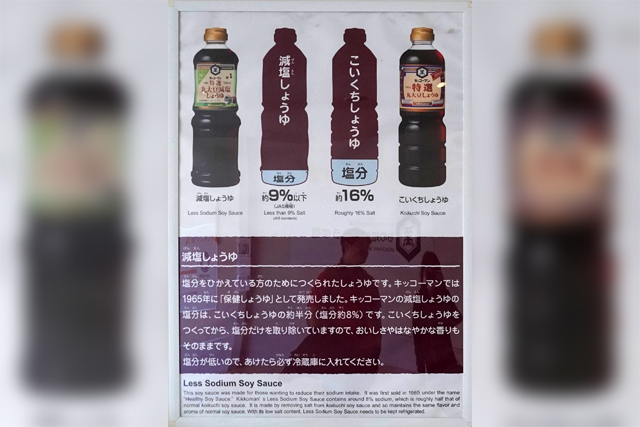
Less Sodium Soy Sauce was made for those wanting to reduce their sodium intake:
It was first sold in 1965 under the name ‘Healthy Soy Sauce’. Kikkoman’s Less Sodium Soy Sauce contained around 8% sodium, which is roughly half that of normal koikuchi soy sauce. It is made by removing salt from koikuchi soy sauce and so maintains the same flavour and aroma of normal soy sauce. With its low salt content, Less Sodium Soy Sauce needs to be kept refrigerated.
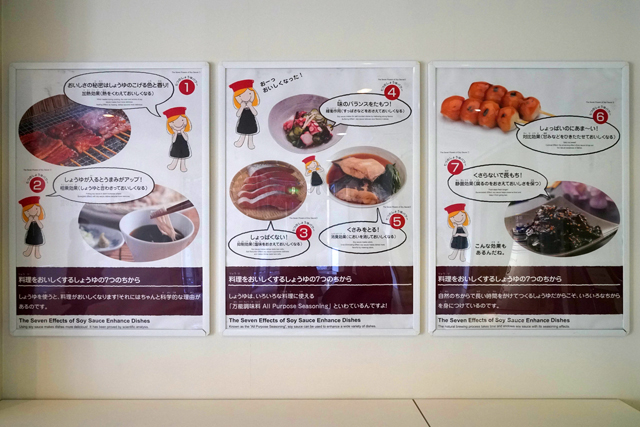
Finally, Kikkoman identifies the seven powers of soy sauce in enhancing dishes:
- Heating Effect: When heated during cooking, the colour and aroma of soy sauce makes food more delicious.
- Synergistic Effect: Putting soy sauce in dashi increases umami, making dishes more delicious.
- Salt Reduction Effect: Soy sauce makes dishes taste less salty because it suppresses saltiness.
- Buffering Effect: Soy sauce makes for well-rounded dishes by mellowing sour flavours
- Odour-Eliminating Effect: Soy sauce masks odours, making dishes more flavourful
- Contrast Effect: The saltiness of soy sauce brought out the natural sweetness of dishes.
- Bacteriostatic Effect: Soy Sauce helps preserve food and keep it from going bad so food stays fresh for longer.
History Corner
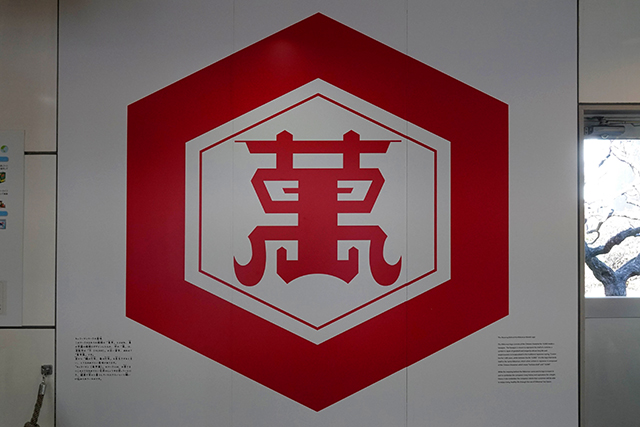
There’s a meaning behind the Kikkoman Brand logo!
The Kikkoman logo consisted of the Chinese character for 10,000 inside a hexagon. The hexagon is meant to represent the shell of a tortoise, a symbol in Japan of goodwill and longevity whose long life and auspiciiousness is encapsulated in the traditional Japanese saying, ‘Cranes live for 1,000 years, while tortoises live for 10,000’. It is this logo that lends itself to the name Kikkoman, which when written in Japanese, is composed of the Chinese characters which mean ‘tortoise shell’ and ‘10,000’.
While the meaning behind the Kikkoman name and its logo is meant in part to symbolise the company’s long history and aspirations for a bright future, it also embodies the company’s desire that customers will be able to enjoy a long, healthy life through the use of Kikkoman Soy Sauce.
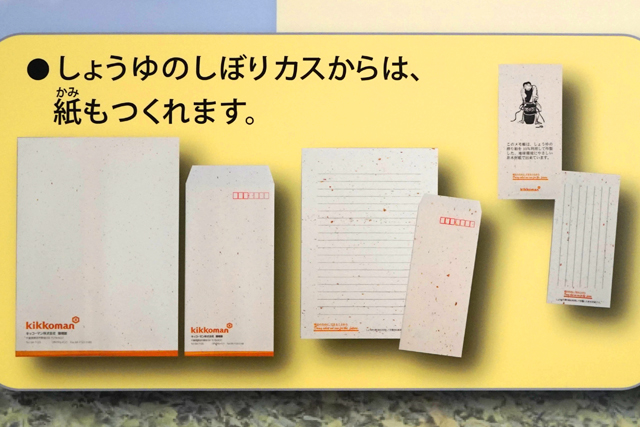
I wouldn’t mind me some Kikkoman branded stationery.
Mame Cafe
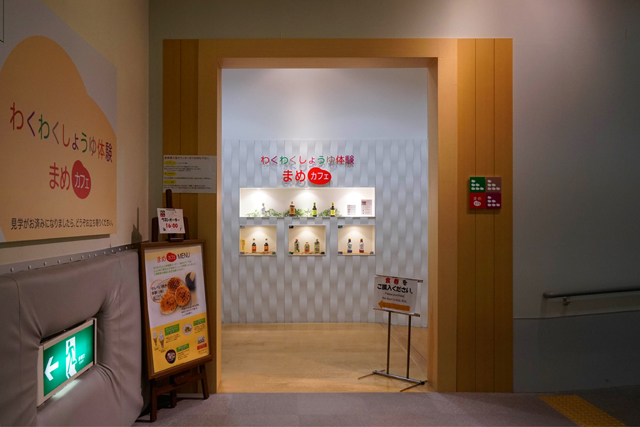
Before leaving the main building, we visit the Mame Cafe, a small cafe where you can experience various dishes made using Kikkoman Soy Sauce, as well as taste the different flavours of soy sauce.
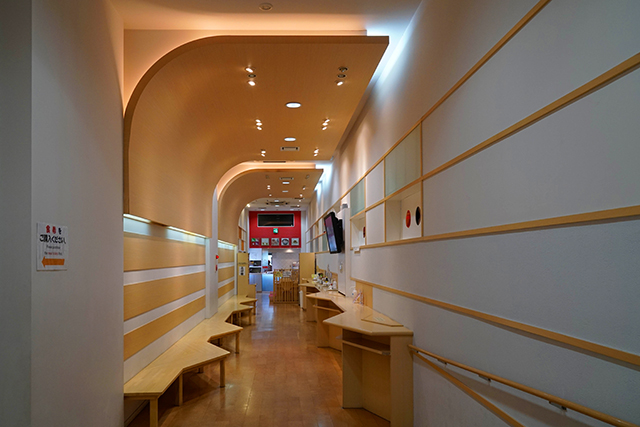
It’s a long space with the kitchen at the far end and the vending machine at the other.
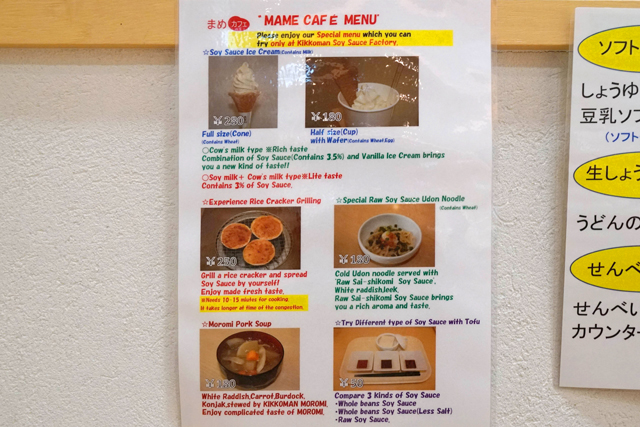
At the cafe, you can try soy sauce ice cream, experience rice cracker grilling, special raw soy sauce udon, moromi pork soup, as well as try different types of soy sauce with tofu.
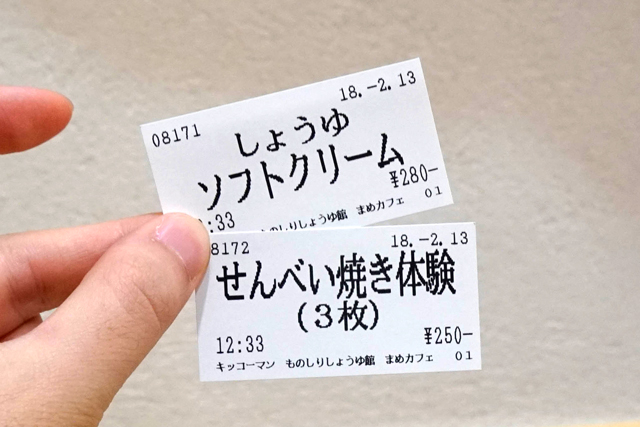
We’re keen to experience Rice Cracker Grilling, which is a steal for ¥250, as well as Soy Sauce Ice Cream (¥280) because where else can you try that?
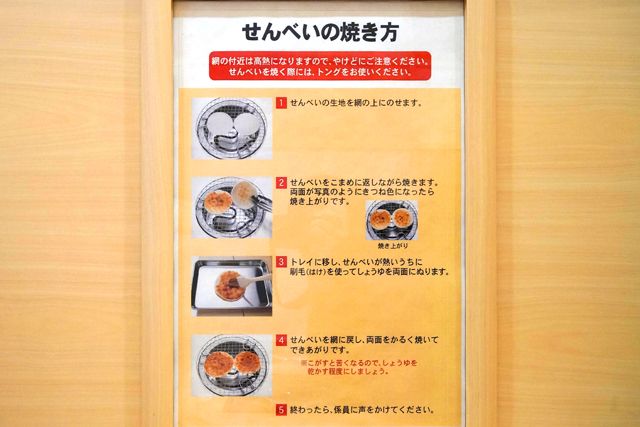
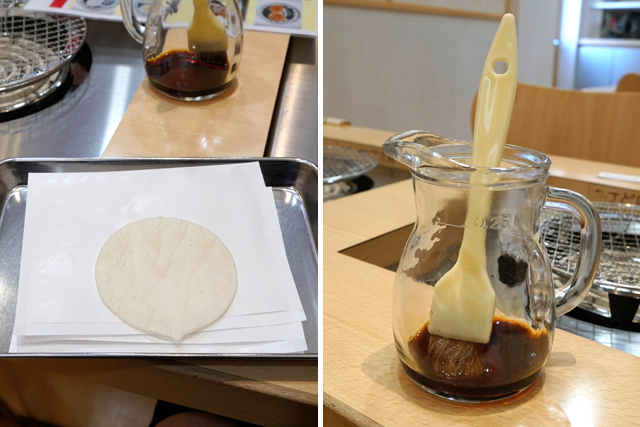
The Rice Cracker Grilling experience includes 3 plain rice crackers and soy sauce.
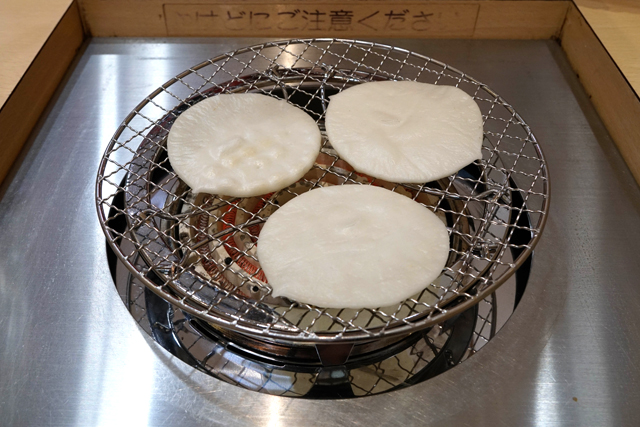
The plain rice crackers were toasted on the heated wire tray.
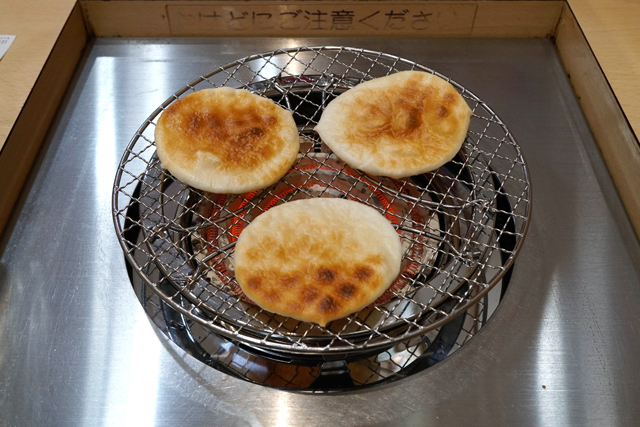
Turning them over frequent prevents the rice crackers from burning. After they’re well toasted, the rice crackers were moved to a plate, with soy sauce brushed on both sides while the cracker was still hot.
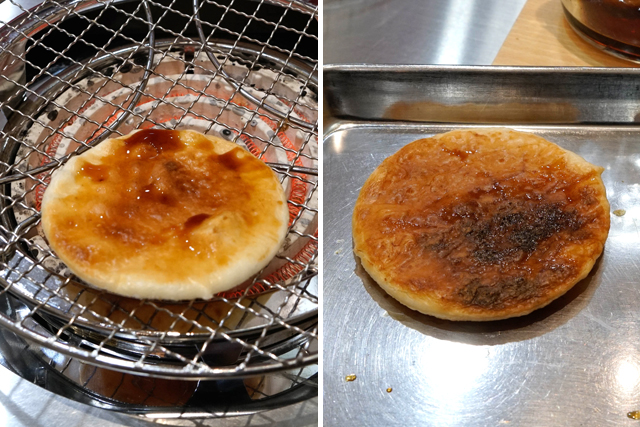
The rice crackers brushed with soy sauce are then toasted again for a few seconds to dry the soy sauce.
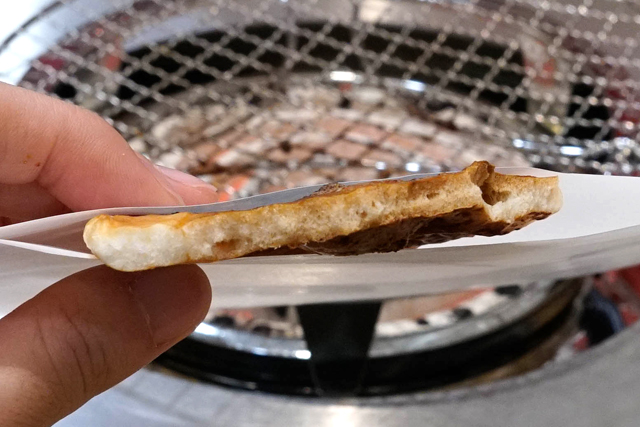
These rice crackers taste just like the ones that can be purchased at the shop. And it was easily the best entertaiment we received for ¥250!
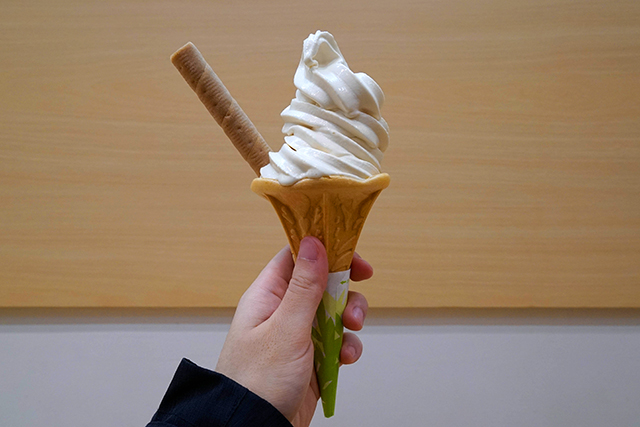
After we finish with the rice crackers, we exchange our vending machine ticket for our soy sauce soft serve. The ice cream is a very slight off-white colour, being a vanilla ice cream with 3.5% soy sauce. We get the full cream milk version (it comes in soy milk as well), which is smooth and sweet, with the slightest hint of savoury. I think the umami qualities of soy sauce. particularly the inherent sweetness, pair it better as a dessert than the miso based ice creams we get in Sydney.
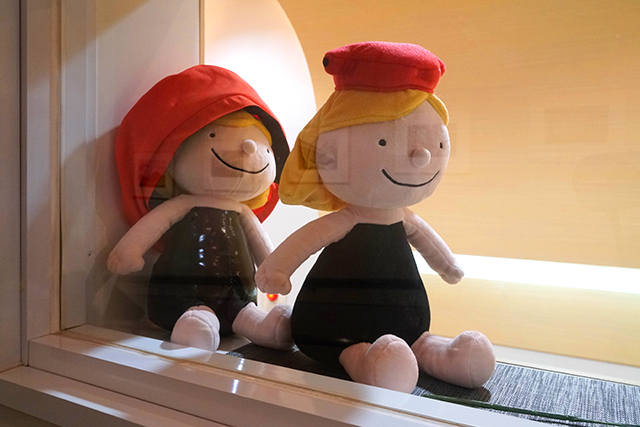
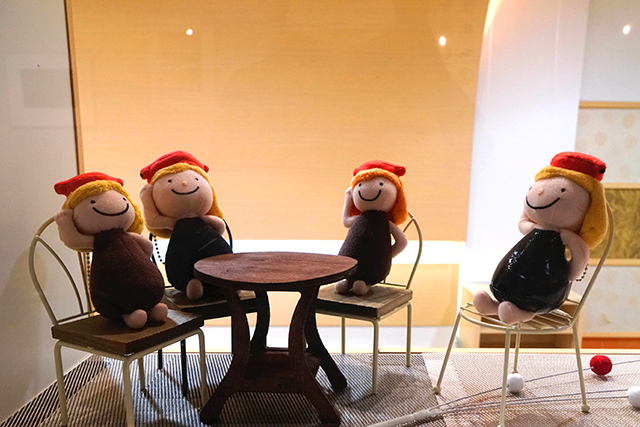
Lining the windows of the cafe are soft toy versions of Naani-chan, the mascot for Kikkoman. She’s a cute girl resembling the iconic drip-free Kikkoman soy sauce bottle.
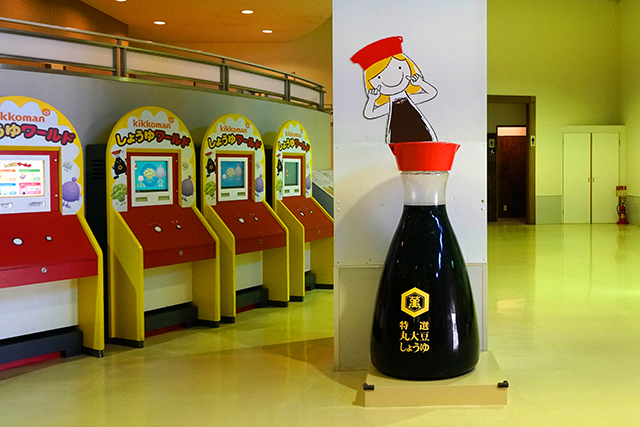
She appears everywhere in the Museum…
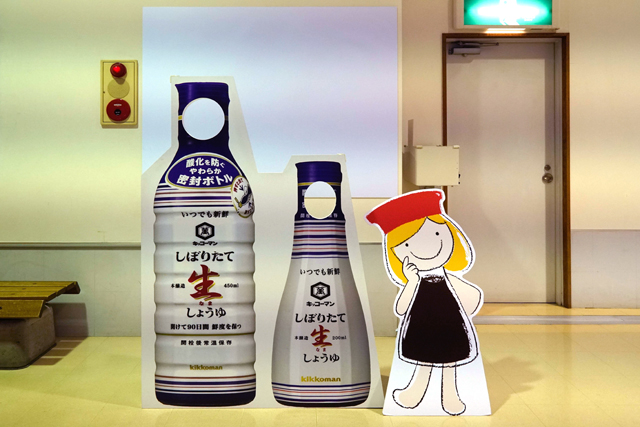
Here she’s posing with giant bottles of their unpasteurised soy sauce.
Goyogura (The Imperial Soy Sauce Brewery)
Our last stop before the Gift Shop, we head back outside the main building to the Goyogura. Originally, built in 1939 on the banks of the Edo River as a facility dedicated to brewing soy sauce for the Ministry of the Imperial Household. As the facility aged, it eventually came to need major repairs and the reconstruction took place as it reached its 70th anniversary. Consequently, the Goyogura was dismantled, moved and rebuilt inside the Noda Plant in 2011.
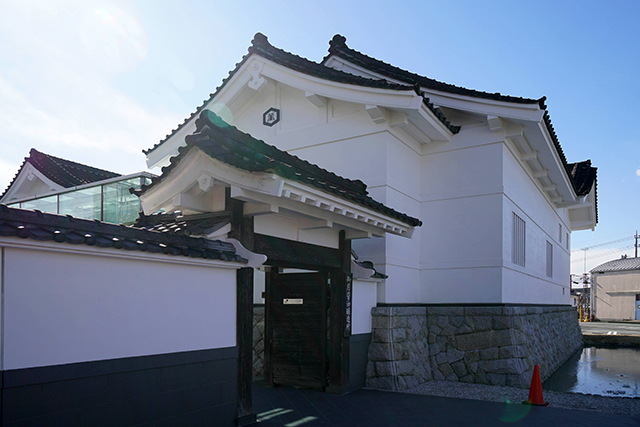
The roof frame, tiles, stone wall, gate and other items from the original brewery are all being reused as is, creating a new facility that closely resembles the original. Soy sauce brewing at the Goyogura uses traditional manufacturing processes that have been handed down over the years.
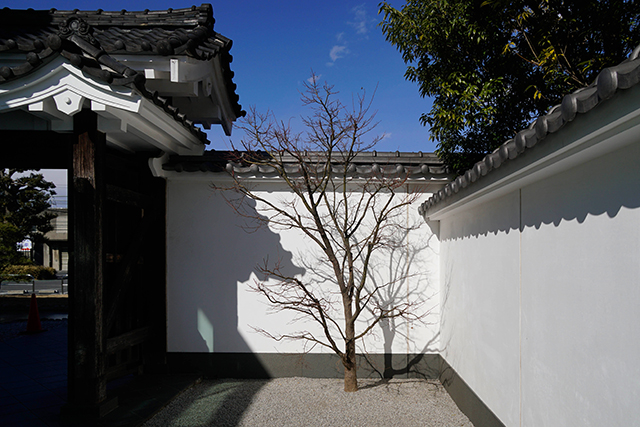
The bottom floor shows equipment used to steam soybeans and roast wheat. The raw materials – soybeans, wheat and salt – are all selected from the best national produce, in contrast to the main production plant where materials are sourced from America and Mexico.
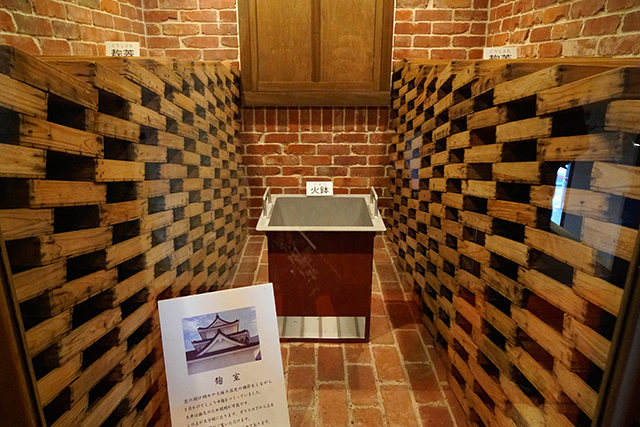
Upstairs, we see the Koji Room where shōyu koji is made by laying the soybeans, wheat and seed starter mix flatly on koji trays. it sits in this room for three days, with the temperature and humidity inside the room being controlled by opening and closing the windows and lighting charcoal braziers. The ceiling can be opened and closed for ventilation purposes; the space above it is known as the tenshukaku, or ‘castle keep’.
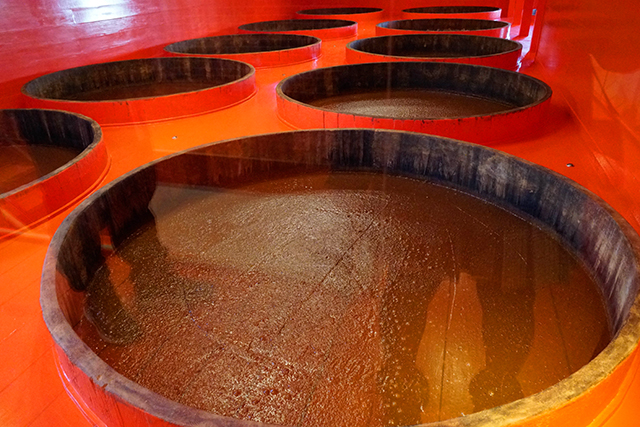
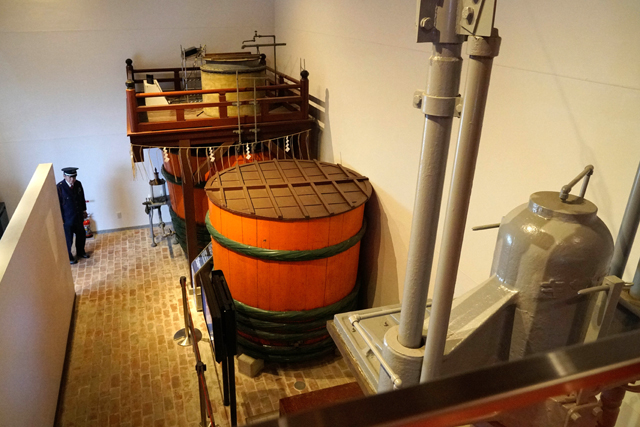
Next to the koji room is the fermentation room. The resulting mixture is fermented and aged in wooden vats made from Japanese cedar in natural climate conditions for one year. Moromi is actually fermented and aged in this room, while other tools and equipment in the Goyogura are not in use.
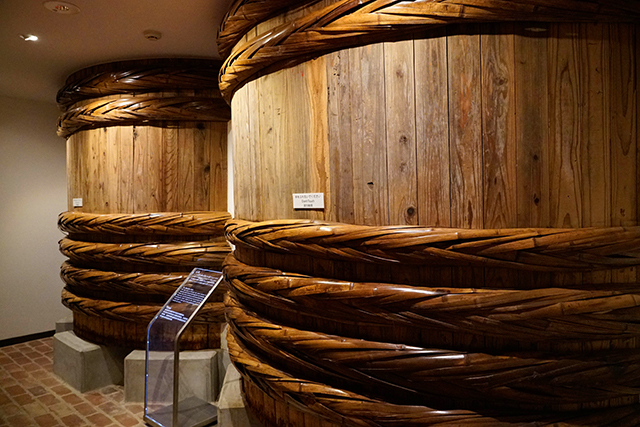
The vats seen in the previous photo can be viewed from the side on the floor directly below. The fermentation vats are 2 m in diameter and 1.7 m deep. These wooden vats are the same as those used in the original building.
Here we have the equipment used for pressing the moromi and finishing the soy sauce: the pressuriser, pressing machine, kame guchi (container collecting the soy sauce squeezed from the pressing), clarifier vat, heating vat and a device for measuring the volume of soy sauce.
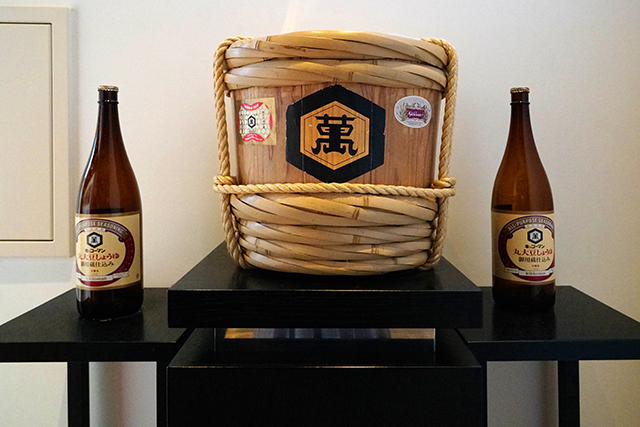
And finally, we see the barrels and glass bottles originally used to store soy sauce.
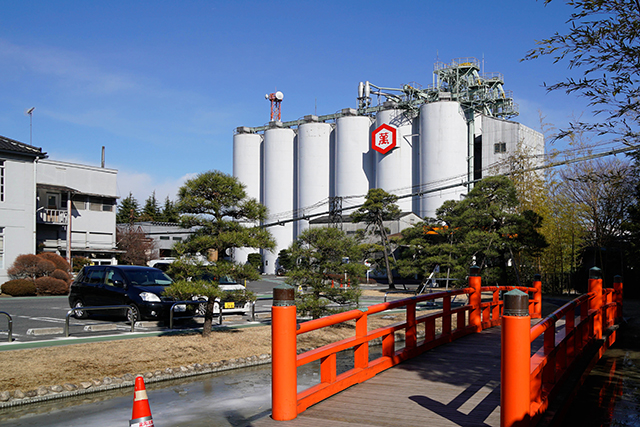
Heading back towards the main building, we catch another glimpse of the giant vats for storing soy sauce.
Murasakiya
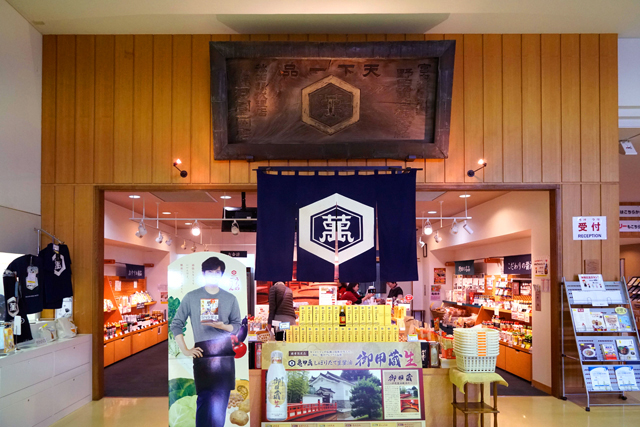
This is the gift shop for the Kikkoman Soy Sauce Museum.
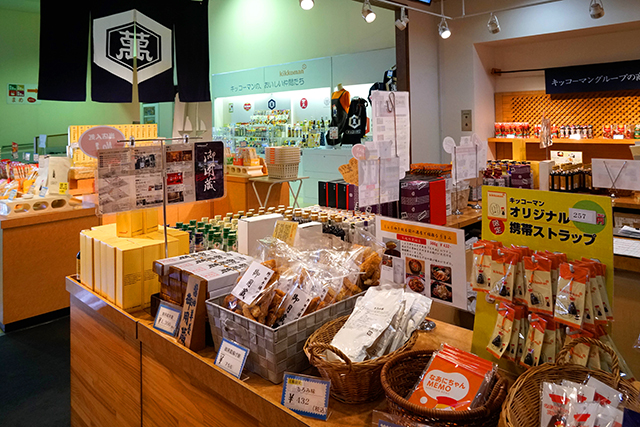
There’s a variety of Kikkoman products as well as local Noda products.
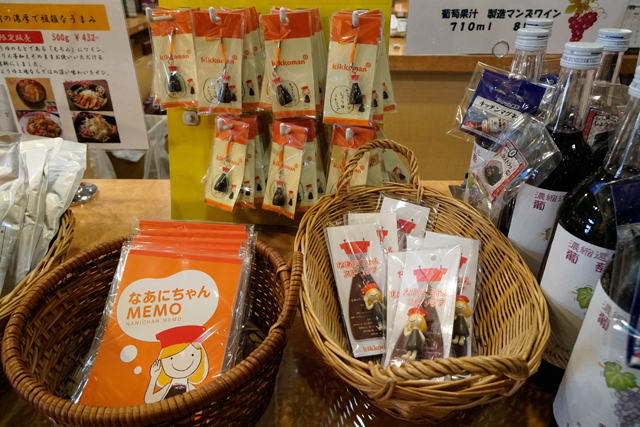
There’s merchandise featuring Naani-chan, of course.
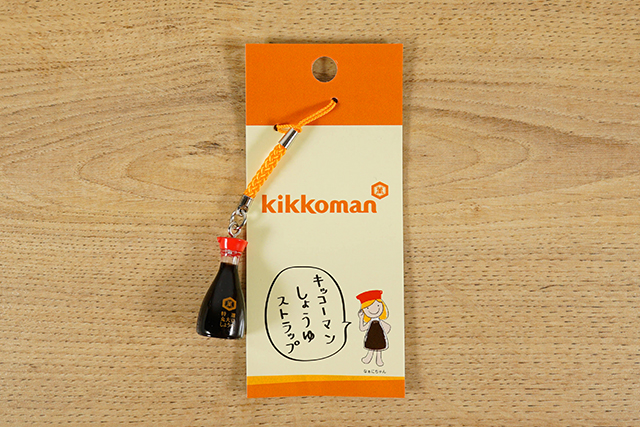
We’re more interested in the tiny soy sauce bottle, though.
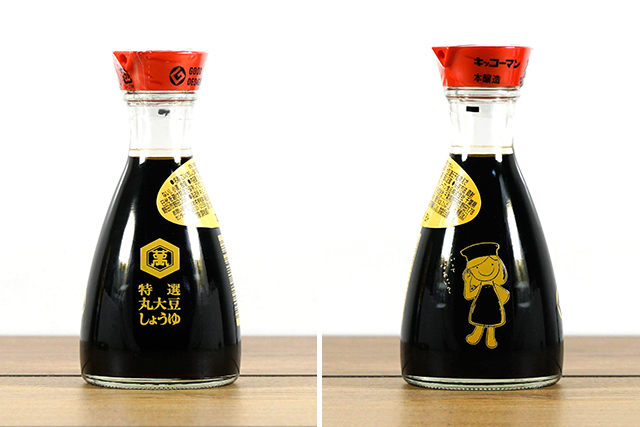
But we do pick up this 150 mL bottle of soy sauce which is a limited edition factory item featuring Naani-chan.
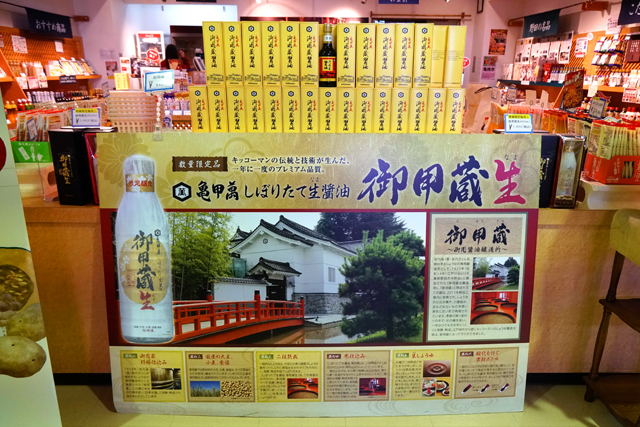
The gift shop sells 250 mL bottles of Kikkoman Goyogura Soy Sauce. This is the same soy sauce brewed in the Goyogura and enjoyed by the Imperial Household.
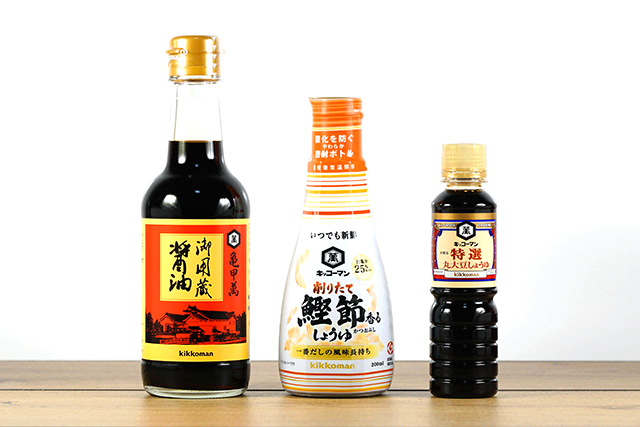
We leave with a bottle of the Kikkoman Goyogura Soy Sauce as well as the cutest mini bottle of standard Kikkoman Soy Sauce (it’s about 10 cm in height!). At the end of the tour, we’re also gifted each with a bottle of the
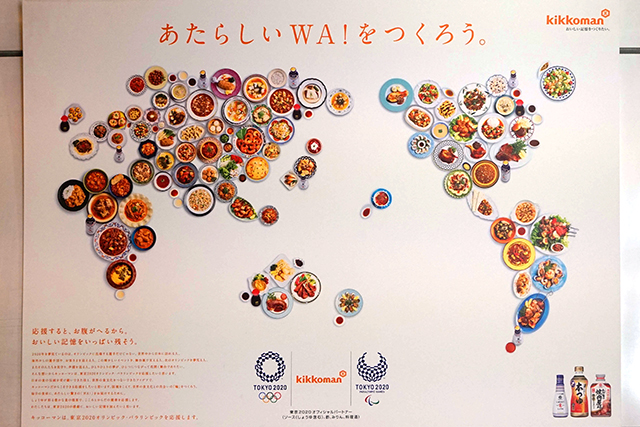
And with this map of the different dishes around the world using Kikkoman soy sauce, we head back to Tōkyō.
Nagareyama – Otakanomori SC
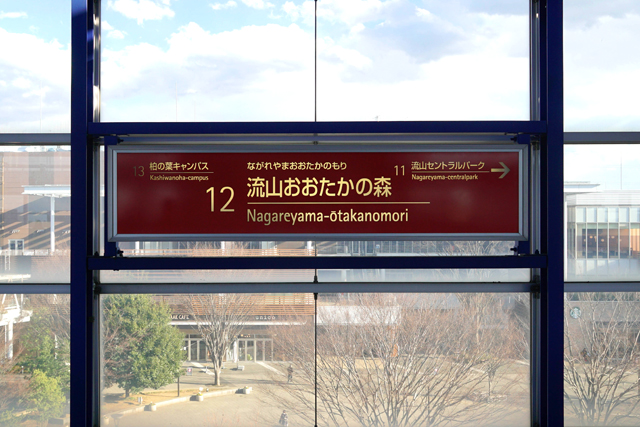
We change trains for the Tsukuba Express at Nagareyama-otakanomori.
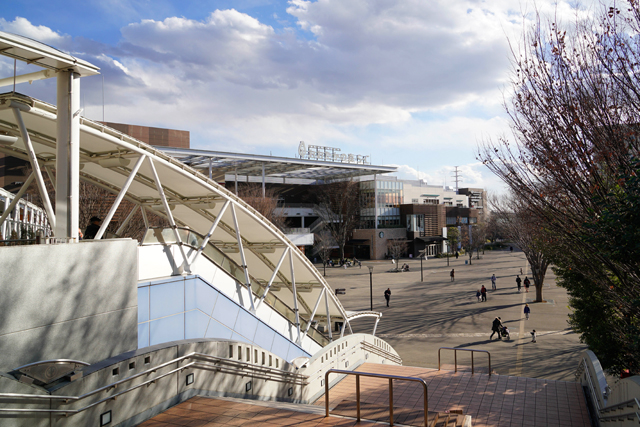
We take the opportunity to explore the area around the train station.
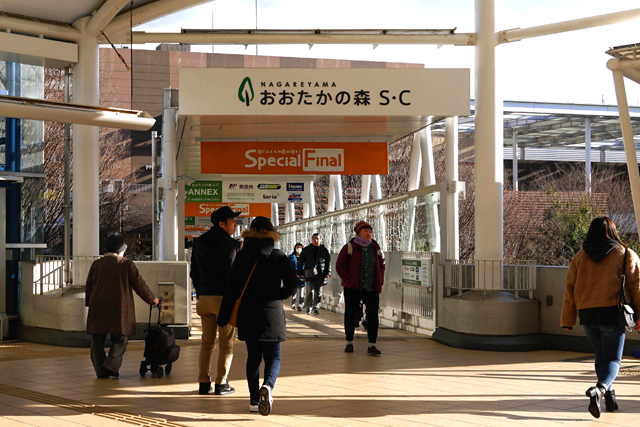
Nagareyama-otakanomori S C is a shopping mall next to the train station.
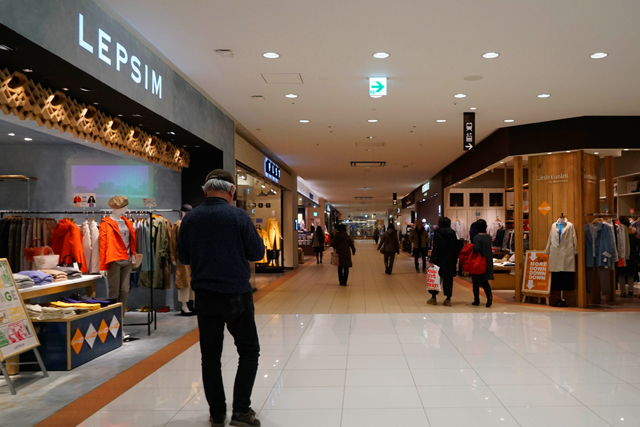
It’s a very suburban shopping mall, with none of the hustle and bustle of Tōkyō and ample space for shoppers.
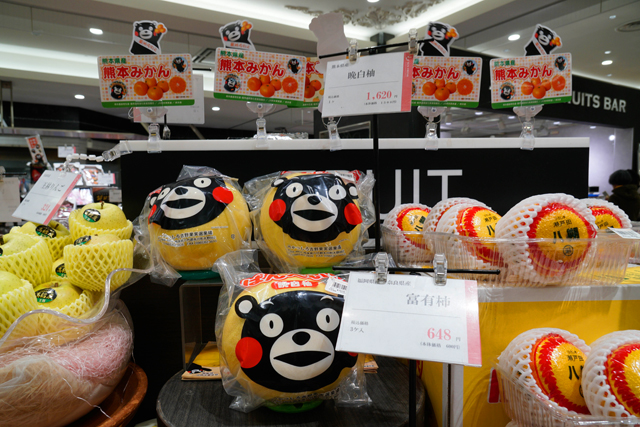
A more informal version of the basement of department stores serves as a food court and fruit market of sorts.
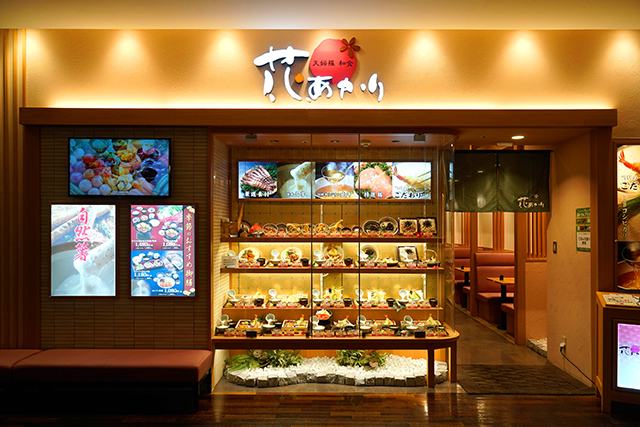
Heading upstairs, we choose Hana Akari after making a round of their restaurant floor.
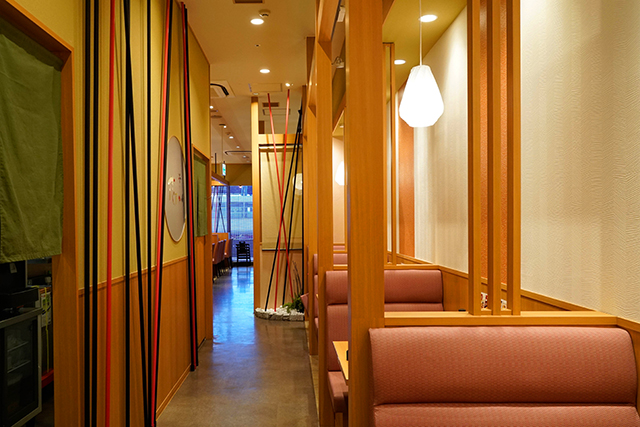
Hana Akari specialises in tempura washoku.
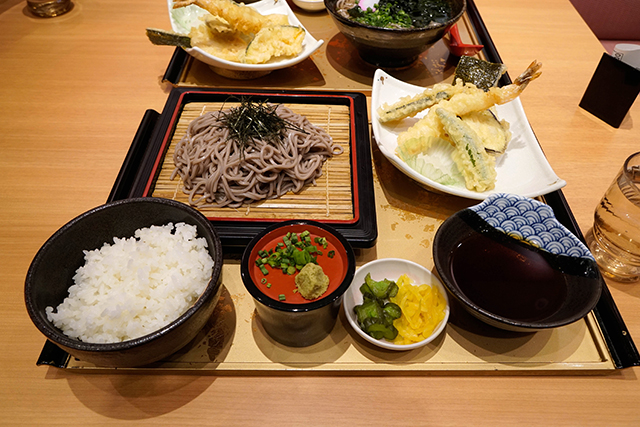
I order the Tempura with Cold Soba and Rice Set (¥950). Even in winter, I enjoy my soba cold, simply for the firmer texture of the noodles.
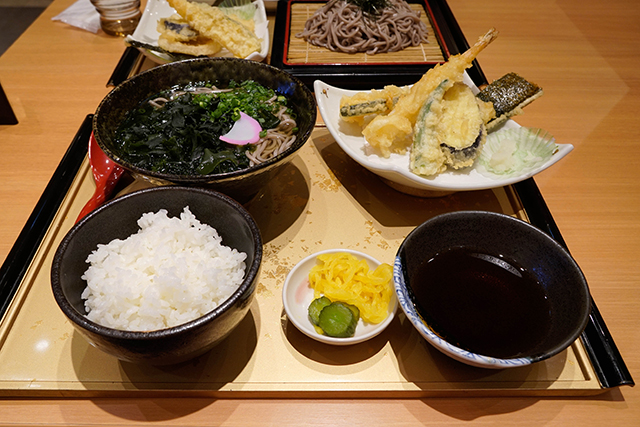
D orders the hot version: Tempura with Wakame Soba and Rice Set (¥950). D enjoys his hot soba with the generous helping of wakame. The tempura is crispy, although we’d wish there were more prawns (there’s only one) and fewer vegetables (eggplant, okra and seaweed).
Tōkyō – Sumida
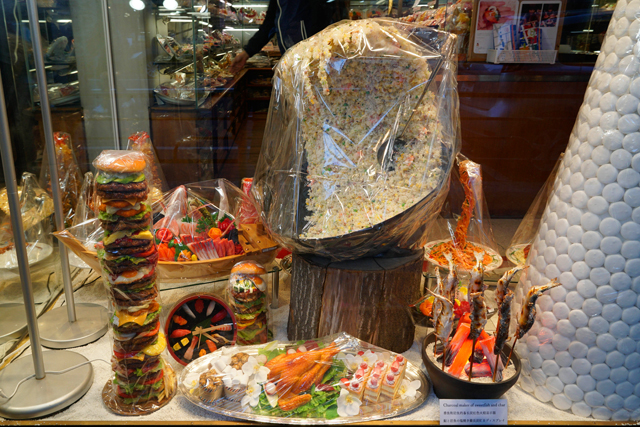
Back in Tōkyō, we look through the shops on Kappabashi Street for noren for our bathrooms at home. We’d caught on to the idea after seeing them in the bathrooms at the Kikkoman Soy Sauce Museum. We eventually pick up a pair with rabbits and pass by a wax sample store with giant hamburgers and fried rice.
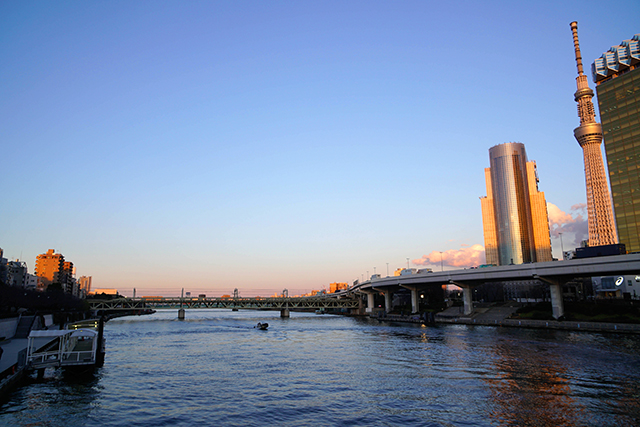
After a quick nap at the hotel, we walk towards Tōkyō Sky Tree in the late afternoon. This is the view across Sumida River.
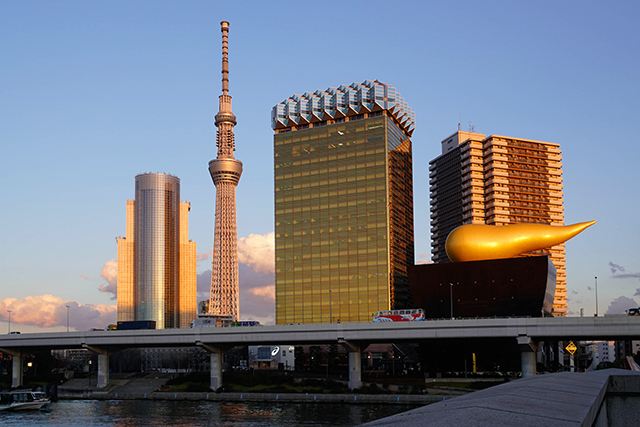
We knew Tōkyō Skytree was about 1.5 km from our hotel from Google Maps, so we set out in the direction of the tower.
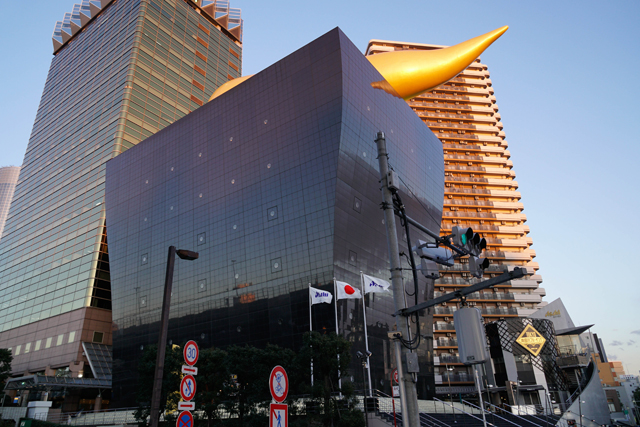
We pass by the headquarters of the Asahi Brewery with its ‘Golden Poo’ building.
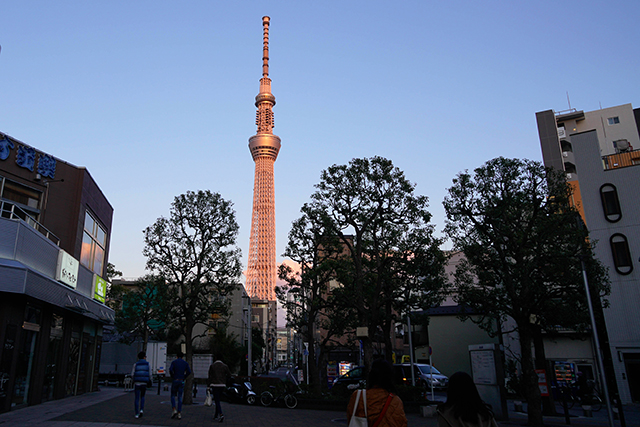
We walk through some rather suburban areas while walking in the direction of the tower. Somehow it feels a lot further than we’d thought.
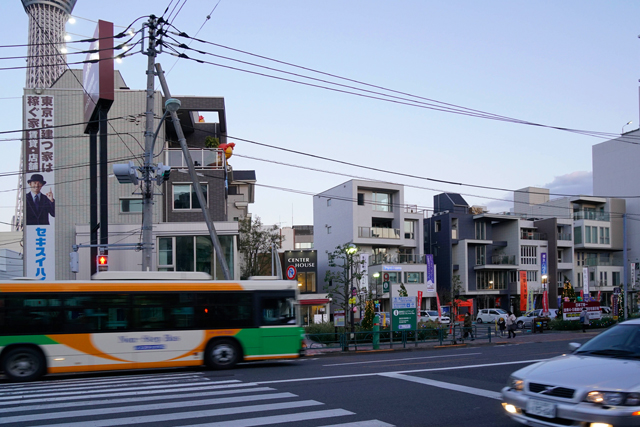
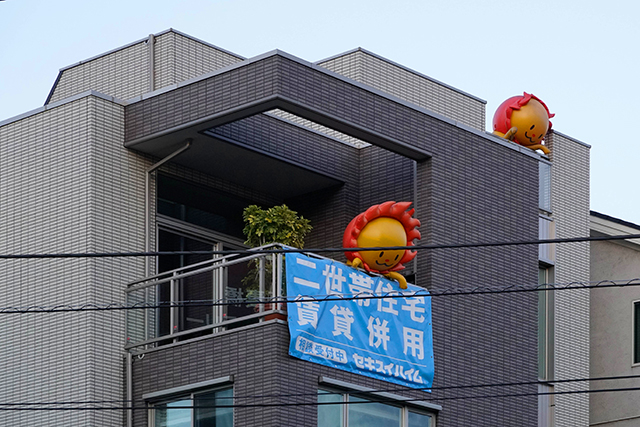
We pass by some display homes. A sun/lion mascot encourages you to have a look.
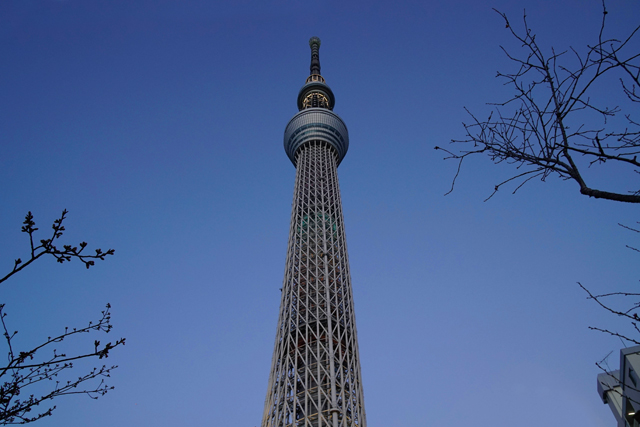
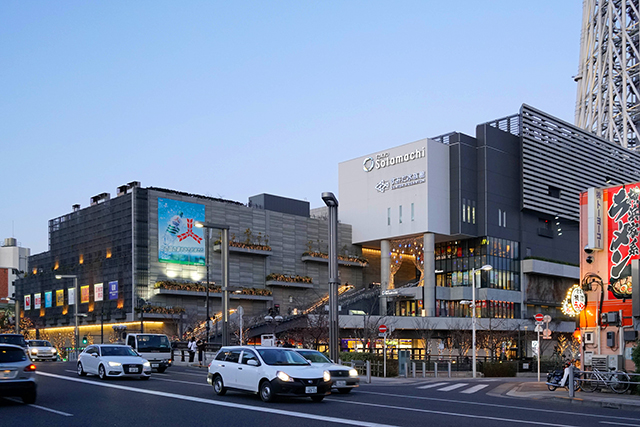
And finally, we can see the base of Tōkyō Sky Tree. This is our first time walking to Tōkyō Solamachi, the shopping mall beneath Tōkyō Sky Tree. Previously, we’d always caught public transport so this approach is new to us.
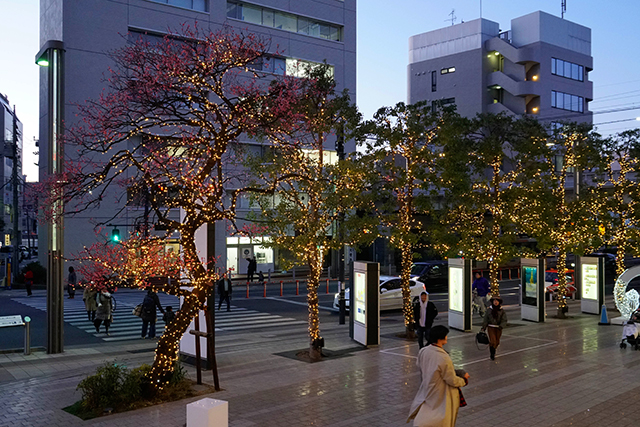
Outside the entrance are a number of trees lit up, including a plum tree in blossom.
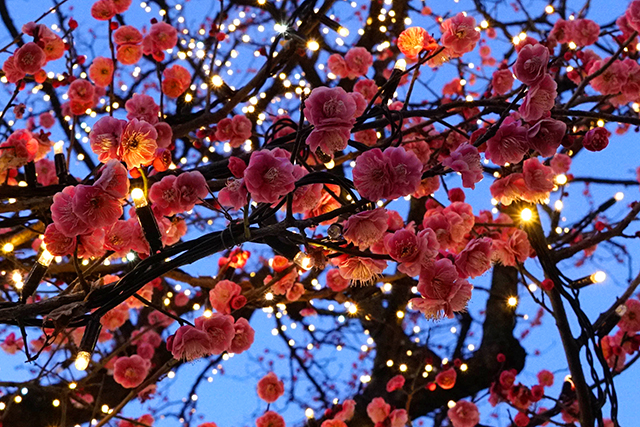
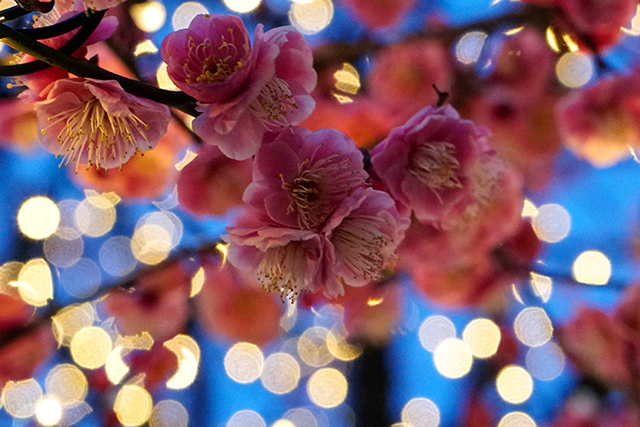
Plum blossoms are so pretty. The fairy lights give excellent bokeh too.
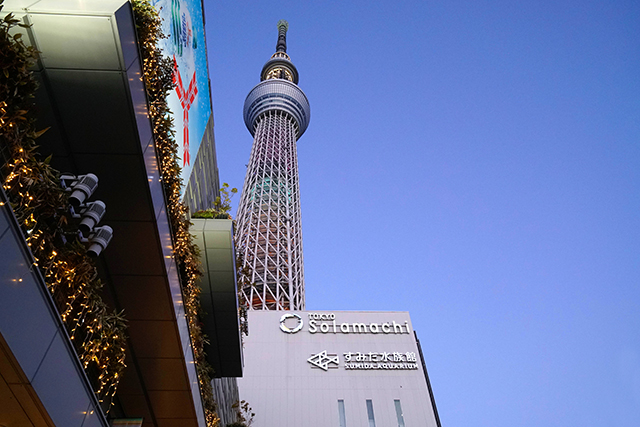
We make our way up the escalator to the shops.
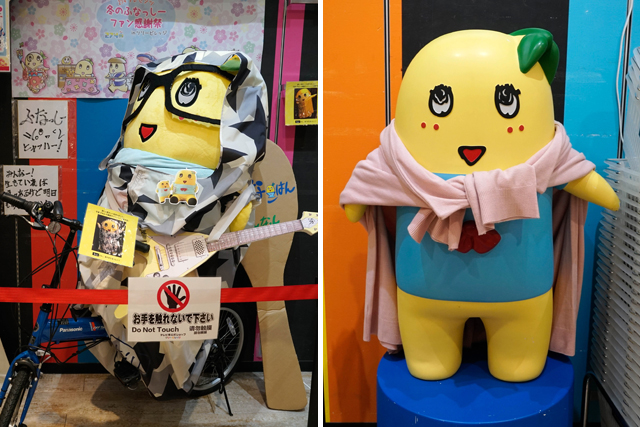
At the top is a shop dedicated to various characters from TV shows as well as Funasshī, a mascot character, unofficially representing the city of Funabashi, Chiba.
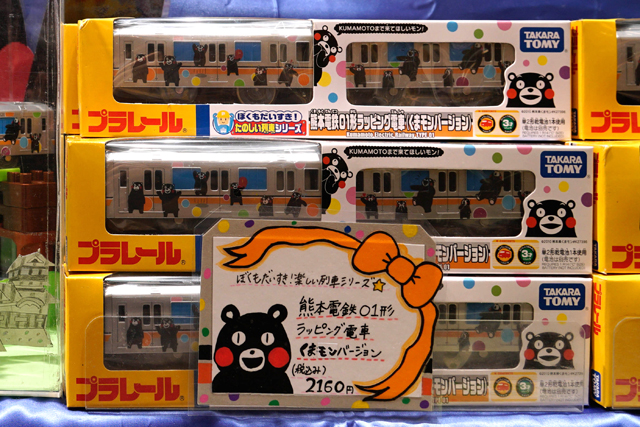
Downstairs, we pass by a toy shop selling train sets featuring Kumamon.
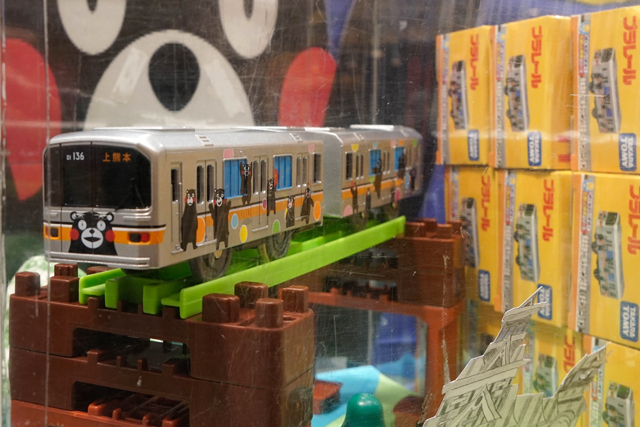
Kumamon featured on trains running on the Tōkyō Metro Ginza Line from March to May 2018.
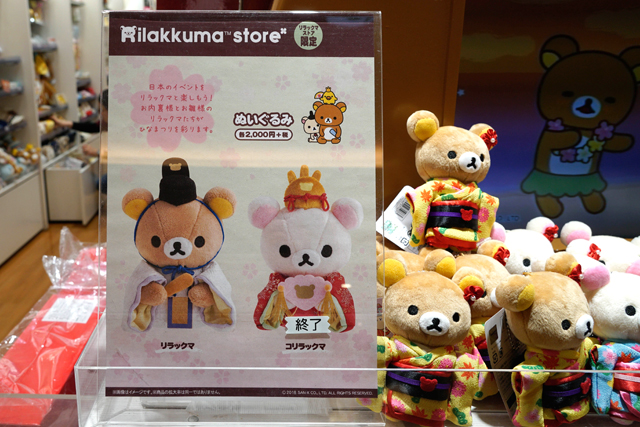
At the Rilakkuma Store, there are dolls in anticipation for hina matsuri.
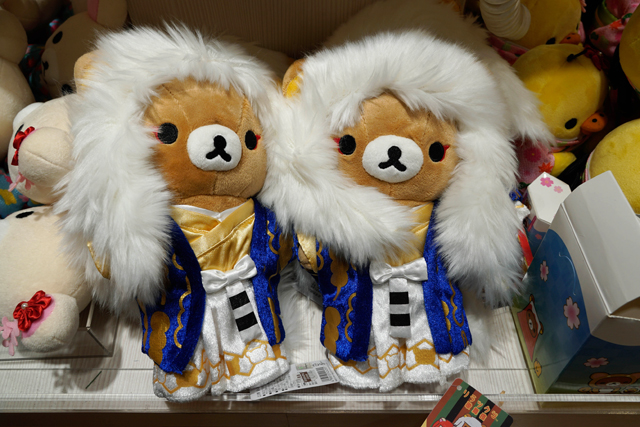
There are other dolls dressed up like a Japanese demon god.
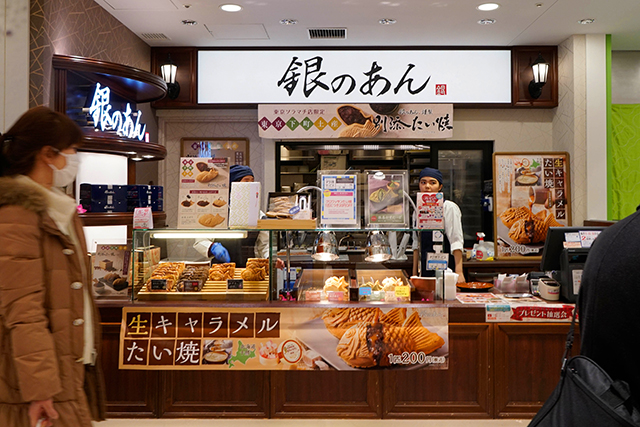
Back on the food court level, we visit Gin no An, a store that specialises in croissant taiyaki. We’re used to this store selling its products with Gindaco, a takoyaki store that we’re surprised to find a standalone store.
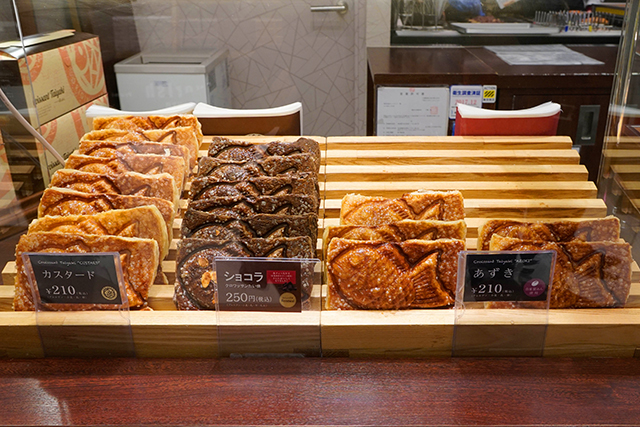
We’d tried the chocolate, azuki and custard versions during the Sapporo Snow Festival in Hokkaidō. The chocolate had a rich chocolate flavour with a chocolate flavoured pastry and filling and nutty toasted almond slivers on top. The azuki was delicious with its red bean paste centre, while the custard had an enjoyable vanilla bean flavour with crystallised sugar on top that added crispness.
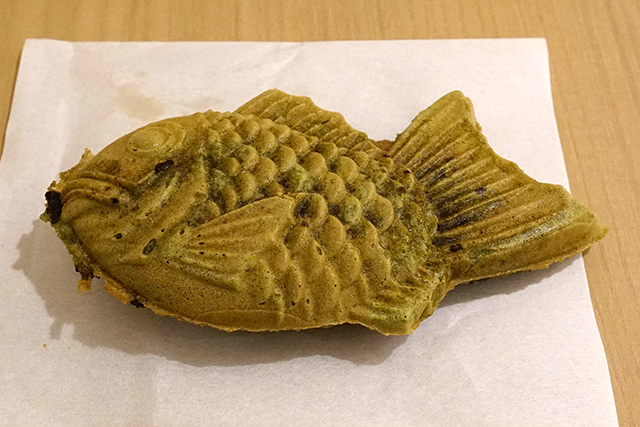
Having tried all the croissant taiyaki flavours, we try the matcha taiyaki we’d not seen before. They’d run out from the display cabinet so this one comes out piping hot.
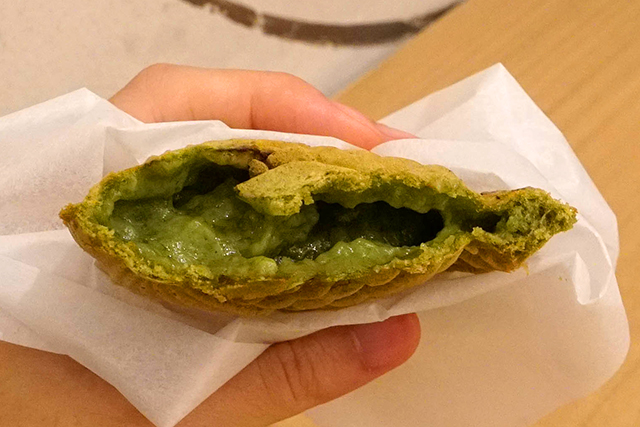
There’s a rich matcha flavour with a hint of bitterness that’s balanced well by the sweetness. We enjoy the gooey centre.
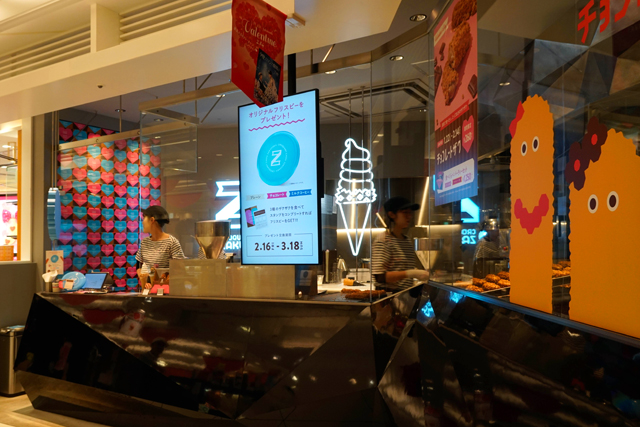
We make a stop at the Zaku Zaku to try their Valentine’s Day special: a chocolate zaku.
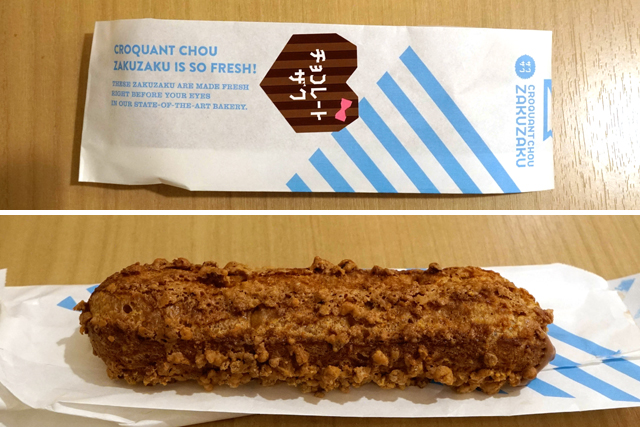
We had a minor hiccup where the lady gave us a normal custard zaku instead of a chocolate zaku with its chocolate custard innards inside a chocolate choux pastry. It’s every bit as delicious and crunchy as we’d hoped. In fact, so delicious I forgot to take a picture of the innards!
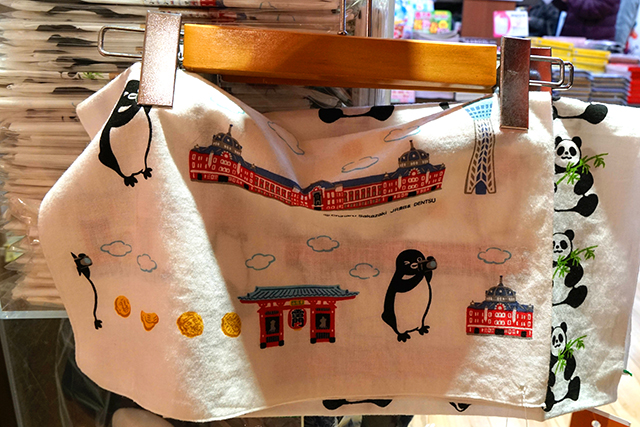
At another store, there are tea towels featuring the Suica penguin and other Tōkyō landmarks.
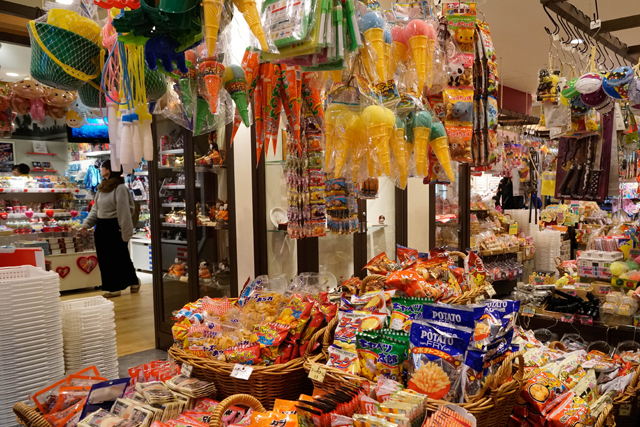
A store sells all kinds of dagashi that you’d ever want to try.
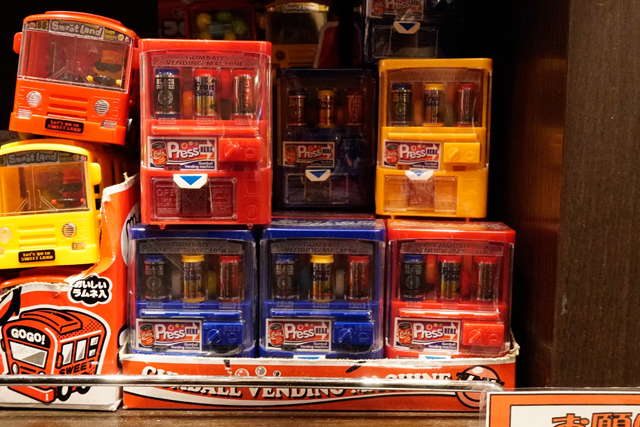
This mini gumball machine from a soft drink vending machine is cute.
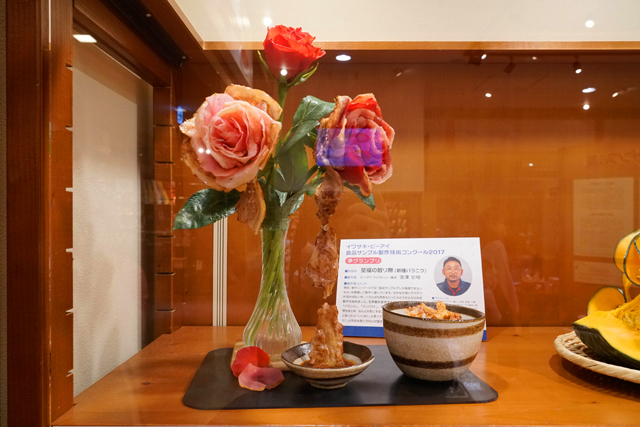
We pop into the Ganso Shokuhin Sample-ya for a look at their new wax creations as part of the Iwasaki Be-I Fake Food Fashioning Technique Contest.
[The contest is] an internal competition of craftsmanship among the employees held by Iwasaki Bei every year during the last 45 years since the first in 1968, for the purpose of developing the skill of manufacturing fake foods. Although craftsmen usually have to make the fake foods precisely according to the order of the client restaurants, they are allowed to create what they want to make freely only in this event. They have created numerous masterpieces such as super-real fakes which are indistinguishable from the actual foods or the works with lots of playfulness and humors. These activities continued for years have contributed to the new technology, arts of expression and development of new products.
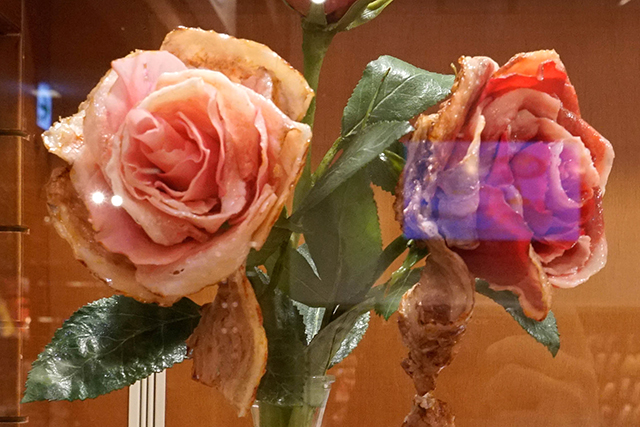
These were bacon roses. Who would have thought?
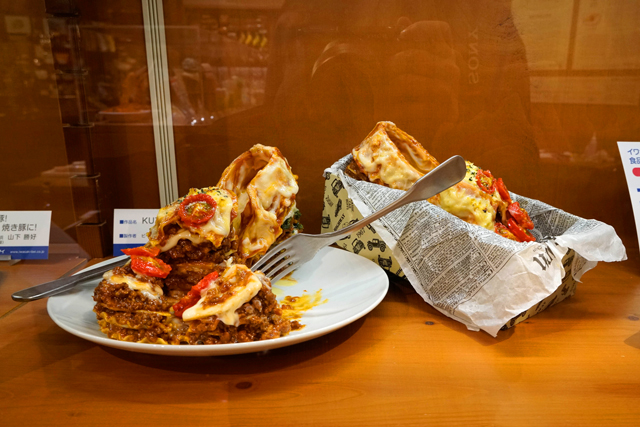
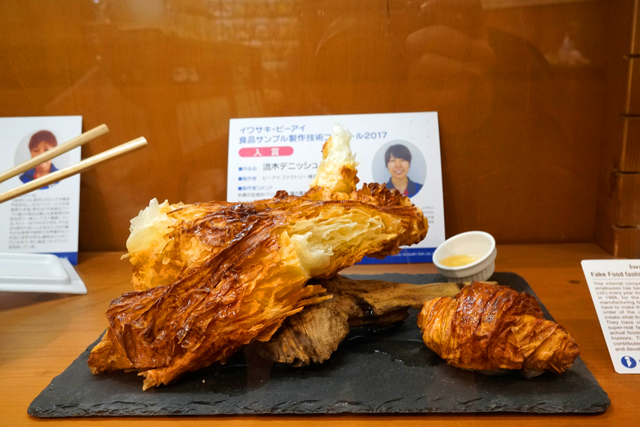
This lasagne looks good enough to eat as does this super flaky croissant. Yum.
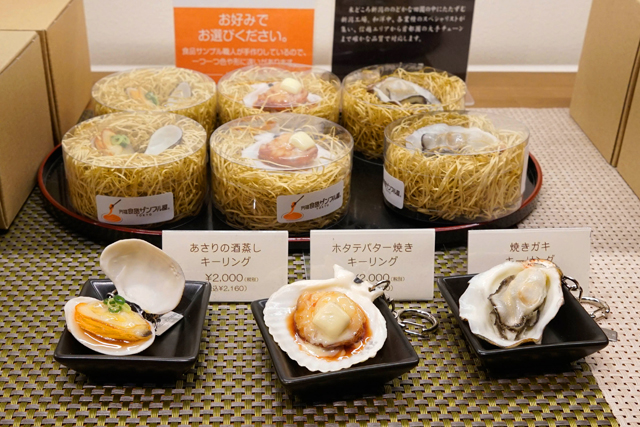
There are super-real shellfish keychains on sale for ¥2,000.
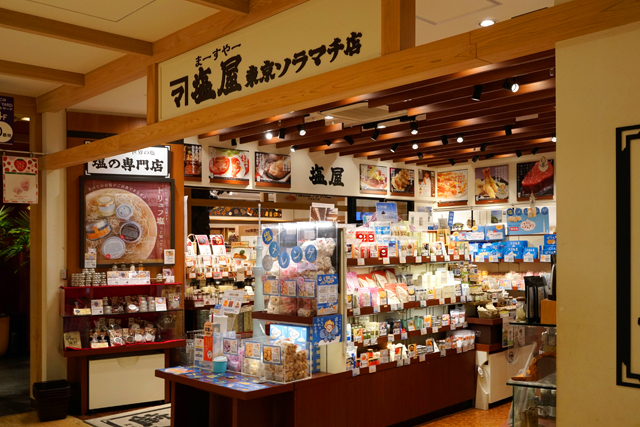
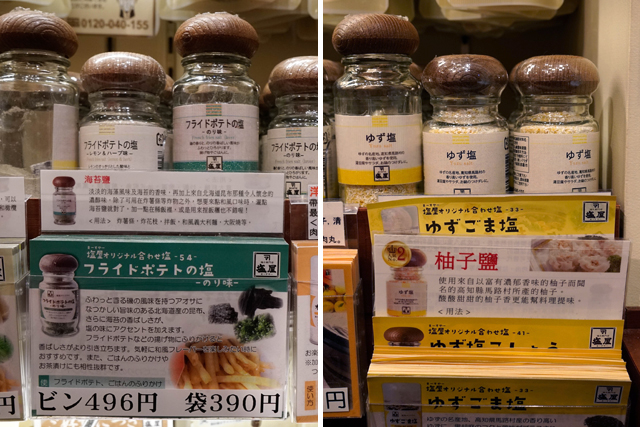
Nearby is Masuya, a speciality shop for all kinds of salt for every occasion. All the salt can be sampled in store. We’re fans of their Fried Potato Salt which is delicious seaweed salt. They also have a yuzu salt.
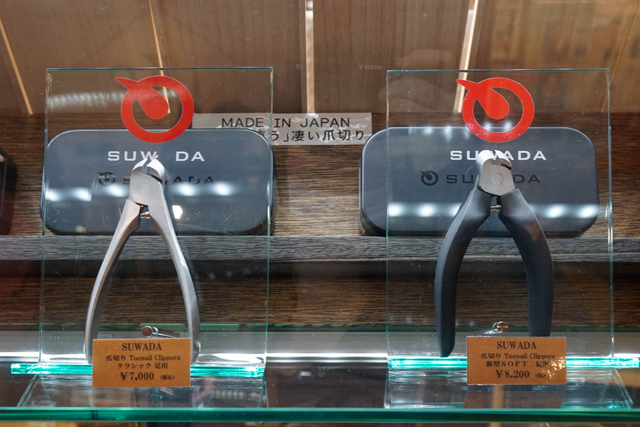
Elsewhere at Tower Knives Tōkyō you can be super serious nail clippers for ¥80.
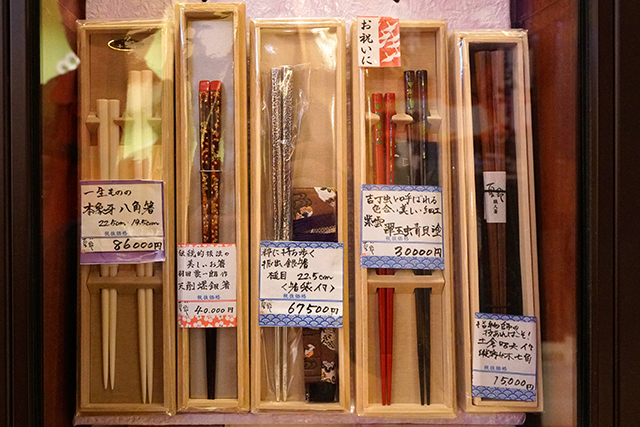
If chopsticks are more to your taste, there are single pairs selling for ¥67,500.
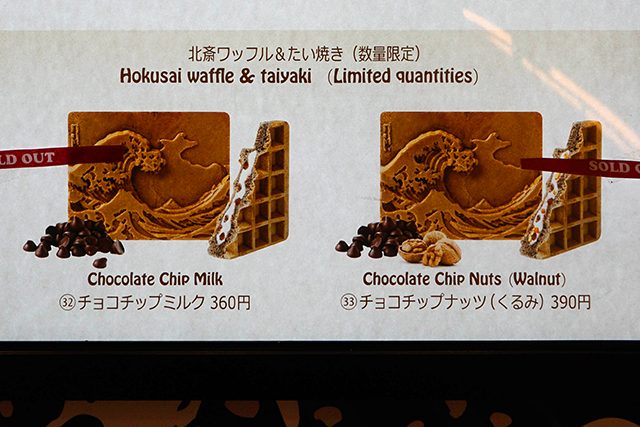
We pass by a crepe store also selling waffle taiyaki in the shape of the famous painting by Hokkusai. We’re sad they’re out of stock.
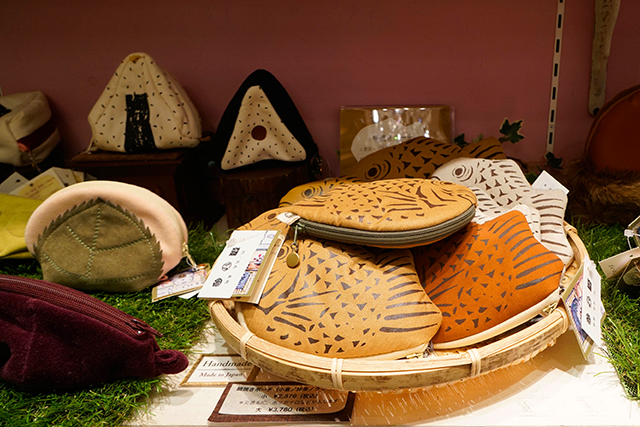
Another store sells these cute coin pouches in the shape of taiyaki, onigiri, sakura mochi, chestnut and eggplant. They’re handmade and around ¥3,780.
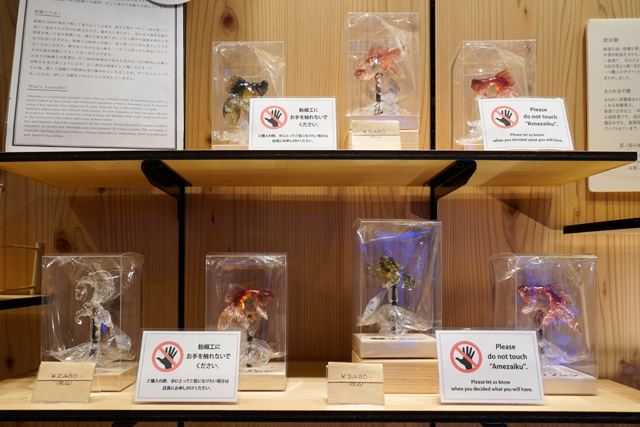
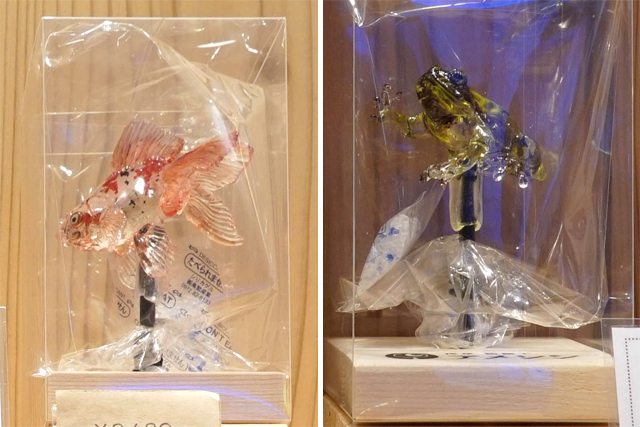
A store specialising in amezaiku, Japanese candy craft artistry, fascinates us. There are beautiful fish and frogs made from taffy.
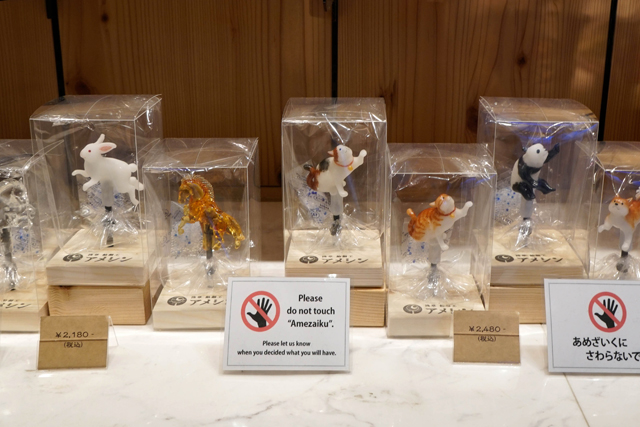
…as well as rabbits, horses, cats, dogs and even pandas.
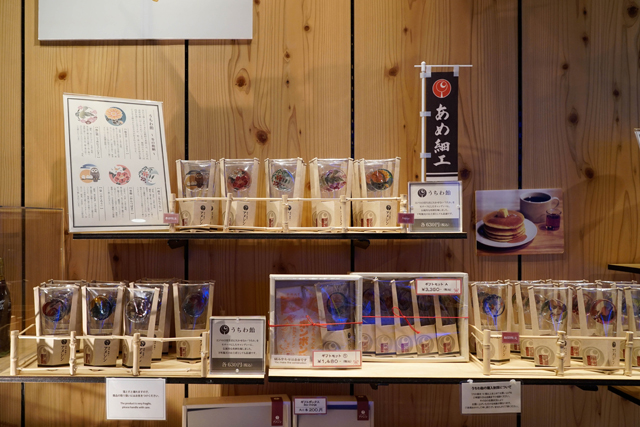
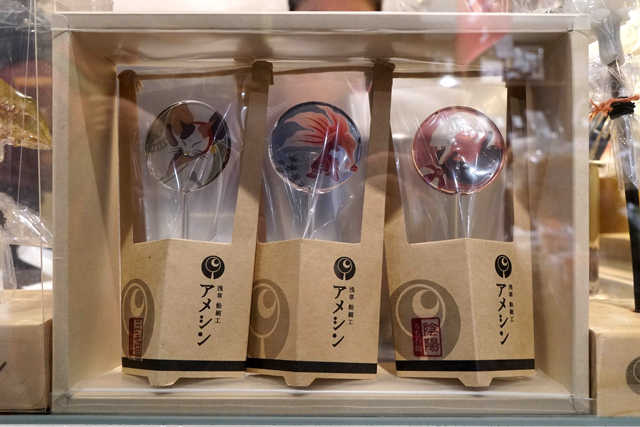
These lollipops featuring coloured discs are just as beautiful.
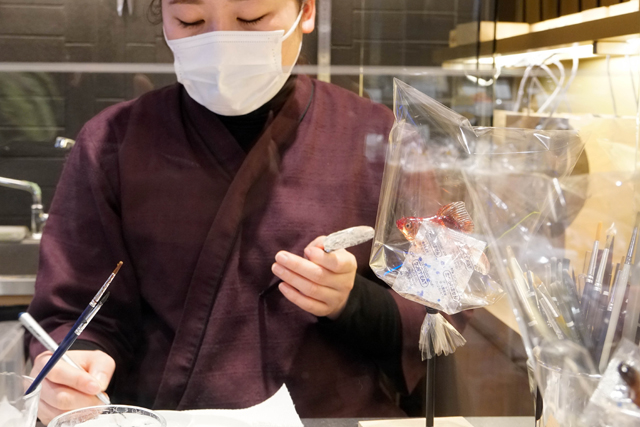
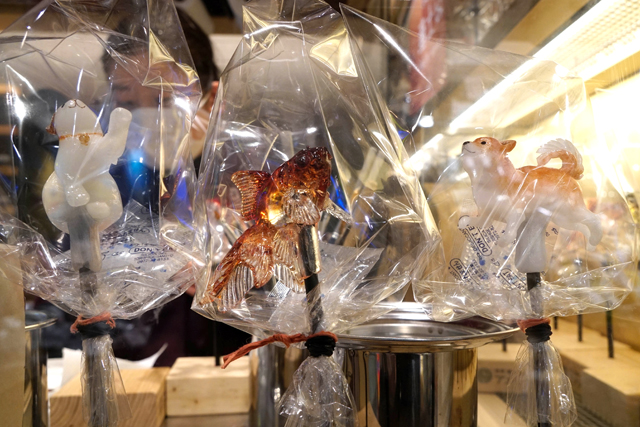
There’s an ameizaku artist in-store painting one of the circular discs. Sitting in front of her are also dish, cats and even a shiba inu she’d completed earlier.
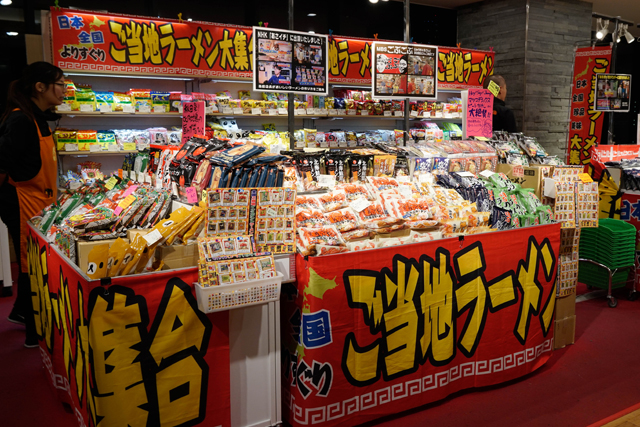
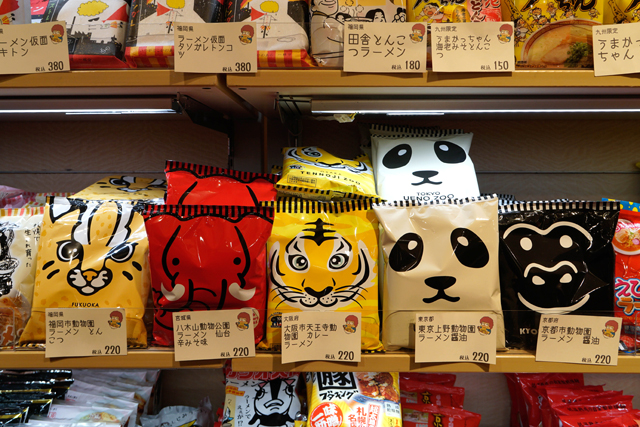
We encounter another set up for the ramen fair showing different types of instant noodles from around Japan. This is the first time we’ve seen so many of the zoo themed ramen in one place. It’s missing the polar bear one for Maruyama Zoo in Sapporo, alas.
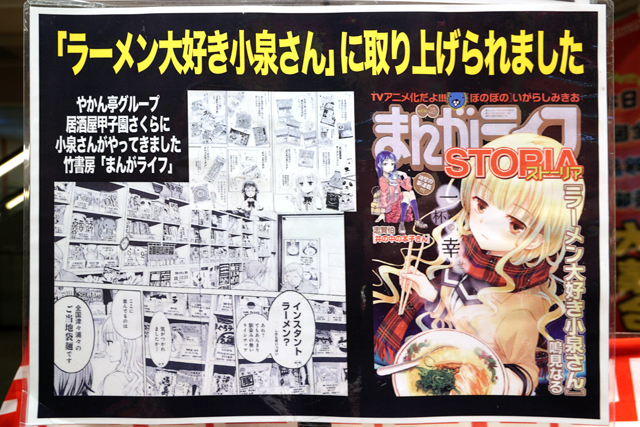
There’s a manga segment showing Koizumi-san from Ramen Daisuke Koizumi-san visiting the ramen fair with her classmates,
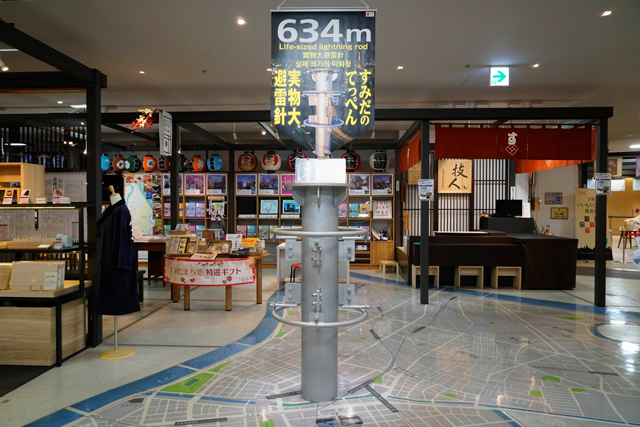
We make a trip to the gift shop for Tōkyō Sky Tree. Here we see a life-sized replica of the lightning rod at 634 m.
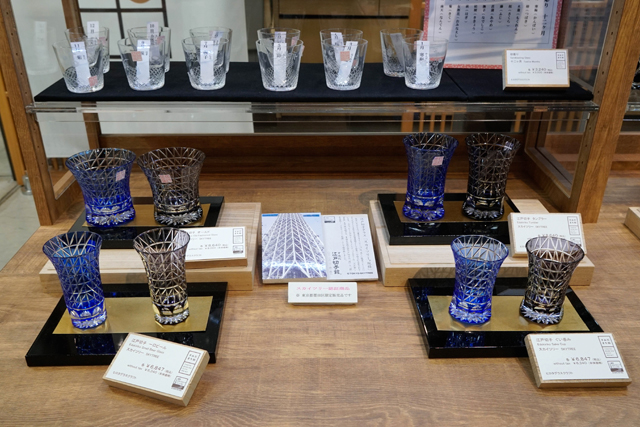
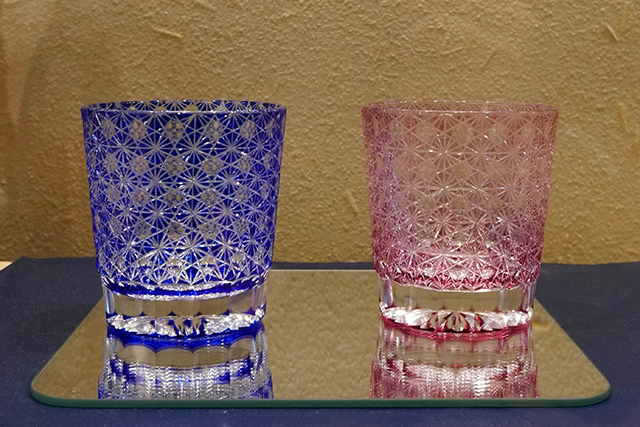
There’s kiriko glass that featured the sharply cut lines of the structure of Tōkyō Sky Tree. For the more traditional there are ones in more conventional pattern. So pretty!
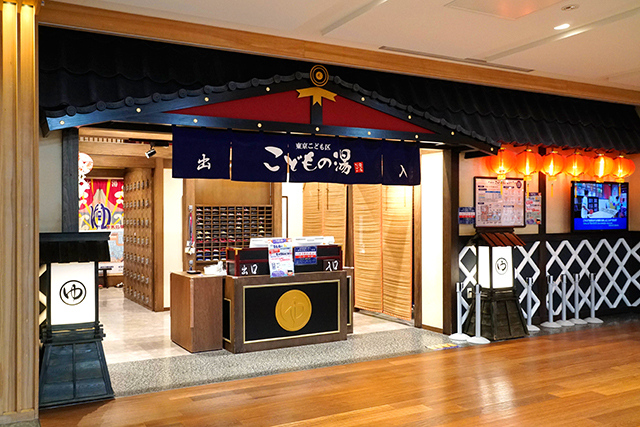
Opposite the gift shop is Kodomo no Yu, a ball pool for children inspired by traditional Japanese hot springs.
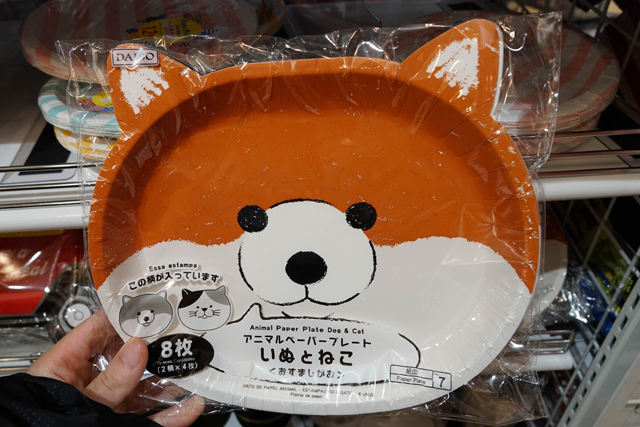
At the Daiso we spot these cute shiba inu paper plates.
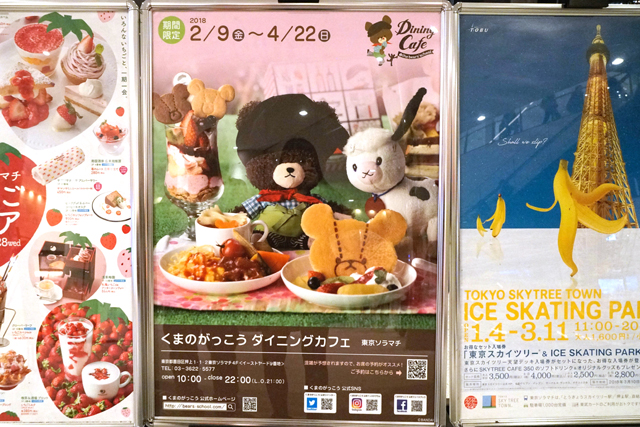
There’s a Dining Cafe for children and their bears happening between February and April.
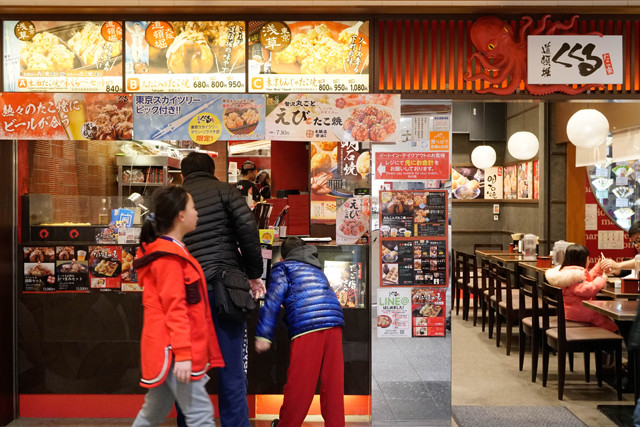
On our way home, we pass by Kukuru. They have their main shop in Dotonbori with a giant red octopus above their door.
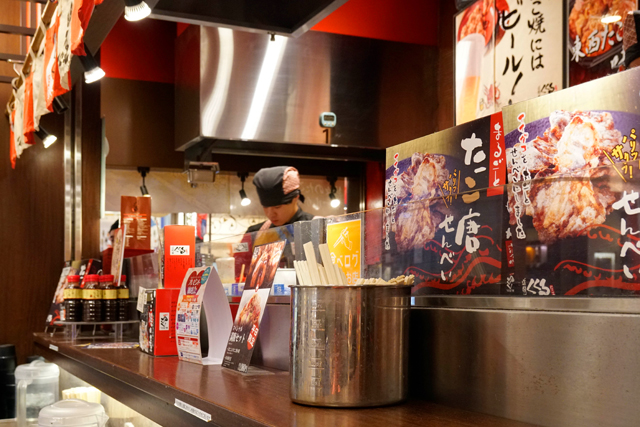
Having gone most of our trip without takoyaki (well, since our adventures with Gindaco during the Sapporo Snow Festival) and not being especially hungry, we stop here for dinner.
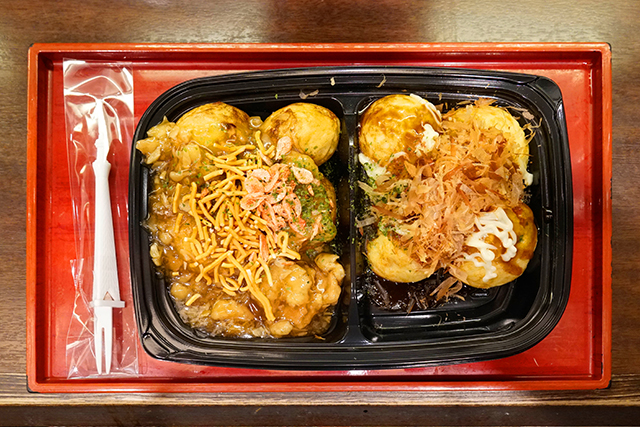
One of their menu items that have intrigued us is their Sky Tree limited item: a comparison of 4 each of Eastern and Western Japan style takoyaki. It also comes with a Sky Tree pick for you to eat it with.
The Eastern Japan style is doused in some sort of egg gravy and sprinkled with Baby Star ramen and tiny dried shrimp, while the Western Japan style has the mayonnaise, aonori and bonito flakes to which we’re accustomed in Ōsaka. We much prefer the Western style – the moisture from the gravy did not pair well with the already soft innards of the takoyaki, although we do enjoy the added flavour from the shrimp.
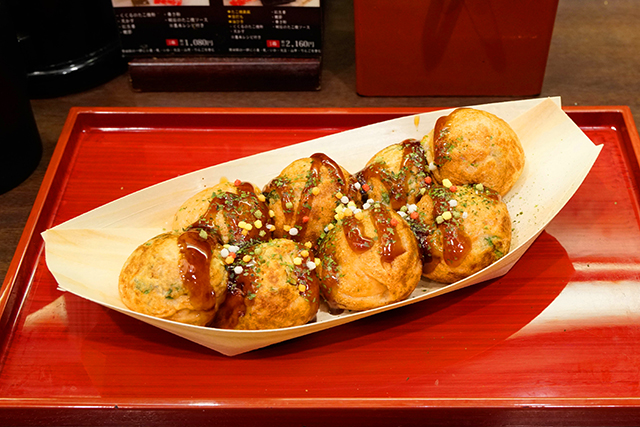
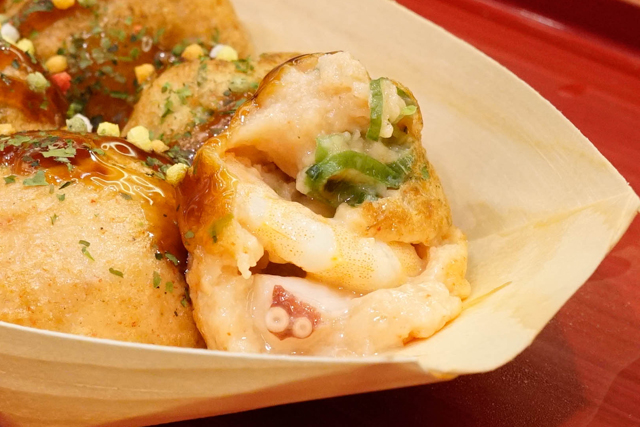
We also try the Ebi Takoyaki with whole shrimp in addition to octopus and sprinkled with flavoured and dehydrated seasoning. We enjoy this one very much, but nothing is quite like the simple flavours of the original.
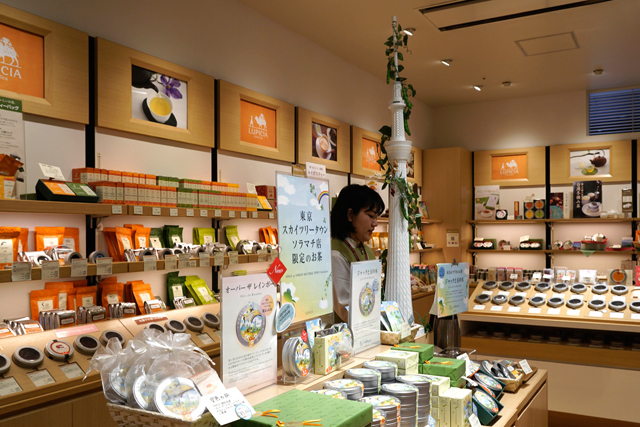
Across from Kukuru is a Lupicia store. I still have a weakness for their collection, but the upside I own so many that there aren’t too many I want to add to it.
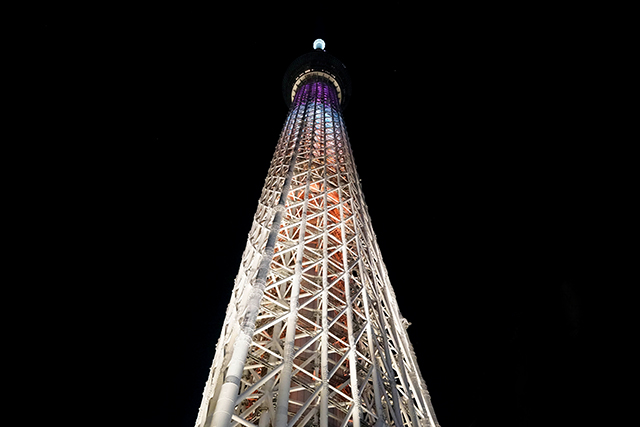
Sky Tree is lit up at night. It was pouring rain the last time we visited, so we’re glad to be able to appreciate it without wrestling with umbrellas.
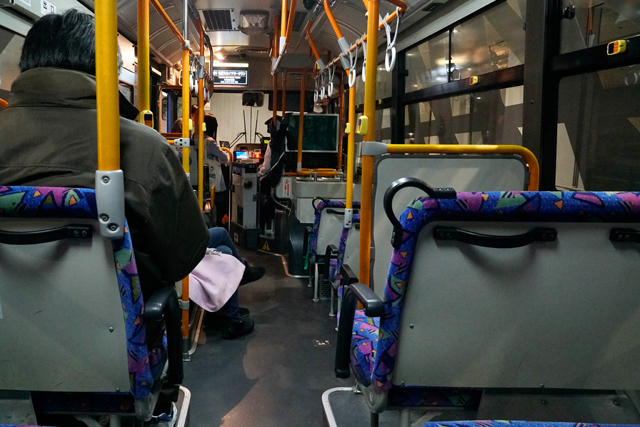
After making our way to the bus terminal we’re relieved that we’ve made the last bus from Tōkyō Sky Tree back through Asakusa to Ueno.
Tōkyō – Asakusa
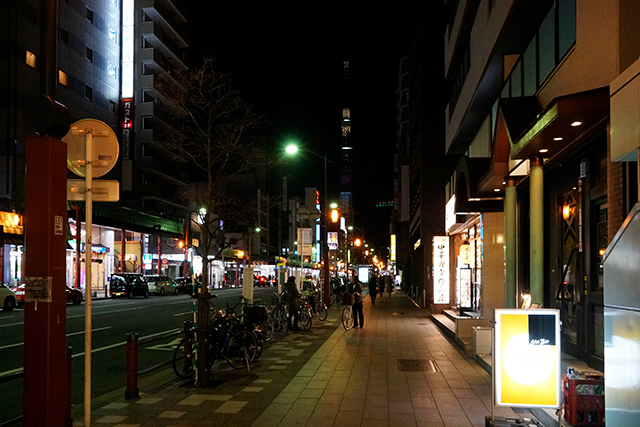
Back at Asakusa, we get off near Kaminarimon. We can see Tōkyō Sky Tree in the background. It’s really not that far distance-wise but it’s late, it’s dark and it’s cold.
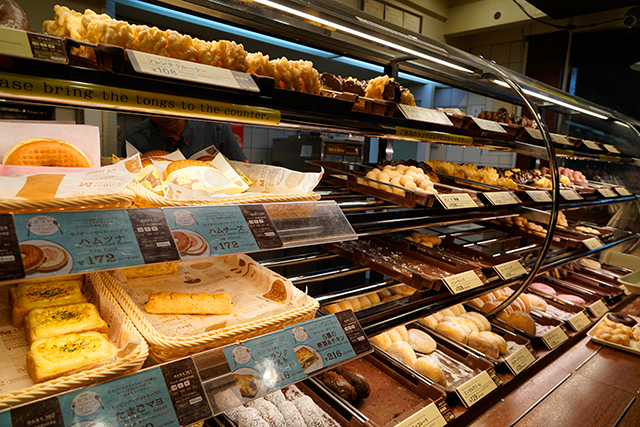
We pop into Mister Donut for an after dinner snack.
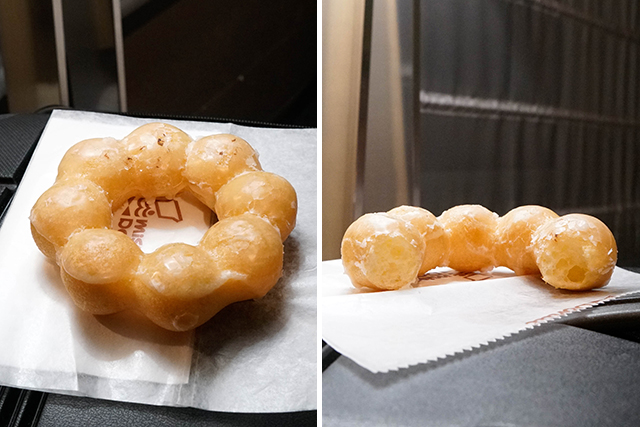
This is the Pon de Ring (¥108). Each ‘ball’ on the ring is perfectly bite-sized. This is my favourite of all the flavours.
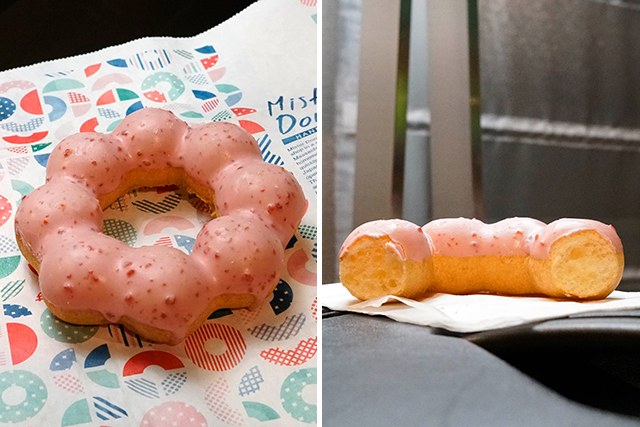
This is a Pon de Strawberry (¥108). I just can’t get enough of their mochi doughnuts. Yum!
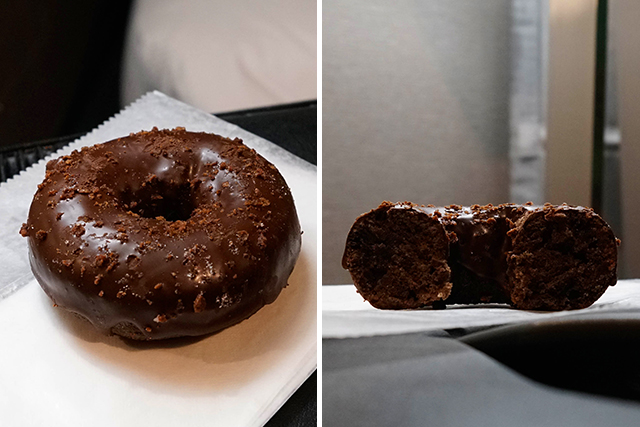
This is the Double Chocolate (¥129). We enjoy the rich, yet light crumb of the baked donut with the chocolate icing adding moisture.
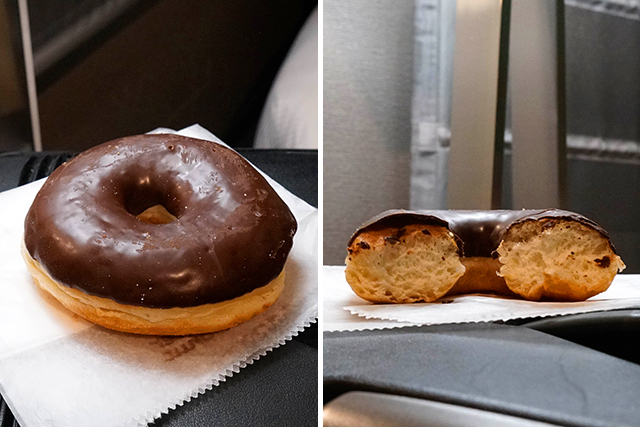
This is the Choco Ring (¥129). It’s a lighter version of the one above, with the light and fluffy dough instead of the cake crumb. It’s a good donut.
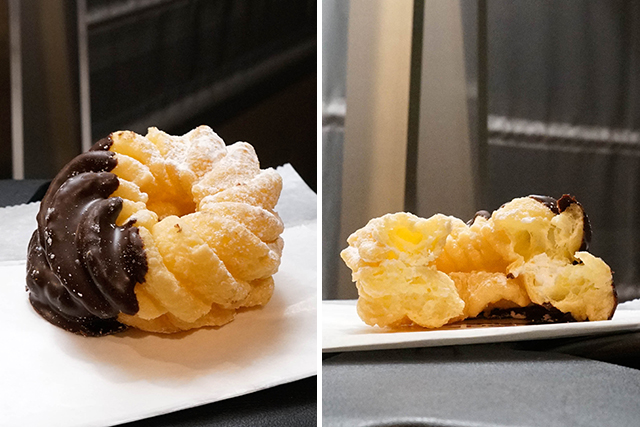
Finally, this is the Angel French (¥140). The dough has a pleasant egg flavour with whipped cream sandwiched in between and then half dipped in chocolate. Yum!
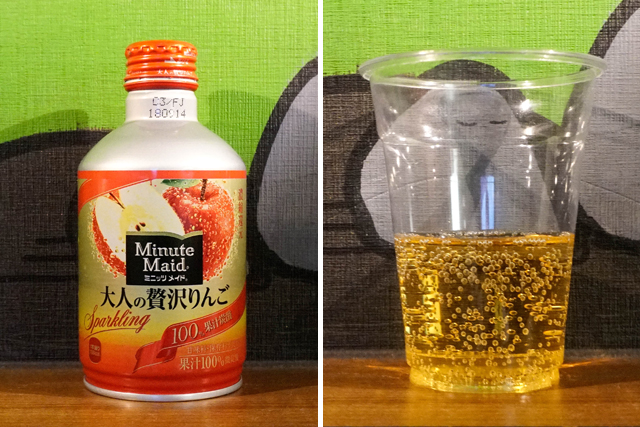
We clear our palates with some sparkling apple juice we picked up in Sapporo. It has a less sweet taste targeted at adults and available only in Hokkaidō. We enjoy its bright and refreshing apple flavour with tiny bubbles.
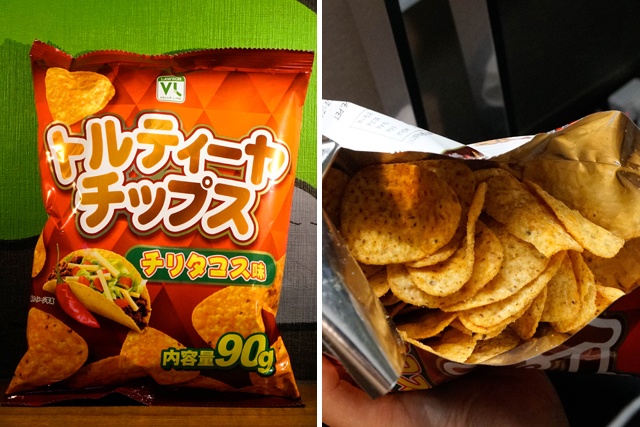
D finishes off the night with some Tortilla Chips in chilli taco flavour. They’re much like corn chips with taco seasoning – not spicy at all.
Next up, we end our time in Tōkyō with a tour of Ishikawa Brewery and then some shopping around Shinjuku.