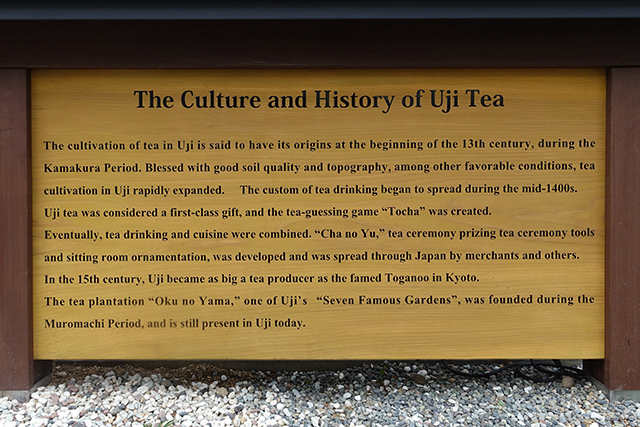
If the previous day on our Japan 2015 trip was dedicated to sake, then this next day would be dedicated to green tea (if there was a way to have a day in Japan dedicated to coffee, we’d be right there!). Why? Because I love tea, and felt like we didn’t do Uji in Kyōto properly in 2011.
The Uji area has a long history with the cultivation of green tea and is an important production and distribution centre of superior quality green tea. This time, we’re visiting as a side trip from Ōsaka.
Ōsaka – Kitahama
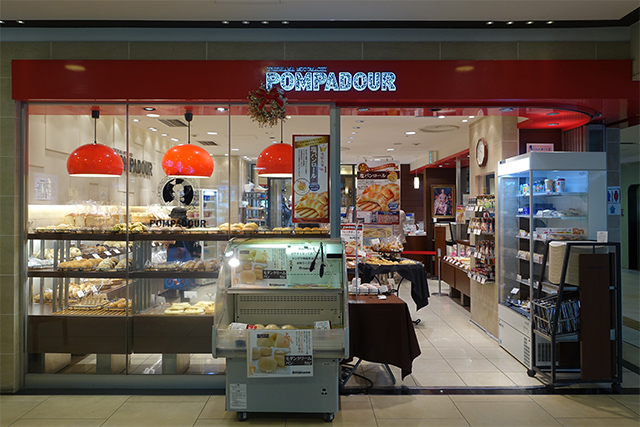
We change from the subway to the train at Kitahama where we make a pit stop for breakfast and pick up some some goods from the bakery.
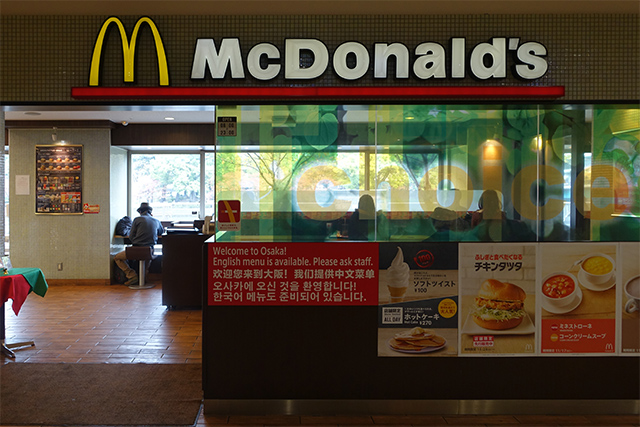
The bakery goods get saved for later in the day, as D spots a McDonald’s and is eager to try out their breakfast menu.
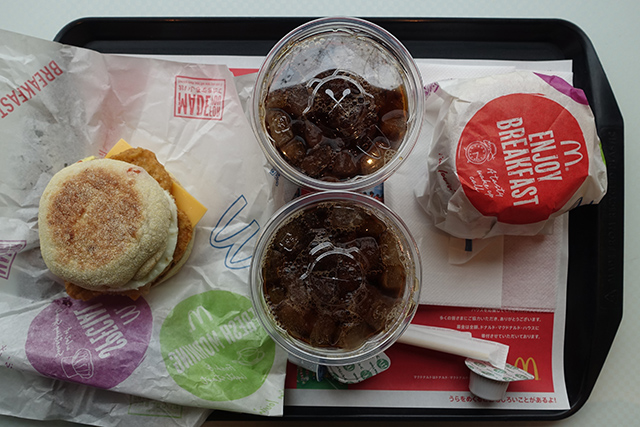
They offer an array of options for breakfast beyond the bacon or sausage we get in Australia. There are vegetarian patties as well, but we go for a chicken schnitzel muffin set with iced coffees.
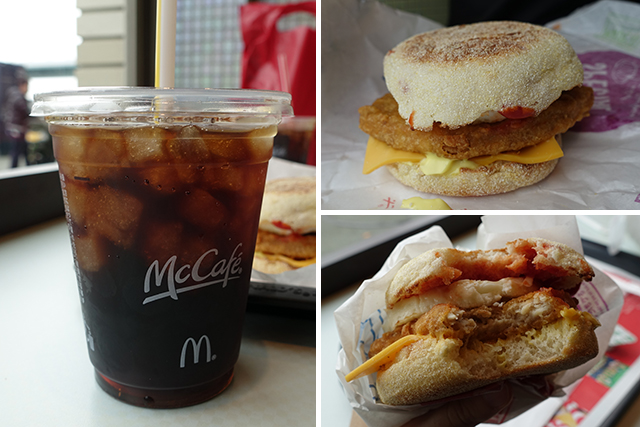
The iced coffees at McDonald’s are really quite decent – as a rule of thumb, if I can drink it without milk or sugar then it’s a decent coffee. The chicken schnitzel muffin comes piping hot with egg and cheese and tomato sauce – it’s quite the hearty breakfast for a long day of sightseeing.
Kyōto – Uji
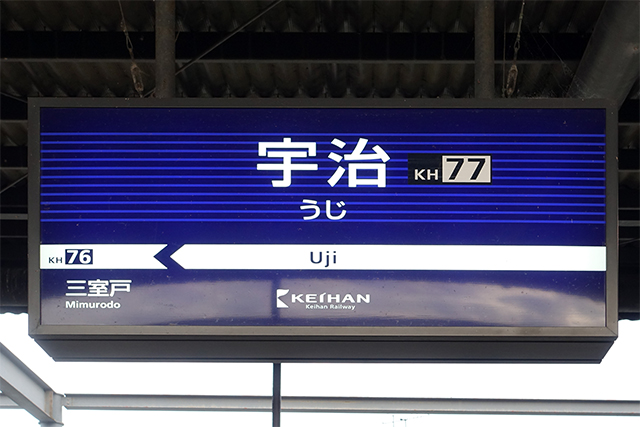
Forty minutes and two trains later, we’re at Keihan Uji Station.
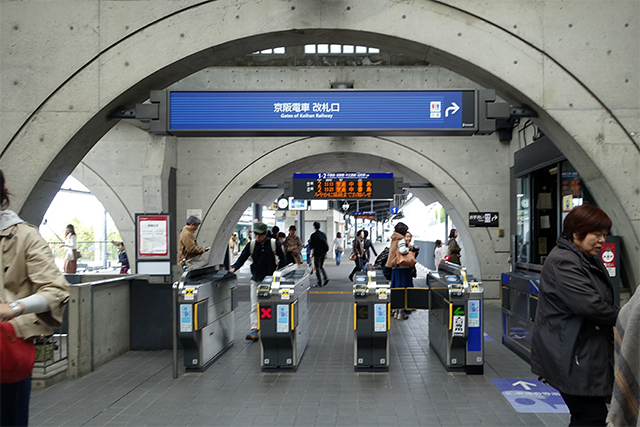
The Keihan Uji Station has a distinctive bunker-like appearance.
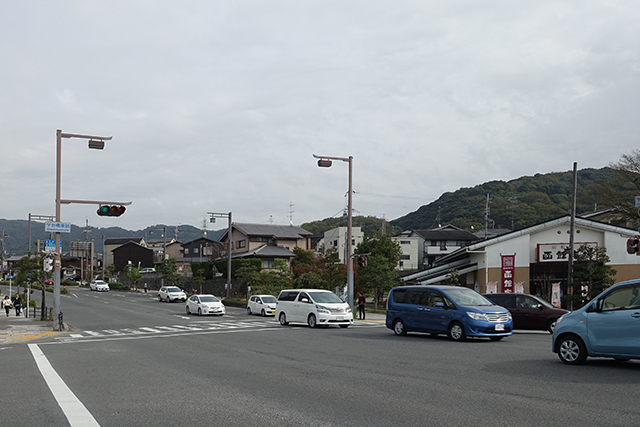
Having come into Uji via the Keihan, rather than the JR, line, we begin down the shops lining the eastern side of Uji River that runs through the centre of the town.
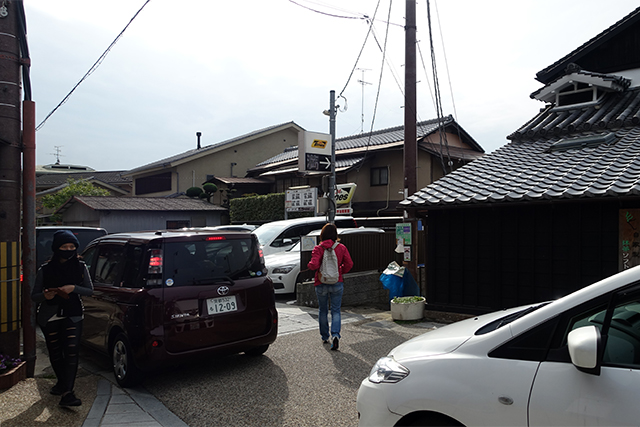
It’s a narrow street wide enough for one car, so there’s quite a traffic jam of humans and cars.
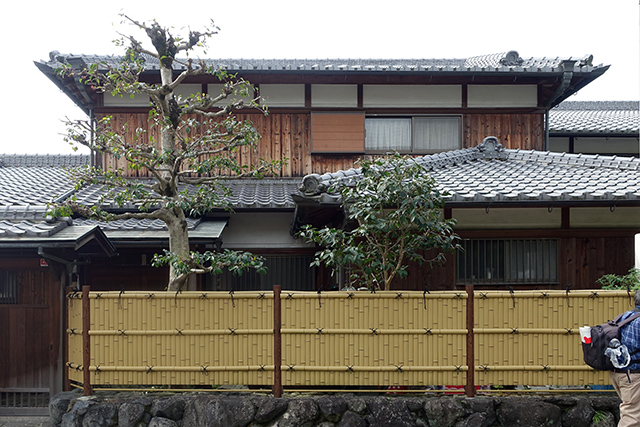
While we wait for the traffic, we see some wooden residences along the street.
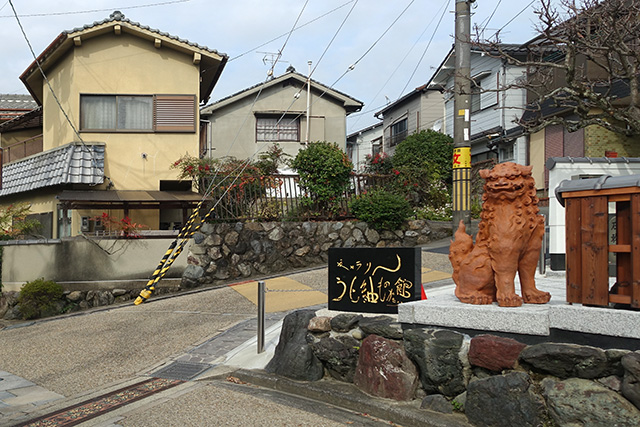
Off the main street, there’s a rather new residence with lion beside its gate.
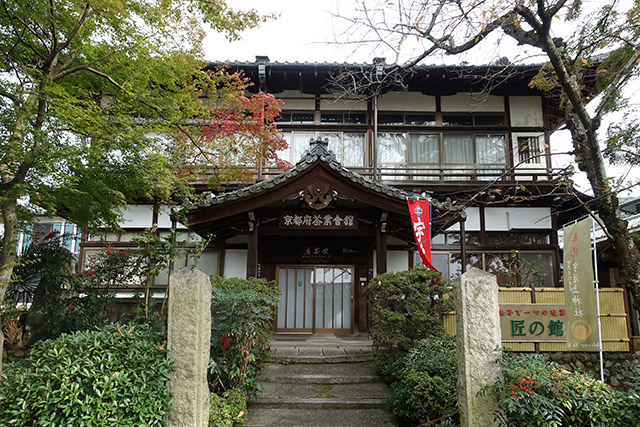
Just before the end of the street, a tea house of sorts faces onto the river.
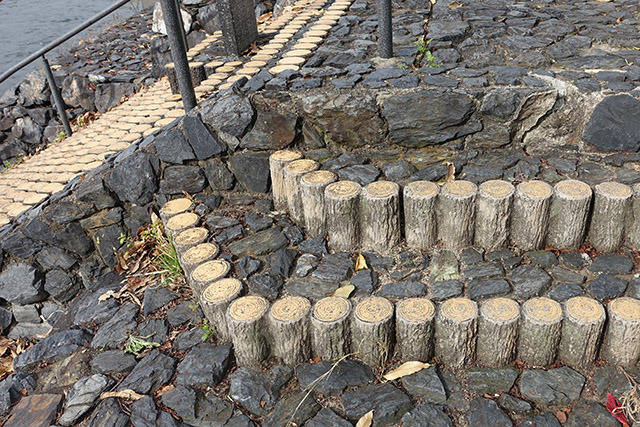
Many people pack picnics to eat along the bank of the river.
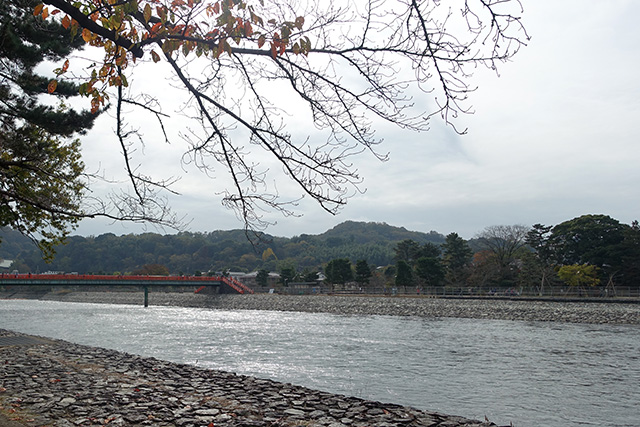
On the western side of the river, there are no fences to stop you from getting close to the water.
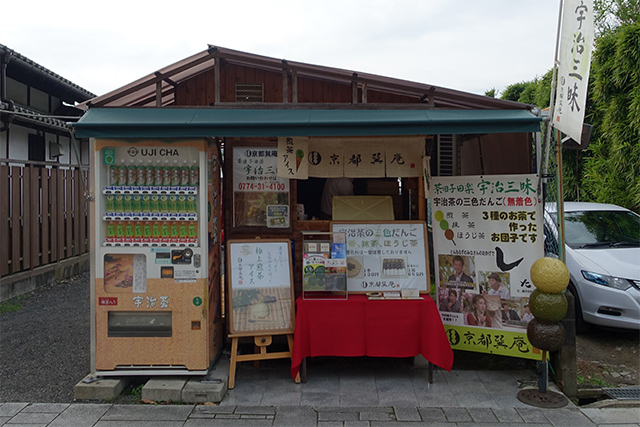
Having almost reached the end of the street, we’re bewildered at not being able to find a shop we’d read about on the Internet about three-flavored dango. We even get out the pocket wifi to try to locate it on Google Maps, only to have it tell us that we were standing exactly where it was meant to be. After giving up, we find it in the shack right in front of us, the gentleman running the store having just arrived in his car.
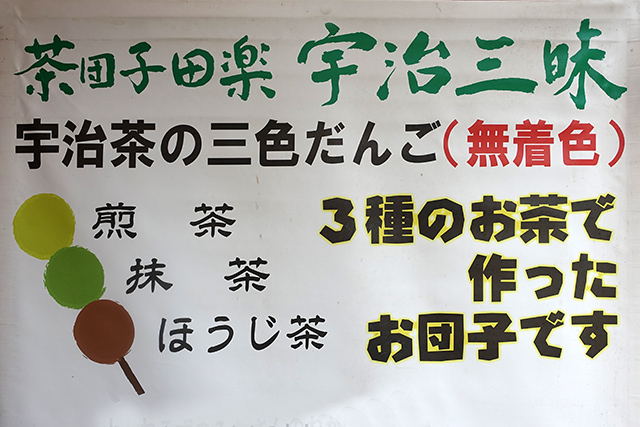
The three flavours on the dango stick are sencha, matcha and hōjicha.
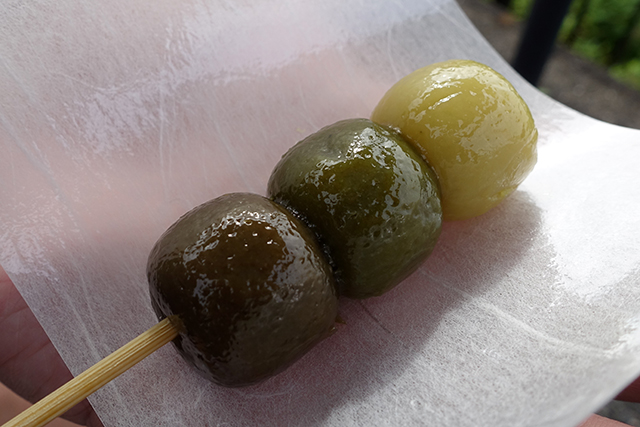
The sencha is mellow, while the matcha has a more vegetal flavour, and the hōjicha has a pleasant toasted sweetness to it. These dango are more naturally coloured than the ones in Sydney.
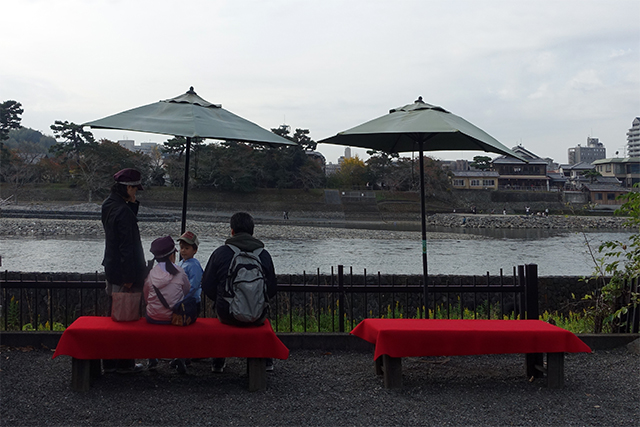
Behind the shack, there are a couple of benches to enjoy your dango with the view of the river.
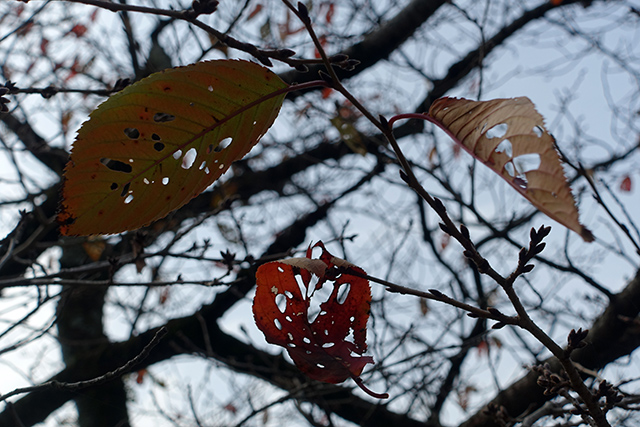
Some trees have the last of their leaves still attached…
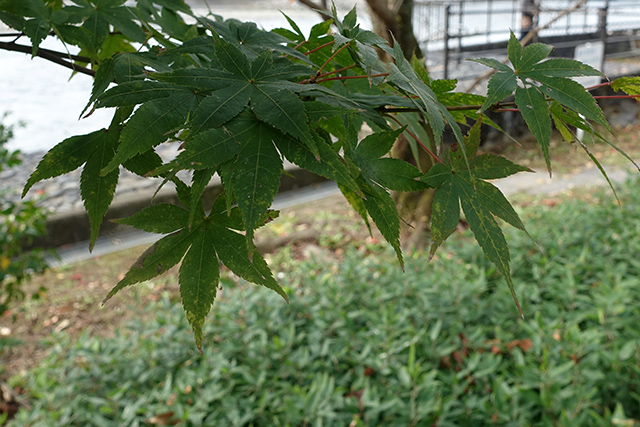
…while others have missed the memo that it’s late autumn.This
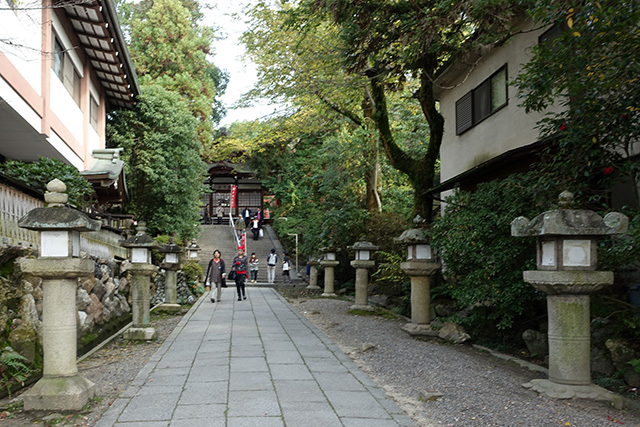
This is the entrance to Uji Shrine, which we’d seen before.
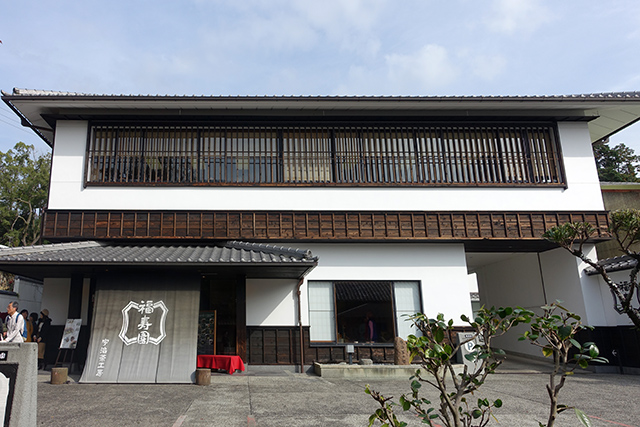
And further along from the entrance to Uji Shrine is the Fukujuen Tea Workshop. Fukujuen is famous for producing quality sencha.
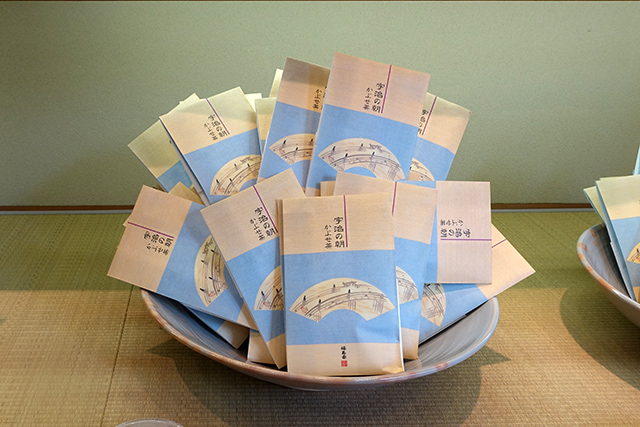
The store sells a variety of sencha at all different grades, as well (to a lesser extent) hōjicha and other green teas. There’s a restaurant upstairs with a waiting list a coupe of pages long!
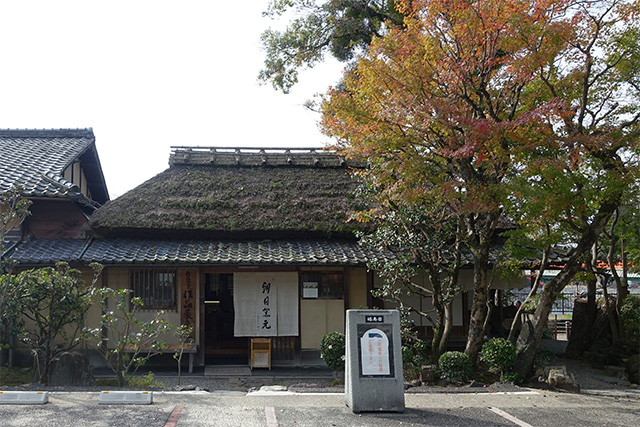
Opposite the Fukujuen Tea Workshop is a small building selling ceramics.
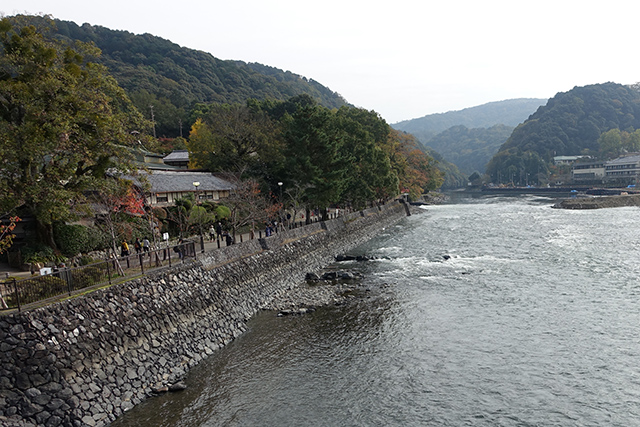
We make our way across to the western side of the river.
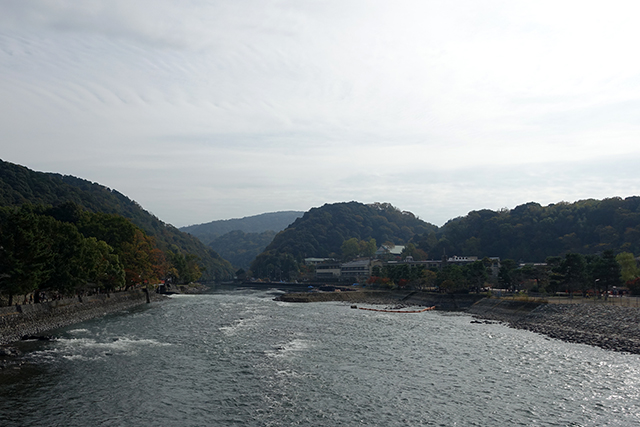
It’s a warm day and the view from the bridge is beautiful.
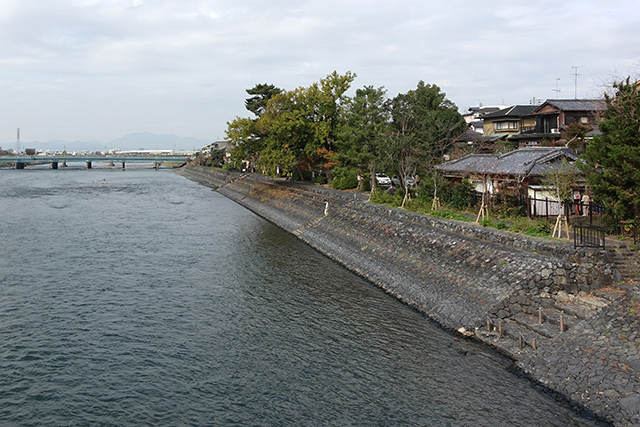
This is the view towards the north, which is where the train stations are located.
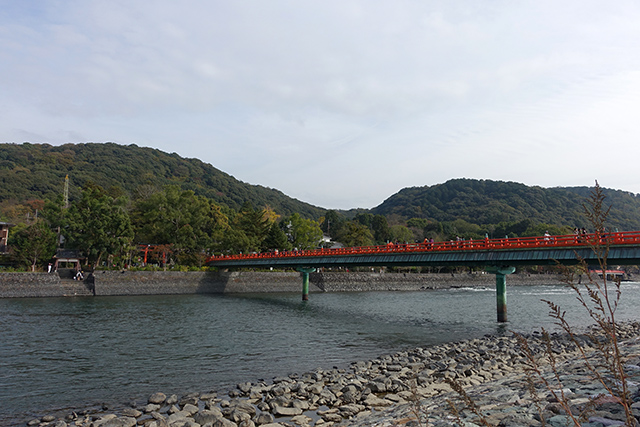
The bridge spans between the eastern bank of the river and an island in the middle. In this photo you can see the red bridge that begins at the tori guarding the entrance to Uji Shrine.
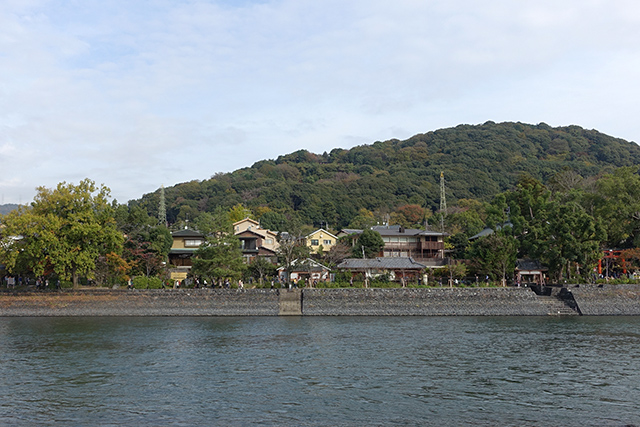
Wouldn’t it be nice to be able to look out your window to a mountainous backdrop?
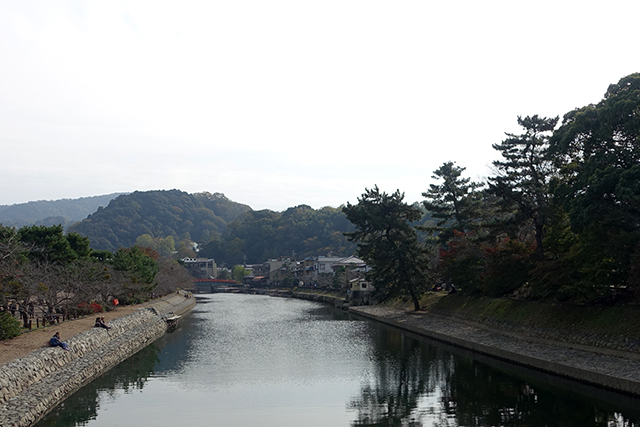
A smaller bridge connects the island to the western side of the river.
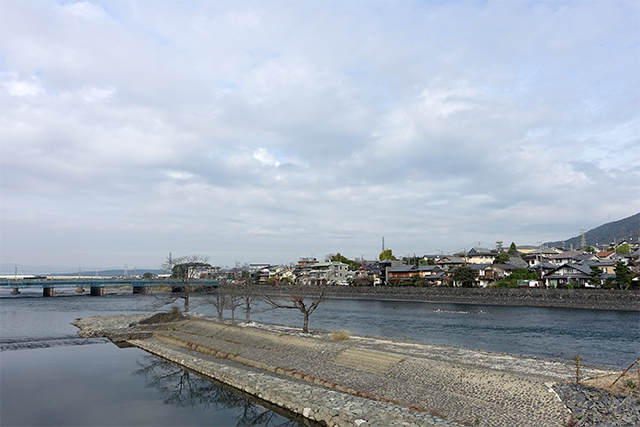
It’s a rather overcast day, but it’s very warm. Especially for late autumn in Japan.
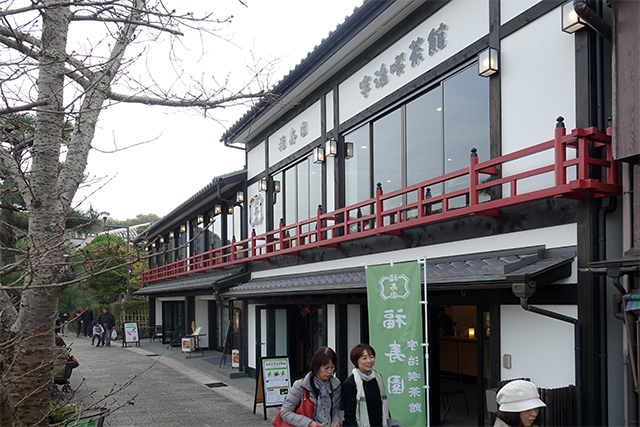
On the western bank of the river, we reach the Fujukuen Tea Museum.
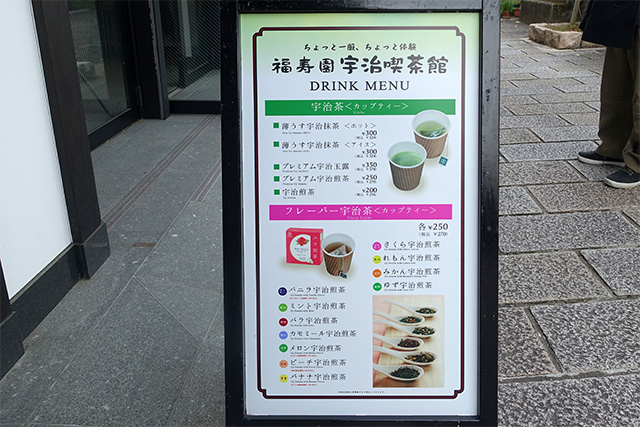
This place is really less of a museum and more of a cafe that serves their sencha, including flavoured ones, as well as green tea and hōjicha softserve desserts.
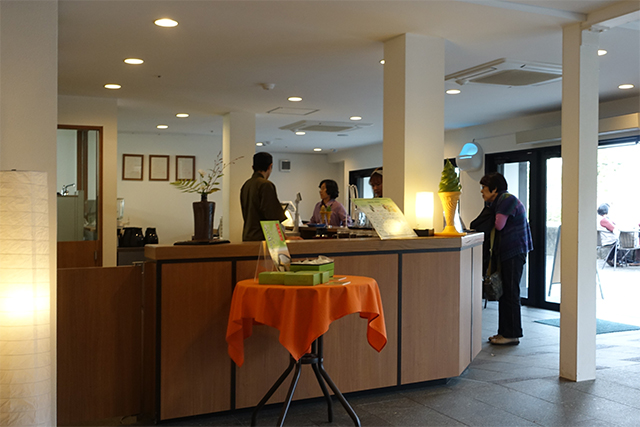
You can also purchase their flavoured senchas here, which you couldn’t at the Tea Workshop across the river.
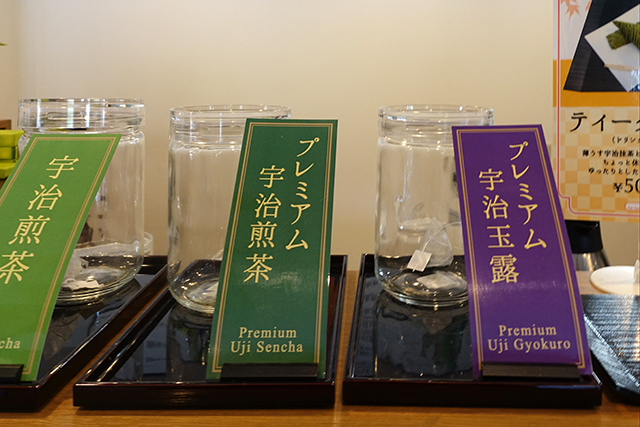
I try the premium uji gyokuro. Gyokuro is the most expensive type of sencha available, being shielded from the sun for up to three weeks before harvest. This process increases the theanine and caffeine and decreases the catechin levels the tea leaves and to yield a sweeter flavour and a distinctive aroma.
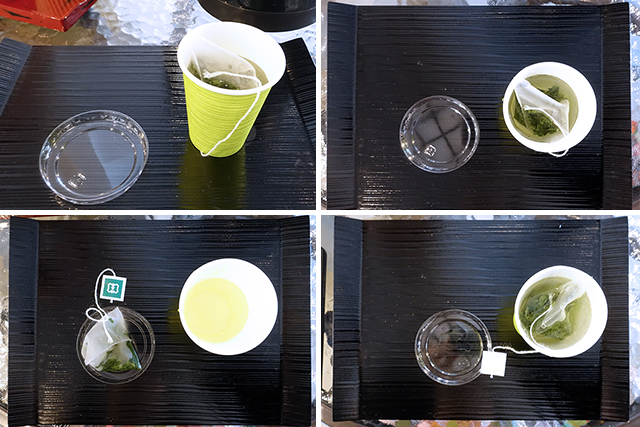
The first infusion of gyokuro (top) is at a significantly lower brewing temperature than most other green teas, including sencha (65-75C), at 50-60C and steeped for a longer duration of 90 seconds compared to the 60 seconds for ordinary sencha. The first infusion brews to a pale green colour (bottom left) from which gyokuro (meaning jade dew) gains its name. Its taste is of a pleasantly sweet umami flavour that’s unlike any other. The second infusion (bottom right) is brewed using slightly warmer water for a shorter duration and yields a grassier flavour.
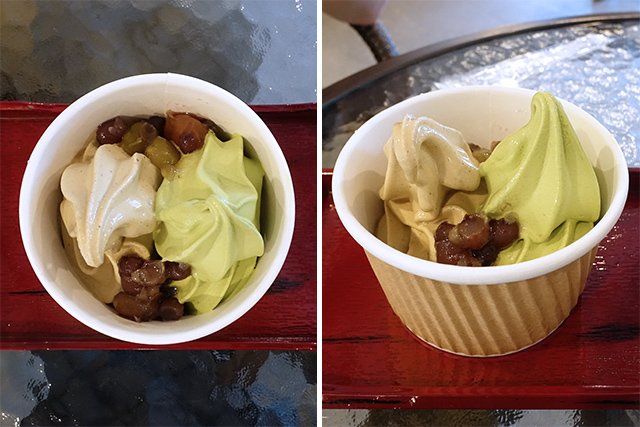
We also try hōjicha and green tea soft serve with azuki bean. The green tea soft serve is a much paler colour compared to the soft serve you get elsewhere, which leads me to think it’s actually a sencha soft serve as opposed to a maccha soft serve. This green tea soft serve gave a more rounded green tea flavour with none of the bitterness that you get with maccha. The hōjicha has its familiar roasted flavours that I love, although I’d have liked it to be stronger. These flavours of soft serve go with the azuki beans just perfectly.
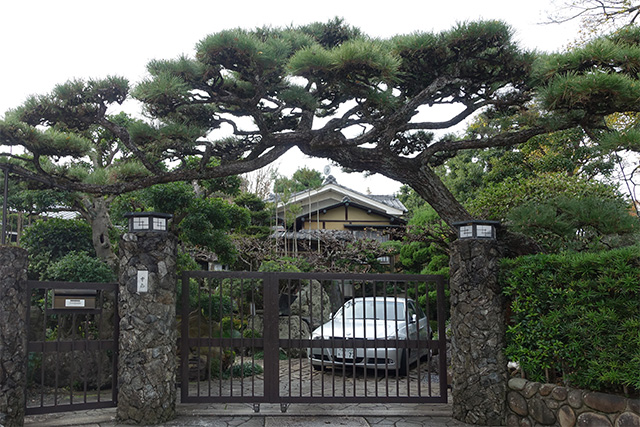
We continue towards the south, and pass by this beautiful arch framing the driveway to a residence.
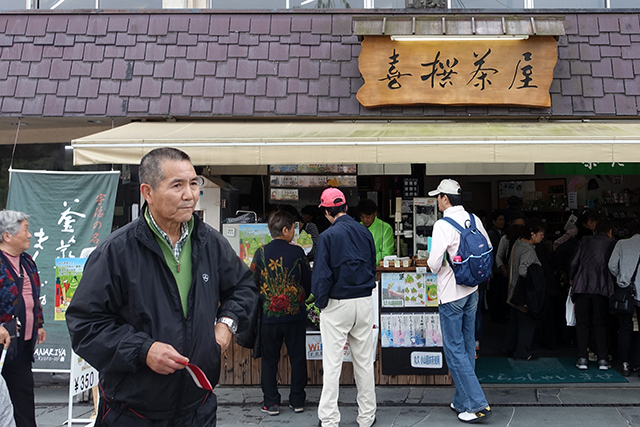
At the end of the street we reach some souvenir shops.
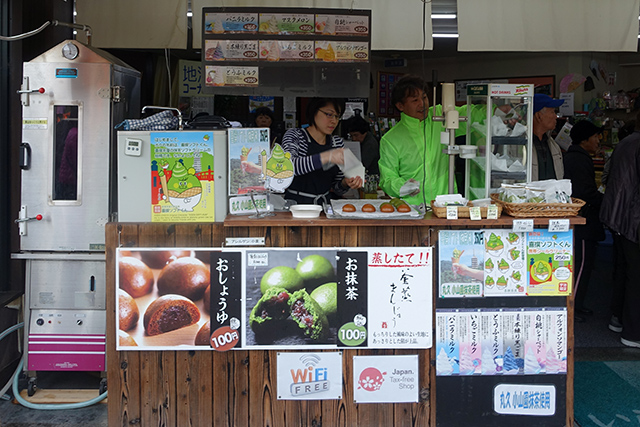
This shop had just taken some manjū fresh from the steamer, which entices us to try. We opt for the green one which is green tea, and avoid the brown one, which our rudimentary reading of Japanese informs us is soy sauce and not chocolate!
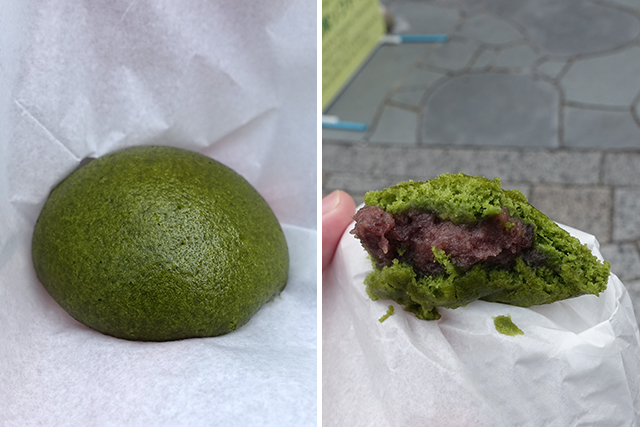
Isn’t this pretty? The green tea manjū is pillowy soft with an azuki bean filling. The green tea flavour wasn’t too strong and the azuki bean filling is the perfect sweetness and texture (being not too smooth).
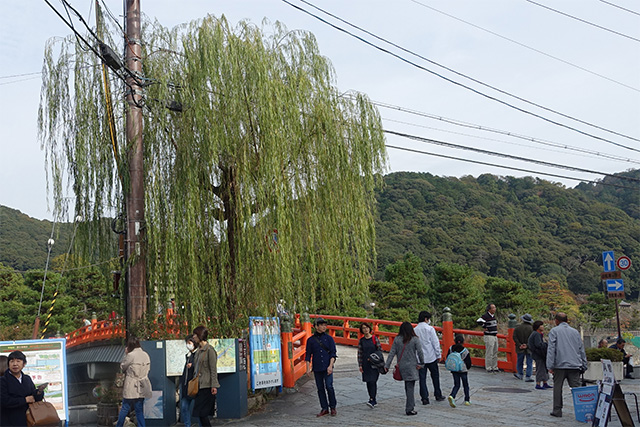
This red bridge is a long ways further down from the red bridge in the photo earlier on. It’d seem that we arrived here just as busloads of Chinese tourists were unloaded.
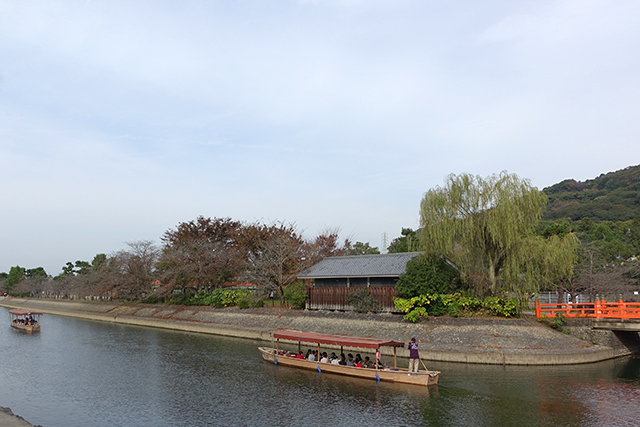
Boats run up and down Uji River.
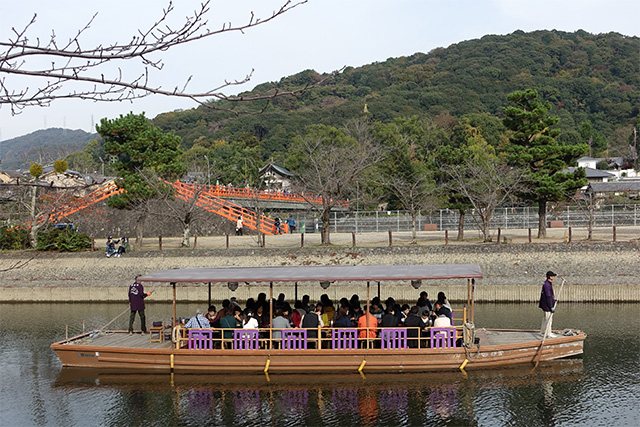
Here, you can see a crowd of tourists enjoying a meal onboard the boat.
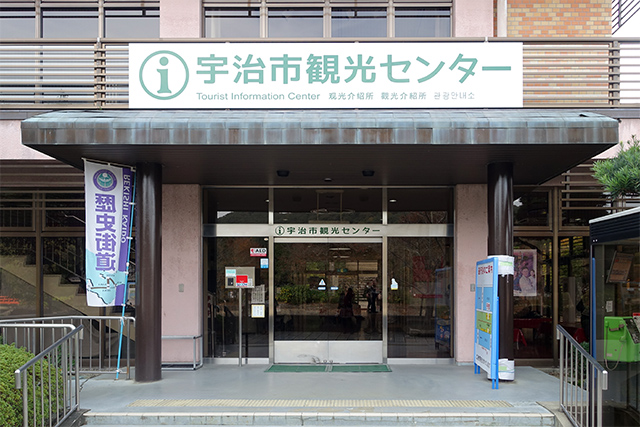
Off the western bank of the river, further north of Fujukuen, is the Tourist Information Center.
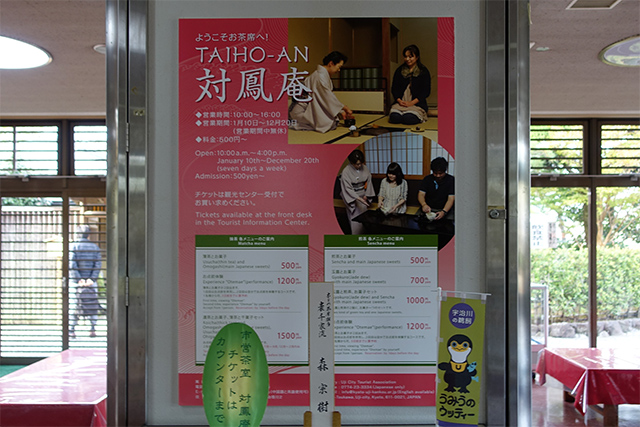
The Tourist Information Center offers the experience of tea ceremonies at very reasonable prices. You can enjoy Japanese tea and sweets in the tea house setting for Y500. Or you can experience otemae – the tea ceremony – for Y1200, which includes watching a professional otemae and experiencing otemae yourself. This requires a reservation 3 days in advance. While D and I did not participate in this, for the budget-friendly, this package offered by the Tourist Information Centre is a far more economical way to experience an authentic tea ceremony than at private tea houses.
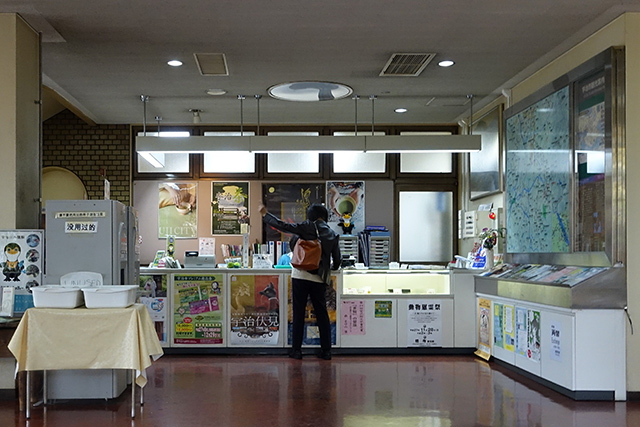
The lady at the counter is anxious about her booking for the tea ceremony experience.
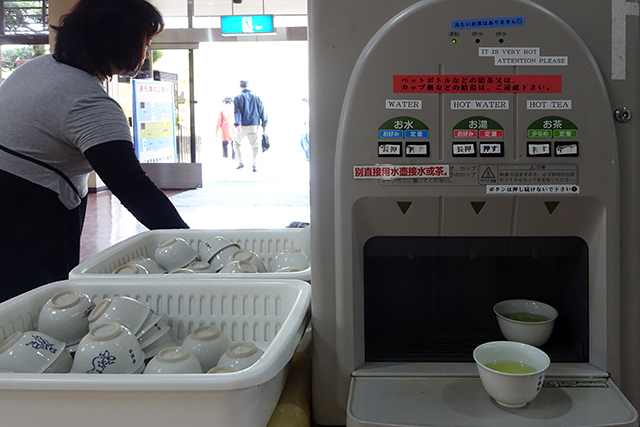
Instead, D and I stop by the Tourist Information Centre for some complimentary tea.
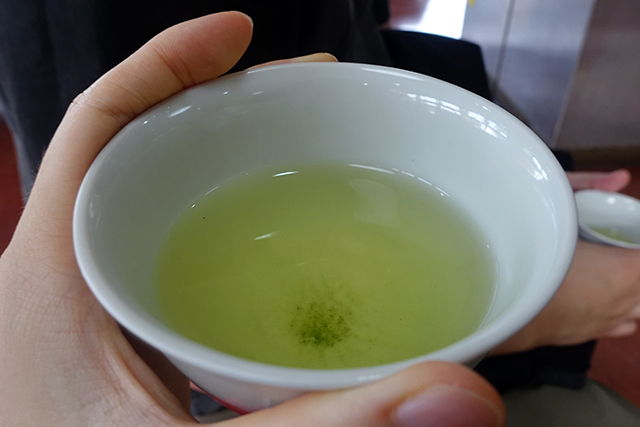
The tea is refreshing after the long walk around Uji.
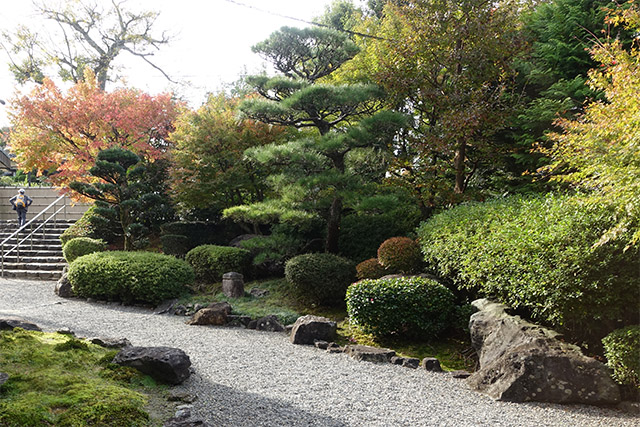
And made all the more pleasant by the view outside to the garden behind the Center.
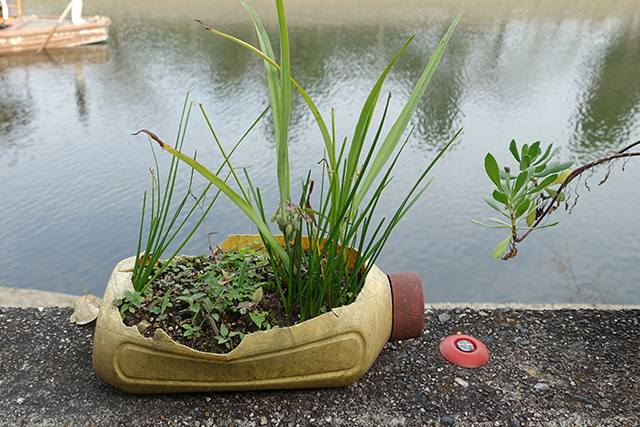
Back on the river, we spot some plants being grown in old cartons.
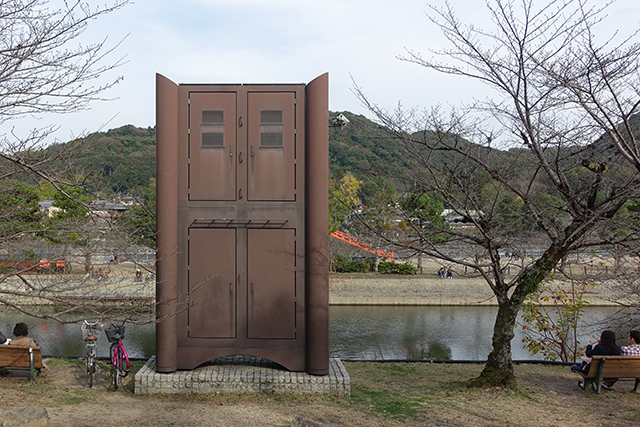
And … this contraption, which probably hides some urban utilities.
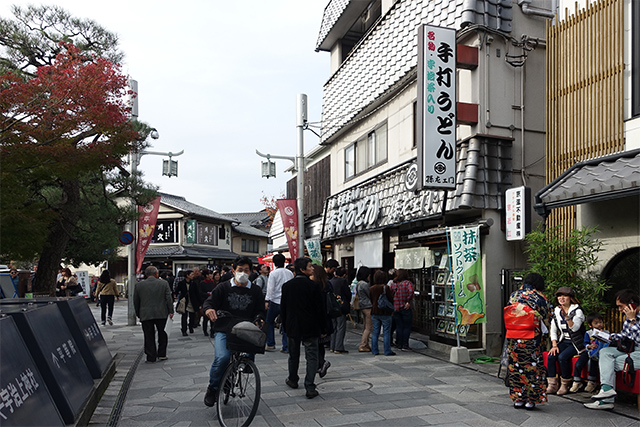
We make our way towards Omotesando, the main street of Uji.
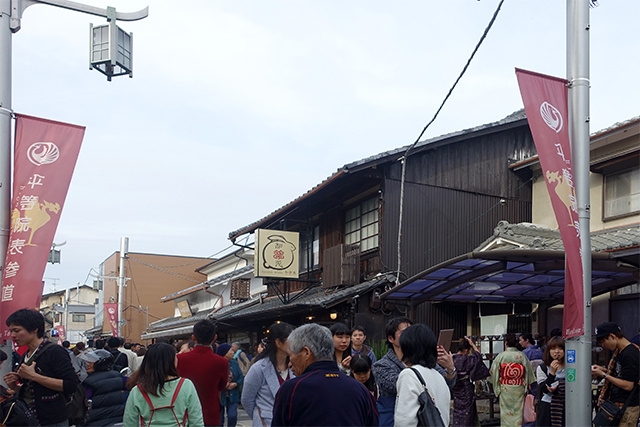
It’s crowded with tourists. We try to spot somewhere to have lunch, but all the shops have a long queue.
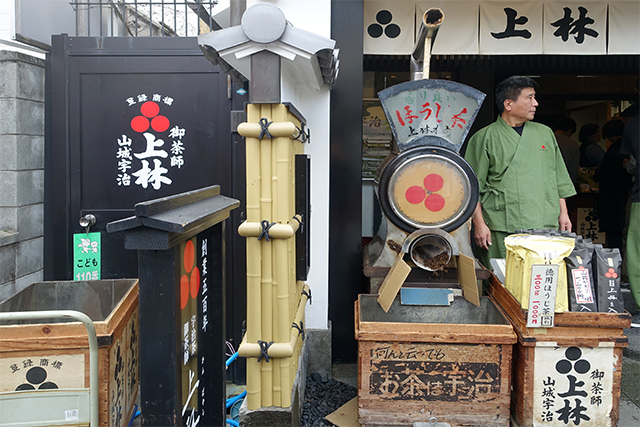
And instead we stop by some of the tea shops on Omotesando. Here’d the gentleman is standing by a machine roasting green tea to make hōjicha. The smell is amazing.
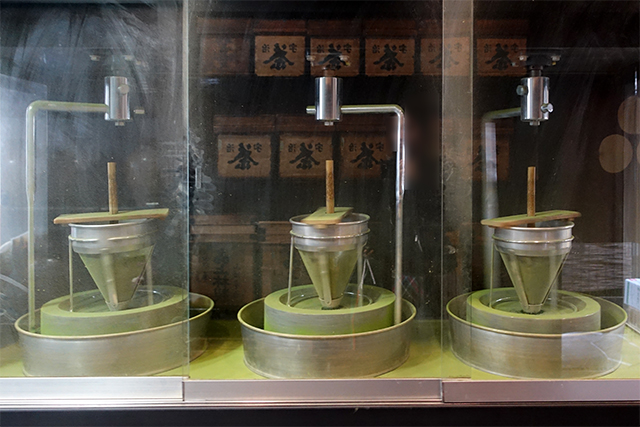
And further back in the store, we see some machines grinding green tea into maccha.
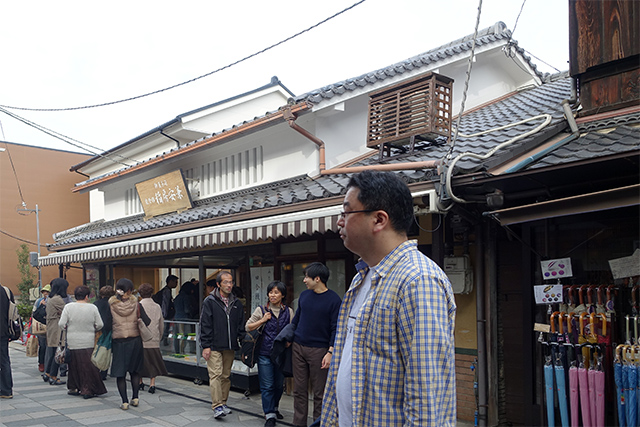
The street is lined with traditional looking houses.
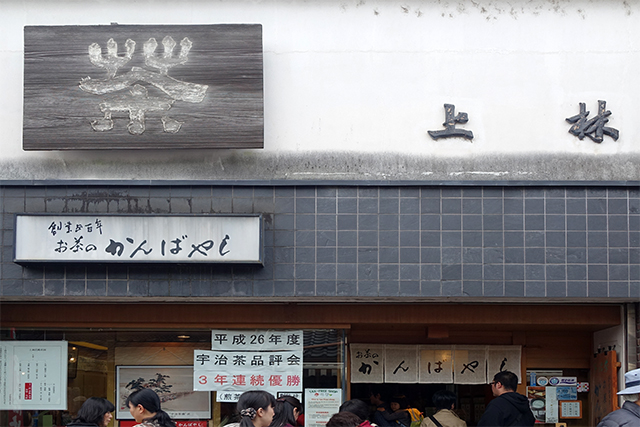
And at this tea store, Ocha no Kanbayashi, we sniff premium gyokuro (Y10,800/100g) and the shop lady offers us to eat some – gyokuro is so high quality that it can be eaten raw. I end up purchasing a less premium gyokuro (Y1,080/100g).
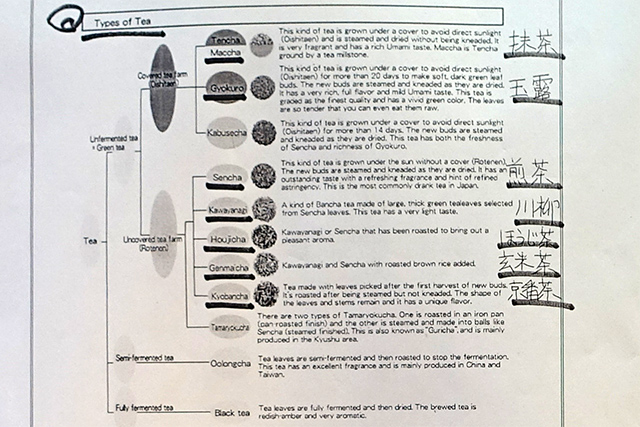
There’s a convenient summary of the types of green tea on their wall.
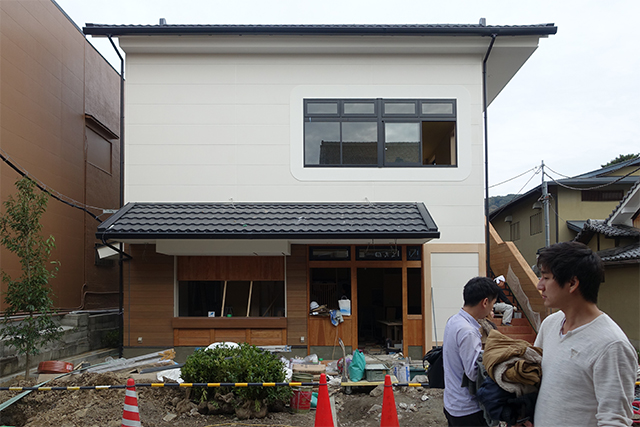
On the opposite side of the street is a new shop being built. I love their use of wood.
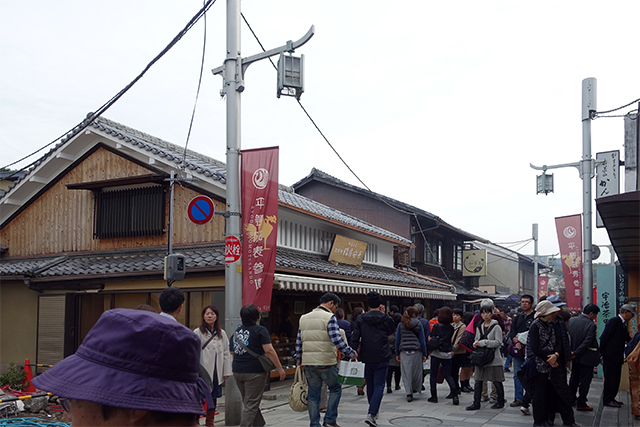
Many of the buildings on the street are newly built in the traditional style.
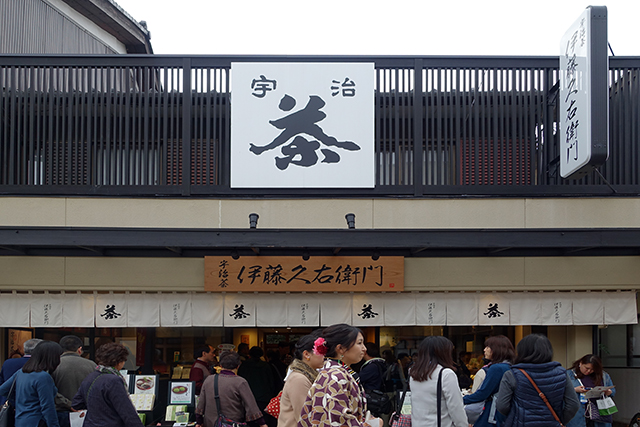
This store, Itohkyuemon Honten, sells all sorts of green tea foodstuffs and drinks. I spot the two KitKats made using tea from the tea house and join the queue.
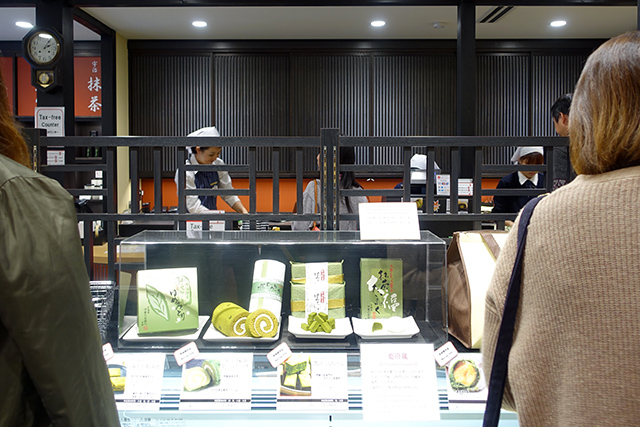
There are matcha rolls, and matcha chocolate to be bought…
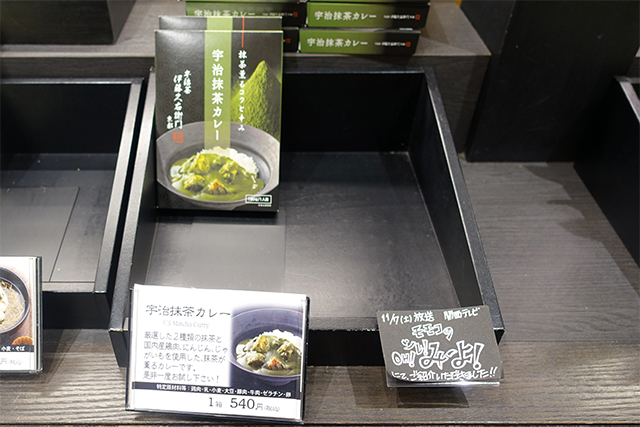
…as well as green tea curry….
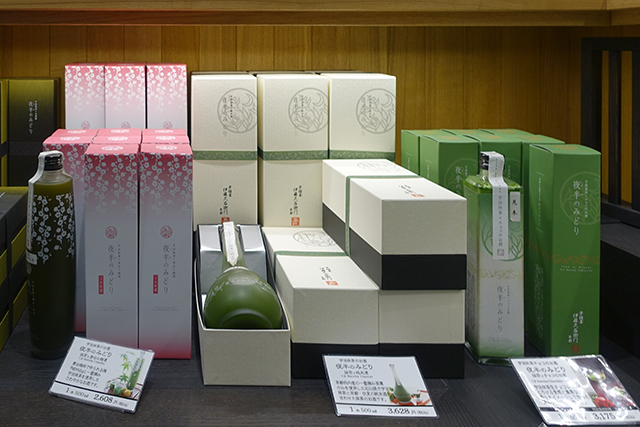
…and green tea liqueur.
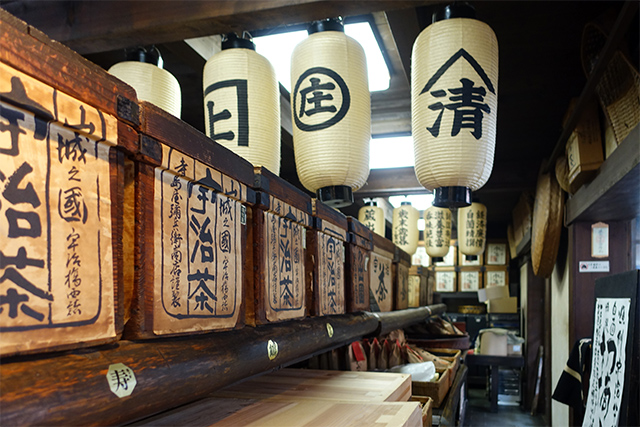
At another store along the street we find tea being sold in giant wooden boxes.
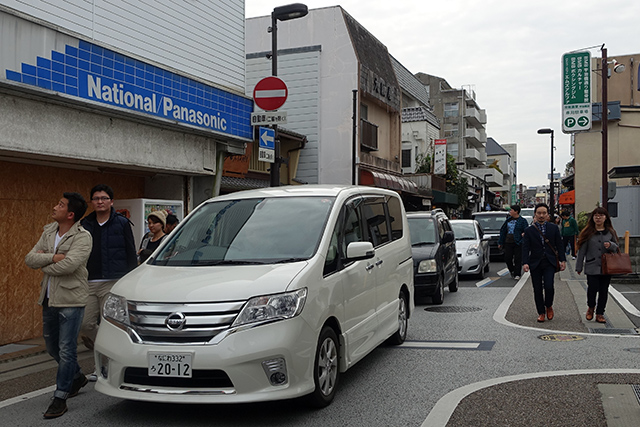
We make our way down the road towards the JR station in hope of finding a less crowded restaurant for lunch.
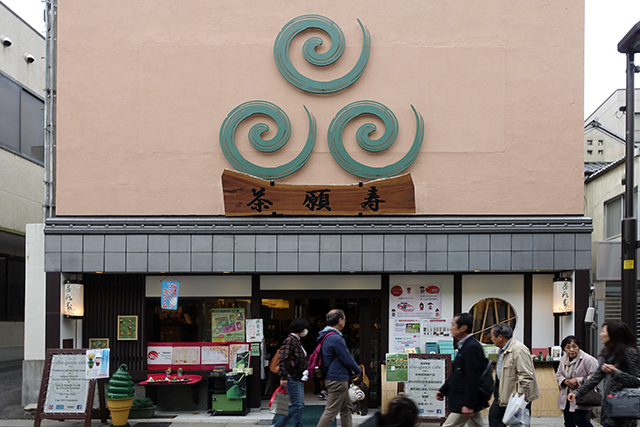
And we find the place at Cha Ganju.
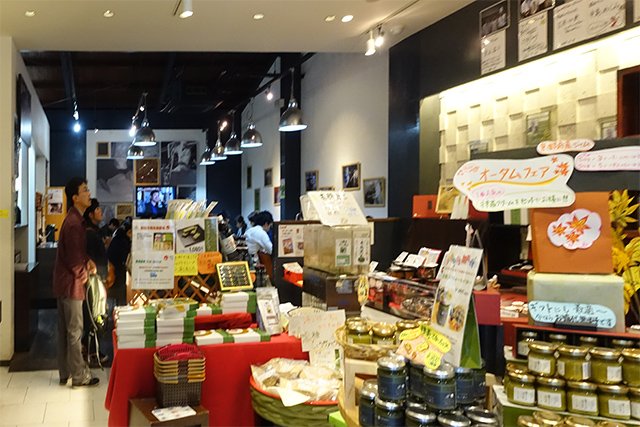
It’s a restaurant at the back of the shop front that sells all sorts of condiments and jams in jars.
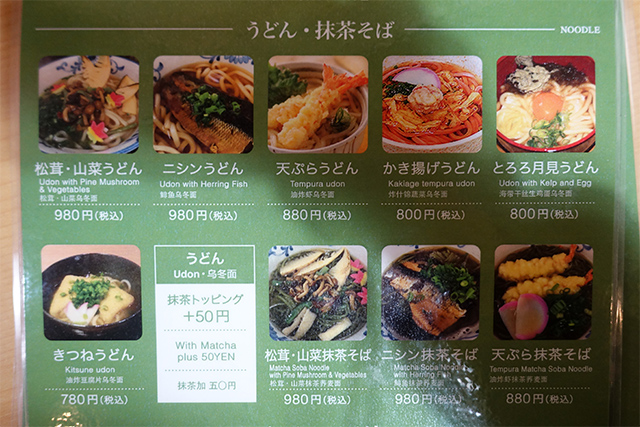
Even so, we end up waiting for about 10-15 minutes – it’s the day before a public holiday in Japan so there are hoards of tourists visiting from Japan and abroad. They have cha soba on their menu, which is what we’re after. But, they’ve run out of their Tempura Matcha Soba Noodle.
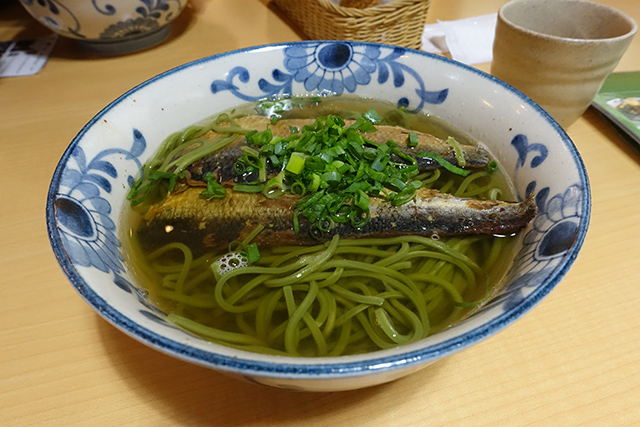
We settle on their Matcha Soba Noodle with Herring Fish instead. It’s a rather oily fish with a rich and salty flavour. The taste of green tea doesn’t really came through in the cha-soba, so we’re really enjoying the novelty of eating green noodles, which had good bite.
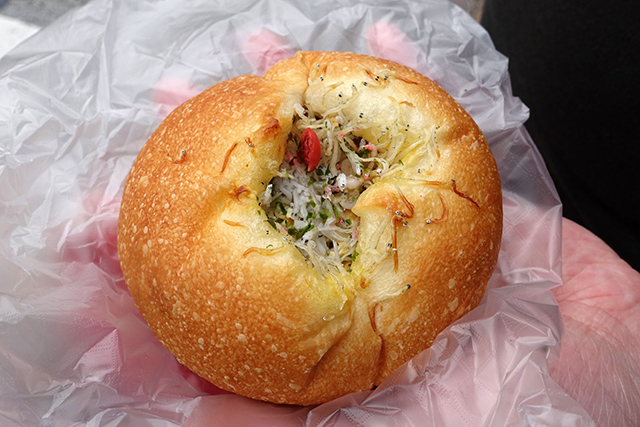
D tops off his lunch with some baked goods we’d bought from Pompadour at Kitahama earlier this morning. What looked like a roll masquerading as a jaigamo is actually a roll filled with shirasu (tiny fish). It’s rather savoury and not something we’d eat again.
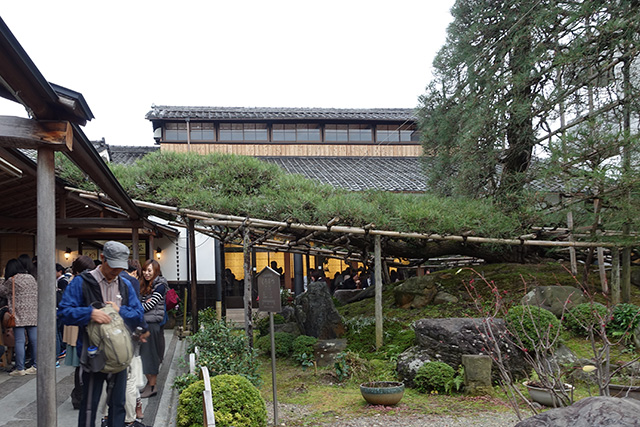
And this is the internal courtyard of Nakamura Tokichi, a traditional Japanese cafe serving green tea desserts from parfaits to anmitsu. The queue is phenomenal today with a waiting time of four hours. Yes, FOUR HOURS.
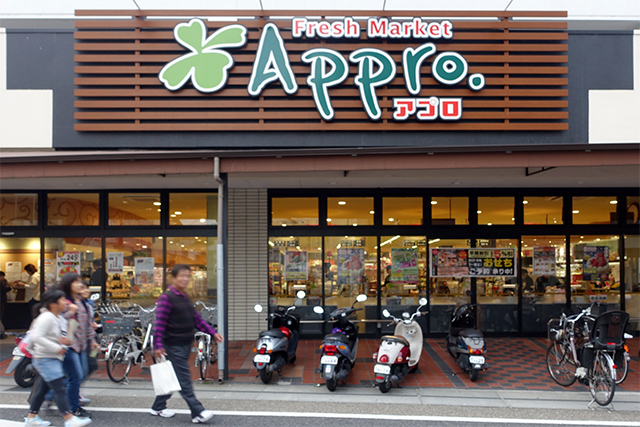
Instead, we head back towards the Keihan train station and stop by the local supermarket.
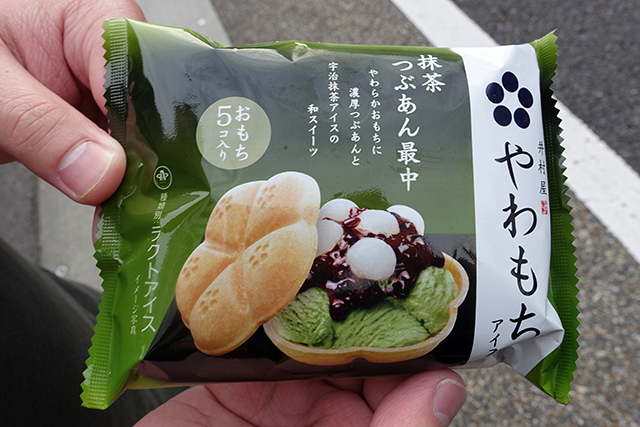
And find some suitably Uji dessert: yawamochi. The dessert is marked as being a sale item on the shelf, and to sweeten the deal even further, it rang up with another 30% discount! Yatta!
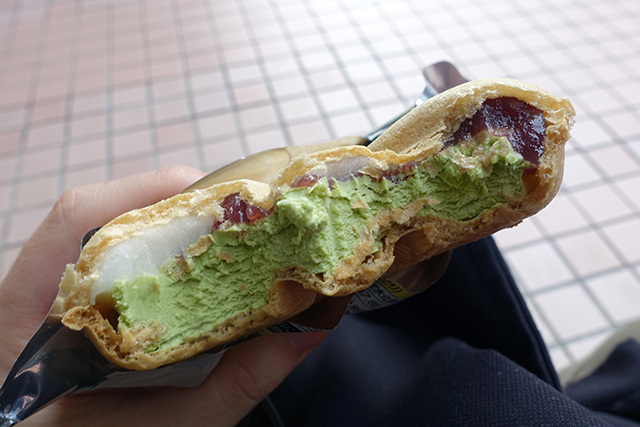
Just like a traditional Japanese dessert, this has maccha ice cream with five dango (rice cake) and anko (red bean jam) all encased in wafer. It was delicious!
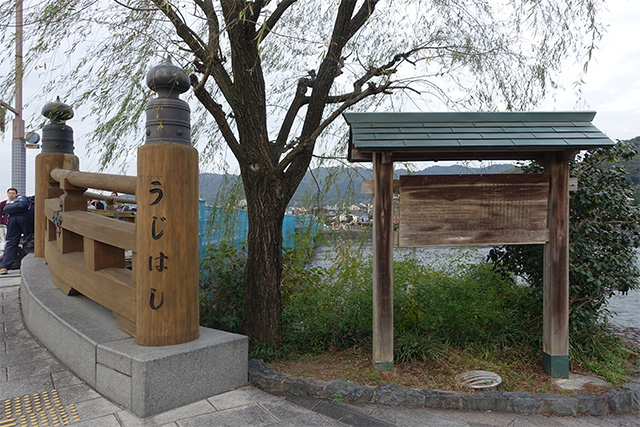
With dessert tucked away, we head towards the bridge back to the Keihan station.
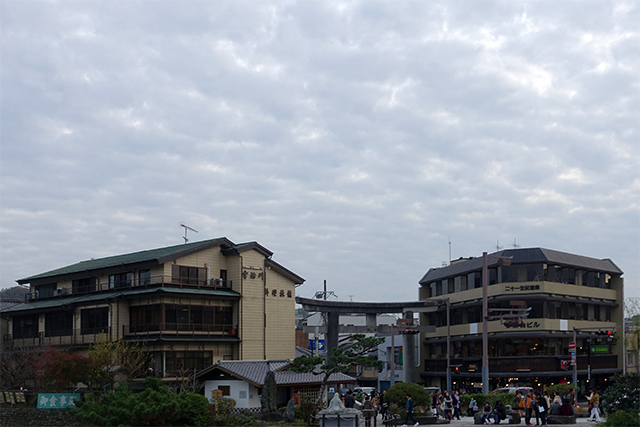
This is the view towards the western side of the river from the bridge. At the very bottom of this photo, you can see a tiny white sculpture – that’s a statue celebrating the significant role the Uji area has in the Japanese novel The Tale of Genji.
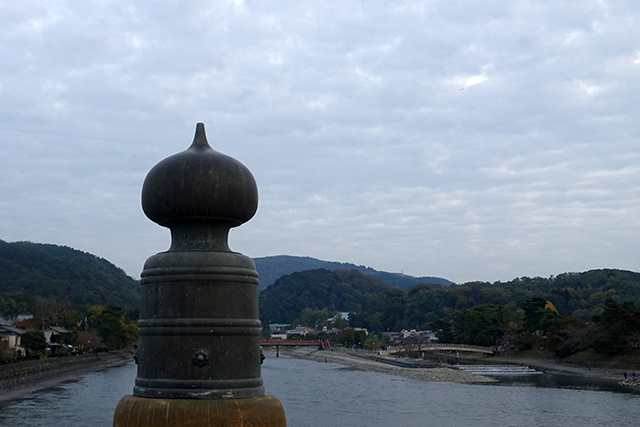
And finally, the view from the bridge towards the north of Uji.
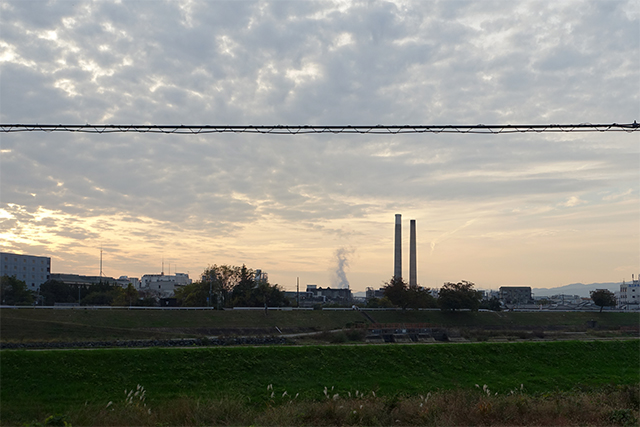
The sun’s almost set by the time we reach the Keihan Station. Further afield, the western side of Uji seems to be industrial.
Ōsaka – Tejimbashi Shopping Street
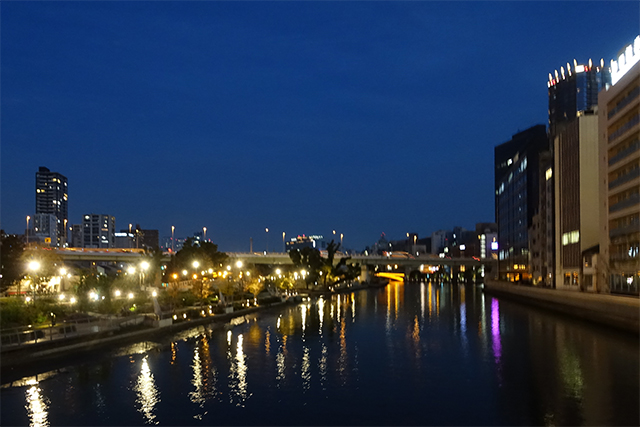
It’s dark by the time we return to Kitahama. We walk across Yodogawa towards Tenjimbashi Shopping Street for dinner.
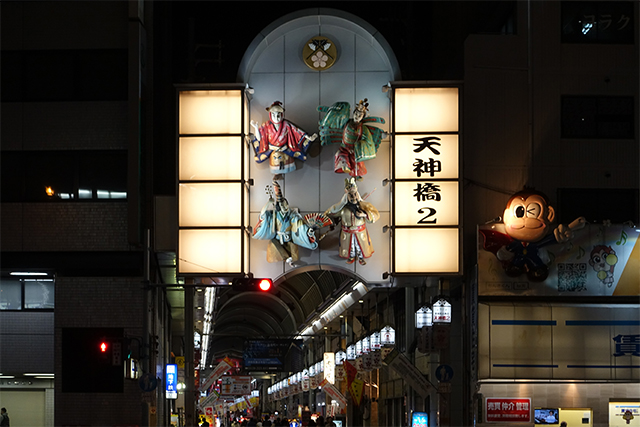
Most of the shops are closing down for the evening. But the restaurants are just starting their evening service.
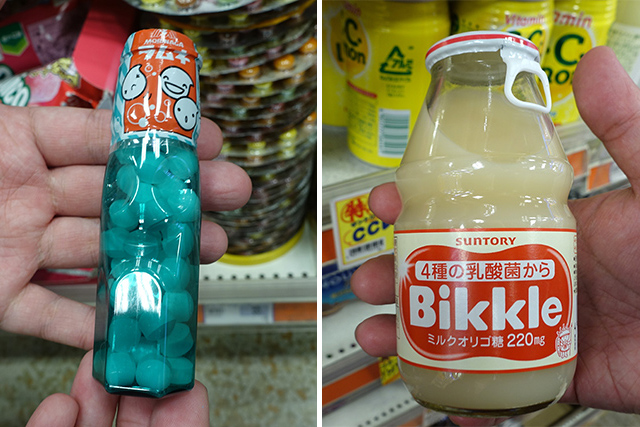
It’s still too early for dinner, so D and I walk down Tenjimbashi Shopping Street for a while (it’s some 2.6km). We spot these cute ramune flavoured candy in a tiny ramune bottle, and a super size bottle of Yakult. D also spots a super cute Kumamon backpack that I snap up.
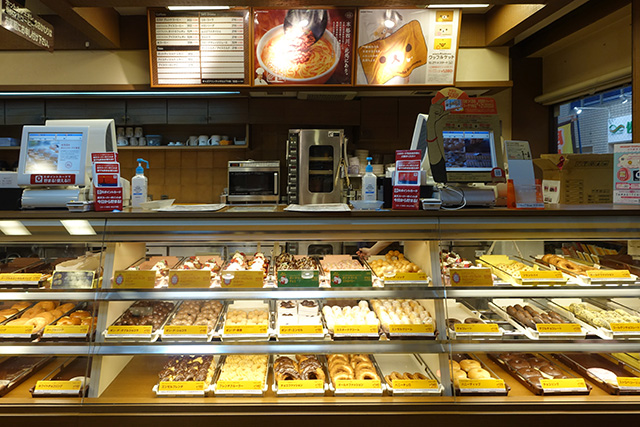
We continue as far as the Mister Donut, which we’ve been looking since our first day. We’re eager to relive the deliciousness that is a Y194 chocolate-glazed, custard-filled cronut.
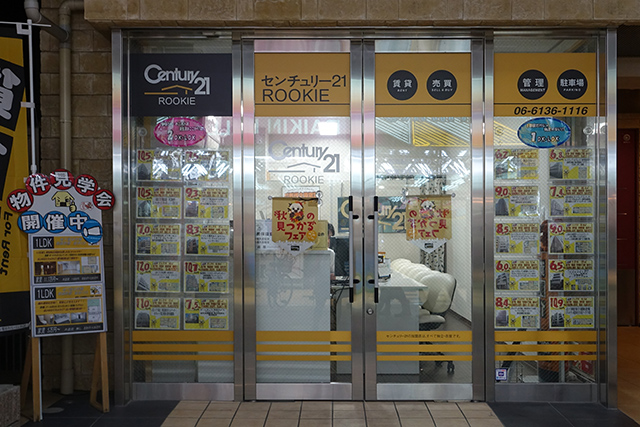
We see the Rookie branch of Century 21. Wouldn’t want them to manage your property!
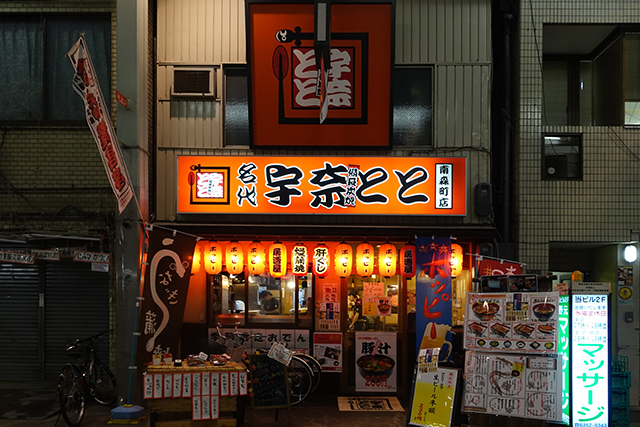
And we’re back at our favourite unagi restaurant, Unatoto. We visit every time we’re in Japan.
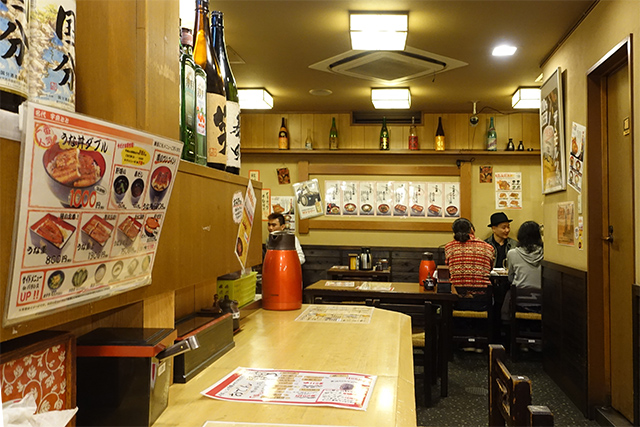
Nothing about the restaurant’s changed in the past year.
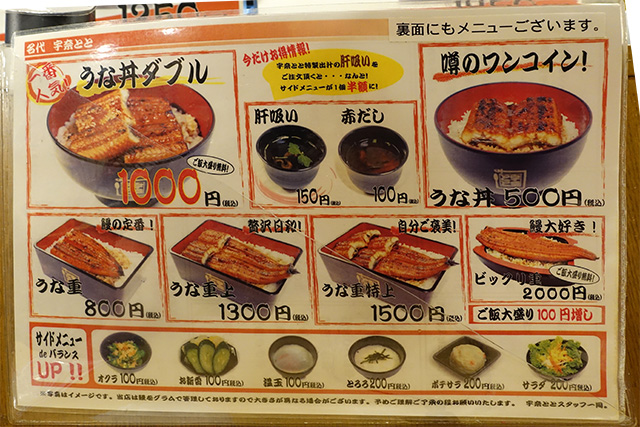
Not even the prices, which have only gone up Y20 since 2011.
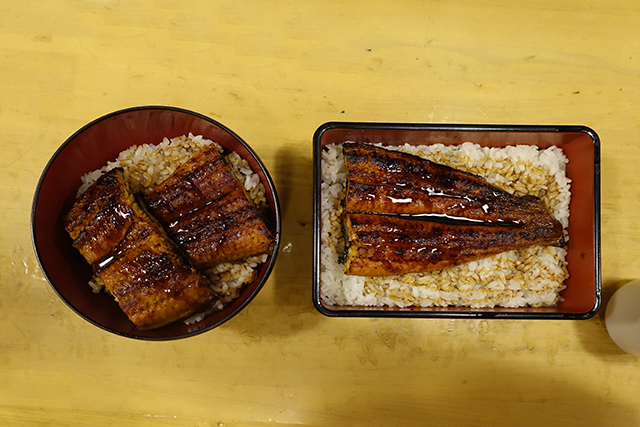
D orders the Y1,000 bowl (left), while I get the Y800 bowl. While it looks like my bowl is bigger, the rice is rather shallow. D’s bowl is deeper with about 50% more eel. The eel is deliciously smoky from being grilled over charcoal and drizzled in sauce. It tastes just as good every time!
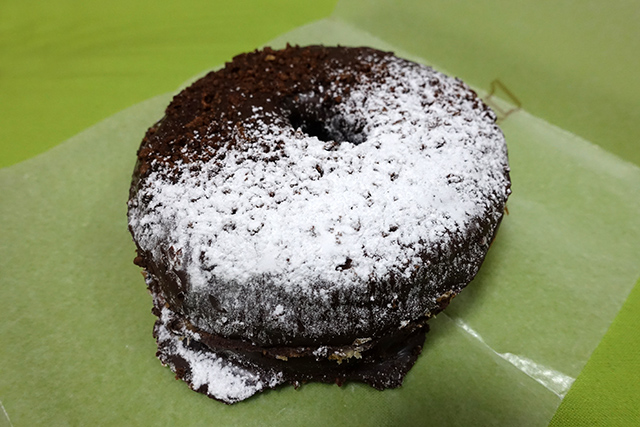
Y194 (~$2.00) for a cronut is a steal. It still blows my mind how cheap and delicious these were, especially compared to the ones we get in Australia, which start at $5.00 for unfilled ones!
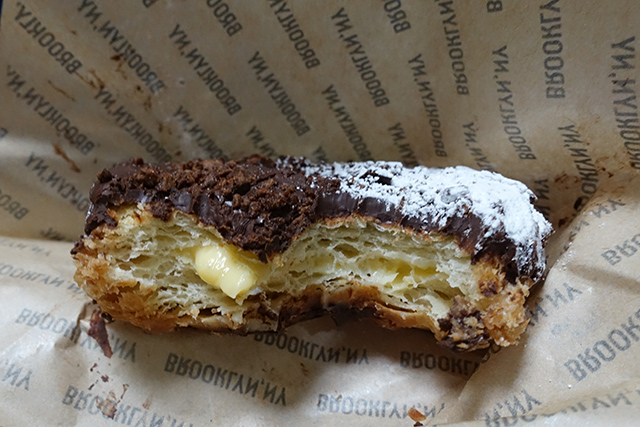
It’s chocolate glazed with a custard filling. It is every bit as fluffy as I remember. What a delicious way to end the first part of our trip in Ōsaka.